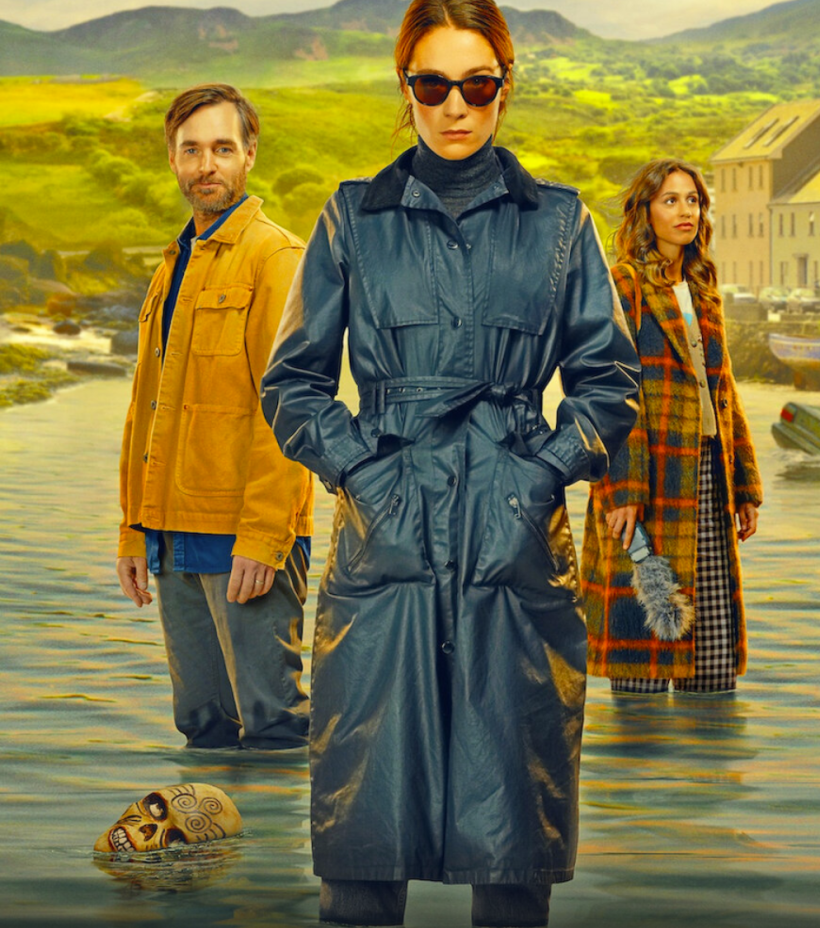
“Bodkin” on Netflix masterfully blends intrigue and dark humor, offering razor-sharp storytelling and stellar performances. Dive into a world of enigma and suspense, where every detail demands attention and rewards you with compelling drama.
The word “bodkin” evokes images of a small, sharp tool, deftly navigating the tightest of spaces. This precision and ability to cut through complexities is mirrored in Netflix’s new series, “Bodkin,” a masterful blend of intrigue and dark humor that carves out its own niche in the crowded landscape of modern television.
From the opening scenes, “Bodkin” plunges viewers into a world brimming with enigma and suspense. The series is a taut narrative tapestry, meticulously woven with threads of mystery, psychological depth, and unexpected wit. Its storytelling is as sharp and incisive as the tool it’s named after, deftly unpicking the tangled skeins of its characters’ lives and secrets.
The show is anchored by an ensemble cast delivering performances that are nothing short of stellar. Each actor brings a unique shade to their character, creating a rich mosaic of personalities that are as compelling as they are multifaceted. The writing is crisp and clever, peppered with dialogue that crackles with intelligence and dry humor. It’s this blend of sharp wit and deep emotion that sets “Bodkin” apart from its peers.
Visually, “Bodkin” is a feast for the eyes. The cinematography captures the essence of its settings, transforming them into integral characters in their own right. The lush, atmospheric shots heighten the sense of place and mood, drawing viewers deeper into the show’s intricate world. The pacing is perfect, unspooling its mysteries with a rhythm that keeps viewers perpetually on the edge of their seats.
However, “Bodkin” is not without its minor flaws. At times, the labyrinthine plot can seem almost too dense, requiring viewers to pay close attention to every detail. But these moments are fleeting and overshadowed by the series’ many strengths.
In summary, “Bodkin” is a razor-sharp triumph, a series that cuts through the clutter with its incisive storytelling, brilliant performances, and visual splendor. It’s a show that demands and rewards attention, a true gem in Netflix’s ever-expanding treasure trove of content.
Copyright 2024 Michael Stephen Wills All Rights Reserved
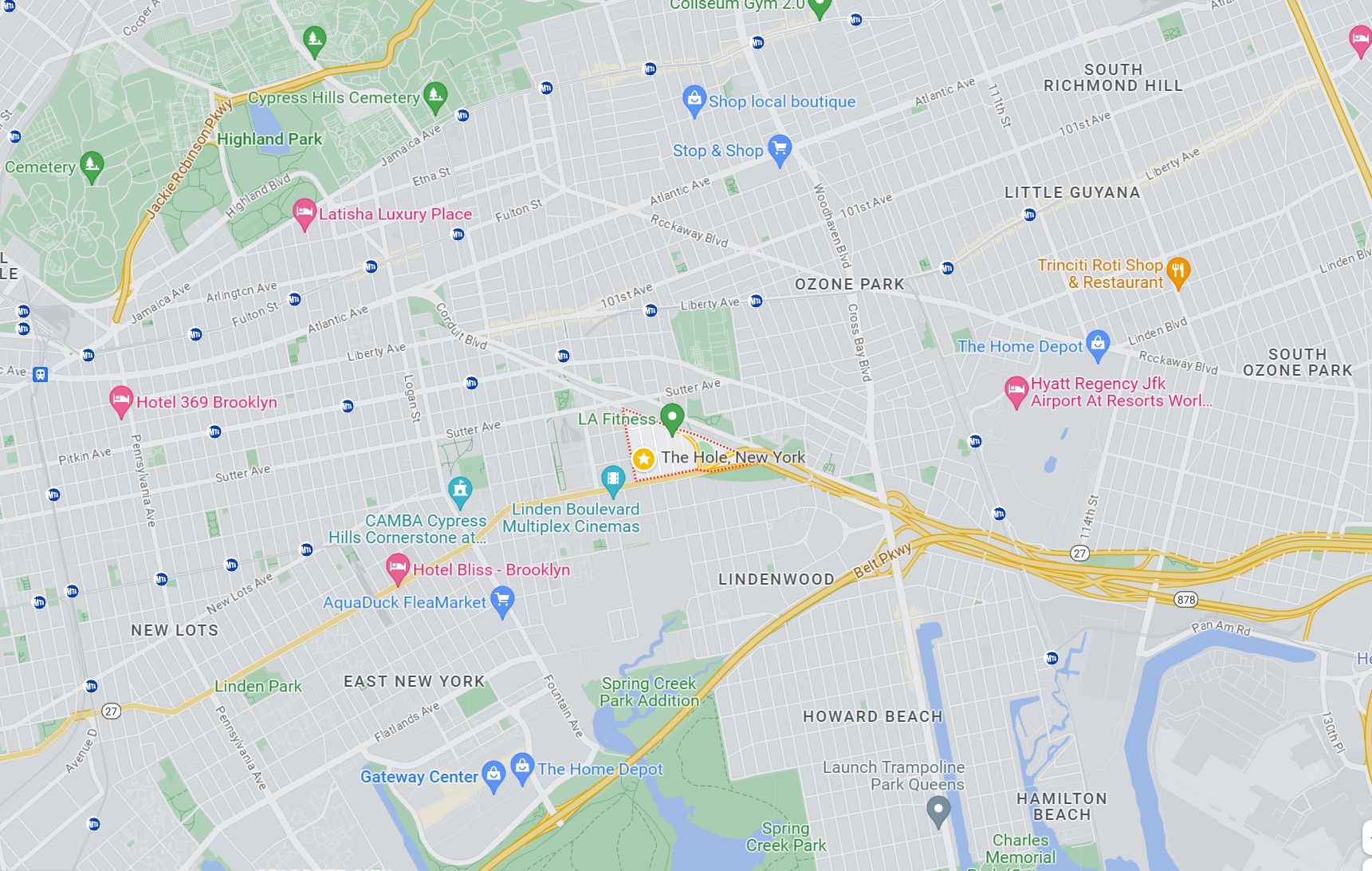
The first light of dawn hadn’t yet dared to creep through the dense overhang of the Queens sky as I rolled my Chevy into the kind of neighborhood where hope seemed to have packed up and skipped town – The Hole, New York’s forgotten stepchild. A scrap of no-man’s land straddling the invisible line between Queens and Brooklyn, it was the kind of place that cabbies avoided after the sun punched out for the day.
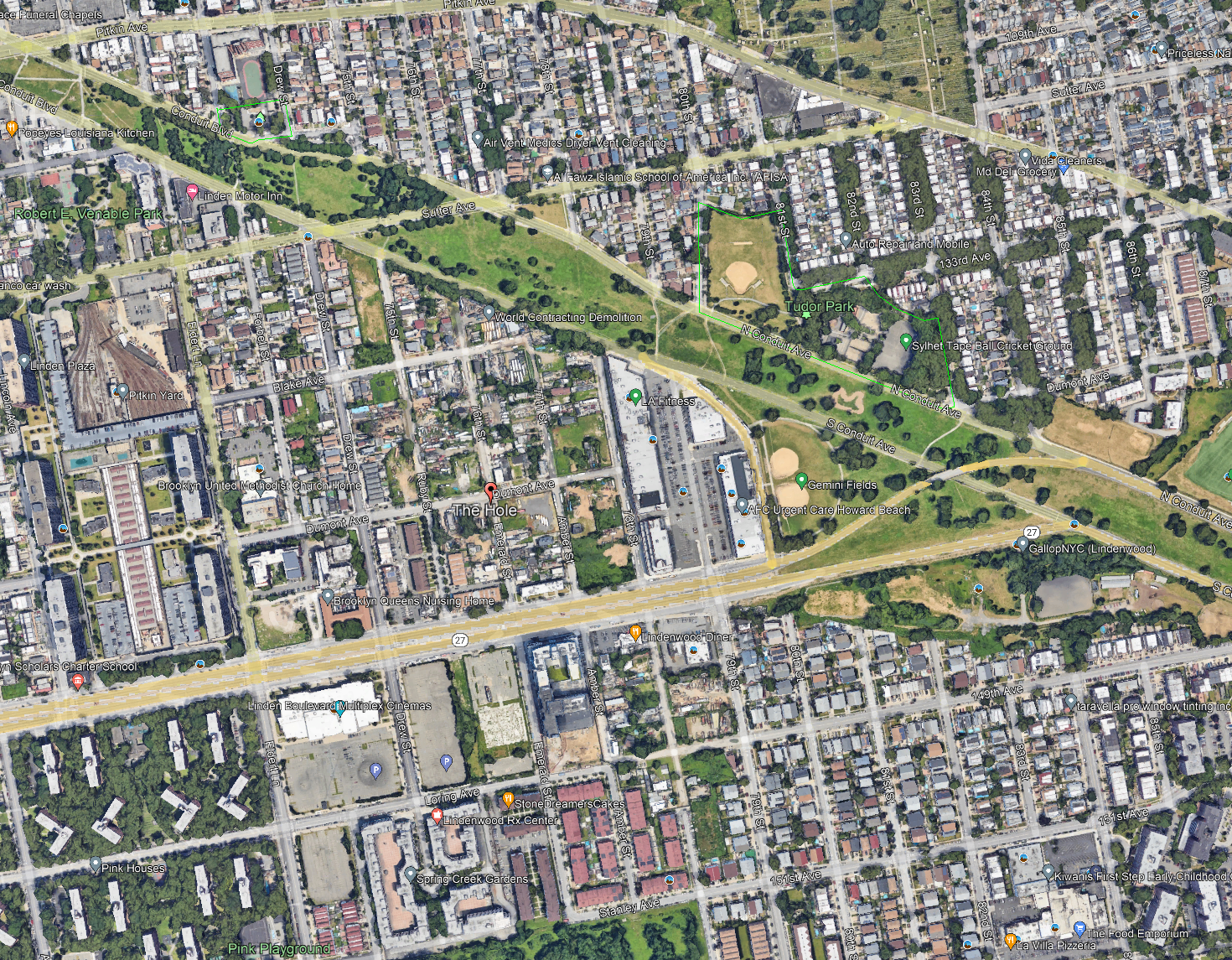
Overview of “The Hole, Queens, NYC” scraped from Google Earth
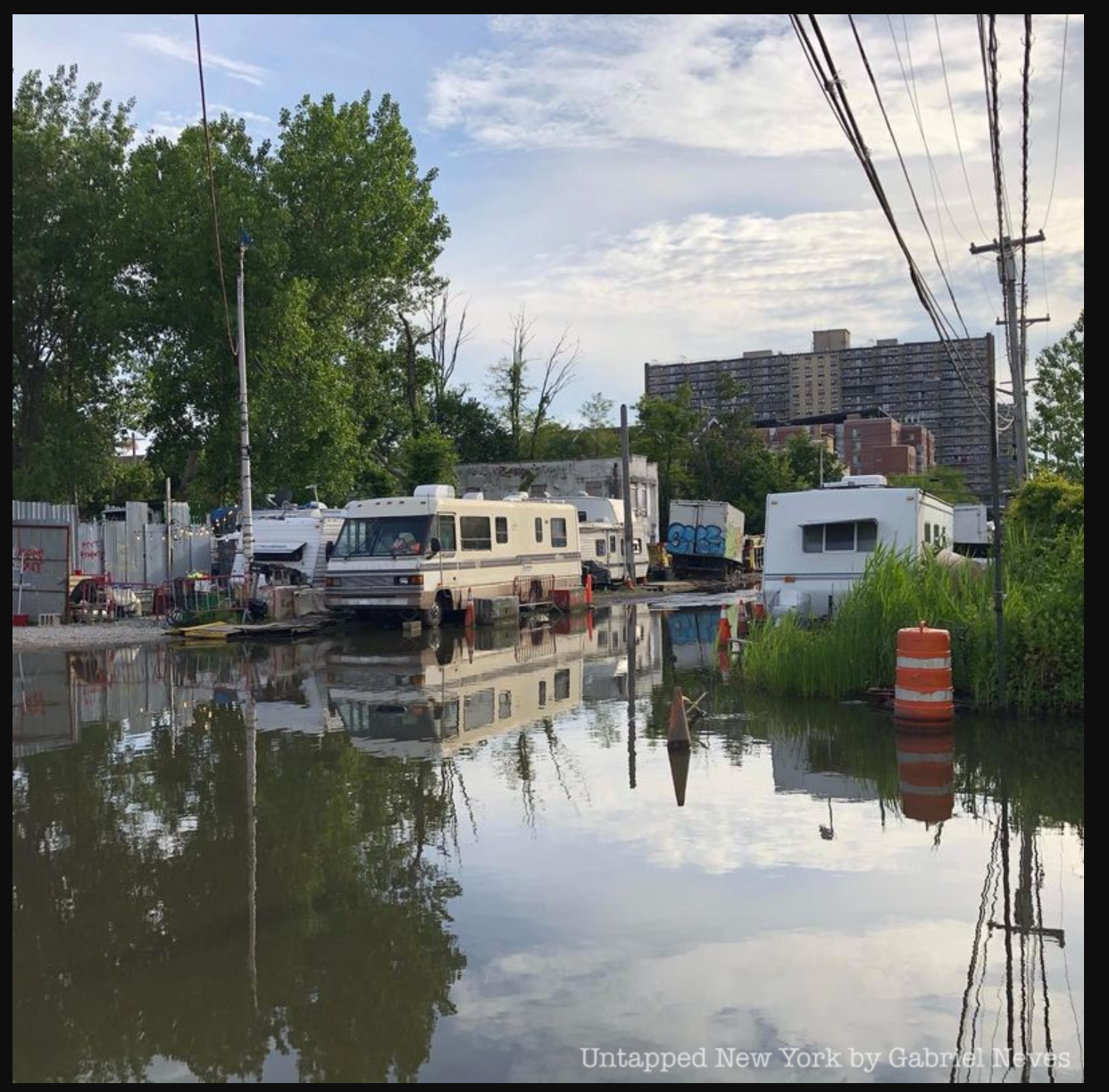
The Hole had a reputation that’d curl a mobster’s hair. It was a dank underbelly of the city, sitting thirty feet below the rest like a dirty secret. It was the city’s afterthought, a neighborhood swallowed by the infrastructure and indifference, where houses teetered on the brink of collapse, the law was just a rumor. Where even water has nowhere else to go.
My ’63 Bel Air came to a rest outside an all-night diner that looked like it served more trouble than coffee. The sign out front flickered a sickly hue of orange, a weary beacon to the lost souls seeking refuge from their own bad decisions. Inside, the air was a cocktail of grease, tobacco, and the tang of desperation. I slid into a booth that had seen better nights, my back to the wall, always facing the door. You learned to watch your own back in The Hole.
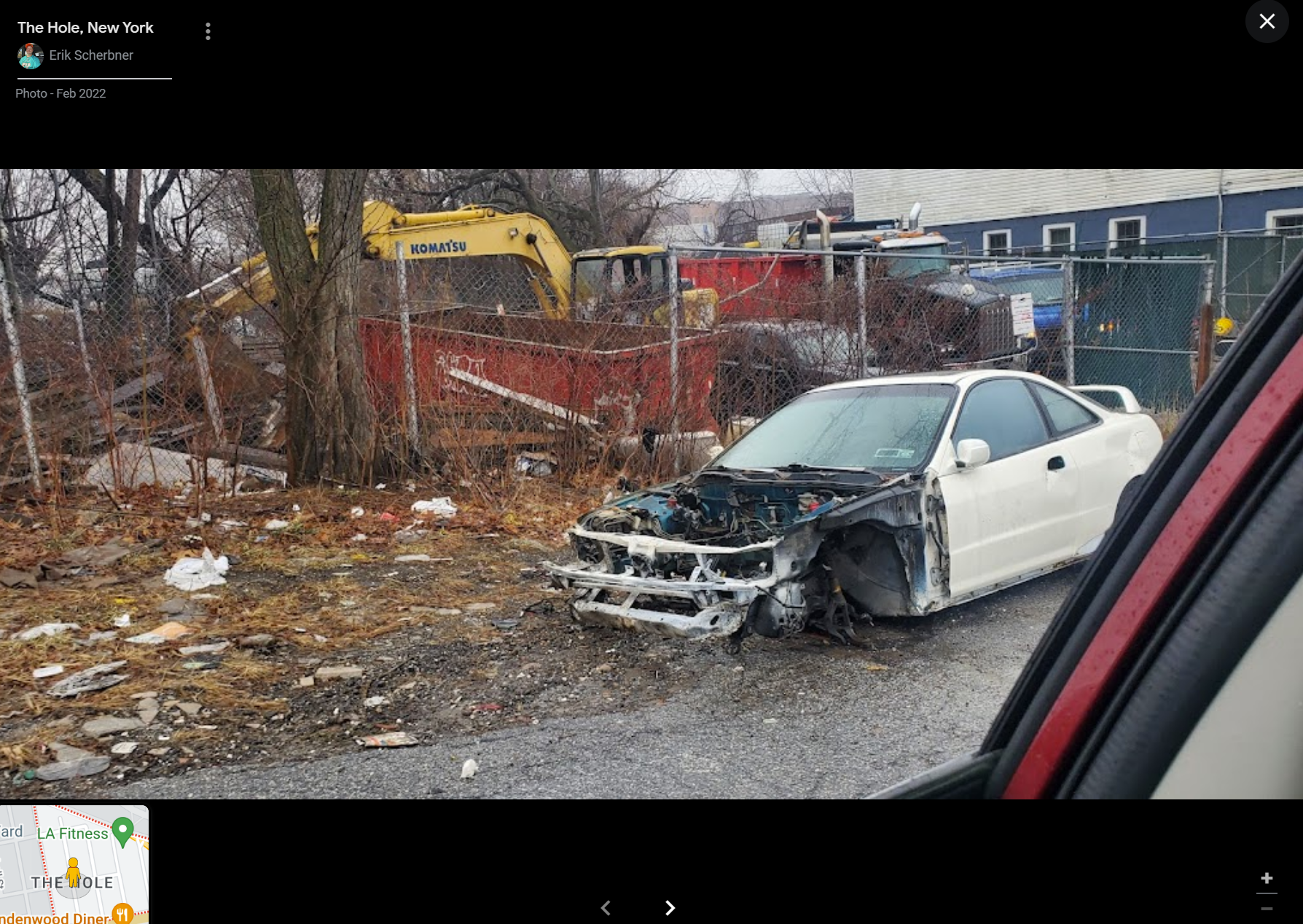
Photograph of “The Hole” scraped from the internet with credit to Erik Schebner
The waitress, a broad with more miles on her than my Chevy, slid over to me. “What’s it gonna be, mister?” she asked, her voice husky from too many cigarettes and not enough dreams.
“Coffee, black,” I replied, scanning the room for the face I was supposed to meet. He was a two-bit informant with a rap sheet longer than the Brooklyn Bridge. But he had a line on what was going down in The Hole, and I needed the inside scoop.
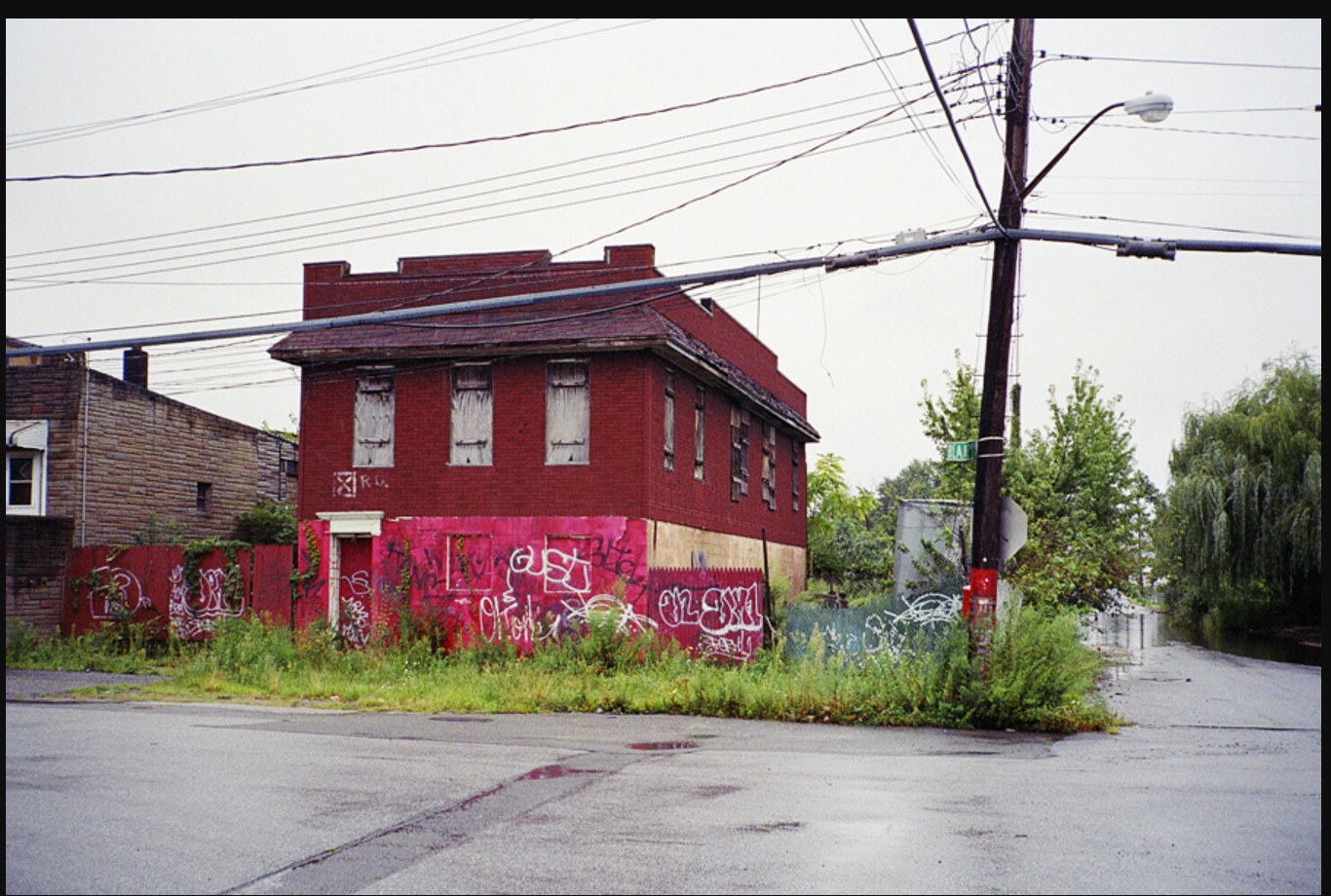
The Hole didn’t do gentle wakes; it was a sledgehammer of reality from the get-go. This was a corner of Queens that spat out the bones of the American Dream like it was chewing tobacco. The buildings, adorned with the scars of graffiti, stood like a row of rotten teeth, and the streets had potholes big enough to bury a body in. And bury they did; the marshy grounds were rumored to be a final resting place for those who crossed the wrong people, where wise guys played hide and seek with a .38.
Photograph of “The Hole” scraped from the internet, photographer anonymous.
I sipped my coffee, hot and bitter as the wind that whistled through the bullet holes of the stop sign outside. The streets were quiet, but that kind of quiet that screams trouble, like the breathless calm before a storm. The Hole didn’t do sunshine and rainbows. It did rain that fell like tears of the angels too drunk to care anymore, soaking through your coat and into your bones.
The door creaked open, and in walked my informant, Joey “The Snitch” Wakovski. He scanned the room with eyes that darted like roaches when the lights flick on. Spotting me, he shuffled over, each step a testament to a life misspent.
“You got something for me, Joey?” I asked without pleasantries. Time was a luxury in The Hole. It had a habit of running out, often along with your luck.
“Yeah, yeah,” he muttered, eyes fixed on the swirling black depths of my coffee. “There’s talk, see. The Kamorovs are moving in on the Guerreros’ turf. Gonna be a bloodbath.”
The Kamorovs and Guerreros were The Hole’s version of royalty, if royalty’s crowns were made of brass knuckles and their scepters were Tommy guns. A war between them would turn the streets into a butcher’s shop.
Location of “The Hole” scraped from Google Maps
“Any idea when?” I pressed.
“Soon,” he hissed, glancing over his shoulder. “They’re loading up. Guns coming in from upstate. It’s gonna be big.”
The waitress sauntered over, eyeing Joey with suspicion before she asked, “You havin’ anything?”
He shook his head. “Nah, just the news.”
She shrugged and walked away, her interest in our conversation as dead as my third-grade goldfish. I dropped a few bills on the table. “Thanks, Joey. Keep your head down, huh?”
He snorted. “In The Hole, better to keep it up. That way, you see the reaper coming.”
I left him there, nursing the paranoia that kept him breathing, and stepped back into the streets. The sun had finally broken through, casting a light that seemed almost indecent against the grime. But it did little to warm the chill that had settled in my gut.
The Hole was about to explode, and blood was going to flow through these streets like a biblical flood. The Gavellis and the Morans would dance their deadly dance, and The Hole would swallow up the losers, no questions asked.
As I headed back to my car, the city was waking up, the sounds of life starting to bubble up from the cracks in the pavement. But The Hole remained asleep, dreaming its dark, twisted dreams. It was a place out of time, a relic, a ghostly echo of New York’s dirtiest secrets. And I was knee-deep in its muck, trying to stay afloat.
Flooding in “The Hole.” Scraped from the internet. Photograph Credit, “Untapped New York by Gabriel Neves.”
The first chapter of my day was coming to a close, and I knew the rest of the story was going to be written in blood and bullets.
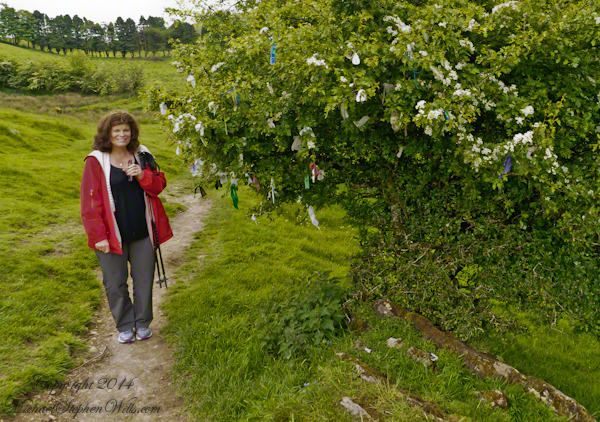
The popular name of the Loughcrew megalithic site is, “The Hill of the Witch” (In Irish, Sliabh na Caillí). In lore sites such as this are associated with The Others (“fairies”), living lives parallel and invisible to ours, touched now and then with resolutely ill effect to our side though sometimes theirs as well. Resolute as in these meetings are fated to end poorly unless…..unless the mortal knows the rules. “If you are ever in an Other’s mansion for a party never, ever eat or drink anything. Eating or drinking will condemn you to an eternal round of parties. You will dance till dropping every night.” Rules such as that, and others, can be used to turn the tables, gain an advantage, of beings from the Other Side. The story of my wife, Pam, how our lives came to be touched by this afternoon of May 27, 2014, is parallel to the tales of mortals benefiting from contact with The Others. The immediate source was the passing of my mother, Catherine Ann Wills (McCardle), at the age of 90. Mom’s passport gave her place of birth as Proleek, a place in Louth. My maternal grandmother, Mary Catherine McCardle (Mills) spoke with a brogue, less a lilt than a down to earth and kind warmth. I remembered the stories of Mom’s passage to Canada with her mother and father in 1926 at the age of three. The Ireland connection with my father was less direct as I never met his mother as an adult and we seldom spoke of her. It was left to me in the time between my Mom’s passing, an invitation for a visit from our cousin’s in County Louth, and our arrival May 2014 to understand more about Elizabeth (Duffy) Wills, my paternal grandmother. In this way, I discovered Elizabeth came from a family of Dunderry, County Meath, Ireland, her parents Matthew and Teresa (Plunket) Duffy; our tour of Ireland came to start from a bed and breakfast near Trim, County Meath, with Dunderry up the road. May 27th, we planned as an exploration of all things County Meath, to include Loughcrew, the highest point of the county in the west. Along the steep path to the hilltop a hawthorn tree covered with flowers and offerings welcomes visitors. May is the month for decorating hawthorns, the blossoms are also known as “Mayflowers” as in the ship the pilgrims sailed to Plymouth Rock.
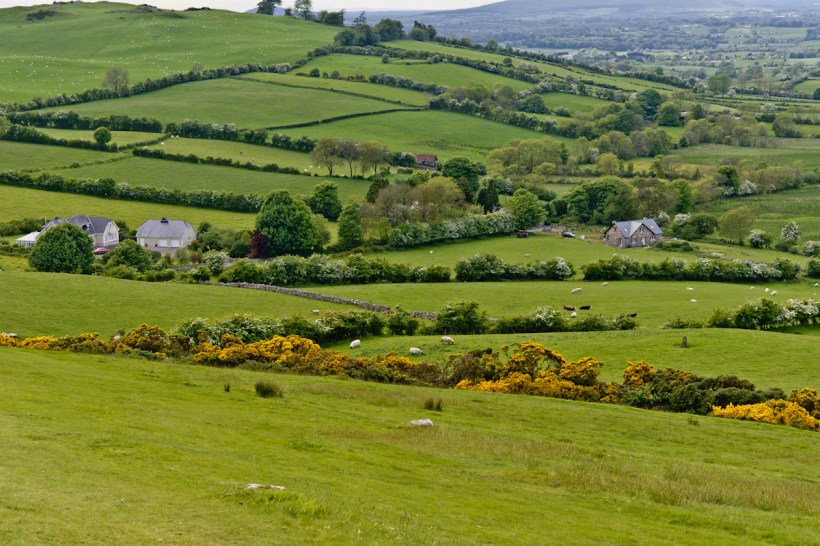
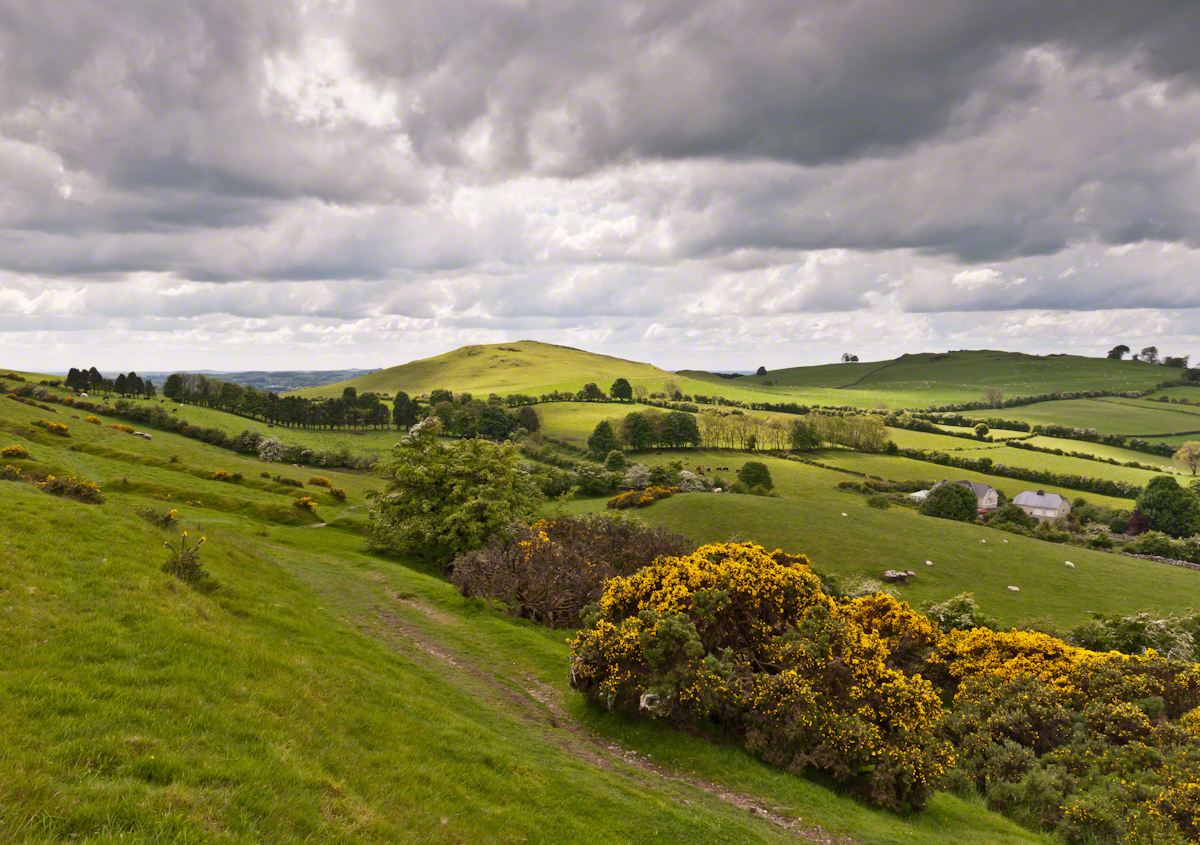
As if we entered a gateway, when pausing and turning high on the hill, this view was revealed, otherworldly in its fullness, scope and wonder as though we passed to the other side to the fairies. Cairnbane East of the Loughcrew Cairns site, County Meath Ireland, is also known as Hag’s Mountain. We are looking south, southwest from the north side toward Cairnbane West. Flowering yellow whin bush, also known as gorse, is in foreground; white flowering hawthorn trees in distance. No elements of this photograph hint at the year 2014.
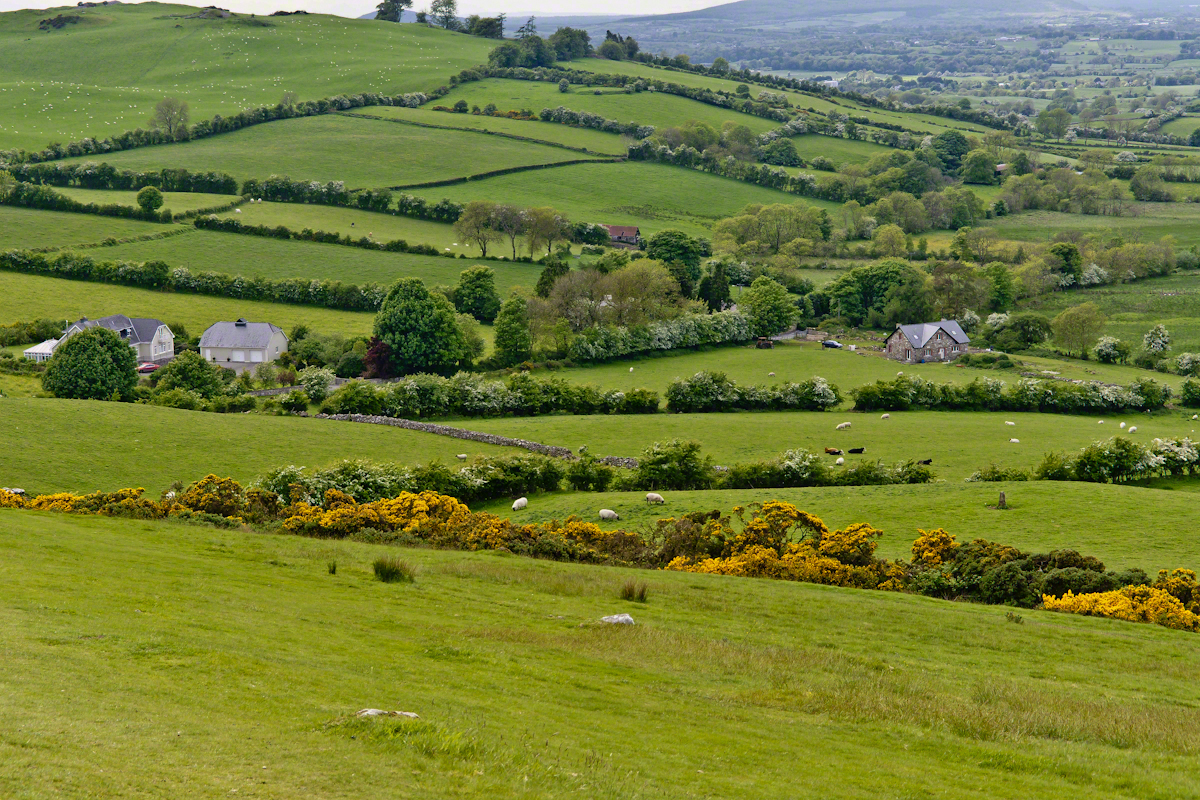
A solitary standing stone below the trail to the Loughcrew site surrounded by whin bush in yellow flower and white blooms of hawthorn hedge rows. A fieldstone fence, farmhouses, a patchwork quilt of fields completes the view.
Meanwhile, in the real world, when Pam and I complete our round of the island to return to my cousins in County Louth, they told us, on this day, two young men were discovered parked next to a nearby lough, murdered during a drug deal gone bad.

 Michael Stephen Wills Photography