The desert air was sharp, dry, and oddly invigorating as I stepped into the gallery at Arcosanti, Arizona. The year was 2005, and I had long dreamed of visiting this experimental micro-city—a fusion of architecture and ecology conceived by Paolo Soleri. Amidst the array of sketches, photographs, and miniature prototypes stood the centerpiece of my curiosity: the sprawling, intricate scale model of “Arcosanti 5000.” It was as though the future had been condensed into a tangible artifact, whispering promises of an alternative way of living.
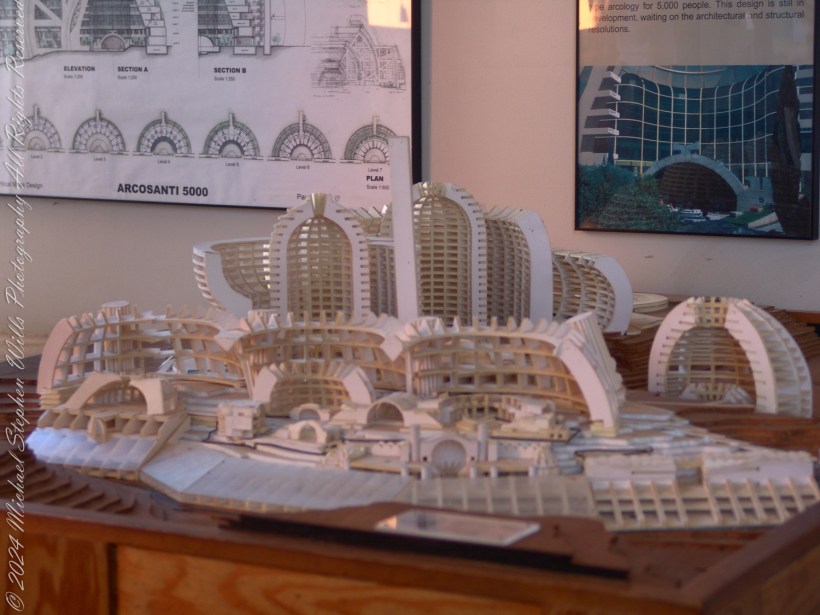
The model was perched on a wooden table, surrounded by blueprints and diagrams. Its sweeping curves and layered structures evoked the natural patterns of a canyon or the unfurling petals of a desert flower. I leaned in, drawn to its labyrinthine details: the arches that seemed to embrace the air itself, the layered grids suggesting terraces and communal spaces, and the towering central spire—a striking focal point that anchored the design. The model was an architectural plan, a vision made tactile, a conversation between the human spirit and the earth it inhabits.
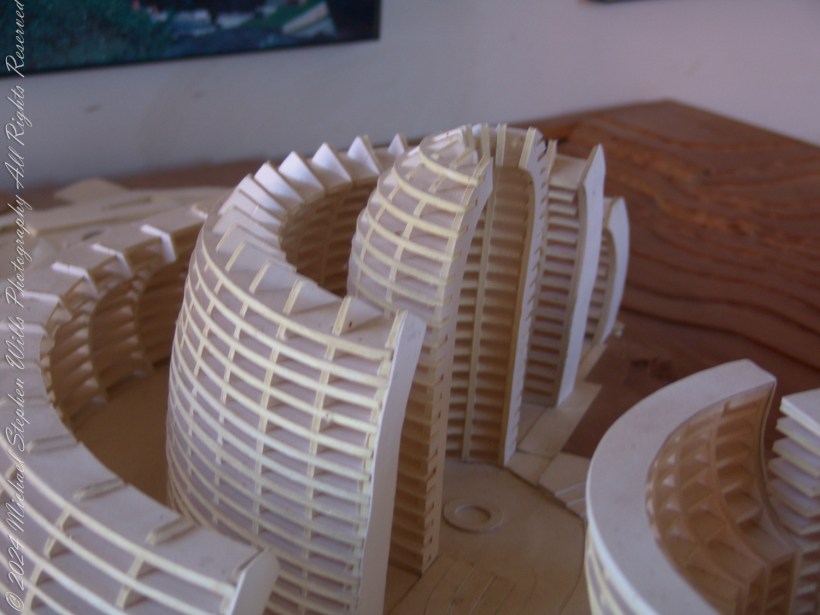
As I circled the table, I tried to imagine life within these walls. Here was the apse architecture that Soleri had championed—a structural form both futuristic and deeply rooted in the land. Its curves seemed to reject the cold rigidity of modern urbanity, embracing instead a harmonious fluidity. What would it feel like to wake up in one of these units, to look out through those sweeping arches and see the desert alive with light and shadow?
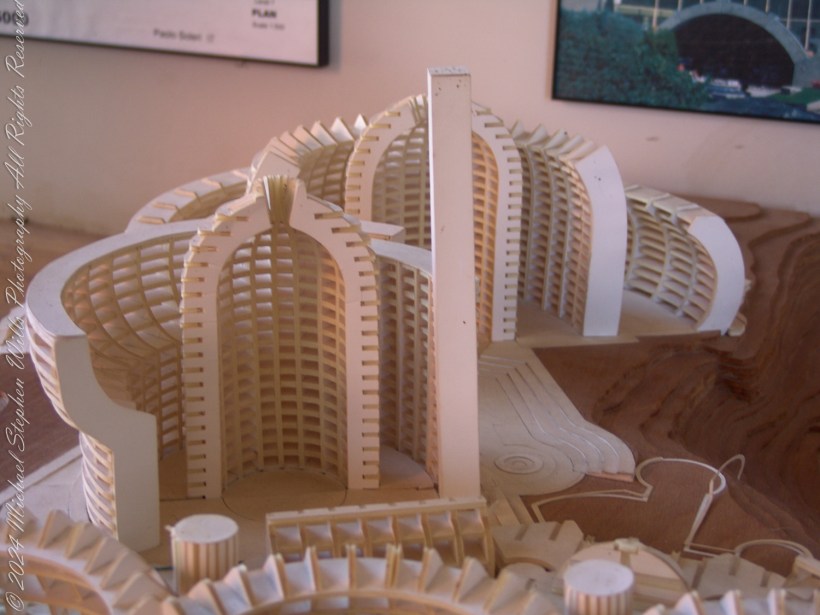
The plaque nearby described this design as part of a “Super Critical Mass” initiative, envisioned for a population of 5,000. The model represented an evolution from earlier prototypes, incorporating what Soleri called “nudging spaces”—areas designed to encourage spontaneous human interaction. I thought of my own neighborhood back home, how it felt fractured and isolated by its grids of asphalt and fenced-off yards. Could this model offer a blueprint for healing that divide?
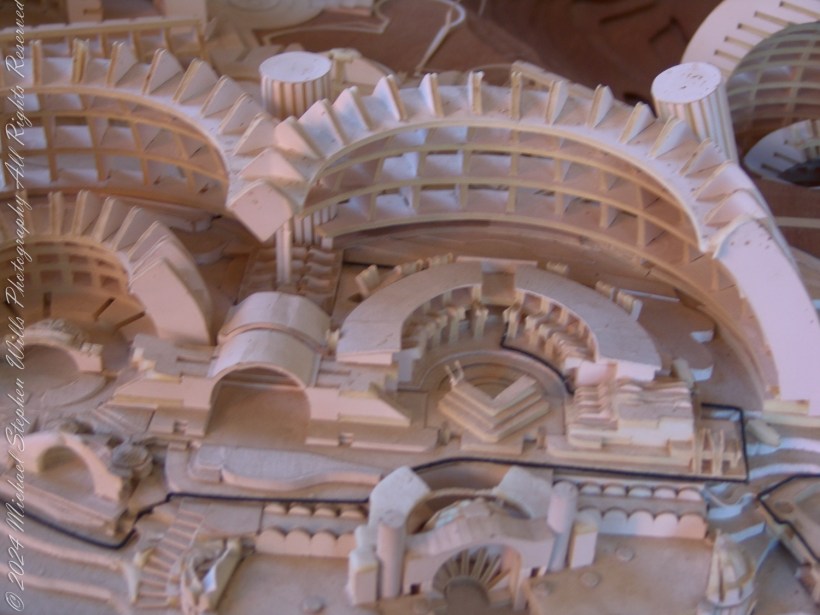
I moved closer, tracing the pathways with my eyes. The tiny staircases, the shaded atriums, the terraced gardens—they spoke of a life integrated with nature, of a city that tread lightly upon its environment. The thought was thrilling, but also sobering. The challenges of realizing such a vision in the sprawling chaos of modern development loomed large in my mind. Could humanity ever truly embrace such radical simplicity?
In that moment, the gallery was silent except for the soft click of my camera. I wanted to capture not just the model, but the feeling it evoked—the delicate balance of hope and humility. The metadata on the image files would later remind me of the precise day and hour I stood there, absorbing this vision of what might be. But no timestamp could fully capture the spark it ignited—a sense that, even in a world burdened by consumption and waste, there remained a path forward, winding like a desert trail through arches of light and shadow.
 Michael Stephen Wills Photography