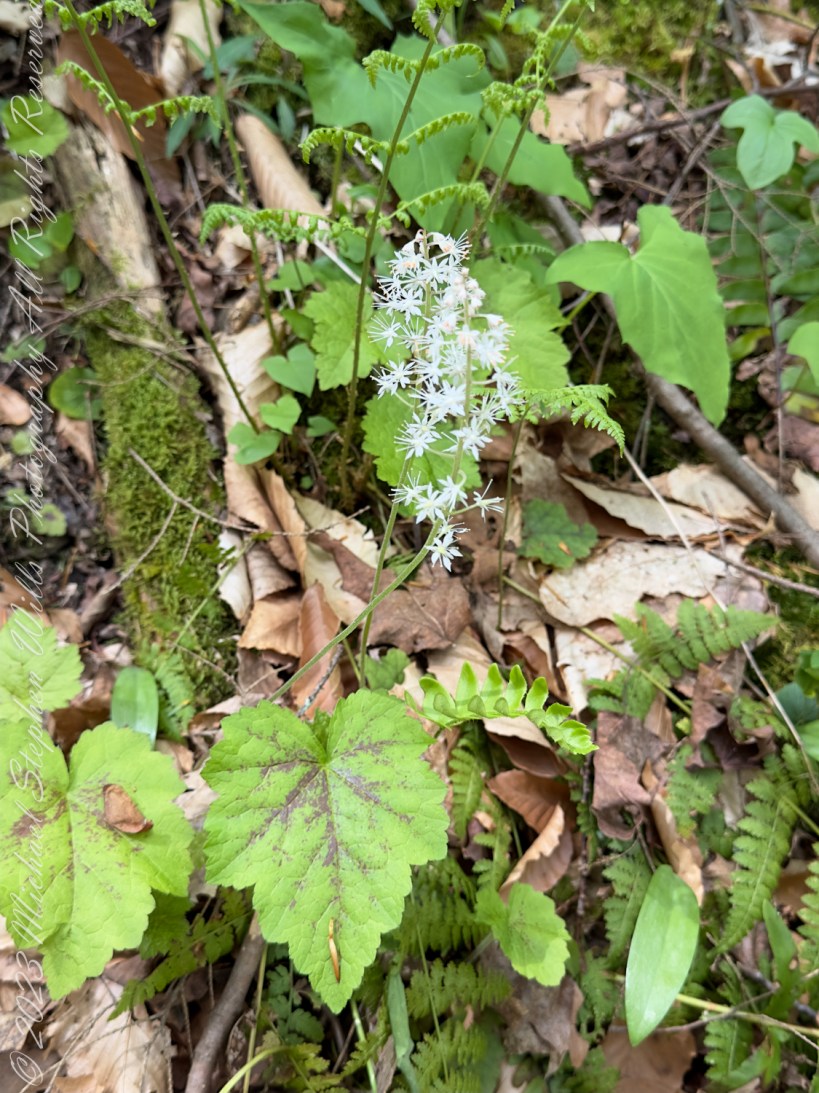
Amid the echoing call of the Treman gorge, the Heartleaf Foamflower (Tiarella cordifolia) emerges as a charming herald of spring. This modest yet captivating wildflower, with its star-like blossoms and heart-shaped leaves, offers a delightful study of nature’s intricate designs and adaptations.
Natural History of Heartleaf Foamflower
Tiarella cordifolia, commonly known as Heartleaf Foamflower, belongs to the saxifrage family. It thrives under the dappled shade of deciduous forests, often forming lush carpets along the moist, rich soils near streams or on the shaded forest floor. The Heartleaf Foamflower blooms in the late spring, presenting delicate white flowers that rise above the foliage on thin, wiry stems. These blossoms cluster into spiky foamy plumes, giving the plant its descriptive name.
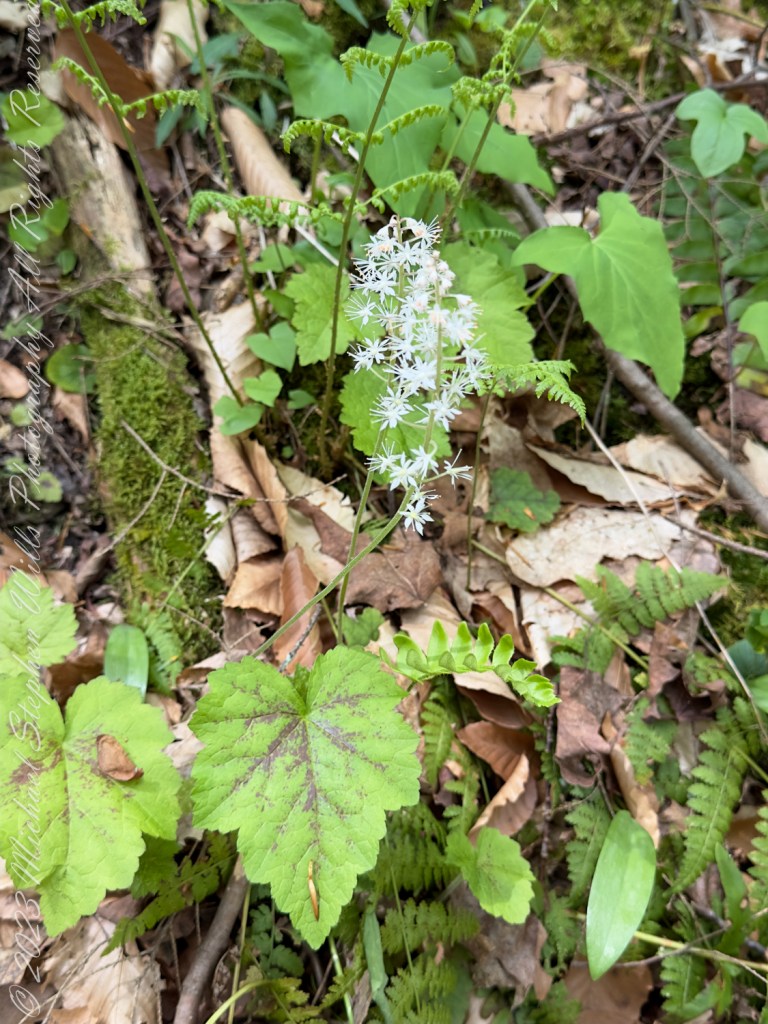
In Robert H. Treman State Park, known for its deep gorge and cascading waterfalls, the Heartleaf Foamflower adds a layer of understated elegance to the rugged landscape. Here, the plant benefits from the high humidity and the protective canopy of mature trees, conditions that mirror the environments of its ancestral wilds.
Propagation in the Wild
Propagation of the Heartleaf Foamflower is a testament to its resilience and adaptability. The plant spreads primarily through stolons—horizontal runners that extend from the parent plant and root at nodes to form new clones. This vegetative reproduction allows dense colonies of foamflower to develop, creating a continuous undergrowth that stabilizes the soil and adds to the forest’s understorey diversity. After flowering, the foamflower produces dry capsules that release tiny seeds, capable of germinating under the right moisture and shade conditions, further expanding its reach within its habitat.
Uses by Humanity
While not widely known for its medicinal or culinary uses, the Heartleaf Foamflower holds a place in traditional gardening and native plant landscaping. Its ability to form dense ground covers and its charming appearance make it a favorite among gardeners looking to emulate a woodland setting. Beyond aesthetics, the foamflower serves as an ecological staple in native plant gardens, supporting local pollinators and contributing to the biodiversity of garden ecosystems.
Fanciful Exploration
Imagine a time when the floors of what now is Treman Gorge were untouched by trails or footprints. In this ancient tableau, the Heartleaf Foamflower quietly asserted its presence. Those soft white blooms a stark contrast to the deep greens and earthen browns of the forest floor. Native Americans might have admired its beauty or recognized its value in the tapestry of the woodland realm.
Today, visitors to Robert H. Treman State Park can witness this enduring beauty. As they wander along the gorge’s paths, they tread near these floral gems, stepping through the pages of a natural history that continues to unfold with each blooming season. The Heartleaf Foamflower, with its humble grace and enduring spirit, remains a symbol of the wild and pristine beauty that Treman Gorge has preserved through the ages.
 Michael Stephen Wills Photography