The decorated stone in front of the Newgrange monument entrance is known as the Entrance Stone, or Kerbstone 1 (K1). This stone is famous for its intricate and highly skilled Neolithic rock art, which includes various forms of spirals, lozenges, and other geometric designs. It’s one of the most striking and well-known examples of megalithic art in Europe, and it plays a significant role in the overall allure and mystery of the Newgrange site, which is a part of the Brú na Bóinne complex in County Meath, Ireland.
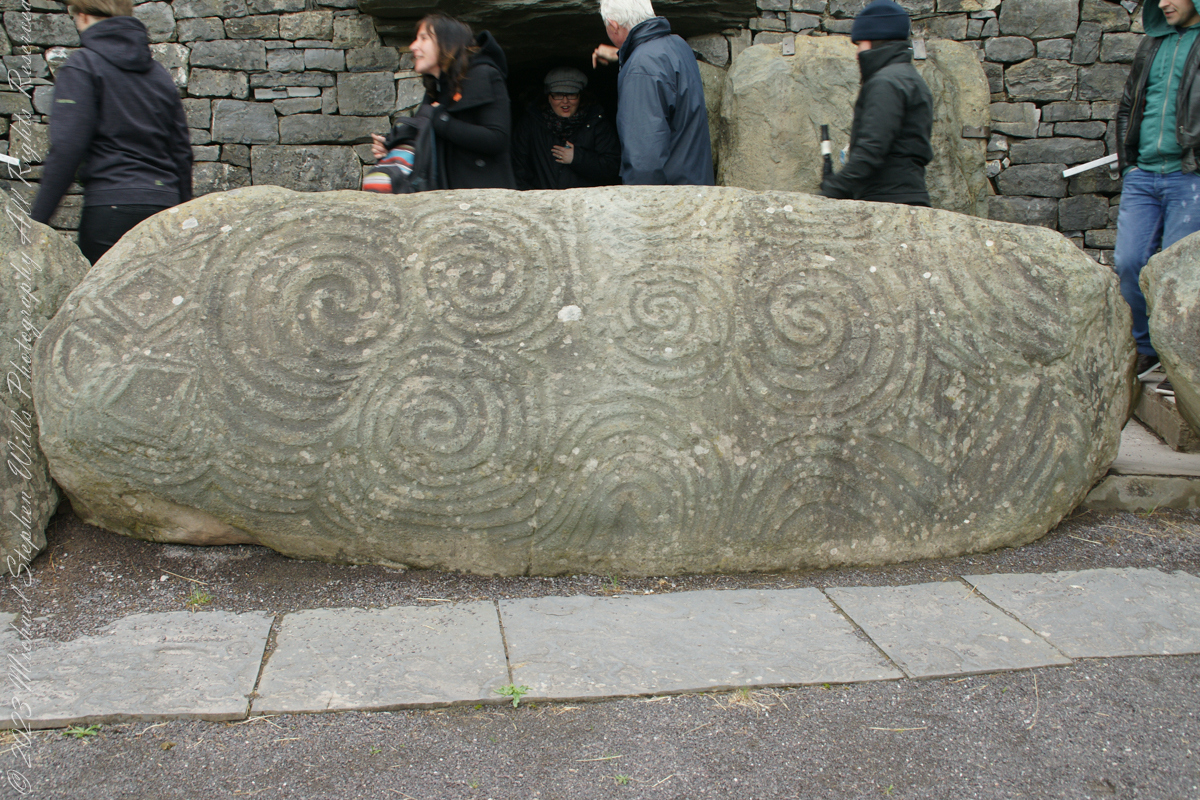
Intriguingly, the interpretations of the symbols found on this stone, such as spirals and swirls, are not mutually exclusive. Instead, they may indeed be synergistic. Spirals and swirls are some of the most iconic and intriguing motifs found in Neolithic rock art. These symbols, prevalent at sites like Newgrange in Ireland, hold a deep fascination due to both their aesthetic appeal and their mysterious origins and meanings. Let’s delve into their occurrence and potential interpretations:
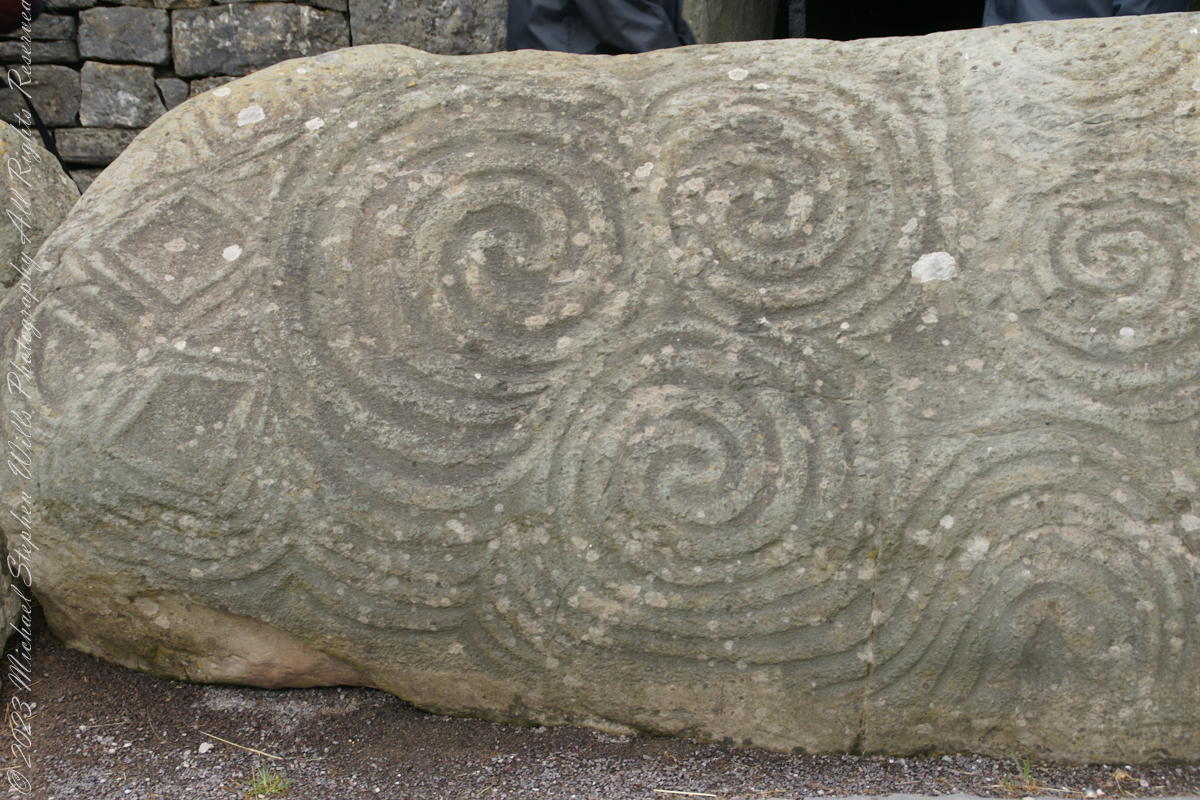
Occurrence in Neolithic Art: Spirals and swirls are common in the rock art of Neolithic Europe, notably at megalithic monuments. They are found on entrance stones, passage walls, and inside chambers of these ancient structures. The most famous examples can be seen at Newgrange, Knowth, and Dowth in the Boyne Valley, Ireland.
Symbolic Interpretations: The exact meaning of these symbols to the Neolithic people remains speculative, as there are no written records from this period. However, several theories exist:
Astronomical Representations: Some researchers believe that these symbols could represent celestial bodies or events. The spiral, for instance, might symbolize the sun or the cycle of seasons. This interpretation is supported by the astronomical alignments found in many megalithic structures.
Spiritual or Ritual Significance: Spirals could have held spiritual meanings, perhaps representing concepts of life, death, rebirth, or the journey of the soul. The repetitive and concentric nature of spirals might symbolize the cycle of life and nature’s continuous regeneration.
Markers of Sacred Spaces: These symbols might have been used to mark special or sacred areas within the monuments. Their presence could indicate a place of ritual importance or spiritual significance.
Artistic Expression: Beyond symbolic interpretations, it’s also possible that these motifs were simply artistic expressions of the Neolithic people, reflecting their aesthetic preferences and skills.
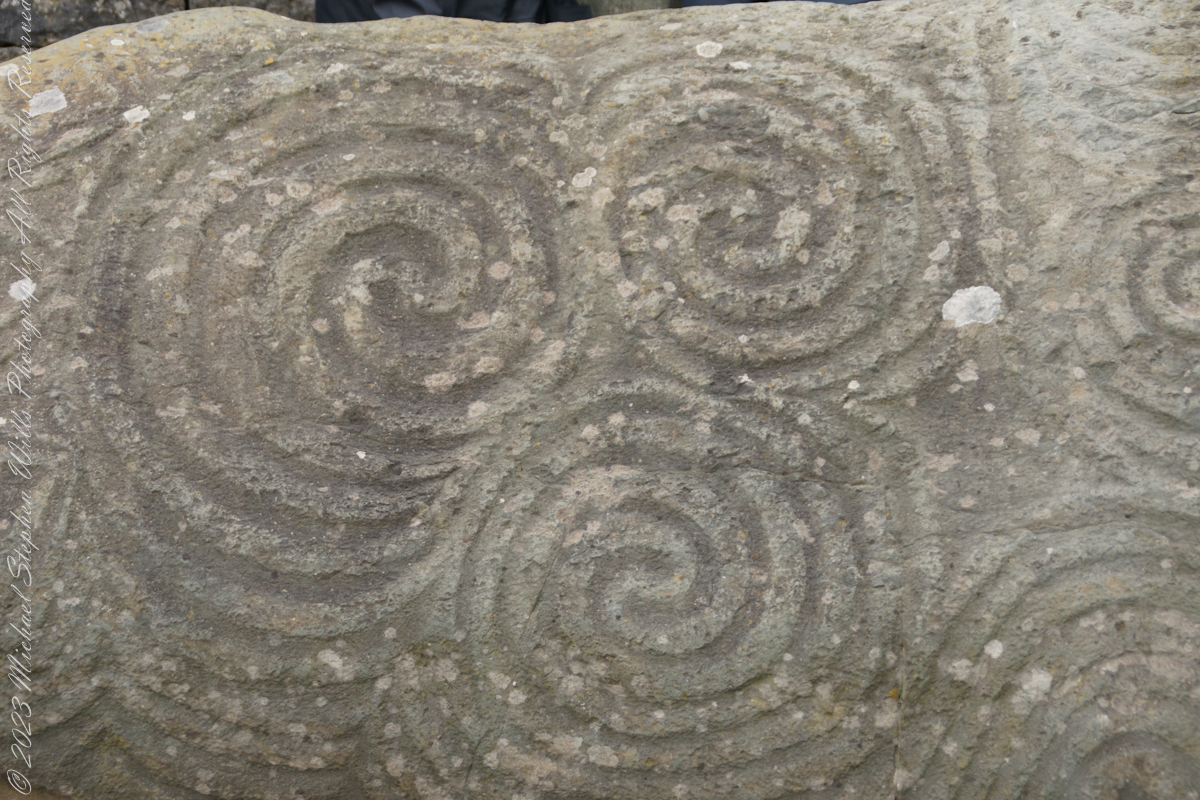
Techniques and Styles: The creation of these motifs required skill and understanding of the medium. Different techniques were employed, such as incising, pecking, or carving into the rock surface. The style and execution of spirals and swirls can vary greatly from one site to another, suggesting a rich diversity in Neolithic art across different regions.
Cultural Connections: Similar motifs have been found in Neolithic sites across Europe, indicating some level of cultural connection or shared symbolic language among these ancient communities.
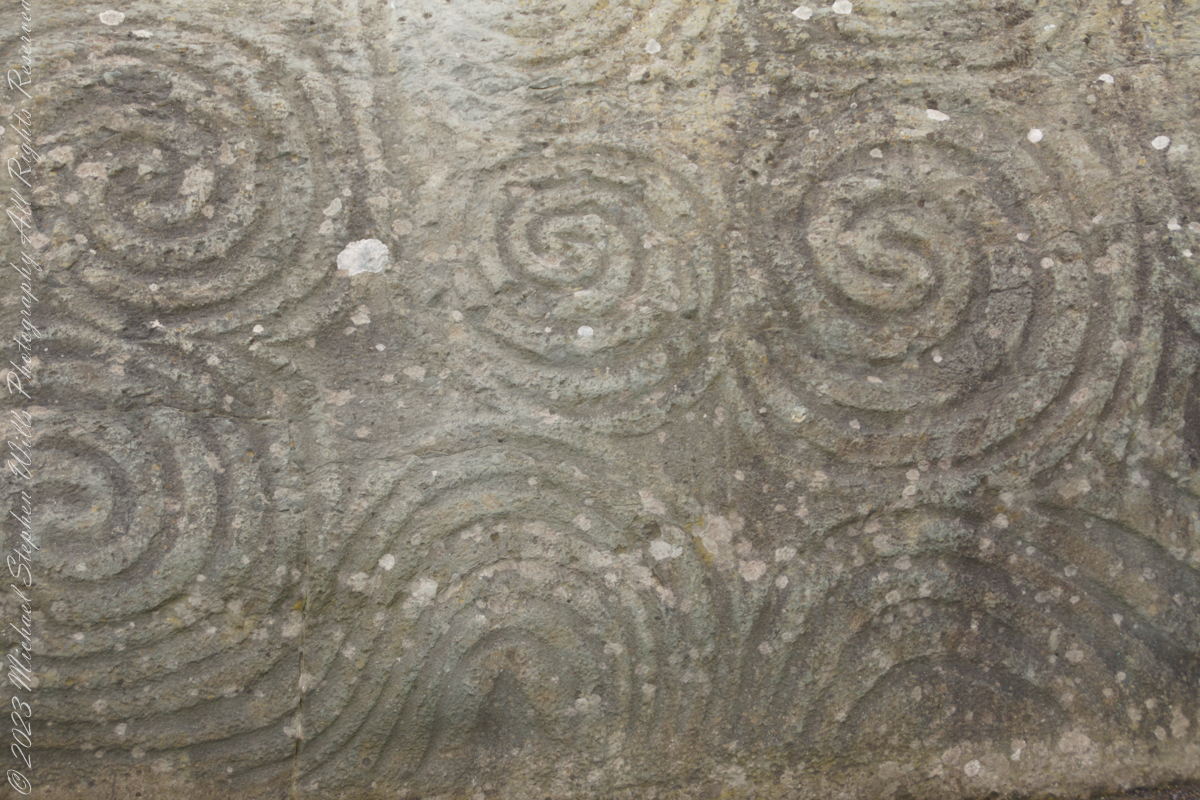
Modern Interpretations and Influence: These ancient symbols continue to inspire modern artists and hold cultural significance. They often feature in contemporary art and design, connecting us to our Neolithic ancestors.
In summary, while the precise meanings of spirals and swirls in Neolithic rock art might remain elusive, their presence is a testament to the artistic skill and possibly the spiritual and cultural world of the people who created them. They remain an enduring mystery and a link to our distant past.
Click Me for the first post of this series.
 Michael Stephen Wills Photography
Nice post ✍️
LikeLiked by 1 person
Thanks so much, Satyam.
LikeLike
The conjectures aren’t mutually exclusive. Something frequently happens for more than one reason, and with more than one purpose.
LikeLiked by 2 people
Quite true, Steve. I revised the post to reflect this insight. Thank You.
LikeLiked by 1 person