They came north out of Chinle with the day already leaning west and the sun fallen low into the drag of horizon dust and the road ran flat and empty past rust hills and mesquite country until, turning into the sun at Mexican Water, after a long hour, at last they pulled into Kayenta where the streets lay quiet under the heavy sun and the windows of the store fronts cast their amber light out across the sand drifting across sidewalks and the wind stirred only faintly and then was still.
They left their bags in the room and turned north again without speaking. The son drove. A man, his father, sat quiet beside him and the sun slid low through the windshield and the sky was pale and cloudless and wide beyond reckoning.
The land began to rise and the road bent and climbed and fell again and then it came into view. Not slowly. Not like a curtain rising. It was simply there.
A shape in the far desert.
Like a ship that had grounded in a sea long vanished. A sheer mesa the color of blood and ochre and fire where the last of the day spilled westward and caught the rock face and made it burn.
He told the son to pull off. They stopped the car and got out and the sound of the engine fell away, the desert made no sound at all.
The man stood in the road and turned slowly. Eagle Mesa lay before him and the land stretched off in every direction and the fenceposts ran on into silence and the sky seemed to rest upon the buttes as if tired.
There were names for these places. Old names. Navajo names that spoke of eagles roosting and trees once there and water that came and went and did not come again. The mesa they called Wide Rock. The place where spirits go. He did not know the words but he knew the feeling.
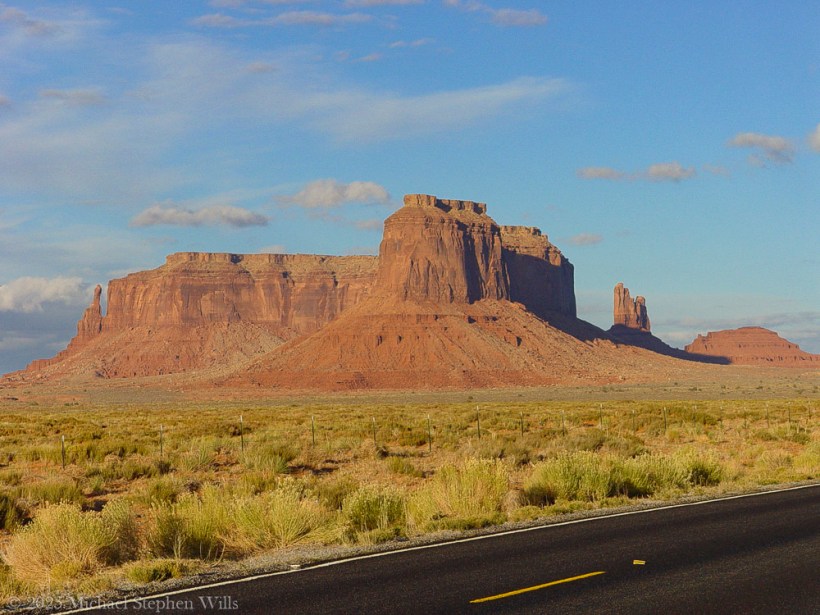
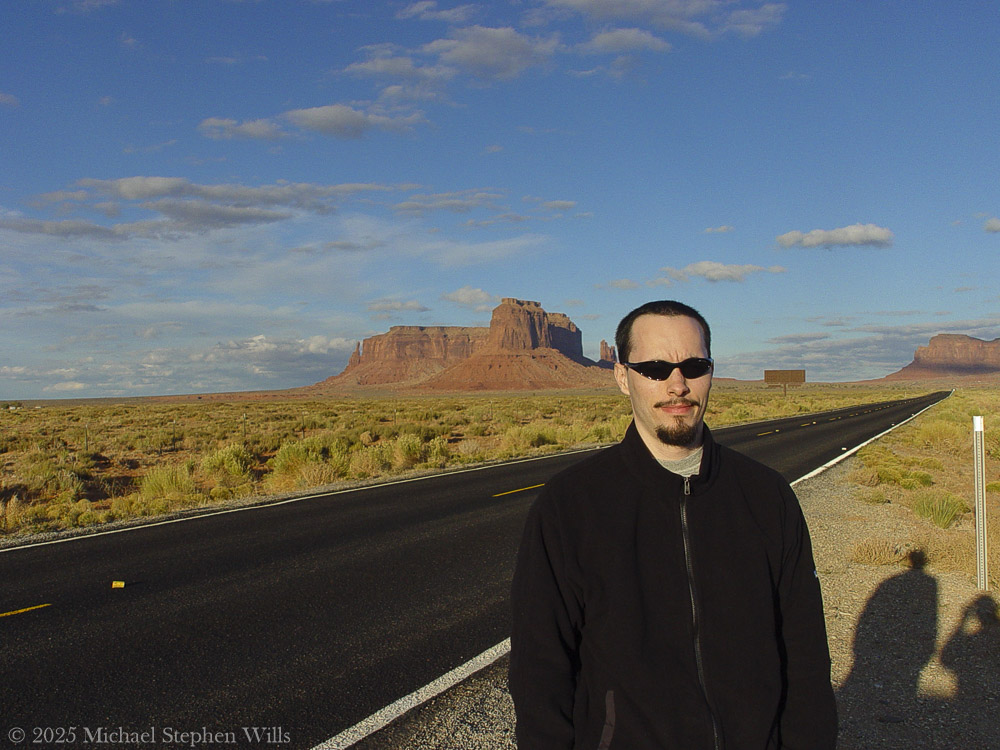
The son came and stood beside him and did not speak. The man lifted the camera and took a photograph and then another. The road behind them shimmered with the last heat of day. He took another picture his son, dressed in black, his arms at rest and the red mesa rising behind him and the shadows of their bodies cast long across the gravel and the shoulder of the road.
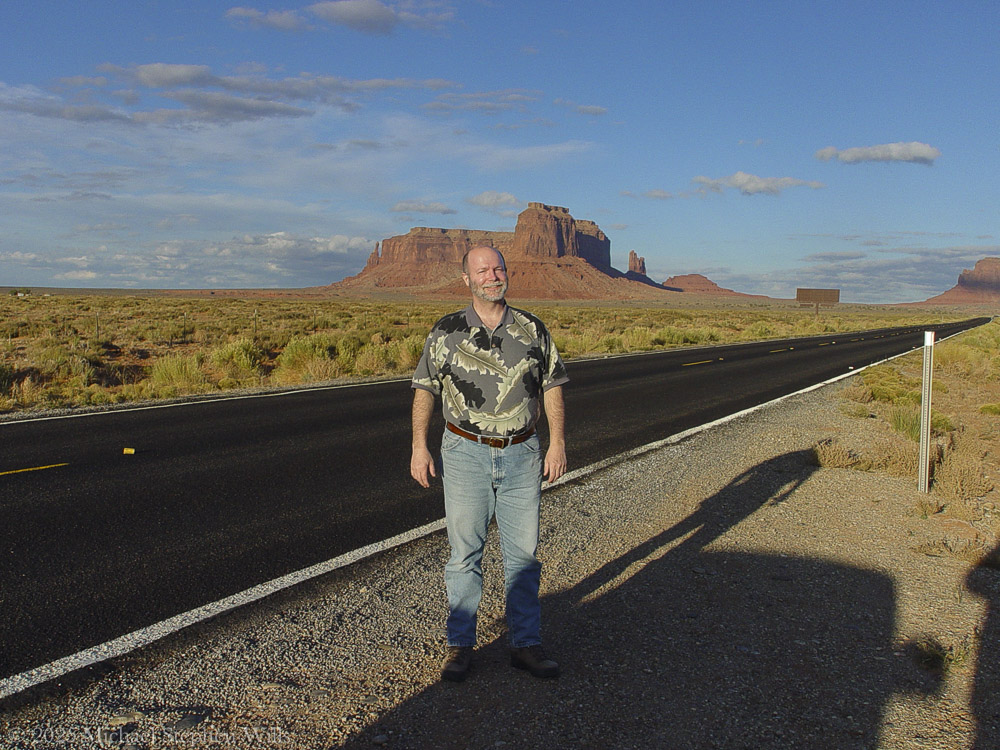
They took turns with the camera. The son caught him midstride and smiling lit by sunlight, the land stretching out all around. A man small in a world not made for men.
There was no sound but the click of the shutter and the dry whisper of wind among the sage.
Later he would read that the rock was born of Organ Shale and De Chelly Sandstone and Moenkopi topped with Shinarump. He would know the spire they saw was first climbed by men named Beckey and Bjornstad and that it was called Tsé Łichii Dahazkani by those who’d named it before it ever had another name. He would know the mesa rose eleven hundred feet in less than a mile and that its runoff fed washes that fed rivers that fed nothing now.
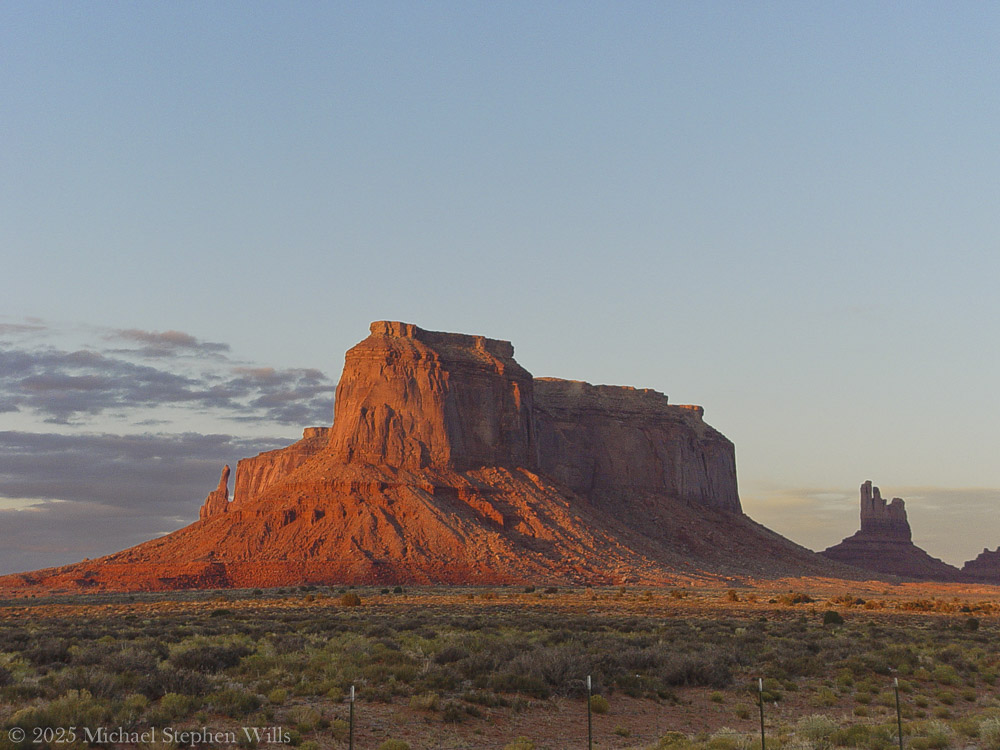
But then he only stood and watched and knew it for what it was.
Not a monument to anything but time.
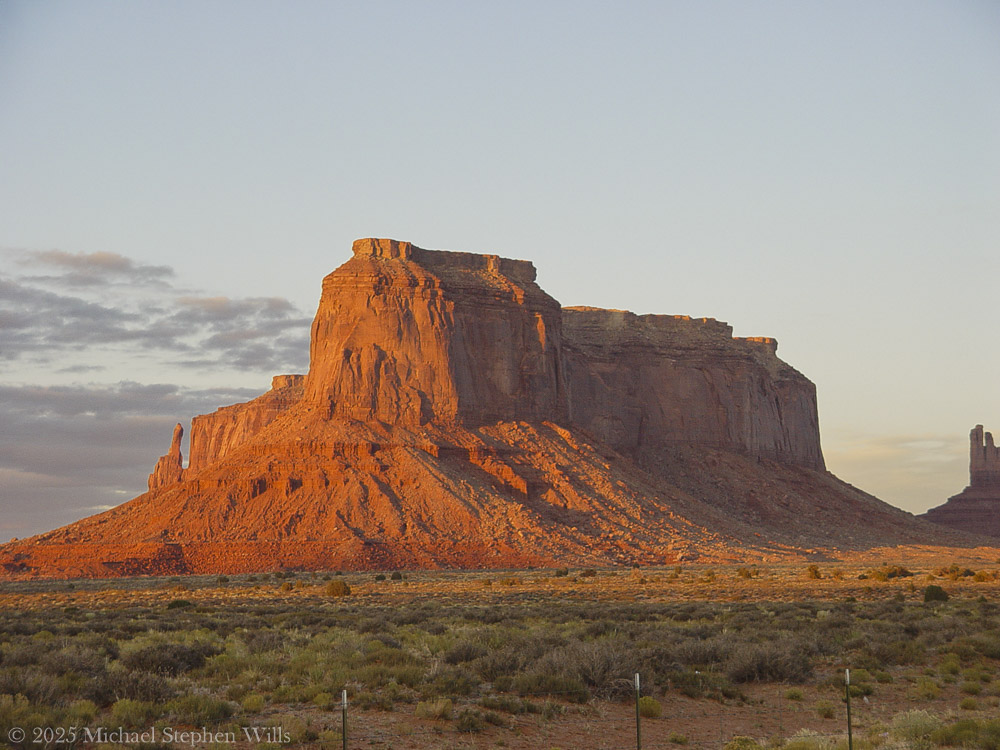
A stillness like prayer. A place that waits.
They lingered until the sun went and the sky turned iron blue and the shadows of the rock reached out across the valley floor and touched them where they stood. Then they climbed back in the car and drove south again and the road unwound behind them black and a single star above and the silence of the place held on inside them long after the valley was gone.
 Michael Stephen Wills Photography
Beautiful post and photos.
LikeLiked by 1 person
Thank you so much! I’m really glad you enjoyed both the words and the images. It means a lot to know they connected with you. I hope you’ll join me for the next post in the series—more light, more mesas, and more moments to share.
LikeLiked by 1 person
Magnificent
LikeLiked by 1 person
Thank you, Sheree! I’m so glad the post resonated with you. Your one word—Magnificent—says so much, and I’m truly grateful for it.
LikeLiked by 1 person
My pleasure Michael
LikeLiked by 1 person
You look happy (cool shirt). 🙂
LikeLiked by 1 person
Absolutely — it was a proud moment to spend with my accomplished son. Thanks for the compliment.
LikeLike
So poetic, Michael! And your words carry that “stillness like prayer”. Lovely way to start my day!
LikeLiked by 1 person
Thank you so much, Lynne. I’m honored the post could begin your day on such a note. Your kind words inspire me to keep seeking those moments that speak without sound.
LikeLiked by 1 person
It sounds like you had a great father~son trip in that scenic area of the country. In your last pictures it looks like there’s a fence that prevented you from walking closer to Eagle Mesa; is that correct?
LikeLiked by 1 person
Yeah, that and the requirement to be accompanied by a Navajo guide. The next day we toured the valley accompanied by a guide.
LikeLike
I’d say that extra burden was worth the trouble because you got to tour the valley.
LikeLiked by 1 person
Hello Michael,
This is a touching reflection of what must have been a wonderful trip with your son. I am very glad I waited till this morning to view this post – it is a perfect way to start my day.
Our warmest wishes to you and Pam. Many thanks as always for sharing.
LikeLiked by 1 person
Thank you, Takami, for starting your day with our little slice of mesa‑light! That November 2003 journey with my son still glows brightly in my memory, and it’s lovely to know the story resonated with you an ocean away. Pam sends her warmest thanks for your kind wishes. I treasure the morning we shared with you and your husband in Ithaca this past winter—Sam and Rory still talk about meeting their friends from Japan! Wishing you calm skies and inspiring light
LikeLiked by 1 person
Michael, your photography and narrative offer a depth of appreciation for this sacred landscape. Similar locations throughout the West allow us to experience the spiritual culture of Native Americans.
LikeLiked by 1 person
Thank you, BigSkyBuckeye—your words resonate like the hush of desert wind through canyon stone.
May your own journeys bring you such moments—quiet, luminous, and deeply rooted.
LikeLike
😊 ~ beautiful writing. You captured the feeling I always had when I was in the majesty of this land, but I have never been able to put into words: “A man small in a world not made for men...“ Such experiences like you have described here reveal themselves in silence. I admire how this theme drifted throughout this story – very touching.
LikeLiked by 2 people
Thank you, Dalo—your reflections always feel like a quiet echo of the very themes I’m trying to touch. That line—“a man small in a world not made for men”—came from that deep silence you mention, where words usually fall short. I’m truly honored that it resonated with your own experiences of the land. It’s a gift to share that sense of awe with someone who understands it so well. Grateful, as always, for your presence and generous words.
LikeLike