In the quiet wetlands of late summer, when cattails lift their brown torches above the reeds and dragonflies skim the still water, there is a shrub that speaks in spheres. Its language is not the pointed spear of grass or the broad fan of lily pads, but the perfect symmetry of globes—round, intricate, and startling in their precision. This is the Buttonbush, Cephalanthus occidentalis, a native of swamps, pond margins, and the soft, yielding soils where water shapes the land.
At first glance, its clusters might be mistaken for something fashioned by human hands: spiky balls arrayed along slender stems, each one a small planet bristling with tiny cells. Only in memory can we recall their summer incarnation, when each ball was a constellation of snowy blossoms, white tubular flowers extending like delicate pins from a spherical center. Bees and butterflies crowded them then, drunk on nectar, wings glinting in the sun. Hummingbirds darted in as though drawn by an unseen magnet, their beaks fitting perfectly into the narrow blossoms, a partnership written long ago in the shared script of evolution.
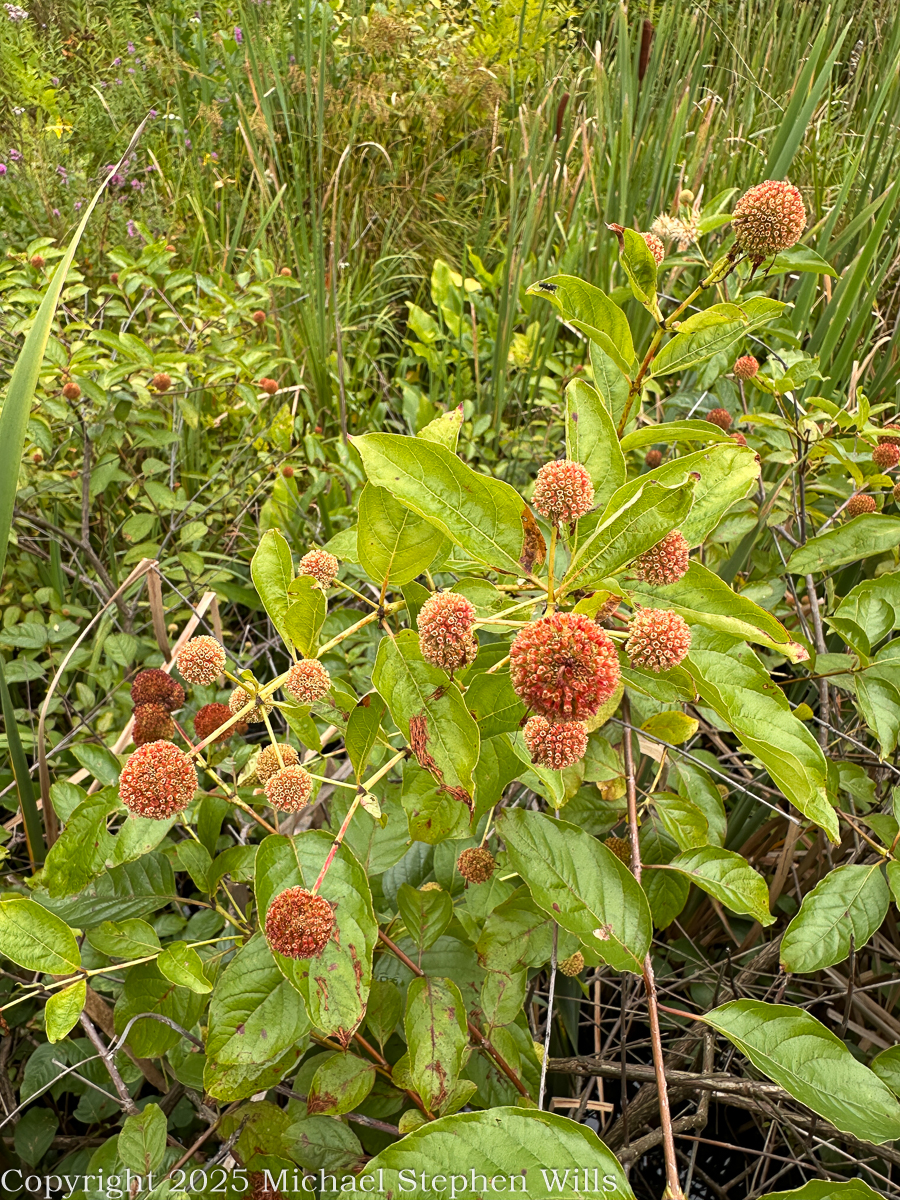
Now, in August’s waning light, those blossoms have folded back into seed, transforming into the russet orbs captured in the photograph. What was once nectar is now promise—food for ducks, shorebirds, and the small lives that depend on wetlands for sustenance. In the hands of buttonbush, time itself is circular. Flower becomes fruit, fruit becomes seed, seed becomes shrub, and the cycle spins quietly on, just as the spheres themselves suggest: complete, unbroken, eternal.
A Wetland Companion
Buttonbush is rarely alone. It thrives where cattails whisper, where pickerelweed thrusts up spikes of purple bloom, where the air holds the scent of waterlogged earth. Its roots grip the muck at the edges of ponds and rivers, holding soil against the restless tug of currents. In doing so, it becomes part of the unseen architecture that holds wetlands together, slowing erosion, filtering water, providing shelter for fish in the shade of its stems.
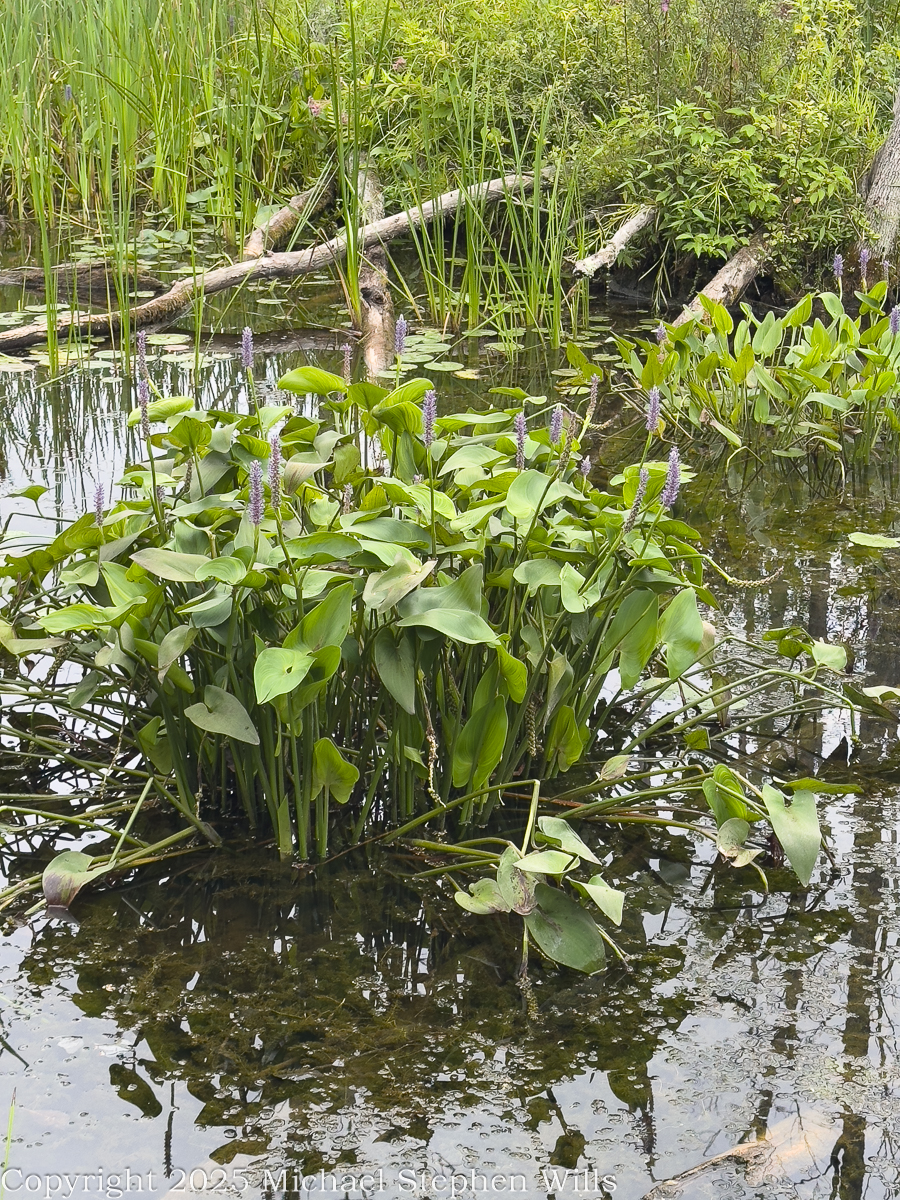
This shrub, unassuming in stature, is an engineer of stability. It creates thickets where red-winged blackbirds perch, where frogs crouch in shade, where turtles bask on half-submerged branches. The wetlands of North America would be poorer without its presence, for it provides not just beauty but the scaffolding upon which entire communities of life depend.
The Human Thread
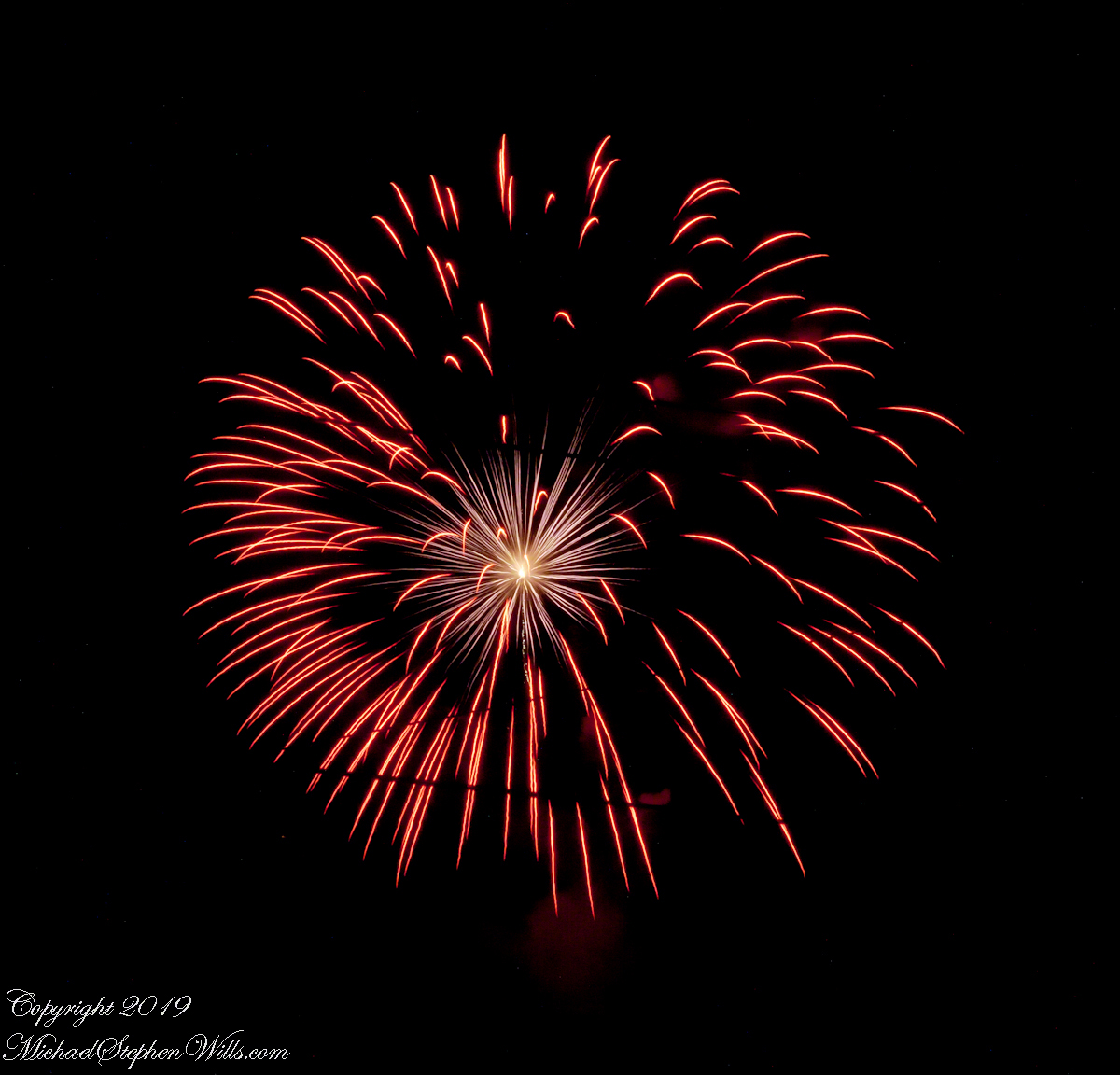
To the human eye, the buttonbush’s spherical blooms are so striking that they demand metaphor. Some have called them pincushions, others tiny planets, others fireworks arrested in mid-burst. Native American peoples, however, looked beyond metaphor to medicine. The bark and roots were used in remedies for ailments ranging from headaches to fevers, though with caution, for the plant holds mild toxicity when consumed raw. It is a reminder that many gifts of the natural world are edged with danger, and that wisdom lies in balance.
Today, gardeners and conservationists plant buttonbush intentionally. It is welcomed into rain gardens, where its thirst for moisture makes it a perfect ally for absorbing stormwater. It is used in wetland restoration projects, where its deep roots anchor new life. And it is cherished by those who walk the edges of ponds and discover in its round blossoms a geometry that feels both wild and deliberate, a gift of design from the living earth.
The Sphere as Symbol
Rachel Carson once wrote that in nature, “nothing exists alone.” The buttonbush embodies this truth with clarity. Its spheres are invitations, junctions where plant and pollinator meet, where flower and bird share a moment of mutual necessity. They are offerings to the eye as well, challenging us to see patterns where we might otherwise see only happenstance.
Standing before a buttonbush in bloom, one feels an almost childlike wonder: how could such symmetry arise unbidden from soil and sunlight? Yet this is the miracle of evolution, that order may spring from chance, that beauty may serve survival, that what pleases our senses also sustains life.
A Closing Reflection
In the wetlands, where water mirrors the sky, the buttonbush offers its own reflection of completeness. Its seed heads persist through autumn and winter, small orbs clinging even when leaves fall, reminders that the cycles of life turn steadily beneath the stillness.
To linger with buttonbush is to be reminded of nature’s quiet insistence on wholeness. It speaks in forms: round, repeating, enduring. To walk away from it is to carry a sense of connection, to know that in the pattern of its blooms we glimpse a truth both humble and profound—that life is not a line but a circle, and in every turning there is renewal.
For Further Reading
USDA NRCS. Plant Guide: Buttonbush (Cephalanthus occidentalis L.). United States Department of Agriculture, Natural Resources Conservation Service. Available online: https://plants.usda.gov
– Provides detailed information on identification, habitat, and ecological role.
Lady Bird Johnson Wildflower Center. Cephalanthus occidentalis (Common Buttonbush). Native Plant Information Network. Available online: https://www.wildflower.org/plants/result.php?id_plant=ceoc2
– Covers botanical features, bloom time, wildlife value, and landscape use.
Dirr, Michael A. Manual of Woody Landscape Plants: Their Identification, Ornamental Characteristics, Culture, Propagation and Uses. 6th Edition. Stipes Publishing, 2009.
– Authoritative horticultural reference on Buttonbush and other shrubs.
Peterson, Roger Tory, and Margaret McKenny. A Field Guide to Wildflowers: Northeastern and North-central North America. Houghton Mifflin, 1968.
– Classic field guide covering buttonbush’s wetland habitat.
Carson, Rachel. Silent Spring. Houghton Mifflin, 1962.
– Source of the quoted passage: “In nature nothing exists alone.” (Chapter 2, “The Obligation to Endure”).
Moerman, Daniel E. Native American Ethnobotany. Timber Press, 1998.
– Comprehensive reference documenting traditional medicinal uses of Buttonbush among Native American peoples.
Enter your email to receive notification of future postings. I will not sell or share your email address.

 Michael Stephen Wills Photography
That was beautiful Michael
LikeLiked by 1 person
Wonderful of hear from you, Sheree, as always.
LikeLiked by 1 person
😎
LikeLiked by 1 person
Another beautifully written post, and photos to match. I never thought buttonbrush had a story this captivating.
LikeLiked by 1 person
Thank you, Nes—your kind words mean a lot. Buttonbush hides its marvels in plain sight; once you notice those starburst spheres, the whole wetland feels alive. Do you see any growing near you?
LikeLiked by 1 person
We don’t have the exact species here. But I’ve seen them in my visits to the East Coast.
LikeLiked by 1 person
Interesting plant life. I’ve not seen these before.
LikeLike
Hello Michael,
Thank you so much for sharing your insight and wisdom into the buttonbrush and the reminder how everything in nature is connected and interdependent. Nothing is random or alone, although we humans often forget this. My husband and I were fondly recalling our trip to the Sapsucker Woods – it is a completely different world which each season. It’s always a joy to look forward to your posts. As always, please give our warmest regards to your wife and grandchildren. Hope you and all your families will have a good holiday weekend.
LikeLiked by 2 people
We so much enjoy Sapsucker Woods and the Lab of Ornithology that provides excellent resources. This year I discovered the Merlin app feature for recognizing birdsong, it expanded my memory certainly. Today I released the third Monarch butterfly of the season, in Stewart Park, that Pam and I so enjoy. I am on track for 22 Monarchs released, a personal record. Hope you and David are well, enjoying the change of seasons.
LikeLiked by 1 person