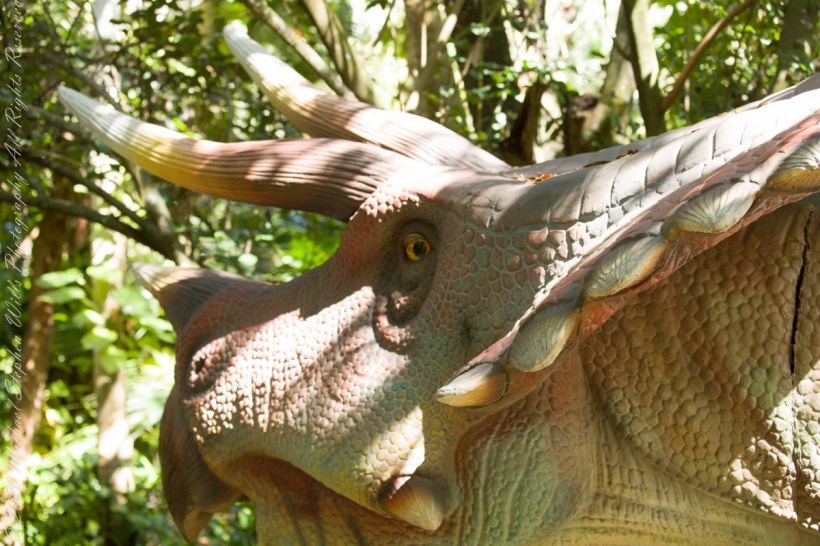
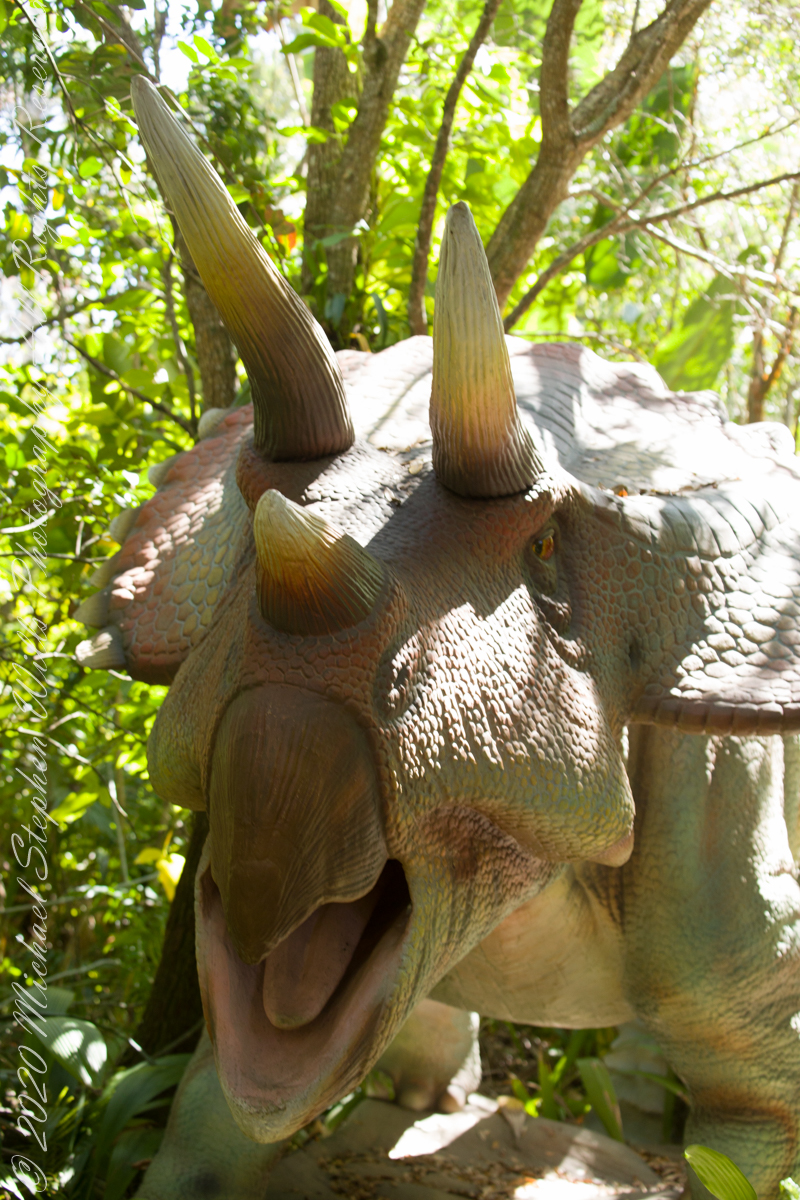
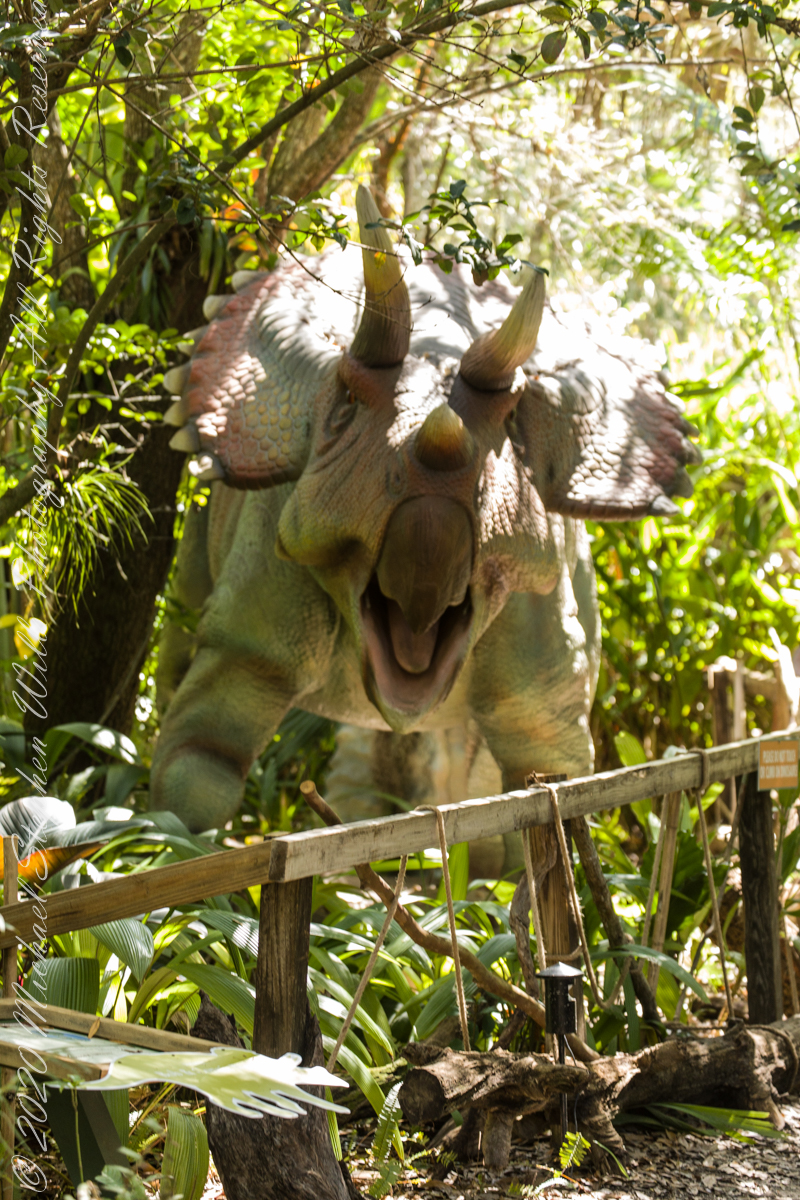
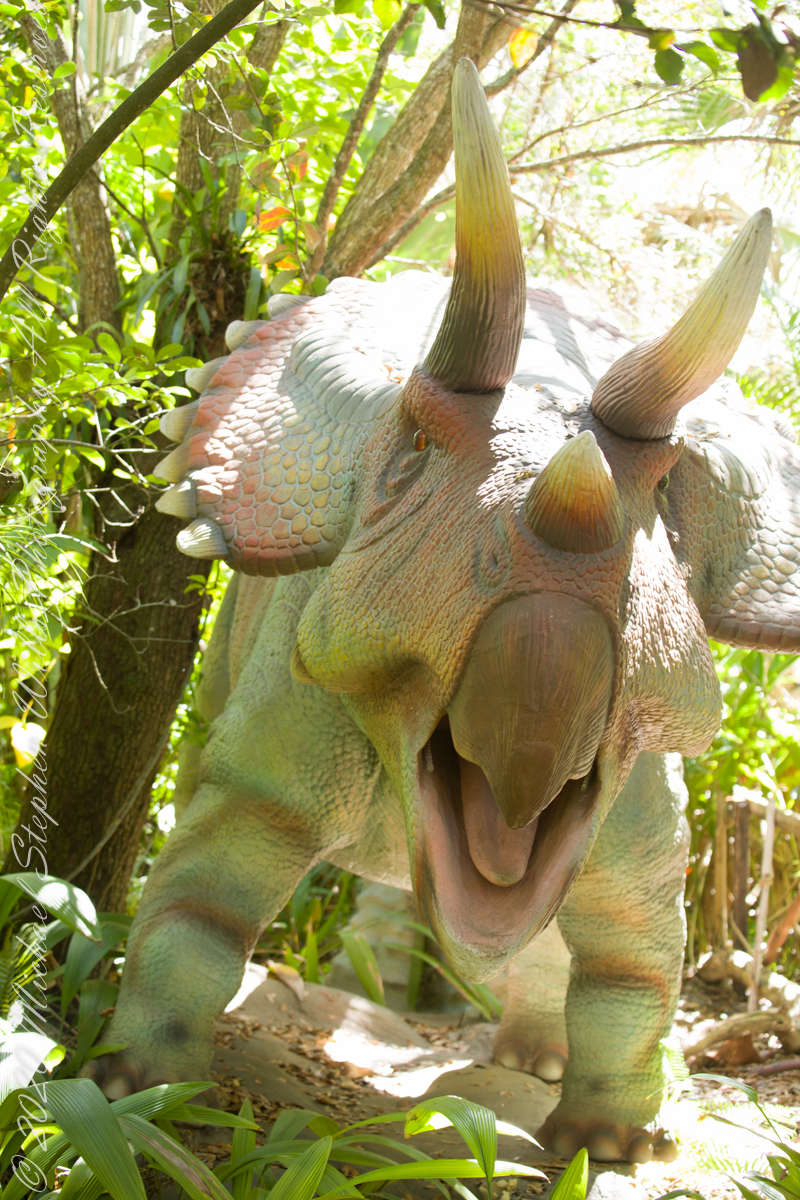
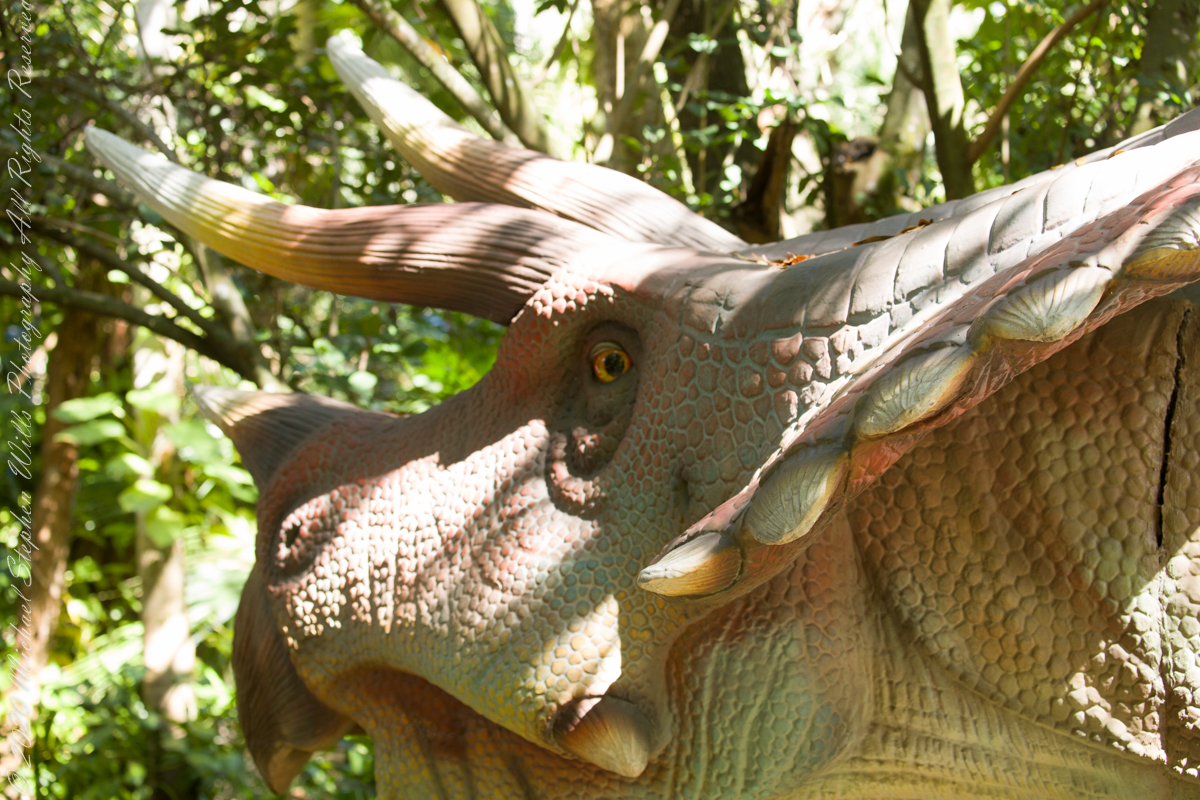
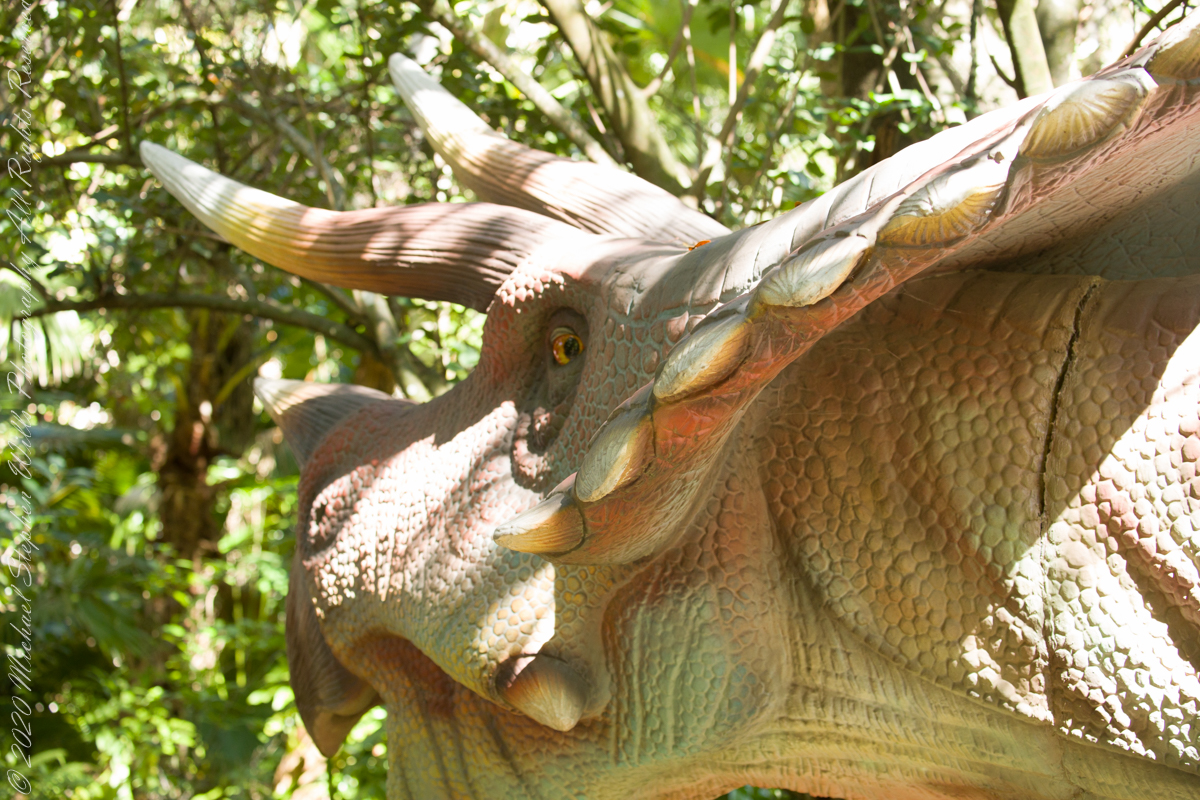
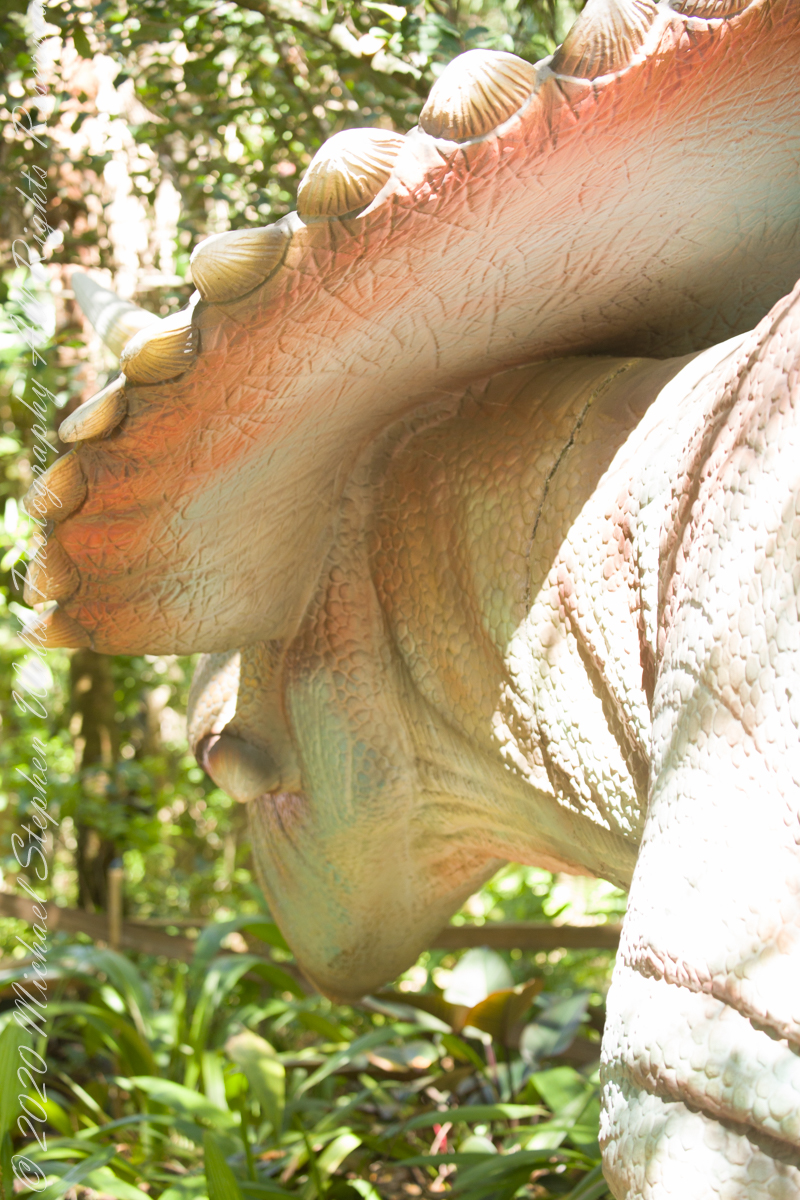
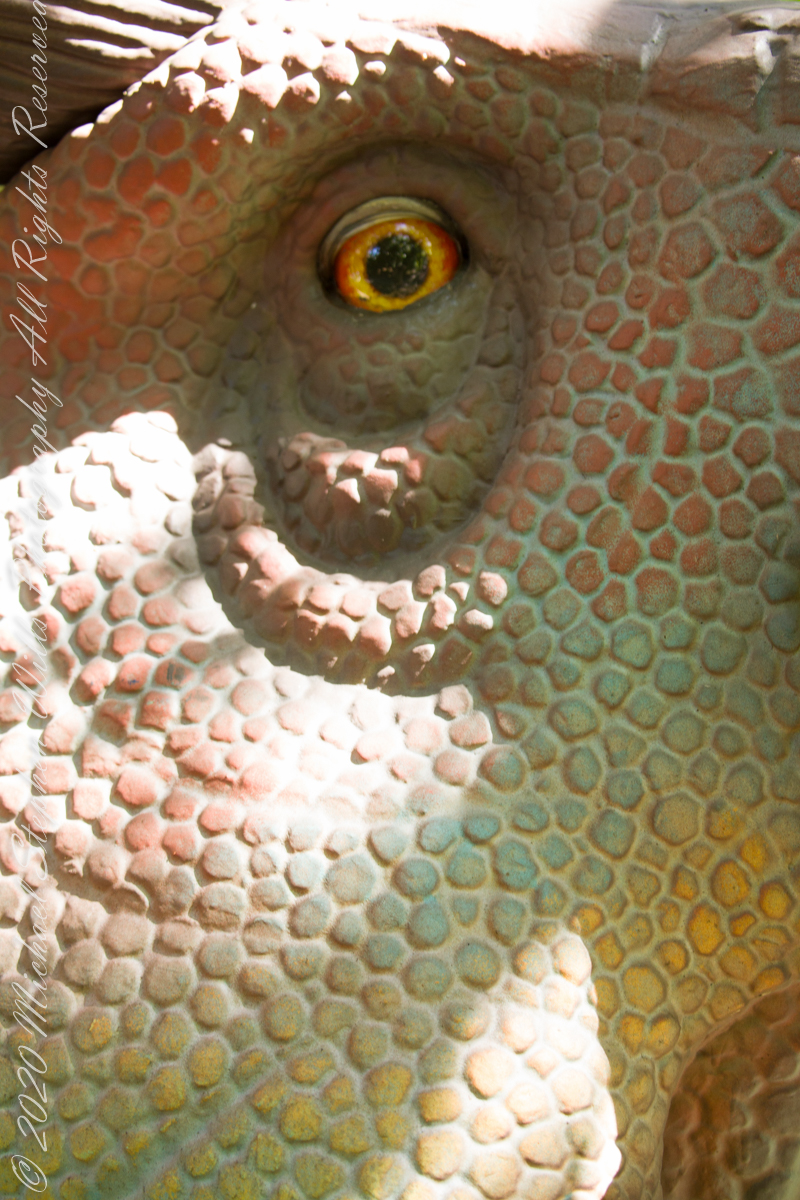
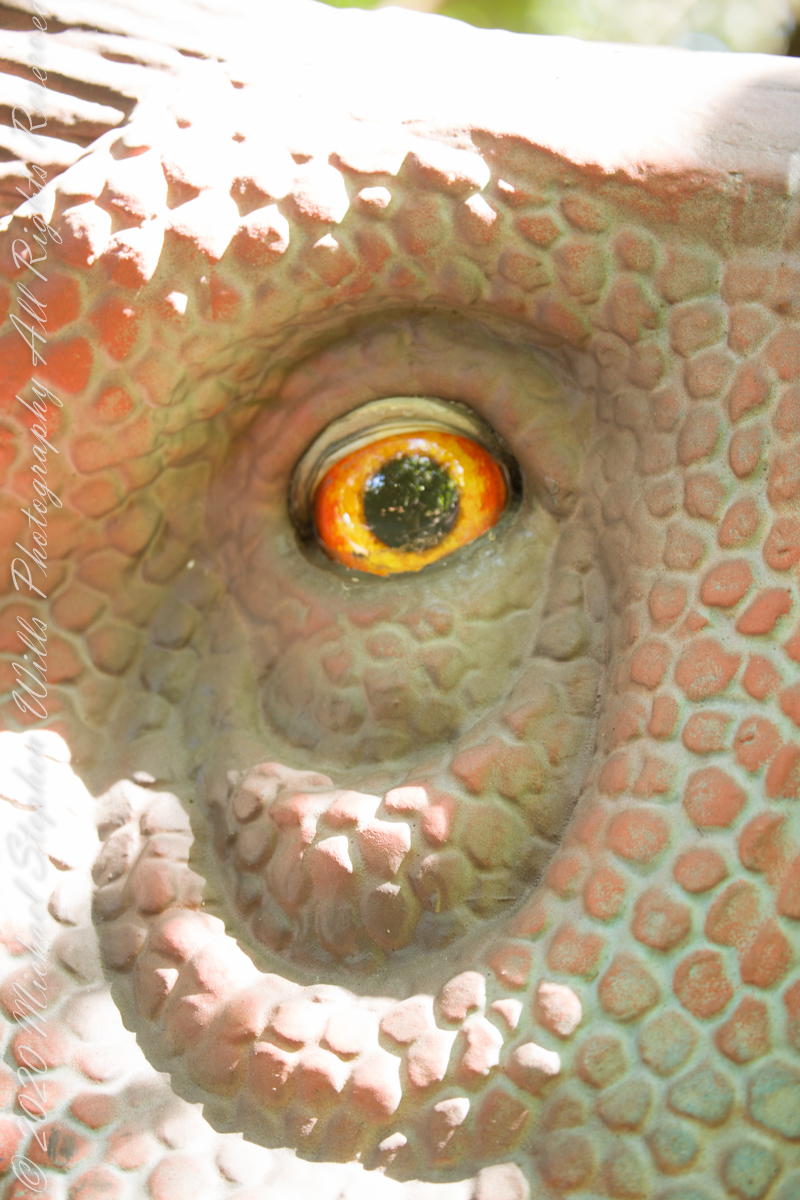
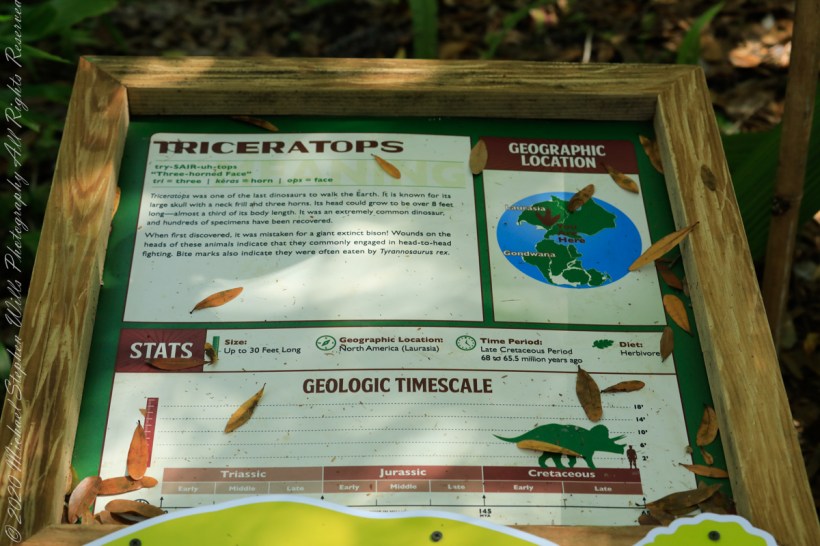
Triceratops was one of the last dinosaurs to walk the Earth. It is known for its large skull with a neck frill and three horns. Its head could grow to be over 8 feet long, almost a third of its body length. It was an extremely common dinosaur, and hundreds of specimens have been recovered. When first discovered, it was mistaken for a giant extinct bison. Wounds on the head of these animals indicated they commonly engaged in head-to-head fighting. Bite marks also indicate they were often eaten by Tyrannosaurus Rex.
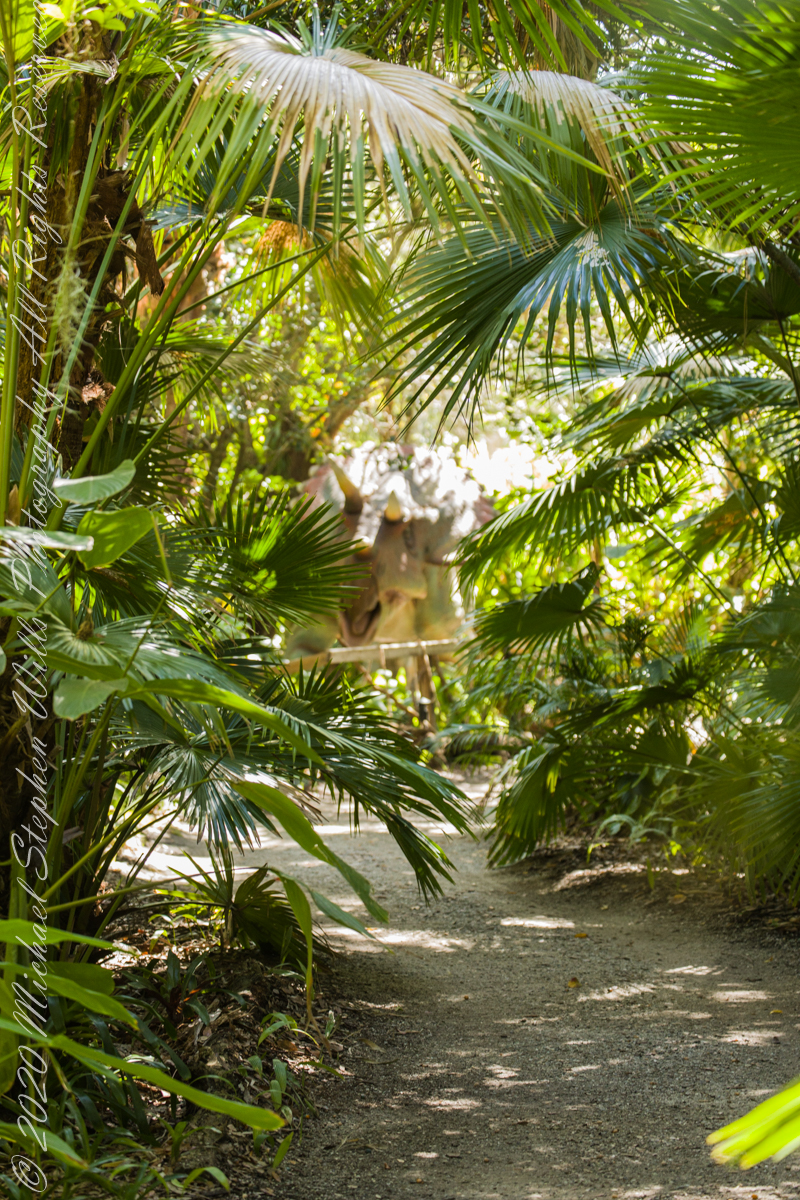
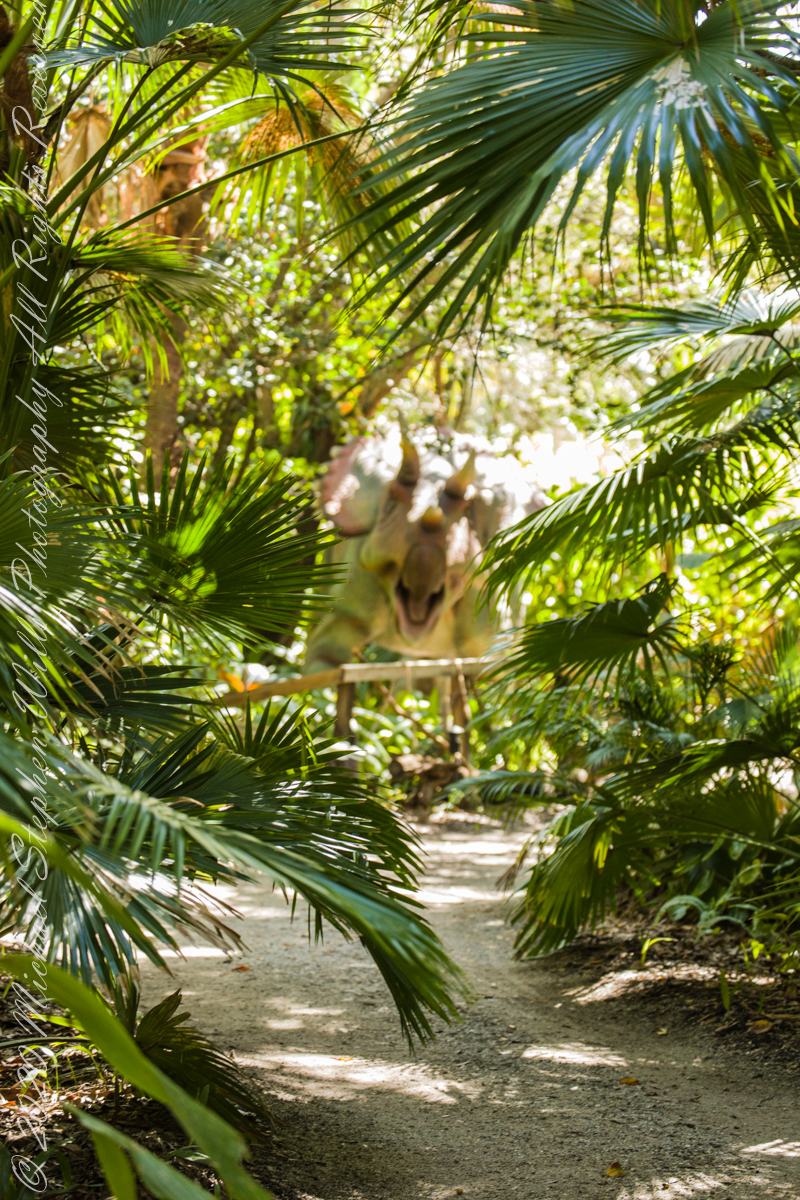
Triceratops emerges from the jungle
Head and neck
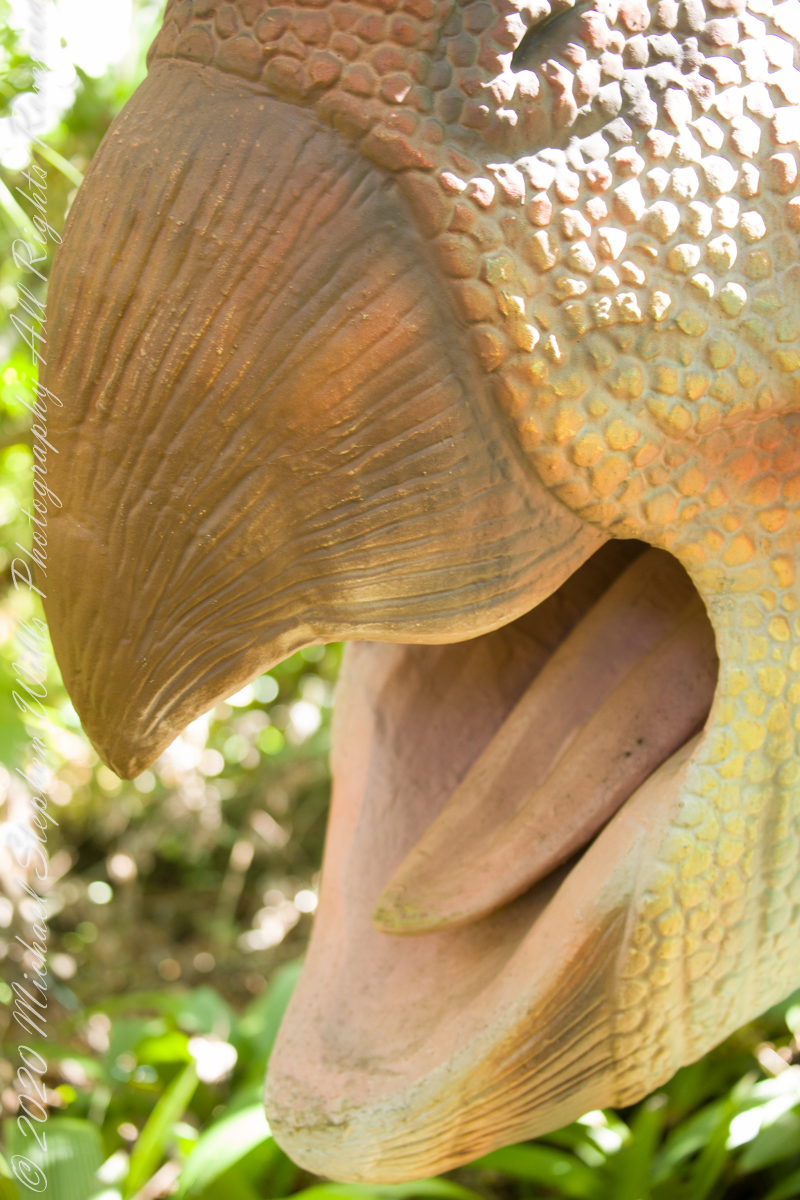
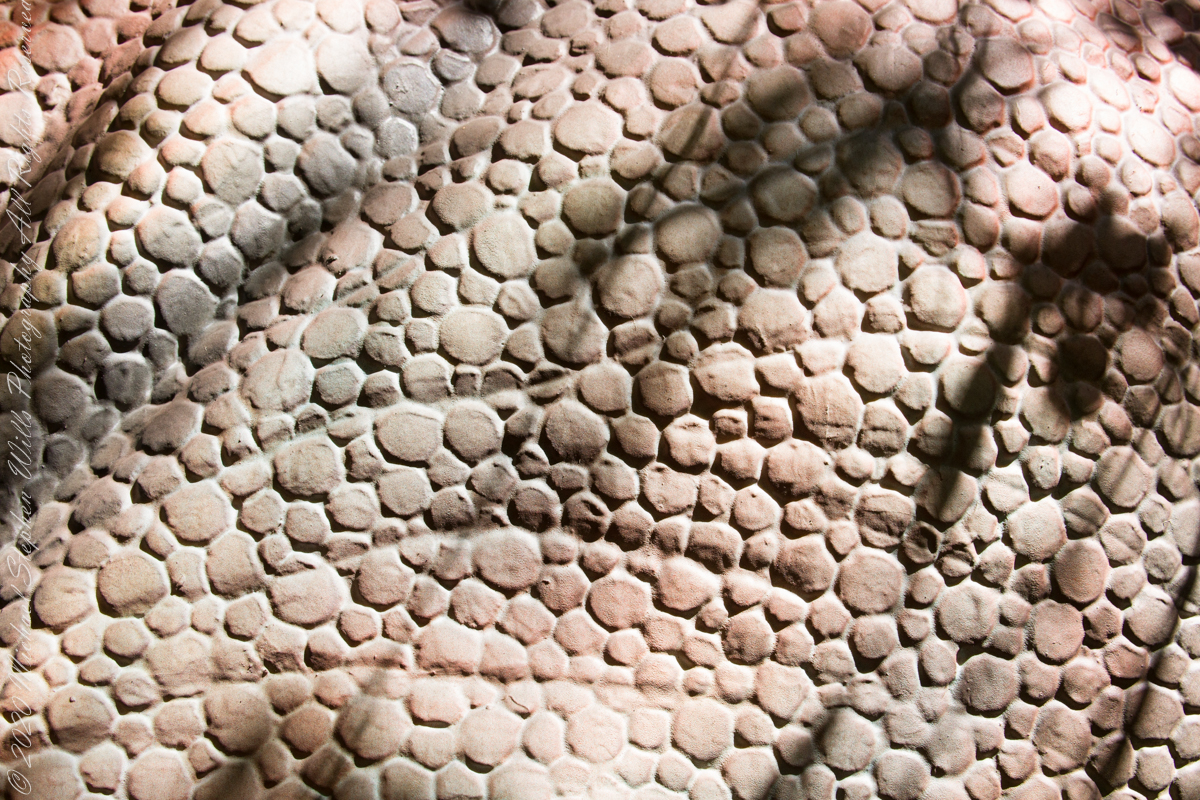
strong beak for a vegetarian diettough skinso.id supportBright eyes bring the figure to life
References: text is from the park placard with minor edits.
Copyright 2022 Michael Stephen Wills All Rights Reserved
Discover the charm of Cong, Ireland, through a stunning sculpture celebrating The Quiet Man. Join me as I explore the town’s cinematic legacy and reflect on the enduring magic of film.
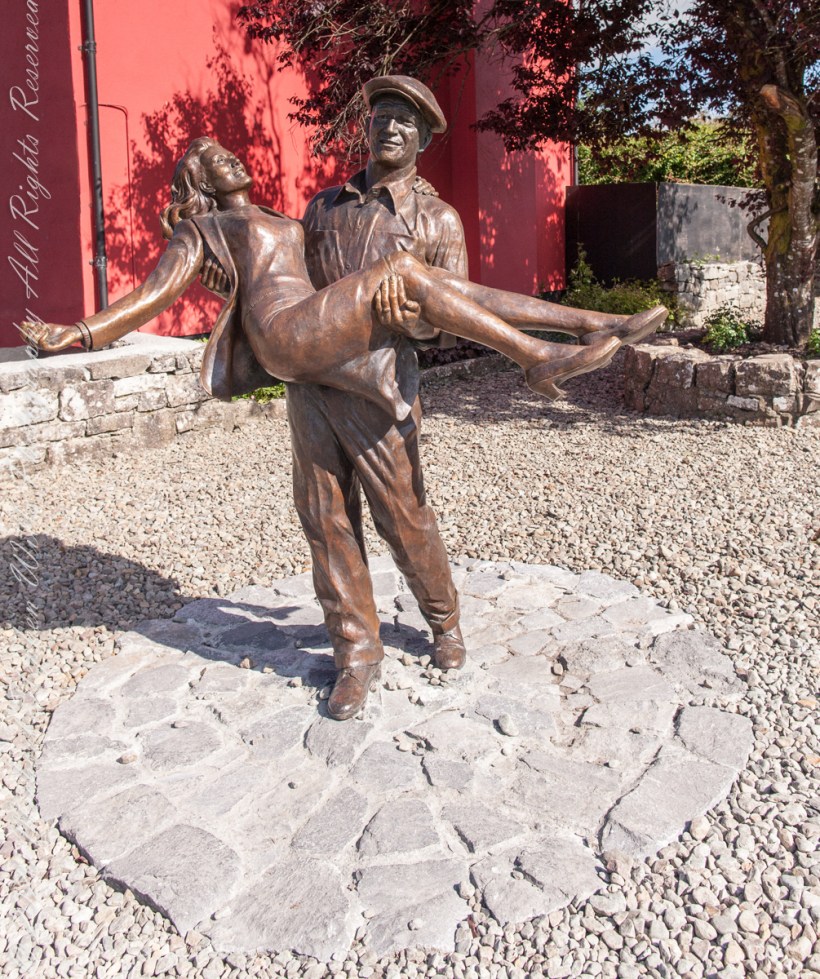
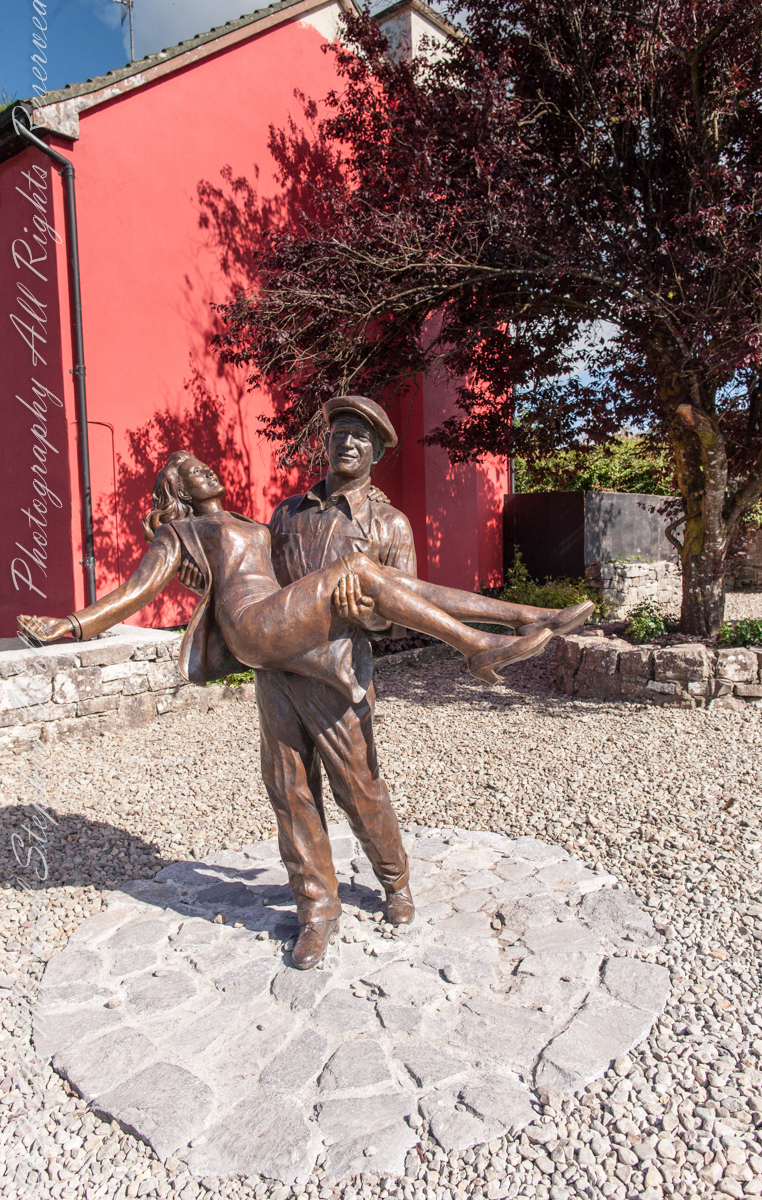
During a May 2014 exploration of the village Cong in County Mayo, Ireland, we encountered this remarkable sculpture that transported me back to one of my favorite classic films, “The Quiet Man.” The bronze statue, depicting John Wayne’s character, Sean Thornton, carrying Maureen O’Hara’s Mary Kate Danaher, stands against the backdrop of the town, a visual homage to the cinematic legacy that has become intertwined with Cong’s identity.
As I stood before the sculpture, memories of watching The Quiet Man flooded back. The Quiet Man, with its vibrant depiction of Irish culture and scenery, had always held a special place in my heart. It’s a story of love, cultural clashes, and the journey of a man returning to his roots, themes that resonate deeply within the lush landscapes of County Mayo. Cong served as the primary filming location, and the town has embraced this legacy wholeheartedly, turning the film into a cornerstone of its identity.
The sculpture, created by Mark Rode, who has a foundry an hour away in Swinford, was installed the year before, 2013, yet it felt as though it had always been there, seamlessly blending with the surroundings. Rode’s work captures the essence of the characters with remarkable detail. In The Quiet Man, the scene where Sean carries Mary Kate in his arms takes place after he retrieves her from the train station. This moment symbolizes their reconciliation and is a pivotal scene in the film, capturing their renewed bond and Sean’s determination to stand up for their relationship. The piece celebrates not just the film, but also the spirit of the town and its connection to cinematic history.
Mark Rode, known for his ability to bring characters to life through sculpture, has a unique talent for capturing the essence of his subjects. His works often reflect a deep understanding of human emotion and storytelling, qualities that shine through in this particular piece. The installation of the sculpture was met with excitement from both locals and visitors, further cementing Cong’s status as a beloved tourist destination.
Reflecting on our visit, I realized how much this small town had embraced its role in cinematic history. The streets of Cong are dotted with nods to The Quiet Man—from themed shops to plaques marking filming locations. Each element serves as a reminder of the film’s impact on the town and its people. The statue stands as a centerpiece, inviting fans of the film to relive its magic while introducing new generations to its charm.
I couldn’t help but meditate on the lasting impact of art and film on a community. The installation of this sculpture not only celebrates a beloved movie but also invigorates the town’s economy through tourism, drawing visitors eager to walk in the footsteps of their favorite characters. It’s a testament to the power of storytelling and its ability to transcend time, connecting people across generations and cultures.
The statue of Sean and Mary Kate in Cong is a symbol of the town’s vibrant history and its enduring connection to the film. Mark Rode’s creation captures this essence beautifully, inviting all who visit to pause, reminisce, and celebrate the intertwining of art and life in this picturesque Irish village.
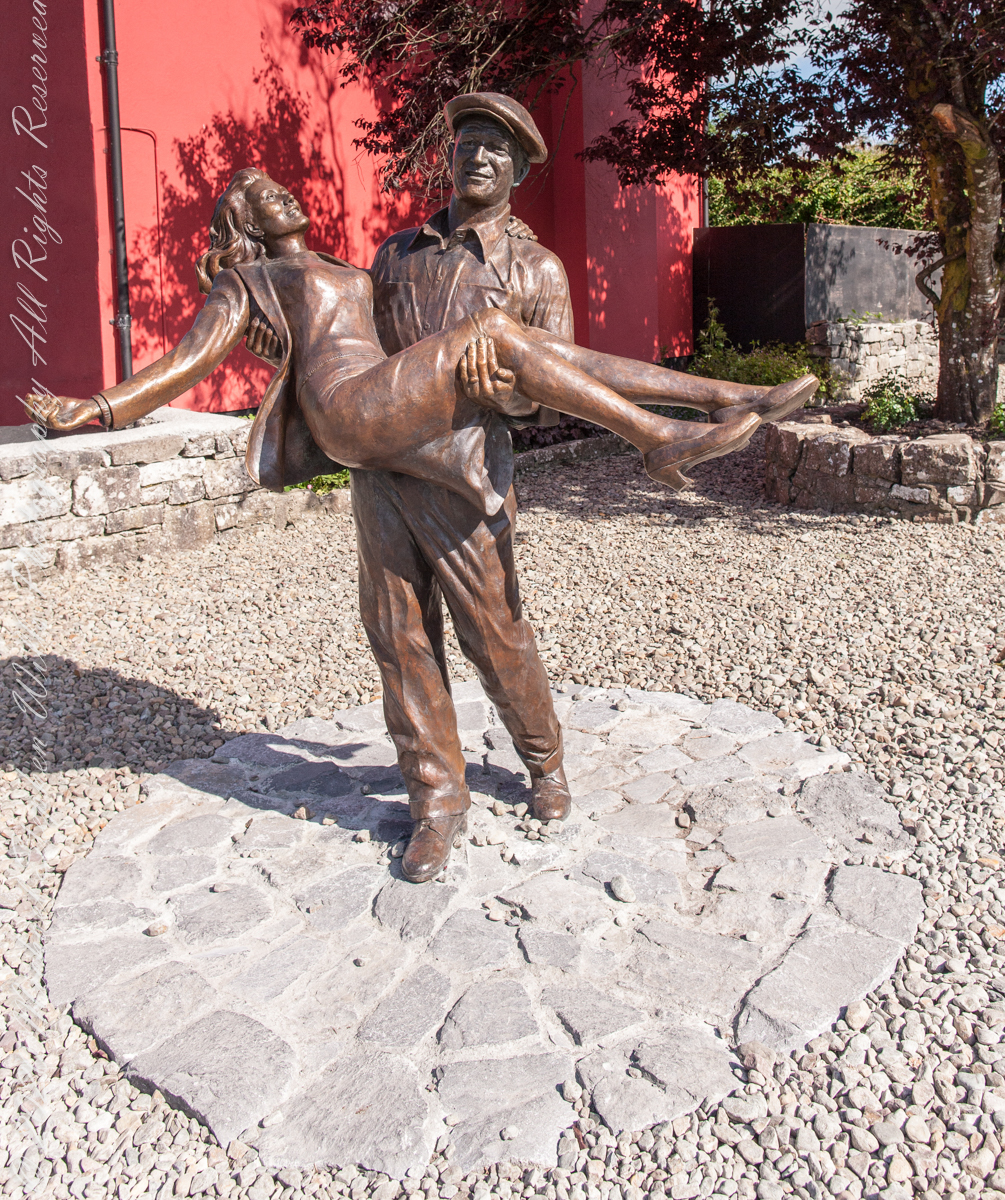
Here presented are two versions of the same image. One cropped. Please leave a comment stating which you prefer and why. Thank You
Use this slide show, flip back and forth to compare the images, reach a conclusion on which you prefer.
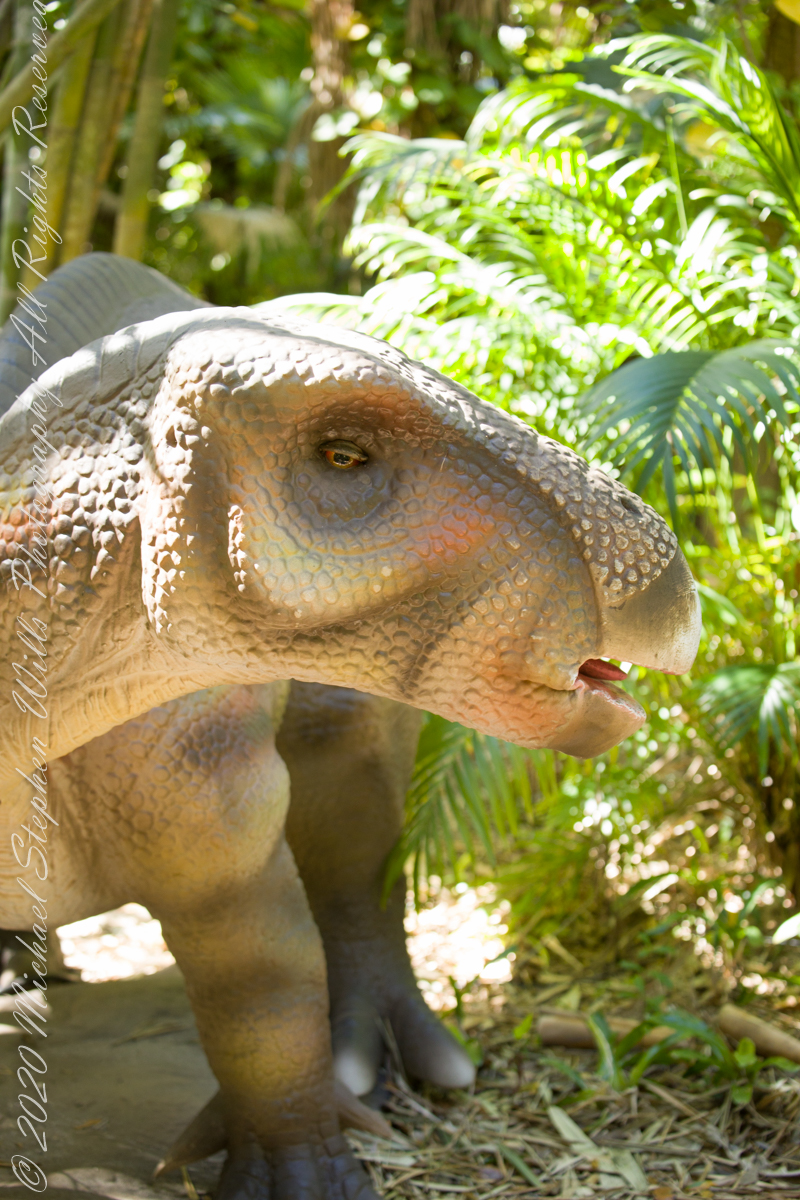
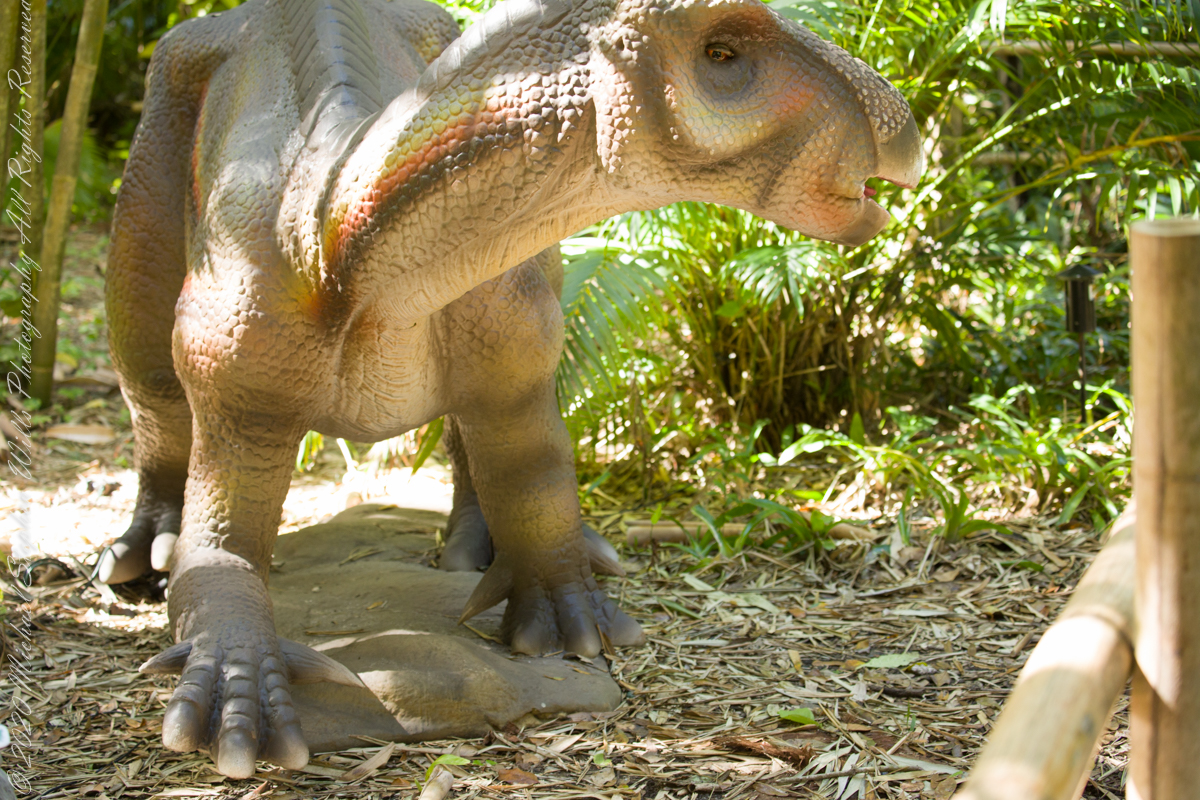
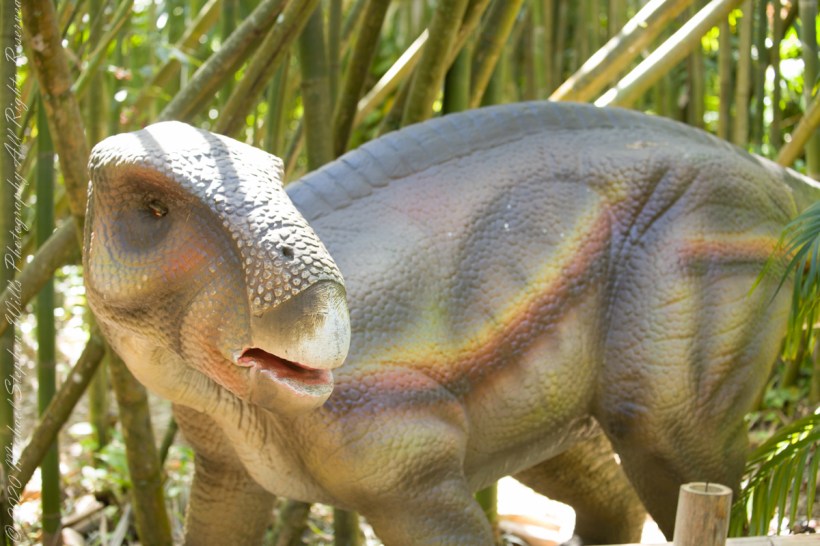
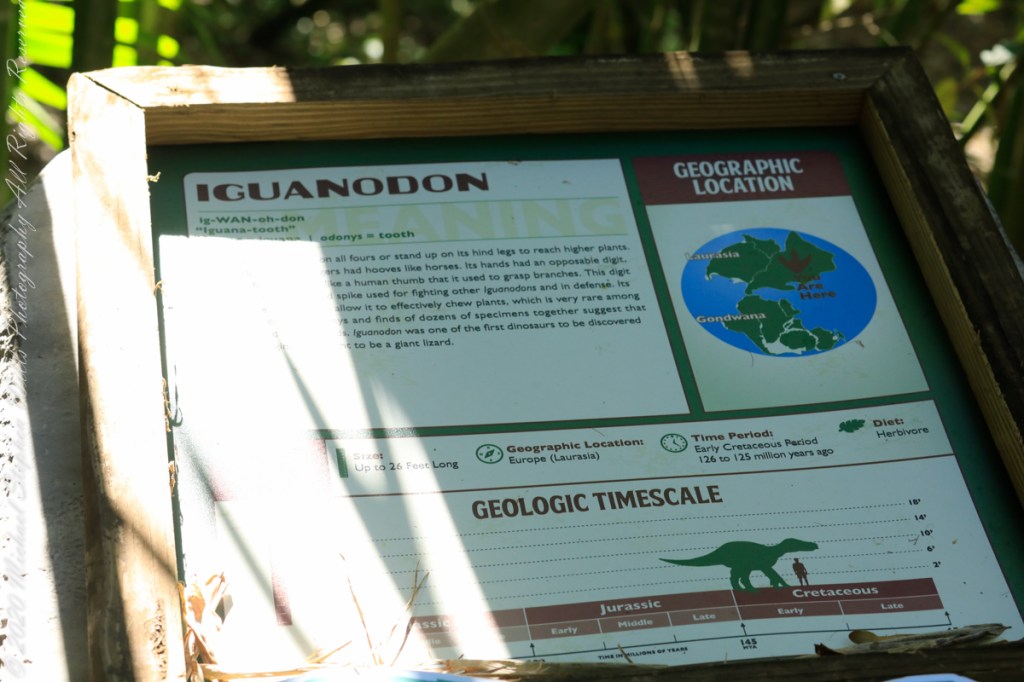
Iguanodon was able to walk on all fours or stand on its hind legs to reach higher plants. It has hooves like horses. Its hands had an opposable digit, like a human thumb, used to grasp branches. This digit had a spike used for fighting other Iguanodons, in defense and feeding, as a tool to open fruits for example.
Iguanodon was able to walk on all fours or stand on its hind legs to reach higher plants. It has hooves like horses. Its hands had an opposable digit, like a human thumb, used to grasp branches. This digit had a spike used for fighting other Iguanodons, in defense and feeding, as a tool to open fruits for example.
References: text is from the park placard with minor edits.
Copyright 2022 Michael Stephen Wills All Rights Reserved
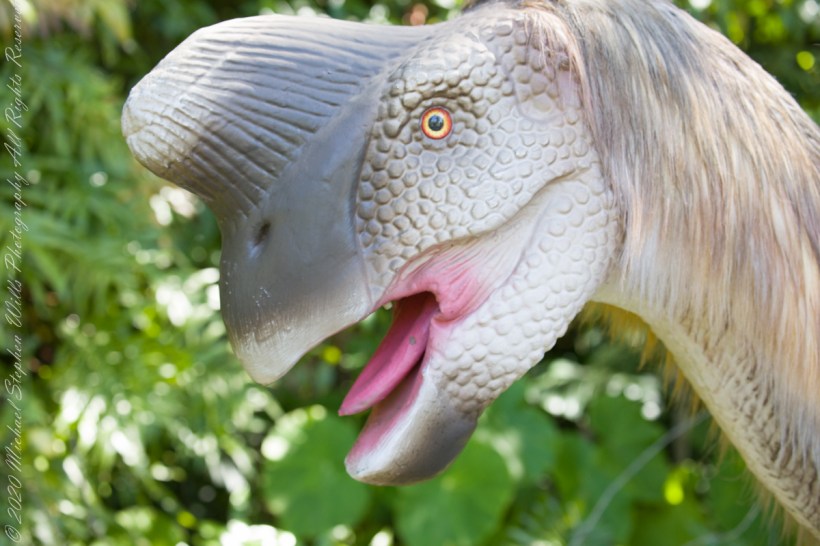
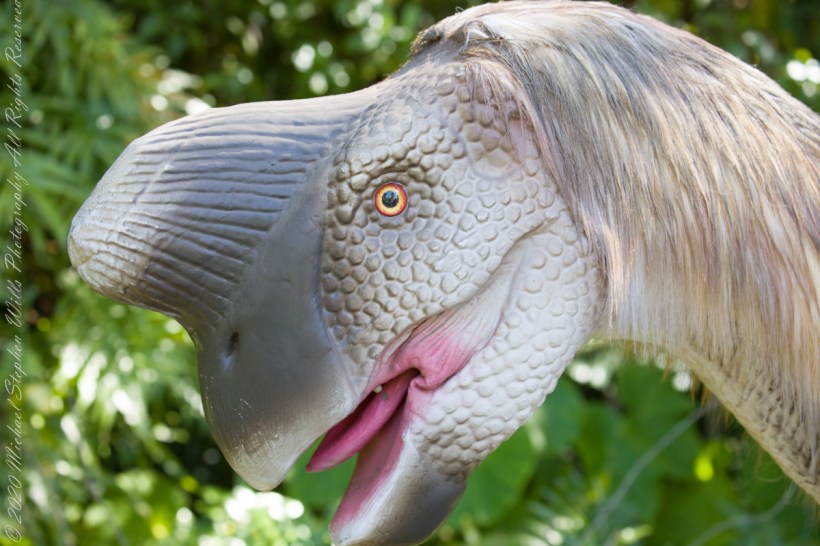
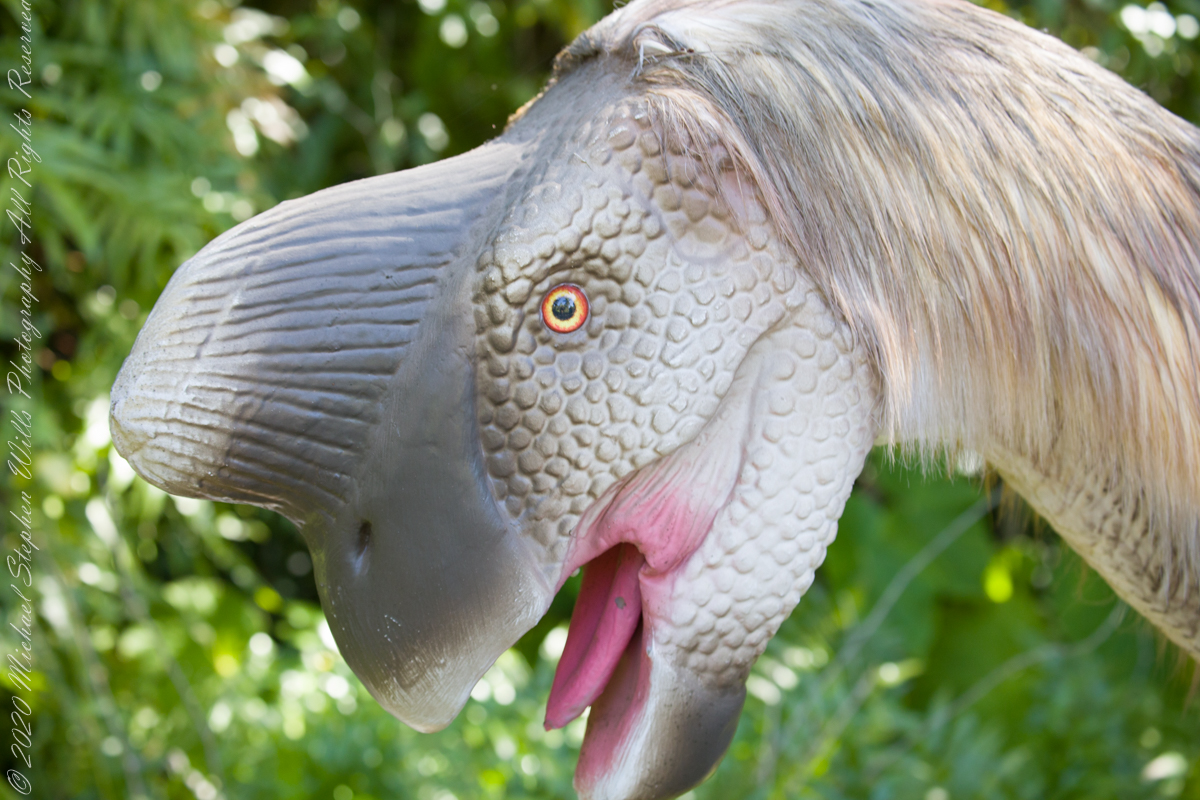
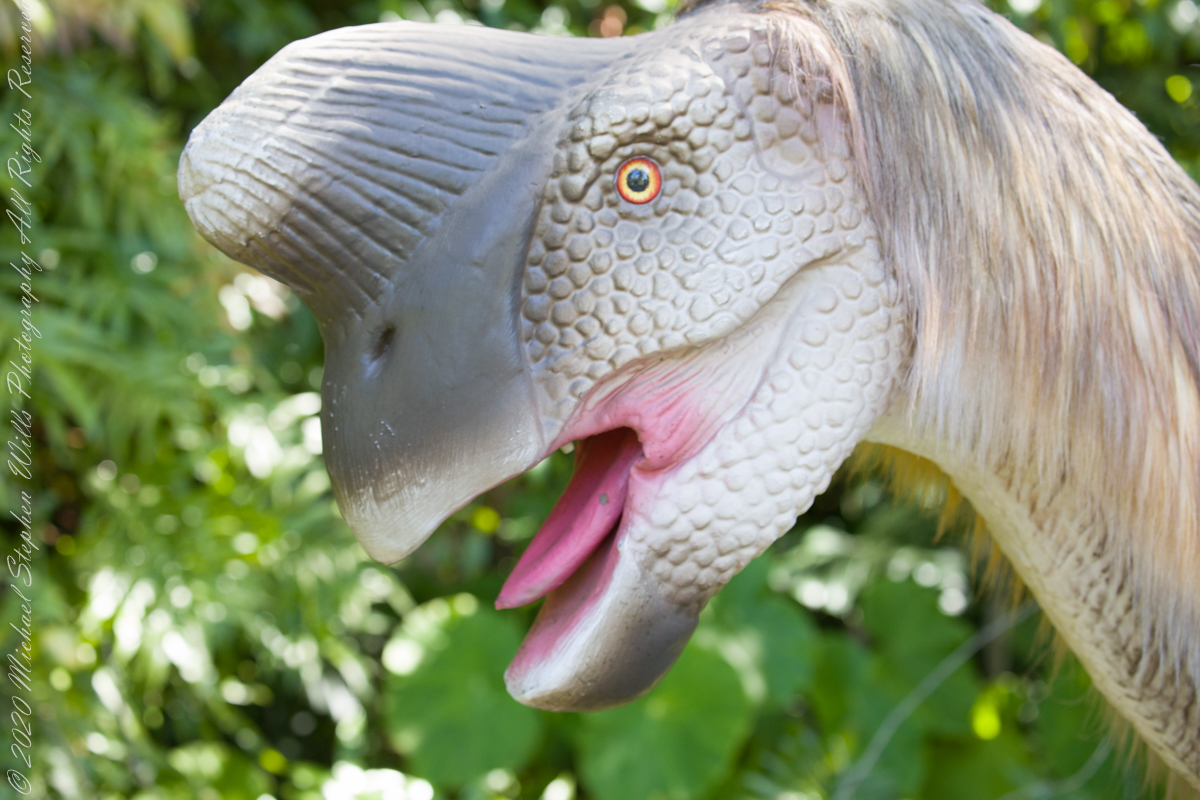
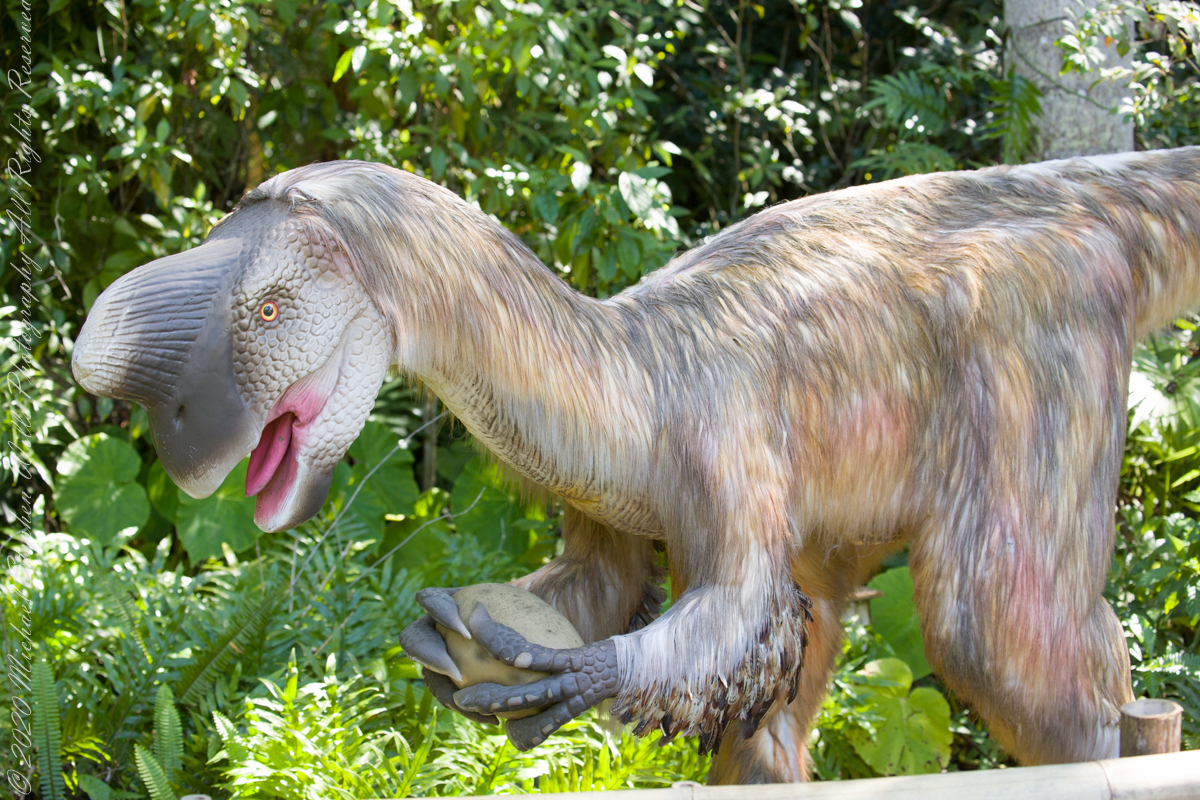
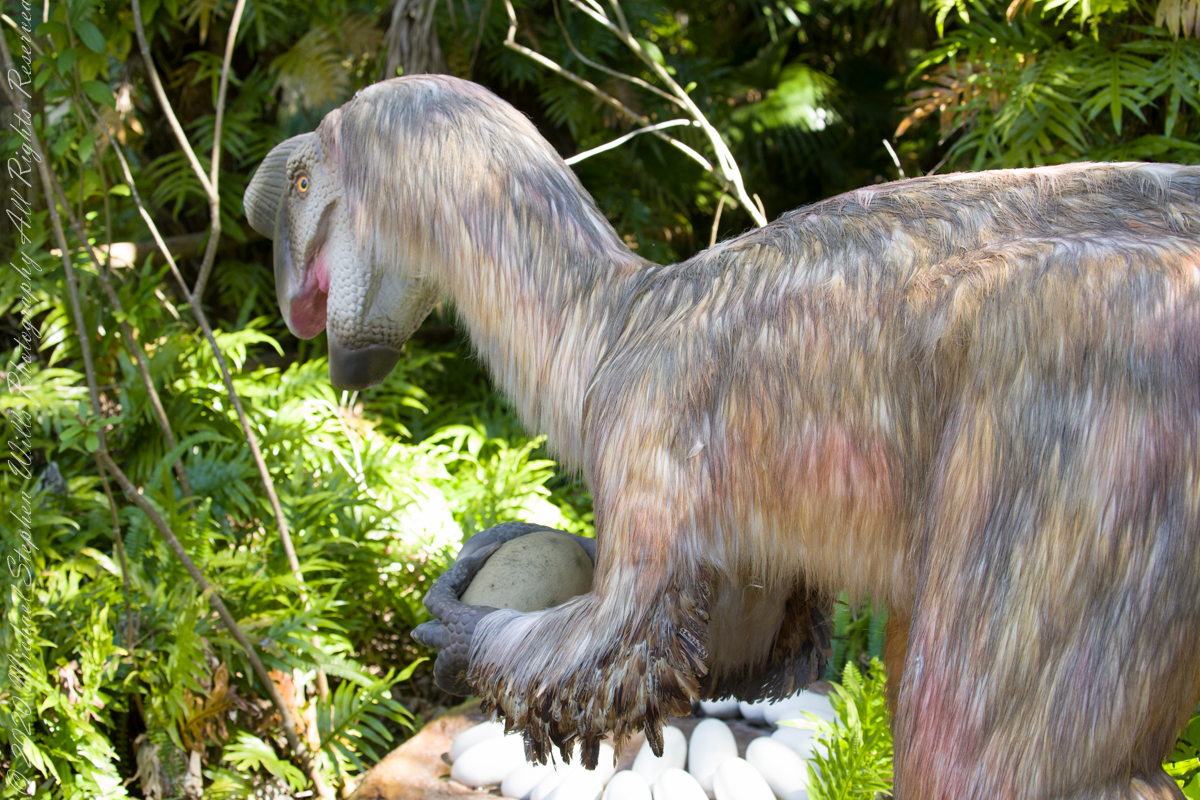
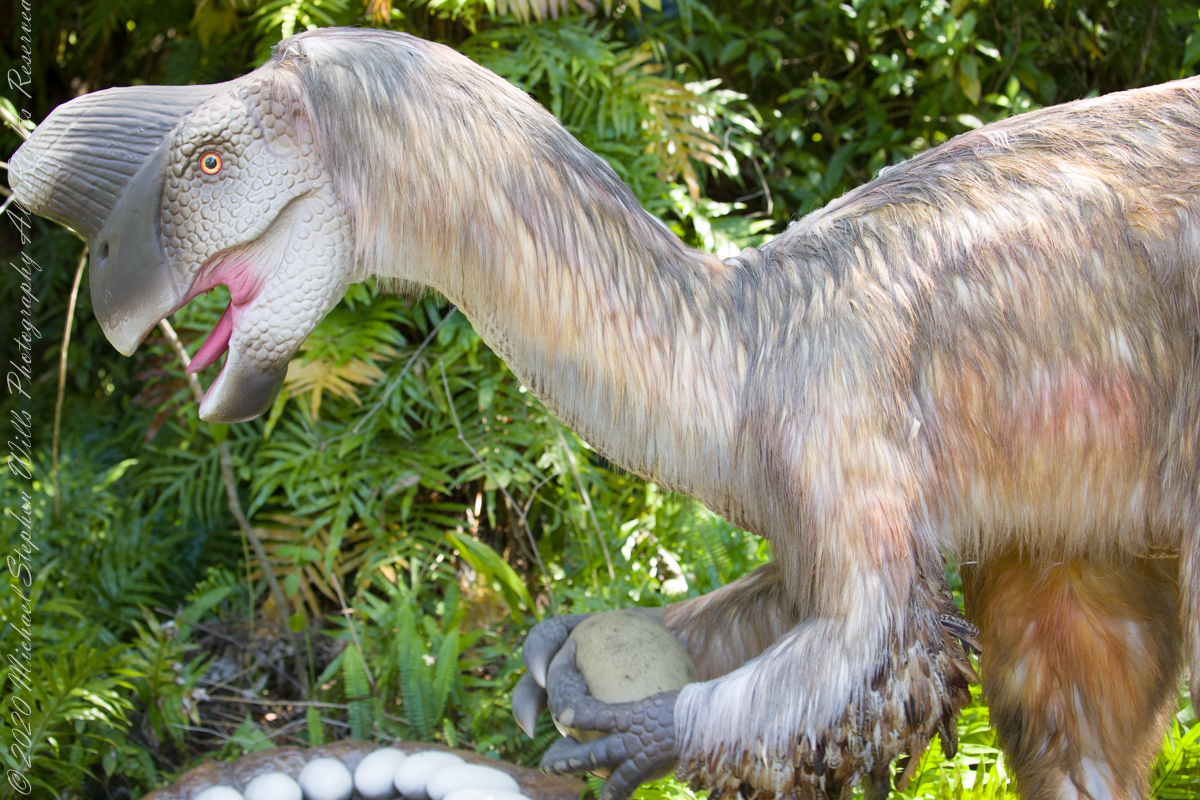
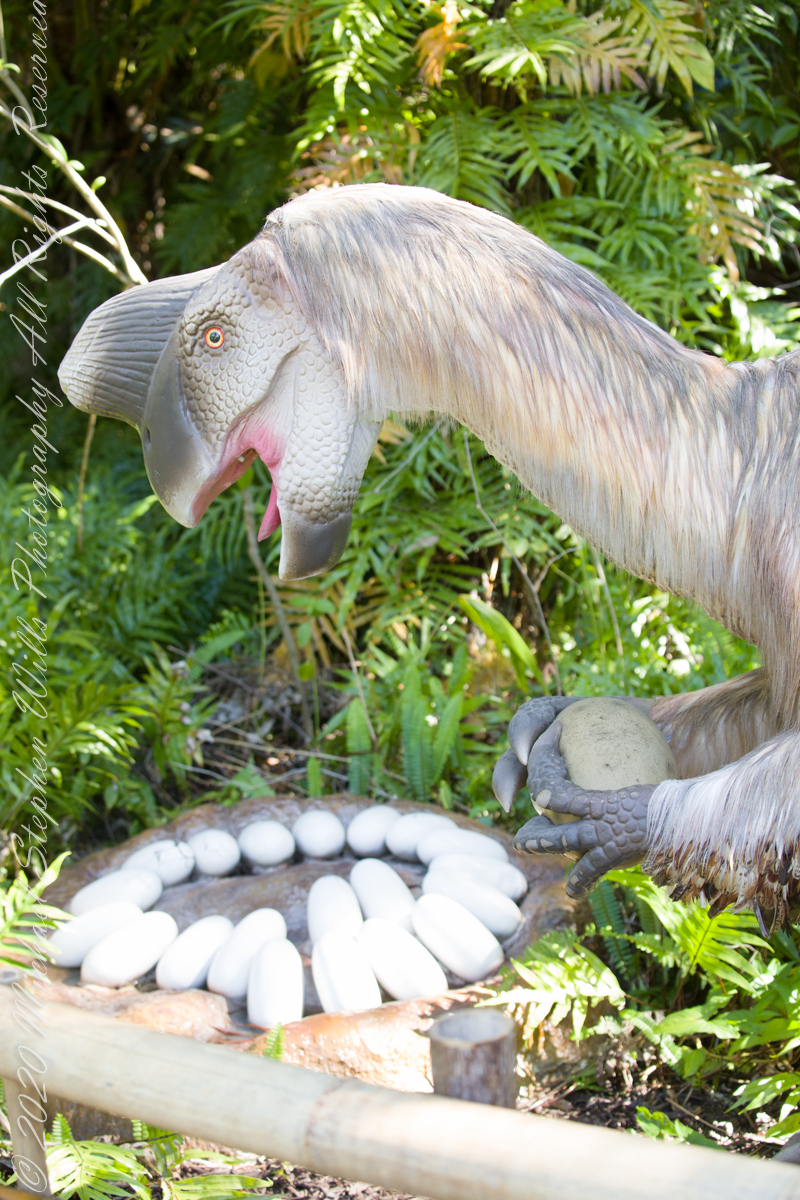
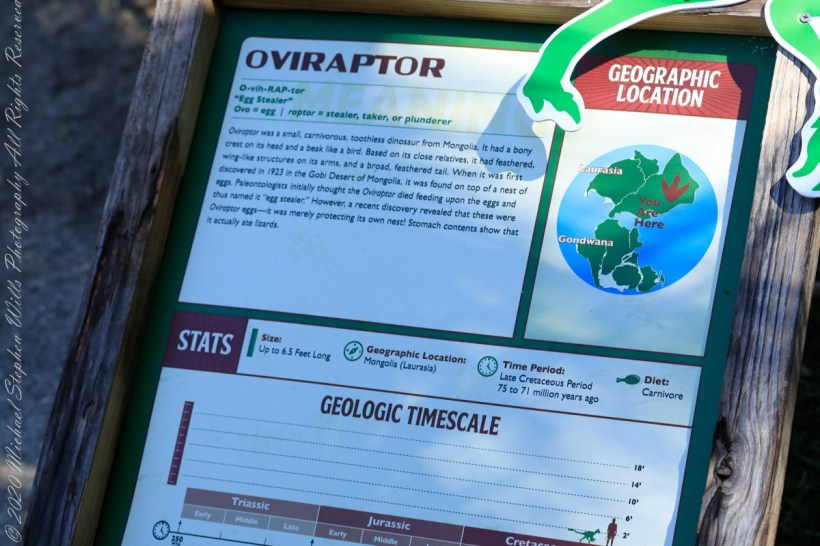
Oviraptor was a small, carnivorous, toothless dinosaur from Mongolia. It had a bony crest on its head and a beak like a bird. Based on its close relatives, it had feathered, wind-like structure on its arms, and a broad, feathered tail. When it was first discovered in 1932 in the Gobi Desert of Mongolia, it was found on top of a nest of eggs. Paleontologists initially thought the Oviraptor died feeding upon the eggs and thus named it “egg stealer.” However, a recent discovery revealed these were Oviraptor eggs — it was merely protecting its own nest! Stomach contents show it actually ate lizards.
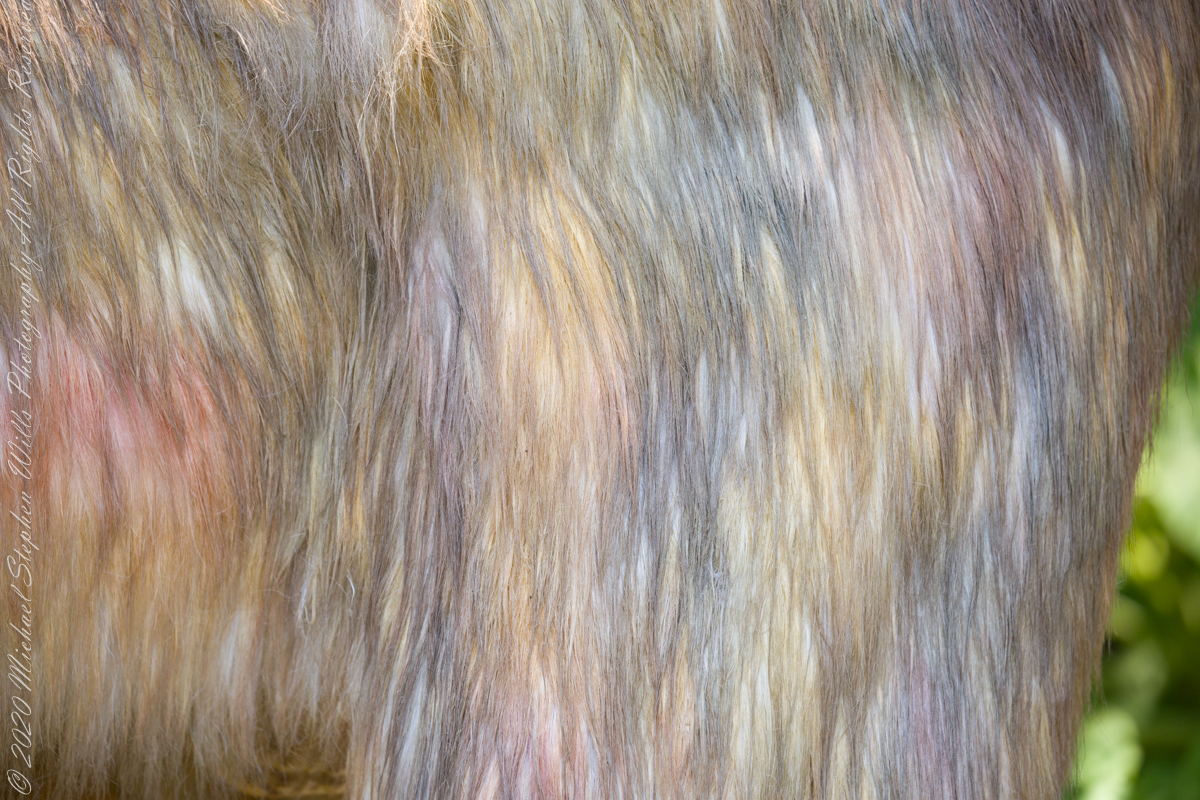
fine feather fur
References: text is from the park placard with minor edits.
Copyright 2022 Michael Stephen Wills All Rights Reserved
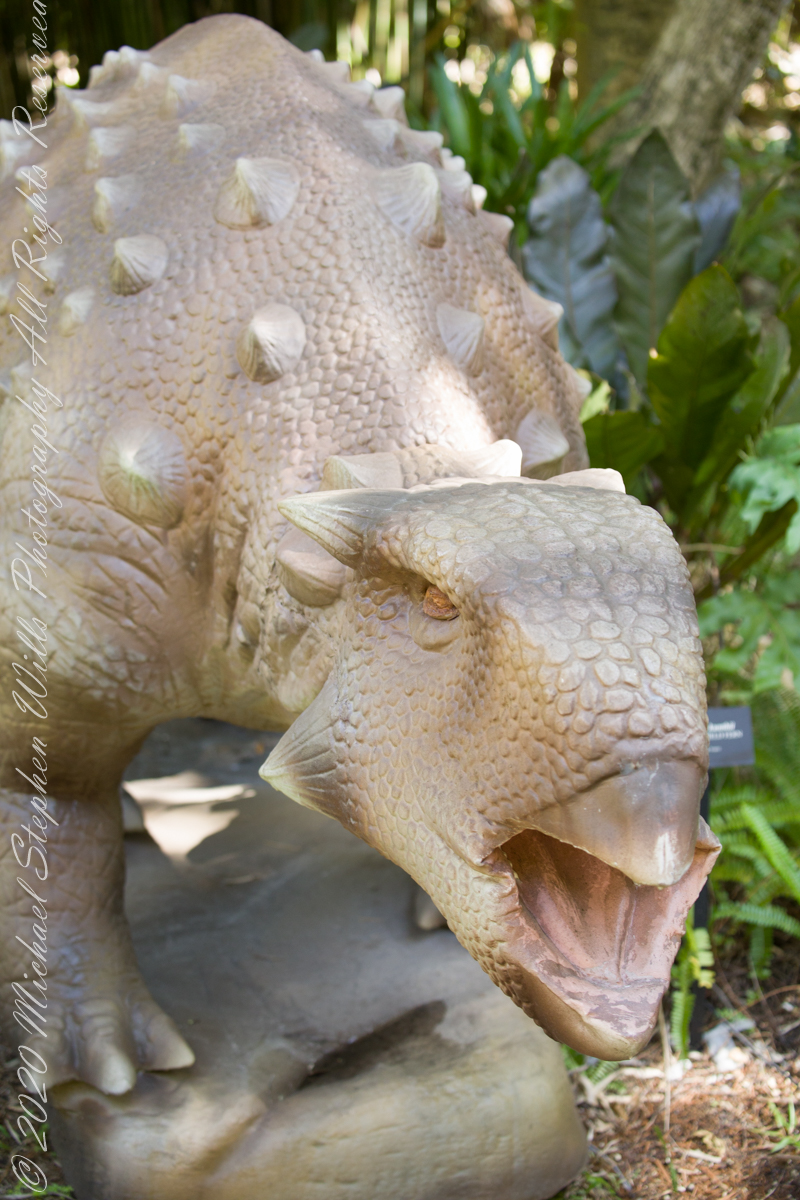
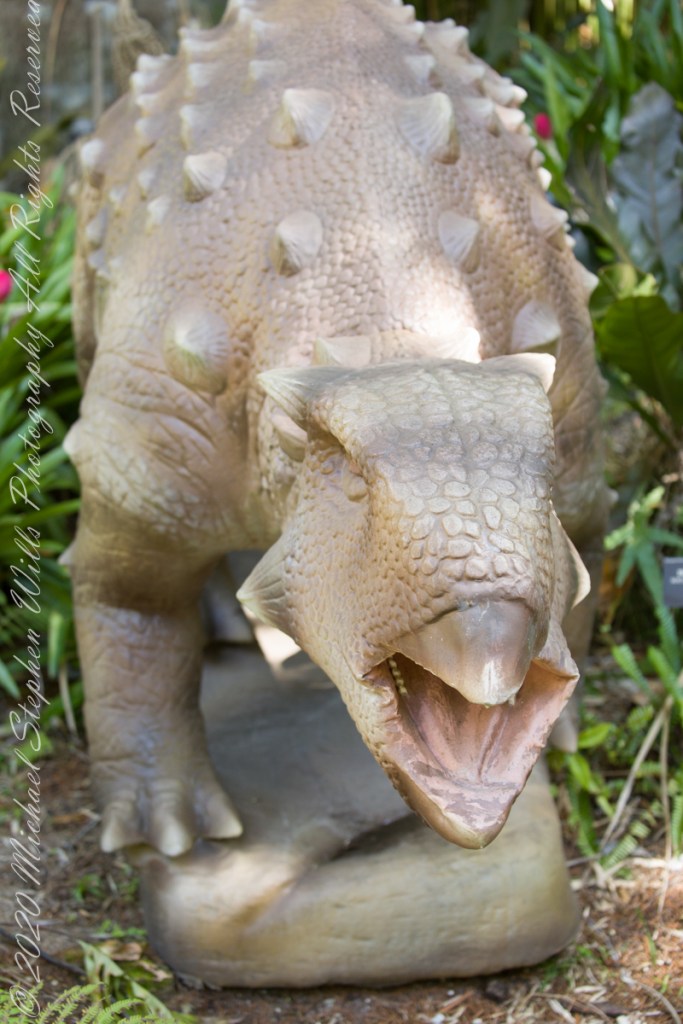
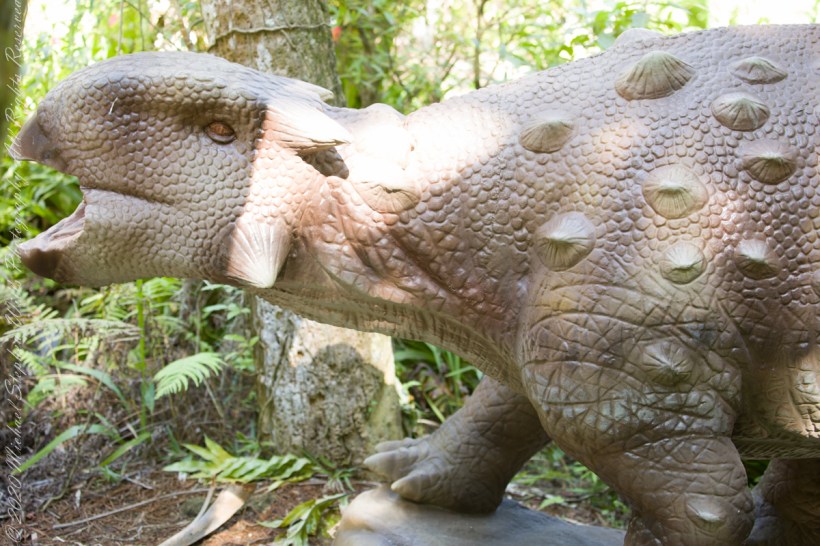
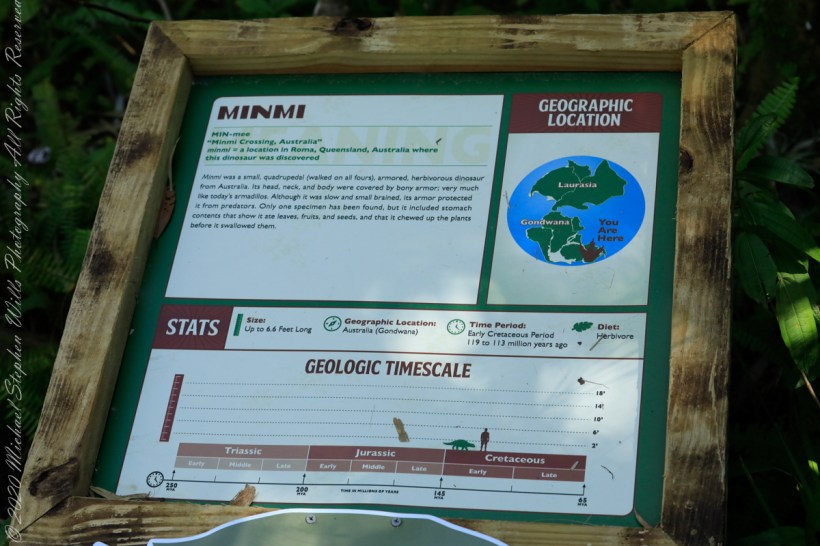
Minmi was a small, quadrupedal, armored, herbivorous dinosaur from Australia. Its head, neck and body were covered by bony armor, very much like today’s armadillos. Although it was slow and small brained, its armor protected it from predators. Only one specimen has been found, but it included stomach contents that show it ate leaves, fruit and seeds, and that it chewed up the plants before it swallowed them. Minmi is the location in Roma, Queensland, Australia where this dinosaur was discovered.
References: text is from the park placard with minor edits.
Copyright 2022 Michael Stephen Wills All Rights Reserved
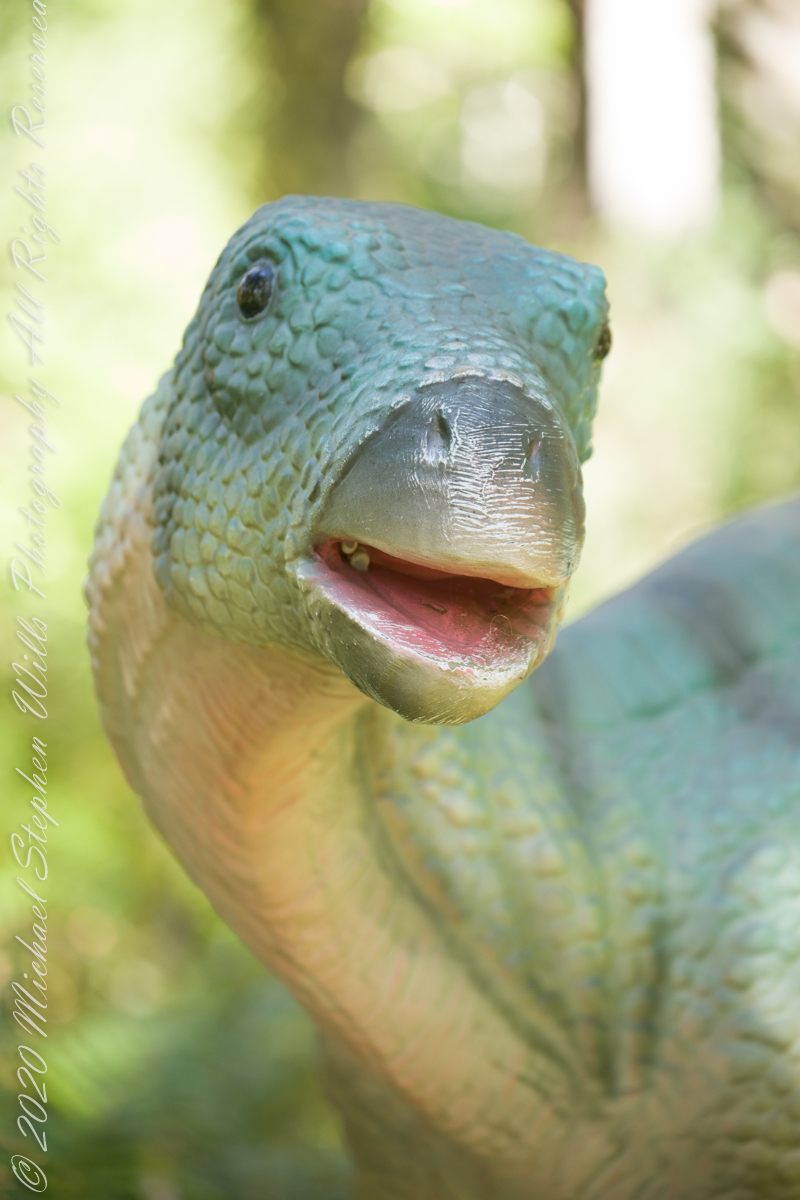
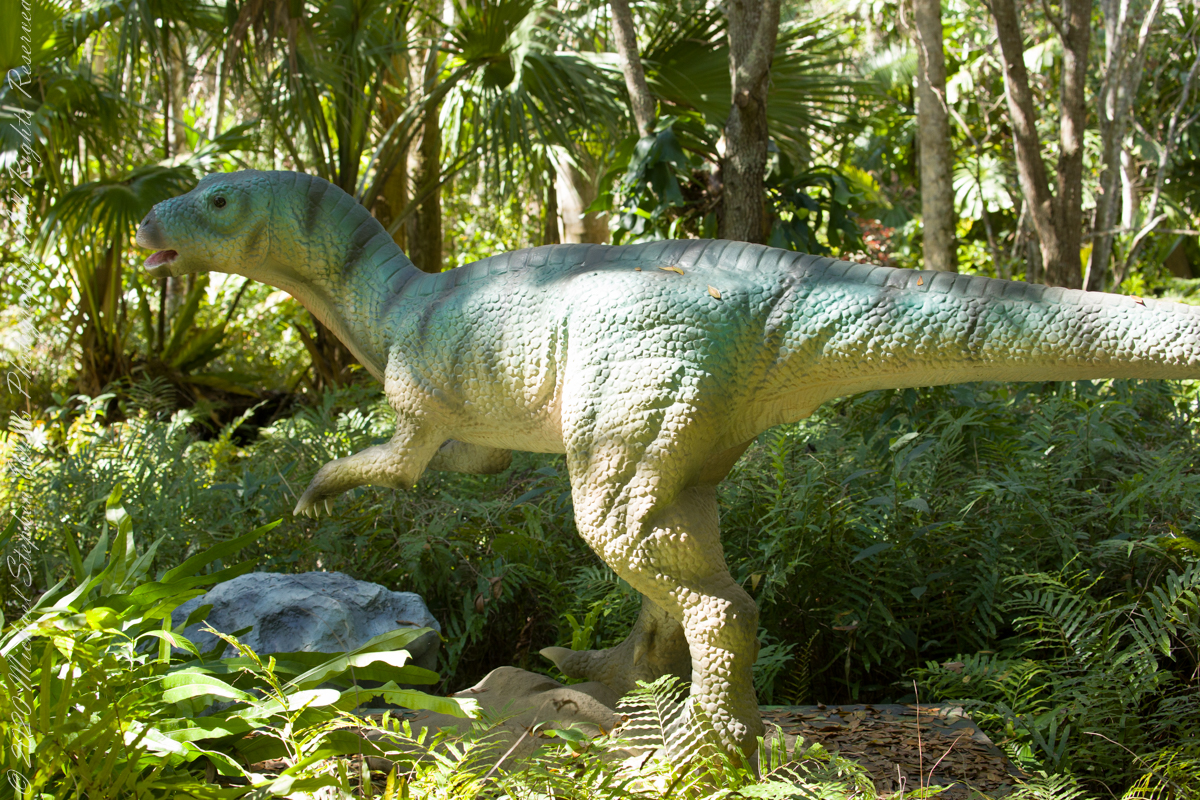
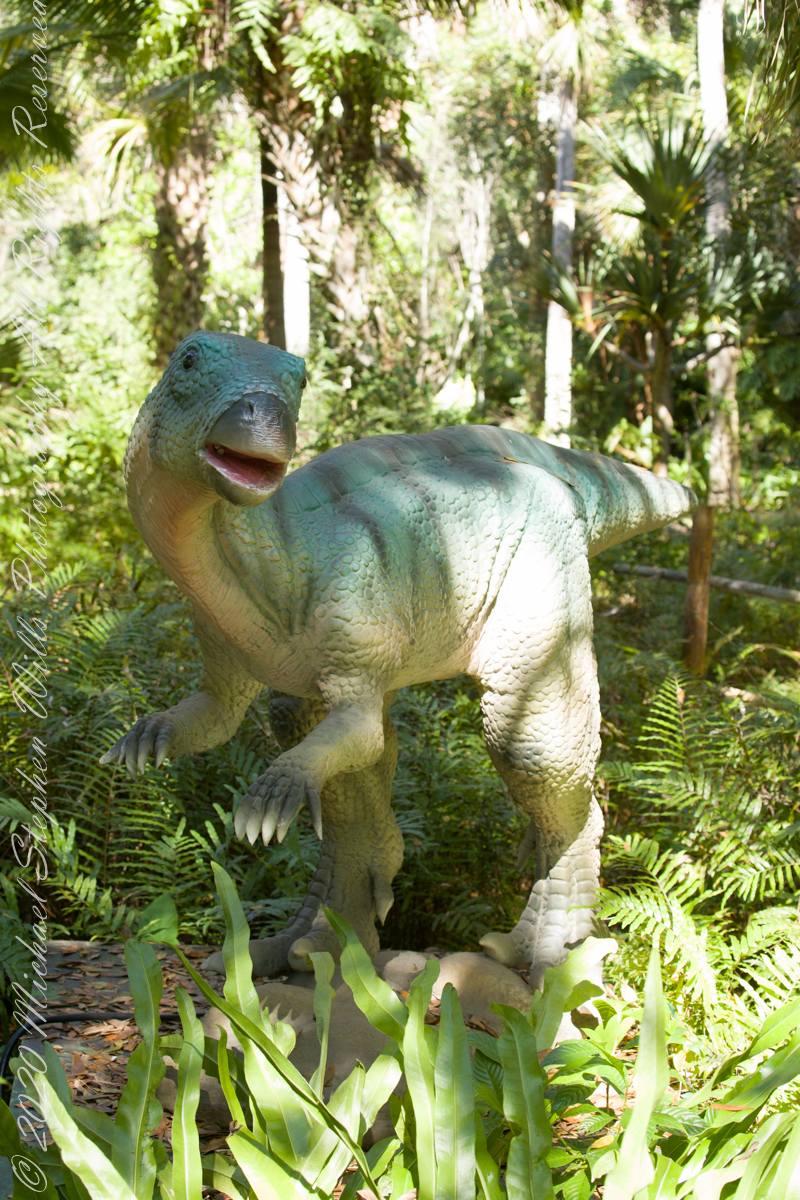
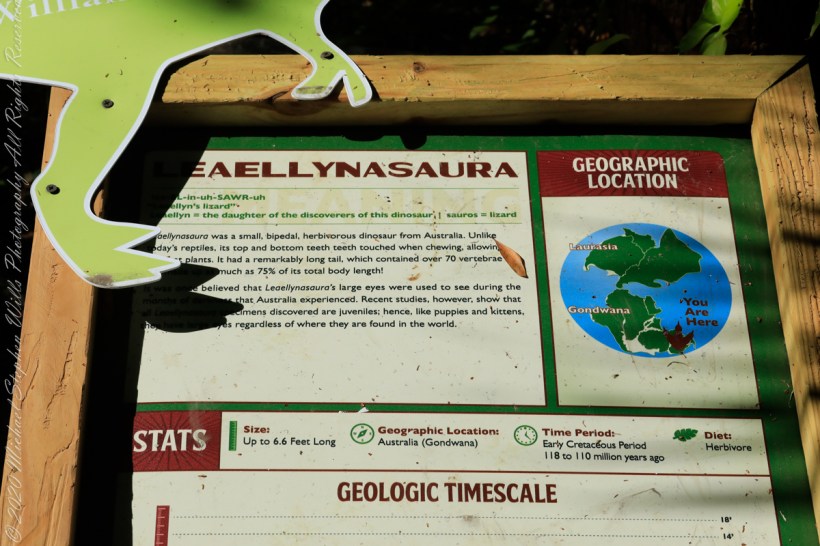
Baellynasaura was a small, bipedal, herbivorous dinosaur from Australia. Unlike today’s reptiles, its top and bottom teeth touch when chewing, allowing it to consume plants. It had a remarkably long tail, which contained over 70 vertebrae, as much as 75% of its total bodyt length. It is believed Leaellynasaura’s large eyes were used to see during the long nights that Australia experienced. Recent studies, however, show that these specimens discovered are juveniles; hence, like puppies and kittens, their eyes are large regardless of where they are found in the world.
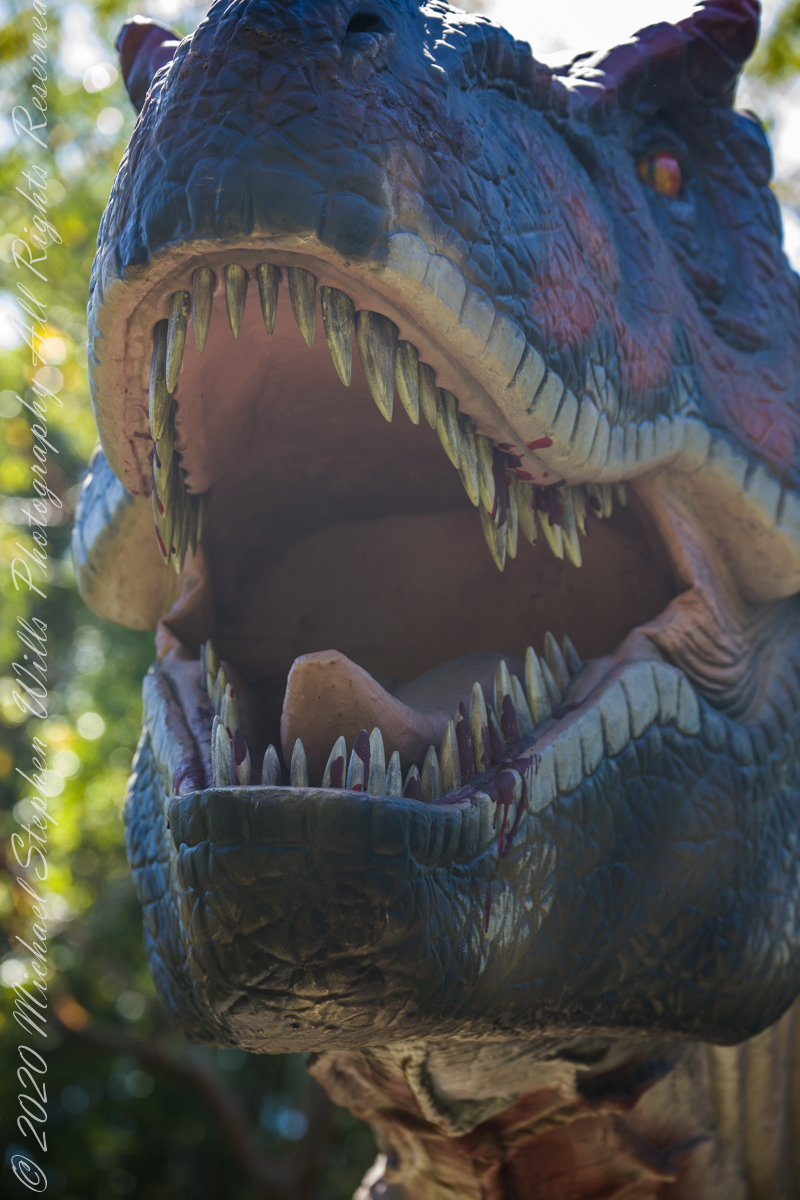
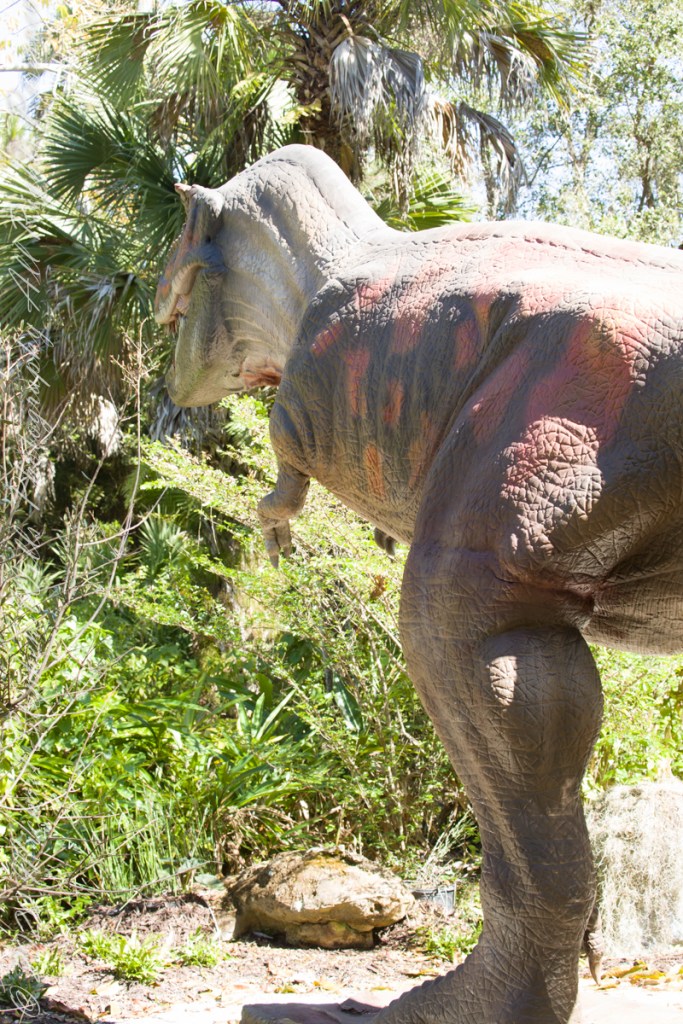
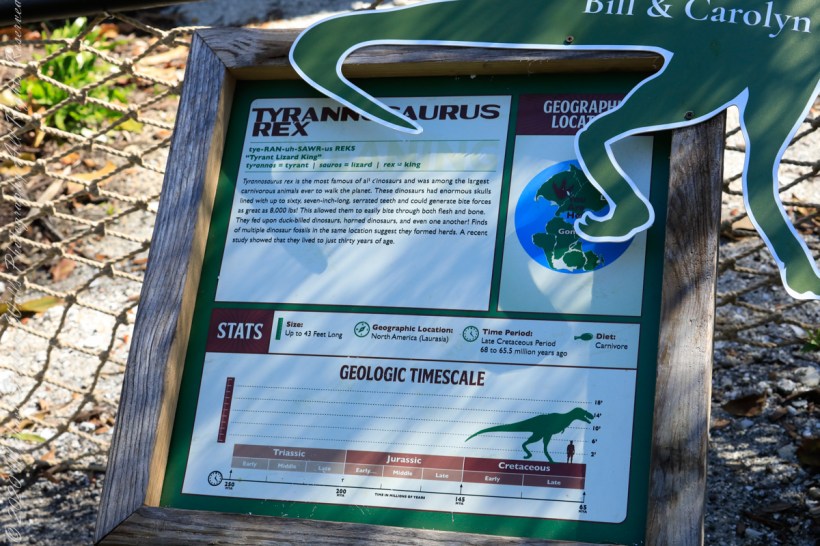
Tyrannosaurus Rex, the most famous of all dinosaurs, was among the largest carnivorous animals ever to walk the planet. Tyrannosaurus Rex had enormous skulls lined with up to sixty, seven-inch long teeth and could generate bite forces as great as 8,000 pounds. This allowed them to easily bite through both flesh and bone. They fed upon duck-billed dinosaurs, horned dinosaurs and even one another. Finds of multiple dinosaur fossils in the same location suggest they formed herds. A recent study showed that they lived to just thirty years of age.
Thank goodness humans never shared the environment with “The Rex.”
pure terror
References: text is from the park placard with minor edits.
Copyright 2022 Michael Stephen Wills All Rights Reserved
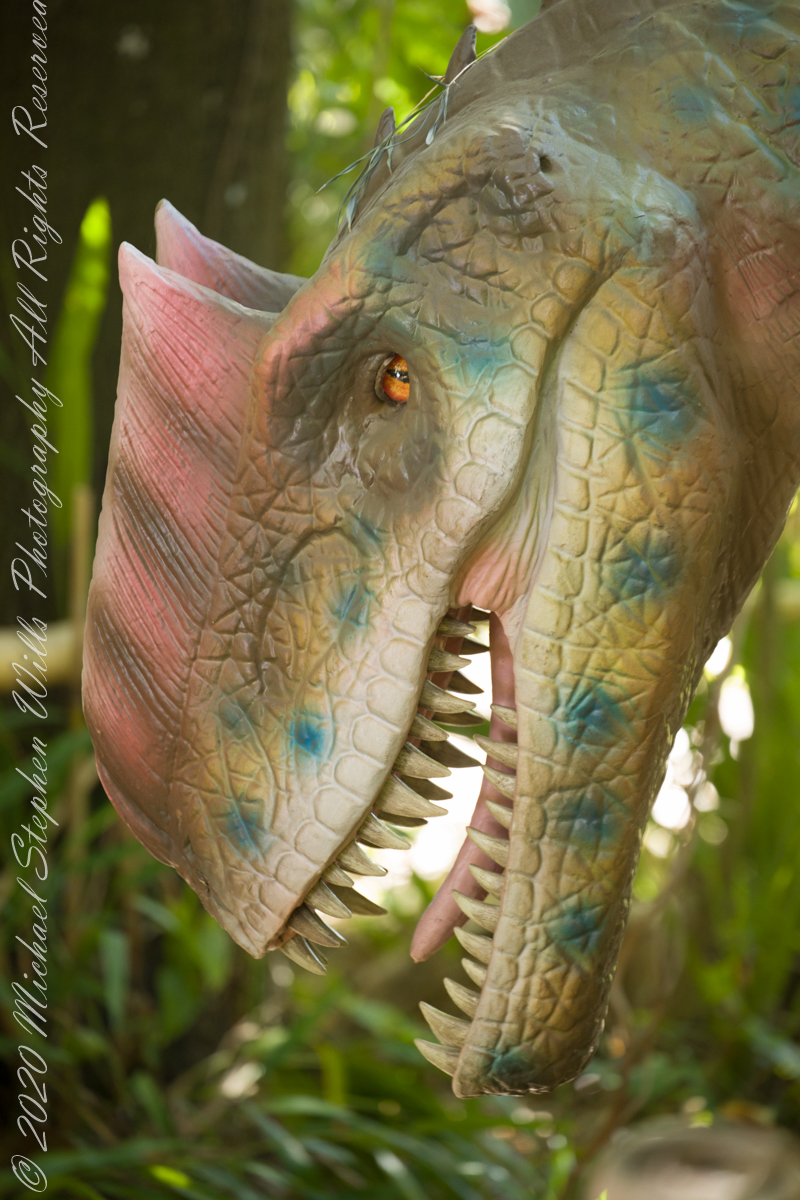
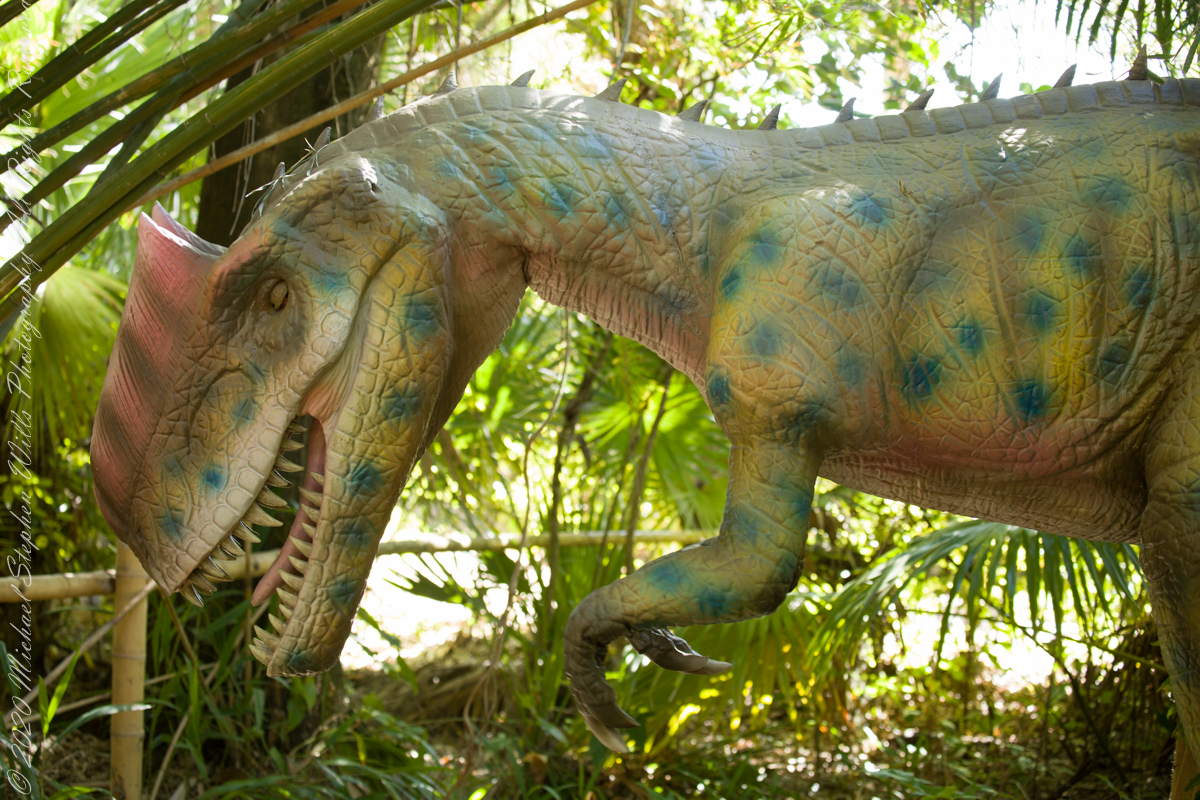
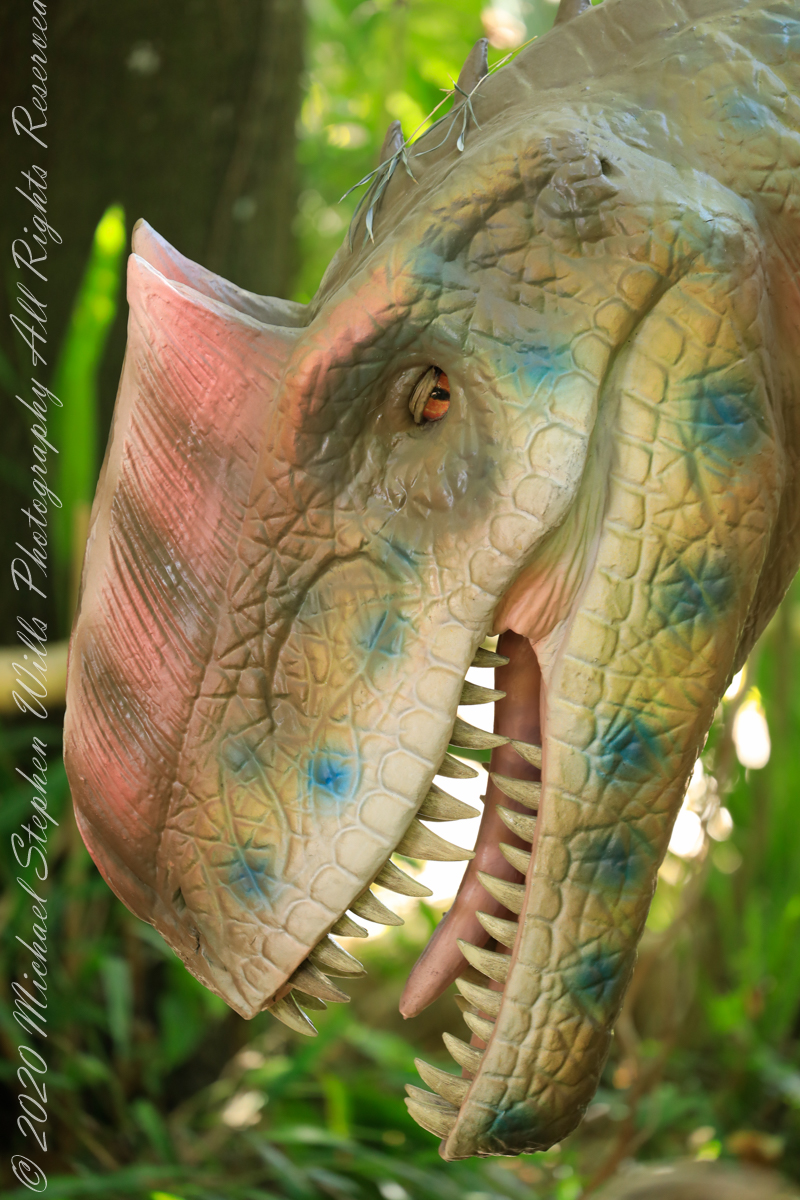
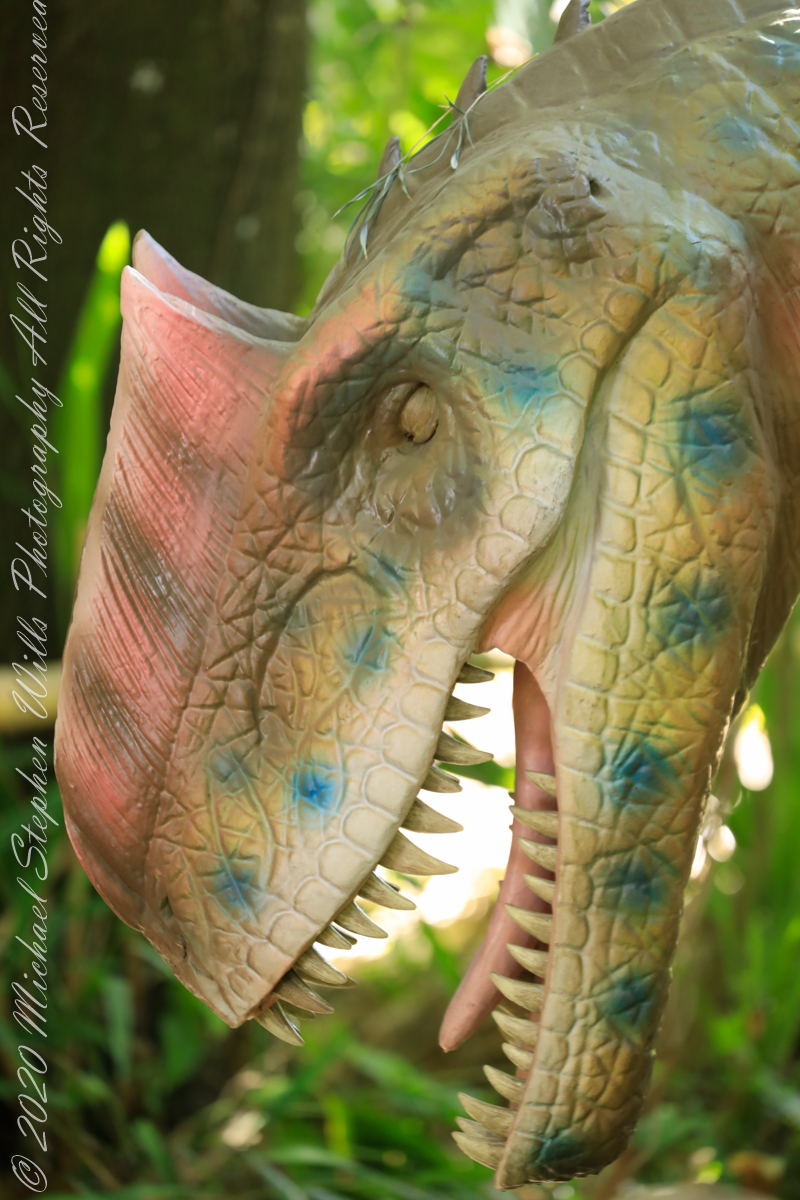
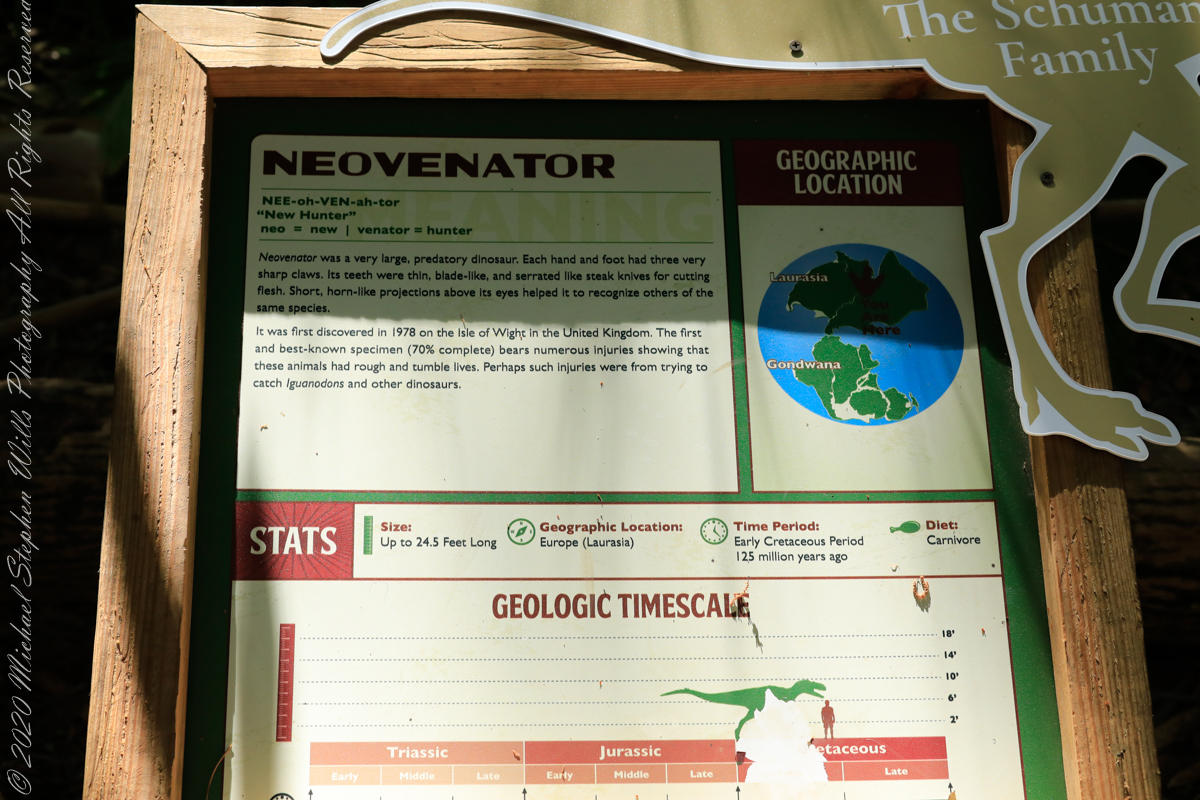
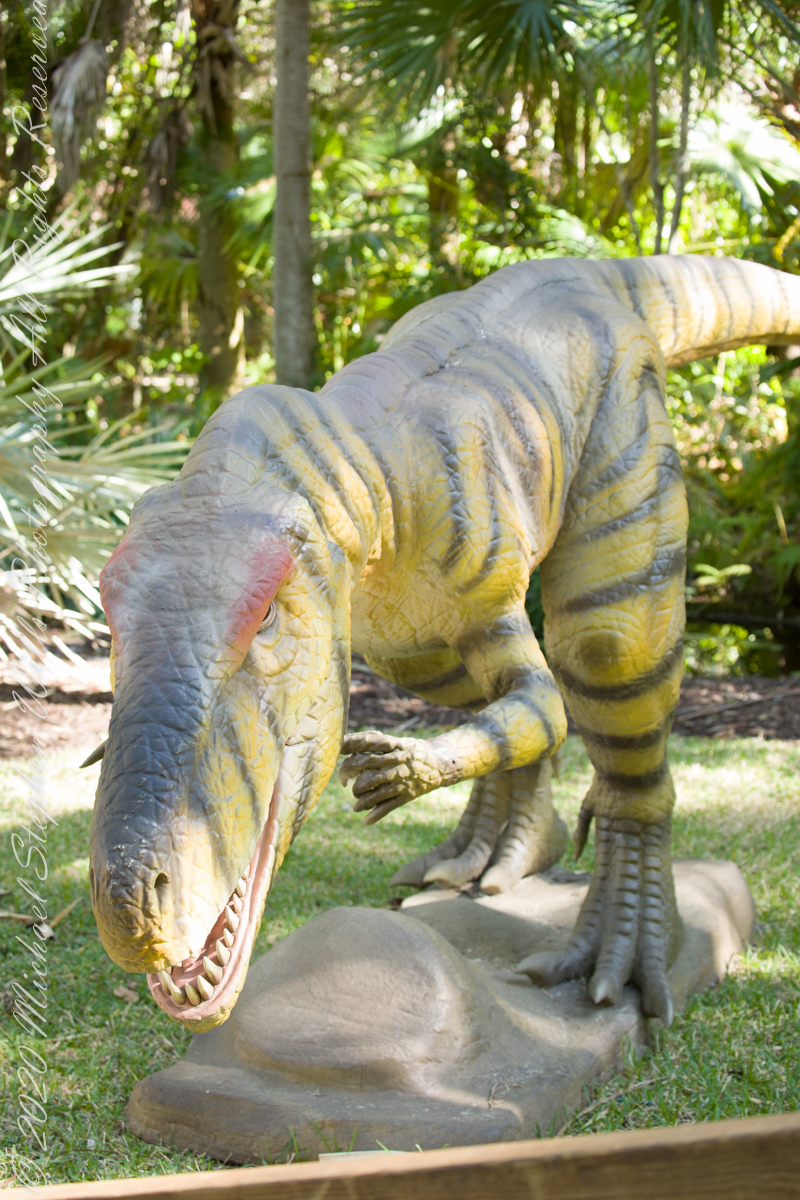
Neovenator was a very large, predatory dinosaur. Each hand and foot had three very sharp claws. Its teeth were thin, blade-like, and serrated like steak knives for cutting flesh. Short, horn-like projections above its eyes helped to recognize others of the same species. First discovered in 1978 on the Isla of Wight, United Kingdom. The fist and best-known specimen (70% complete) bears numerous injuries showing that these animals had rough and tumble lives. Perhaps such injuries were from trying to catch Iguanodons and other dinosaurs. Neovenator is derived from the latin words for “now” and “hunter.”
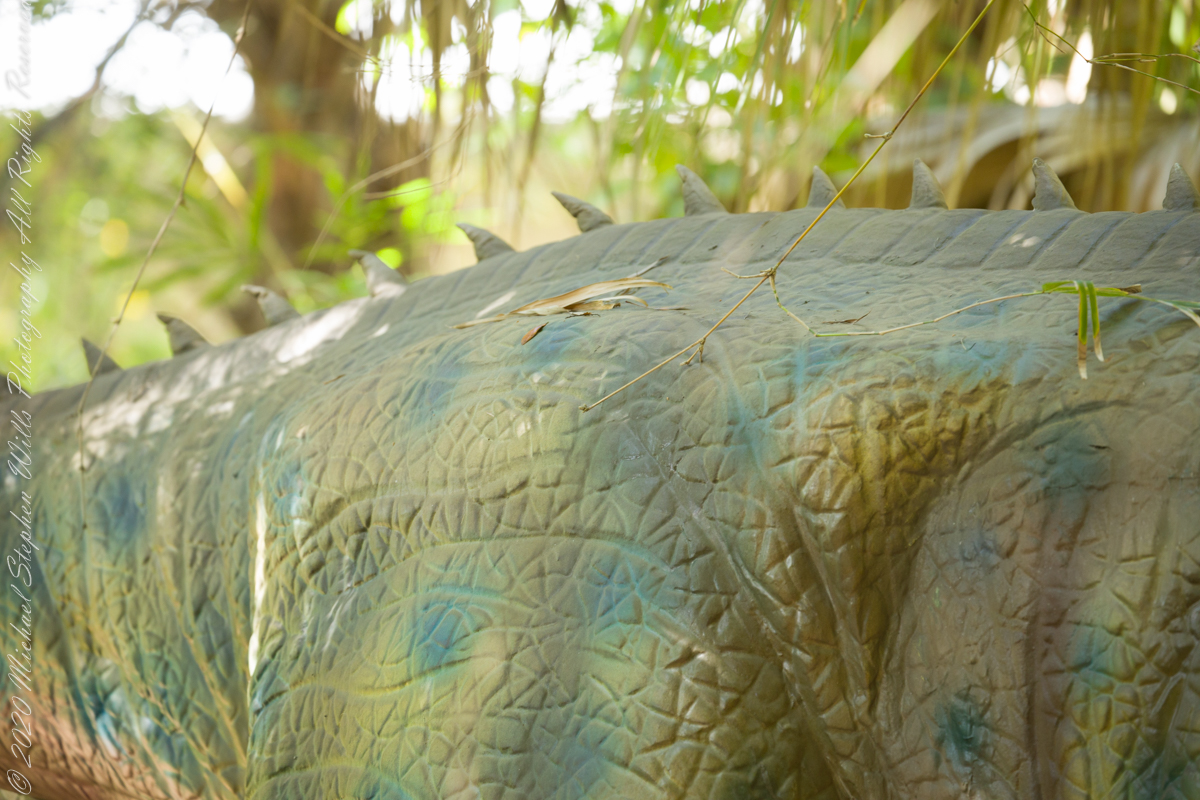
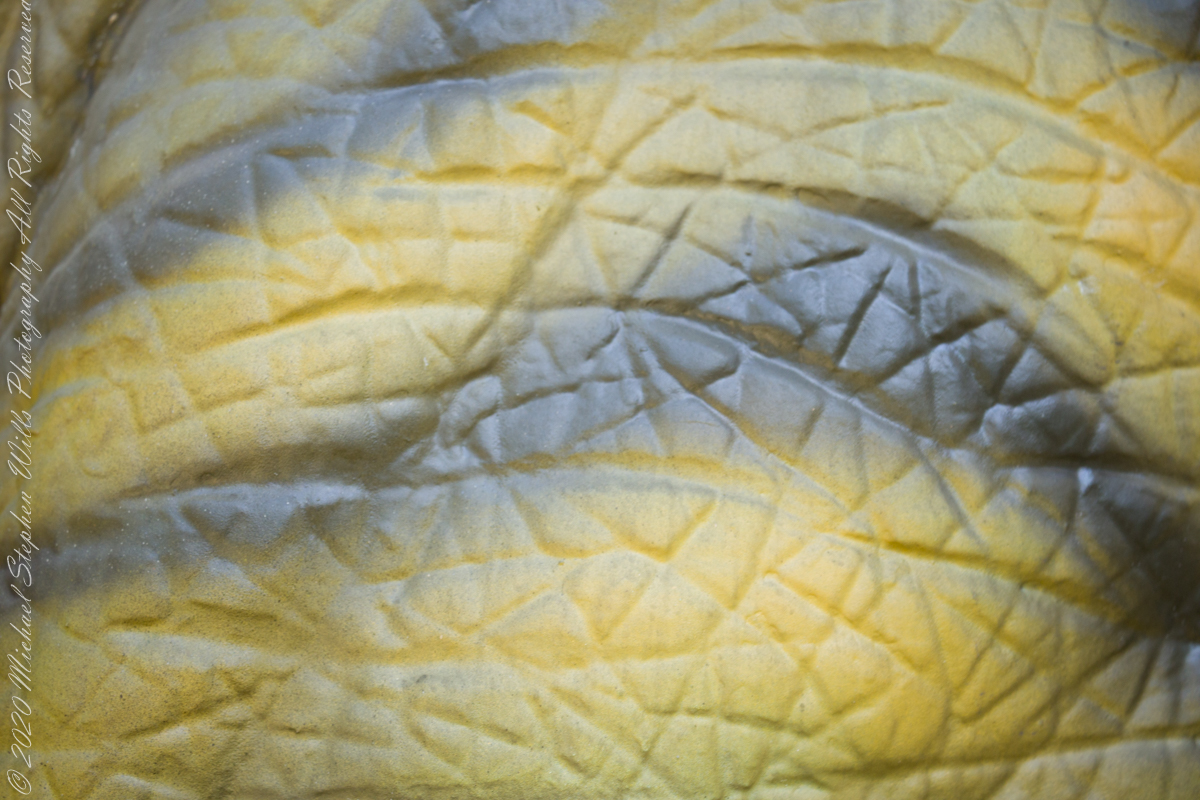
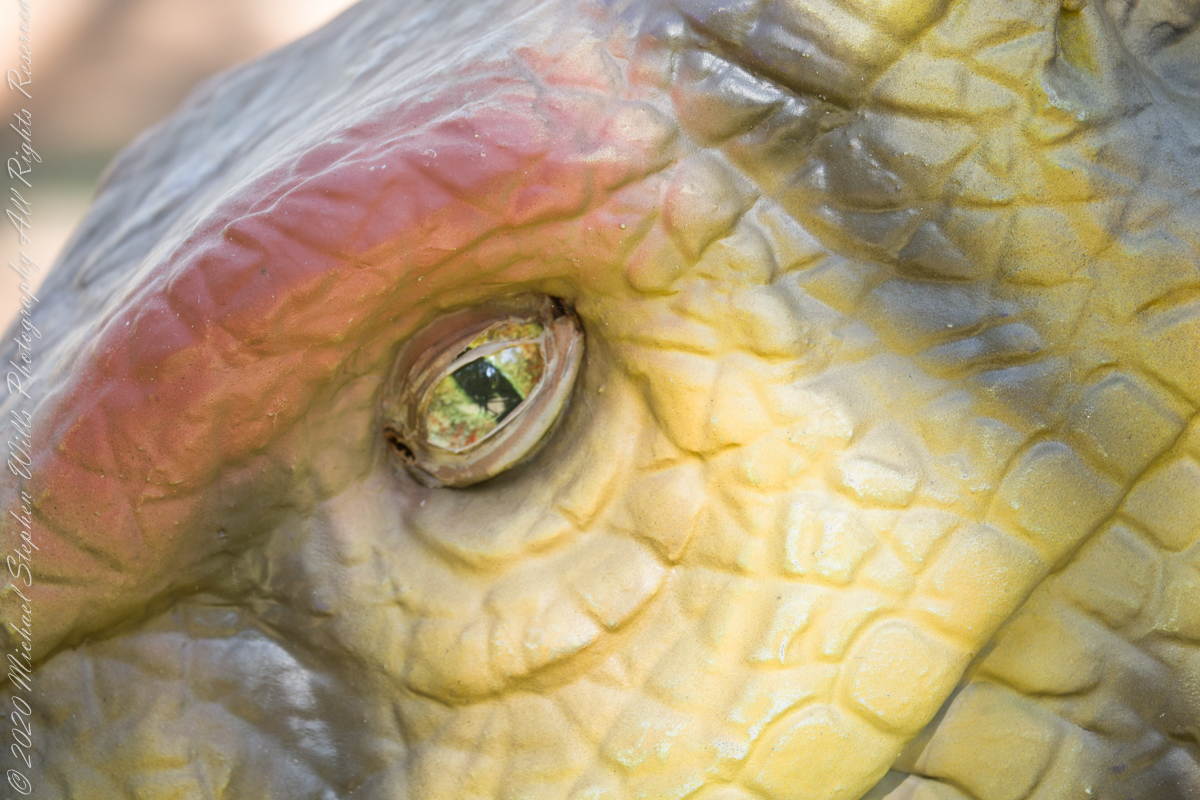
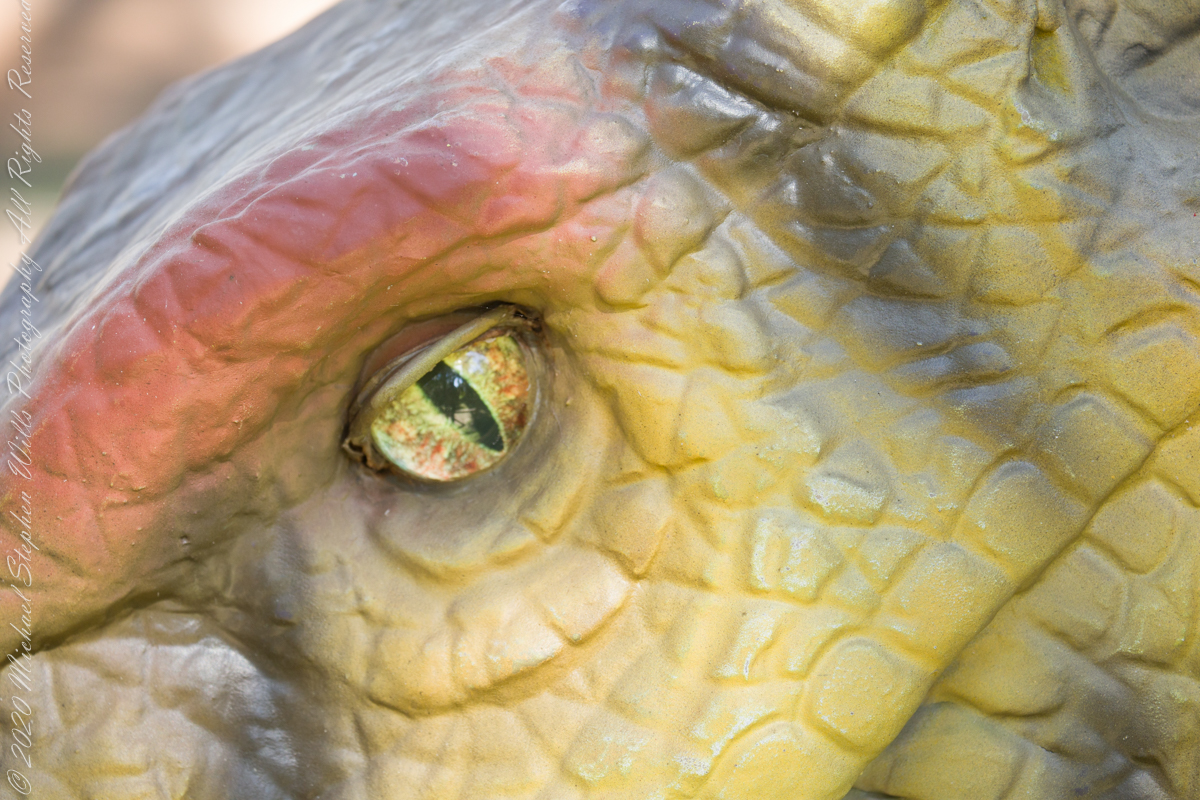
Skin TextureShort, horn-like projections above its eyes helped to recognize others of the same species.
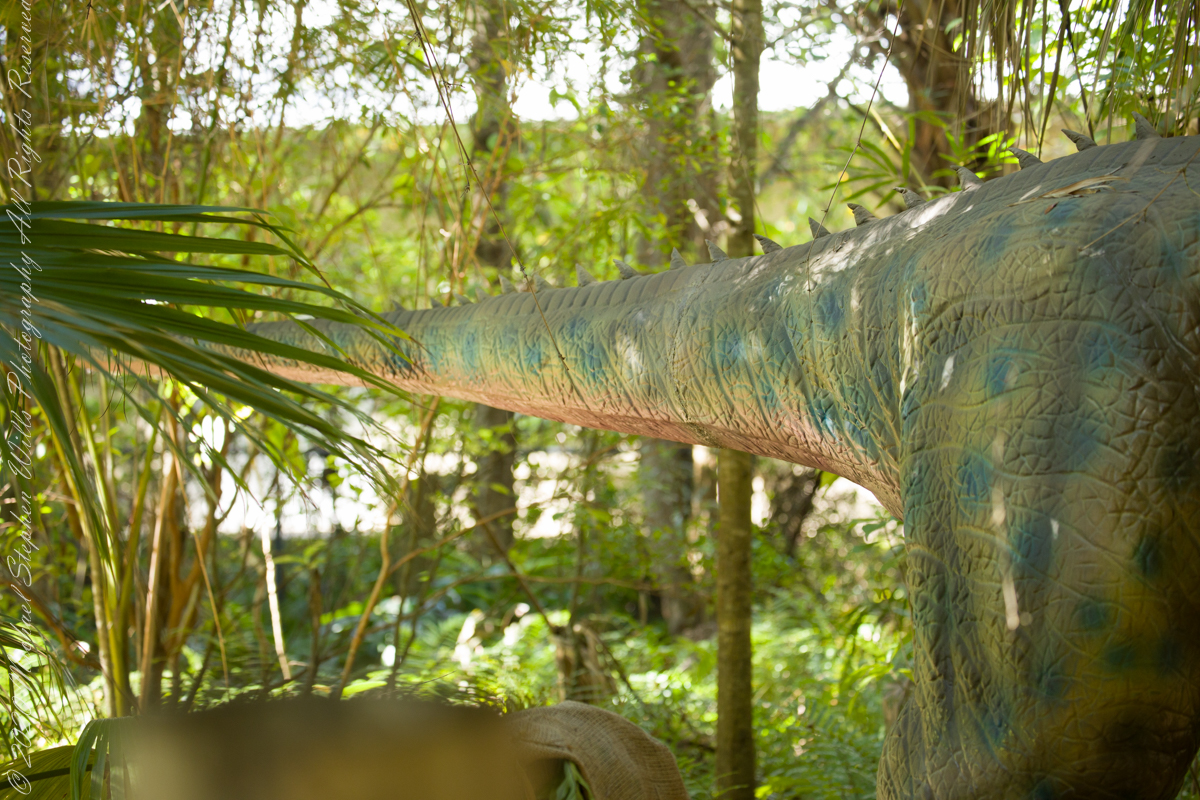
Long extended tail provided balance
A creepy customer
References: text is from the park placard with minor edits.
Copyright 2022 Michael Stephen Wills All Rights Reserved
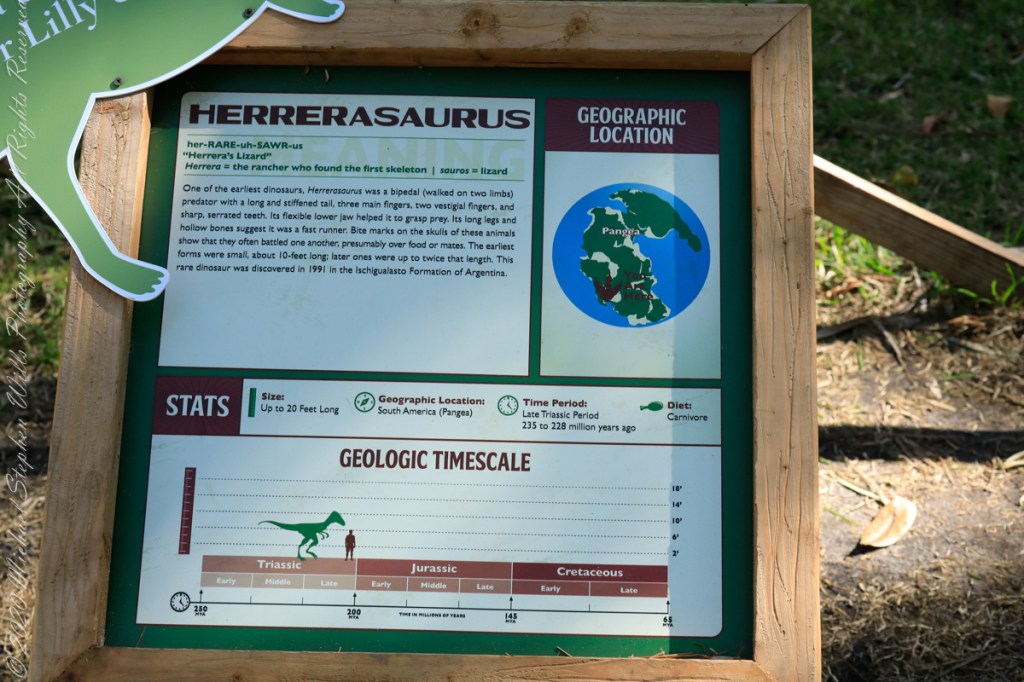
One of the earliest dinosaurs, Herrerosaurus was a bipedal predator with a long and stiffened tail, three main fingers, two vestigial fingers, and sharp, serrated teeth. Its flexible lower jaw helped to grasp prey. Its long legs and hollow bones suggest it was a fast runner. Bite marks on skulls of these animals show they often battled one another, presumably over food or mates. The earliest forms were small, about 10-feet long; later ones were up to twice that length. This rare dinosaur was discovered in 1991 in the Ischigualasto Formation of Argentina.
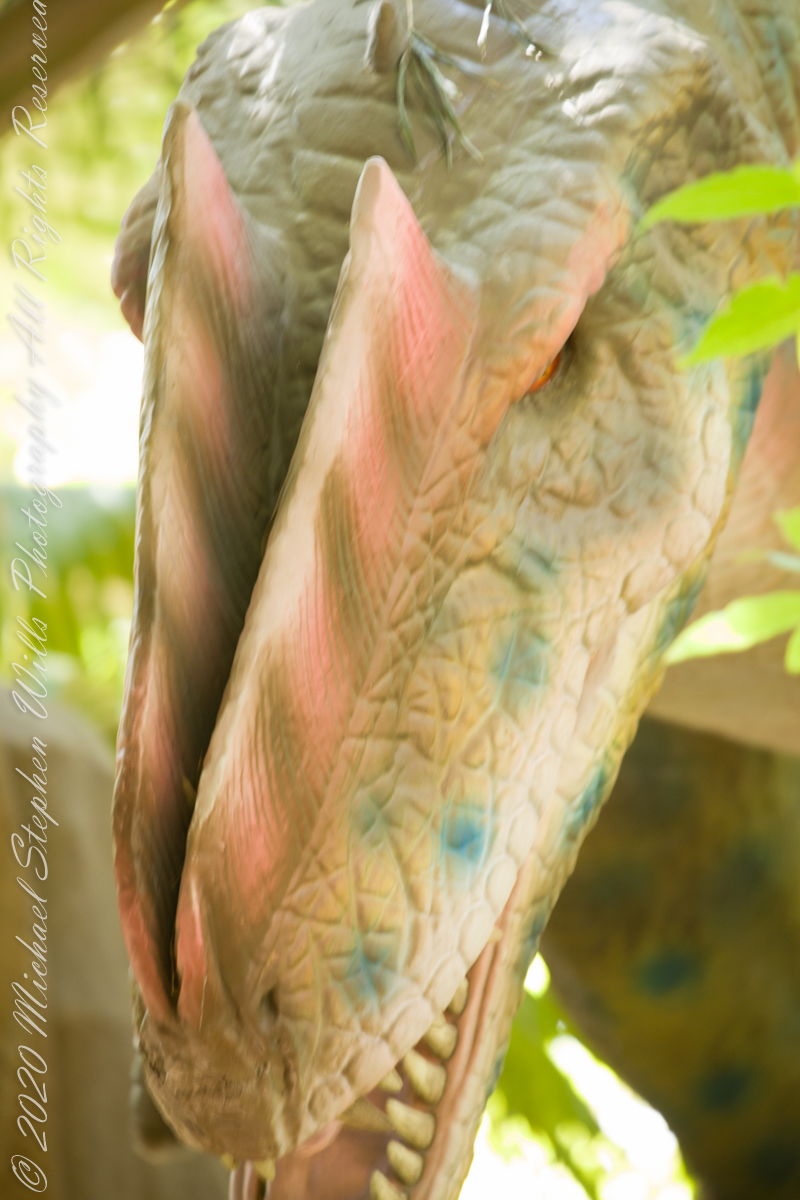
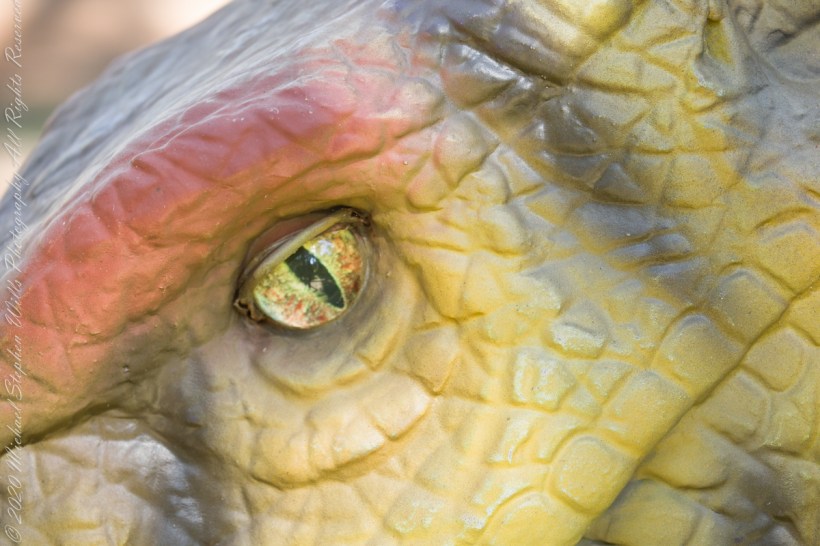
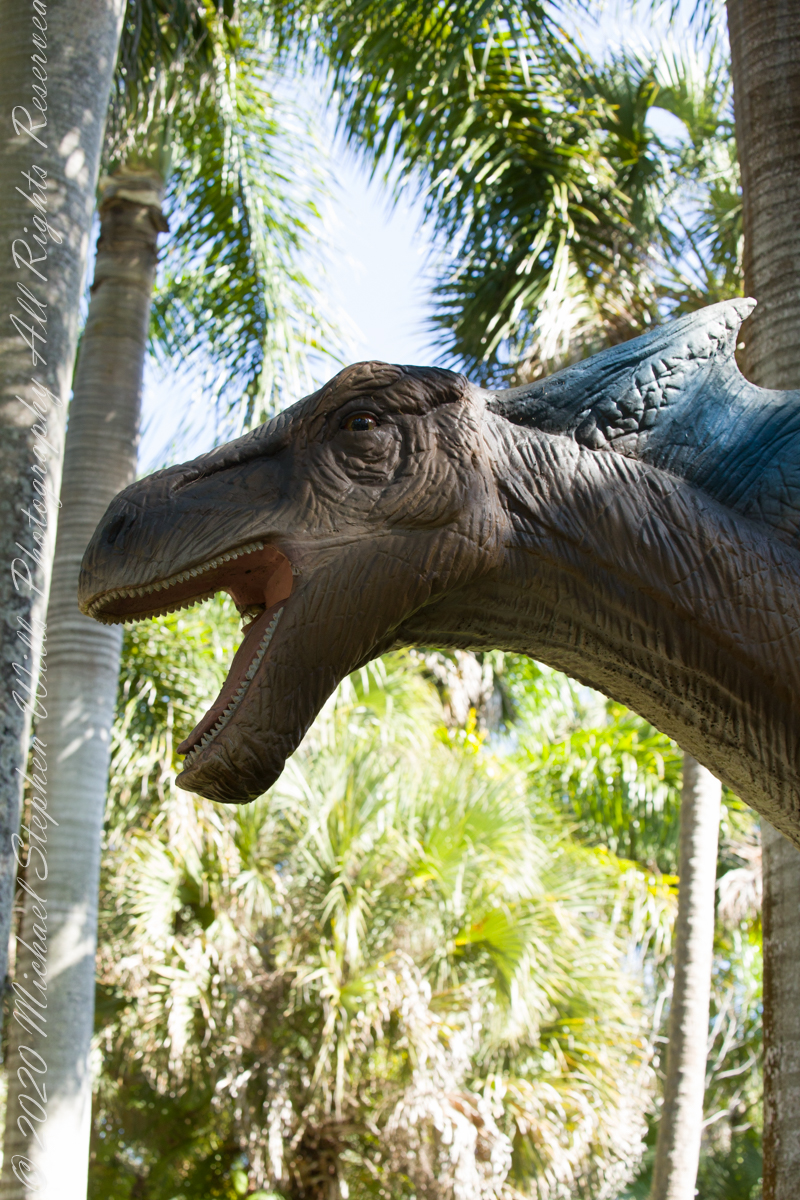
This sculpture has a nictitating membrane, a transparent or translucent third eyelid present in some animals that can be drawn across the eye for protection and to moisten it while maintaining vision. The animatronic sculpture includes the nictating membrane lowering over eye, moving jaws and body and a roar.
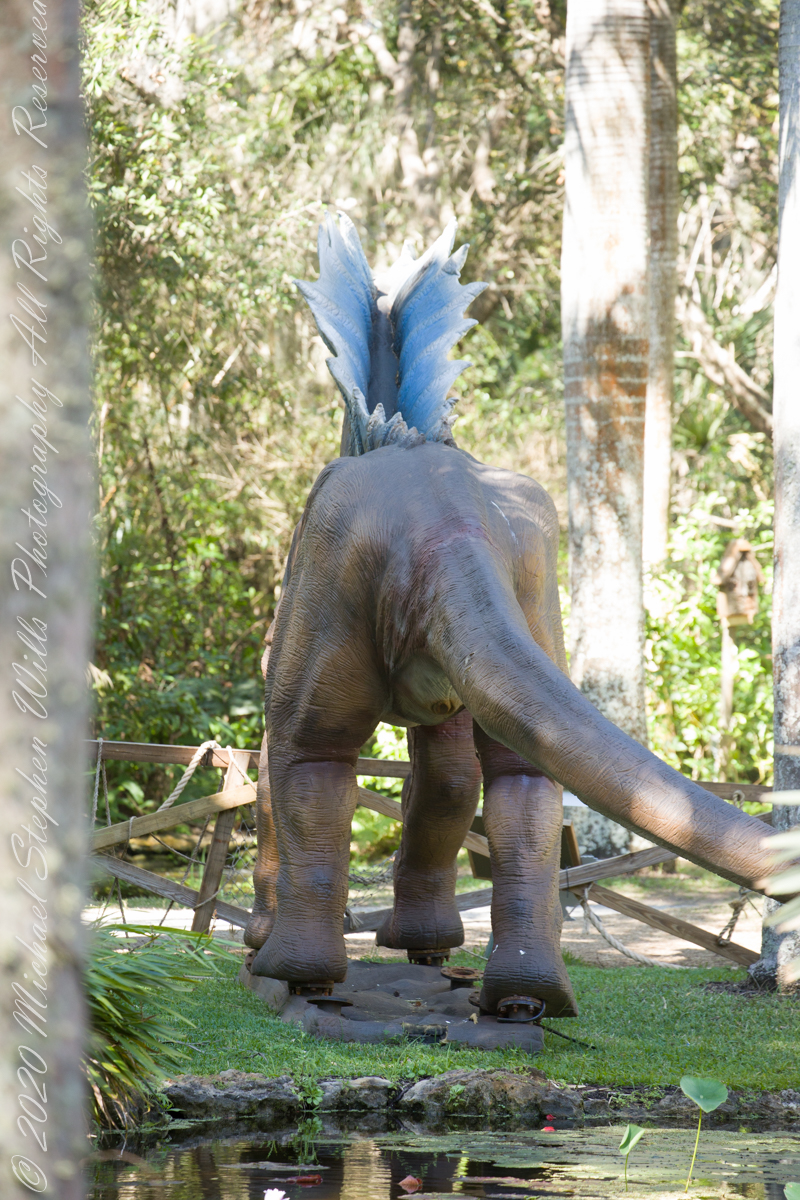
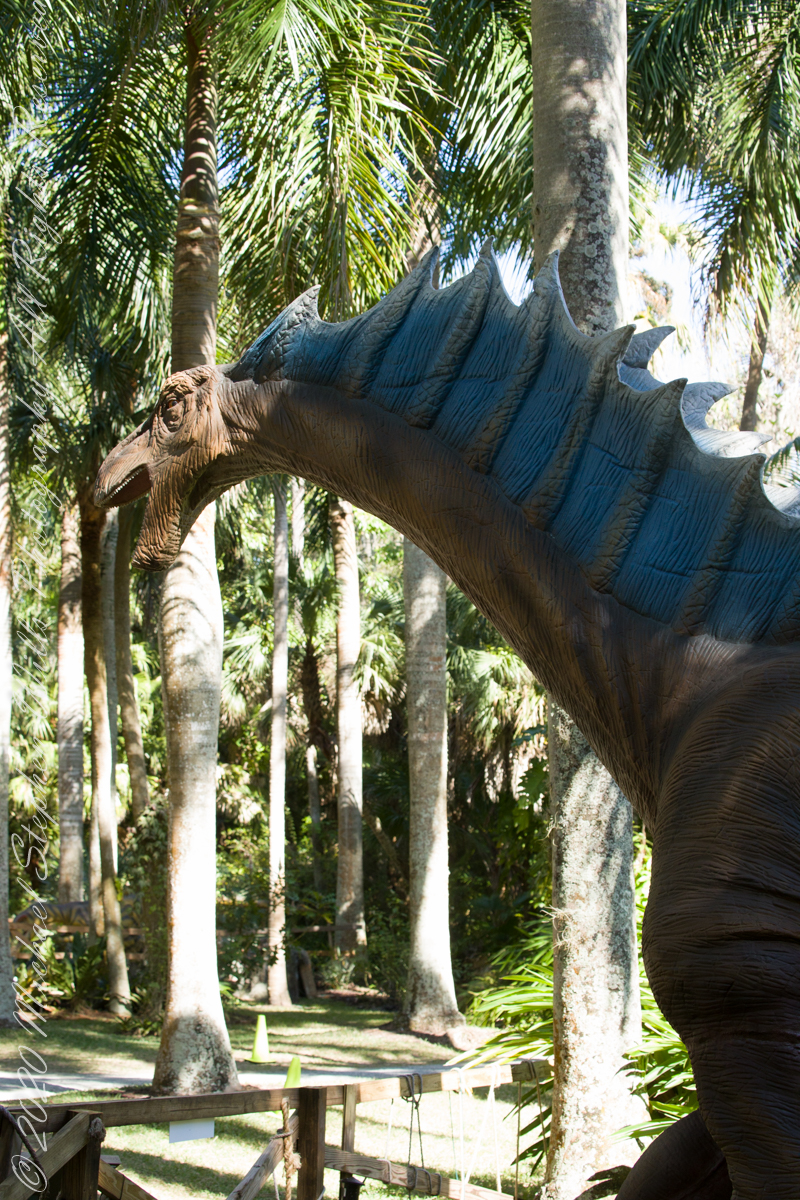
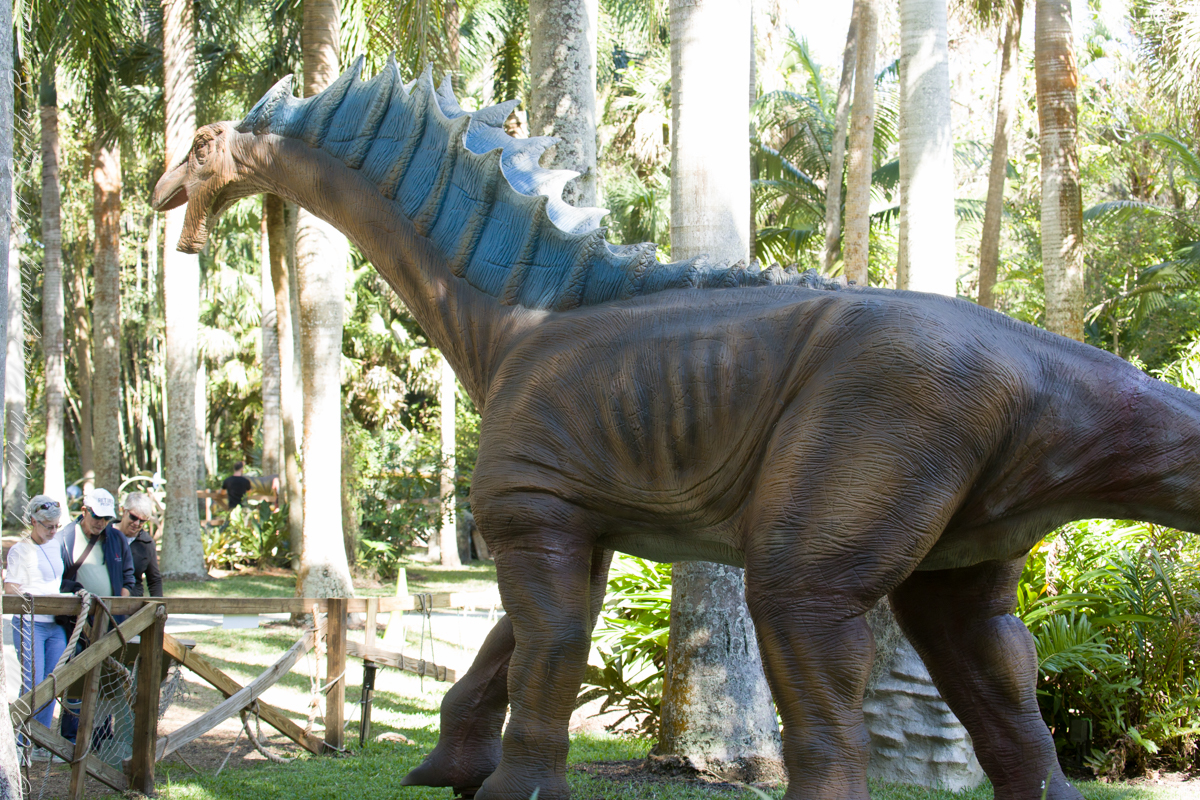
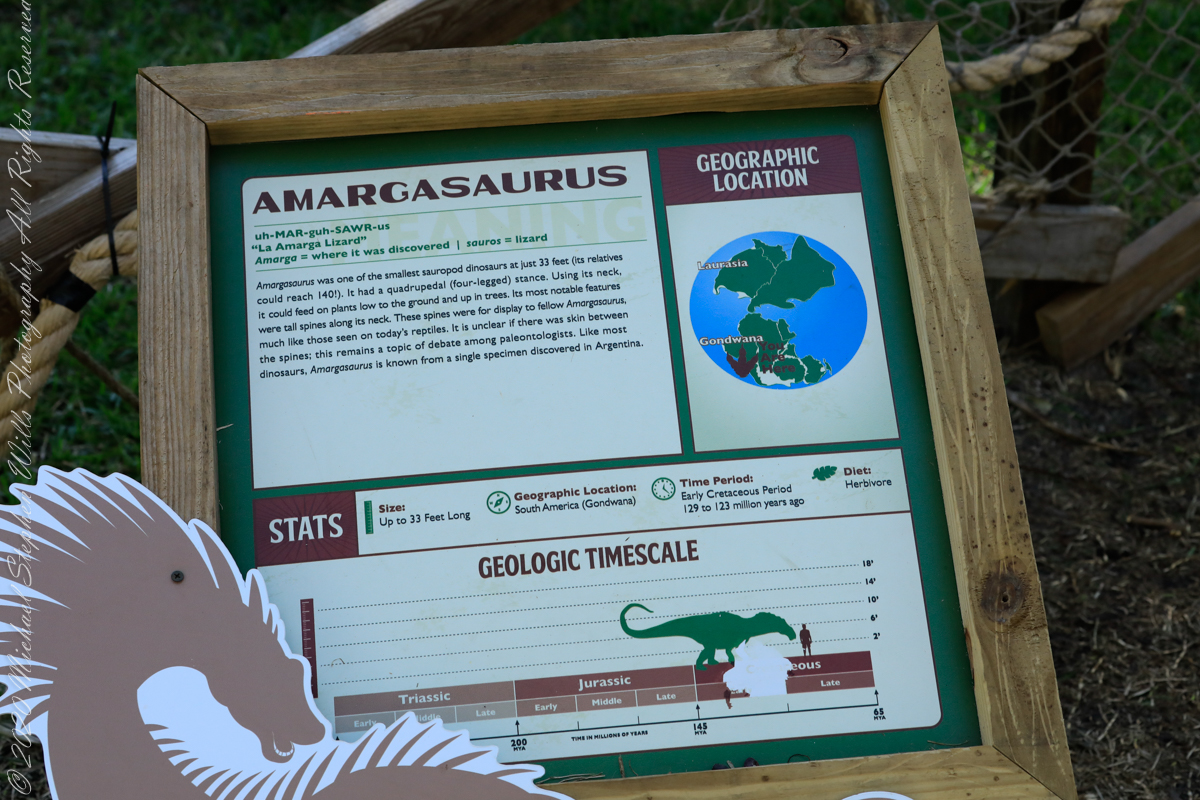
Amargasaurus was one of the smallest sauropod dinosaurs at just 33 feet (its relatives could reach 140 feet!!). It had a quadrupedal stance. Using its neck, it could feed on plants low to the ground and up in trees. Its most notable features were tall spines along its neck. These spines were for display to fellow Amargasaurus, much like those seen on today’s reptiles. It is unclear if there was skin between the spines; this remains a topic of debate among paleontologists. Like most dinosaurs, Amargasaurus is know from a single specimen discovered in Argentina.


 Michael Stephen Wills Photography