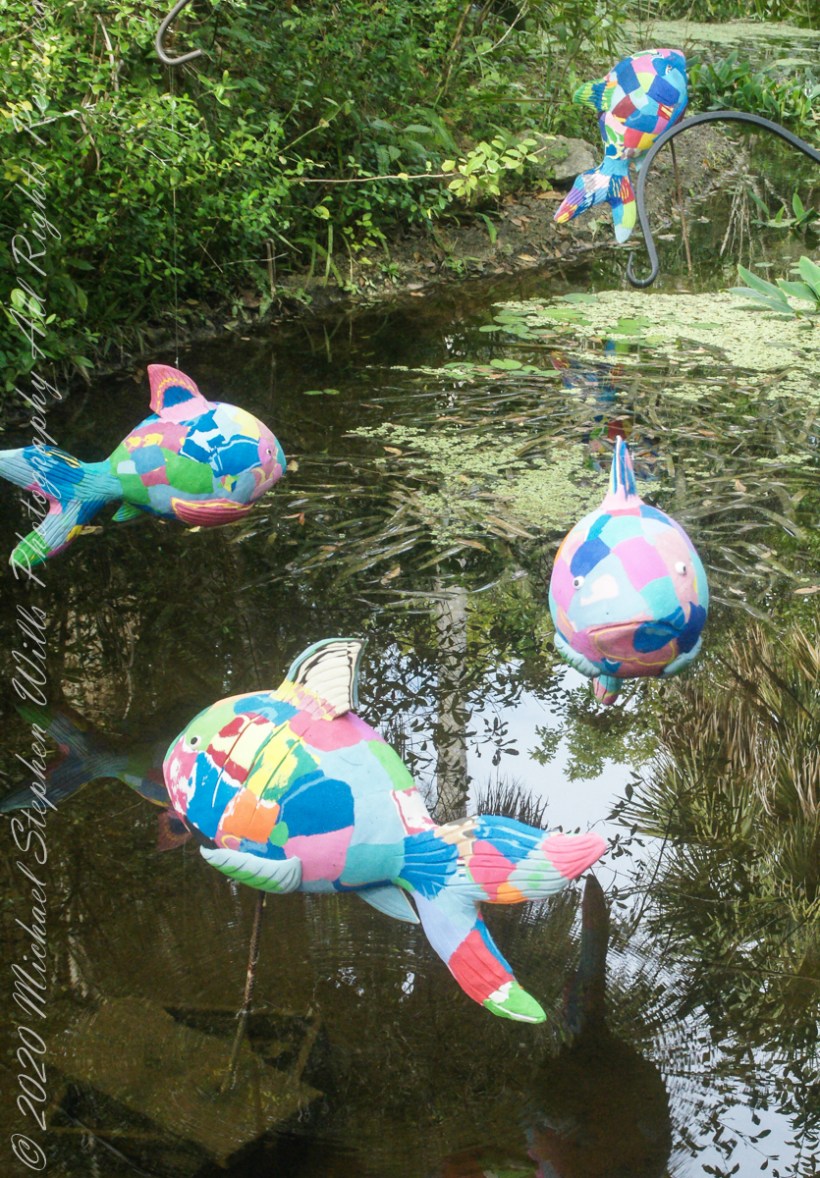
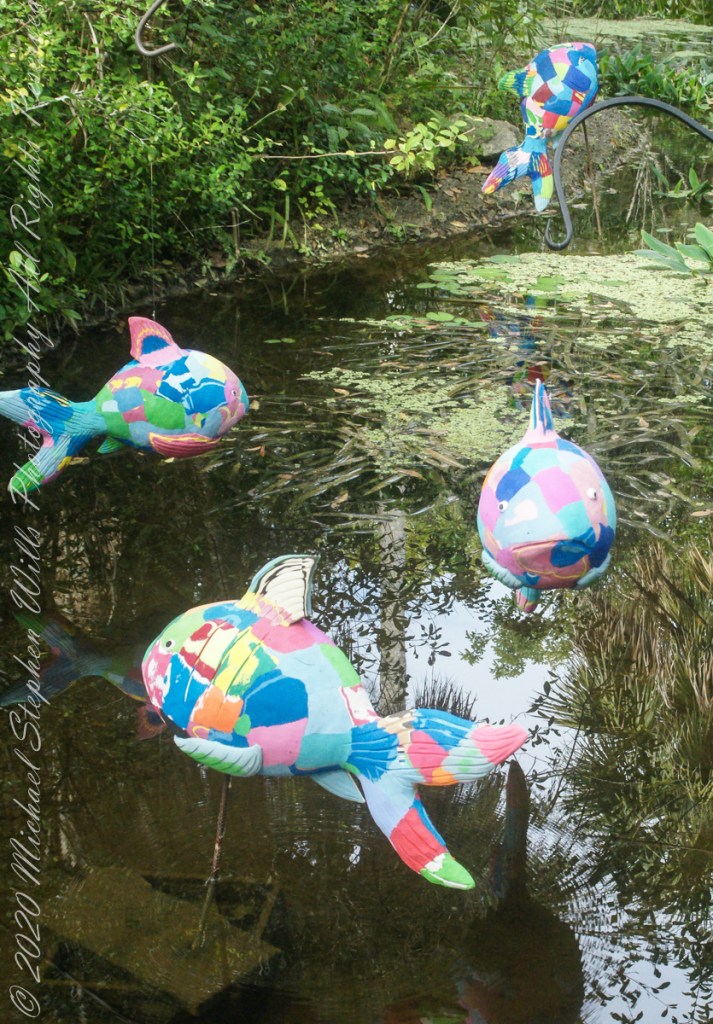
Flip Flop Reef Fish

Various reef fish set up “cleaning stations” where turtles and other fish come to have parasites nibbled off.

50 recycled flip flops were used by Ocean Sole Africa Project artists to create each Reef Fish sculpture from a 2019/2020 exhibit hosted by McKee Botanical Gardens, Vero Beach, Indian River County, Florida.

Coral reef fish live among or in close relation to coral reefs. Coral reefs form complex ecosystems with tremendous biodiversity. Among the myriad inhabitants, the fish stand out as colorful and interesting to watch. Hundreds of species can exist in a small area of a healthy reef, many of them hidden or well camouflaged.

Reef fish have developed many ingenious specializations adapted to survival on the reefs. Safe habitats, many different species of fish inhabit coral reefs where they are protected from predators and find food. In turn, reef fish eat algae, preventing overgrowth and smothering of the coral animals. Common fish in Caribbean reefs have interesting names: parrot, angel, puffer, surgeon and clown.

Coral reefs occupy less than 1% of the surface area of the world oceans but provide a home for 25% of all marine fish species. Reef habitats are a sharp contrast to the open water habitats that make up the other 99% of the world oceans. Loss and degradation of coral reef habitat, increasing pollution, and overfishing including the use of destructive fishing practices, are threatening the survival of the coral reefs and the associated reef fish.
Copyright 2022 Michael Stephen Wills All Rights Reserved

Herons Stalking (video)

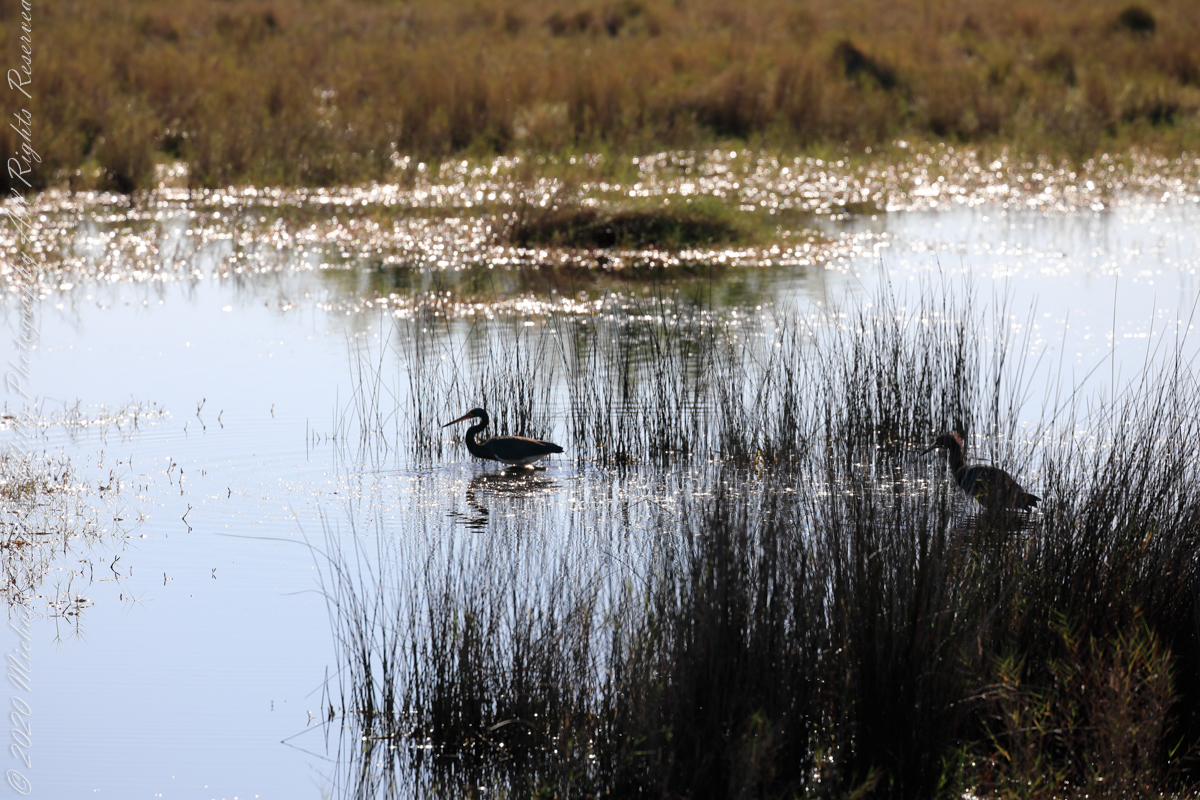
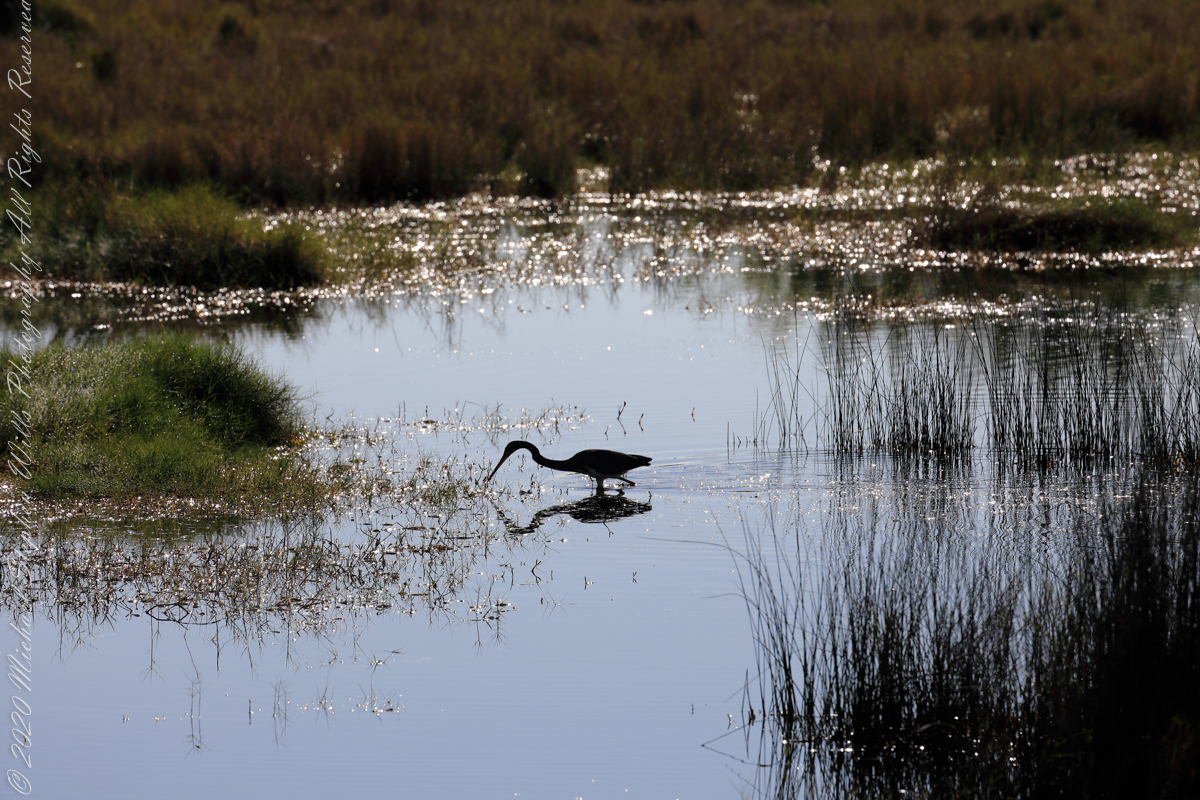
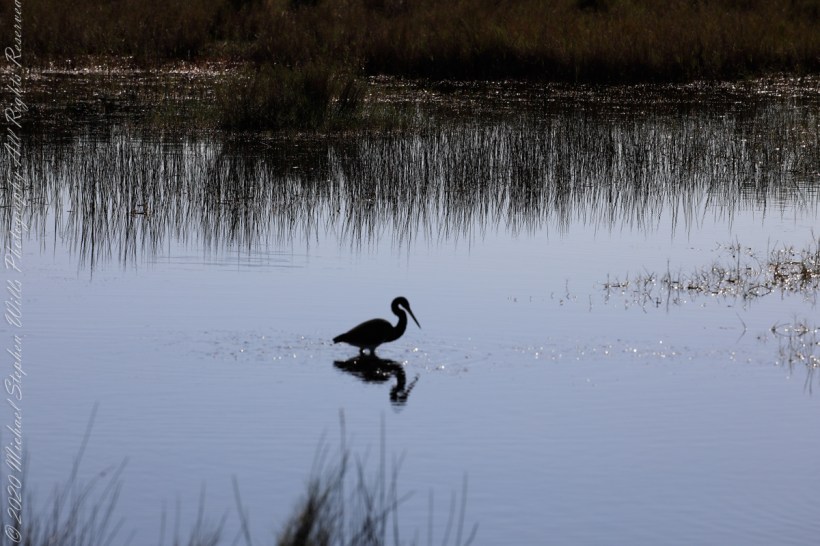
Shorebirds of different species can and do forage together

This series of wading shorebirds are from a mash alongside Blackpoint Wildlife Drive.

“The exposed mudflats on tidal wetlands attract a variety of shorebirds. Shorebirds are seasonal residents that make long migratory journeys between their breeding grounds in the Artic and their wintering area in South America. Merritt Island National Wildlife Refuge provides an important resting and feeding area for this group of birds. Some stay for the winter, others use the refuge as a fuel stop before continuing on their journey.”

“In tidal areas, shorebird feeding schedules are influenced by the cycle of tides. Changes in tidal cycles expose foraging areas in mudflats for a period during the day. At other points during the cycle, the water in these same areas becomes too deep or the ground too dry for shorebirds to feed effectively.”

The text in quotes is from a roadside information placard, Merritt Island National Wildlife Refuge, Titusville, Brevard County, Florida

Copyright 2022 Michael Stephen Wills All Rights Reserved

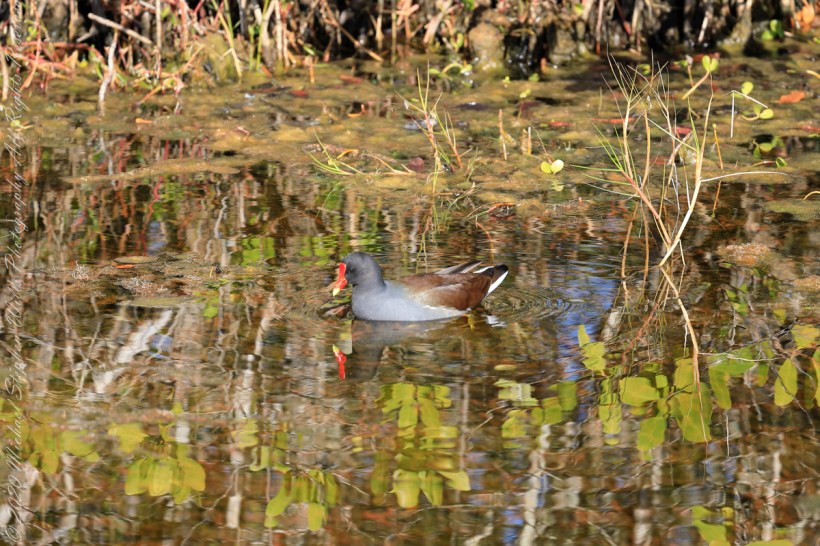
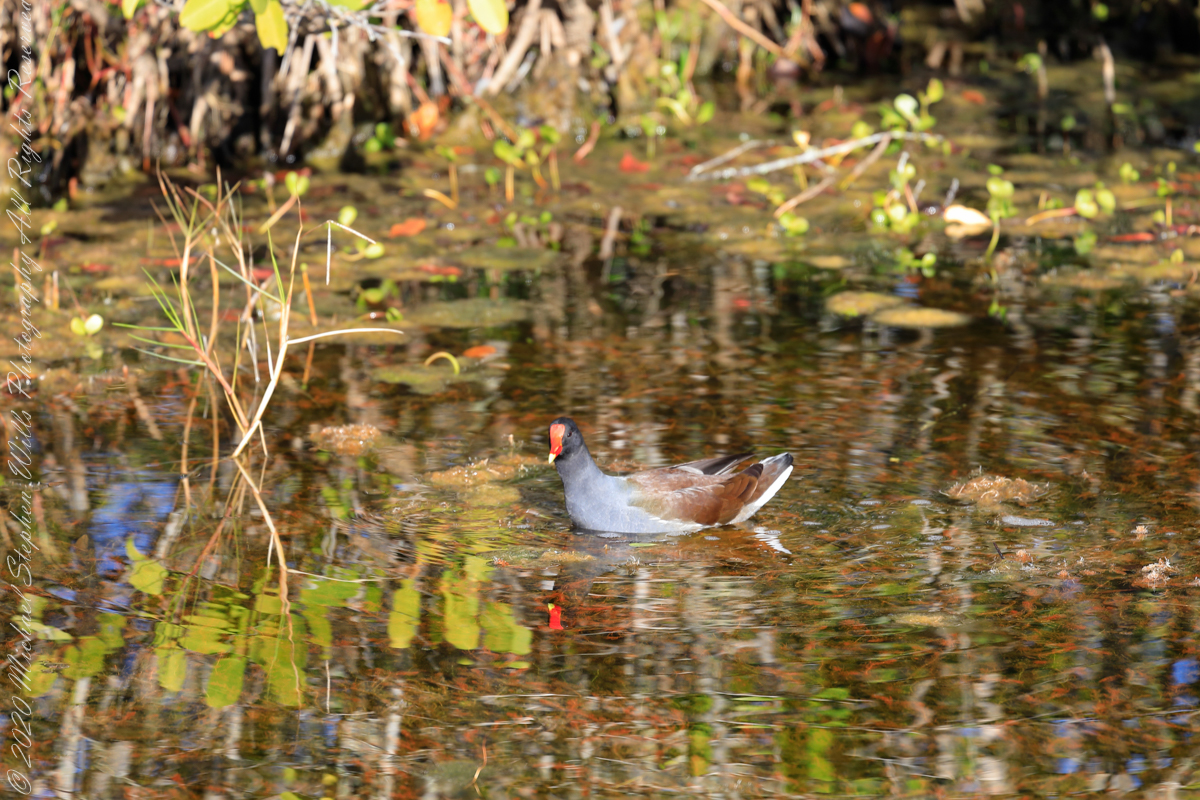
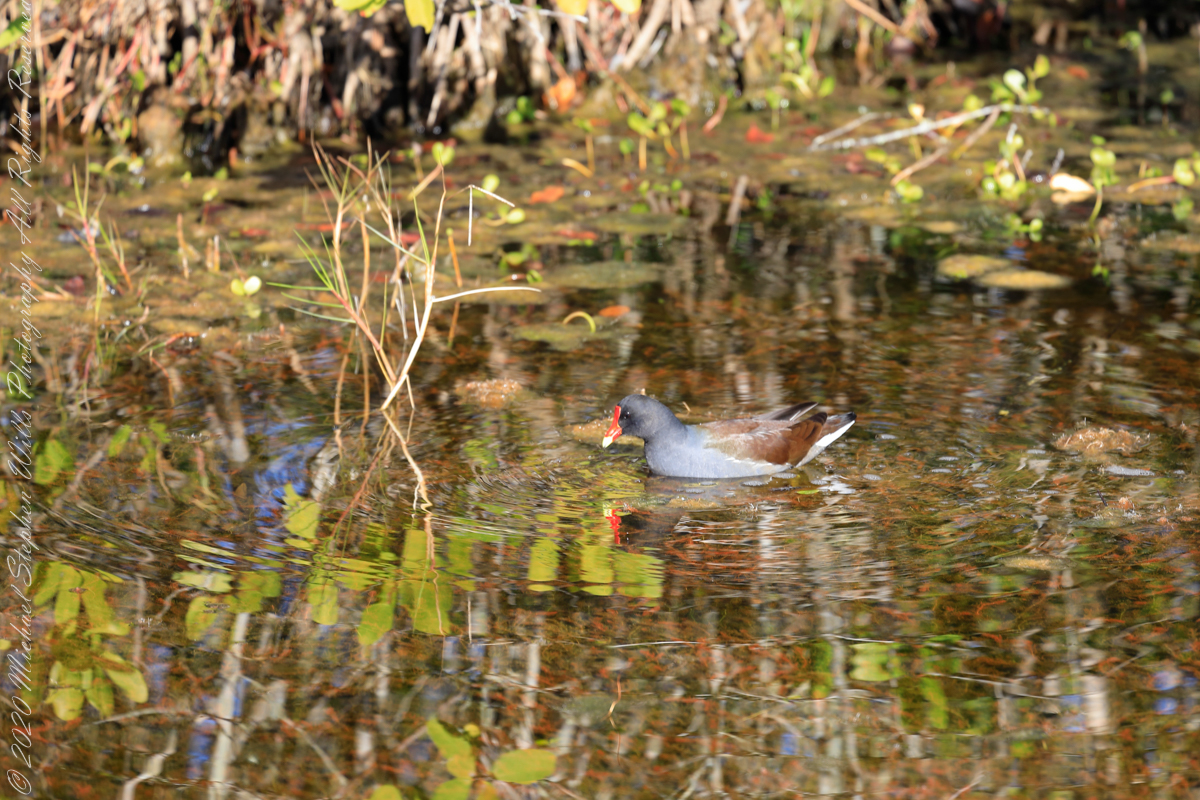
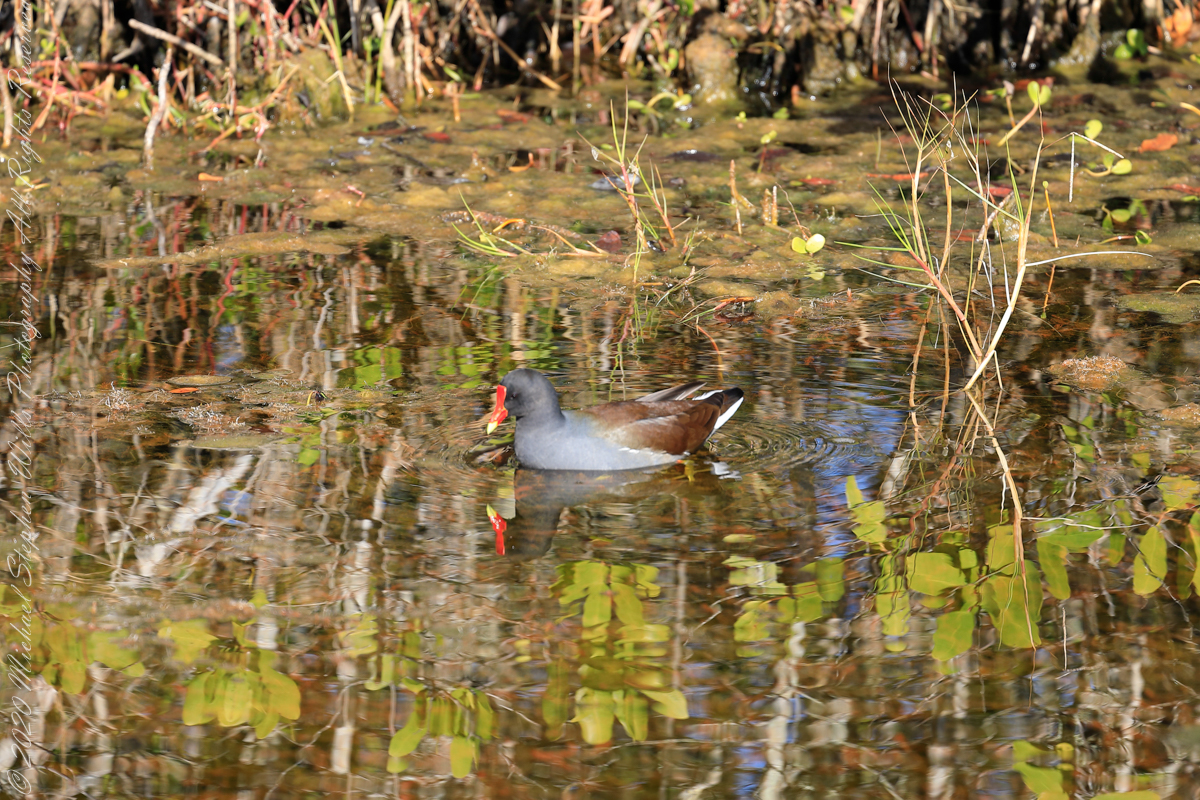
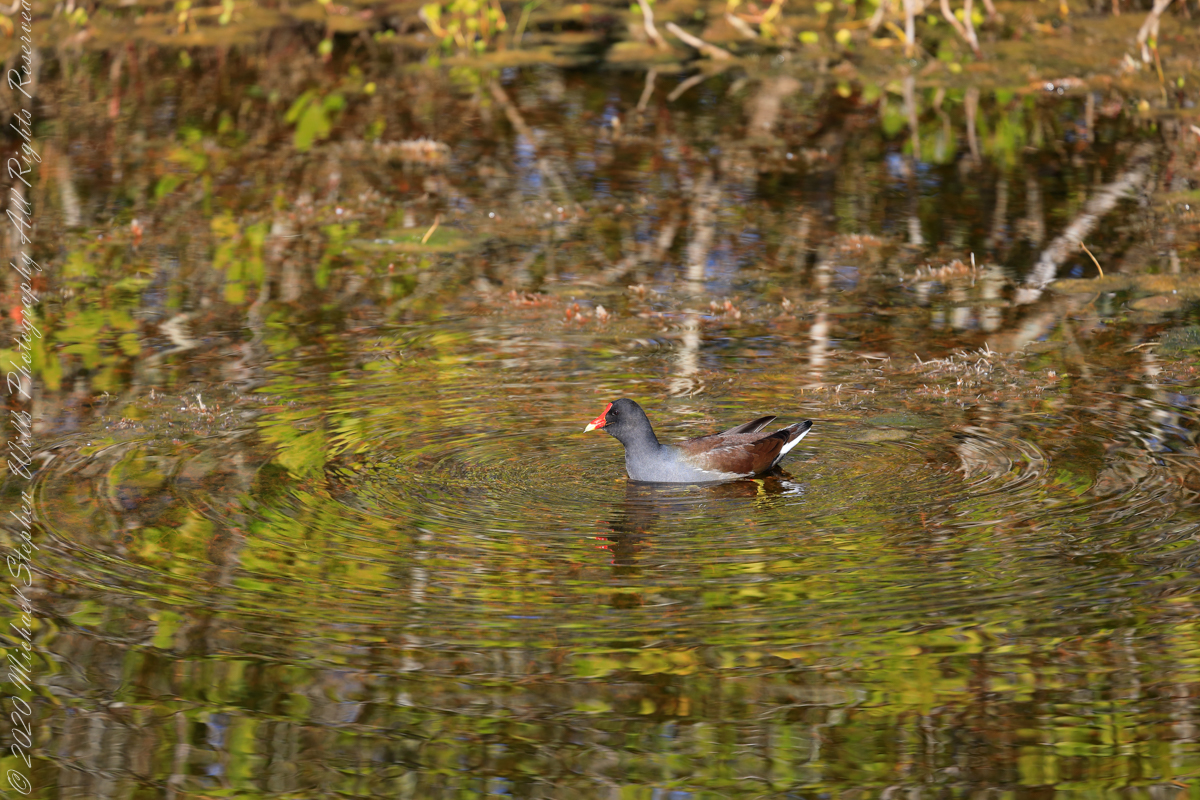
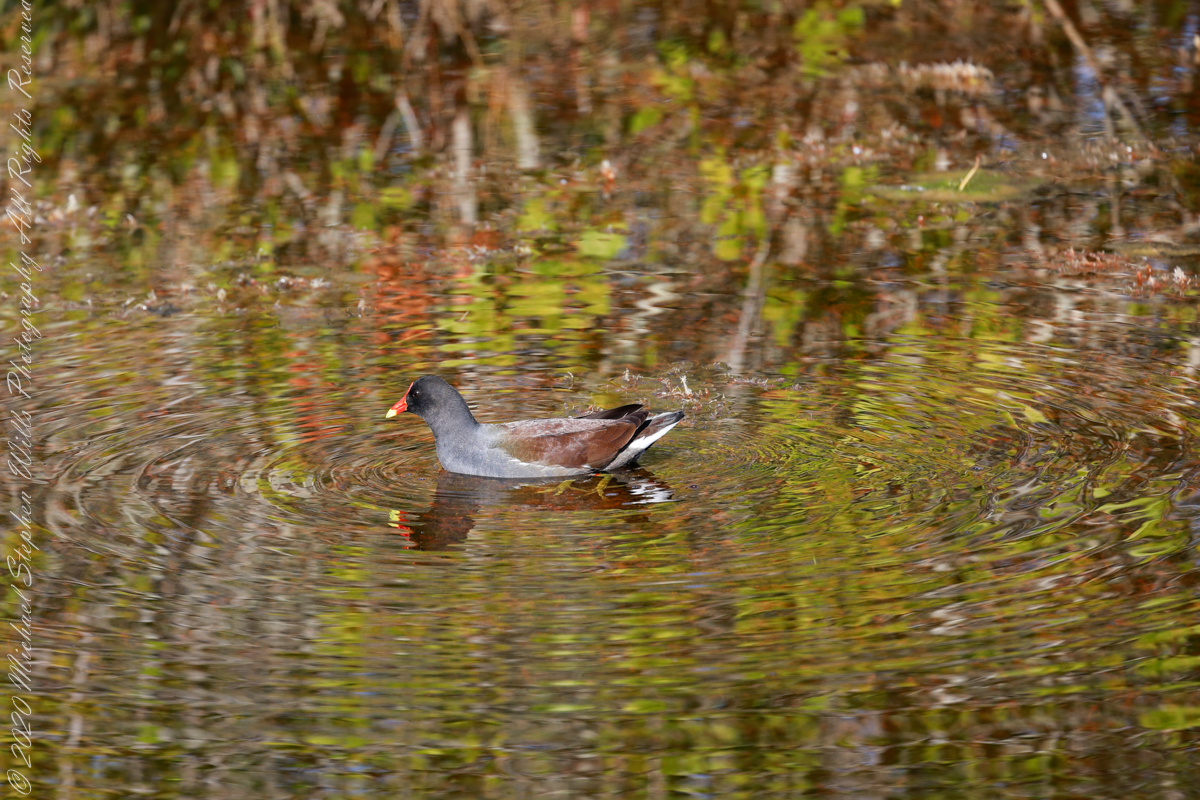
Swamp Chicken

Worldwide Distribution — now playing at your neighborhood marsh

This Common gallinule was feeding from the mash alongside Blackpoint Wildlife Drive.

The family Rallidae (aka rails) includes crakes, coots, and this member of the gallinules. Found worldwide, this species, Gallinula galeata, was recognized in 2011 as separate from the closely related “Old World” Moorhens.

Here it is in a favored habitat, feeding on underwater vegetation of the Florida marsh in sight of rockets launching from Kennedy Space Center. The exceptional lighting, bright reflective water, are created by the low winter sun and southern exposure of the location just north of the road.

The taxonomic Order is derived from the Latin word Gallinula meaning a small hen or chicken that, since the 13th century at least, as revealed in the names “Moorhen,” “Waterhen,” and “Swamp Chicken.”

The spread of Gallinula is attributed to breeding habits. “Laying starts in spring, between mid-March and mid-May in Northern hemisphere temperate regions. About 8 eggs are usually laid per female early in the season; a brood later in the year usually has only 5–8 or fewer eggs. Nests may be re-used by different females. Incubation lasts about three weeks. Both parents incubate and feed the young. These fledge after 40–50 days, become independent usually a few weeks thereafter, and may raise their first brood the next spring. When threatened, the young may cling to the parents’ body, after which the adult birds fly away to safety, carrying their offspring with them.”

The text in quotes is from the Wikipedia article for “Common Moorhen.”

Copyright 2022 Michael Stephen Wills All Rights Reserved

Wading

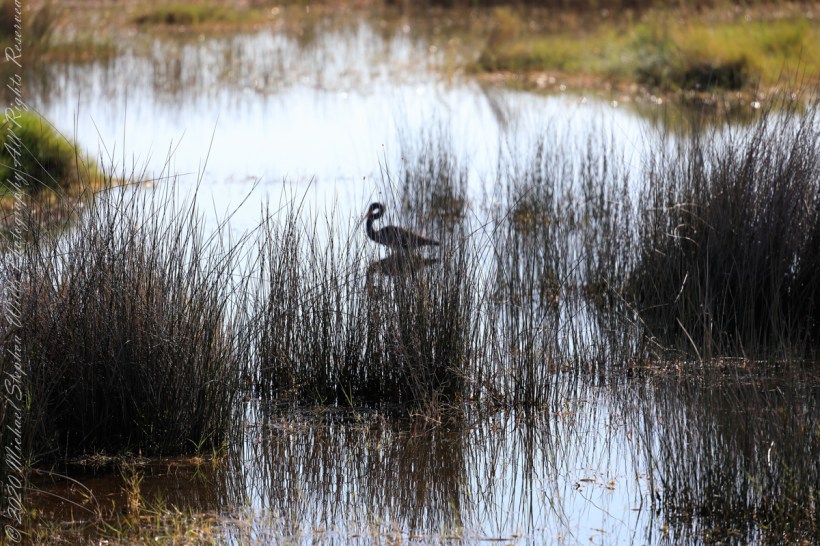
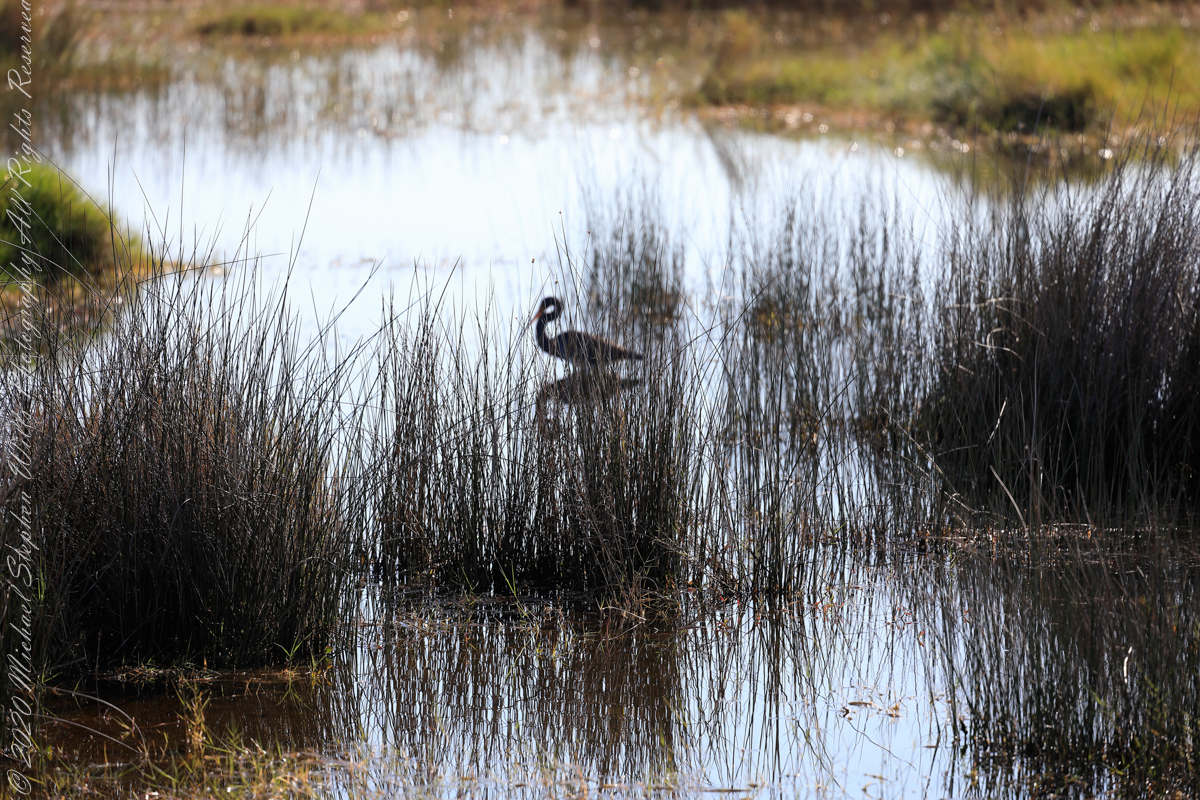
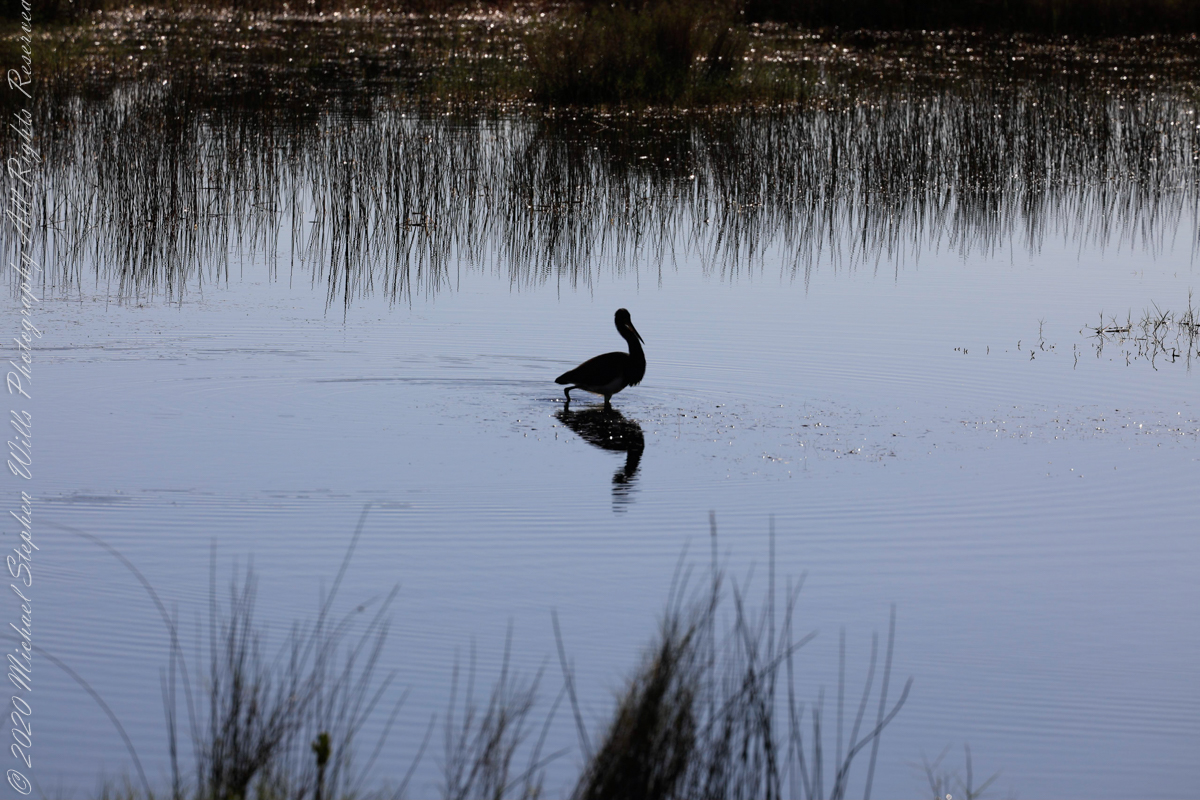
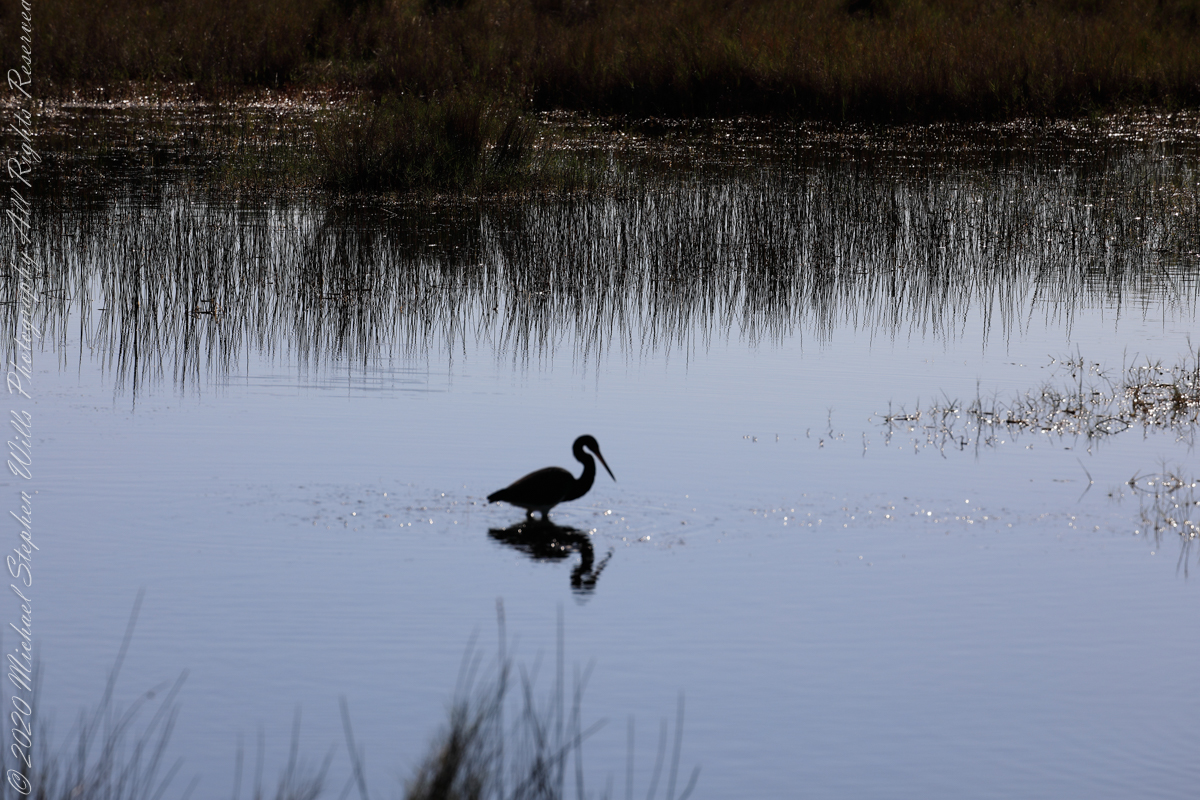
Shorebirds of different species can and do forage together

This series of wading shorebirds are from a mash alongside Blackpoint Wildlife Drive.

“The exposed mudflats on tidal wetlands attract a variety of shorebirds. Shorebirds are seasonal residents that make long migratory journeys between their breeding grounds in the Artic and their wintering area in South America. Merritt Island National Wildlife Refuge provides an important resting and feeding area for this group of birds. Some stay for the winter, others use the refuge as a fuel stop before continuing on their journey.”

“In tidal areas, shorebird feeding schedules are influenced by the cycle of tides. Changes in tidal cycles expose foraging areas in mudflats for a period during the day. At other points during the cycle, the water in these same areas becomes too deep or the ground too dry for shorebirds to feed effectively.”

Though only one bird appears in each photo, “shorebirds of different species can and do forage together. Because bill length and shape vary from species to species, birds can pursue different prey in the same area at the same time without completing with each other. Because of varying bill lengths, different birds species find their food at different depths in the substrate. Mixed species of shorebirds are a common sight.”

The text in quotes is from a roadside information placard, Merritt Island National Wildlife Refuge, Titusville, Brevard County, Florida

Copyright 2022 Michael Stephen Wills All Rights Reserved

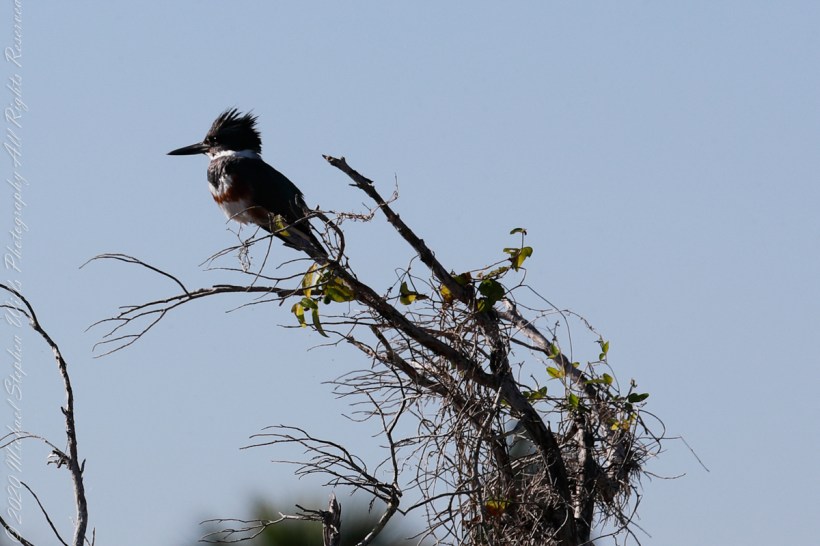
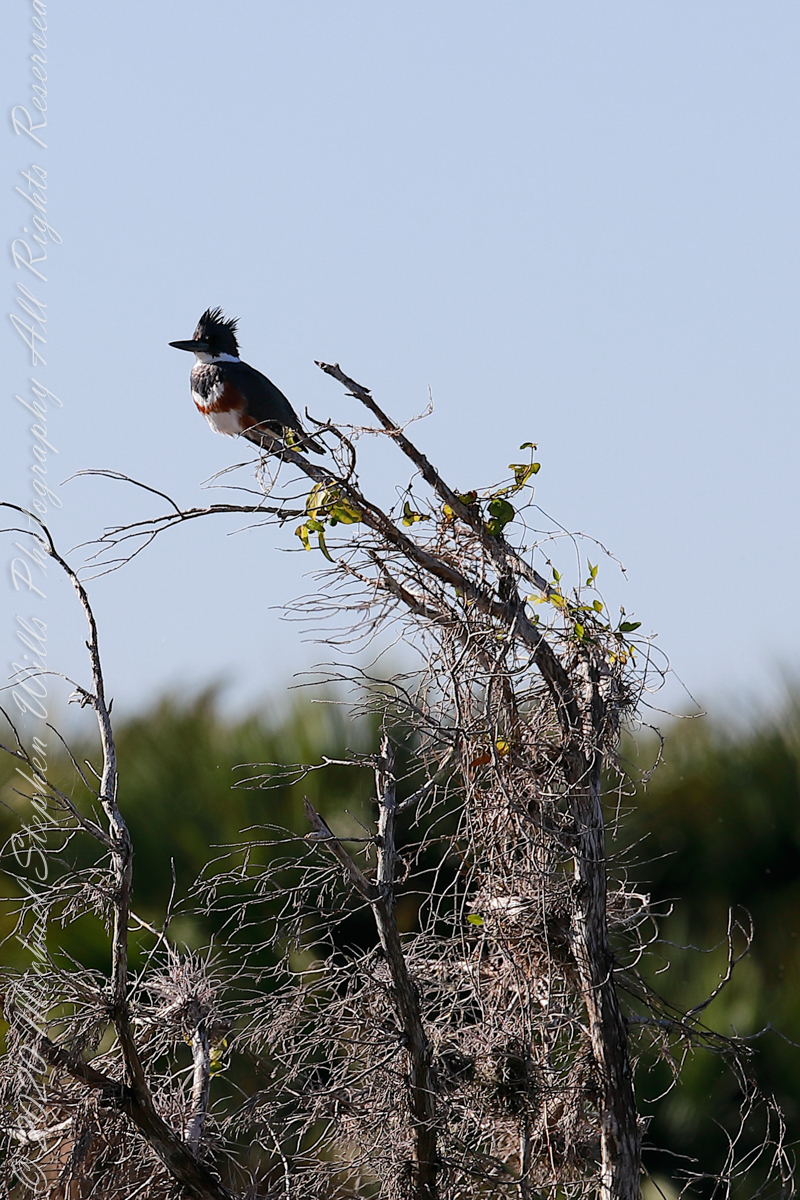
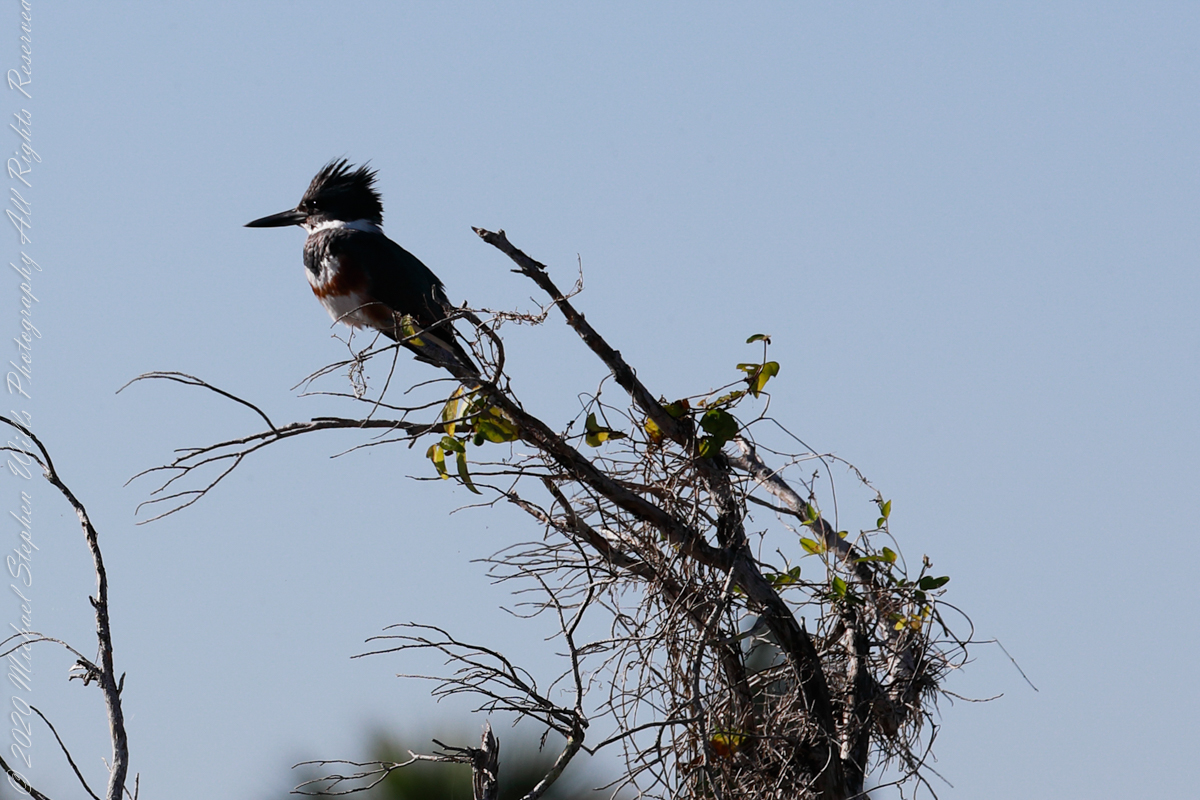
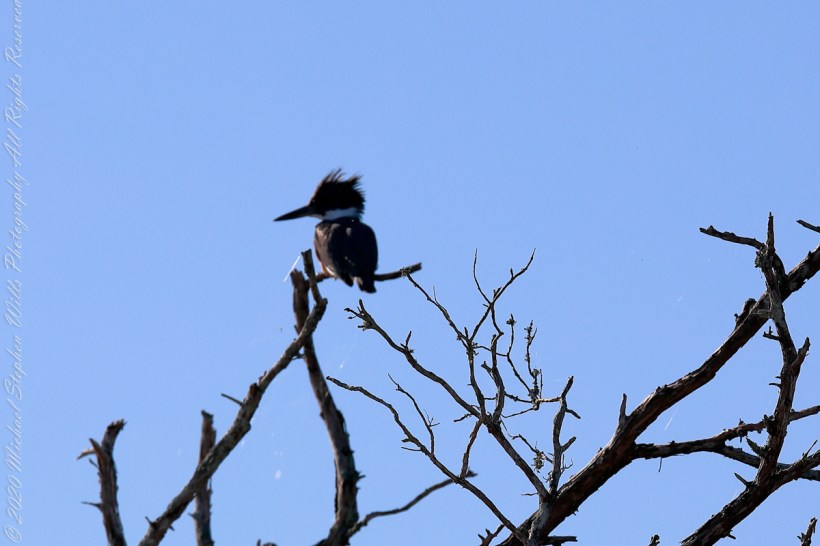
Star

Careful Cropping

She was the star of the show with a contingent of chattering humans scattered below her high perch.

The wide band across her chest, the “belt”, identifies this as an adult female.

I found her beside Blackpoint Wildlife Drive overlooking wide open water marsh.

The limitations of my excellent equipment is frustrating in these situations. I made up for the lack of focal length by careful cropping.

Merritt Island National Wildlife Refuge, Titusville, Brevard County, Florida

Copyright 2022 Michael Stephen Wills All Rights Reserved

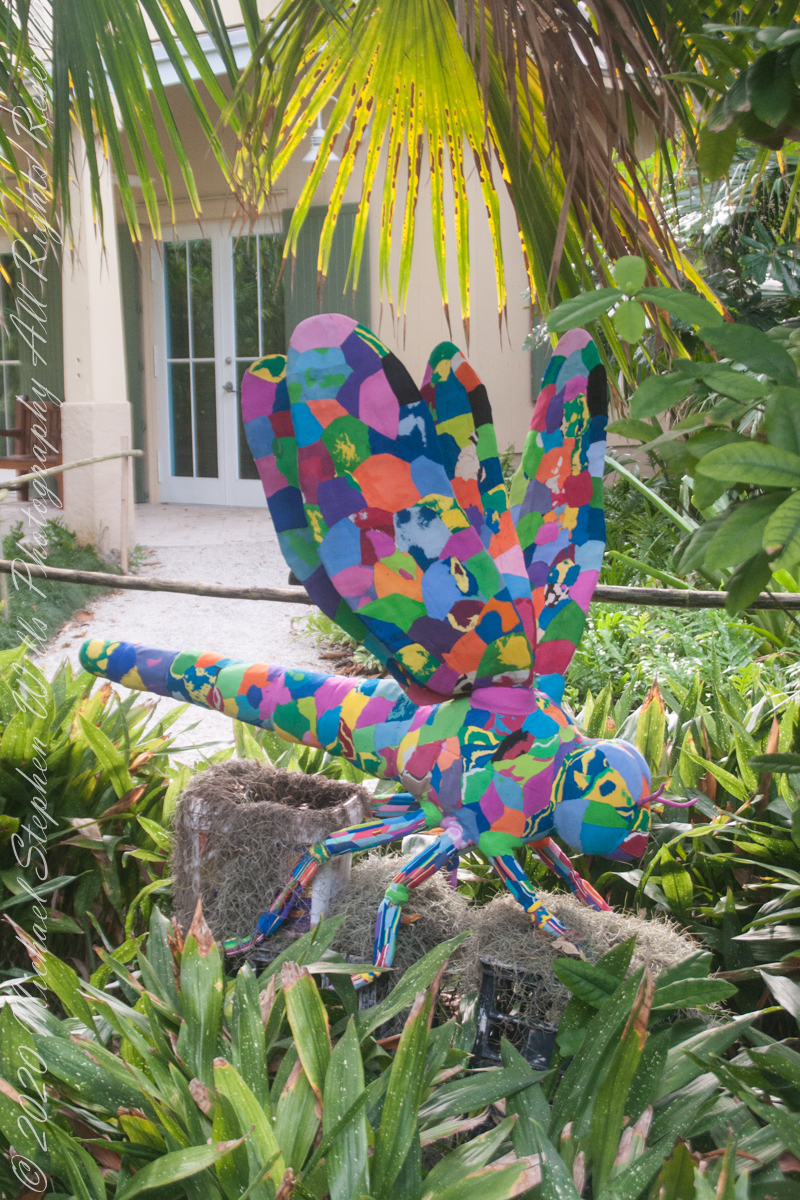
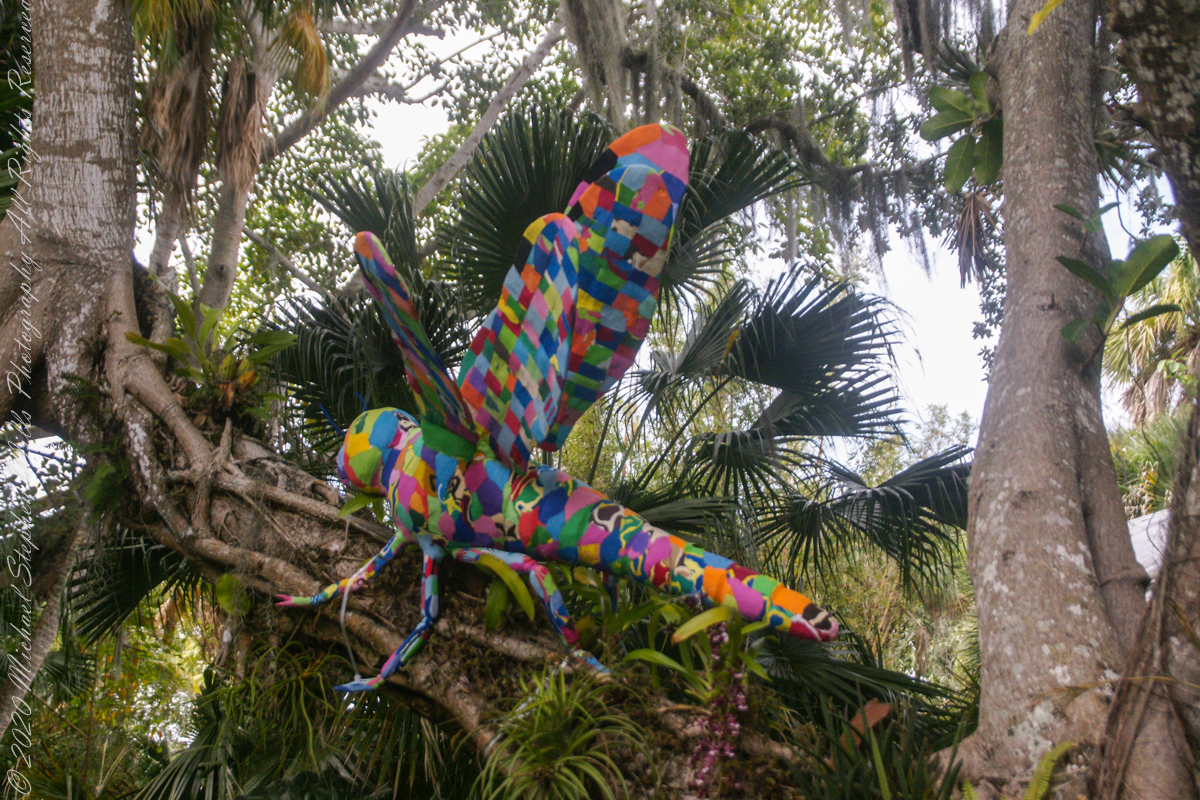
Flip Flop Dragonflies

Deep Time

380 recycled flip flops were used by Ocean Sole Africa Project artists to create these seahorse sculptures from a 2020 exhibit hosted by McKee Botanical Gardens, Vero Beach, Indian River County, Florida.

Adult dragonfly lifespan of a few days to 5 weeks contrasts with the wide distribution, variety with over 3,000 species and deep longevity of the infraorder, Anisoptera, especially compared to our genus, Homo: Hundreds of millions of years, compared to 2 million.

An insect, dragonflies live on every continent except Antarctica, from sea level up to the mountains.

I have experienced hundreds of dragonflies swooping and hovering around Peaked Mountain of the Adirondacks.

Copyright 2022 Michael Stephen Wills All Rights Reserved

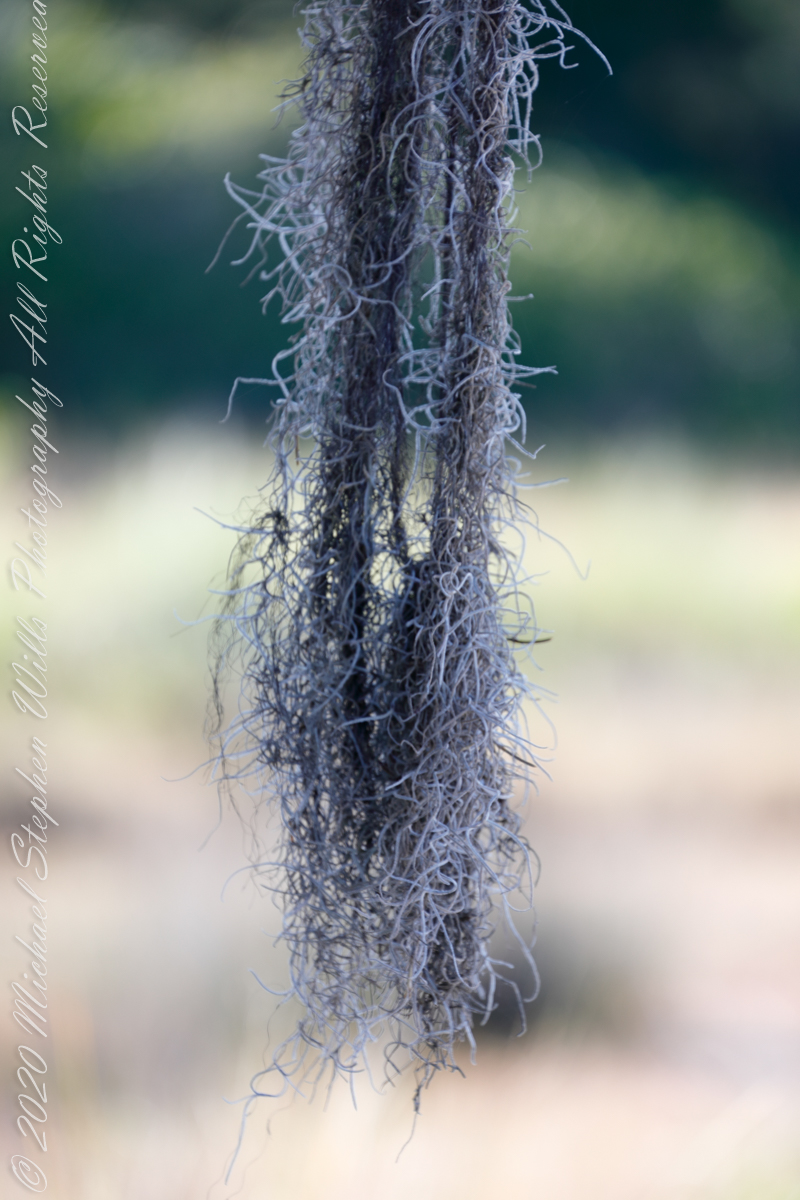
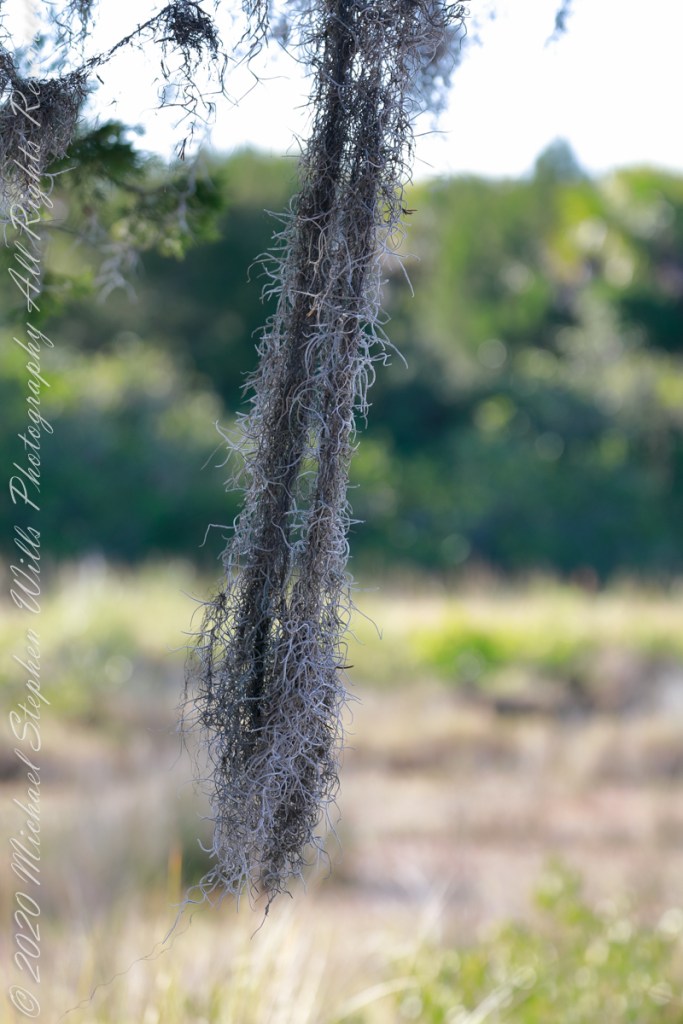
Hanging Around

not mistletoe

Spanish Moss is neither moss nor Spanish. Scientific name Tillandsia usneoides, this flowering plant is in the family Bromeliaceae that includes pineapple. Here it hangs from a cedar tree along Blackpoint Wildlife Drive.

Merritt Island National Wildlife Refuge, Titusville, Brevard County, Florida

Copyright 2022 Michael Stephen Wills All Rights Reserved

Spearhead

Metaphorically Speaking

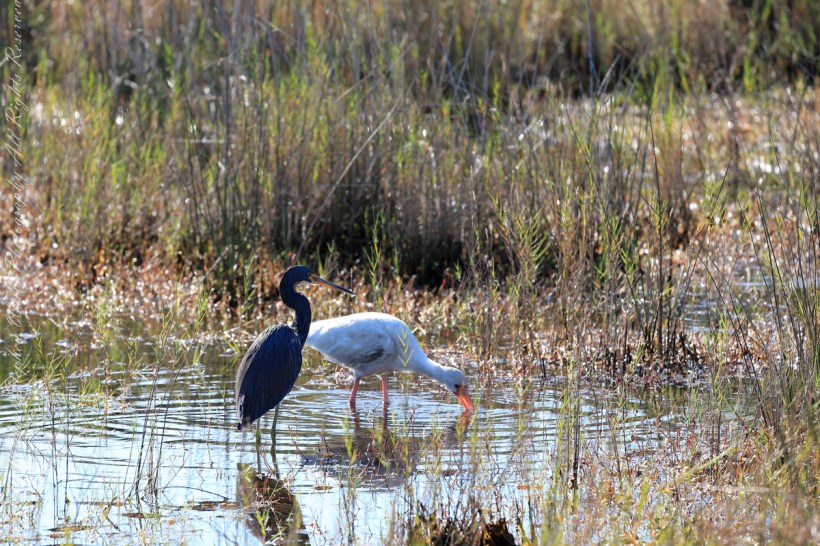
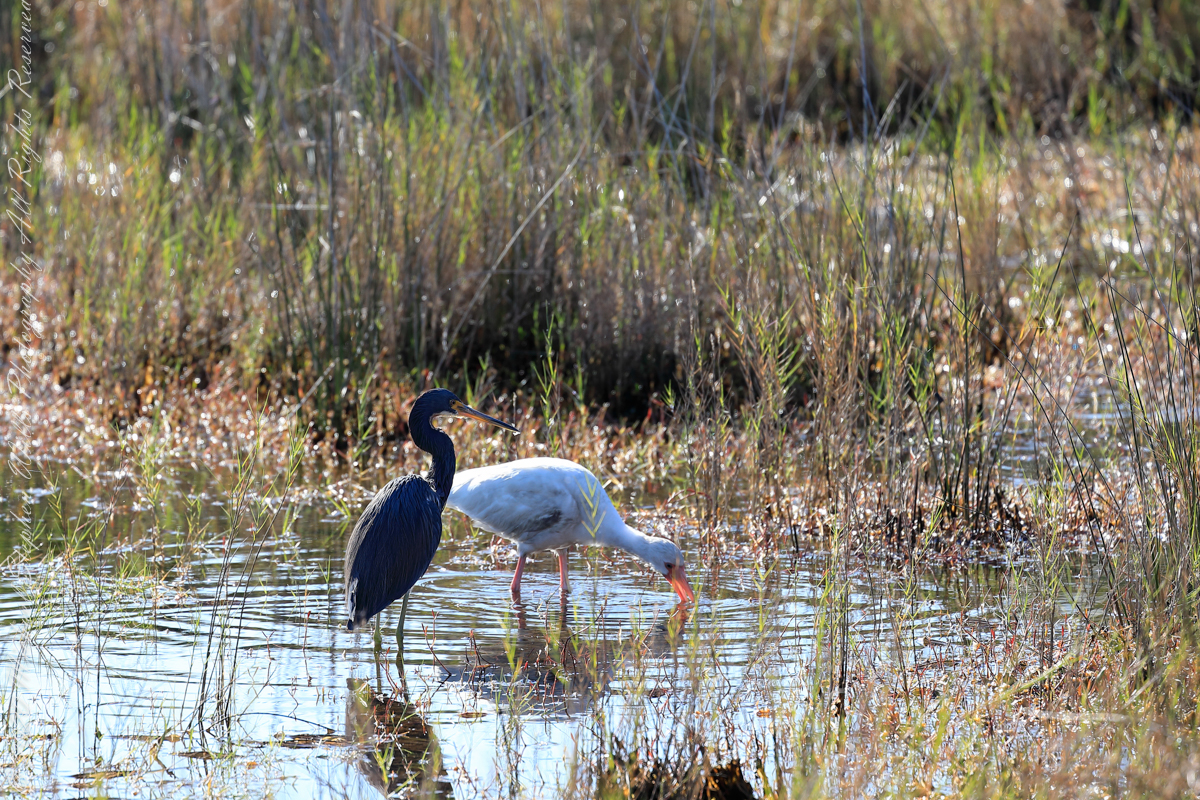
These birds are feeding from a march pool south of Blackpoint Wildlife Drive about 0.9 mile from the start. As such it is a backlit shot with the sun illuminating the White Ibis’ beak and the green legs of the Tricolored Heron (aka Louisiana Heron).

Both can use a spear-like beak to capture unwary prey.

Merritt Island National Wildlife Refuge, Titusville, Brevard County, Florida

Copyright 2022 Michael Stephen Wills All Rights Reserved

Basking

Taking in the Sun

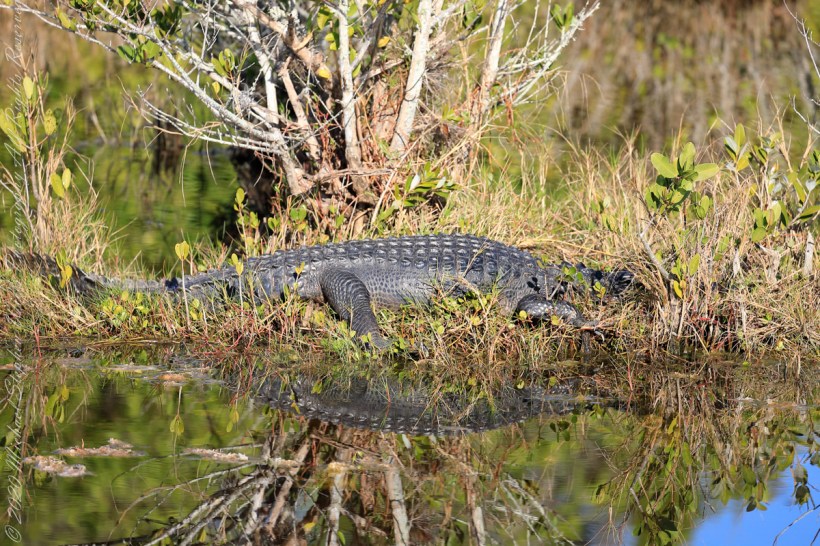
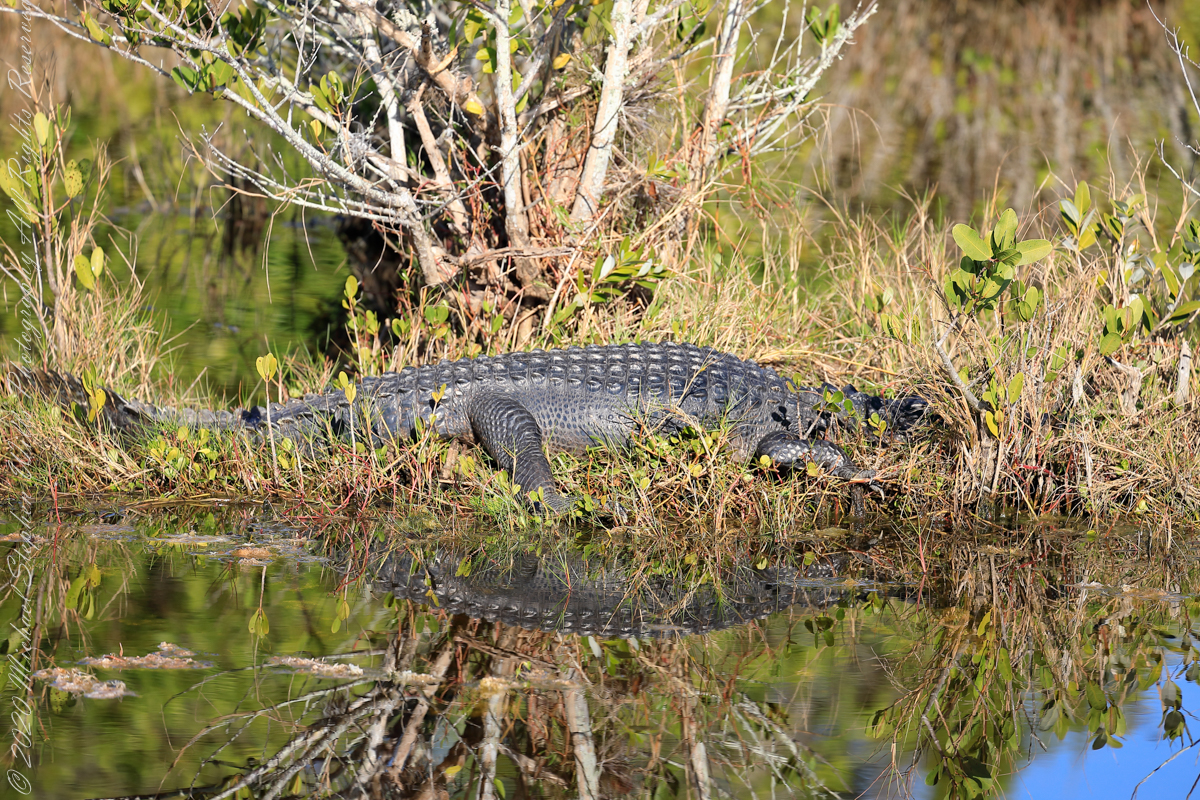
Blackpoint Wildlife Drive meanders through marsh environments where humans are just visitors.

Here the Alligator is the apex predator that will attack and eat the unwary tourist. This eight-foot monster, resting on a hummock 20 feet from the road, absorbed only sun. In town, it is on the menu.

Merritt Island National Wildlife Refuge, Titusville, Brevard County, Florida

Copyright 2022 Michael Stephen Wills All Rights Reserved

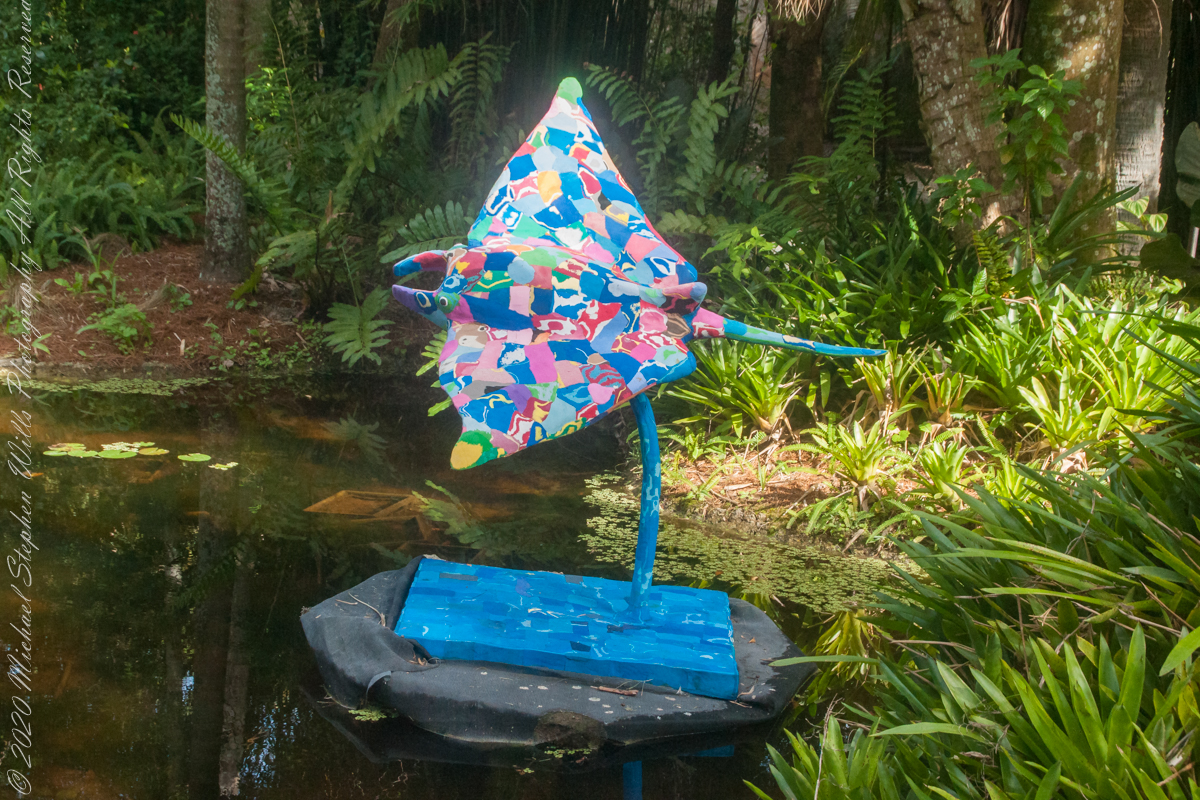
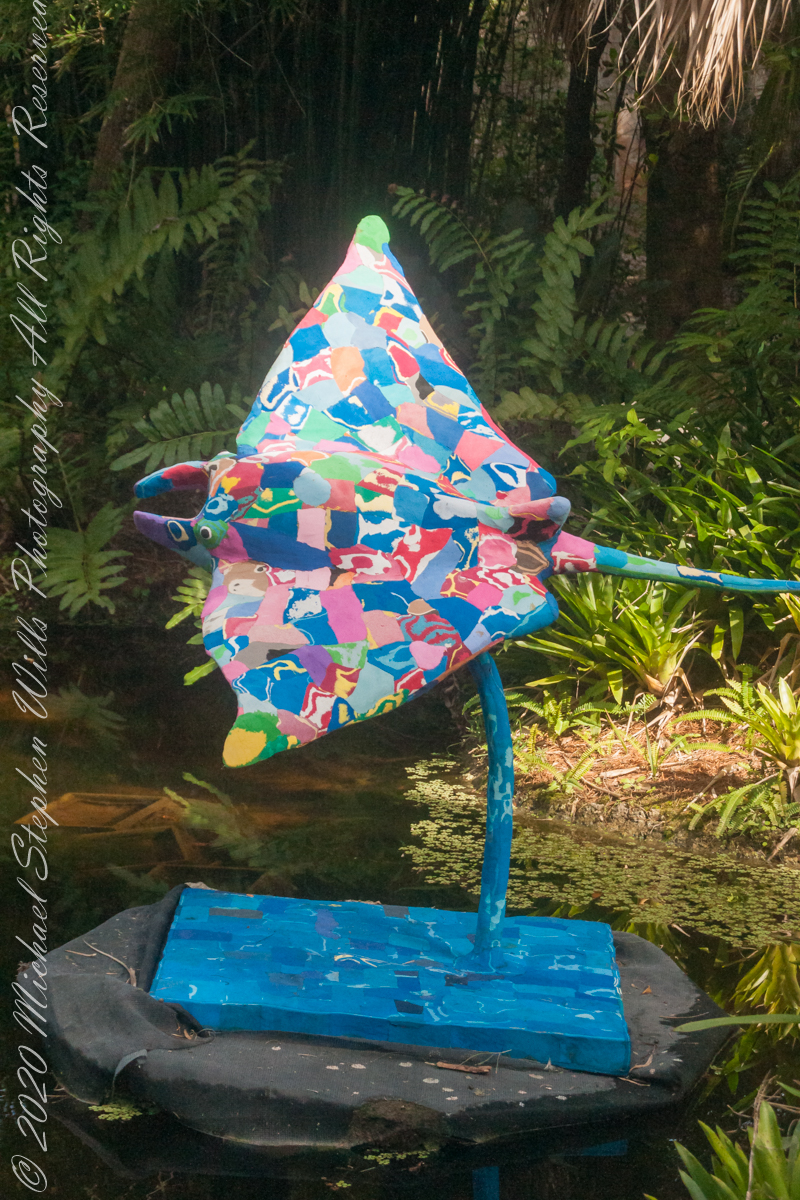
Flip Flop Manta Rays

“Devil Fish”

110 recycled flip flops were used by Ocean Sole Africa Project artists to create these seahorse sculptures from a 2020 exhibit hosted by McKee Botanical Gardens, Vero Beach, Indian River County, Florida.

Manta Rays are large, flat-bodied fish having a width ranging from 18-23 feet (5-7 meters) wide. Mantas gracefully swoop during feeding, scooping up large quantities of plankton, 60 pounds (27 kilograms) per day, with the flat fins on either side of their head.

Here is the flowing movement of the manta

Mantas are known as “devilfish” because of their horn-shaped cephalic fins, which are imagined to give them an “evil” appearance. The movement of pectoral fins drive them through water, like birds flying through air.

All mantas are listed as vulnerable by the International Union for Conservation of Nature. Anthropogenic threats include pollution, entanglement in fishing nets, and direct harvesting of their gill rakers for use in Chinese medicine. Their slow reproductive rate exacerbates these threats. They are protected in international waters by the Convention on Migratory Species of Wild Animals, but are more vulnerable closer to shore. Areas where mantas congregate are popular with tourists. Only a few public aquariums are large enough to house Mantas.

Copyright 2022 Michael Stephen Wills All Rights Reserved