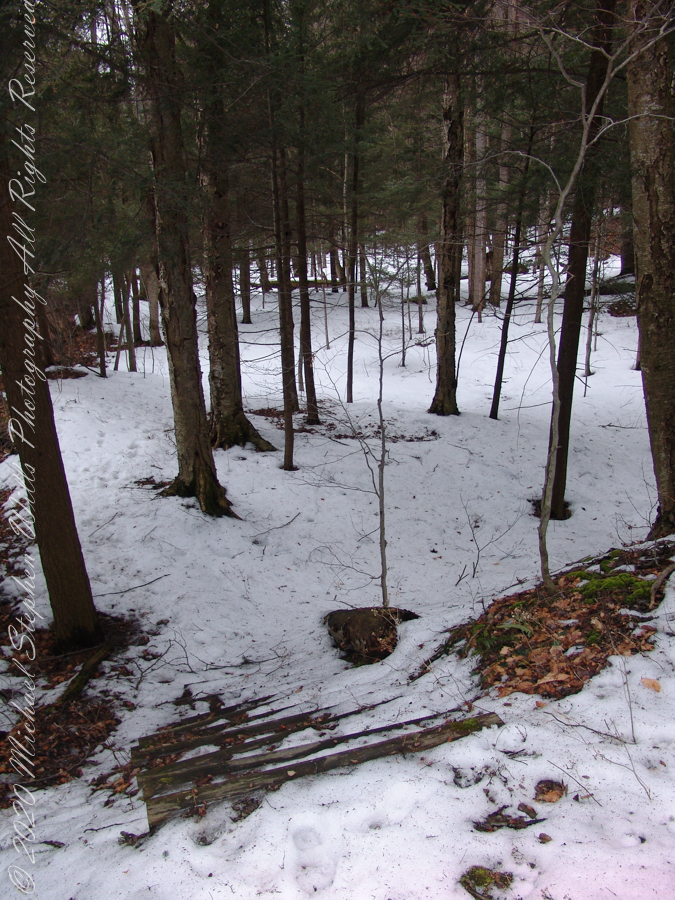
Foot trail leading to the waterfall below the dam on a spring morning just after solstice.
Fillmore Glen State Park Moravia, Cayuga County, New York.
Click for my “Finger Lakes Memories” Fine Art Photography Gallery.
Watch Your Step
Foot trail leading to the waterfall below the dam on a spring morning just after solstice.
Fillmore Glen State Park Moravia, Cayuga County, New York.
Bracket Fungus
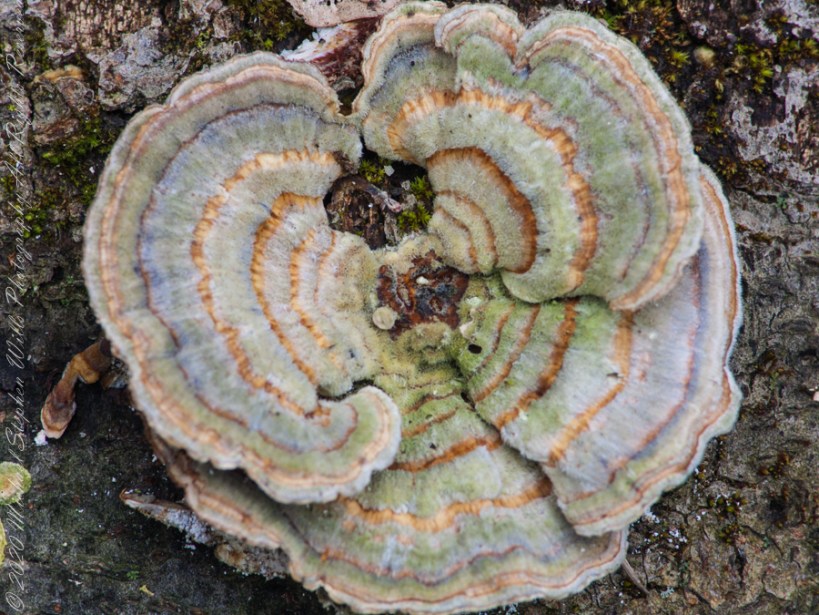
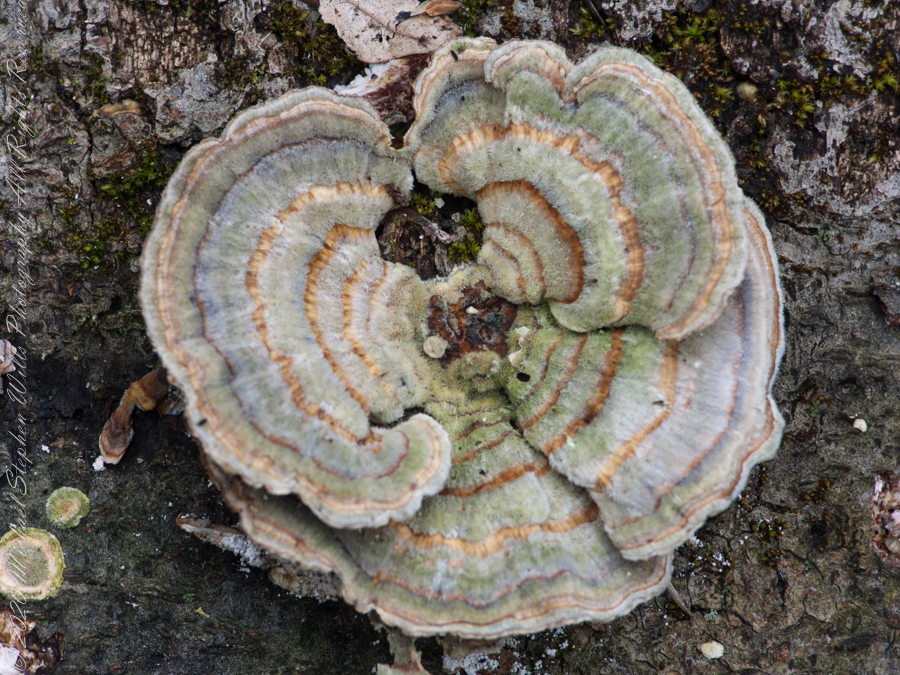
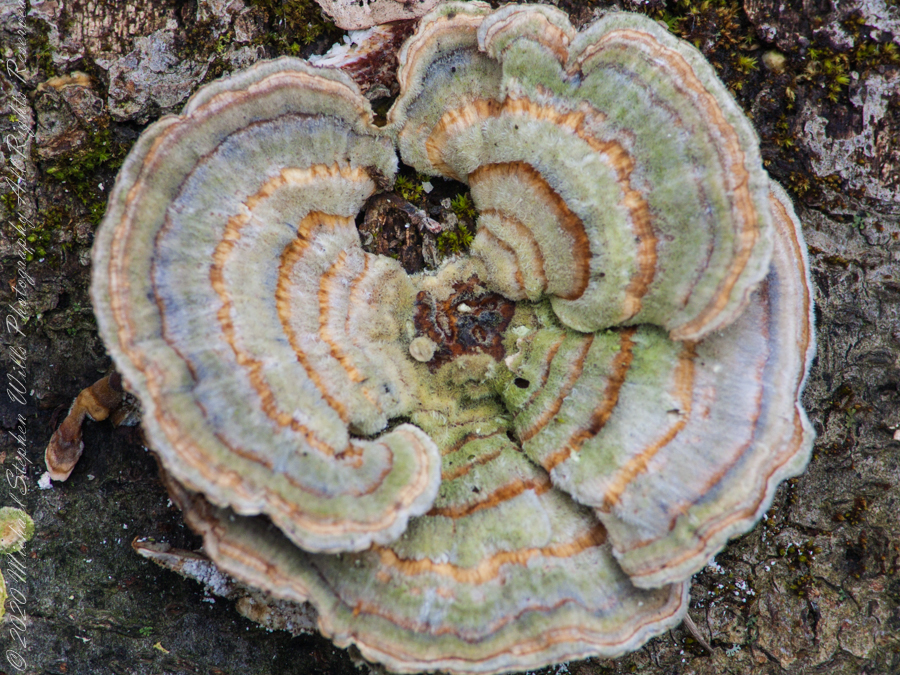
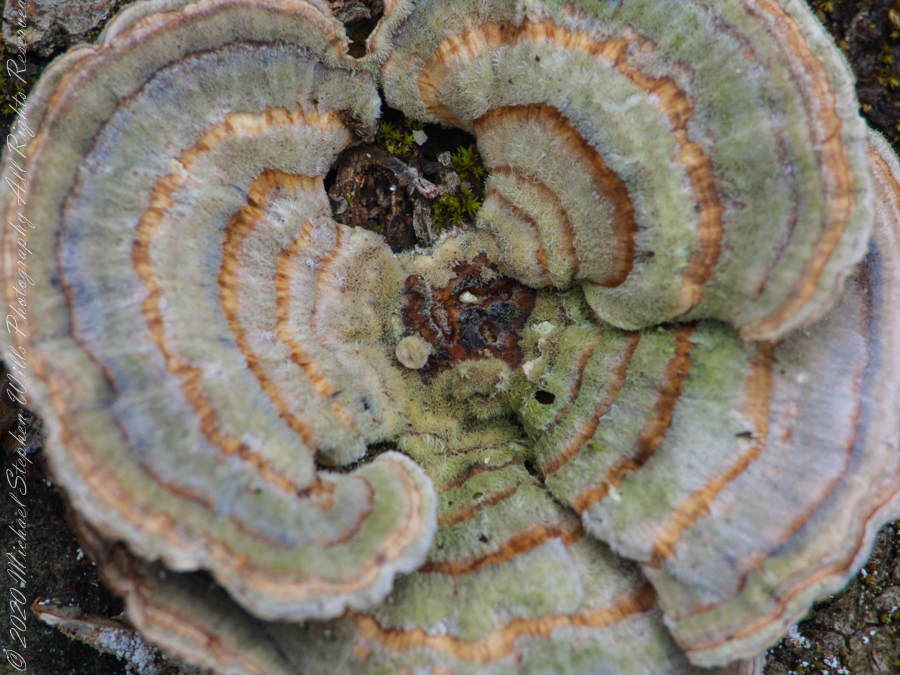
Trametes versicolor – also known as Coriolus versicolor and Polyporus versicolor – is a common polypore mushroom found throughout the world.
Meaning ‘of several colors’, versicolor reliably describes this fungus that displays a variety of colors. For example, because its shape and multiple colors are similar to those of a wild turkey, T. versicolor is commonly called turkey tail.
Found on a rotting Hemlock stump, Fillmore Glen State Park Moravia, Cayuga County, New York.

Polypores are a group of fungi that form large fruiting bodies with pores or tubes on the underside (see Delimitation for exceptions). They are a morphological group of basidiomycetes-like gilled mushrooms and hydnoid fungi, and not all polypores are closely related to each other.
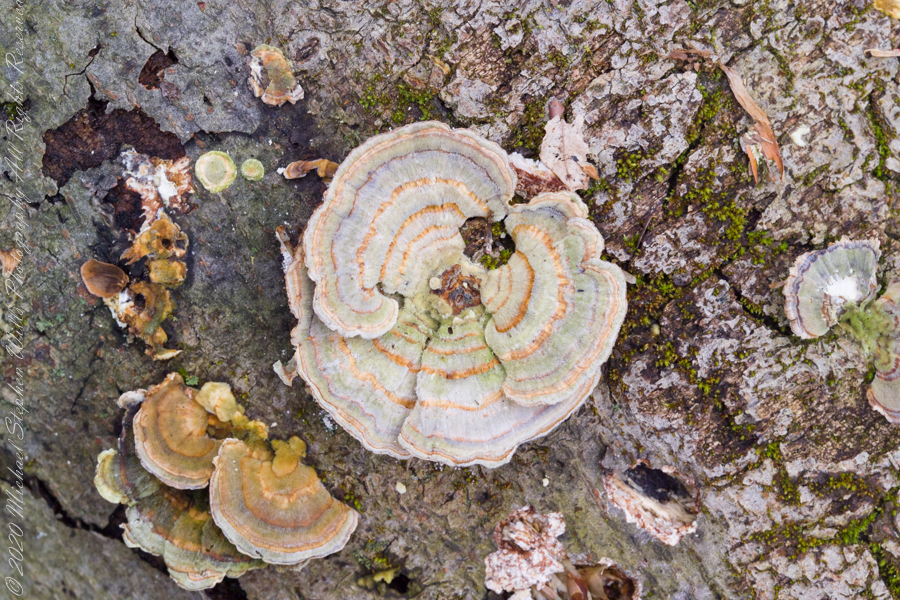
Polypores are also called bracket fungi or shelf fungi, and they characteristically produce woody, shelf- or bracket-shaped or occasionally circular fruiting bodies that are called conks.
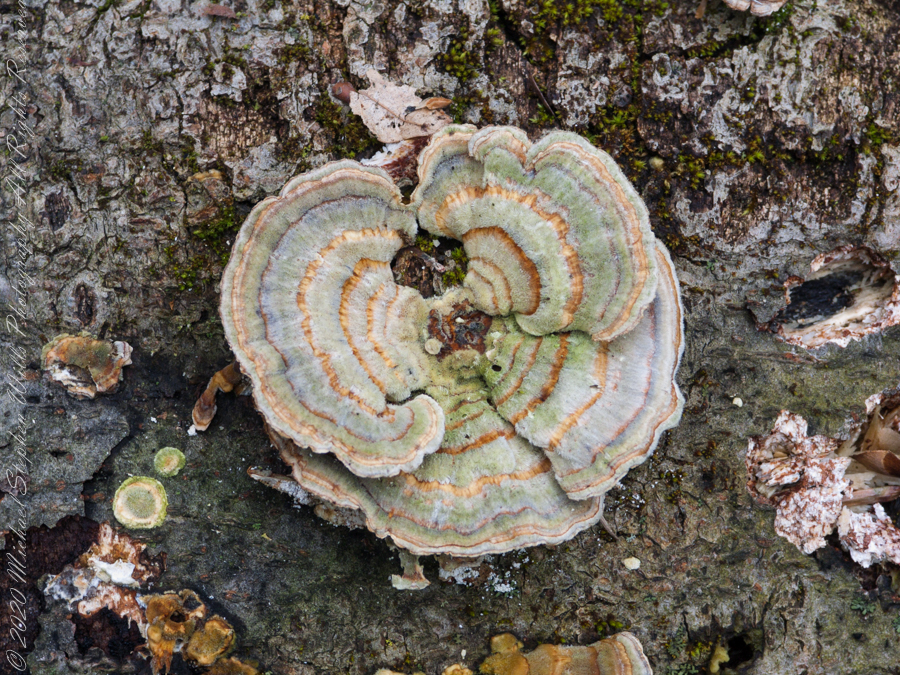
Most polypores inhabit tree trunks or branches consuming the wood, but some soil-inhabiting species form mycorrhiza with trees. Polypores and the related corticioid fungi are the most important agents of wood decay, playing a very significant role in nutrient cycling and aiding carbon dioxide absorption by forest ecosystems.
Light Plays
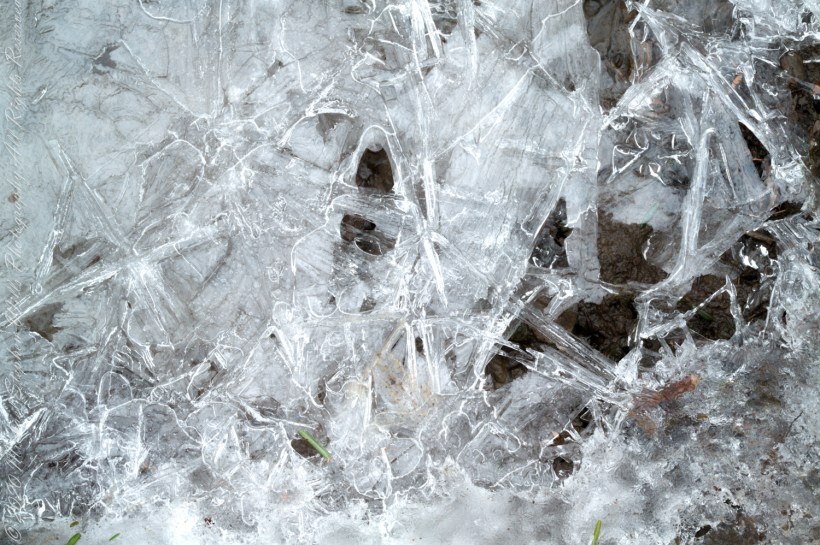
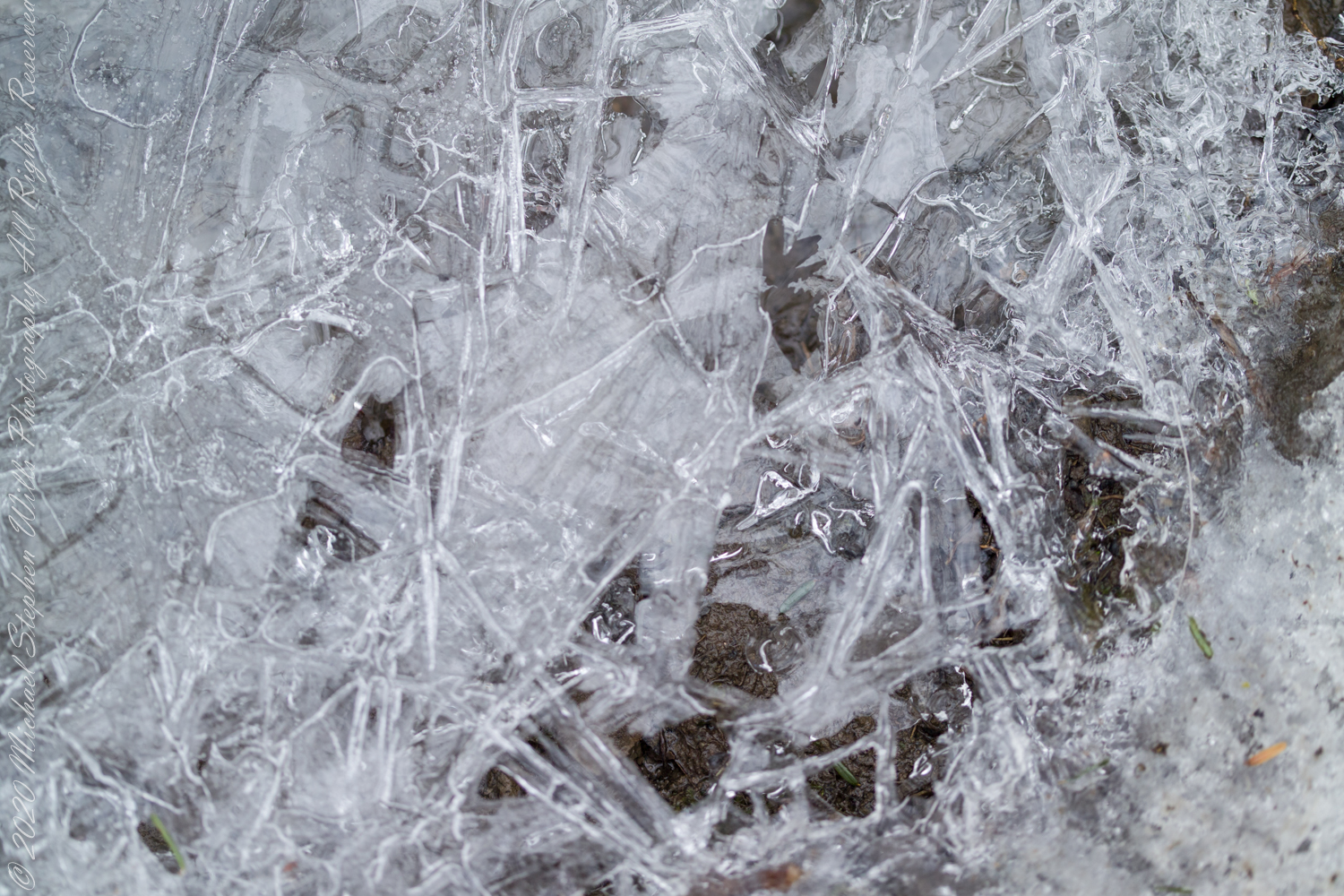
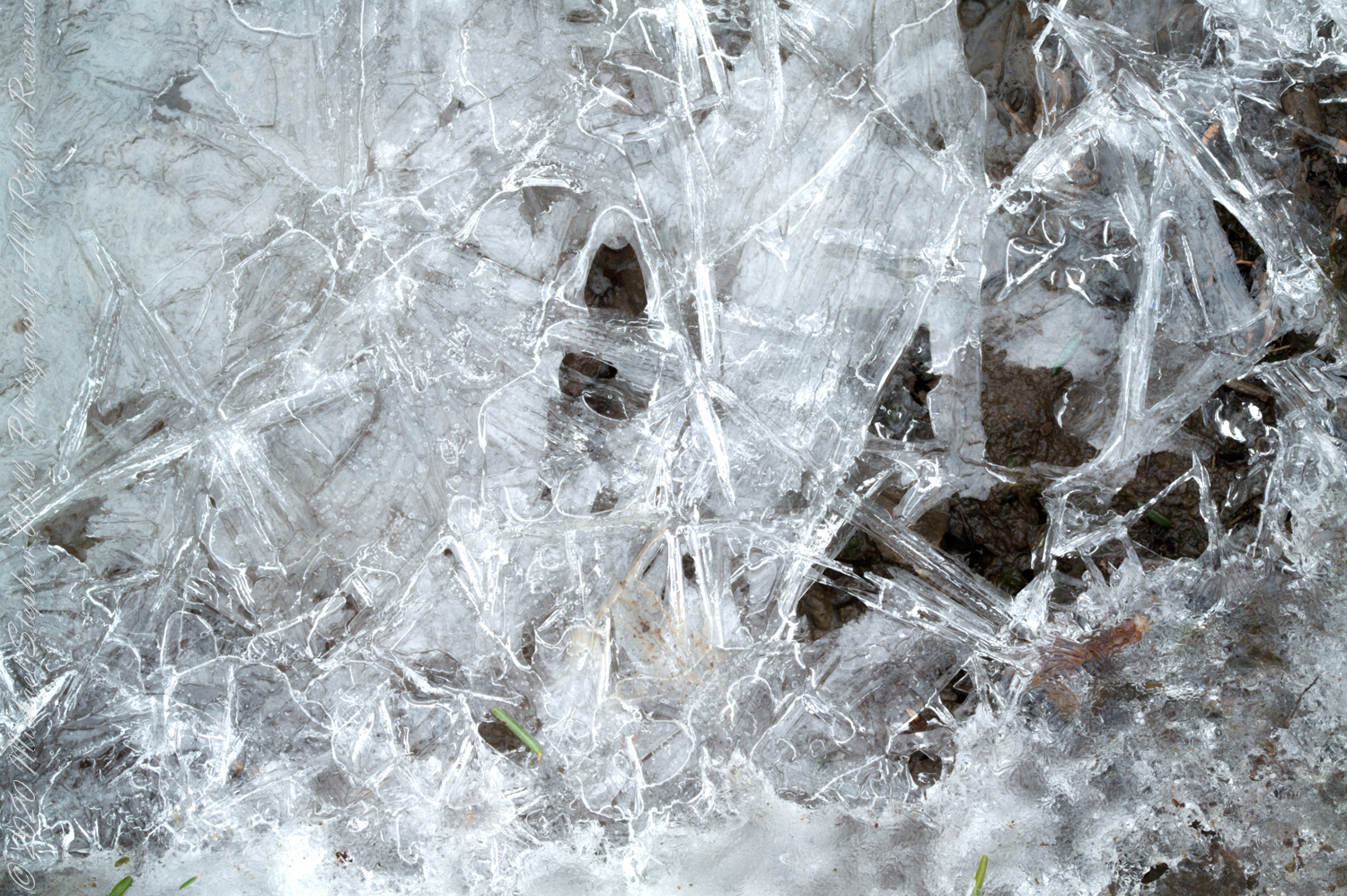
Surface of ice formed over a flowing creek. One is a HDR of three exposures, the other is a single exposure. Yes, that is dirt you see under the ice. How did that happen?
Readers: Can you tell which is the HDR? Please answer with a comment. Thank You
All are macros from a Kodak DSC Pro SLR/c with a Canon EF 100 mm f/2.8 Macro USM lens stabilized on a Manfrotto 468MG tripod with Hydrostatic Ball Head
Fillmore Glen State Park, Moravia, Cayuga County, New York.
Hoary Elm in HDR
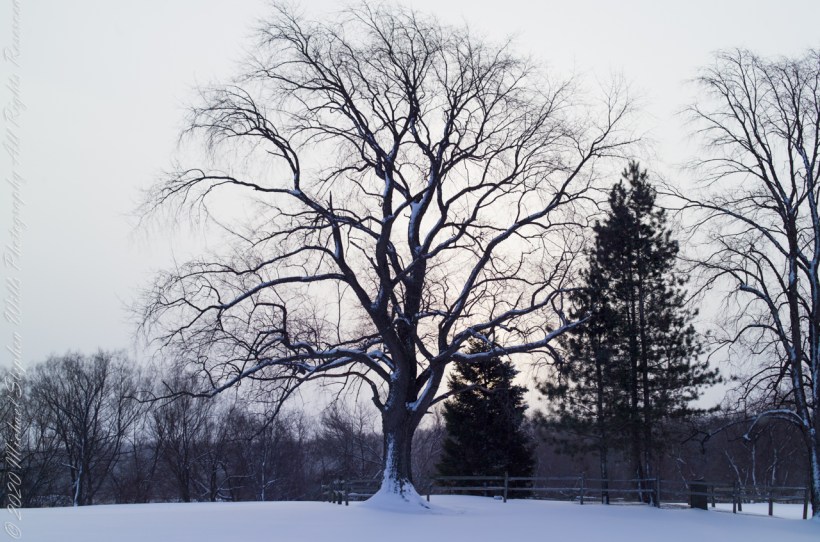
Late Winter, on the cusp of Spring, I arrived at the Cornell Experimental farm before sunrise.
There I set up a Kodak DSC Pro SLR/c with a Canon EF 50 mm f/1.4 USM lens all mounted on a very stable Manfrotto Studio Aluminum Tripod Model 475 and Hydrostatic Ball Head. From this 15 exposures were obtained. Photoshop CS6 HDR combined the 15 into this perfected image. Cornell Thompson Experimental Farm, Town of Dryden, Tompkins County, New York
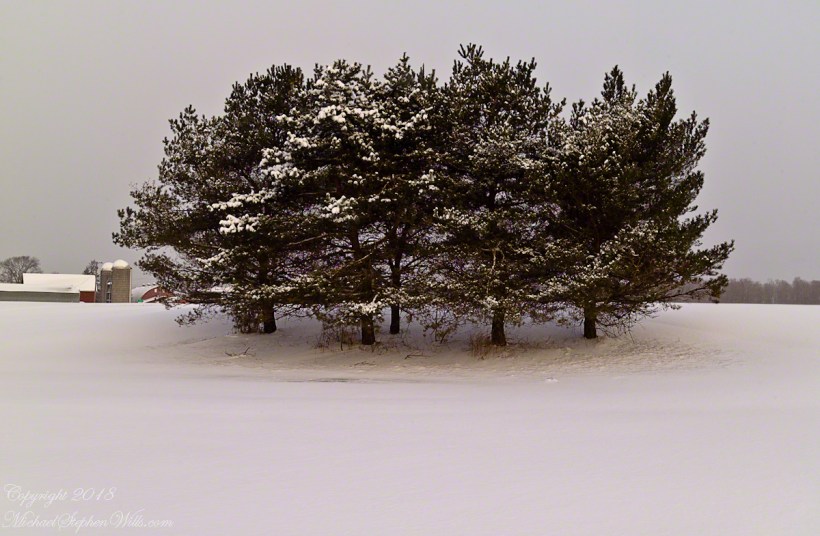
On a late winter morning on the cusp of Spring 2007 I ventured from my home on Fall Creek on a photo expedition.
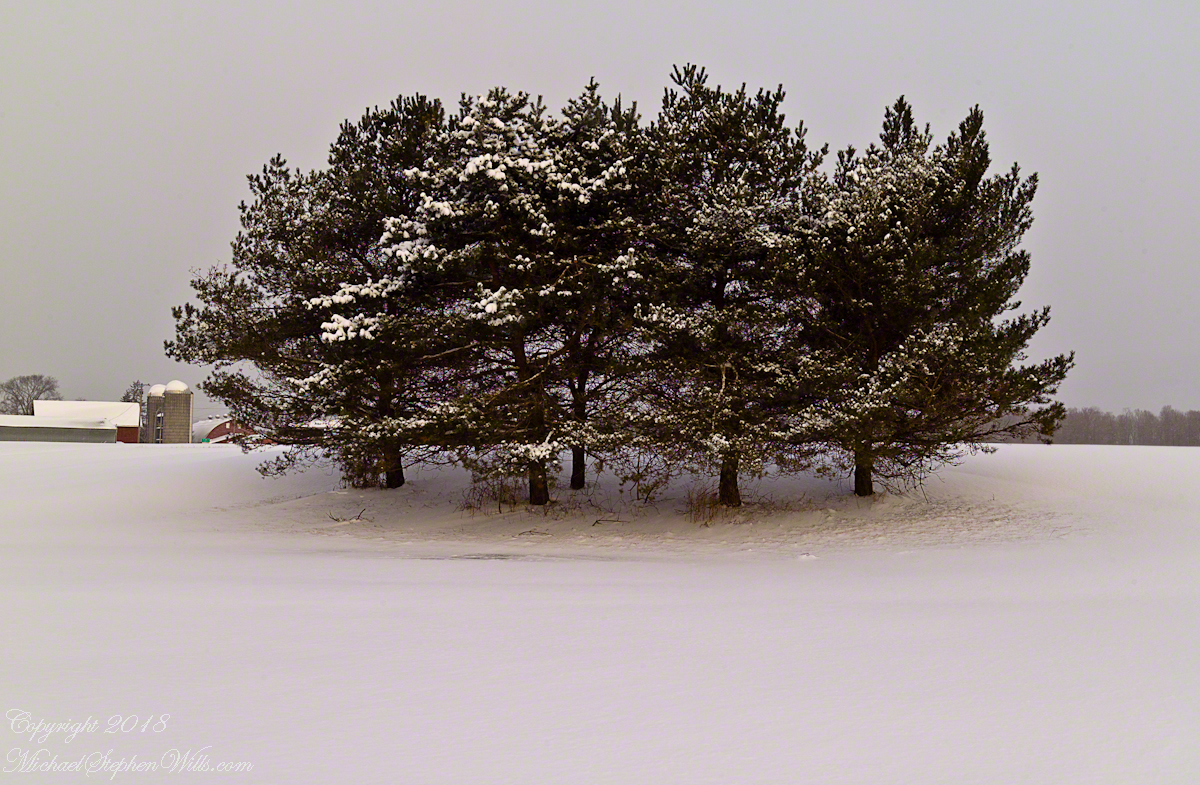
Form here is revealed through the fine snowfall dusting the evergreen boughs of this stand of pines, not enough to stop the wind for which is tract of the Cornell Thompson Research Farm is known.
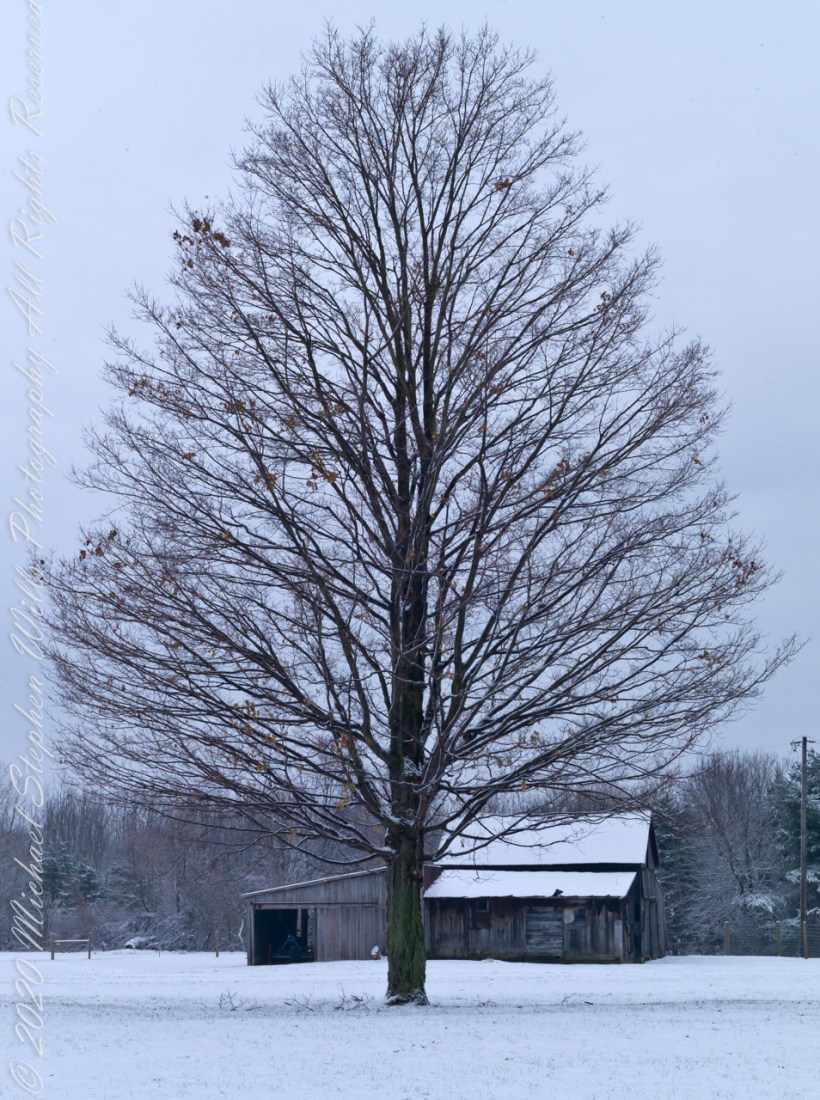
On the first day of 2006 I ventured from my home on Fall Creek on a photo expedition.
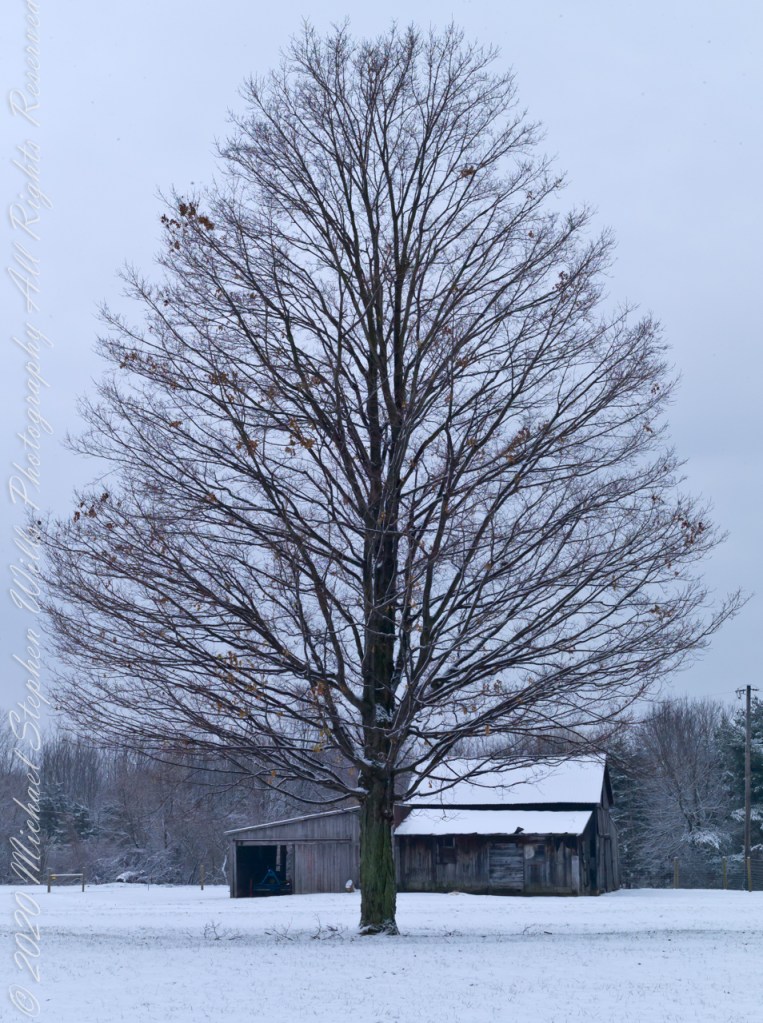
A finely shaped maple tree growing alone on a Cornell Experimental Farm field at the intersection of Fall Creek Road and Cady Lane, between Fall and Mud Creeks. Town of Dryden, Tompkins County, New York
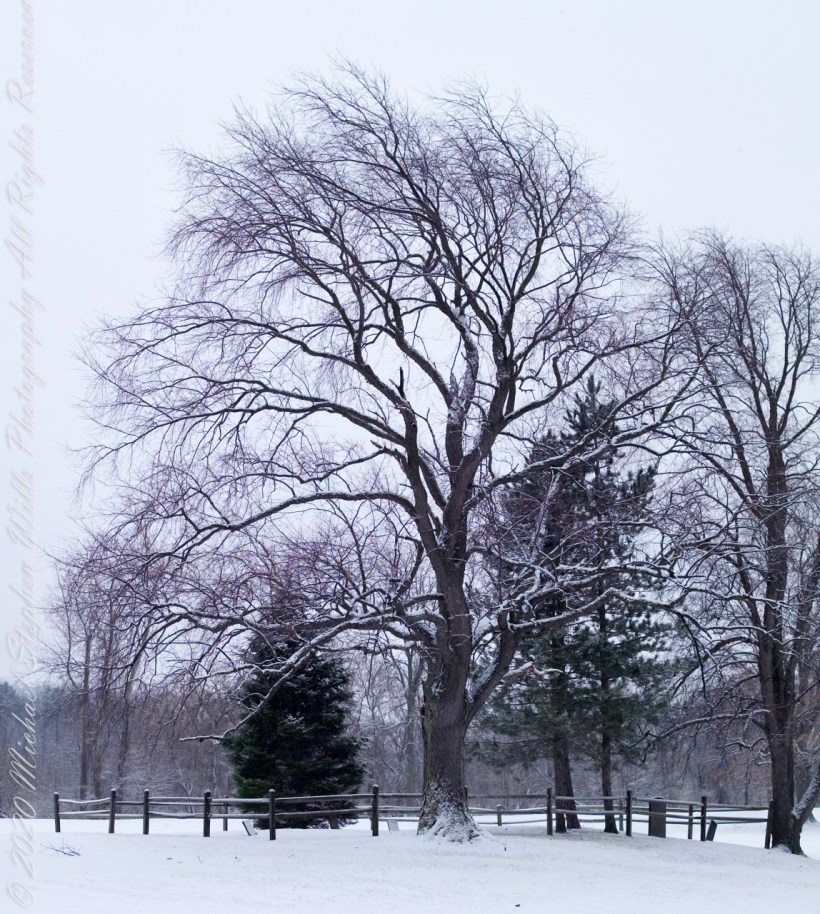
On the first day of 2006 I ventured from my home on Fall Creek on a photo expedition.
Each November, the eerie form of these limbs are revealed. I call the tree an “elm” though I am not certain. There are other lone survivor elms nearby, the leaves are right for an elm. Some elm species/specimens have the same shape.

Across the years into a future
Gratitude for miracles witnessed is my emotion for this series, “Frozen Fall Creek.” Fifteen winters after Pam and I walked Fall Creek as a solid walking path, the stream flows without ice most years. My son, whose family now lives in the house, and his wife recalling walking the creek a few years ago, not in the past few years.
Weather records support our recollections and observations: here is an analysis of Ithaca January temperatures. The years 2009 through 2019 show a warming trend in daily temperatures for both minimum and maximum.
Excel I used to plot minimum and maximum temperatures (Fahrenheit) for the 31 days of each January for eleven years 2009 – 2019. Click on the images of this post for a larger version.


Pam and I moved to Ithaca 2011 and missed our Fall Creek winter walks, miss them even more now our weekend excursions are only memories. Here are January minimum/maximum average daily temperature projections from 2020 through 2044 based on the trend established from the 2009 through 2019 series. The trend is the solid color, projection the faded color.
Reading from the chart, if the current trend continues by January 2044 the average maximum daily temperature will be 47 degrees compared to 29 for 2009. In other words, the temperature never rose above freezing in the year 2009. By 2044 temperatures will be above freezing every day, on average, with daily minimums averaging 21 degrees.

From what I read, we can expect these warming trends to accerate within our lifetimes. My son named small mid-creek hummocks “islands” with numbers. Here is a view of his Second Island in late summer. What will Second Island be in 2044 late summer?

Reader of posts I and II of this series have commented about snow shadows. Here are the shadows produced from snow fallen on the vegetation of the last photograph: soft mounds to contrast with tree trunk shadows.

I prefer the composition of the following photograph. What do you think?

A combination of contrasting shadow forms.


Natural Ice Sculpture
My last post, “Frozen Fall Creek I”, ended with macros of Ice Crystals on a bed of frost over creek ice within sight of our former home, a restored water mill. I continued on the ice, following the creek to this spot were the stream bed turns 90 degrees, changing from a southerly to a western flow.
Here I encountered an open course where constant water motion resisted freezing. A few frigid days later, the course had an amazing transformation.

The transparent ice of the now frozen space retained the impression of movement, the surface rippled by current. In the following photograph, motionless ice crystals reveal the truth.

In the intervening days, the constant motion resisted freezing while the water temperature dropped well past freezing to achieve a supercooled state. As the water temperature continued to drop, a fast transition from fluid to solid happened so quickly the movement of the water surface was preserved.

Here is the matching “after” photograph to the “before” that started this post.


Ice Crystals


