On the first day of 2006 I ventured from my home on Fall Creek on a photo expedition.
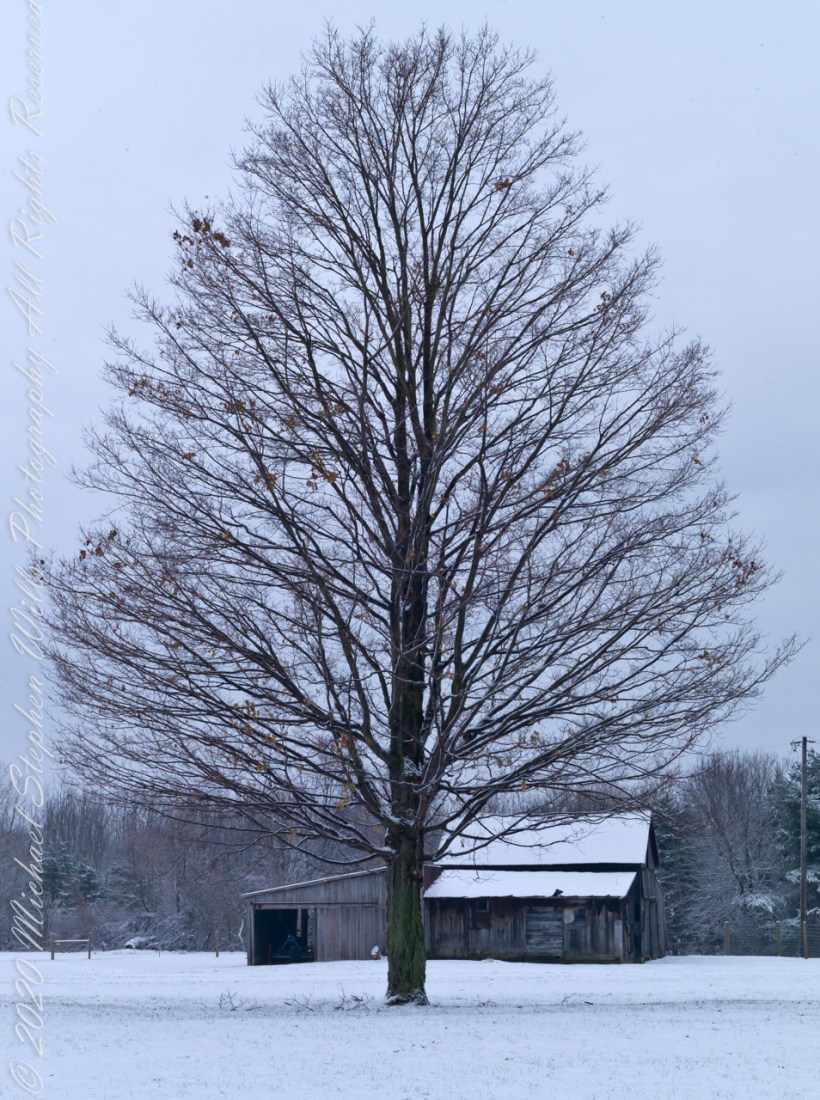
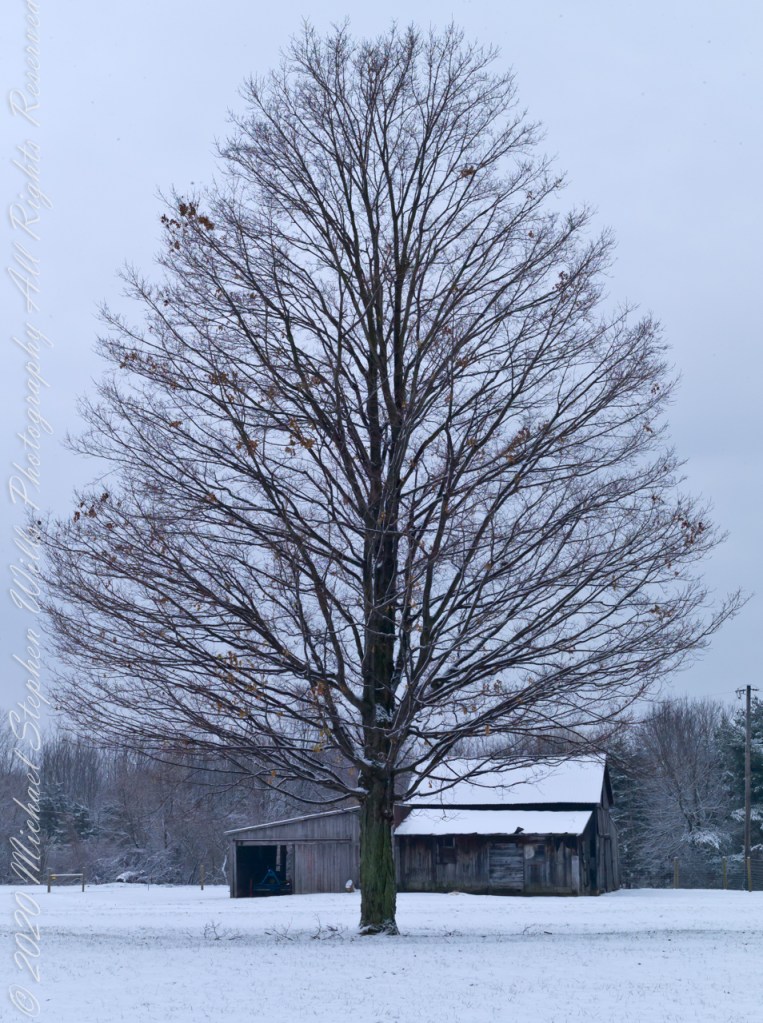
A finely shaped maple tree growing alone on a Cornell Experimental Farm field at the intersection of Fall Creek Road and Cady Lane, between Fall and Mud Creeks. Town of Dryden, Tompkins County, New York
Copyright 2023 All Rights Reserved Michael Stephen Wills
On the first day of 2006 I ventured from my home on Fall Creek on a photo expedition.
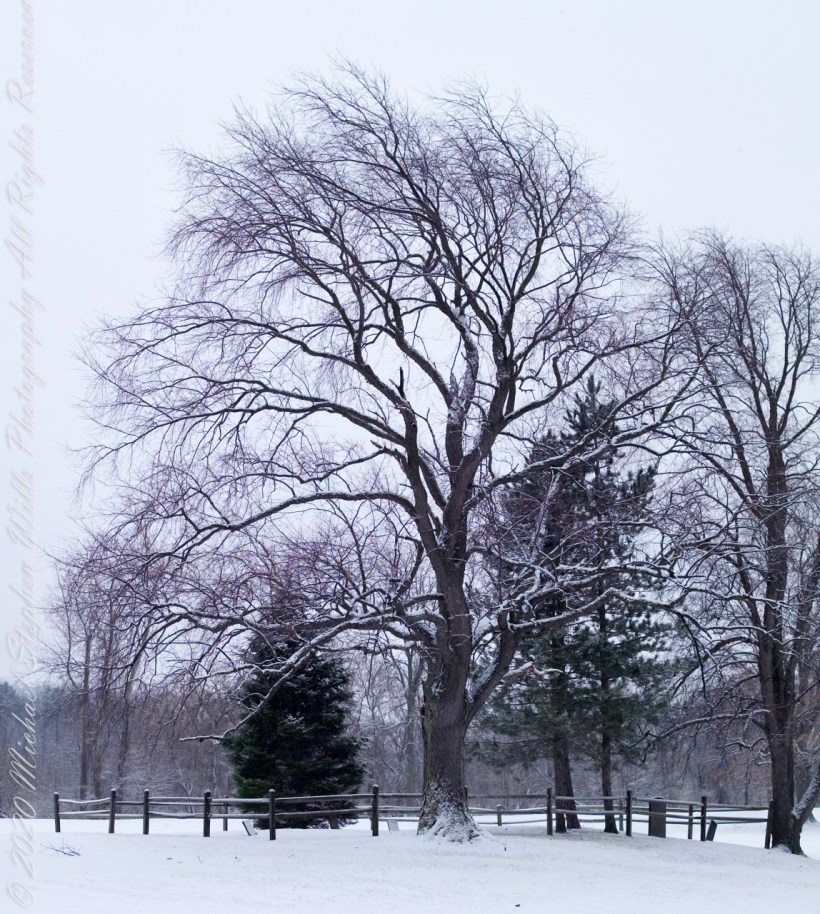
Each November, the eerie form of these limbs are revealed. I call the tree an “elm” though I am not certain. There are other lone survivor elms nearby, the leaves are right for an elm. Some elm species/specimens have the same shape.
Copyright 2023 All Rights Reserved Michael Stephen Wills
Gratitude for miracles witnessed is my emotion for this series, “Frozen Fall Creek.” Fifteen winters after Pam and I walked Fall Creek as a solid walking path, the stream flows without ice most years. My son, whose family now lives in the house, and his wife recalling walking the creek a few years ago, not in the past few years.
Weather records support our recollections and observations: here is an analysis of Ithaca January temperatures. The years 2009 through 2019 show a warming trend in daily temperatures for both minimum and maximum.
Analysis
Excel I used to plot minimum and maximum temperatures (Fahrenheit) for the 31 days of each January for eleven years 2009 – 2019. Click on the images of this post for a larger version.
Click any image for a larger view.
Forecast
Pam and I moved to Ithaca 2011 and missed our Fall Creek winter walks, miss them even more now our weekend excursions are only memories. Here are January minimum/maximum average daily temperature projections from 2020 through 2044 based on the trend established from the 2009 through 2019 series. The trend is the solid color, projection the faded color.
Reading from the chart, if the current trend continues by January 2044 the average maximum daily temperature will be 47 degrees compared to 29 for 2009. In other words, the temperature never rose above freezing in the year 2009. By 2044 temperatures will be above freezing every day, on average, with daily minimums averaging 21 degrees.
From what I read, we can expect these warming trends to accerate within our lifetimes. My son named small mid-creek hummocks “islands” with numbers. Here is a view of his Second Island in late summer. What will Second Island be in 2044 late summer?
Late Summer 2018, second island
Memories
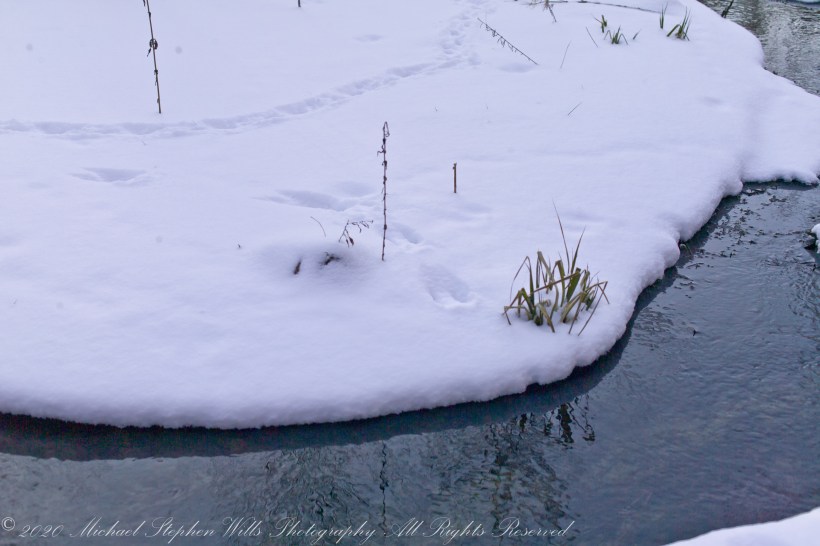
Reader of posts I and II of this series have commented about snow shadows. Here are the shadows produced from snow fallen on the vegetation of the last photograph: soft mounds to contrast with tree trunk shadows.
Winter 2009, second island
I prefer the composition of the following photograph. What do you think?
Play of winter shadows
A combination of contrasting shadow forms.
Low Winter Sun
Copyright 2023 All Rights Reserved Michael Stephen Wills
My last post, “Frozen Fall Creek I”, ended with macros of Ice Crystals on a bed of frost over creek ice within sight of our former home, a restored water mill. I continued on the ice, following the creek to this spot were the stream bed turns 90 degrees, changing from a southerly to a western flow.
Here I encountered an open course where constant water motion resisted freezing. A few frigid days later, the course had an amazing transformation.
Last To Freeze, Fall Creek
The transparent ice of the now frozen space retained the impression of movement, the surface rippled by current. In the following photograph, motionless ice crystals reveal the truth.
Ice Crystals on Water Frozen while Supercooled
In the intervening days, the constant motion resisted freezing while the water temperature dropped well past freezing to achieve a supercooled state. As the water temperature continued to drop, a fast transition from fluid to solid happened so quickly the movement of the water surface was preserved.
Ice Crystals on Water Frozen while Supercooled
Here is the matching “after” photograph to the “before” that started this post.
Channel of Water Frozen while Supercooled
Copyright 2023 All Rights Reserved Michael Stephen Wills
The glacial marls through which this water flows to emerge here clear and pure were under threat from development in the 1980’s and 1990. Thanks to the efforts of the landowner, the uniqueness of this environment was preserved.
The first two photographs are combined and enhanced in photoshop to yield the third, combination, photograph.
Winter ShadowsWinter Shadows
All were from a tripod mounted Kodak DSC pro SLR-C with the Canon lens EF 50mm f/1.4 USM
Winter Shadows
Copyright 2023 All Rights Reserved Michael Stephen Wills
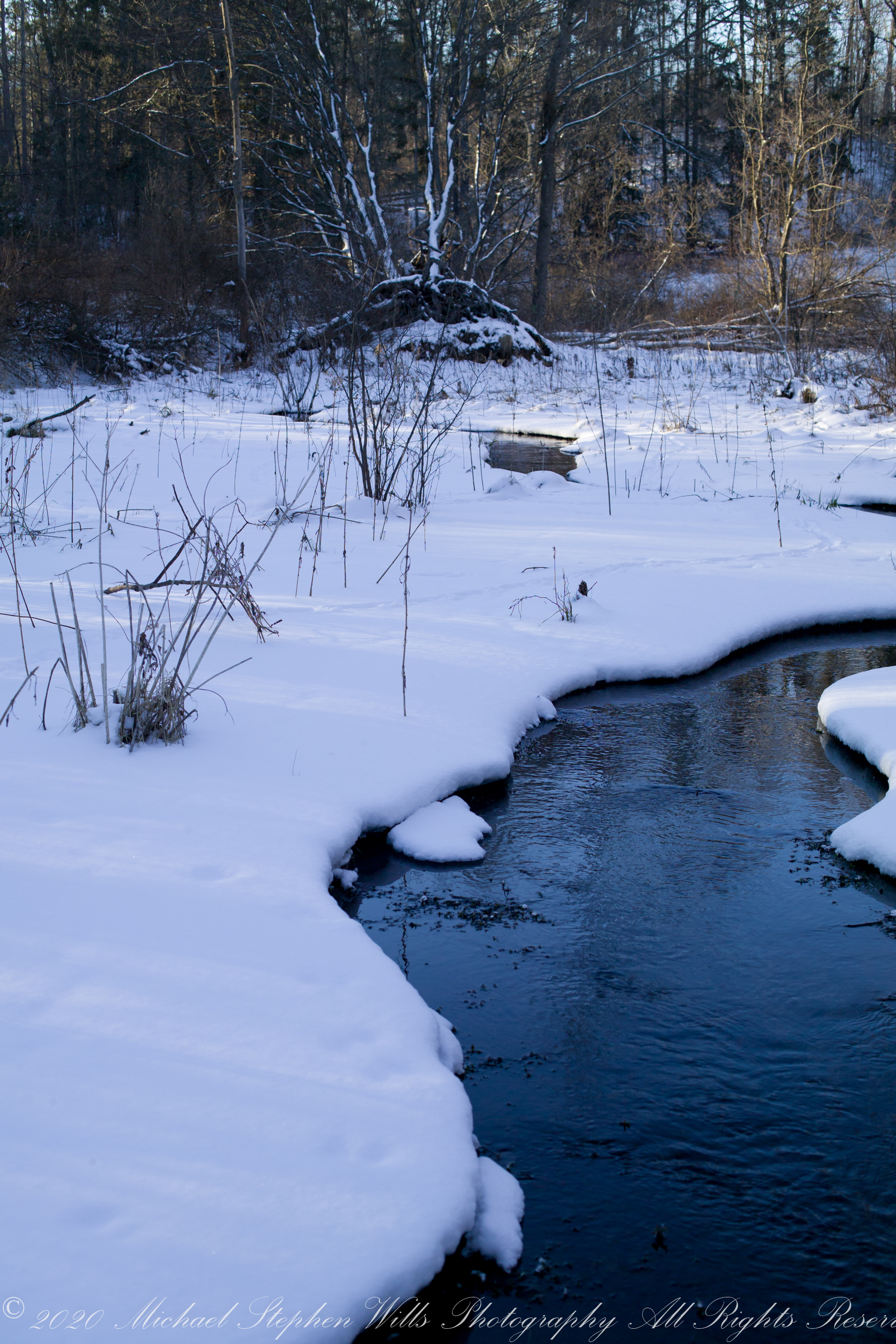
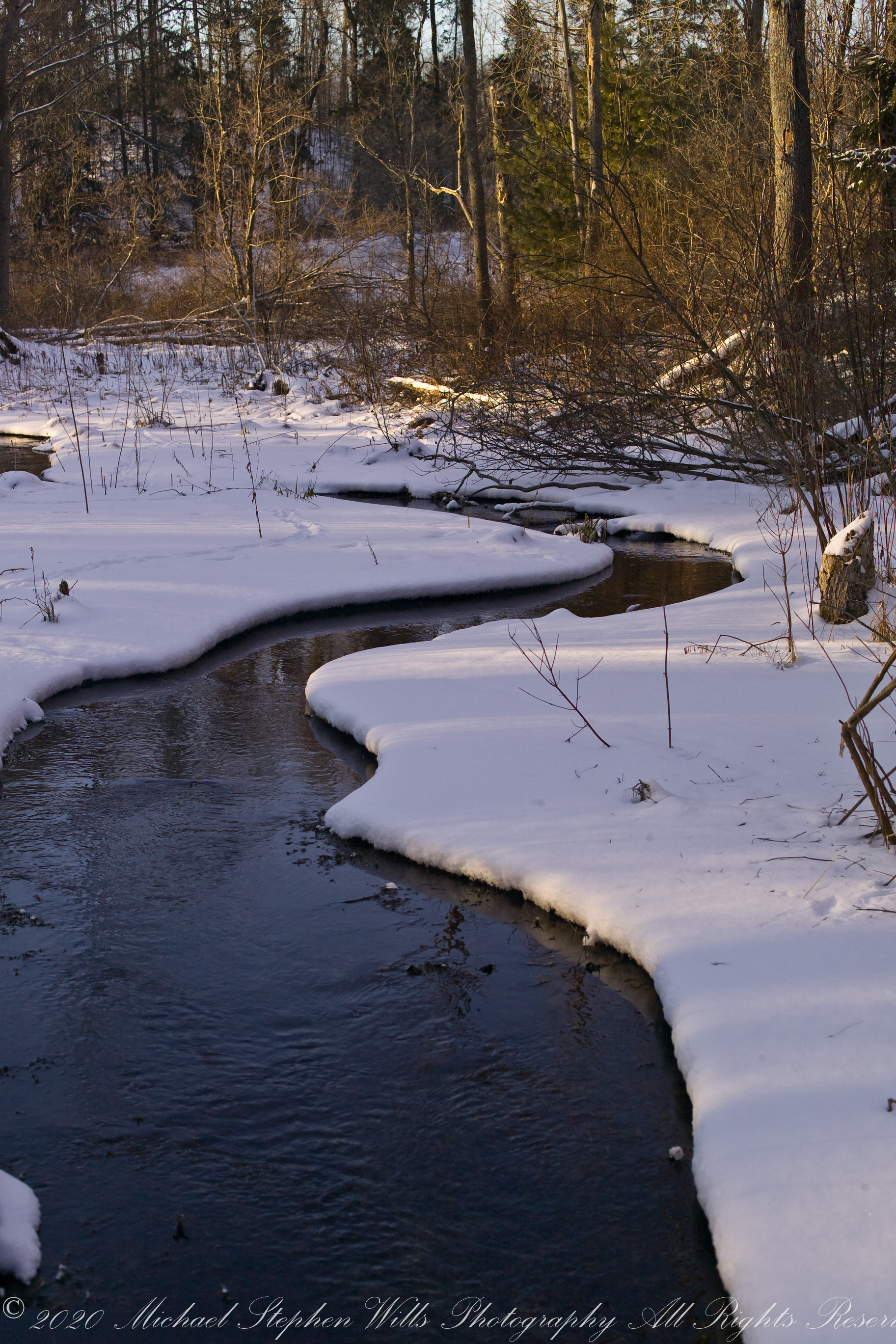
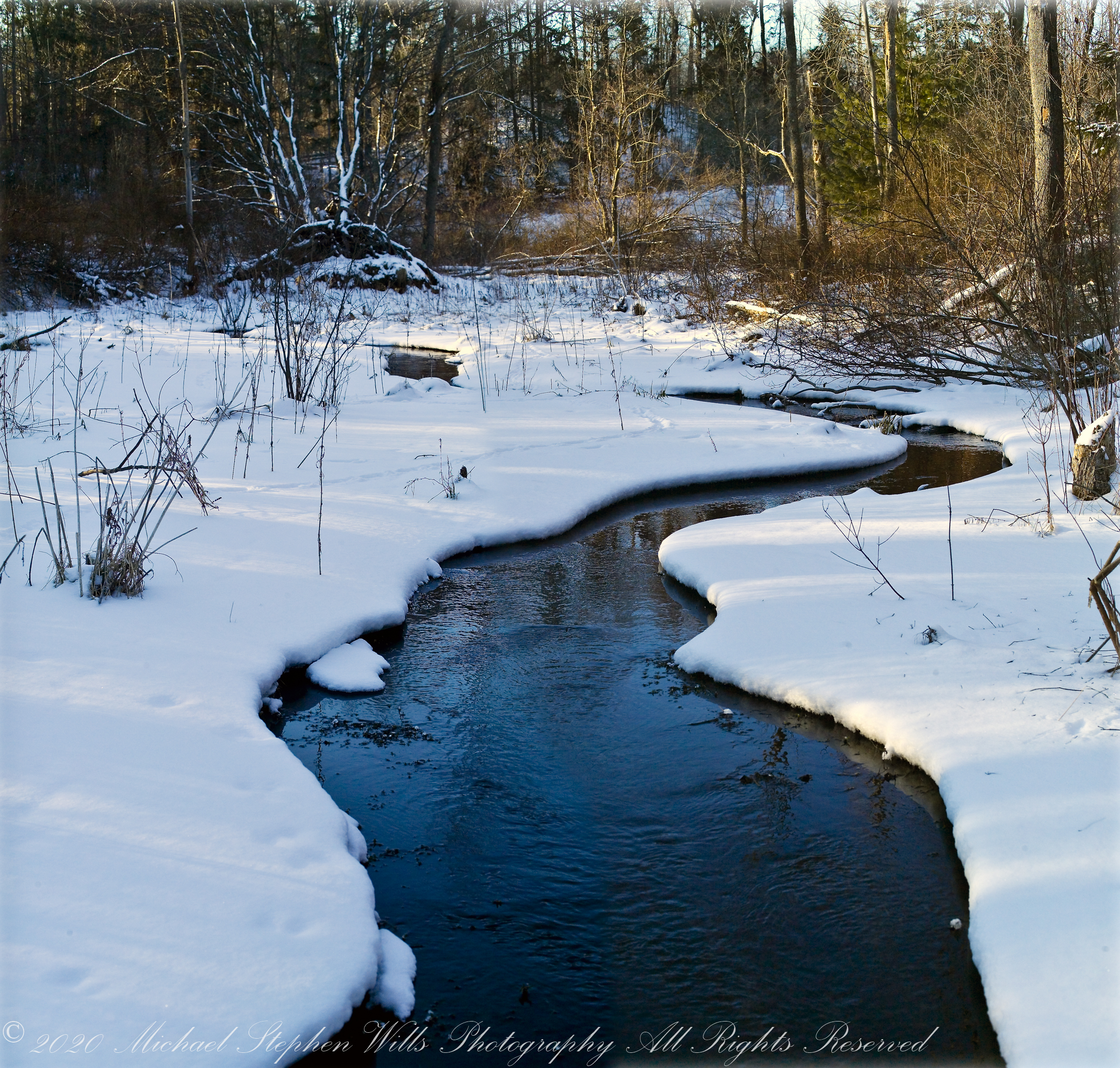
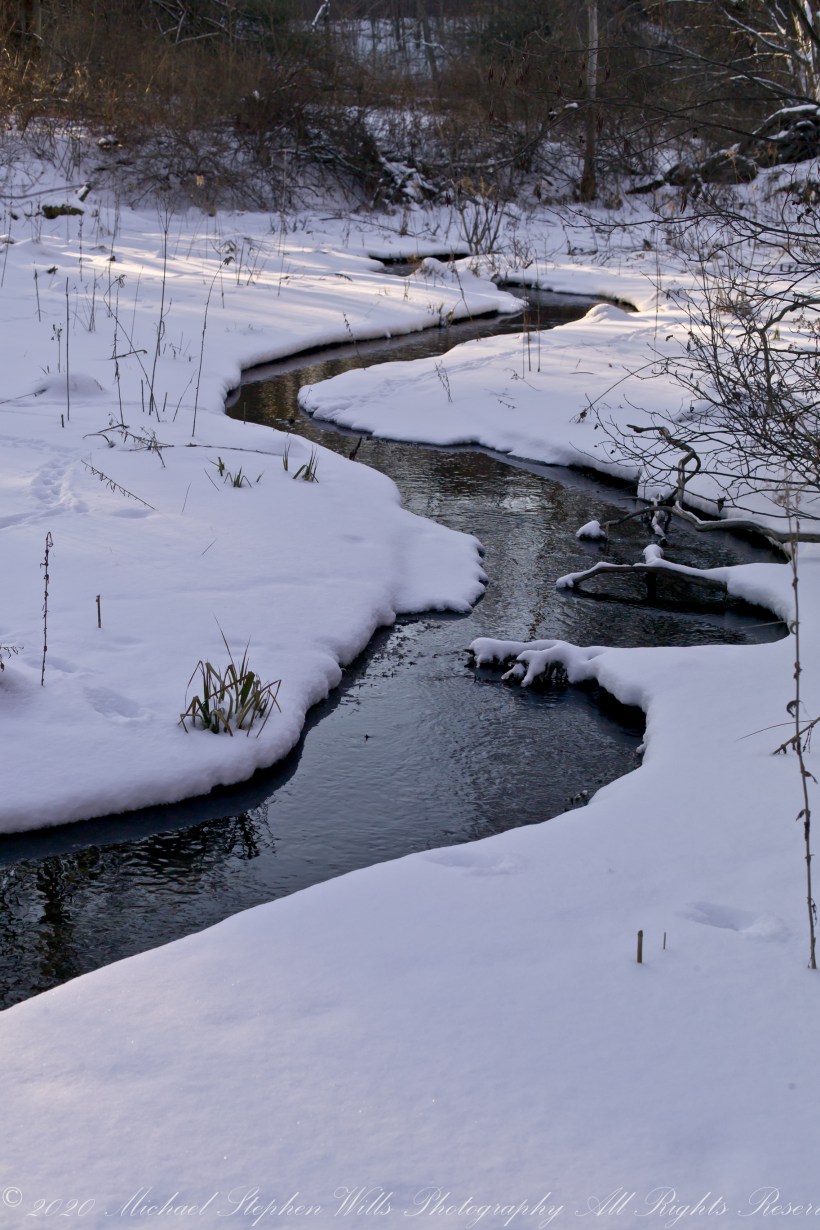
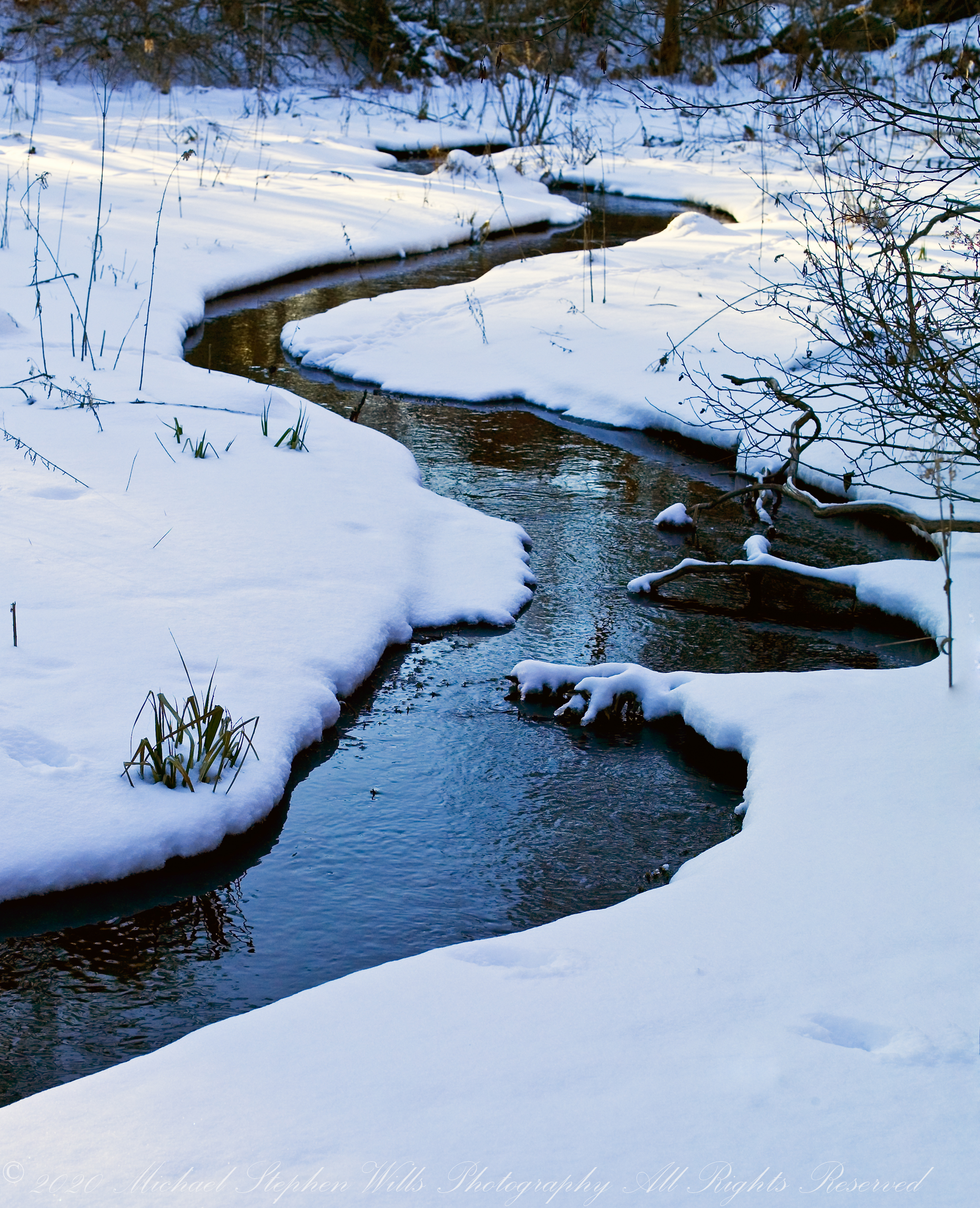
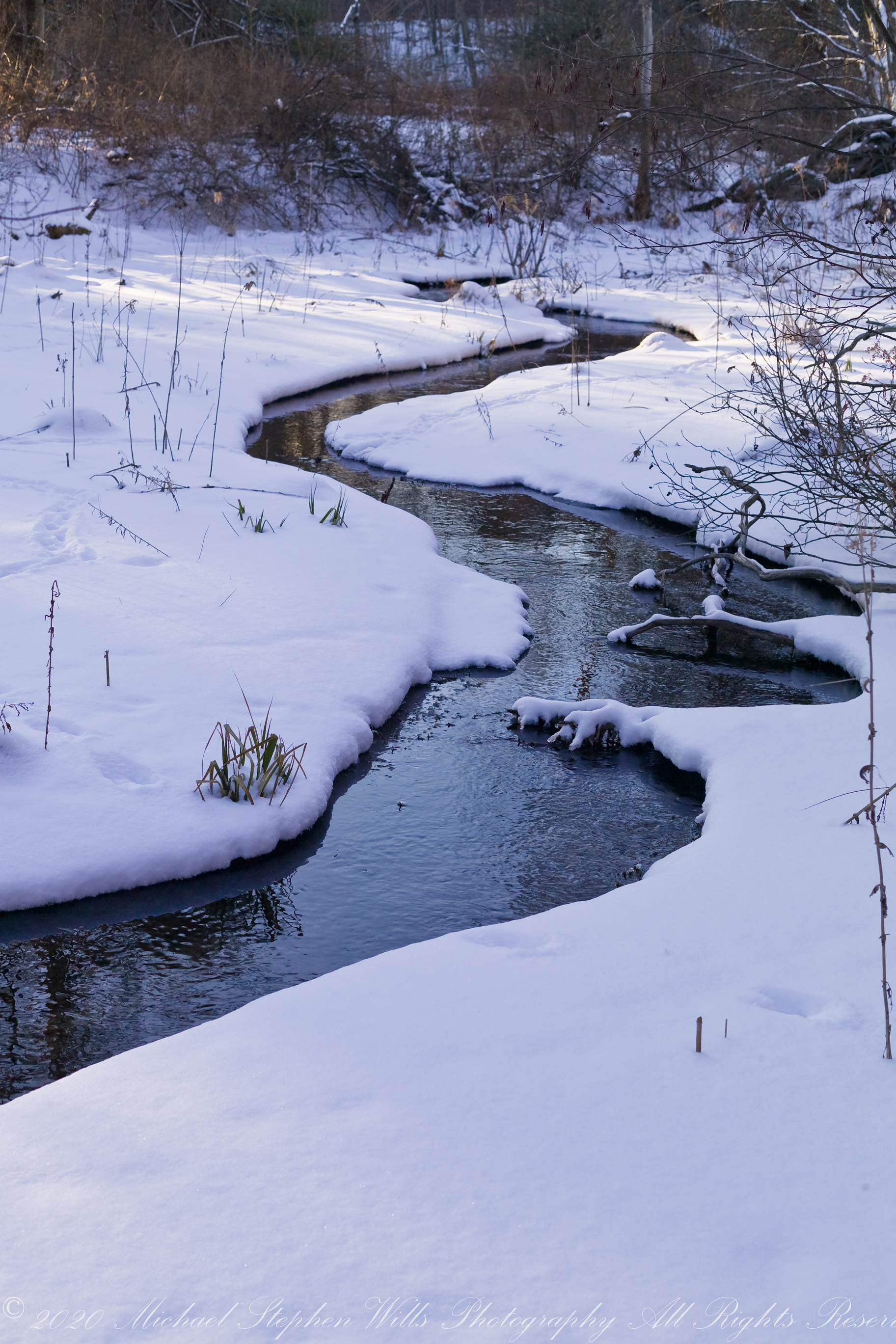
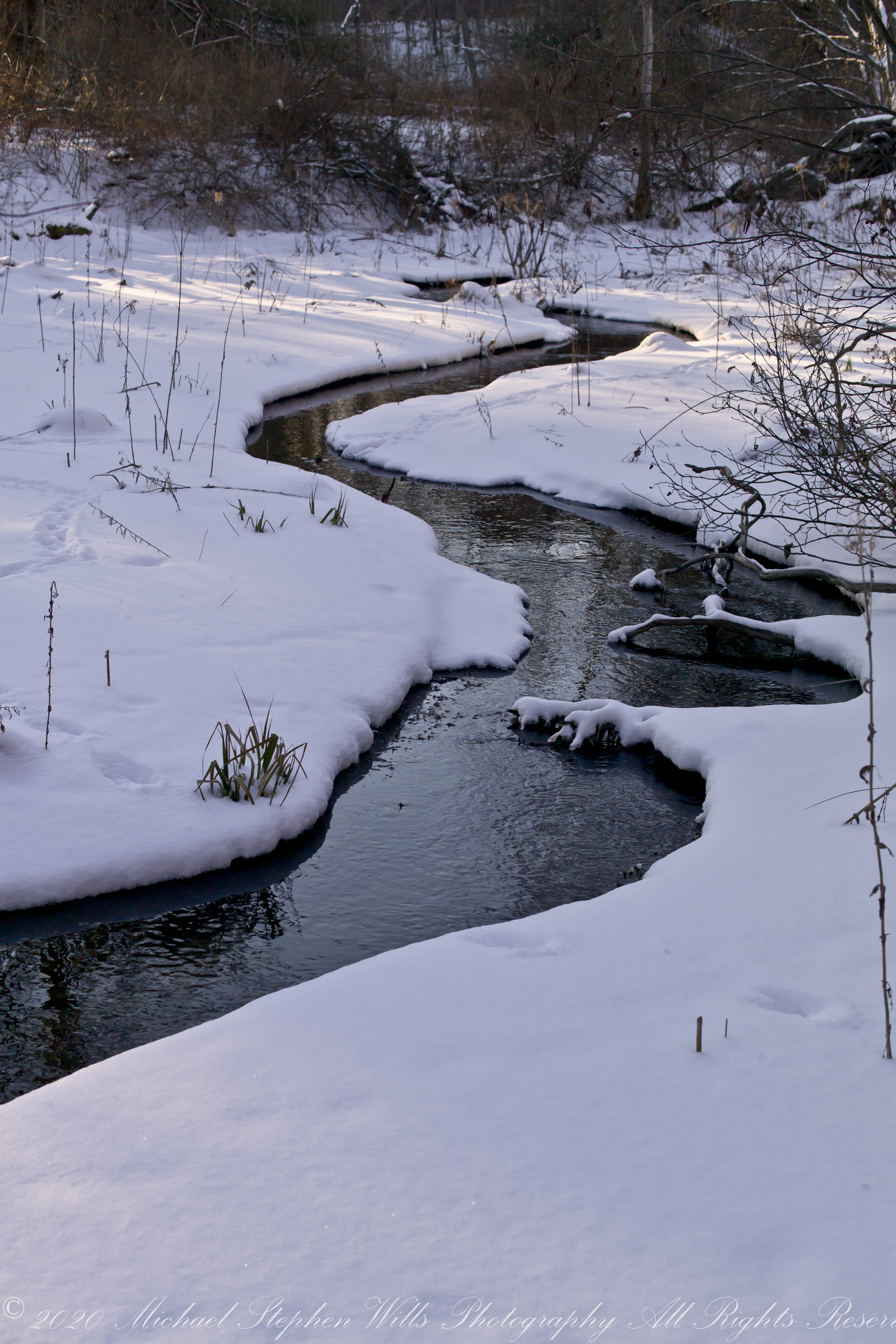
This water emerges from glacial marls, pure and clear, before flowing into a kettle pond. Here we see it on a winter afternoon meandering across a meadow before joining the Fall Creek of the previous postings of this week.
The first two are the same photograph. One has been enhanced in Photoshop. The other was perfected in Lightroom. The third is a different photograph taken about the same time, also peracted in Lightroom.
Winter ShadowsWinter Shadows
All were from a tripod mounted Kodak DSC pro SLR-C with the Canon lens EF 50mm f/1.4 USM
Winter Shadows
Copyright 2023 All Rights Reserved Michael Stephen Wills
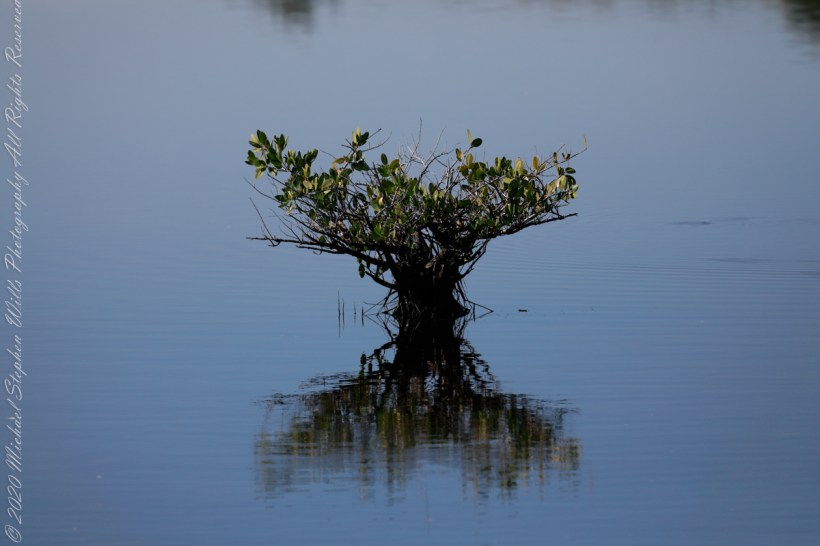
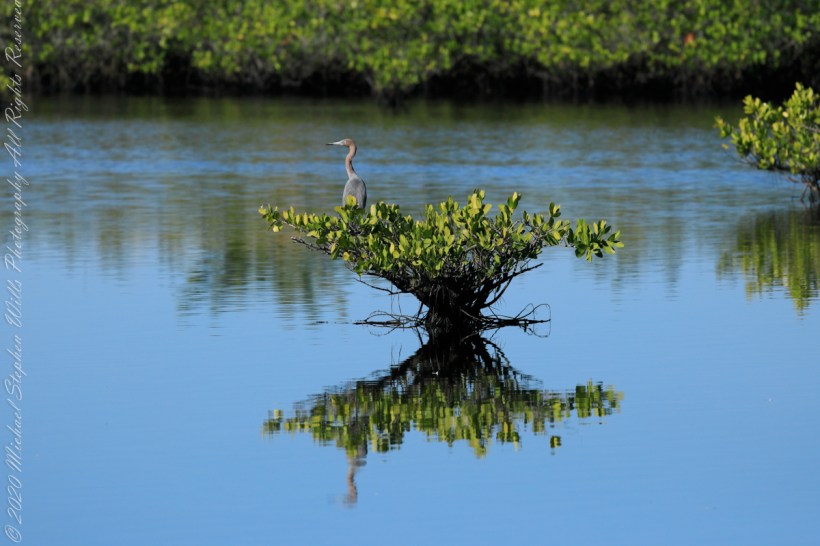
Up Blackpoint Wildlife Drive, about two miles from the entrance, we came to the parking area for Wild Bird Trail Head where I spent an hour or so admiring the sights. This Mangrove sprouting from brackish water is one of three known to grow here.
I’d say it is a Black Mangrove from the color of the bark. “Unlike other mangrove species, it does not grow on prop roots, but possesses pneumatophores that allow its roots to breathe even when submerged. It is a hardy species and expels absorbed salt mainly from its leathery leaves.”
The text in quotes is from the Black Mangrove wikipedia article.
Merritt Island National Wildlife Refuge, Titusville, Brevard County, Florida
Copyright 2022 Michael Stephen Wills All Rights Reserved
Up Blackpoint Wildlife Drive about two miles from the entrance we came to the parking area for Wild Bird Trail Head where I spent a hour or so admiring the sights.
This Tricolor Heron taking advantage of a perch provided by Black Mangrove growing from the brackish water. I assume it is resting as this heron stalks its prey in shallow or deeper water, often running as it does so. It eats fish, amphibians, crustaceans, gastropods, leeches, worms, spiders, reptiles, and insects.
Merritt Island National Wildlife Refuge, Titusville, Brevard County, Florida
Copyright 2022 Michael Stephen Wills All Rights Reserved





 Michael Stephen Wills Photography