Frabel’s Tower of Babel: A Modern Artistic Interpretation

At McKee Botanical Garden, the glass sculpture Tower captivates with its beauty, symbolizing unity amidst nature, blending art and environment.

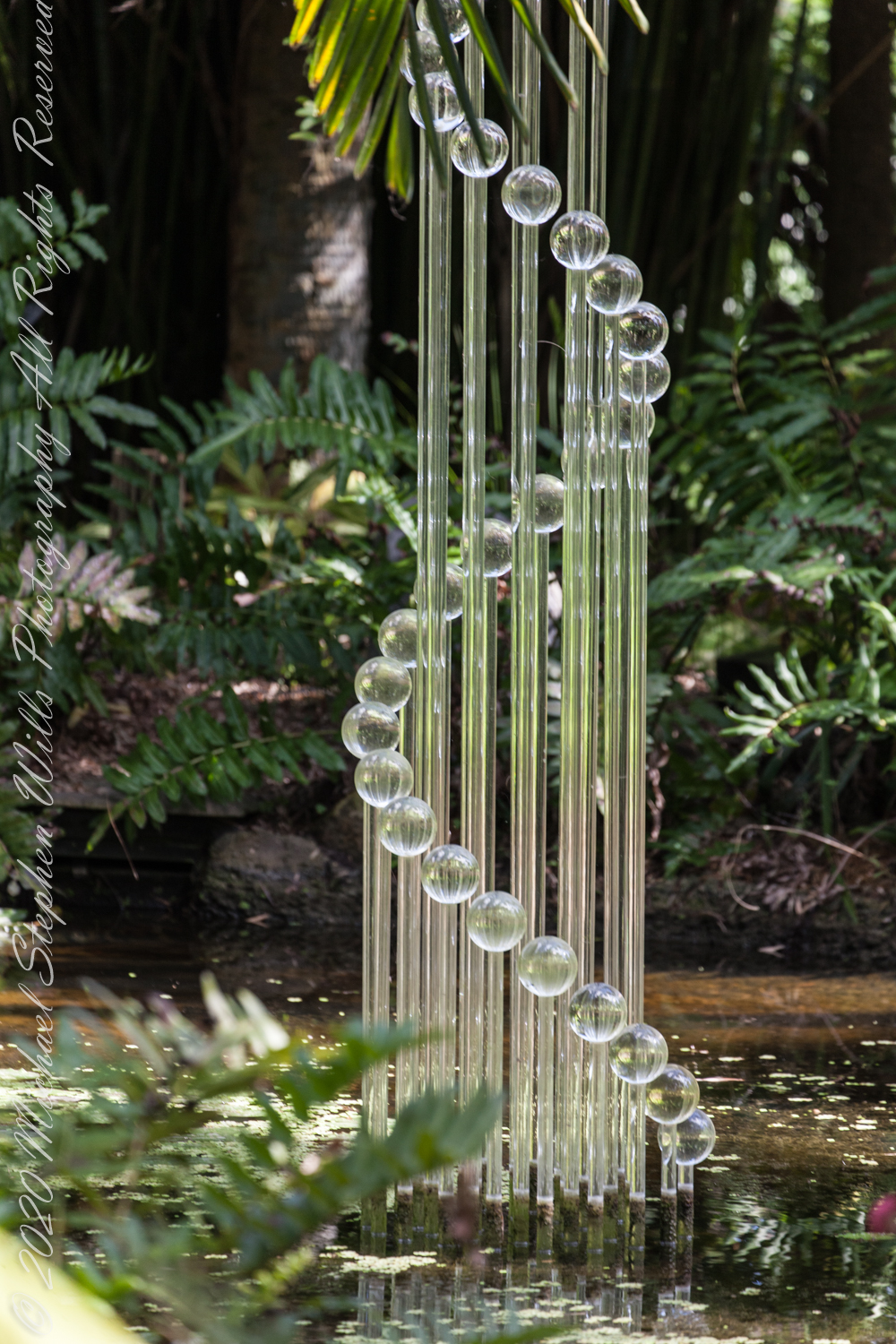
The air was crisp yet warmed by the steady rays of the January sun as I wandered through McKee Botanical Garden. The interplay of light and shadow danced across the palm fronds, creating an enchanting ambiance that whispered serenity. My pace slowed as I approached a reflective pond tucked away within this verdant sanctuary. There, shimmering like a fragment of the heavens brought to Earth, stood a glass sculpture titled Tower.

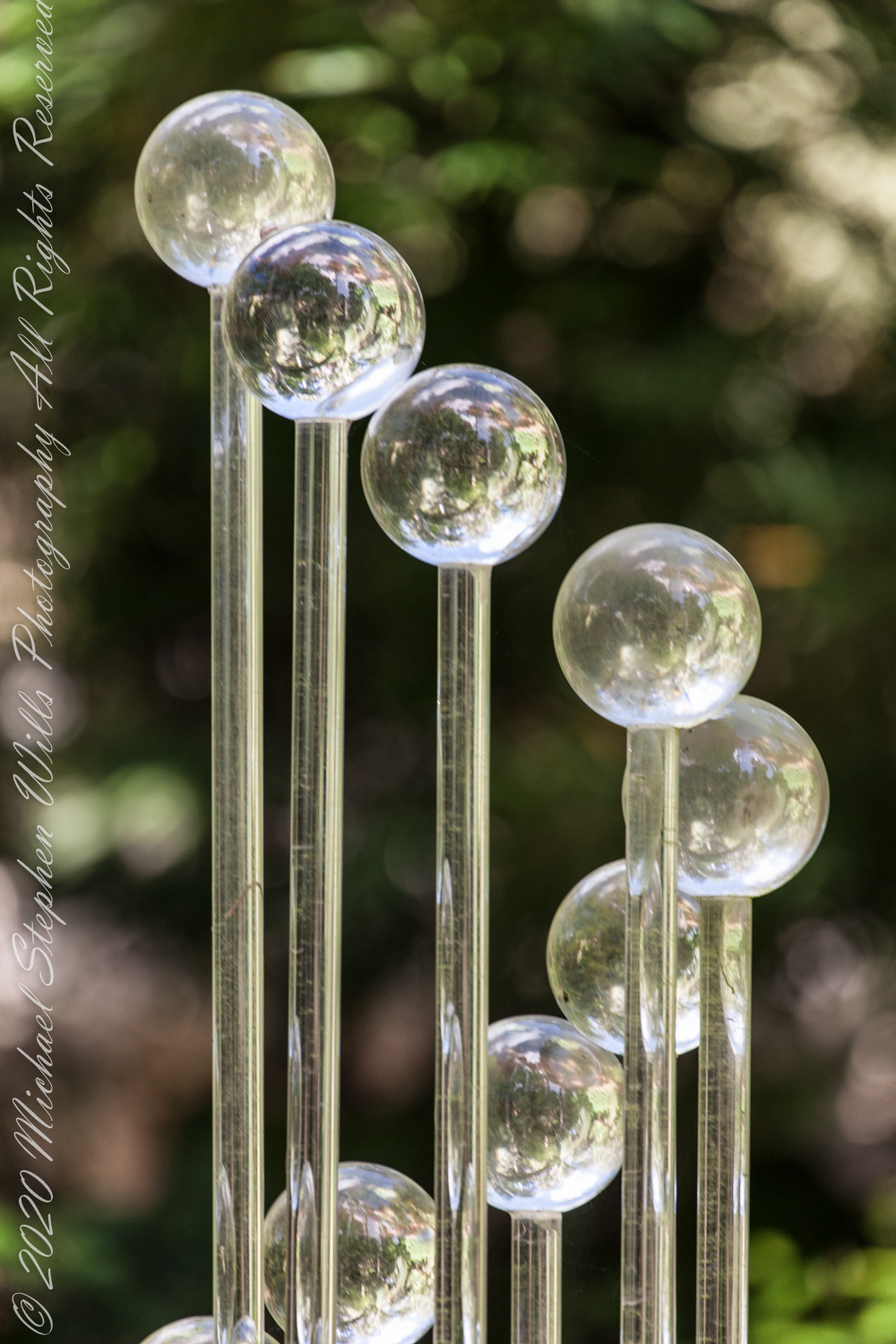
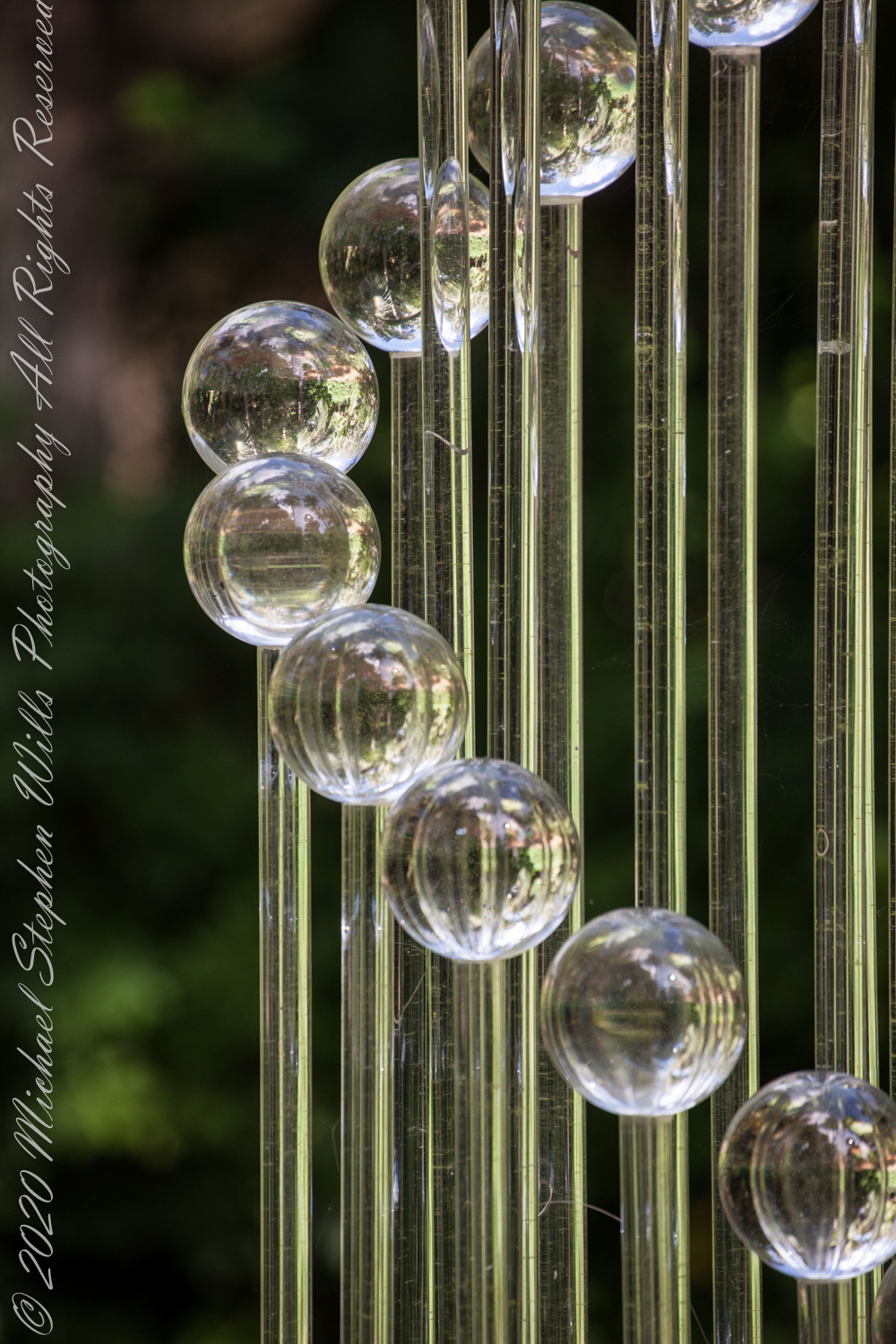
At first glance, the sculpture seemed ethereal, almost unreal—a spiral staircase to the skies crafted of crystalline spheres and slender rods. Its reflection on the water below doubled the dreamlike quality, as if the sculpture extended into an unseen realm. Upon closer inspection, I noticed the intricate craftsmanship of Hans Godo Fräbel, the sculptor whose genius birthed this luminous creation.
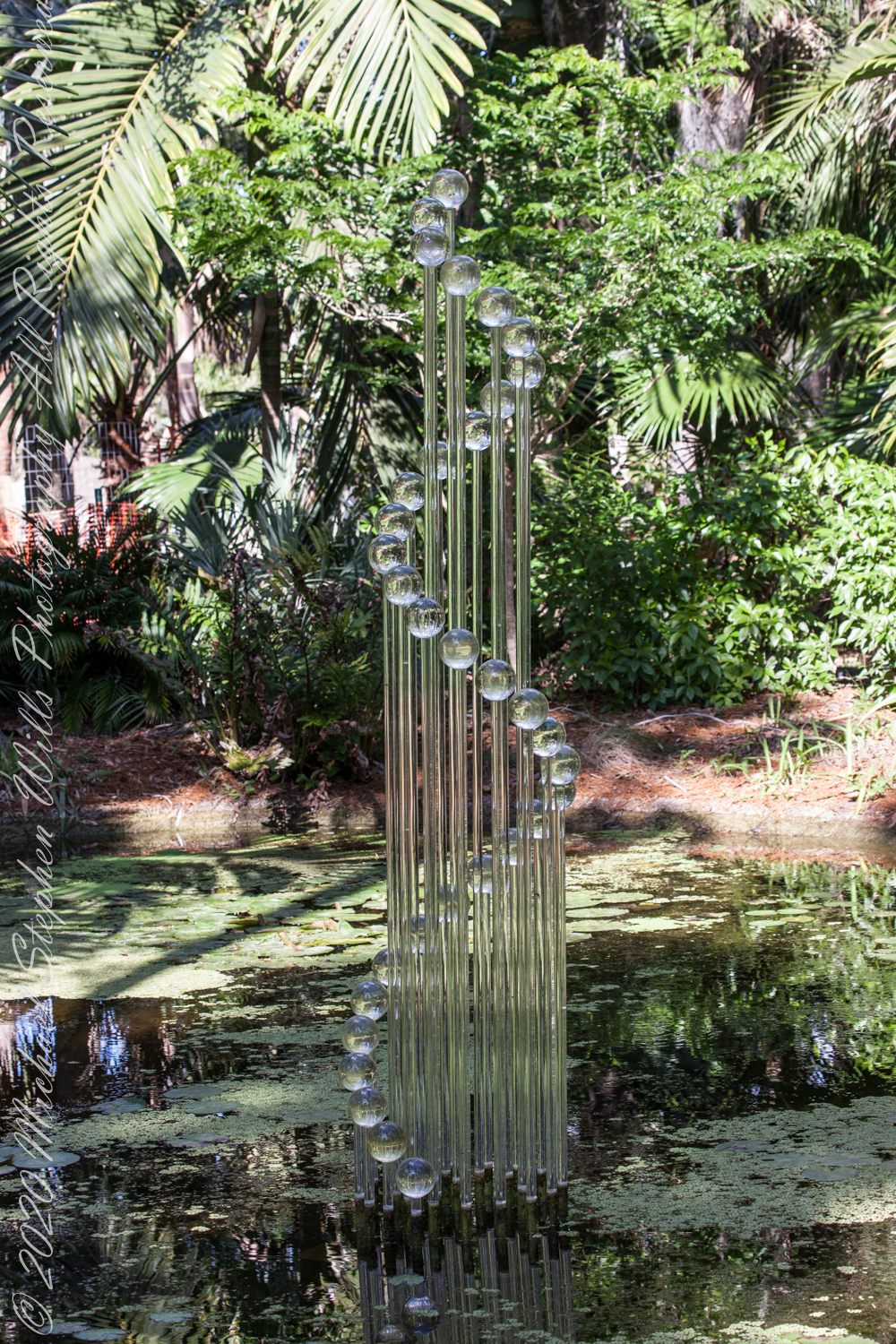
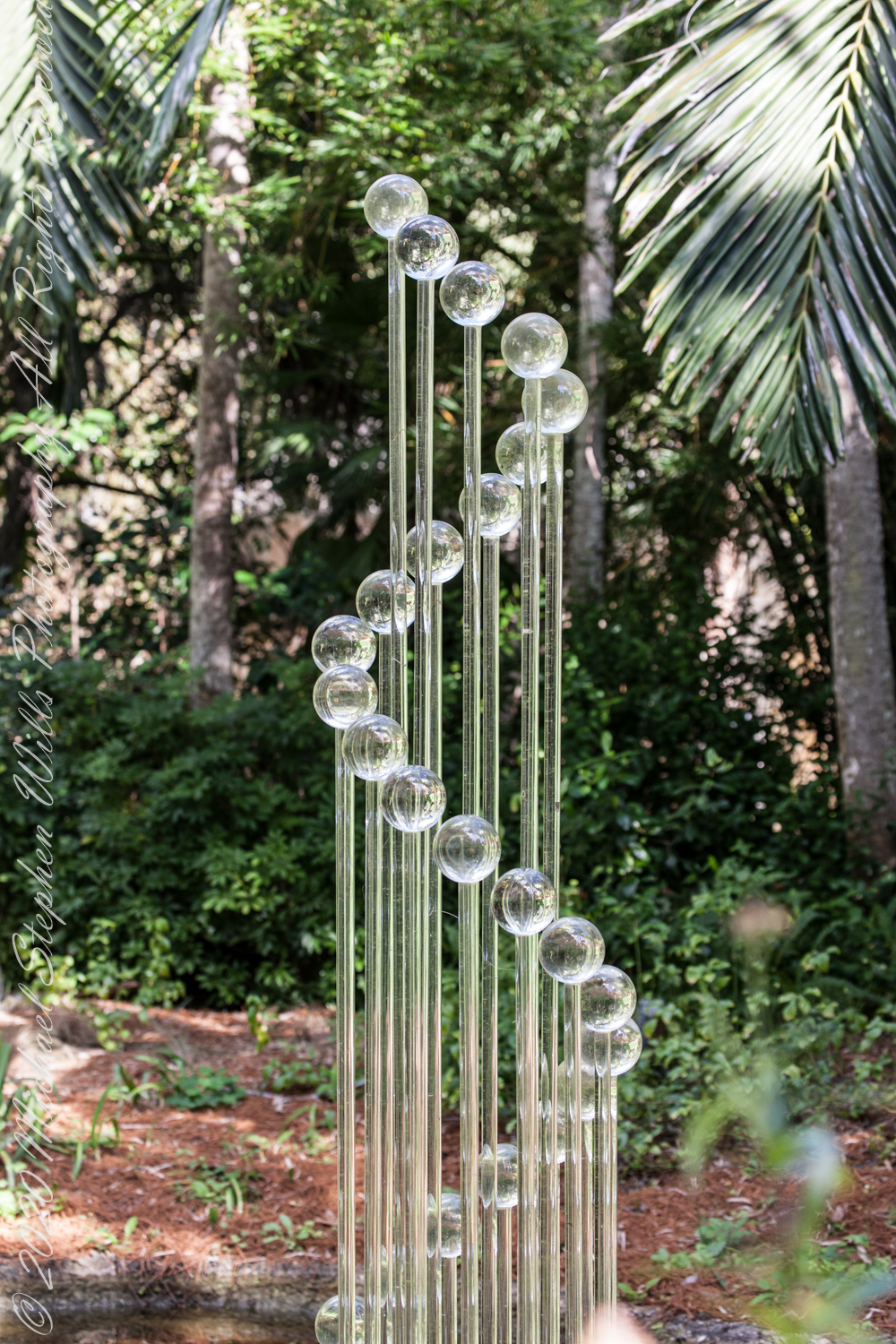
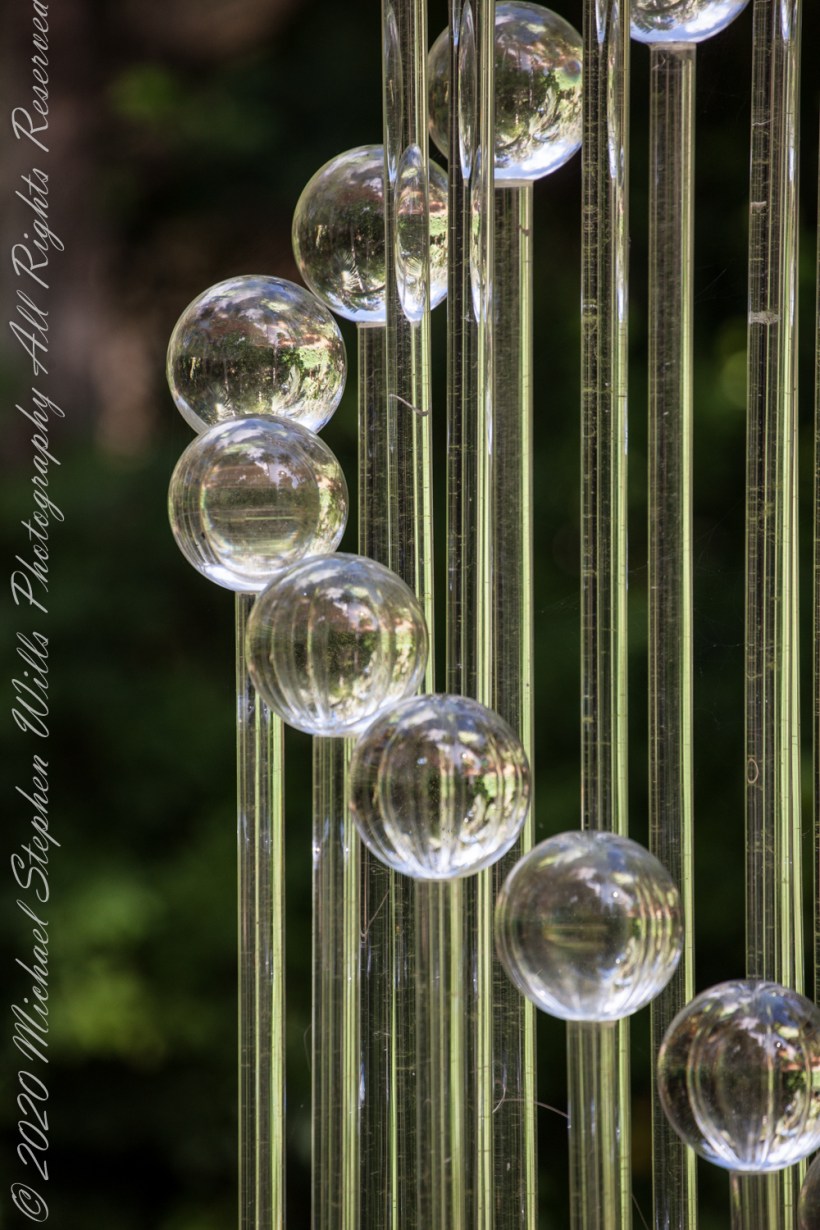
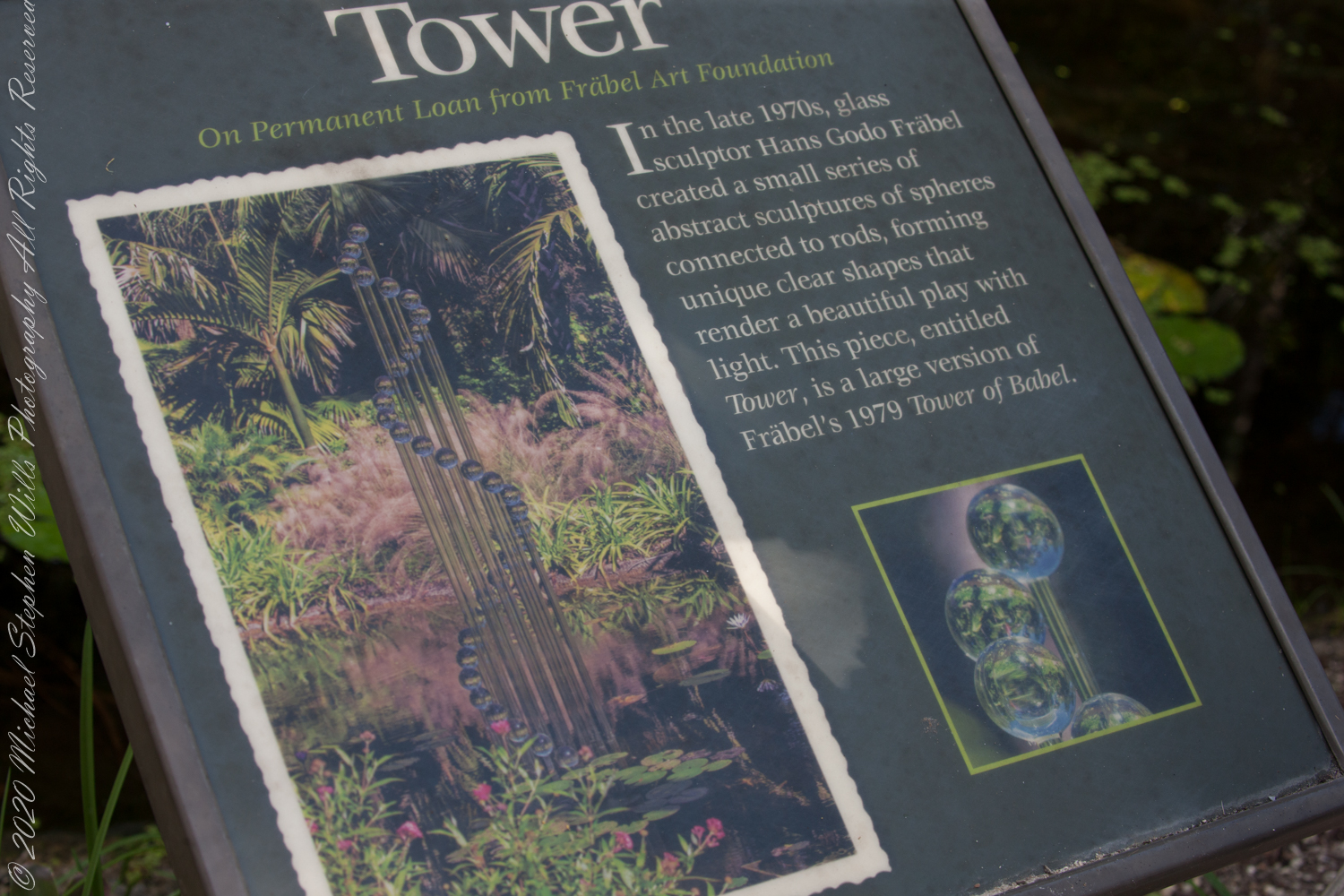
A nearby sign informed me that Tower is a larger version of Fräbel’s 1979 work Tower of Babel. It described how the sculpture’s glass rods and spheres were meticulously arranged to create abstract, clear shapes that play with light. Indeed, as the sun shifted overhead, the sculpture sparkled, refracting sunlight into tiny rainbows and revealing textures hidden within its transparent façade.

The setting amplified its majesty. Towering palm trees framed the sculpture, their dark green leaves offering a contrasting backdrop to the glass’s brilliance. Water lilies floated lazily on the pond’s surface, and an occasional ripple sent the reflection dancing. The combination of nature and art created an environment that felt both grounding and transcendent.

Standing before this masterpiece, I felt a profound connection to its narrative. The reference to the Tower of Babel resonated deeply. Here was a modern interpretation of an ancient story, one of human ambition and divine mystery, yet here it existed harmoniously in nature, not in defiance of it. The clear glass, fragile yet resilient, seemed to symbolize transparency and unity—a stark contrast to the biblical tale’s discord.
I lingered, watching how the sunlight flirted with the sculpture, how it cast prismatic shadows onto the surrounding foliage. Each sphere held reflections of the garden, tiny worlds encapsulated in glass, reminding me of the interconnectedness of all things. This moment, this meeting of human ingenuity and the natural world, felt timeless.

As I turned to leave, I glanced back one last time. The Tower stood resolute, a testament to creativity and a gentle reminder of the beauty that arises when humanity and nature coexist in harmony. It was an encounter that left me both inspired and at peace, grateful for the opportunity to witness such a sublime union of art and environment.
Click me for a dinosaur at McKee Gardens, Neovenator, teeth like steak knives

References: text is from the park placard with minor edits.

Enter your email to receive notification of future postings. I will not sell or share your email address.

Sea Turtle Portrait

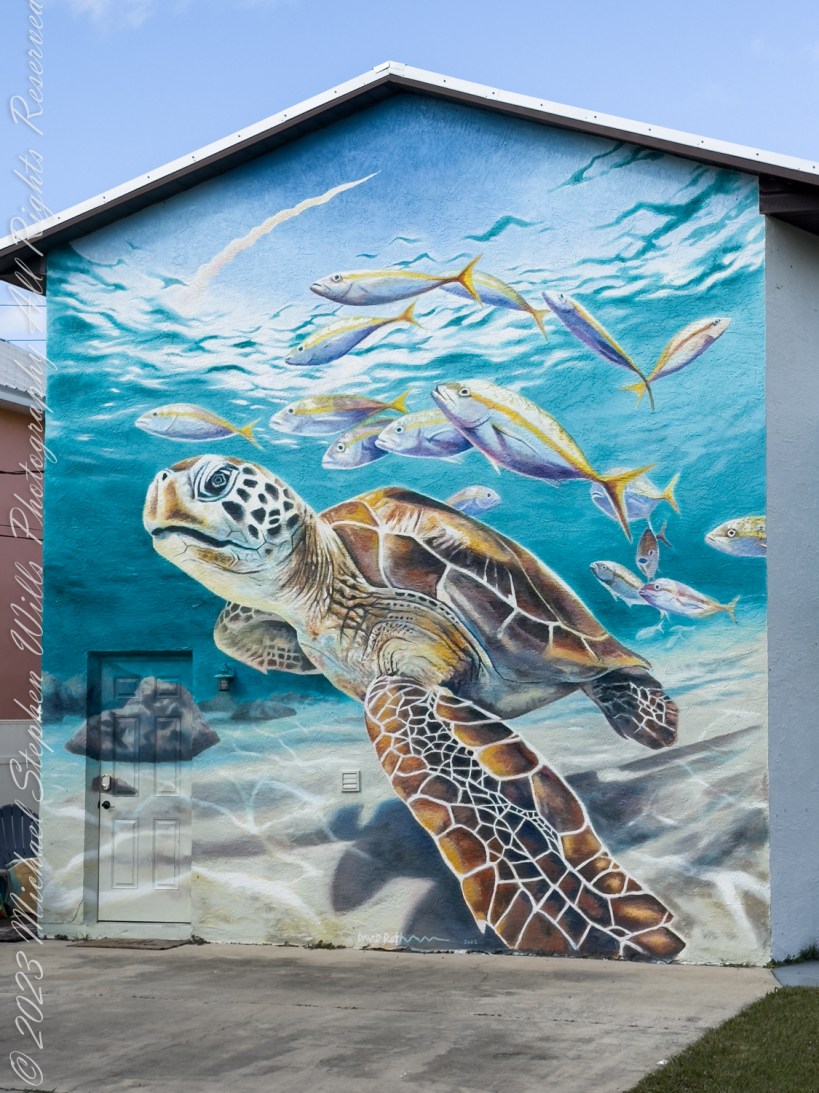
Portrait of a Sea Turtle with fish, sea floor and a rocket launch. 541 Washington Ave, Cape Canaveral, FL 32920 Near Cheri Down Park, Brevard County, Florida

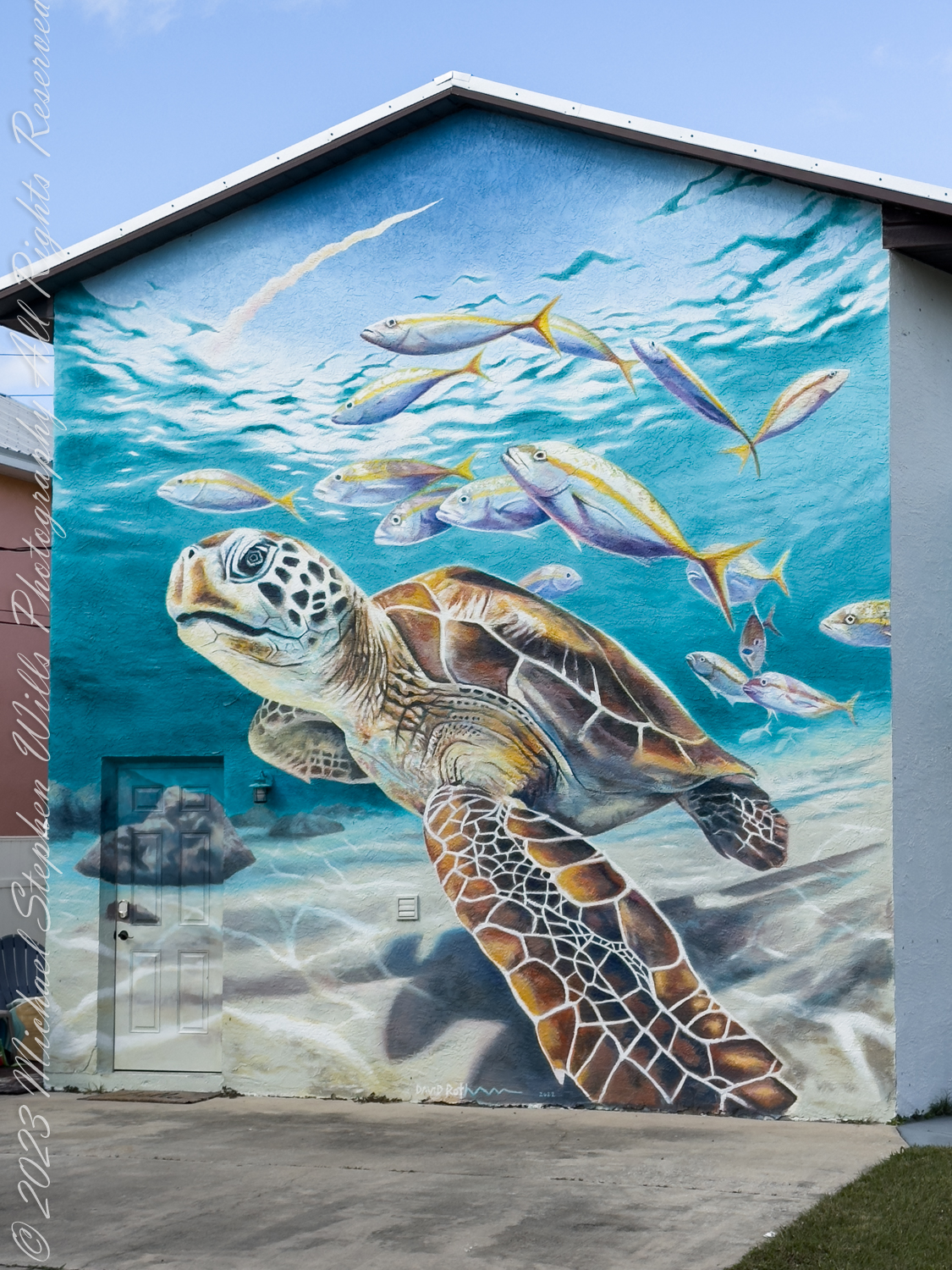
Portrait of a Sea Turtle with fish, sea floor and a rocket launch. 541 Washington Ave, Cape Canaveral, FL 32920 Near Cheri Down Park, Brevard County, Florida

Along the bottom margin is the artist’s signature, “David Roth 2022.”

Copyright 2024 Michael Stephen Wills All Rights Reserved

One of Three

Red, White and……Black

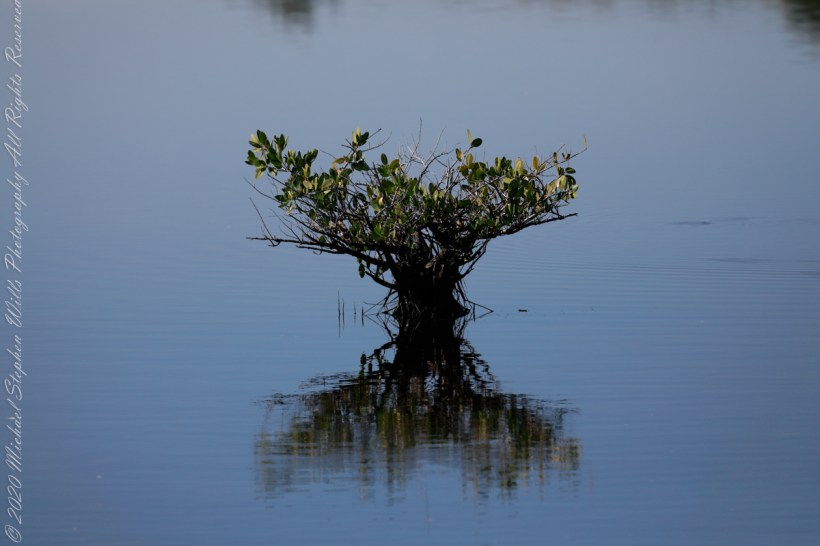
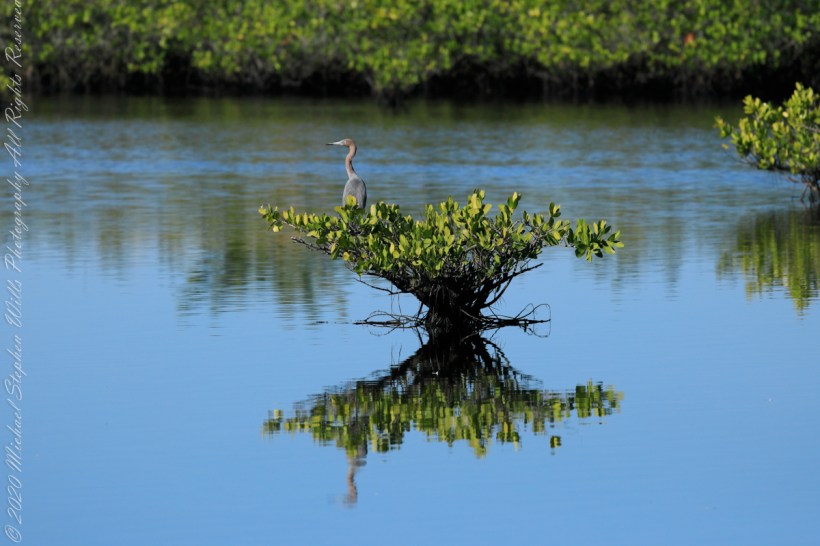
Up Blackpoint Wildlife Drive, about two miles from the entrance, we came to the parking area for Wild Bird Trail Head where I spent an hour or so admiring the sights. This Mangrove sprouting from brackish water is one of three known to grow here.

I’d say it is a Black Mangrove from the color of the bark. “Unlike other mangrove species, it does not grow on prop roots, but possesses pneumatophores that allow its roots to breathe even when submerged. It is a hardy species and expels absorbed salt mainly from its leathery leaves.”

The text in quotes is from the Black Mangrove wikipedia article.

Merritt Island National Wildlife Refuge, Titusville, Brevard County, Florida

Copyright 2022 Michael Stephen Wills All Rights Reserved

On High

this heron stalks its prey

Up Blackpoint Wildlife Drive about two miles from the entrance we came to the parking area for Wild Bird Trail Head where I spent a hour or so admiring the sights.

This Tricolor Heron taking advantage of a perch provided by Black Mangrove growing from the brackish water. I assume it is resting as this heron stalks its prey in shallow or deeper water, often running as it does so. It eats fish, amphibians, crustaceans, gastropods, leeches, worms, spiders, reptiles, and insects.

Merritt Island National Wildlife Refuge, Titusville, Brevard County, Florida

Copyright 2022 Michael Stephen Wills All Rights Reserved

Snake Bird

AKA “devil bird” or “snake bird”

This series of wading shorebirds are from a mash alongside Blackpoint Wildlife Drive.

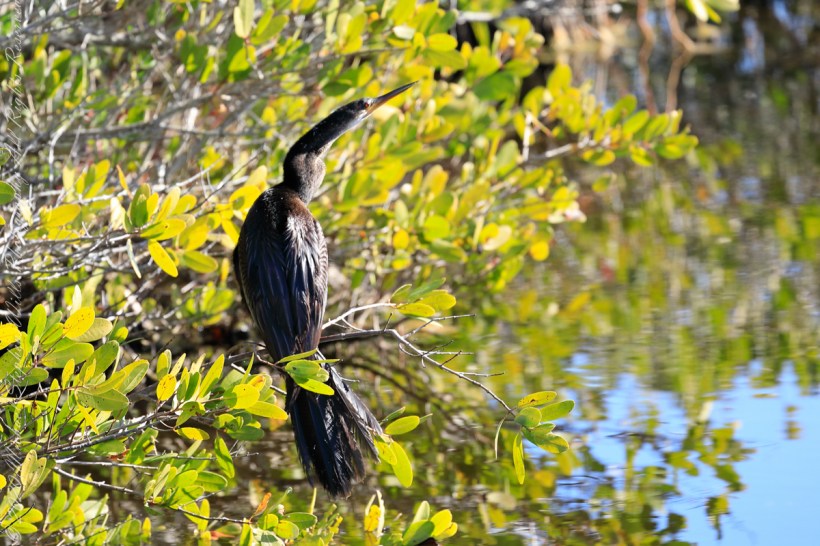
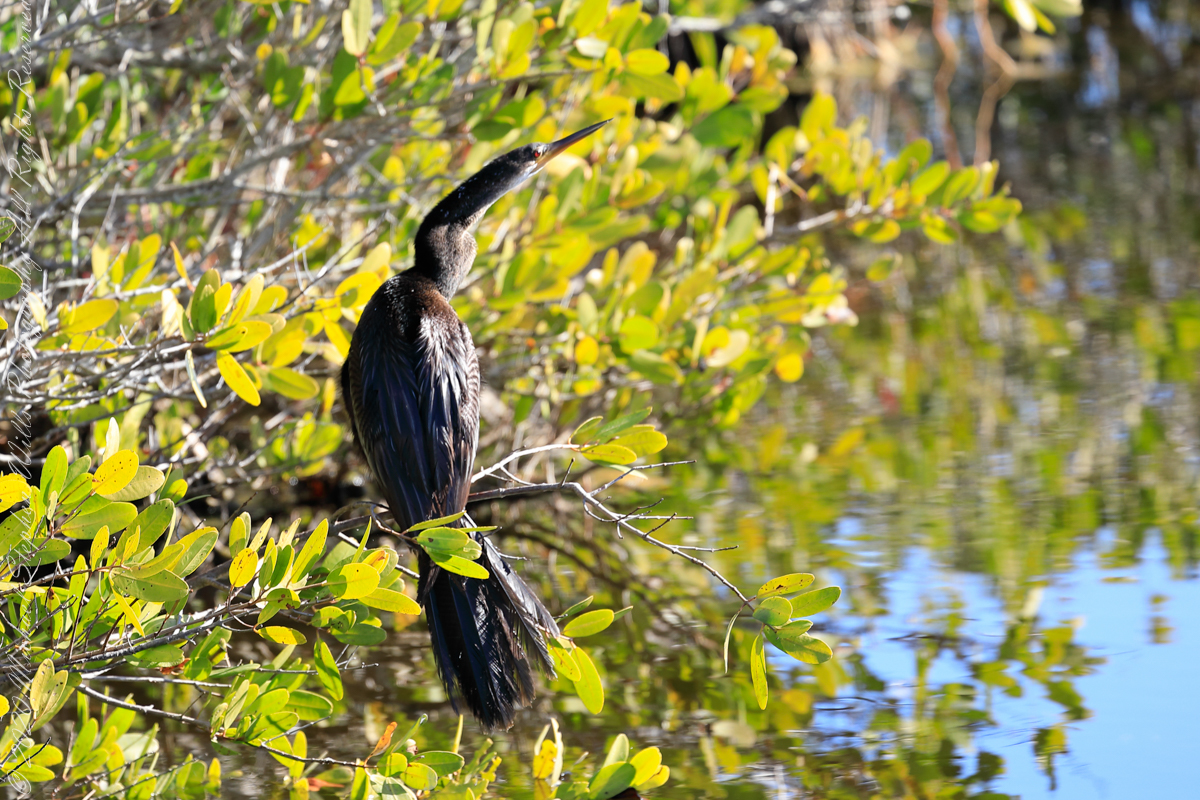
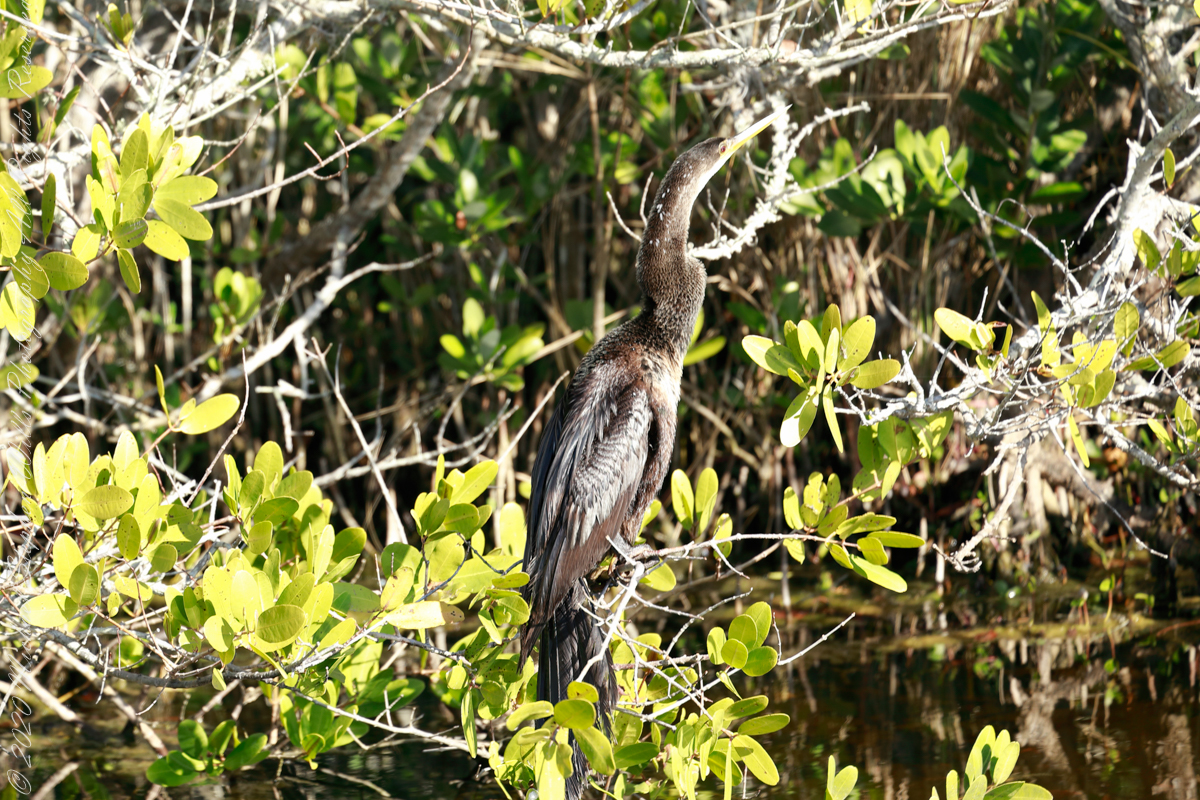
This Anhinga basked on a marsh bush just off Blackpoint Wildlife Drive on a January morning. Soaking in sunlight is most important for this waterbird as Anhinga features are not waterproof, after a session of diving, the bird is soaked through to the skin and need to warm up and dry off.

“The Anhinga sometimes called snakebird, darter, American darter, or water turkey, is a water bird of the warmer parts of the Americas. The word anhinga comes from the Brazilian Tupi language and means “devil bird” or “snake bird”. The origin of the name is apparent when swimming: only the neck appears above water, so the bird looks like a snake ready to strike. They do not have external nares (nostrils) and breathe solely through their epiglottis. Anhinga species are found all over the world in warm shallow waters.”

The American anhinga has been subdivided into two subspecies, Anhinga anhinga anhinga and Anhinga anhinga lleucogaster, based on their location. Anhinga anhinga anhinga can be found mainly east of the Andes in South America and also the islands of Trinidad and Tobago. Anhinga anhinga lleucogaster can be found in the southern United States, Mexico, Cuba, and Grenada.

“A kettle of Anhingas often migrate with other birds and have been described as resembling black paper gliders.”

The text in quotes is from the Anhinga wikipedia article.

Merritt Island National Wildlife Refuge, Titusville, Brevard County, Florida

Copyright 2022 Michael Stephen Wills All Rights Reserved

Common Gallinule Feeding (video)

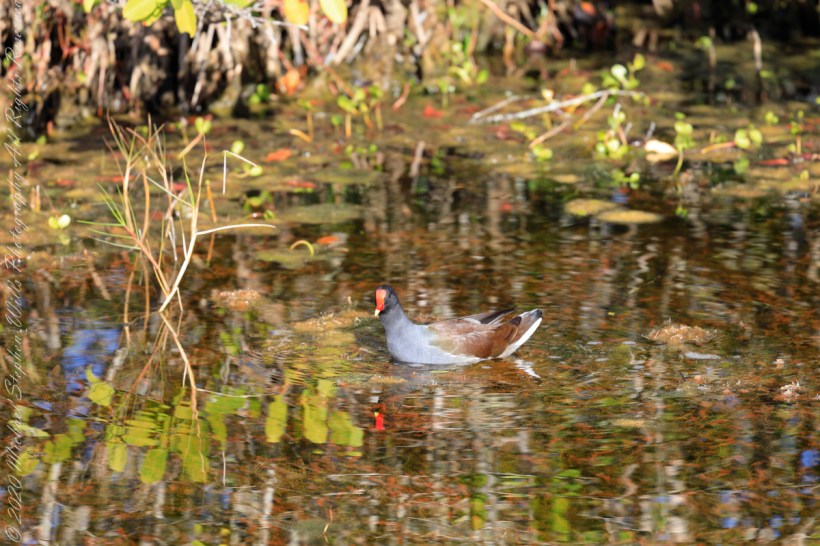
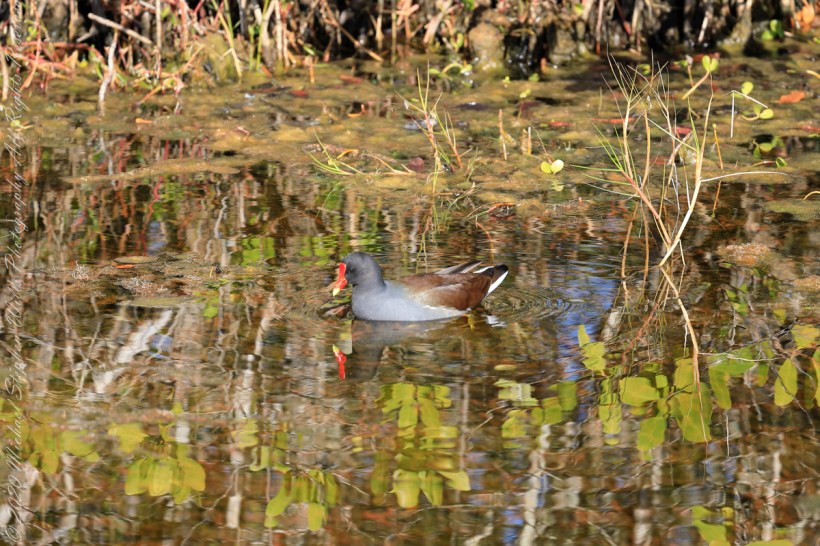
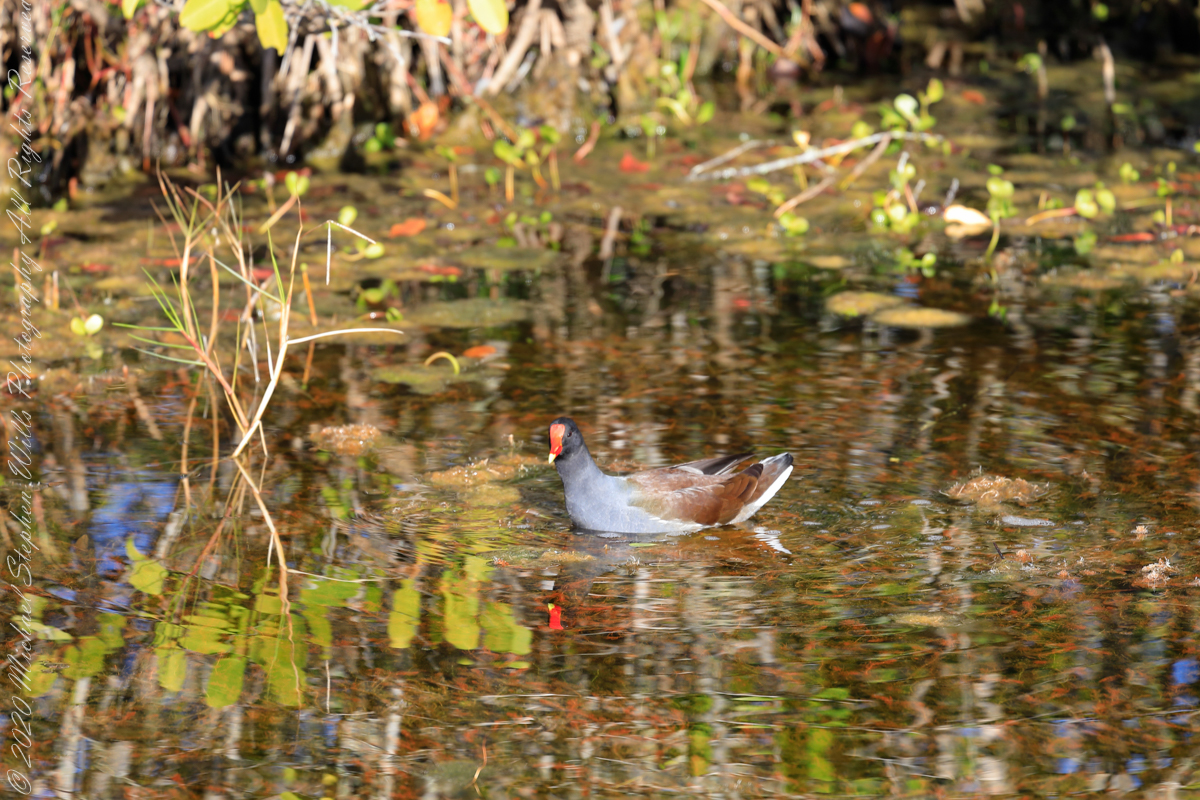
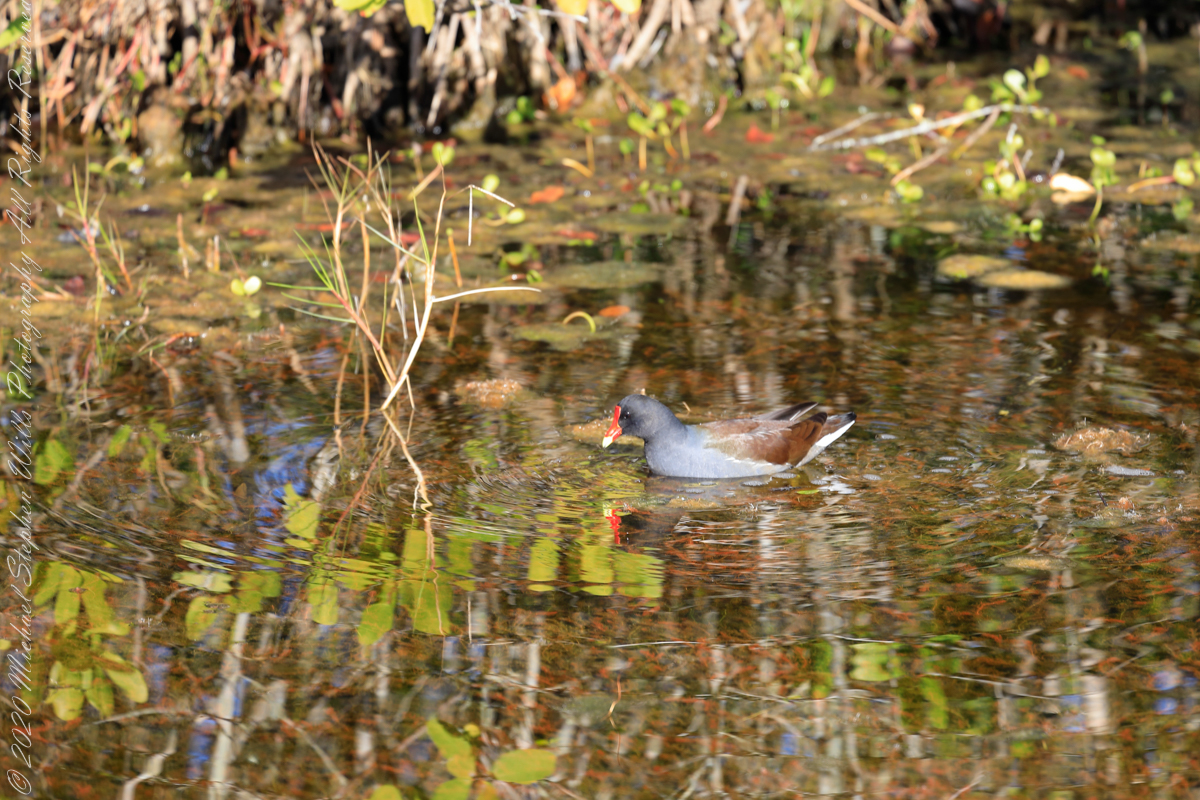
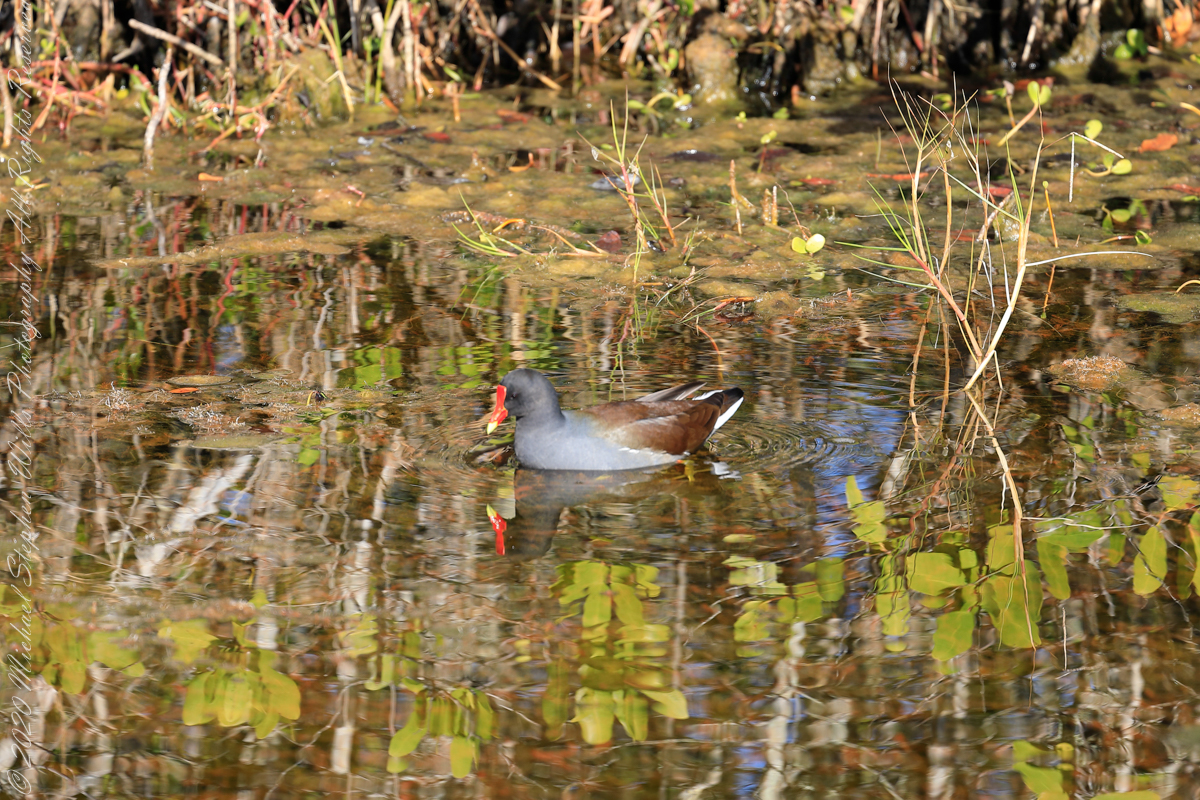
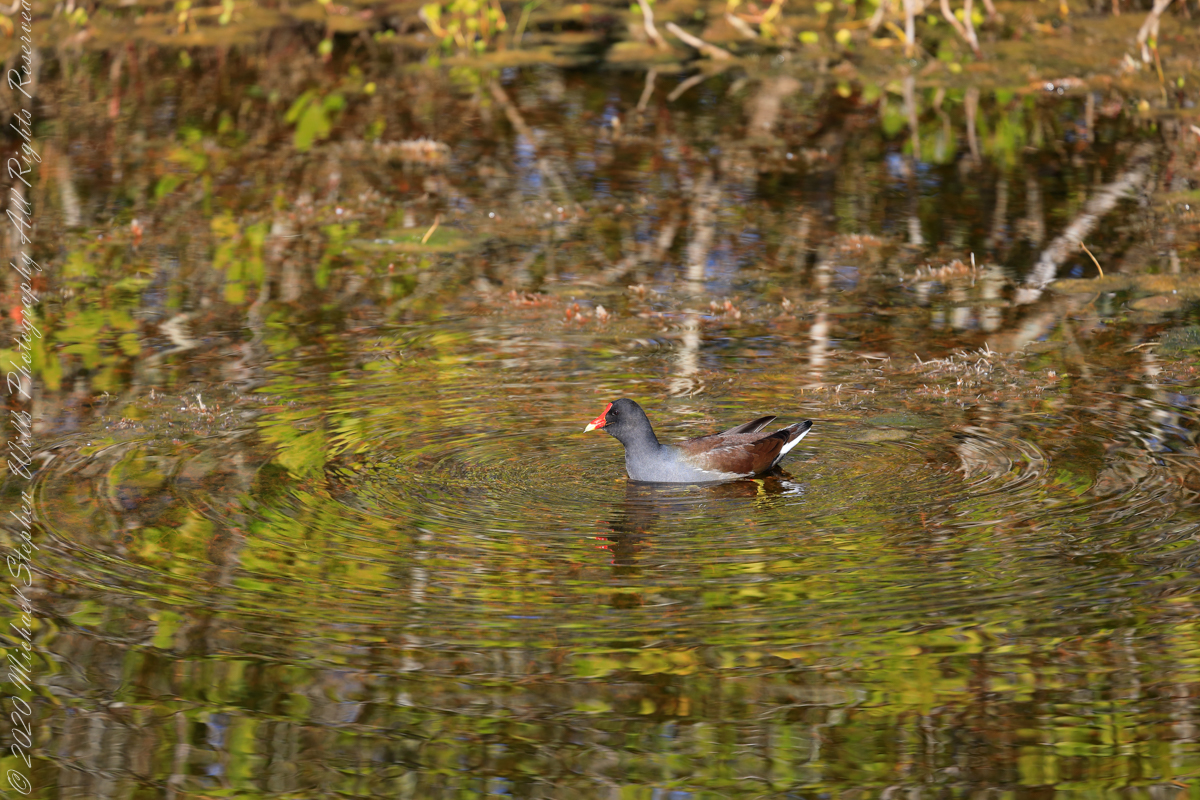
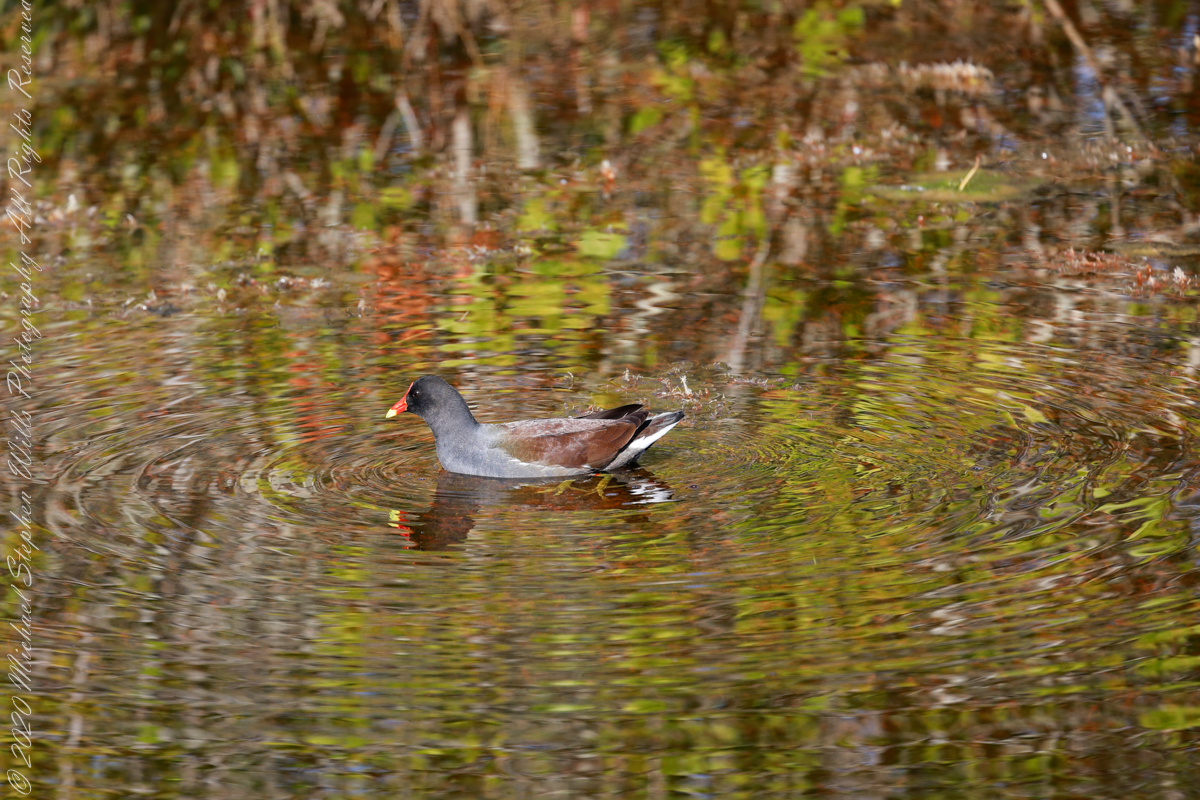
This video of a Common gallinule feeding was taken from Blackpoint Wildlife Drive.

The family Rallidae (aka rails) includes crakes, coots, and this member of the gallinules. Found worldwide, this species, Gallinula galeata, was recognized in 2011 as separate from the closely related “Old World” Moorhens.

Here it is in a favored habitat, feeding on underwater vegetation of the Florida marsh in sight of rockets launching from Kennedy Space Center. The exceptional lighting, bright reflective water, are created by the low winter sun and southern exposure of the location just north of the road.

The taxonomic Order is derived from the Latin word Gallinula meaning a small hen or chicken that, since the 13th century at least, as revealed in the names “Moorhen,” “Waterhen,” and “Swamp Chicken.”

The spread of Gallinula is attributed to breeding habits. “Laying starts in spring, between mid-March and mid-May in Northern hemisphere temperate regions. About 8 eggs are usually laid per female early in the season; a brood later in the year usually has only 5–8 or fewer eggs. Nests may be re-used by different females. Incubation lasts about three weeks. Both parents incubate and feed the young. These fledge after 40–50 days, become independent usually a few weeks thereafter, and may raise their first brood the next spring. When threatened, the young may cling to the parents’ body, after which the adult birds fly away to safety, carrying their offspring with them.”

The text in quotes is from the Wikipedia article for “Common Moorhen.”

Copyright 2022 Michael Stephen Wills All Rights Reserved

Herons Stalking (video)

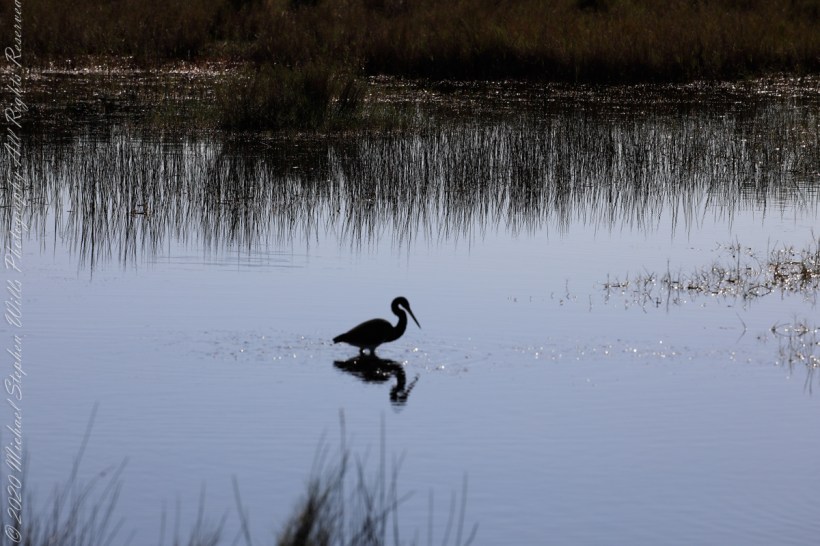
Shorebirds of different species can and do forage together

This series of wading shorebirds are from a mash alongside Blackpoint Wildlife Drive.

“The exposed mudflats on tidal wetlands attract a variety of shorebirds. Shorebirds are seasonal residents that make long migratory journeys between their breeding grounds in the Artic and their wintering area in South America. Merritt Island National Wildlife Refuge provides an important resting and feeding area for this group of birds. Some stay for the winter, others use the refuge as a fuel stop before continuing on their journey.”

“In tidal areas, shorebird feeding schedules are influenced by the cycle of tides. Changes in tidal cycles expose foraging areas in mudflats for a period during the day. At other points during the cycle, the water in these same areas becomes too deep or the ground too dry for shorebirds to feed effectively.”

The text in quotes is from a roadside information placard, Merritt Island National Wildlife Refuge, Titusville, Brevard County, Florida

Copyright 2022 Michael Stephen Wills All Rights Reserved

Swamp Chicken

Worldwide Distribution — now playing at your neighborhood marsh

This Common gallinule was feeding from the mash alongside Blackpoint Wildlife Drive.

The family Rallidae (aka rails) includes crakes, coots, and this member of the gallinules. Found worldwide, this species, Gallinula galeata, was recognized in 2011 as separate from the closely related “Old World” Moorhens.

Here it is in a favored habitat, feeding on underwater vegetation of the Florida marsh in sight of rockets launching from Kennedy Space Center. The exceptional lighting, bright reflective water, are created by the low winter sun and southern exposure of the location just north of the road.

The taxonomic Order is derived from the Latin word Gallinula meaning a small hen or chicken that, since the 13th century at least, as revealed in the names “Moorhen,” “Waterhen,” and “Swamp Chicken.”

The spread of Gallinula is attributed to breeding habits. “Laying starts in spring, between mid-March and mid-May in Northern hemisphere temperate regions. About 8 eggs are usually laid per female early in the season; a brood later in the year usually has only 5–8 or fewer eggs. Nests may be re-used by different females. Incubation lasts about three weeks. Both parents incubate and feed the young. These fledge after 40–50 days, become independent usually a few weeks thereafter, and may raise their first brood the next spring. When threatened, the young may cling to the parents’ body, after which the adult birds fly away to safety, carrying their offspring with them.”

The text in quotes is from the Wikipedia article for “Common Moorhen.”

Copyright 2022 Michael Stephen Wills All Rights Reserved

Wading

Shorebirds of different species can and do forage together

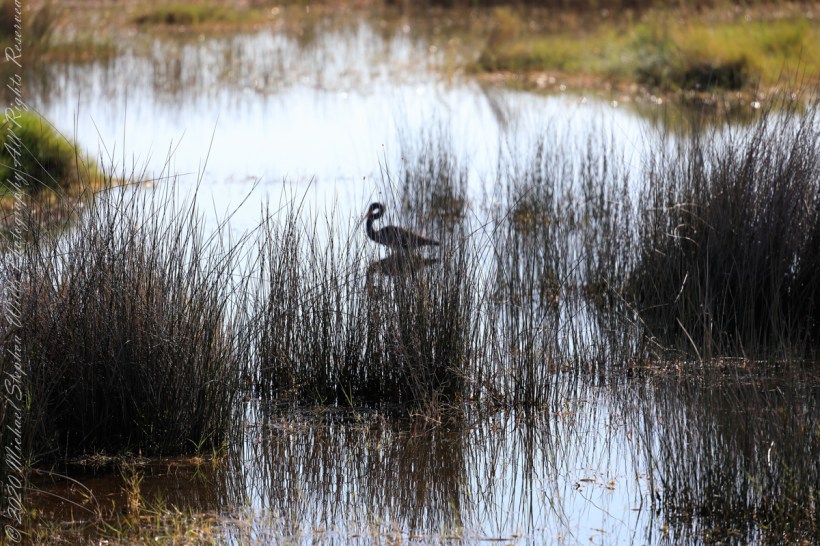
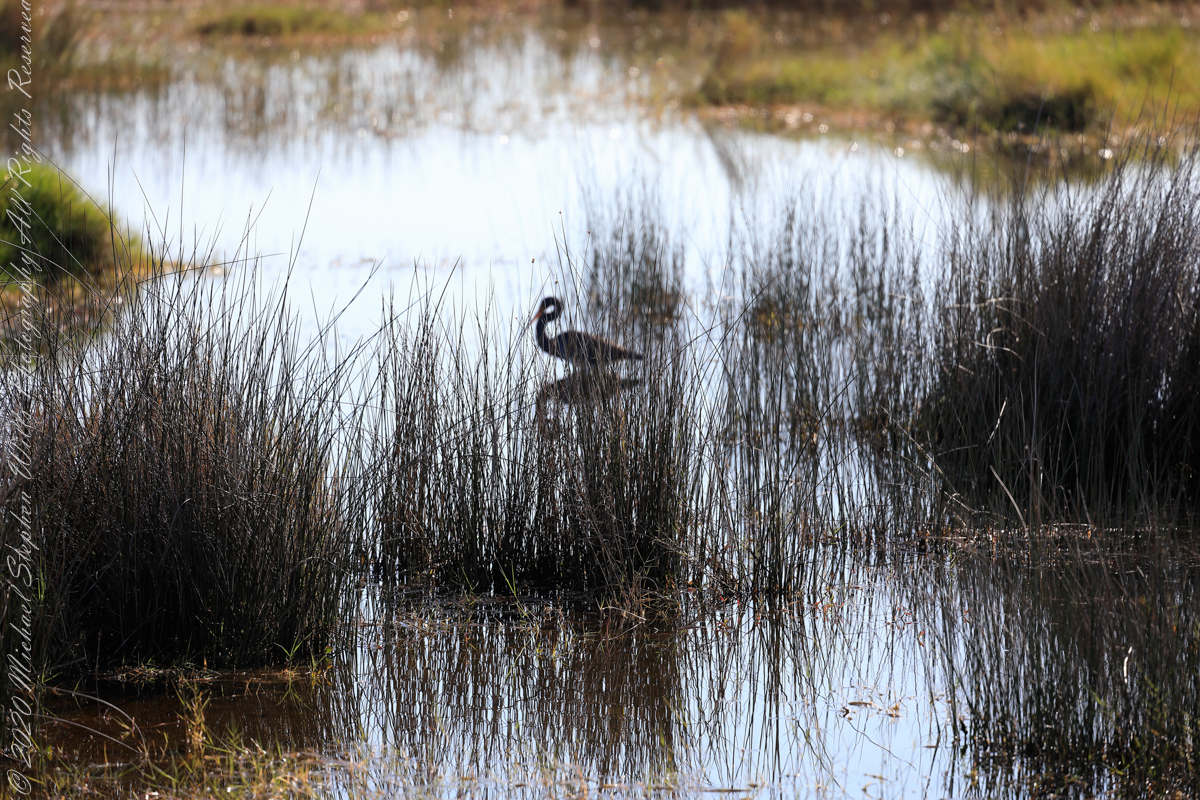
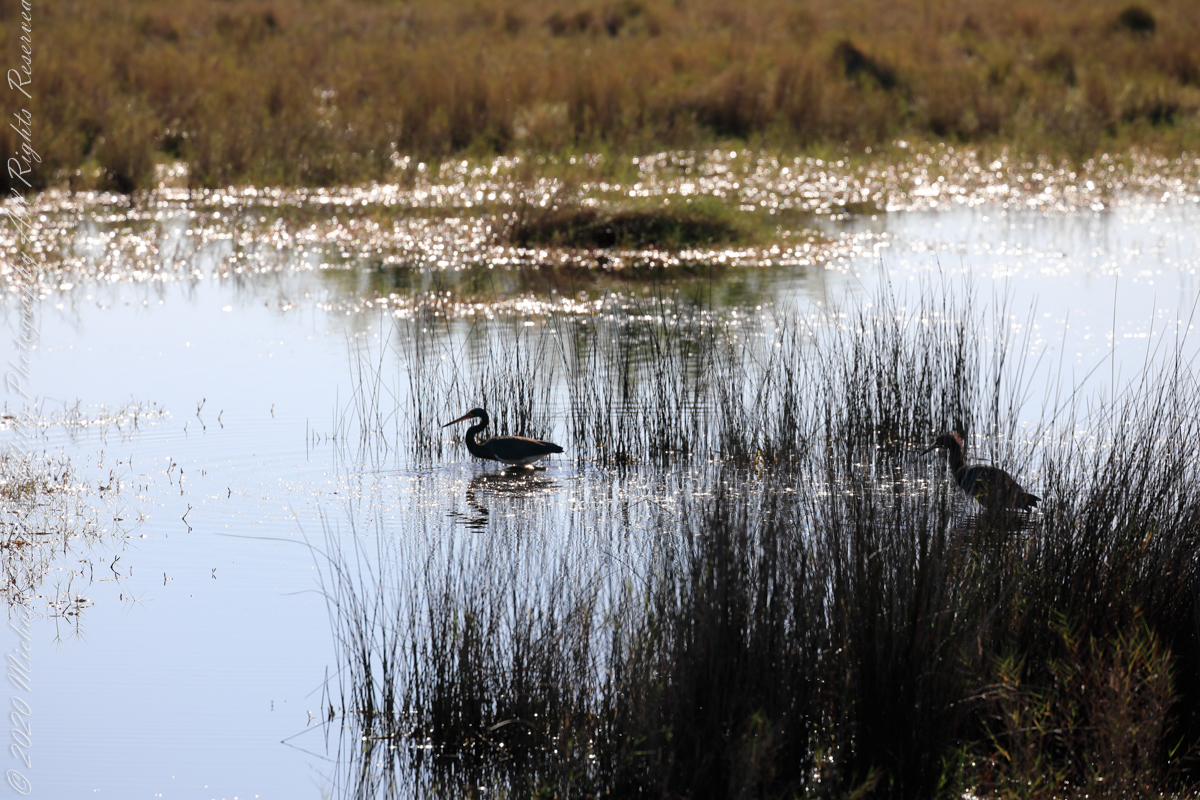
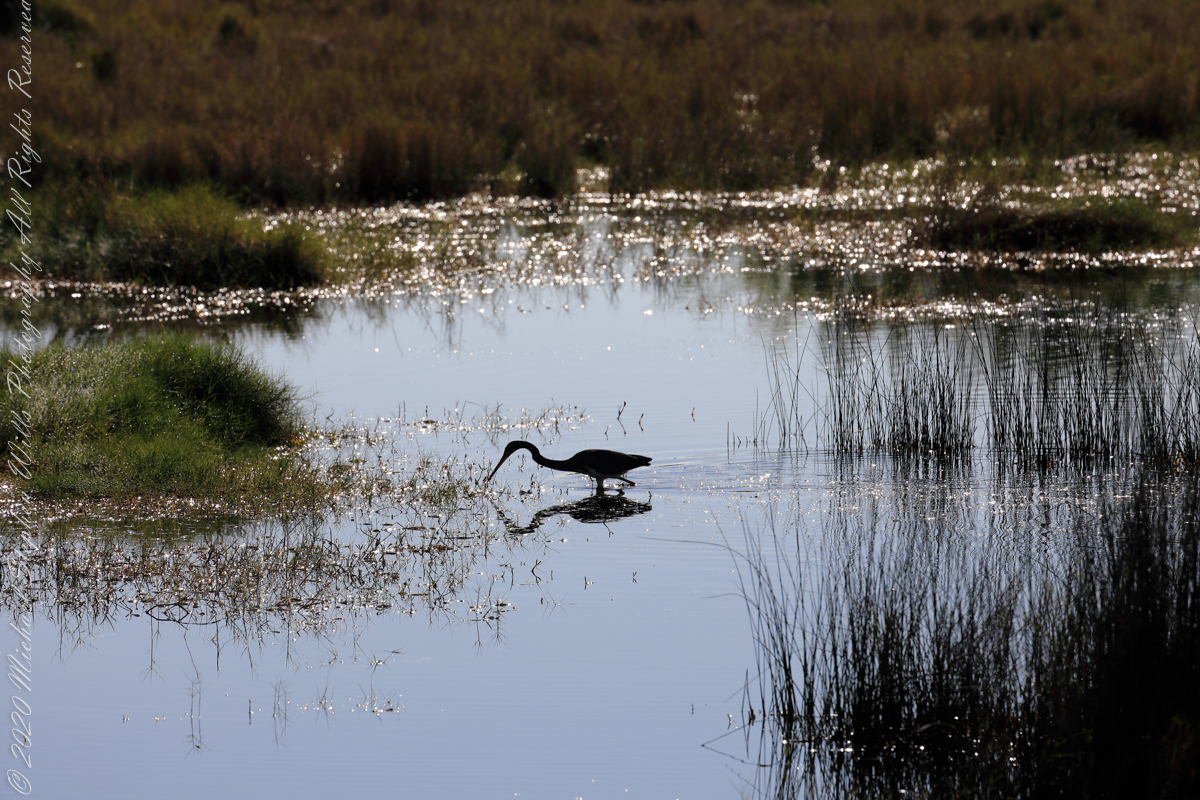
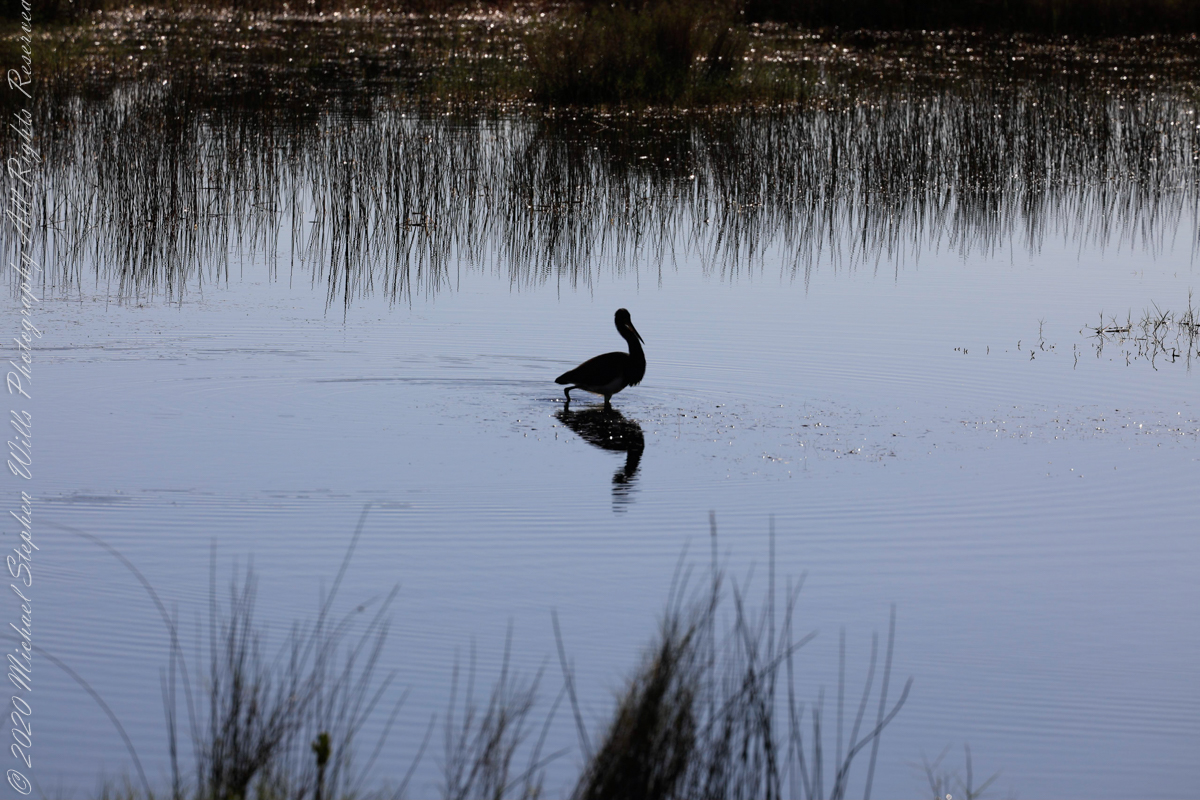
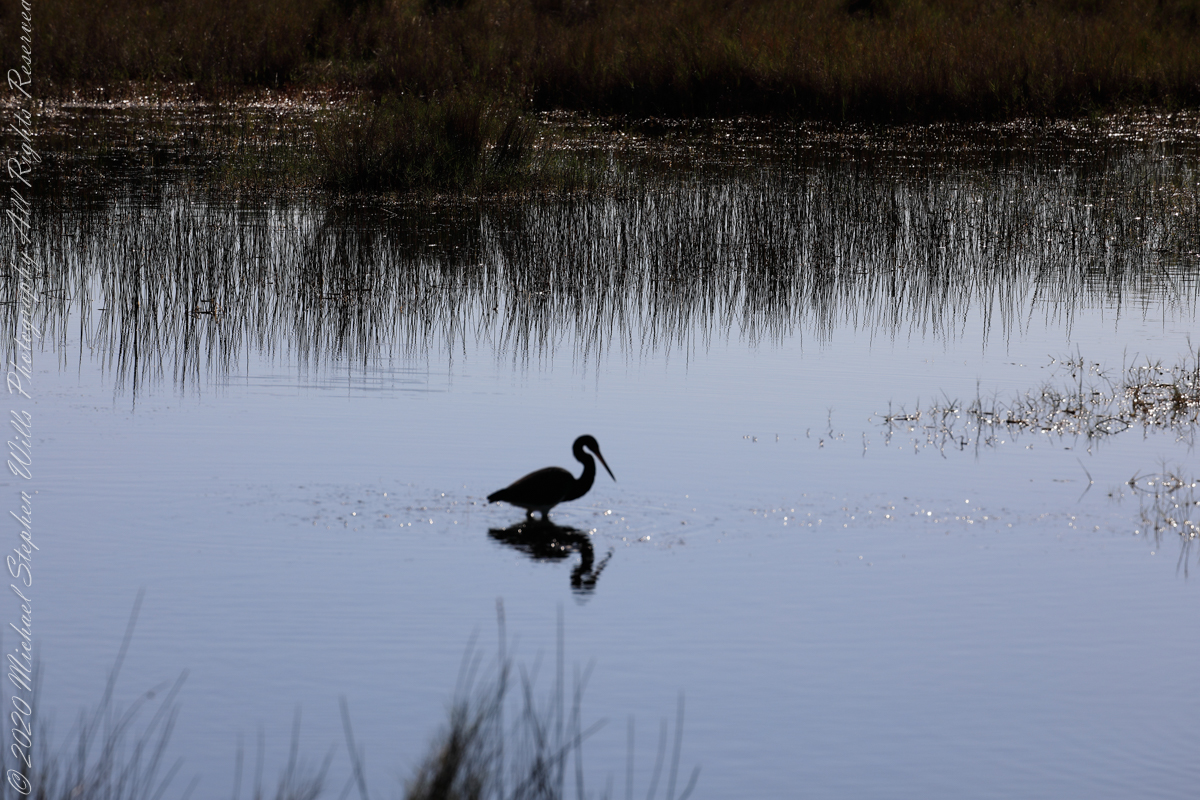
This series of wading shorebirds are from a mash alongside Blackpoint Wildlife Drive.

“The exposed mudflats on tidal wetlands attract a variety of shorebirds. Shorebirds are seasonal residents that make long migratory journeys between their breeding grounds in the Artic and their wintering area in South America. Merritt Island National Wildlife Refuge provides an important resting and feeding area for this group of birds. Some stay for the winter, others use the refuge as a fuel stop before continuing on their journey.”

“In tidal areas, shorebird feeding schedules are influenced by the cycle of tides. Changes in tidal cycles expose foraging areas in mudflats for a period during the day. At other points during the cycle, the water in these same areas becomes too deep or the ground too dry for shorebirds to feed effectively.”

Though only one bird appears in each photo, “shorebirds of different species can and do forage together. Because bill length and shape vary from species to species, birds can pursue different prey in the same area at the same time without completing with each other. Because of varying bill lengths, different birds species find their food at different depths in the substrate. Mixed species of shorebirds are a common sight.”

The text in quotes is from a roadside information placard, Merritt Island National Wildlife Refuge, Titusville, Brevard County, Florida

Copyright 2022 Michael Stephen Wills All Rights Reserved

Star

Careful Cropping

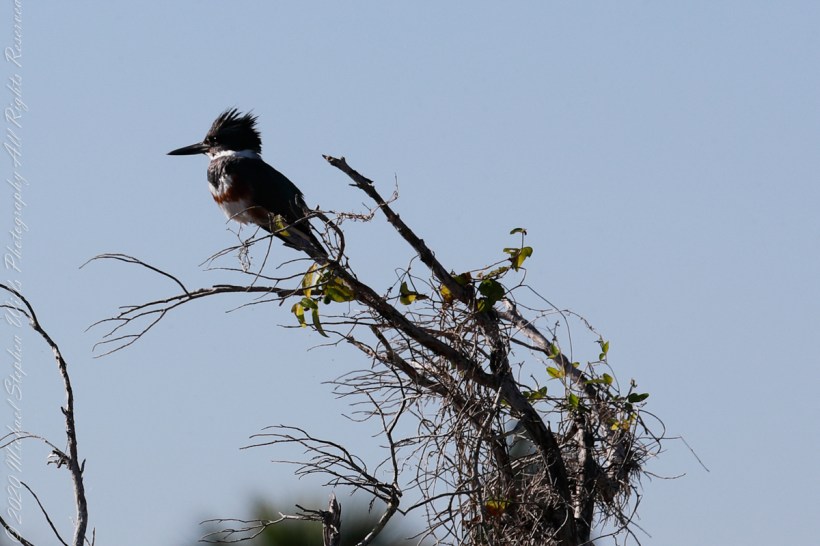
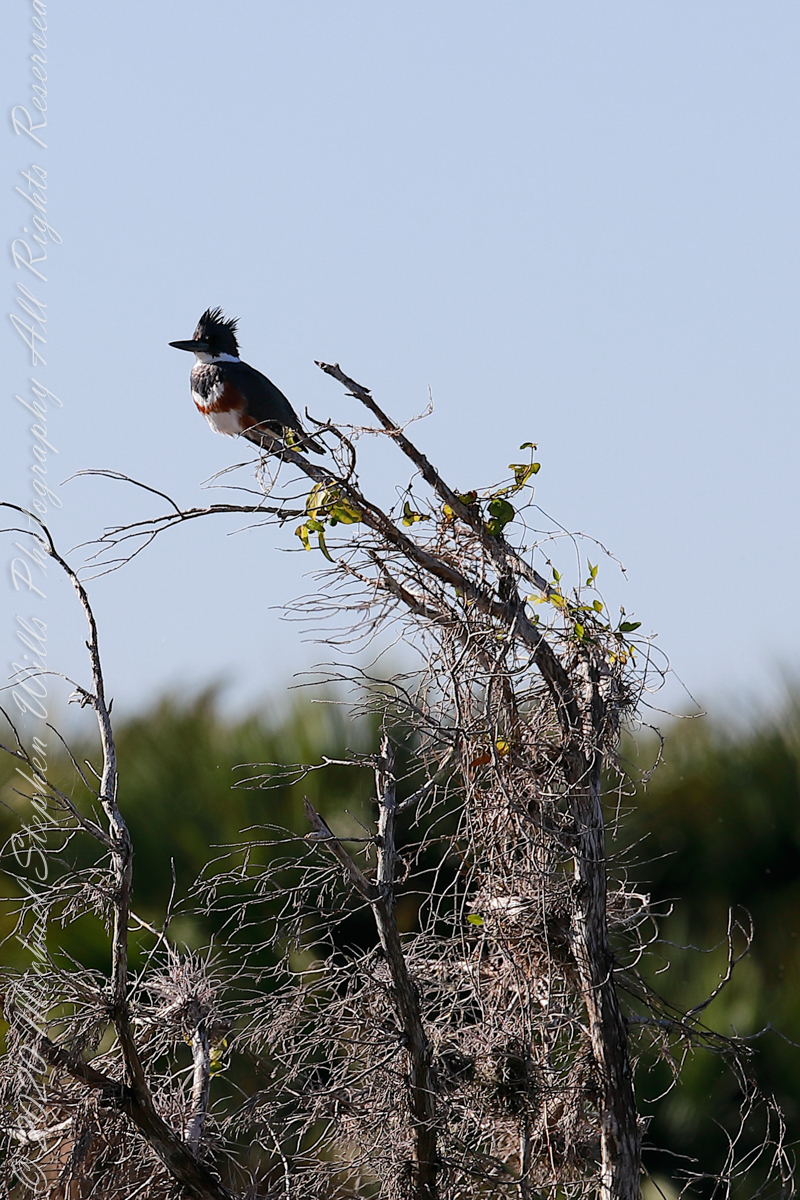
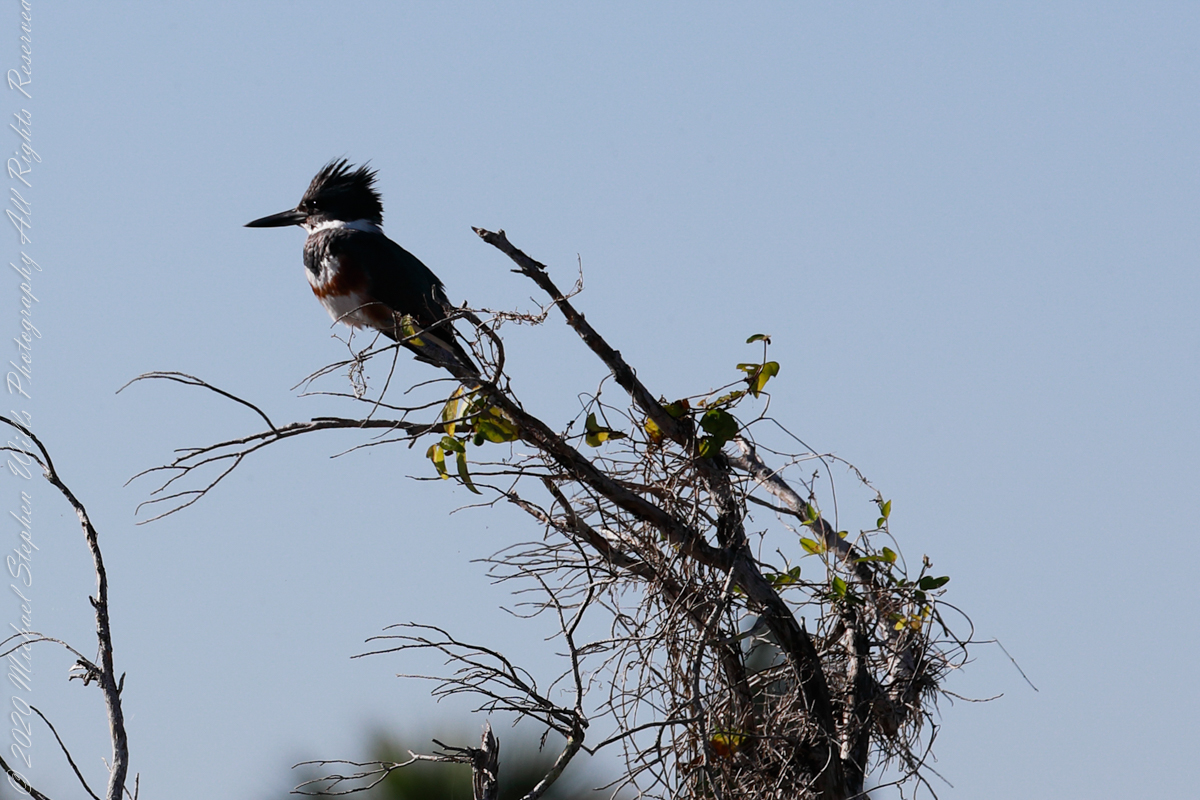
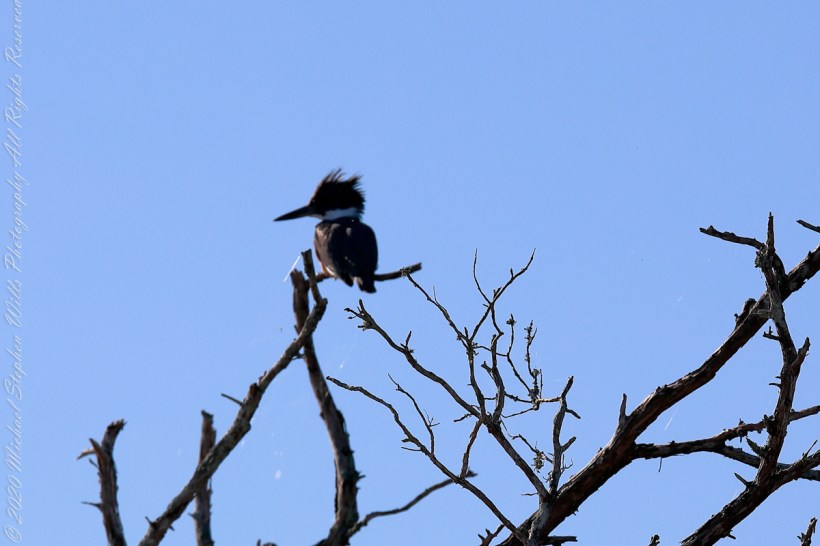
She was the star of the show with a contingent of chattering humans scattered below her high perch.

The wide band across her chest, the “belt”, identifies this as an adult female.

I found her beside Blackpoint Wildlife Drive overlooking wide open water marsh.

The limitations of my excellent equipment is frustrating in these situations. I made up for the lack of focal length by careful cropping.

Merritt Island National Wildlife Refuge, Titusville, Brevard County, Florida

Copyright 2022 Michael Stephen Wills All Rights Reserved