A Serendipitous Meeting: The Hermit Crab and the Moon Snail

Washed up together on a sunlit shore, a hermit crab and a Moon Snail tell an extraordinary tale of survival and resilience in the vast ocean. Discover how these unlikely companions reveal the intricate dance of life beneath the waves and the profound connections that bind marine ecosystems. Dive into their captivating story and uncover the secrets of their intertwined destinies.

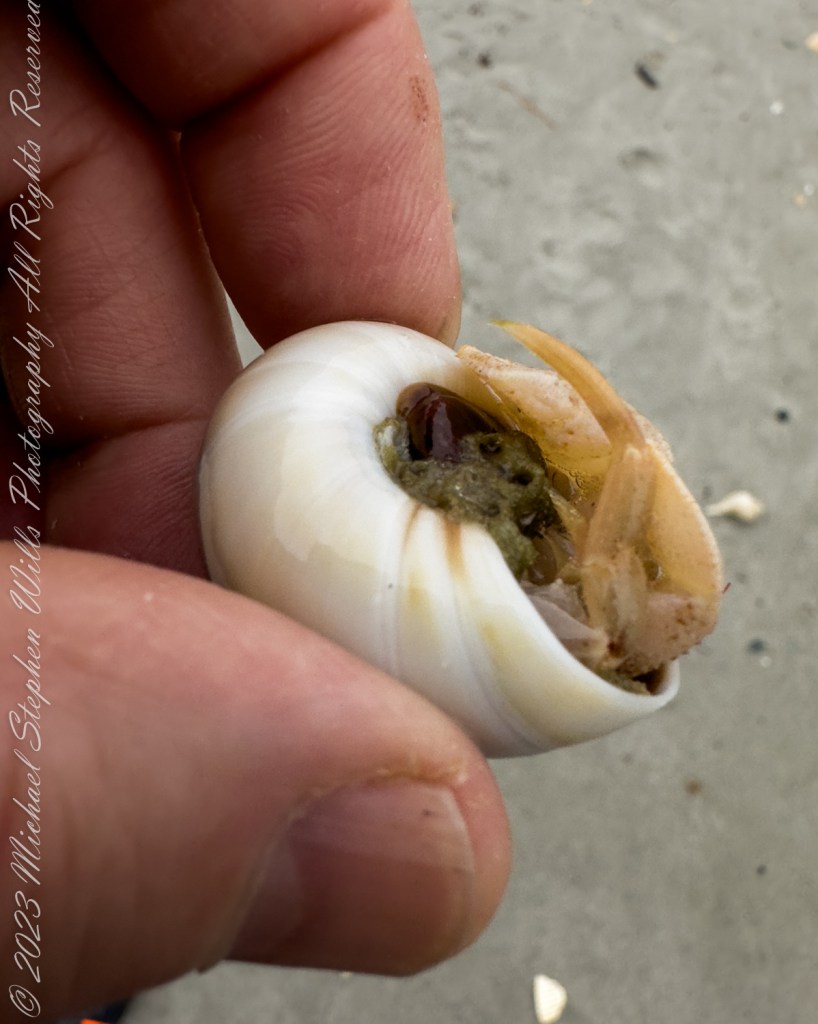
The high tide left behind a myriad of treasures scattered along the shore. Among the shells and seaweed, two unlikely companions lay side by side—a Moon Snail and a hermit crab. This serendipitous meeting speaks volumes about the intricate dance of life in the ocean’s depths.

Life Beneath the Waves

Hermit crabs are fascinating creatures, exhibiting behaviors and adaptations that ensure their survival in the ever-changing marine environment. These crabs are not born with shells. Instead, they scavenge for empty shells discarded by snails, meticulously choosing the perfect fit. The shells provide essential protection against predators and environmental hazards.
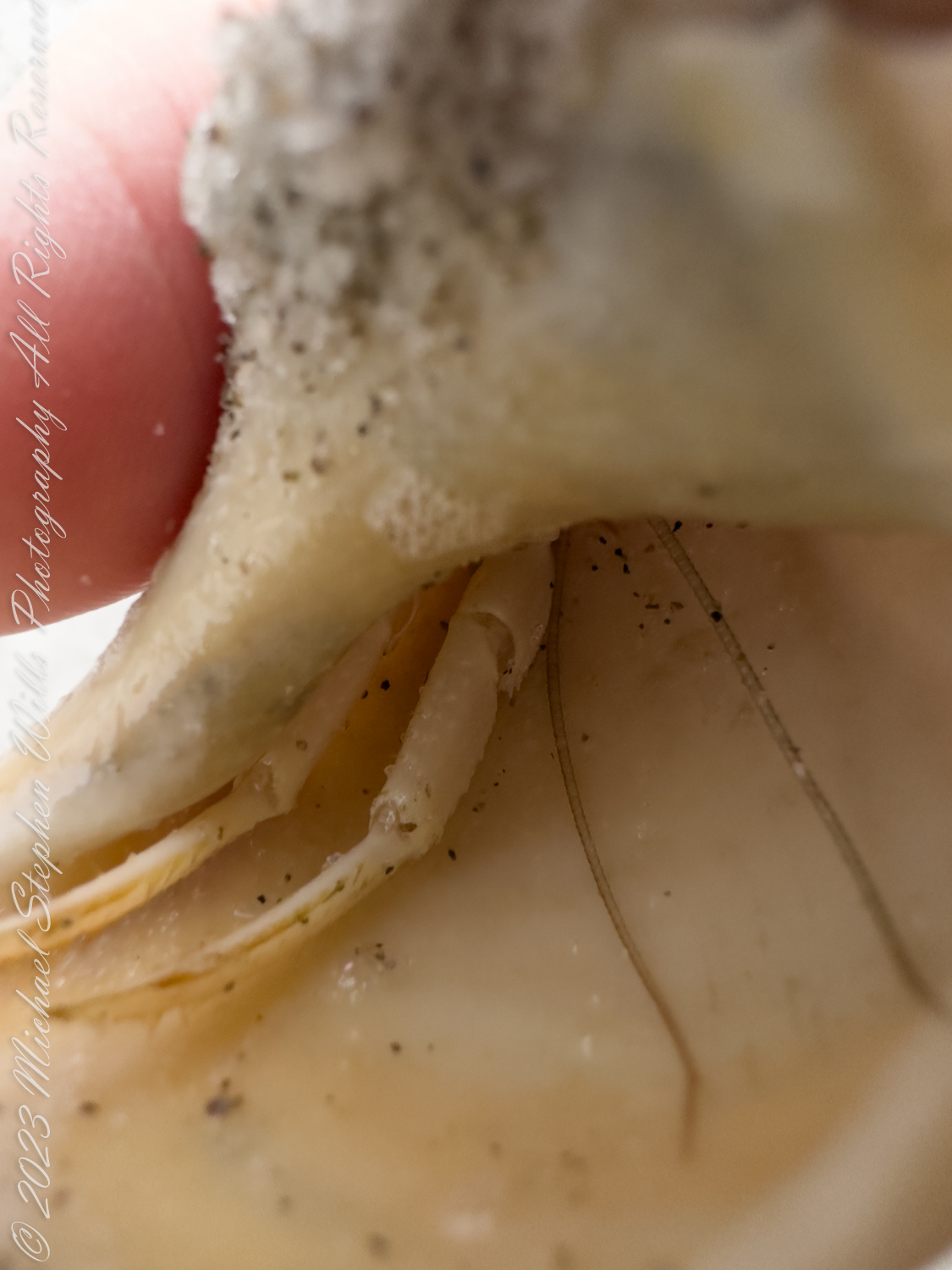
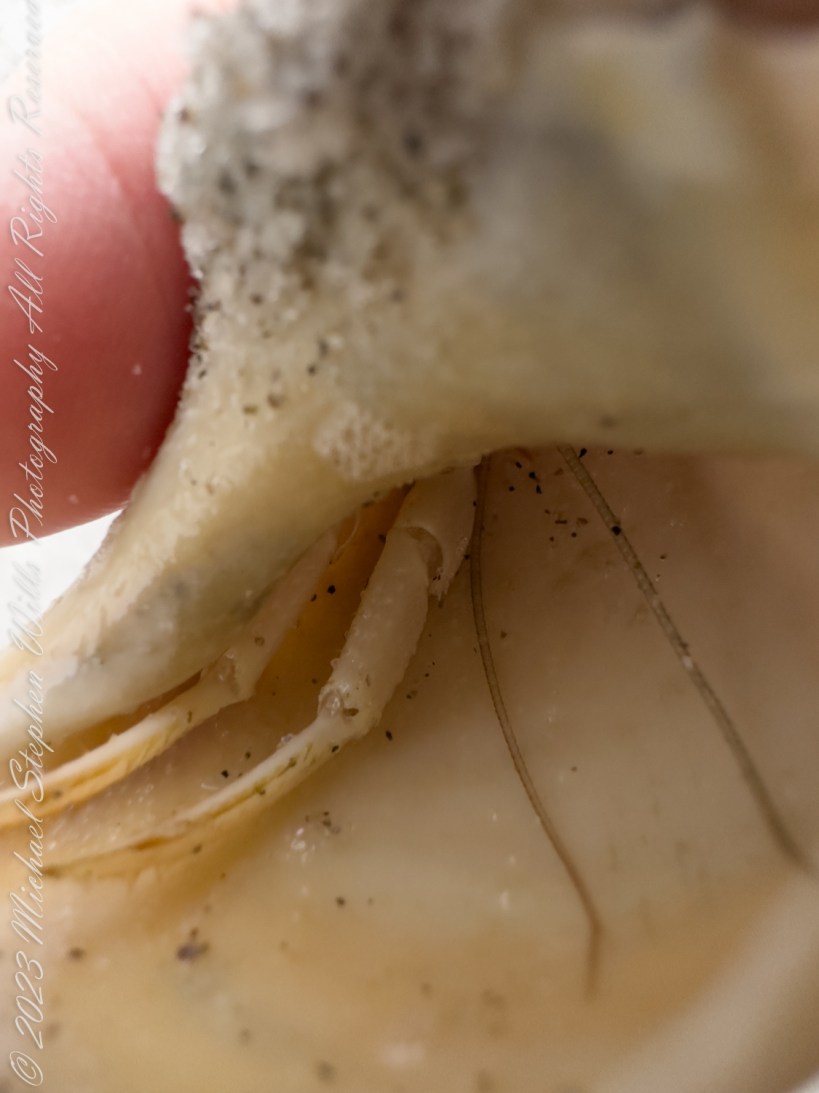
In their early life stages, hermit crabs undergo a series of molts, shedding their exoskeletons to grow. Each molt presents a critical opportunity to upgrade their shell, moving to a larger one as they increase in size. This constant need for new housing drives a competitive dynamic among hermit crabs, with individuals often engaging in “shell exchanges” where one crab may forcibly evict another from its shell.

The Hermit and the Moon Snail

The Moon Snail, known scientifically as Neverita duplicata, is a predatory mollusk famous for its distinctive, moon-shaped shell. These snails are both feared and admired in the marine community for their voracious appetite and remarkable hunting tactics. They drill into the shells of their prey, typically other mollusks, using a specialized appendage called a radula, combined with acidic secretions to bore through the hard exterior. Click me for another post with more information about the Moon Snail.
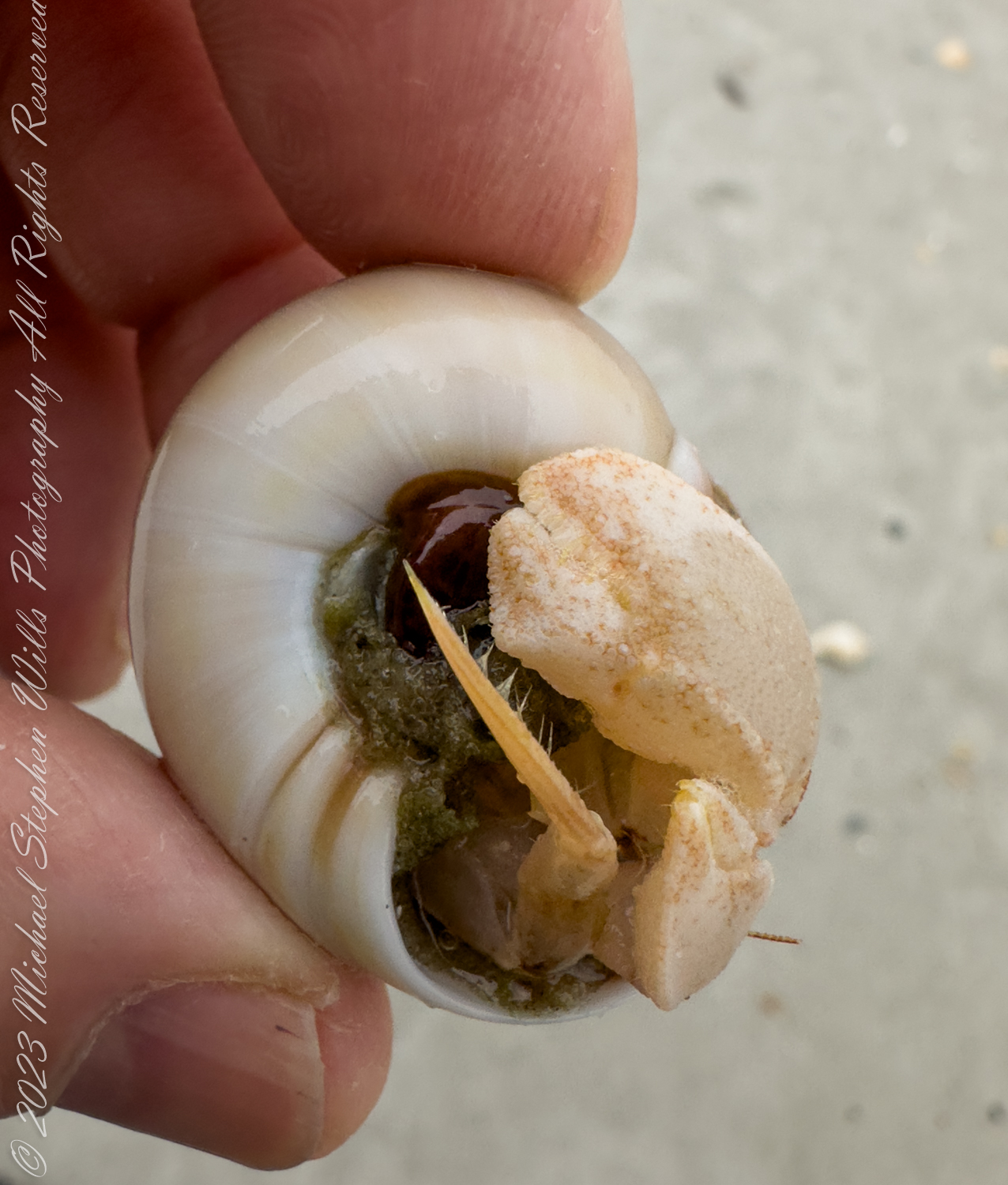
The juxtaposition of the Moon Snail and the hermit crab washed up together is a tableau that invites deeper contemplation. How did these two distinct beings come to share the same stretch of sand?

A Dance of Survival

It’s likely that the hermit crab, in its search for a suitable home, found itself in the proximity of the Moon Snail. The Moon Snail, a relentless hunter, could have been following its own trail of prey when the tide caught them both off guard. The ocean’s currents, indifferent to their individual struggles, deposited them together on the beach, a fleeting moment of stillness in their otherwise tumultuous lives.

This meeting is a stark reminder of the interconnectedness of marine life. The hermit crab relies on the discarded shells of snails for survival, while the Moon Snail’s role as a predator keeps the balance in check, ensuring that no single species dominates the ecosystem.

Reflections on Resilience

The image of the hermit crab within its borrowed shell speaks to the resilience and adaptability inherent in nature. These crabs are perpetual nomads, continually seeking, adapting, and thriving in environments that can be both generous and harsh. Their survival hinges on their ability to repurpose and reuse, a lesson in resourcefulness that resonates beyond the tidepools.

The Moon Snail, with its powerful drilling capabilities, exemplifies the raw force of nature. Its presence is a reminder of the predatory relationships that underpin marine ecosystems, driving evolution and diversity through a relentless cycle of life and death.

The Final Tide

As we ponder the scene before us, it’s worth considering the broader implications of these two creatures’ lives. The ocean, vast and unfathomable, is a realm where survival is an art form, honed by millennia of adaptation. The hermit crab and the Moon Snail, though vastly different in form and function, share a common thread—their existence is a testament to the delicate balance of nature.

The hermit crab’s journey, from shell to shell, mirrors our own quests for security and stability. The Moon Snail’s predatory prowess underscores the inevitable challenges we face. Together, they remind us that life, in all its forms, is a continuous interplay of seeking and surviving, of finding and losing, of moments of stillness and sudden change.

In the end, the hermit crab and the Moon Snail, brought together by the whims of the tide, offer a glimpse into the profound and often unseen connections that weave the tapestry of life beneath the waves. Their story is a poignant reflection on resilience, adaptability, and the ever-present dance of survival that defines the natural world.
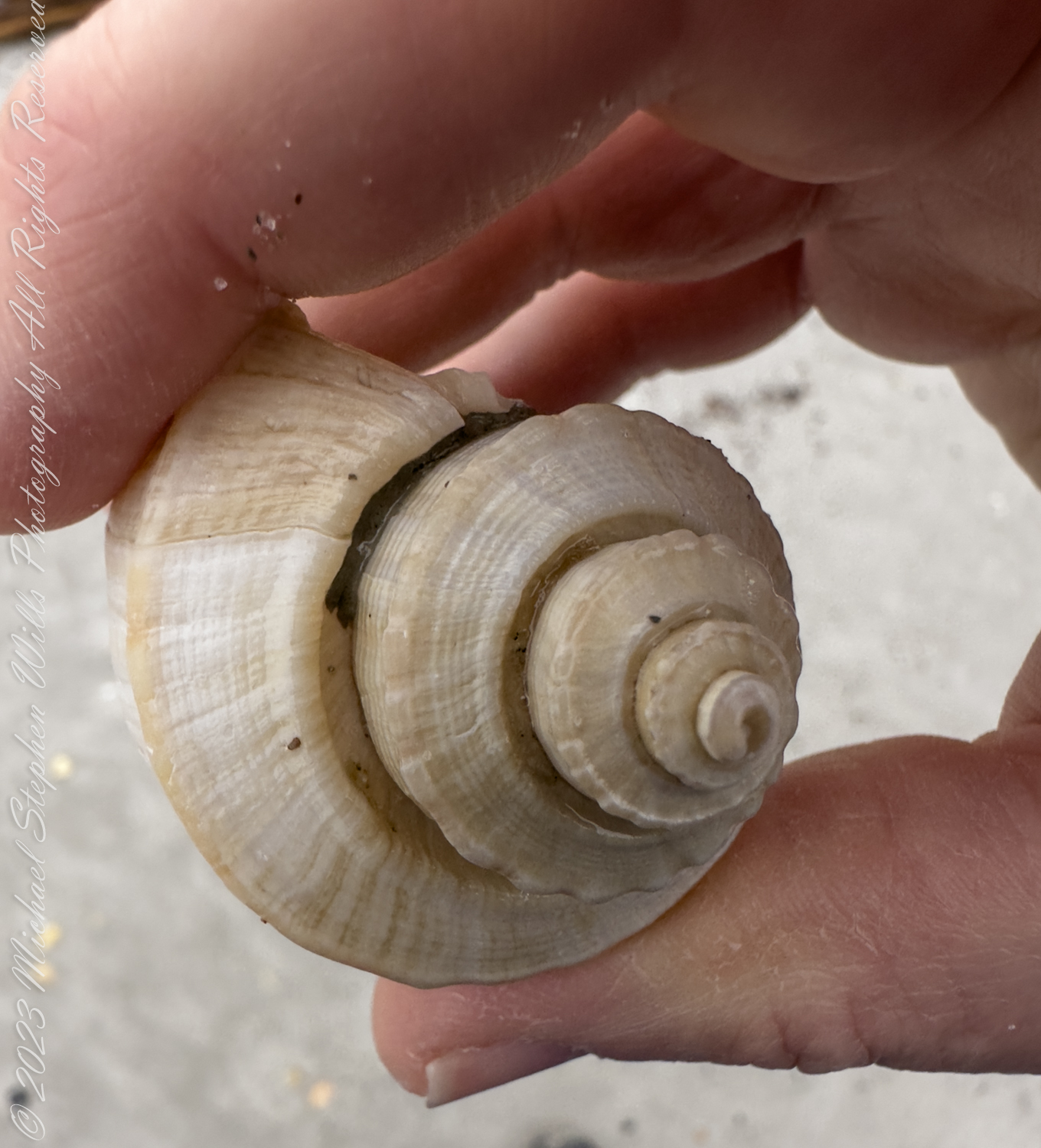
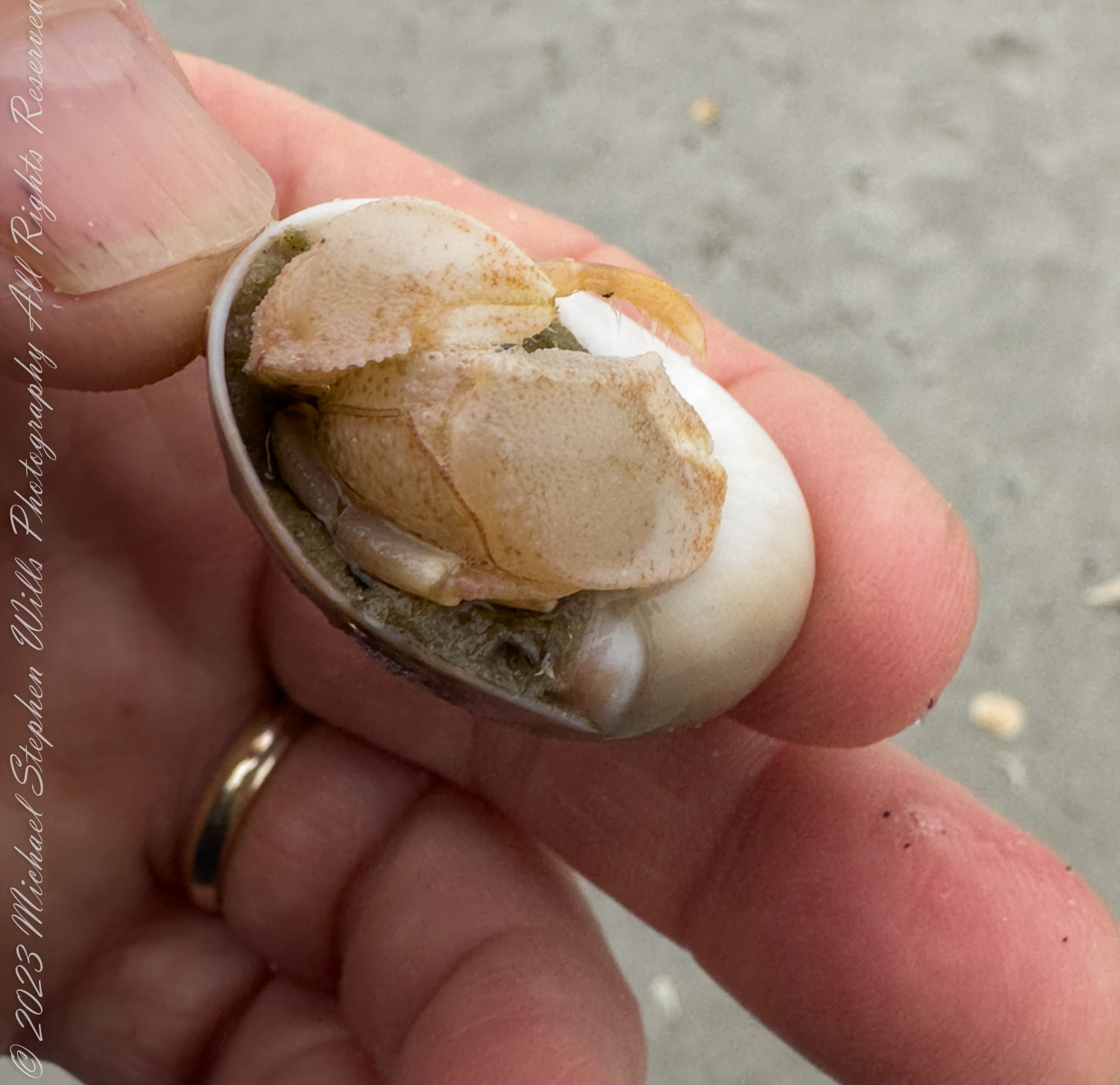
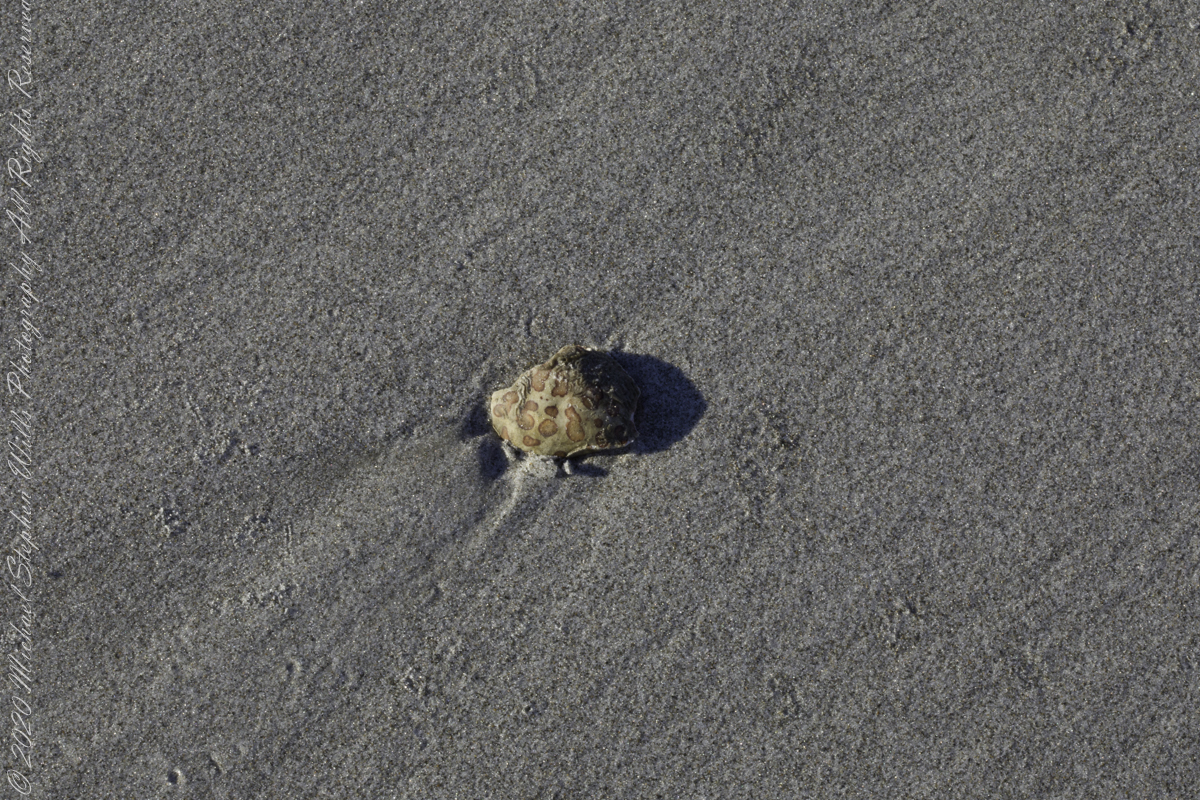
A top view of the shell occupied by a Hermit Crab found on Cocoa Beach, Brevard County, Florida. The Space Coast.

An Uncertain Identification

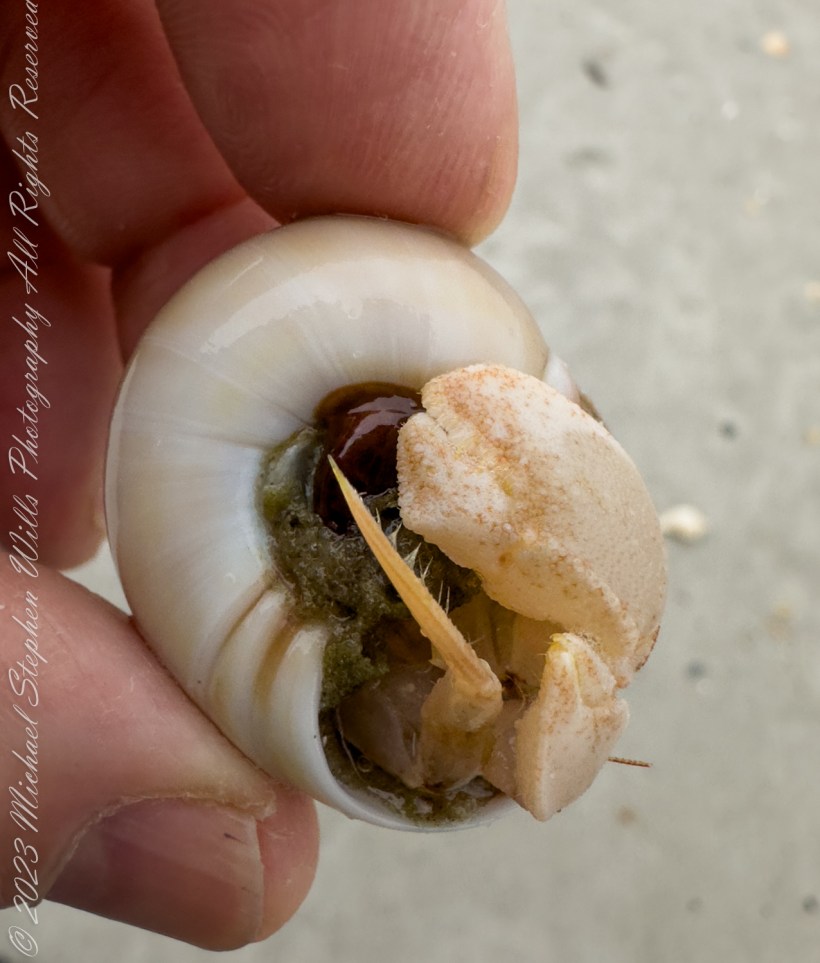
The identification of our hermit crab companion is made challenging by the absence of one of its claws, a vital characteristic for precise classification. This missing claw hints at the hardships faced by hermit crabs in their dynamic and sometimes perilous environments. Whether lost in a struggle with a predator or another hermit crab, this detail serves as a reminder of the tenacity and resilience required for survival in the marine world. While the exact species remains a mystery, the broader story of the hermit crab’s life and survival remains clear and compelling.
Copyright 2024 Michael Stephen Wills All Rights Reserved

Beachcombing on Cocoa Beach: A Moon Snail Encounter

Join me in reliving the enchanting evening on Cocoa Beach where my wife and I discovered a rare, intact Atrina rigida shell. Dive into the world of this fascinating bivalve through our story of ecological wonder and natural beauty.

The first light of dawn painted the horizon in soft hues of pink and orange as I strolled along Cocoa Beach, Brevard County, Florida, the heart of the Space Coast. It was winter 2017, and the cool breeze carried the salty scent of the ocean. My eyes scanned the sand for treasures, remnants of the ocean’s bounty washed ashore by the relentless rhythm of the tides.

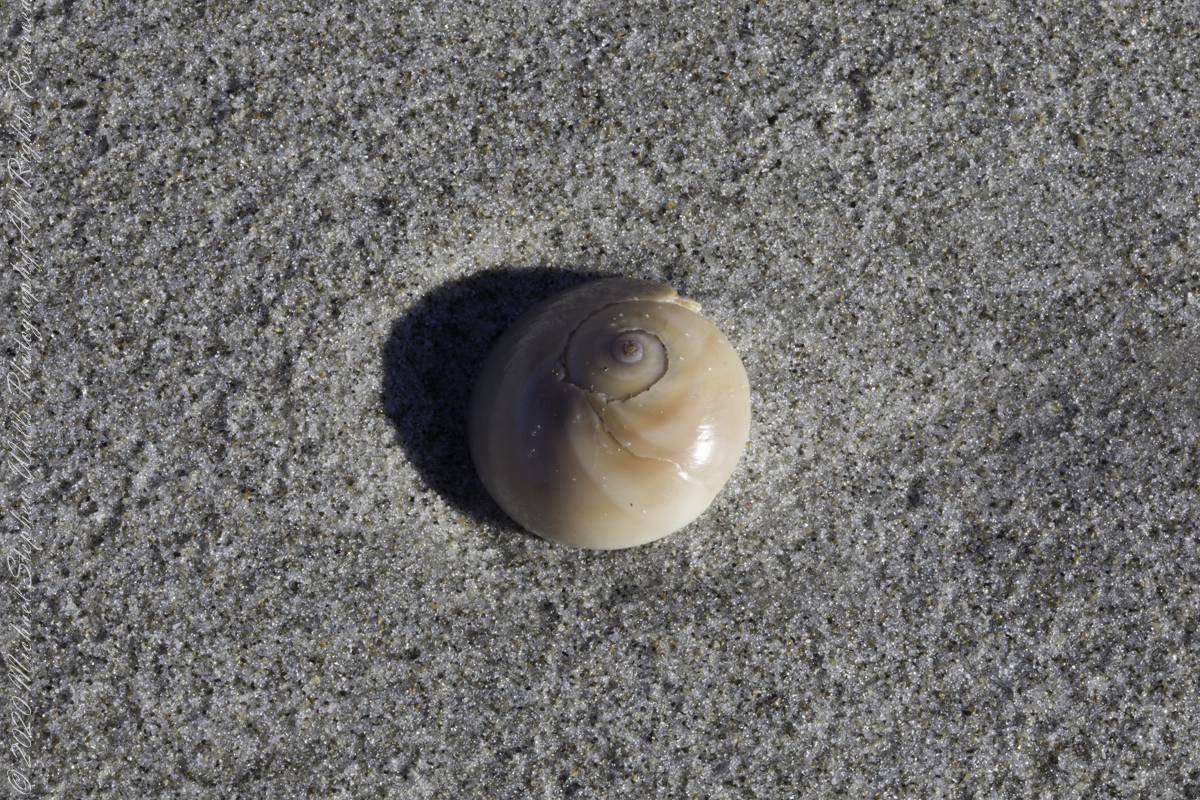
The beach was a mosaic of shells, fragments of marine life that had completed their journey. Among them, a particular shell caught my eye – the Moon Snail or Necklace Shell, scientific name Naticidae, known for its smooth, spiraled form and glossy finish. The shell I found that morning was bathed in the early light, its curves reflecting the phases of the moon, hinting at the mysteries of the ocean from which it came.

The scientific name of the Moon Snail, belonging to the family Naticidae, finds its roots in the rich tapestry of classical languages, reflecting the distinct characteristics and historical context of these marine gastropods. The family name, Naticidae, is derived from the genus Natica, which in turn originates from the Latin word “naticula,” meaning “a little buttock.” This whimsical etymology is thought to describe the round, smooth, and somewhat globular shape of the Moon Snail’s shell, which can resemble a small, rounded form akin to a buttock.

The genus Natica was first described by the French naturalist Jean-Baptiste Lamarck in the early 19th century. The suffix “-idae” is a common ending used in zoological nomenclature to indicate a family level in taxonomy. Moon Snails are known for their distinctive appearance, with large, rounded shells that often have a glossy surface and intricate patterns. The family’s name not only captures the physical traits of these snails but also highlights the historical practice of using descriptive and sometimes playful terms in the classification of organisms.

As I admired the shell, memories of previous beachcombing adventures flooded back. The Moon Snail’s elegant design has always fascinated me, symbolizing both beauty and predation. The shell’s form, with its deep umbilicus and polished surface, is a testament to the life it once harbored.

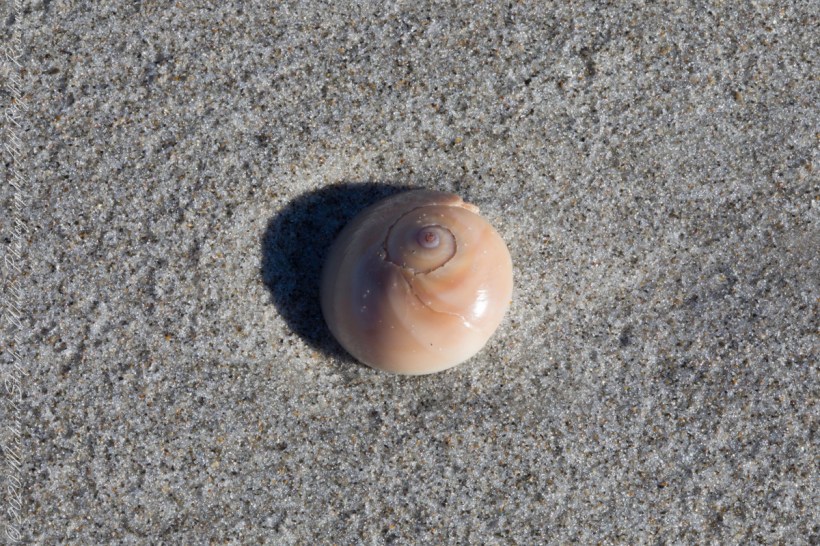
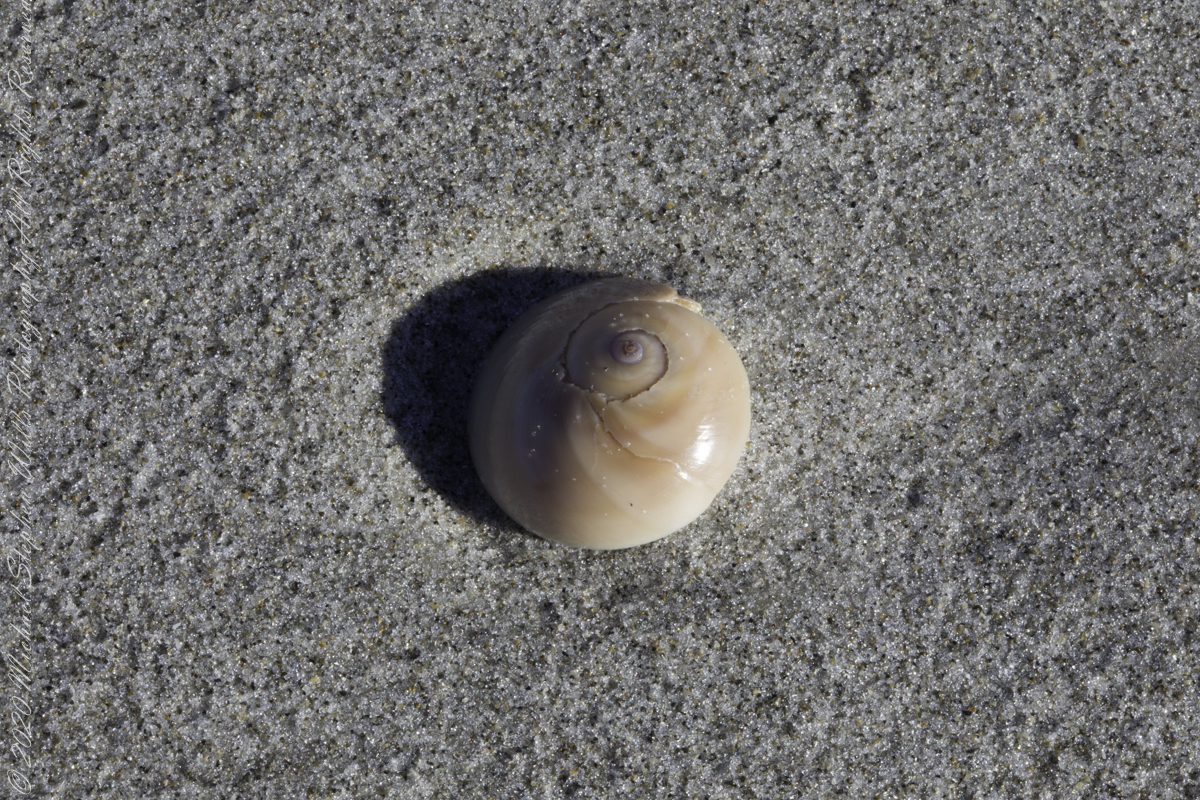
Shell of the Moon Snail (Naticidae) found in the surf wash. Cocoa Beach, Brevard County, Florida

This winter past, January 2024, I enjoyed a rare sight – a live Moon Snail washed up on the shore. The small, compact form was nestled in the sand, its body partially retracted into its shell. I carefully picked it up gently. The snail’s soft, pale brown body contrasted with the hard, glossy shell, a perfect example of nature’s duality.

Observing the snail closely, I could see its large foot, a muscular organ that it uses for locomotion and burrowing into the sand. The foot’s underside, called the sole, was slightly sticky, aiding in its movement. The snail’s head, with its small, retractable tentacles, peeked out cautiously. These tentacles are equipped with sensory organs, allowing the snail to explore its surroundings and detect prey.

Moon Snails are predatory creatures, and their diet consists mainly of other mollusks. The snail’s mantle, a fleshy part of its body, secretes the shell and also houses the snail’s siphon. The siphon is used for breathing and detecting chemical signals in the water, crucial for hunting. The snail’s radula, a toothed, tongue-like organ, is a formidable tool for drilling into the shells of its prey. The Moon Snail wraps its large foot around its victim, creating an acidic environment that helps it bore a hole into the shell. This process can take several hours, after which the snail consumes the soft tissue inside.

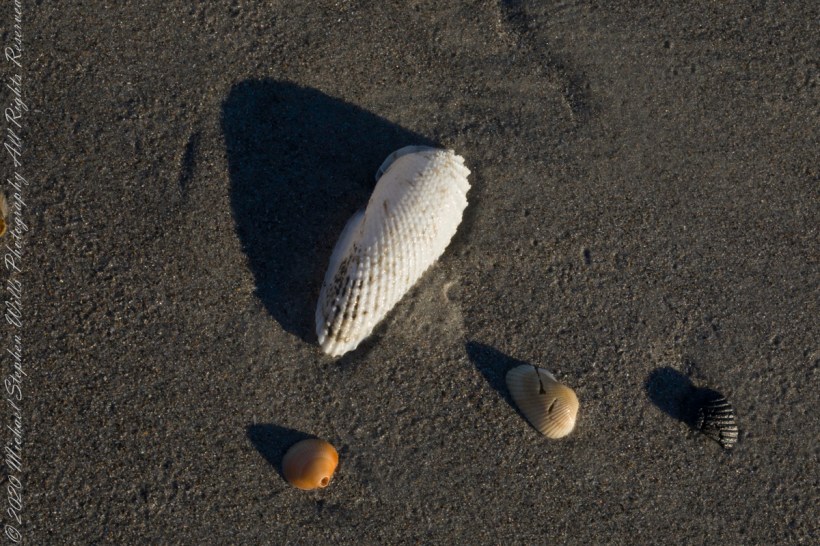
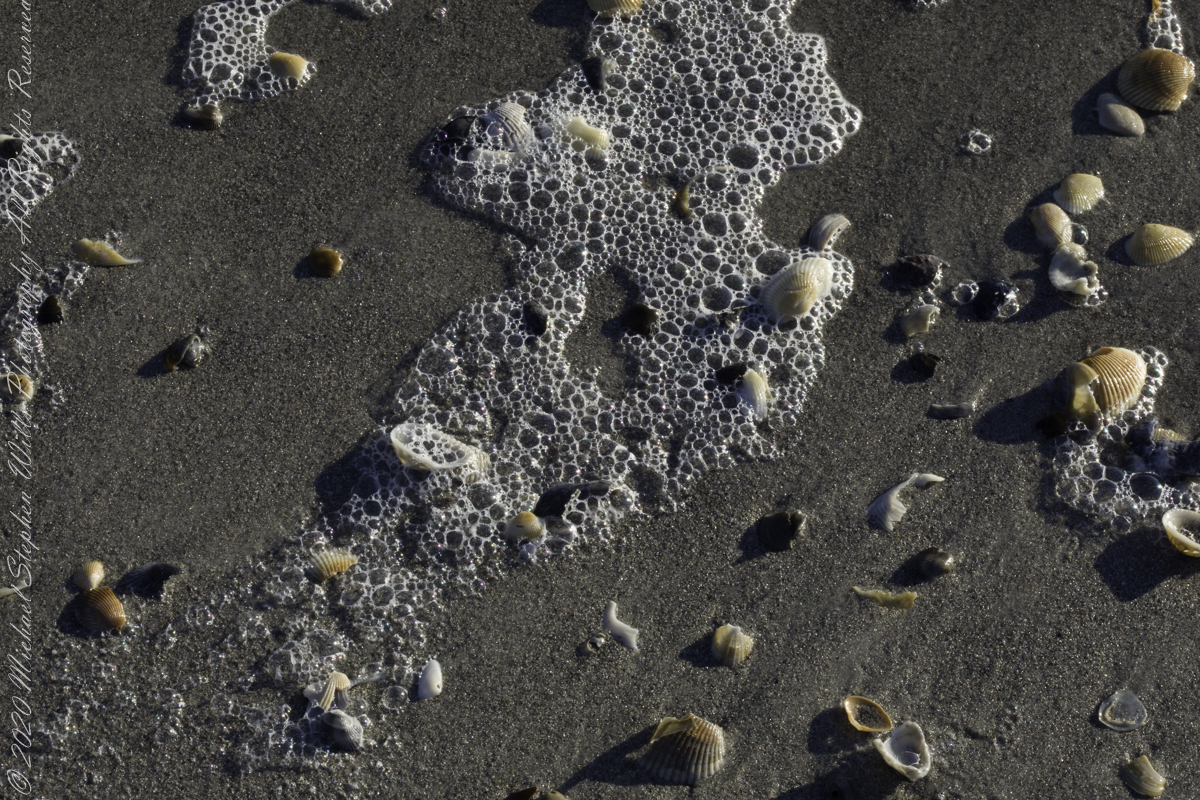
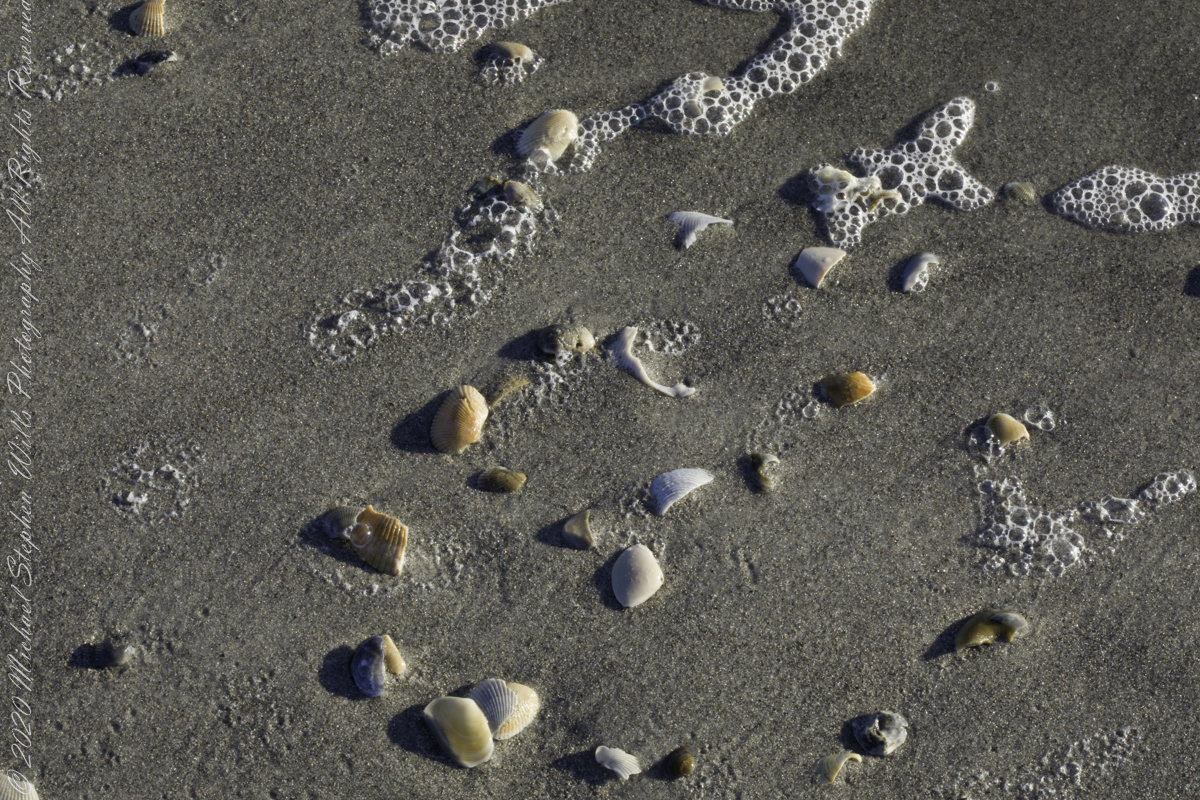
Can you spot the work of the Moon Snail on these waves washed shells? Cocoa Beach, Brevard County, Florida

Aware of the snail’s delicate nature, I decided to return it to the surf. I tossed the creature far into the surf. It was a small act of conservation, a gesture to ensure that this remarkable creature could continue its journey.

Reflecting on the encounter, I felt a deep connection to the natural world. Beachcombing is not just about collecting shells; it’s about understanding the lives they represent and the intricate ecosystems they are part of. Each shell tells a story of survival, adaptation, and the relentless cycle of life and death in the ocean.

Cocoa Beach, with its endless horizon and rhythmic waves, is a sanctuary for these stories. The Space Coast, known for its technological achievements and space exploration, also offers a window into the ancient, natural world that thrives beneath the waves. The juxtaposition of human advancement and natural beauty is striking, reminding us of our place in the larger tapestry of life.

As I left the beach that January 2024 morning, the sun climbing higher in the sky, I carried a renewed appreciation for the ocean’s wonders. The delicate balance of predator and prey, the seamless integration of form and function, and the ongoing dance of life – all captured in the spiral of a Moon Snail shell.

Copyright 2024 Michael Stephen Wills All Rights Reserved

Sand Abstracts accepted by Getty

Success.

I am happy to report 100% of the photographs presented in my “Sand Abstracts” posting were accepted for publication by Getty.

Click Me to view these and my other “texture” photographs on Getty

Copyright 2022 Michael Stephen Wills All Rights Reserved

Sand Abstracts

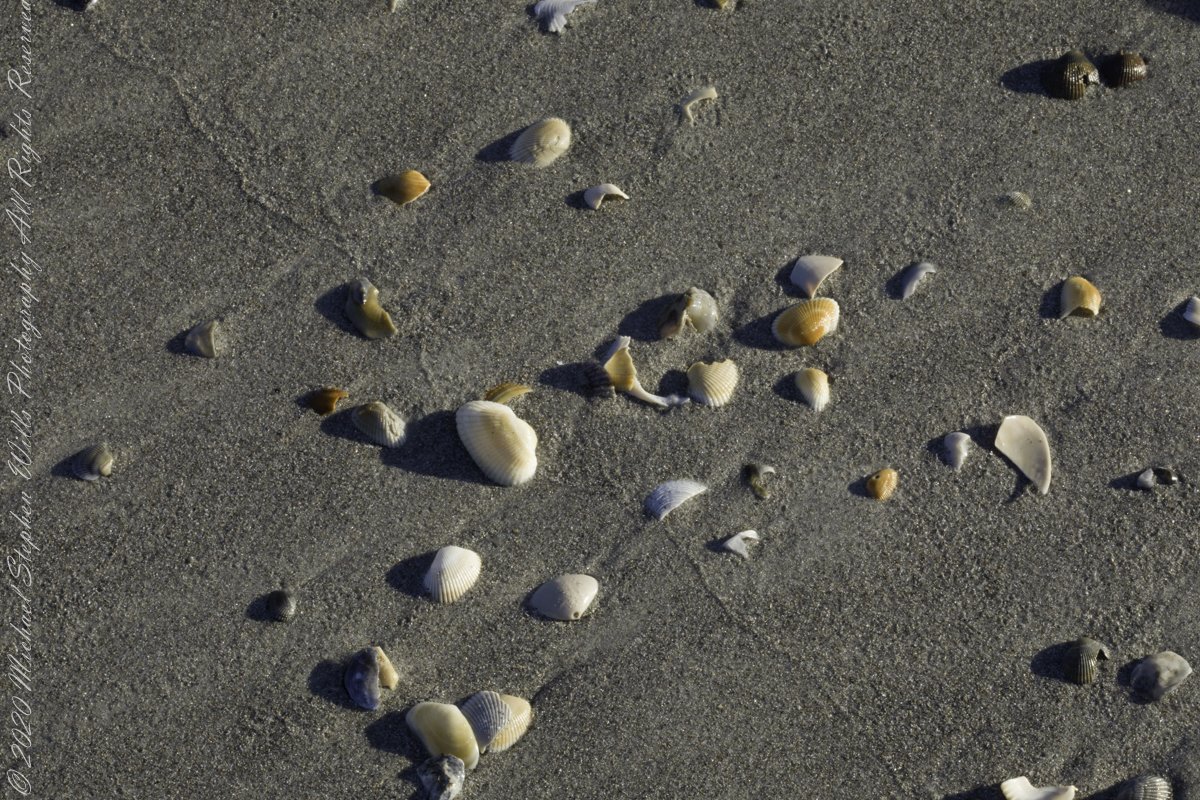
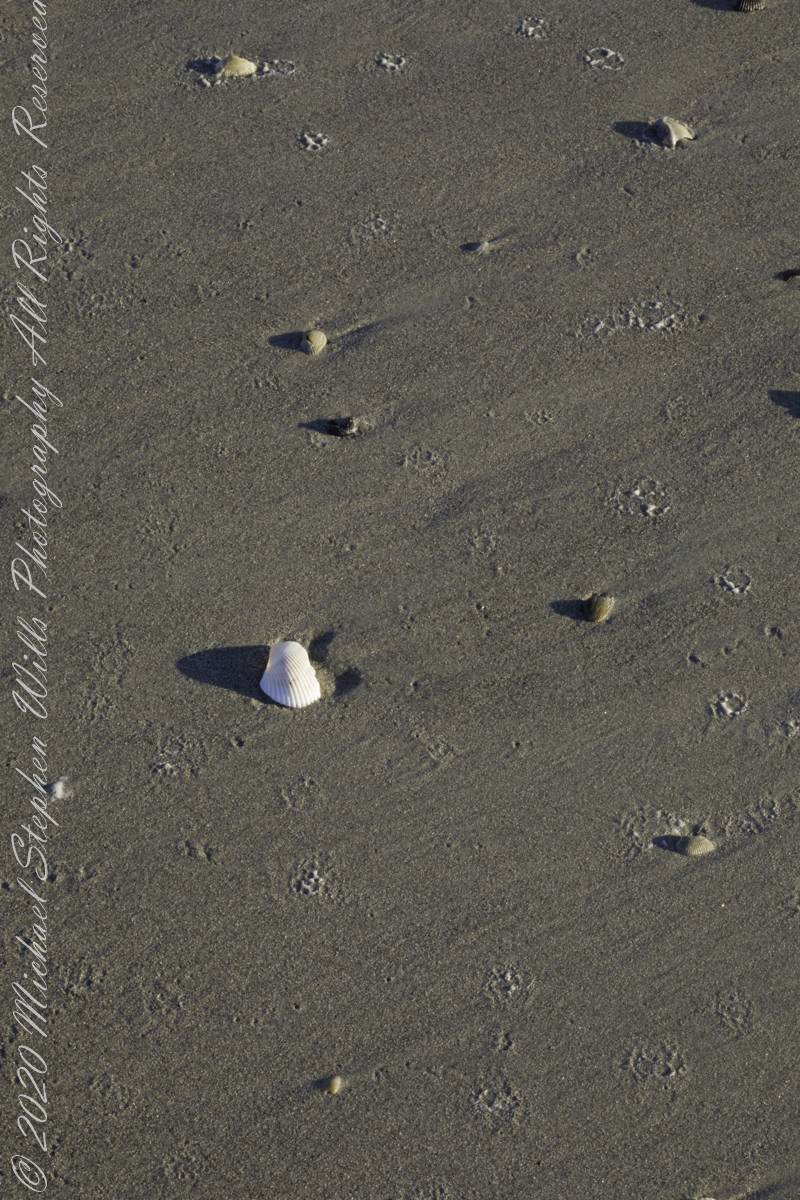
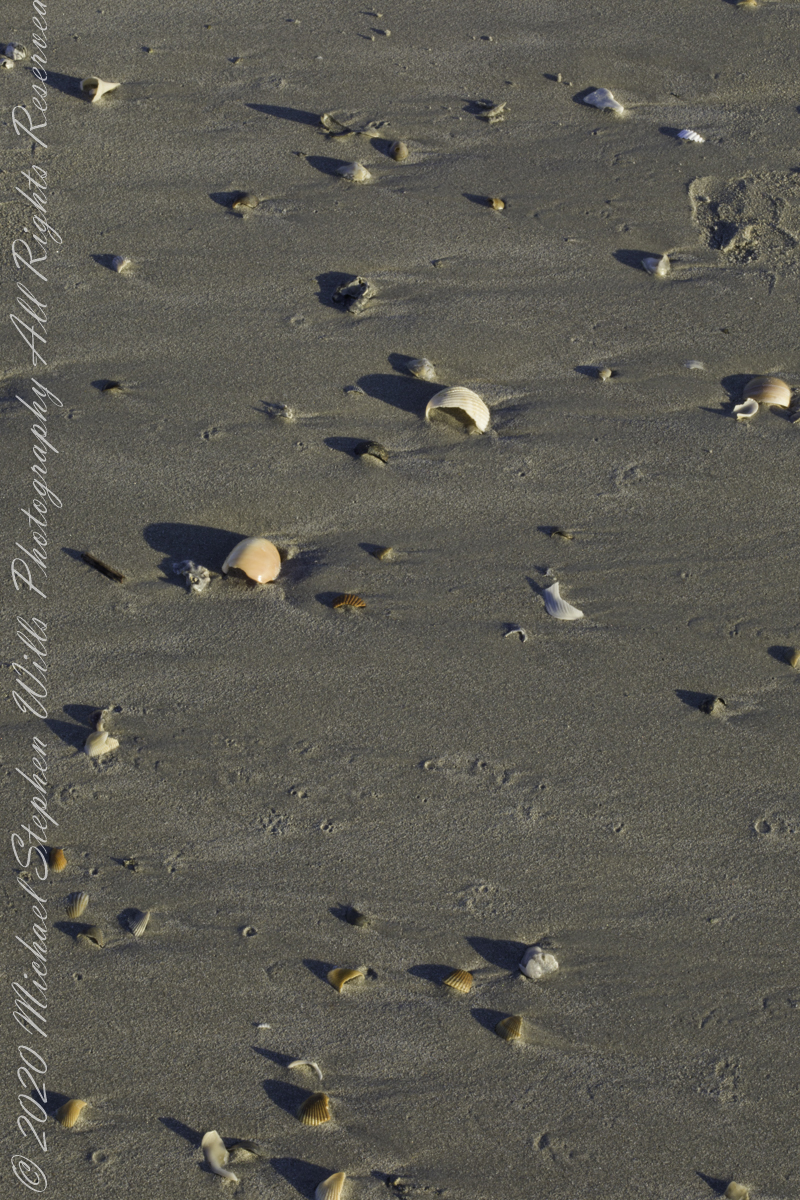
A beach littered with wonders

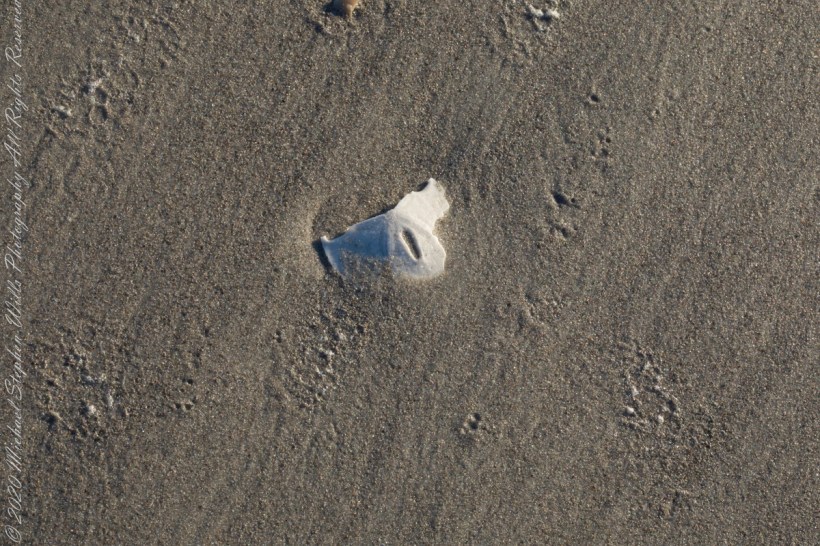
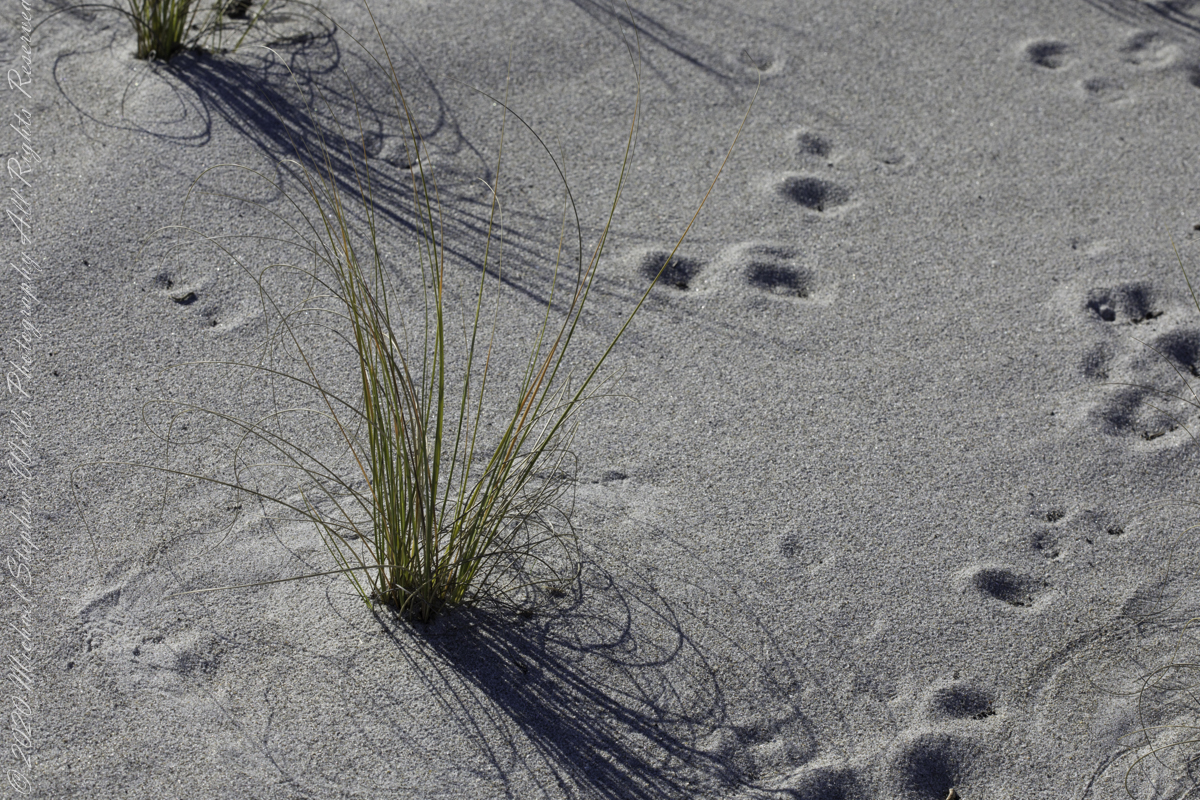
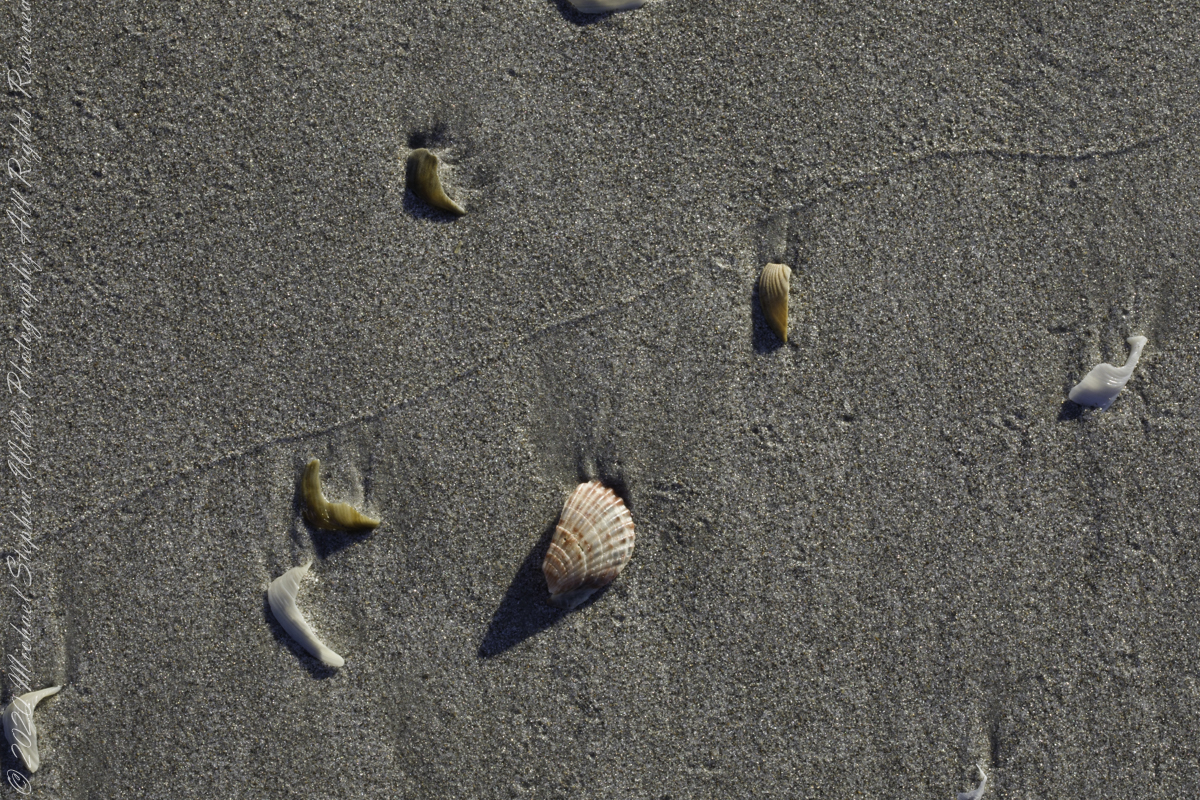
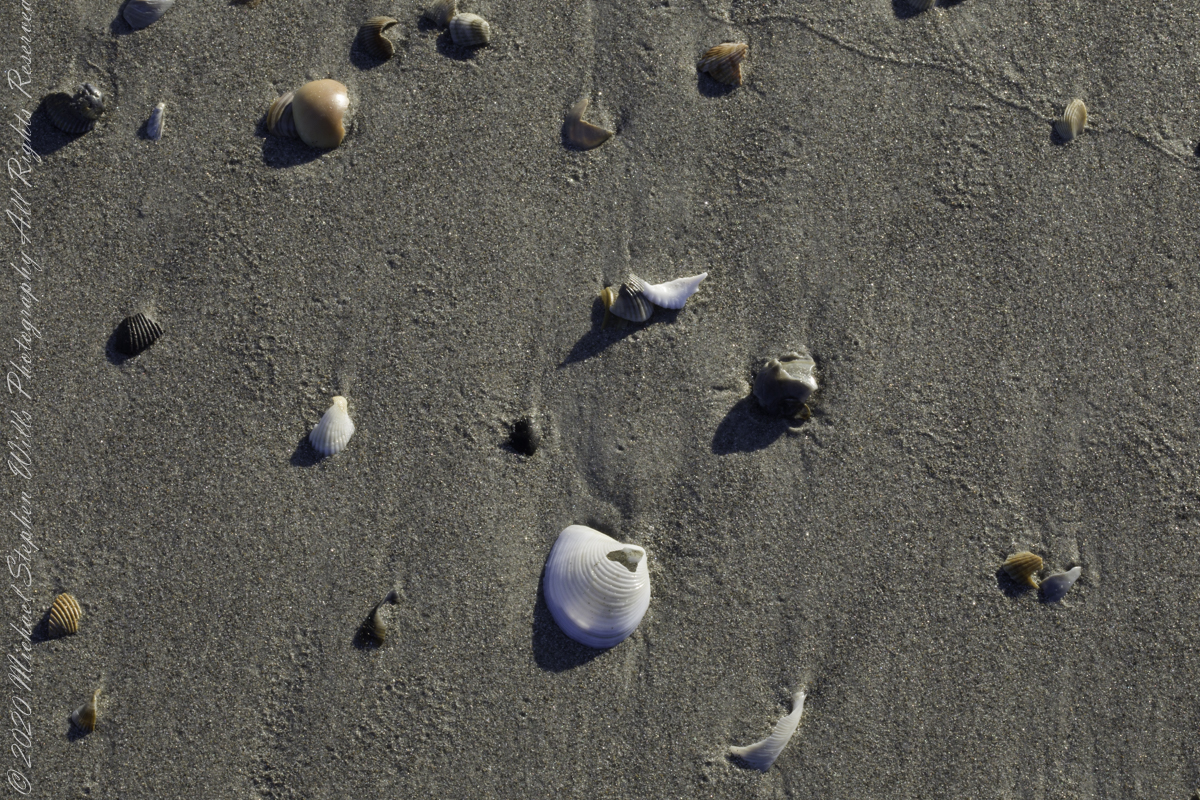
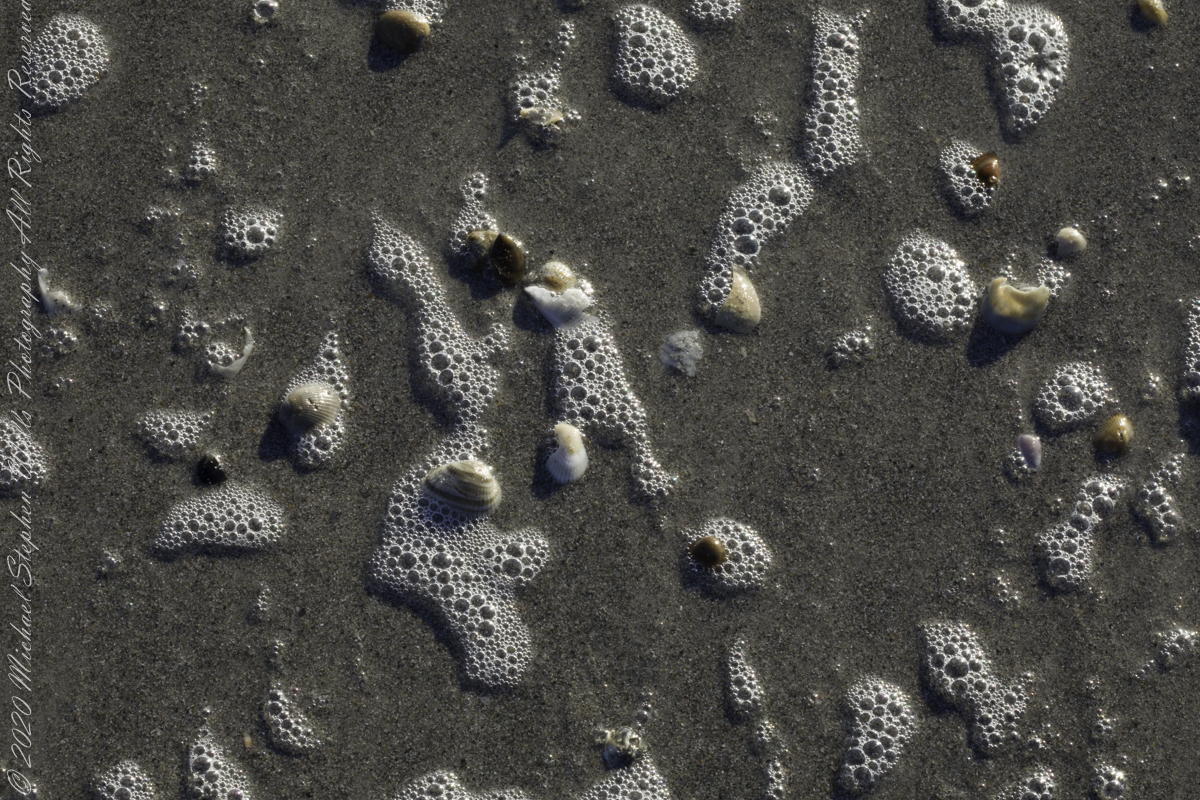
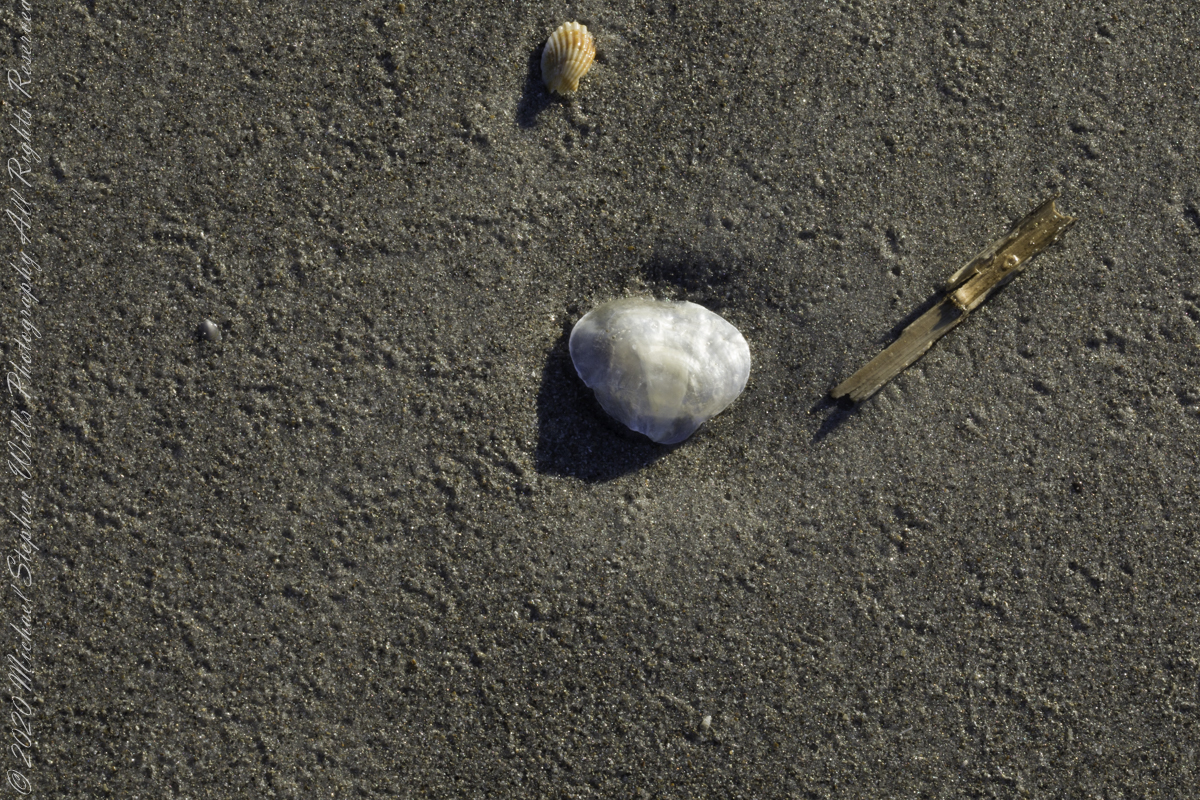
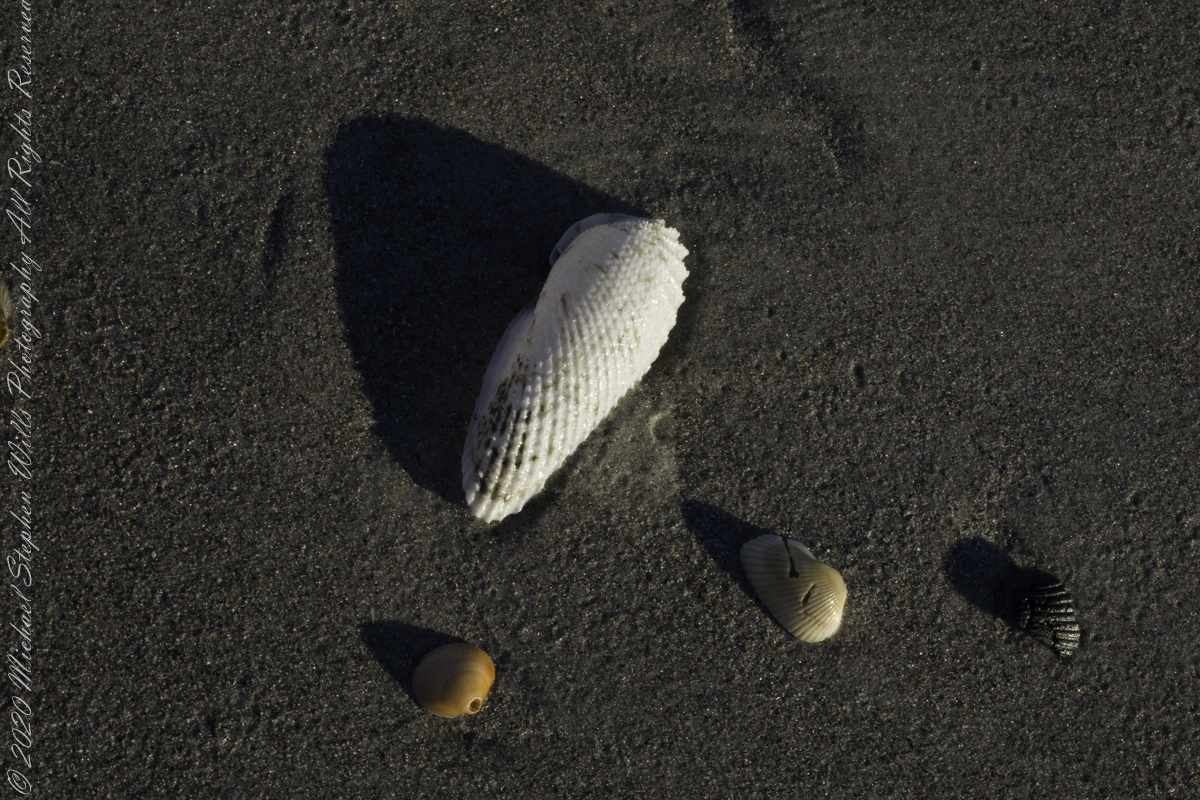
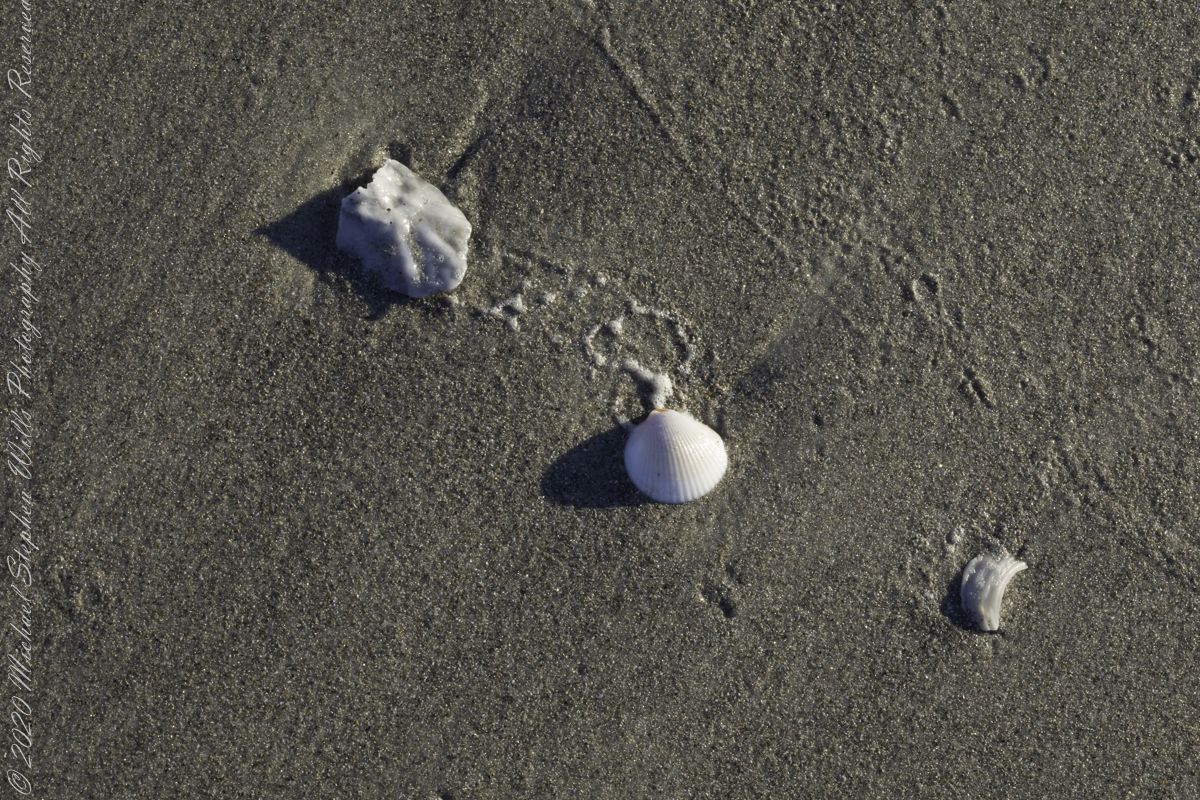
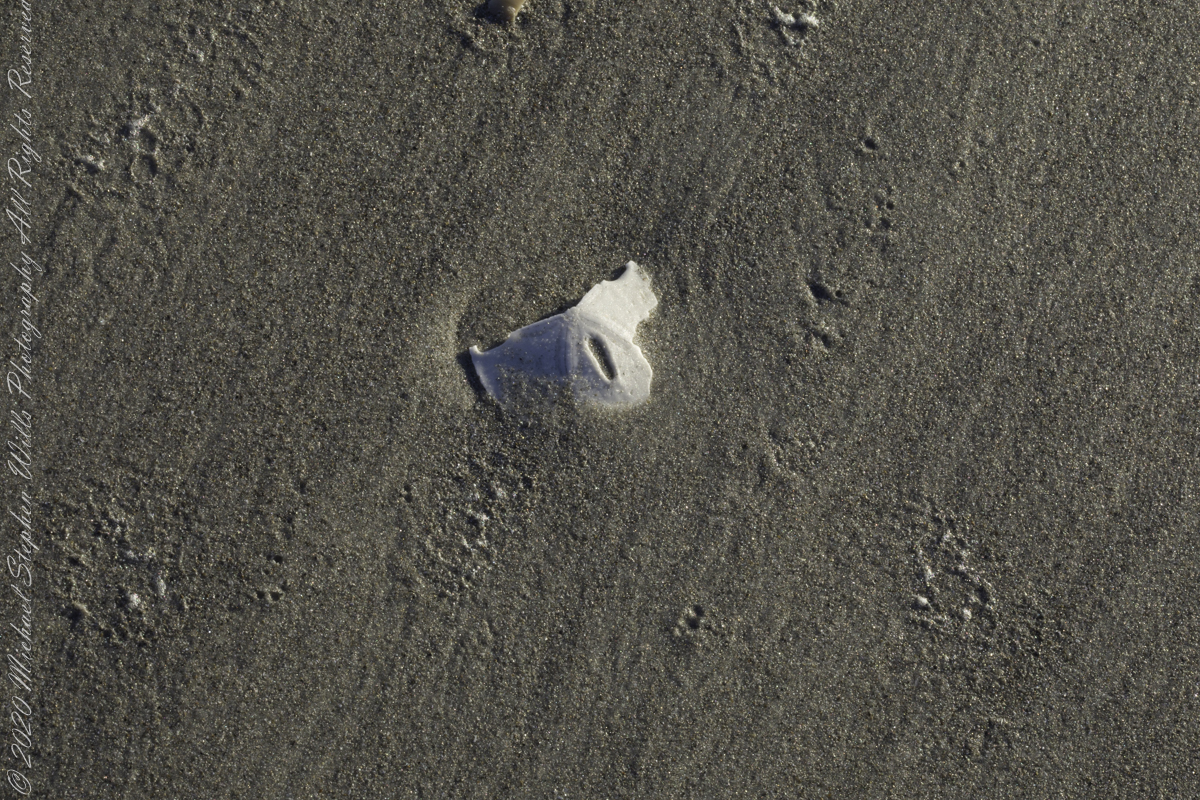
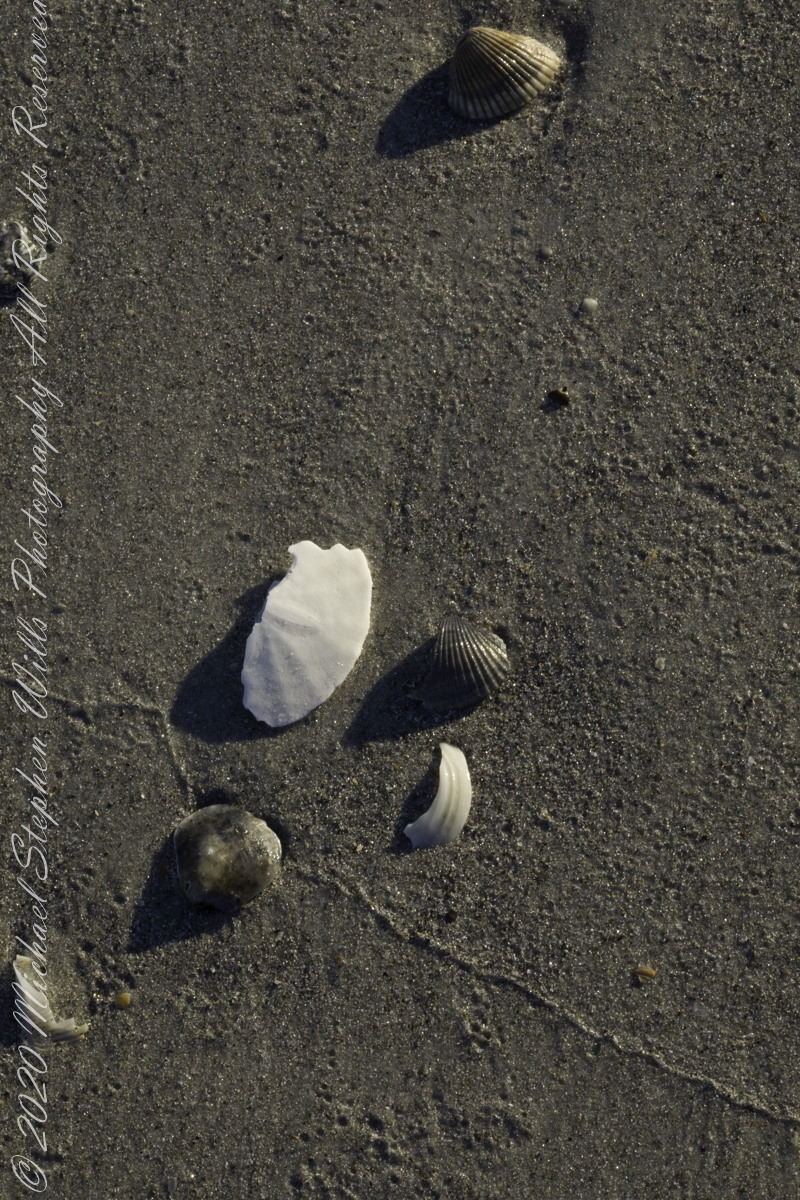
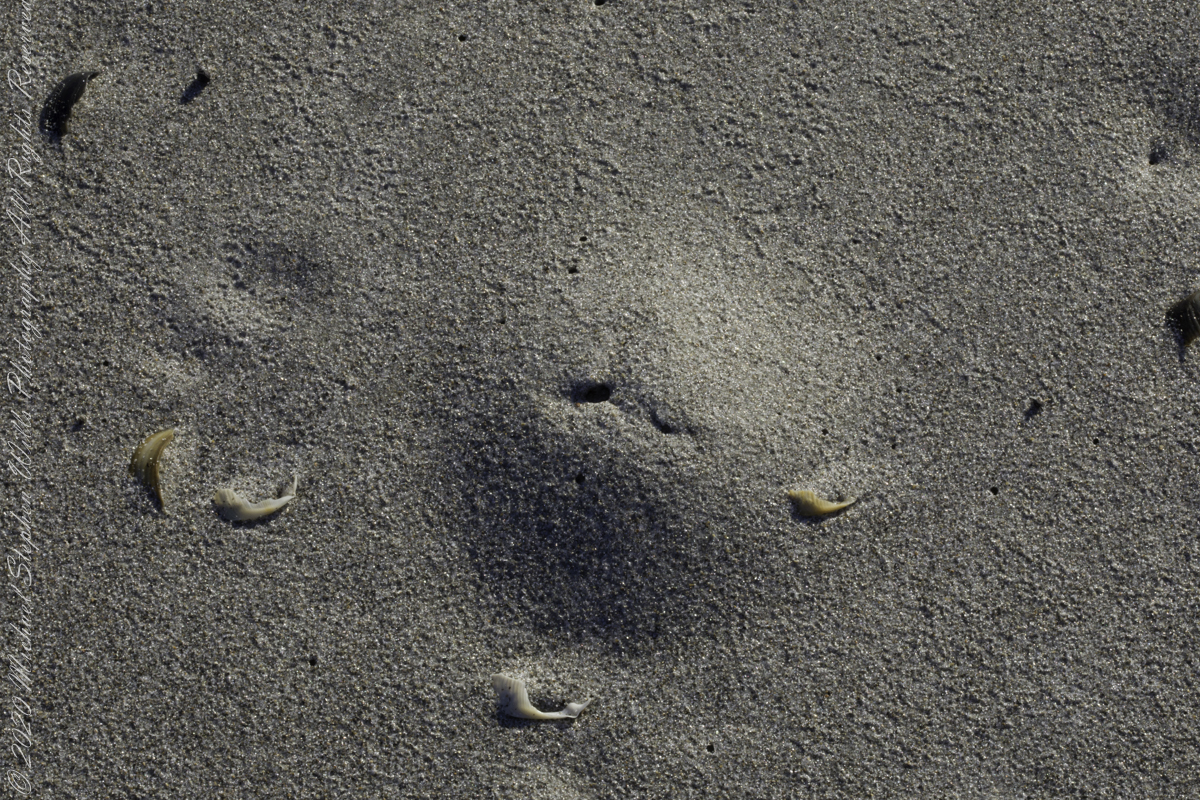
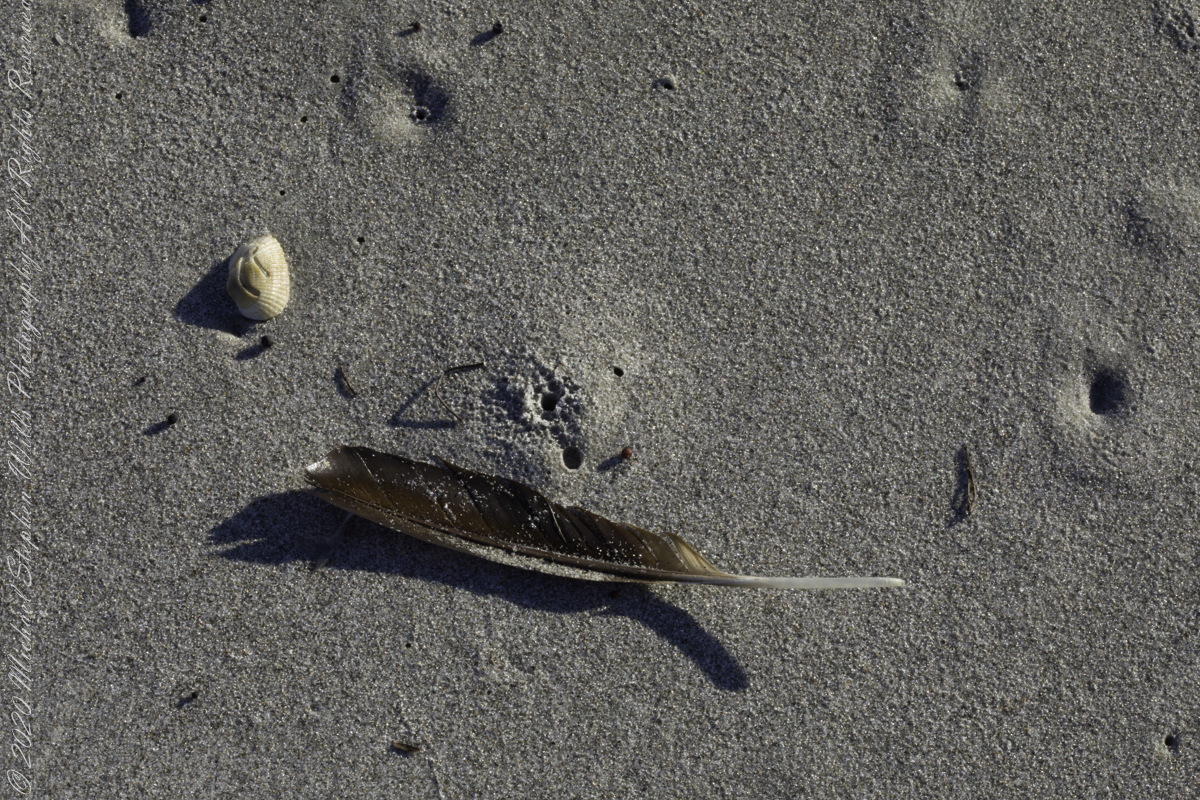
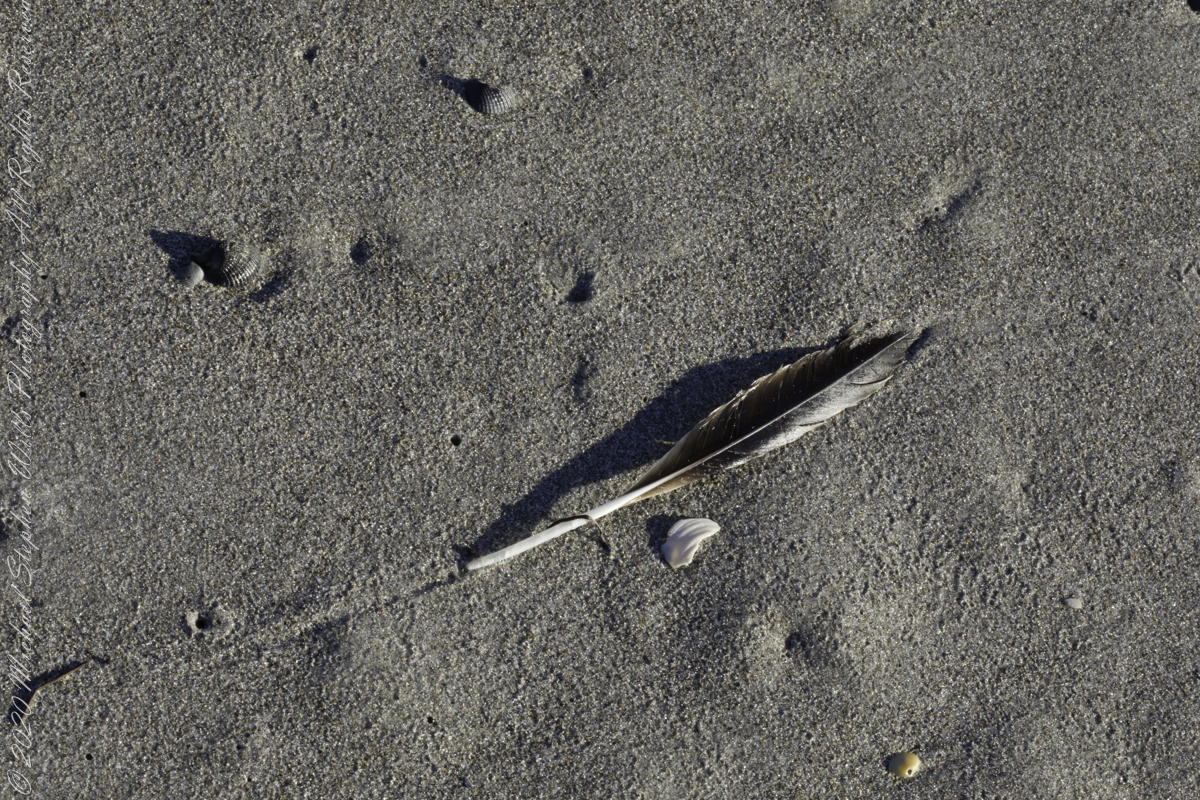
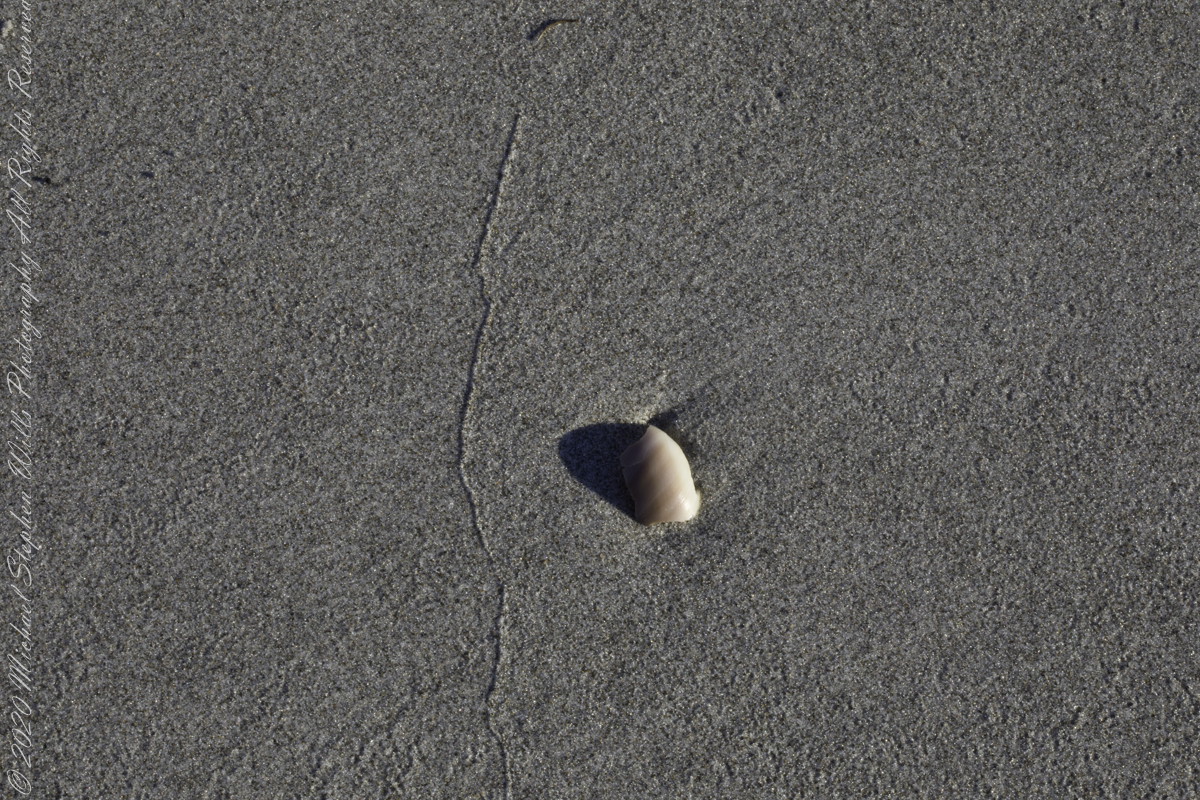
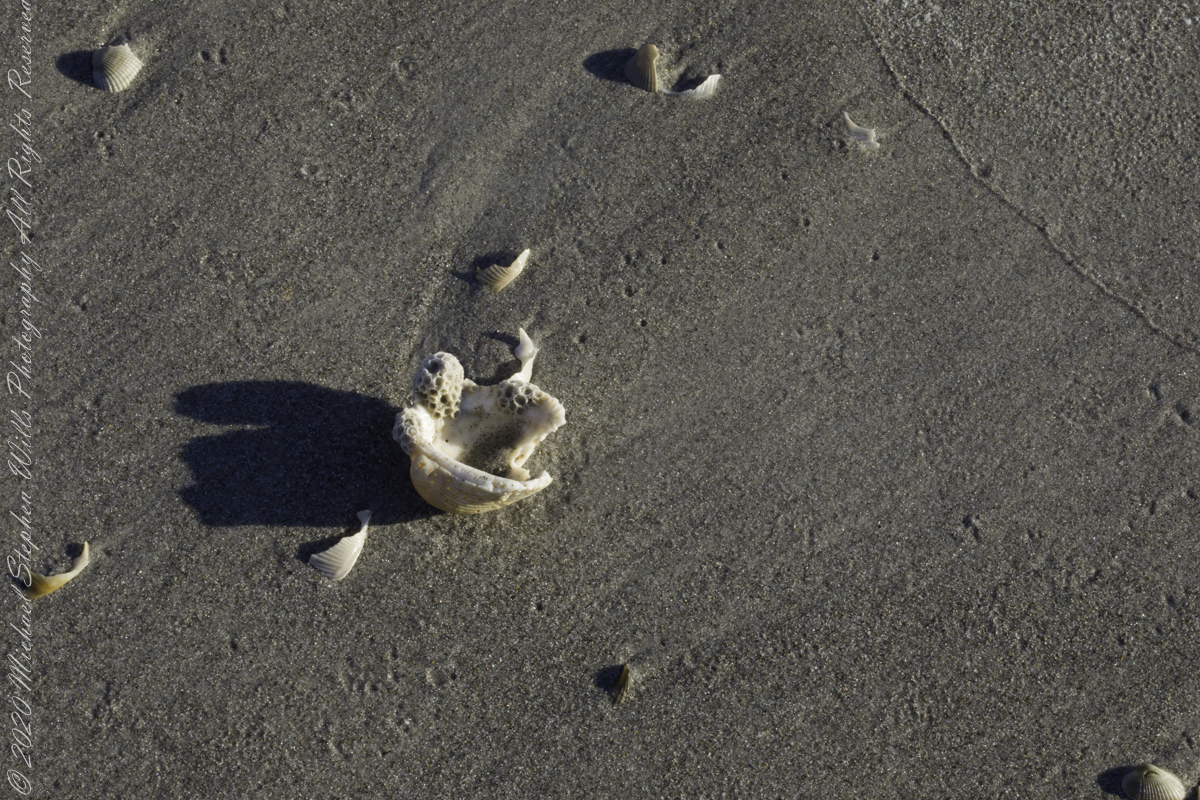
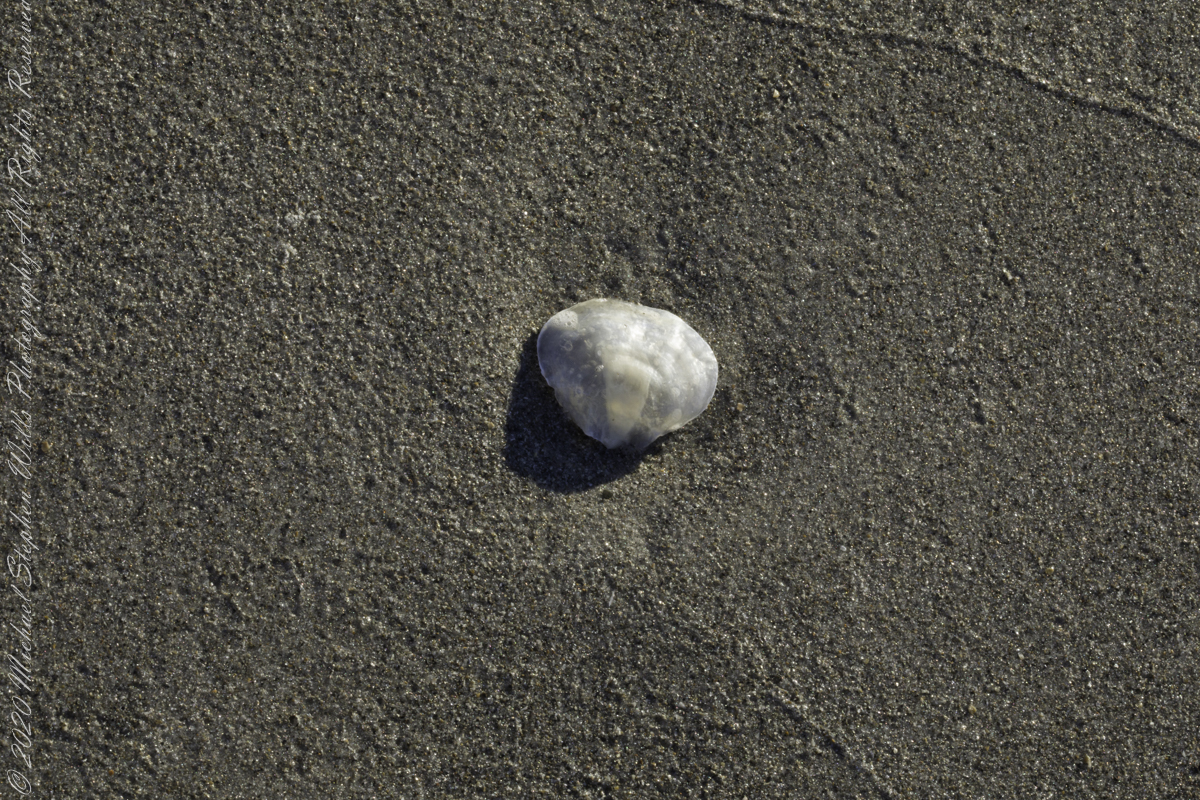
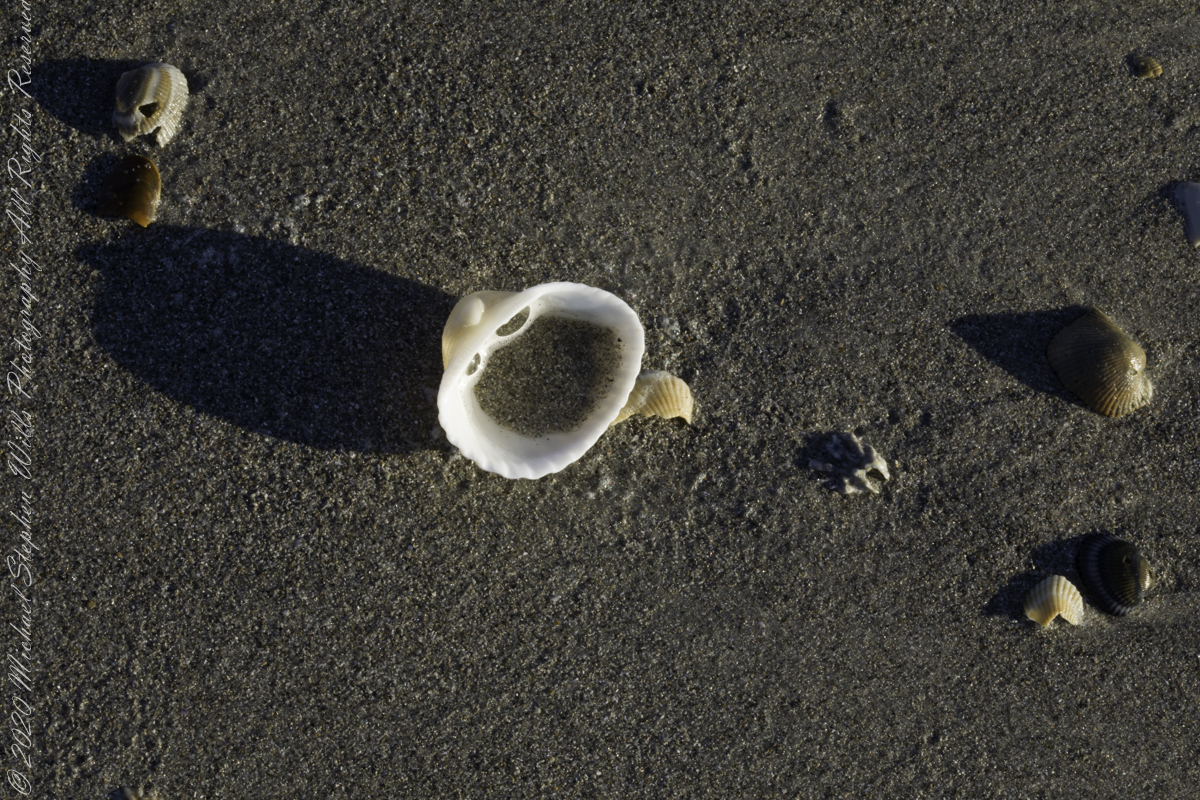
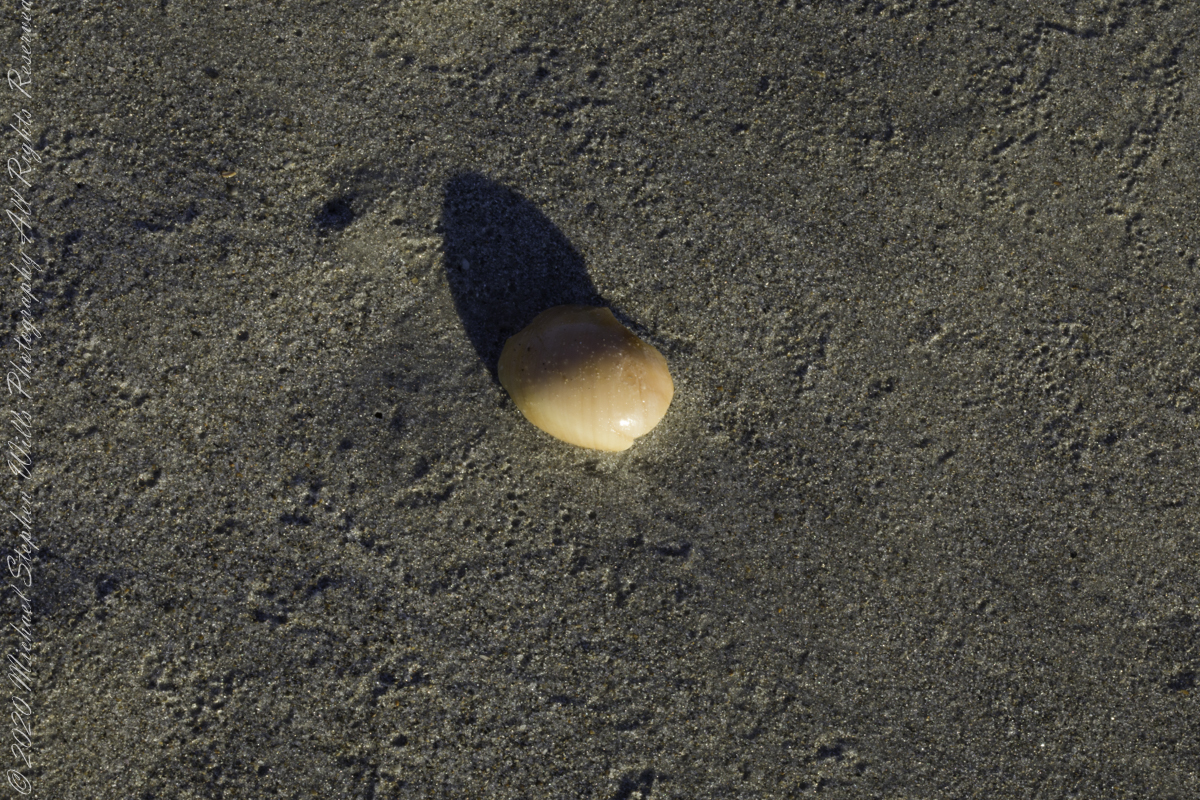
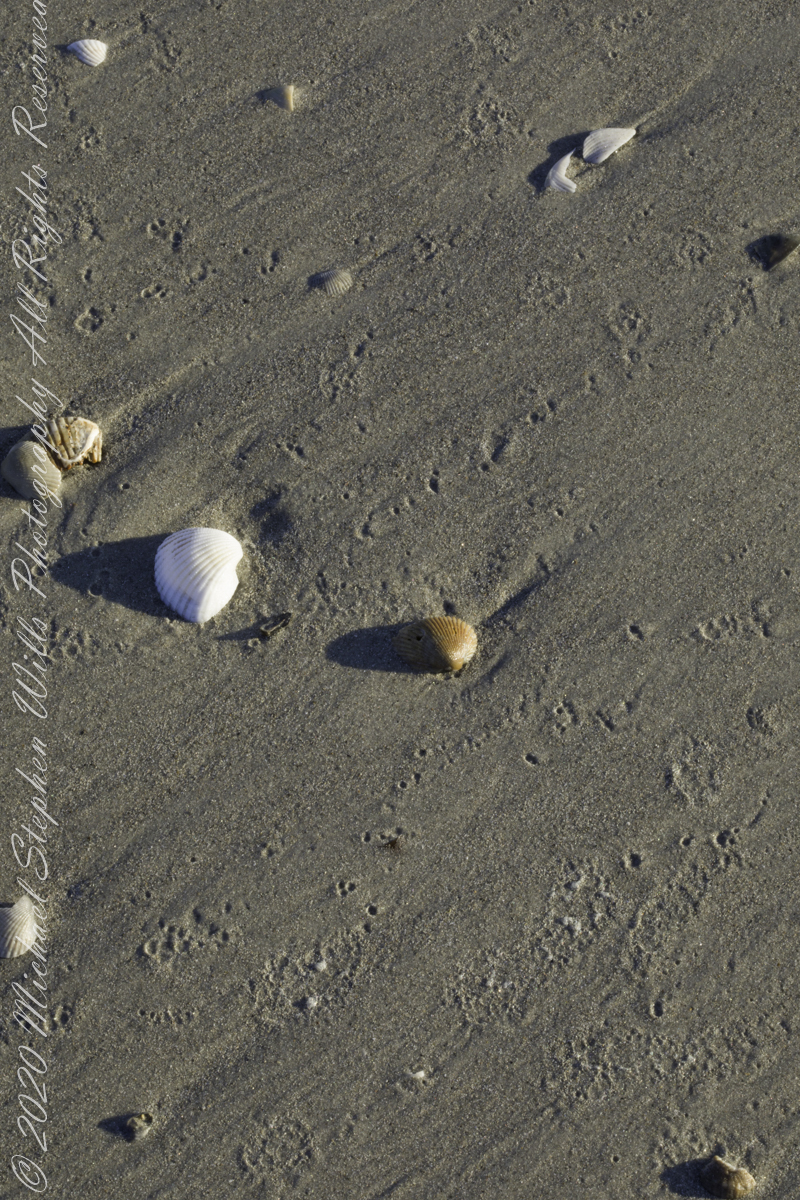
The same day I captured “Rosy Fingers of Dawn” and “Oceans Eons”, these still lives were found using a 100 mm macro lens.

The following I reserved for our private enjoyment.

Copyright 2022 Michael Stephen Wills All Rights Reserved