In 19th-century American literature, the sycamore leaf, such as the one depicted in the photograph, often surfaces as a symbol rich in meaning. This era of literature was marked by a deep engagement with nature, seen vividly in the works of the Transcendentalists and in the sweeping narratives of the American frontier.
The sycamore leaf, with its broad and sturdy form, represented a variety of themes. It symbolized shelter and sustenance, echoing the sentiment of American expansion and the settling of vast new lands. Writers like James Fenimore Cooper, in his Leatherstocking Tales, might have seen the sycamore as part of the American wilderness that provided both literal and metaphorical shelter to the pioneers and indigenous peoples of his stories.
In the poetry of Walt Whitman and Emily Dickinson, leaves from trees such as the sycamore served as motifs of the cycles of life and death, reflecting the naturalist perspective that sees profound lessons in the simplest elements of nature. Whitman, in particular, with his sweeping, inclusive lines, often invoked leaves to suggest the interconnectedness of all life and the democratic spirit of America.
The sycamore leaf also played a role in the literature of Southern Gothic, where the landscape is imbued with symbolism and often reflects the decay and grandeur of the American South. In this context, a fallen sycamore leaf might represent the fall from grace or the loss of the Old South’s idyllic past, a theme explored by writers in the post-Civil War era.
Moreover, the sycamore tree itself is mentioned in the works of Mark Twain, notably in “The Adventures of Huckleberry Finn.” While Twain does not specifically focus on the leaf, the tree is part of the rich environmental backdrop against which his stories unfold, and it is reasonable to infer that the leaf would be a part of his natural lexicon, symbolizing the ever-present river and the freedom and escape it offers.
The 19th century also saw the rise of American Realism, which sought to portray life as it was, rather than as an idealized version. In this context, the detailed representation of a fallen sycamore leaf, with its imperfections and decay, could serve as a powerful emblem of the realist ethos.
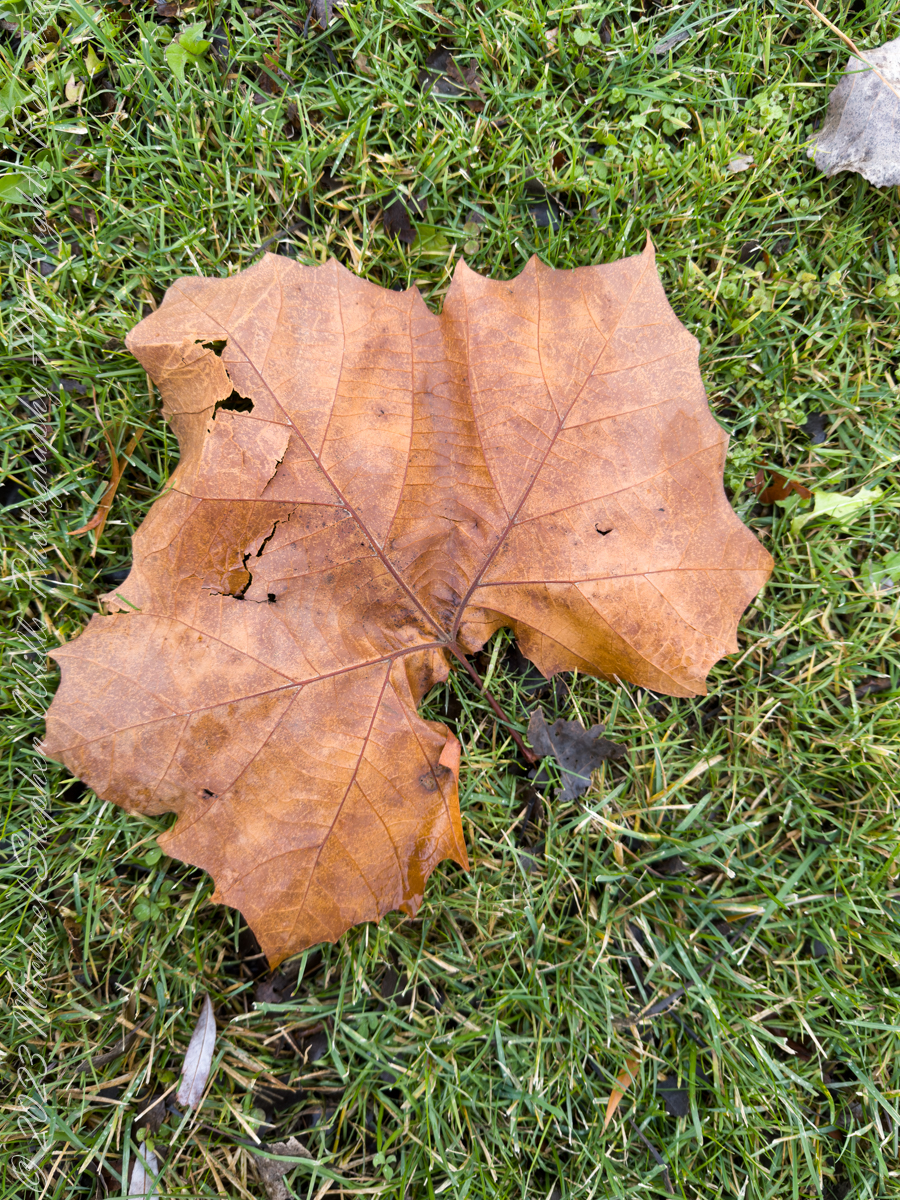
The photograph of the fallen sycamore leaf on the grass brings these literary uses to life. It illustrates the transient beauty of nature, echoing the themes of loss, renewal, and the sublime that American authors have long explored. The leaf, isolated from its source and lying on the ground, could also represent individuality, a key theme in American thought, symbolizing the potential for each person to leave their mark on the world, however ephemeral that might be.
In sum, the sycamore leaf in 19th-century American literature is a small piece of the larger tapestry of nature that writers used to explore and express the complexities of life, the human condition, and the evolving American identity. Through the simple, quiet image of a leaf, they conveyed themes as grand as the national spirit and as intimate as personal loss, grounding their lofty ideas in the tangible beauty of the natural world.
 Michael Stephen Wills Photography
Nice post ✍️
LikeLiked by 1 person
Thank You!!
LikeLike
I like sycamores. I think they’re lovely trees ☺️
LikeLiked by 1 person
Dear HardyTardy,
It’s wonderful to hear you admire sycamores! Their beauty is indeed captivating. Thank you for sharing your appreciation with us. Lovely trees make for a happier world.
Best, Mike
LikeLiked by 1 person
I like a lot of trees. I wasn’t as appreciative until I came to the UK!
LikeLiked by 1 person
I love trees, and the sycamore is no different. 🙂 I like how you captured the leaf and what you have to say about it, too, Mike. Great post!
LikeLike
Interesting!!!!
LikeLiked by 1 person
Lynne,
I’m glad you found the post interesting! What was the most surprising thing you learned?
Cheers!! Mike
LikeLike
Today, this leaf is the symbol of an era when we knew how to look at nature and respect it.
LikeLiked by 1 person
Lazuli Biloba!!
Thanks for adding to the conversation!
Do you think there are any potential solutions or actions to encourage respect for nature in the current day?
Mike
LikeLiked by 1 person
Thank you Mike for sharing so much that can found in writers’ expressions of the sycamore leaf. At one of my favorite nature parks, one of my favorite routes takes me past an ancient sycamore tree. It has to be one the oldest trees in the area, and its canopy is something to behold when it finally leads out.
LikeLiked by 1 person
We have these giants along the Waterfront trail, along the golf course.
LikeLike