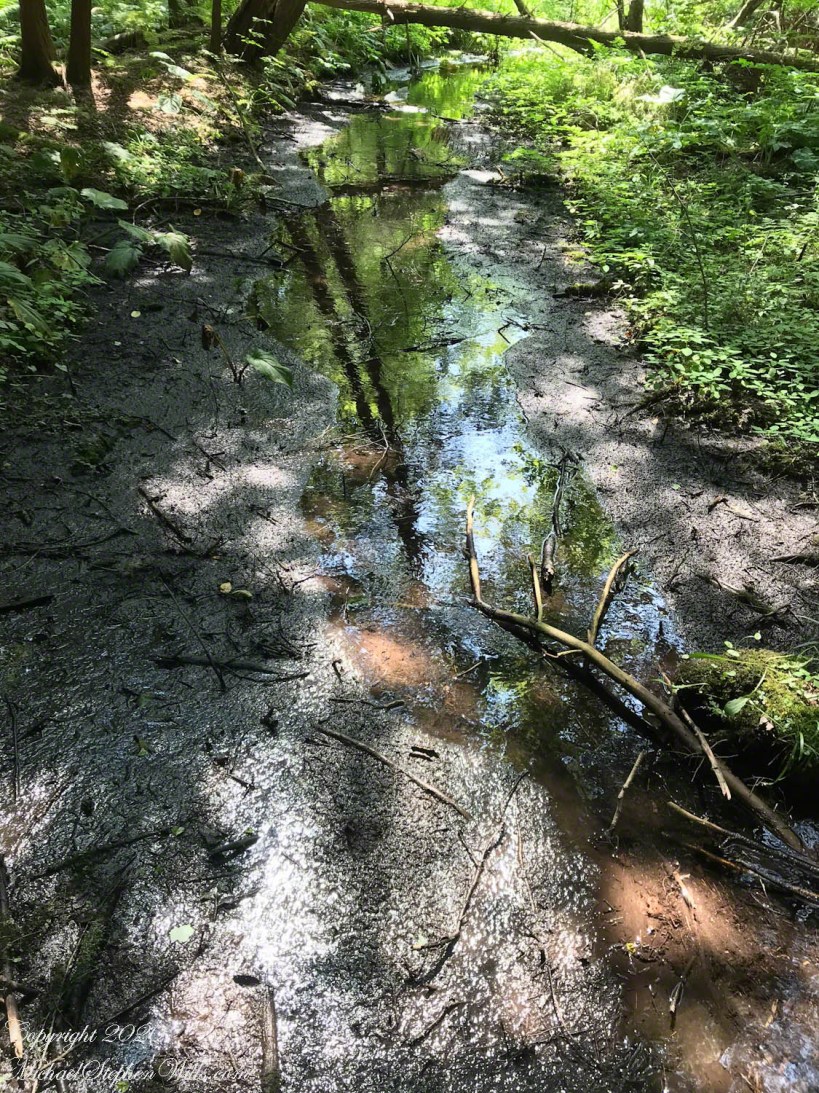
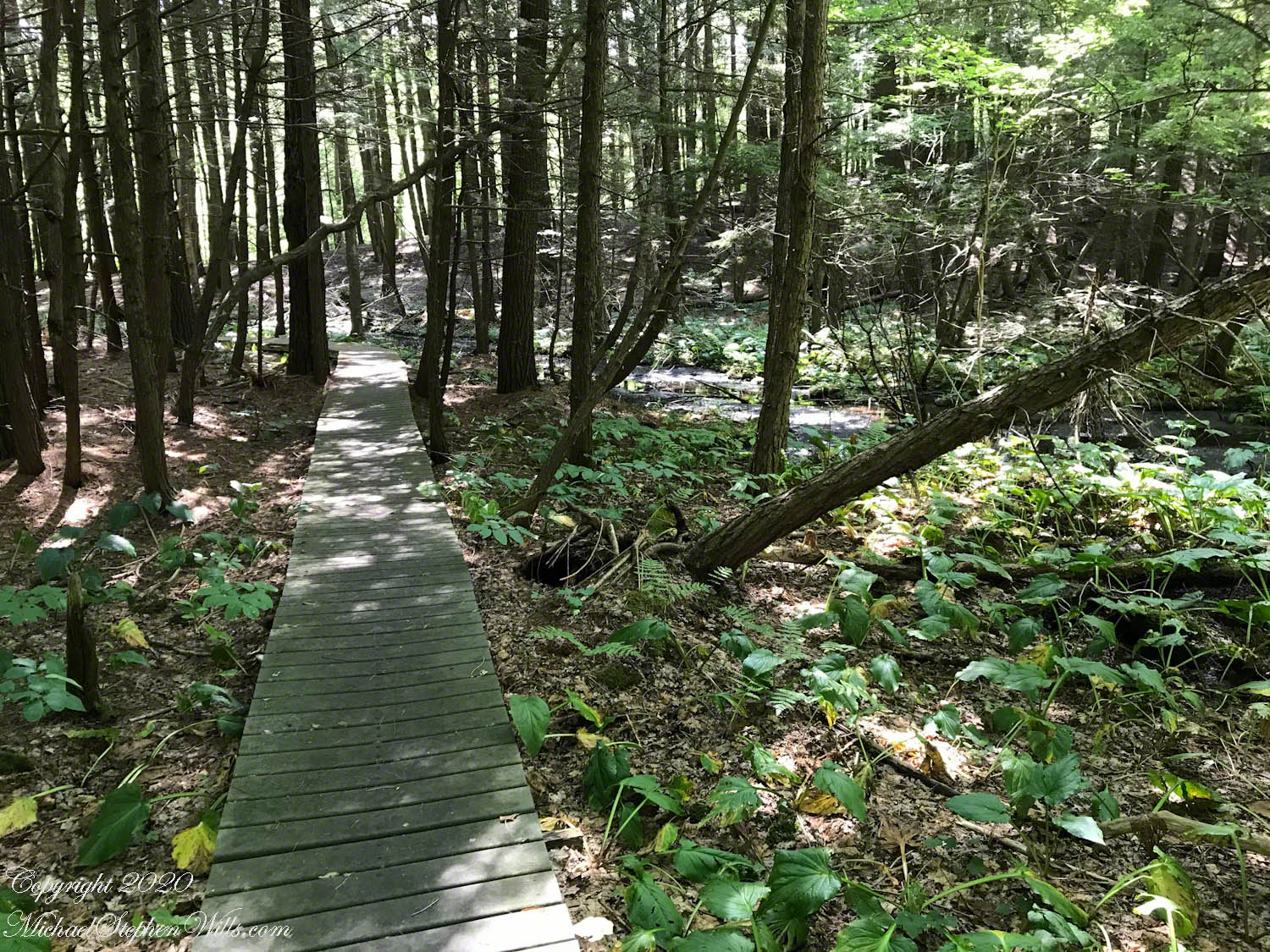
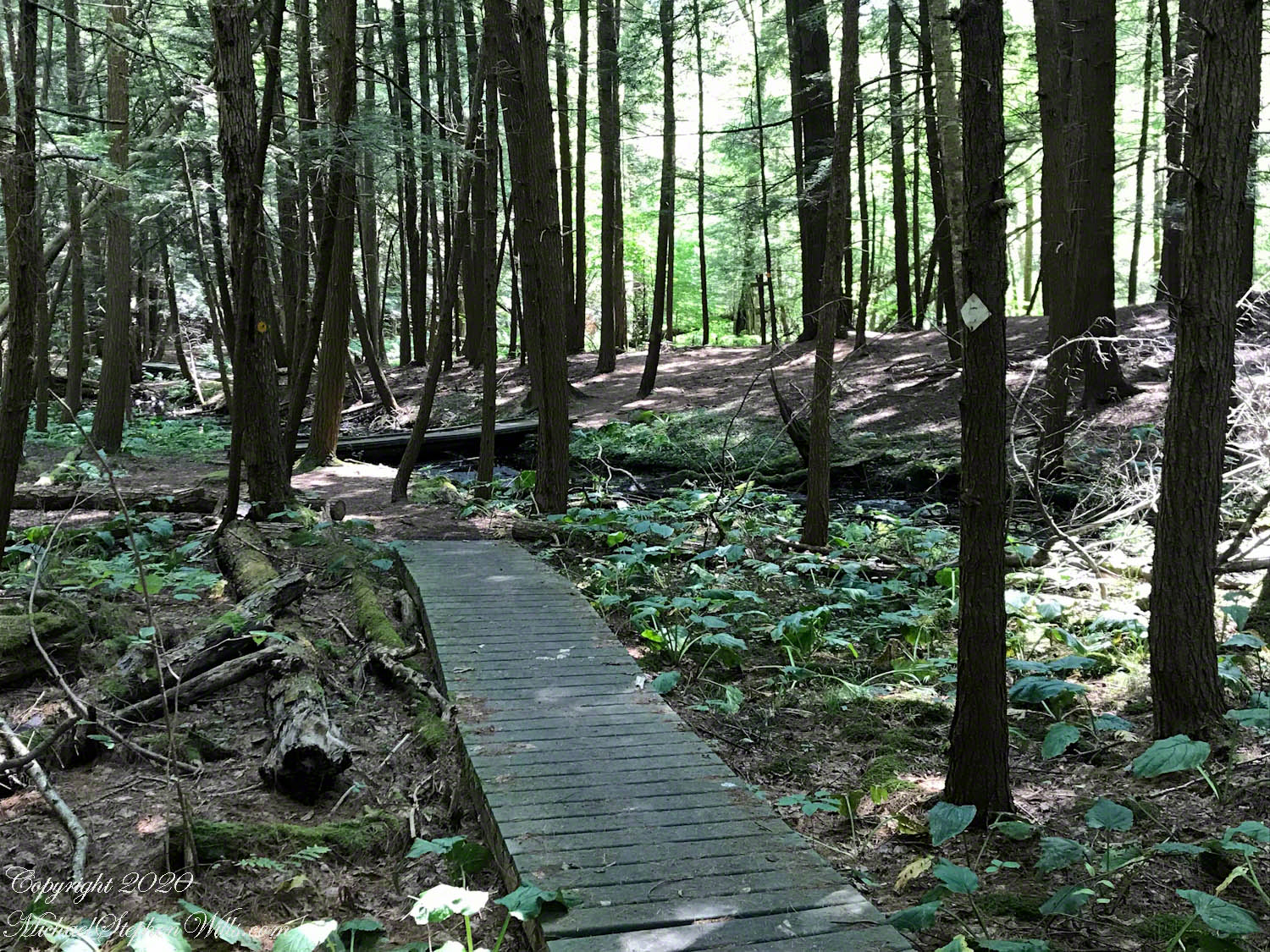
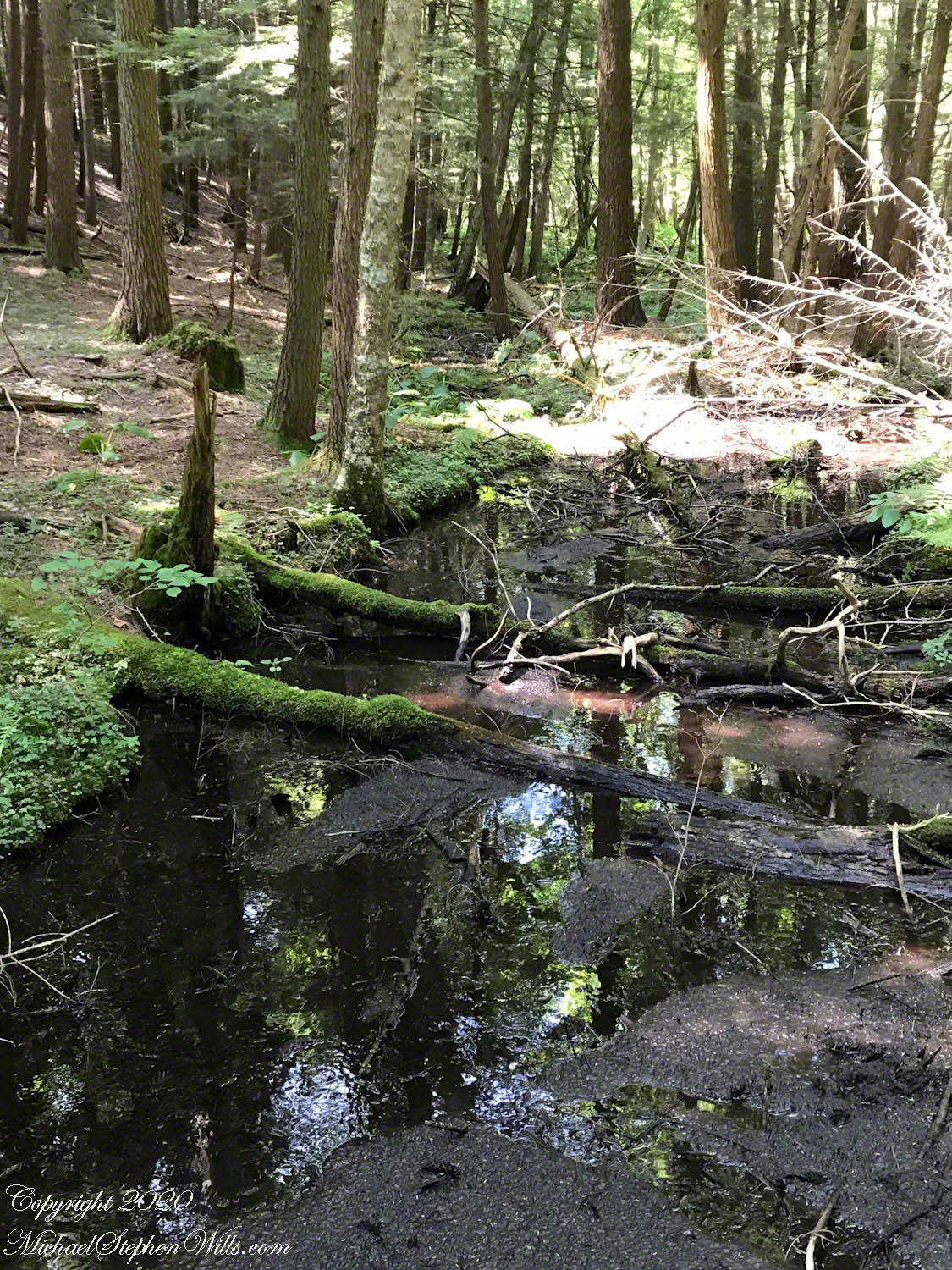
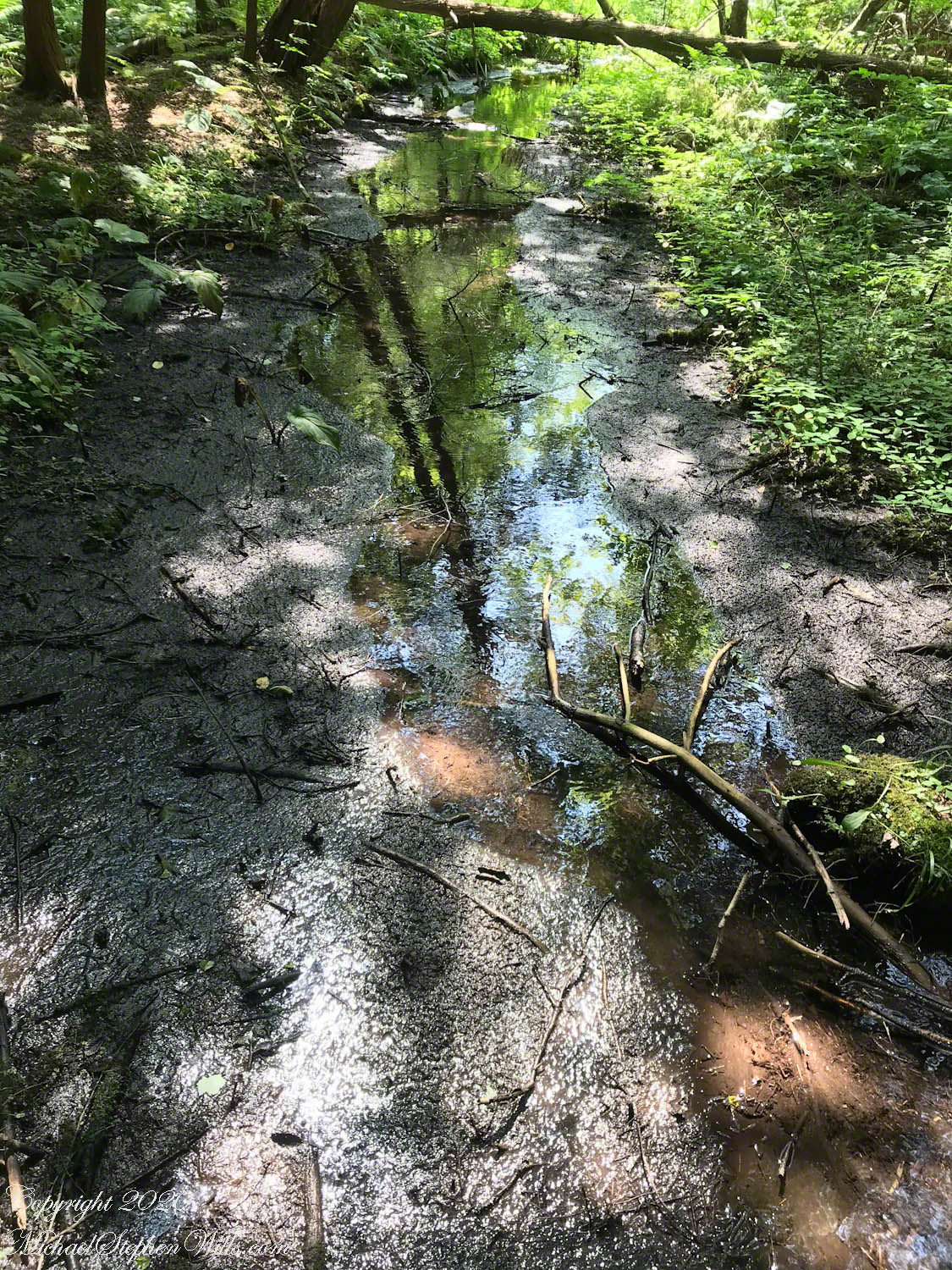
Amazingly swamp, fen, bog, marsh can all be experienced during a thirty minute walk within this preserve. Here we are traversing a swamp …
…buoyed along on planking from recycled plastic.
The founders of this place, from a dairy farming family, strove for years to protect the water sources from encroachment by development, primary a duplicate of a gravel pit found on the other side of the Fall Creek valley.
This former acidic rainwater, percolating through glacial till, is buffered and chemically altered to create these multiform environments.
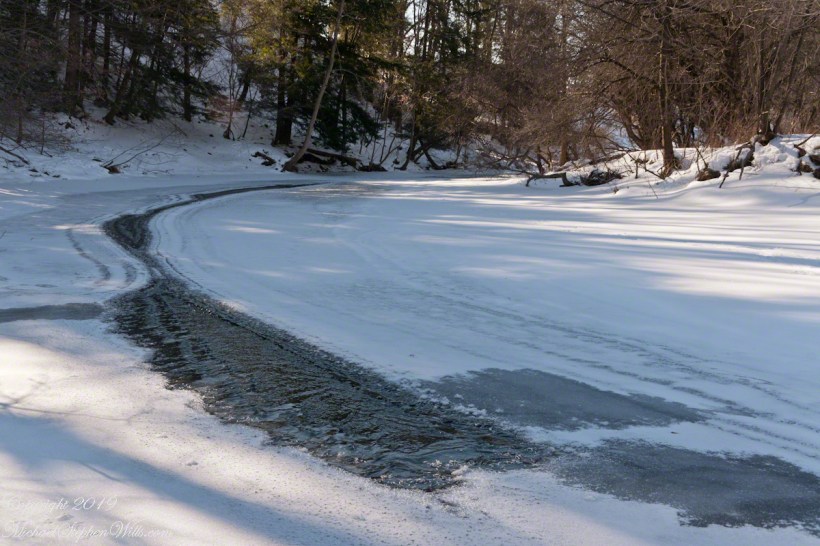
Water, flowing quietly, almost soundlessly, with powerful effect.
Let’s digress from our exploration of Iquique, Chile for this attraction local to the Finger Lakes Region of New York State, an environment diametrically opposed to the Atacama desert. The Preserve at Malloryville opened 1997, eleven years after we moved to our home our home on Fall Creek (see header photograph).
The correct name is the O.D. von Engeln Preserve at Malloryville. I knew this name from his Finger Lakes geology book obtained from the library and read closely in the early 1990’s. It helped me understand the landscape among which our home was set, in 5 minutes walking distance from the future location of the preserve.
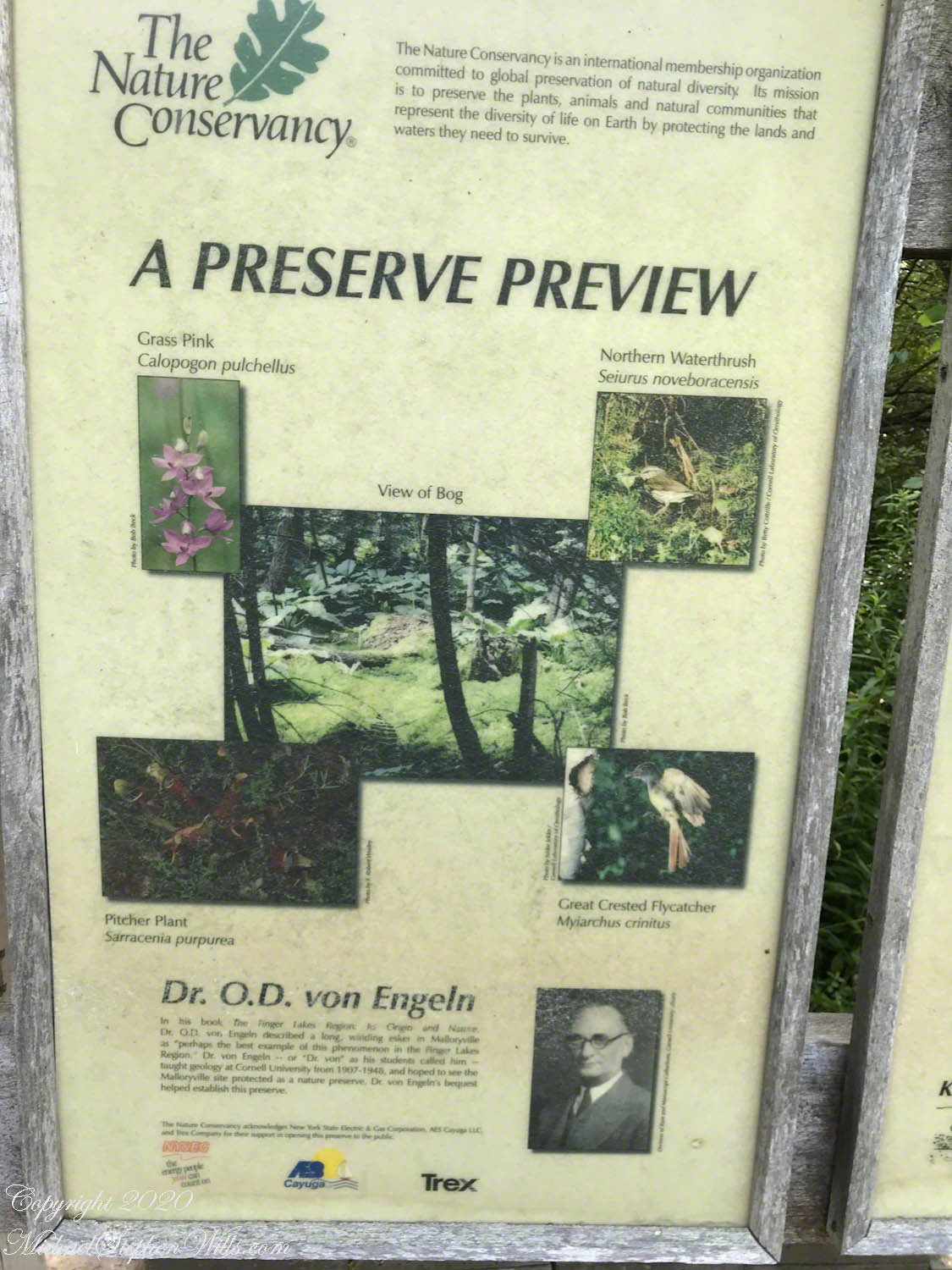
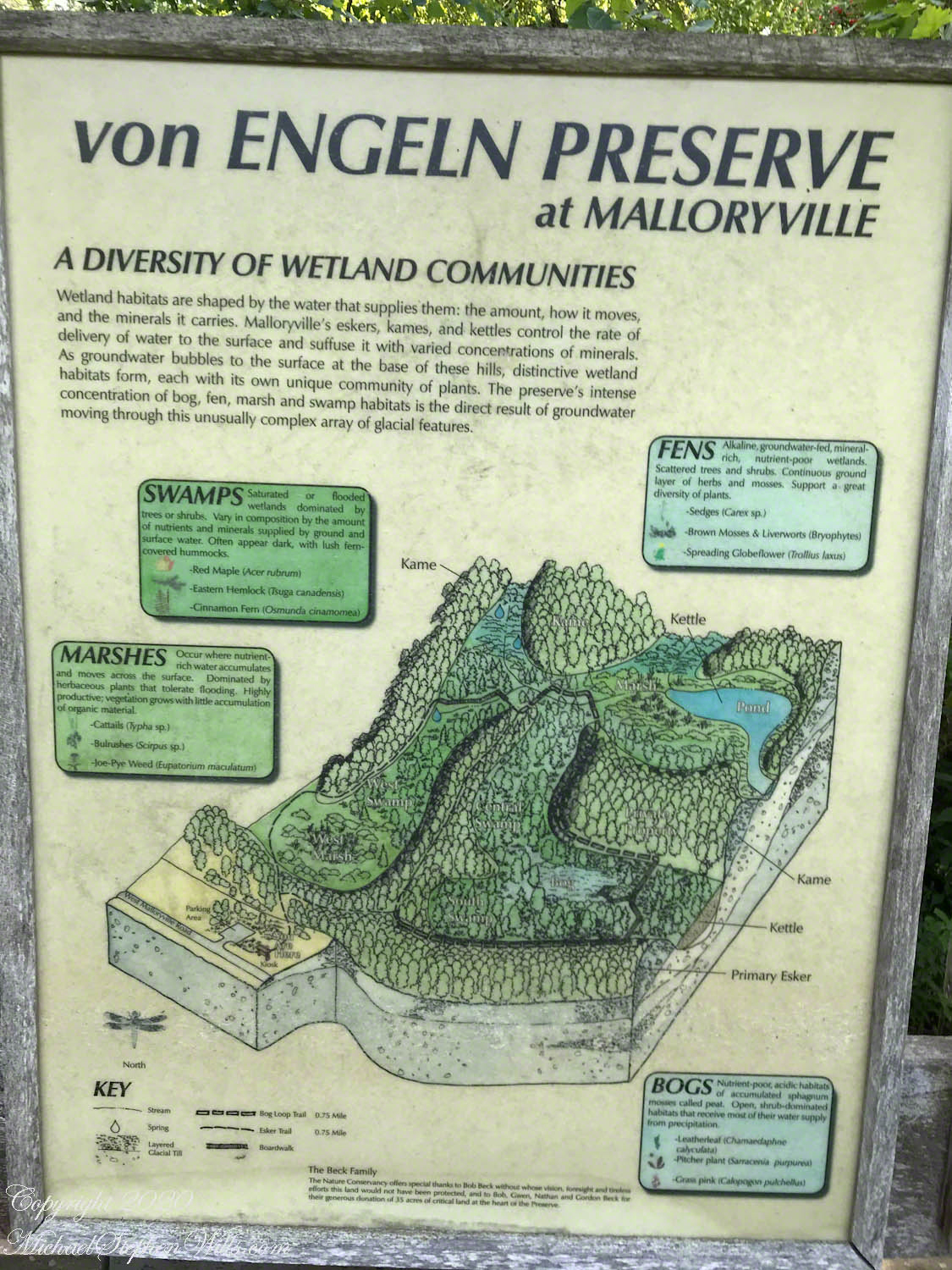
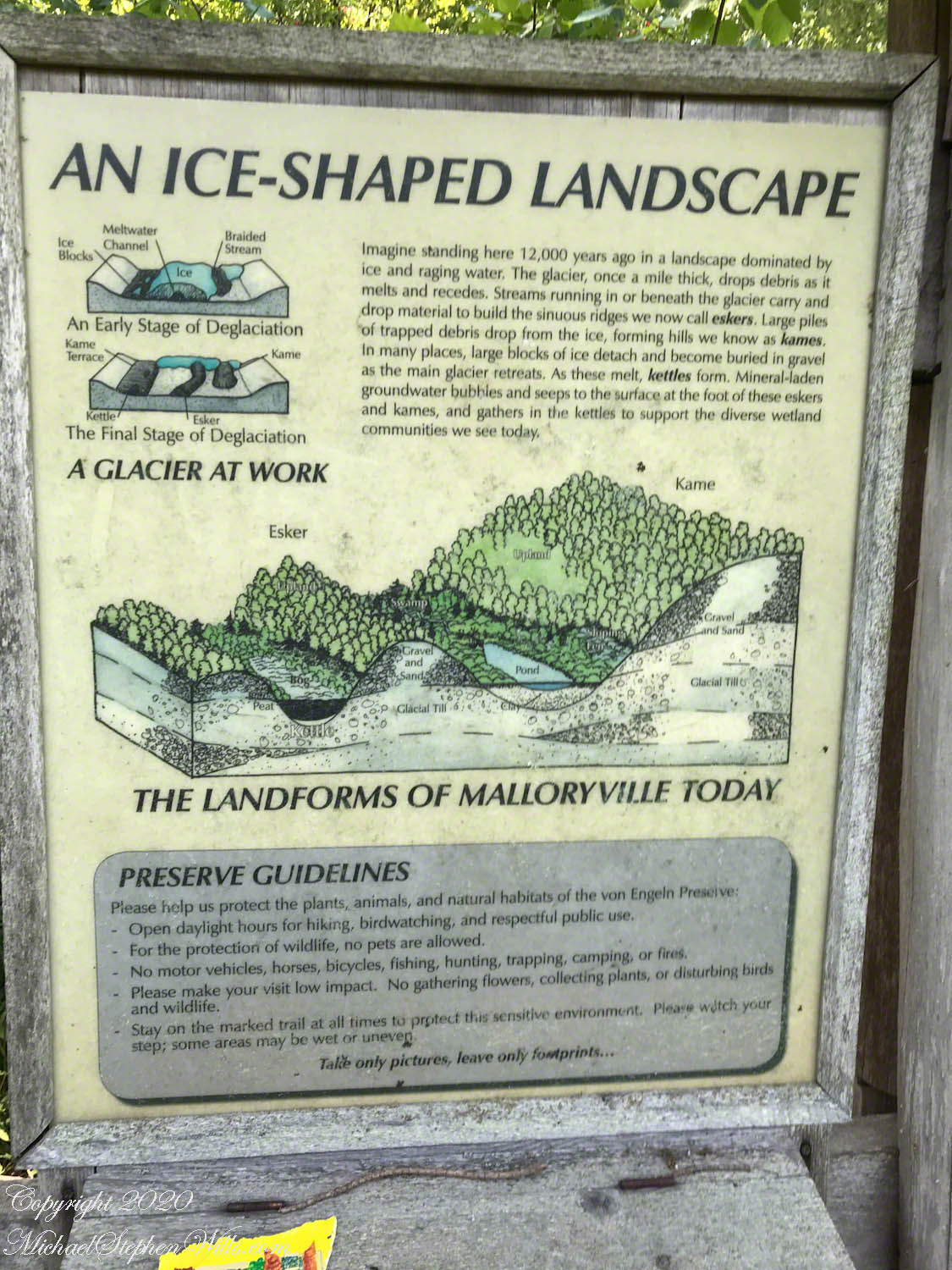
The text from the above information placard at the preserve entrance says it all:“Wetland habitats are shaped by the water that supplies them: the amount, how it moves, and the minerals it carries. Malloryville’s eskers, kames and kettles control the rate of delivery of water to the surface and suffuse it with varied concentrations of minerals. As ground water bubbles to the surface at the base of these hills, distinctive wetland habitats form, each with its own unique community of plants. The preserve’s intense concentration of bog, fen, marsh and swamp habitats is the direct result of ground water moving through this unusually complex array of glacial features.
Before the preserve was opened I was familiar with the landforms described in the above placard. My son and I did his first camping on top of an esker outside our front door. We enjoyed hiking along Fall Creek.
To be continued…..
Copyright 2020 Michael Stephen Wills All Rights Reserved
Our tour tickets and bus designation ( “number 2” ) firmly in hand, Pam and I walked the gangplank from the tender (see yesterday’s post), into the Iquique International Cruise terminal, then out to the sunshine to find out bus, following the crowd.
Click any photograph for a larger view and use Ctrl-x to zoom in closer.
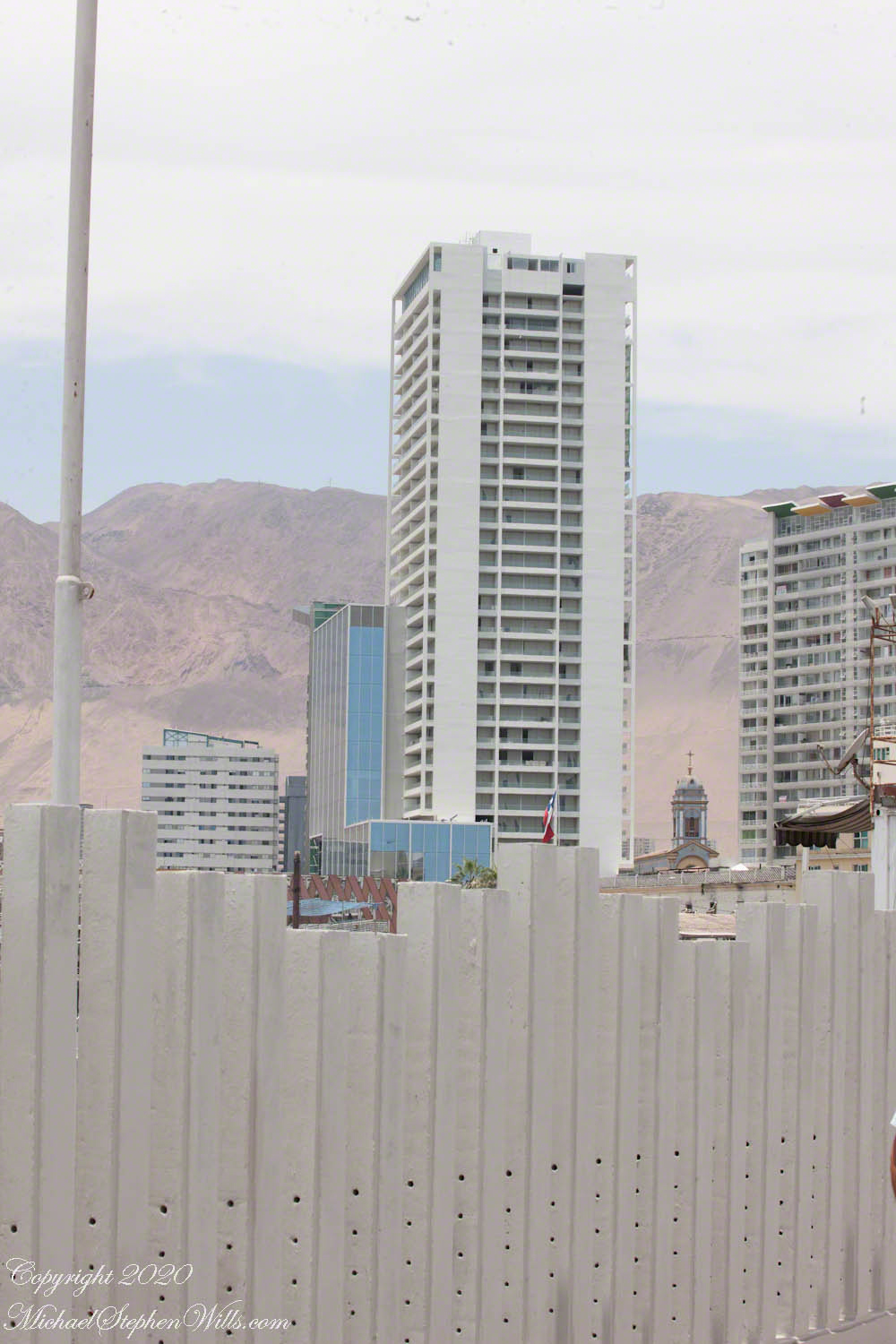
Downtown High rises soar above downtown
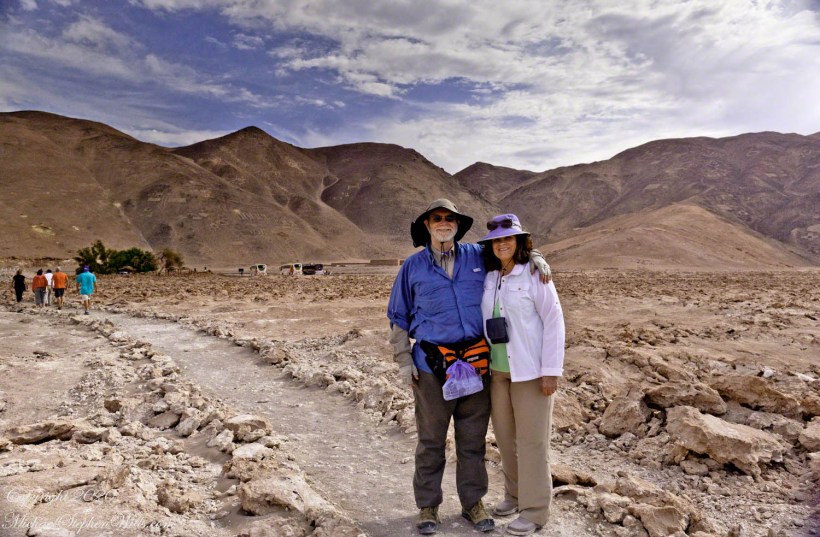
Touring this way can feel link a rodent maze, it was not our feeling at all. The groups maxed at 15, the guides friendly and knowledgeable, the tour buses luxurious. We enjoyed ourselves immensely. Here we are, later that day, dressed for adventure.
Mike and Pam Wills on tour at the Pintados Geoglyphs, Tarapacá, Chile within the Atacama desert.
Our itinerary for the day is to navigate through the city, across the desert to visit a World Heritage Site, Humberstone, and ancient geoglyph sites, touching on local ecology.
Another view of the Cathedral of the Immaculate Conception among the downtown high-rises of Iquique.
Here is our tour, time to hop on the bus, get going.
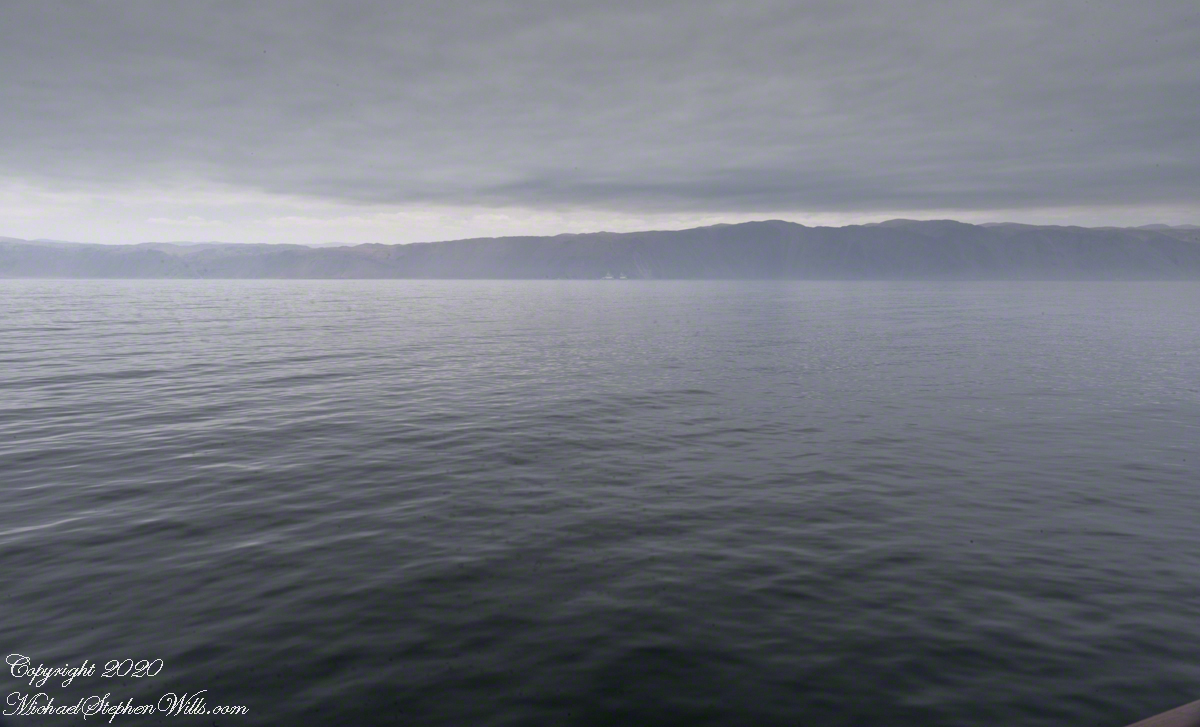
Ninety minutes after docking our assigned tender pulled away from the Regatta for a twenty minute trip to Iquique. A tender is a boat with an enclosed seating area designed to transport about twenty persons in quiet waters from an anchorage to port. I recall the morning announcement from the ship Captain advising use the winds were high (or the waves), and he negotiated a mooring with the port, instead of the planned docking, in order to save our visit to Iquique.
Click any photograph for a larger view and use Ctrl-x to zoom in closer.
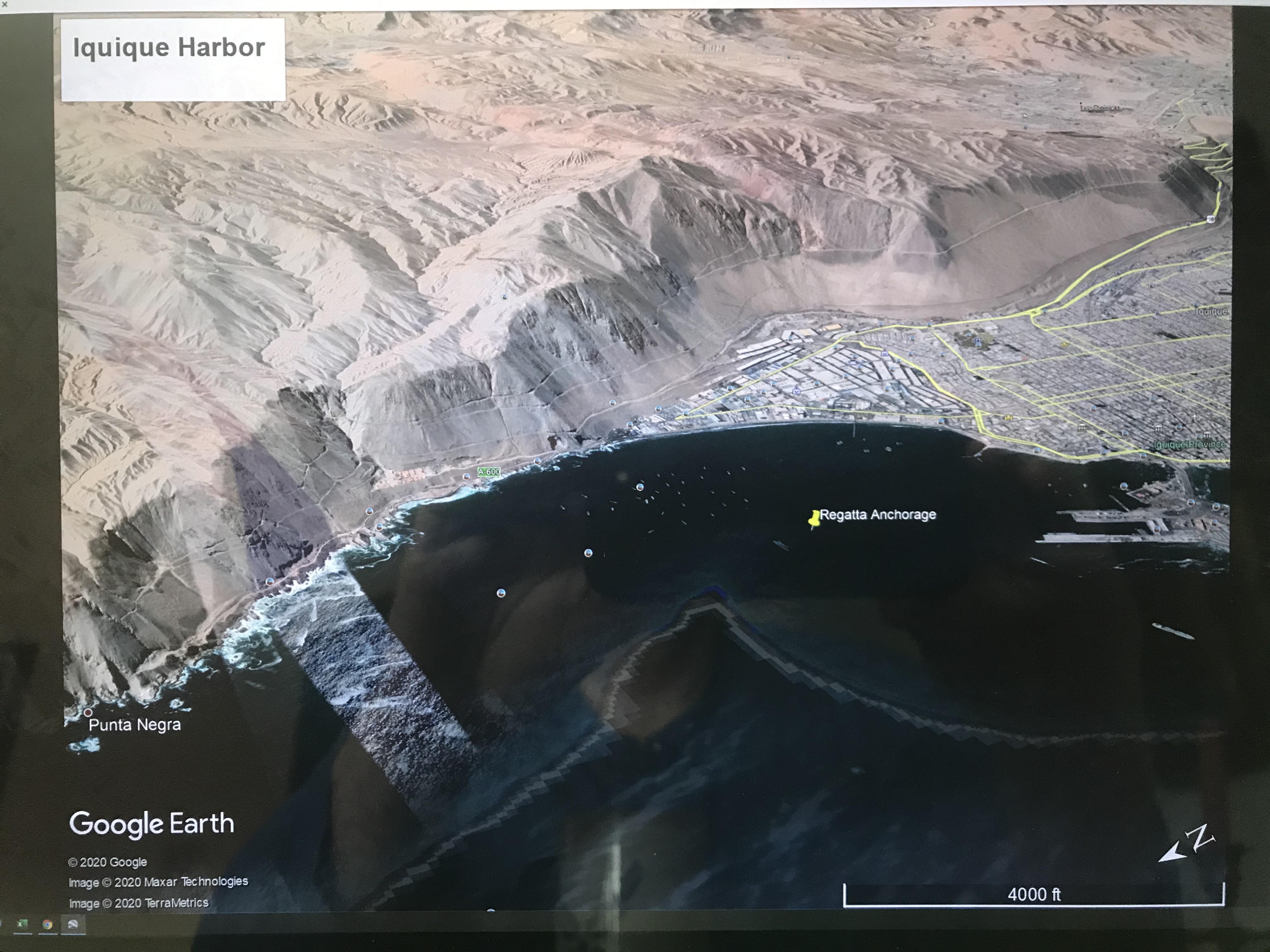
The approximate anchorage of the Regatta marked with a pushpin. The tender transported use from the Regatta to the base of the island port.
Above is a screen capture from Google Earth, the entire Iquique harbor is pictured from Punta Negra (see photo from yesterday) to the base of the island port connected to the mainland with a road. The tender port is at this base, on the shore side. If you wish, download the following PDF document with a clearer image. You will need a PDF viewer.
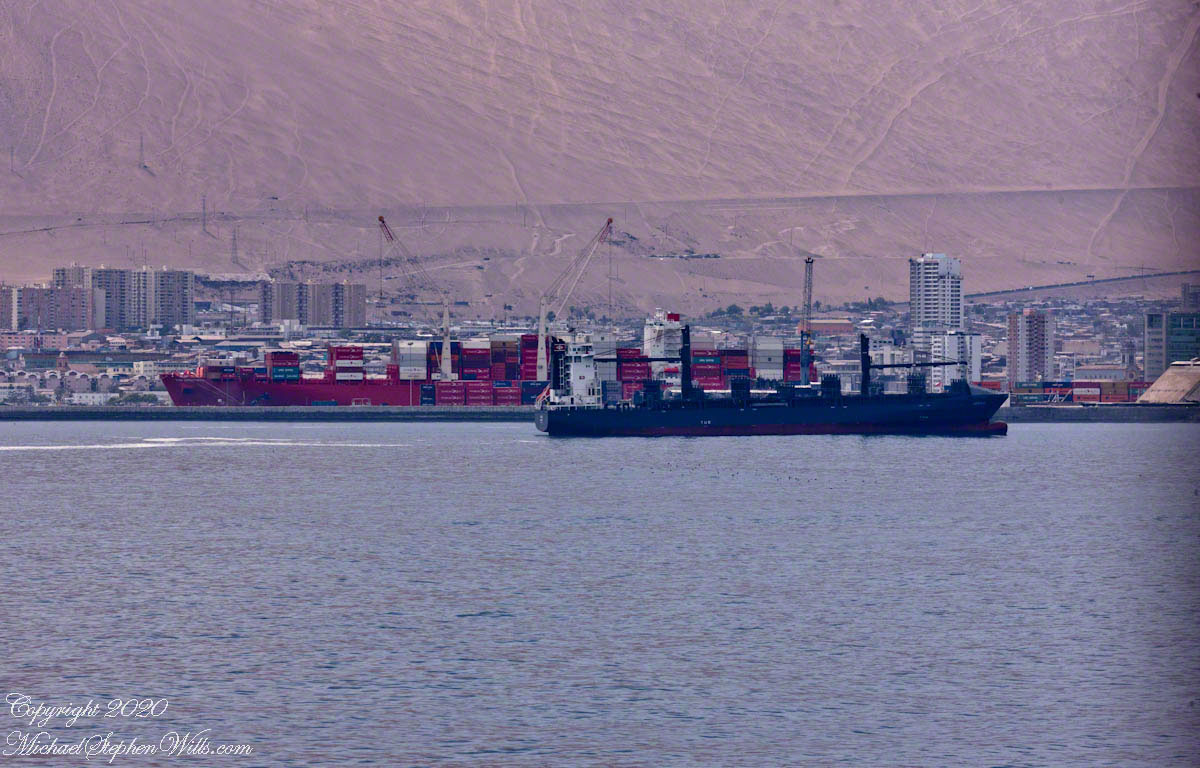
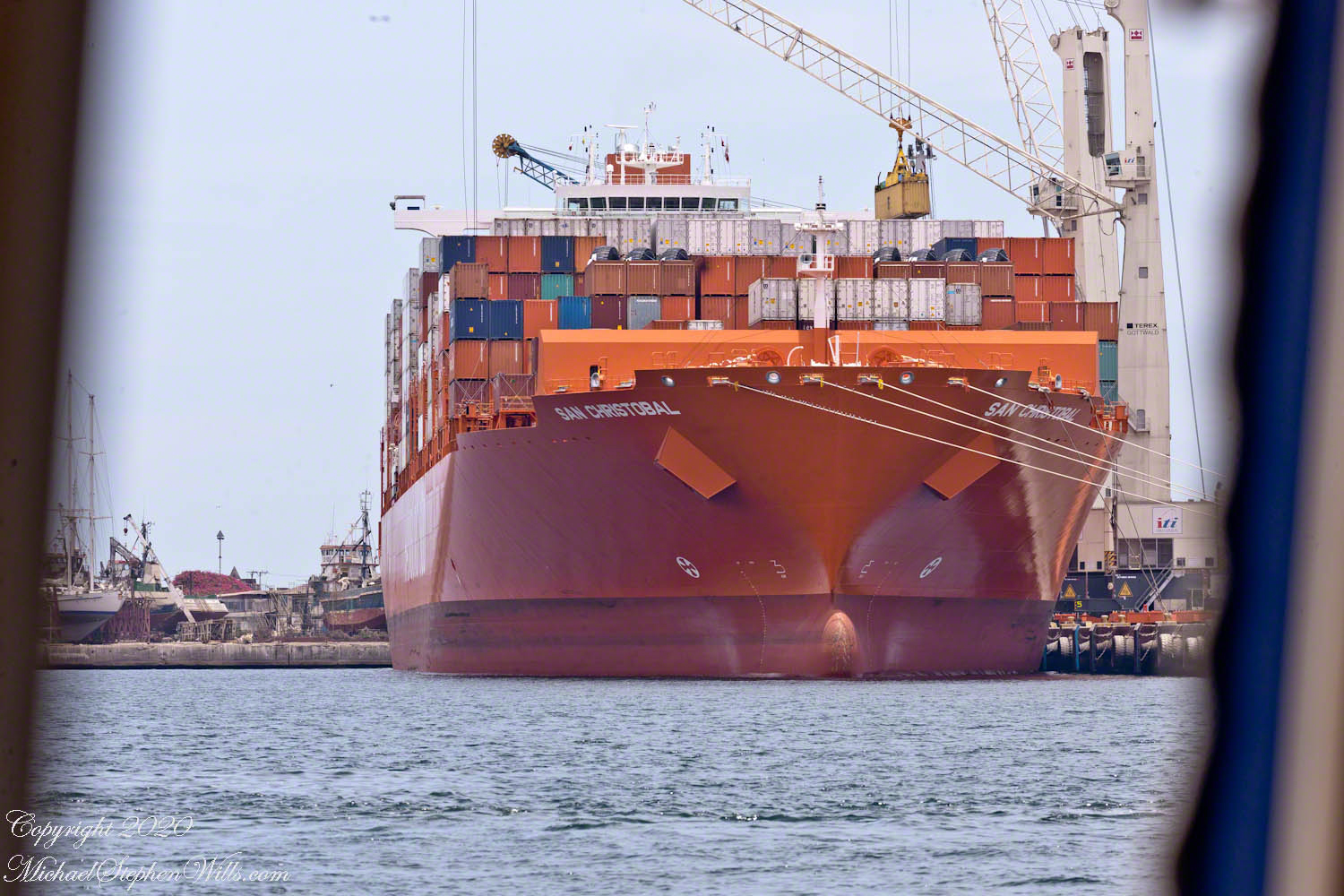
Shipping containers being unloaded from the container ship San Christobal.
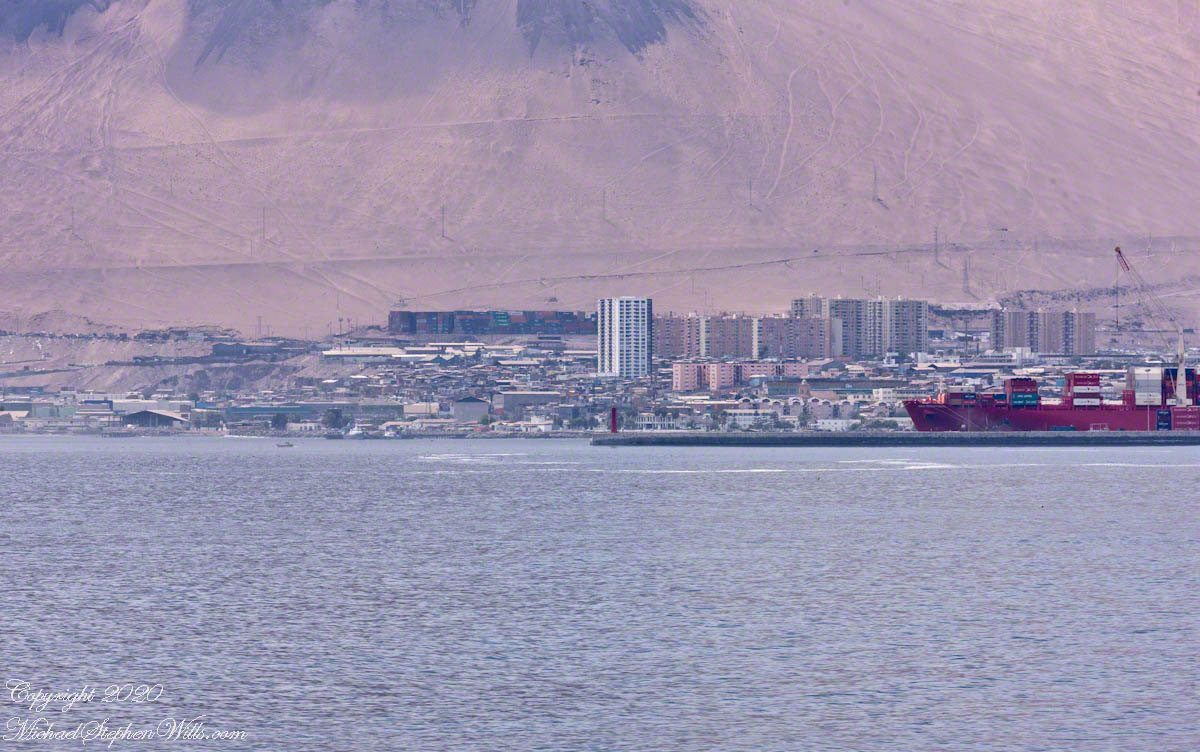
Here are some of the sights visible from the tender. I recall sitting next to the large rear window. Above is the large red container ship. From earlier posts, the San Christobal is docked at the outer berth. The ship is being unloaded, you can see a yellow shipping container on the crane.
Today, aneconomic reason for Iquque’s prosperity is the status as a duty free zone the government dubbed “ZOFRI.” Another is tourists flocking to this “Miami of South America” for duty free shopping (there is a mall), the shore lined with tall hotels and condominiums. Adventure-seekers love the surfing and hang gliding from the escarpment.
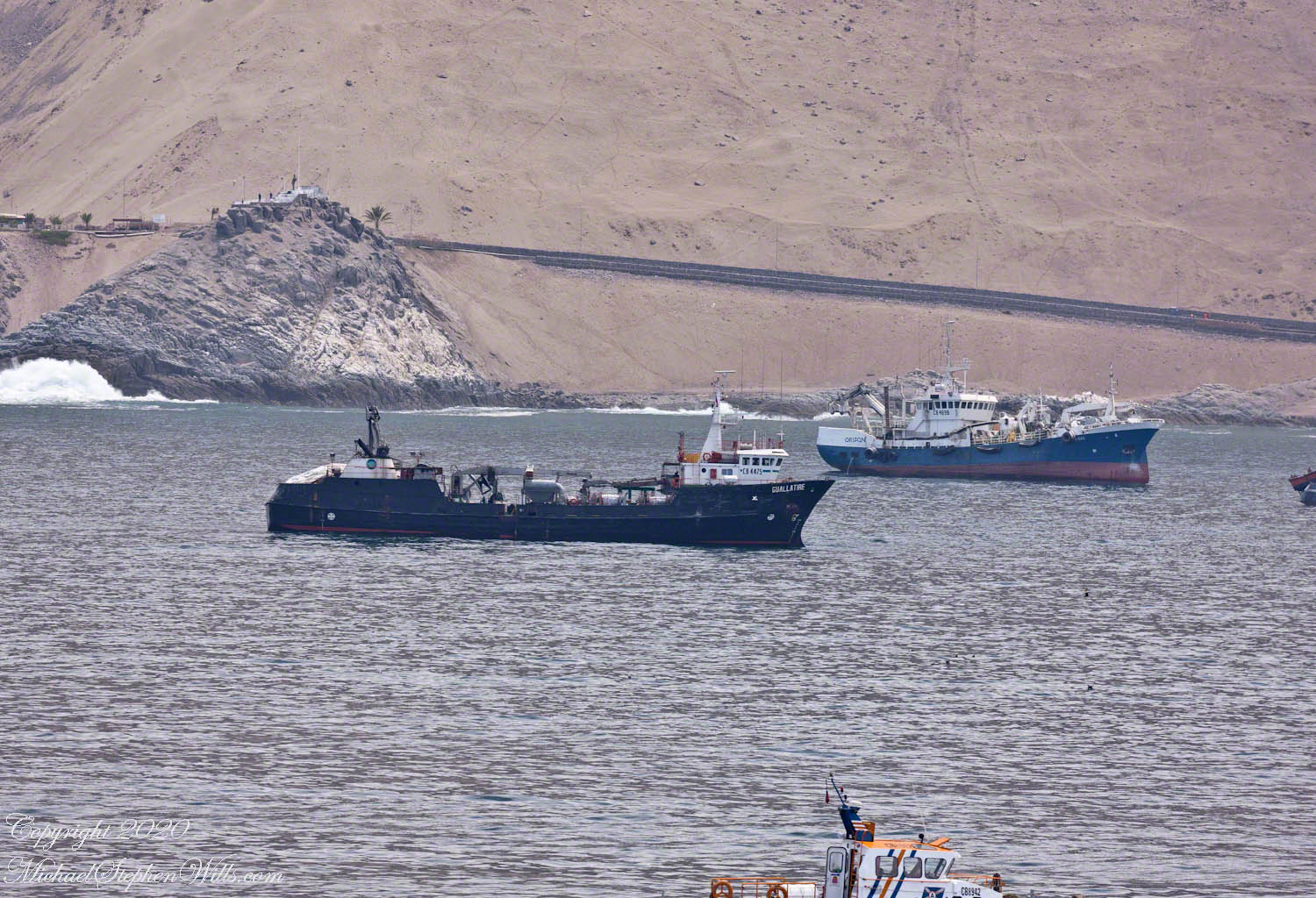
Notice the fishing nets in the stern with yellow floats
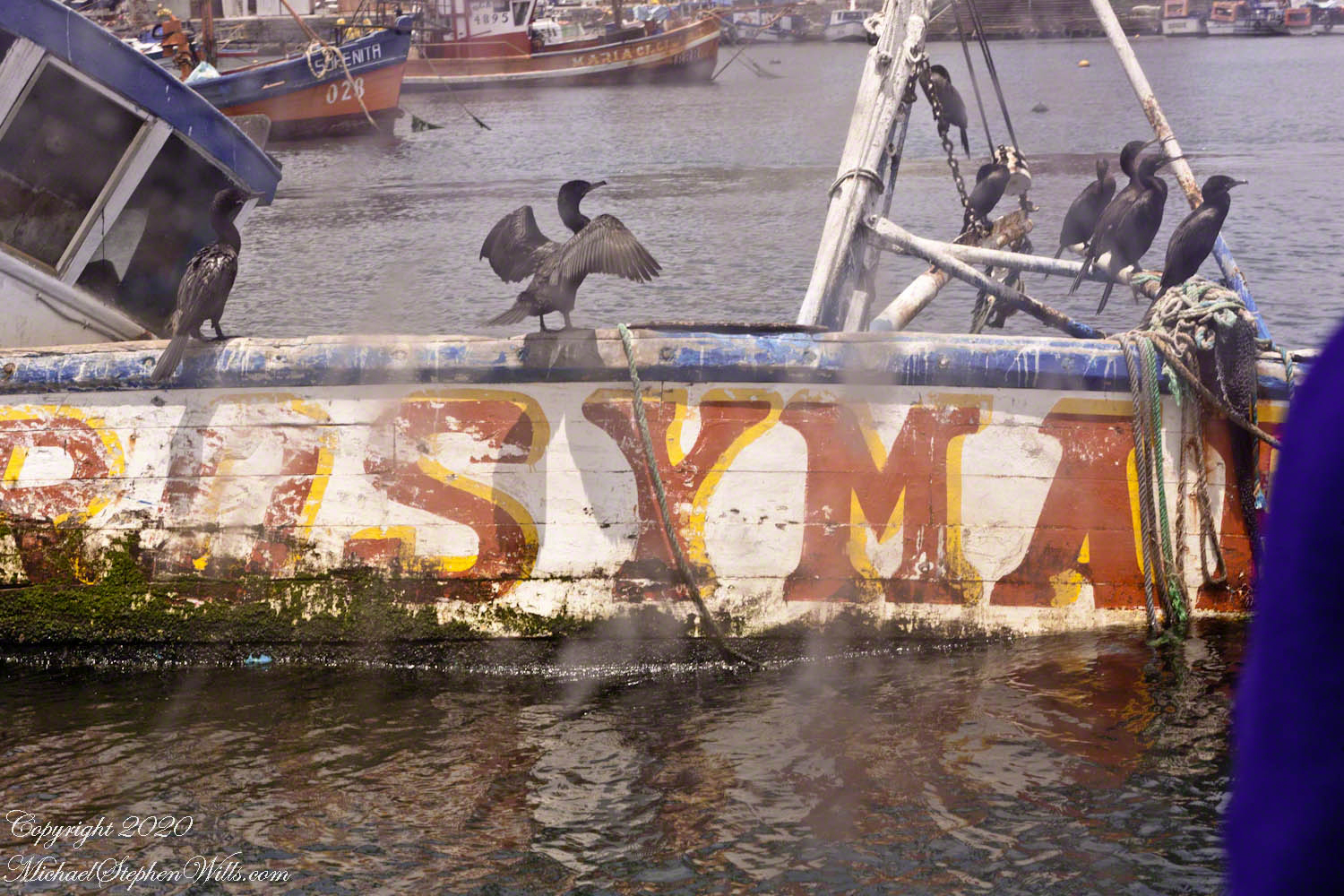
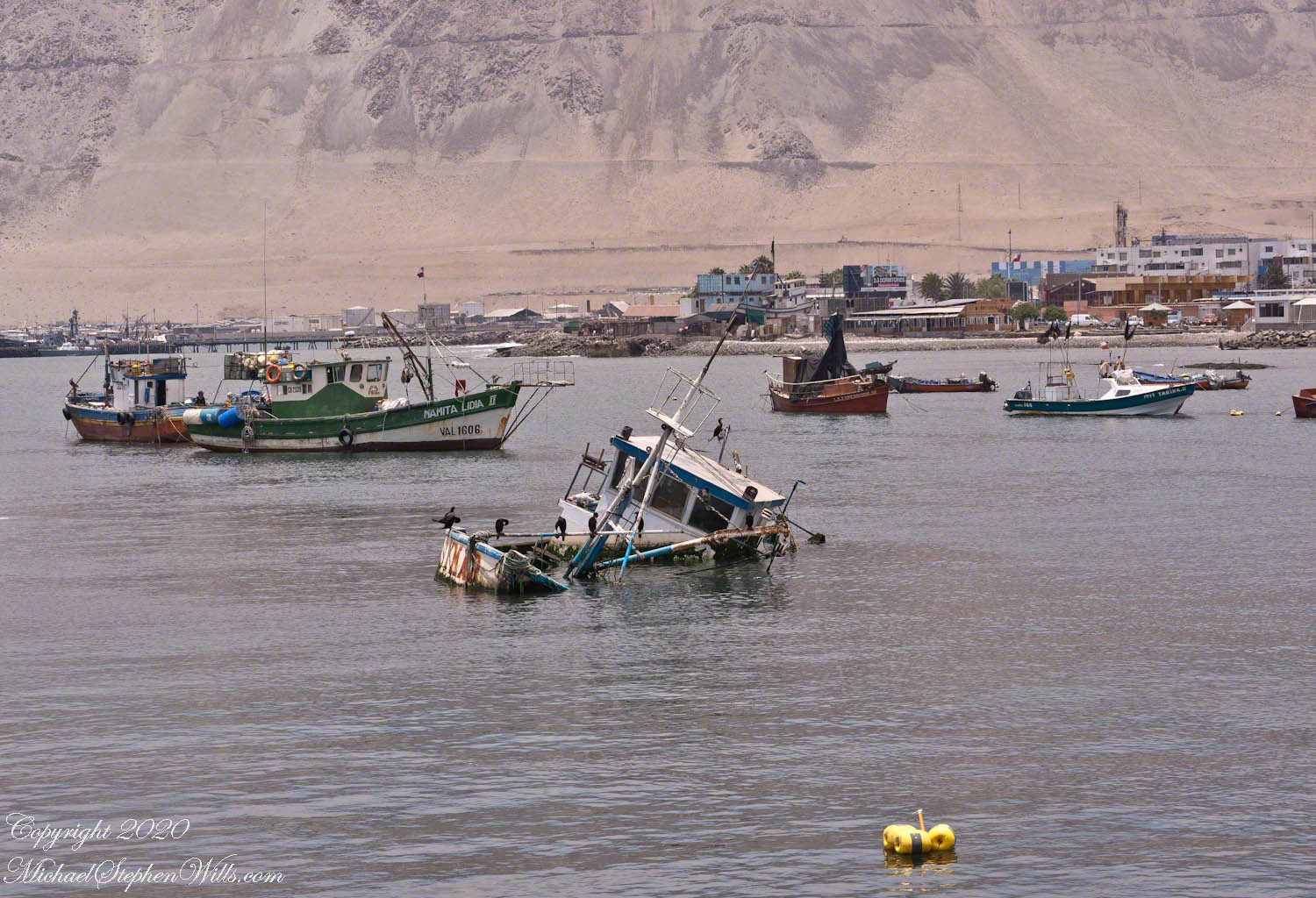
This is the scene close to the tender port, past mooring for smaller fishing and other boats.
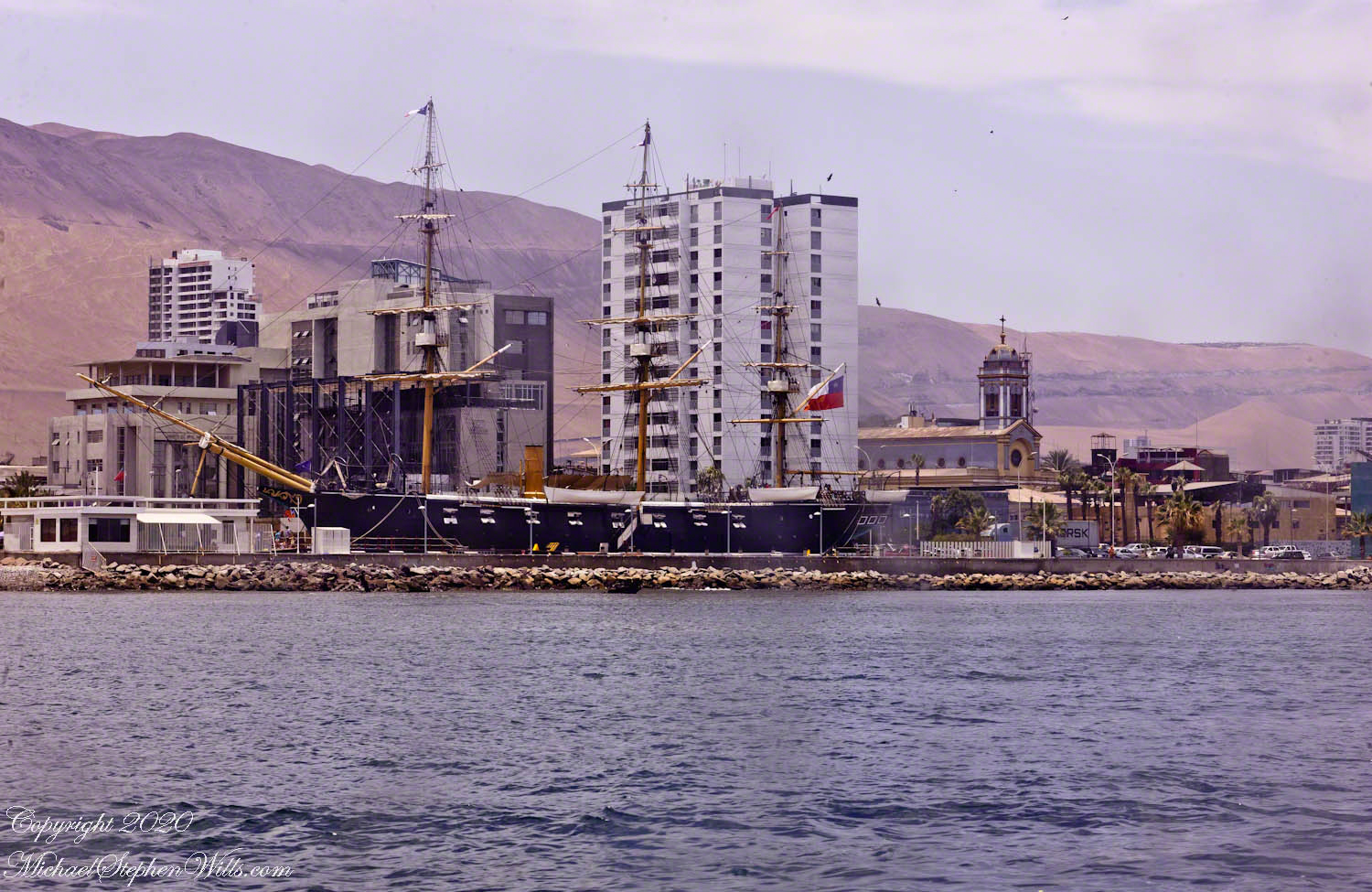
Replica of the Chilean navy ship Esmeralda sunk during the Battle of Iquique. It is a nautical “living museum.” From the website: “The museum script of the Museum ‘Emerald Corvette’ is represented by thirteen museum scenes that inspire the guided tour, where it was recreated what life was like on board on May 20, 1879, the day before the historic Pacific War day.” The Cathedral of the Immaculate Conception is to the right of the ship stern. Here is a previous post with more about the Esmeralda in historical context.
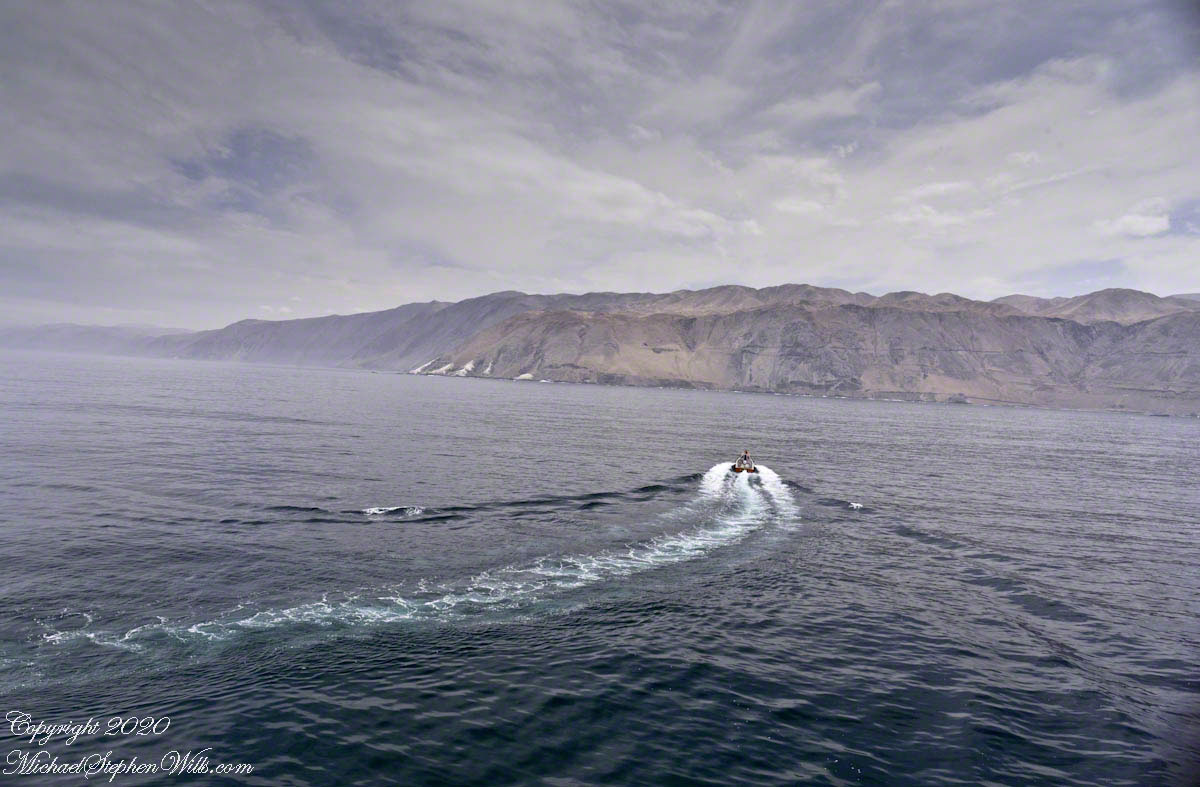
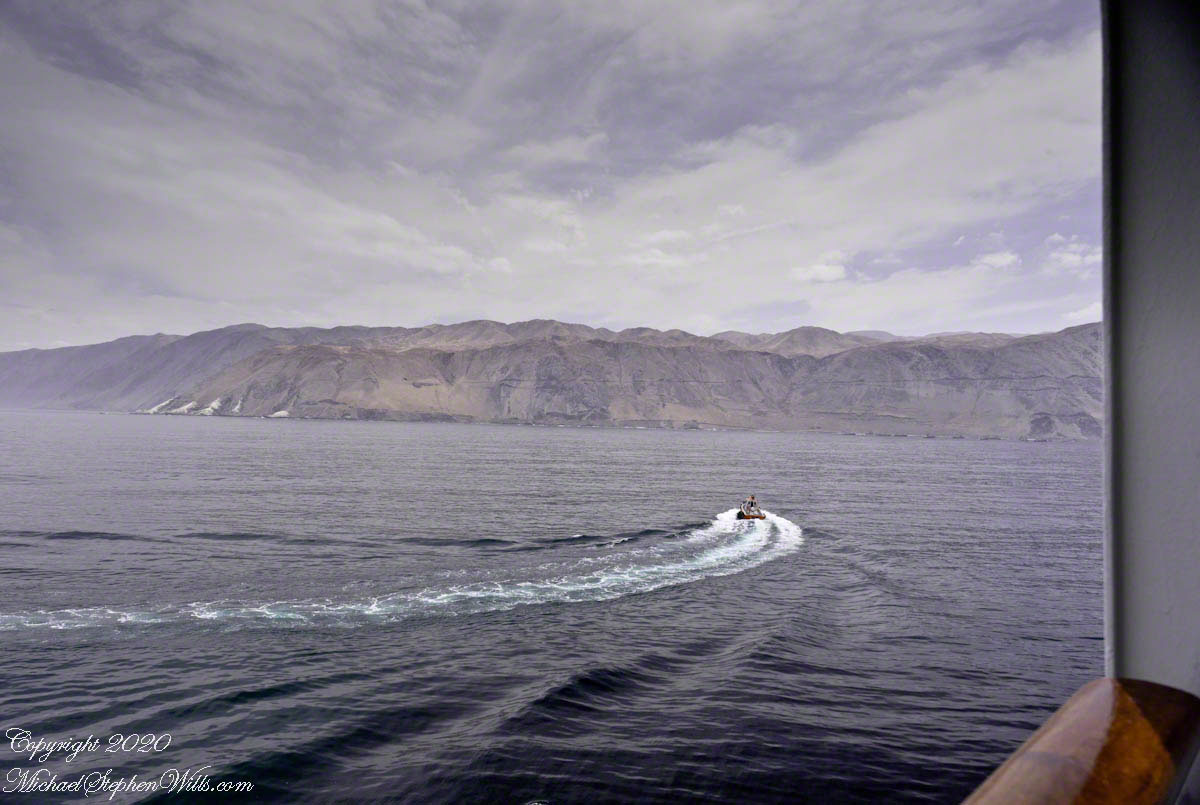
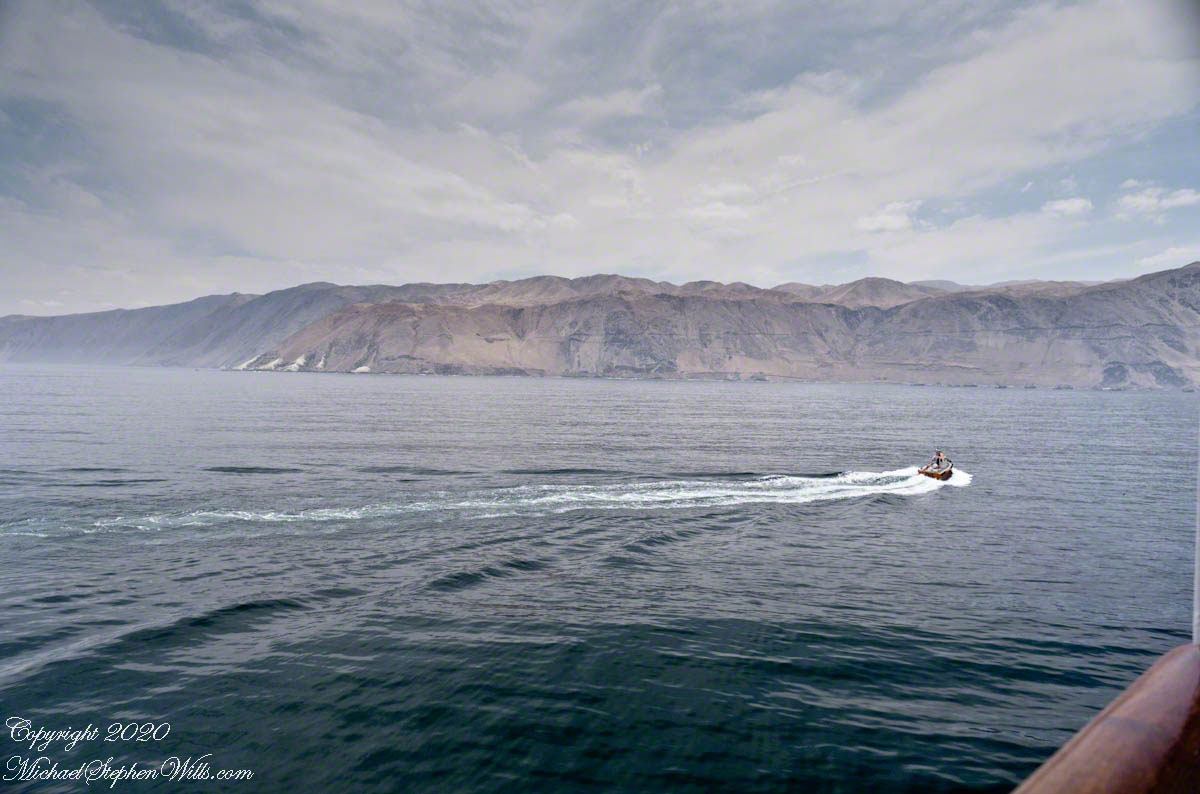
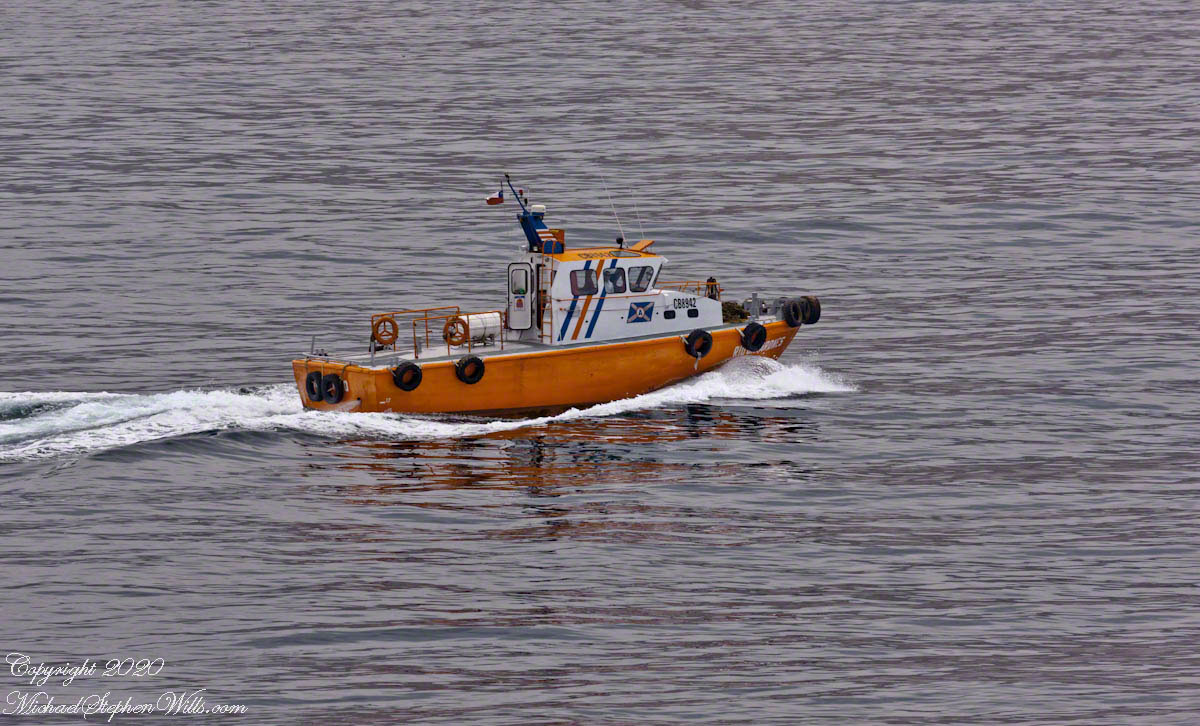
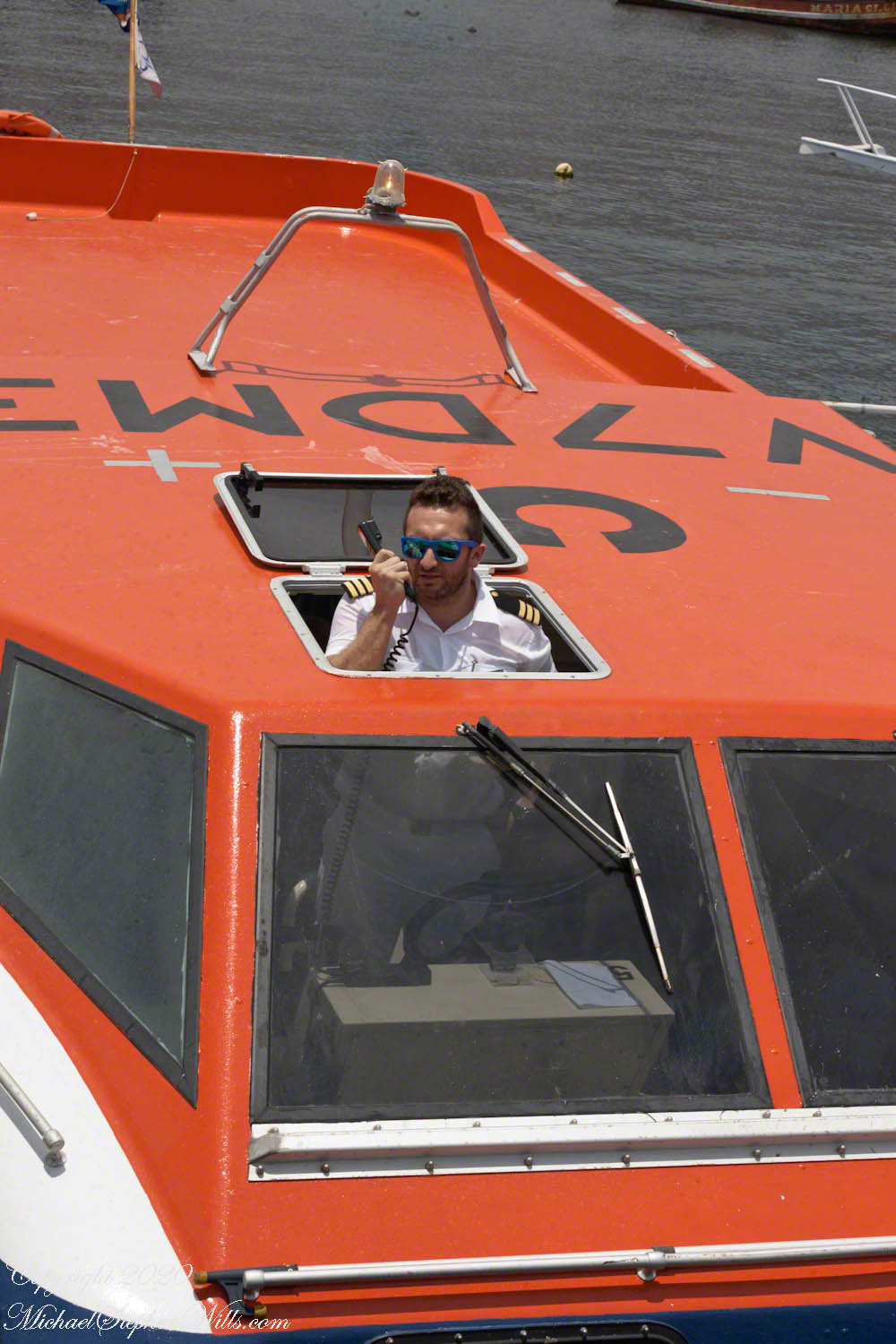
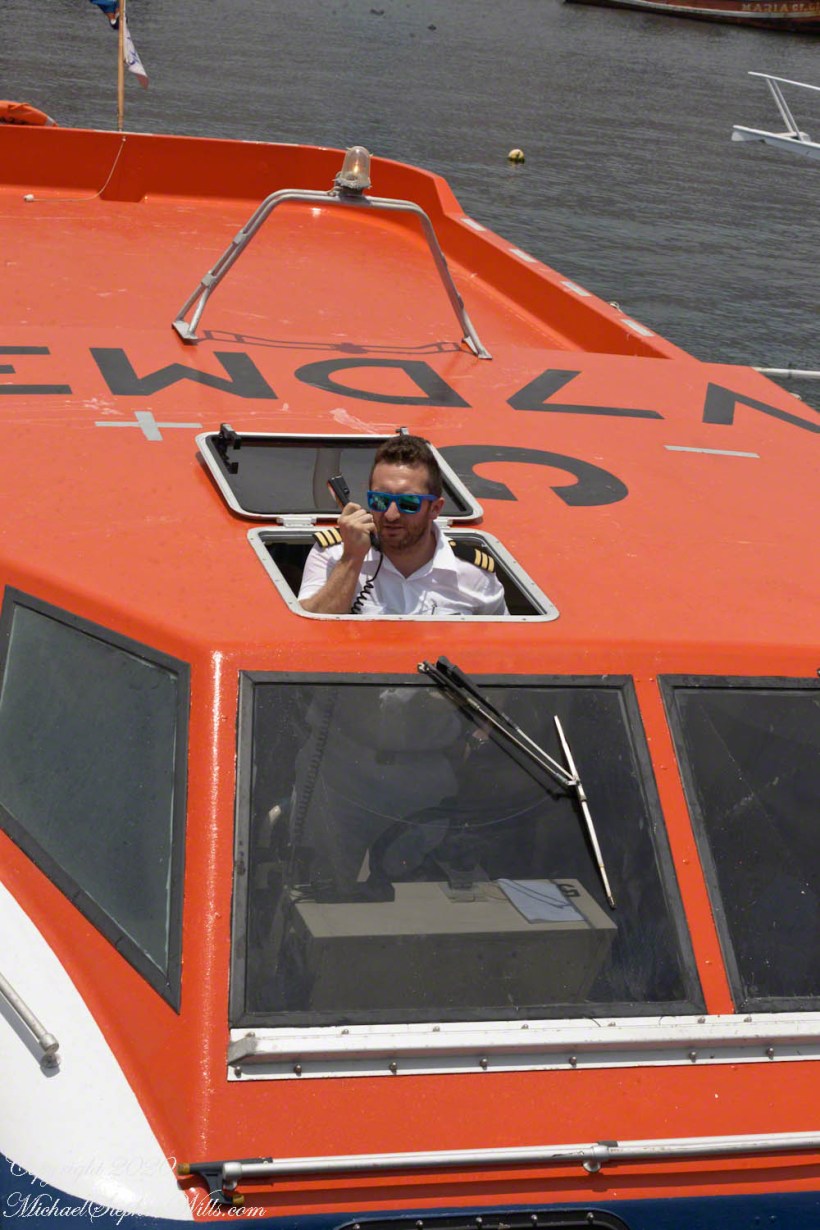
After disembarkation, I looked back for this shot of our tender pilot.
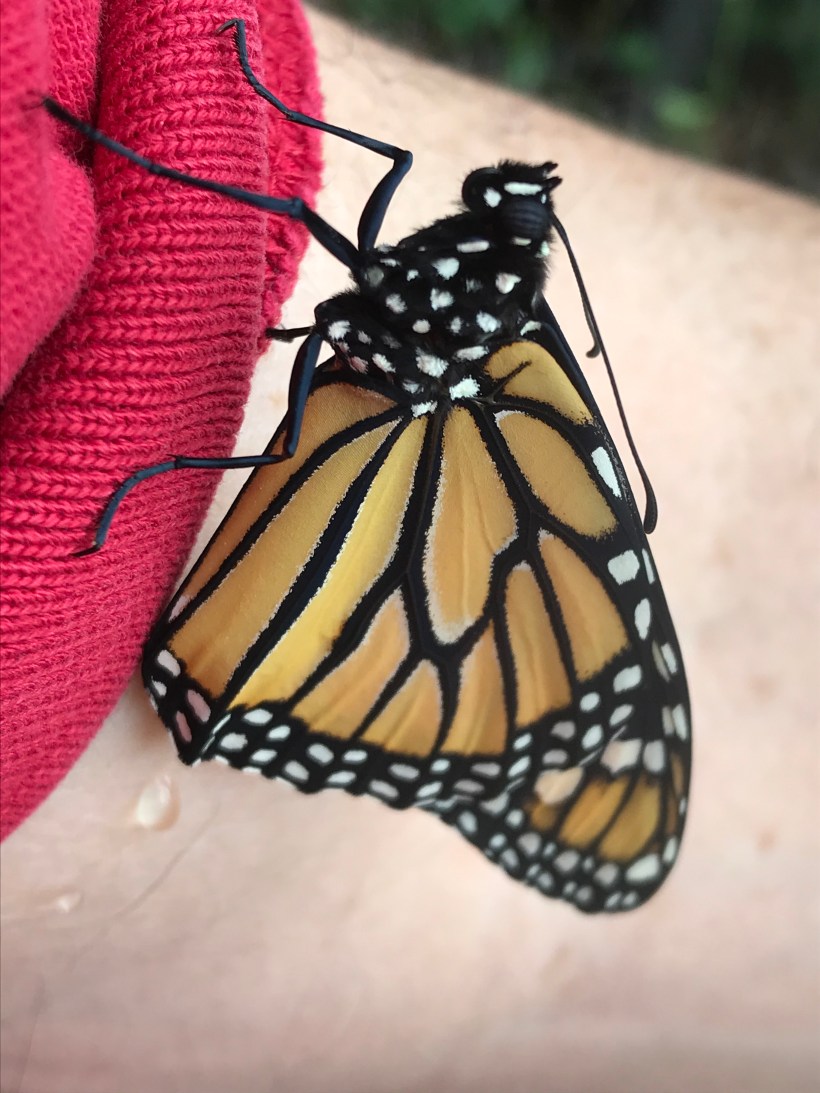
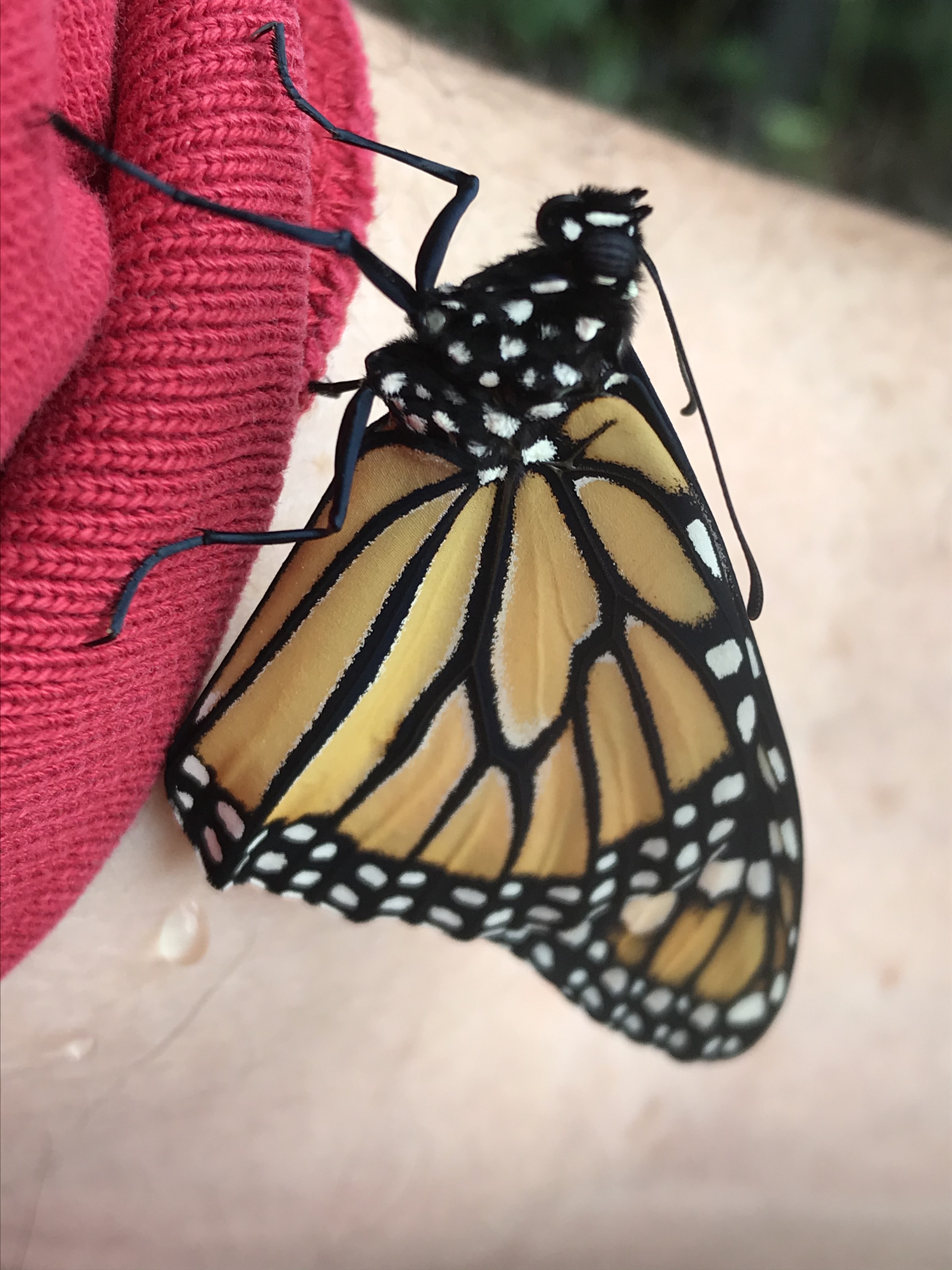
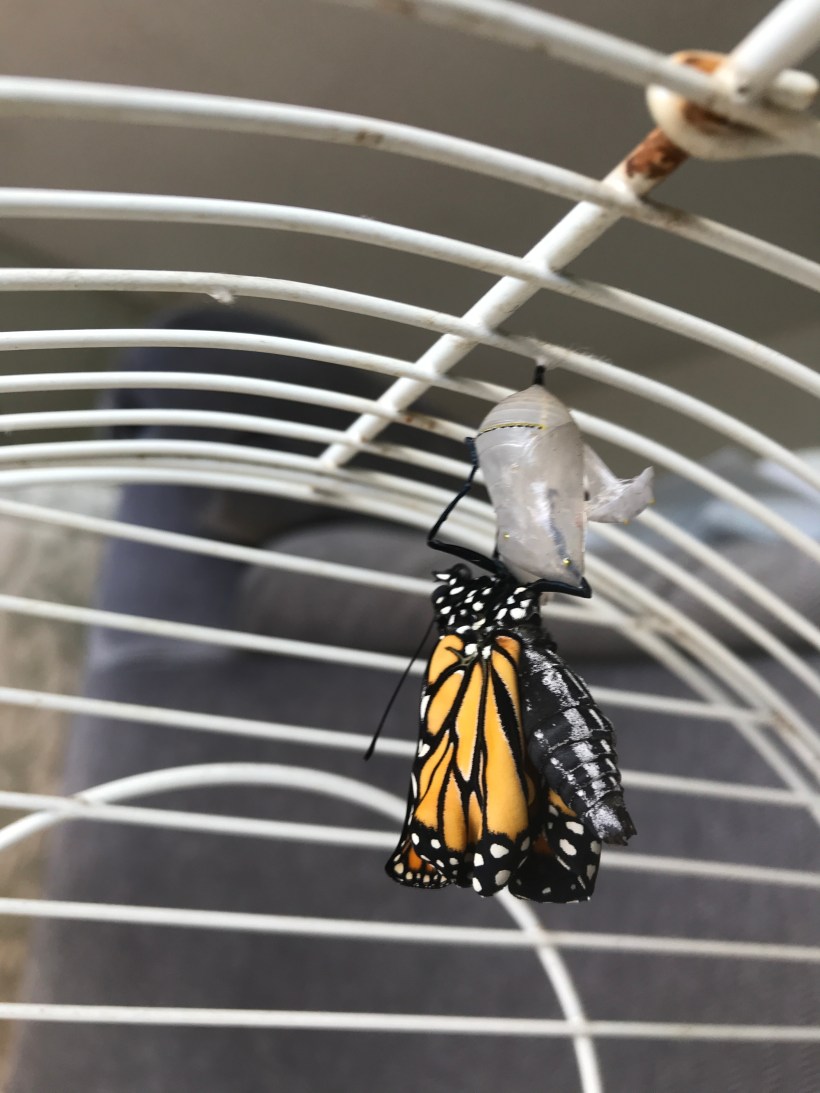
Clinging to my sleeve, the newly emerged Monarch wings dried. It is a process of excreting the fluids pumped into wings, crumpled from folding within the chrysalis, to expand them. The clear drips of water on my arm are this fluid. I spent the hour sitting by our pool, savoring the summer morning. The butterfly signaled readiness, wings dried and hardened, opening and closing them slowly. Offered my finger it crawled to my hand, across to the thumb and, running out of space, took off.
Click photograph for a larger view and use Ctrl-x to zoom in closer.
Emerged from the chrysalis a butterfly’s wings are crumpled, useless. Here it is fifteen minutes into freedom after abdominal fluid is pumped into the wings, opening them. Full of this fluid, the wings are soft, still useless.
Click photograph for a larger view and use Ctrl-x to zoom in closer.
Our monarch butterfly sanctuary is a dense stand of milkweed, over the years the established plants grow rapidly late May through June, blooming in July. The flowers have an incredible scent, attracting numerous pollinating insects.
A colony of pesky sparrows nest nearby. In spite of a reputation for tasting bad, the sparrow actively feed on the hatched caterpillars. My strategy is to examine the plants early morning, placing rescued caterpillars in this old birdcage.
Click photograph for a larger view and use Ctrl-x to zoom in closer.
The caterpillars and milkweed leaf is placed on the cage floor. I pile up the dried leaves, replacing with fresh each morning.
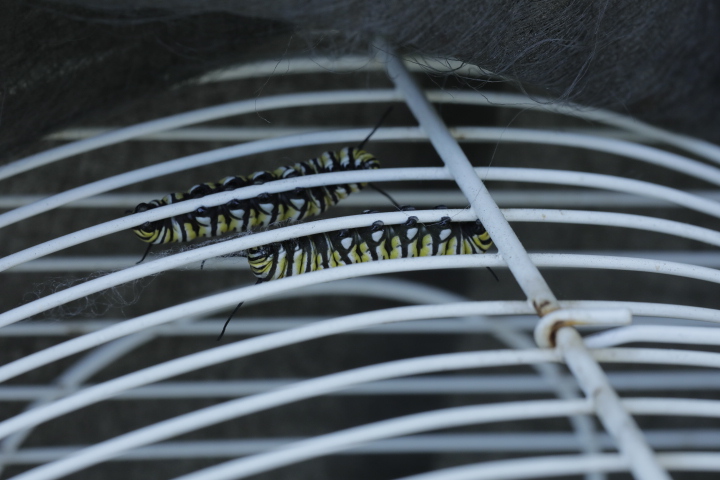
Sadly to report, the last, ravenous caterpillar stage is also carnivorous, cannibalistic. These two, below, were the only ones left except for one in the pile of dried leaves.
Here is a closer view of the two fifth stage instars searching for a safe location to pupate.
A few hours later one has successfully created a silk pad, attached itself and assumed the “J” shape. To the left a second caterpillar and silk pad.
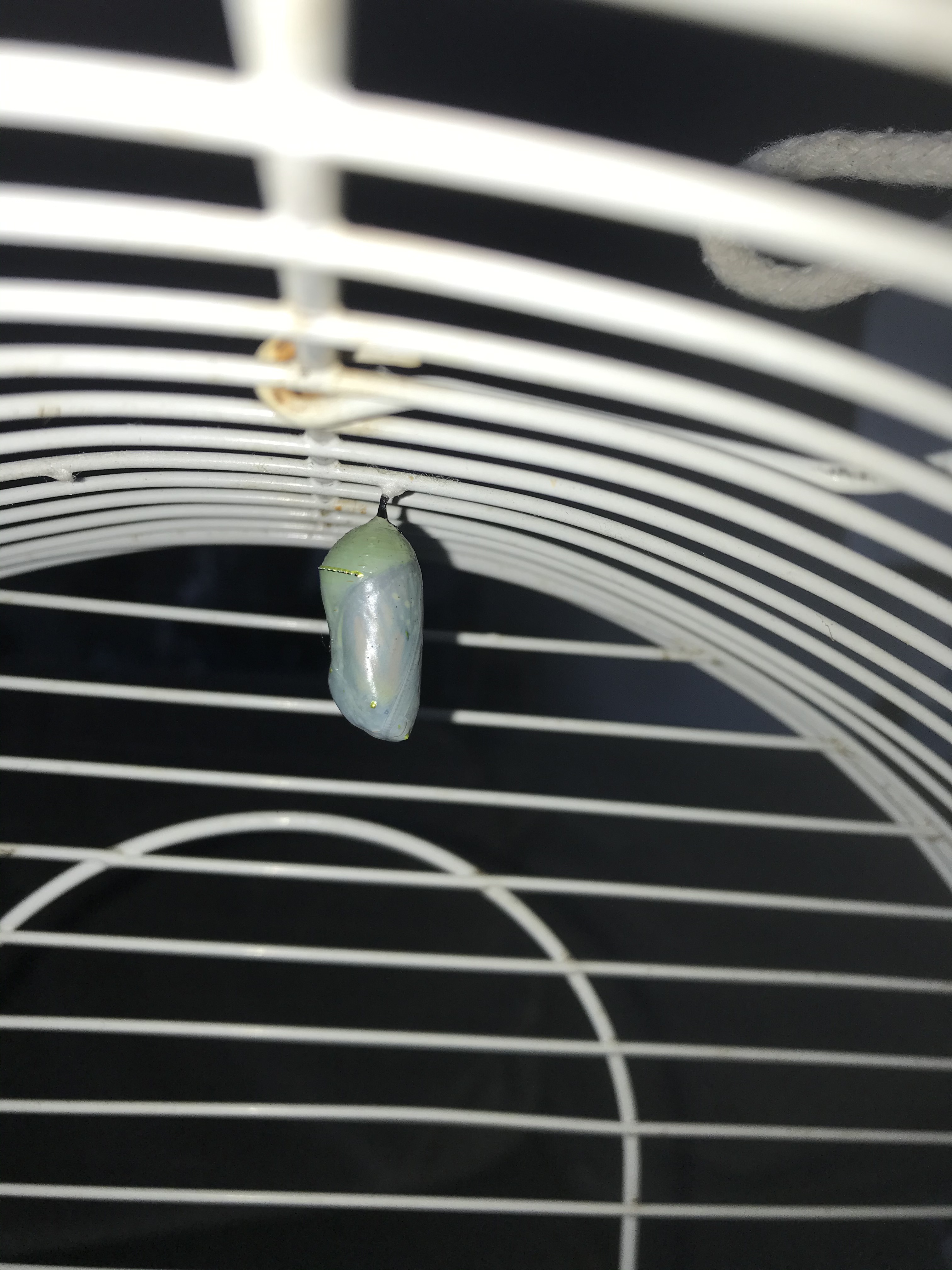
The next morning, the first has formed a chrysalis. The second, hung spent.
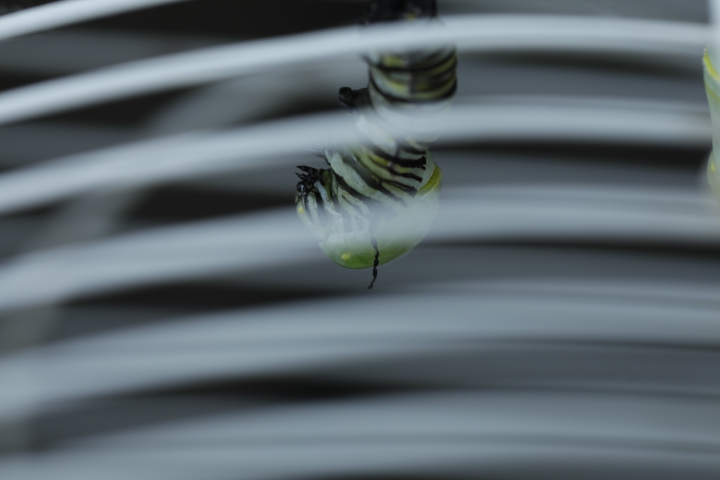
This unsuccessful individual never completed the chrysalis, dried up and fell. My sources write the pupa transforms to a chrysalis through shedding of skin, the following photograph tells a different story. The chrysalis appears to extrude from the skin; arising over, or from, the skin rather and beneath it. I have never recovered a shed skin underneath a successful chrysalis.
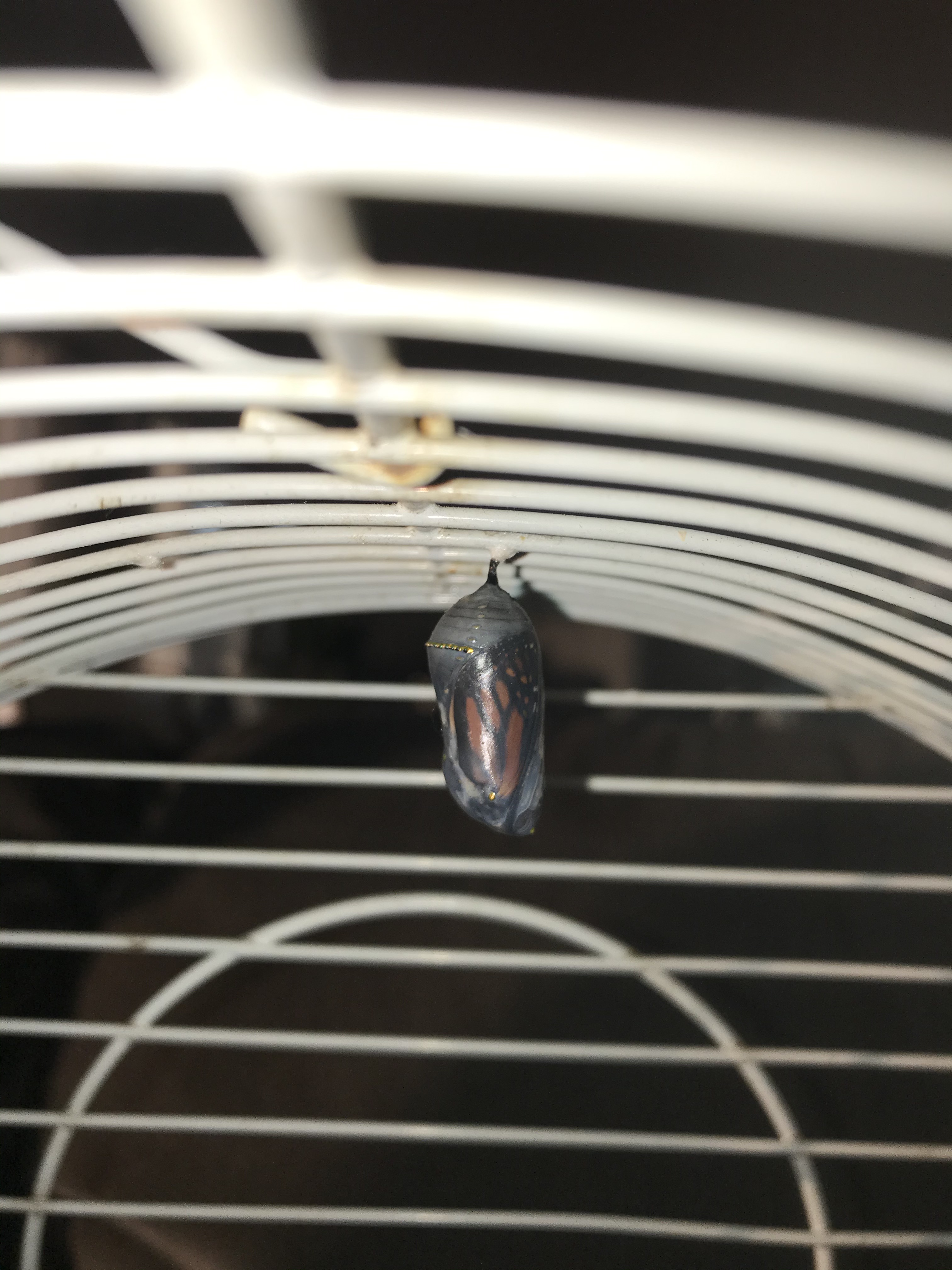
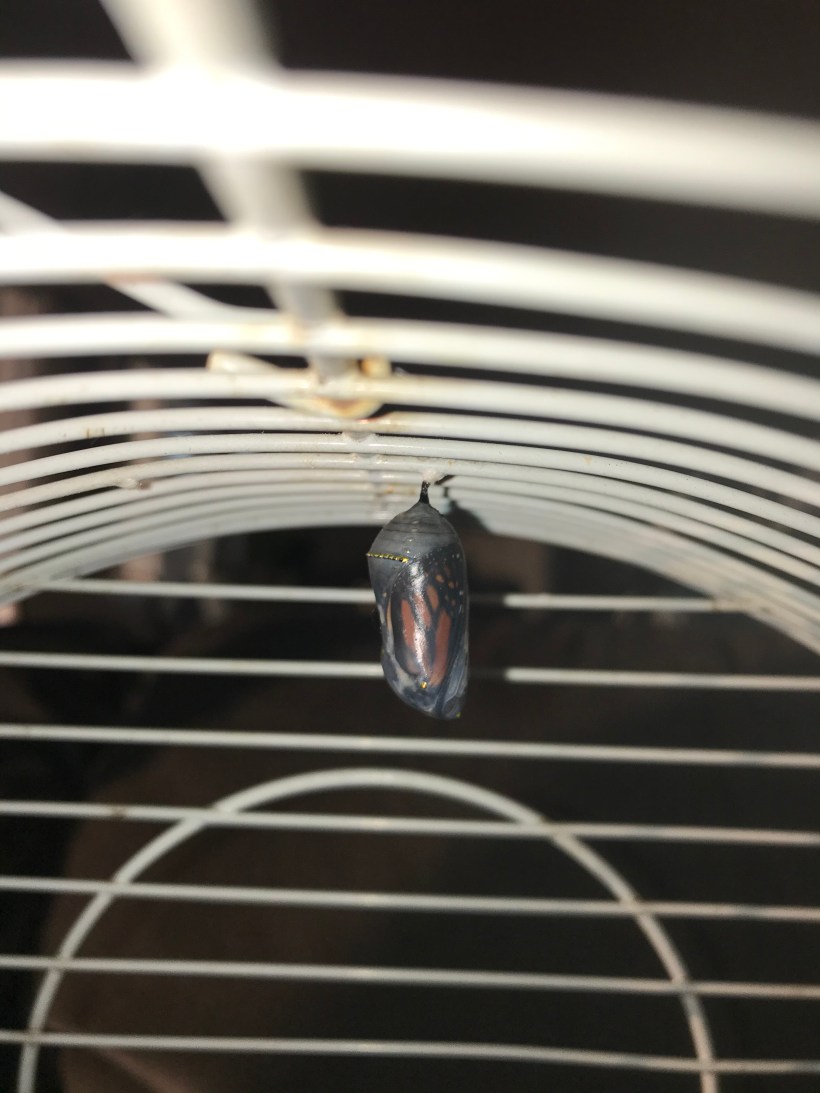
Nine days later, Tuesday, July 28, the chrysalis hangs. I check several times a day.
These photographs are from a 100mm “macro” lens, handheld. The birdcage works well for protecting the monarchs. Is a poor location for photography.
Thank You for visiting.
Copyright 2020 Michael Stephen Wills All Rights Reserved











 Michael Stephen Wills Photography