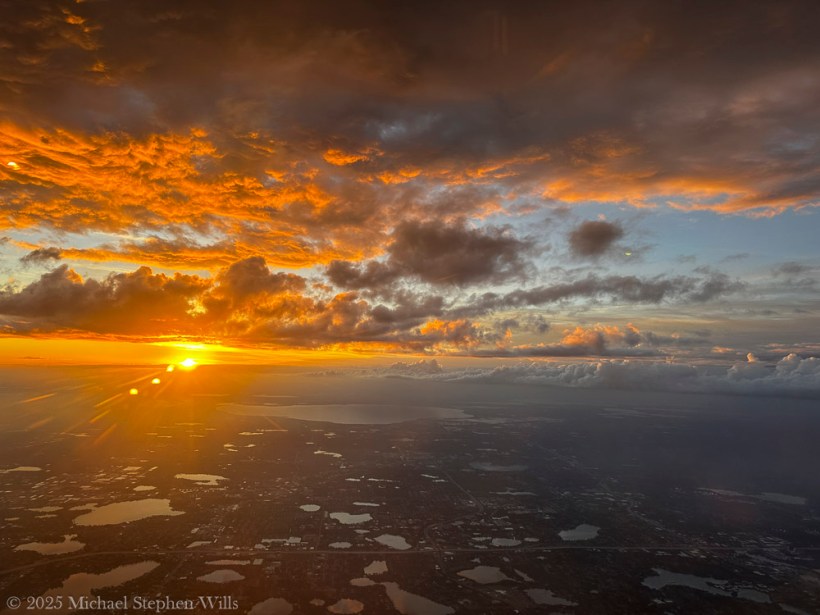
Engines roar as planes await departure, soaring into vibrant sunsets. The sky transforms with colors, revealing a reflective world as night gradually takes over.
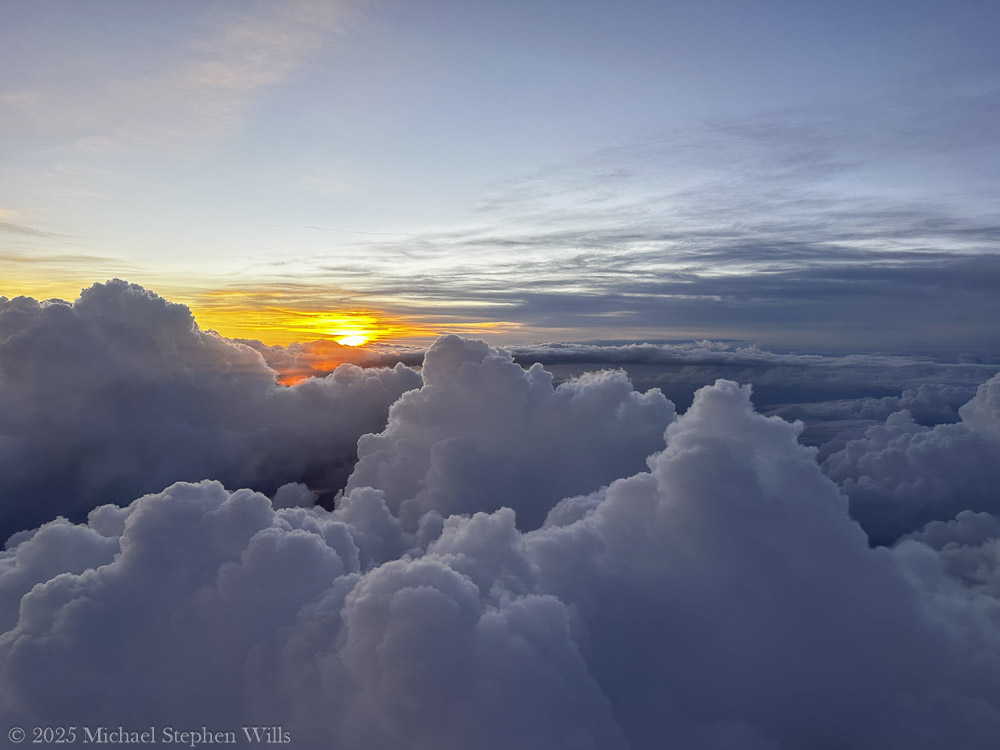
Bright was the sky as the engines awoke with a rumble of thunder, Rolling the tarmac in echoes of journeys yet destined for wonder. Cloudbanks assembled in towering billows of silver and shadow, Lifting their faces to heaven, where sunlight had painted them golden.
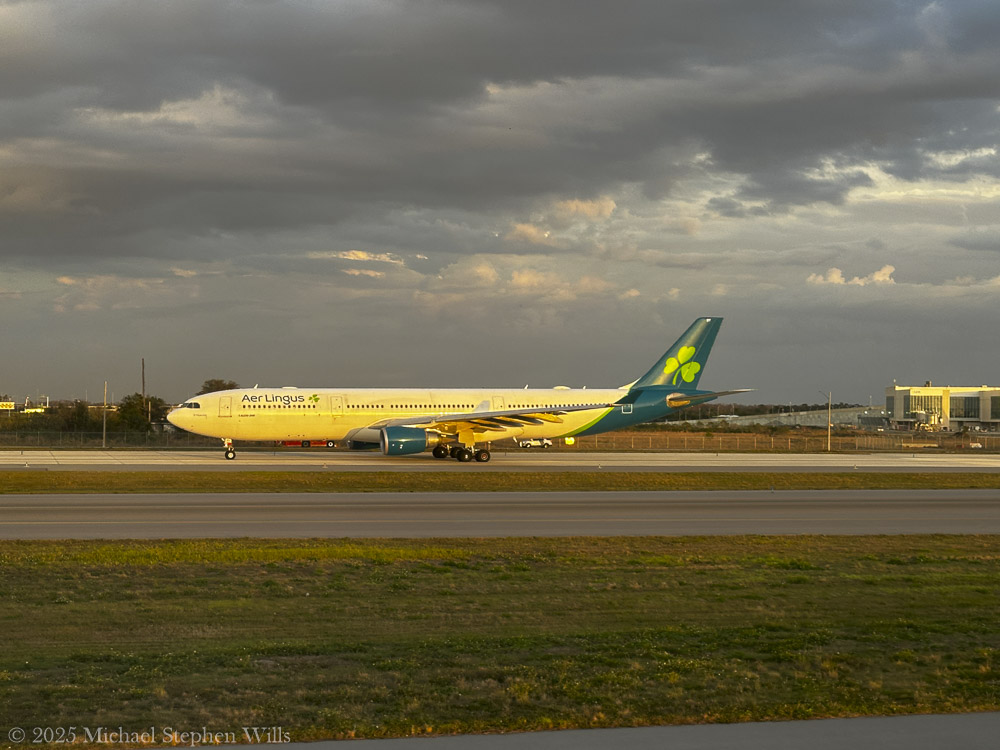
Far on the edge of the runway, the steel-winged vessels lay waiting, Southwest and Delta, their banners aloft in the warm evening fading. Emerald-liveried Aer Lingus, a voyager bound to the island, Glided in grace on the threshold of travel through luminous currents.
Wheels left the earth with a whisper, a moment of weightless suspension, Gravity yielding to flight as the city unrolled far beneath us. Golden horizons drew rivers of fire through infinite heavens, Burning the clouds into embers that drifted in luminous torrents.
Upward we soared, where the world lay in pools of cerulean mirror, Lakes interwoven like jewels, reflections of sunfire descending. Billows of vapor, like castles of foam on the rim of creation, Tumbled and rolled into canyons of mist in the twilight’s dominion.
Flame on the wings, where the heavens ignited in hues of vermilion, Rays from the sun, like a god’s final whisper, embracing the skyline. Shadows arose in their silence, dissolving the last glow of daytime, Stars in their vigil awakened as night claimed the realm of the heavens.
Enter your email to receive notification of future postings. I will not sell or share your email address.
Copyright 2024 All Rights Reserved Michael Stephen Wills
While beachcombing I witnessed an awe-inspiring moment where tranquility meets military prowess.
Discover the captivating blend of nature and technology in my latest post.
As I approached the placid stretch of sand known as Second Beach, adjacent to the Patrick Space Force Base, the Atlantic breeze carried a tang of salt that mixed with the distant, almost imperceptible hum of powerful engines. The sand, still cool beneath my feet, bore the imprints of morning walkers and the scuttle marks of sandpipers. It was a peaceful canvas, soon to be underscored by the might of aviation prowess.
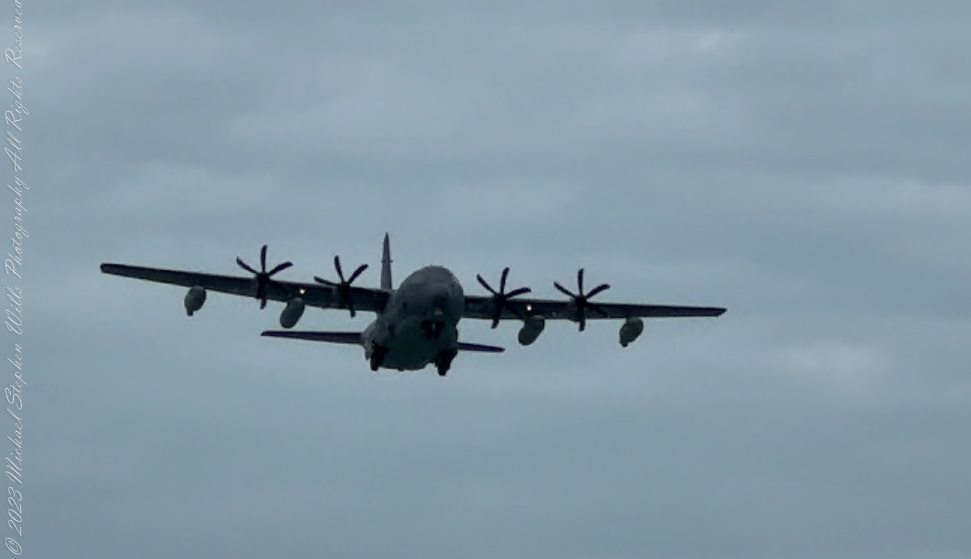
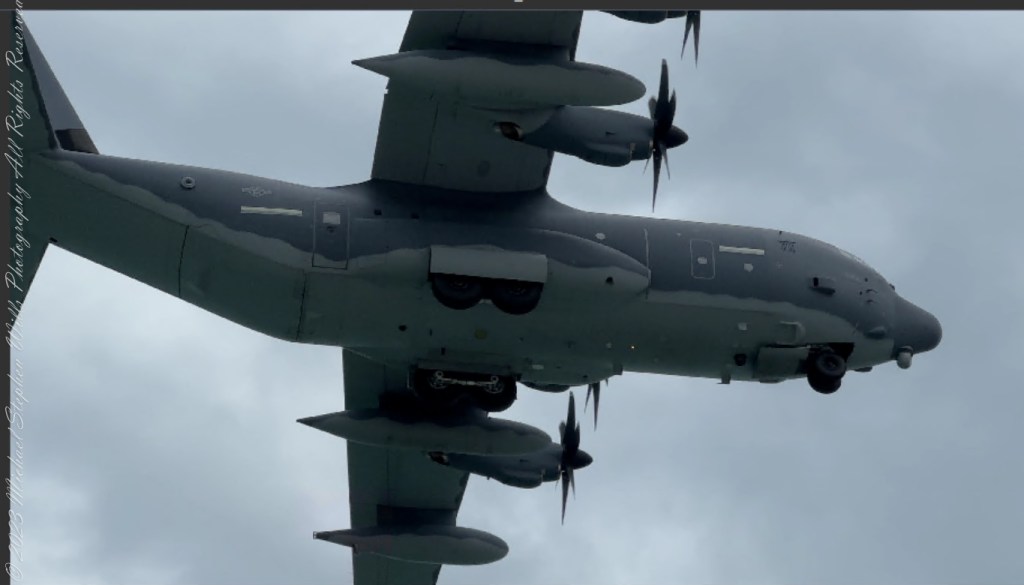
Having walked barely a tenth of a mile along the shoreline, the tranquil horizon was interrupted by the advancing silhouette of the Lockheed Martin C-130J Super Hercules. The Hercules, a titan of the skies, made its approach, its four Rolls-Royce AE 2100D3 turboprop engines altering the cadence of the ocean’s whispers. There’s a unique blend of awe and humility one feels in the presence of such human engineering, a craft capable of touching the farthest reaches of the globe, delivering hope or strategic might with equal prowess.
The Lockheed Martin C-130J Super Hercules is an extensive update of the C-130 Hercules, primarily involving new engines, avionics, and structural improvements. Here’s a more detailed look into the aircraft’s features and capabilities:
Engines and Performance:
The C-130J is powered by four Rolls-Royce AE 2100D3 turboprop engines, each driving a six-bladed composite propeller.
It’s capable of taking off from unprepared runways for expeditions, emergencies, or other complex missions.
Avionics and Systems:
The flight deck features modern avionics with heads-up displays (HUDs) for each pilot and advanced navigation systems.
It is equipped with a digital autopilot, improving performance and reducing crew workload.
Capacity and Versatility:
The C-130J can carry more than 40,000 pounds of cargo and has a range of about 2,000 nautical miles with a 35,000-pound payload.
It can accommodate a wide variety of cargo, including vehicles, pallets, and personnel or airdrop loads.
The aircraft is air-refuelable, extending its range for prolonged missions.
Design Improvements:
Enhanced structural design allowing for a greater lift and having a higher maximum takeoff weight than previous C-130 models.
The “J” model incorporates a longer fuselage than the original C-130H.
Operational Use:
The C-130J is used by the United States Air Force, the Marine Corps, and the Coast Guard, as well as numerous allied nations around the world.
Its roles include medevac, airborne assault, search and rescue, scientific research support, weather reconnaissance, aerial refueling, maritime patrol, and aerial firefighting.
Upgrade and Maintenance:
The C-130J has been continually updated with new technology and systems since its initial deployment to maintain its operational capabilities and extend its service life.
A robust maintenance and upgrade program supports global operations in varied and harsh environments, ensuring readiness and reliability.
With its combination of speed, range, and airlift
As the Hercules descended, its shadow enveloped my position, transient and thrilling. The aircraft’s formidability was evident in the robust structure and the propellers cutting through the air with surgical precision. The six-bladed composites, in harmonious rotation, seemed like the spokes of some celestial chariot, ushering the giants of the sky onto the earthly stage. Even as it neared the runway, the versatility of the Super Hercules was unmistakable; crafted for austere conditions, yet here it was, gliding over a picturesque landscape, a sentinel on a peaceful mission.
The Hercules passed overhead with a display of grace uncharacteristic of such a large aircraft, the whirring of its engines a testament to the ceaseless vigil it keeps across the skies. As it touched down, the craft transformed from a spectral giant back into a tangible instrument of air superiority and logistical support.
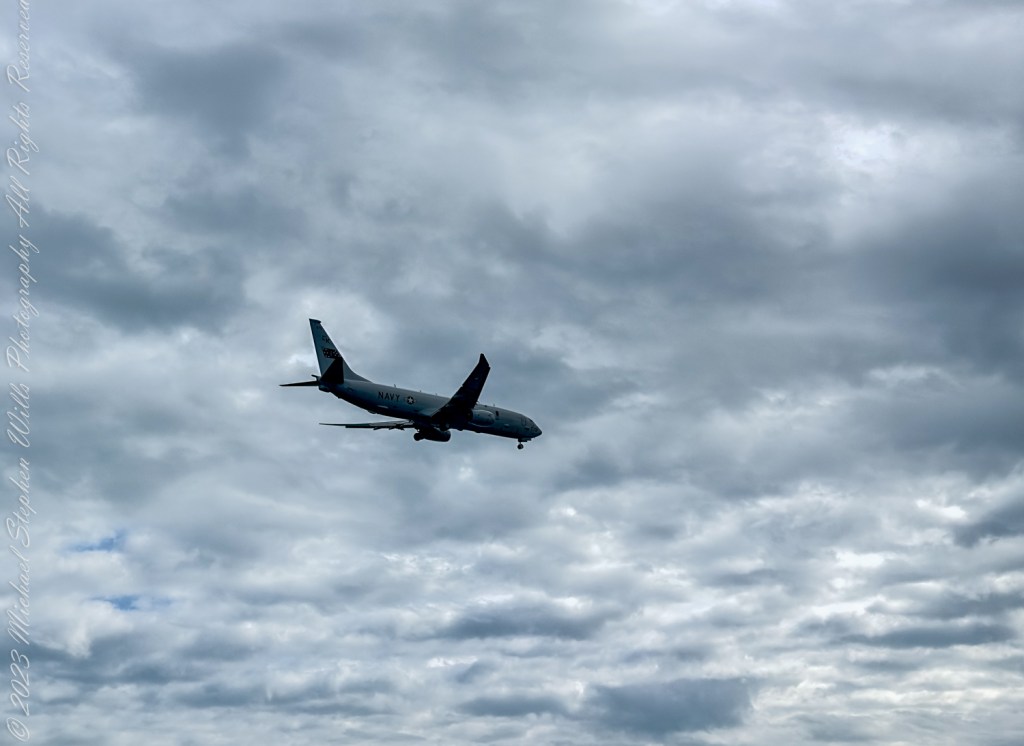
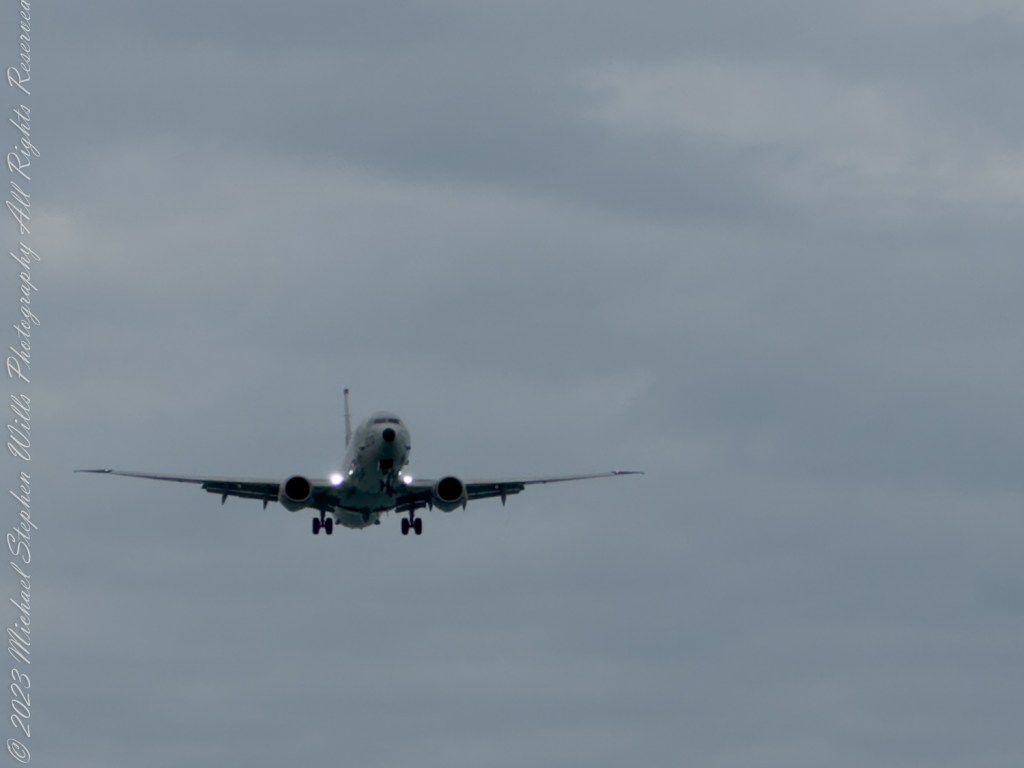
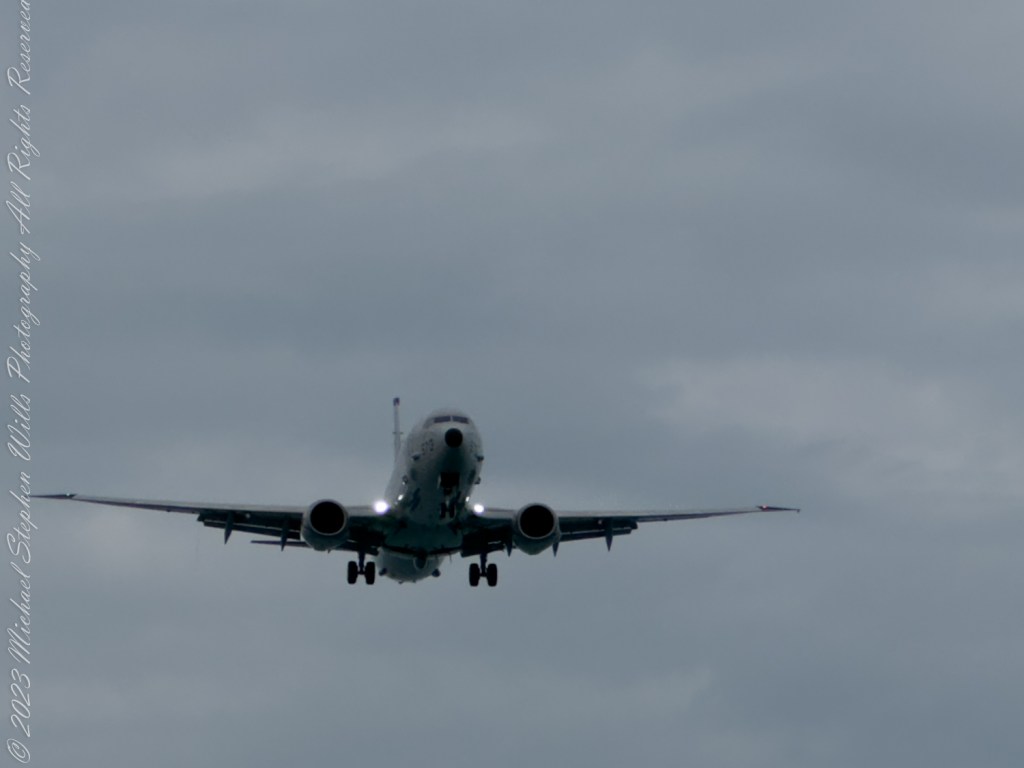
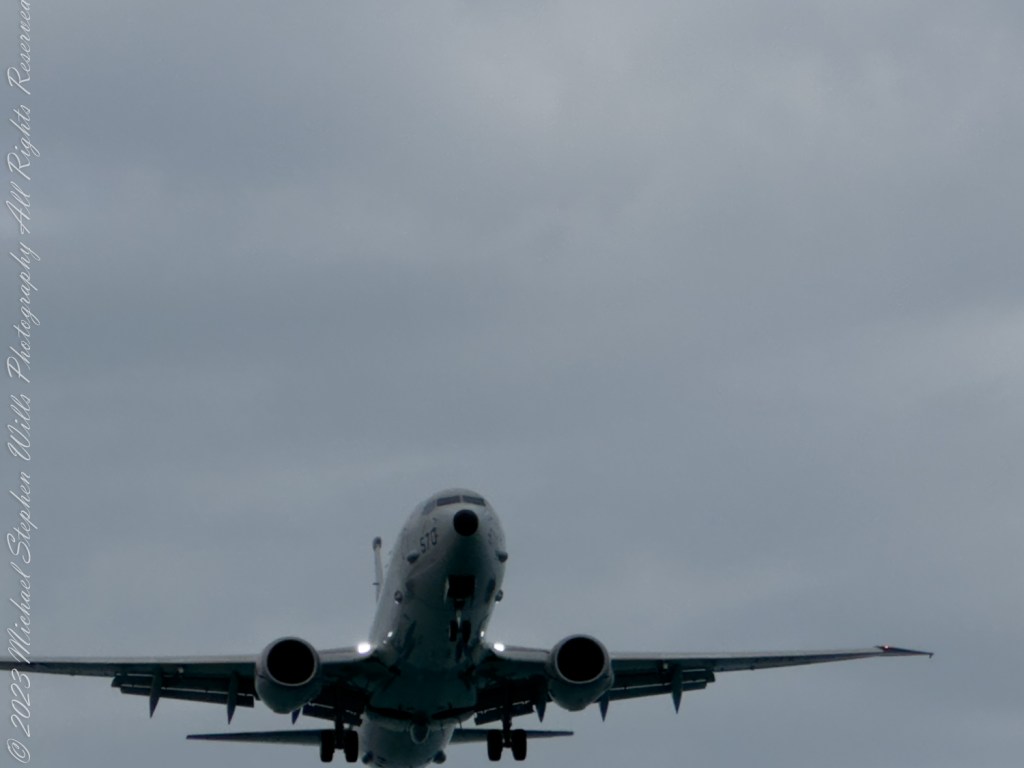
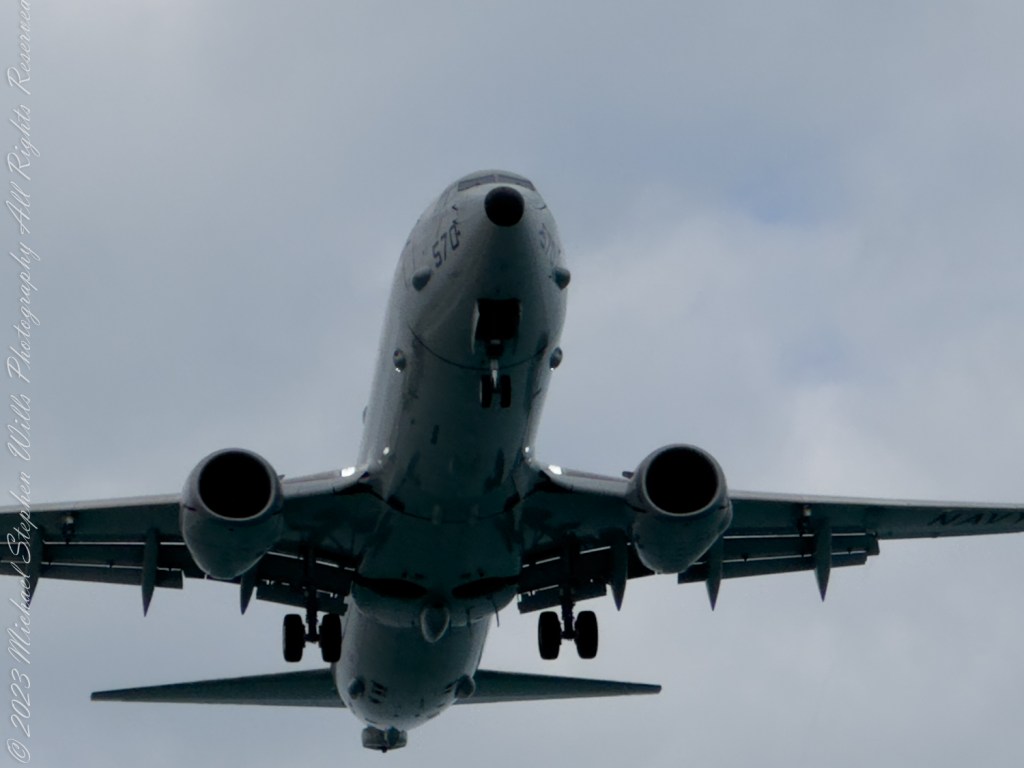
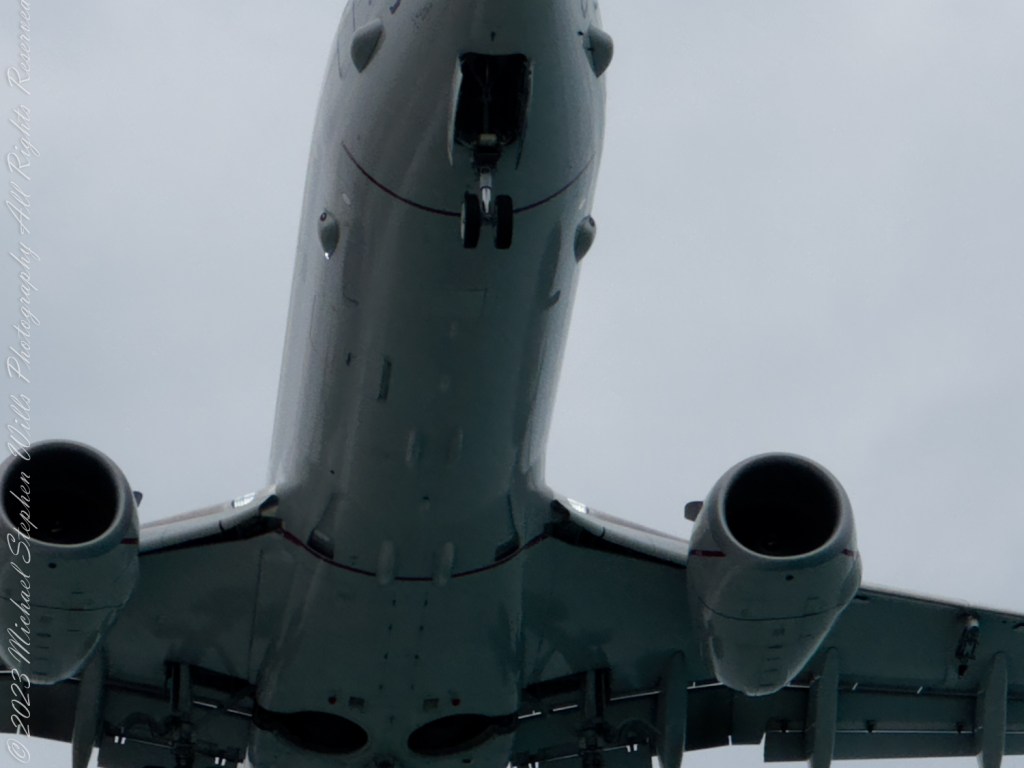
After an interlude of peaceful wave breaks another form caught my eye. The sleek, more modern contours of the Boeing P-8 Poseidon emerged from the azure, its twin engines a whisper of progression against the roar of the Hercules before it. This maritime patrol aircraft, with its lineage traced back to the reliable Boeing 737, represents the evolution of aerial surveillance and anti-submarine warfare.
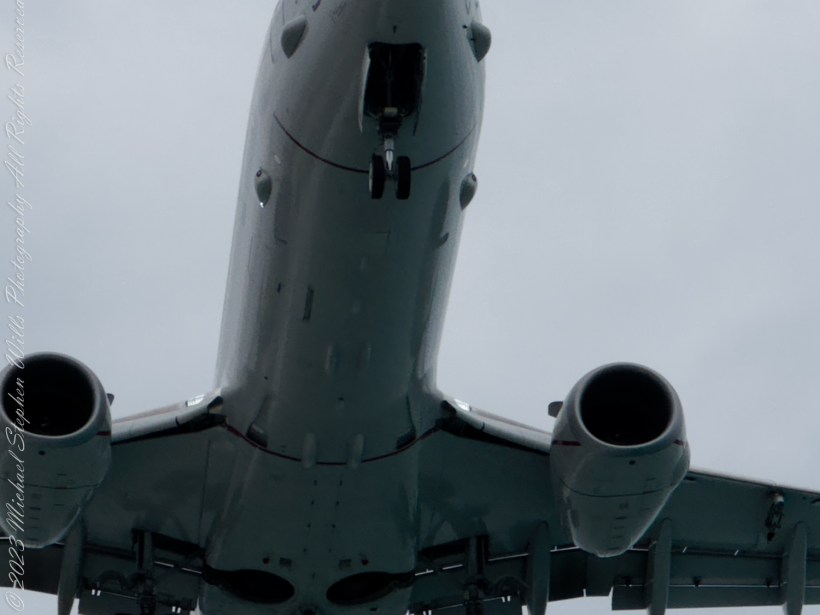
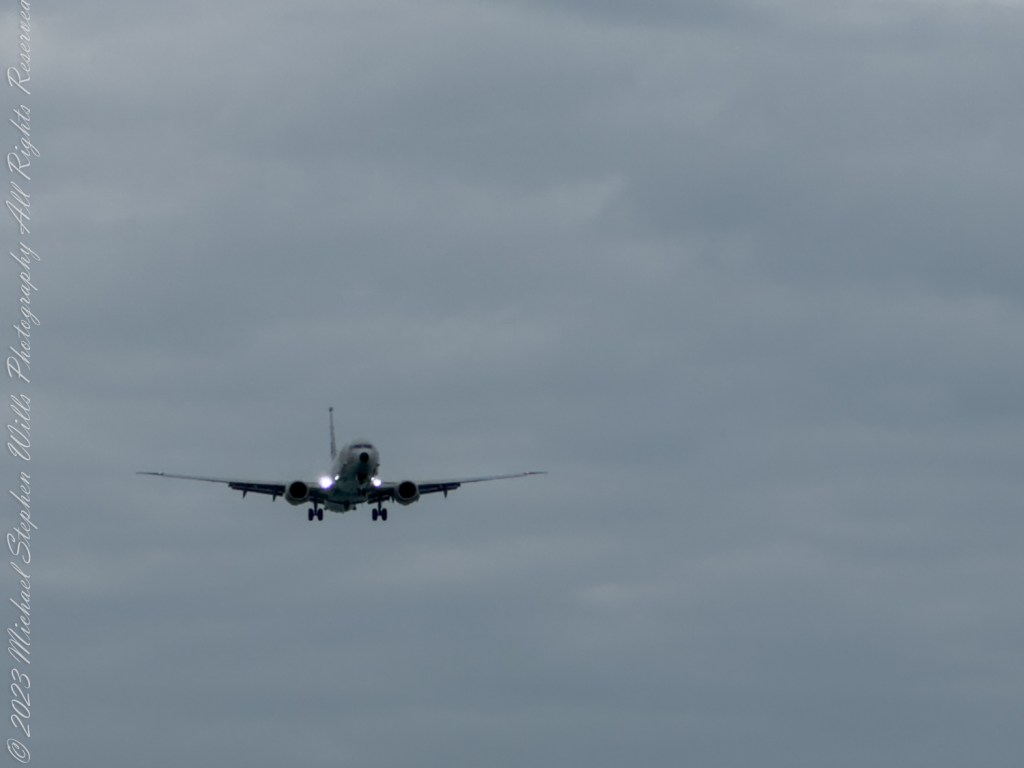
As the P-8 Poseidon drew closer, descending with an elegant ease, its profile cut a striking contrast against the gray clouds above. Its advanced radar arrays, mounted under the wings and fuselage, hinted at the craft’s hidden eyes—eyes that watch over the ocean’s expanse with vigilance. There was an undeniable presence of precision and technological advancement that surrounded the Poseidon as it sailed through the air.
The Boeing P-8 Poseidon is a highly advanced, long-range, anti-submarine warfare (ASW), anti-surface warfare (ASuW), and intelligence, surveillance, and reconnaissance (ISR) aircraft. It’s a military derivative of the Boeing 737 Next-Generation airplane and is used primarily by the U.S. Navy.
Key features and capabilities include:
Advanced Sensors: The P-8 is equipped with a state-of-the-art sensor suite that allows it to track both surface ships and submarines. The aircraft carries a maritime radar, a high-definition electro-optic/infrared (EO/IR) camera, and an advanced magnetic anomaly detector (MAD) for submarine hunting.
Communication and Combat Systems: It features a secure and interoperable communication system that enables real-time data-sharing with other assets in the battle space. The P-8 has an advanced mission control system that helps gather and process surveillance data.
Armament: The P-8 can carry torpedoes, Harpoon anti-ship missiles, and other weapons. It has both internal and wing-mounted hardpoints for weapons storage and delivery.
Operational Range: The aircraft has an extended operational range, capable of long-duration missions and covering vast areas of ocean on a single sortie.
Survivability: Being a modern military aircraft, the P-8 includes defensive systems to protect against surface-to-air threats.
Versatility: While primarily designed for maritime patrol, the P-8 also supports a wide range of missions, including search and rescue, shipping protection, and electronic intelligence gathering.
It passed over with a smoothness that belied its tactical purpose, a guardian of the seas ensuring the unseen threats remained held at bay. It was an ethereal sight, the embodiment of modern warfare’s stealth and strategic intelligence. The Poseidon’s landing gear, deployed and ready, connected with the tarmac in a seamless dance of man, machine, and purpose.
Standing there, I felt enveloped in a narrative much larger than myself—a narrative of human ingenuity, the relentless pursuit of security, and the silent promise of guardianship from above. With the passing of these large warplanes, I was reminded of the thin line between serene shores and the turbulent skies, and the ever-vigilant watch kept by these titans of the sky.
Copyright 2024 Michael Stephen Wills All Rights Reserved
This post shares photographs and stories from the early history of spaceflight at Cape Canaveral including the tragic Apollo 1 mission and astronaut John Glenn’s first orbital flight.
Here is the sixth in a series of photographs centered on the early history of space flight on Cape Canaveral mostly taken during a tour organized by the Cape Canaveral Lighthouse Foundation. “Google” the foundation for details of future tours. Here we explore pre-launch support for the Mercury program, including the first USA Orbital Launch of John Glenn from Launch Complexe 14 (LC 14).
Overview
Leaving LC 1 – 4 (see “Post WWII Launch Complexes”), our bus turned onto Central Control Road passing construction on Launch Complex 36 (LC36). In 2015 Blue Origin (Amazon money) leased LC36 where it planned to launch the “New Glenn” vehicle after 2020. I snapped the churned-up sand and construction equipment, not interesting at all IMHO.
Click Any Image for a larger viewe
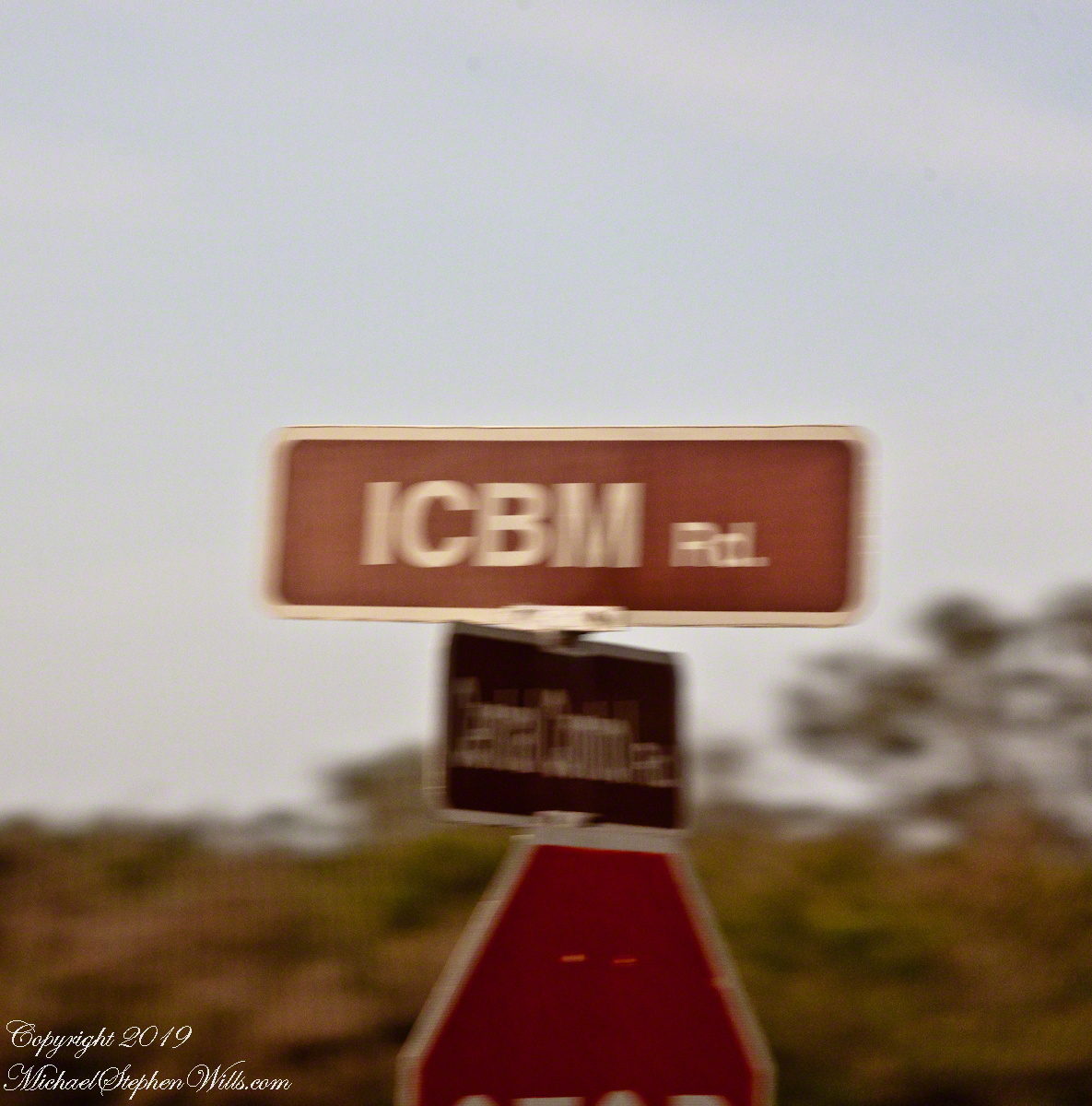
Corner of Central Control and ICBM Roads. Cape Canaveral Air Force Station.
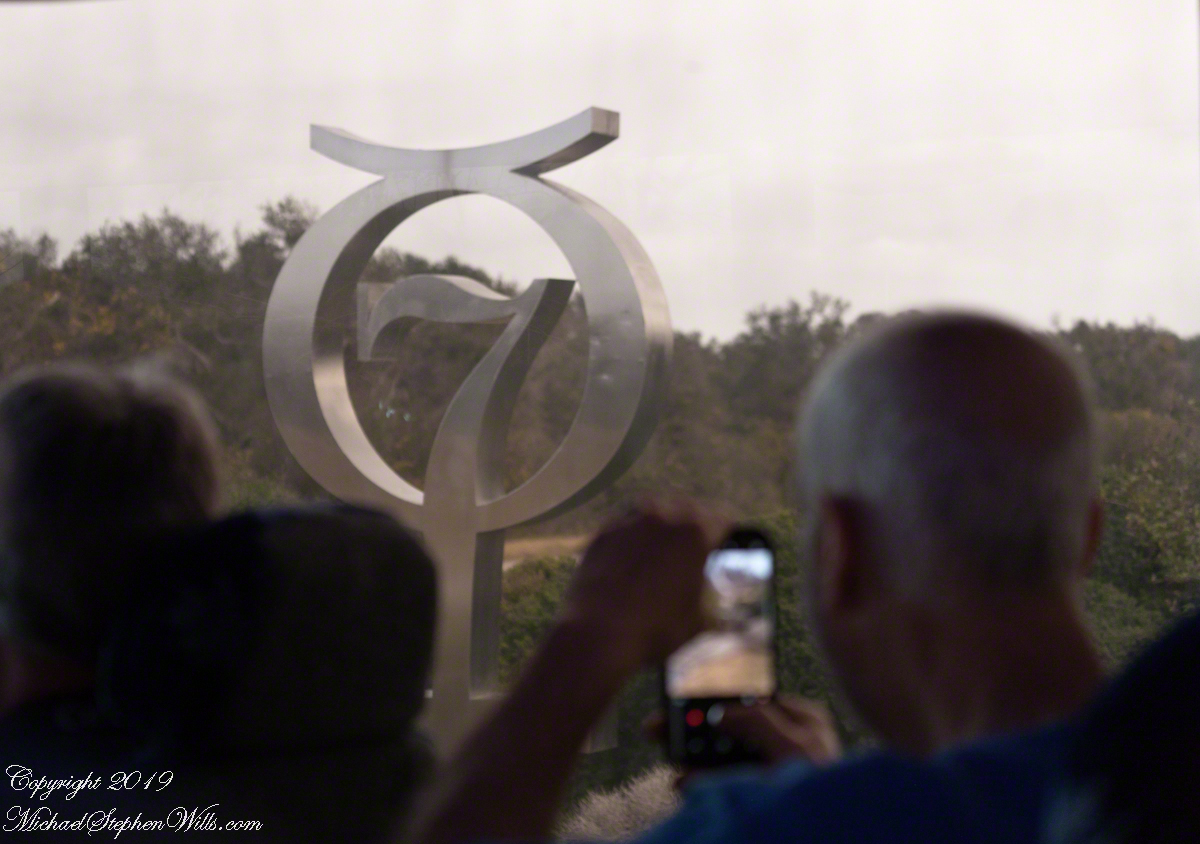
The “New Glenn” was named in homage to John Glenn, the first American to orbit the earth in 1962. We turned right onto to ICBM Road, headed generally north, following a string of launch complexes along the Altantic shore toward Launch Complex 14 (LC14). A dissapointment was not stopping to walk the Mercury 7 Memorial at the corner of ICBM Road and LC14. Our bus stopped briefly enough for the following snap. It is a memorial because John Glenn, the surviving member of Mercury 7, passed away December 8, 2016 at the age of 95.
Mercury 7 Memorial, just off ICBM Road
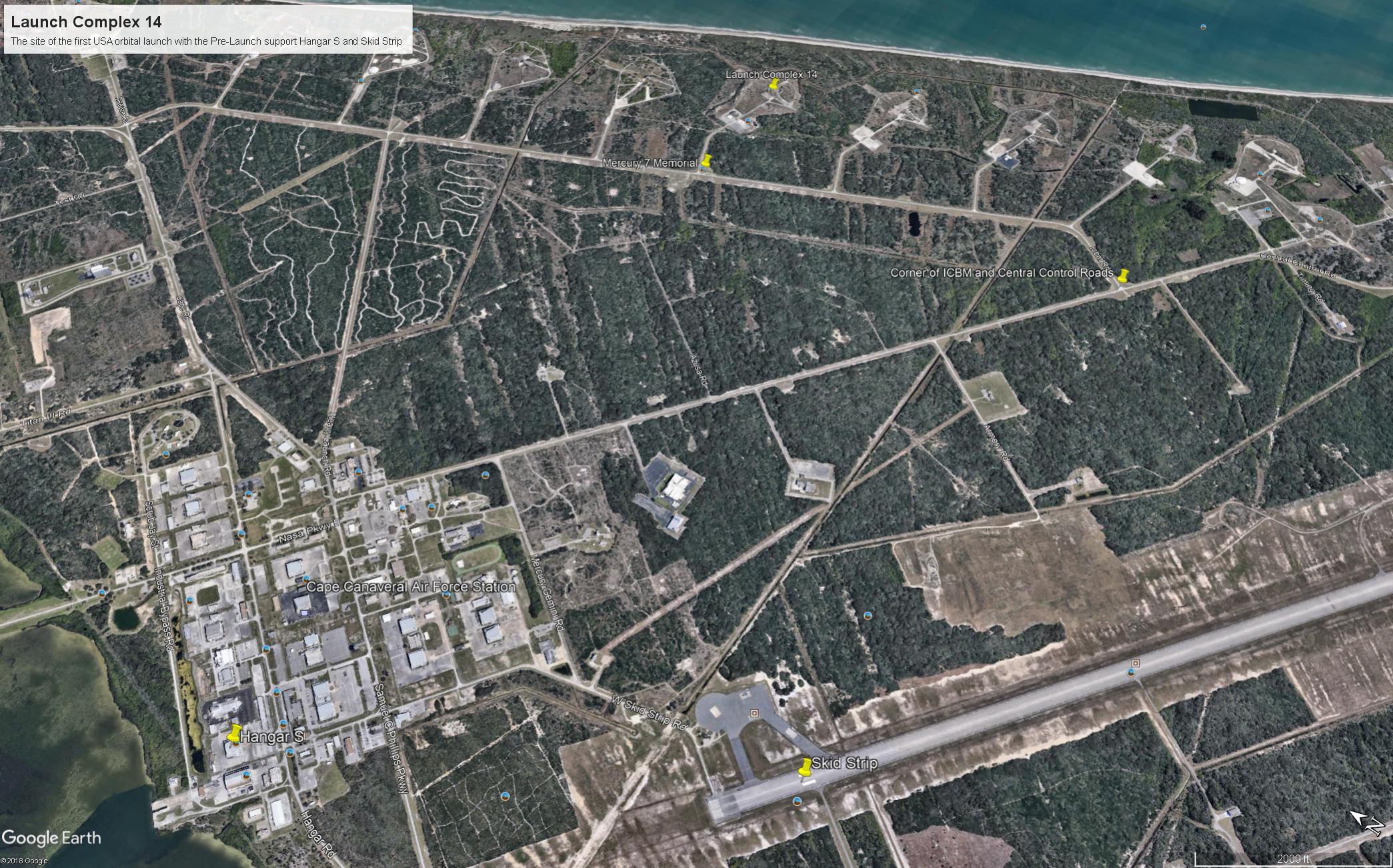
I will cover at length the Mercury-Atlas vehicle that powered John Glenn into orbit February 20, 1962. The tie-in between ICBM road and this series of launch complexes is the early space missions were on re-purposed Intercontinental Ballistic Missles (thus, ICBM). “Atlas” is the name of the ICBM used for Colonel Glenn’s 1962 flight. Click on the following image to find labled pushpins for the corner of Central Control and ICBM Roads (upper right), the road to LC14 and Mercury 7 Memorial.
You will also find a pushpin for the Skid Strip, bottom just to right of center. The earliest cruise missle tests (see “Cruise Missles” and “Post WWII Launch Complexes” ) included navigation to a landing on non-wheeled “skids.” The strip was maintained in support of the manned and later missions when cargo planes delivered the early space capsules, landing, not skidding hopefully, for transfer to a Pre-Launch facility, Hangar S.
Cape Canaveral Launch Complex 14 and Pre-Launch Support: Hangar S and the Skid Strip
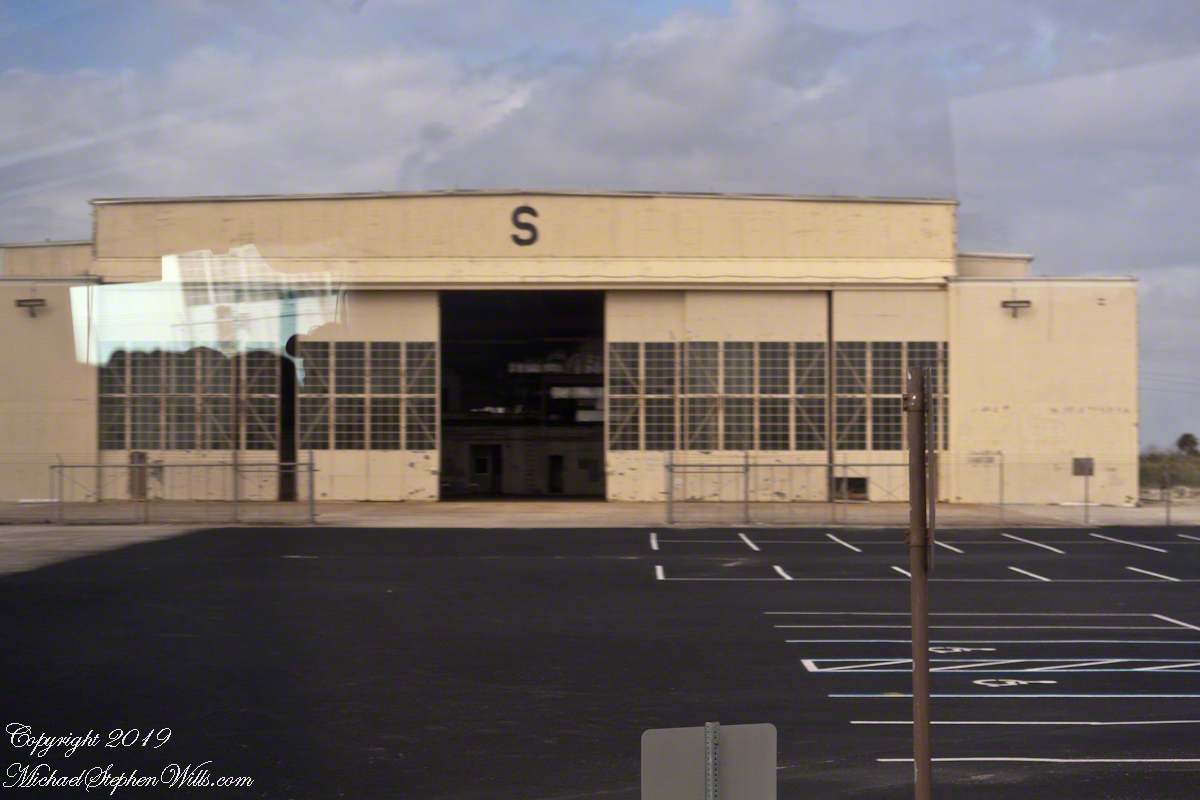
Hangar S is seen below as we passed later in the tour. Built 1957 by the military the 61,300 square feet were acquired by NASA in 1959. The early space capsules were tested here in an vacume chamber to ensure the vehicle supported an breathable atmosphere for the occupants.
The first American space voyager was Ham, a chimpanzee. Ham lived in a residential area on the second floor of Hangar S. For a period of time the Mercury 7 shared the spartan second floor quarters. “The Right Stuff” (a 1984 film from a Tom Wolfe book) included scenes from this episode of the program.
Constructed in 1957, Hangar S served for pre-flight processing from Mercury through the final flight of the Space Shuttle. This is where the Mercury 7 astronauts were first quartered on the second floor and later, is where they stayed prior to flight. The Lunar Orbiter was prepared here.
Comfortable Quarters
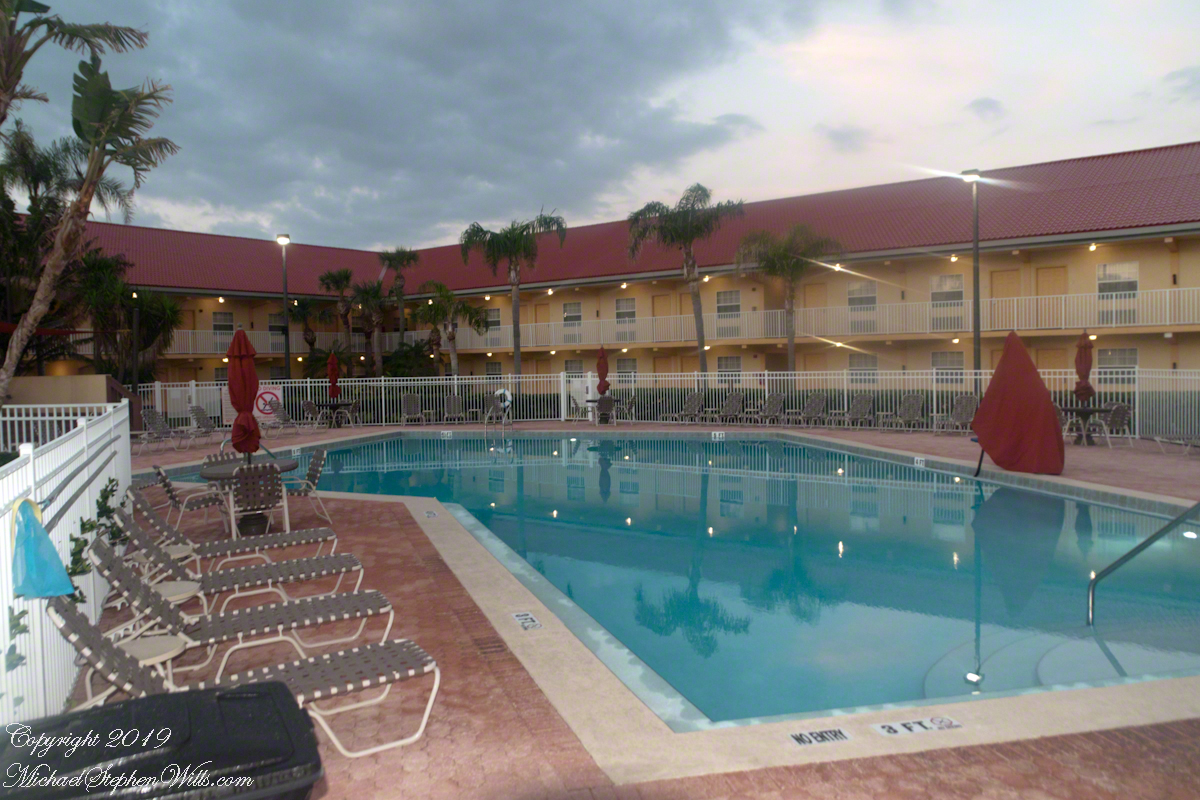
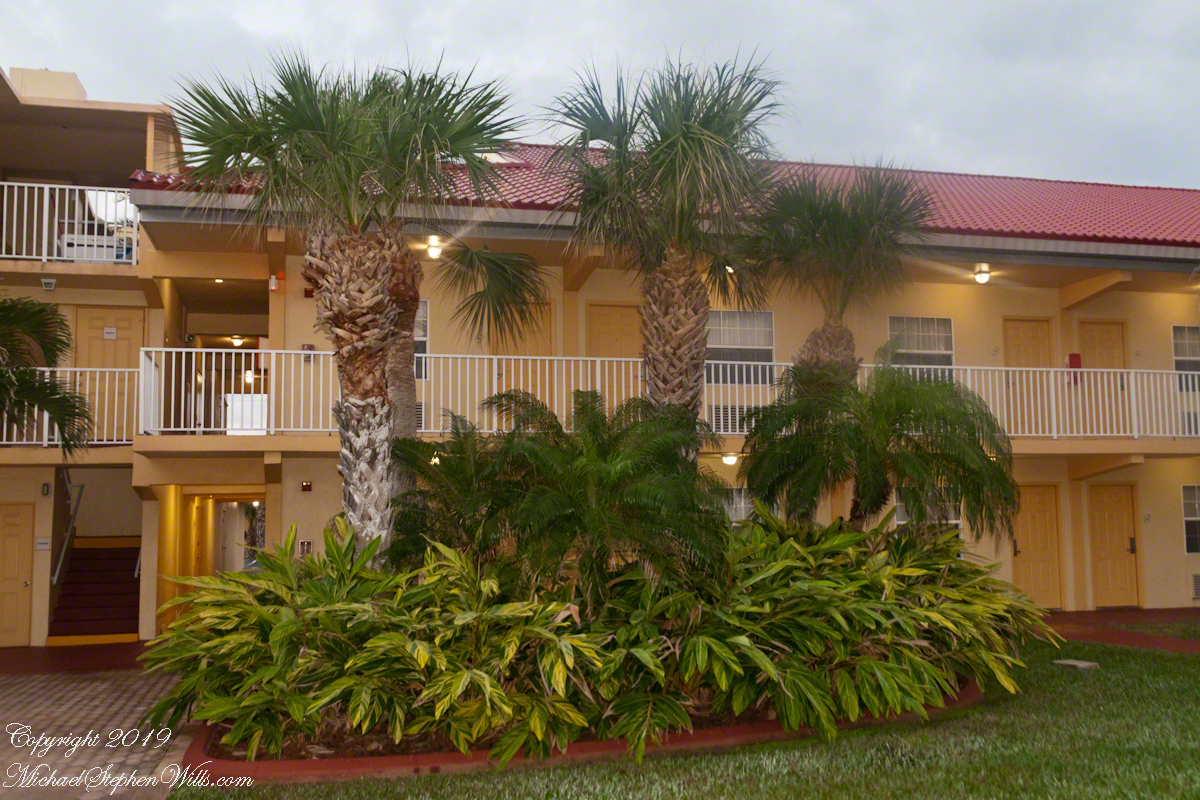
In short order arrangements were made for more comfortable quarters, just off the ocean in Cocoa Beach. It was a new hotel given over entirely to the Mercury 7. Pam and I stayed there in 2018 while taking this tour, it is the La Quinta across from the International Palms. We recommend it a clean, comfortable, reasonably price and a great story to share afterwards. The Atlantic Ocean is a five minute walk.
La Quinta Inn was the home of the Mercury 7 Astronauts, 1275 N Atlantic Avenue Cocoa Beach, Florida 32931
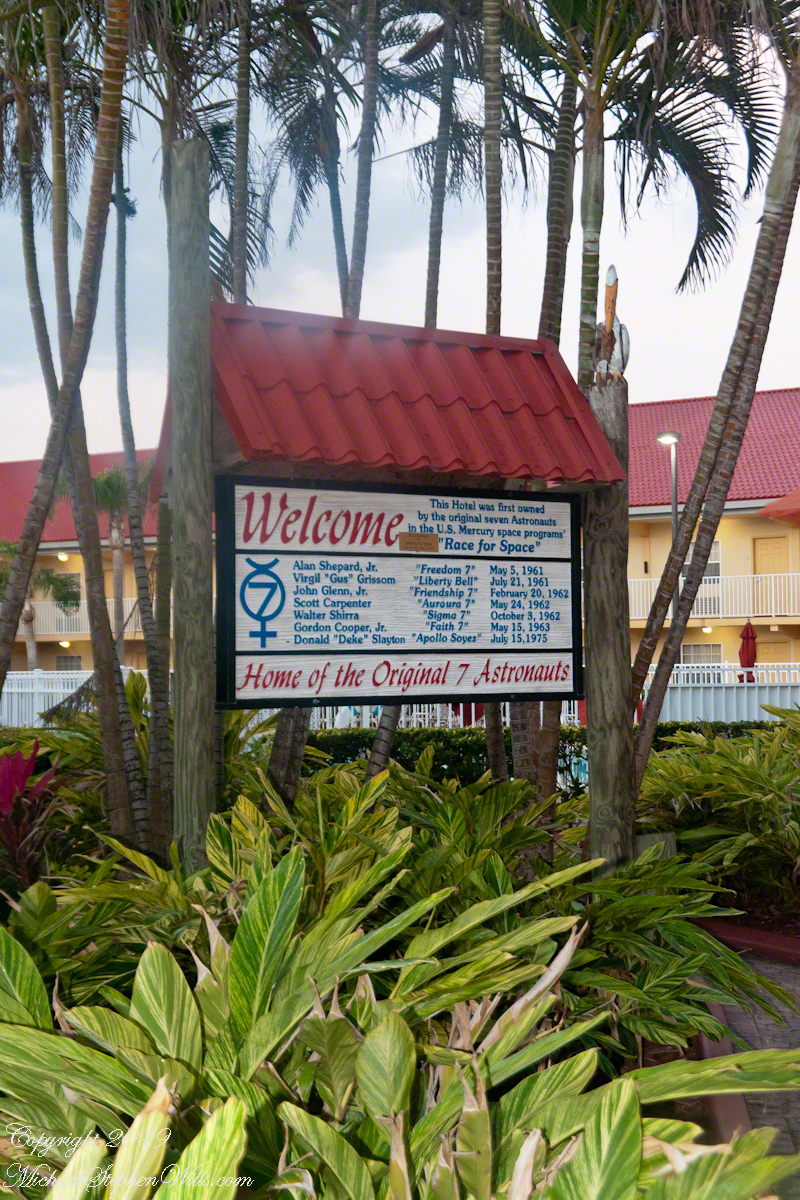
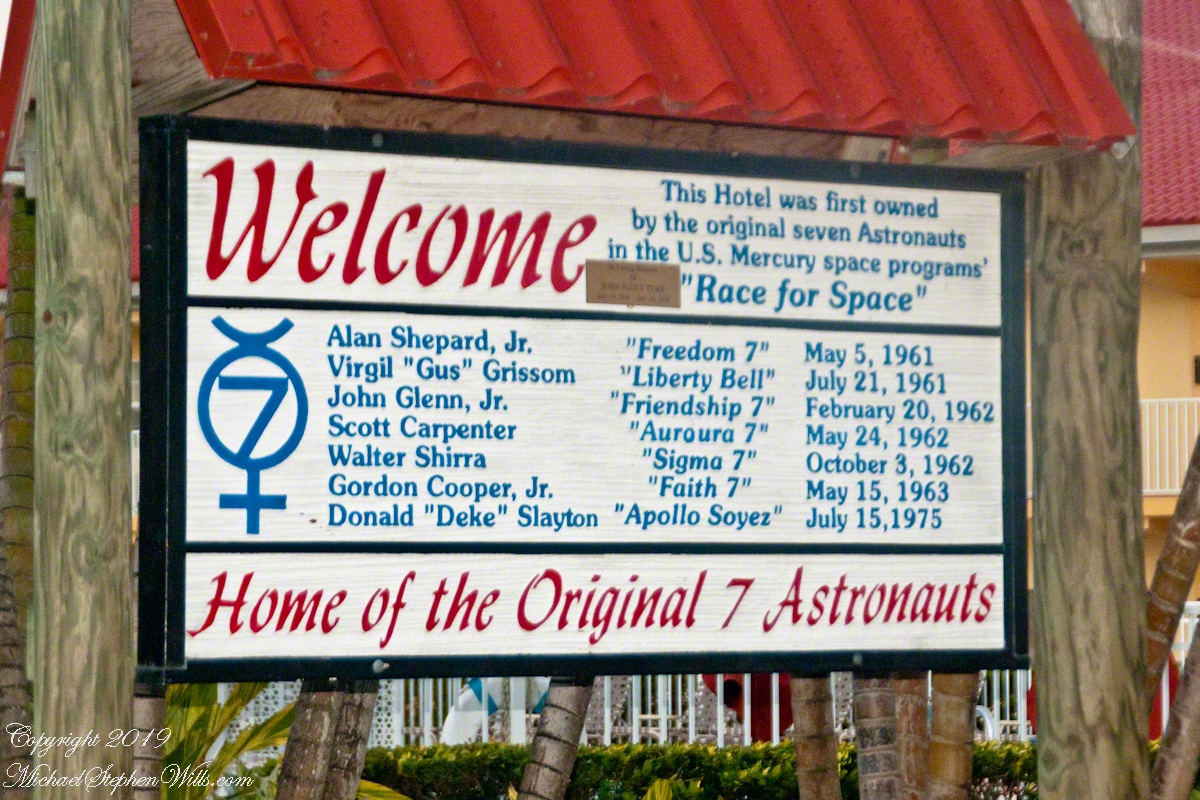
I learned from the tour how the hotel was donated to the Mercury 7 by a private individual. They owned the hotel. Here is a very informative sign just off the La Quinta lobby with their names. Each first mission, as named by the astronaut, is listed.
La Quinta Inn was the home of the Mercury 7 Astronauts, 1275 N Atlantic Avenue Cocoa Beach, Florida 32931View of the hotel built for and first owned by the Marcury 7 astronauts. They lived here in the early days of the USA space program.
Blastoff!!
Next post will feature images of LC14 from 2018.
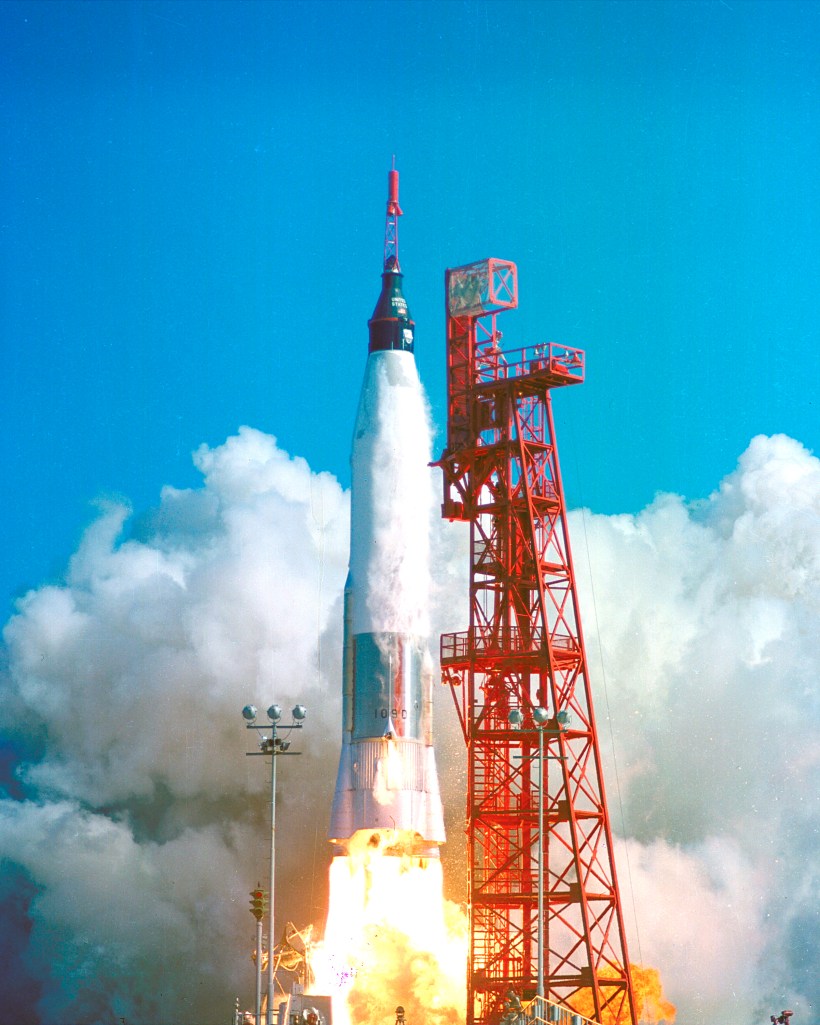
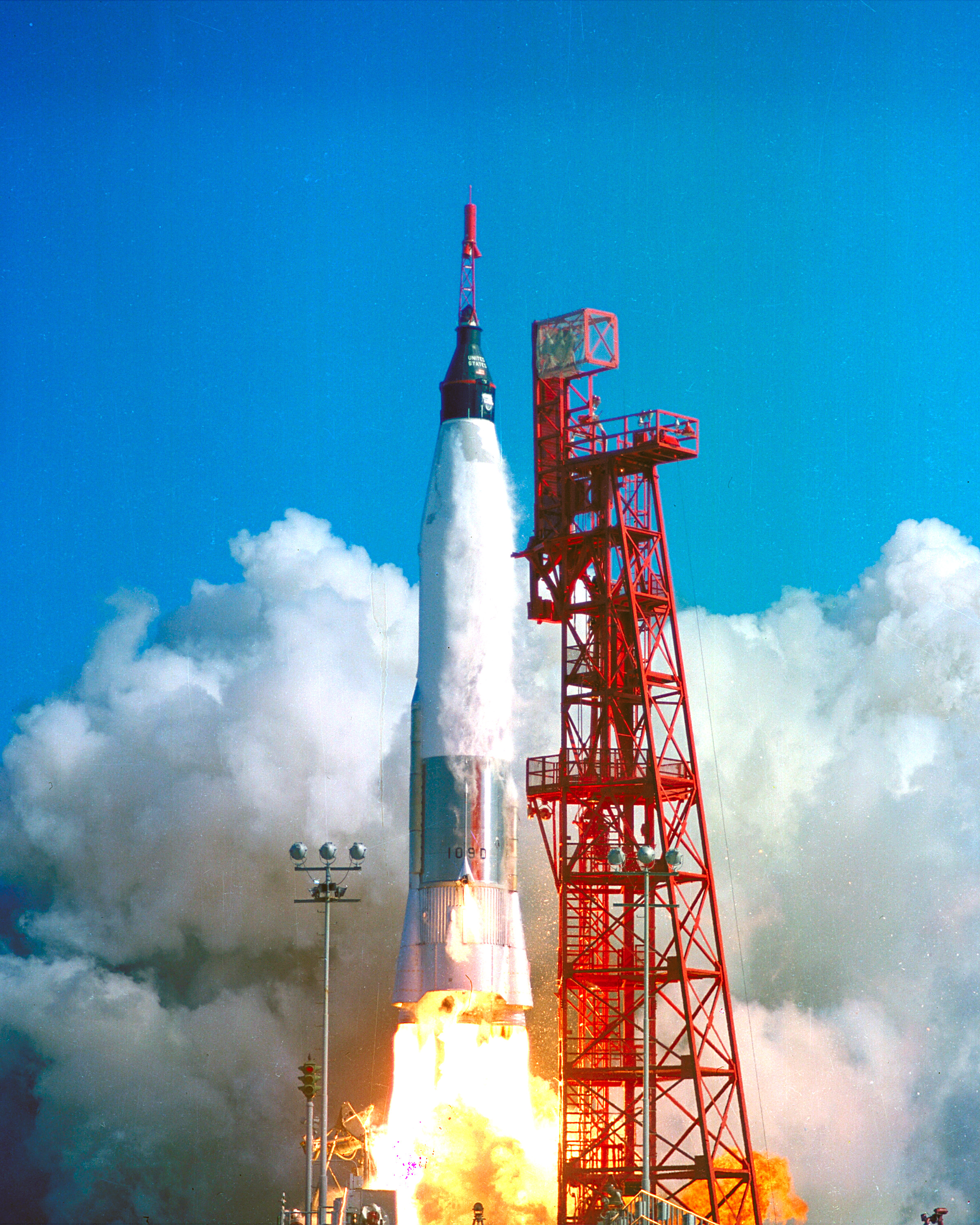
Launch of Friendship 7, the first American manned orbital space flight. Astronaut John Glenn aboard, the Mercury-Atlas rocket is launched from Pad 14. Public Domain Photograph by NASA.
Sources of information for this post: I used information from the Wikipedia site for the key words John Glenn, Launch Complex 14, Mercury-Atlas, Launch Complex 36. Plus a “google” on “Hangar S History” that found an excellent page hosted on the NASA site. Cover photo of Friendship 7 Launch my be found on Flickr in “NASA on the Commons” photostream.
Copyright 2022 Michael Stephen Wills All Rights Reserved.







 Michael Stephen Wills Photography