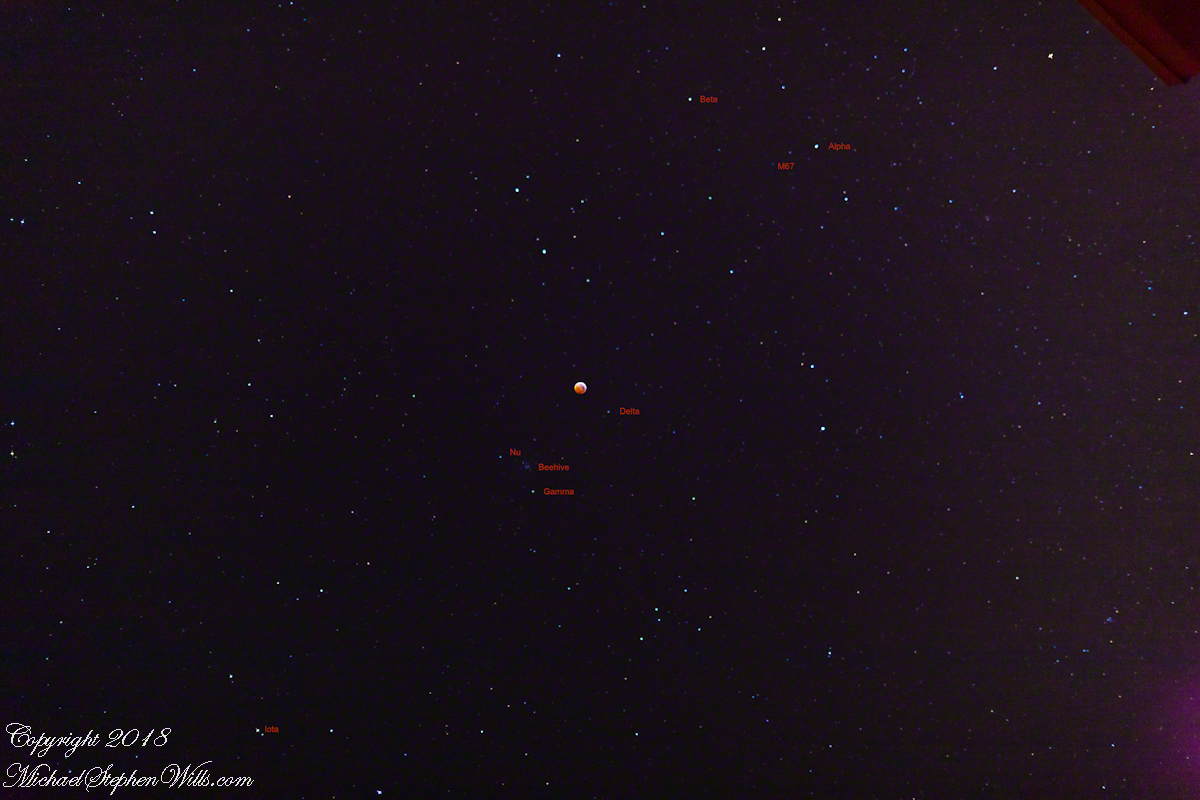
The sun, in its wander south, casts long midday shadows

Hemlock Shadows
The sun, in its wander south, casts long midday shadows
The sun, in its wander south, casts long midday shadows
The sun, in its wander south, casts long midday shadows
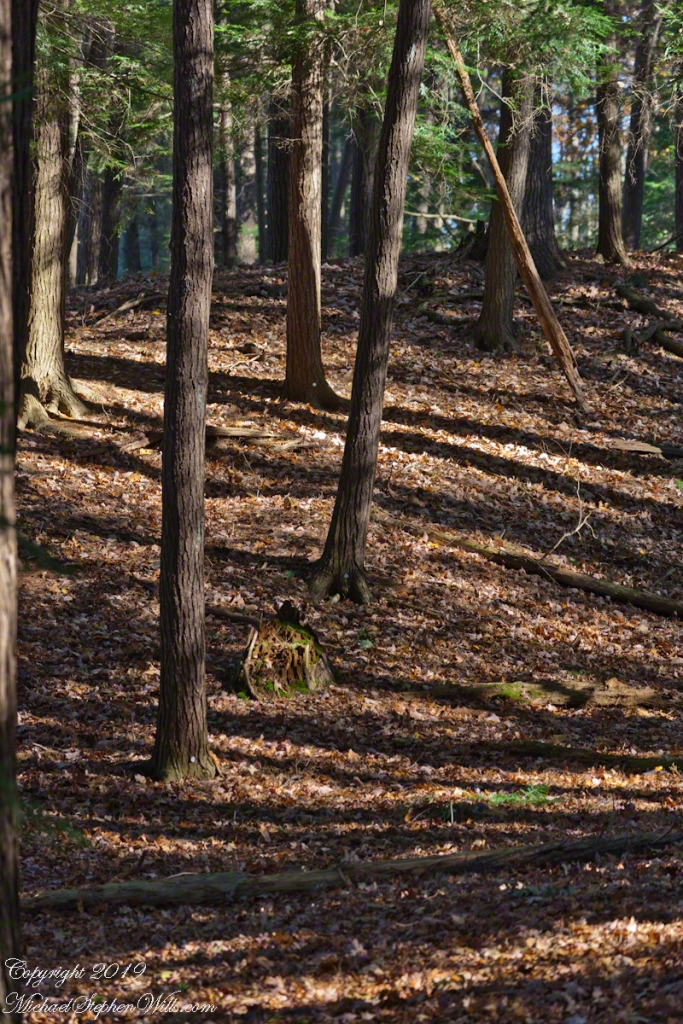
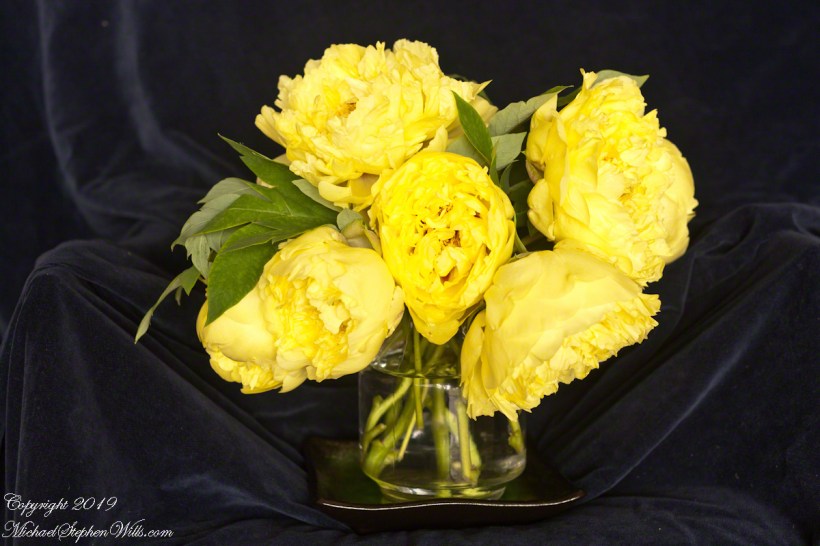
A handy length of black velvet
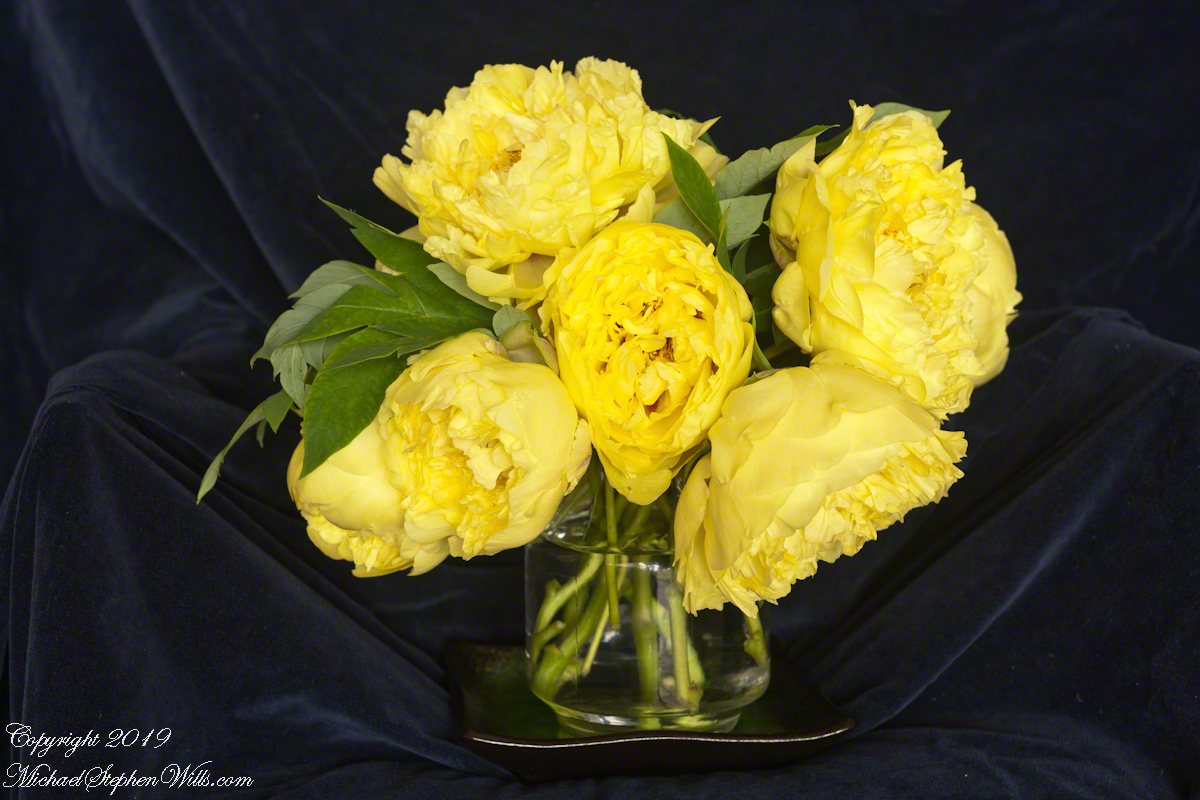
By way of personal inventory, our home has two types of woody peonies in different hues. Last posting I gave you red, au natural. Today, you get yellow in a studio setting, back-dropped by black velvet. There is a story behind that long sheet of fabric. Back in the day, a nephew of mine named Chris and I used to hang out together in the Catskills and Adirondacks. Later, I offered to photograph James, his first born. In preparation, I purchased this six foot length of fabric. It served well for that job and, since then, has done double duty as a wintertime cage cover for the parakeet.
This week, I told Pam our yellow wooden peony was in bloom. A largish bush of full leaves that tend to cover the drooping blooms, Pam harvested six blooms to created an arrangement. These “babies” look great against the black velvet.
Yesterday I used the Canon EF 100mm f/2.8 Macro USB lens and a tripod to capture the following two portraits of Pam’s Yellow Wooden Peony arrangement. In deference to the unanimous reader choice for crisp flower petals the following two versions differ in the crispness of the velvet backdrop.
My timing was fortuitous, last evening the petals started to drop. Pam reports 12 more blossoms are hidden in the bush, so we’ll have at least one more bouquet to enjoy.
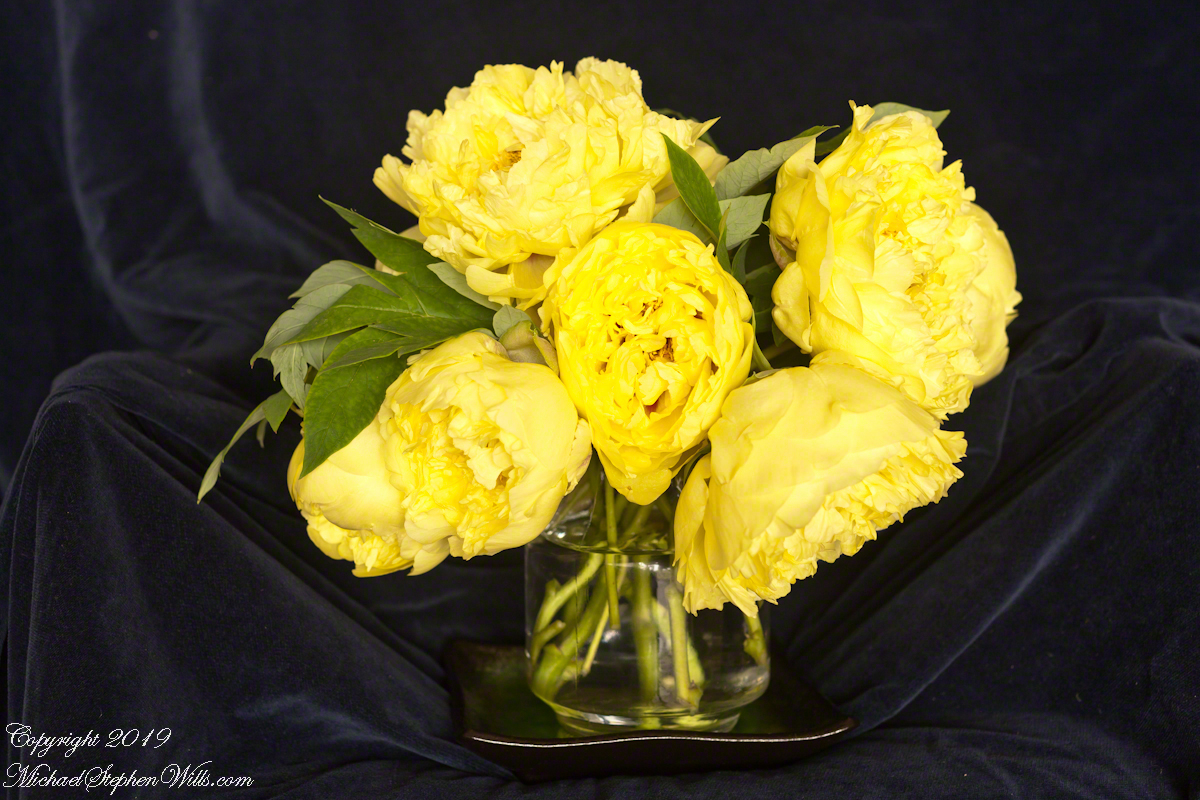
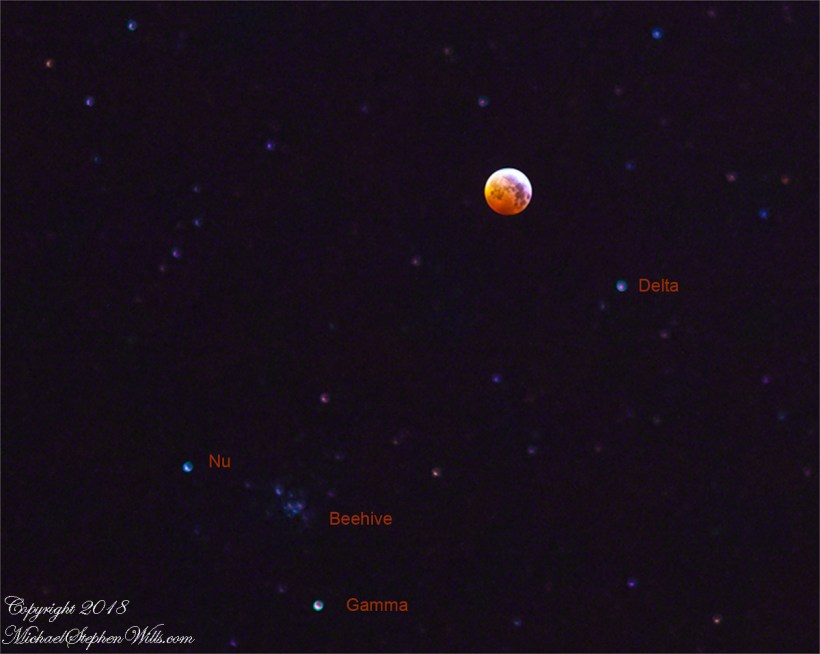
Here are labeled photographs, detailing its major elements, and including visual guides for enhanced viewing.
Pam proofed my post, “When the Moon Dined from a Stellar Mangar”and found some improvements, including adding text labels to aid in finding Cancer constellation elements.
You will find I replaced photographs in the original post and well, all the major elements of Cancer are labeled. Here is an explanation of the new elements.
You can now trace the “Y” constellation pattern, with Alpha and Beta Chancri (Latin for “of Cancer”) the two claws and Iota the tail. Both elemetns of Iota, a visual binary star system, are there. They are wonderful viewed with a telescope. Near Alpha is M67 (Messier Object 67), another galactic cluster of gravitationally bound stars. It is quite faint in this photograph.