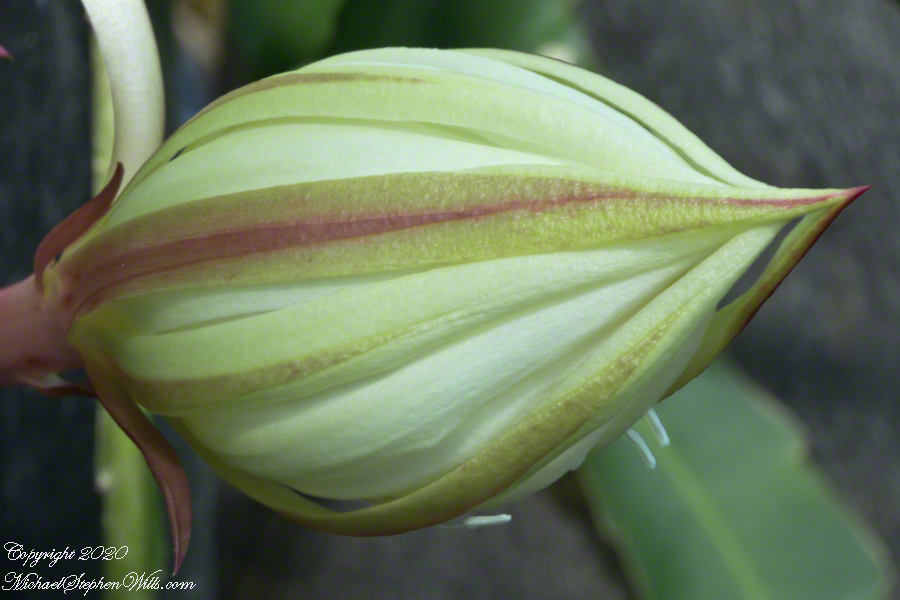
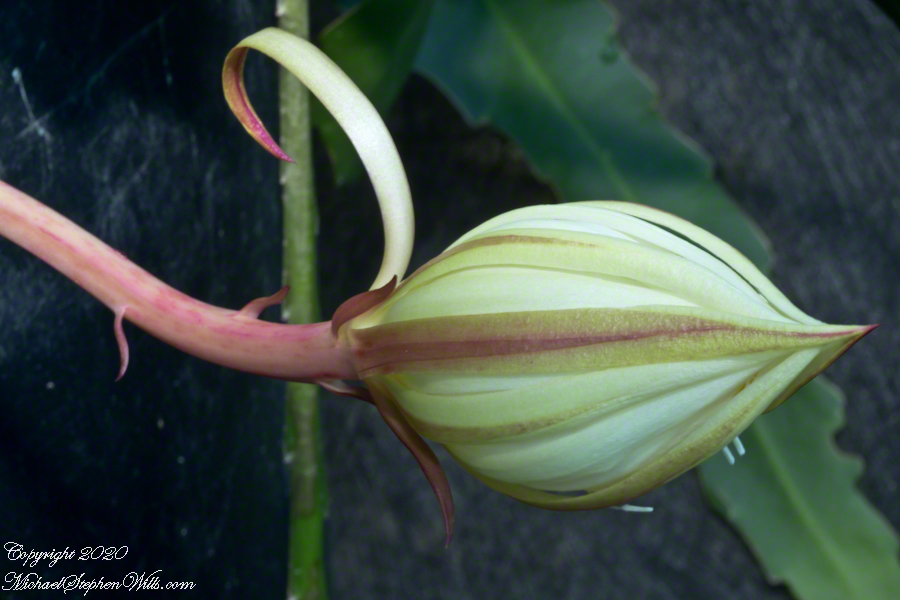
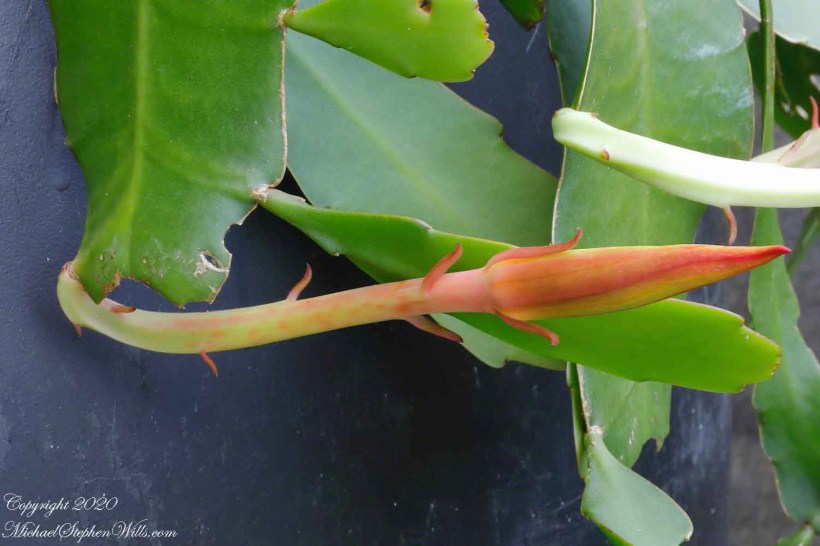
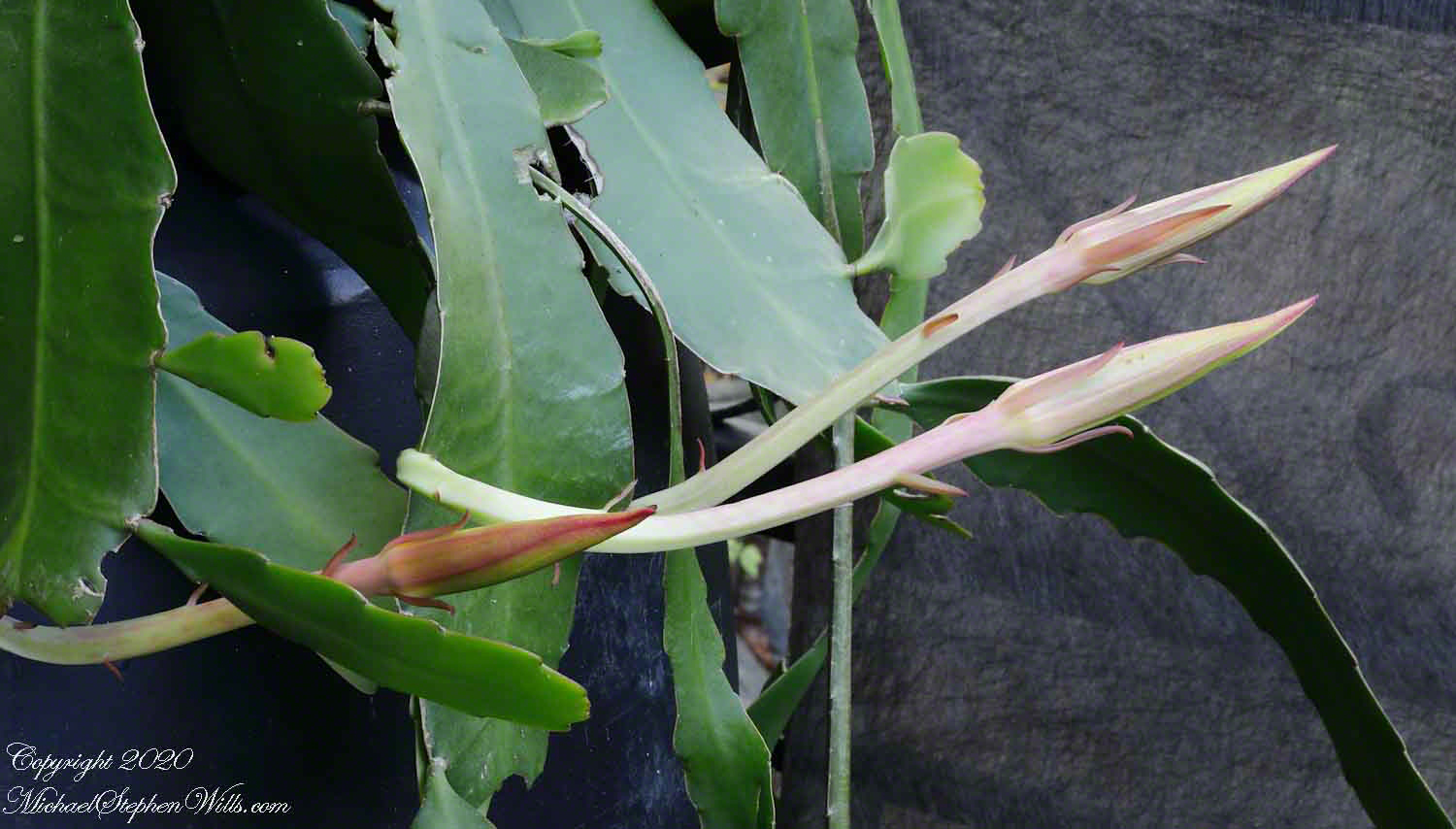
Almost bursting open, the third of four flower buds of our Night Blooming Cereus caught one October evening just before opening. The black background is repurposed anit-weed ground cover material.
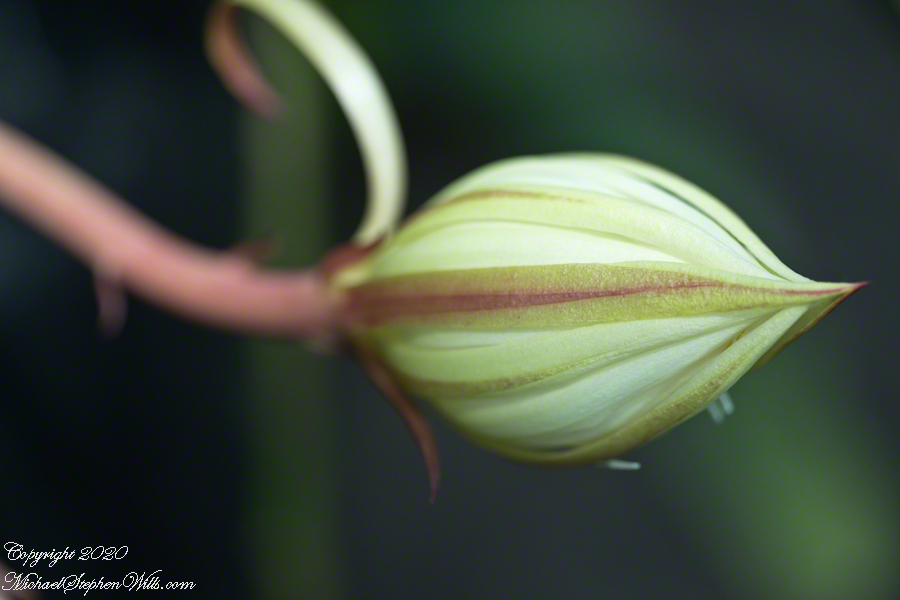
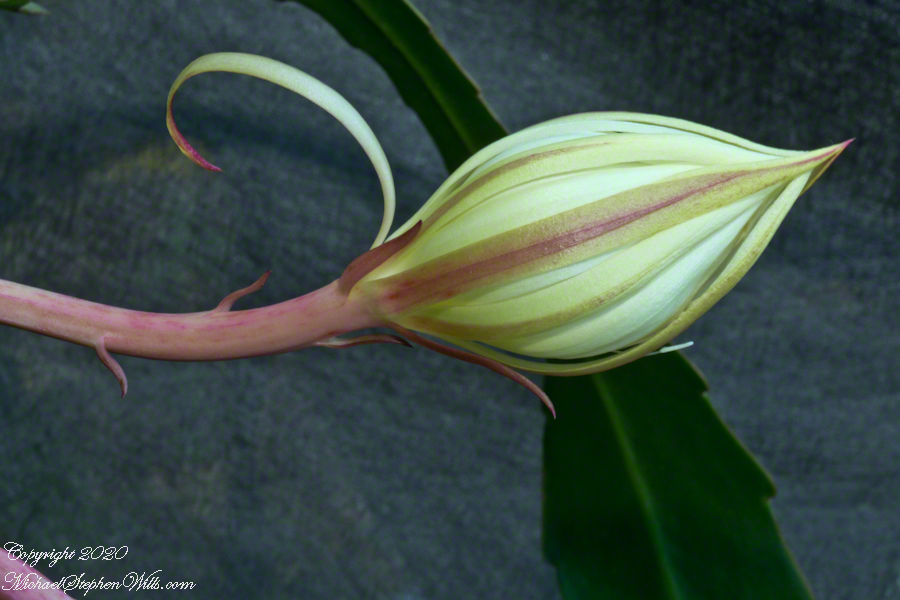
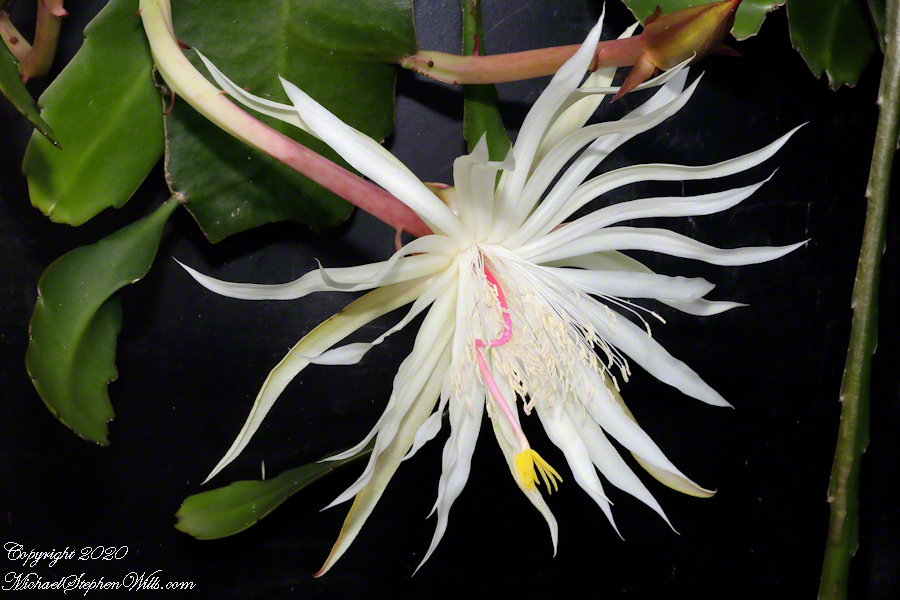
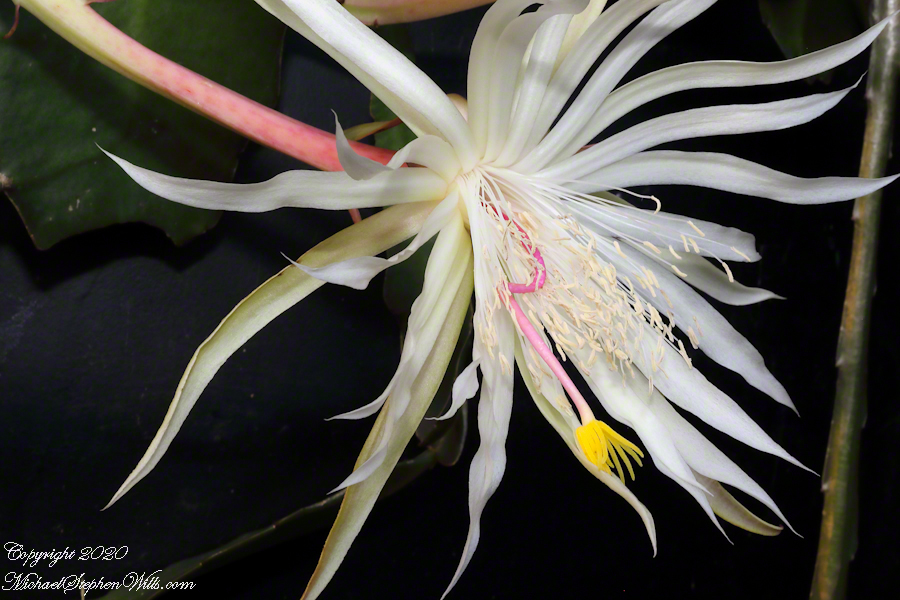
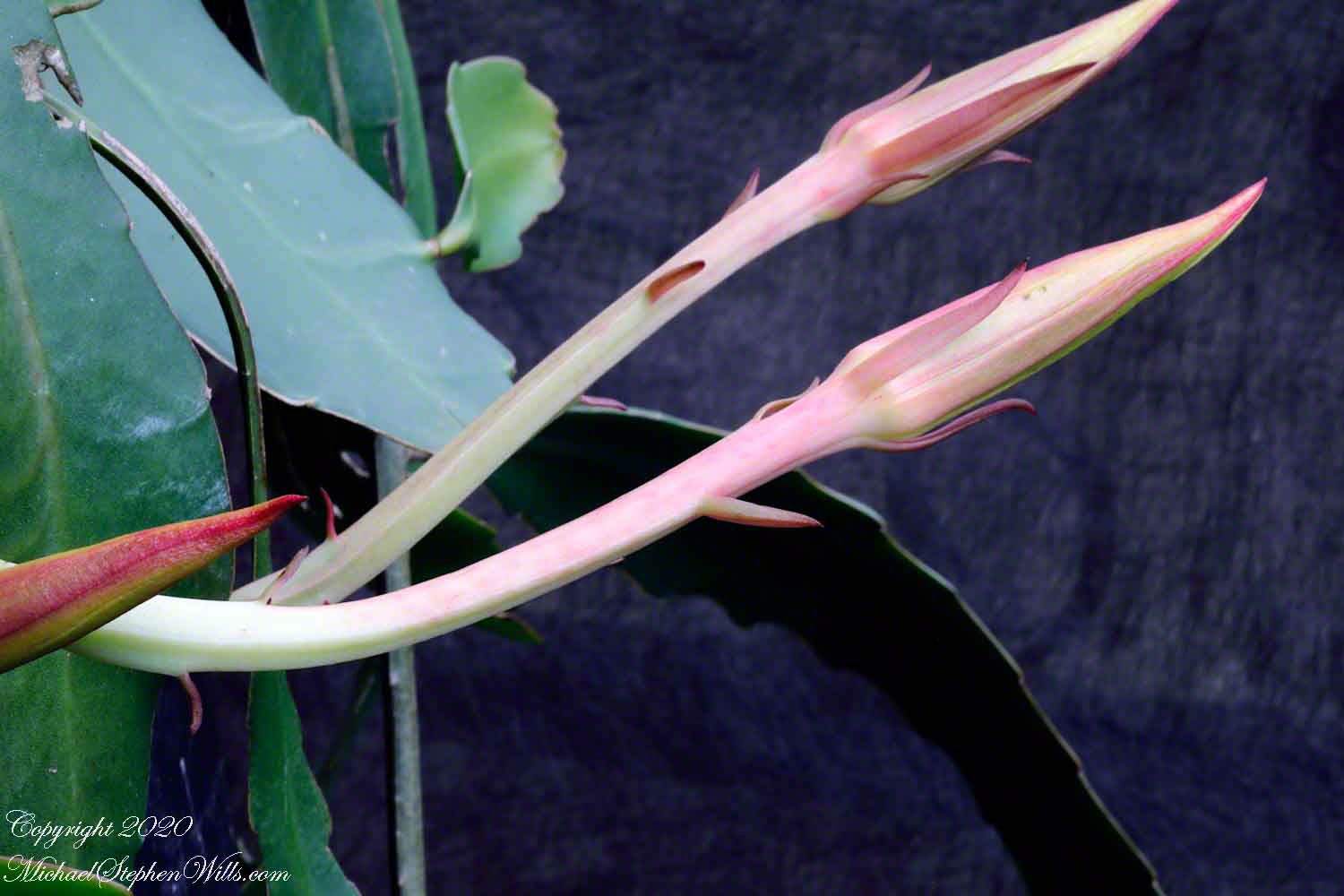
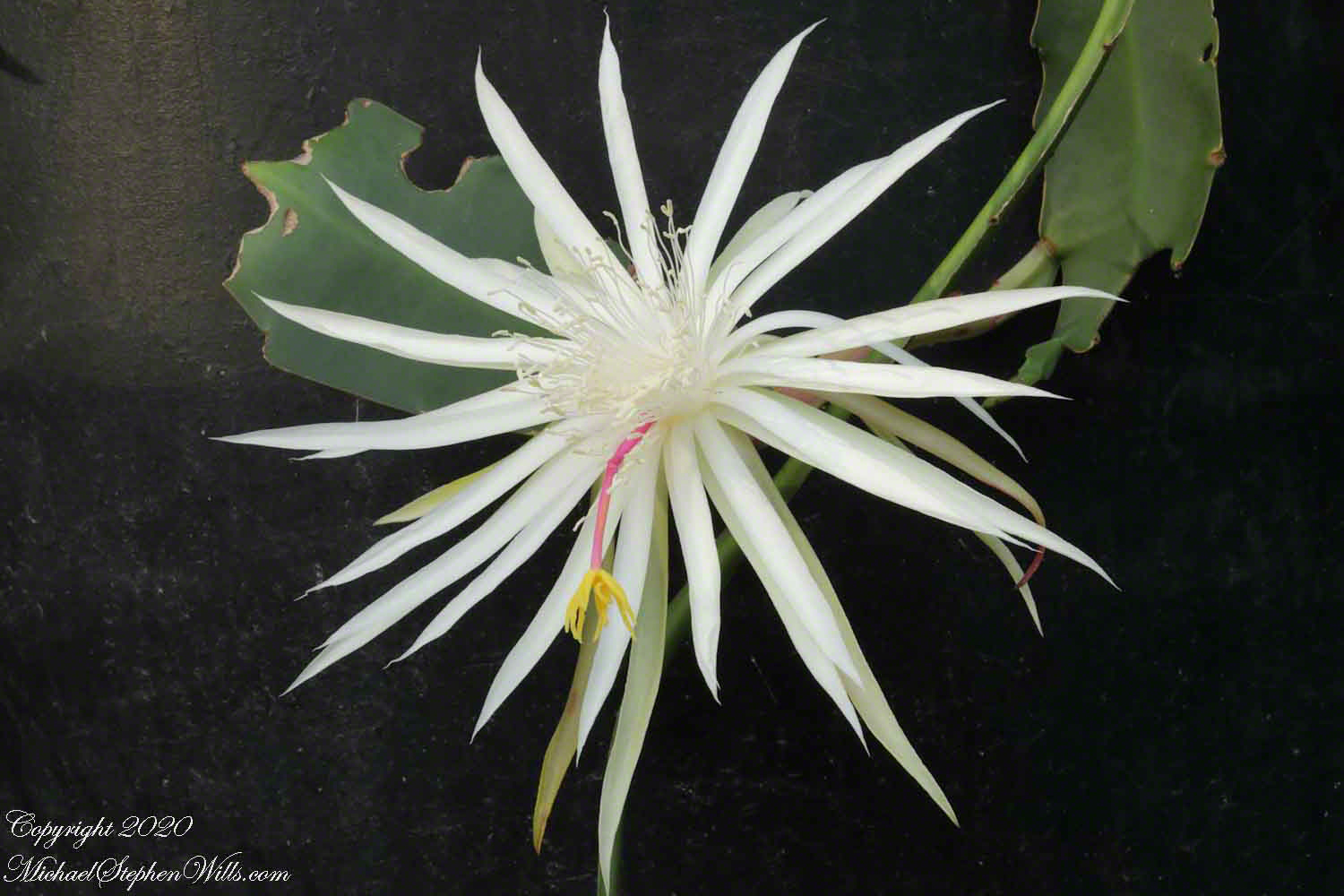
Here is a series of flash photographs at varying apertures and angles. The white rods are emerging anthers, the pollen-containing tips of long stamens seen in my previous postings of the open flowers.
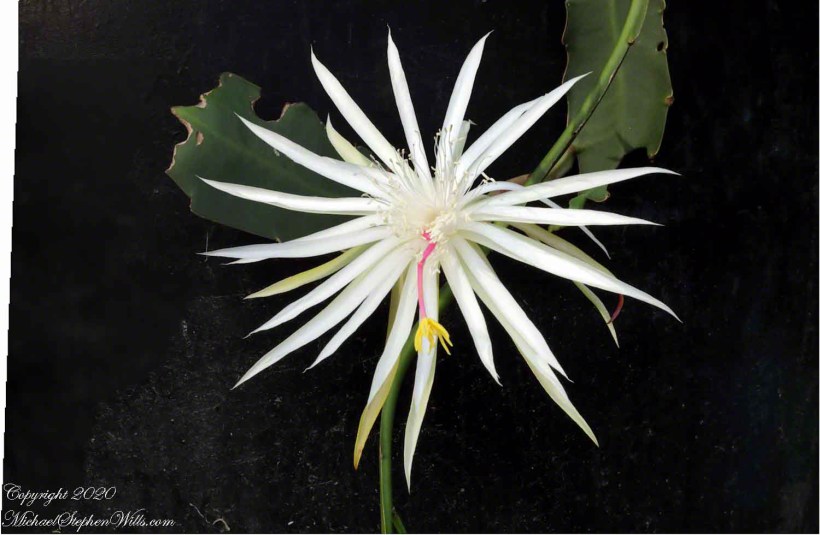
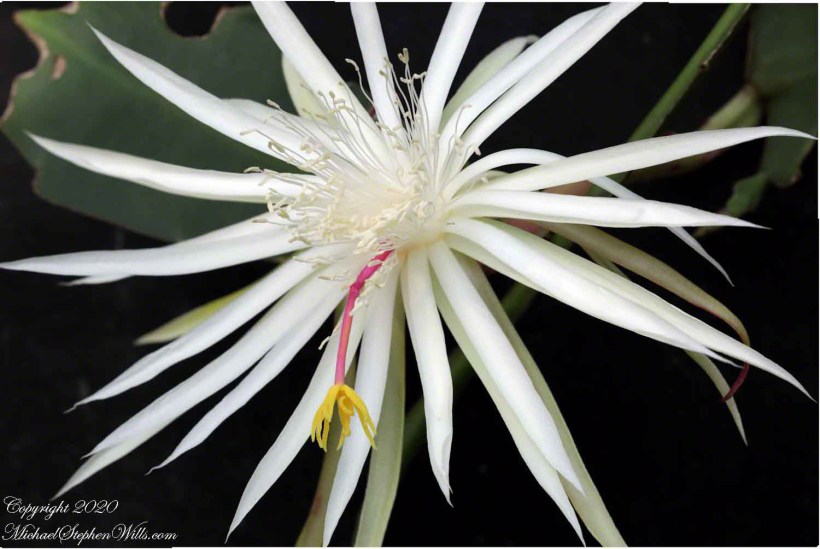
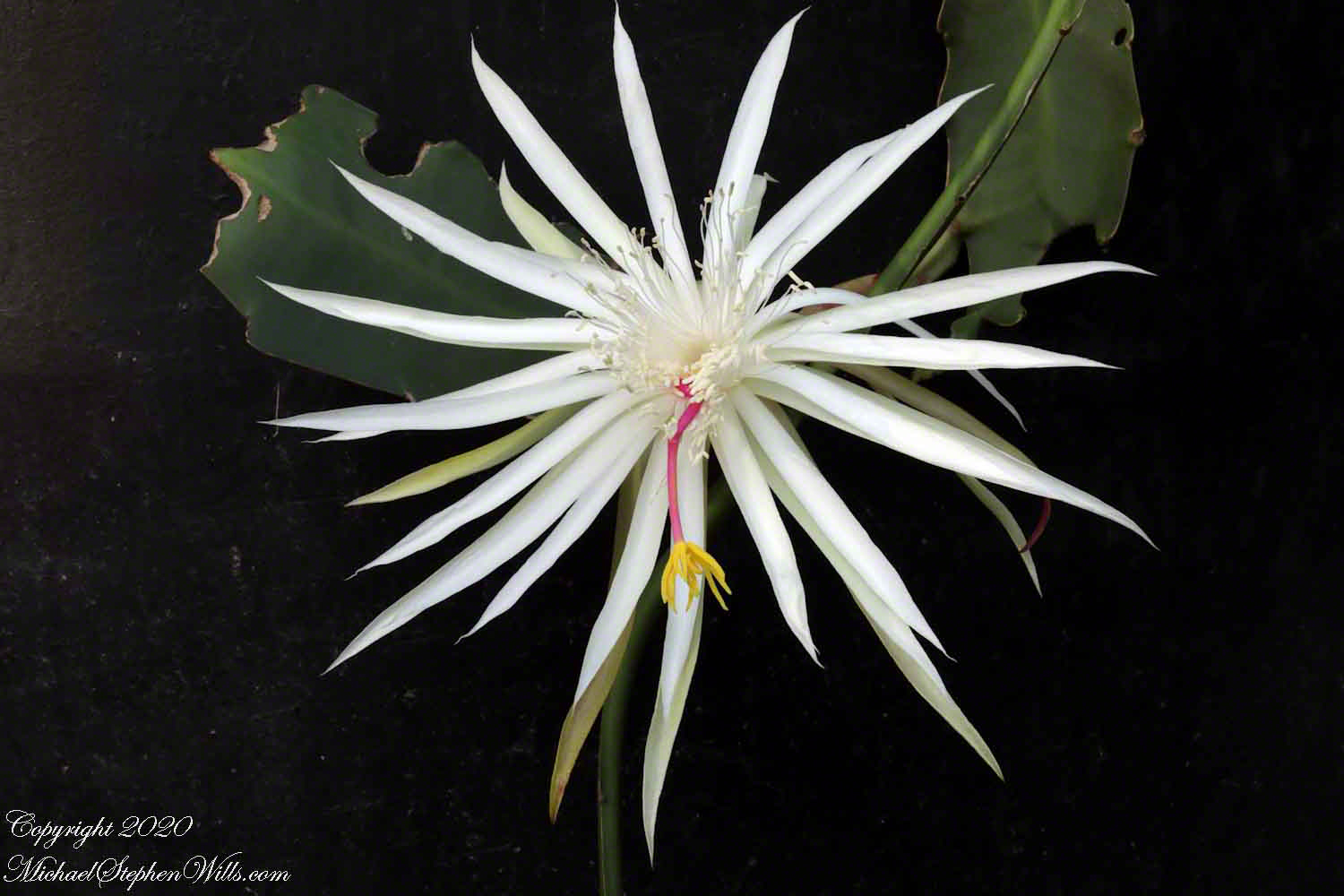
Bloom #2 of this season. Two more in the wings. I broke out the flash and the Canon 100 mm “macro” lens for this series taken an hour after sunrise before this one-night-only bloom wilted.
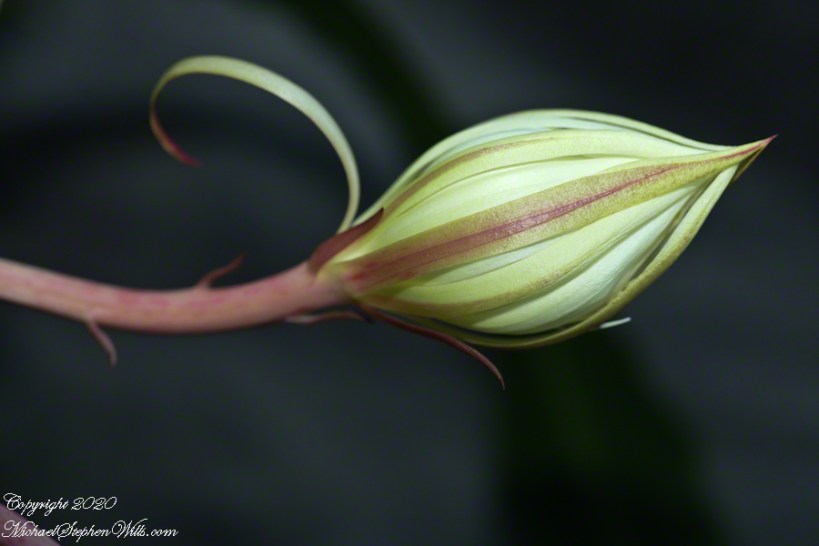
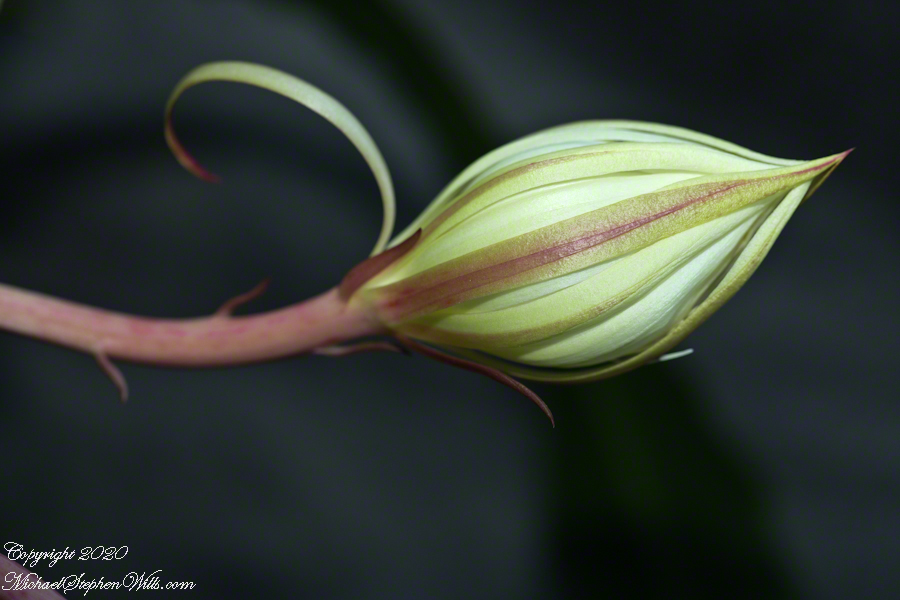
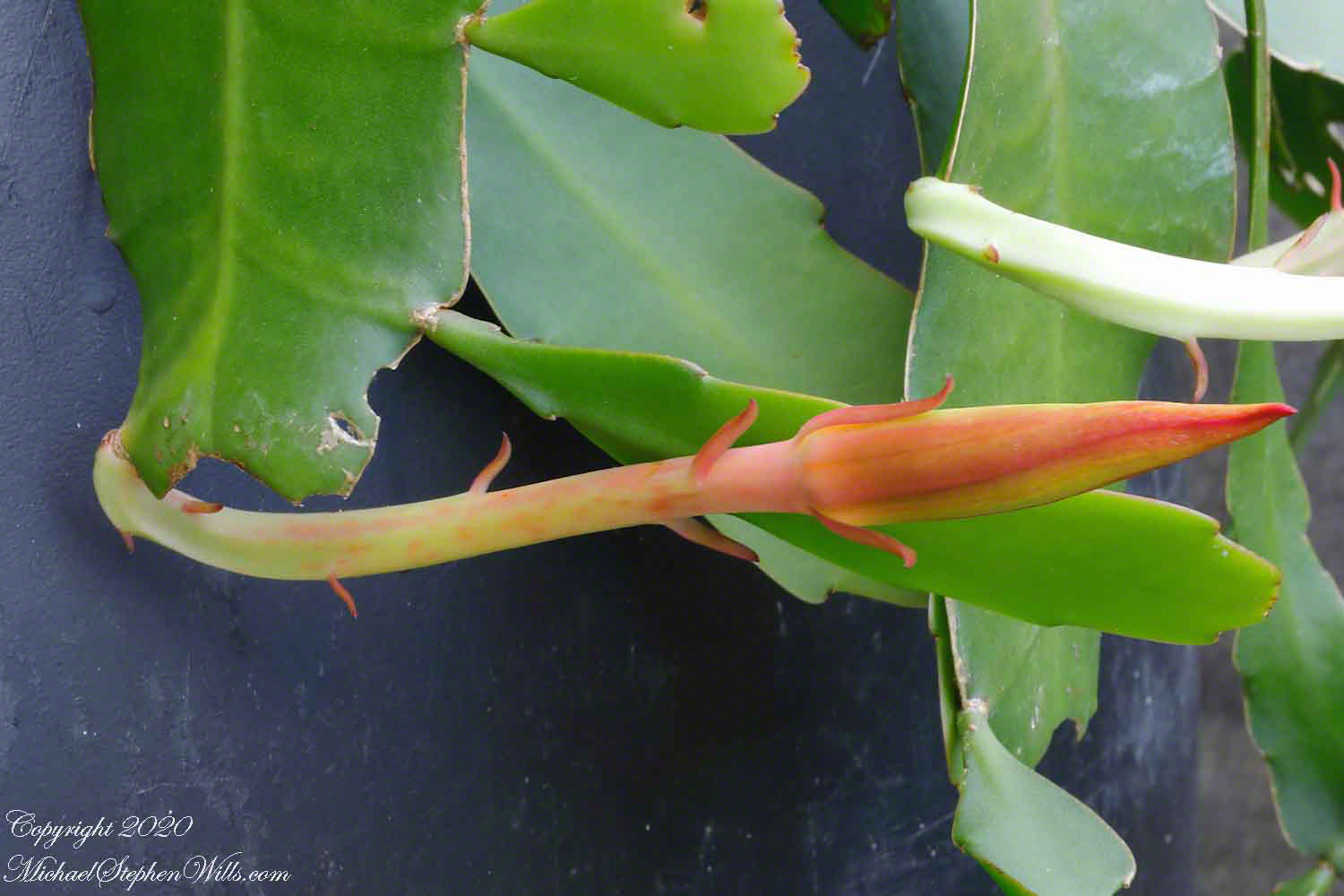
In an earlier posts the popular name of this plant, “Night Blooming Cereus” was introduced as incorrect, still there must be some truth in the name, I believe it is found in the developing flower stalk and bud.
“Cereus” is from the Greek word for candle. Don’t these developing flower stalks, resemble a candle and the bud a flame?
Click image for a larger version.
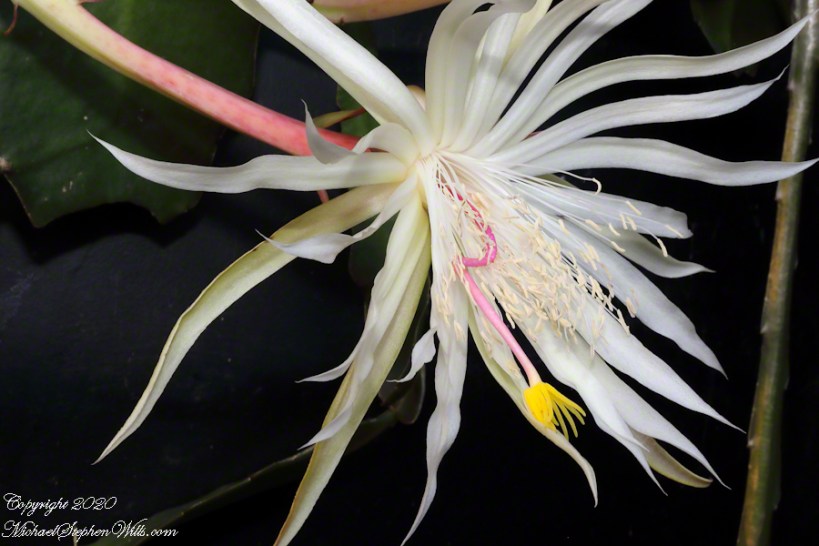
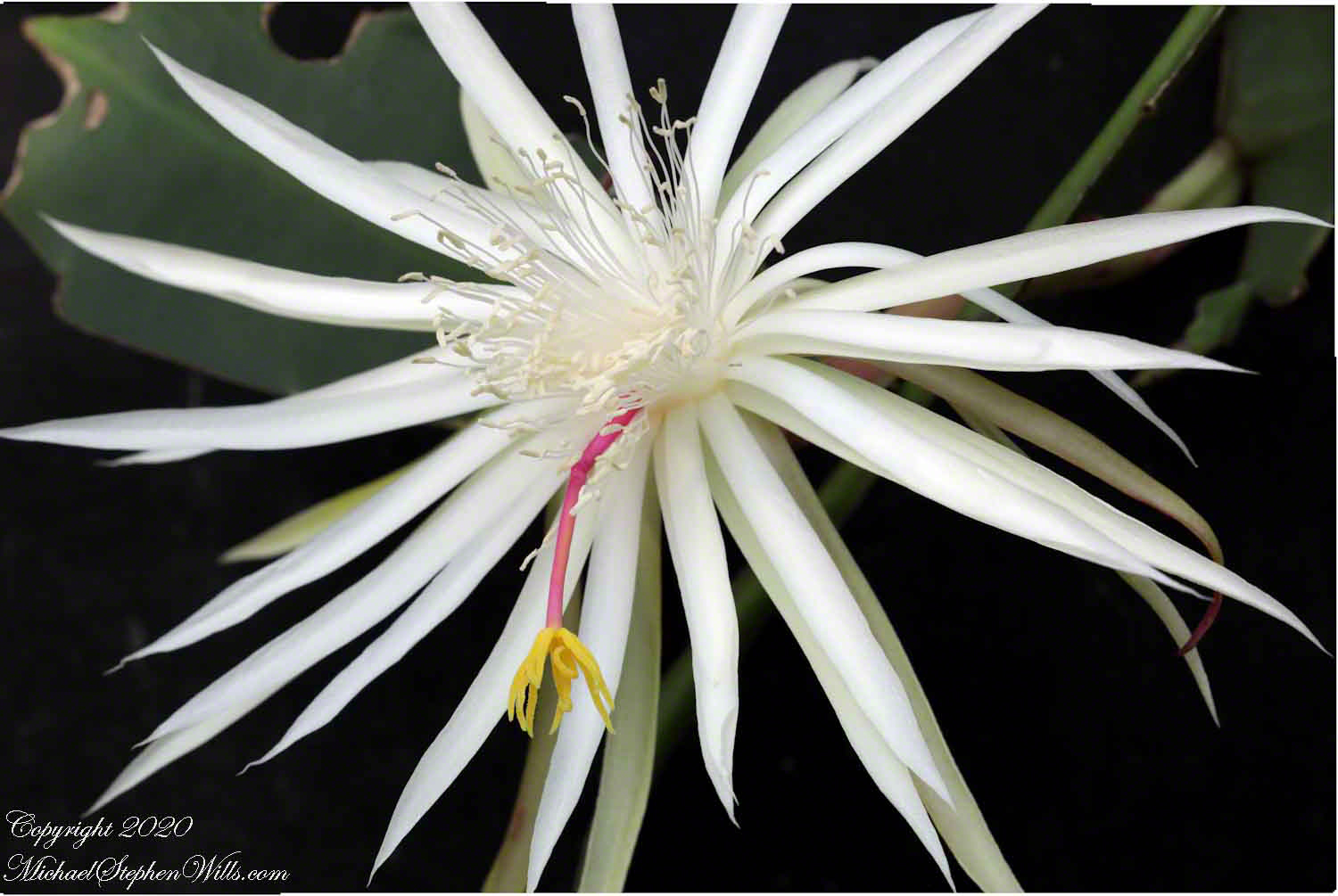
Here’s the flower from an earlier bloom this season.
Epiphyllum oxypetalum, the scientific name for this plant identifies the name “Night Blooming Cereus” as incorrect. The plant is of the genus Epiphyllum, identifying it as an epiphytic organism that grows on the surface of a plant and derives its moisture and nutrients from the air, rain, water (in marine environments) or from debris accumulating around it.
Nor is it in the tribe Cereeae, derived from the Greek and Latin word for “wax”, “torch” or candle. Plants of the Cereeae tribe, including those in the genus Cereus, are cactus with a columnar structure, are are terrestrial, not epiphytic, plants.
Epiphyllum oxypetalum, also know as Dutchman’s pipe cactus, princess of the night, queen of the night, is a species of cactus and one of the most cultivated species in its genus. E. oxypetalum rarely blooms and only at night, and its flowers are reported to wilt before dawn.
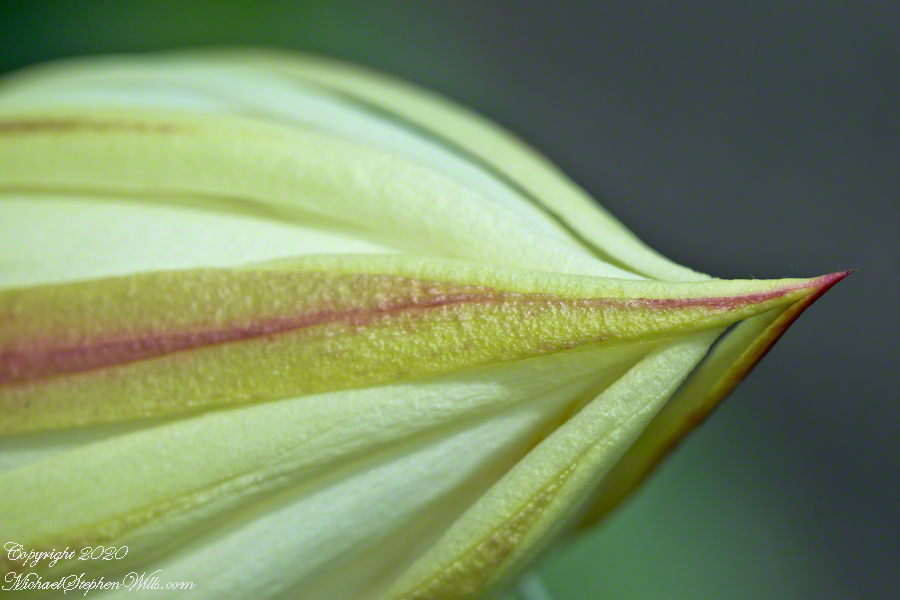
The species name oxypetalum is derived from the word, “oxy” meaning sharp, pointed, acute for the characteristic petal shape.
For the bloom photographed here, I can report it was in this condition 7 am, after sunrise, and did not wilt until after noon.
It is possible to puzzled over my choice of an ungainly potted plant acquired over two years ago from the Eddydale farm stand. We popped in for tomatoes, sweet corn and watermelons after a hike along nearby Treman Park, I spotted the plant on display in the front. The cashier suggested we visit the greenhouse to view the parent, currently in bloom. Memory of the blossoms were short lived as we lived with this collection of malformed green lobes sprouting long stalks.
The plant occupied a pool-side water barrel summers, a bedroom corner winters. This year, 2020, flower buds formed late July, one on a lengthening stalk. “Dutchman’s pipe cactus” is a popular name, from the appearance of the flower on the end of a stalk turned up with a terminal curve.
Keeping a watch eye on progress, I noted a swelling on Wednesday, September 23rd morning, more pronounced by evening. First thing Thursday morning the flower was in full glory. I used a Canon EOS 5D Mark IV with the Canon EF 70 – 300 mm lens. The variable focal length lens can be used for macros, offering more flexibility compared to the 100 mm macro lens.
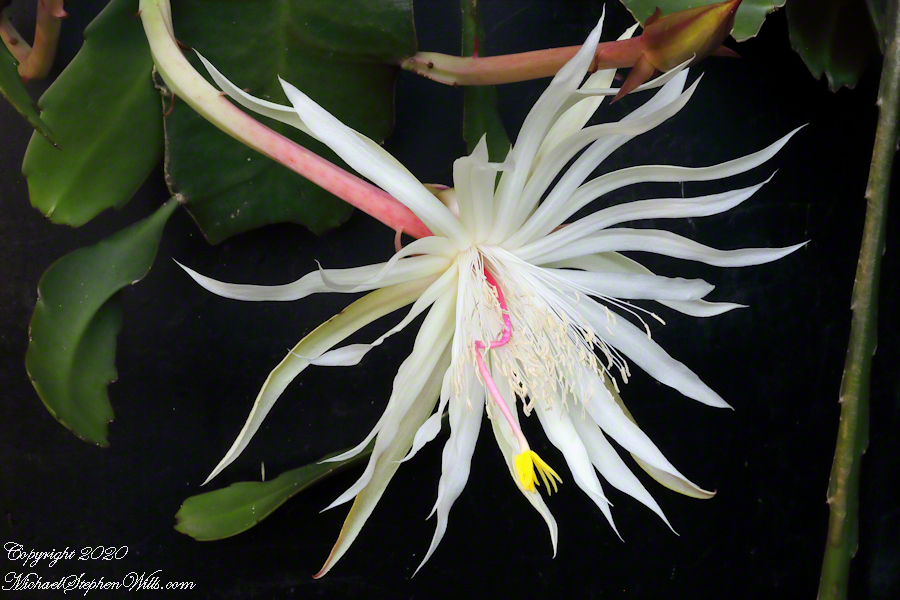
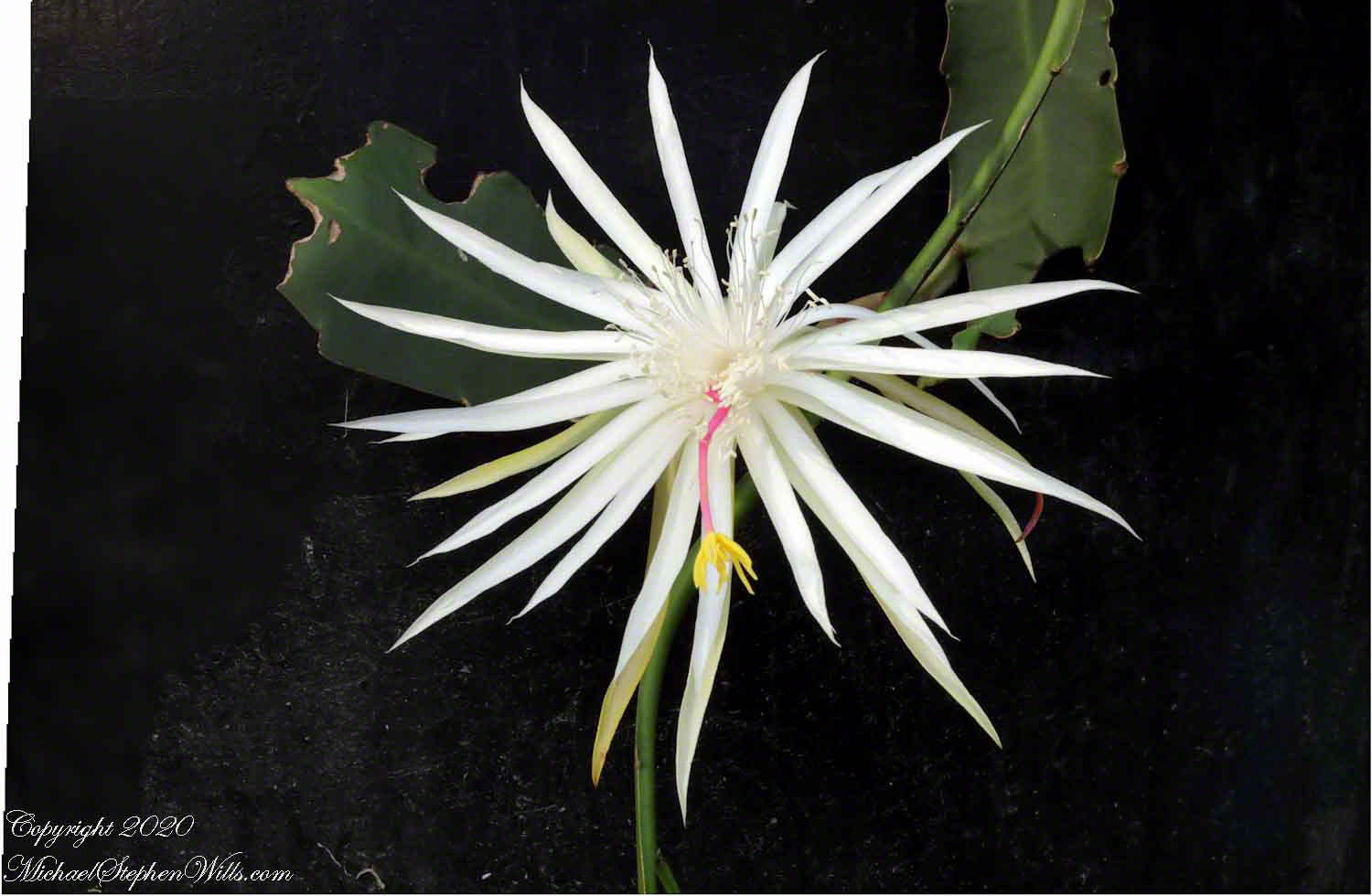
For the first three photographs of this series I used the Photoshop feature Photomerge, combining 12 or so image files. For each file the camera was mounted on a Manfrotto BeFree carbon fiber tripod with a ball head. Focus was on manual and, using the screen of the Canon 5D I gradually changed the focus, crisp focus moving between planes. In theory, the Photomerge chooses the best focus for each image producing a perfect result.
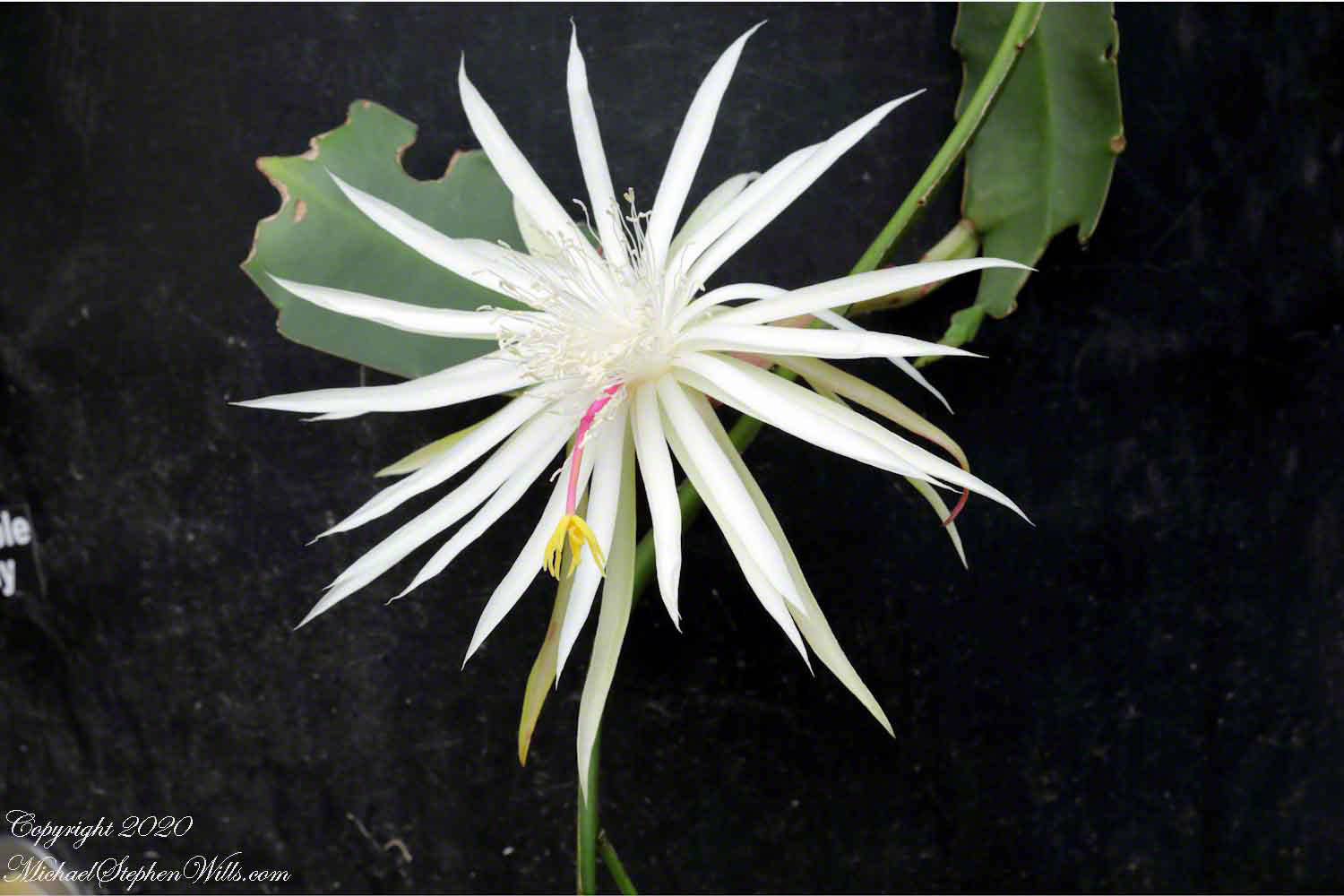
As the session progressed the scene brightened and for these last two photographs I used aperture priority at the highest value (36) and autofocus.
Here is a comparison of a merged and high aperture photograph.
Our tour tickets and bus designation ( “number 2” ) firmly in hand, Pam and I walked the gangplank from the tender (see yesterday’s post), into the Iquique International Cruise terminal, then out to the sunshine to find out bus, following the crowd.
Click any photograph for a larger view and use Ctrl-x to zoom in closer.
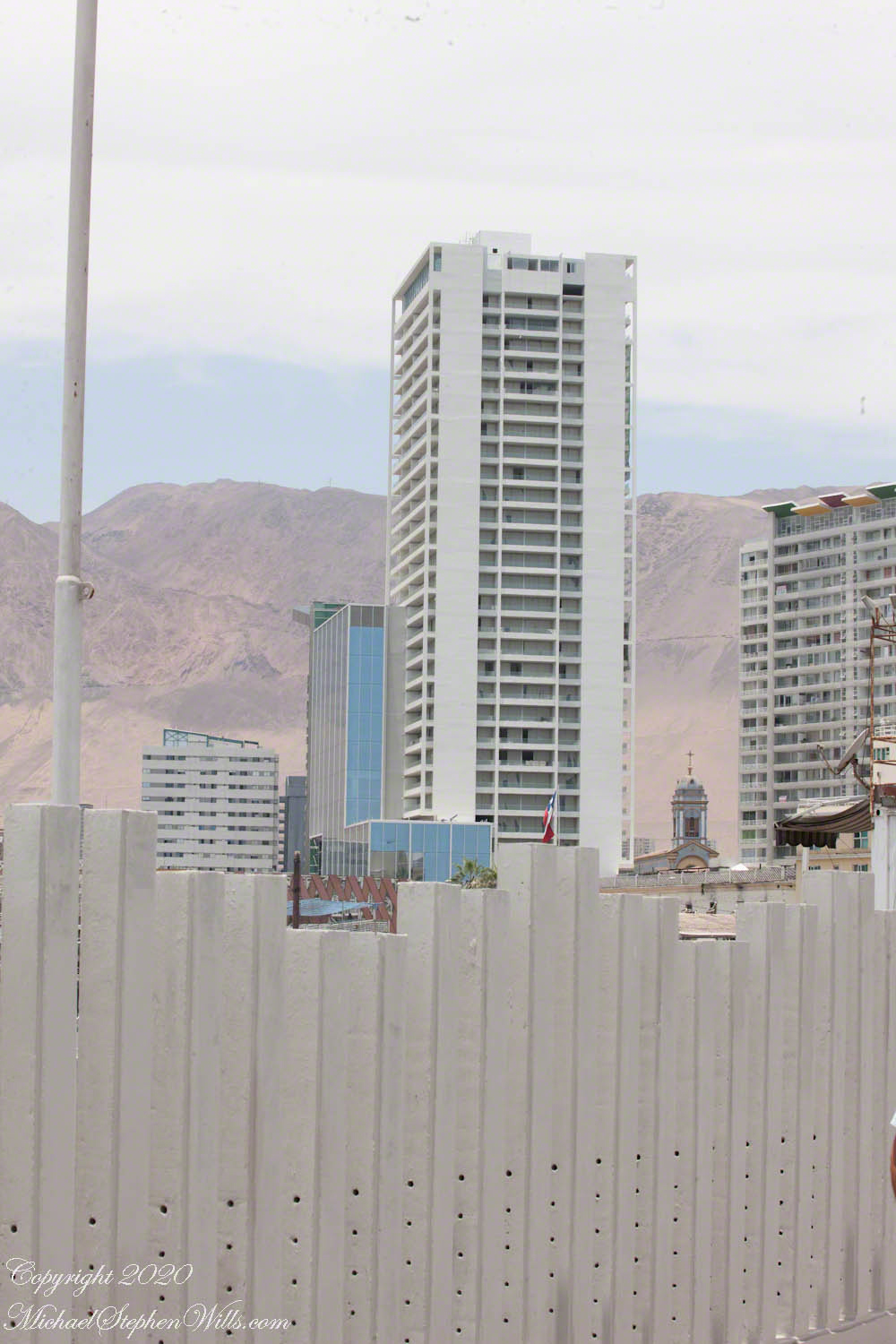
Downtown High rises soar above downtown
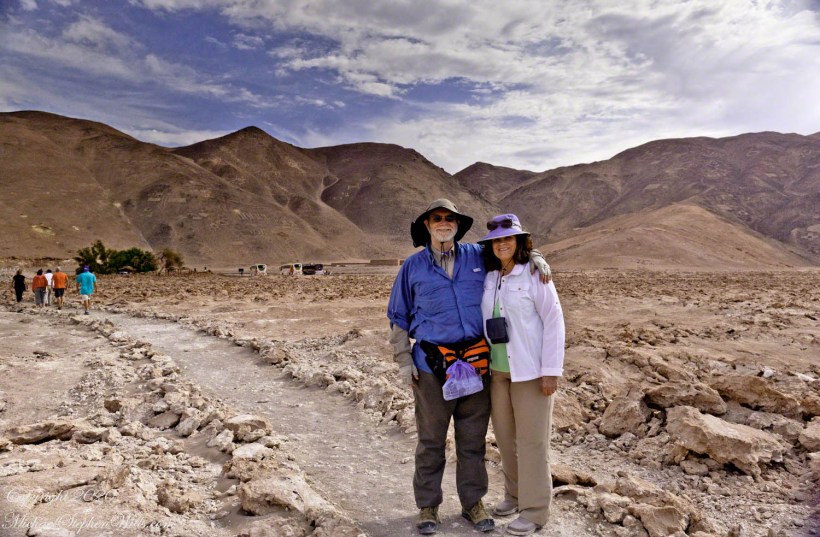
Touring this way can feel link a rodent maze, it was not our feeling at all. The groups maxed at 15, the guides friendly and knowledgeable, the tour buses luxurious. We enjoyed ourselves immensely. Here we are, later that day, dressed for adventure.
Mike and Pam Wills on tour at the Pintados Geoglyphs, Tarapacá, Chile within the Atacama desert.
Our itinerary for the day is to navigate through the city, across the desert to visit a World Heritage Site, Humberstone, and ancient geoglyph sites, touching on local ecology.
Another view of the Cathedral of the Immaculate Conception among the downtown high-rises of Iquique.
Here is our tour, time to hop on the bus, get going.
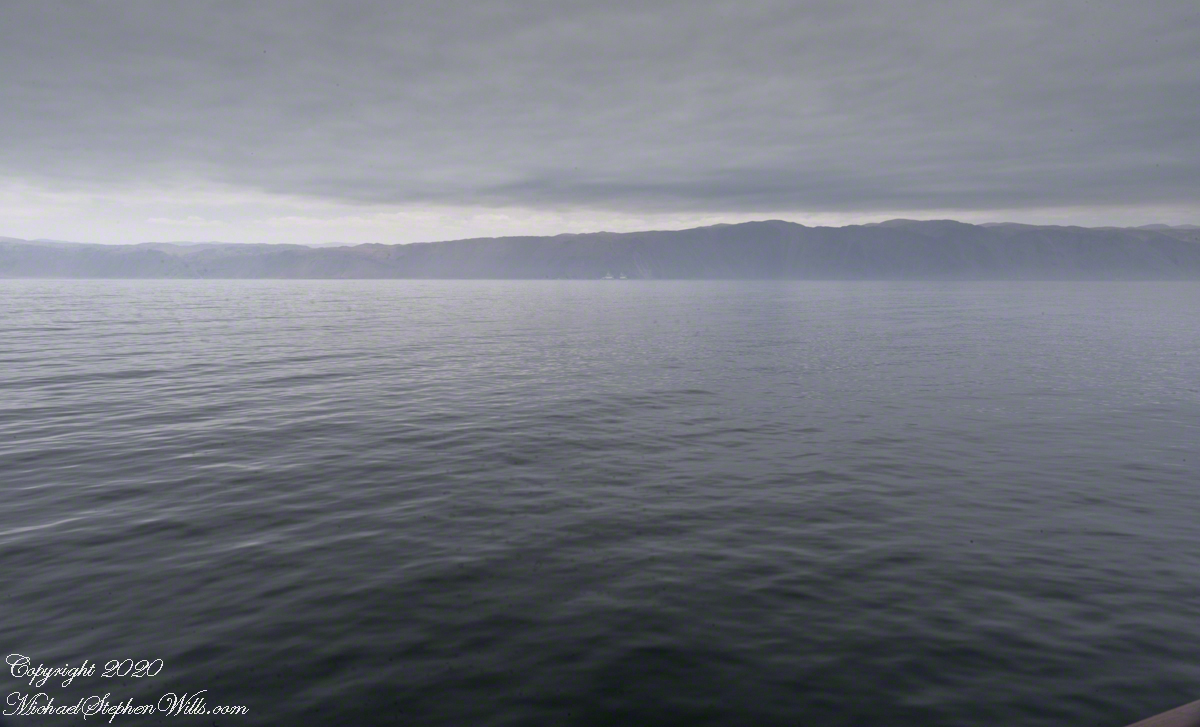
Ninety minutes after docking our assigned tender pulled away from the Regatta for a twenty minute trip to Iquique. A tender is a boat with an enclosed seating area designed to transport about twenty persons in quiet waters from an anchorage to port. I recall the morning announcement from the ship Captain advising use the winds were high (or the waves), and he negotiated a mooring with the port, instead of the planned docking, in order to save our visit to Iquique.
Click any photograph for a larger view and use Ctrl-x to zoom in closer.
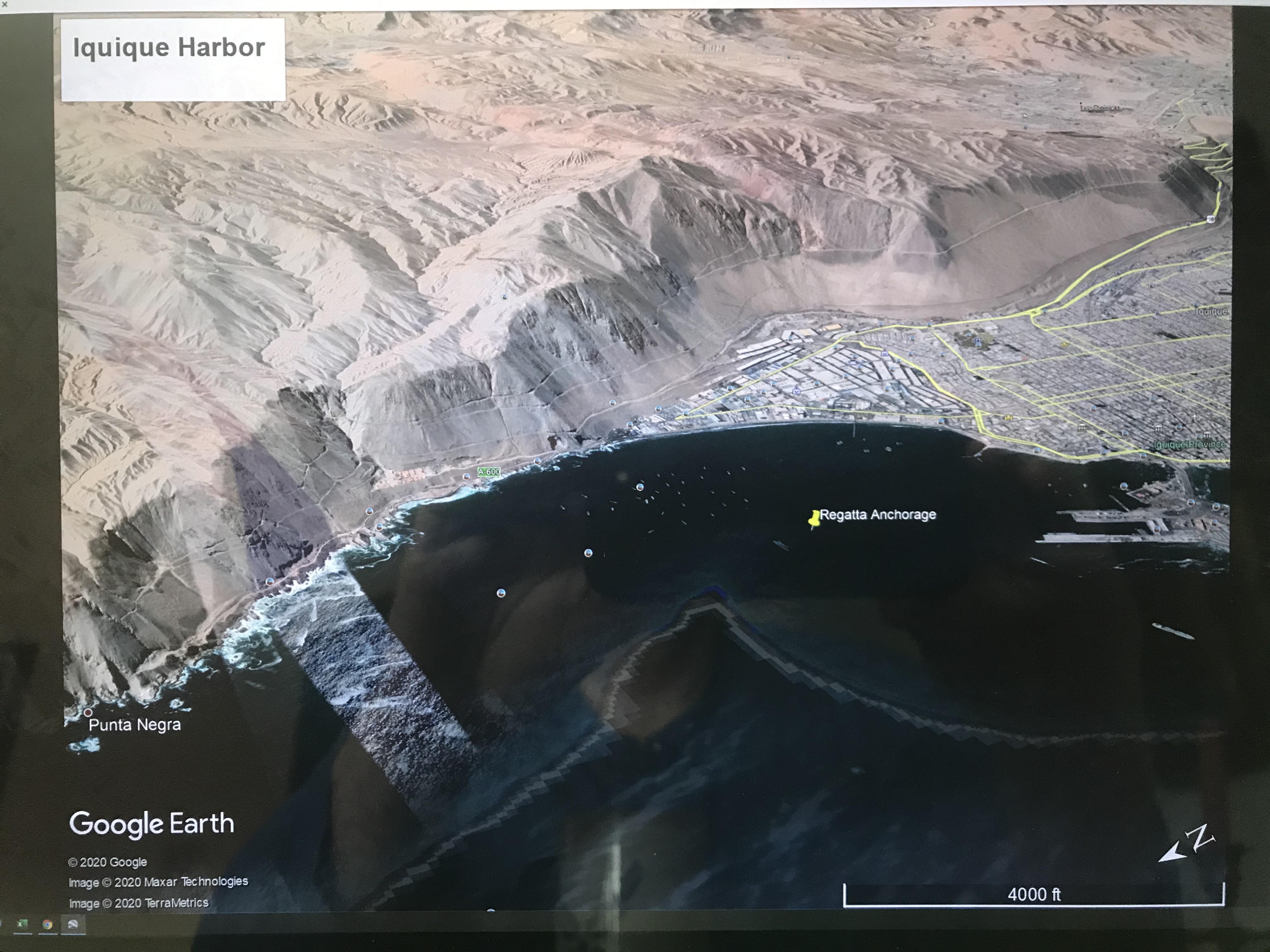
The approximate anchorage of the Regatta marked with a pushpin. The tender transported use from the Regatta to the base of the island port.
Above is a screen capture from Google Earth, the entire Iquique harbor is pictured from Punta Negra (see photo from yesterday) to the base of the island port connected to the mainland with a road. The tender port is at this base, on the shore side. If you wish, download the following PDF document with a clearer image. You will need a PDF viewer.
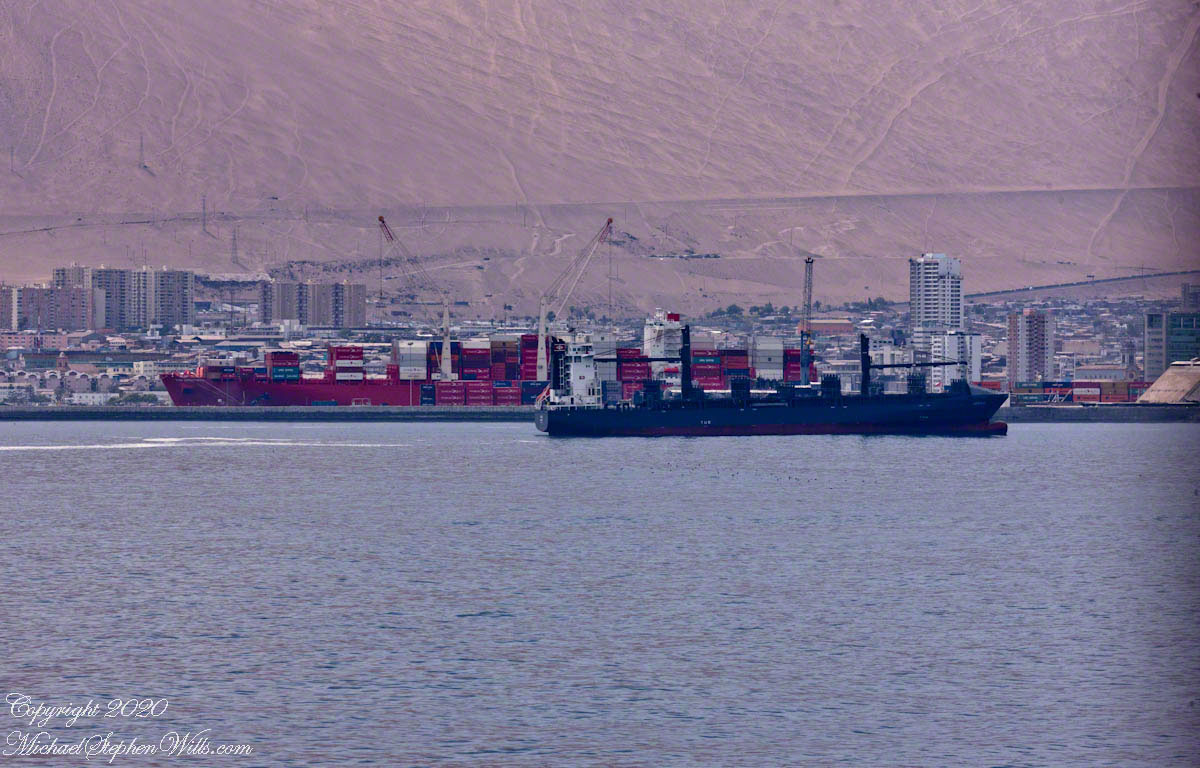
Shipping containers being unloaded from the container ship San Christobal.
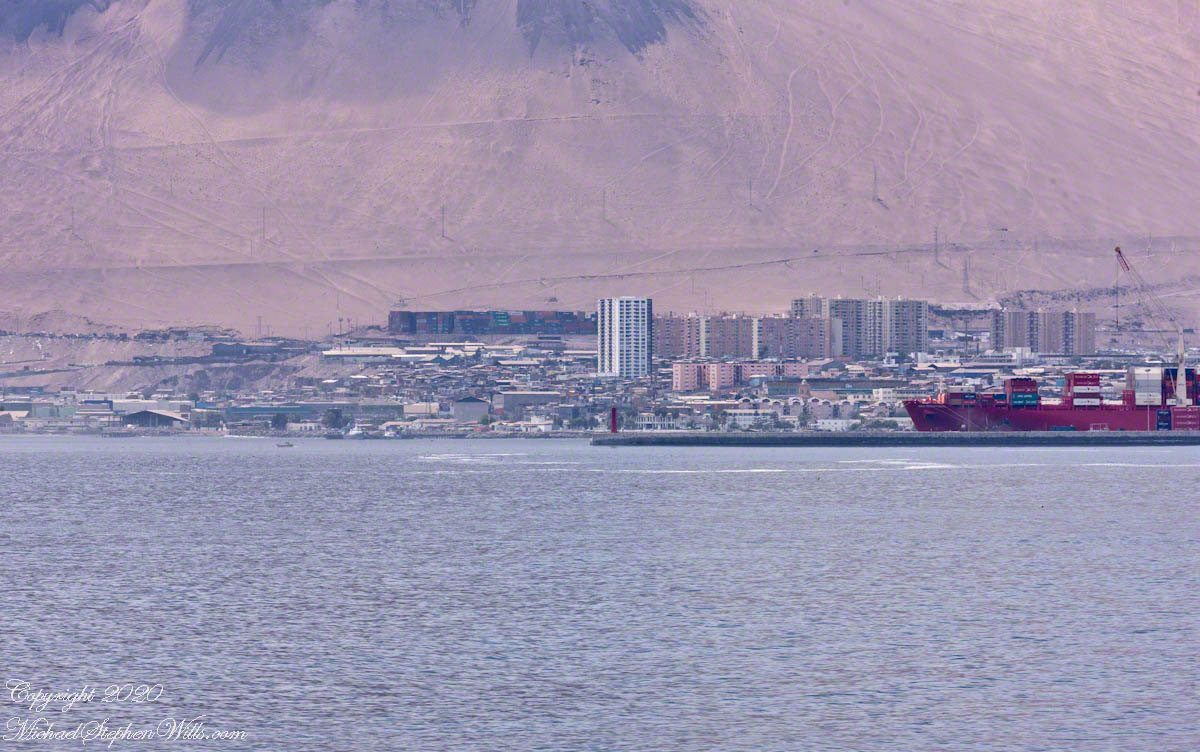
Here are some of the sights visible from the tender. I recall sitting next to the large rear window. Above is the large red container ship. From earlier posts, the San Christobal is docked at the outer berth. The ship is being unloaded, you can see a yellow shipping container on the crane.
Today, aneconomic reason for Iquque’s prosperity is the status as a duty free zone the government dubbed “ZOFRI.” Another is tourists flocking to this “Miami of South America” for duty free shopping (there is a mall), the shore lined with tall hotels and condominiums. Adventure-seekers love the surfing and hang gliding from the escarpment.
Notice the fishing nets in the stern with yellow floats
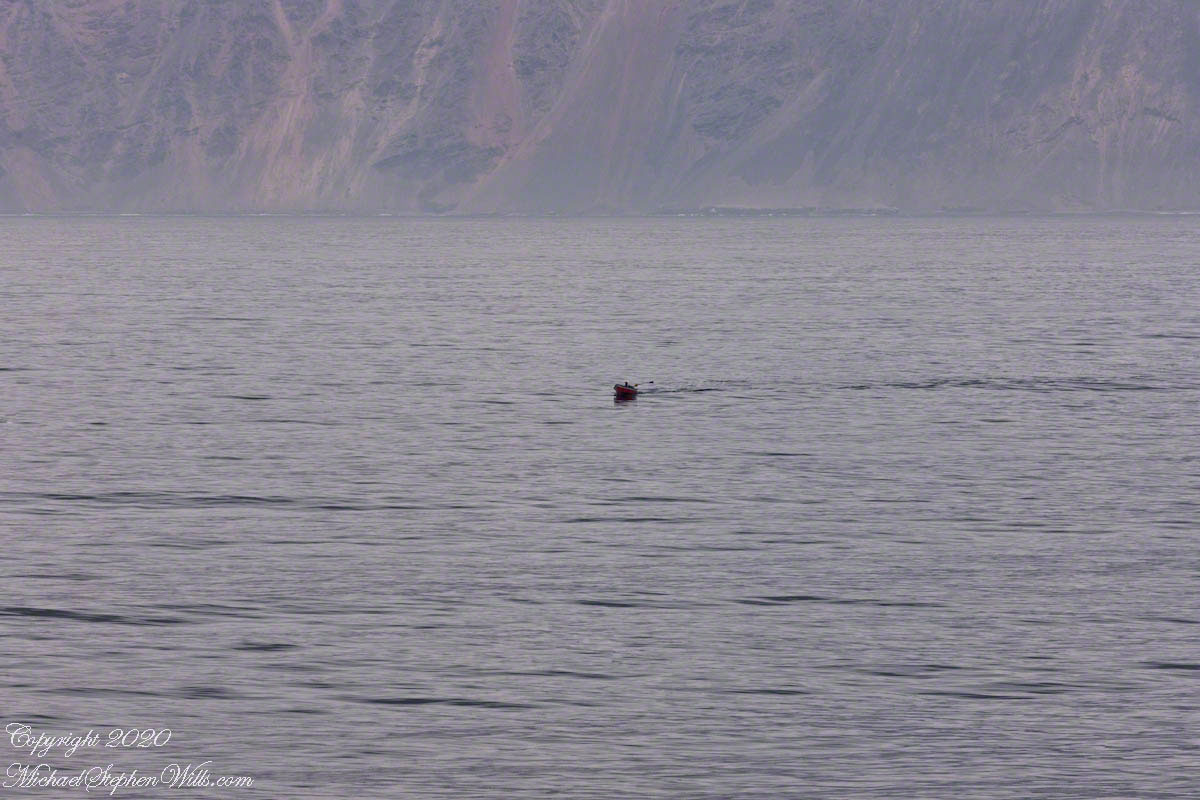
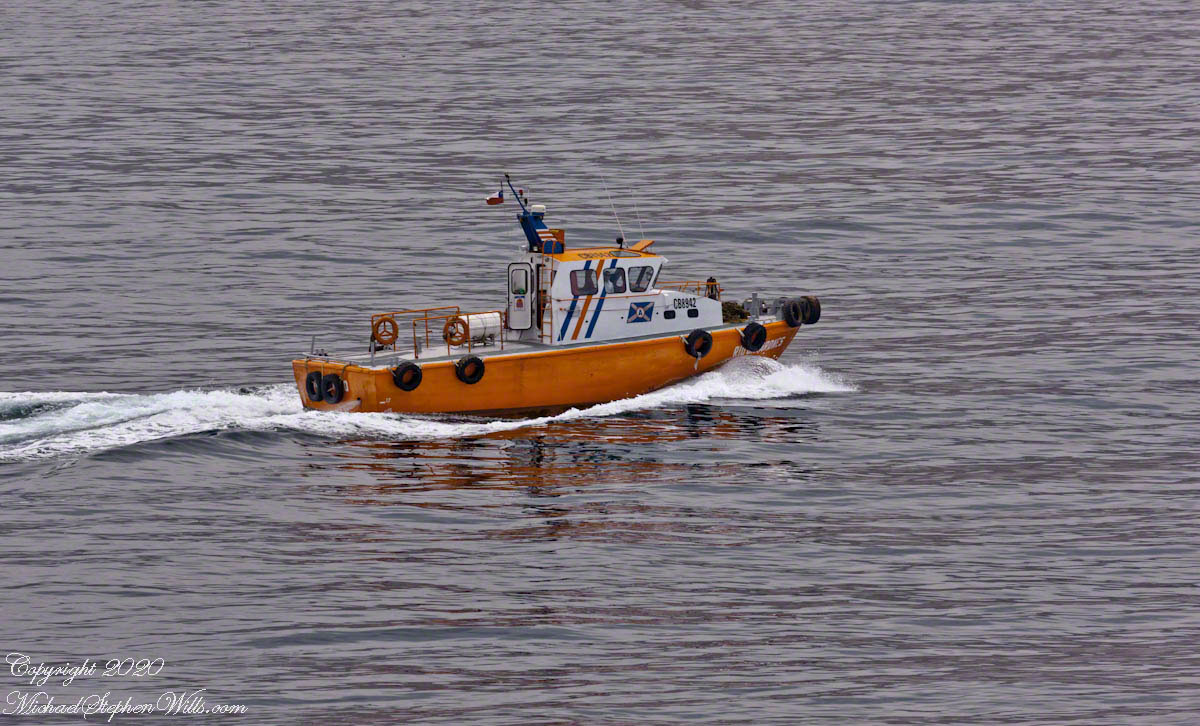
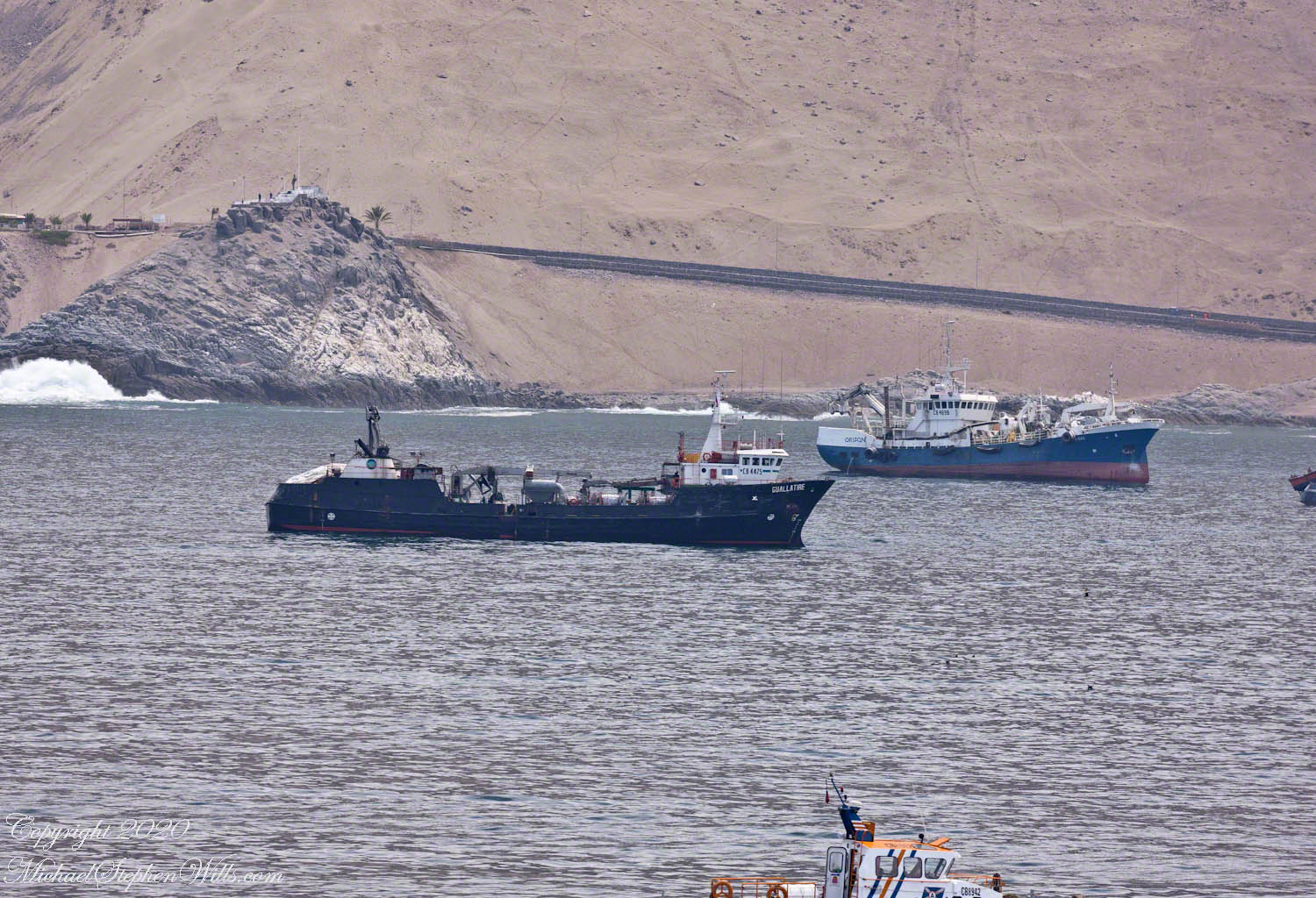
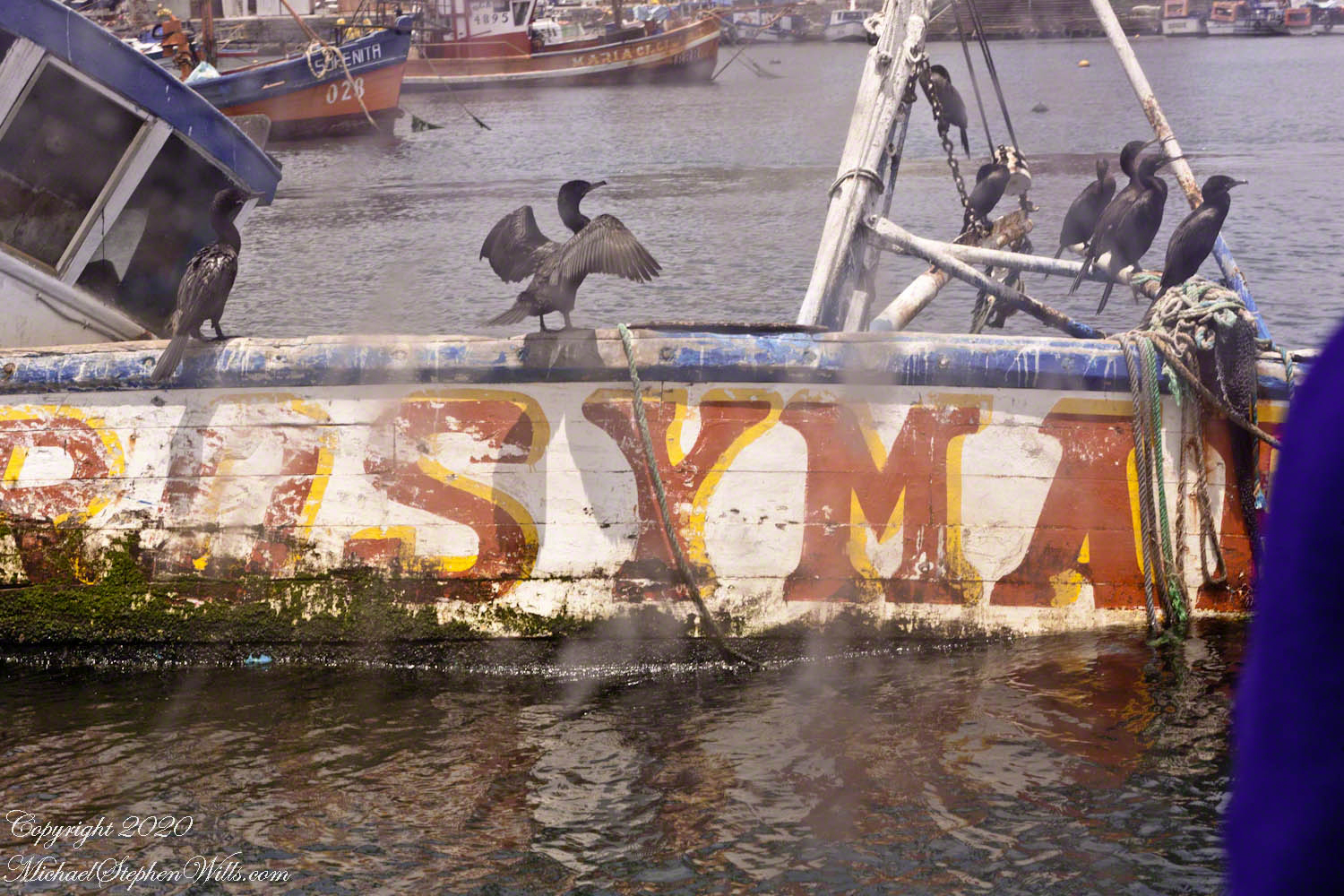
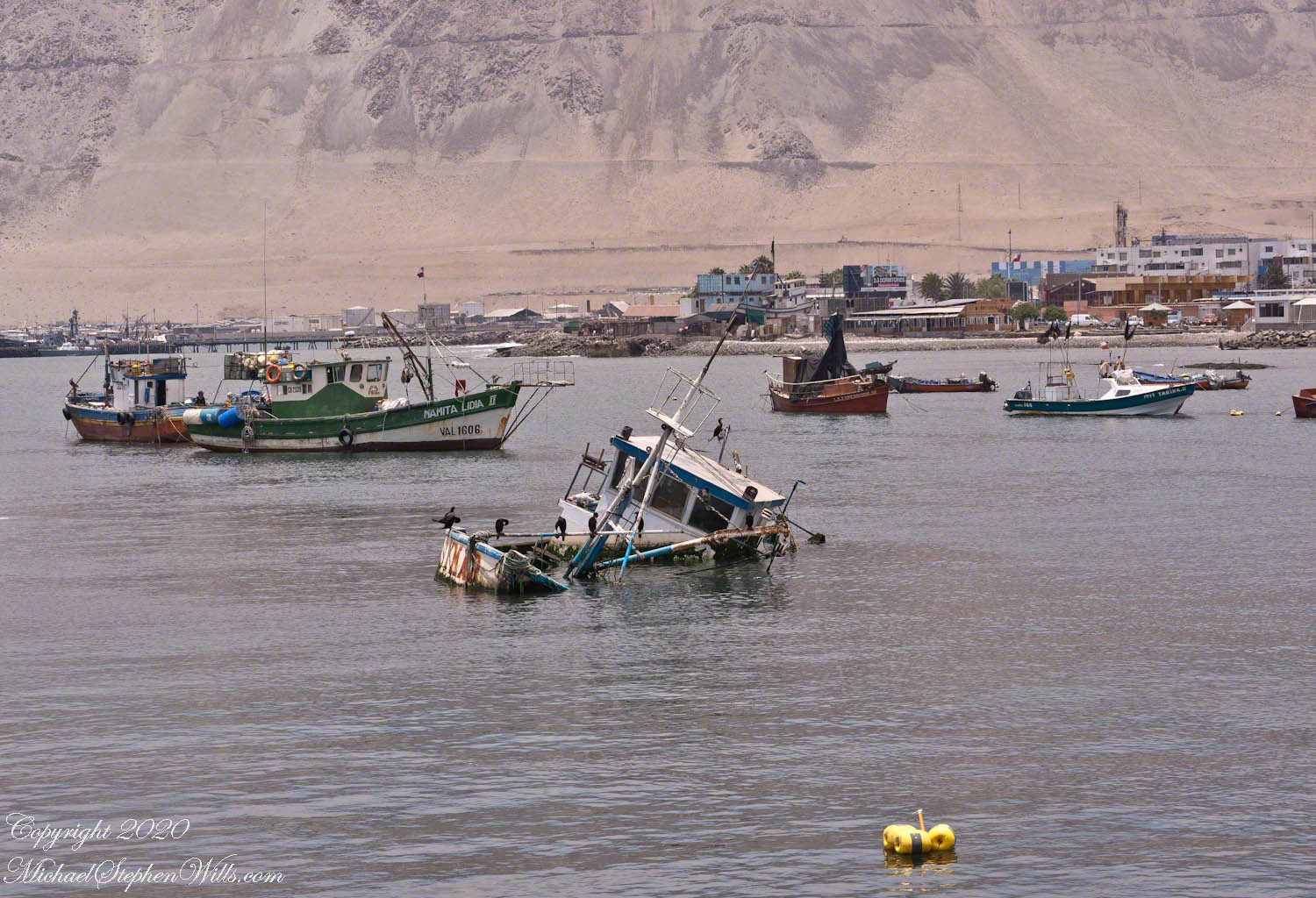
This is the scene close to the tender port, past mooring for smaller fishing and other boats.
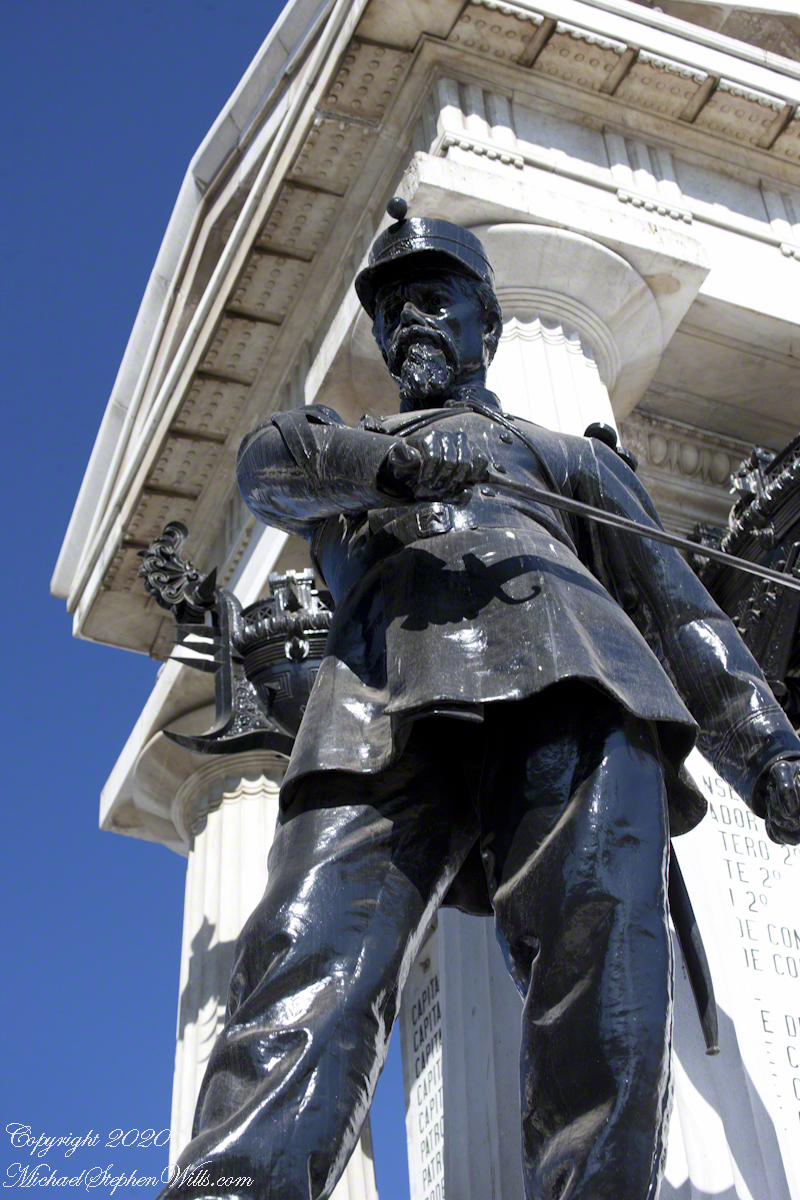
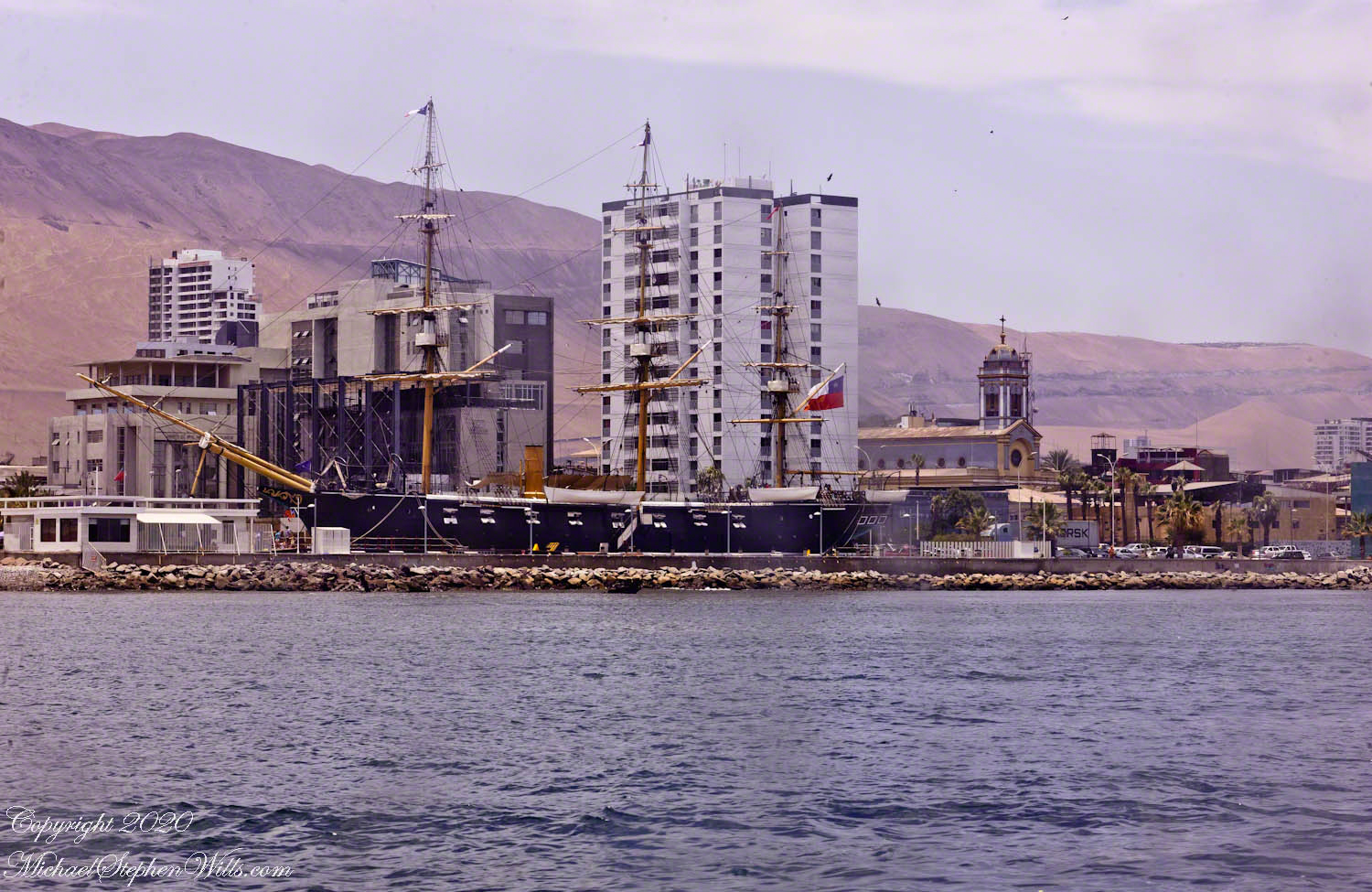
Replica of the Chilean navy ship Esmeralda sunk during the Battle of Iquique. It is a nautical “living museum.” From the website: “The museum script of the Museum ‘Emerald Corvette’ is represented by thirteen museum scenes that inspire the guided tour, where it was recreated what life was like on board on May 20, 1879, the day before the historic Pacific War day.” The Cathedral of the Immaculate Conception is to the right of the ship stern. Here is a previous post with more about the Esmeralda in historical context.
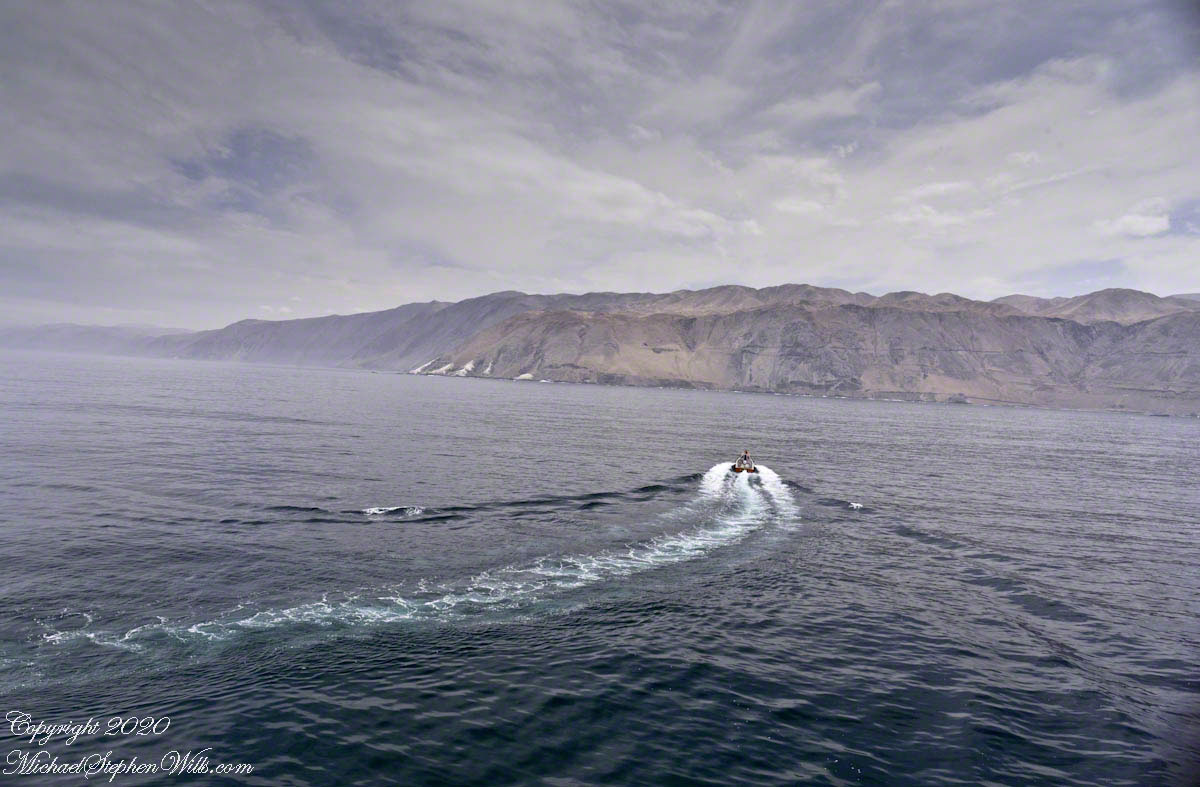
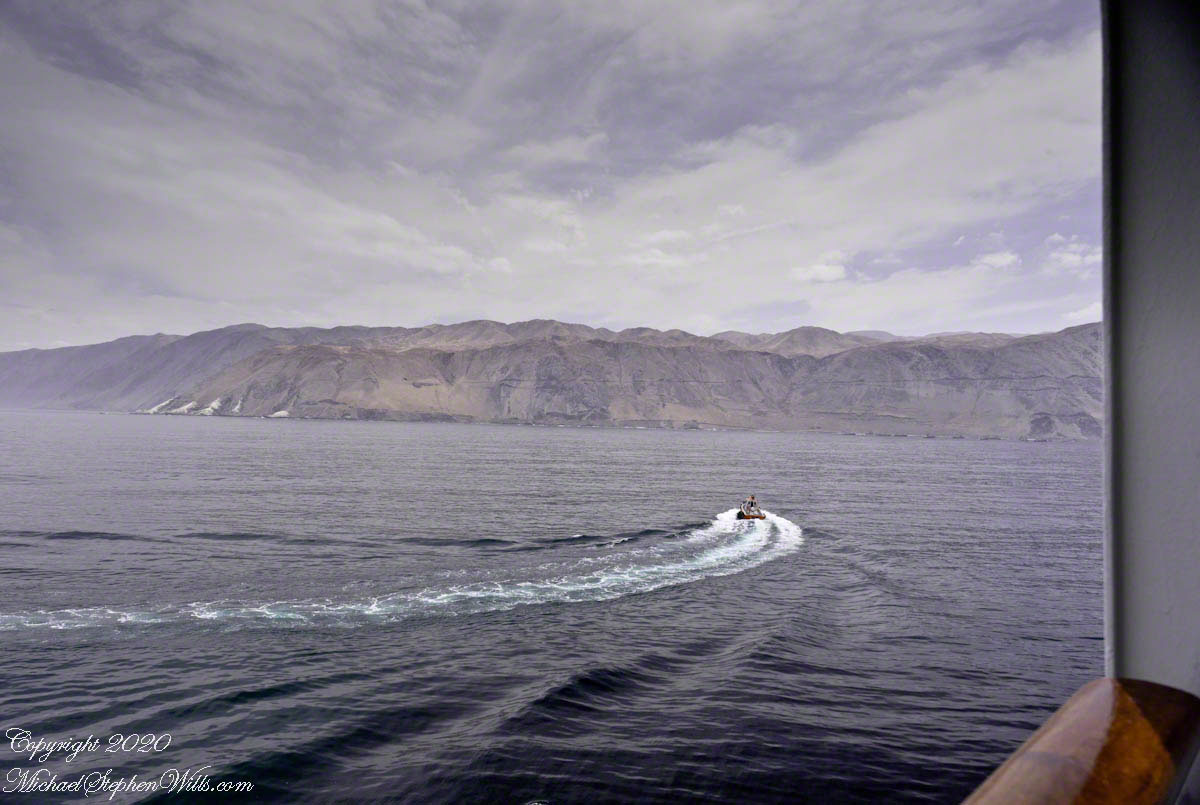
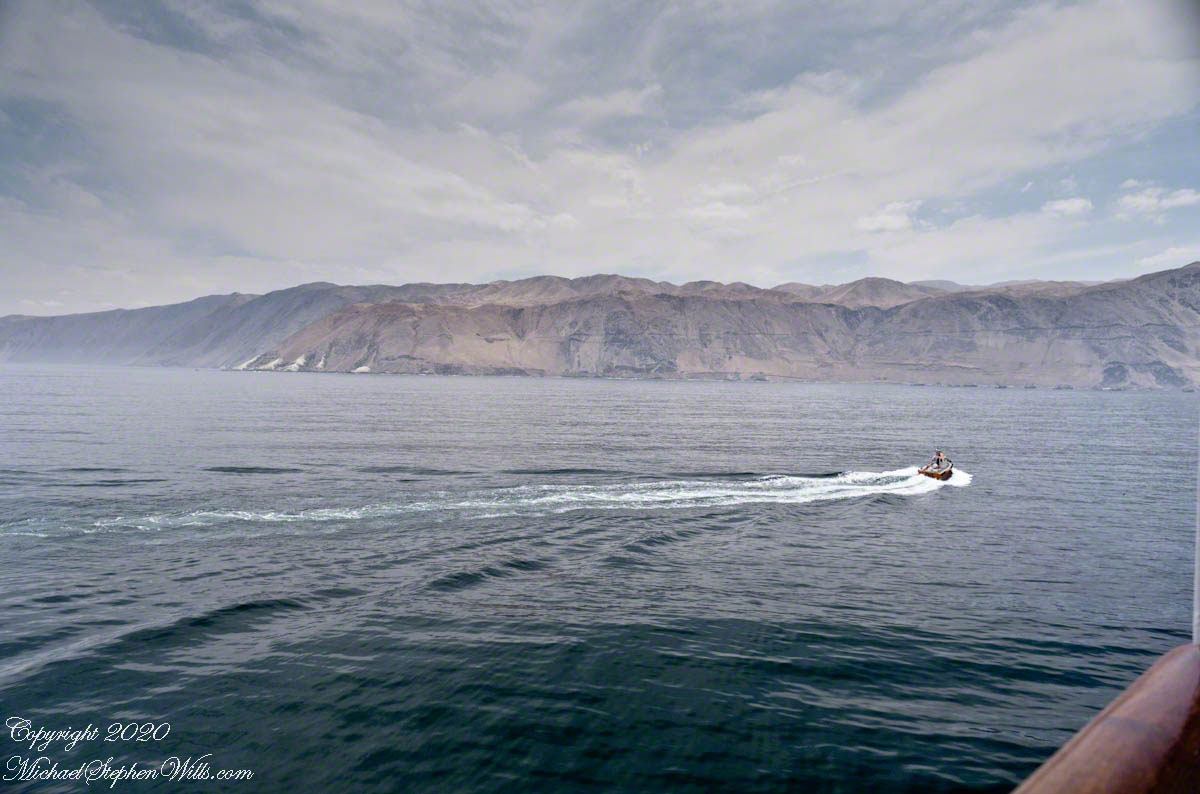
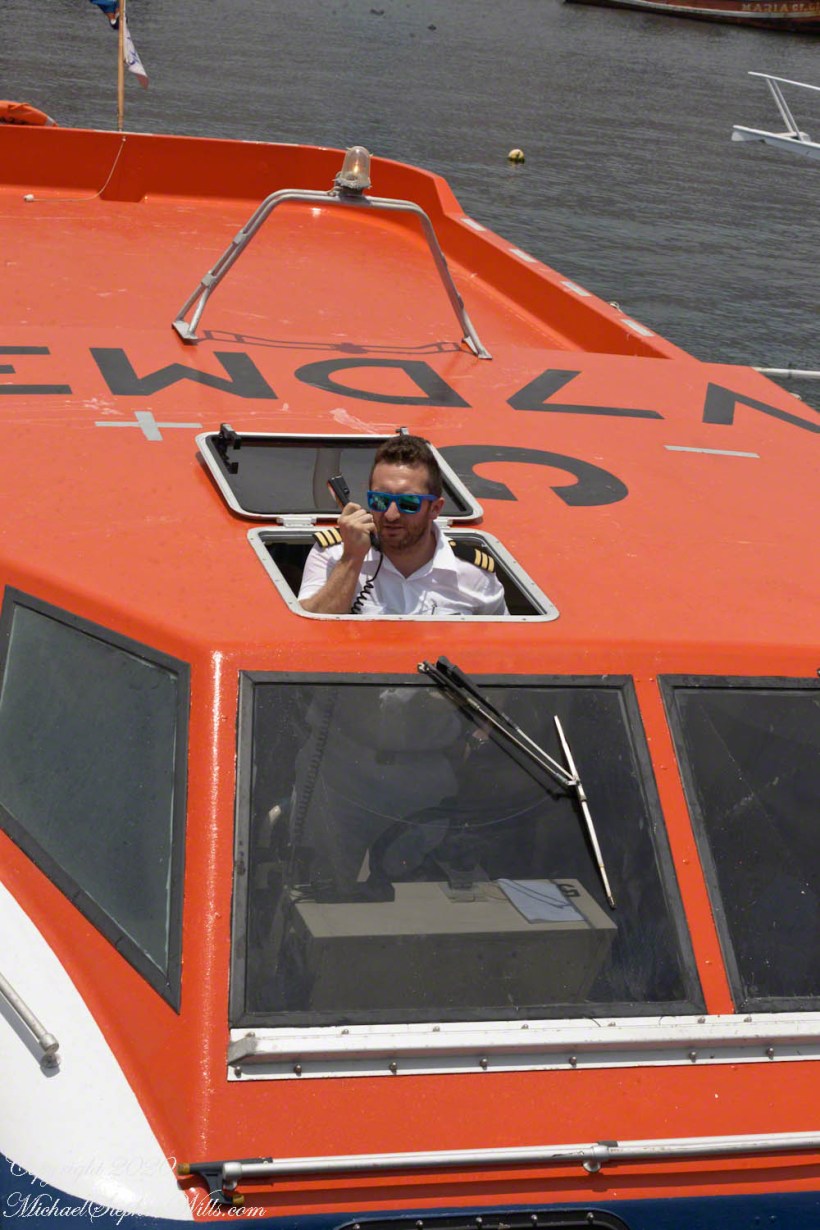
After disembarkation, I looked back for this shot of our tender pilot.
Our monarch butterfly sanctuary is a dense stand of milkweed, over the years the established plants grow rapidly late May through June, blooming in July. The flowers have an incredible scent, attracting numerous pollinating insects.
A colony of pesky sparrows nest nearby. In spite of a reputation for tasting bad, the sparrow actively feed on the hatched caterpillars. My strategy is to examine the plants early morning, placing rescued caterpillars in this old birdcage.
Click photograph for a larger view and use Ctrl-x to zoom in closer.
The caterpillars and milkweed leaf is placed on the cage floor. I pile up the dried leaves, replacing with fresh each morning.
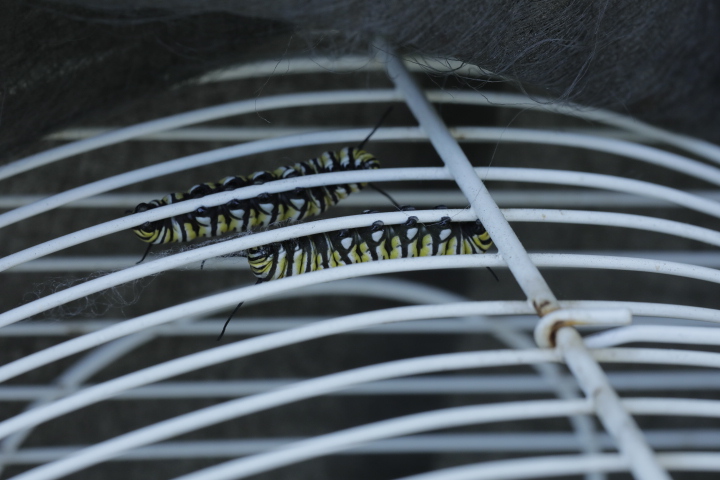
Sadly to report, the last, ravenous caterpillar stage is also carnivorous, cannibalistic. These two, below, were the only ones left except for one in the pile of dried leaves.
Here is a closer view of the two fifth stage instars searching for a safe location to pupate.
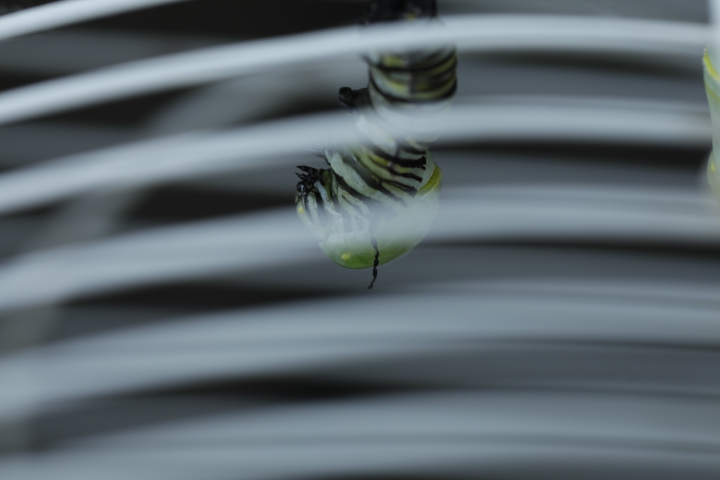
A few hours later one has successfully created a silk pad, attached itself and assumed the “J” shape. To the left a second caterpillar and silk pad.
The next morning, the first has formed a chrysalis. The second, hung spent.
This unsuccessful individual never completed the chrysalis, dried up and fell. My sources write the pupa transforms to a chrysalis through shedding of skin, the following photograph tells a different story. The chrysalis appears to extrude from the skin; arising over, or from, the skin rather and beneath it. I have never recovered a shed skin underneath a successful chrysalis.
Nine days later, Tuesday, July 28, the chrysalis hangs. I check several times a day.
These photographs are from a 100mm “macro” lens, handheld. The birdcage works well for protecting the monarchs. Is a poor location for photography.
Thank You for visiting.
Copyright 2020 Michael Stephen Wills All Rights Reserved
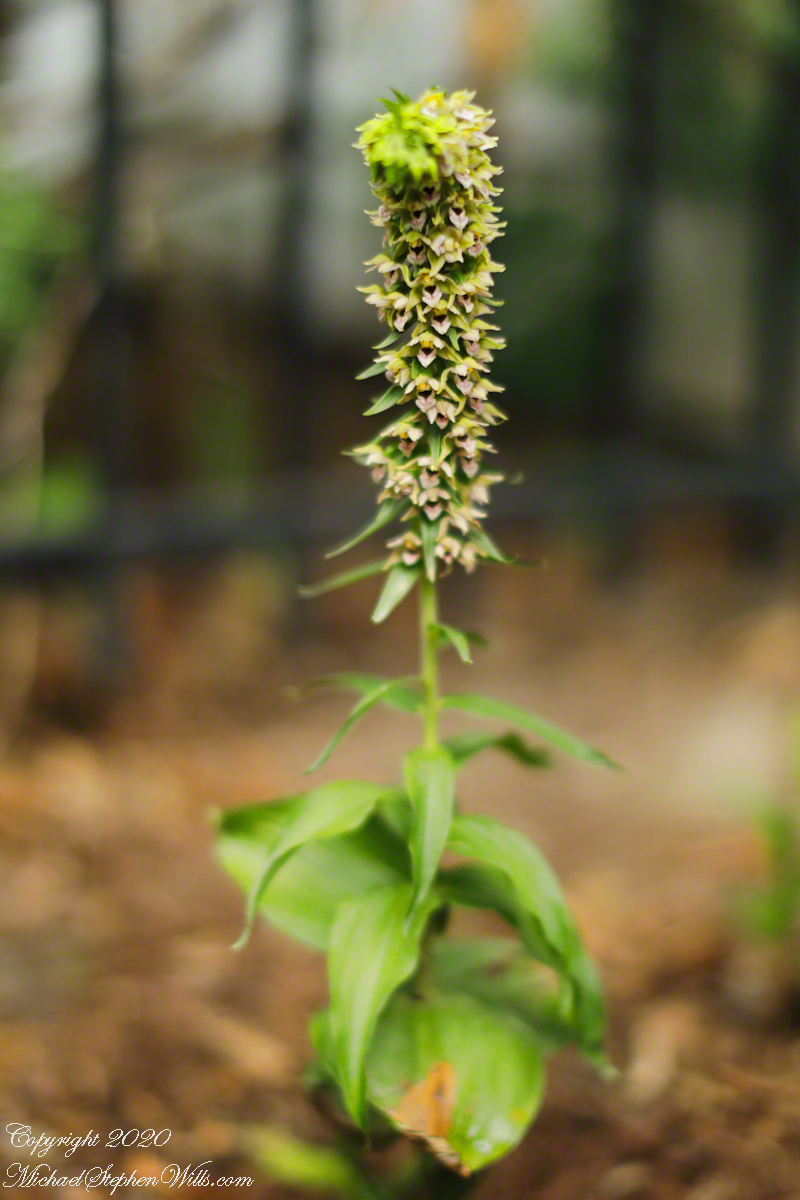
Broad-leaved Helleborine (Epipactis helleborine), a wild orchid, is a wide ranging, invasive, plant now found across North America. I suspect this success is based on a partnership with fungi. Commonly known as the “Weedy Orchid” it is not especially particular on the fungus partner, accepting a wide, curiously undefined for lack of research, variety.
In this the fourth of a five part series, the 50 mm lens f-stop is tamped down a bit, narrowing the diaphragm to f2.2, yielding the column of orchid faces in sharp focus. The nodding top, bent into the frame, unfocused, stem and leaves soft focus, still lots of detail discernible. Background far less distracting.
Click photograph for a larger view and use Ctrl-x to zoom in closer.
Today’s header image is from yesterday’s post, by way of comparison.















 Michael Stephen Wills Photography