A Serendipitous Discovery on a September Morning
It was a crisp, sunny September morning when Pam and I set out for a leisurely walk along the shore of Cayuga Lake in Ithaca, New York. The lake shimmered in the morning light, framed by the early hints of fall colors on the surrounding hills. We had been walking for some time, enjoying the peaceful rhythm of nature, when something unusual caught my eye—a cluster of bright yellow-orange growths on the trunk of an apparently hale White Willow tree.
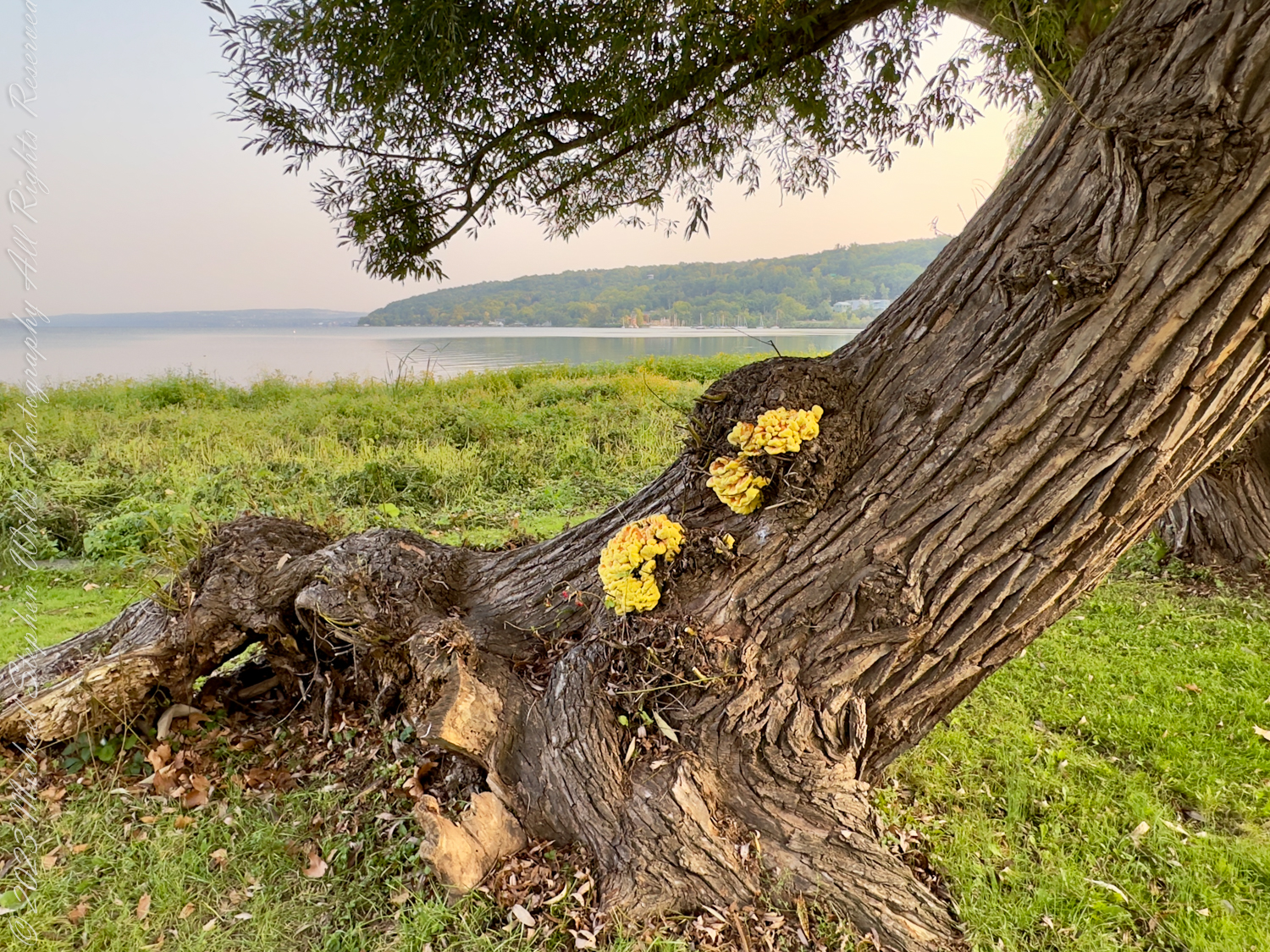
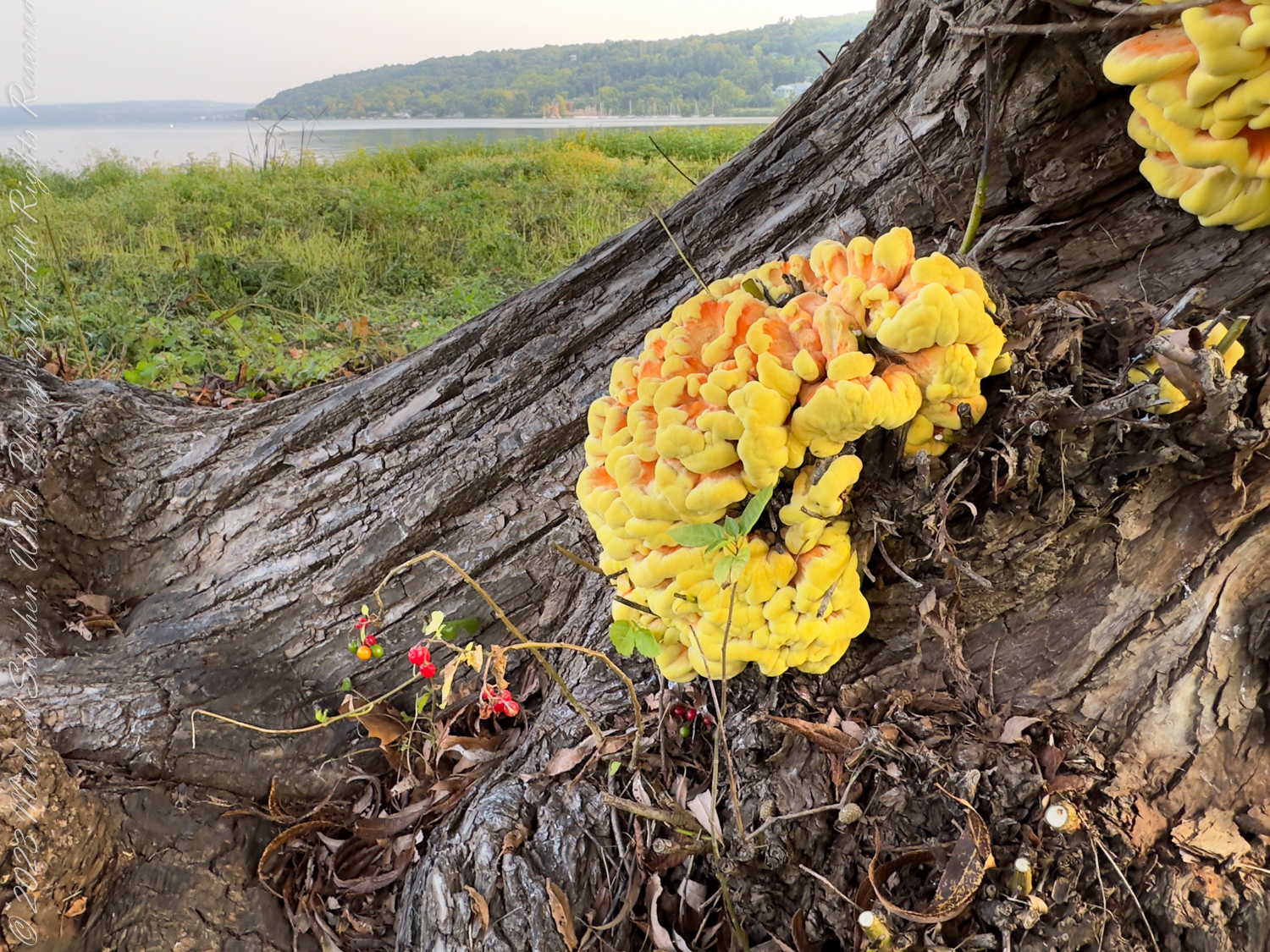
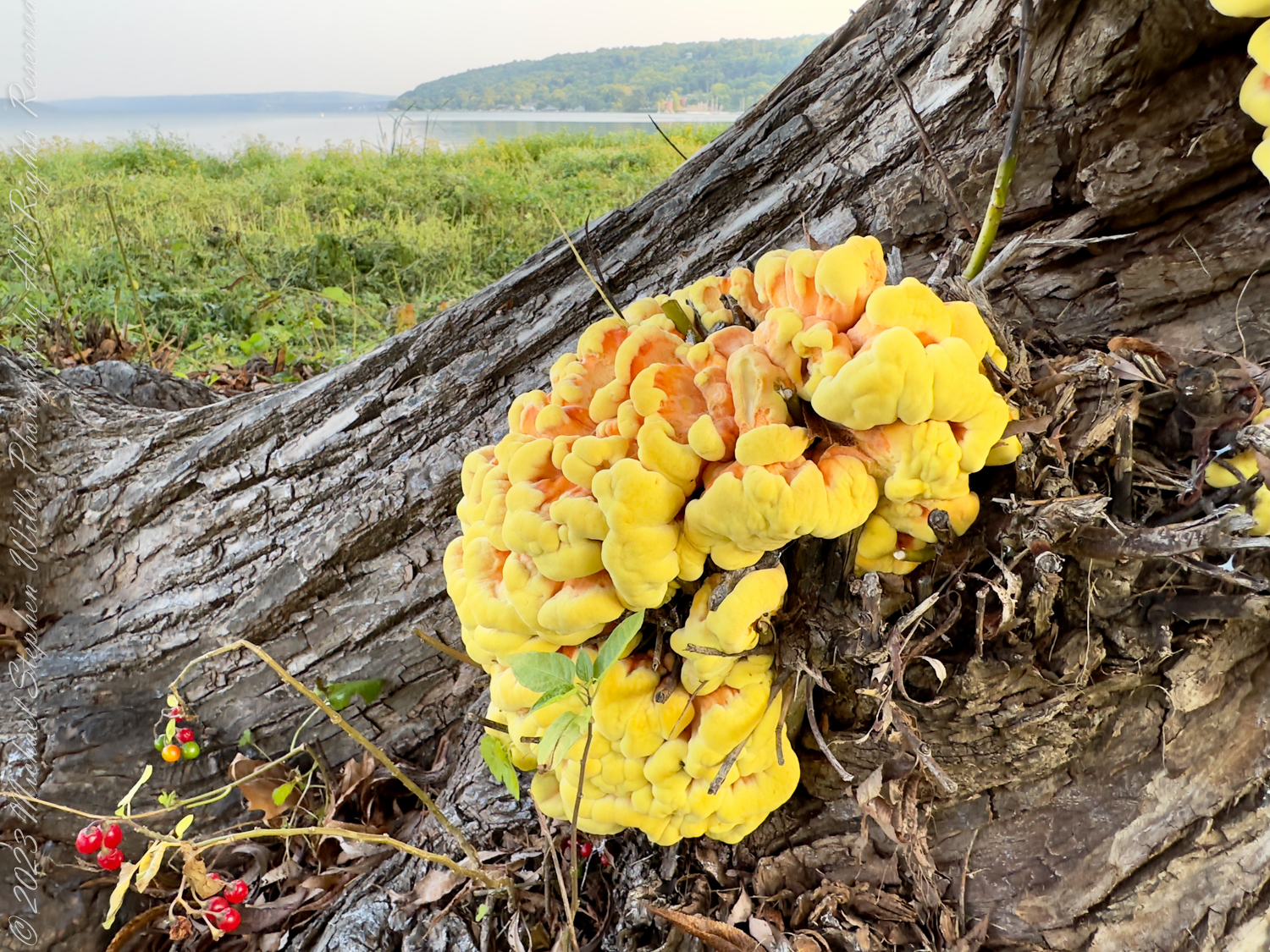
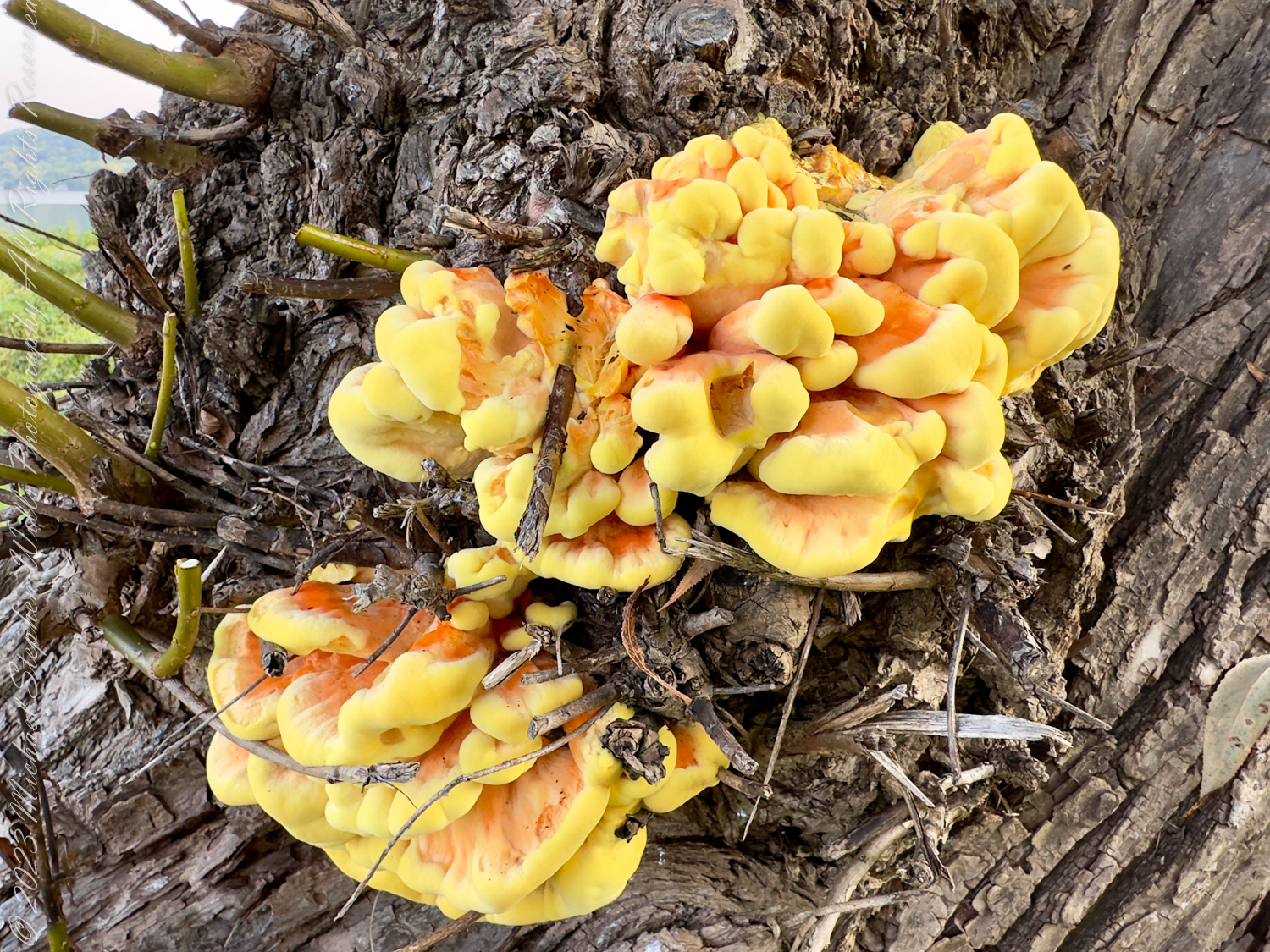
Curious, I approached the tree, and upon closer inspection, I realized these growths were something special, took these photographs of the vibrant clusters and later researched them to be Laetiporus sulphureus, commonly known as Chicken of the Woods. The striking colors of the fungus, a combination of deep orange and golden yellow, stood out in stark contrast to the gnarled, dark bark of the willow. It was a discovery that sparked a deeper interest in learning about the fascinating history and characteristics of this unique fungus.
The Vibrant History of Chicken of the Woods
Laetiporus sulphureus has been known to mycologists and naturalists for centuries, and its distinctive appearance has earned it a place among the most recognizable fungi in the world. Its common name, Chicken of the Woods, stems from the texture and flavor of its flesh, which, when cooked, is said to resemble that of chicken. This has made it a popular edible mushroom among foragers, particularly in Europe and North America, where it often grows on hardwood trees such as oak, cherry, and, as I found, occasionally on willows.
The fungus was first scientifically described by German mycologist August Batsch in 1789. Since then, it has been the subject of numerous studies, particularly due to its unique ability to grow on living trees, decaying wood, and sometimes even on dead trunks. This dual nature makes it both a decomposer and a potential pathogen, depending on the health of its host tree.
Historically, Chicken of the Woods has had various uses, ranging from culinary to medicinal. In traditional folk medicine, it was used for its antibacterial properties, and some cultures believed it could help heal wounds or infections when applied as a poultice. Today, research continues into its potential medicinal applications, including its possible role in supporting immune function and its antioxidant properties.
A Friend to Some, a Foe to Trees
While Laetiporus sulphureus may delight foragers and mushroom enthusiasts, it is not always welcomed by the trees it inhabits. The fungus is classified as a saprotroph, meaning it feeds on dead or decaying organic matter. However, it is also capable of acting as a parasite, attacking the heartwood of living trees. Over time, the fungus can cause brown rot, a form of decay that weakens the tree from the inside out. For trees already compromised by age or environmental stress, an infestation of Chicken of the Woods can be the final blow, leading to their eventual death and collapse.
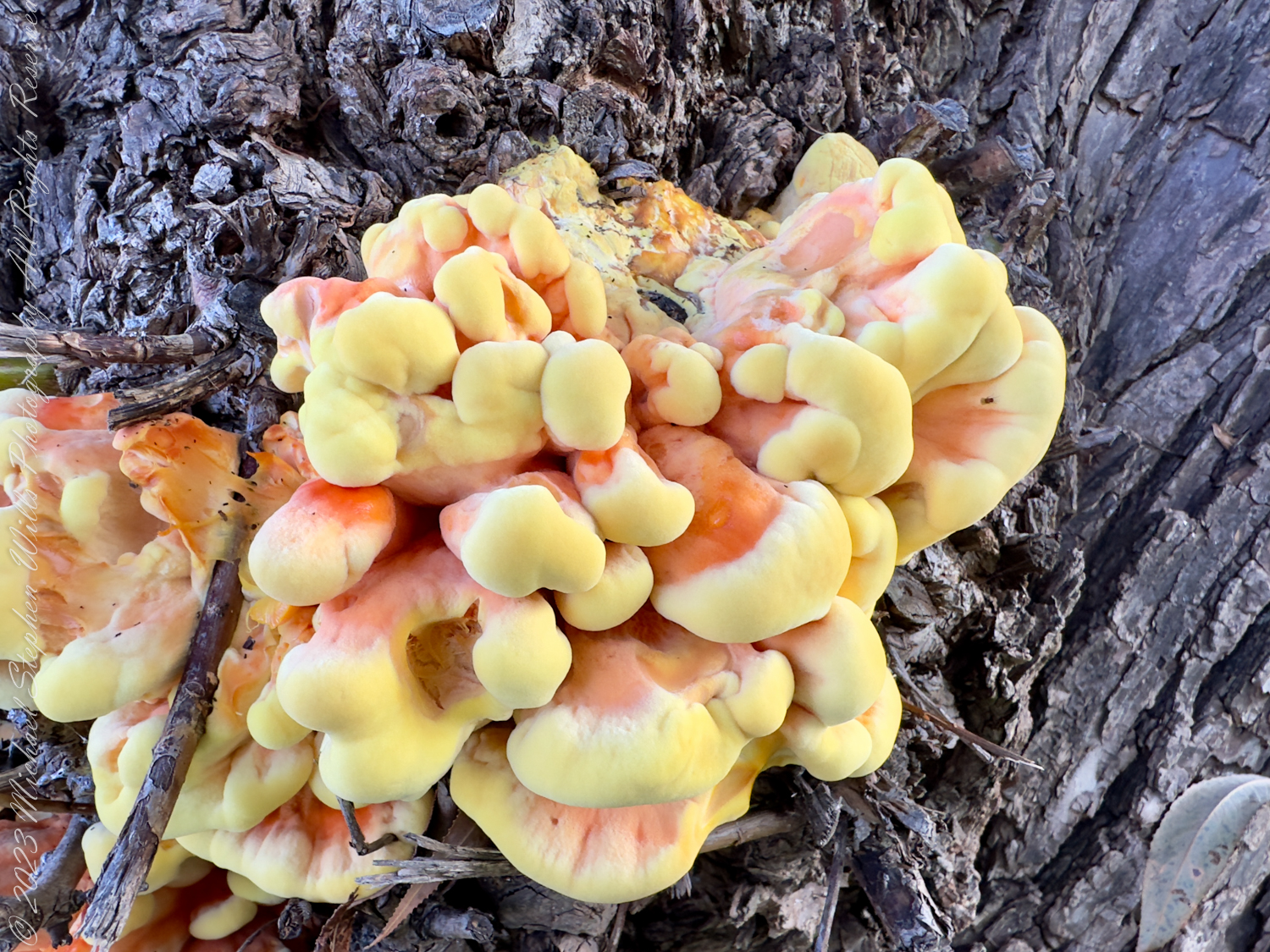
The willow tree I encountered by Cayuga Lake had clearly seen many seasons, its twisted trunk and sprawling limbs a testament to decades of life along the shoreline. The presence of the fungus, while beautiful and intriguing, could also be an indicator that this tree was in decline. Still, the symbiotic relationship between the tree and the fungus was a reminder of nature’s cycles—of life, decay, and renewal.
Culinary and Medicinal Uses of Chicken of the Woods
One of the most interesting aspects of Chicken of the Woods is its edibility. Foragers and chefs alike prize the young, tender fruiting bodies for their chicken-like texture and mild flavor. When prepared properly, the fungus can be sautéed, fried, or even used in stews, providing a nutritious and flavorful addition to a variety of dishes. However, caution is required, as some individuals may experience allergic reactions or gastrointestinal upset after consuming it. Additionally, older specimens of the fungus can become woody and less palatable.
Beyond the kitchen, Chicken of the Woods has a history of medicinal use. In some cultures, it has been used to treat ailments ranging from respiratory infections to digestive issues. Modern research is beginning to explore the bioactive compounds present in the fungus, with preliminary studies suggesting that it may have antibacterial and antioxidant properties. These potential health benefits add yet another layer of intrigue to this already fascinating species.
An Essential Role in the Ecosystem
As well as serving human needs, Chicken of the Woods also plays a vital role in the ecosystems it inhabits. As a decomposer, the fungus breaks down dead and decaying wood, returning valuable nutrients to the soil and promoting the growth of new plant life. In this way, it contributes to the cycle of life and death that sustains forest ecosystems. Various insects and animals, including beetles and birds, may also use the fungus as a food source or shelter, further highlighting its ecological importance.
A Lasting Impression
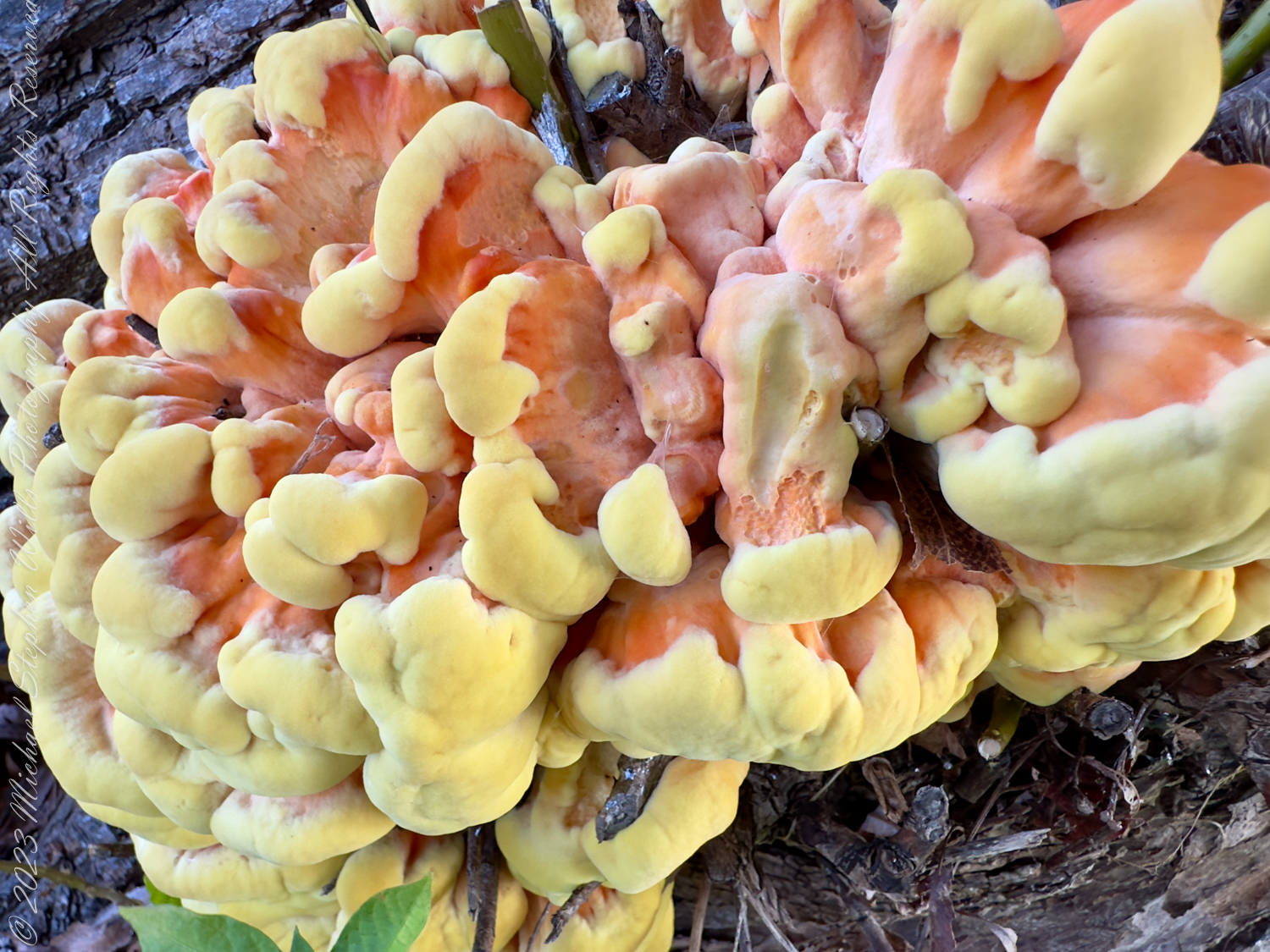
As Pam and I continued our walk along Cayuga Lake, I couldn’t help but feel a sense of gratitude for the serendipitous discovery I had made that morning. The sight of the Chicken of the Woods clinging to the willow tree was a vivid reminder of nature’s endless capacity for surprise and wonder. Though this fungus may be humble in its origin, its history, uses, and ecological significance elevate it to a position of great interest and value in the natural world.
In that quiet September morning light, standing beside the lake with the colors of early autumn beginning to emerge, I realized that moments like these—moments of connection with nature—are what keep me returning to the trails and shores of Ithaca, always eager for the next discovery.


What a wonderful find! Iv never heard of a Chicken of the Woods mushrooms, but I want to know who would see this bright yellow fungi on a tree and think the should eat it?! 😊 Maggie
LikeLiked by 1 person
Neither did I, the bright colors suggested radioactivity to me, eating it was the last thing on my mind. Now I know “better,” but, yeah, no way.
LikeLiked by 1 person
Beautiful post beautiful pictures 🌹🌹
LikeLiked by 1 person
Thanks for the bright compliment, Satyam.
LikeLike
Welcome dear friend 🌹🌹
LikeLiked by 1 person
Fascinating
LikeLiked by 2 people
Thanks, Sheree.
LikeLiked by 1 person
Oh, wow, these are very special. The colors look like those of candy.
LikeLiked by 1 person
Excellent perspective observation, Matroos. Our “candy corn” has that color combination.
LikeLiked by 1 person
A friend of mine forages for chicken of the woods, says it tastes amazing! I have not tried it yet.
LikeLiked by 1 person
Dear Marie,
Thank you so much for sharing! Your friend is absolutely right—Chicken of the Woods is both a visual marvel and a culinary delight. If you ever get the chance to try it, I highly recommend it. There’s something magical about savoring a gift directly from nature’s own pantry. I’d love to hear about your experience if you decide to give it a taste!
Best wishes, Mike
LikeLiked by 1 person
Beautiful Chicken of the Woods, Stephen!
LikeLiked by 1 person
Dear Tom,
Thank you so much for your kind words! I’m thrilled you enjoyed the glimpse into the world of Chicken of the Woods. It’s always a joy to share nature’s hidden treasures with fellow enthusiasts.
Regards, Mike
LikeLike
Well done Michael. While I’ve seen fungi producing similar life on a fallen tree trunk, I’ve never witnessed any with this vibrant color. Your narrative blesses us with another testament about nature’s balanced cycle of life.
LikeLiked by 1 person
Hi BigSkyBuckeye!
Thank you so much for your kind words.
I was equally amazed by the vibrant colors—it felt like stumbling upon a hidden art exhibit crafted by nature itself. I’m glad the post resonated with you and that we can share an appreciation for nature’s beautiful cycles!
LikeLiked by 1 person