Along the long defunct railroad right of way at the O. D. von Engeln Preserve in Malloryville, Tompkins County, my 2005 photographs in the following gallery show thimbleweed, Anemone virginiana, in a world of green stillness. Made with a tripod-mounted Sony DSC-F828, they have the patient intimacy of deliberate looking. The camera holds close to one flower, then another stage of the same life, as if time itself had paused among the stems. One bloom faces the lens like a small moon with a green-gold sun at its center. Buds stand nearby, closed and expectant, like folded letters. Later frames reveal the flower after weather and time have touched it: sepals lifted and worn, stamens loosened, dew clinging to the stem, the seed head beginning its bristling ascent. The plant is caught mid-transformation, a white flame becoming a green lantern.
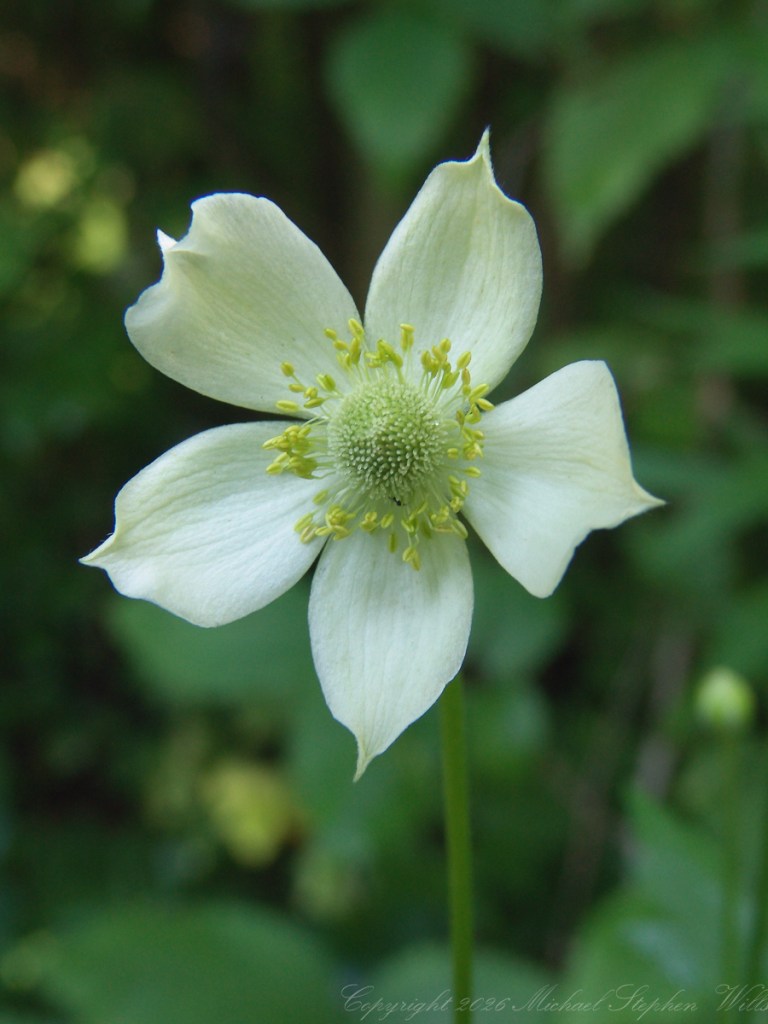
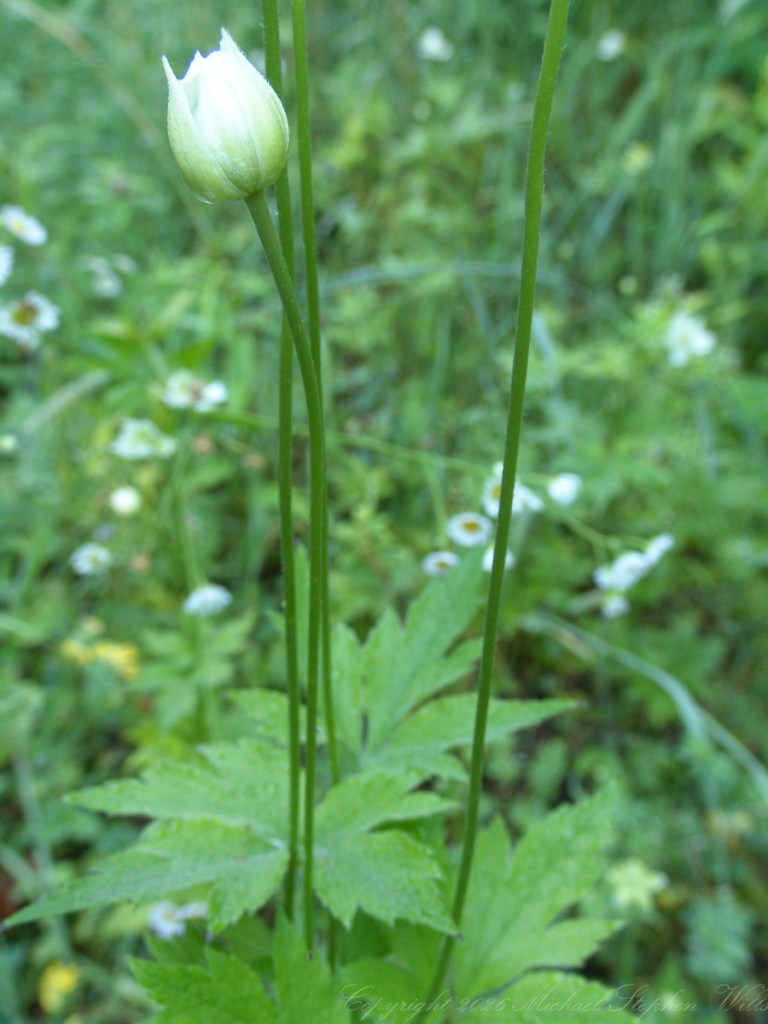
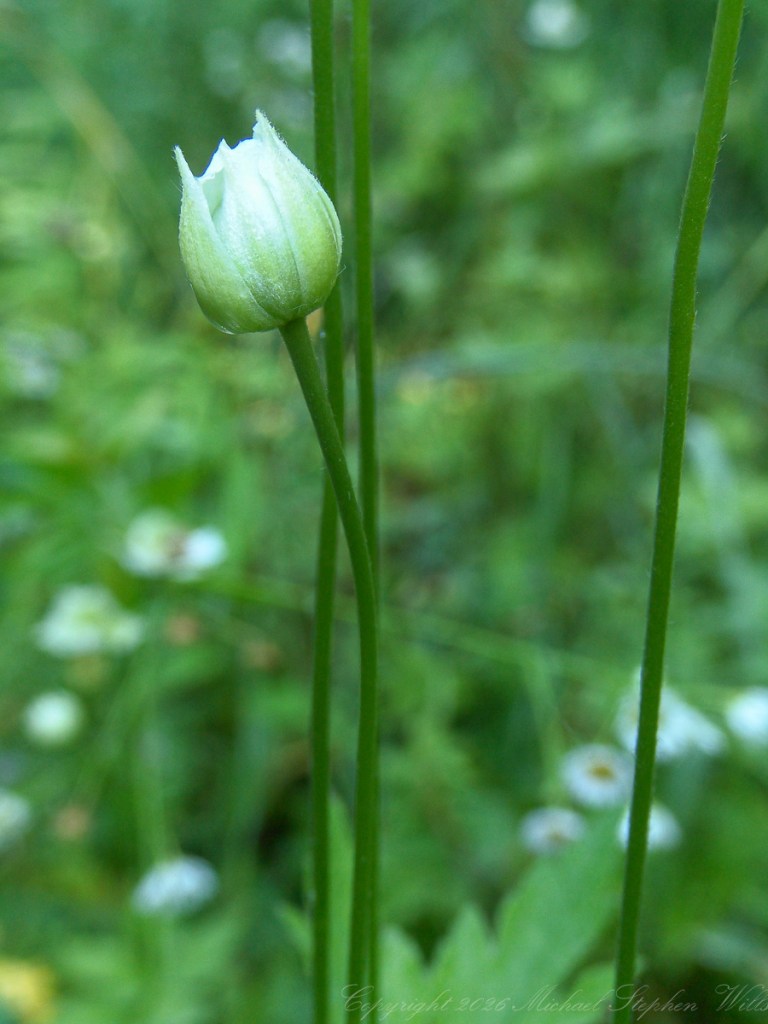
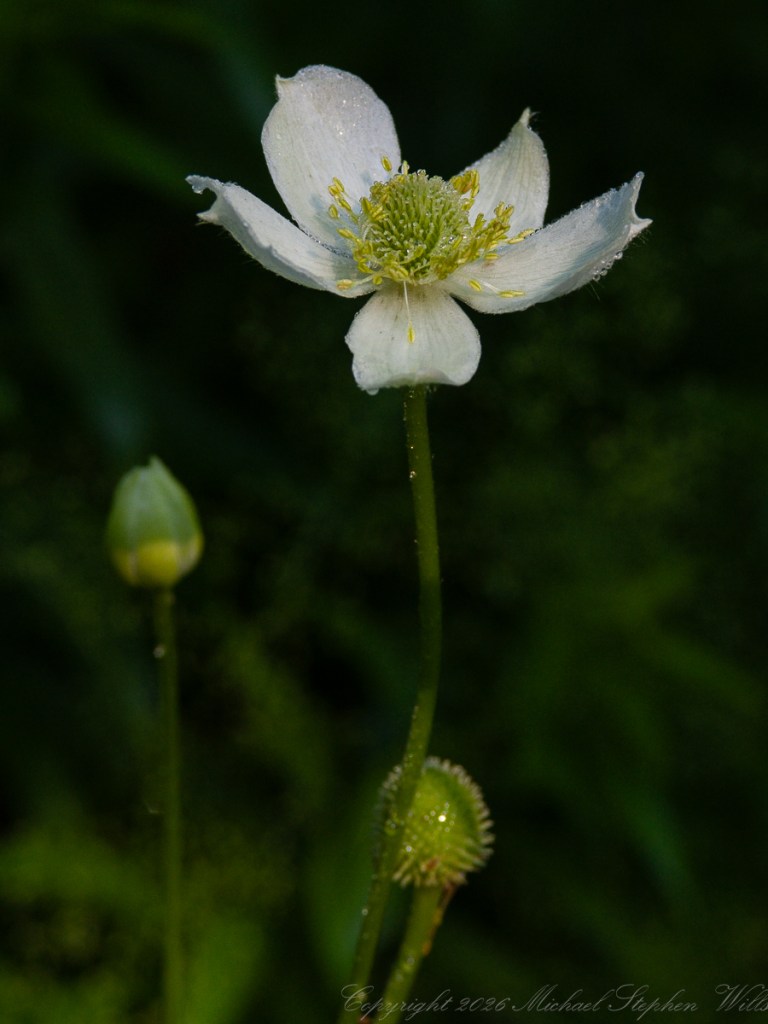
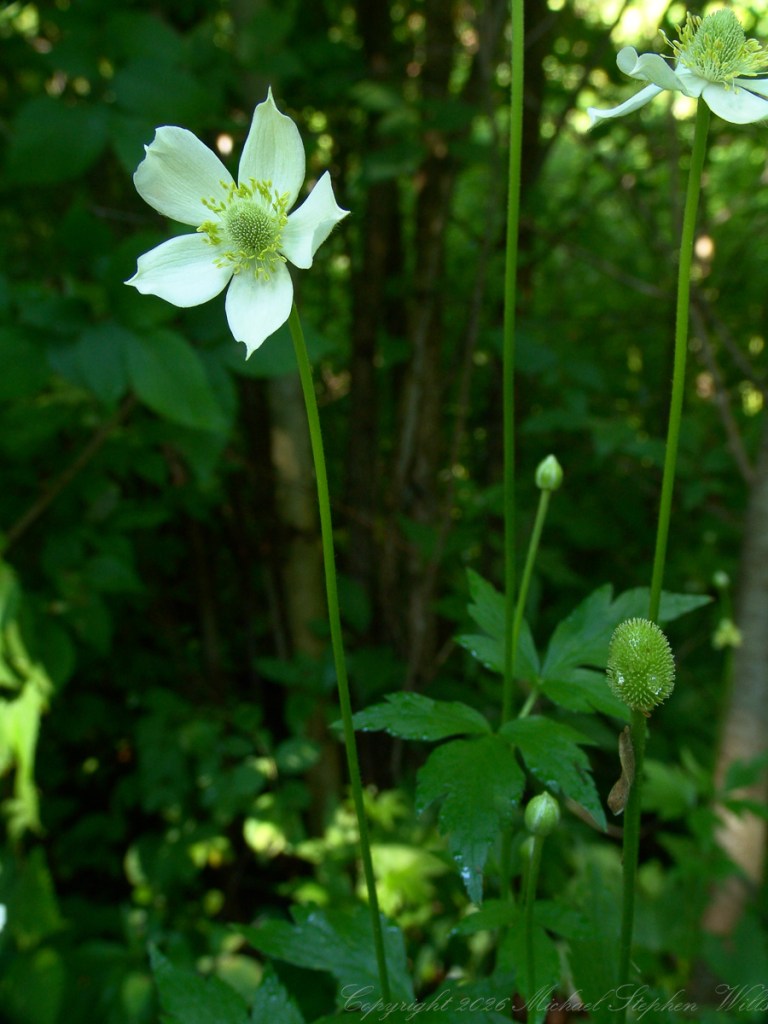
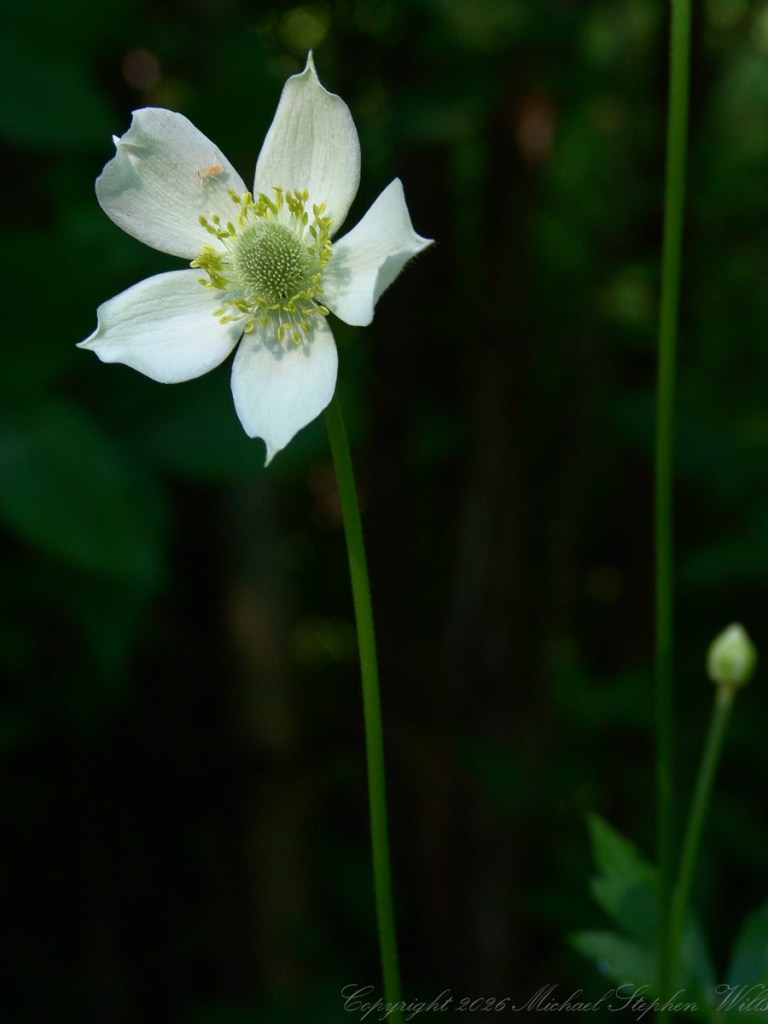
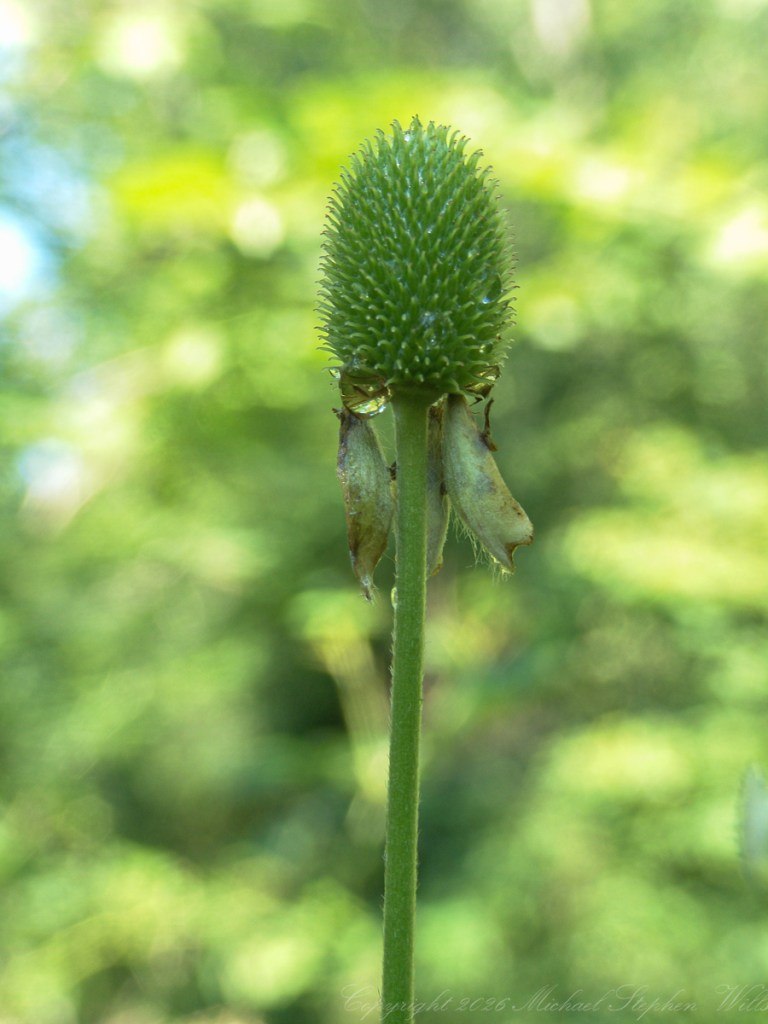
The corrected name matters. These are not white anemones in the soft sense of a spring flower, but tall anemones, thimbleweeds, plants of height, poise, and aftermath. Their most memorable structure is already waiting at the center of the flower: the green cone that will remain when the white sepals have gone. Freshly opened the flower is tender and stippled, ringed by yellow stamens; later it rises alone, armored in fine points, a little tower of continuance. The flower has not vanished. It has changed its language.
My 2005 photographs are portraits, each built from closeness and quiet restraint. The shallow focus turns the surrounding vegetation into a green tide, leaving the thimbleweed suspended in its own clear weather. The tripod’s steadiness gives the images a contemplative gravity. Nothing feels seized. Everything feels attended to. The thin stems become vertical measures in the dim woods, and the pale flowers seem to shine not by brightness alone but by contrast with the shaded world behind them.
The Treman photographs were taken on my iPhone 14 Pro Max. Here the Canada Anemone grows near stone, leaf litter, and the damp architecture of the gorge. In one frame, the plants gather at the base of a layered rock wall, white flowers lifted above deeply cut leaves. The scene feels like a neighborhood. Broad leaves, fallen twigs, mossy stone, and anemone blossoms all share the same cool pocket of Finger Lakes air. The flowers are not decorating the gorge; they are participating in it.
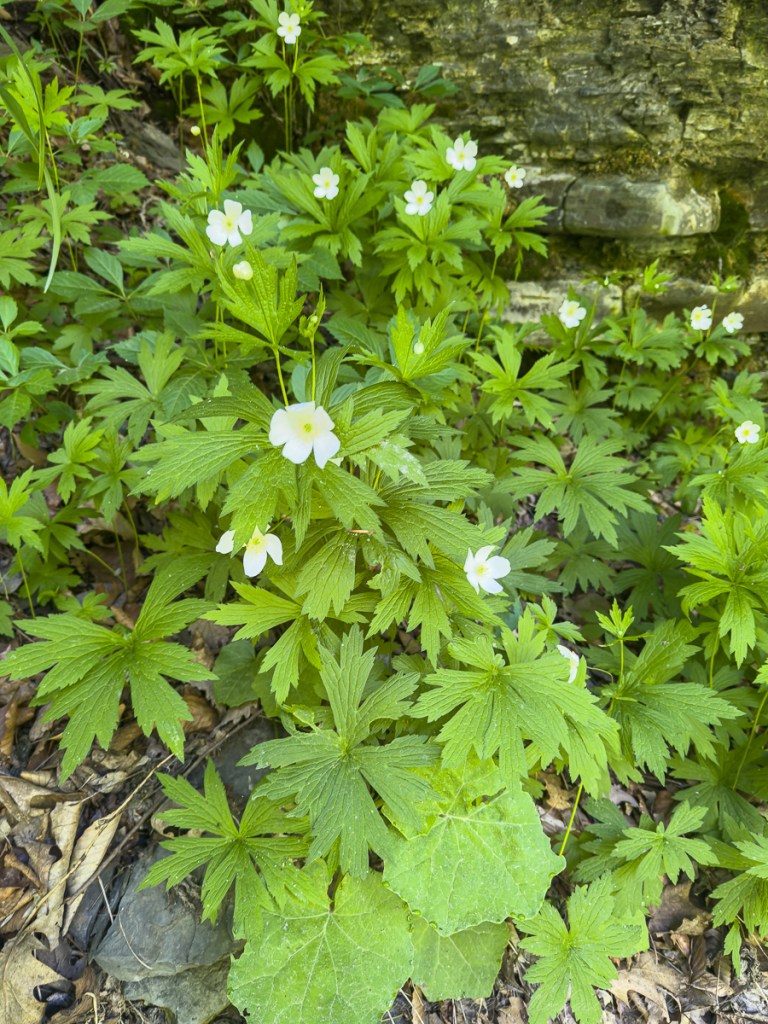
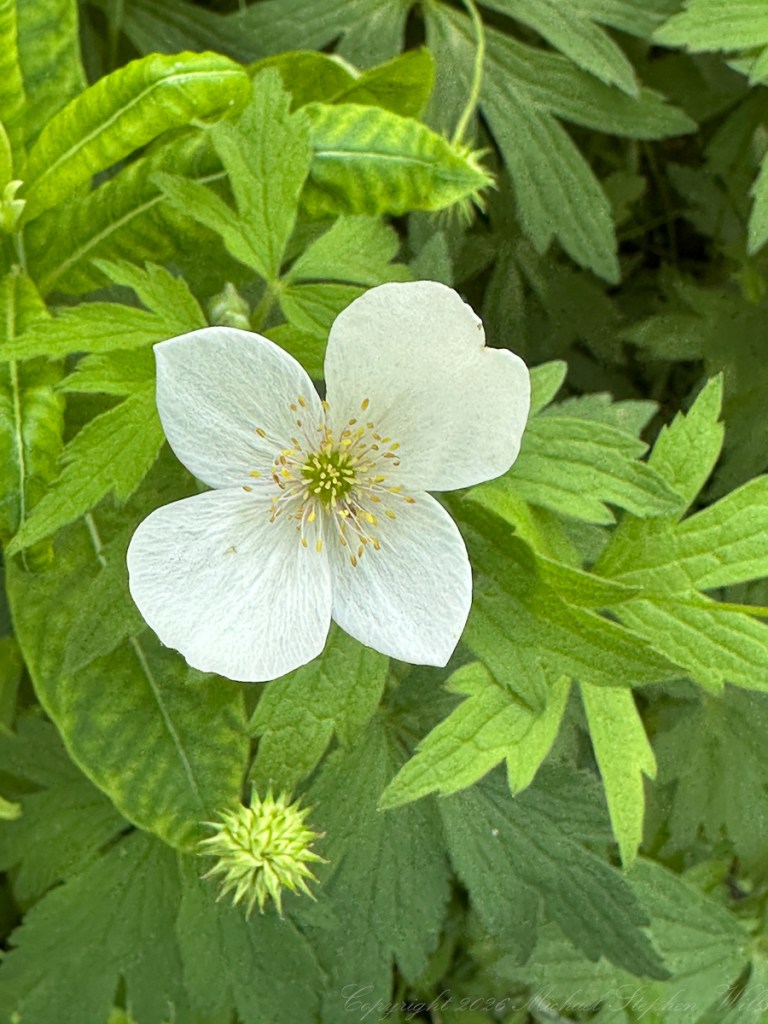
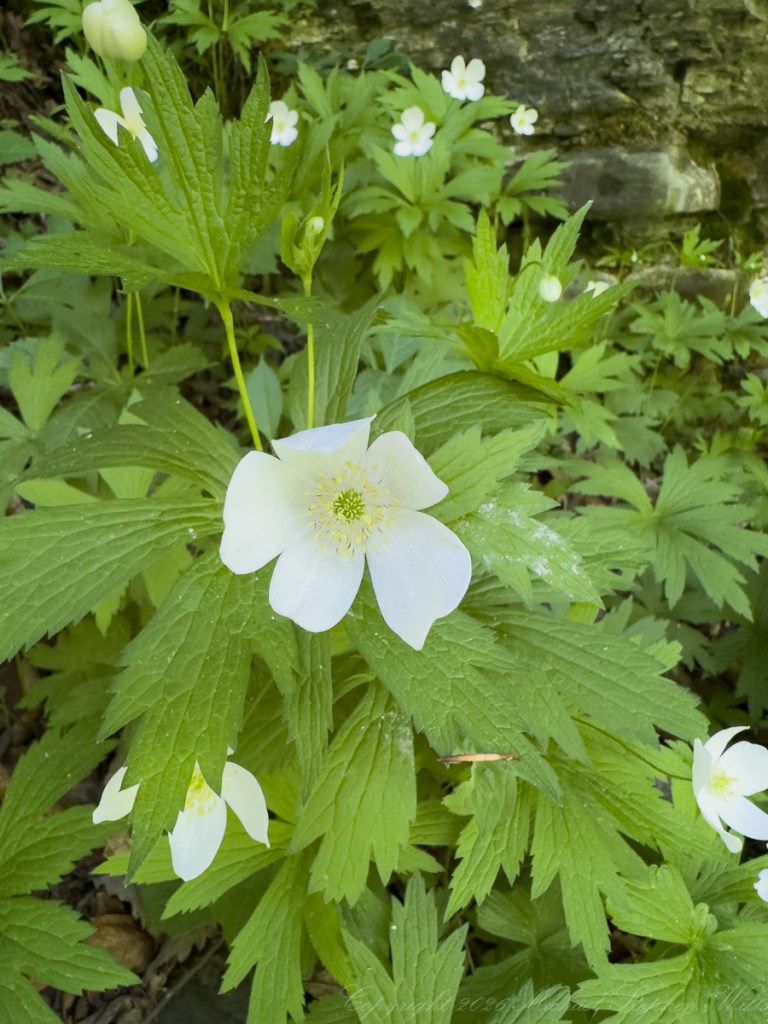
The wonder of the Canada Anemone is partly structural. Its “petals” are actually petal-like sepals, often five, sometimes more, white and slightly irregular, as if each flower has been hand-torn from light. The yellow stamens ring a green central cone, a small workshop of pollen and future seed. Insects visit for what the flower offers, while the plant asks only for suitable ground and enough room to run. It is not timid. Gardeners know it can spread vigorously, but in the wild that vigor reads differently: not aggression, but insistence. It is the plant saying, “Here is moisture, here is light, here is my chance.”
Across a twenty-one-year span, the technology changed dramatically. The 2005 Malloryville series has the patient, close-focus attention of a dedicated camera: ISO 64, small aperture, long exposures, the photographer leaning into stillness. The 2026 Treman images arrive through a phone camera, quick and bright, able to record both blossom and habitat with effortless clarity. Yet the flower itself refuses to become dated. The anemone is older than both cameras and indifferent to their sophistication. It keeps its own calendar: bud, bloom, seed, root, return.
The images also show how much of wildflower beauty lies in context. The pristine frontal bloom is lovely, yes, but so is the closed bud held among vertical stems; so is the aging seed head with spent sepals hanging like weathered pennants; so is the colony rising from a gorge-side floor. Wonder does not reside only in peak bloom. It lives in the before and after, in the green machinery of leaves, in the “almost,” the “not yet,” and the “still becoming.”
To look at Canada Anemone this way is to be reminded that native plants are actors in the ecological drama of a place: stabilizing soil, feeding insects, responding to light gaps, marking moisture, stitching disturbed edges back into life. Their beauty is functional, and their function is beautiful. A colony in bloom is pretty and it is a local weather report, a soil report, a history of shade and seepage.
These photographs preserve encounters: Malloryville in a July morning of 2005, Treman Gorge in June 2026, and the astonishment of finding the same species still lifting its white cups in the green world. Canada Anemone is a small, radiant proof that continuity can be wild. It is a starry citizen of wet edges, a white whisper with roots, a persistent brightness saying that the land remembers how to bloom.
 Michael Stephen Wills Photography
It’s a beautiful reminder of how resilient nature is – and replicating its essence throughout the years is a supporting aspect of its timelessness. A fabulous post, Michael.
LikeLike
Beautiful, informative and interesting – the perfect post, Michael!
LikeLike
Lovely, lovely, lovely – photos and words, Michael!
LikeLike