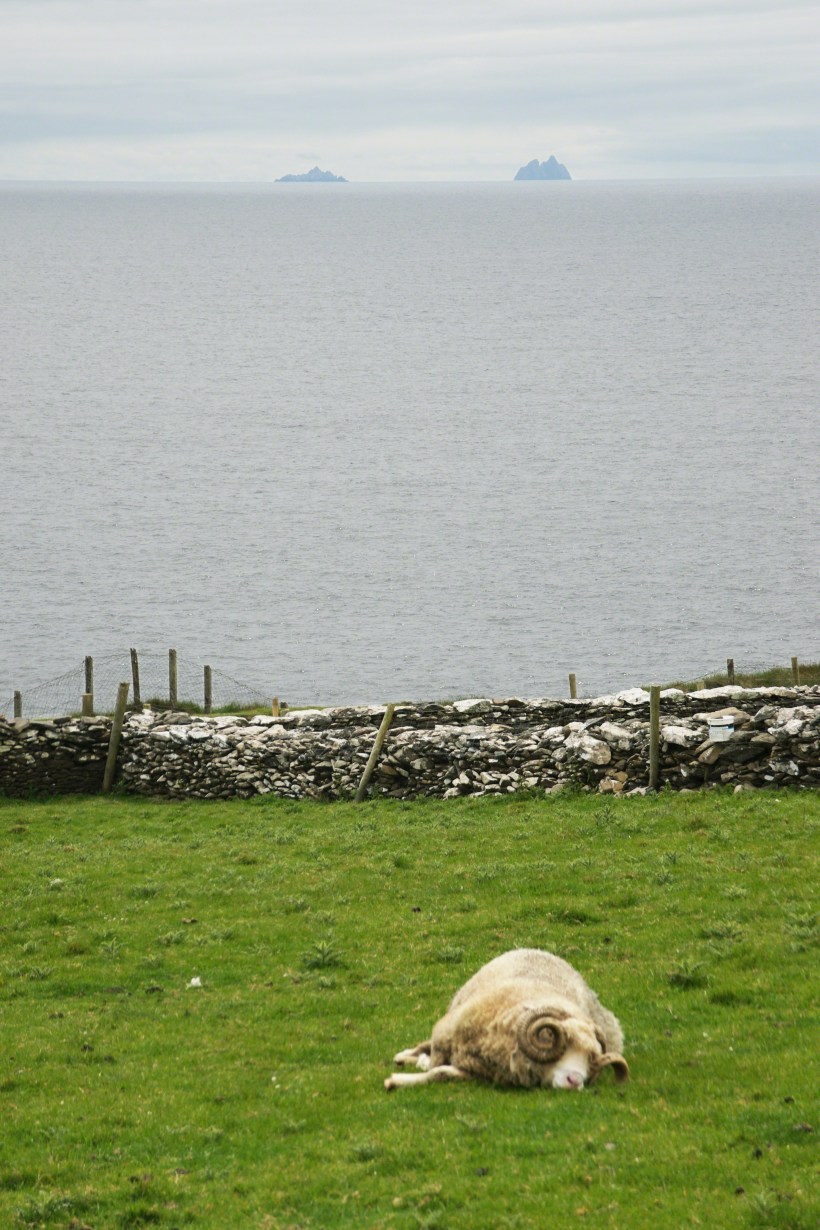
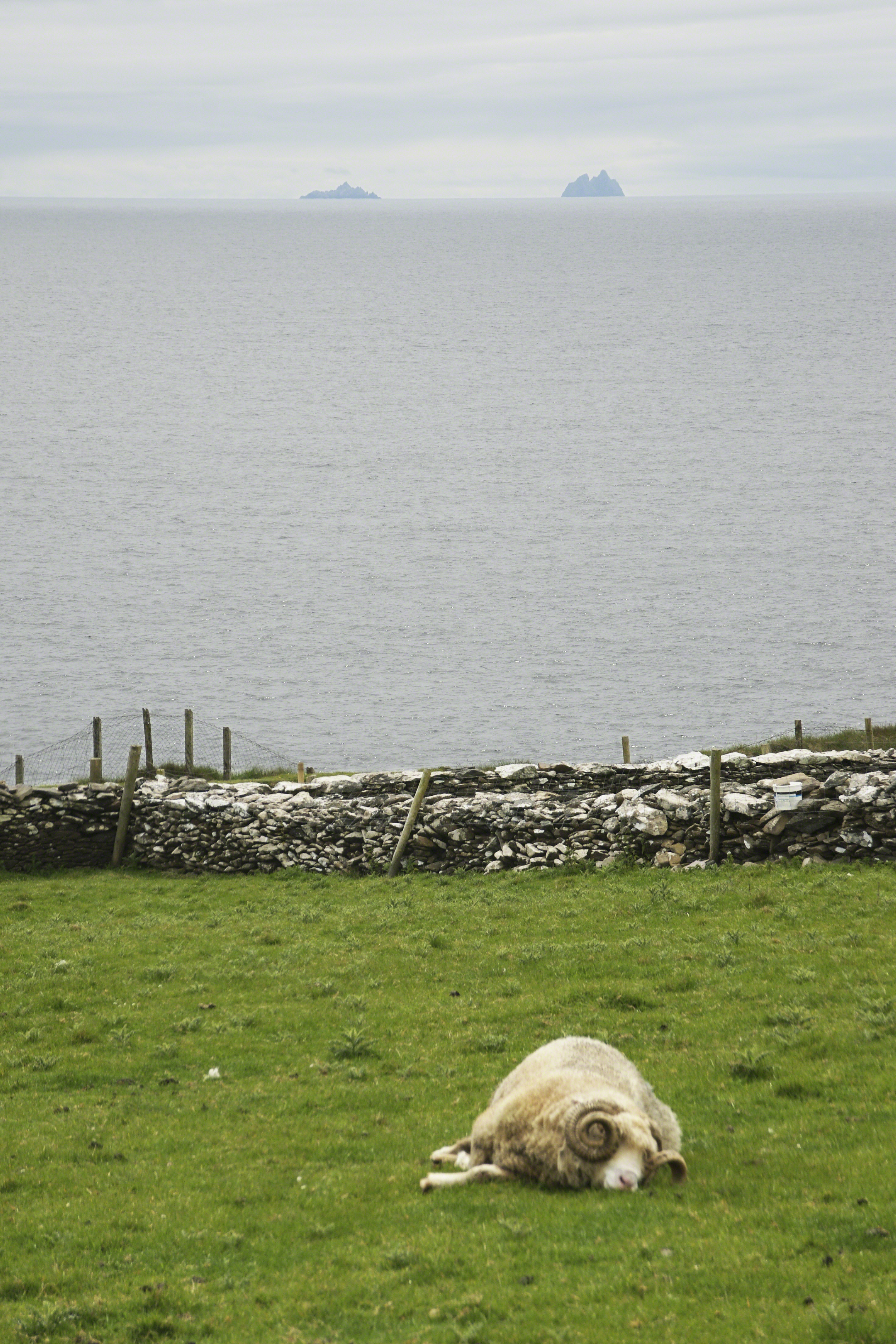
View southwest from R559 looking across pasture over the Dunberg Promontory Fort. In the foreground a large ram with curled horns rests. In the distance is the mouth of Dingle Bay and the North Atlantic Ocean with the Little Skellig and Skellig Michael Islands.
Pam and I were lucky enough to plan our tour of Ireland for May and June when the Hawthorne trees are in bloom. Named sceach gheal in Gaelic, the white clusters of blossoms symbolize hope. Hawthorns are plentiful throughout the island. The Irish revere the tree and associate each Hawthorn with the Little People. There are roads in Ireland that curve around a Hawthorn tree because the local people convinced the engineers to do so, to save the tree.
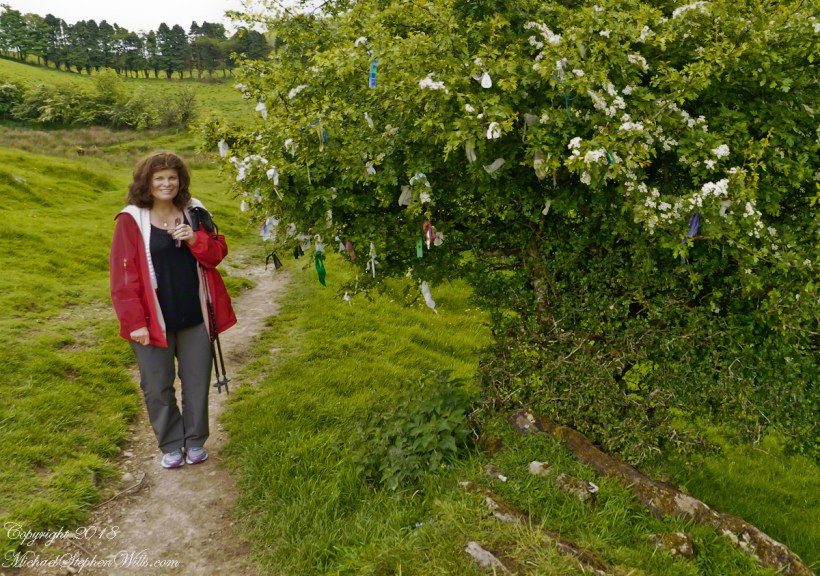
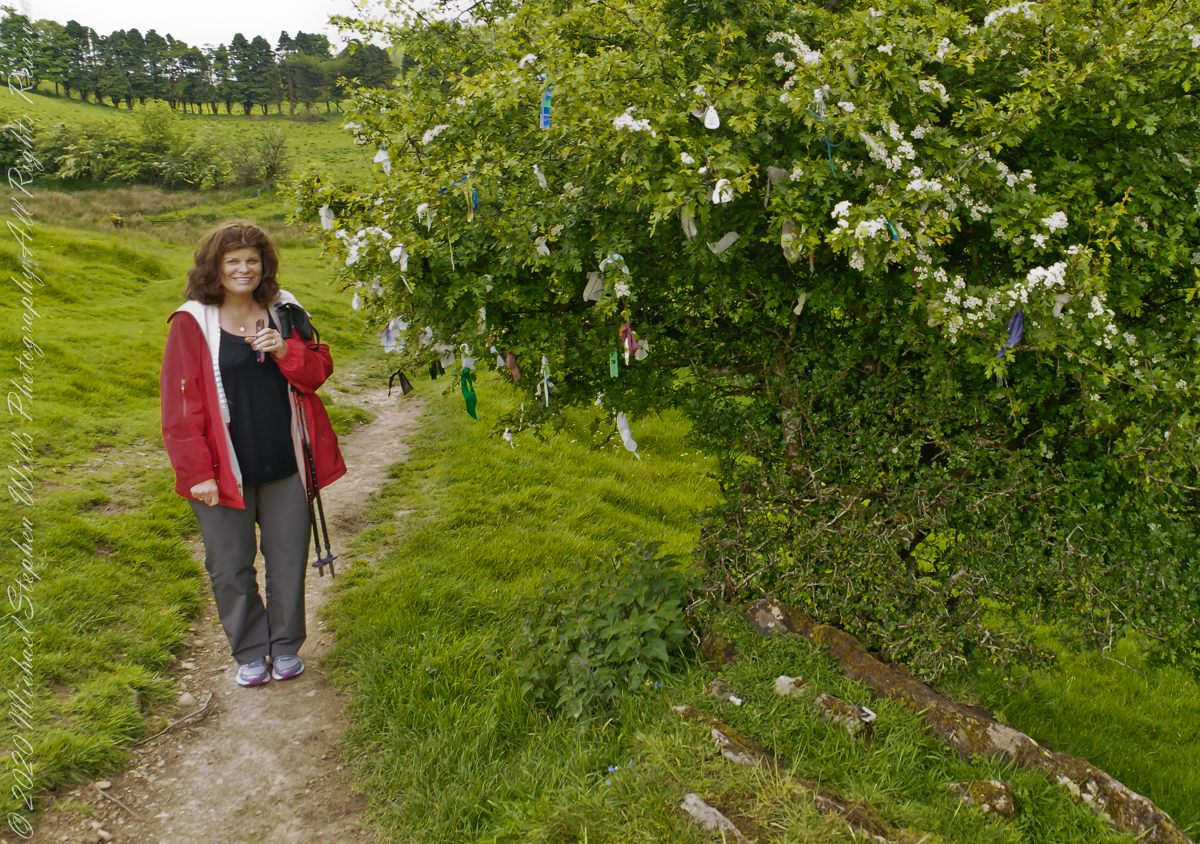
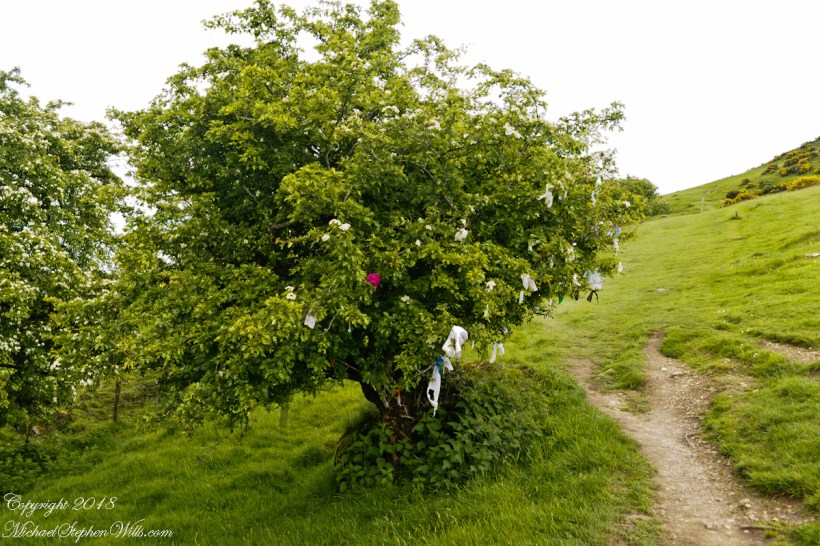
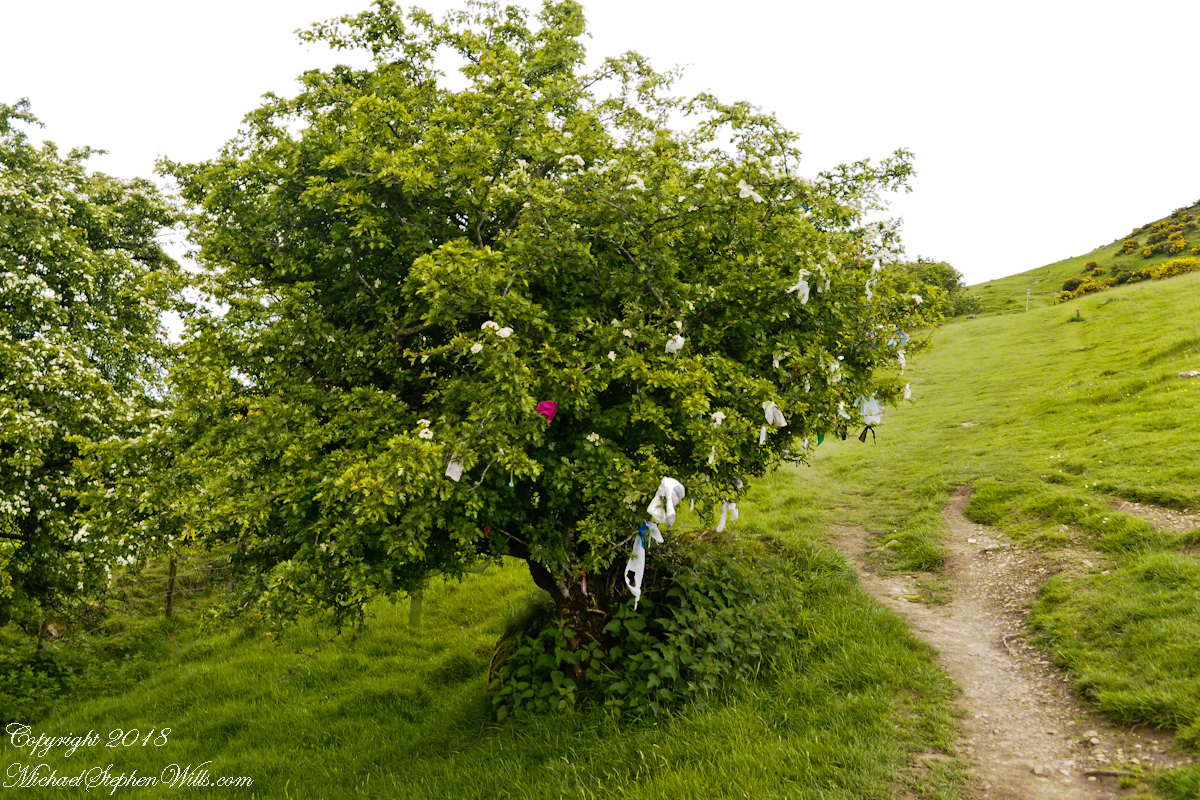
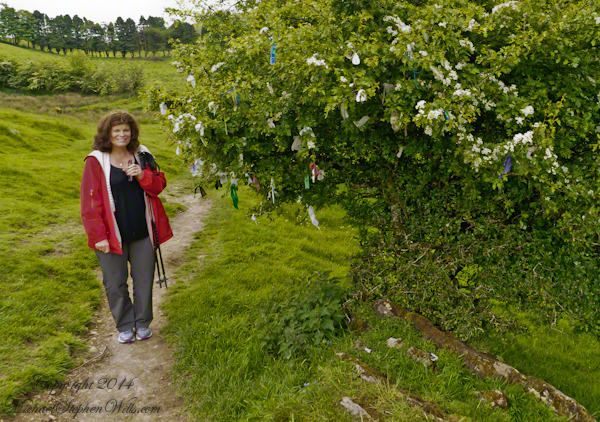
This specimen, covered with offerings (to the Little People?), is on the trail to Loughcrew. Even with her knee trouble, Pam made it to the top of the Hag’s Mountain to visit Cairn T of the Loughcrew Passage tombs.
The steep path to Loughcrew passes a hawthorn covered with flowers and may offerings.
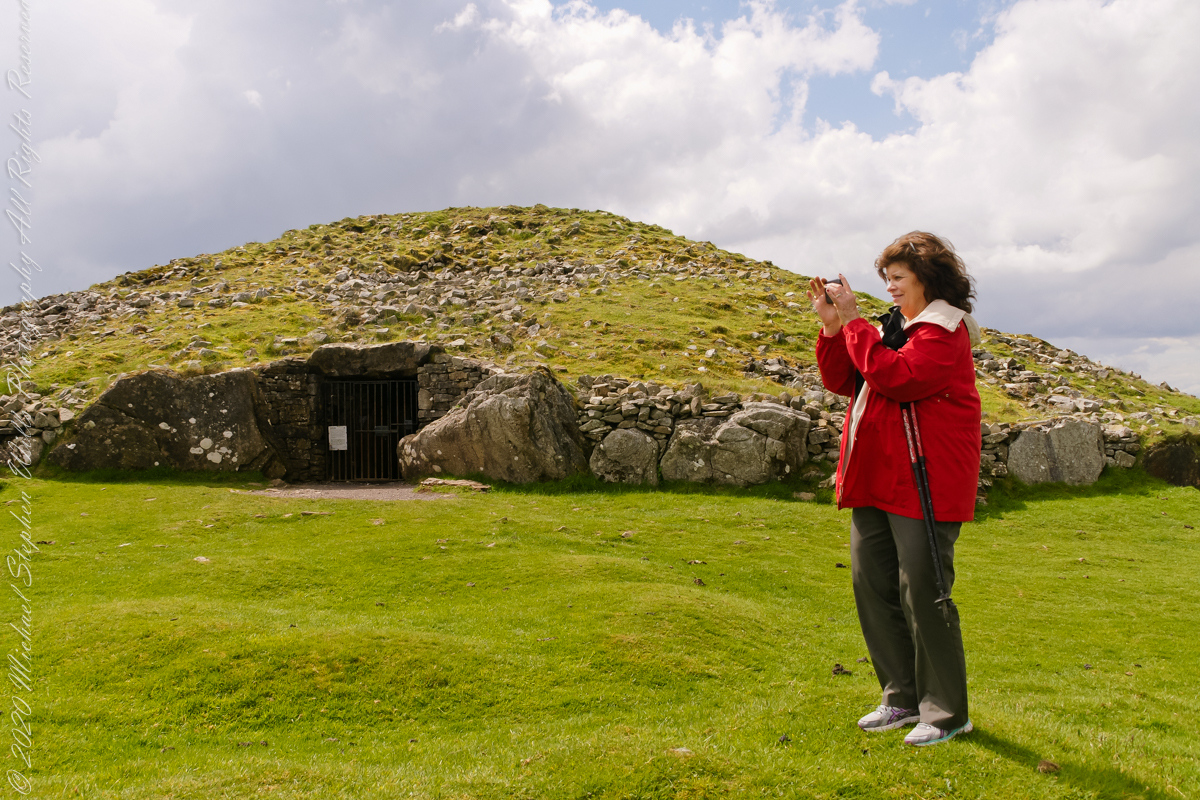
Pam loves to capture images and returned from Ireland with a large collection. Most of the photos of me at work are by Pam. Here Pam is capturing the summit view of Hag’s Mountain with the Cairn T entrance gate in the background. Lucky for us, a fellow visitor made the trip to Loughcrew Gardens and picked up the gate key from the café. In a later post I will share my work from inside this passage tomb.
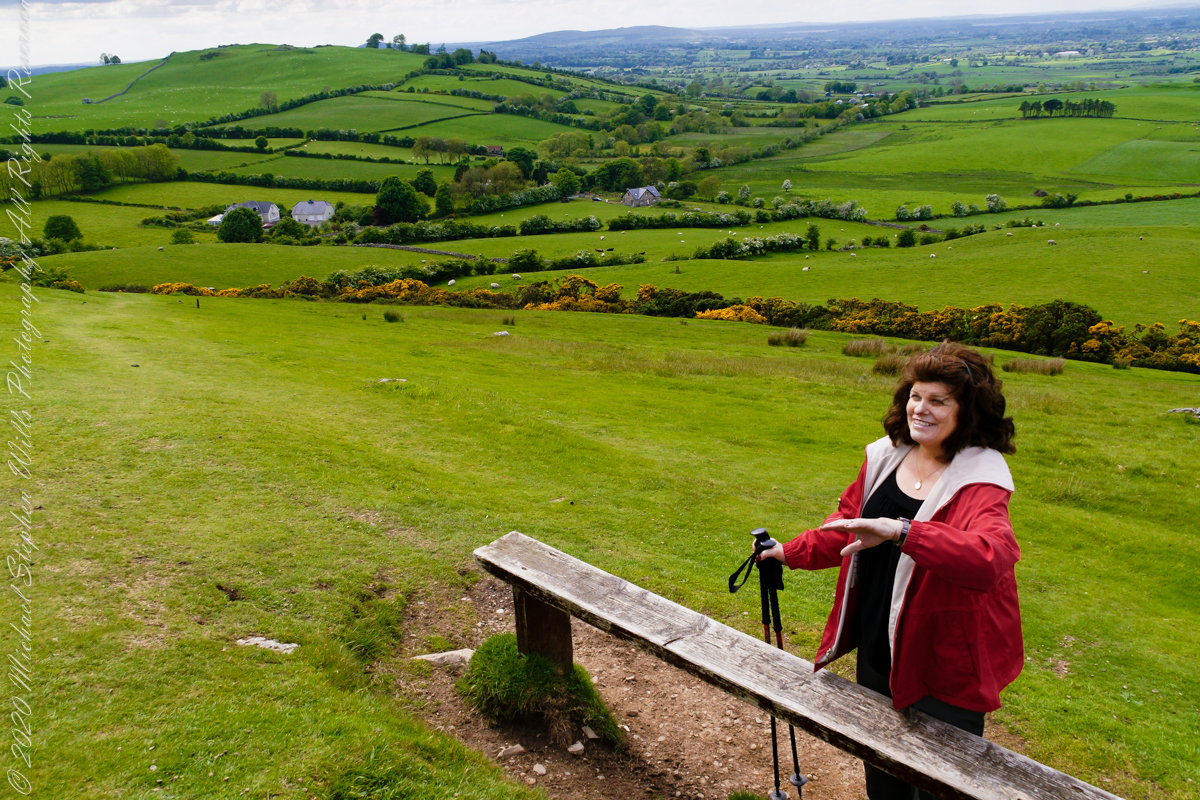
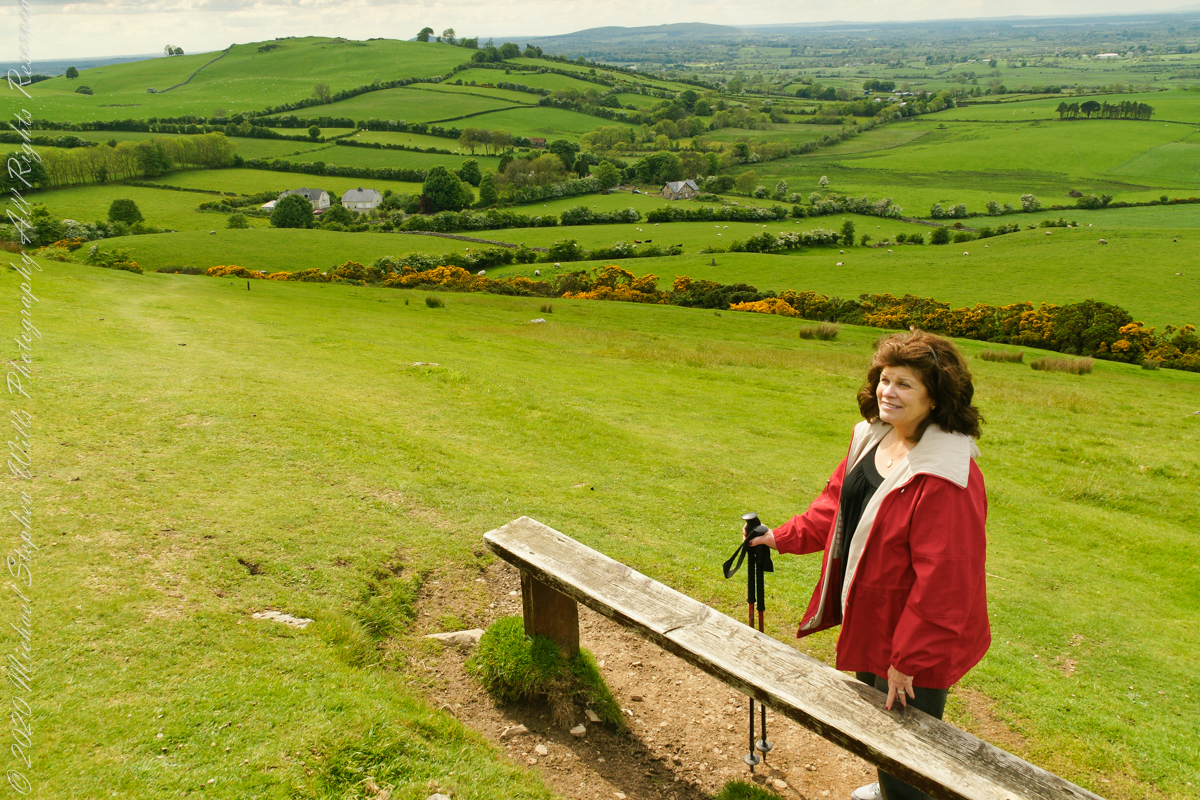
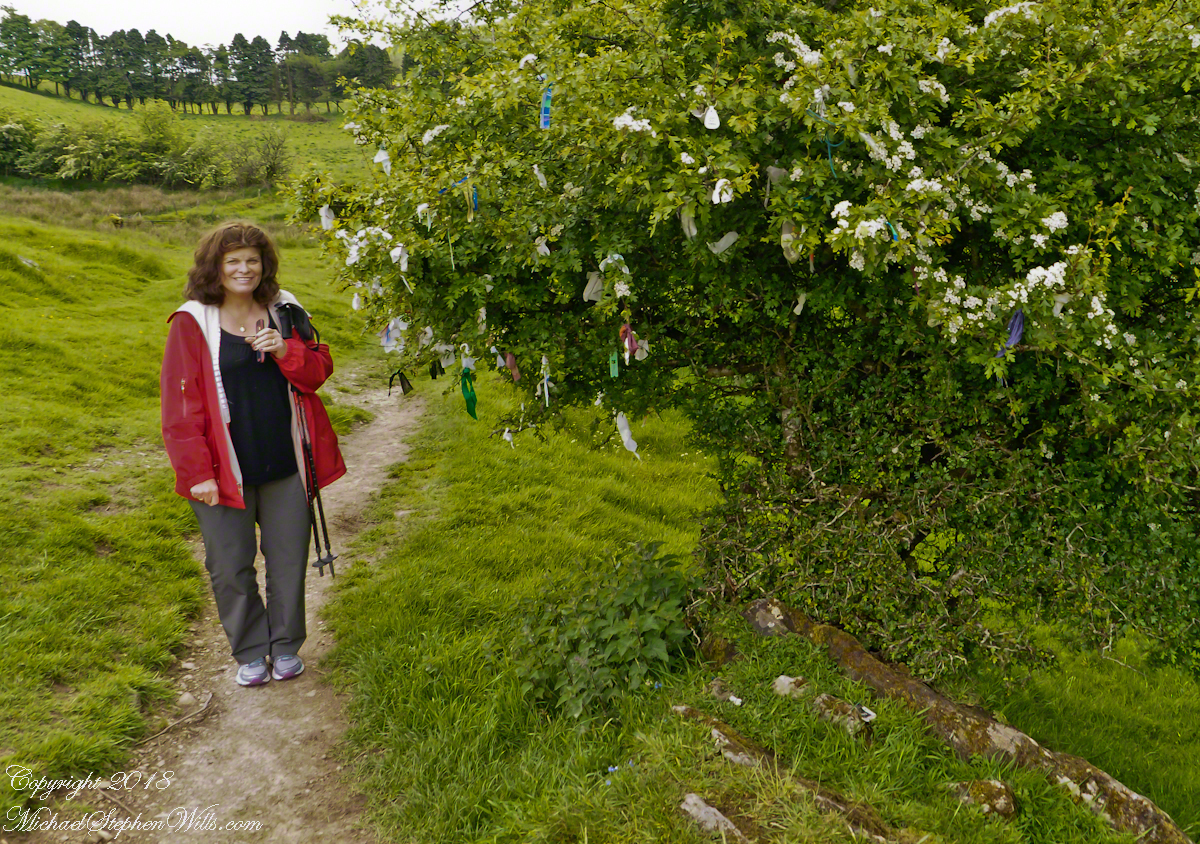
Pam makes friends wherever we go. She started down the mountain before me to take it easy on her knees. When I caught up, Pam and a young Irish family were deep in conversation. I took the opportunity to capture Pam with that gorgeous view to the northwest, Irish countryside with Lake of the Branches in the far distance.
Copyright 2023 Michael Stephen Wills All Rights Reserved
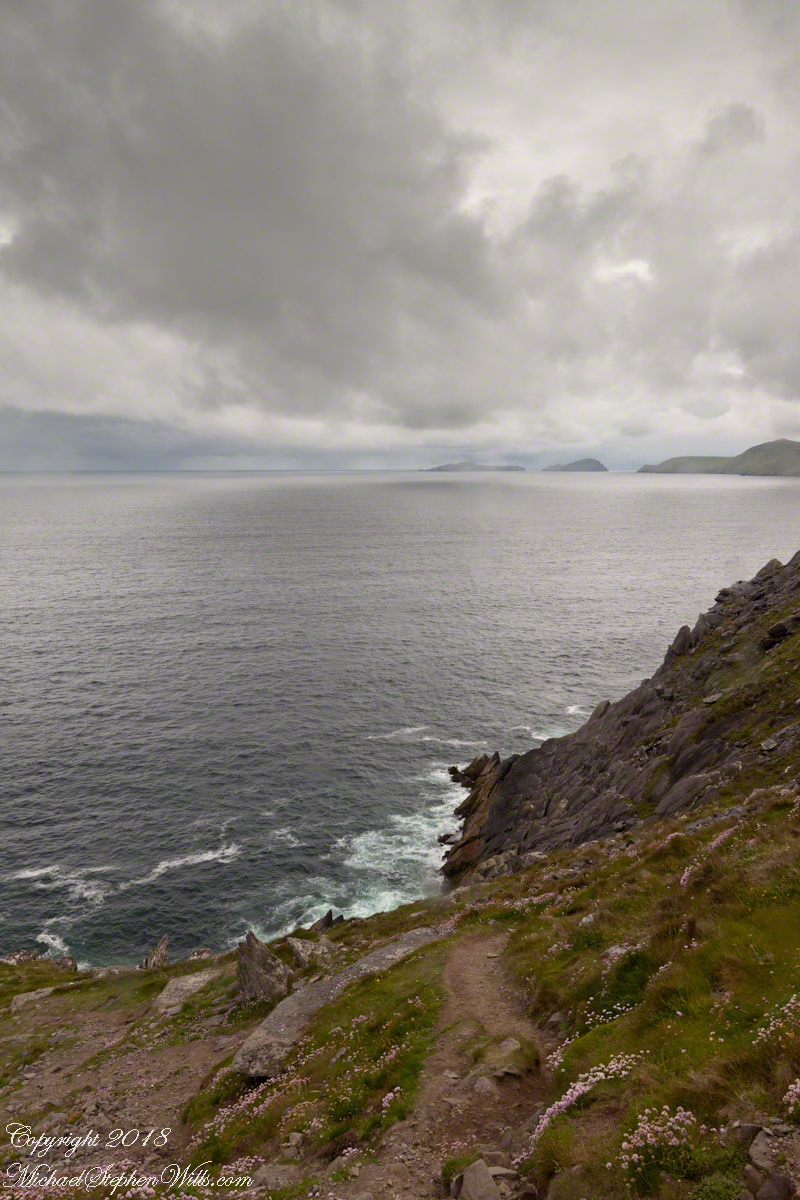
On the Dingle Peninsula, County Kerry, Ireland photograph taken from Slea Head Drive (R559), looking west down the cliff toward the North Atlantic Ocean breaking on the rocks. In the distance, Slea Head and the Blasket Islands. In the forground, the wildflower of Red Clover (Scientific Name: Trifolium pretense) (Irish Name: Seamair dhearg).
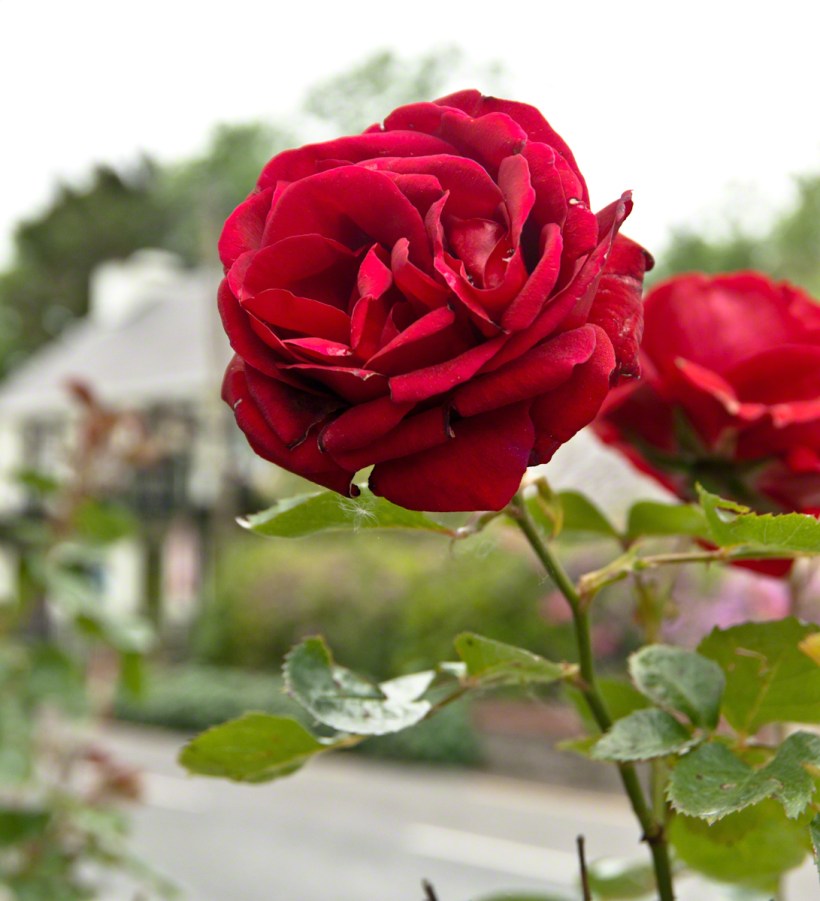
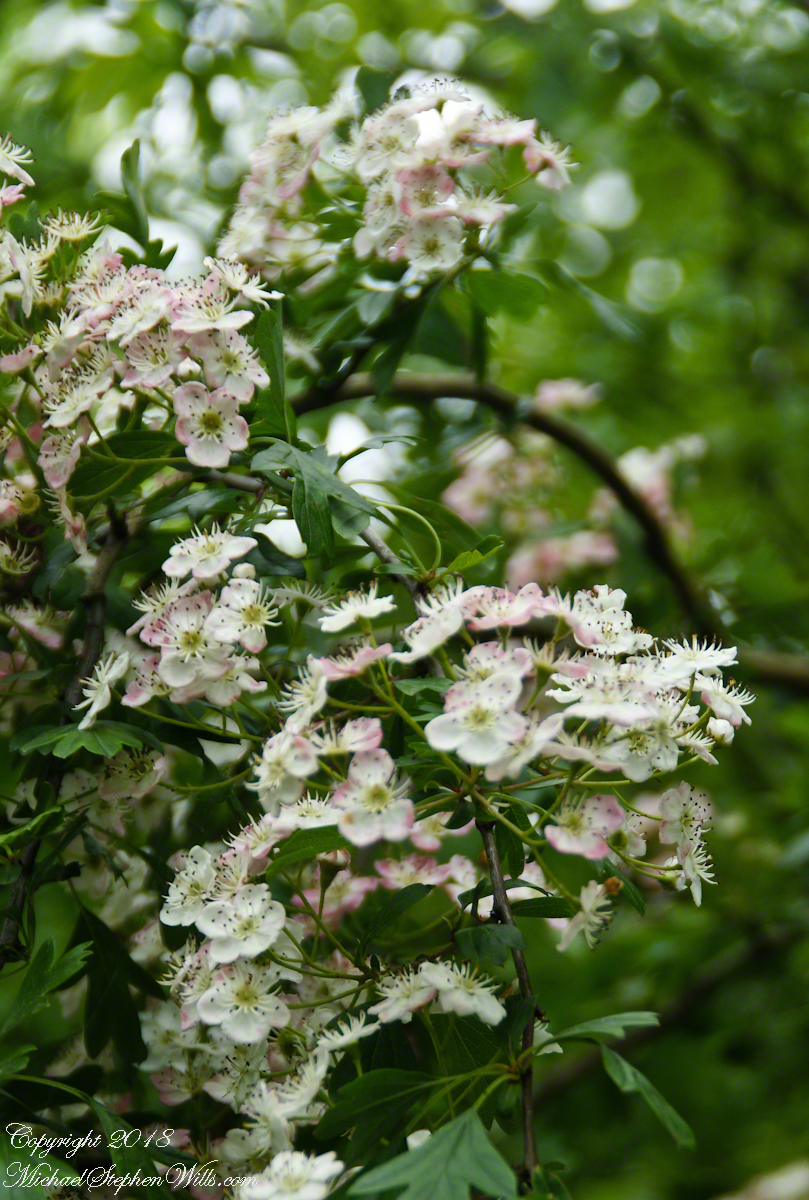
I originally published these blossoms as “wild rose”. It was my Facebook friends who pointed out these are hawthorn flowers. The key to identification was the shape of the leaves.
Blossoms of Hawthorne taken on the site of the former McCardle Home, Proleek Townland, County Louth, Ireland.
In correcting my mistake, I learned the young leaves of Hawthorn are excellent for salads. Wonder how the fairy folk, associated with single hawthorns (as in the following photograph from the Hill of Tara), react to picking leaves from their trees? I didn’t hear of the practice during our time in Ireland.
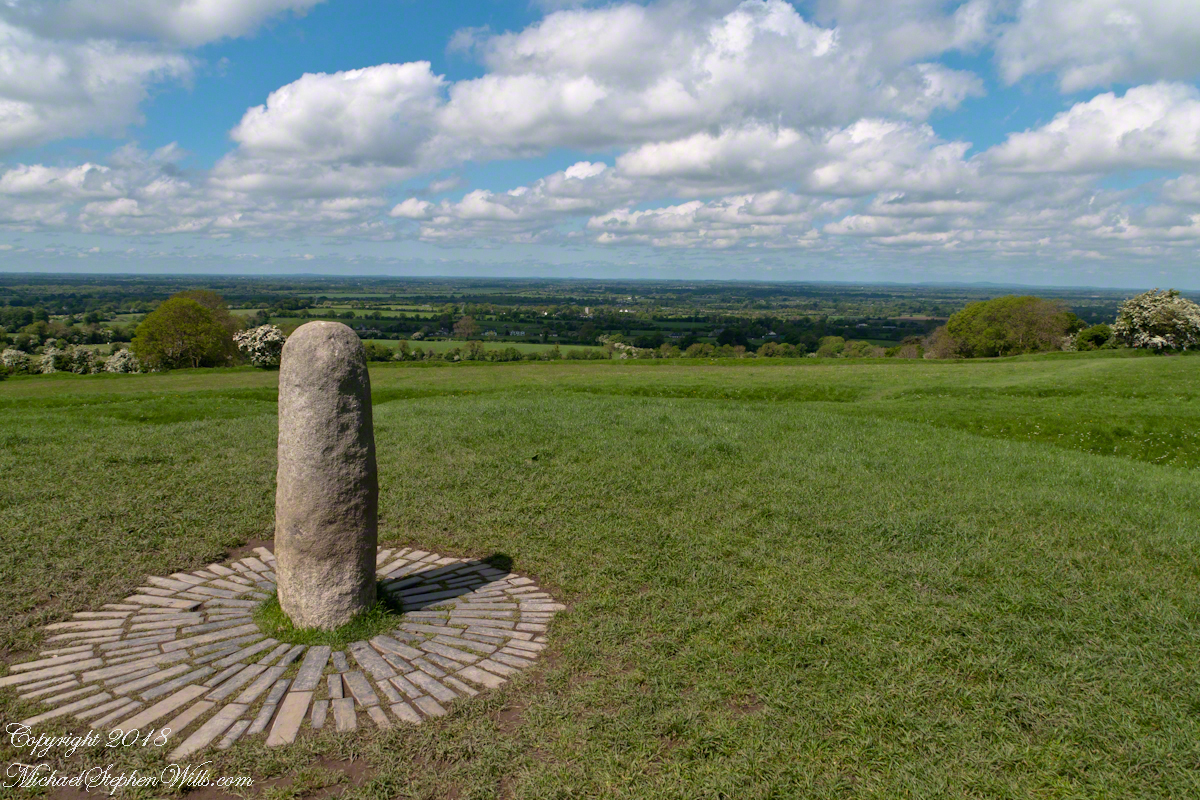
View northwest from Hill of Tara looking across County Meath with views of Counties Westmeath and Cavan. On the horizon, right, is Hag’s Mountain, (Irish: Sliabh na Caillí) , site of the Loughcrew Cairns. The standing stone is the “Stone of Destiny: (Irish: Lia Fáil), which served in coronation the coronation of the High Kings of Ireland. It stands on the Inauguration Mound (Irish: an Forrad) of Tara. This photograph was taken the morning of May 27, 2014 hours before the stone was vandalized, doused with green and red paint.
My mistake was understandable, in botany the hawthorn is in the same family as the rose. The flowers are similar, having five petals. The “haw” in hawthorn is from the Old English word for hedge, as is this linear standoff the tree lining the way up to the Loughcrew Cairns.
Reaching highest point of County Meath, Ireland means a steep path, not too long, to glorious views on all points plus Lough Craobh (Lake of the Branches).
I read these votive offerings are made at Beltane, in which case these are fresh from placement May 1.
A hawthorn tree in bloom on May 27, 2016. Growing on the slope of Hag’s Mountain
The following year Pam underwent double total knee replacements, never the less, she was great company for all our adventures on the island. Even this steep climb.
The steep path to Loughcrew passes a hawthorn covered with flowers and May offerings.
These views were our reward for reaching the top.
View from Loughcrew Cairns, “Hags Mountain”
The Emerald Isle, we fully understood this name.
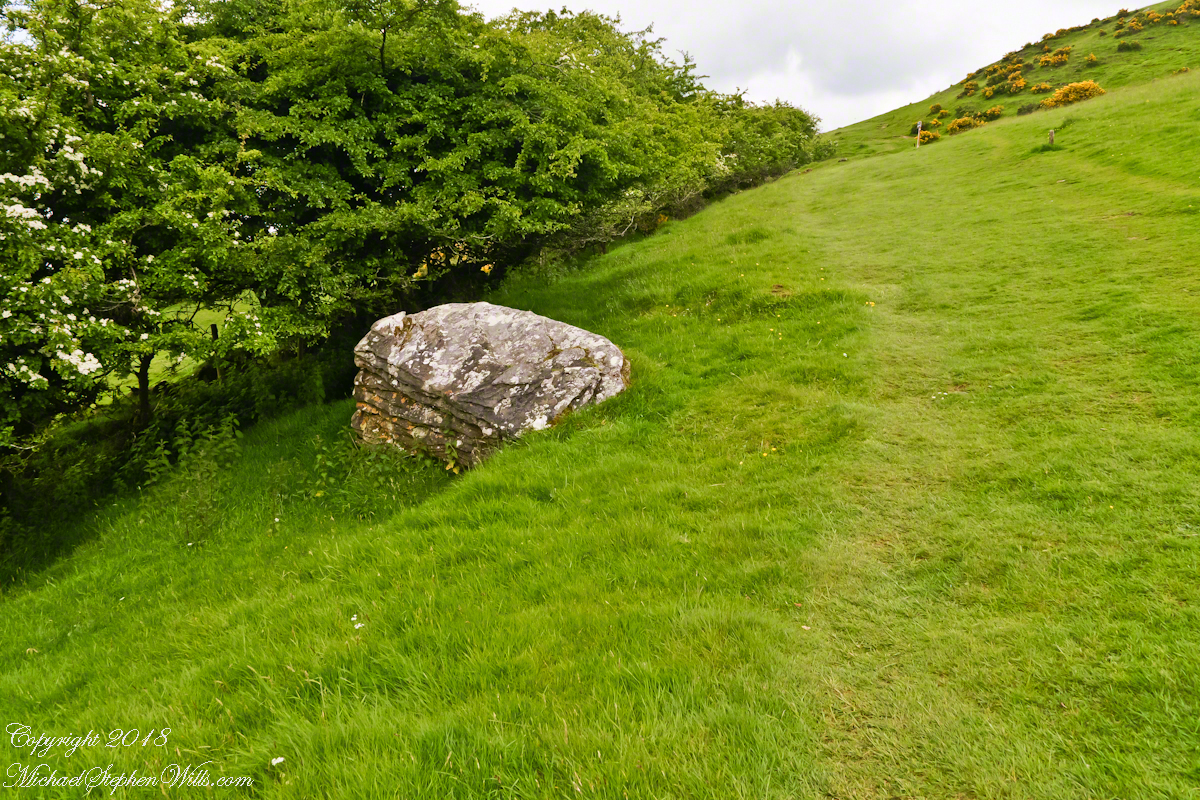
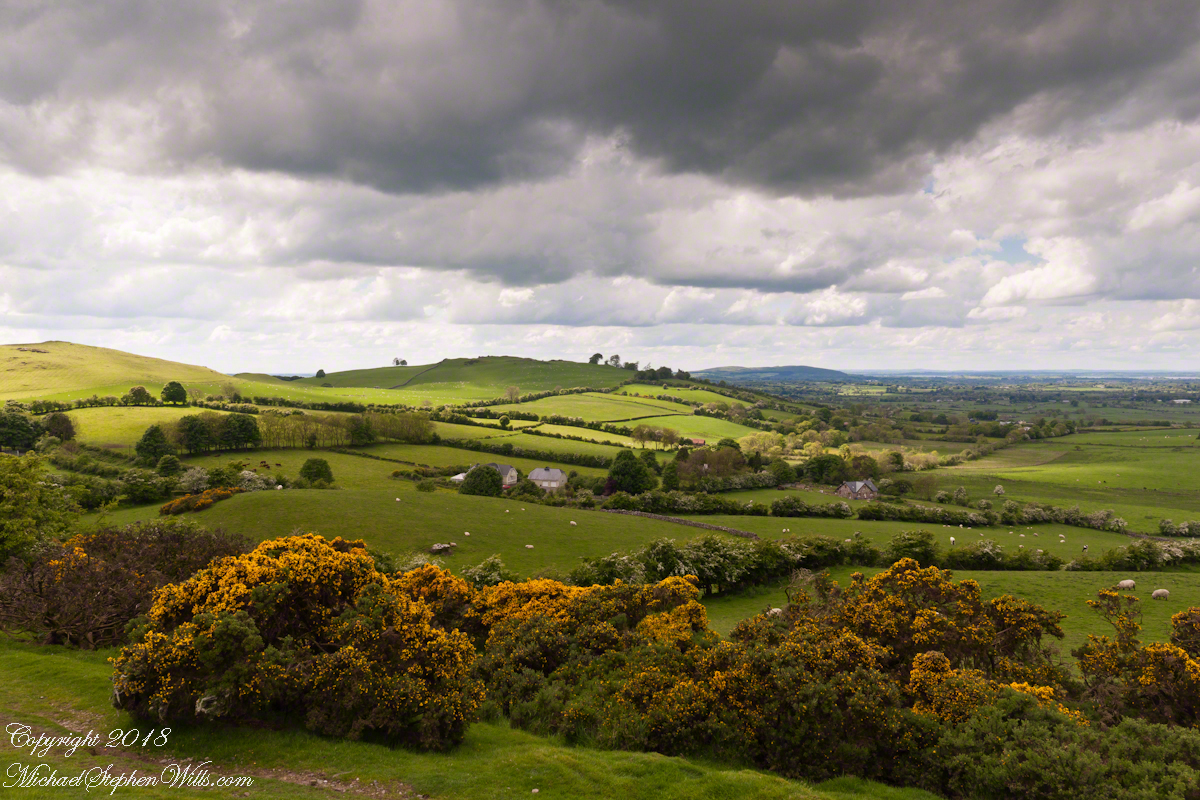
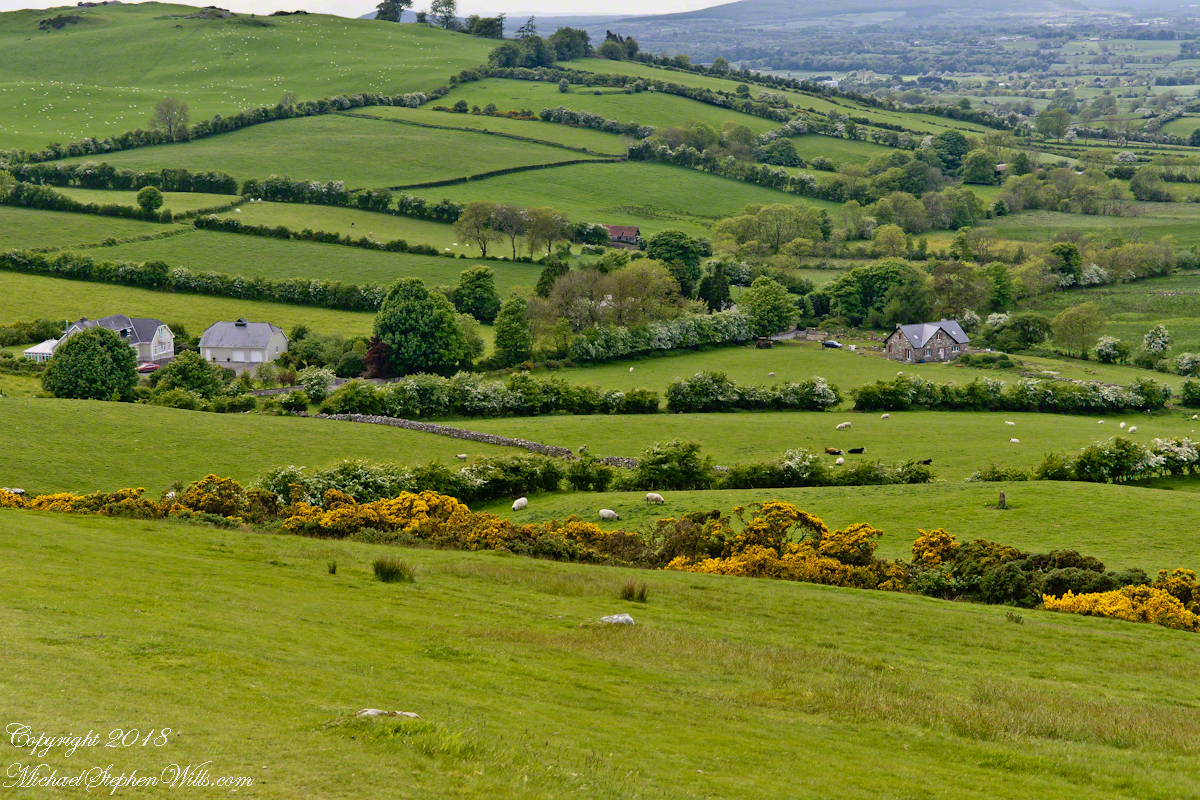
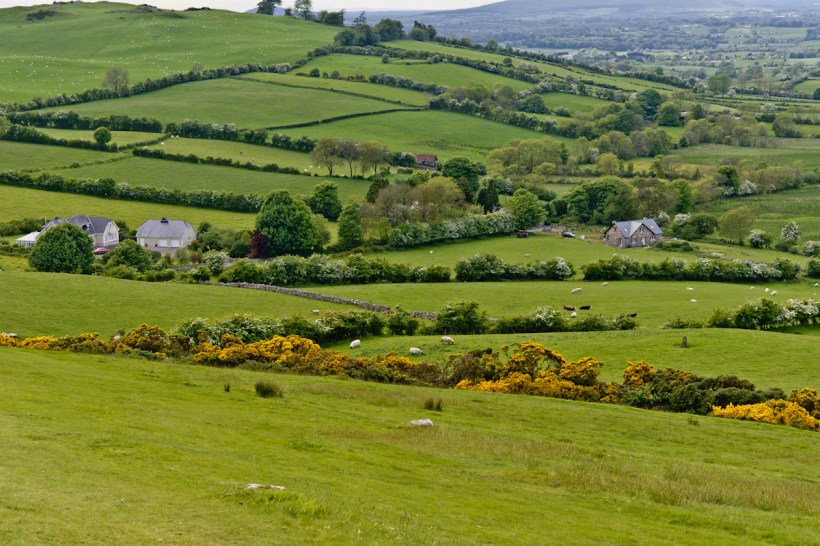
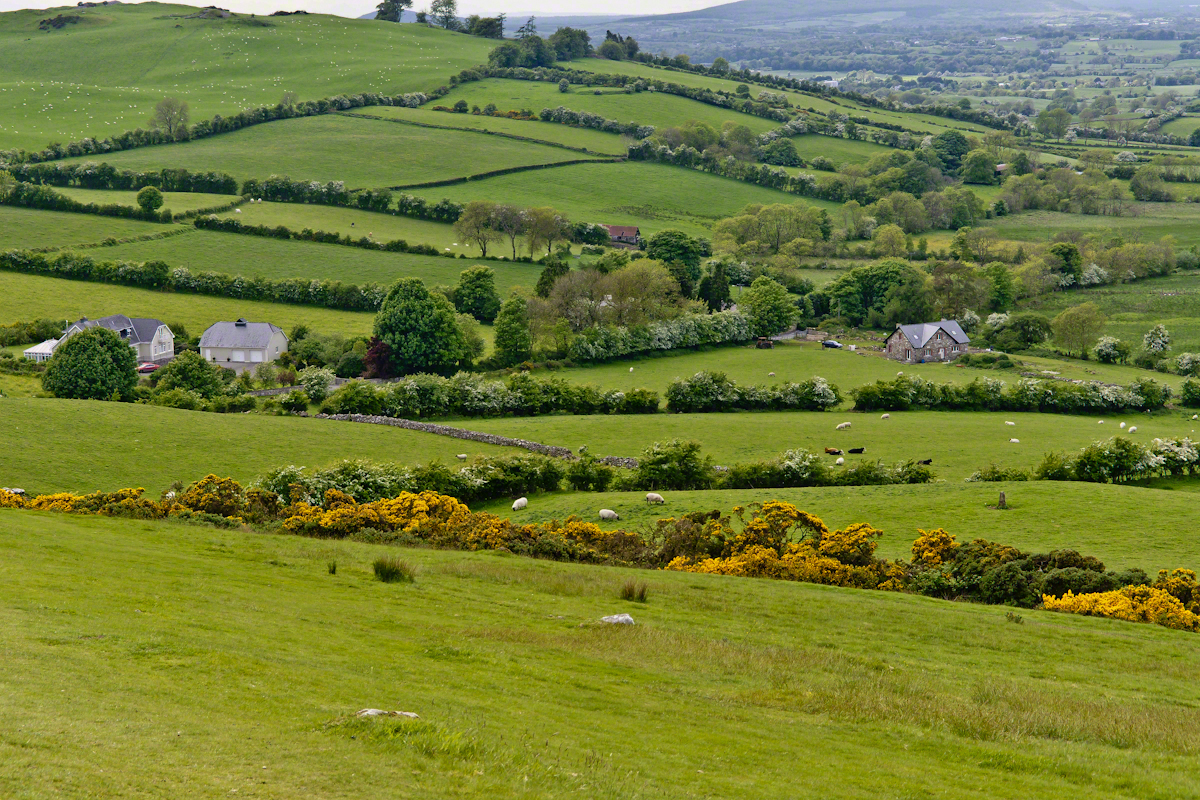
Loughcrew Megalithic Site, County Meath, Ireland. A solitary standing stone below the trail to the Loughcrew site surrounded by whin bush (gorse) and hawthorn hedge rows. A fieldstone fence, farmhouses, a patchwork quilt of fields completes the view.
The Greek name for the Hawthorn species is formed from two words meaning “strength” and “sharp”, referring to the thorny branches.
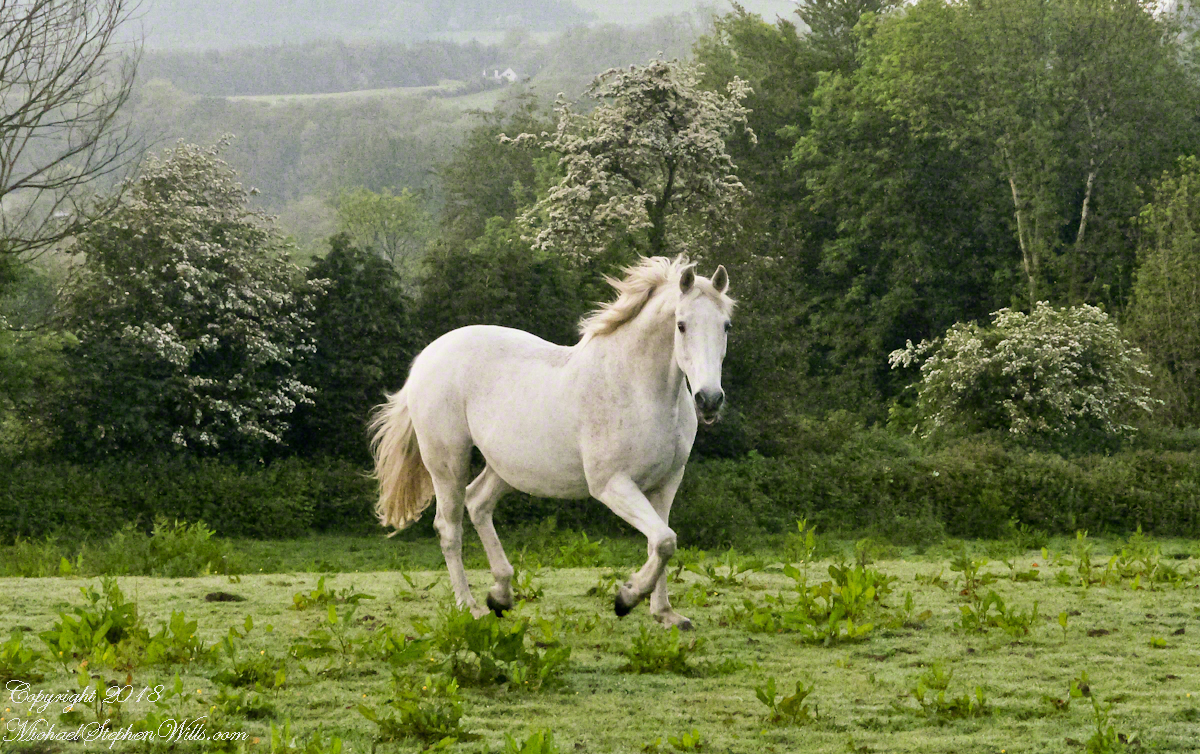
For County Cork we stayed with Marantha House B&B. Our day of arrival, that evening, I visited Charlemagne and fed him an apple, saved from dinner. We learned from our hosts, Olwen and Douglas Venn, he is a retired show horse they rescued. The following morning I visited Charlemagne again with an apple and my camera. As I walked up, starting from the far end of his field, Charlemagne rewarded me with a series of astounding poses, trotting toward me in fine form. The morning mists, hawthorn in bloom, distant hills came together for this memory.
We marveled at the hawthorn hedges in field after field. I first notice them from the World Heritage Site, Newgrange (Brú na Bóinne, “Palace of the Boyne”). Here is one on the Dingle Peninsula, on the other side of the island.
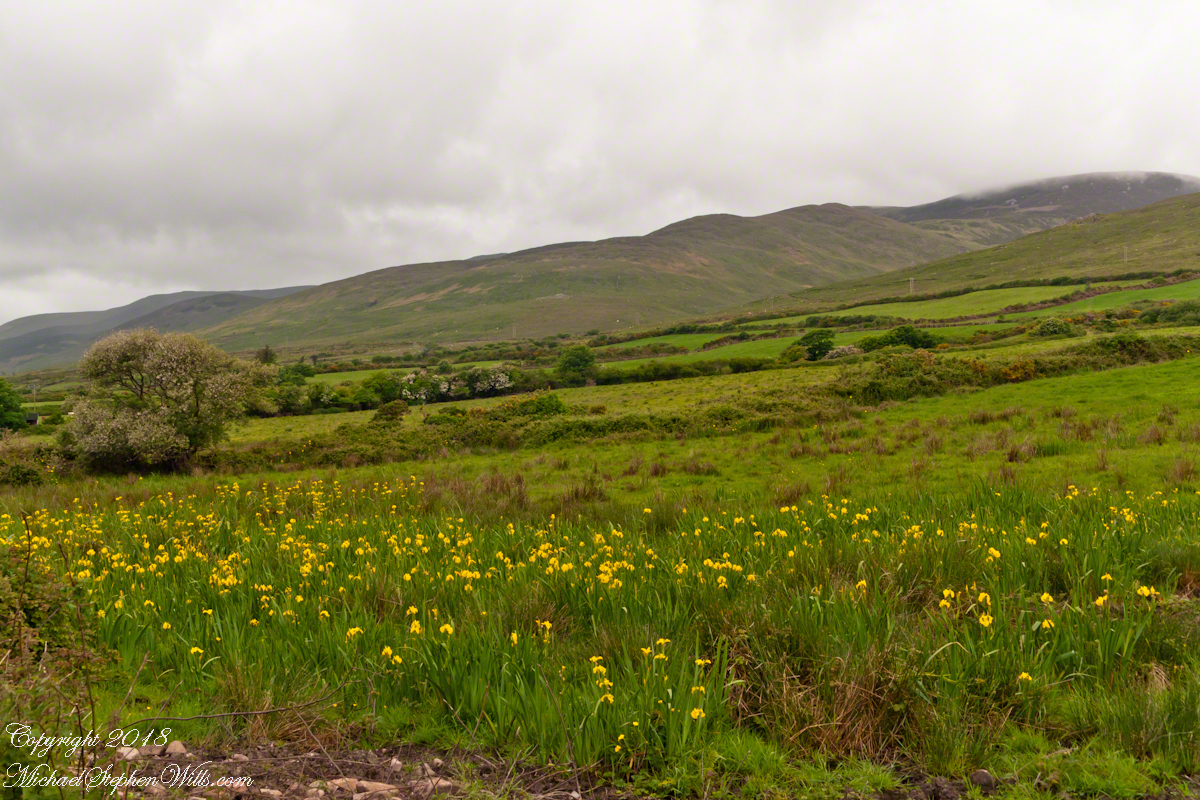
A roadside field of yellow Iris flowers with flowering Hawthorn and Whin Bush in the windbreaks. Looking northwest toward Killeenagh and Caherpierce on the R561 between Lack West and Inch. Dingle Peninsula, County Kerry, Ireland.
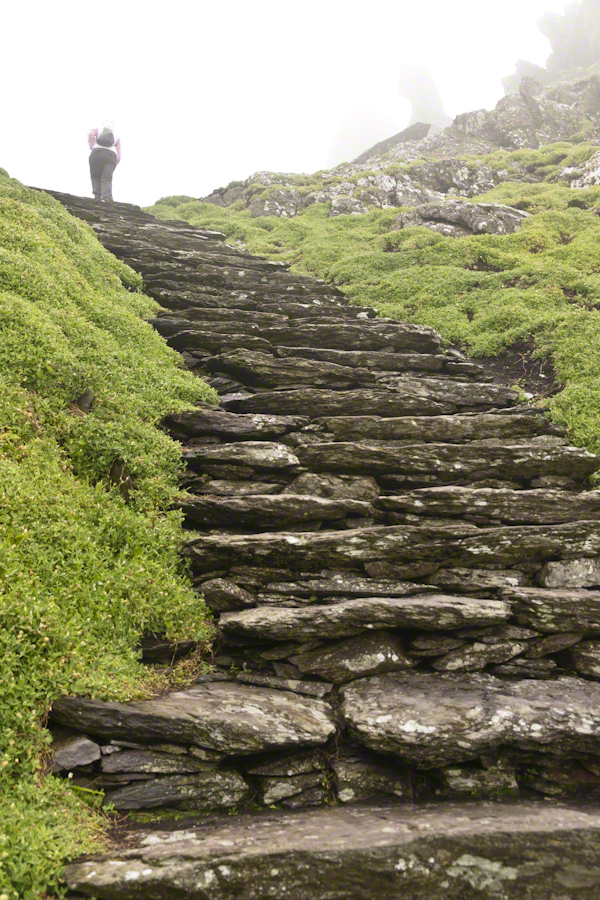
Each of the 603 steps between the Skellig Michael dock and the monastery evoked contemplation, caution, wonder and gratitude.
Contemplation: how did the monks manage to survive while placing the steps? It can only be by a careful division of labor once a survival tripod was build. By tripod I mean the basics food, shelter, warmth.
Caution: as with any steps, for a 60+ person I have learned the hard way falls take a long time to recover from.
Gratitude: for the opportunity, growth and knowledge afforded by travel.
Wonder: every step offered a new vantage and discovery.
Puffins were on my mind for most of the lower steps being immediately at hand, almost underfoot, constantly. Underfoot, not in a obnoxious way. Underfoot in being right there, unabashed, going about the business of life. Pam and I were lucky, Puffin wise, for the weather. Sensible birds, when the visibility is low Puffins stay close to the burrow, making improvements and socialize with neighbors.
Click any photograph for my Online gallery.
Bad News: Atlantic Puffin populations are on a precipitous decline across Ireland and British Islands. There are talks of a population collapse. Researchers enlisted assistance from wildlife photography enthusiasts with outstanding results released in 2017. The photographs showed parents returning with less nutritious fish. The stress on Puffin populations follows the decline of fish stocks from over fishing. I listed two references at the end of this post.
The disturbing element to our experience was not one of the birds flew in with a catch. On second thought, this is not unexpected. Late May the eggs are laid and under incubation. The individuals in these photographs were feeding only themselves. If we returned mid-June there would be chicks to feed.
Click any photograph for my Online gallery.
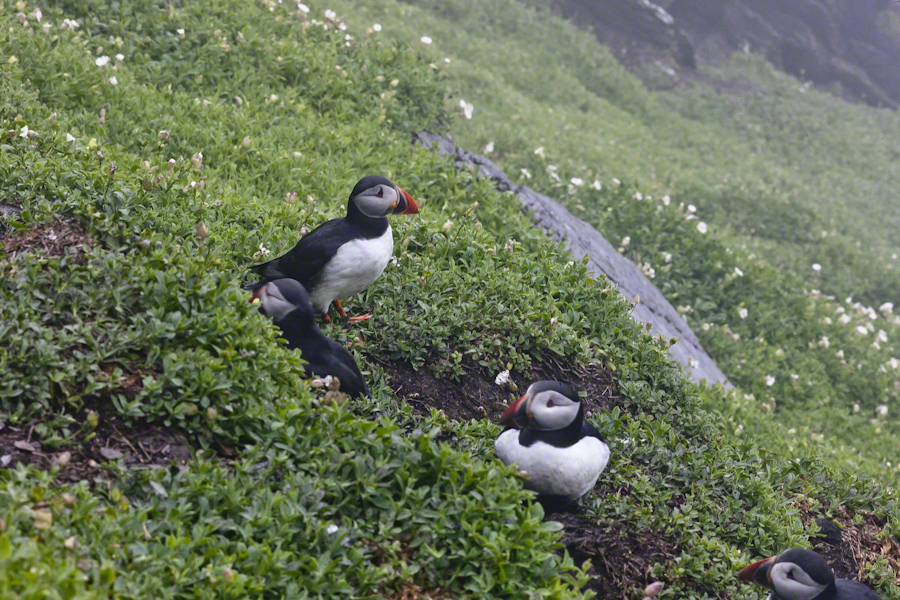
Puffin with an inquisitive attitude
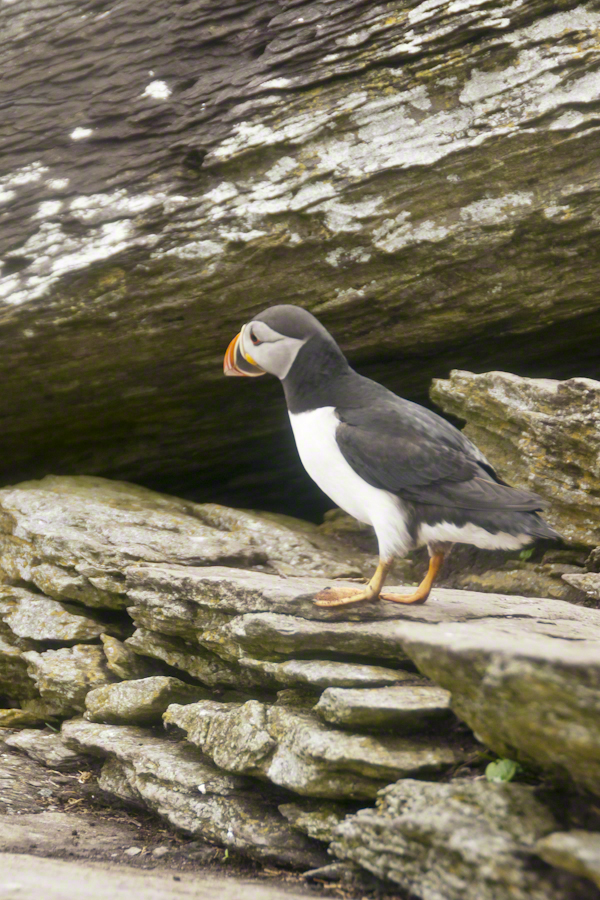
Why do we love Puffins? We see reminders of ourselves. The expressive large eyes, over a striking beak and there is something expressive about the birds’ body movements. Don’t you almost know what’s on the mind of this fellow? “What’s going on, over there?”
Click any photograph for my Online gallery.
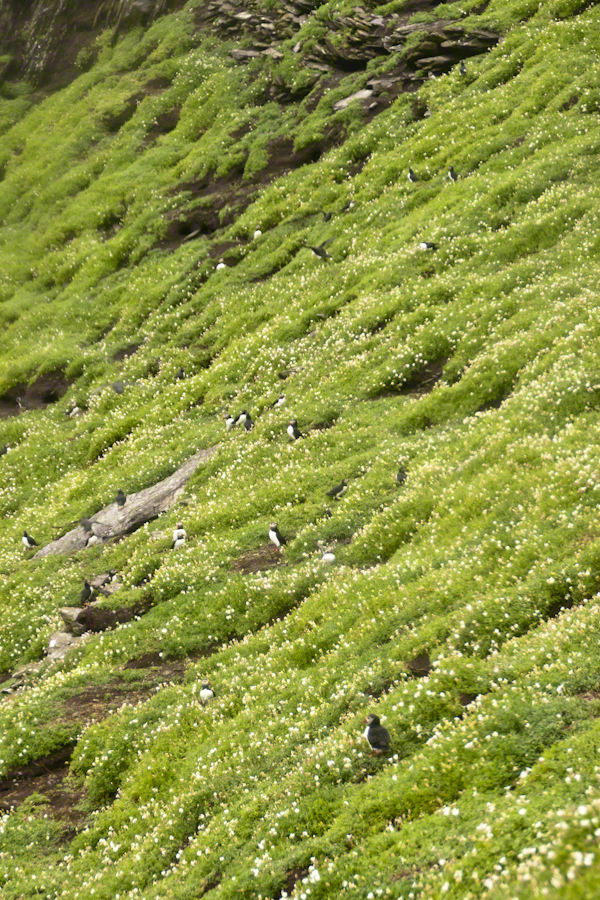
A colony of nesting puffins on a flowering cliff of green.
Puffins are small birds, the size of a human hand. This colony returned in late March or early April, each breeding pair claiming a nesting site. The coloring of the beak happens during breeding. The bird molts while at sea during the winter, the beak and other brightly colored facial characteristics are lost.
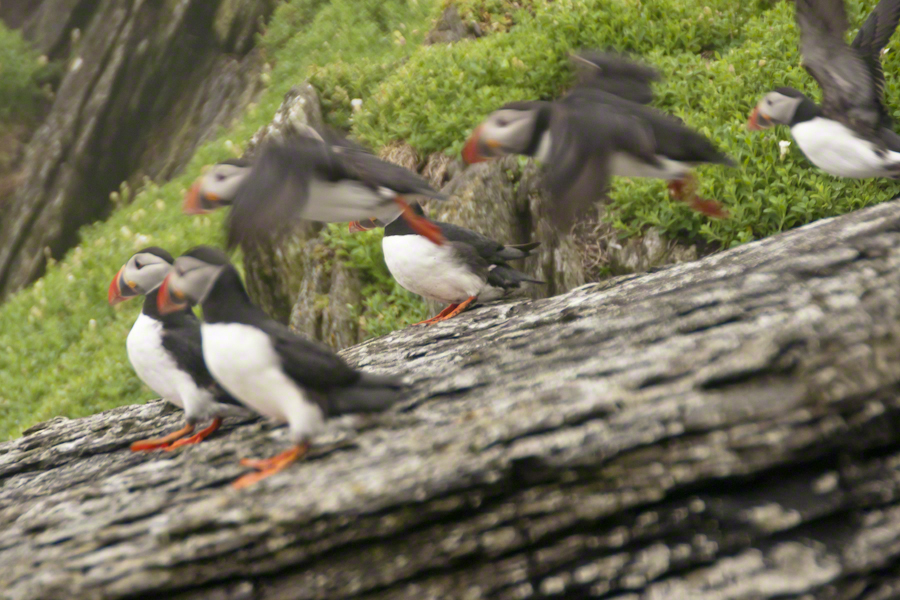
Michael Skellig puffins in social setting on cliff with burrows and flowers.
Puffin sexual differentiation is unique among birds. The coloring and markings are identical between males and females. Males are somewhat larger than females is all.
Click any photograph for my Online gallery.
Soft soil covering the flanks of Skellig Michael is the site of age old Puffin colonies.
Here is Puffin nesting behavior up close. I did some research on the flowering plants surrounding the burrows and am not sure. I believe the white flowers are a mixture of Sea Campion and Sea Mayweed.
As far as my photographic technique. There are two sets of Puffin shots from Skellig Michael. For the the walk to the top, the monastery site, I used the lighter Sony Alpha A700 dslr with a Sony variable lens, DT 18-200 mm F3.5 – 6.3. On top, I switched to the Canon EOS 1Ds Mark III and, for the descent, fitted a Canon EF 200mm f/2.8L USM lens.
The shot above and following are the Canon, taken on descent. Prior shots are the Sony, taken on ascent.
Click any photograph for my Online gallery.
Puffin Entering Burrow
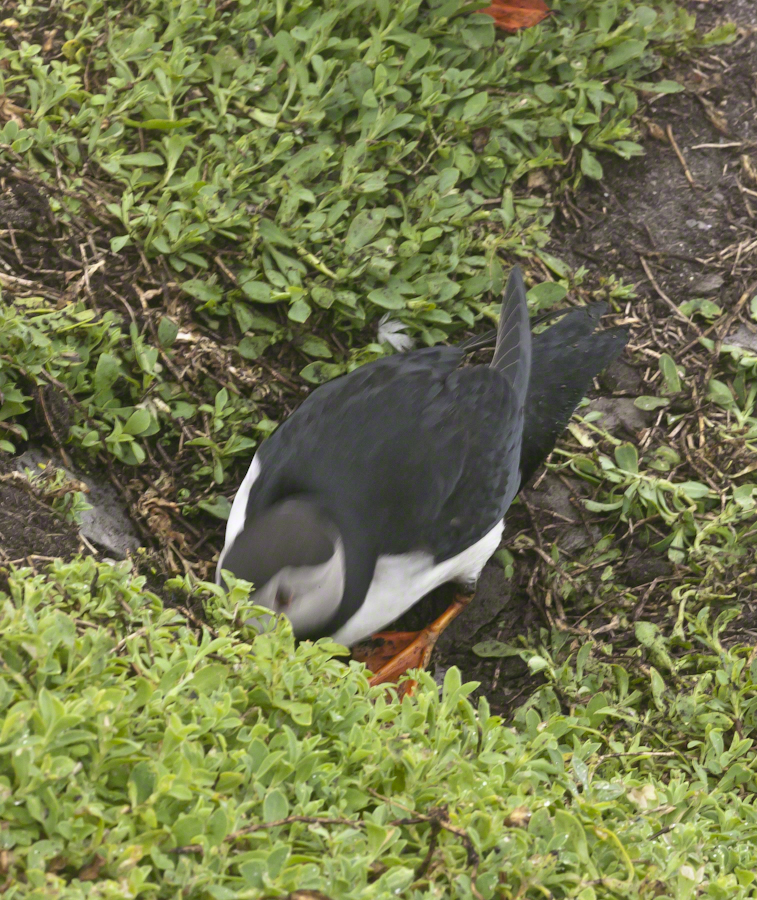
Puffins have striking black and white plumage and leg color some describe as “tangerine.” Tangerine? I guess. Here an individual ducks into the burrow.
Click any photograph for my Online gallery.
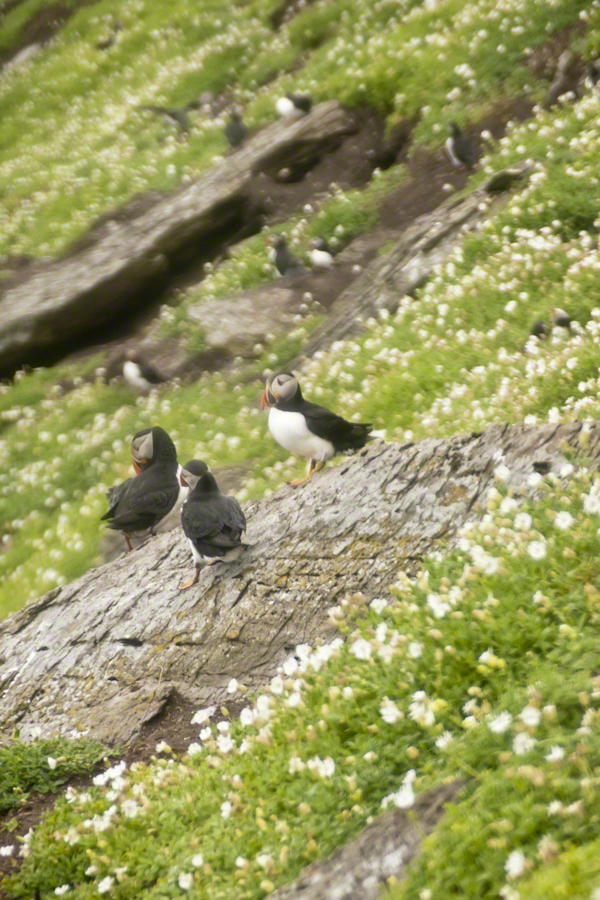
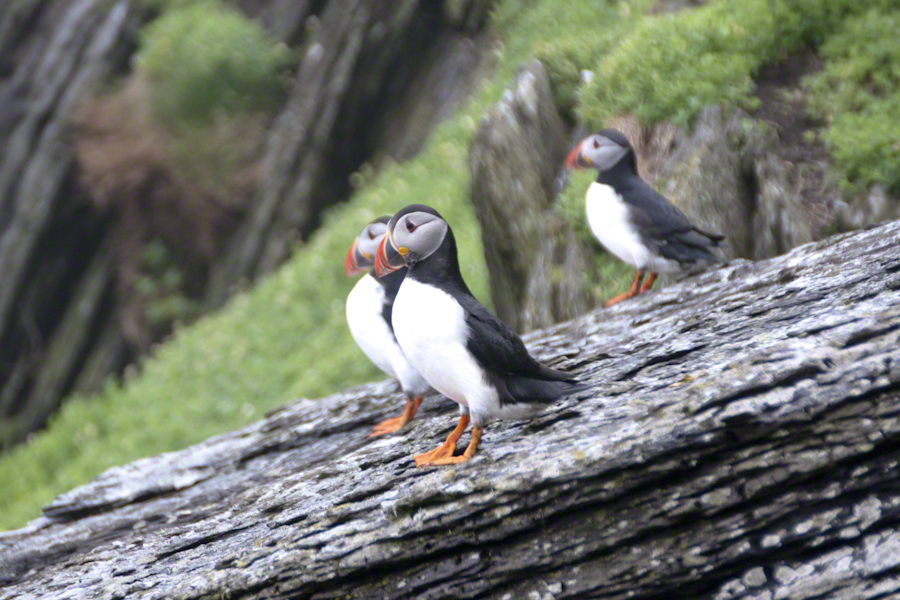
A grouping of Michael Skellig puffins, the foremost with an attitude of regard.
I did not spend a great deal of time in any one spot, being time limited and needing to get back to the boat. Don’t recall very much social interactions between individuals, other than this perching together on the rocks. The foreground Puffin seems to take the behavior of another bird to task.
The popular name of the Loughcrew megalithic site is, “The Hill of the Witch” (In Irish, Sliabh na Caillí). In lore sites such as this are associated with The Others (“fairies”), living lives parallel and invisible to ours, touched now and then with resolutely ill effect to our side though sometimes theirs as well. Resolute as in these meetings are fated to end poorly unless…..unless the mortal knows the rules. “If you are ever in an Other’s mansion for a party never, ever eat or drink anything. Eating or drinking will condemn you to an eternal round of parties. You will dance till dropping every night.” Rules such as that, and others, can be used to turn the tables, gain an advantage, of beings from the Other Side. The story of my wife, Pam, how our lives came to be touched by this afternoon of May 27, 2014, is parallel to the tales of mortals benefiting from contact with The Others. The immediate source was the passing of my mother, Catherine Ann Wills (McCardle), at the age of 90. Mom’s passport gave her place of birth as Proleek, a place in Louth. My maternal grandmother, Mary Catherine McCardle (Mills) spoke with a brogue, less a lilt than a down to earth and kind warmth. I remembered the stories of Mom’s passage to Canada with her mother and father in 1926 at the age of three. The Ireland connection with my father was less direct as I never met his mother as an adult and we seldom spoke of her. It was left to me in the time between my Mom’s passing, an invitation for a visit from our cousin’s in County Louth, and our arrival May 2014 to understand more about Elizabeth (Duffy) Wills, my paternal grandmother. In this way, I discovered Elizabeth came from a family of Dunderry, County Meath, Ireland, her parents Matthew and Teresa (Plunket) Duffy; our tour of Ireland came to start from a bed and breakfast near Trim, County Meath, with Dunderry up the road. May 27th, we planned as an exploration of all things County Meath, to include Loughcrew, the highest point of the county in the west. Along the steep path to the hilltop a hawthorn tree covered with flowers and offerings welcomes visitors. May is the month for decorating hawthorns, the blossoms are also known as “Mayflowers” as in the ship the pilgrims sailed to Plymouth Rock.
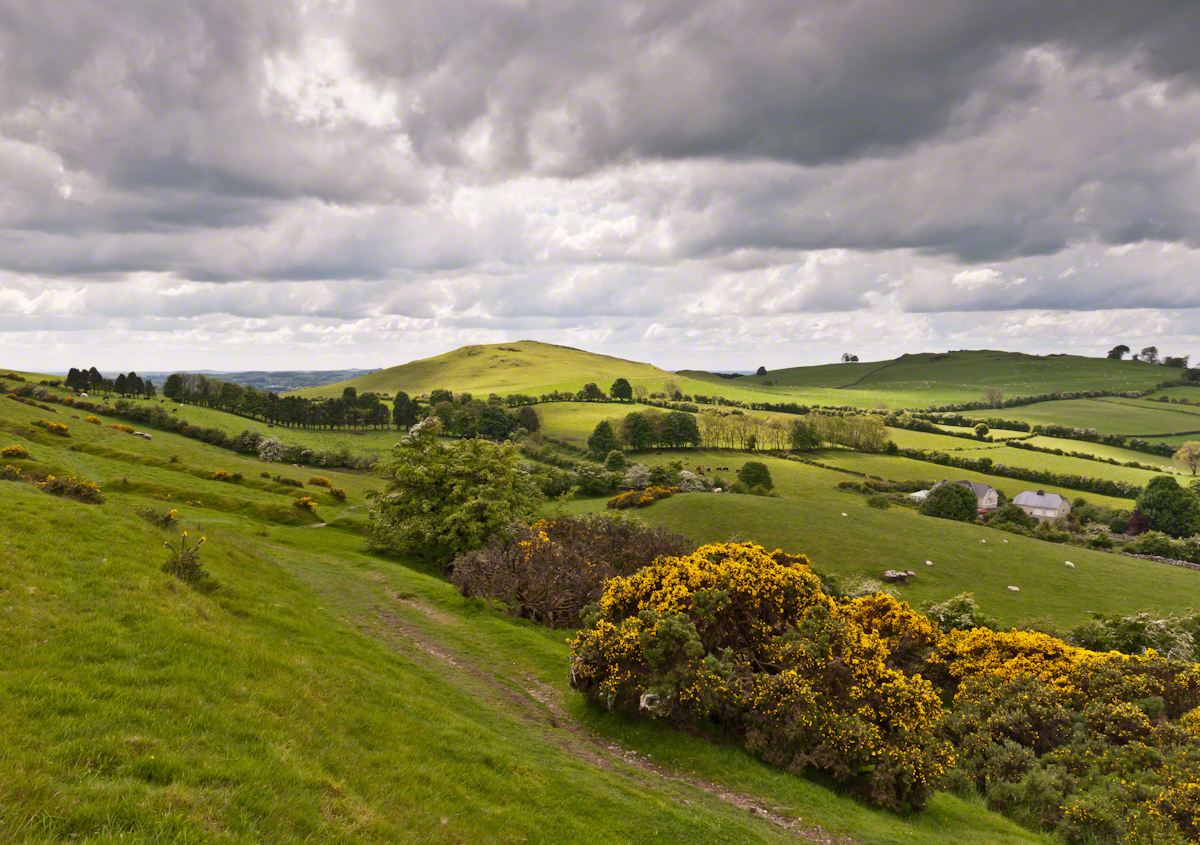
As if we entered a gateway, when pausing and turning high on the hill, this view was revealed, otherworldly in its fullness, scope and wonder as though we passed to the other side to the fairies. Cairnbane East of the Loughcrew Cairns site, County Meath Ireland, is also known as Hag’s Mountain. We are looking south, southwest from the north side toward Cairnbane West. Flowering yellow whin bush, also known as gorse, is in foreground; white flowering hawthorn trees in distance. No elements of this photograph hint at the year 2014.
A solitary standing stone below the trail to the Loughcrew site surrounded by whin bush in yellow flower and white blooms of hawthorn hedge rows. A fieldstone fence, farmhouses, a patchwork quilt of fields completes the view.
Meanwhile, in the real world, when Pam and I complete our round of the island to return to my cousins in County Louth, they told us, on this day, two young men were discovered parked next to a nearby lough, murdered during a drug deal gone bad.
Now’s time to share a trinity of images from a morning spent about the Skellig Islands May 2014.
Pam and I have many stories from that day, a favorite is from the parking lot of Portmagee where we met the fast boat to the island. I prepared for the day by making a reservation for our ride. We traveled from Killarney, where an early morning breakfast feast spread by The Killarney Royal Hotel fortified us for the adventure. Throughout our tour, experiencing Ireland was like taking blinders off, this first experience on The Ring of Kerry was no exception, driving on a tight timeline to reach Portmagee with minutes to spare, every turn of the road presented a new delight.
Grateful to have made it to Portmagee, we quickly pulled our kit together. As I closed the bonnet, Pam exclaimed “our umbrellas.” At this point of the story we laugh together. Umbrellas indeed. I had a dim clue of what lay in store for us and insisted the umbrellas be left behind, a counter-intuitive decision for a rainy Irish day the Wild Atlantic Way. Regardless of the time, we needed a bathroom break as there will be no facilities on the fast boat or the World Heritage Site where there is no space for human waste products.
Click any photograph for my Online gallery.
I was here perched on a cliff of Valentia Island across from Portmagee looking southwest across Valentia Sound.
The humor is in our welcome aboard the fast boat, like a fishing boat with a small cabin and small deck dominated by the engine hatch. We crowded on, handed a full set of fisherman slickers. This is a heavy coat with hood and pants, all waterproof. Our close timing guaranteed the worse seat, away from the cabin in the open. It was a new experience for us and we felt a sense of dread as the craft left the protection of Valentia Sound into the open Atlantic Ocean.
We faced a west wind, driving 12+ foot waves, as the boat breached each wave the crest went over the cabin in a waterfall of salt water. Up and down, up and down. Thankfully neither of us lost breakfast as some did. I do not have photographs of the trip out or the approach to the island, my equipment was safely packed away.
In the above photograph you see the entire course of our approach to the island, a bit more than 10 (land) miles from Portmagee. We toured Valentia Island that afternoon.
Click any photograph for my Online gallery.
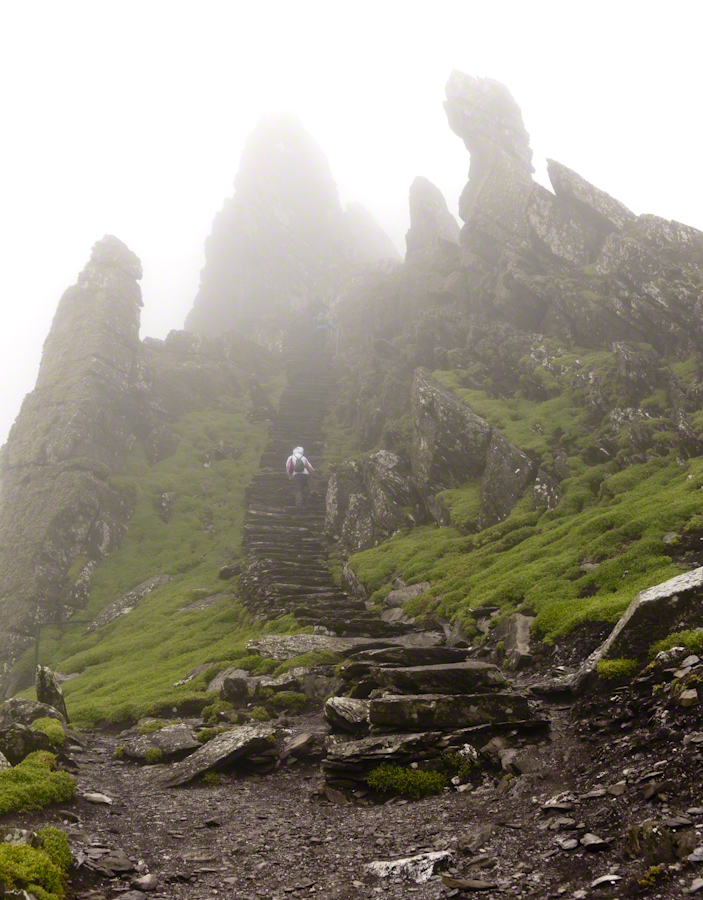
Climbing the side of Skellig Michael, approach to the peak and monastery.
There is a fair climb to the top to view the former monastery buildings. The steps are uneven and, when wet as it was that day, slippery. I wore a waterproof North Face shell with hood for the low threatening clouds. There was no rain as such, a constant fog on the top kept all exposed surfaces wet.
From the point on, until the top, was the most exposed and uncomfortable (frightening, chilling…you get the idea). Spare yourself the experience if you are afraid of open spaces and heights. Here was a stiff wind blowing from the right, on the left the cliff falls away to the ocean. Ahead, the path narrows to about 10 inches with a cliff wall on one side, the precipice on the other. Then come the monastery entrance and rock wall safety.
Click any photograph for my Online gallery.
Monk Cell, Grave and Cross
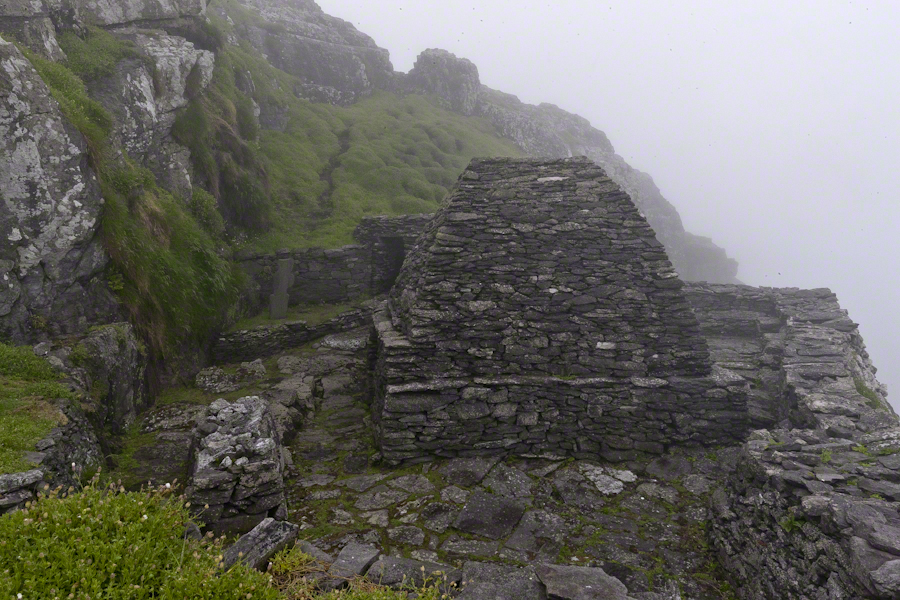
This single image gives a succinct impression of the monastery setting. The bee hive shaped stone monk cell requires a stooped crawl to enter. Inside, the space is small and, thankfully, dry. The structure keeps out the rain and wind, a marvel of stone construction. This cell is off to the side, on a cliff balcony, over the wall an ocean precipice.
My closing advice is to plan your time wisely. The ship boards in less than an hour, in that time you climb the 700 steps and explore. There are people all over the place, in waves. To capture the structures without humans, you need to wait until the cohort become bored and leaves. There will be a space before the next wave of tourists breaks. Leave enough time to descend the steps safely. People have suffered fatal falls on the steps and cliffs, it is easy to do. Make your personal safety a priority.
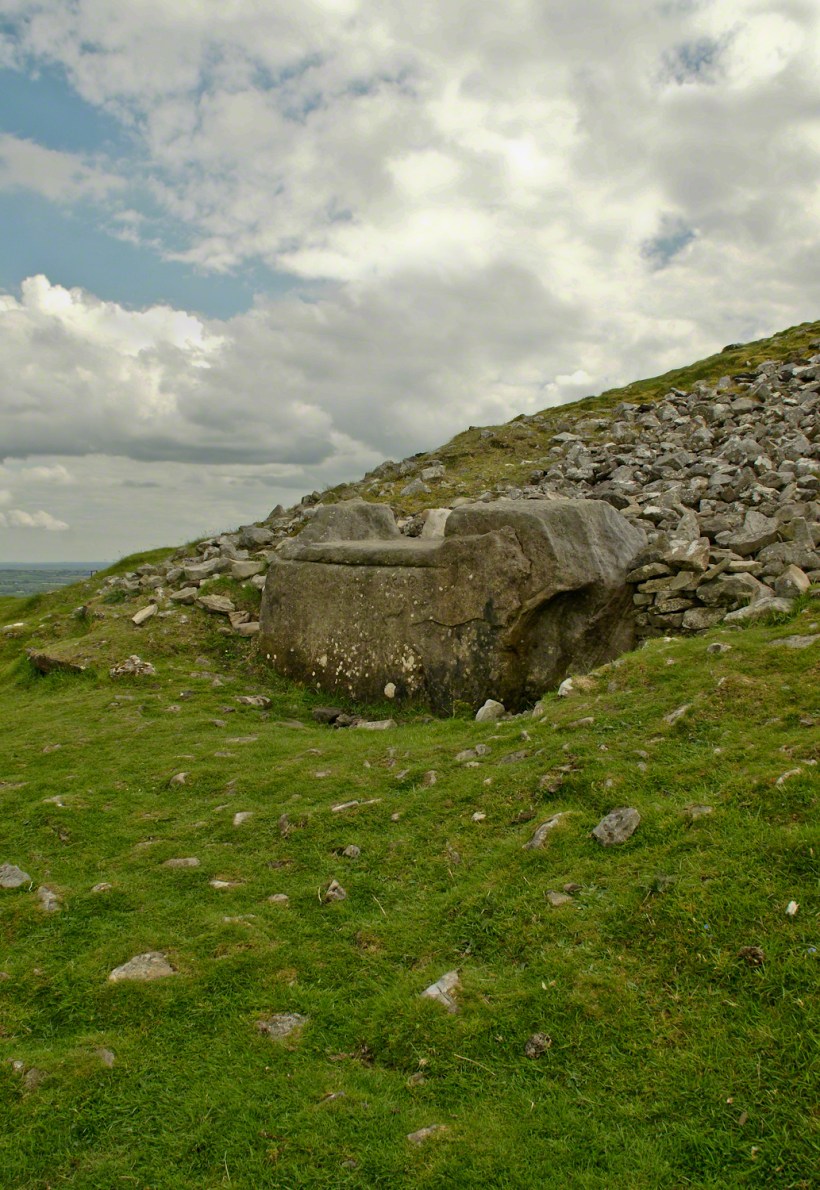
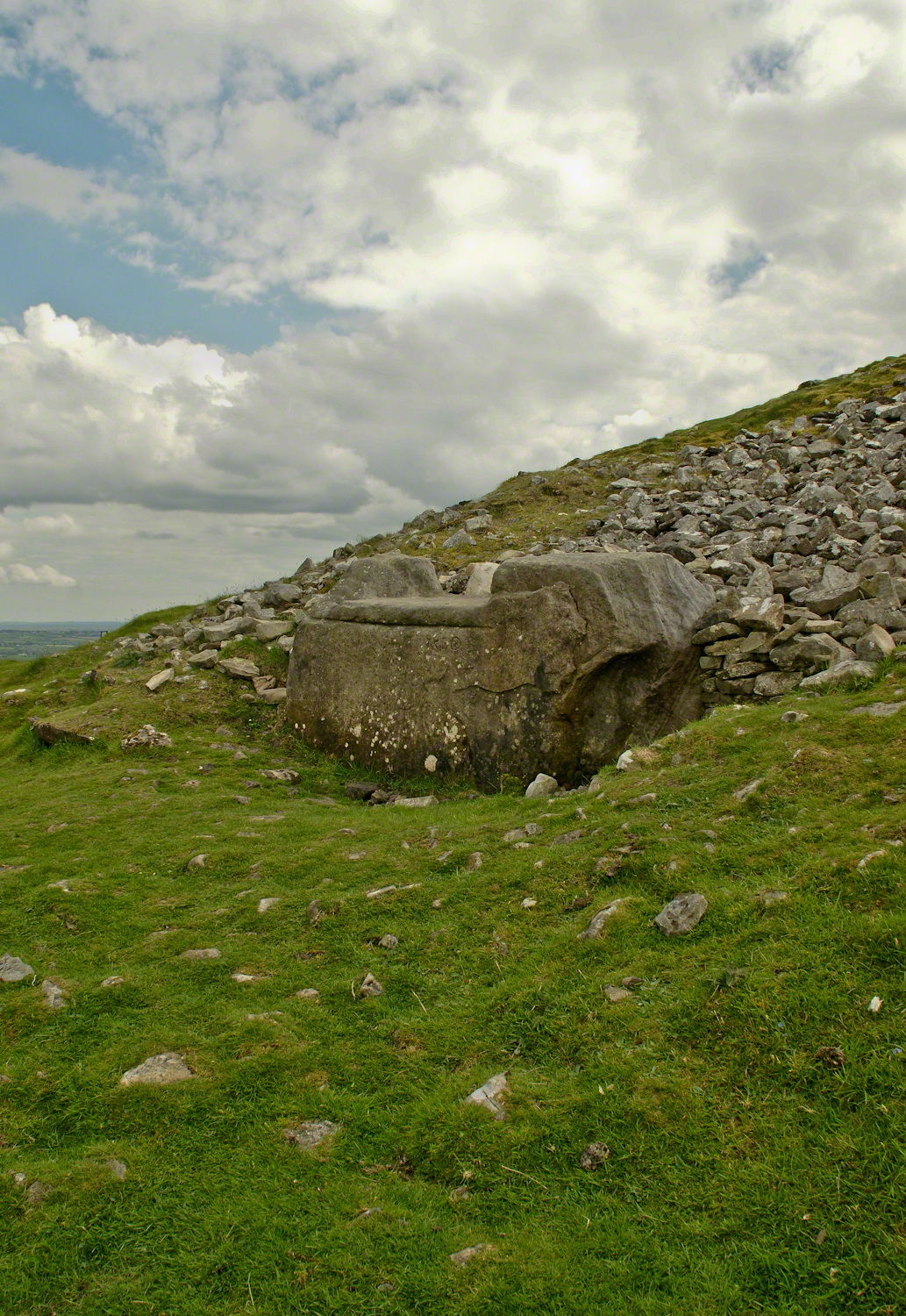
Known as the Hag’s Chair in some contexts, K29 or the Mass Rock, in others, set as a Cairn T, Loughcrew kerbstone thousands of years ago the carved symbols on front, rear and seat are very worn. There is no surviving record to inform us of the stone’s purpose. The upper side appears carved to enhance the form as chair. Set to the north of Cairn T, not in front of the entrance as with Newgrange, even this is a mystery. It is the third largest curbstone.
The popular name refers to the hill itself, “The Hill of the Witch” (In Irish, Sliabh na Caillí). In lore sites such as this are associated with The Others (“fairies”), living lives parallel to ours.
Tradition holds that, during times of the Penal Laws, Catholics gathers on for Mass using this curbstone as the altar. By this it is known as the Mass Rock.

 Michael Stephen Wills Photography