The Yarb Woman of Cornell: Elfriede Abbe’s Tribute to Herbal Wisdom in the Botanic Gardens

A quiet encounter with Elfriede Abbe’s Yarb Woman reveals the enduring wisdom of herbal traditions, inviting reflection in the intimate stillness of Cornell’s Herb Garden.

We did not come upon her the way you come upon a monument. On a late winter morning my sister and I chose to walk through the pergola alongside the Richard M. Lewis Education Center and there she was.

There is no plaza, no axial approach, no insistence. Instead, the Yarb Woman statue waits in a corner of the Robison New York State Herb Garden, where paths narrow and attention shifts from spectacle to detail. The pergola frames the space, the beds lie dormant or fragrant depending on the season, and there—almost at eye level with the plants—is the woman herself, bent into her work.
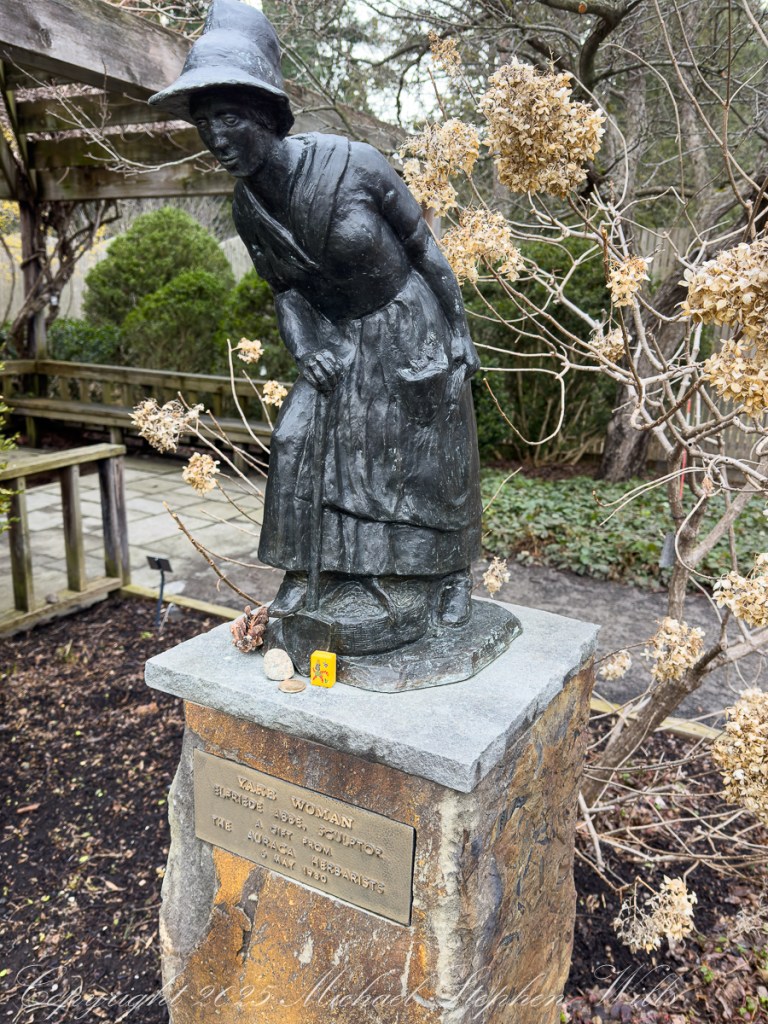
Yarb Woman, Elfriede Abbe, sculptor, The Auraca AHerbarists, May 6, 1980. Robison New York State Herb Garden, Cornell Botanical Gardens, Cornell University, Ithaca, Tompkins County, New York State.

Her posture is one of reguard. That is the first instruction. Her posture is a study in intention: forward-leaning, balanced, attentive. One hand gathers, the other steadies. She is caught mid-action, not posed. This is a figure practicing herbal knowledge.
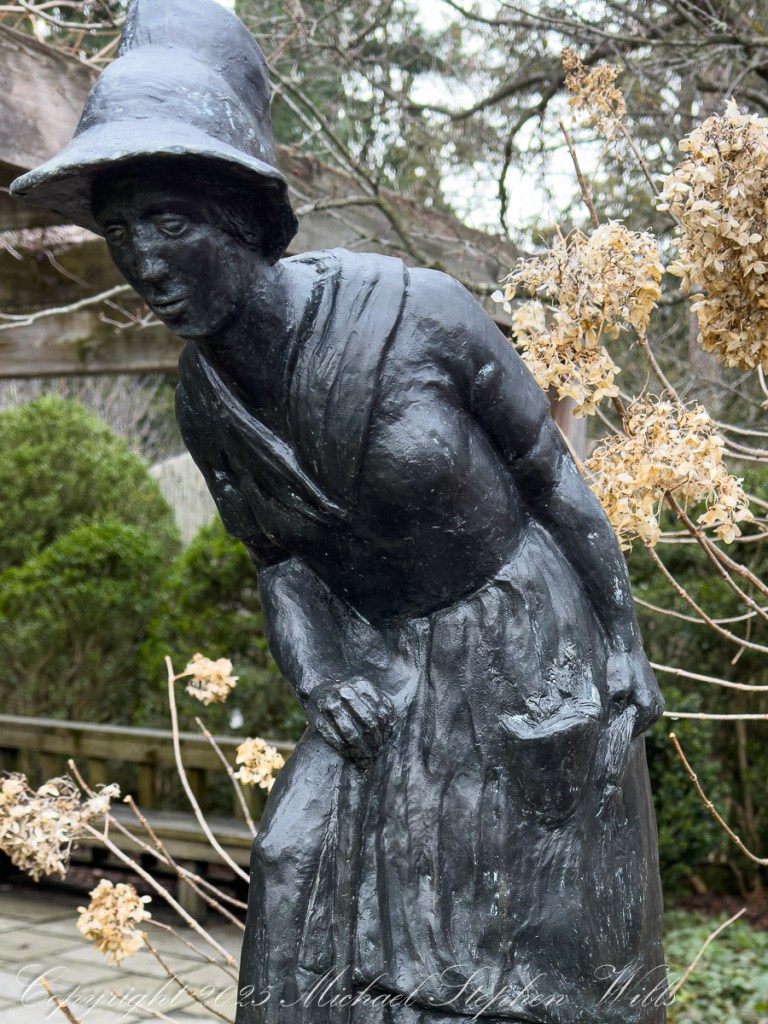
Right hand on spade handle

And because of that, she alters the space around her. Standing there to regard the statue the garden becomes a workplace—a field of quiet labor. Each plant is no longer merely labeled but noticed. The dried hydrangea beside her, the winter stems, the low green groundcover—everything begins to feel like it belongs to her attention.
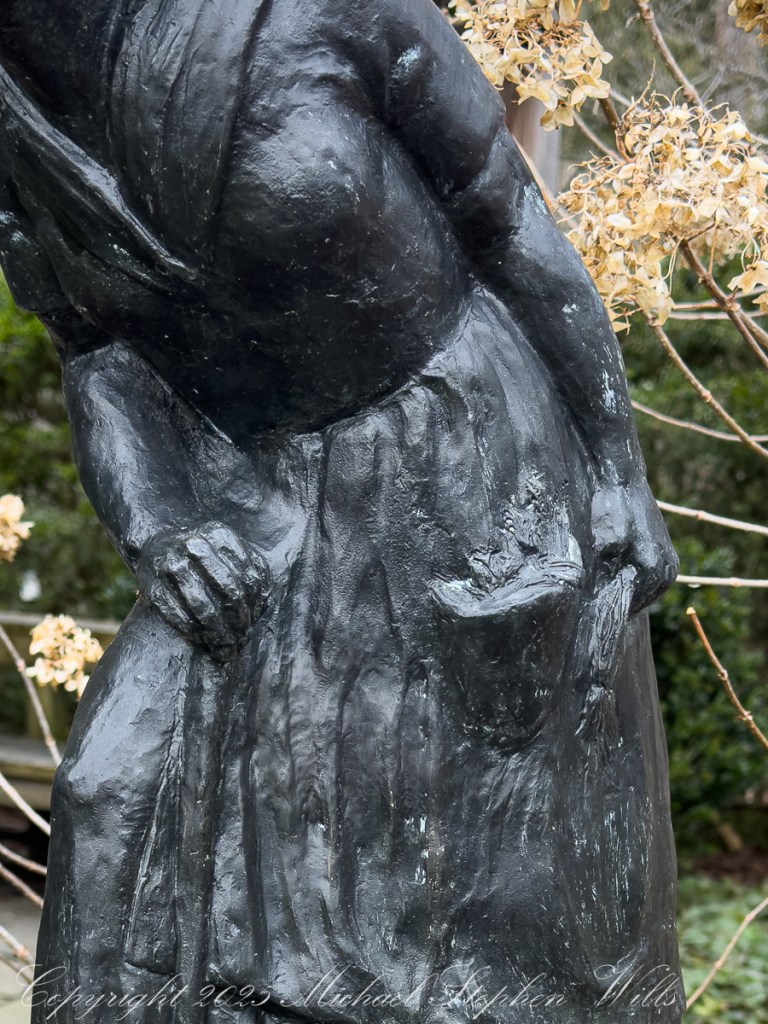
Left hand grasping plants, pockets full

We began to notice the small offerings at her feet—stones, a tiny object left by a passerby—that suggest that others have felt this shift. Not worship, exactly, but recognition. A kind of informal acknowledgment that this figure gathers more than herbs; she gathers meaning from the overlooked.

There is something deliberate in her scale. She is not monumental. She does not dominate the garden. Instead, she invites you downward—to stoop, to look, to consider what is beneath your habitual line of sight.

This is consistent the sculptor, Elfriede Abbe’s, larger artistic life. She was not drawn to grand gestures but to process: carving wood, printing pages, observing the minute structures of plants. In “Yarb Woman”, that ethic becomes embodied. The sculpture is less about a person than about a way of being in the world.

To gather. To attend.To work with care.

Standing there, you may feel the subtle inversion: the garden becomes something you enter into, as she has. The distance between observer and participant narrows.

And time shifts slightly. The date on the plaque—1980—anchors the piece historically, but the figure herself resists that anchoring. Herbal practice stretches backward through centuries of unnamed practitioners, most of them women, most of them unrecorded. She could belong to any of them. Or to all.
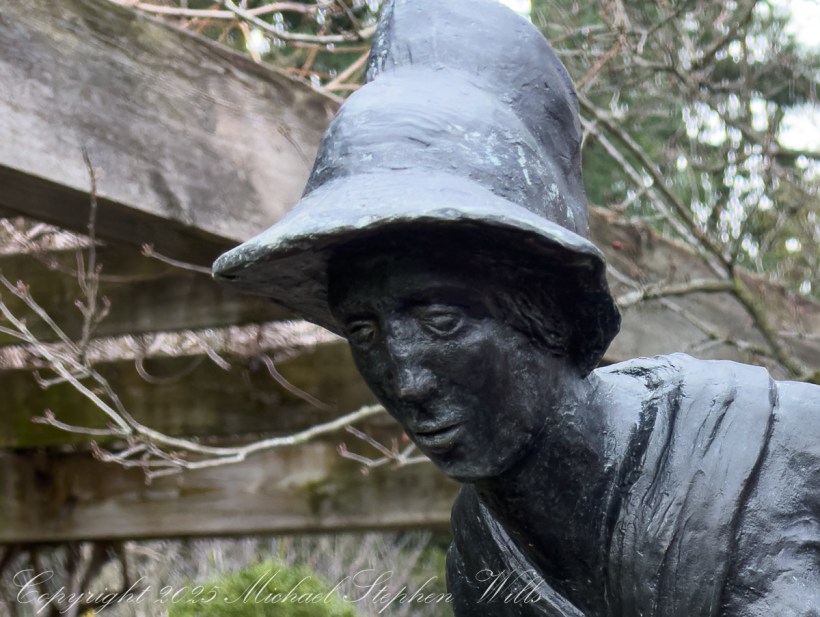
Yarb Woman, Elfriede Abbe, sculptor, The Auraca AHerbarists, May 6, 1980. Robison New York State Herb Garden, Cornell Botanical Gardens, Cornell University, Ithaca, Tompkins County, New York State.

Even the word “yarb” participates in this temporal layering—an old word surviving in a modern garden, just as old knowledge survives in new forms.
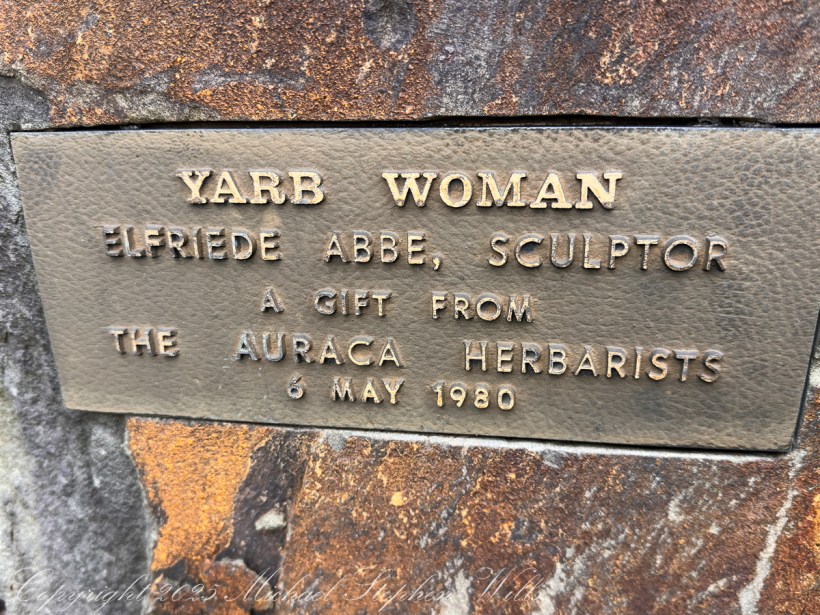
Yarb Woman, Elfriede Abbe, sculptor, The Auraca AHerbarists, May 6, 1980. Robison New York State Herb Garden, Cornell Botanical Gardens, Cornell University, Ithaca, Tompkins County, New York State.

What we encountered, then, was not simply a sculpture. It was a quiet proposition:

That knowledge can be gathered slowly.
That attention is a form of reverence.
And that in the midst of a university—of speed, abstraction, and analysis—there remains a place where understanding begins with kneeling close to the ground.

And noticing what grows there.

Enter your email to receive notification of future postings. I will not sell or share your email address.

Copyright 2026 All Rights Reserved Michael Stephen Wills

Jenny Pickford’s Double Allium: A Tribute to Nature’s Wonders

The Double Allium sculpture symbolizes nature’s beauty and personal connection, reflecting the artist’s homage to alliums and cherished memories.

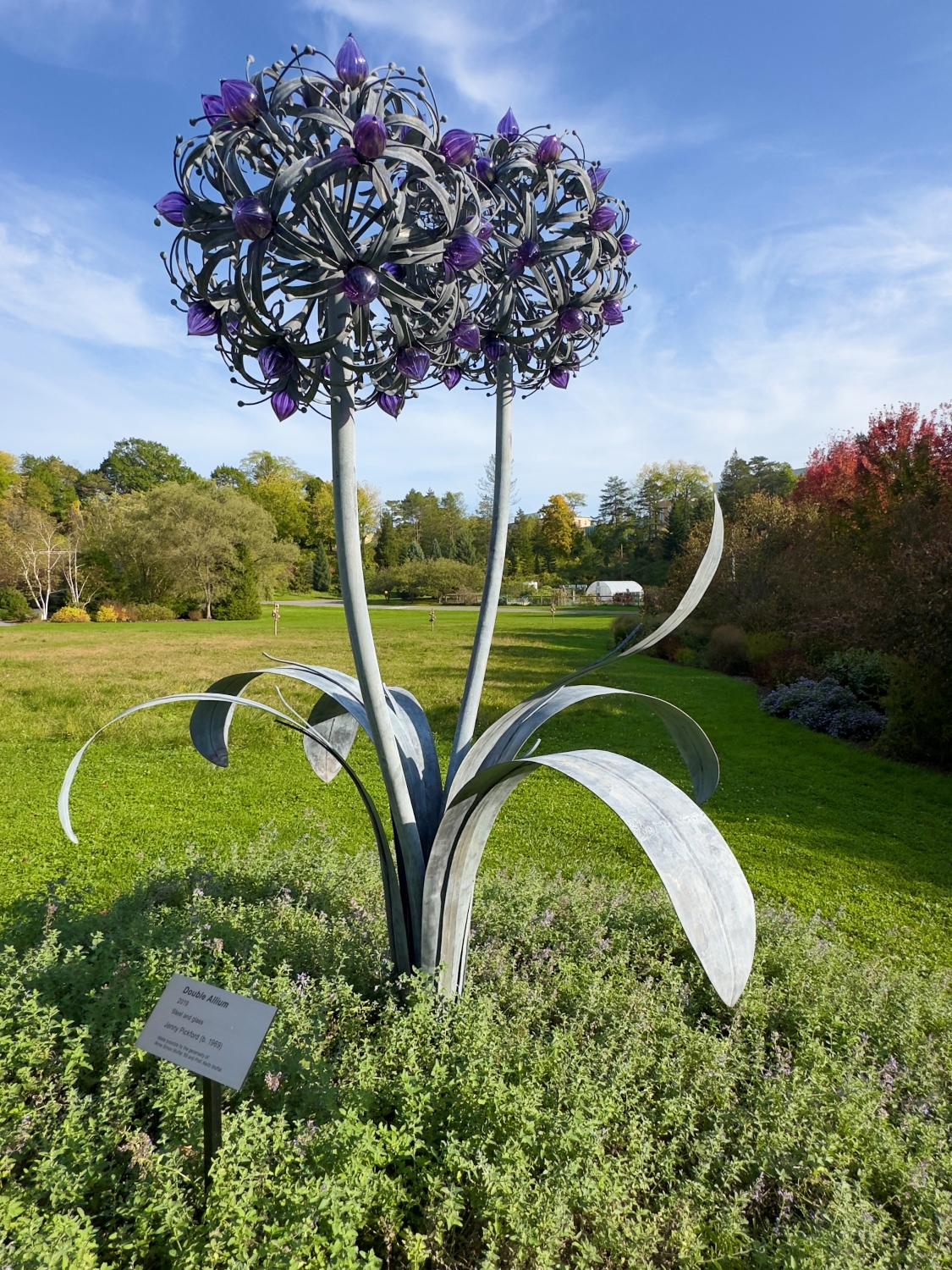
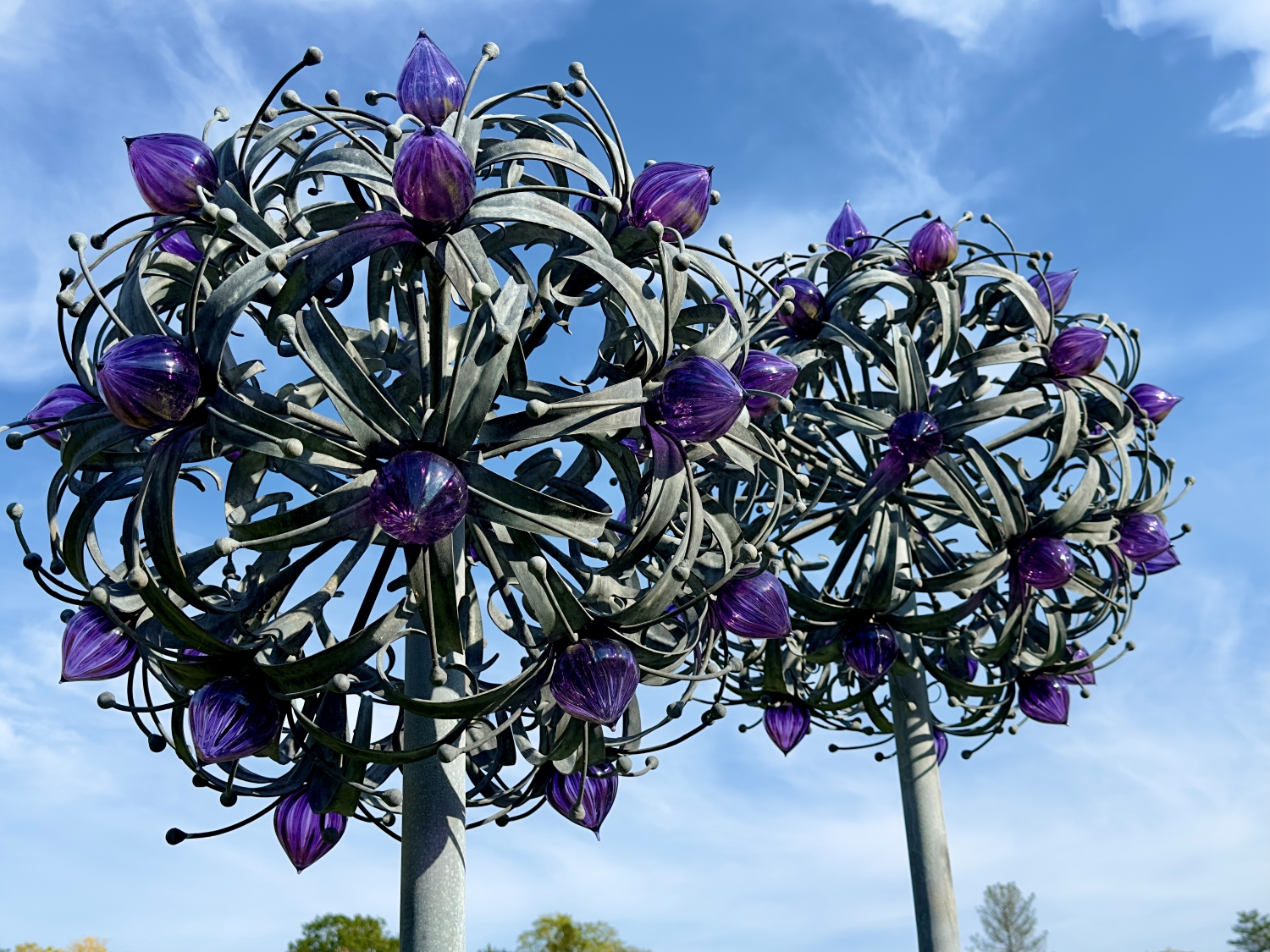
As I wander the paths of the Cornell Botanical Gardens near the Nevin Welcome Center, a towering sculpture arrests my attention, rising well over ten feet into the bright autumn sky. At first glance, it’s unmistakable—a pair of massive allium blooms crafted from steel and glass, an artistic tribute to the very flowers my wife, Pam, has come to love. This creation, titled Double Allium, is the work of British artist Jenny Pickford, completed in 2019. Made of robust steel and translucent purple glass, it stands proudly among the greenery, capturing both the delicacy and boldness of allium flowers.

A few summers ago Pam planted several allium in sunny locations, which exploded into violet firework-like blooms, each sphere teeming with tiny star-shaped flowers that clustered together into one massive, round bloom. When the alliums blossomed, they attracted a small frenzy of bees, and it became a shared delight for us to watch our garden transform into a pollinator’s paradise. Pam was captivated by the plants’ structure and beauty, as well as their ecological role in supporting bees—a small, vibrant ecosystem within our yard. Standing before Double Allium, I’m reminded of those summer days and the quiet joy we both found in observing our garden.

Bees and Allium in our summer garden, 2024

The scientific name for alliums, Allium giganteum (for the larger ornamental varieties), links them to a vast genus that includes onions, garlic, and leeks. These plants have been cultivated and revered by humans for thousands of years, not only for their culinary value but also for their symbolism in various cultures. In ancient Egypt, alliums were believed to represent eternity; their spherical form and concentric layers were thought to mirror the eternal nature of life. Even today, they bring a sense of timelessness to gardens worldwide, their tall stalks and spherical blooms defying gravity, standing tall against the changing seasons.

As I study Pickford’s sculpture, I’m struck by how faithfully it captures this essence of alliums—strength paired with grace, structure married to elegance. The steel stems curve gently yet rise powerfully from the ground, while the glass petals shimmer in the light, giving an almost ethereal quality to the blooms. Pickford, born in 1969, is known for her botanical-inspired sculptures that explore the intersection of nature and art. With Double Allium, she’s created a piece that feels alive, as if the blooms might sway in the wind or burst into real flowers at any moment.

For Pam and me, this sculpture pays homage to a beautiful plant; it’s a connection to our own experience with nature, a reminder of those summer mornings watching bees dance among our alliums. Standing beneath Double Allium, I feel a sense of continuity—a link between the art and our own small garden, between our life and the ancient cultures that cherished these plants, between the permanence of steel and the fleeting beauty of each summer bloom.

In this towering sculpture, Pickford has given us a mirror that reflects nature as well as our personal connection to it. “Double Allium” is a celebration of growth, strength, and beauty, qualities that Pam and I cherish in the alliums we tend and that we find echoed in this remarkable work of art.

Enter your email to receive notification of future postings. I will not sell or share your email address.