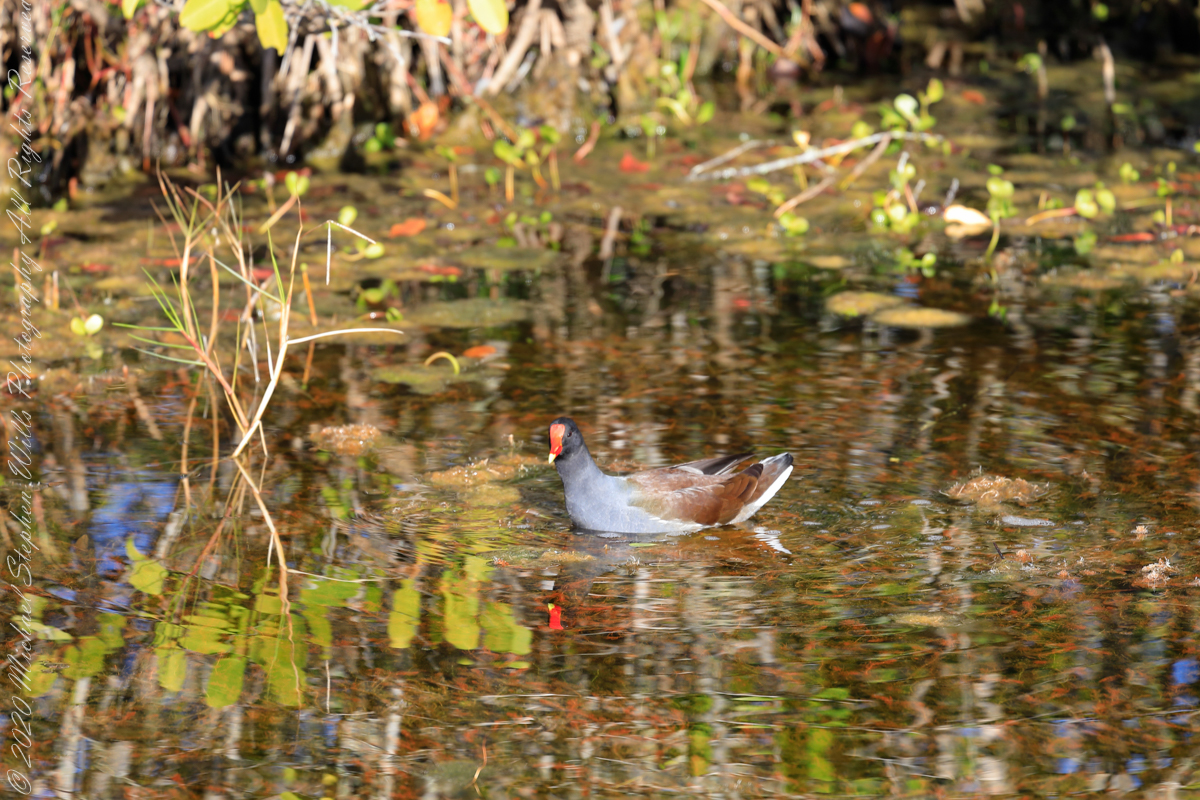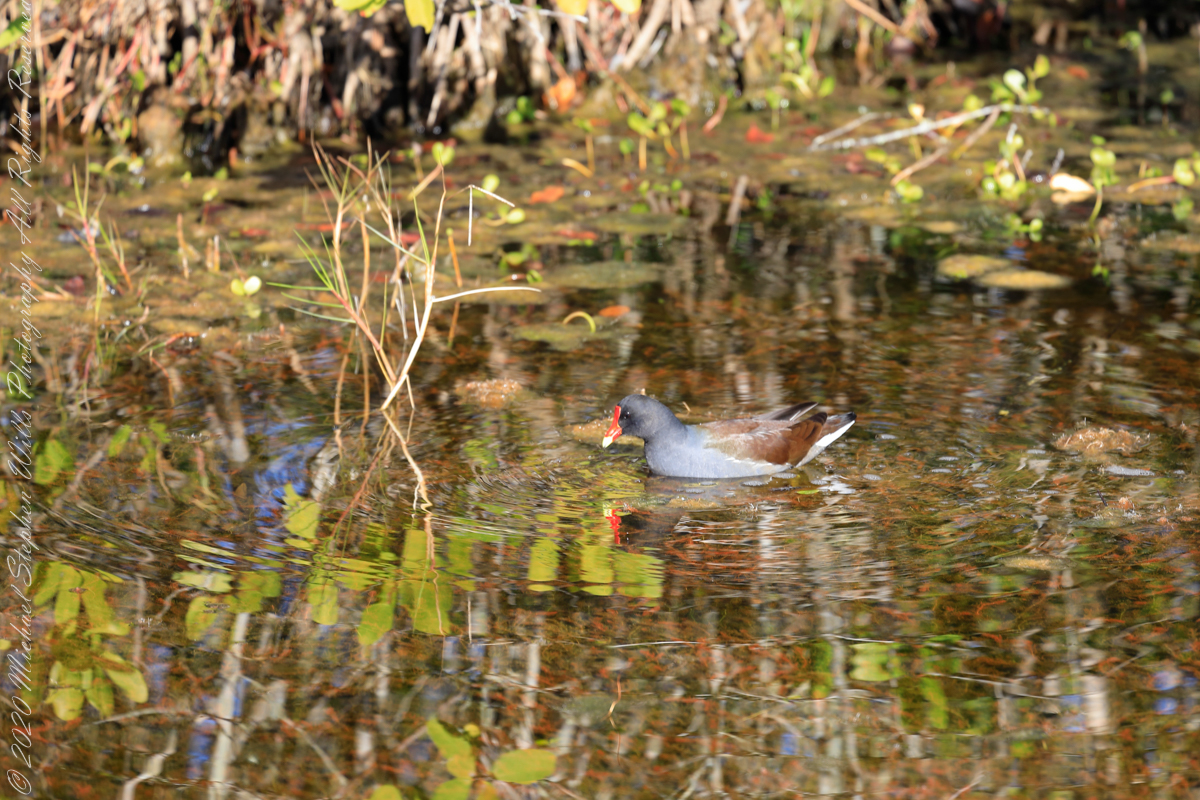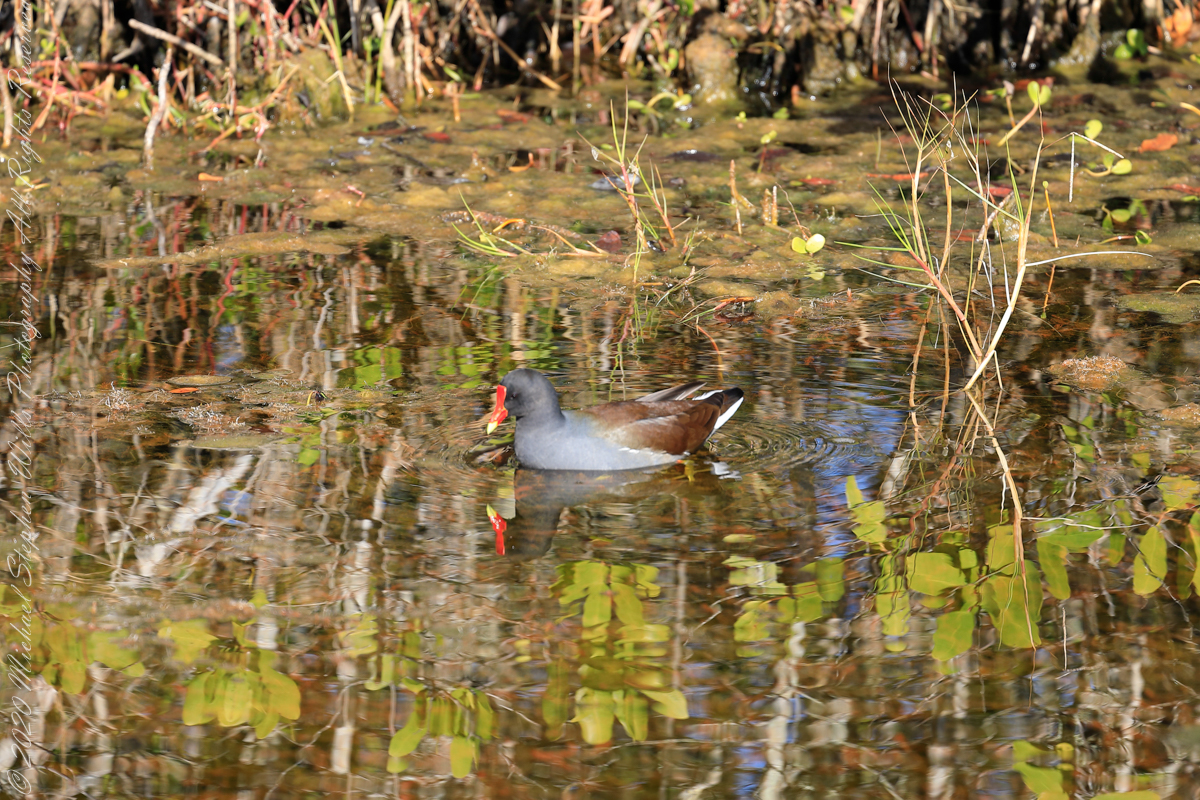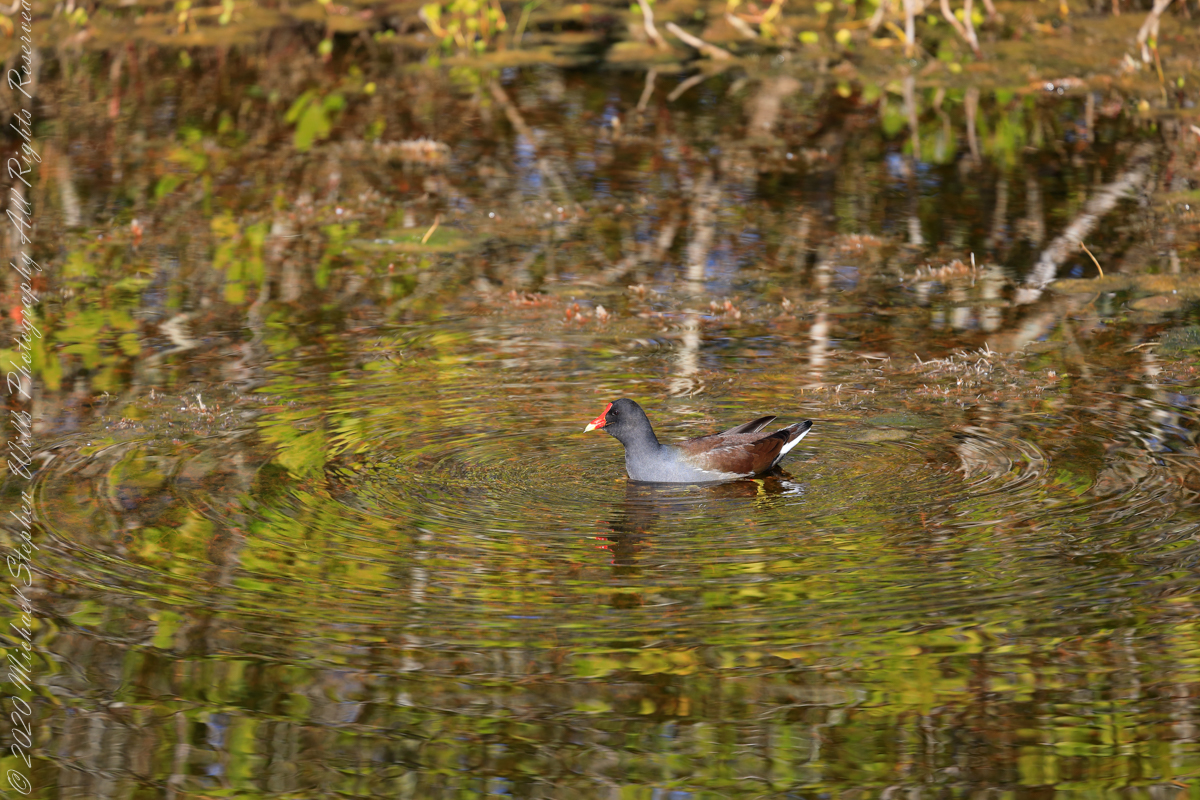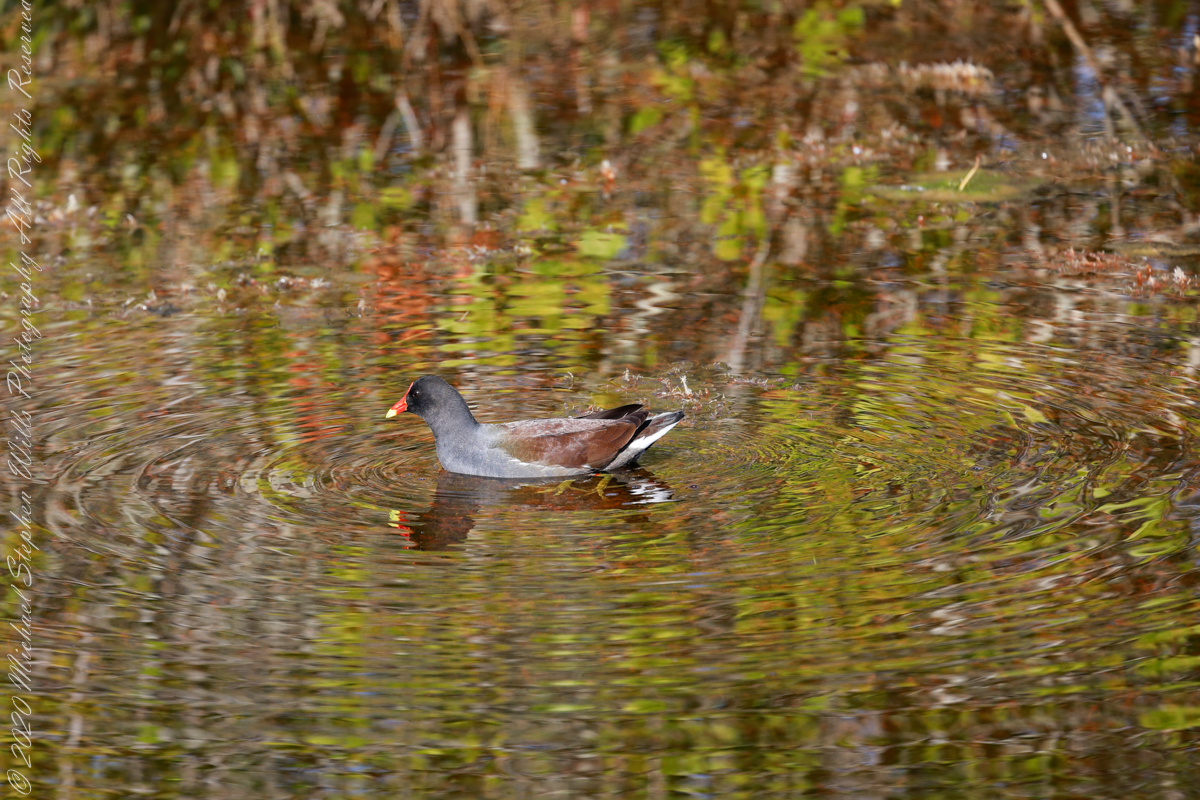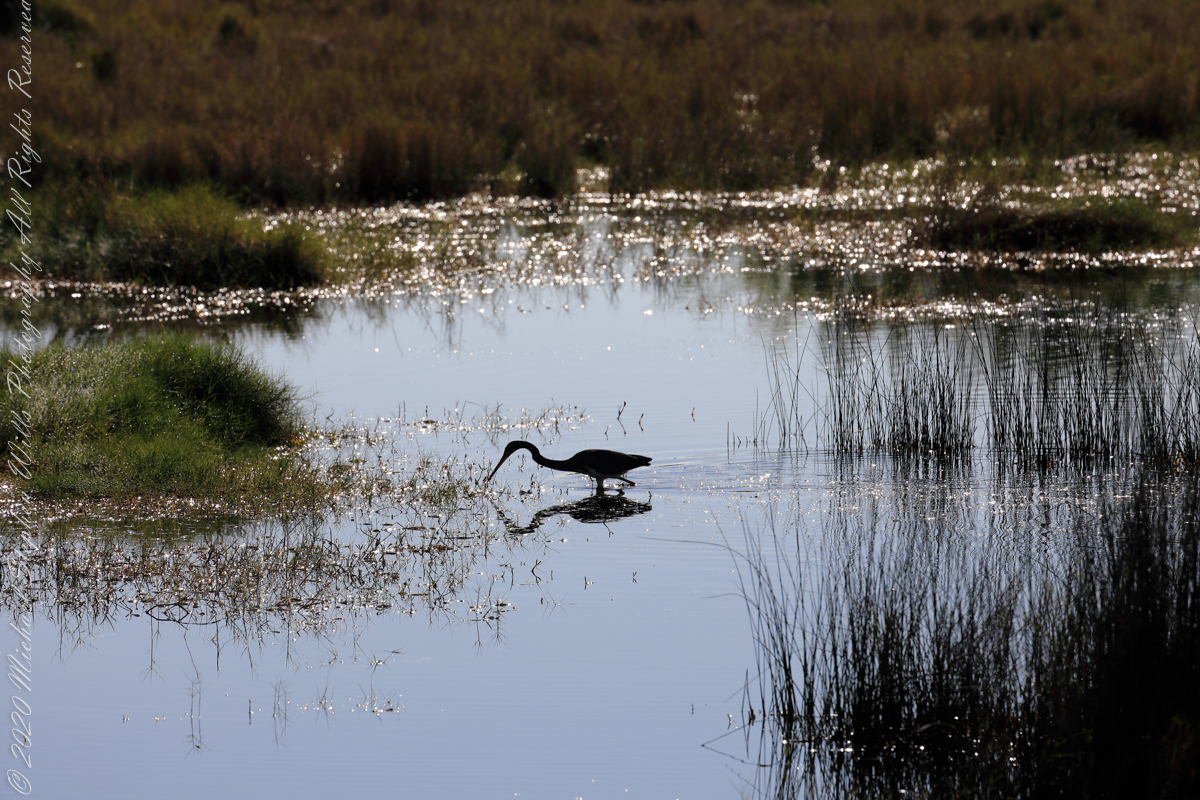
Common Gallinule Feeding (video)

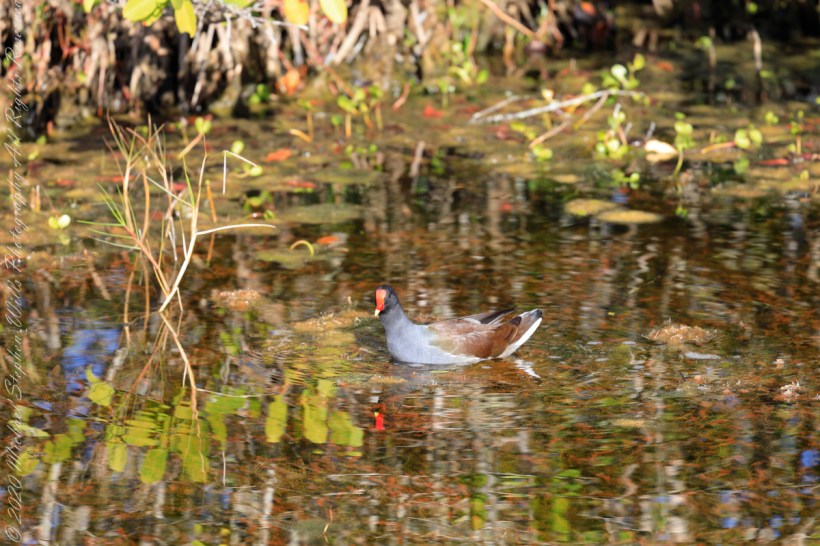
This video of a Common gallinule feeding was taken from Blackpoint Wildlife Drive.

The family Rallidae (aka rails) includes crakes, coots, and this member of the gallinules. Found worldwide, this species, Gallinula galeata, was recognized in 2011 as separate from the closely related “Old World” Moorhens.

Here it is in a favored habitat, feeding on underwater vegetation of the Florida marsh in sight of rockets launching from Kennedy Space Center. The exceptional lighting, bright reflective water, are created by the low winter sun and southern exposure of the location just north of the road.

The taxonomic Order is derived from the Latin word Gallinula meaning a small hen or chicken that, since the 13th century at least, as revealed in the names “Moorhen,” “Waterhen,” and “Swamp Chicken.”

The spread of Gallinula is attributed to breeding habits. “Laying starts in spring, between mid-March and mid-May in Northern hemisphere temperate regions. About 8 eggs are usually laid per female early in the season; a brood later in the year usually has only 5–8 or fewer eggs. Nests may be re-used by different females. Incubation lasts about three weeks. Both parents incubate and feed the young. These fledge after 40–50 days, become independent usually a few weeks thereafter, and may raise their first brood the next spring. When threatened, the young may cling to the parents’ body, after which the adult birds fly away to safety, carrying their offspring with them.”

The text in quotes is from the Wikipedia article for “Common Moorhen.”
Copyright 2022 Michael Stephen Wills All Rights Reserved

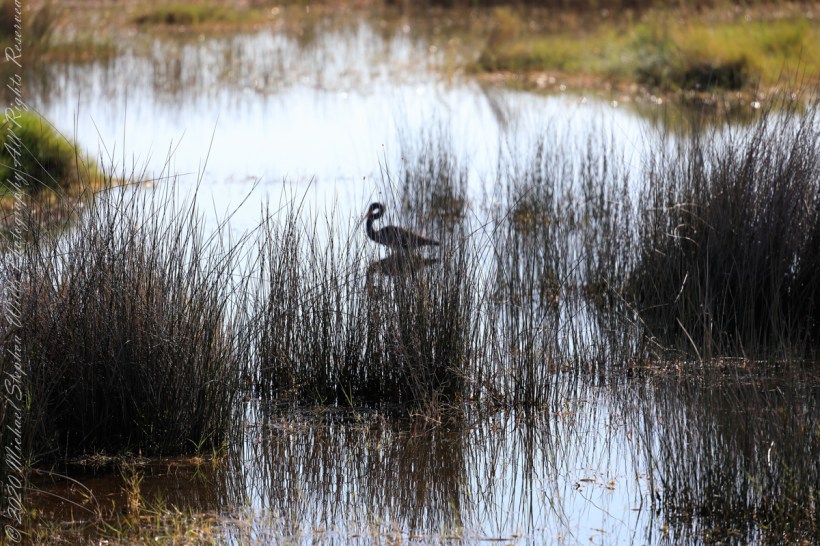
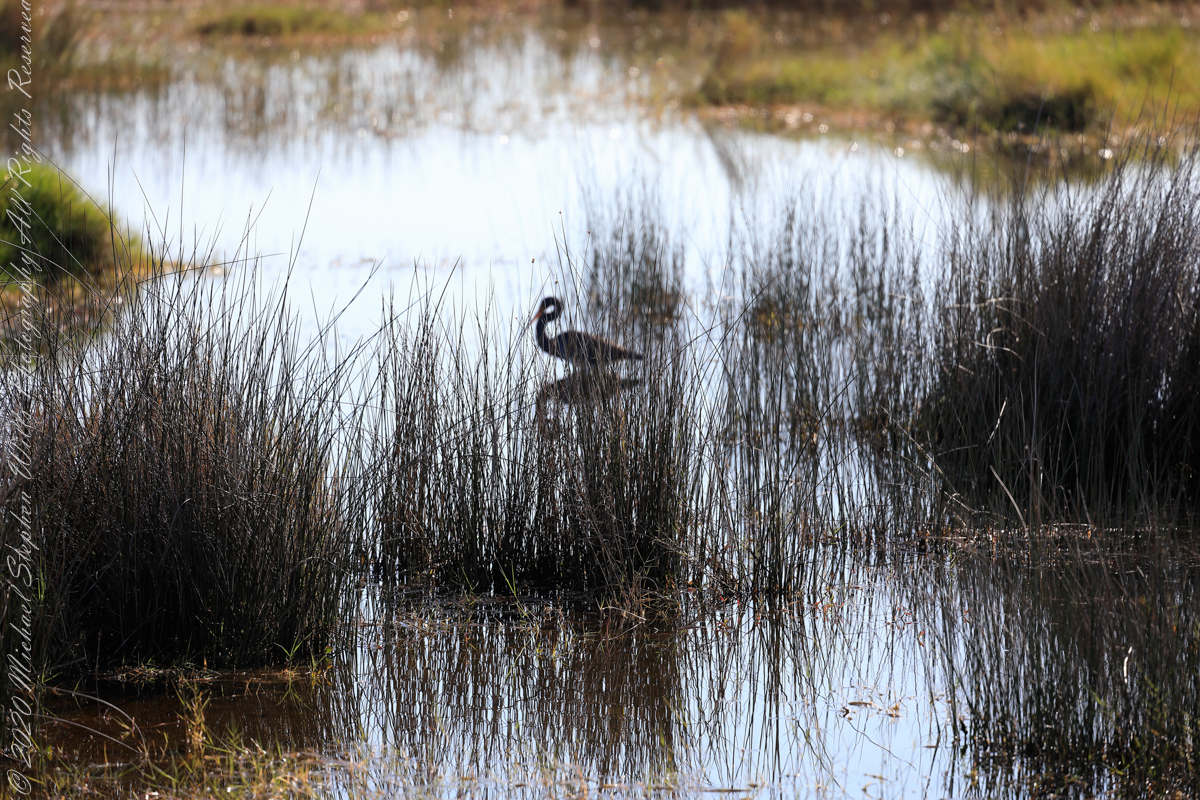
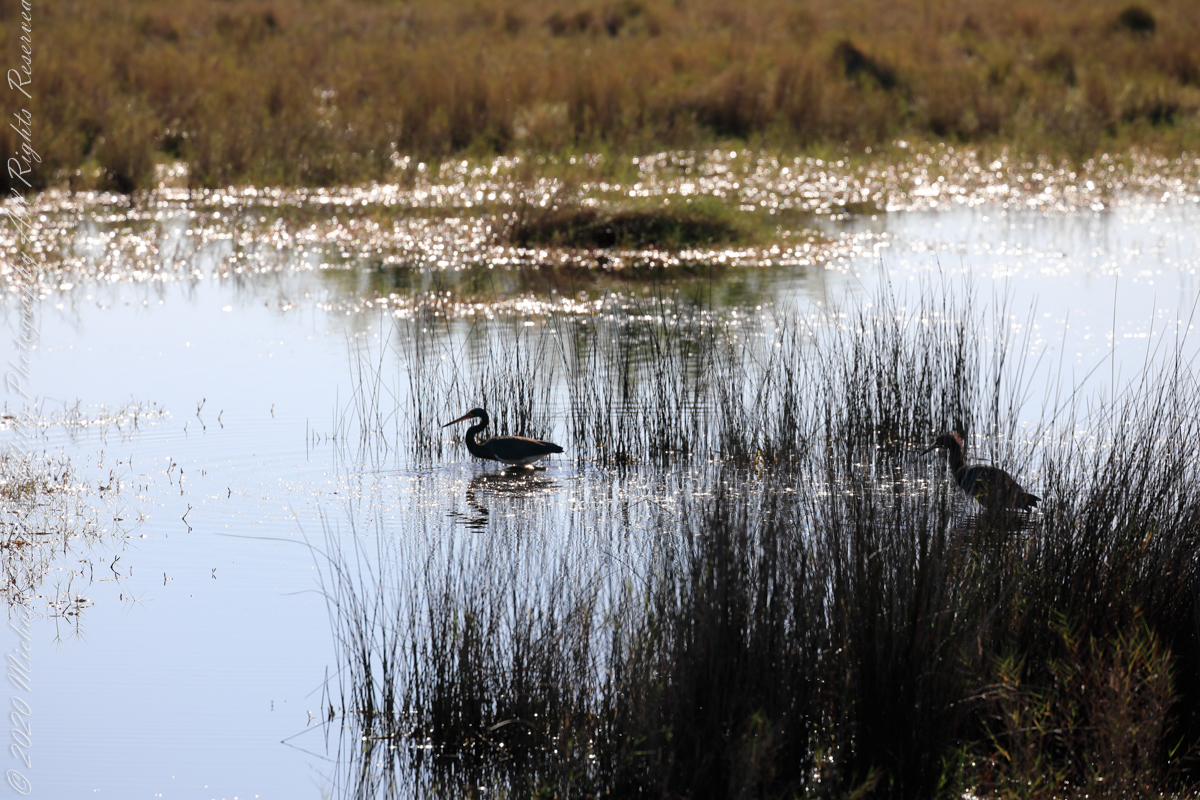
Herons Stalking (video)

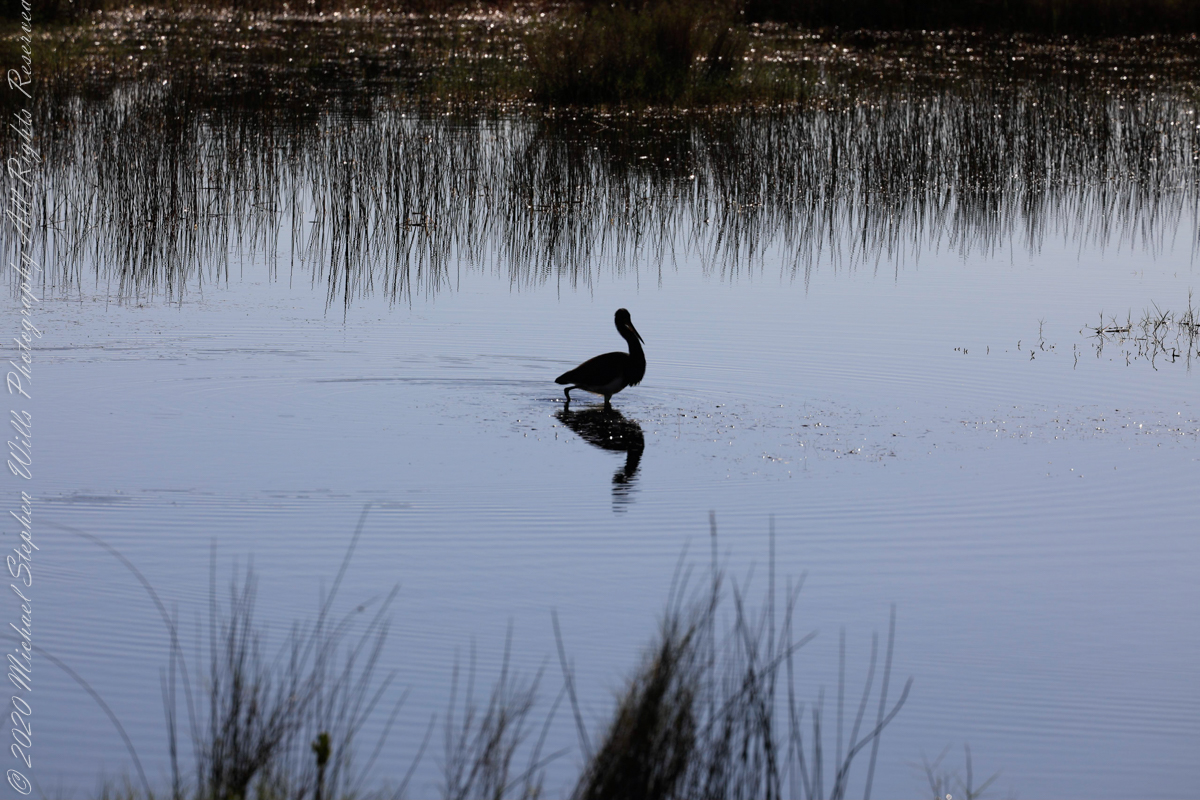
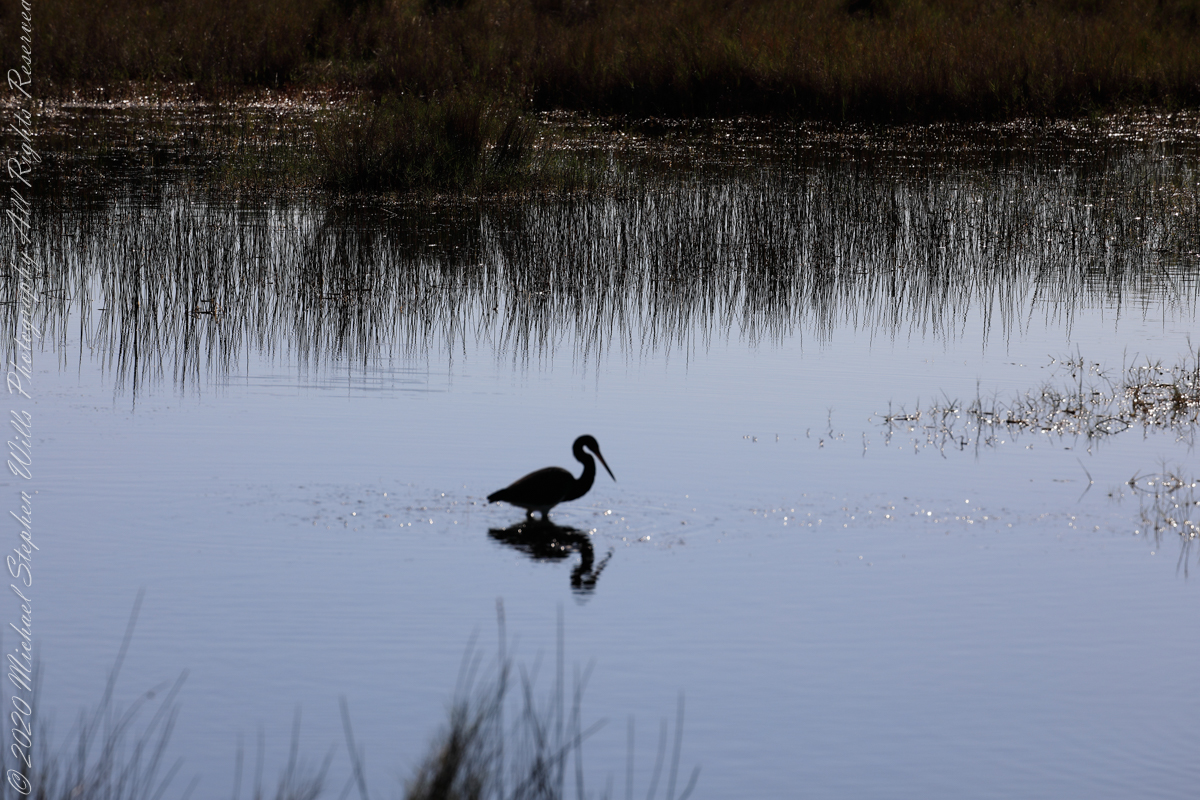
Shorebirds of different species can and do forage together

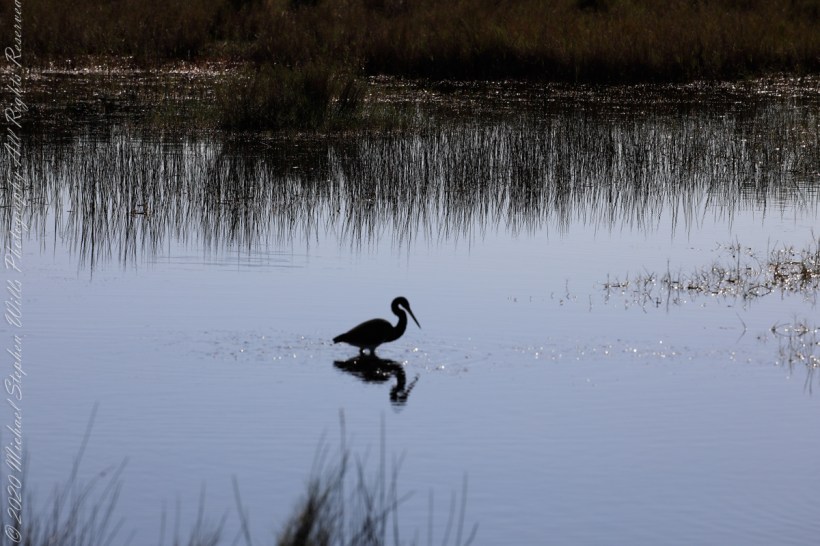
This series of wading shorebirds are from a mash alongside Blackpoint Wildlife Drive.

“The exposed mudflats on tidal wetlands attract a variety of shorebirds. Shorebirds are seasonal residents that make long migratory journeys between their breeding grounds in the Artic and their wintering area in South America. Merritt Island National Wildlife Refuge provides an important resting and feeding area for this group of birds. Some stay for the winter, others use the refuge as a fuel stop before continuing on their journey.”

“In tidal areas, shorebird feeding schedules are influenced by the cycle of tides. Changes in tidal cycles expose foraging areas in mudflats for a period during the day. At other points during the cycle, the water in these same areas becomes too deep or the ground too dry for shorebirds to feed effectively.”

The text in quotes is from a roadside information placard, Merritt Island National Wildlife Refuge, Titusville, Brevard County, Florida

Copyright 2022 Michael Stephen Wills All Rights Reserved

Swamp Chicken

Worldwide Distribution — now playing at your neighborhood marsh

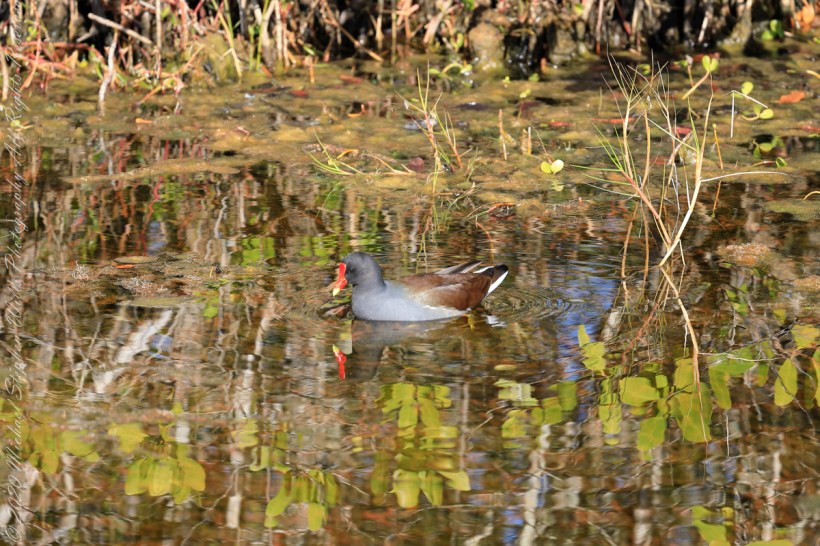
This Common gallinule was feeding from the mash alongside Blackpoint Wildlife Drive.

The family Rallidae (aka rails) includes crakes, coots, and this member of the gallinules. Found worldwide, this species, Gallinula galeata, was recognized in 2011 as separate from the closely related “Old World” Moorhens.

Here it is in a favored habitat, feeding on underwater vegetation of the Florida marsh in sight of rockets launching from Kennedy Space Center. The exceptional lighting, bright reflective water, are created by the low winter sun and southern exposure of the location just north of the road.

The taxonomic Order is derived from the Latin word Gallinula meaning a small hen or chicken that, since the 13th century at least, as revealed in the names “Moorhen,” “Waterhen,” and “Swamp Chicken.”

The spread of Gallinula is attributed to breeding habits. “Laying starts in spring, between mid-March and mid-May in Northern hemisphere temperate regions. About 8 eggs are usually laid per female early in the season; a brood later in the year usually has only 5–8 or fewer eggs. Nests may be re-used by different females. Incubation lasts about three weeks. Both parents incubate and feed the young. These fledge after 40–50 days, become independent usually a few weeks thereafter, and may raise their first brood the next spring. When threatened, the young may cling to the parents’ body, after which the adult birds fly away to safety, carrying their offspring with them.”

The text in quotes is from the Wikipedia article for “Common Moorhen.”
Copyright 2022 Michael Stephen Wills All Rights Reserved

Wading

Shorebirds of different species can and do forage together

This series of wading shorebirds are from a mash alongside Blackpoint Wildlife Drive.

“The exposed mudflats on tidal wetlands attract a variety of shorebirds. Shorebirds are seasonal residents that make long migratory journeys between their breeding grounds in the Artic and their wintering area in South America. Merritt Island National Wildlife Refuge provides an important resting and feeding area for this group of birds. Some stay for the winter, others use the refuge as a fuel stop before continuing on their journey.”

“In tidal areas, shorebird feeding schedules are influenced by the cycle of tides. Changes in tidal cycles expose foraging areas in mudflats for a period during the day. At other points during the cycle, the water in these same areas becomes too deep or the ground too dry for shorebirds to feed effectively.”

Though only one bird appears in each photo, “shorebirds of different species can and do forage together. Because bill length and shape vary from species to species, birds can pursue different prey in the same area at the same time without completing with each other. Because of varying bill lengths, different birds species find their food at different depths in the substrate. Mixed species of shorebirds are a common sight.”

The text in quotes is from a roadside information placard, Merritt Island National Wildlife Refuge, Titusville, Brevard County, Florida

Copyright 2022 Michael Stephen Wills All Rights Reserved

Rusty Box

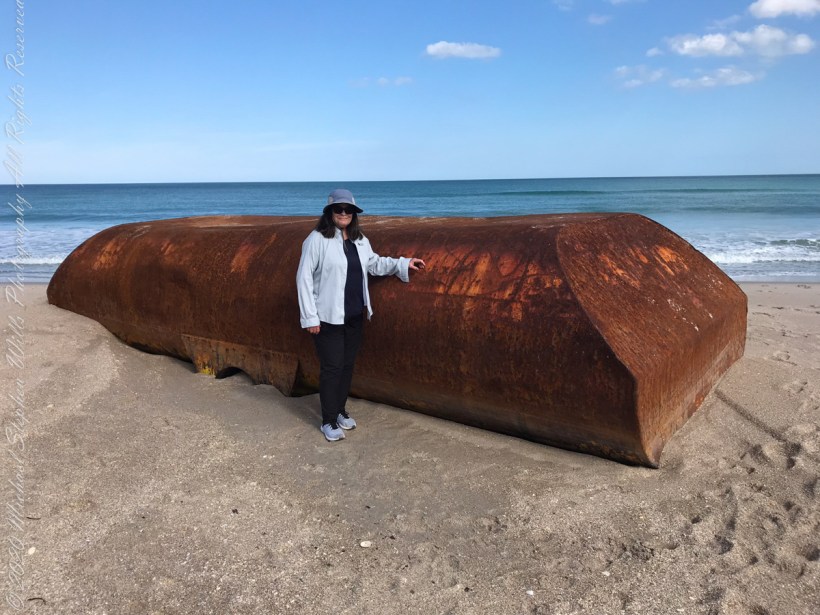
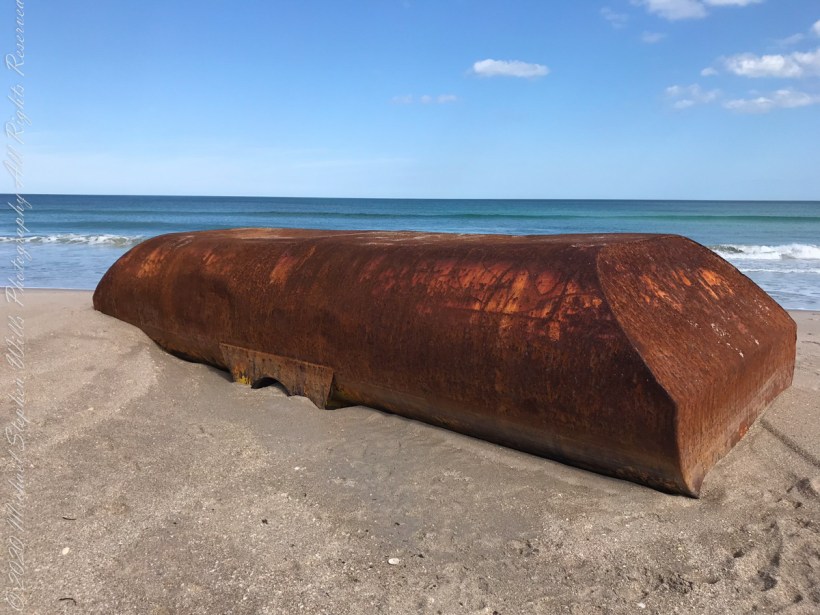
a LARGE rusty box

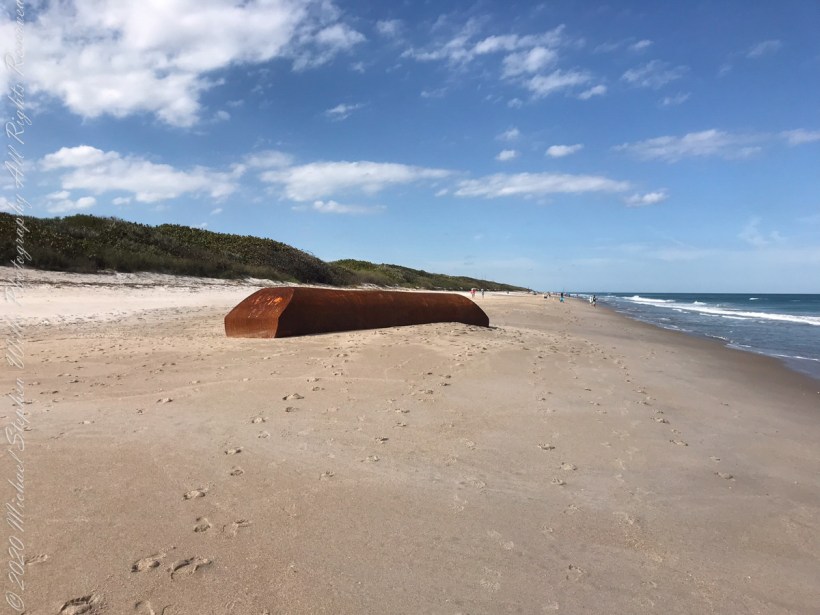
From a November 2021 article by James Sparvero of ClickOrlando(dot com). “Recent storms may have pushed a big part of a ship onto a secluded Central Florida beach. The Canaveral National Seashore said the metal object washed ashore at boardwalk No. 7 of Playalinda Beach. It is about 8 feet tall and 20 feet long.

Pam provides a sense of scale

“Seashore’s resource manager Kristen Kneifl said it might be a ballast tank from a ship, which is a compartment on a floating structure that holds water to help stabilize the vessel. “

Still a mystery

’That’s our best guess at this point,’’ Kneifl said.

As far as removing the giant box, the Seashore said it could be difficult. Meaning it will probably stay on the beach for a while until it gets figured out.

‘’Unlike maybe some boats or other things that wash up, where we can kind of chain saw it apart and get it over one of our boardwalks, it doesn’t look like it can be cut up,’’ Kneifl said. ‘’So, it’s going to have to be removed from the water, from the oceanside.”

Kneifl said, chances are, the strange object will be removed on a barge and transported elsewhere by sea.

Here is a photo for a sense of place.

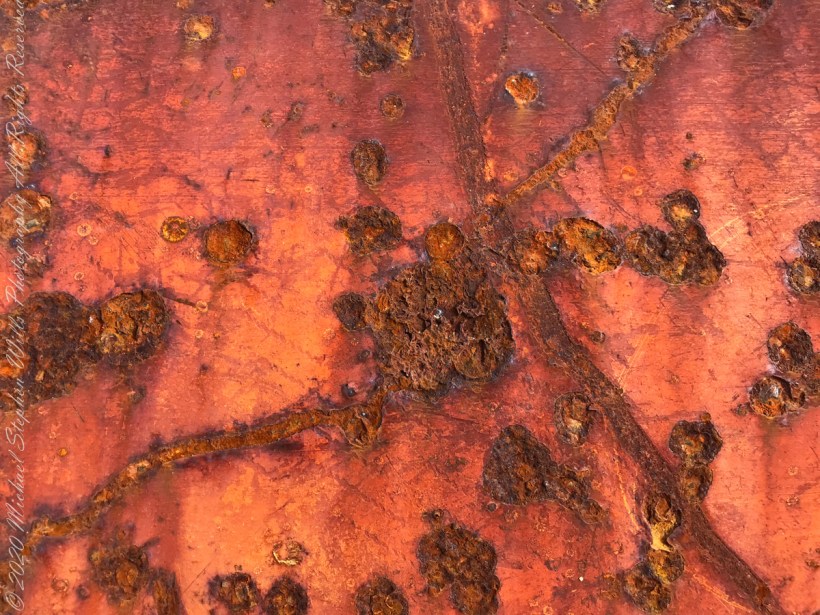
Artistic macros of the rusty surface.

Cape Canaveral National Seashore, Titusville, Brevard County, Florida

Copyright 2022 Michael Stephen Wills All Rights Reserved

Star

Careful Cropping

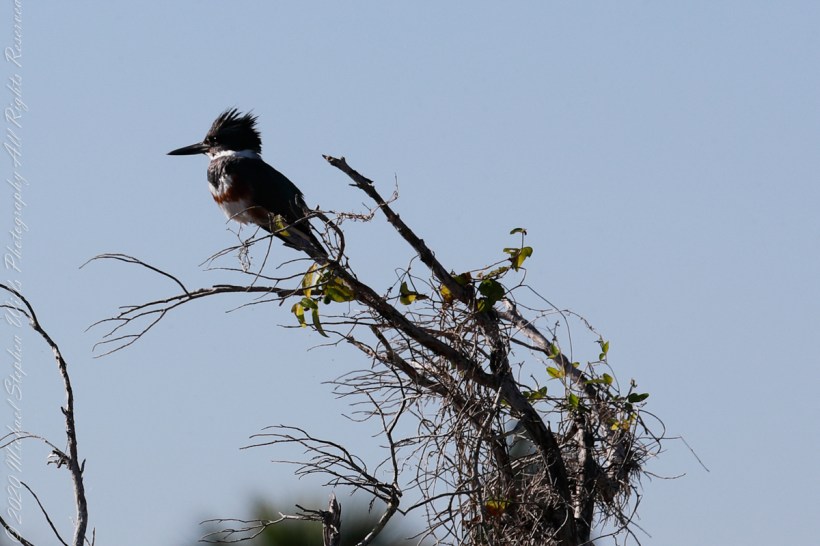
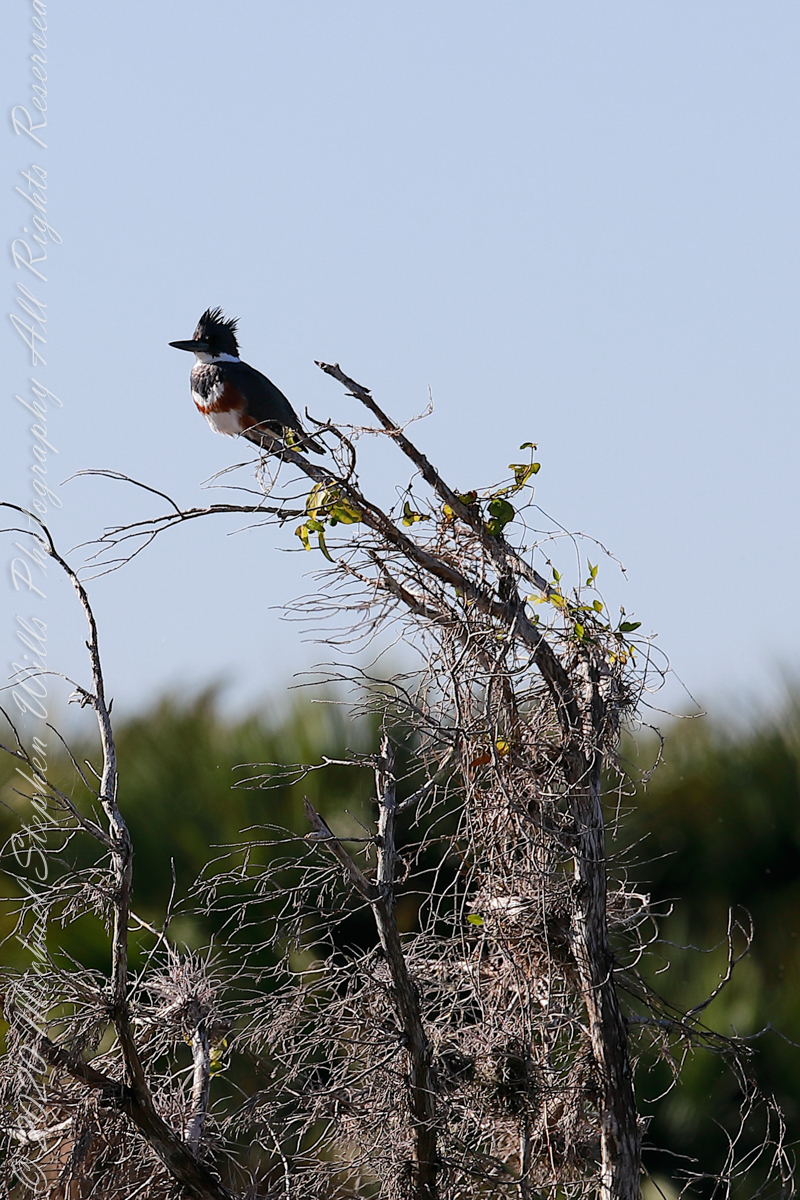
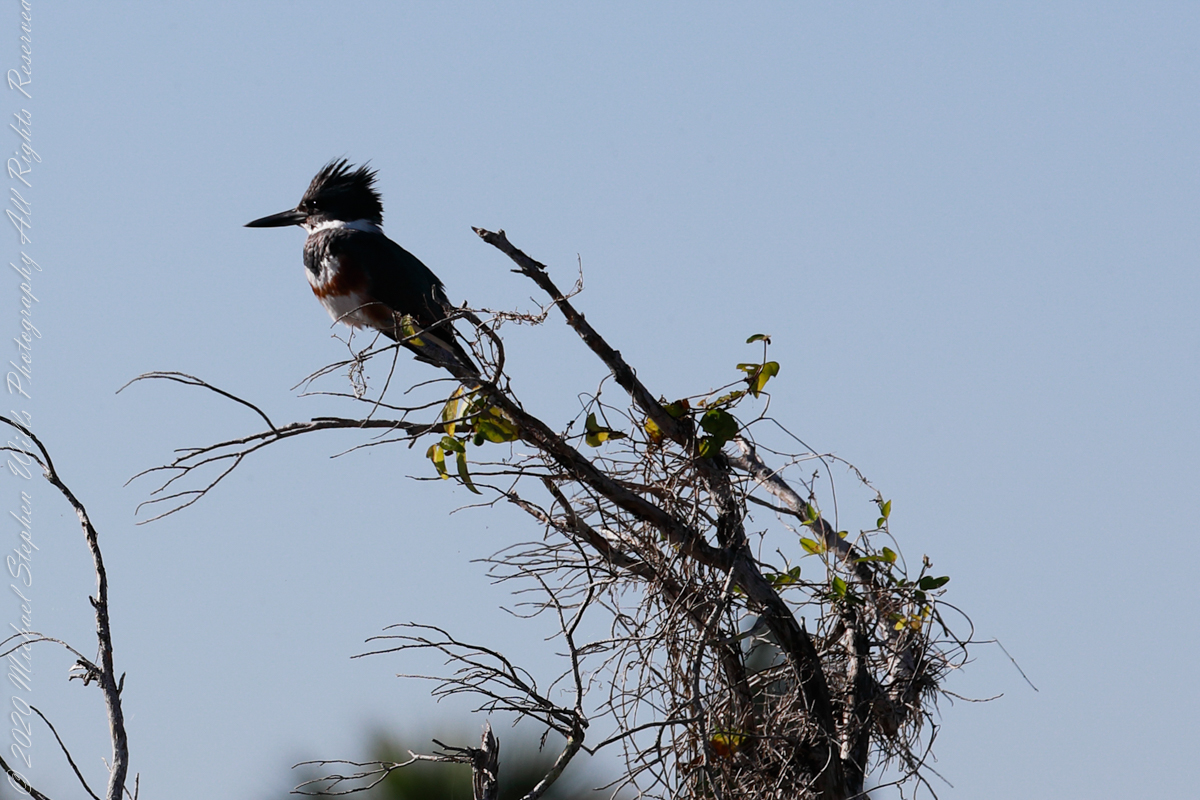
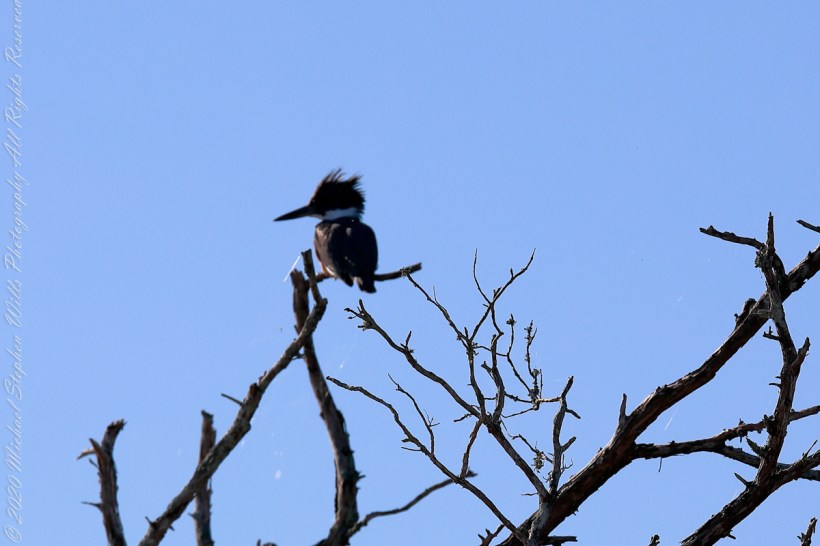
She was the star of the show with a contingent of chattering humans scattered below her high perch.

The wide band across her chest, the “belt”, identifies this as an adult female.

I found her beside Blackpoint Wildlife Drive overlooking wide open water marsh.

The limitations of my excellent equipment is frustrating in these situations. I made up for the lack of focal length by careful cropping.

Merritt Island National Wildlife Refuge, Titusville, Brevard County, Florida

Copyright 2022 Michael Stephen Wills All Rights Reserved

Hanging Around

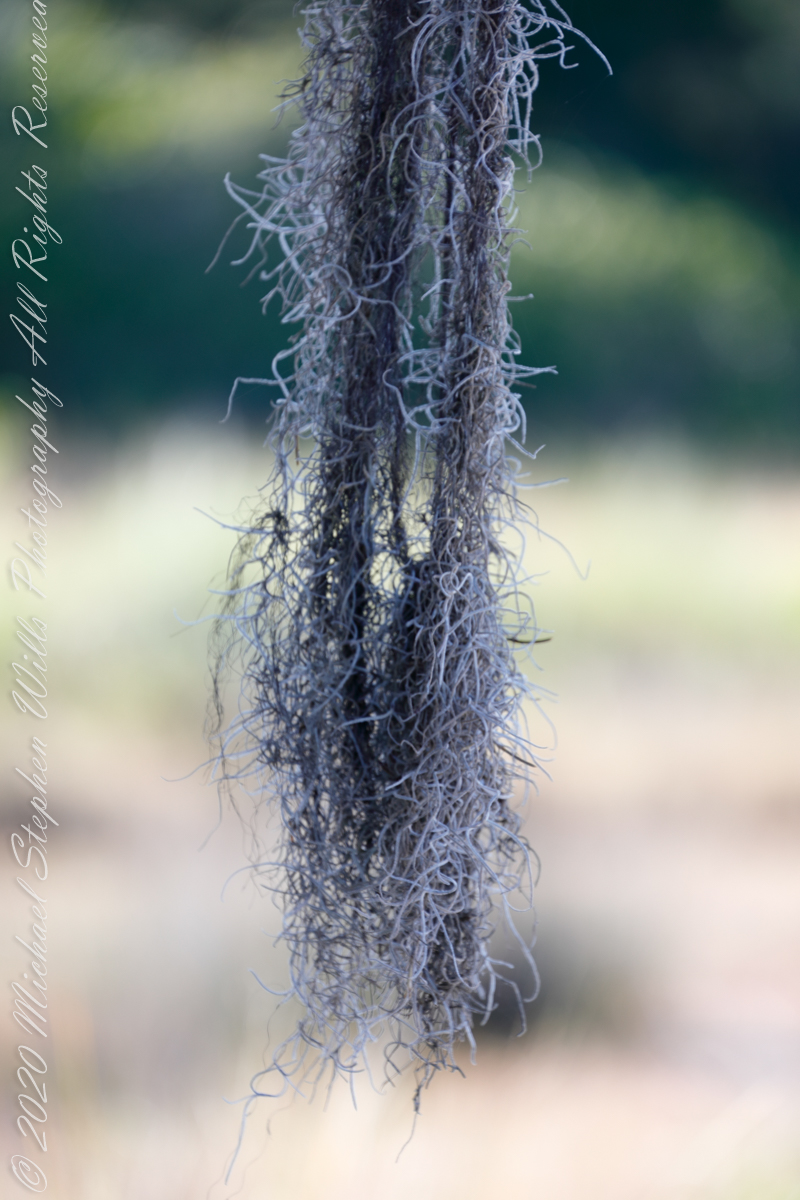
not mistletoe

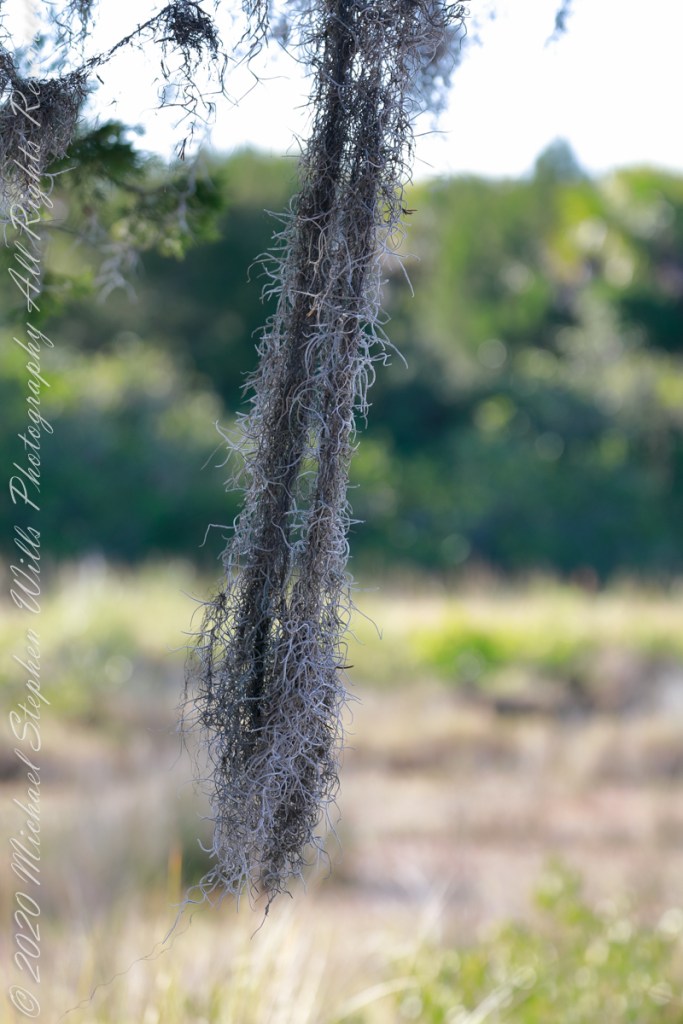
Spanish Moss is neither moss nor Spanish. Scientific name Tillandsia usneoides, this flowering plant is in the family Bromeliaceae that includes pineapple. Here it hangs from a cedar tree along Blackpoint Wildlife Drive.

Merritt Island National Wildlife Refuge, Titusville, Brevard County, Florida

Copyright 2022 Michael Stephen Wills All Rights Reserved

Spearhead

Metaphorically Speaking

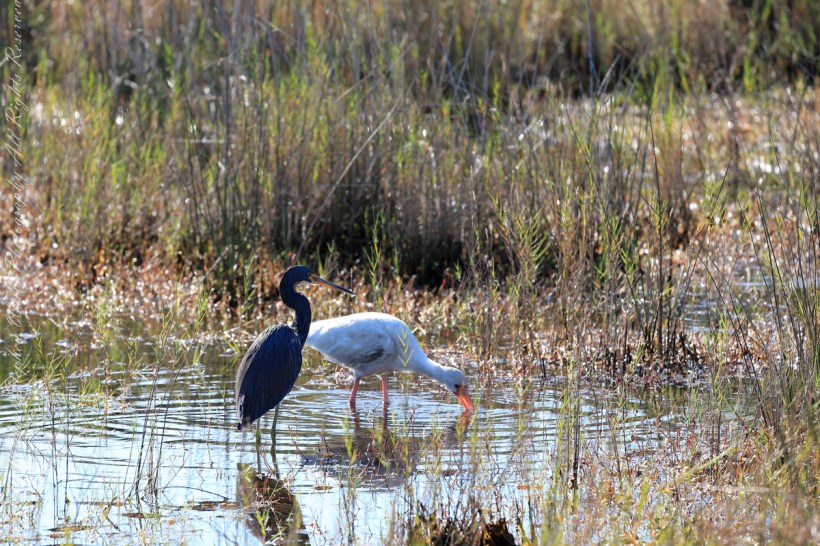
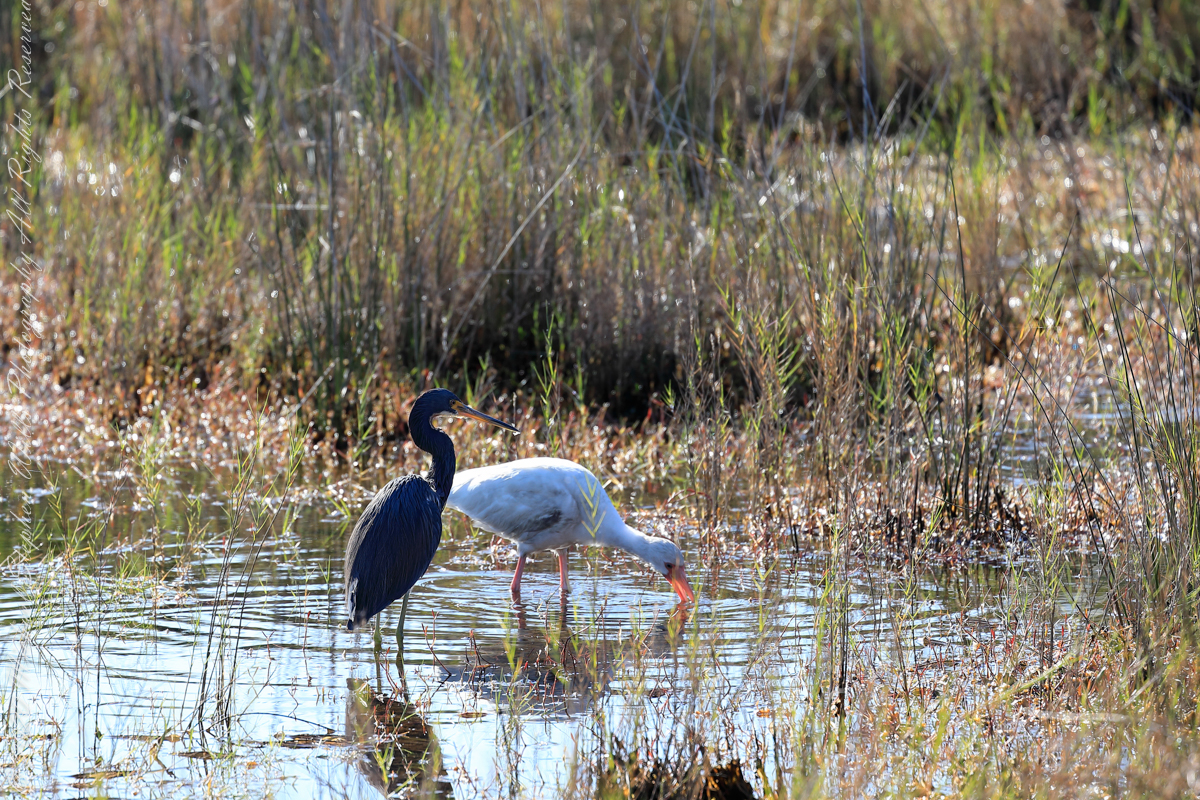
These birds are feeding from a march pool south of Blackpoint Wildlife Drive about 0.9 mile from the start. As such it is a backlit shot with the sun illuminating the White Ibis’ beak and the green legs of the Tricolored Heron (aka Louisiana Heron).

Both can use a spear-like beak to capture unwary prey.

Merritt Island National Wildlife Refuge, Titusville, Brevard County, Florida

Copyright 2022 Michael Stephen Wills All Rights Reserved

Basking

Taking in the Sun

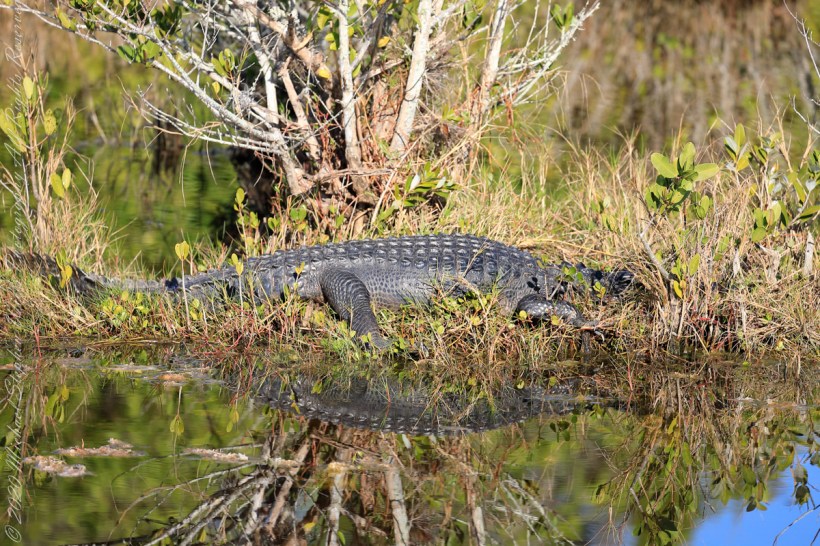
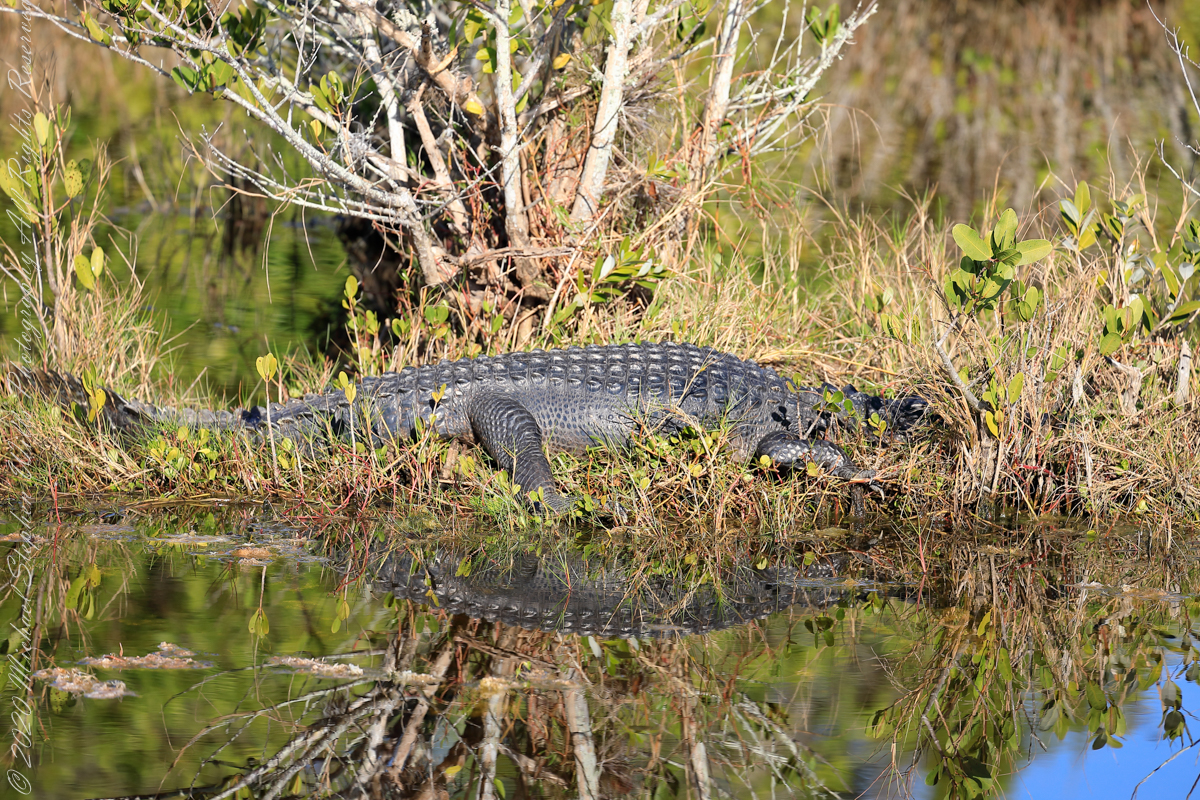
Blackpoint Wildlife Drive meanders through marsh environments where humans are just visitors.

Here the Alligator is the apex predator that will attack and eat the unwary tourist. This eight-foot monster, resting on a hummock 20 feet from the road, absorbed only sun. In town, it is on the menu.

Merritt Island National Wildlife Refuge, Titusville, Brevard County, Florida

Copyright 2022 Michael Stephen Wills All Rights Reserved

Cocoa Beach Kite Skating

Kiteskaters and Cruise Ships

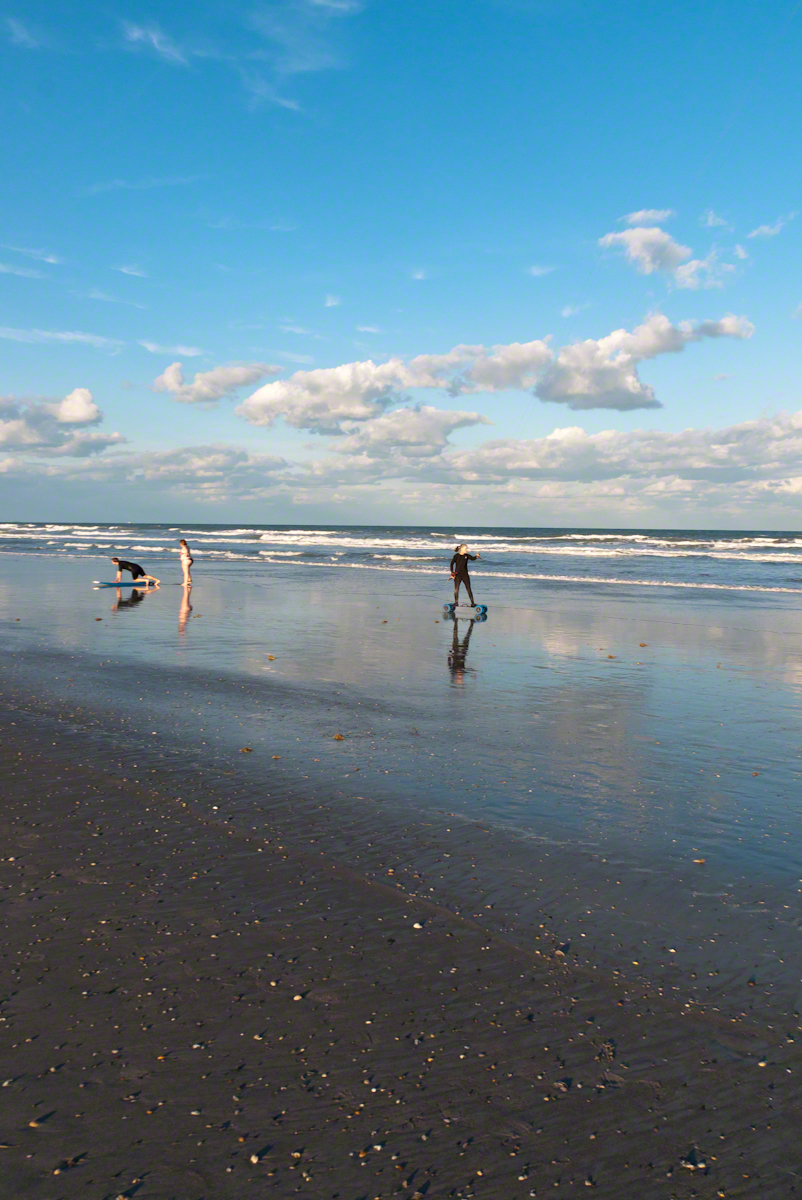
In the early morning hours of Sunday, September 10, 2017 as Hurricane Irma approached the Florida Keys, I cannot sleep, worried about family members north of Miami and in Daytona Beach. To pass the time, I returned to the golden hours of March 4, 2017 evening.  On vacation, Pam and I walked Cocoa Beach starting from Lori Wilson Park, headed north.

The light was perfect when I decided to switch to Raw-Jpeg mode, feeling the extra space was worth it.  I don’t know why I don’t shoot Raw 100% of the time, as always, in retrospect, I regret using jpeg only. The camera was the Sony Alpha 700 dslr with a DT 18-200mm f3.5-6.3 lens purchased 2008 after an expedition to the Superstition Wilderness.

After capturing a wedding photo shoot and surfers there was this set of two Kite Skaters going at least 20 miles an hour. The Sony Alpha was quick enough to capture some of the action in raw mode, I am not satisfied with the sharpness of the images as the lens was not fast enough.

Click this link or a photo for my Online gallery
My Online Gallery– CLICK ME!!!!
Overview, Approaching Kite skater

We had never watched kite skaters before and were prepared to understand the vision from watching distant kite surfers out beyond the breakers. North winds are the best for any type of kiting on Cocoa Beach and, that day, the wind was northeast. These riders zipped by in less than a minute. The sport is low key, it does not exist on Wikipedia. Image that. These two are having a fantastic time and stayed upright, going on and on and on down the miles long beach.

My Online Gallery– CLICK ME!!!!
Sailskater Dreamview with Cruise Ship

1990 KiteSkate pioneers on the USA east coast experimented with four-line controllable parafoil kites powering in-line skates for exciting rides on asphalt surfaces.

My Online Gallery– CLICK ME!!!!
Her partner approaches

The name “Wheels of Doom” suggest the danger of going this fast over a hard, rough surface.

My Online Gallery– CLICK ME!!!!
He makes it look easy

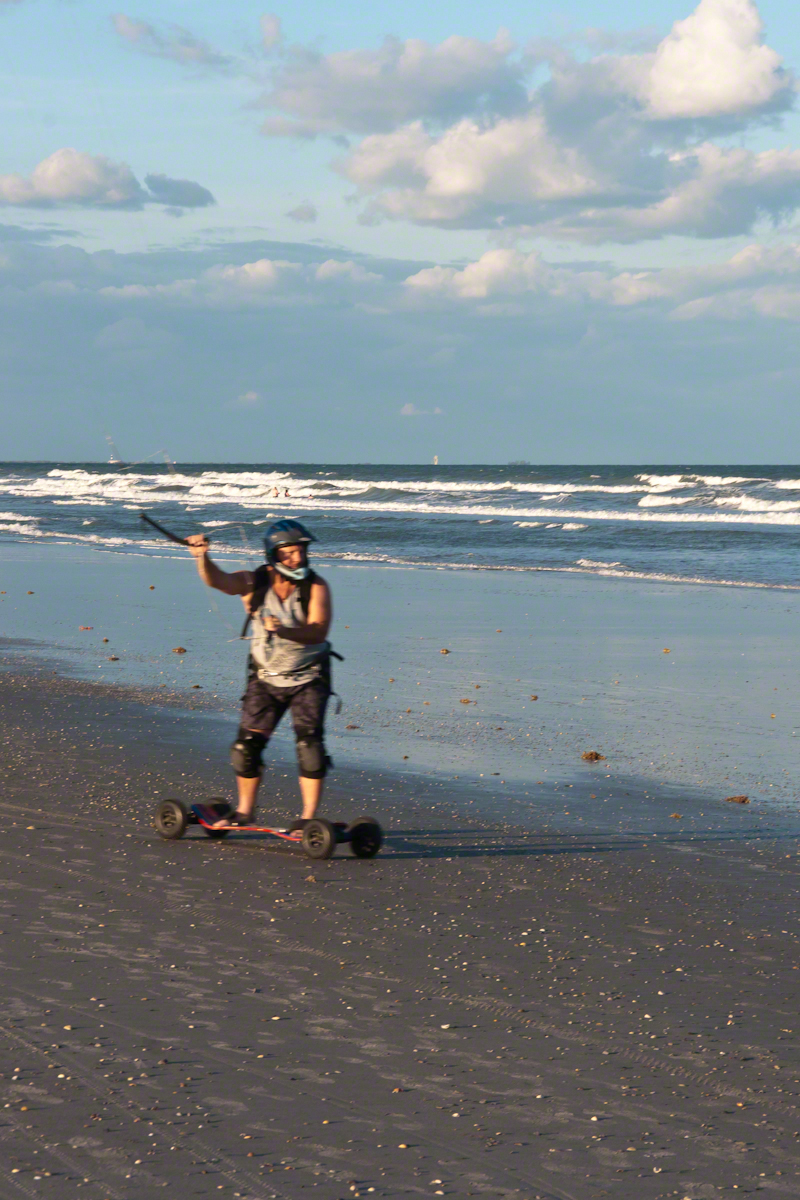
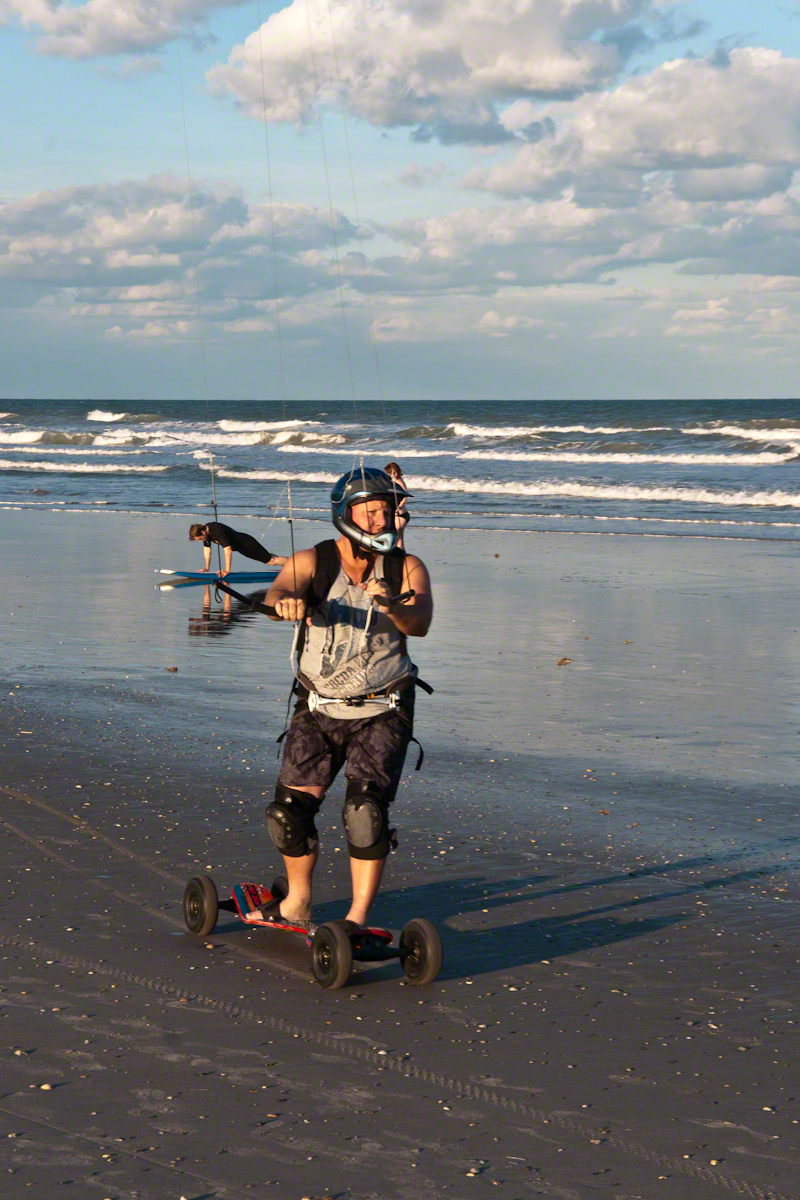
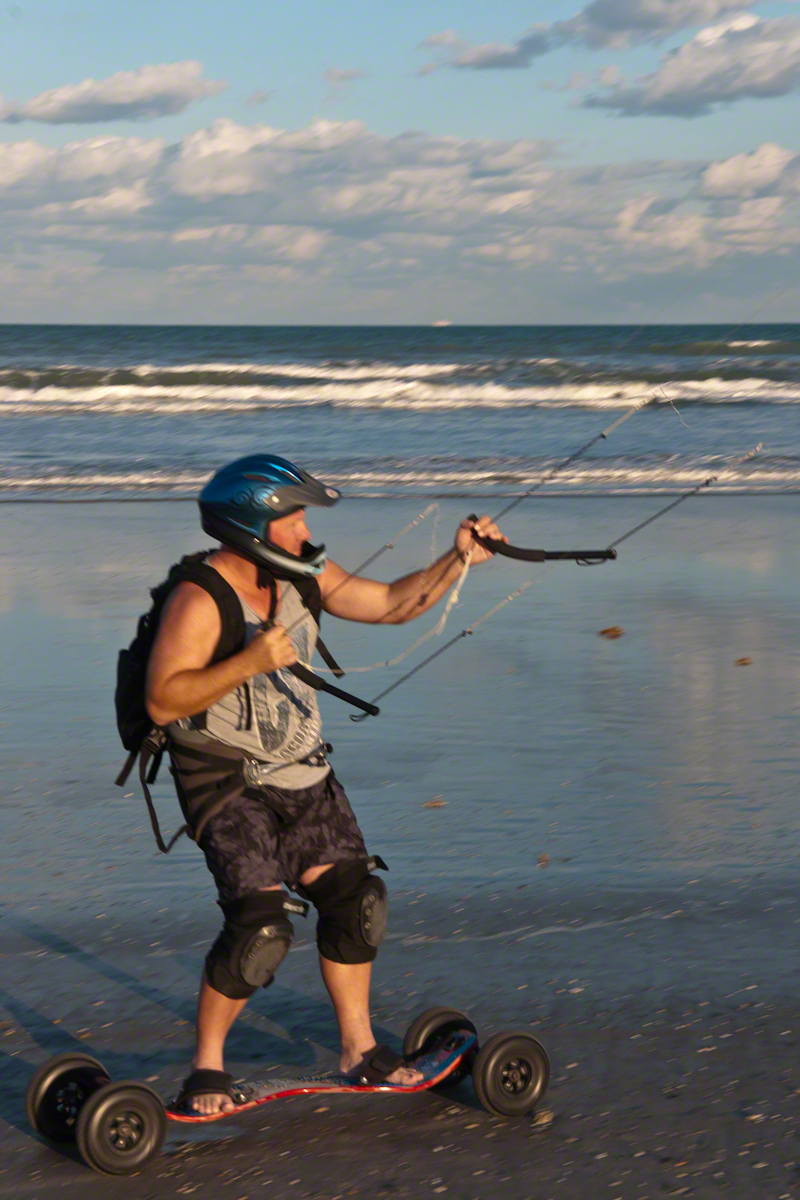
These Cocoa Beach riders are outfitted for speed and safety: pads, helmets.

My Online Gallery– CLICK ME!!!!
He maneuvers kite overhead to slow down.

Barefeet?? Unprotected skin? They must know how to dress, though maybe not.  He has never fallen?

My Online Gallery– CLICK ME!!!!
Full speed ahead with the kite positioned forward.

The beach within the tide line is solid, the pebbles, broken shells and such unforgiving as asphalt.

Click this link for another Cocoa Beach post
Click this link for a Kite Surfing post

Copyright 2022 Michael Stephen Wills All Rights Reserved