Iquique by Sea VI

Experience the breathtaking approach to Iquique, Chile, capturing the vibrant life of fishermen, the majestic beauty of Punta Negra, and the resilient spirit of this coastal community. Join us on a journey from sea to shore.

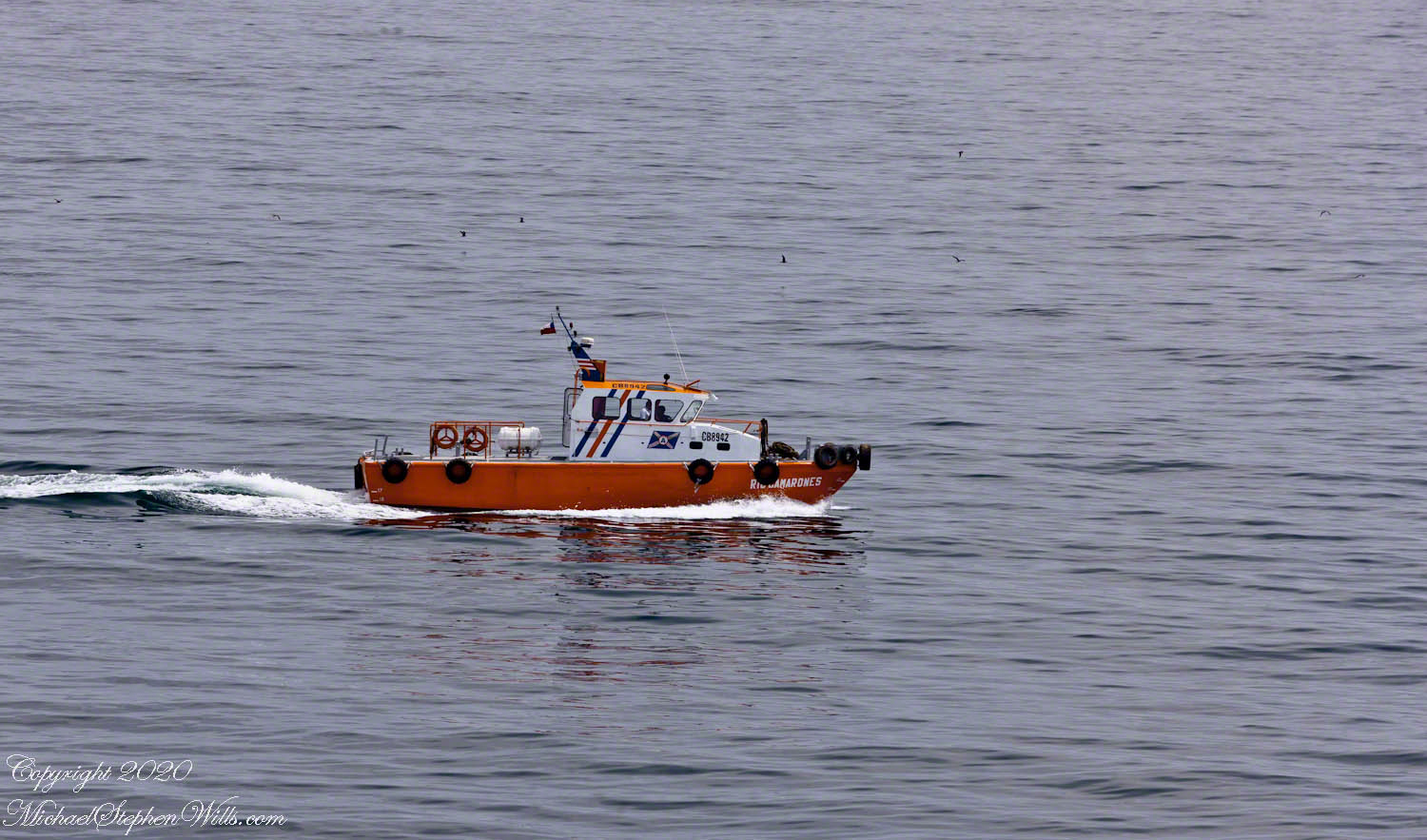
Forty-one minutes have passed, and we are now close to the anchorage site. The pilot boat, with its vibrant orange hull, cuts a striking figure against the serene blue gray of the sea. This small but vital vessel plays an essential role in the complex choreography of maritime navigation, guiding larger ships safely through treacherous waters.

Click any photograph for a larger view and use Ctrl-x to zoom in closer.
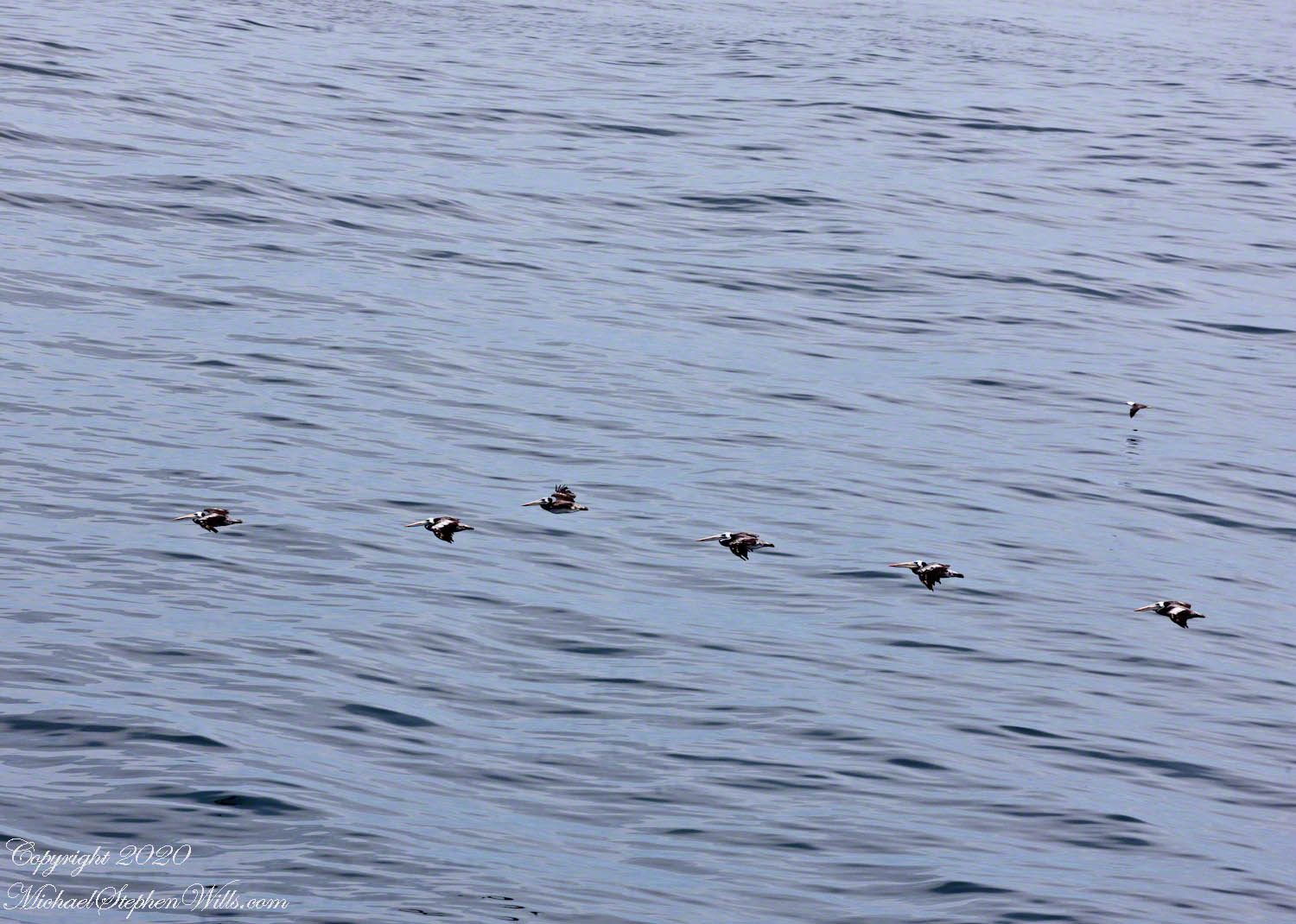
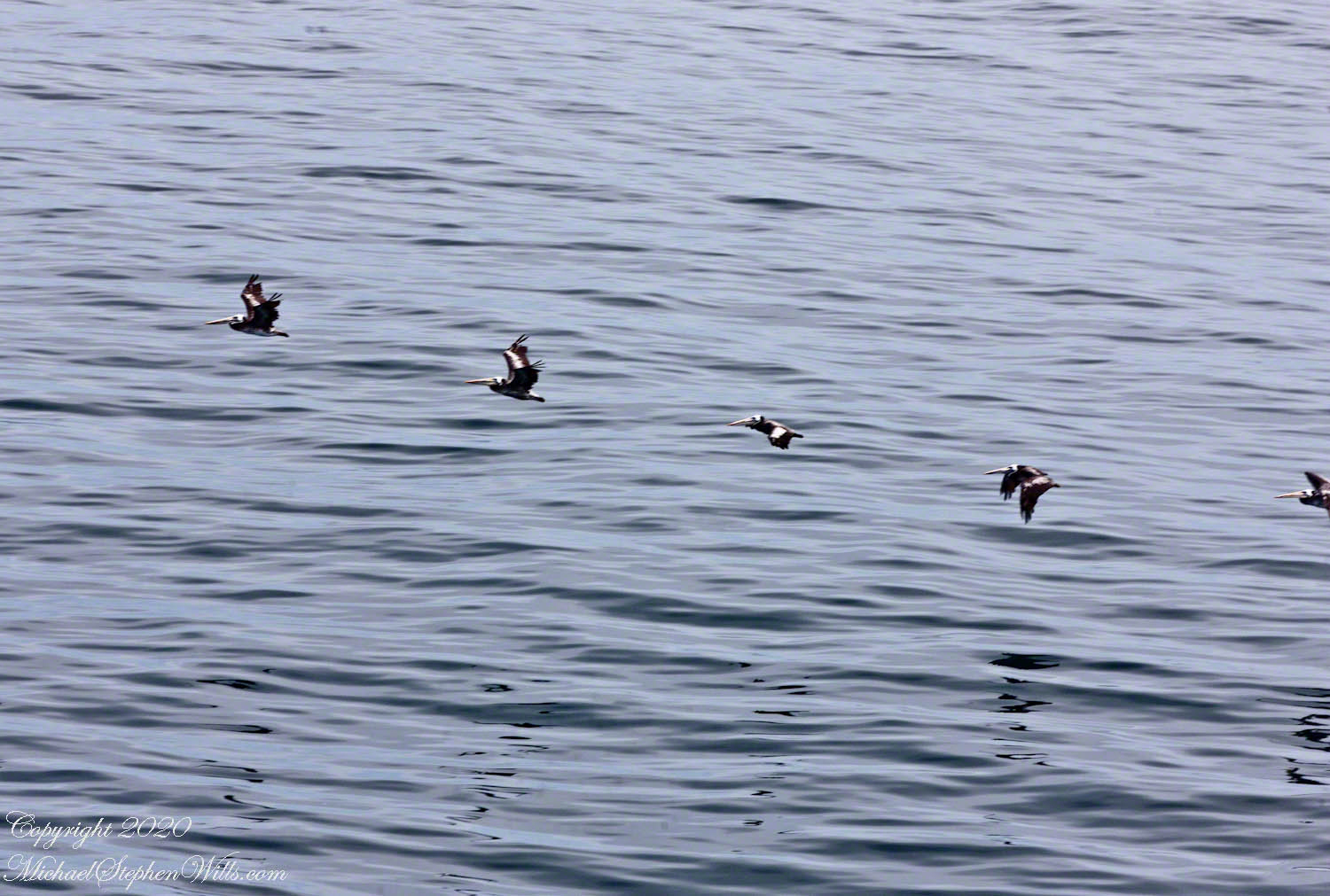
Beyond the pilot boat, shorebirds fly in rhythmic formation, a sight both familiar and comforting. Using the zoom (300mm) of my variable zoom lens, I identify these birds as pelicans, their elegant, synchronized flight a mesmerizing display against the vast expanse of water.
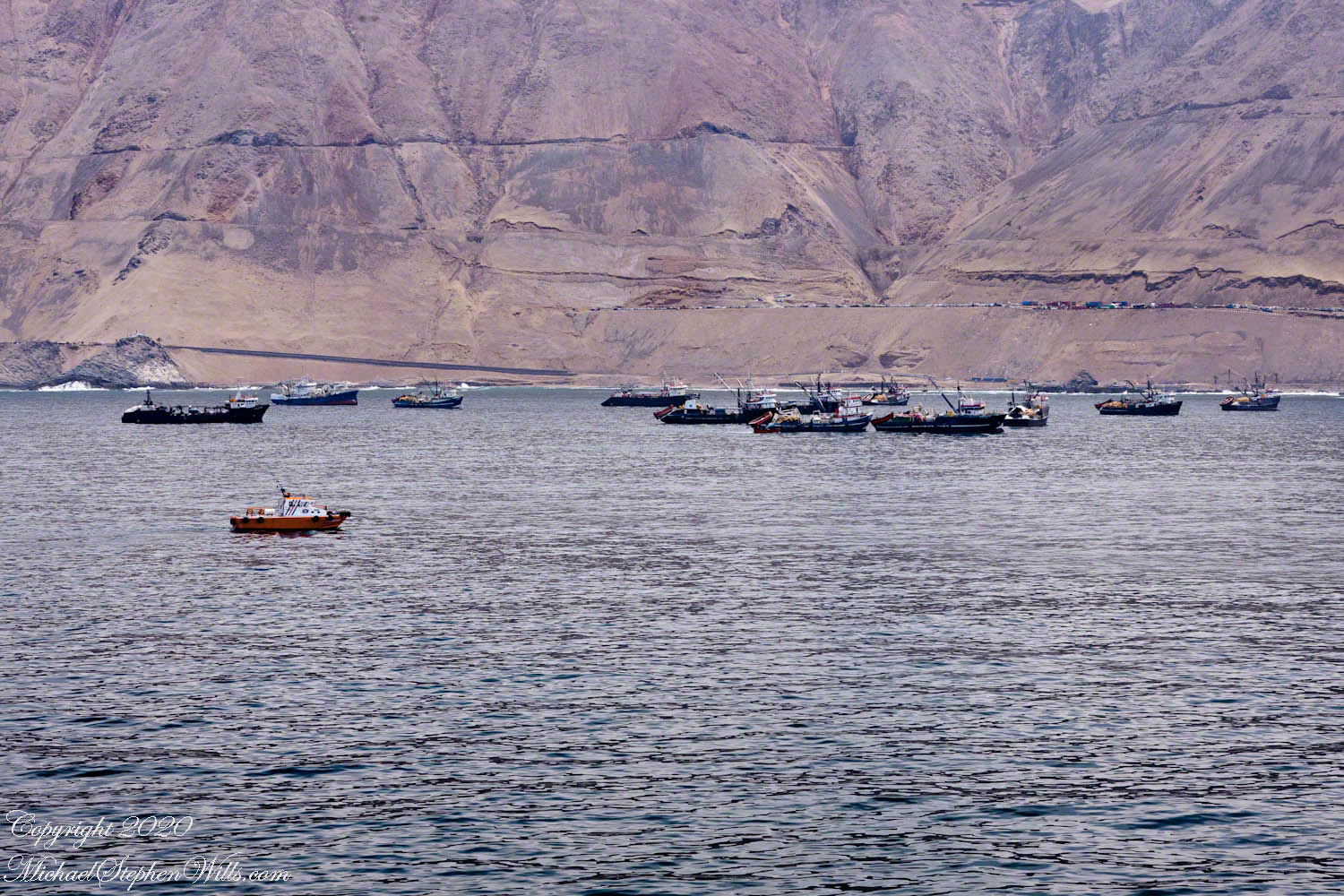
The pilot boat comes to a stop between us and anchored fishing boats, a cluster of vessels that seem to float effortlessly on the waves. Each boat, with its unique character and history, tells a story of countless journeys and the lives of those who depend on the sea for their livelihood. The fishermen, with their weathered faces and hands skilled in the art of the catch, embody a resilience born from years of facing the sea’s many moods. These boats are tools of the trade, lifelines for the families and communities they support, each one a testament to the enduring human spirit.
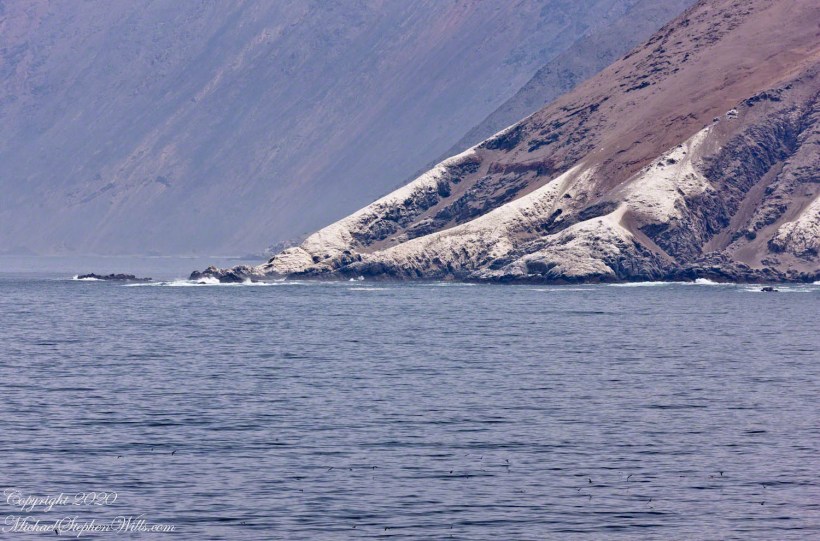
The post header photograph captures Punta Negra, the northern boundary of the harbor. The rugged, imposing cliffs of Punta Negra rise sharply from the water, their stark beauty accentuated by a white layer of diatomaceous earth running along the coast. This geological feature, first encountered at our last port in Mollendo, Peru, adds a unique texture to the landscape, a silent testament to the natural history of the region. The white layer, created by the accumulation of microscopic algae over millennia, stands out vividly against the darker rock, a reminder of the Earth’s ancient past.
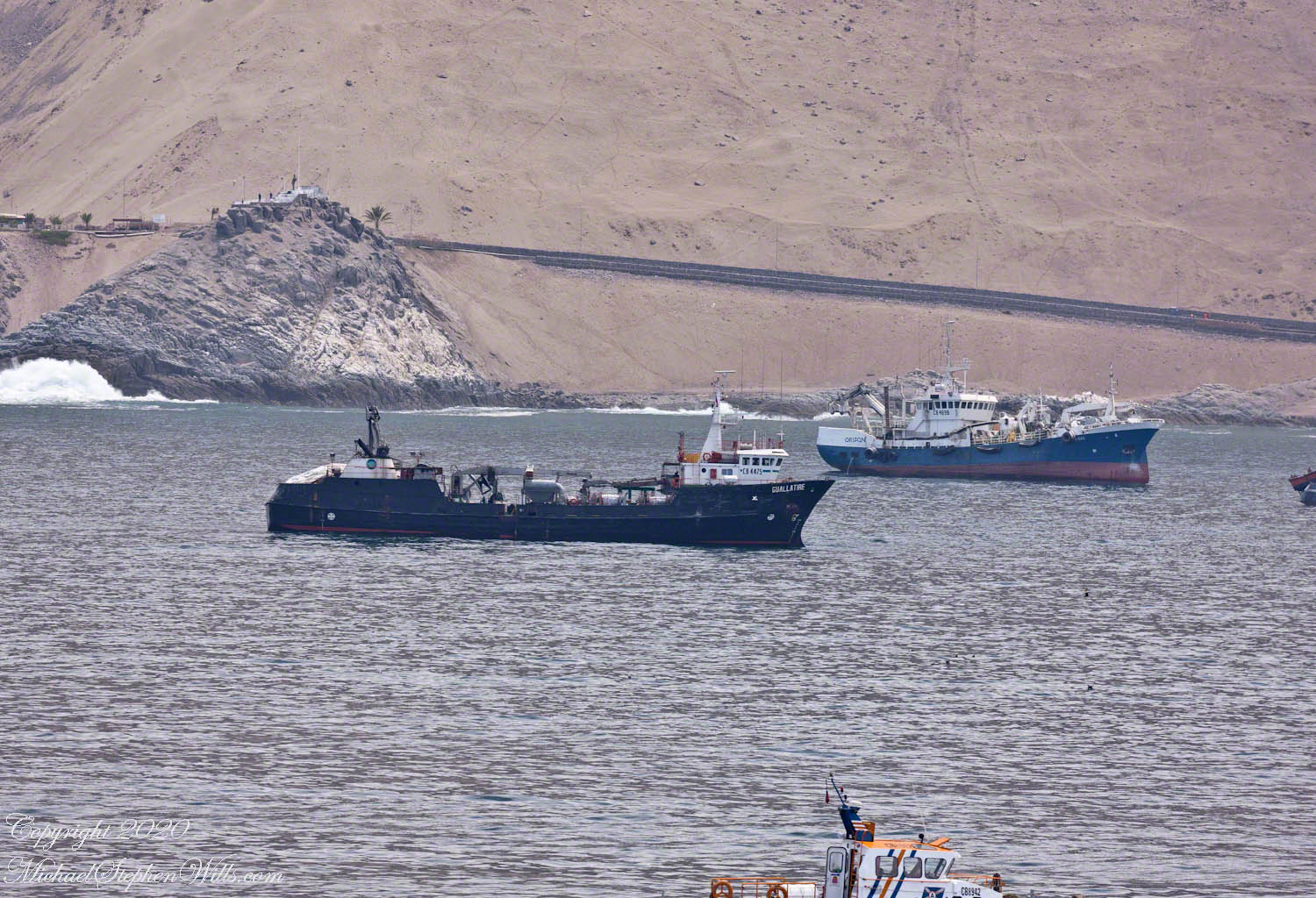
Look closely, can you make out the distinctive shape of a Monkey Puzzle tree along the shoreline road? This ancient tree, with its unique and resilient form, mirrors the endurance of those who live and work in this challenging environment. The Monkey Puzzle tree, native to Chile, is known for its hardiness and longevity, thriving in conditions where few other trees can survive. It stands as a metaphor for the people of this region, who have adapted to and thrived in one of the world’s most inhospitable landscapes.

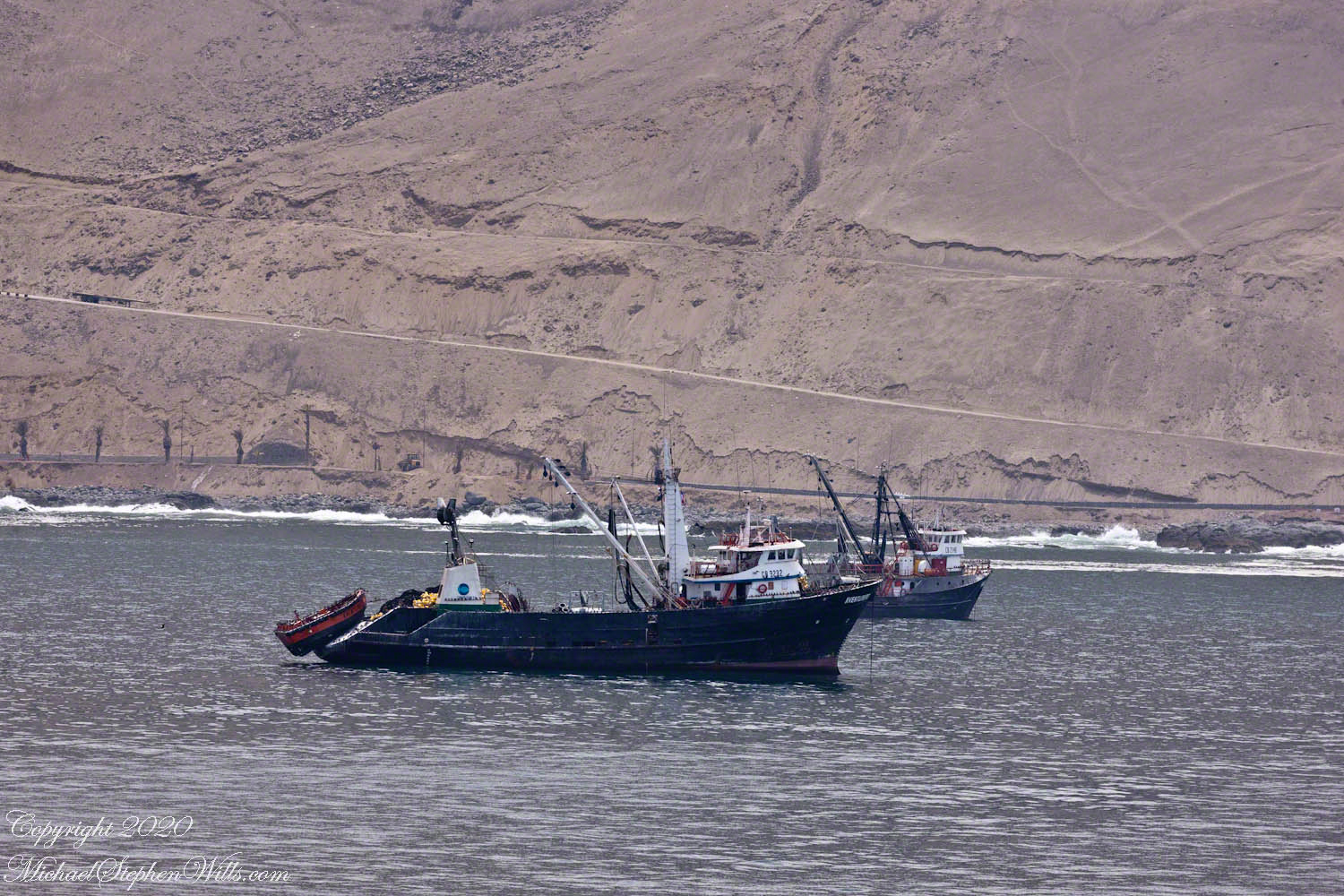
As I zoom in further, using the full 300mm power of my lens on a stable tripod, I capture close views of the fishing boats. Each detail comes into sharp focus – the rusted hulls, the nets hanging in preparation, the names of the boats proudly painted on their sides. These vessels, with their worn and weathered appearances, have a beauty all their own. They are symbols of perseverance, of the daily struggle and triumphs of those who brave the sea to make a living. The fishing boats, though seemingly small in the vast ocean, are powerful symbols of human resilience and adaptability.
The sea, a constant presence in the lives of these people, shapes their days and their destinies. The fishermen head out each morning, guided by the tides and the weather, their knowledge of the sea passed down through generations. Each catch brings hope and sustenance, a reward for their hard work and skill. Yet, the sea is also unpredictable, capable of turning fierce and unforgiving in an instant. This duality – the sea as both provider and adversary – is a fundamental part of life here, woven into the fabric of daily existence.

Our ship’s anchor has dropped, signaling that we are ready to board the tender for the trip from anchorage to port. This marks the start of our day’s activities, a journey that will take us from the vast, open sea to the vibrant life of Iquique. As we prepare to disembark, I reflect on the interconnectedness of these moments – the precision of the pilot boat, the flight of the pelicans, the stories of the fishermen, and the enduring landscape. Each element weaves together to create a tapestry of life on the sea, a testament to the resilience and beauty of this remarkable region.

The tender ride offers a closer look at the fishing boats and the shore. I notice the intricate details of the boats – the colorful paint, the weather-beaten wood, the names that reflect the hopes and dreams of their owners. Each boat is a microcosm of life, carrying the weight of daily struggles and the promise of future catches. The fishermen, now preparing their gear for the day’s work, move with practiced ease, their actions a ballet of efficiency honed by years of experience.

As we approach the port, the city of Iquique comes into view, a bustling hub of activity nestled between the sea and the mountains. The contrast between the natural beauty of the landscape and the vibrant energy of the city is striking. Here, in this meeting place of land and sea, past and present, we see the resilience of the human spirit, the ability to adapt and thrive in even the most challenging conditions.

This journey, from the open sea to the heart of Iquique, is more than just a physical passage. It is a journey through time and history, a glimpse into the lives of those who call this place home. As we step onto the shore, ready to explore the city and its rich heritage, I carry with me the stories of the sea, the echoes of the past, and the promise of new discoveries.

Click me for the first post of this series.

Copyright 2024 Michael Stephen Wills All Rights Reserved

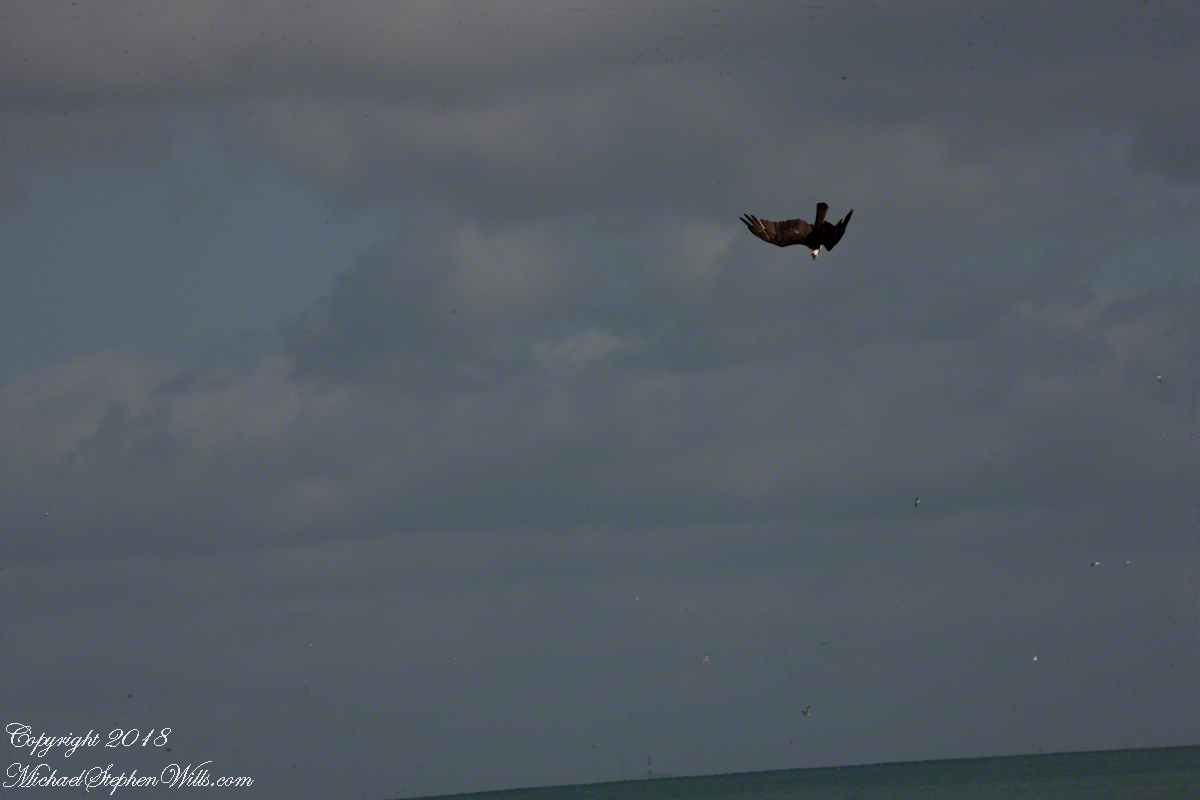
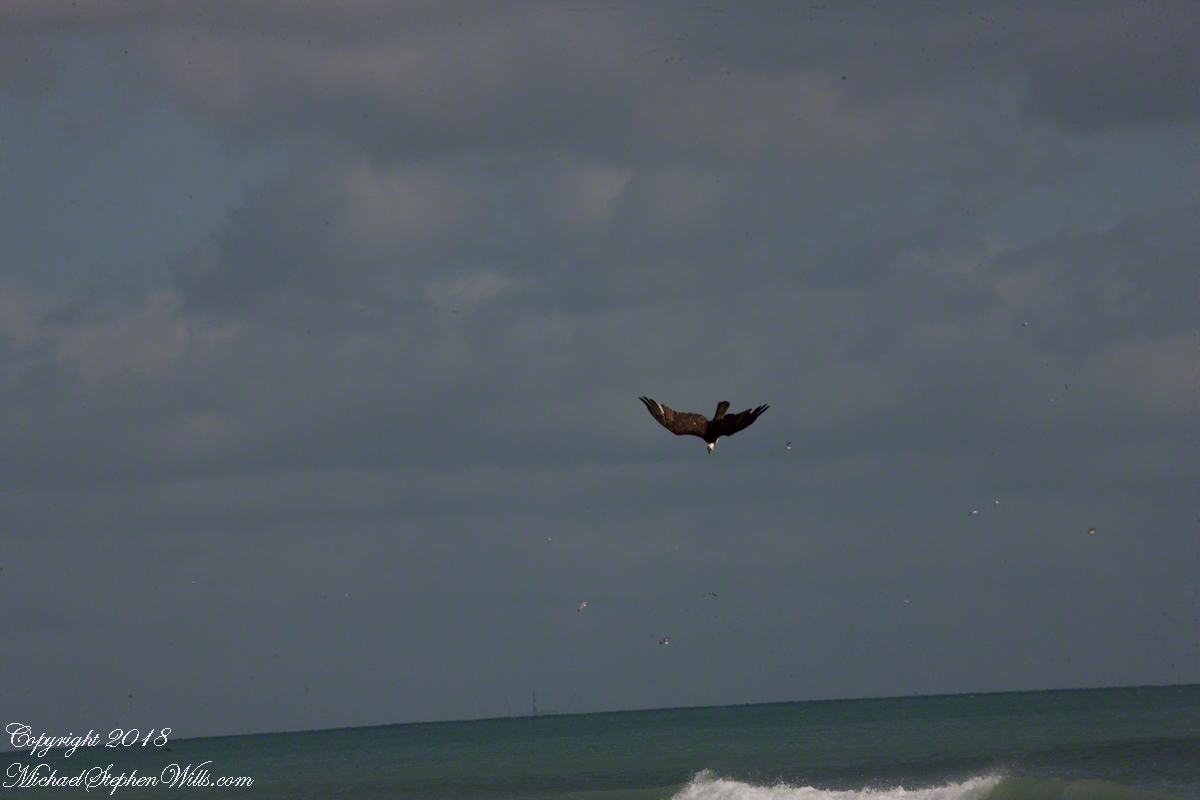
Dive!!

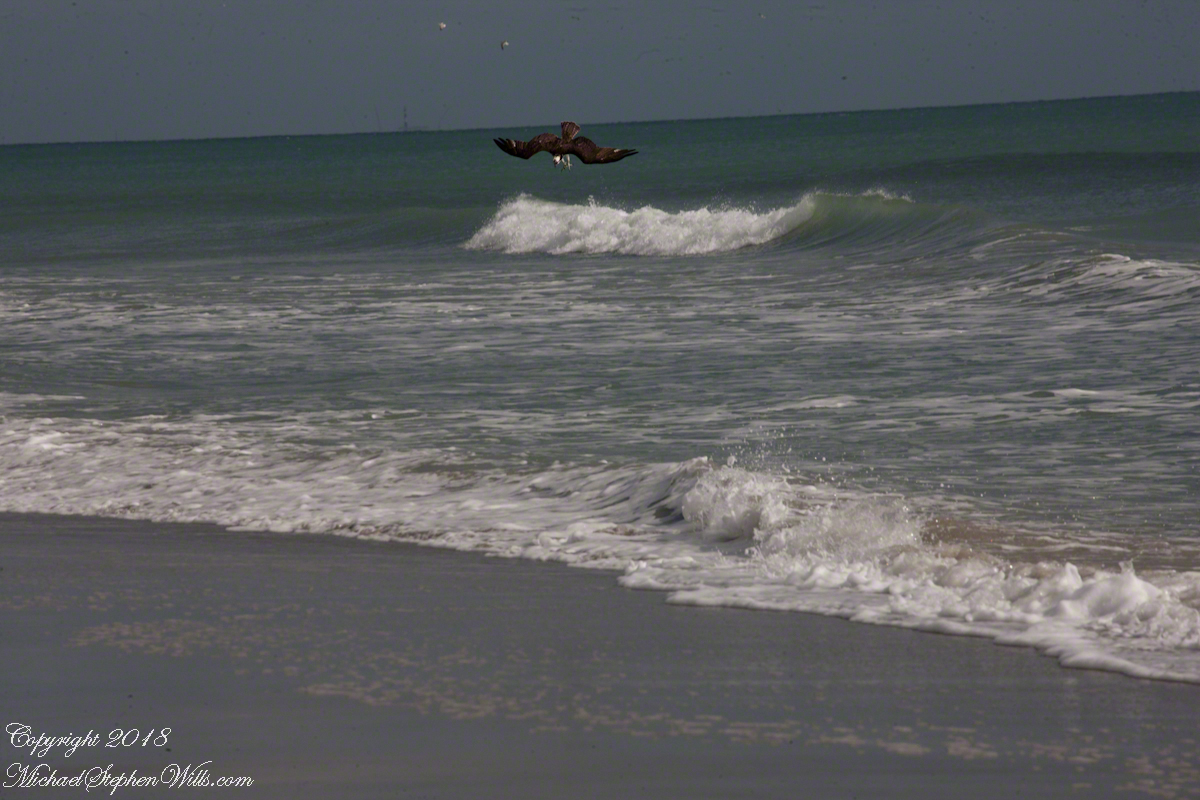
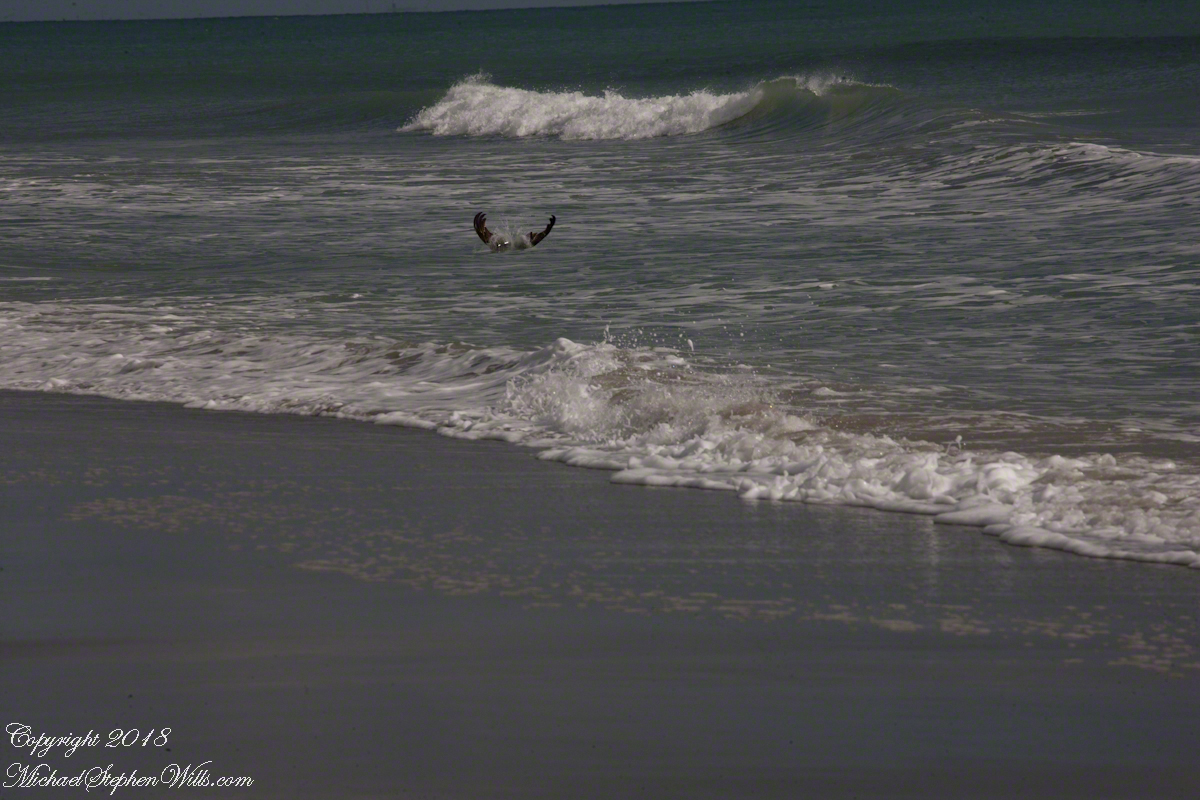
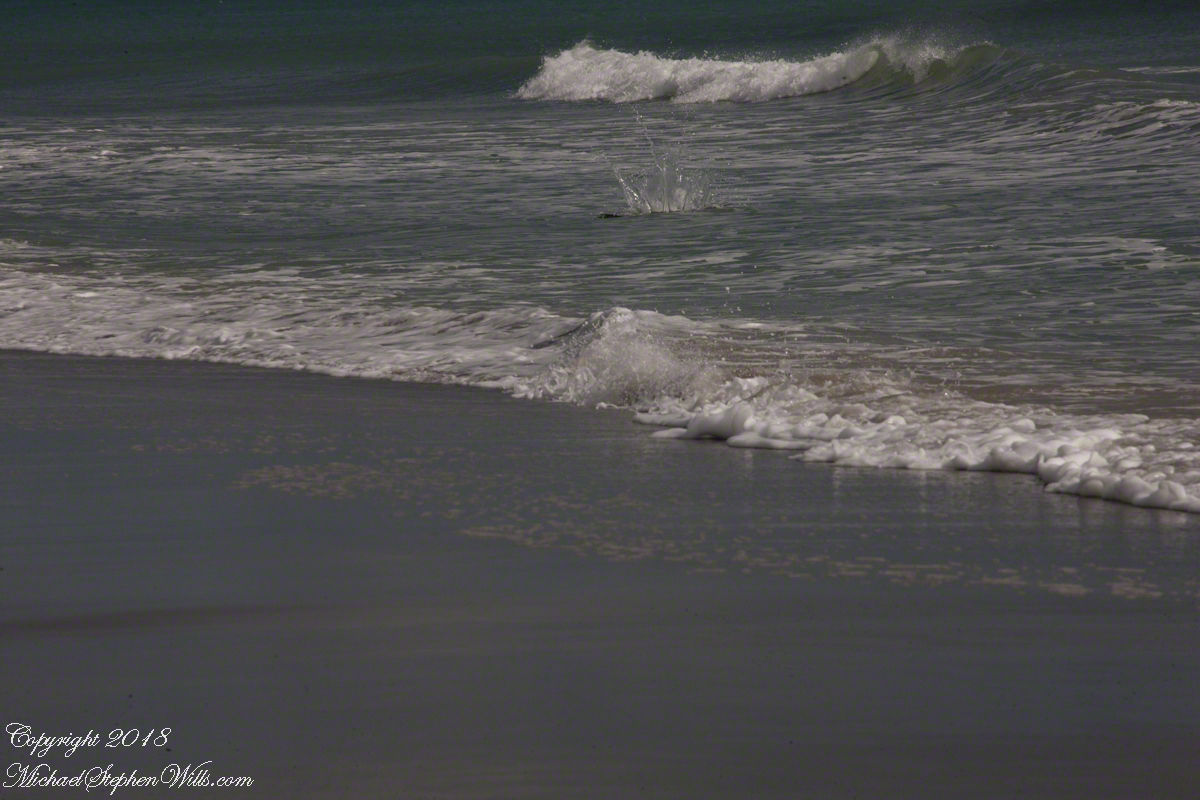
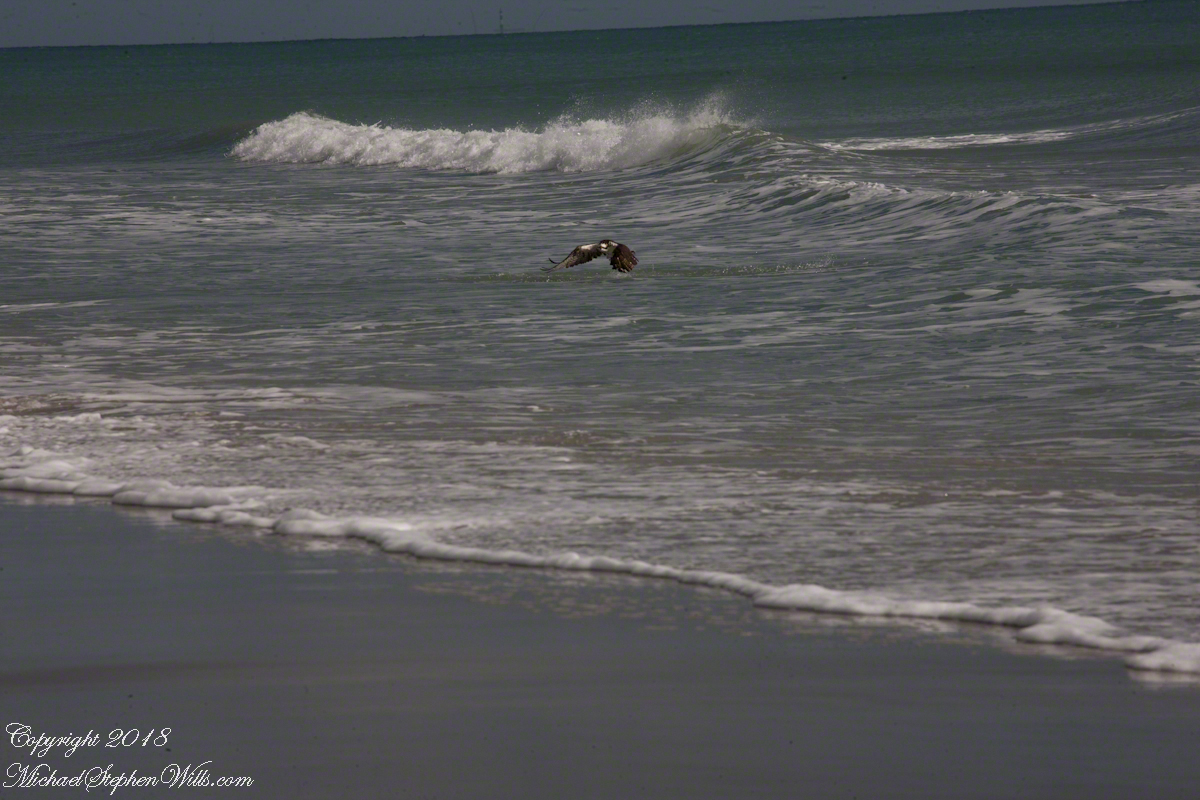
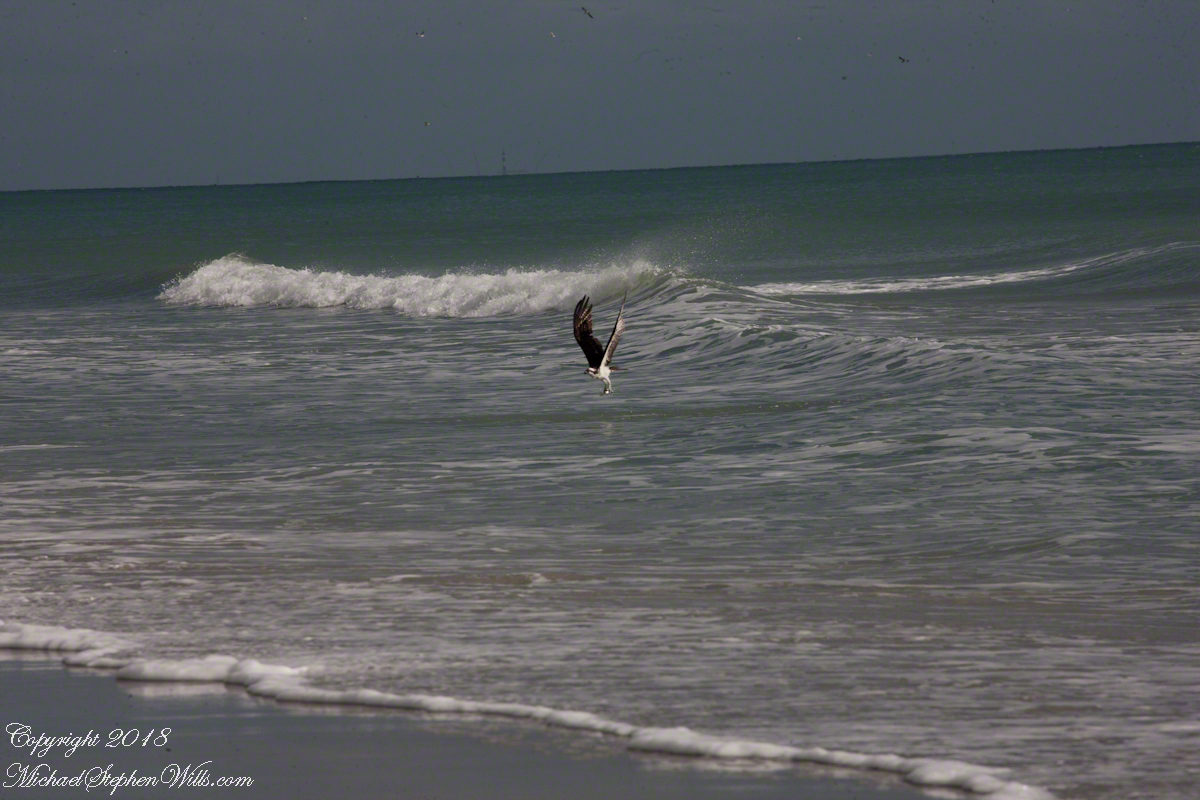
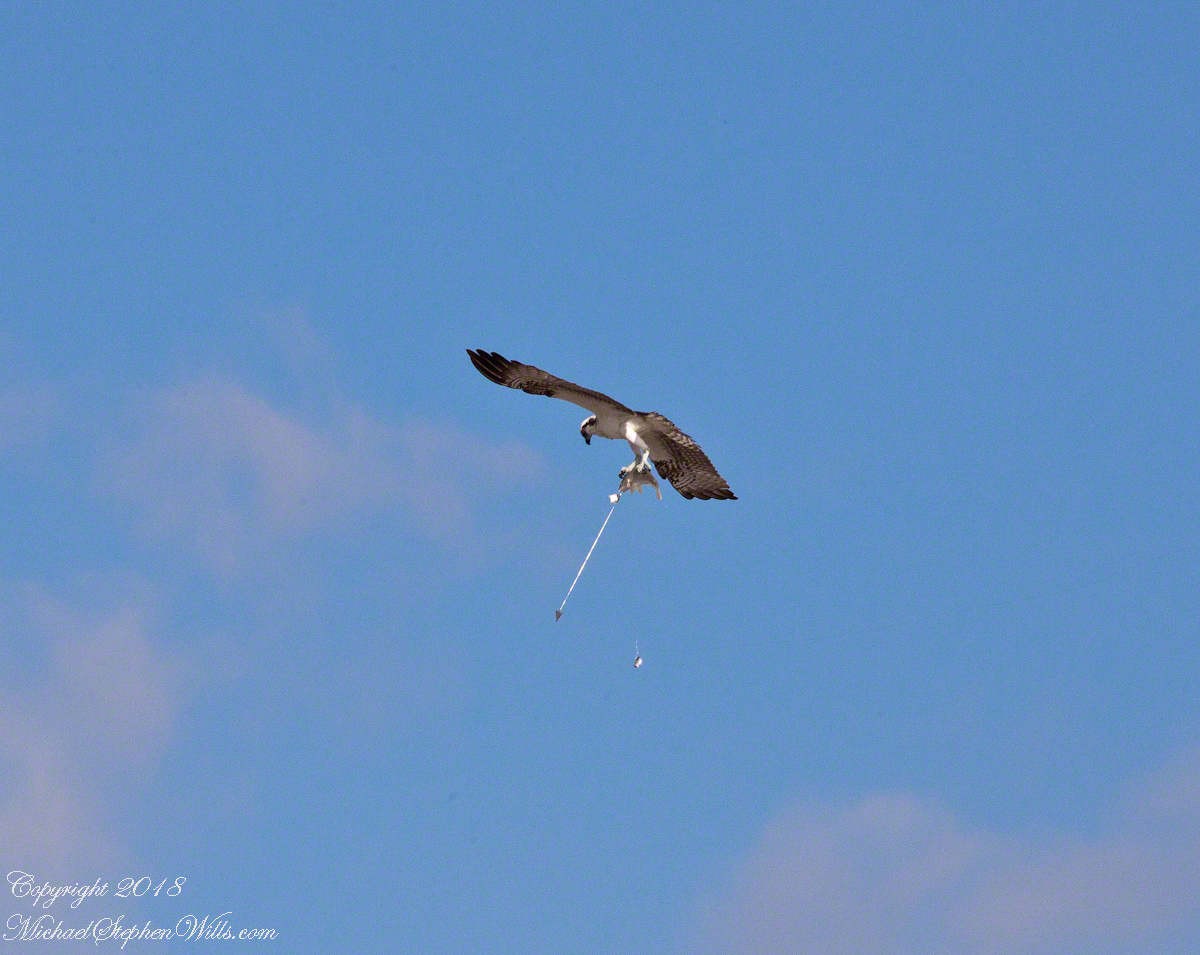
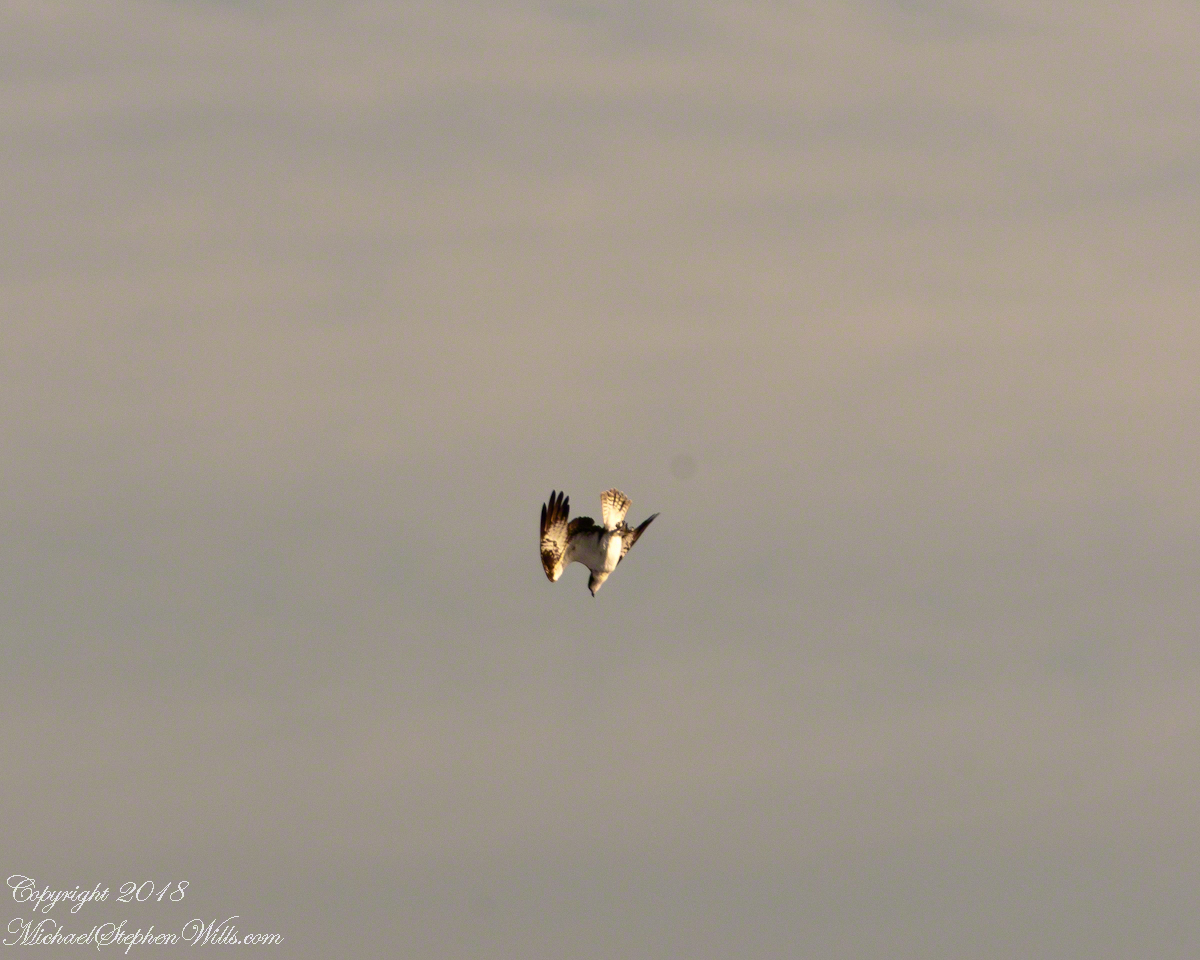
Less than 3 seconds elapse from the Osprey initiating dive to emergence from the surf and flight, fish in talons.

A sequence of high speed shots of what the Osprey does best. For this, the sixth and final post of this series (Click me for the first post, “Endless Searching“), we follow the bird in a dramatic plummet into the surf until it rises, catch in claws.

Click Me for “Florida” in my Fine Art Galleries.

“All Elements In Place”

Late morning of January 20, 2019 I headed out with the Canon EOS-1Ds Mark III mounted with the Canon EF 70-300mm f/4-5.6L USM lens for handheld shots. Many elements aligned for these shots: weather, equipment, placement among them. The angle of the sun at 11:21 am was not optimal, but the cloud cover made up for it.

Click any photograph for a larger view.
The Day’s Setting

Commitment

The dive impact happens in less than 2 seconds.

My observation is the reason the wings are extended is to maintain control of the dive…..
…..I have seen these dives terminate inches from the water with a u-shaped swoop.
Talons are extended in the final seconds.

The Strike

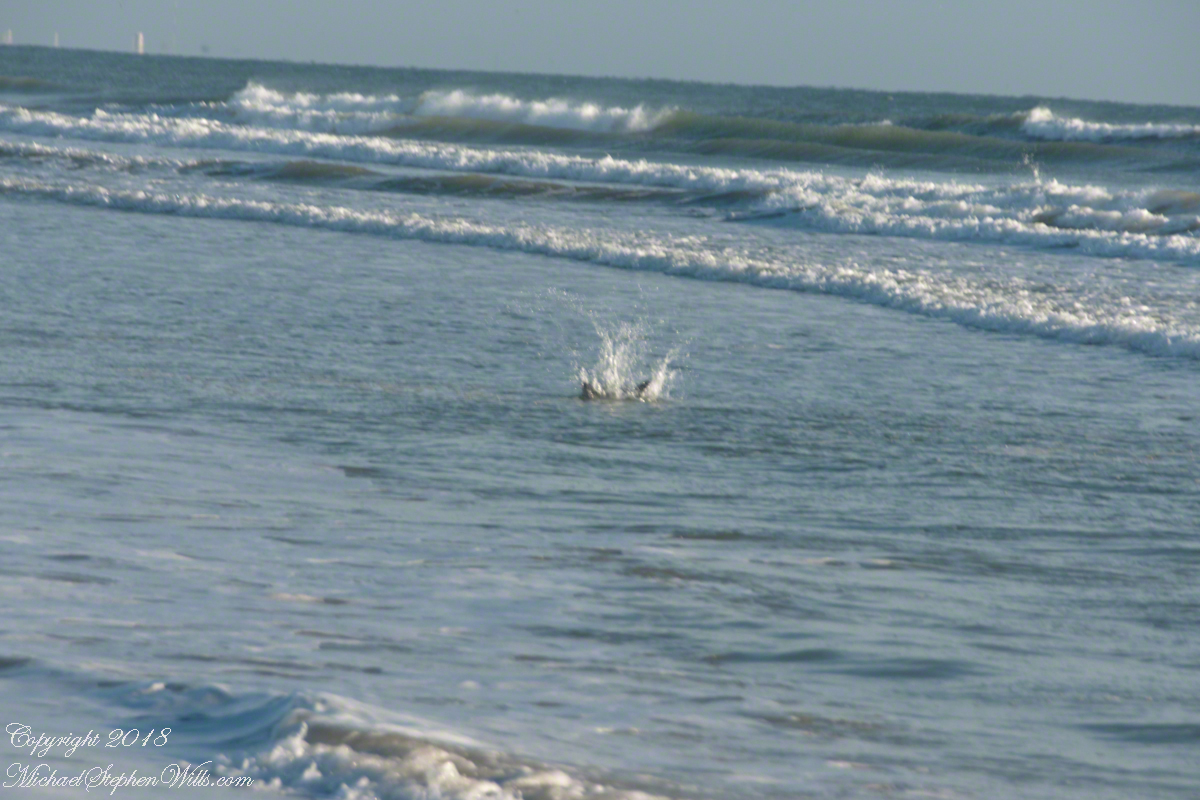
Less than one second from point of impact until emgergence and flight.

Instant of impace with wings still extended.
Gone

Arise

What strength, to lift off from the water.
Catch in talons
Copyright 2022, Michael Stephen Wills All Rights Reserved

Osprey Pictorial

Humans are hard coded to relish scenes of water and land.

Now and then a photograph comes along that stands by itself. For this, the fifth post of this series (Click me for the first post, “Endless Searching“), we explore images that speak for themselves.

Click Me for “Florida” in my Fine Art Galleries.

“Another Day in Paradise”

Humans are hard coded to relish scenes of water and land. This day I headed out with the Canon EOS-1Ds Mark III mounted with the Canon EF 70-300mm f/4-5.6L USM lens for handheld shots.

Click any photograph for a larger view.
The Day’s Setting

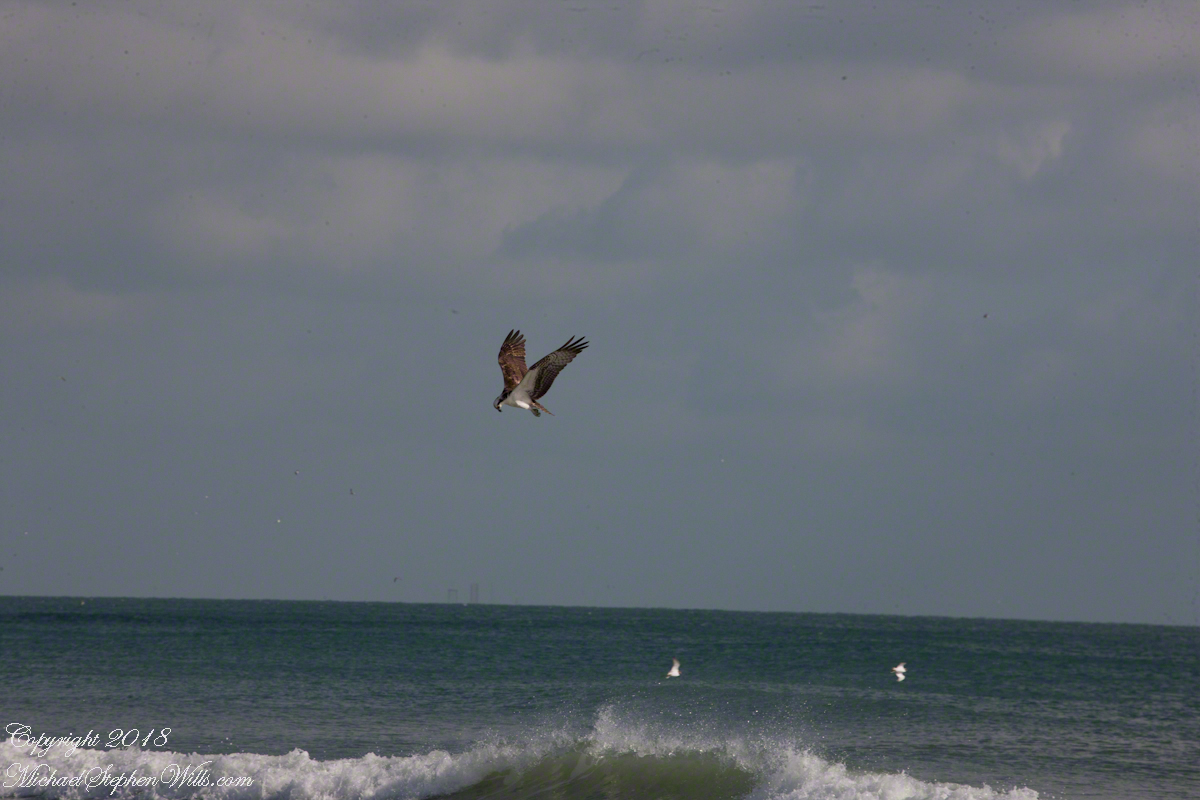
Hook, Line and Sinker

Poise

Barely visible on the horizon are Cape Canaveral Launch Towers
Copyright 2022, Michael Stephen Wills All Rights Reserved

Nesting

December through February is Florida Osprey nesting season.

“Florida ospreys (Pandion haliaetus) commonly nest on power poles, communication towers, water navigation devices, lighting fixtures, outdoor billboards and other man-made structures as well as in decaying or dead trees.” This quote from the Florida Fish and Wildlife Conservation Commission web site is a fitting introduction. For this, the fourth post of this series (Click me for the first post, “Endless Searching“), I explore images of Osprey nesting behavior.

Click Me for “Florida” in my Fine Art Galleries.

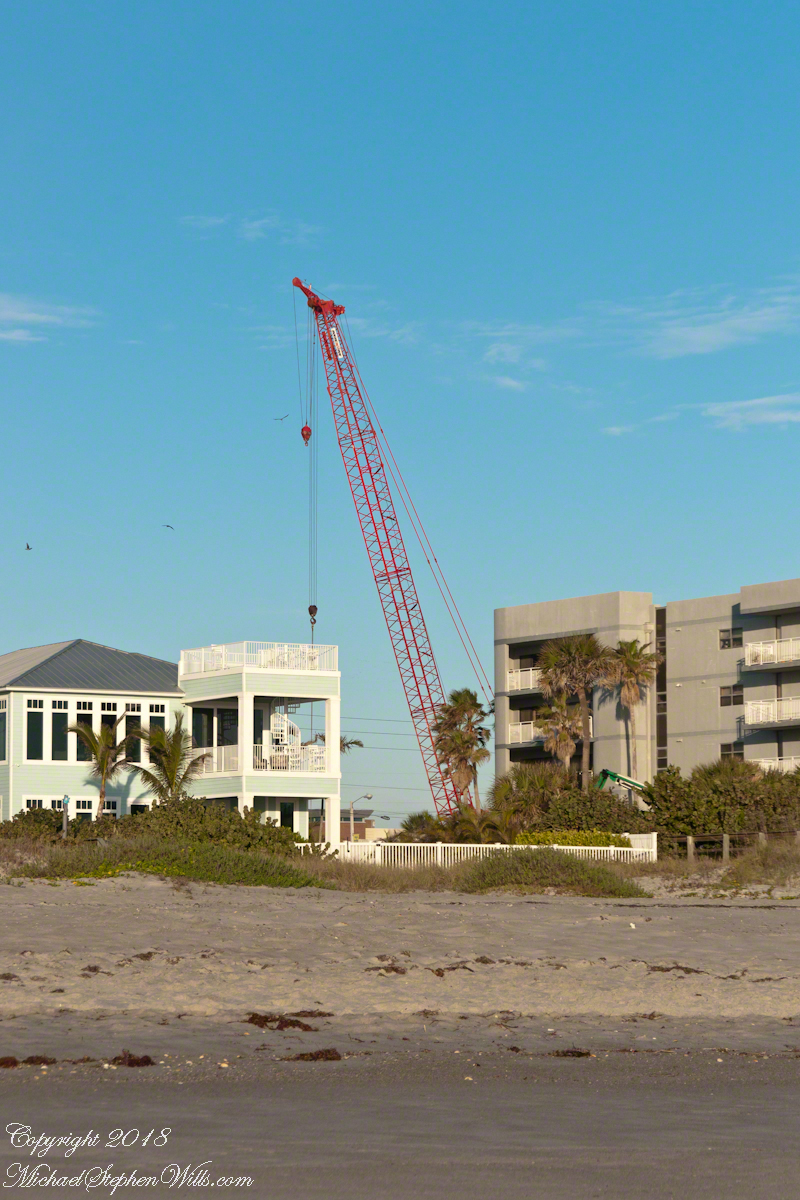
“Other Man-Made Structures”

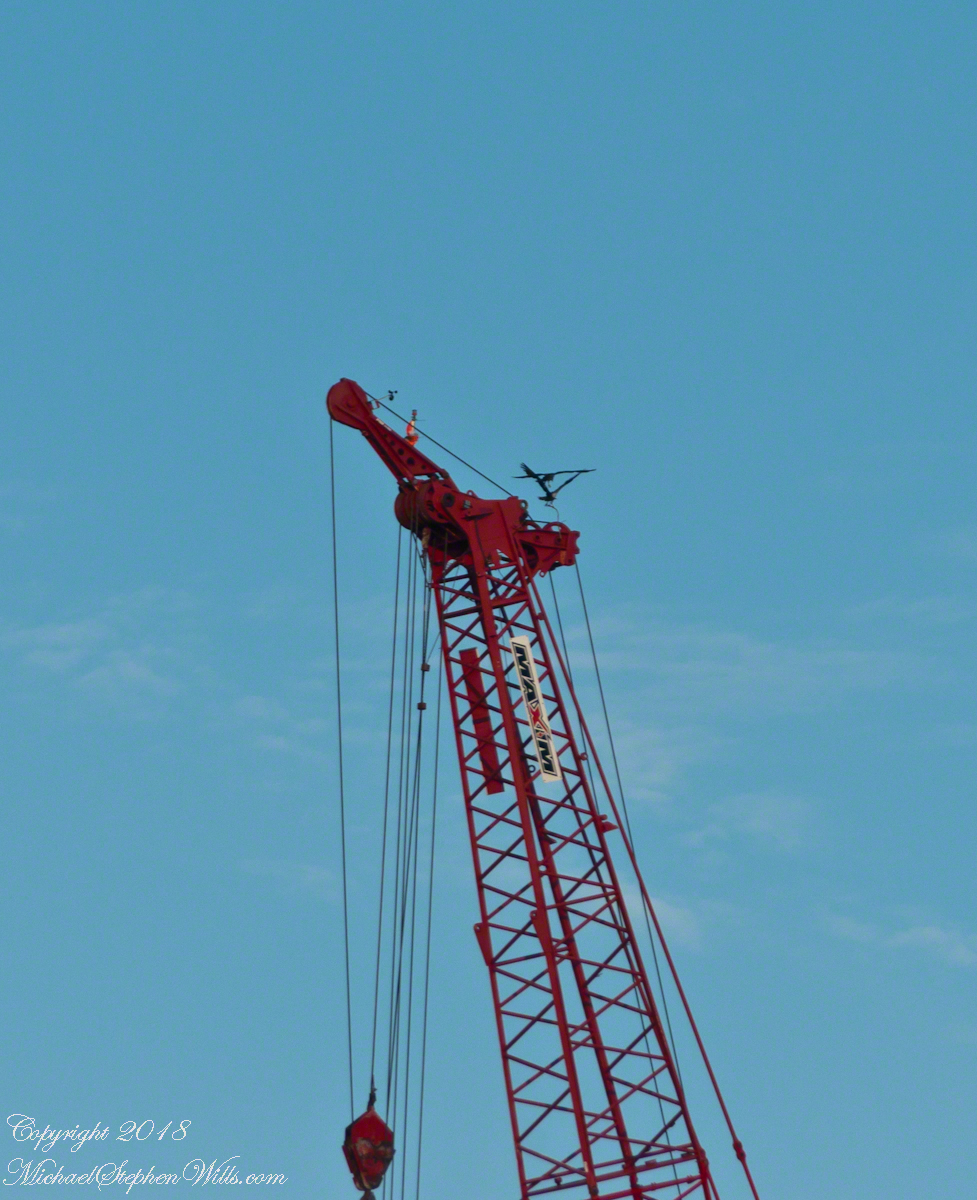
Early morning winter Cocoa Beach walks offer a new experience with each dawn be it a change in wind, light, or beach-combing offerings. This looming crane was a consistent specter the entire month, poised over a downtown parking garage under construction.

Click any photograph for a larger view.
On the Lookout

Distant Figures

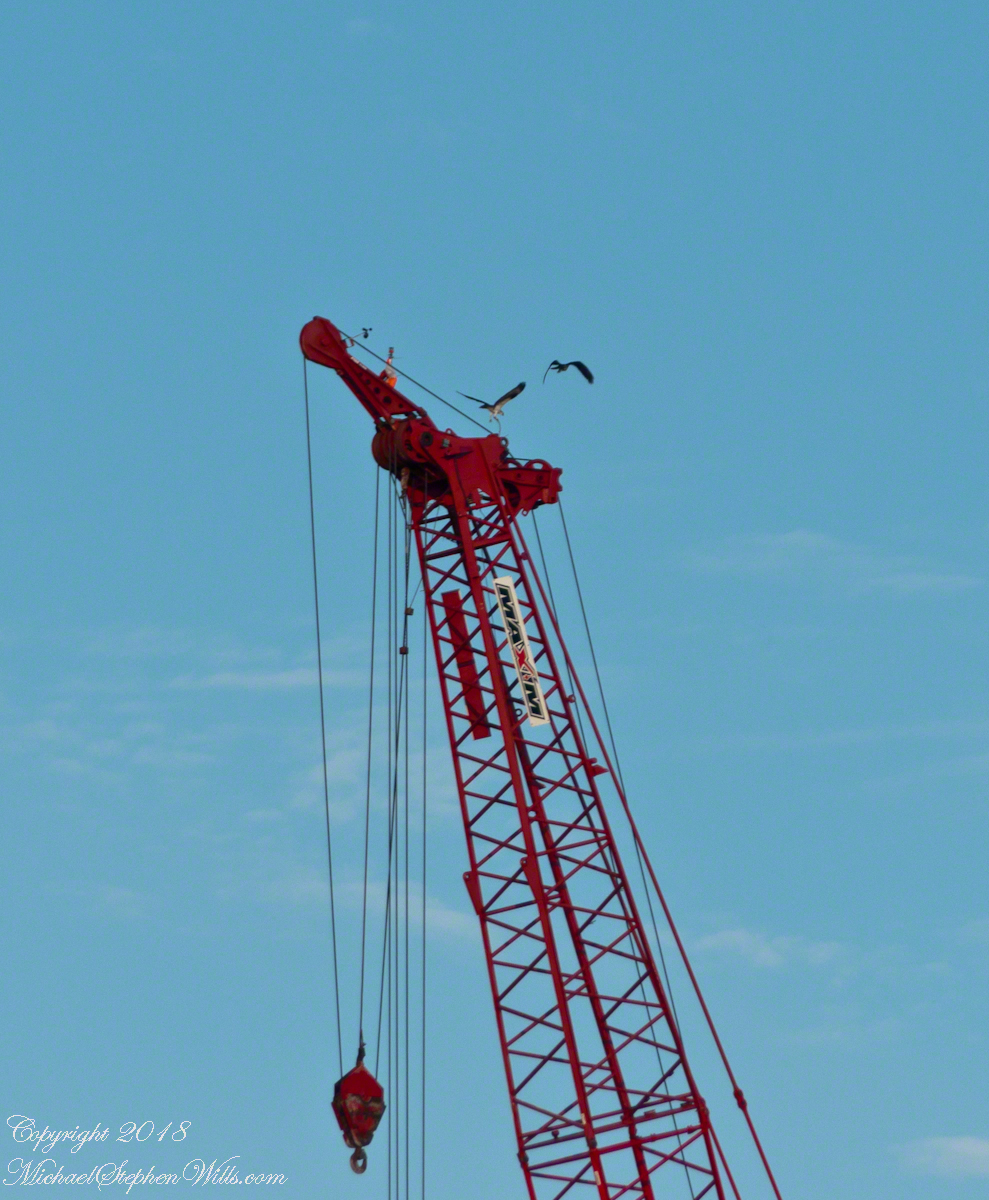
Each winter morning January 2019 I left our ocean side condo to walk the beach, taking equipment according to a whim. For this series I used the Sony Alpha 700 with a variable “Zoom” lens. In this next shot the focal length was set to maximum.

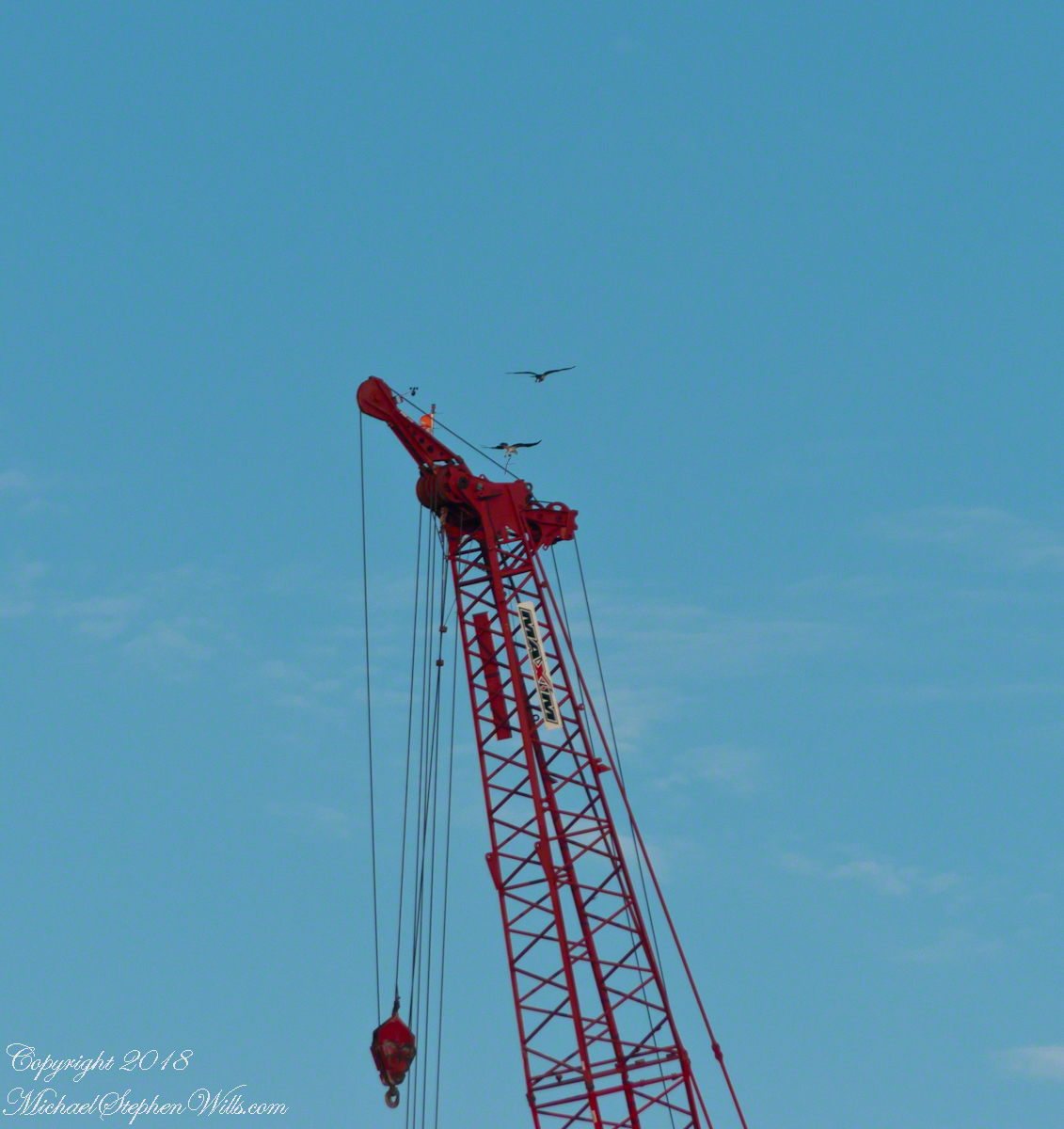
Searching the internet (“Florida Osprey behavior”), a link from http://www.naturesacademy.org states, in Florida, Osprey nesting season is December through February. The following series of photographs clearly show an Osprey with nesting material. The header image for this post clearly shows the markings of the individual holding a large branch.

The second individual is close to the same size, it is a reasonable conclusion the two are flying together. The series was taken in a 33 second time span.

The two were flying around the crane and it is beyond imagination they’d be successful building on an actively used crane. Would construction come to a halt until the nest was abandoned? I wonder.

In following days there were no signs of nesting behavior on the crane.

Copyright 2022, Michael Stephen Wills All Rights Reserved

Shoulder to Shoulder

Snatch and Grab Shopper

“They walk among us” can evoke horror, still it is a fitting description for the many species successful in an ecological niche occupied by humans. This is the third post of a series featuring the Osprey of Cocoa Beach, Florida. The first post is “Endless Searching,” In this post we follow a householder on a shopping expedition.

Click for “Florida” in my Fine Art Galleries.

Observation

Search internet references on Florida Osprey you find there is a mixture of year-round residents and migrants passing through spring/fall to points farther north. This being January, my brilliant conclusion is these are residents of Cocoa Beach, maintaining nests. My next post will have more on this.

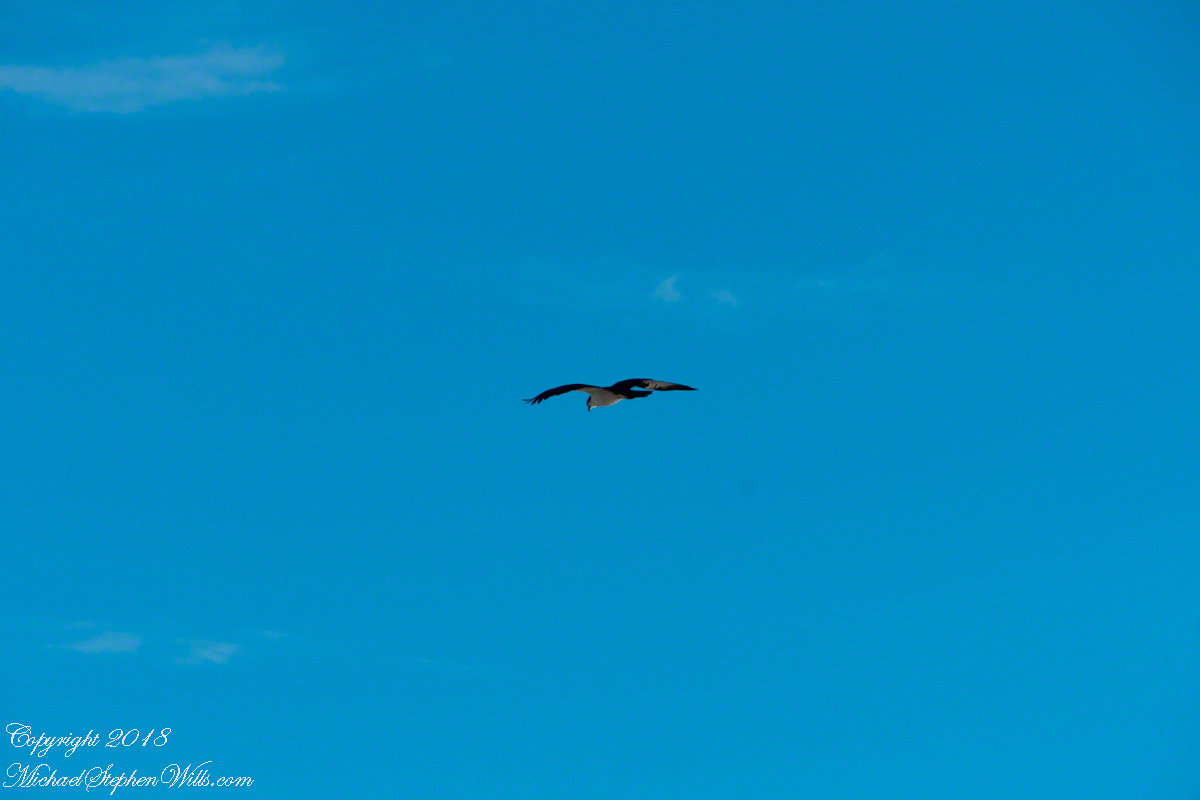
Each winter morning January 2019 I left our ocean side condo to walk the beach, taking equipment according to a whim. For this series I used the Sony Alpha 700 with a variable lens. In this first shot, the watchful pose of the hunting Osprey is apparent, long glide with head slightly down.

Click any photograph for a larger view.
On the Lookout

Dive!!

Once these hawks entered my dim awareness and their habits understood, with a lot of luck I was able to click the button at the right time. You can see in the previous post, “Fishing Creatures,” how little time elapsed during a dive, the split second opportunity seen in the following photograph.

Committed

Wow, that is impact. The bird is poised to grab one fish, spotted under the water 50+ feet away, talons extended.

Into the Drink

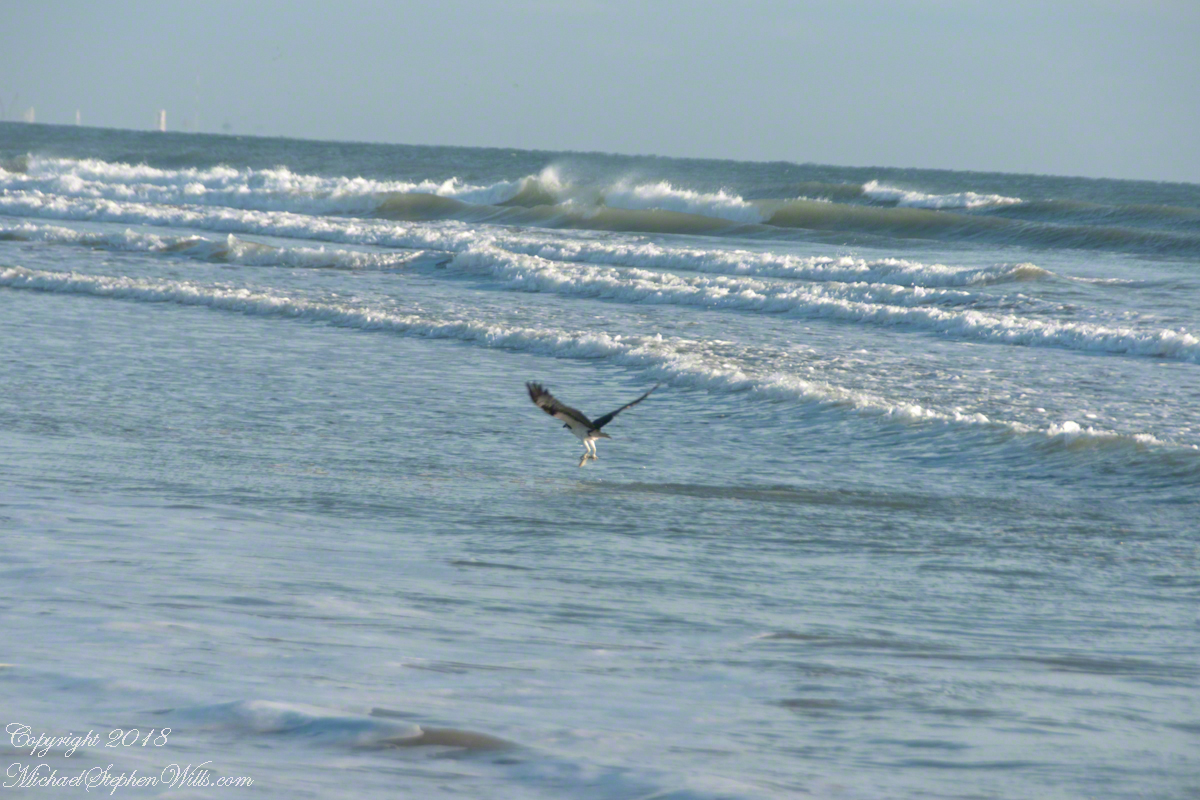
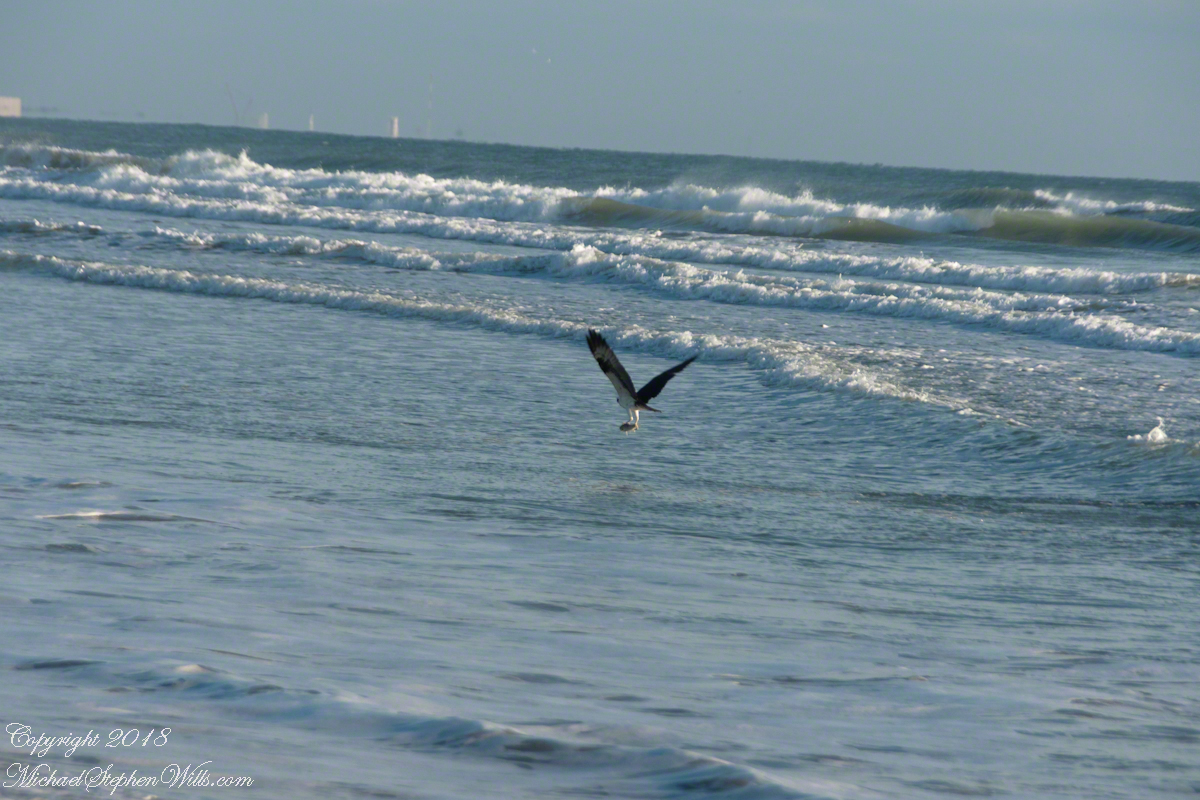
Success rate? Those days in January, if the Osprey hit the water more than 50% of the time it flew away with a fish.

Our seven year old grandson is an enthusiastic fisherman and might be able to identify this catch. In the distance, on the horizon is Cape Canaveral Air Force Base, the lighthouse and space launch towers .

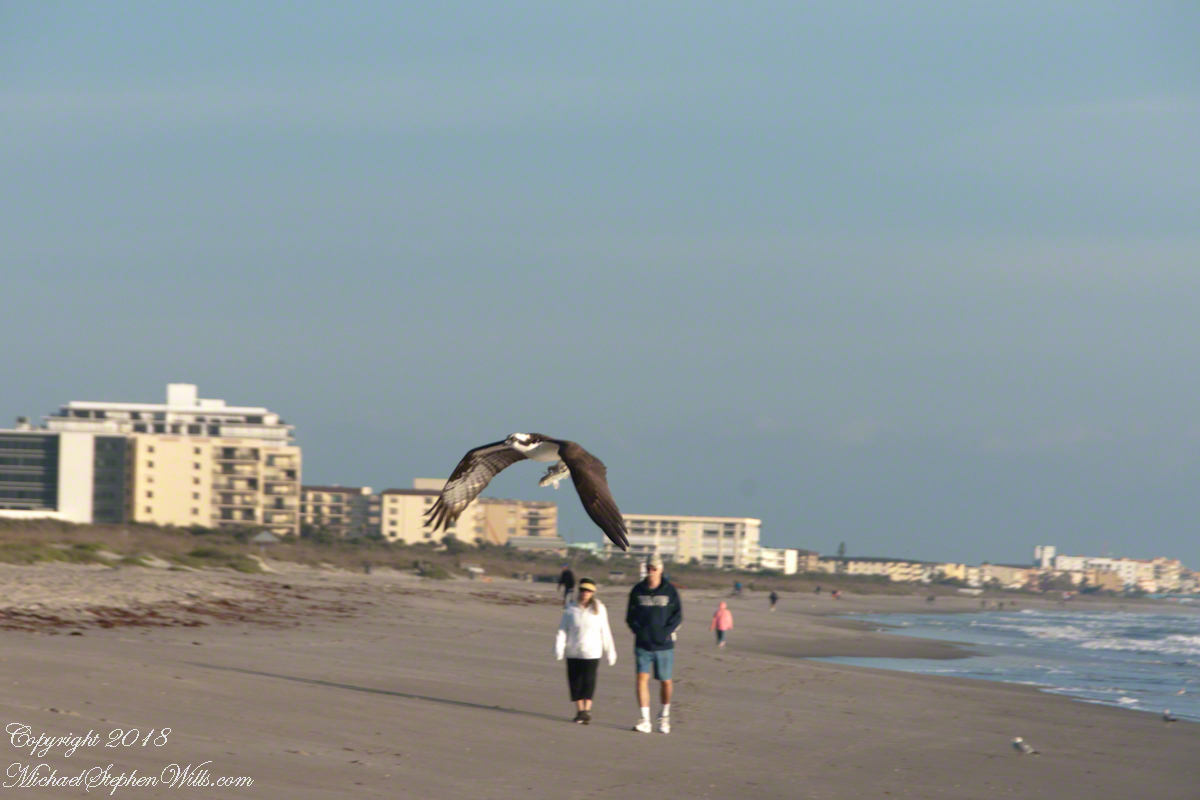
An image of Osprey / Human closeness. The long lens tends to bring objects closer together, the Osprey is far away from the early morning walkers.

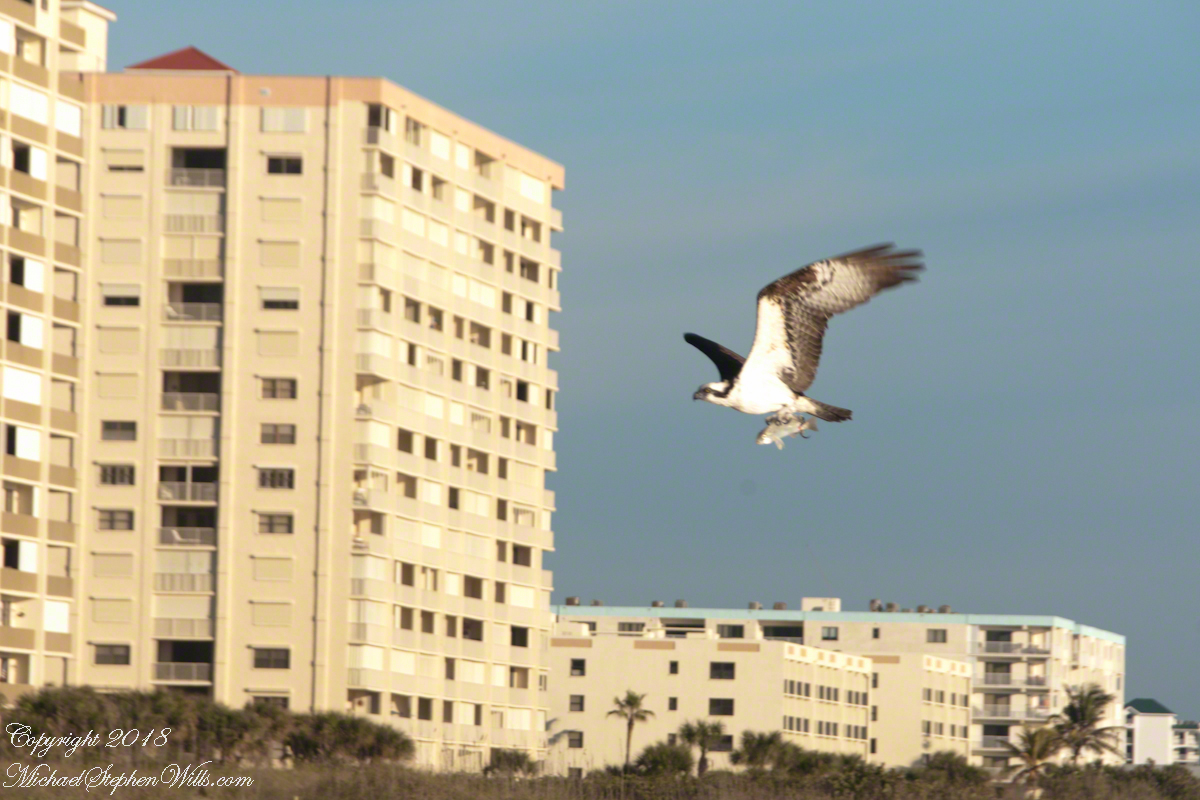
A reader, “ekurie”, in observing Ospreys noticed the catch is oriented to aerodynamic, placed head first toward the direction of flight. The hawk is using the evolutionary adaptations of the fish, to reduce drag in the water, to flying through the air.

This snatch and grab shopper is headed straight home to a nest beyond the shore front condos.

A Well Deserved Meal.
Copyright 2019, Michael Stephen Wills All Rights Reserved