Ice Abstracts

Light Plays

Surface of ice formed over a flowing creek. One is a HDR of three exposures, the other is a single exposure. Yes, that is dirt you see under the ice. How did that happen?

Readers: Can you tell which is the HDR? Please answer with a comment. Thank You

All are macros from a Kodak DSC Pro SLR/c with a Canon EF 100 mm f/2.8 Macro USM lens stabilized on a Manfrotto 468MG tripod with Hydrostatic Ball Head

Fillmore Glen State Park, Moravia, Cayuga County, New York.

Click for my “Finger Lakes Memories” Fine Art Photography Gallery.

Copyright 2023 All Rights Reserved Michael Stephen Wills

Betty Boop

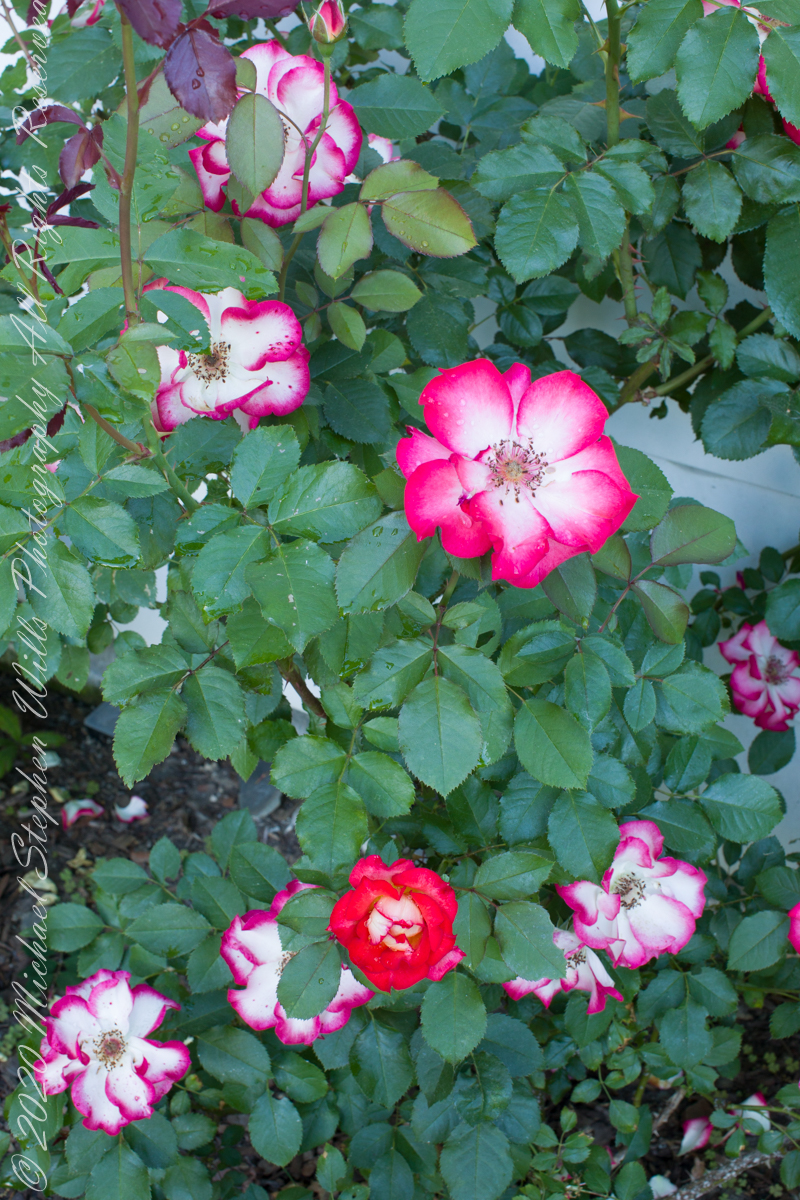
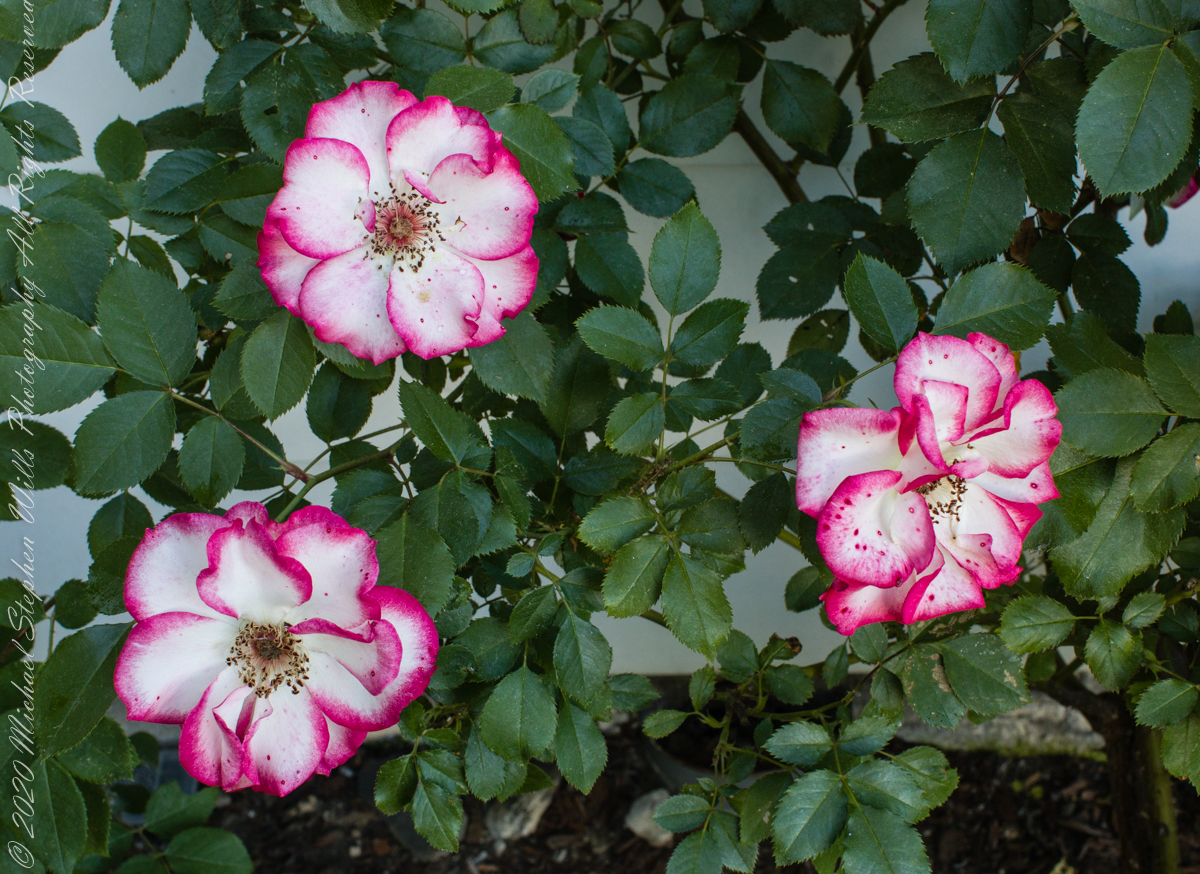
These photos feature Floribunda and double cluster roses captured on a June evening. Various stages of bloom were photographed.

These Floribunda, semi-double petaled blooms were captured along with the yellow double cluster roses of the previous post, in the evening shade of a late spring day, June 23rd.

Above is a mix of just opened (the dark red, center bottom), fully opened new (just to right of center) and aging (all the rest).

Throughout this set I used the Canon EOS 5D Mark IV dslr with the EF 50 mm f/1.2L USM stabilized with a Manfrotto 468MG tripod with Hydrostatic Ball Head.

Floribundas, sometimes called cluster flowered roses, originated with Poulsen’s nursery in Denmark from crossed with Hybrid Teas with Polyantha Roses, themselves crosses between dwarf Chinas and a dwarf, repeat-flowering form of R. multiflora. Texas-based rose hybridizer Tom Carruth released Betty Boop in 1999, naming it after a cartoon character from the 1930’s. Pam found this plant around 2008 offered by the K-mart store in Cortland. She is amazed by the beauty of the Betty Boops.

Another beloved characteristic is the longevity of the blooms. Pam collected and arranged this vase last week, for Father’s Day. I provided the setting. In this controlled environment the low ISO provides better colors and contrast with minimal digital noise.

References

“The Botanical Garden” Vol 1, Roger Phillips and Martyn Rix, Firefly Books, Buffalo, N.Y. 2002 pp 228 – 233.

Wikipedia search for “Betty Boop rose” and ” Tom Carruth rose.”

Copyright 2022 Michael Stephen Wills All Rights Reserved

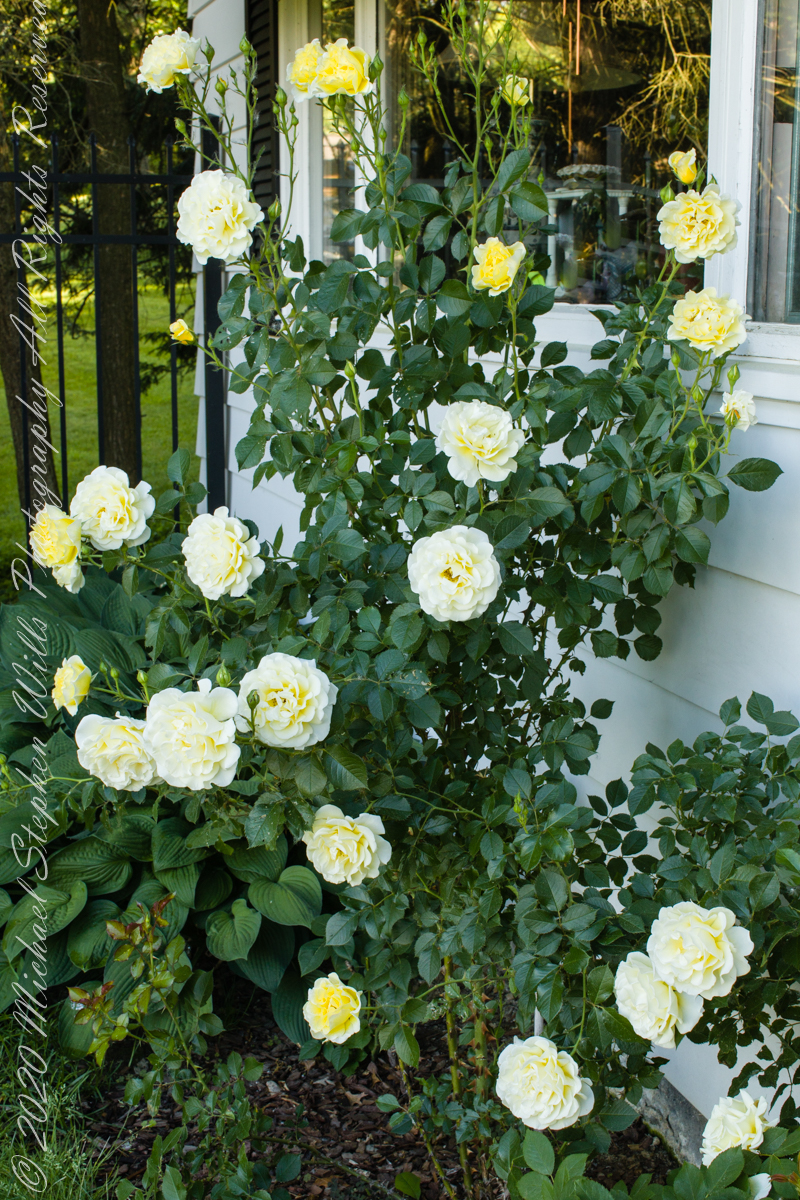
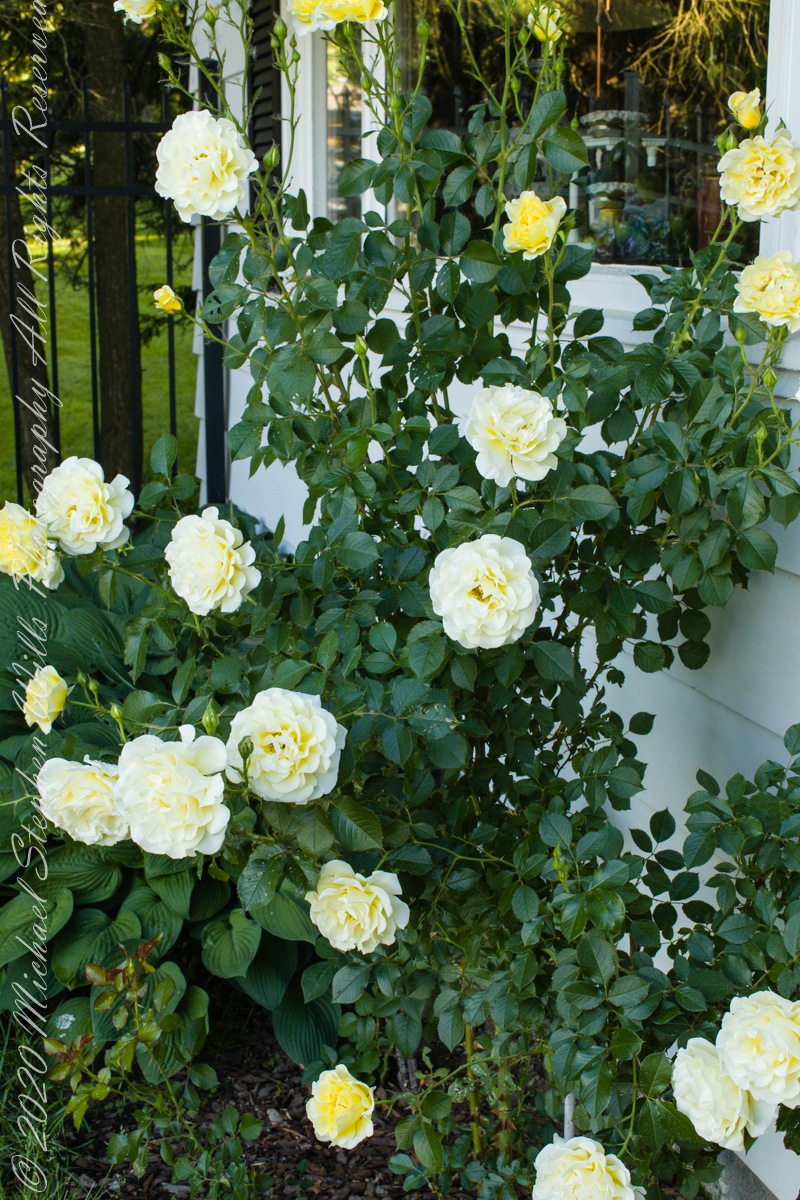
Lemon Yellow

With us since ancient times

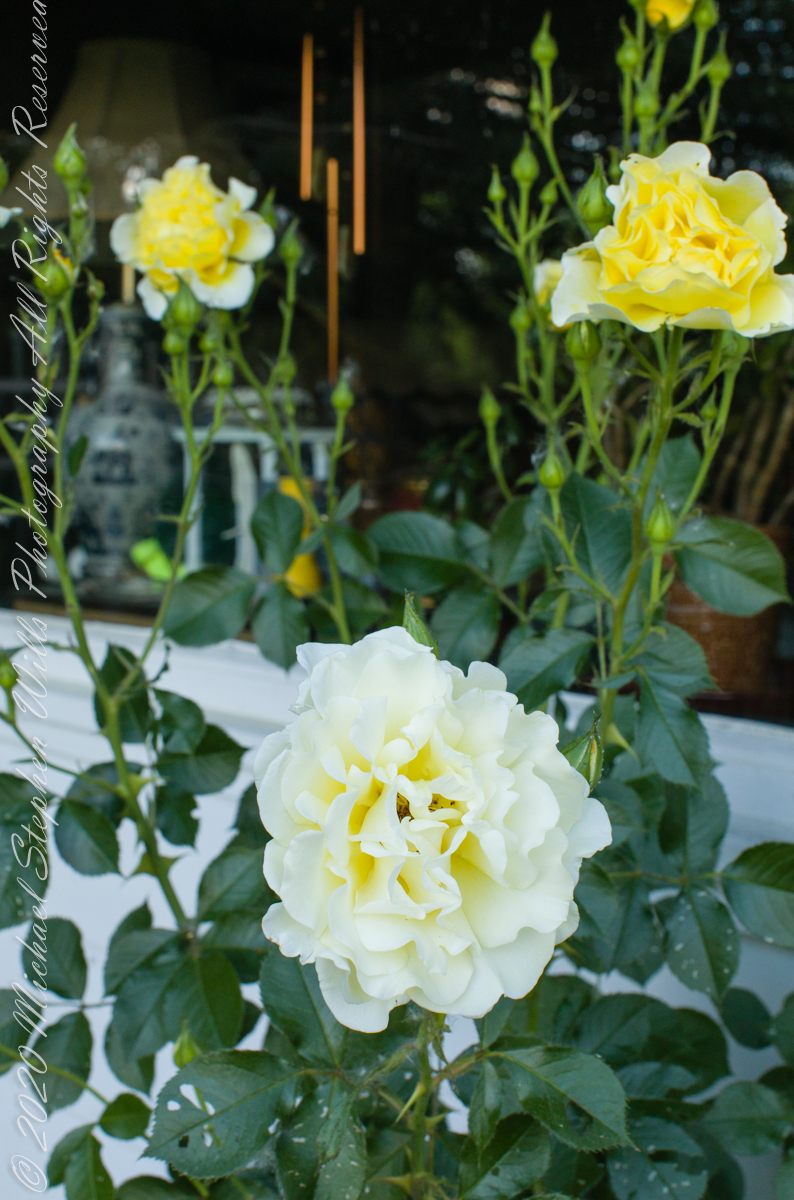
Enjoyed since ancient times throughout the Middle East and China, our European roses were cultivated from Chinese introduced in the late 18th Century. One evening this June, unusually quiet with no breeze, Pam asked me to photograph this tall shrub in full bloom. These are protected from grazing deer by a stout fence, six feet tall.

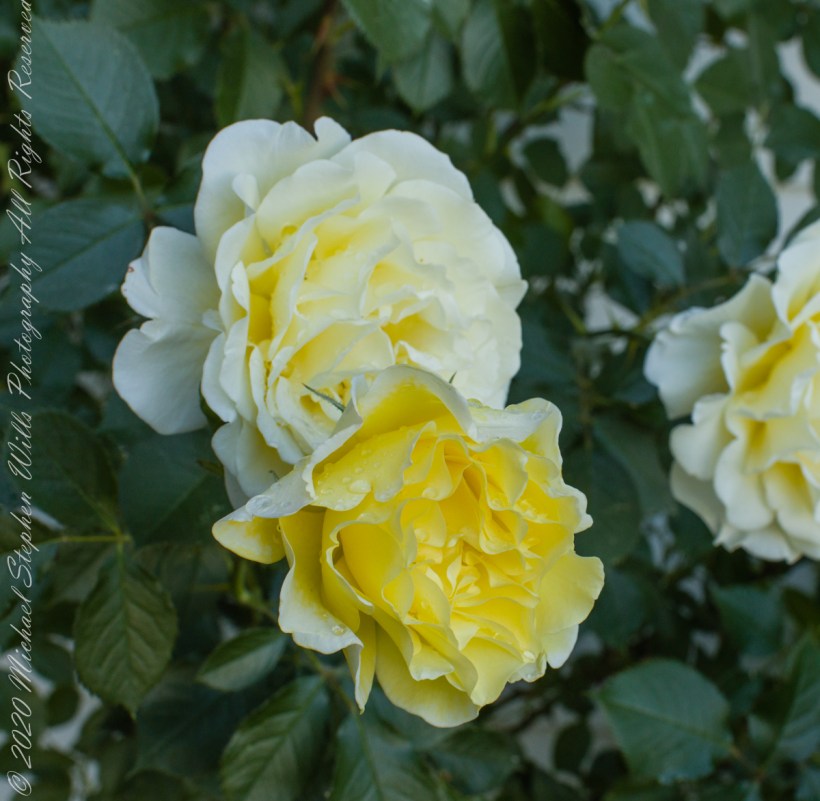
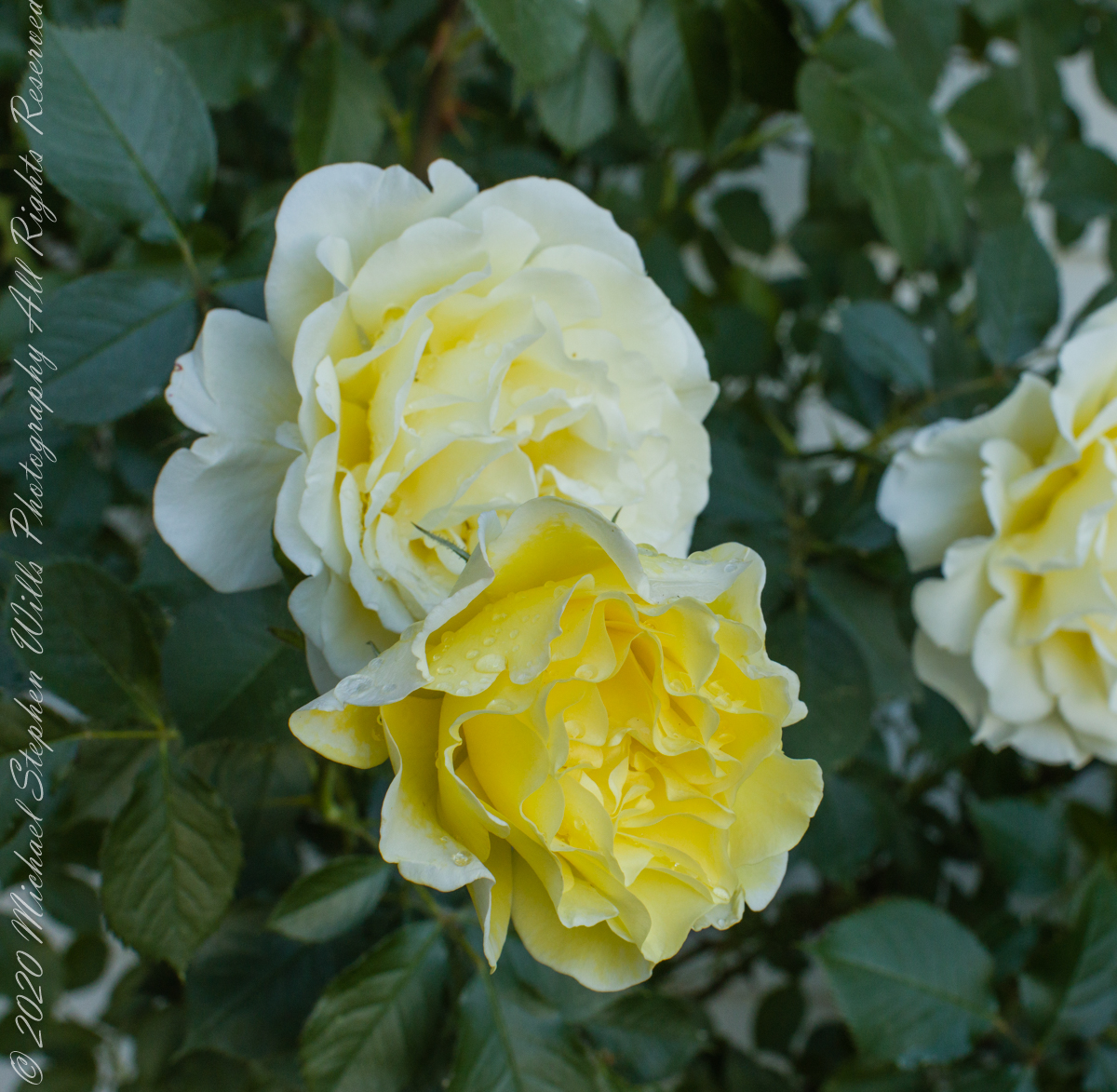
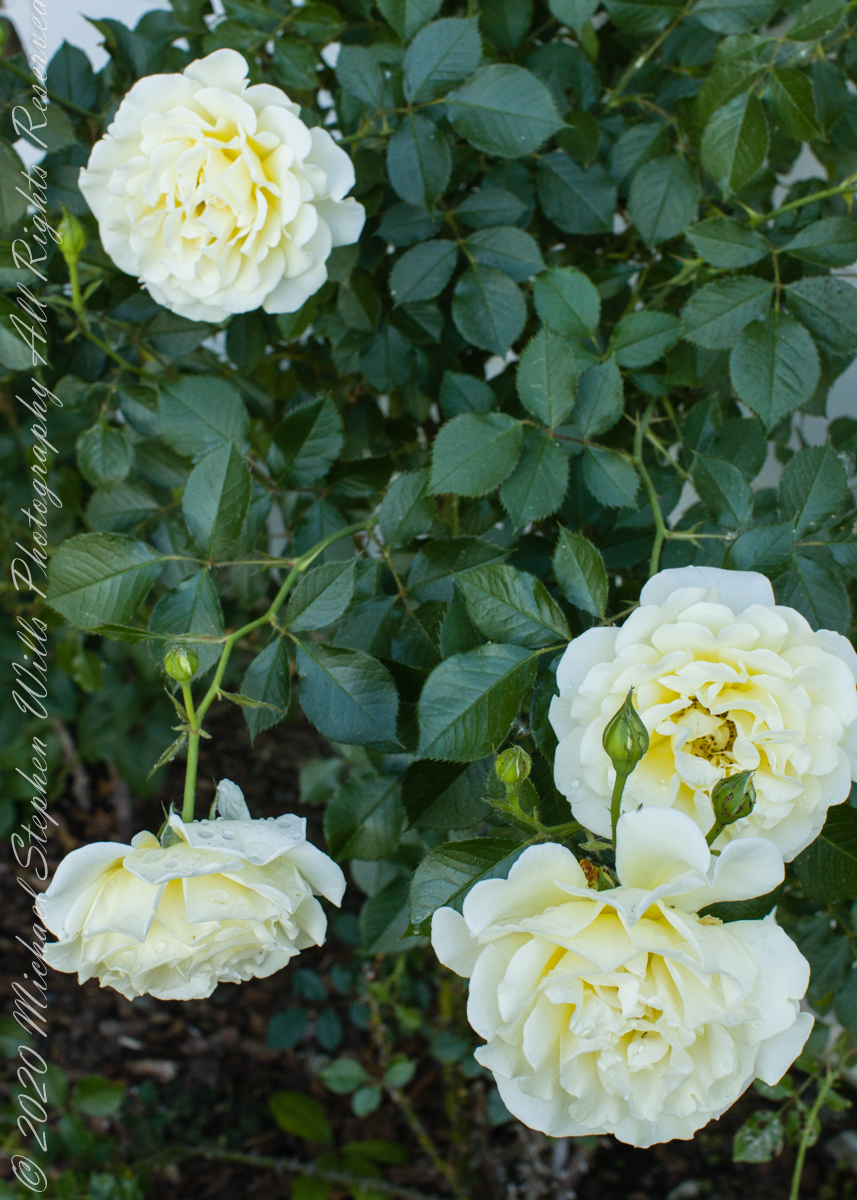
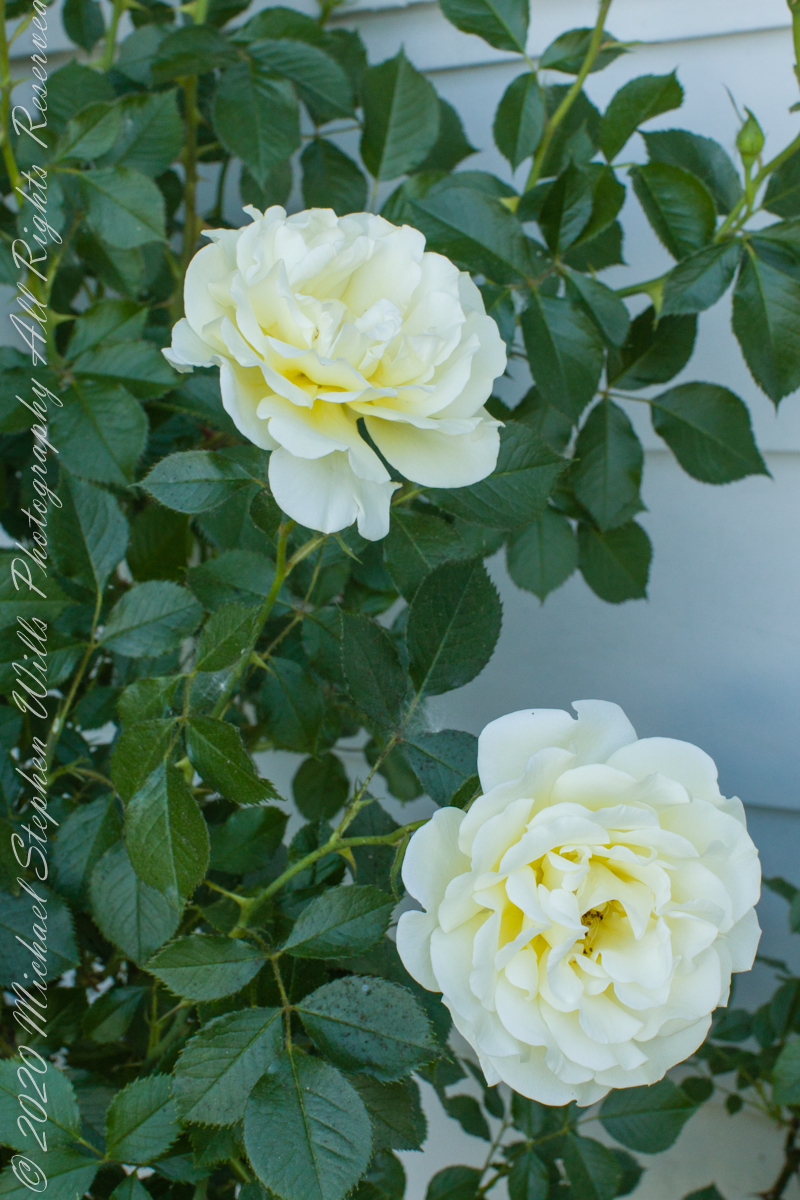
At first it appears the blooms are a mix of colors from lemon yellow to cream.

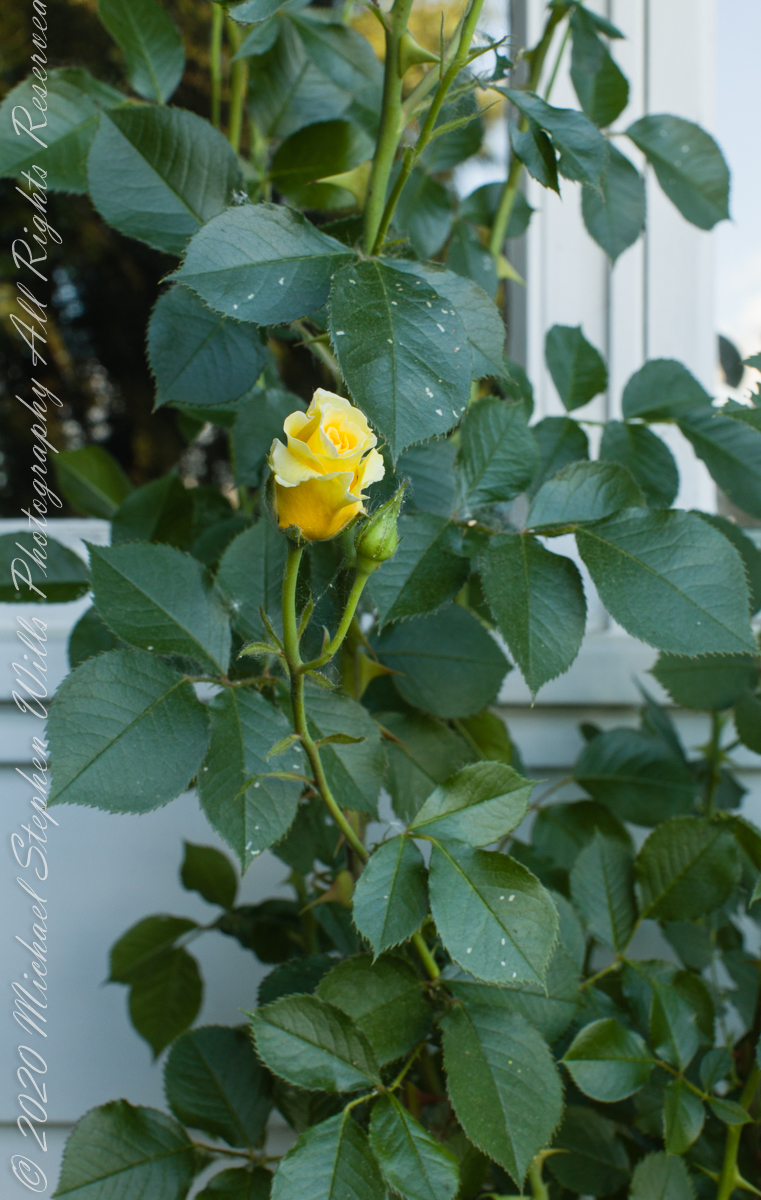
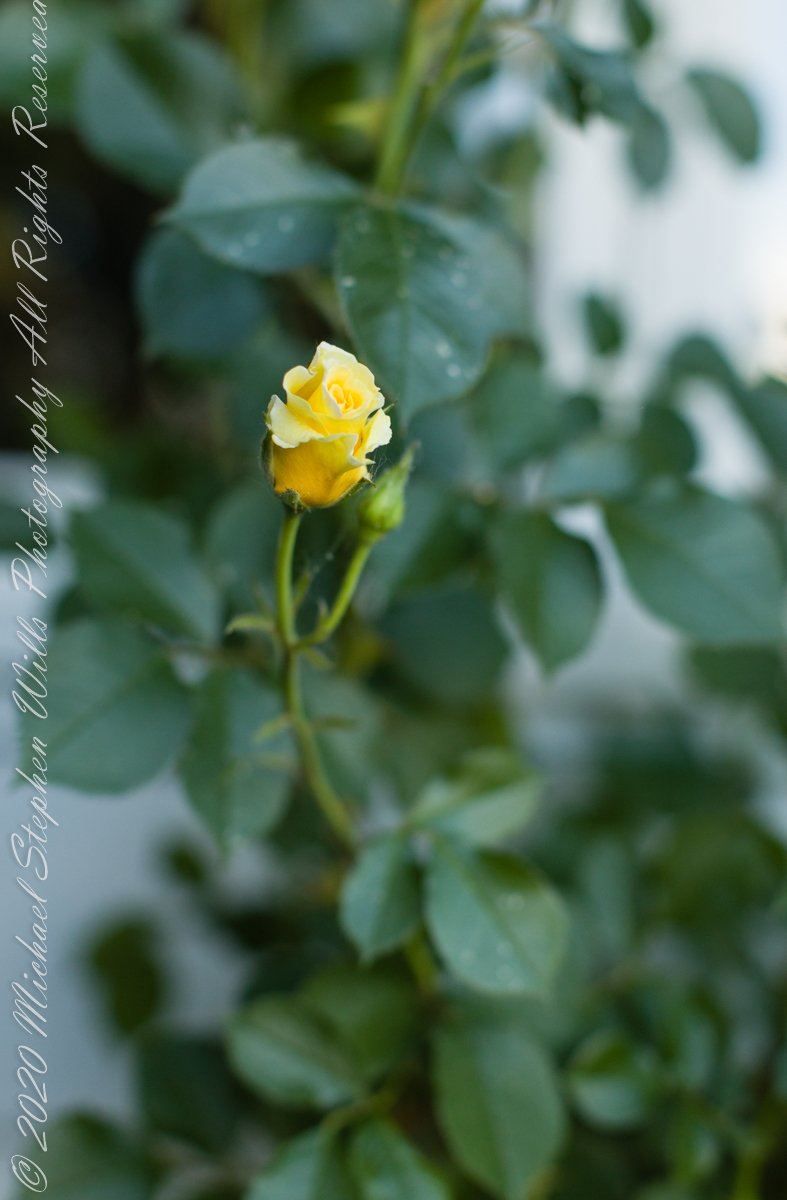
The variation is an indication of each bloom’s age since opening. At first each opens to a lemon yellow. Here is a combination of opening and tightly closed bud. Throughout this set I used the Canon EOS 5D Mark IV dslr with the EF 50 mm f/1.2L USM stabilized with a Manfrotto 468MG tripod with Hydrostatic Ball Head. The stabilization allowed me to present the following comparison, at right the very fast 50 mm lens allows the opening bud to be highlighted. Left side, the lens diaphragm is somewhat closed and the opening bud, tightly closed and leaves are all seen. The pinnate, serrated leaves have one terminal lobe and two lateral for a set of three. There are fewer thorns than some, but sharp enough to be careful.

Flowers bloom throughout the late spring, summer and fall. Pam stops fertilizing in late summer to allow the plant to harden for our Zone 4b winters. Here you can see the plentiful flower buds, compare the opening to mature flower colors.

References

“The Botanical Garden” Vol 1, Roger Phillips and Martyn Rix, Firefly Books, Buffalo, N.Y. 2002 pp 228 – 233

Copyright 2022 Michael Stephen Wills All Rights Reserved

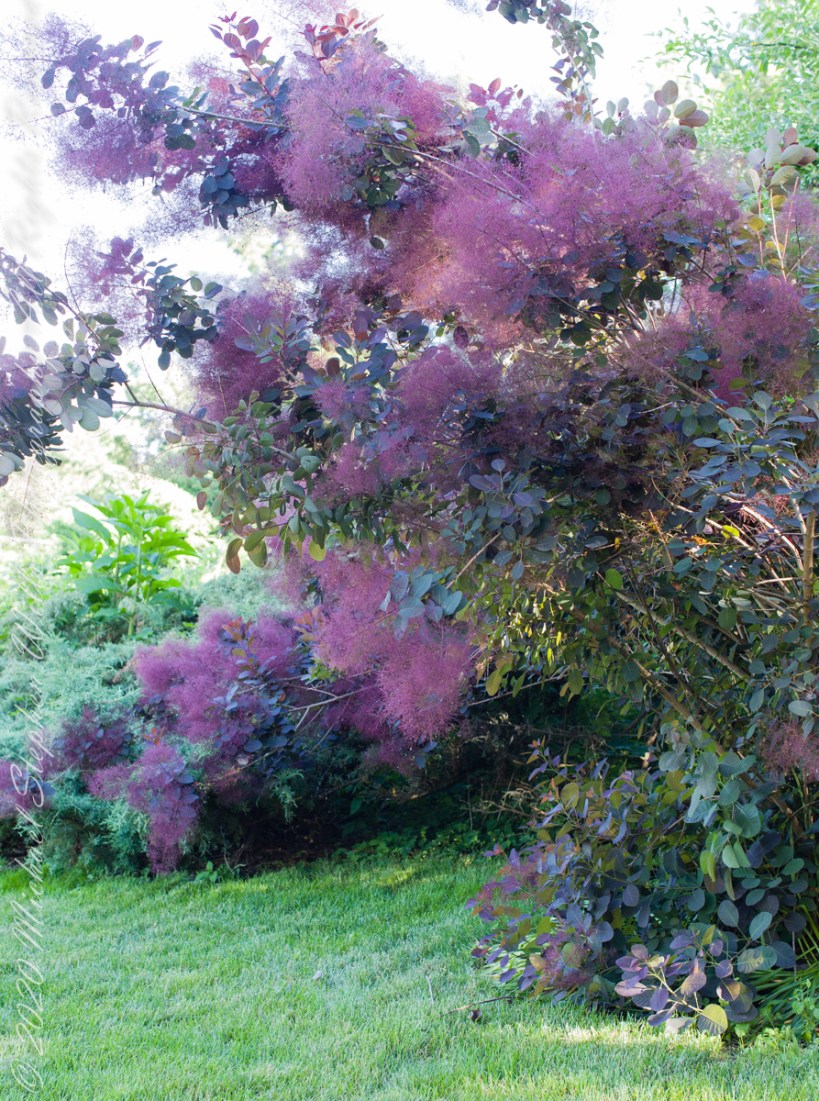
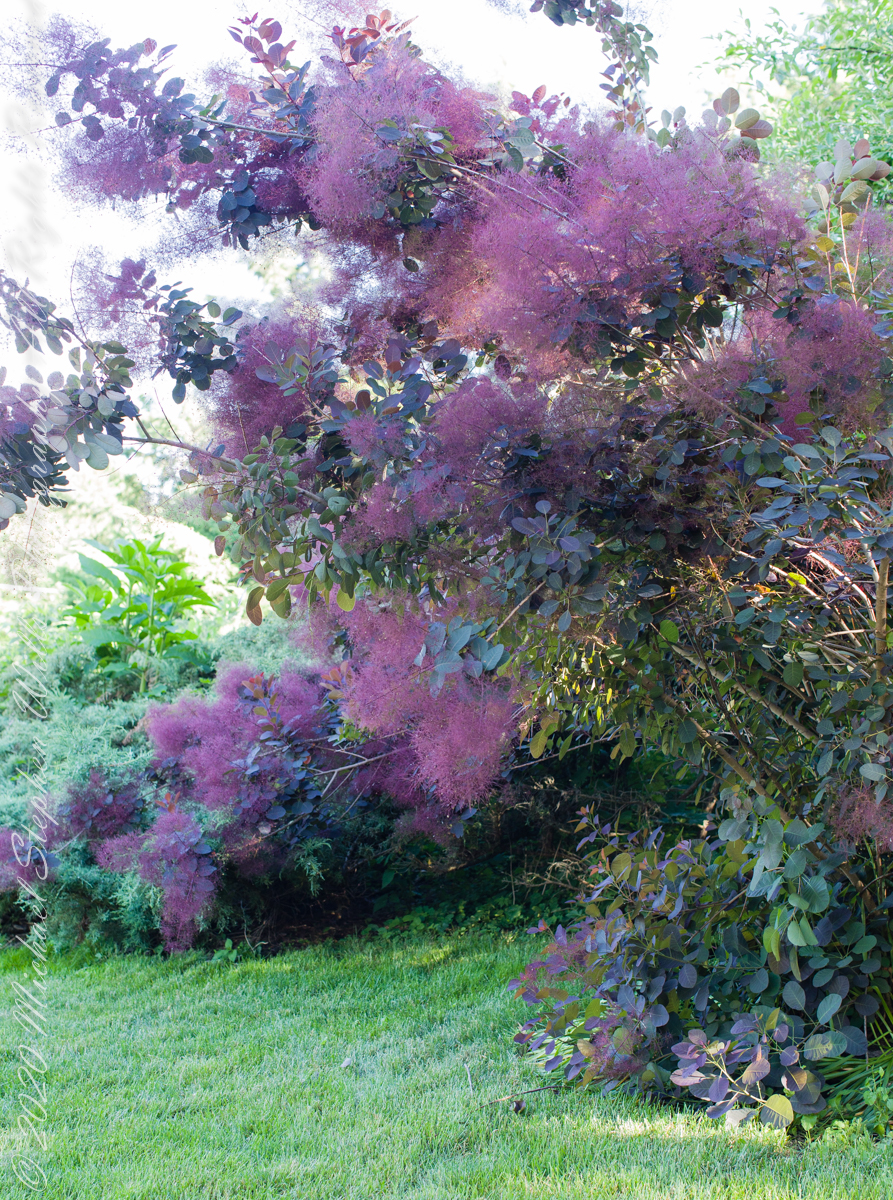
Smoke Tree, late June

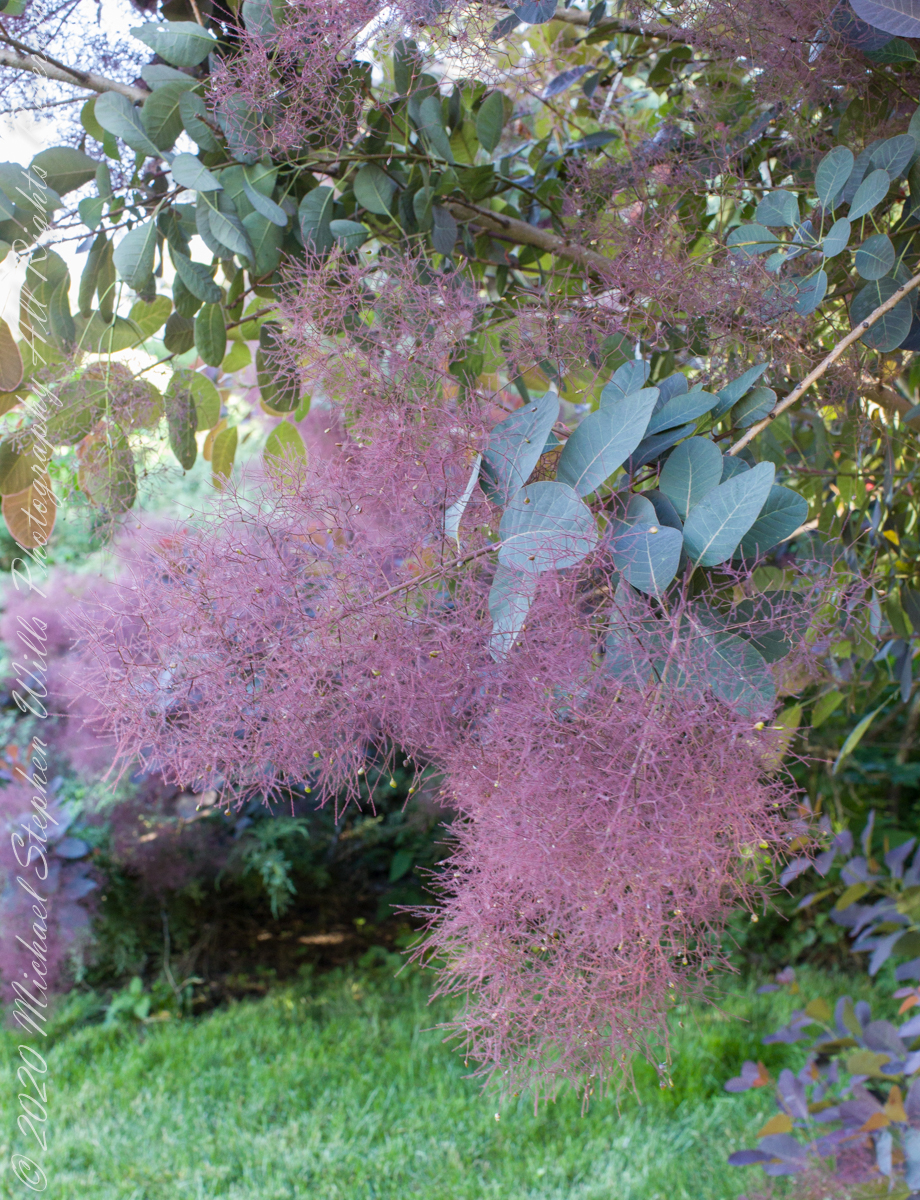
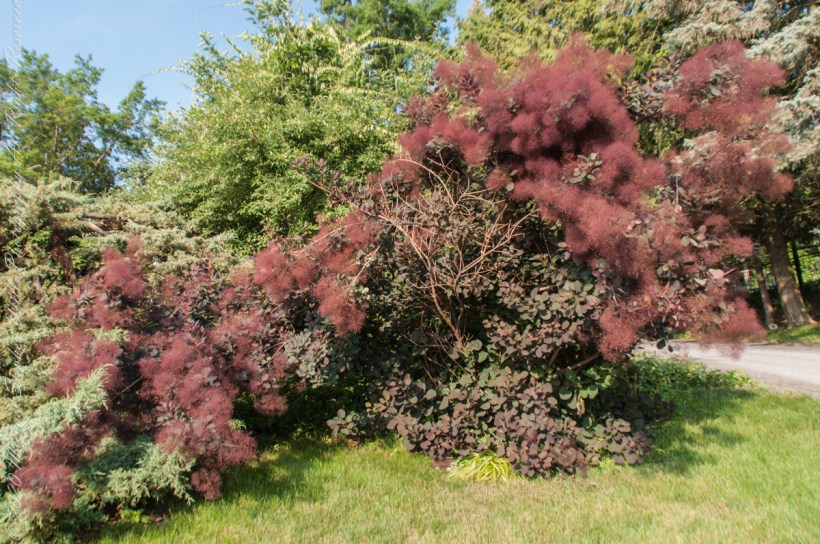
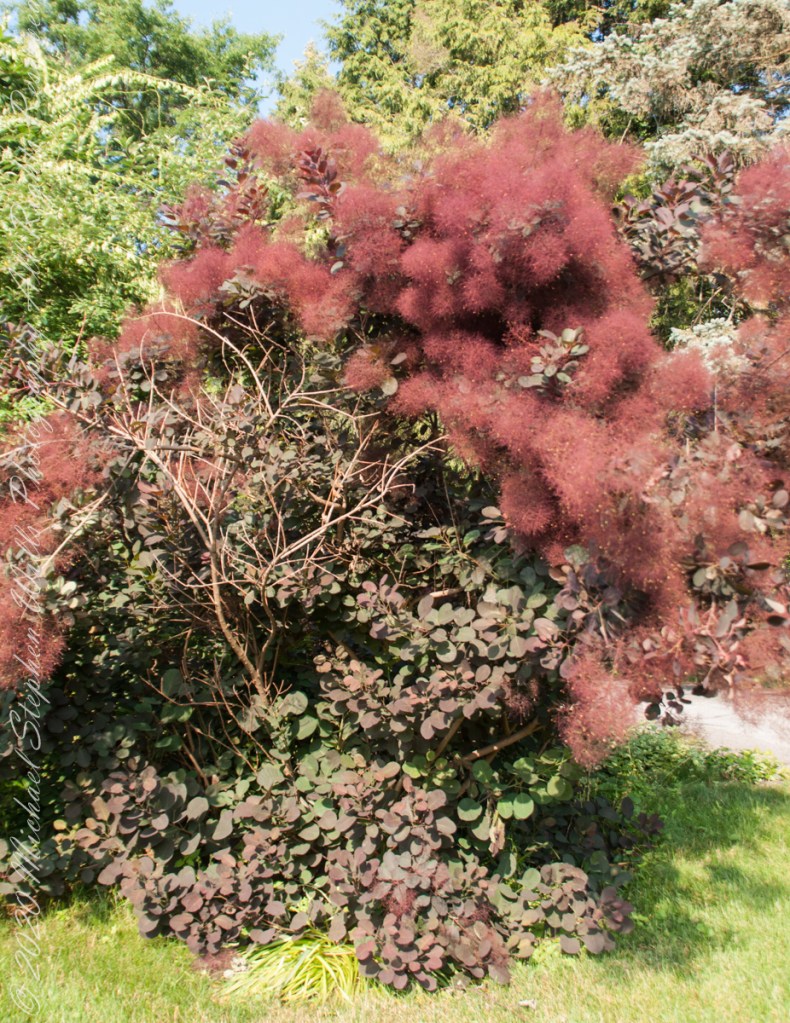
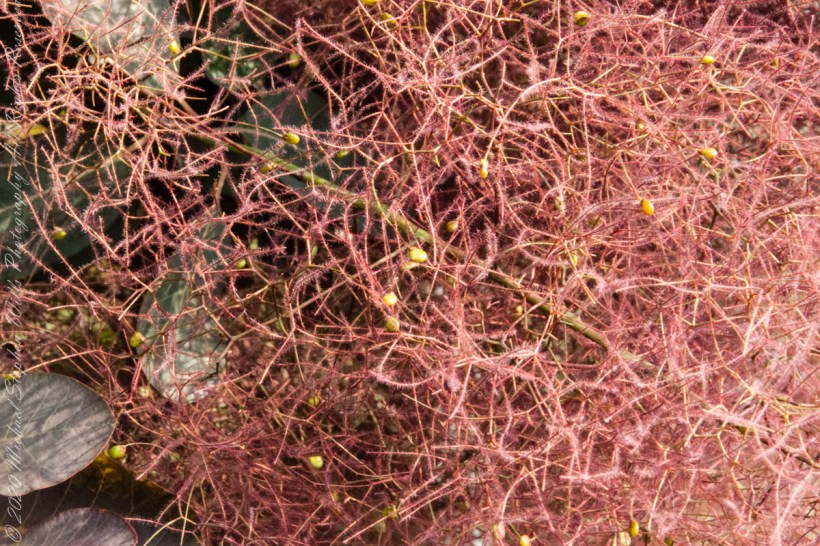
Three species of the genus Cotinus, commonly called “Smoke Tree,”in the family Anacardiaceae exist in North America, Europe and Asia. Ours is more like a shrub with numerous, long branches. Flowers with profuse filaments in clusters resembling whiffs of smoke. Here we see the flower filaments, interspersed with small drupes, each containing a single seed.

The post header, and these photographs were made from the Canon EOS 5D Mark IV, Canon Lens EF 50mm f/1.2L USM stabilized with a Manfrotto 468ZMZ tripod with hydrostatic head. Late afternoons, evenings the tree is shaded by a hemlock hedge (line of trees running north/south) this is the shade here. This Canonn dslr excels in color rendition. The flower masses are a burgundy wine color, the leaves have a purple tinge. I do not directly fertilize, as the plant is said to do best with unfertile soil though the surrounding cedars do get fertilizer stakes.

Eight AM a following morning I followed up with a handheld session using a Sony DSLR-Alpha700, Sony Lens DT 18-200 mm F3.5-6.5. Took these two shots with a lower ISO and tweaked the images in Lightroom, reducing the exposure. The flower smoky effect is well captured, the color in bright sunlight is not as wine-like as in shade.

By the time I proceeded to macros, a morning breeze kicked up, handled by upping the ISO to 3200 for a faster shutter speed to stop the movement. The bright sun helped with this.

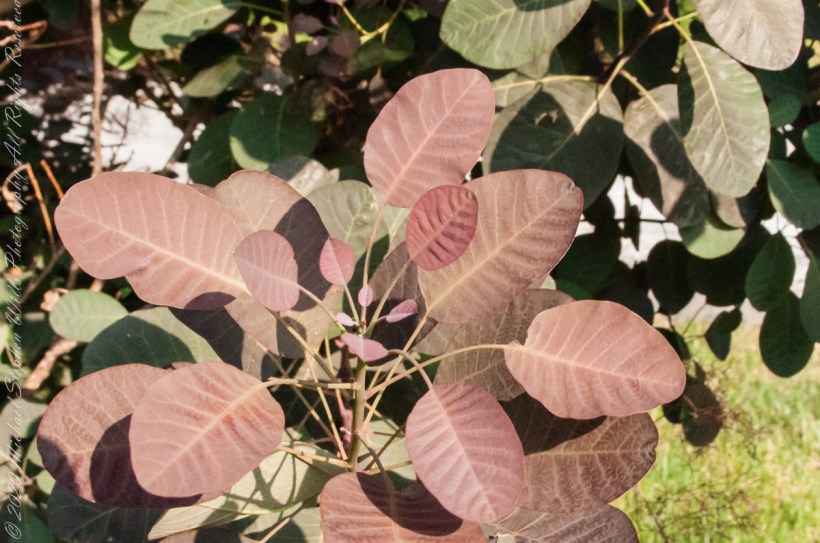
Fertilized flowers develop into fruit stalks with radiating filaments, the yellow dots are the drupes (fleshy bodies surrounding a single seed). Fresh leaves are purple, turning to dark green with age. The leaves are as unusual as the flowers: aromatic, simple and round on long stalks. Autumn, the leaves turn a stunning bright red-orange, a scarlet shade. In winter some stalks die off, new growth appears from the roots in spring.

References

“The Botanical Garden Vol 1 Trees and Shrubs”, Roger Phillips and Martyn Rix, Firefly Books, Buffalo NY, 2000, p 361

Wikipedia, “Smoke Tree”

Copyright 2021 Michael Stephen Wills All Rights Reserved