Luminous Tension

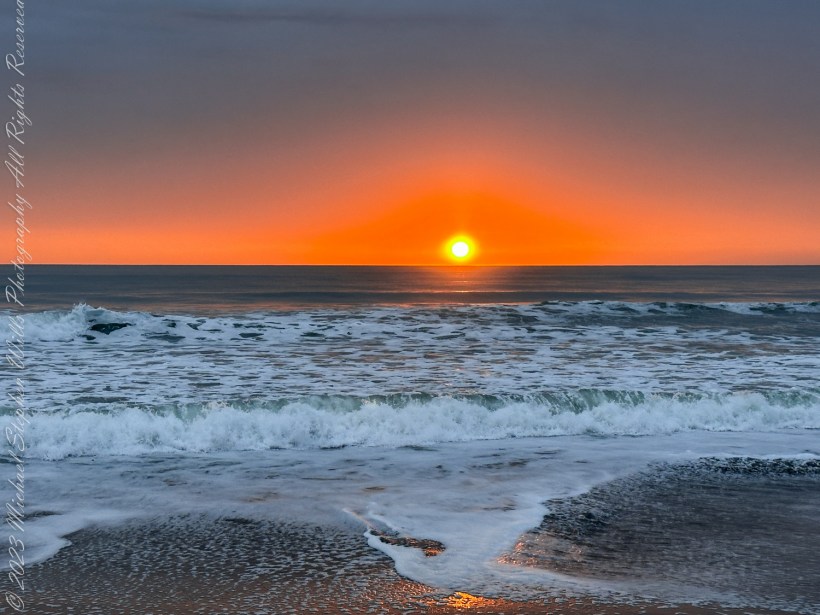
Beneath the brooding storm clouds moving with silent intent, I stood, the air electric with the storm’s approach. Yet, turning east, the Sun’s Eye winked at the horizon, igniting the sky in defiance—a fleeting warmth against the impending tempest’s chill.

Amidst the sprawling canvas of Cocoa Beach, a beachcomber such as I stands witness to the theater of the skies, a stage upon which the sun and storm perform their eternal dance. The dawn of this particular February morning brought with it a spectacle of dual realms, a chiaroscuro of the celestial drama that unfolds in minutes and lingers in the heart.

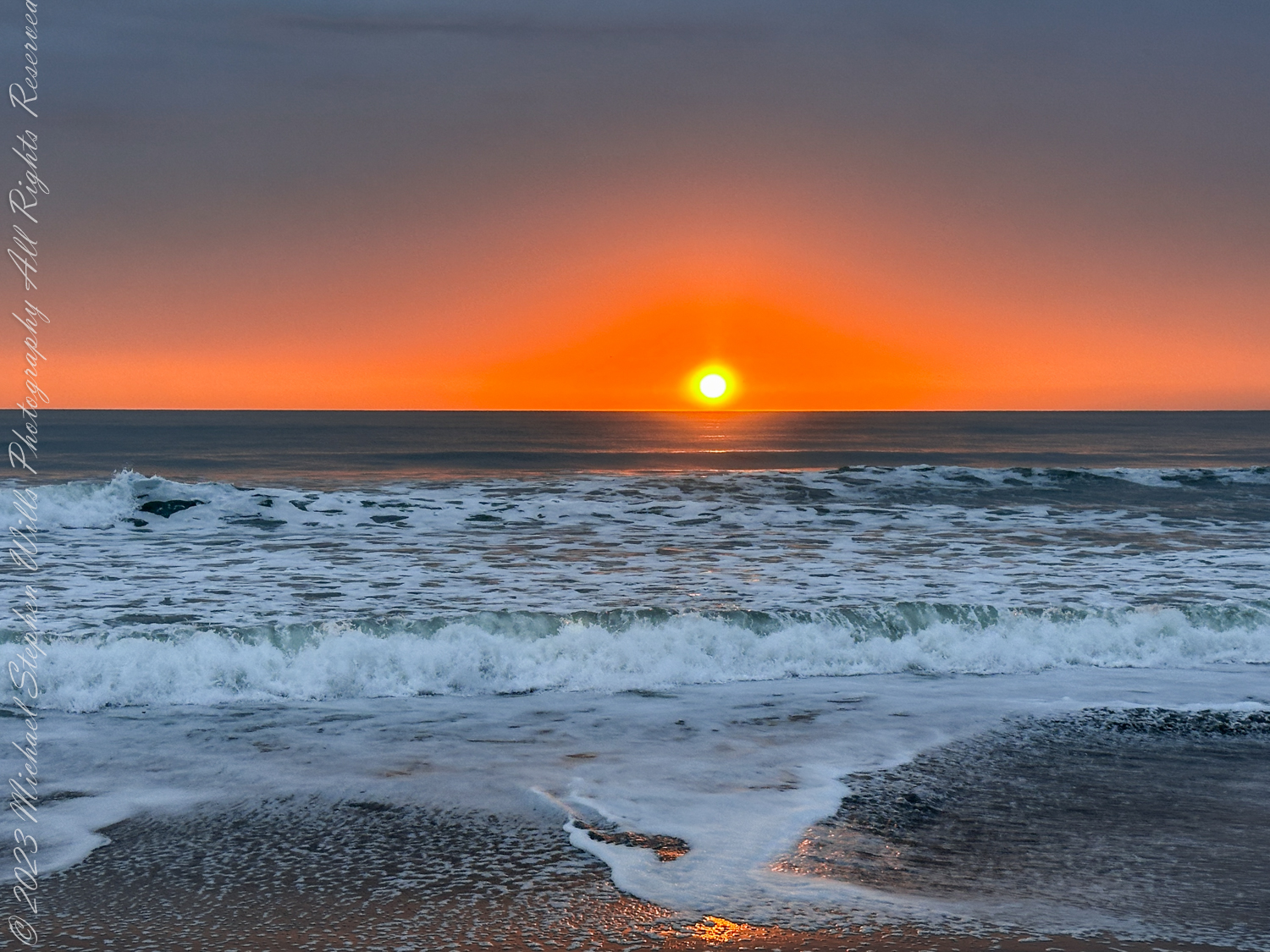
To the east, ‘the Sun’s Eye’—a fierce, glowing orb—peered over the horizon, its gaze cutting through the cool morning mist. The sea, a mirror of the skies, blushed with the hues of a blooming peach, its waves whispering secrets as they lapped the shore. Each frothy crest reflected the sun’s burgeoning fire, a symphony of light that sang of the world’s awakening. It was a moment of birth and beginning, the kindling of a day where the potential hung ripe as the citrus in the Floridian groves.
This radiance, however, was but a half of the morning’s tale. As I turned, facing west, the sky told a different story. Here, the heavens grew heavy with brooding storm clouds, a tumultuous sea of gray above the green. These undulating specters crept forward, a procession of ashen waves threatening to swallow the day’s young light. The air, charged with the tension of an impending tempest, hummed with the promise of nature’s fury.
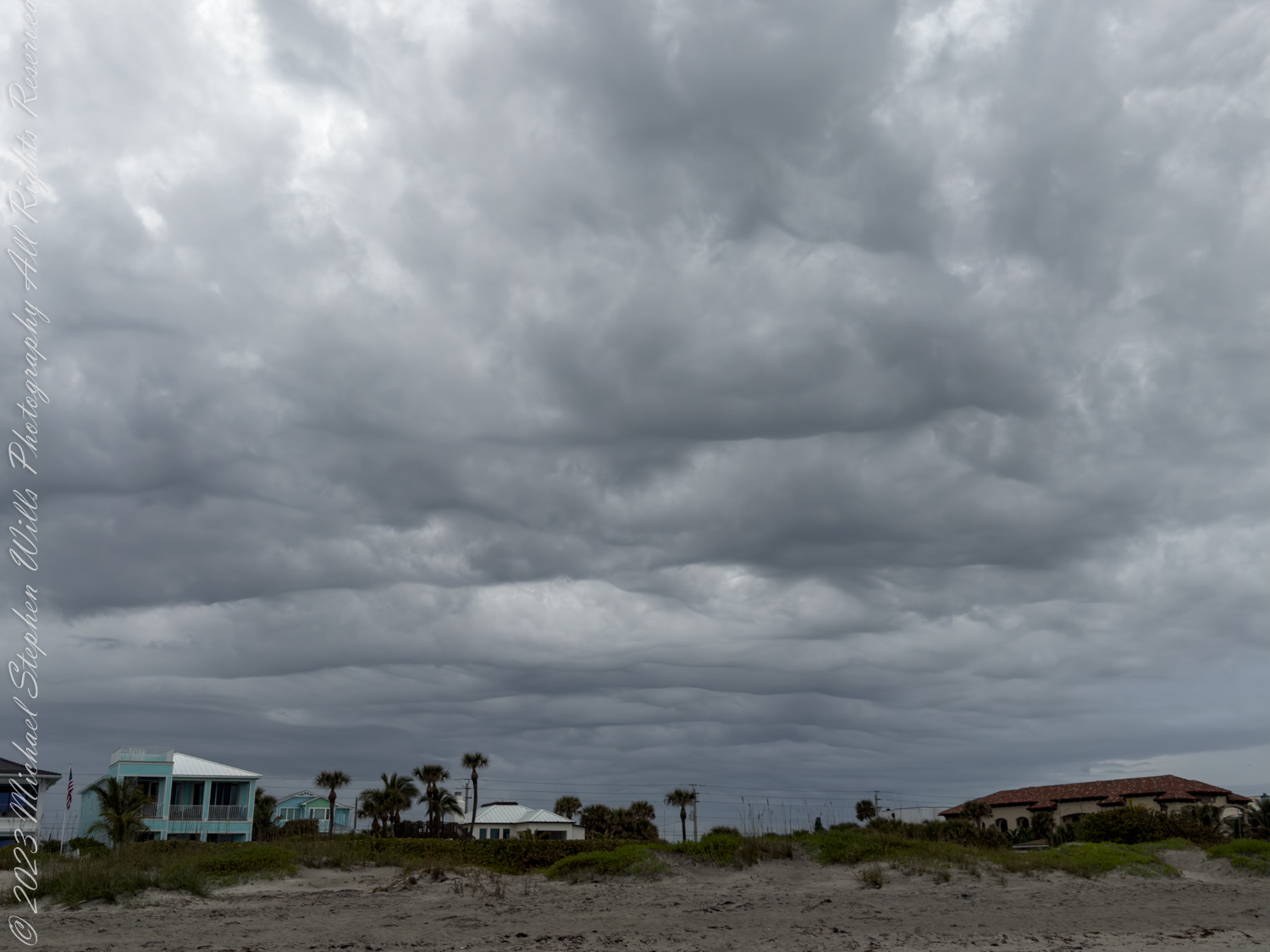
Twenty-one minutes—a mere breath in the lifespan of the cosmos—was all it took for the scenery to shift, the mood to transform. To the east, the promise of warmth and the whisper of daylight’s caress; to the west, the cold omen of a storm’s embrace. This juxtaposition, this confrontation of fire and shadow, was a testament to the Earth’s ephemeral beauty.

In the presence of such a display, I—a mere beachcomber—was a sentinel between two worlds. The sunrise spoke to me of hope, of the unyielding rhythm of time that brings renewal each day. Its golden fingers painted the world in a palette of possibility, a reminder that each dawn brings its own story, its own song to be sung.

The approaching storm, in contrast, murmured of respect for the forces beyond our grasp, the humbling power that nature wields with indifferent grace. Its darkening clouds, layered like the furrowed brows of ancient gods, were a canvas of the world’s raw strength, its capacity for change, for washing the old away with a torrent.

Here, on this stretch of sand, the universe seemed to converge—a meeting point of opposing forces, a confluence of light and darkness, creation and destruction. In the face of such majesty, I found a profound tranquility, a sense of my place in the grand tapestry. For what are we but observers, participants in the grand design, bearing witness to the moments when the world reveals its contrasting character?

This morning’s display was a parable of life itself, written in the language of the skies. The Sun’s Eye, ever-watchful, ever-prescient, promised the comfort of the familiar, the steady passage of time marked by the constancy of its rise and fall. The storm, brooding and unpredictable, was a reminder of life’s uncertainty, the inevitability of change and the beauty found within it.

As the light grew and the darkness encroached, I stood at the crossroads of day and night, life and experience. With the sand beneath my feet and the salt air filling my lungs, I embraced the duality of existence, knowing well that each sunrise heralds not just the day, but the inescapable storm that follows. In Cocoa Beach, on the Space Coast, the universe had unfolded its dual nature before me, an eternal beachcomber, in the span of a single, breathtaking morning.
Copyright 2024 Michael Stephen Wills All Rights Reserved

Two Laughing Gulls of Cocoa Beach: A Dance of Adaptation and Survival

Discover the captivating world of Laughing Gulls, the jesters of Cocoa Beach’s shores. Dive into their lives, exploring the dance of courtship, the adaptability in their diet, and their vital role in the coastal symphony.

The Coastal Sentinels

On the shores of Cocoa Beach, where the Atlantic’s waves gently knead the sands of Brevard County, Laughing Gulls (Leucophaeus atricilla) enact their daily ballet of survival and adaptation. In the span of mere minutes, the shifting light of Florida’s coastal theater presents two scenes, each with the same protagonist yet donned in starkly different costumes.

The Many Faces of Adaptation

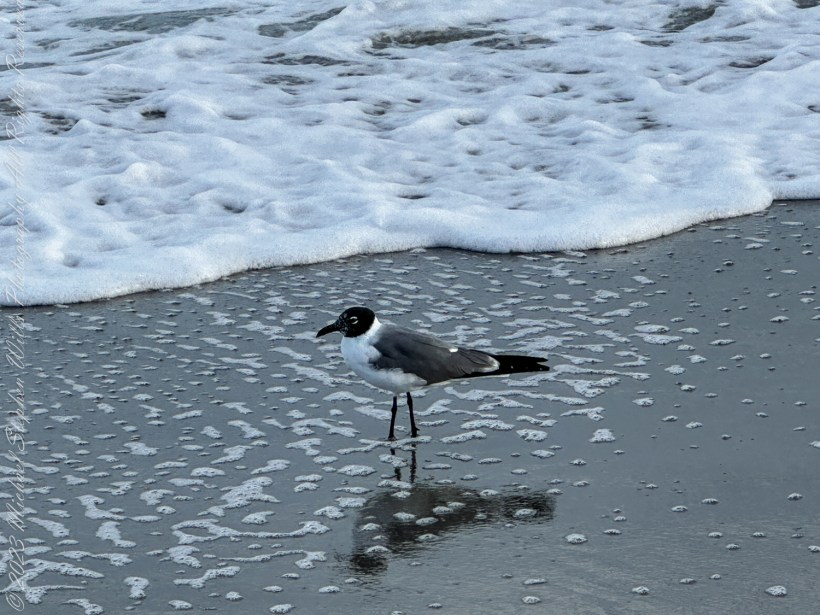
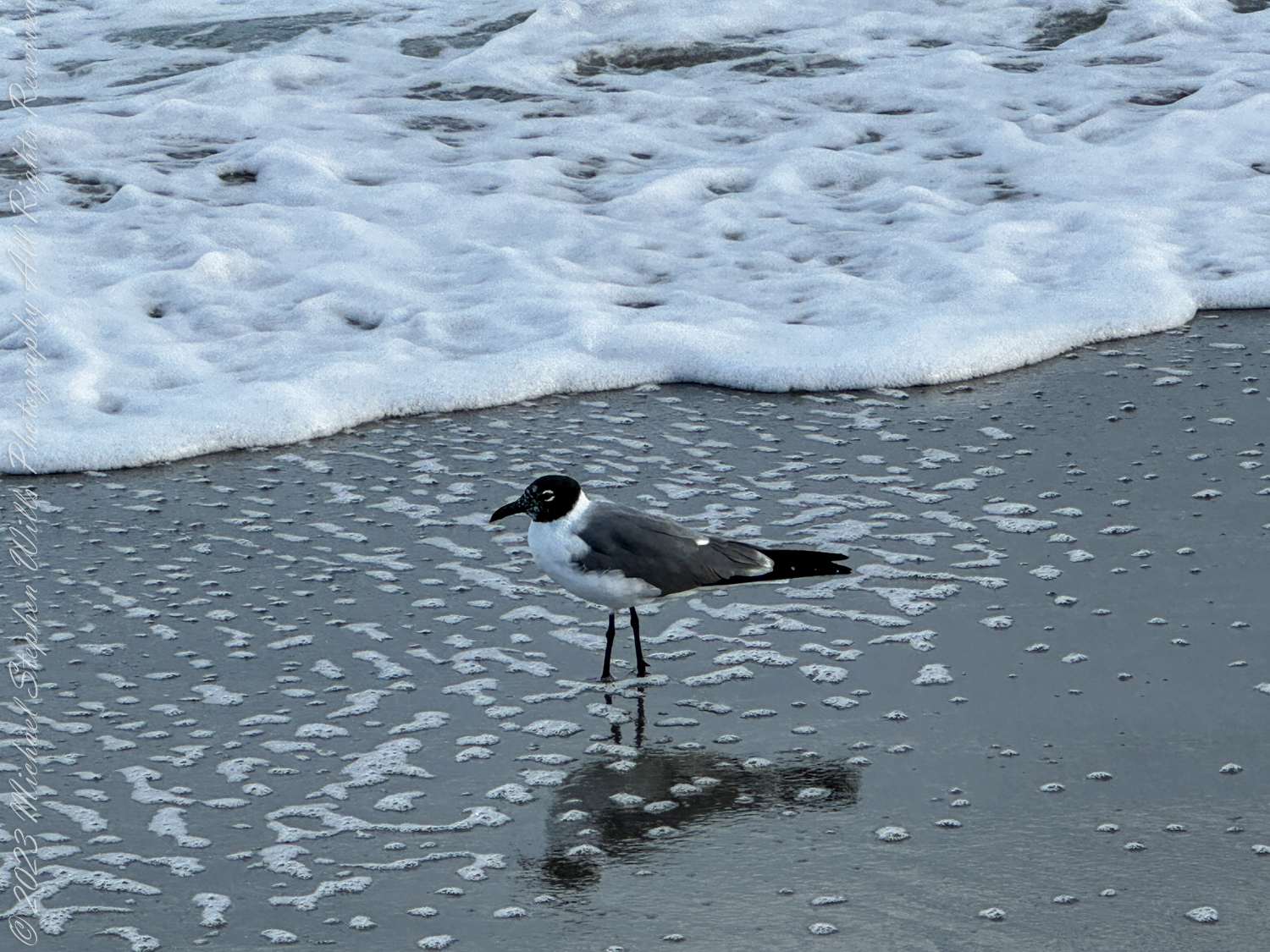
The first gull, captured against the frothy lace of the incoming tide, is the epitome of the breeding plumage: a sleek, black hood that starkly contrasts its pearl-grey wings. This attire is not merely for allure but speaks of its readiness to engage in the rituals of courtship and the responsibilities of rearing the next generation. This black hood, a seasonal crown, fades as the duties of breeding wane, revealing the less conspicuous garb of the non-breeding season—a mottled grey head atop the same sturdy body, ready to blend into the off-season’s landscape.

Laughing Gull with breeding plumage

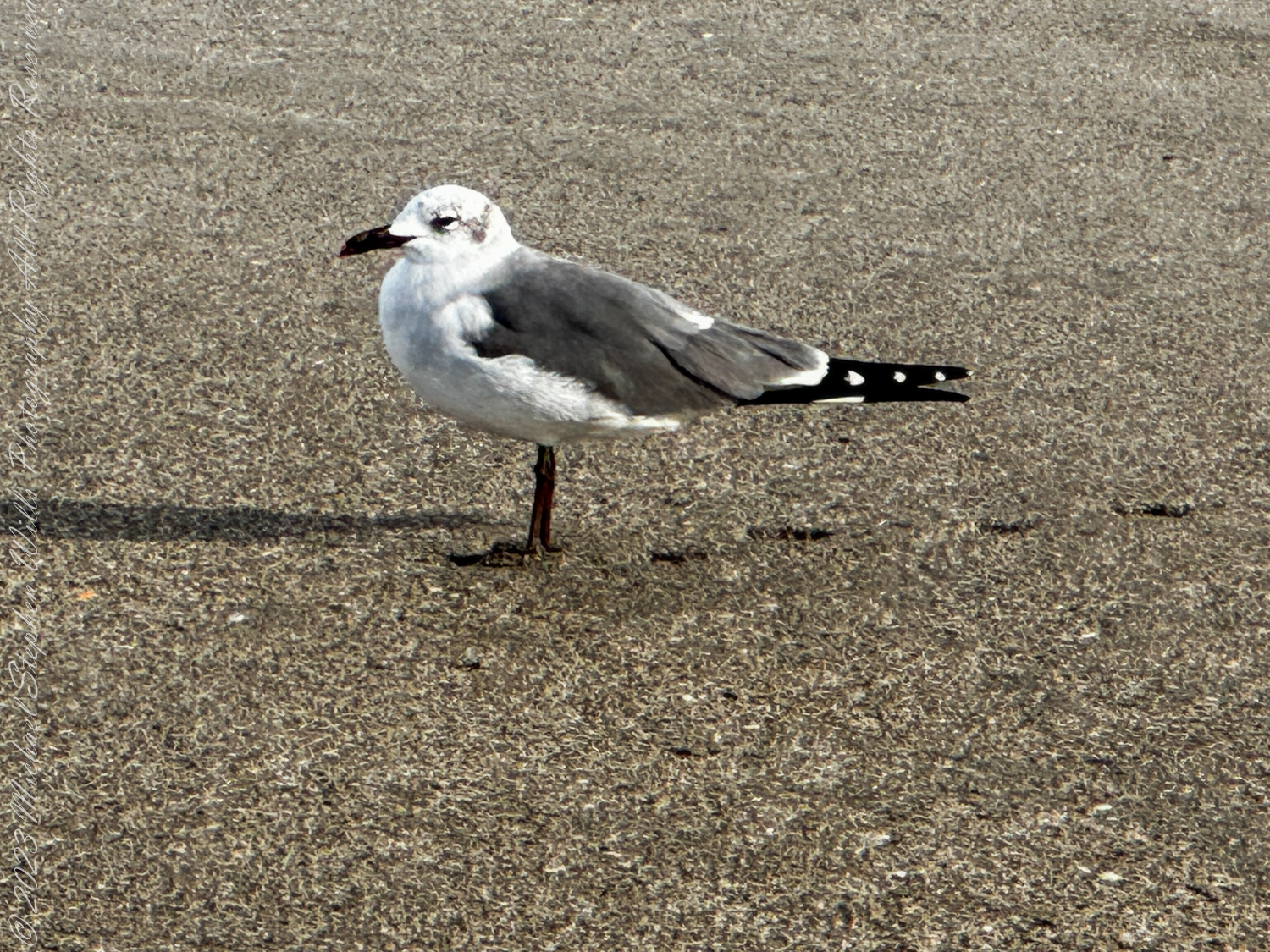
Laughing Gull, nonbreeding plumage

Minutes Of Separation

The mere minutes that separate the two photographs are but a whisper in the grand dialogue of evolutionary time. Yet, they offer a glimpse into the ever-present duality of the Laughing Gull’s life. In one, the gull stands resolute, black-headed and bold against the soft chaos of the sea’s edge. In the other, its head appears dusted with the wisdom of age, a visual softening that speaks to the less confrontational time of year.

Here are some observations to make sense of this disparity:

Overlap of Molting Periods: Laughing Gulls do not all breed at the same time; some individuals may start molting into or out of breeding plumage earlier or later than others. This can result in birds with different plumage being seen together.

Varied Maturity: Younger gulls or those not yet of breeding age may not have developed the breeding plumage, while adults in the same flock may display full breeding colors.

Breeding Colonies: Gulls often nest in colonies where birds in different stages of the breeding cycle can be observed together, including those that may have lost mates or failed to breed and therefore did not develop breeding plumage.

Health or Nutritional Status: Sometimes a bird’s plumage can be affected by its health or nutritional status. A gull in poor health might not molt into breeding plumage as expected.

Geographic and Climatic Factors: Local environmental conditions can influence the timing of molting. Birds in the same location can experience different environmental cues that might affect their molt.

Non-breeding Visitors: During the breeding season, some non-breeding birds may still be present and intermingle with breeding birds, either because they are passing through the area or they are non-breeding residents.

Extended Breeding Season: In areas with a long breeding season, such as in subtropical and tropical regions, the breeding and non-breeding plumages can be seen at the same time due to the extended period over which breeding can occur.

Masters of the Coastal Realm

The Laughing Gulls are more than just residents of the coast; they are its caretakers and witnesses. Their laughing calls are synonymous with the ocean’s breath, a soundscape that harmonizes with the rhythmic crashing of waves. These birds thrive in the intertidal zone, a challenging environment where land and sea engage in a perpetual tussle. Here, they must be opportunistic, agile, and resourceful, for the beach offers both a cornucopia of food and the threat of unpredictability.

The Ebb and Flow of Existence

The life of a Laughing Gull is intimately tied to the ebb and flow of the tides. Their diet is a testament to their adaptability, comprising anything the sea yields—fish, crustaceans, and even the unfortunate insects that stray too close to the brine. They are pirates of the shore, unafraid to snatch a meal from another bird or scavenge the remains of human activity.

Reflections on Change and Constancy

Laughing Gulls are the embodiment of the sea’s narrative around us—a story of change and constancy. Their lives are a testament to the tumultuous history of the ocean, and their presence is a thread that connects us to the vast, blue mystery. They remind us that, while the sea’s moods are many and its faces ever-changing, it remains a central force in the narrative of life on Earth.

In the Face of Tomorrow

In the space between these two images, we find a profound lesson on the nature of time and the resilience of life. The Laughing Gulls of Cocoa Beach, with their shifting plumage and timeless cries, are messengers of the past, envoys of the present, and harbingers of the future. As we contemplate their existence, we are reminded of our own place within the natural world—a world that requires our understanding and protection, lest the laughter of these gulls fades into the silent archives of history.

The Laughing Gulls of Cocoa Beach continue their dance, unfazed by the human gaze, their lives a fluid adaptation to the sea’s caprices. And as the sun marches across the sky, casting the story of these gulls into relief against the shifting sands, we are privileged to observe, to learn, and to cherish the Atlantic Ocean’s enduring tale.

Copyright 2024 Michael Stephen Wills All Rights Reserved

Life of an Osprey: From Nest to Sky

Read about this osprey’s journey, from a hatchling to a fledgling soaring over Cayuga Lake.

Continue reading “Life of an Osprey: From Nest to Sky”