On Being Thankful

A garden, migrating geese, an unexpected balloon and flowers opening after dark remind me that gratitude begins by noticing the extraordinary within ordinary life.

There are times when gratitude arrives not as a grand revelation but quietly, almost unnoticed. It can begin by looking out a window, walking through a garden, hearing the calls of birds overhead, or watching something unexpected drift across an otherwise familiar sky. My video is made of such moments. It is a collection of things close at hand, yet when gathered together and accompanied by music, they become something more: a reminder of how extraordinarily rich an ordinary life can be.

I have much to be thankful for.

I am thankful, first, for home, a place on Earth intimately known to me. The opening views of the garden convey that sense wonderfully. There are great white clusters of hydrangea against deep green foliage, scattered pink blossoms, lawn, trees and the familiar boundaries of a yard. None of it is monumental. That is exactly the point. These are not the Alps or some distant wilderness. They are the landscape of everyday life, made beautiful by familiarity, care and the changing seasons.

A garden teaches gratitude because nothing in it remains still. Flowers arrive, flourish and disappear. Leaves that emerge with the almost translucent green of spring deepen through summer and eventually blaze red before falling. Brilliant red foliage is particularly striking, it carries within it both beauty and departure. Autumn diminishes and completes summer.

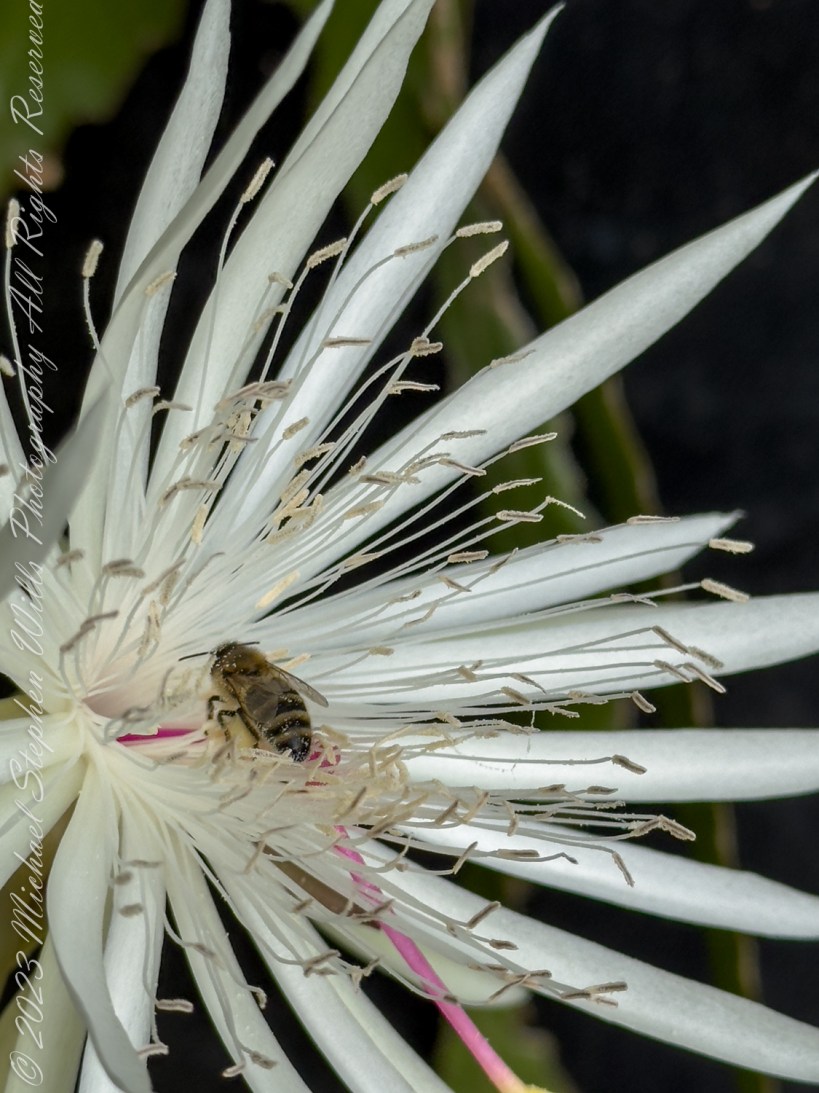
And then there are those remarkable white flowers opening in darkness—the extravagant, almost otherworldly blossoms of the night-blooming cactus. They seem fashioned from moonlight: long, narrow petals radiating from their centers, magnificent for such a brief interval. Their fleeting existence makes them more precious. To witness one requires being present at the right moment.

Perhaps that is true of much of life.

I am thankful that I have retained the impulse to notice.

There is a considerable difference between seeing something and noticing it. The world is filled with people who look at flowers, birds and skies every day without really seeing them. Curiosity changes that. It makes a flock of geese more than birds crossing the sky. they form their wavering lines beneath pale blue heavens shared with our moon. They are travelers following routes far older than our roads, houses or cities. Their passage reminds me that my home is part of a much larger landscape and that the seasons unfolding in my yard belong to rhythms extending across a continent.

I am thankful for the ability to look upward.

The balloon drifting above the neighborhood makes that thought almost literal. Suddenly an ordinary sky contains a great yellow, red and blue vessel, sometimes distant among the trees, sometimes passing wonderfully close overhead. We see the basket beneath it and the people aboard—human beings temporarily liberated from the ground, carried through the same air in which the geese travel.

There is something optimistic about a hot-air balloon. It accomplishes wonderfully nothing particularly urgent. It rises because people still want to know what the world looks like from somewhere else. Its presence in the video celebrates imagination, adventure and the persistence of wonder.

Yet gratitude also grows downward, into the earth.

The images of lush plants growing in raised beds and then harvested in abundance speak of another kind of wealth. Food does not simply appear. A seed becomes roots and leaves; sunlight is captured; water rises through stems; soil gives up minerals; human hands tend what is growing. Eventually the garden gives something back. To harvest food from plants one has watched develop is to participate, however modestly, in one of humanity’s oldest relationships with the living world.

I am thankful for that abundance—not abundance measured by possessions, but by experiences.

The sculpture of the young boy and girl quietly sharing a book adds a different note. Amid flowers, birds, harvests and skies is an image of companionship. Two figures sit close together, absorbed in the same story. It suggests affection, learning, intimacy and the pleasure of sharing something with another person. A life becomes immeasurably richer when its experiences are not ours alone.

That may be the deepest source of gratitude: the people with whom life has been shared. Family and friends give meaning to places and memories. A garden is more than plants when someone has walked through it with us. A meal is more than food when others sit at the table. A photograph becomes more valuable when it preserves something we want another person—or another generation—to see.

The music running through the video strengthens this sense of reflection. It does not demand attention so much as give the images emotional space. As the photographs succeed one another, the music turns observation into remembrance. The effect is almost like leafing through an album while realizing that the apparently unrelated pictures are chapters of the same story.

And perhaps that is why I find the video inspirational.

None of its subjects needs to be spectacular to matter. A flower opens. Geese cross the sky. Vegetables grow. Leaves turn red. Two children read together. A balloon unexpectedly floats over the neighborhood. Hydrangeas bloom beside a fence.

Meanwhile, time passes.

That last fact could make these images melancholy, but I do not think it does. Their transience is precisely what gives them value. Gratitude does not require pretending that beautiful things last forever. It comes from understanding that they do not—and loving them anyway.

I am thankful for the years behind me: for places visited, things learned, people loved, photographs made and memories accumulated. But I am equally thankful that the world still contains things capable of surprising me. There are still flowers I want to examine more closely, birds whose journeys I want to understand, stars I want to find through a telescope, landscapes I want to photograph, stories I want to tell, and mornings when I do not yet know what will appear outside my window.

That may be one of life’s greatest gifts: there is still something to look forward to.

The world does not owe us another summer, another migration overhead, another flower opening after dark, or another unexpected balloon sailing across a blue September sky. When such moments come, the proper response is not merely to record them.

It is to recognize them.

And to be thankful.
Click me to visit Michael Stephen Wills Online Finger Lakes Gallery.

Enter your email to receive notification of future postings. I will not sell or share your email address.

Nesting Chronicles: The Life of A Cayuga Lake Osprey

Imagine you’re soaring with ospreys over Cayuga’s shimmering waters, preparing the nest, embracing the ritual of spring—a majestic cycle of life awaits you.

As the first warm breezes of early spring ruffle the chilled waters at the south end of Cayuga Lake, anticipation rises in me. I am a female Osprey, returning alone from far to the south along the old sky-roads. We do not migrate as a pair; my mate often reaches the nest ahead of me to reclaim the site and begin repairs. Still, this is the place we claim again, season after season.

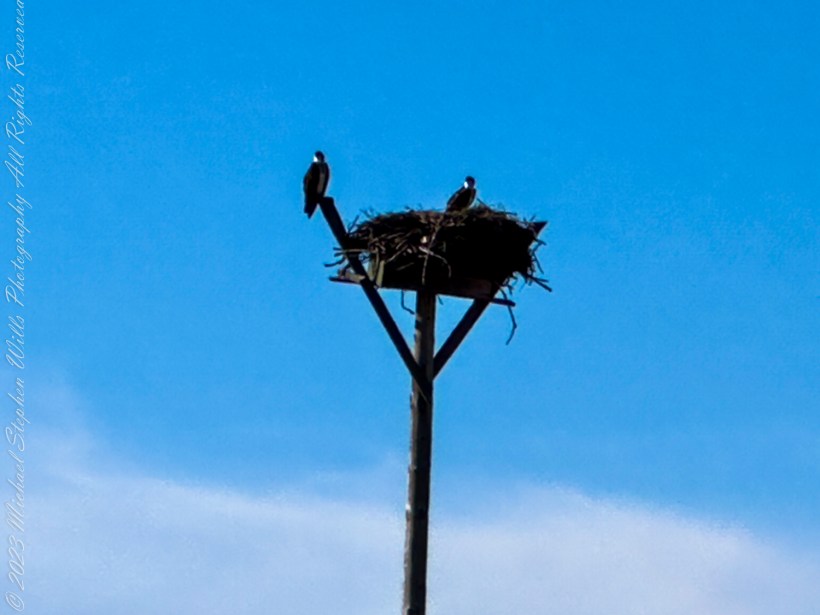
Two Osprey perched on the nest near the Birding Trail of Cass Park. Cayuga Lake in the distance.

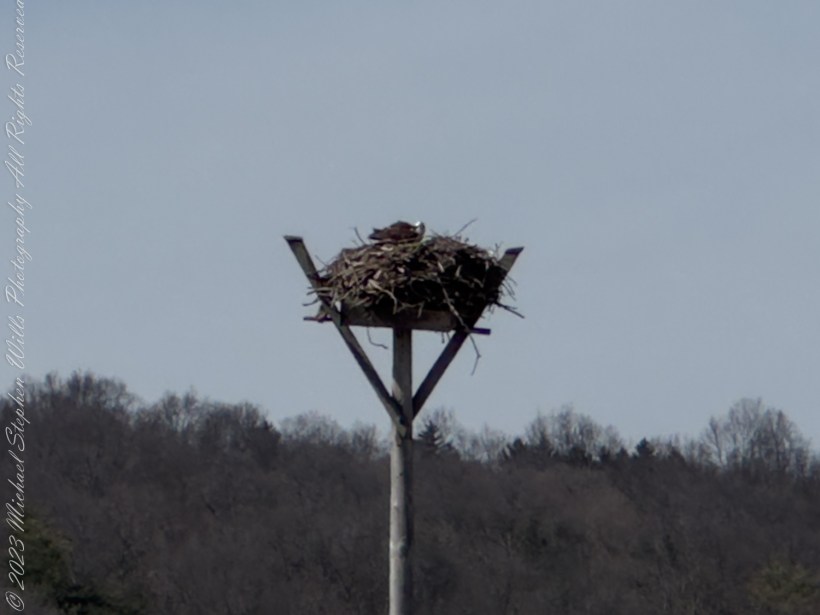
On arrival I wheel high above the shoreline, searching for the platform we left to winter. There it stands—the tall sentinel above the lake. He is there, too, calling once as he lifts, and the rim already shows the first fresh sticks of the year. Against the bright sky the nest looks rough-hewn, yet every branch lies to a purpose.

Two Osprey perched on the nest near the Birding Trail of Cass Park.

As I settled onto the platform, tthe familiar tilt of the timbers and the dry rattle of last year’s sticks steady me. I meticulously inspected our creation, the repository of our hopes and future lineage. My mate and I ferry fresh twigs and weeds, wedging them into the rim and lacing the walls tight against the spring winds.

In due time, beneath the sheltering rim, I laid a small clutch of mottled eggs—the culmination of our bond, the promise of continuity. Through the weeks that follow I keep them warm and dry, turning them with my beak and settling the heat of my breast upon them. My mate does the heavy work of provision—fish after fish to the rail—and stands guard, calling when intruders drift close. Now and then he eases onto the eggs while I feed, but the watching and warming are chiefly mine.

Two Osprey perched on the nest near the Birding Trail of Cass Park.

The world around us burgeoned with life. The lake’s surface now rippled with the activity of fish – a bounty for our growing family. Days turned into weeks, and our vigilance was rewarded as the first cracks appeared in the eggs. The chicks emerged, delicate yet voracious, their mouths agape for the nourishment we unceasingly provide.

Click Me for another Osprey Post

Thank you Candace E. Cornell of the Cayuga Lake Osprey Network for your helpful advice.

For further information: —–Poole, Alan F. ; 2019, “Ospreys: The Revival of a Global Raptor”; Johns Hopkins University Press —Mackrill, Tim; 2024; “The Osprey”; Bloomsbury Publishing

Enter your email to receive notification of future postings. I will not sell or share your email address.

Two Laughing Gulls of Cocoa Beach: A Dance of Adaptation and Survival

Discover the captivating world of Laughing Gulls, the jesters of Cocoa Beach’s shores. Dive into their lives, exploring the dance of courtship, the adaptability in their diet, and their vital role in the coastal symphony.

The Coastal Sentinels

On the shores of Cocoa Beach, where the Atlantic’s waves gently knead the sands of Brevard County, Laughing Gulls (Leucophaeus atricilla) enact their daily ballet of survival and adaptation. In the span of mere minutes, the shifting light of Florida’s coastal theater presents two scenes, each with the same protagonist yet donned in starkly different costumes.

The Many Faces of Adaptation

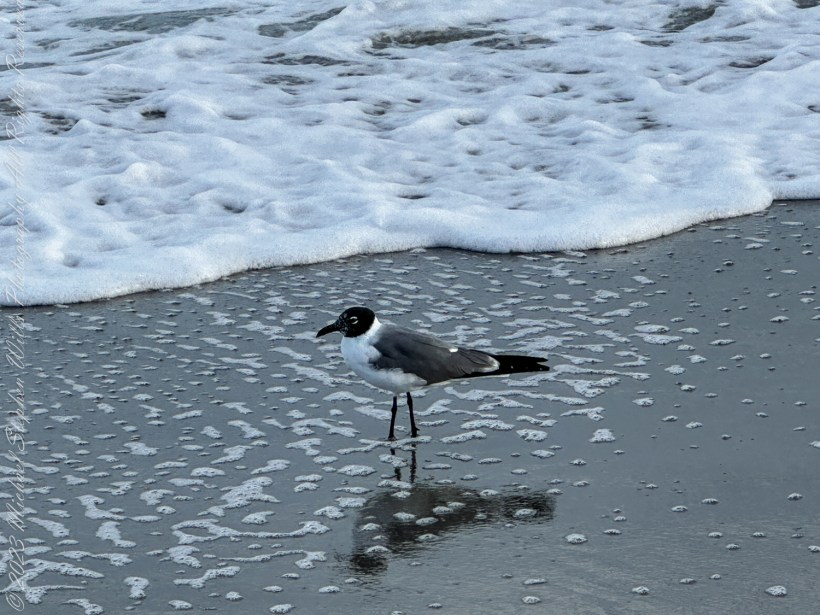
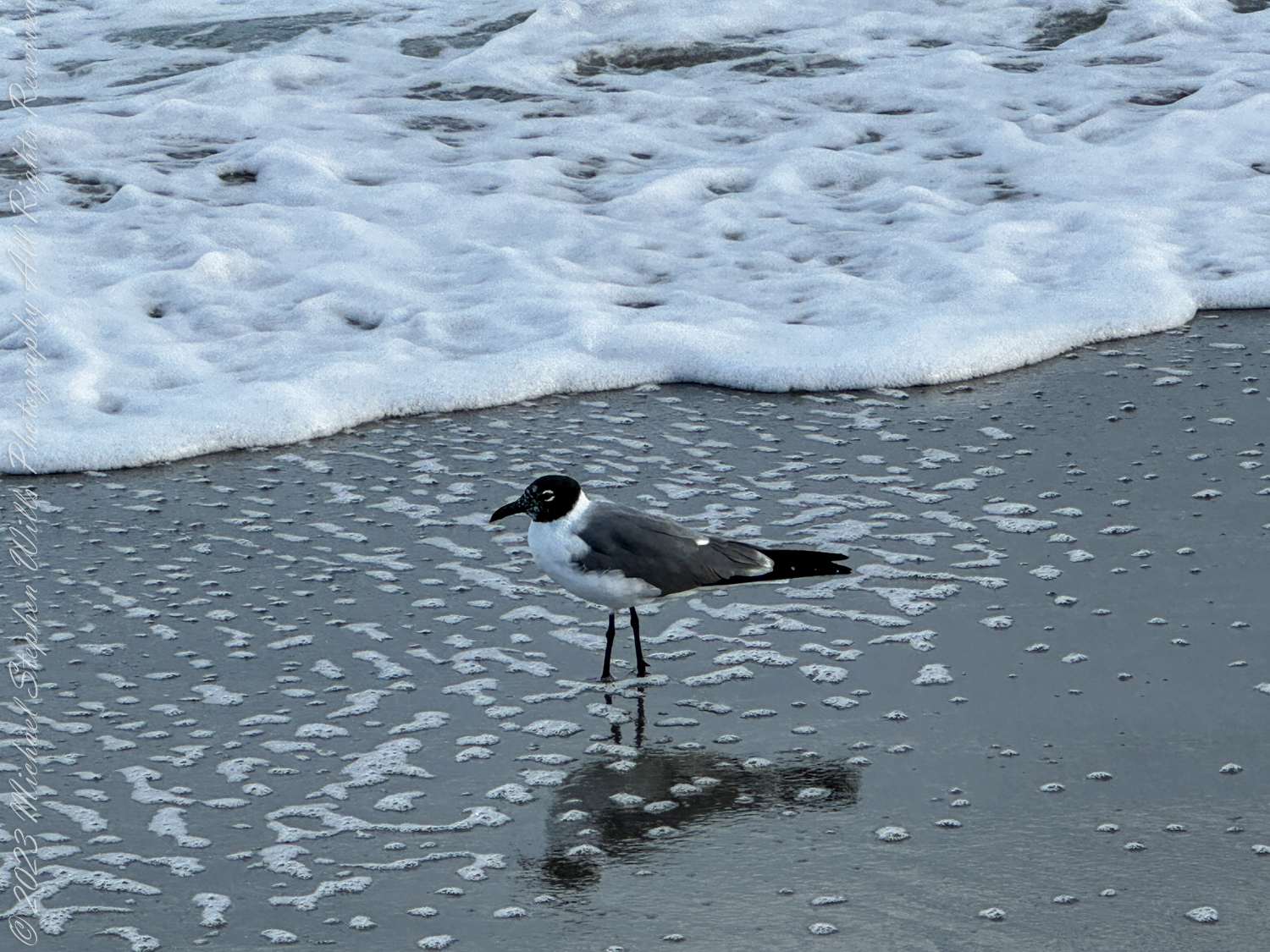
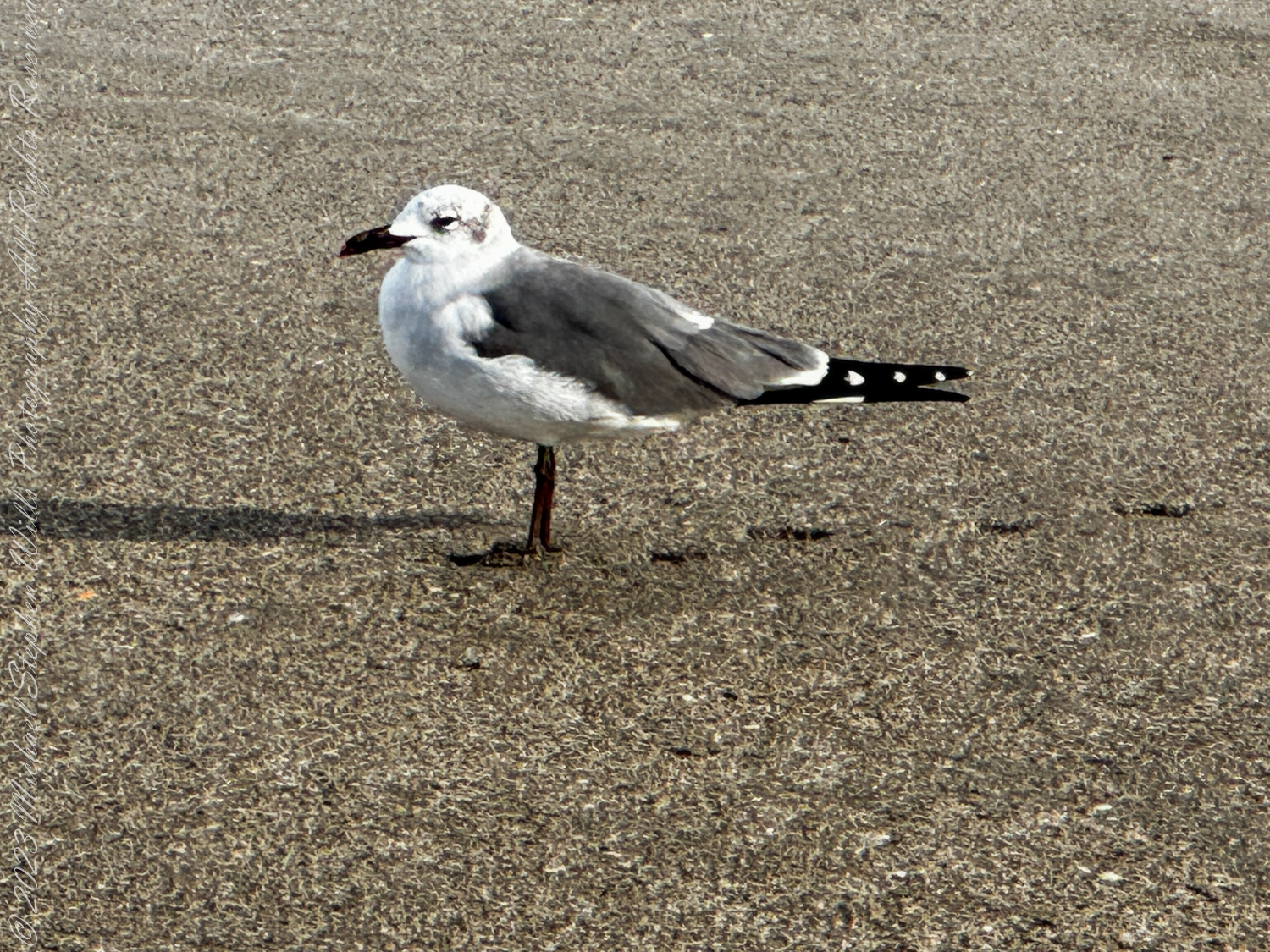
The first gull, captured against the frothy lace of the incoming tide, is the epitome of the breeding plumage: a sleek, black hood that starkly contrasts its pearl-grey wings. This attire is not merely for allure but speaks of its readiness to engage in the rituals of courtship and the responsibilities of rearing the next generation. This black hood, a seasonal crown, fades as the duties of breeding wane, revealing the less conspicuous garb of the non-breeding season—a mottled grey head atop the same sturdy body, ready to blend into the off-season’s landscape.

Laughing Gull with breeding plumage

Laughing Gull, nonbreeding plumage

Minutes Of Separation

The mere minutes that separate the two photographs are but a whisper in the grand dialogue of evolutionary time. Yet, they offer a glimpse into the ever-present duality of the Laughing Gull’s life. In one, the gull stands resolute, black-headed and bold against the soft chaos of the sea’s edge. In the other, its head appears dusted with the wisdom of age, a visual softening that speaks to the less confrontational time of year.

Here are some observations to make sense of this disparity:

Overlap of Molting Periods: Laughing Gulls do not all breed at the same time; some individuals may start molting into or out of breeding plumage earlier or later than others. This can result in birds with different plumage being seen together.

Varied Maturity: Younger gulls or those not yet of breeding age may not have developed the breeding plumage, while adults in the same flock may display full breeding colors.

Breeding Colonies: Gulls often nest in colonies where birds in different stages of the breeding cycle can be observed together, including those that may have lost mates or failed to breed and therefore did not develop breeding plumage.

Health or Nutritional Status: Sometimes a bird’s plumage can be affected by its health or nutritional status. A gull in poor health might not molt into breeding plumage as expected.

Geographic and Climatic Factors: Local environmental conditions can influence the timing of molting. Birds in the same location can experience different environmental cues that might affect their molt.

Non-breeding Visitors: During the breeding season, some non-breeding birds may still be present and intermingle with breeding birds, either because they are passing through the area or they are non-breeding residents.

Extended Breeding Season: In areas with a long breeding season, such as in subtropical and tropical regions, the breeding and non-breeding plumages can be seen at the same time due to the extended period over which breeding can occur.

Masters of the Coastal Realm

The Laughing Gulls are more than just residents of the coast; they are its caretakers and witnesses. Their laughing calls are synonymous with the ocean’s breath, a soundscape that harmonizes with the rhythmic crashing of waves. These birds thrive in the intertidal zone, a challenging environment where land and sea engage in a perpetual tussle. Here, they must be opportunistic, agile, and resourceful, for the beach offers both a cornucopia of food and the threat of unpredictability.

The Ebb and Flow of Existence

The life of a Laughing Gull is intimately tied to the ebb and flow of the tides. Their diet is a testament to their adaptability, comprising anything the sea yields—fish, crustaceans, and even the unfortunate insects that stray too close to the brine. They are pirates of the shore, unafraid to snatch a meal from another bird or scavenge the remains of human activity.

Reflections on Change and Constancy

Laughing Gulls are the embodiment of the sea’s narrative around us—a story of change and constancy. Their lives are a testament to the tumultuous history of the ocean, and their presence is a thread that connects us to the vast, blue mystery. They remind us that, while the sea’s moods are many and its faces ever-changing, it remains a central force in the narrative of life on Earth.

In the Face of Tomorrow

In the space between these two images, we find a profound lesson on the nature of time and the resilience of life. The Laughing Gulls of Cocoa Beach, with their shifting plumage and timeless cries, are messengers of the past, envoys of the present, and harbingers of the future. As we contemplate their existence, we are reminded of our own place within the natural world—a world that requires our understanding and protection, lest the laughter of these gulls fades into the silent archives of history.

The Laughing Gulls of Cocoa Beach continue their dance, unfazed by the human gaze, their lives a fluid adaptation to the sea’s caprices. And as the sun marches across the sky, casting the story of these gulls into relief against the shifting sands, we are privileged to observe, to learn, and to cherish the Atlantic Ocean’s enduring tale.

Copyright 2024 Michael Stephen Wills All Rights Reserved