On Being Thankful

A garden, migrating geese, an unexpected balloon and flowers opening after dark remind me that gratitude begins by noticing the extraordinary within ordinary life.

There are times when gratitude arrives not as a grand revelation but quietly, almost unnoticed. It can begin by looking out a window, walking through a garden, hearing the calls of birds overhead, or watching something unexpected drift across an otherwise familiar sky. My video is made of such moments. It is a collection of things close at hand, yet when gathered together and accompanied by music, they become something more: a reminder of how extraordinarily rich an ordinary life can be.

I have much to be thankful for.

I am thankful, first, for home, a place on Earth intimately known to me. The opening views of the garden convey that sense wonderfully. There are great white clusters of hydrangea against deep green foliage, scattered pink blossoms, lawn, trees and the familiar boundaries of a yard. None of it is monumental. That is exactly the point. These are not the Alps or some distant wilderness. They are the landscape of everyday life, made beautiful by familiarity, care and the changing seasons.

A garden teaches gratitude because nothing in it remains still. Flowers arrive, flourish and disappear. Leaves that emerge with the almost translucent green of spring deepen through summer and eventually blaze red before falling. Brilliant red foliage is particularly striking, it carries within it both beauty and departure. Autumn diminishes and completes summer.

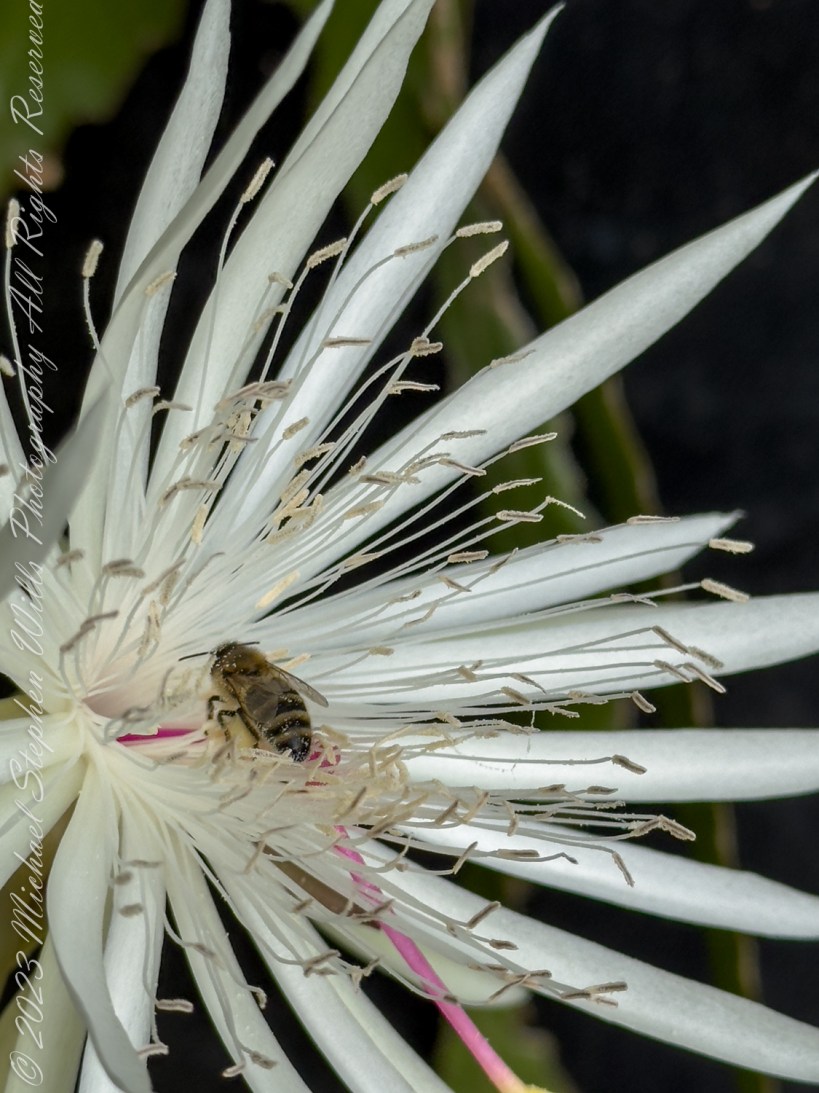
And then there are those remarkable white flowers opening in darkness—the extravagant, almost otherworldly blossoms of the night-blooming cactus. They seem fashioned from moonlight: long, narrow petals radiating from their centers, magnificent for such a brief interval. Their fleeting existence makes them more precious. To witness one requires being present at the right moment.

Perhaps that is true of much of life.

I am thankful that I have retained the impulse to notice.

There is a considerable difference between seeing something and noticing it. The world is filled with people who look at flowers, birds and skies every day without really seeing them. Curiosity changes that. It makes a flock of geese more than birds crossing the sky. they form their wavering lines beneath pale blue heavens shared with our moon. They are travelers following routes far older than our roads, houses or cities. Their passage reminds me that my home is part of a much larger landscape and that the seasons unfolding in my yard belong to rhythms extending across a continent.

I am thankful for the ability to look upward.

The balloon drifting above the neighborhood makes that thought almost literal. Suddenly an ordinary sky contains a great yellow, red and blue vessel, sometimes distant among the trees, sometimes passing wonderfully close overhead. We see the basket beneath it and the people aboard—human beings temporarily liberated from the ground, carried through the same air in which the geese travel.

There is something optimistic about a hot-air balloon. It accomplishes wonderfully nothing particularly urgent. It rises because people still want to know what the world looks like from somewhere else. Its presence in the video celebrates imagination, adventure and the persistence of wonder.

Yet gratitude also grows downward, into the earth.

The images of lush plants growing in raised beds and then harvested in abundance speak of another kind of wealth. Food does not simply appear. A seed becomes roots and leaves; sunlight is captured; water rises through stems; soil gives up minerals; human hands tend what is growing. Eventually the garden gives something back. To harvest food from plants one has watched develop is to participate, however modestly, in one of humanity’s oldest relationships with the living world.

I am thankful for that abundance—not abundance measured by possessions, but by experiences.

The sculpture of the young boy and girl quietly sharing a book adds a different note. Amid flowers, birds, harvests and skies is an image of companionship. Two figures sit close together, absorbed in the same story. It suggests affection, learning, intimacy and the pleasure of sharing something with another person. A life becomes immeasurably richer when its experiences are not ours alone.

That may be the deepest source of gratitude: the people with whom life has been shared. Family and friends give meaning to places and memories. A garden is more than plants when someone has walked through it with us. A meal is more than food when others sit at the table. A photograph becomes more valuable when it preserves something we want another person—or another generation—to see.

The music running through the video strengthens this sense of reflection. It does not demand attention so much as give the images emotional space. As the photographs succeed one another, the music turns observation into remembrance. The effect is almost like leafing through an album while realizing that the apparently unrelated pictures are chapters of the same story.

And perhaps that is why I find the video inspirational.

None of its subjects needs to be spectacular to matter. A flower opens. Geese cross the sky. Vegetables grow. Leaves turn red. Two children read together. A balloon unexpectedly floats over the neighborhood. Hydrangeas bloom beside a fence.

Meanwhile, time passes.

That last fact could make these images melancholy, but I do not think it does. Their transience is precisely what gives them value. Gratitude does not require pretending that beautiful things last forever. It comes from understanding that they do not—and loving them anyway.

I am thankful for the years behind me: for places visited, things learned, people loved, photographs made and memories accumulated. But I am equally thankful that the world still contains things capable of surprising me. There are still flowers I want to examine more closely, birds whose journeys I want to understand, stars I want to find through a telescope, landscapes I want to photograph, stories I want to tell, and mornings when I do not yet know what will appear outside my window.

That may be one of life’s greatest gifts: there is still something to look forward to.

The world does not owe us another summer, another migration overhead, another flower opening after dark, or another unexpected balloon sailing across a blue September sky. When such moments come, the proper response is not merely to record them.

It is to recognize them.

And to be thankful.
Click me to visit Michael Stephen Wills Online Finger Lakes Gallery.

Enter your email to receive notification of future postings. I will not sell or share your email address.

Blood Moon Reflections: Science, Illusion, and Shared Awe Under the Lunar Eclipse

We gather on the balcony as a total lunar eclipse turns the moon to copper—science, illusion, and shared wonder braid a night of luminous change.

Moonrise

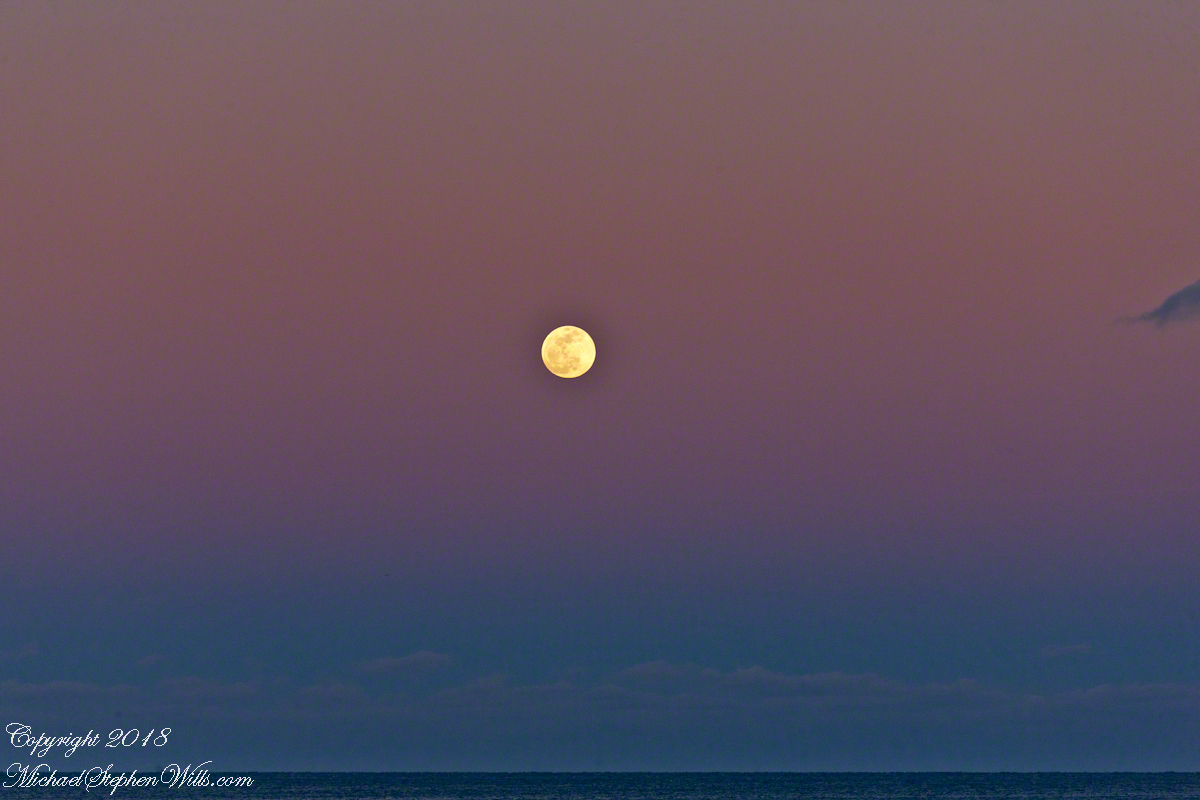
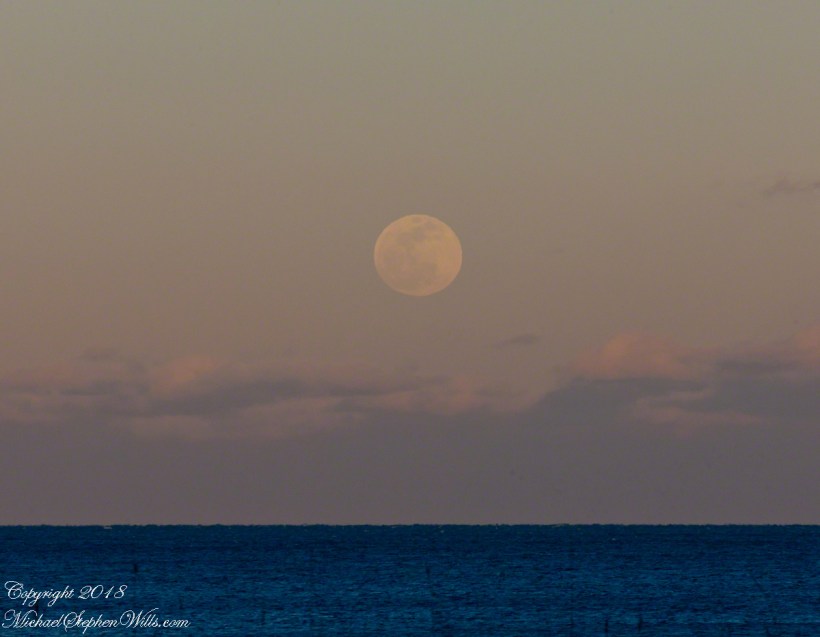
On certain evenings we gather on our Cocoa Beach, Florida east-facing beach-side balcony simply to watch the day undo itself—sunset staining the western sky while, behind us, something quieter begins. On Sunday, January 20, 2019, the quiet had a name: a total lunar eclipse. I’d checked the online charts earlier—moonrise time, azimuth, the patient geometry of the heavens laid out in numbers—and set our chairs faced the anticipated spectacle.

Click photograph for my Online Gallery


The light went a little pewter, as it does when the sun slides offstage and the world inhales. Out on the water a cruise ship shouldered south, a floating city of windows that, under ordinary sunsets, catch fire pane by pane. I looked up too late for the blaze and felt that small pang one gets for the thing almost seen. Still, the ship kept gliding, a bright punctuation mark traveling our skyline.

Click photograph for my Online Gallery

Then the moon appeared—first as a bruise-colored coin pressed against a bank of cloud, then as itself, pale and whole, rising as if pulled on a cord. Photographs can play a trick here: place a ship under a full moon and, with the right lens, the vessel swells to improbable grandeur while the moon looks like a modest ornament. Our eyes know better. The ship is huge but near; the moon is unimaginably larger, only far. Distance humbles everything.

It’s a fine parlor truth that every lunar eclipse requires a full moon. There’s a steadiness in that—that the earth, playing the rare importance of middle child, can only cast its shadow when the moon has come fully into its own. The reverse, of course, is not guaranteed. Most full moons rise and go about their business, silvering roofs and quieting dogs, without ever tasting the earth’s shadow. Tonight would be different.

Click photograph for my Online Gallery

The Riddle of Size

Before the darkness advanced, the old riddle of size made its entrance. Low on the horizon, the moon seemed suddenly intimate, big enough to pocket the ship and still have room for the lighthouse. We call it an illusion, but the word hardly captures the tenderness of it: how the mind, seeing that round face near our familiar trees and eaves, feels the moon to be part of our belongings. Angular diameter stays stubbornly constant; affection does not. The experiment is easy enough—choose a pebble that covers the low moon at arm’s length, then try again when the moon is high. The same pebble hides it perfectly. What changes is not the moon, but the story our senses tell.

Click photograph for my Online Gallery

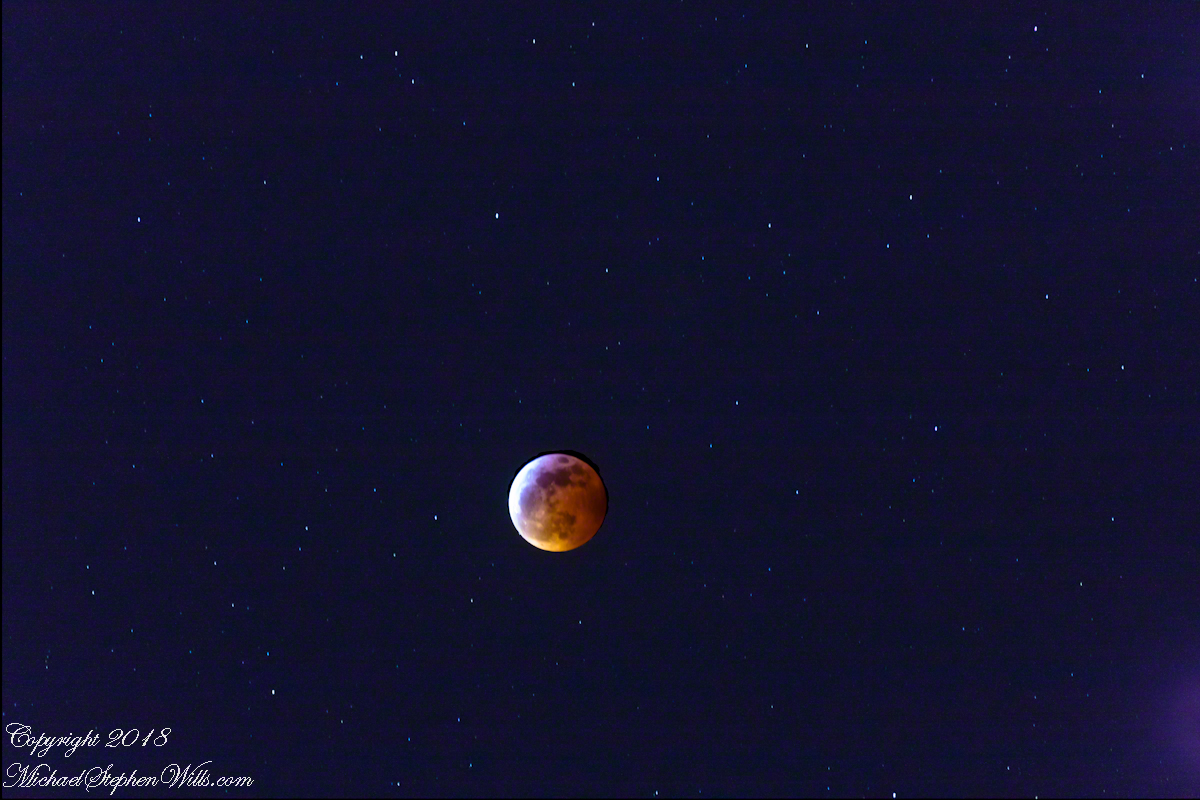
Clouds raveled and the disk lifted, gathering brightness. As the earth’s umbra slid across that worn, luminous stone, the color shifted from pearl to rust, then to the old red of clay amphorae. People love the names—Super, Wolf, Blood—as if the moon had stepped onto a carnival midway. I prefer the quieter facts: sun, earth, moon aligned; light refracted through air; the planet itself briefly confessed in velvet shadow. It felt less like spectacle than like a family resemblance revealed by candlelight.

Eclipse

Much later, around us, the little neighborhood chorus noticed. A conversation stalled mid-sentence; the unspooled hush you hear at a concert just before the bow draws its first note came and settled on the patio. Even the ocean seemed to restrain itself, waves taking smaller breaths. The cruise ship had long since slid behind the curvature of our seeing.

We kept watching. A lunar eclipse is an exercise in patience: everything happens slowly enough to be felt, quickly enough to refuse boredom. Shadows are honest about their edges. When the moon wore its deepest copper, I thought of ancient nights and imaginations unlit by anything but fire, how dependable cycles must have seemed like messages and how—standing there, spine pricked by a familiar old awe—I could not entirely disagree. It was not fear, but kinship: the sense that we are included in the machinery, not merely spectators.

Click photograph for my Online Gallery

When the light returned, it did so from one margin, like dawn rehearsed on a smaller stage. The coin brightened by degrees, and the old face we know reappeared—craters and mares soft as thumbprints. The illusion of size faded as the moon climbed, and the experiment with the pebble proved itself yet again. Even so, I felt the tug of that earlier enchantment, the way a child misses a dream just after waking. The mind keeps two ledgers: one for what is measured, one for what is felt. Tonight both were full.

Eventually we retired. Chairs nested. Doors clicked. In the kitchen, glasses chimed in the sink. But the moon kept on, white and durable, its borrowed light restored. Somewhere out there the ship’s passengers drifted to their cabins, stories in their pockets about the night the world itself cast a shadow, and how the ocean looked briefly like copper under a patient star.

Later, when I wrote down the times and the few facts I could trust to memory, I realized the real record was not the measurements but the company: our leaning back, the shared breath, the soft astonishment that comes when something vast moves at a human pace. The eclipse ended; the evening did not. That, too, felt like a kind of alignment—ours with one another, our small chairs with a very large sky.

Enter your email to receive notification of future postings. I will not sell or share your email address.

From Ground to Sky: A Reflective Climb

Experiencing joy and memory.

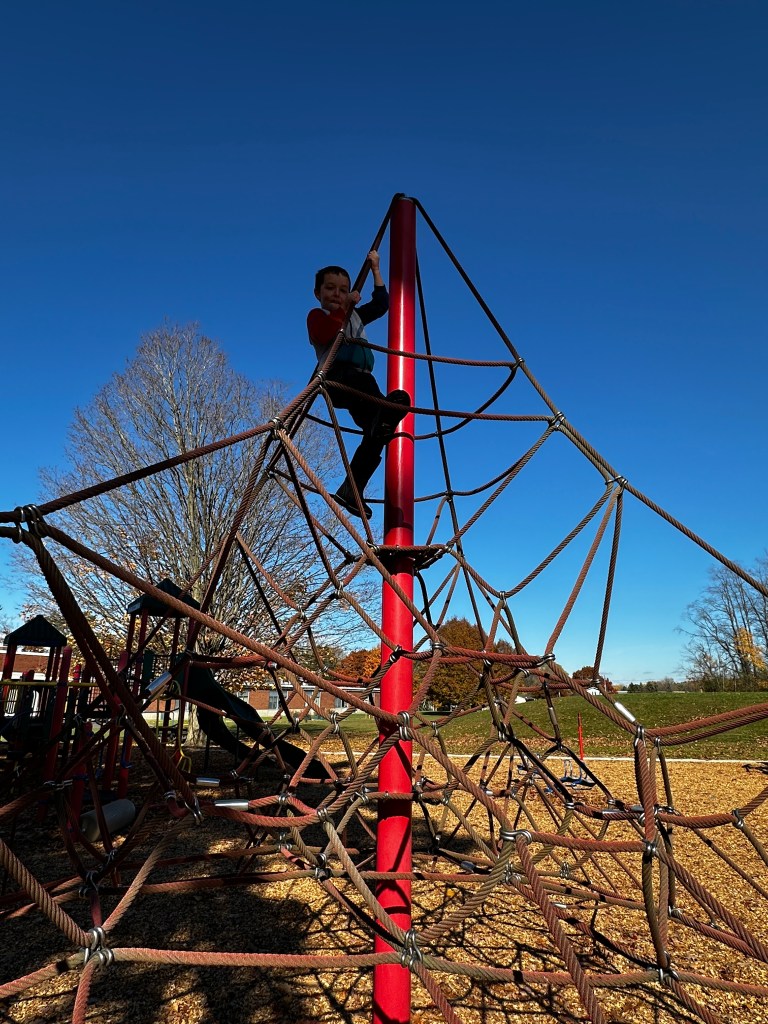
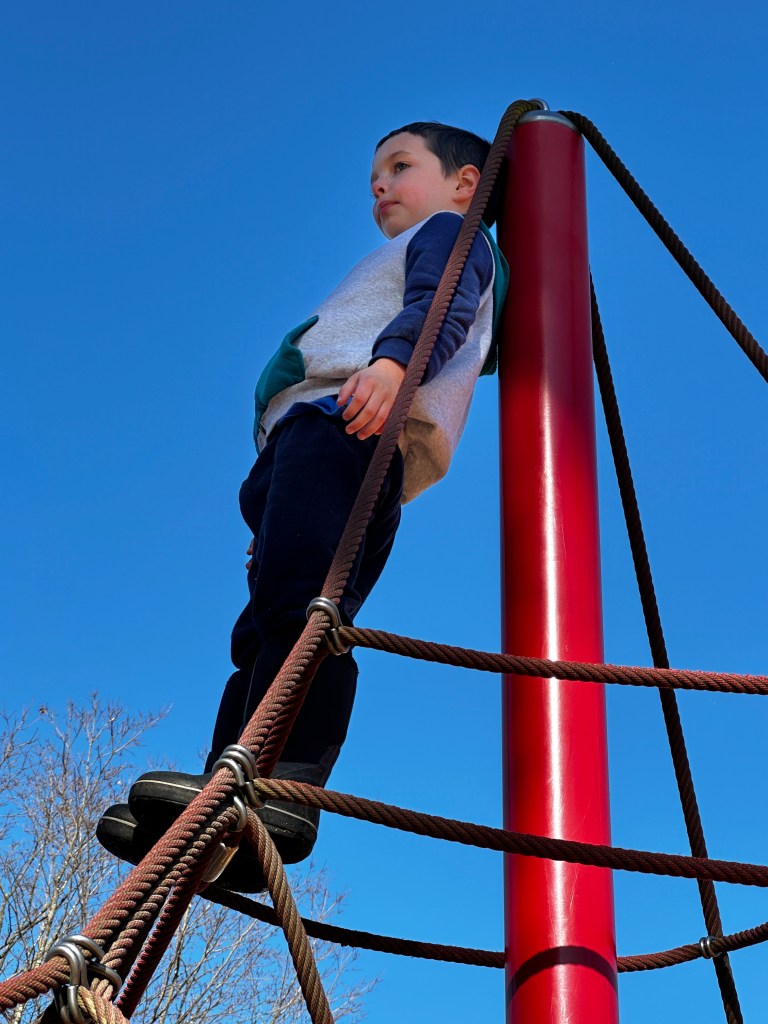
Here, on the playground,
the morning stretches wide—
a sky so blue it swallows you whole.
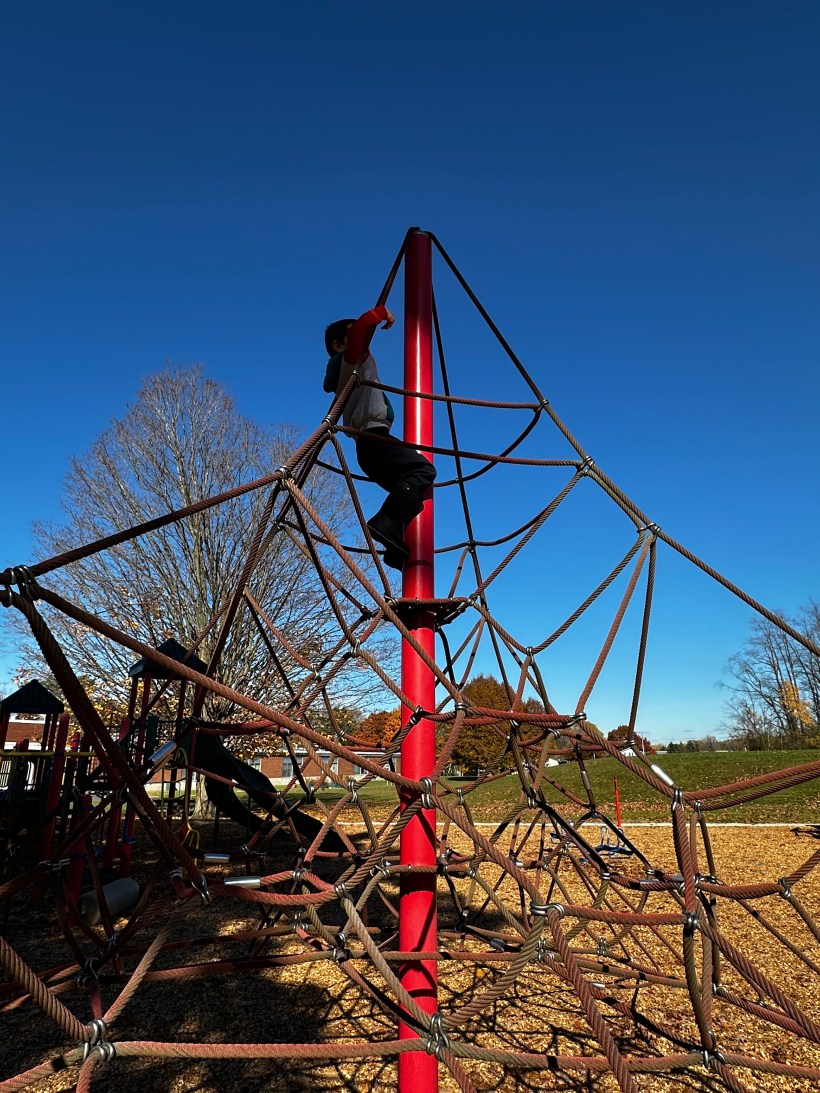
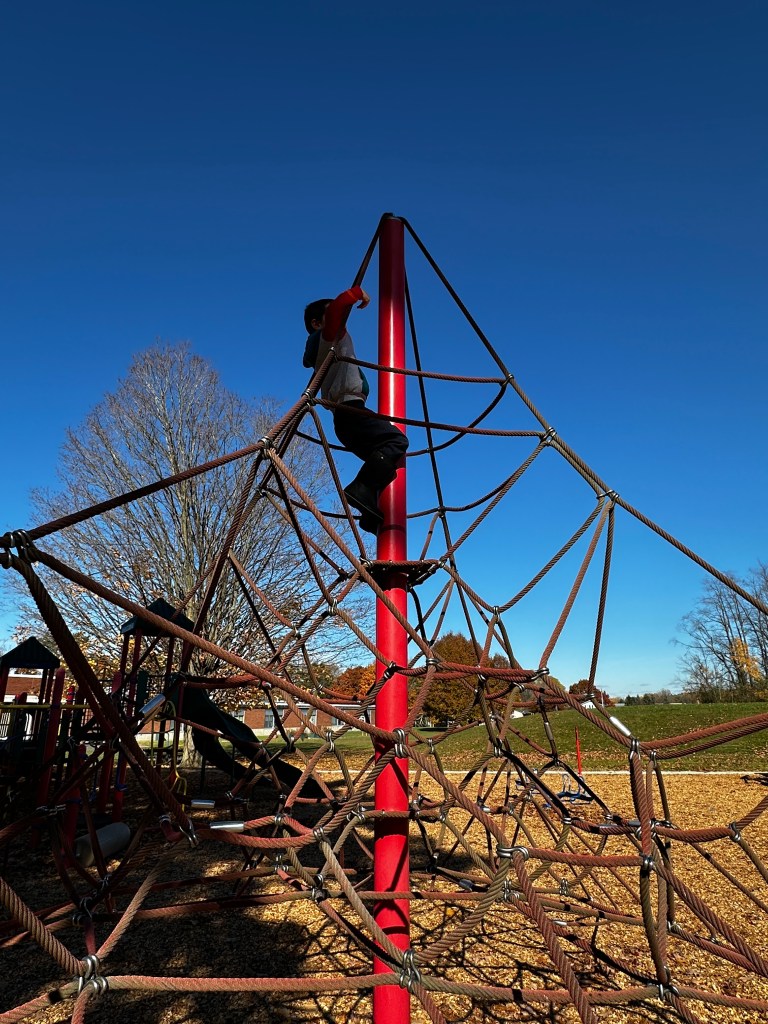
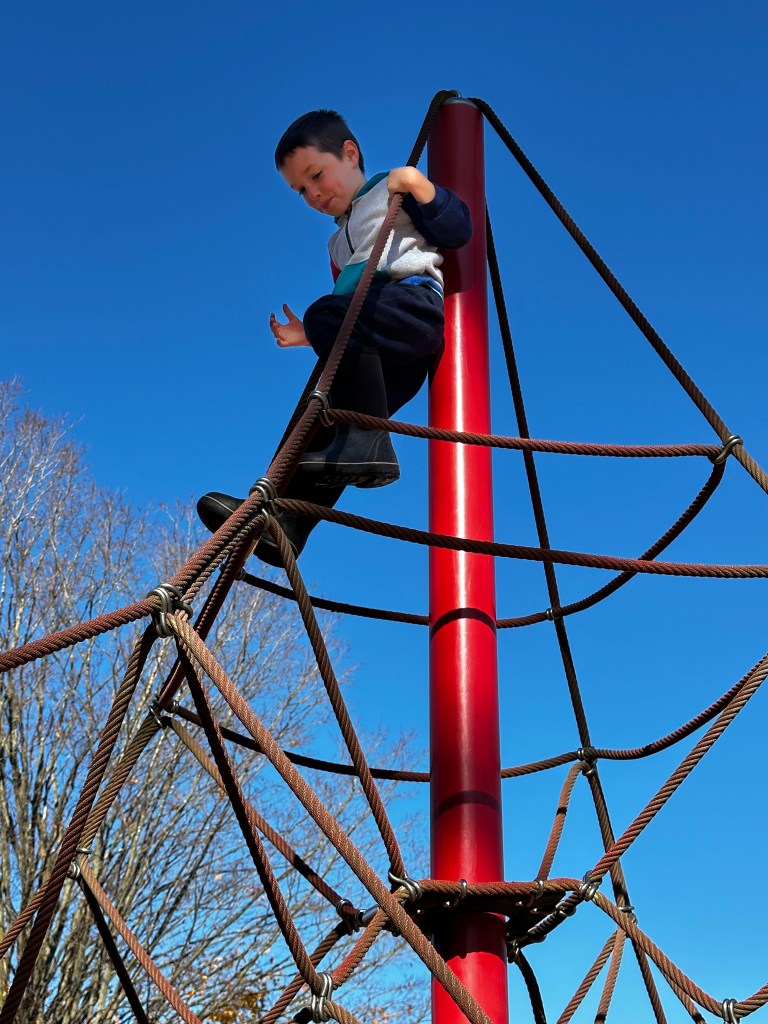
And you, a small figure, climbing
the red pillar, moving hand over hand
up the ropes that knot and twist
like veins, like lifelines.

I watch from below,
the ground a familiar place
where footsteps fall and scatter—
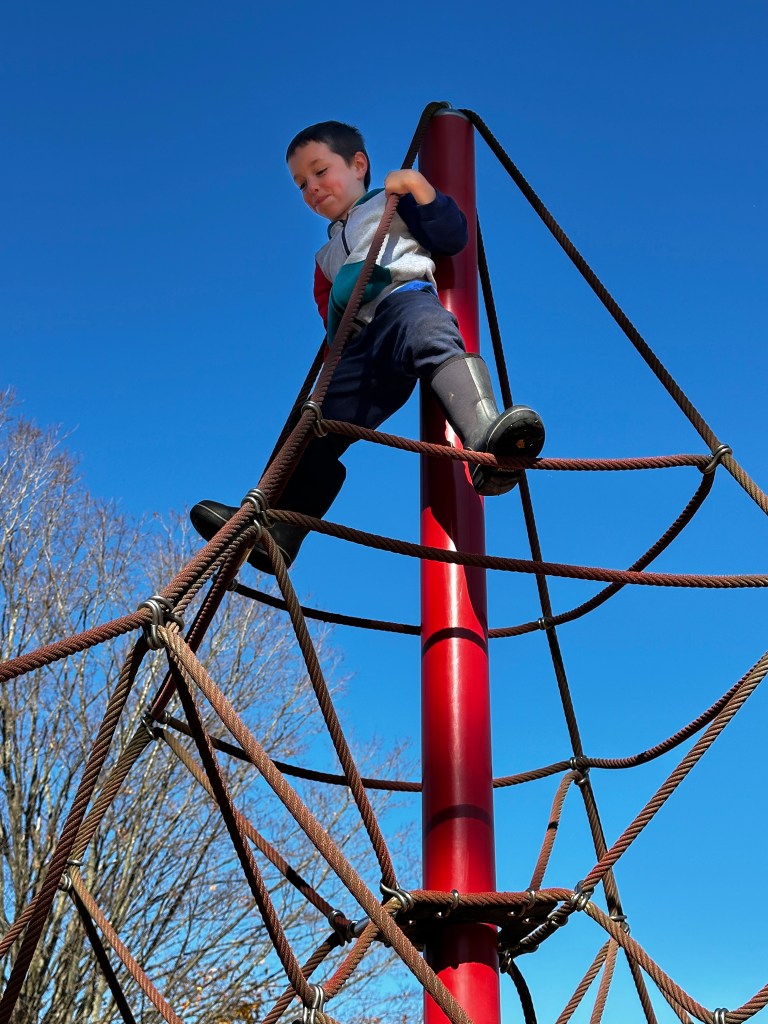
but you, you are ascending,
breath held in the still air.
Nothing is simple in this moment,
yet everything is—

the cord that bends beneath you,
the thrill in your chest,
the boots pressed firm against braided paths.

If I could speak, if words were clear as the day,
I’d tell you how these small victories—
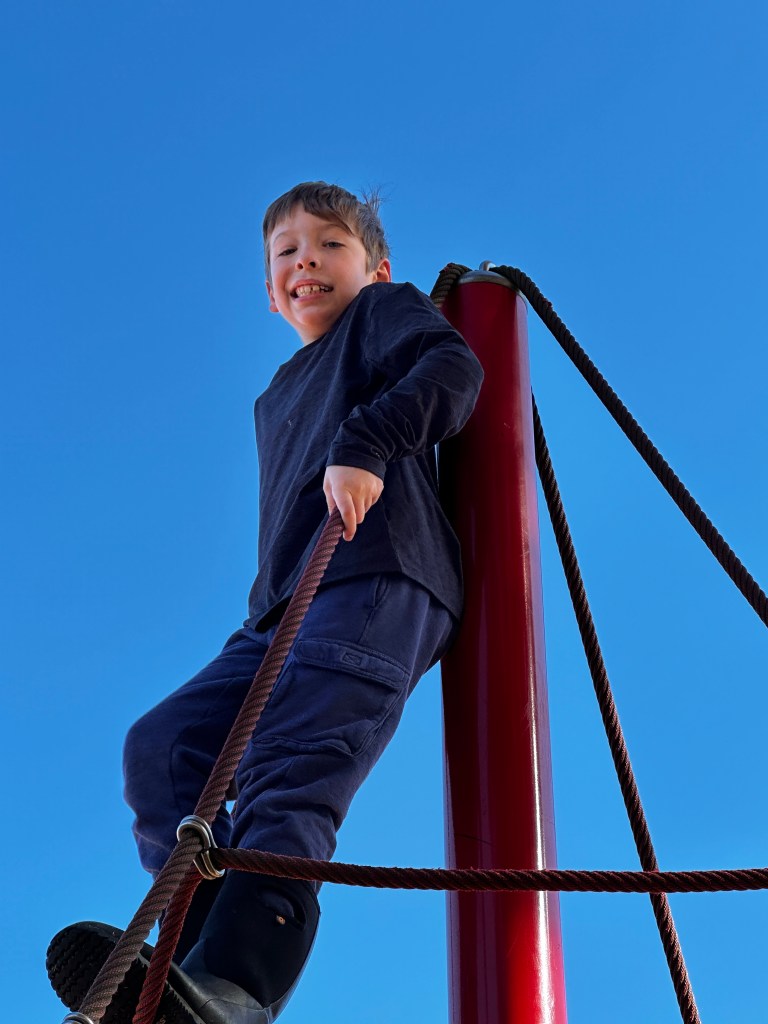
climbing high, standing above—
are etched into the bones of memory.
Someday, you’ll look back and wonder
at the web of ropes,
the pillar red against autumn’s burn,
and the vastness that carried you up,
into light, into air,

where fear gave way to joy,
and the sky leaned close,
just to watch you rise.

Enter your email to receive notification of future postings. I will not sell or share your email address.

Drying Butterfly…..

….on a Sonic Drive-In Order Station.

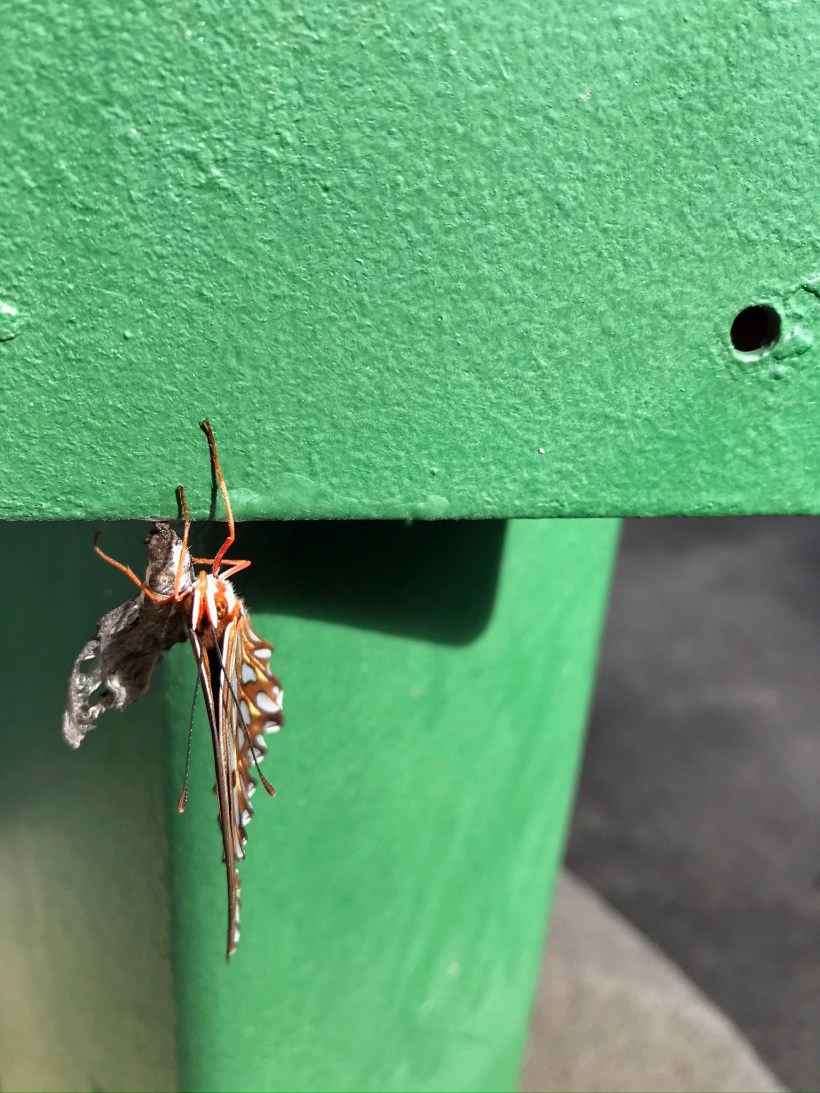
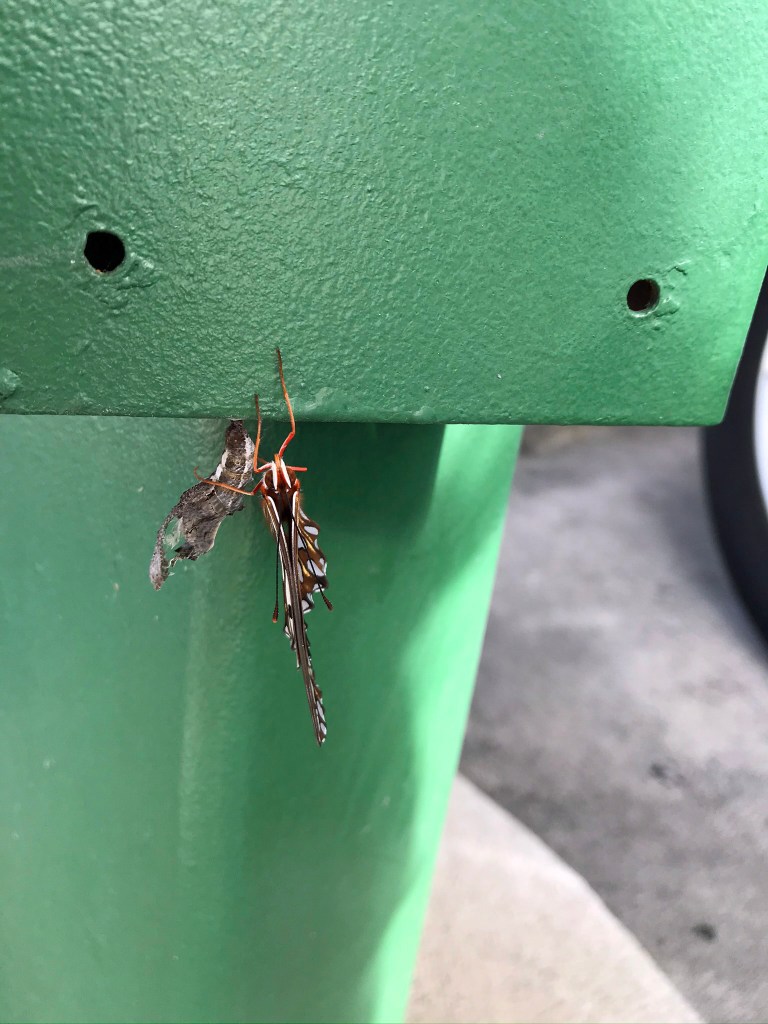
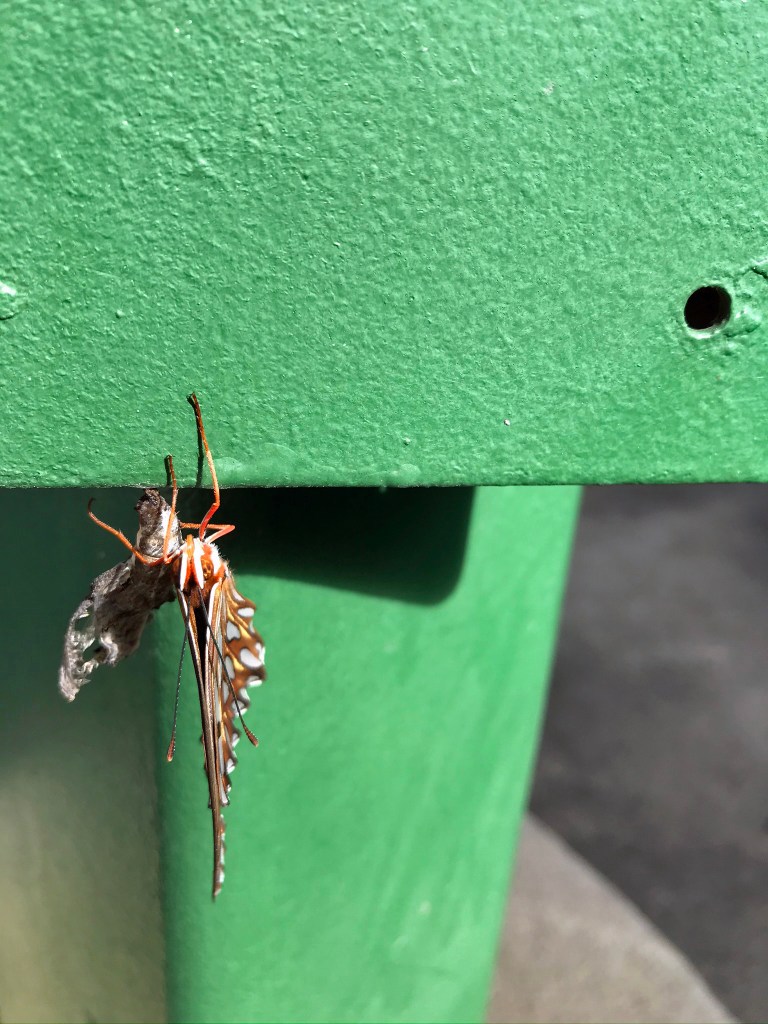
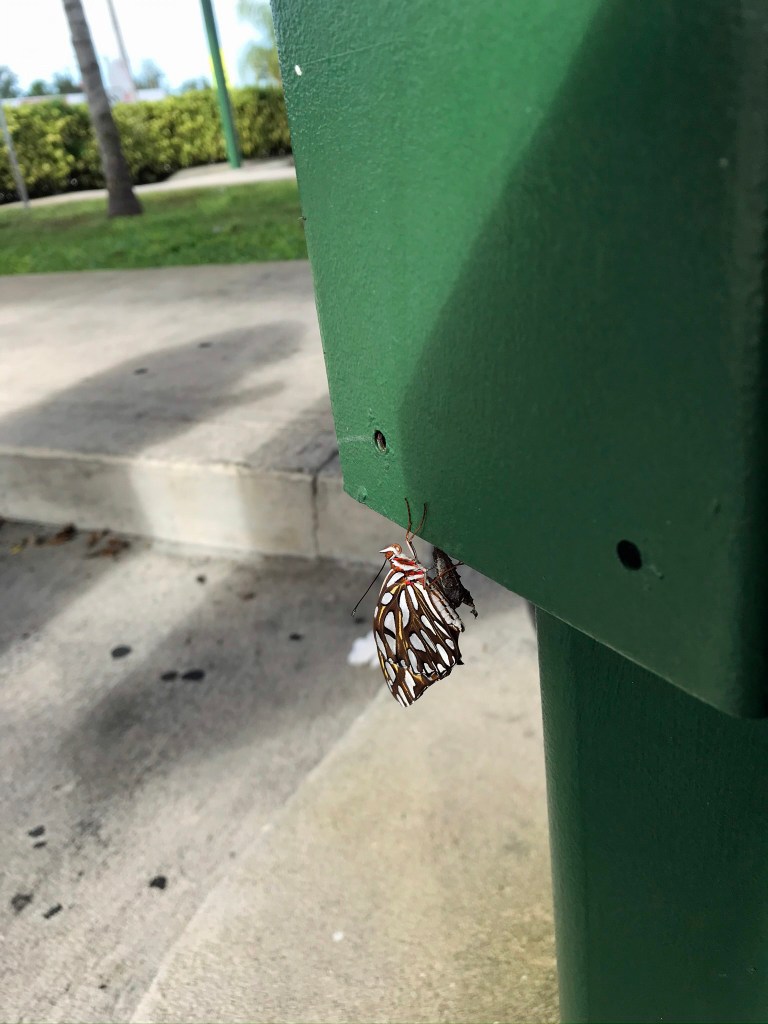
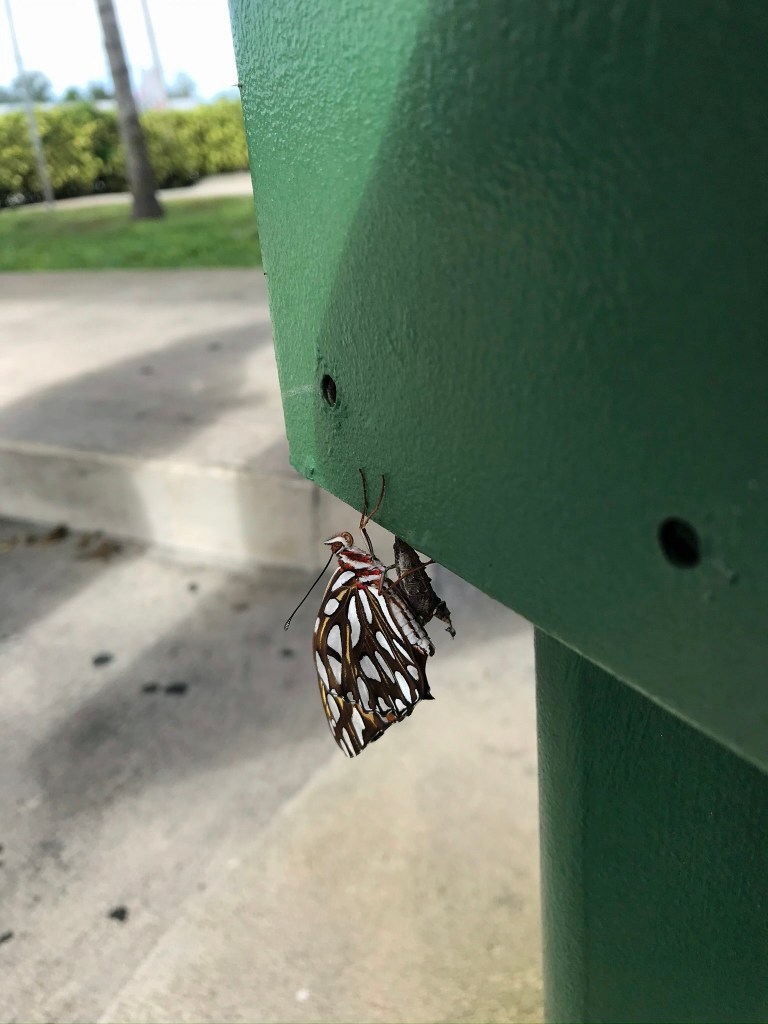
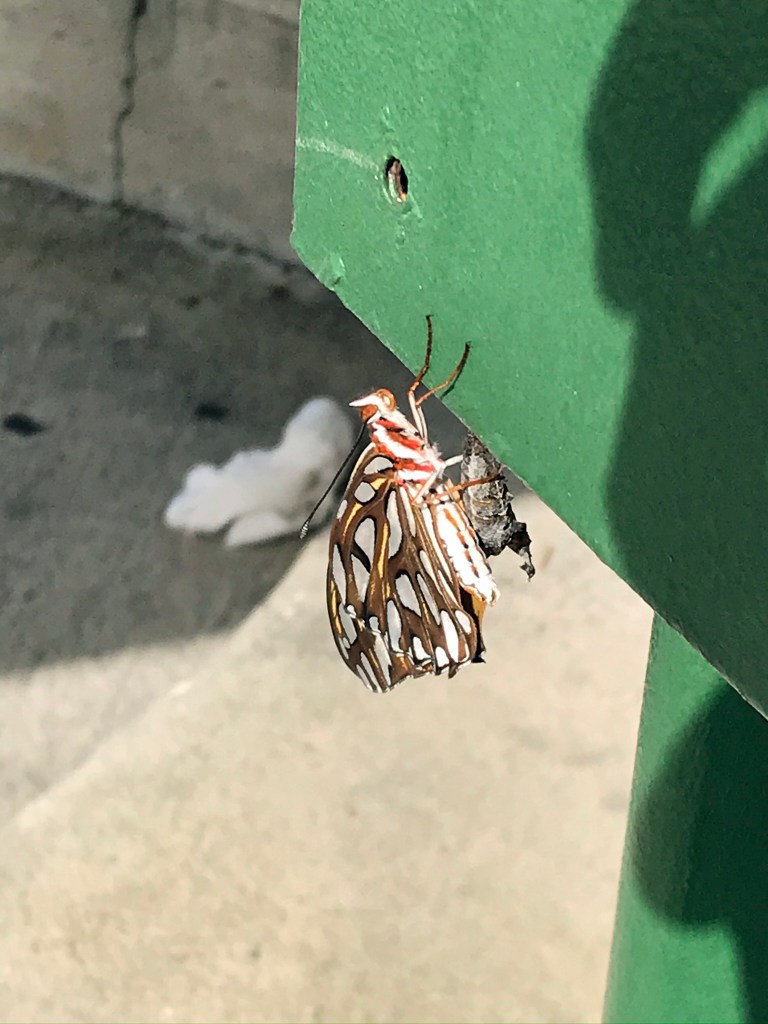
On Tuesday, December 17, 2019 a caterpillar dropped from vegetation to crawl across the parking lot of Sonic Drive-In, 2140 N Courtenay Pkwy, Merritt Island, FL 32953, crawl up an order station, affix its tail to the kelly green semi-gloss enamel, to form a chrysalis.

The afternoon of New Years Eve, 14 days later, we spied the Retro theme of this fast food business, finding it appealing, stopped for a hi-fat lunch of hamburgers, onion rings (“highly recommended, very delicious”) and (ha, ha) diet sodas, choosing this same order station where the emerged Brush-foot butterfly, of the family Nymphalidae, clung, drying in anticipation of flight.

Captured here with the Apple IPhone 8. I cannot identify the exact butterfly species this is. Source: wikipedia article on Nymphalidae.

Click photograph for the slide show. To do this from WordPress Reader, you need to first click the title of this post to open a new page.

Copyright 2020 All Rights Reserved Michael Stephen Wills