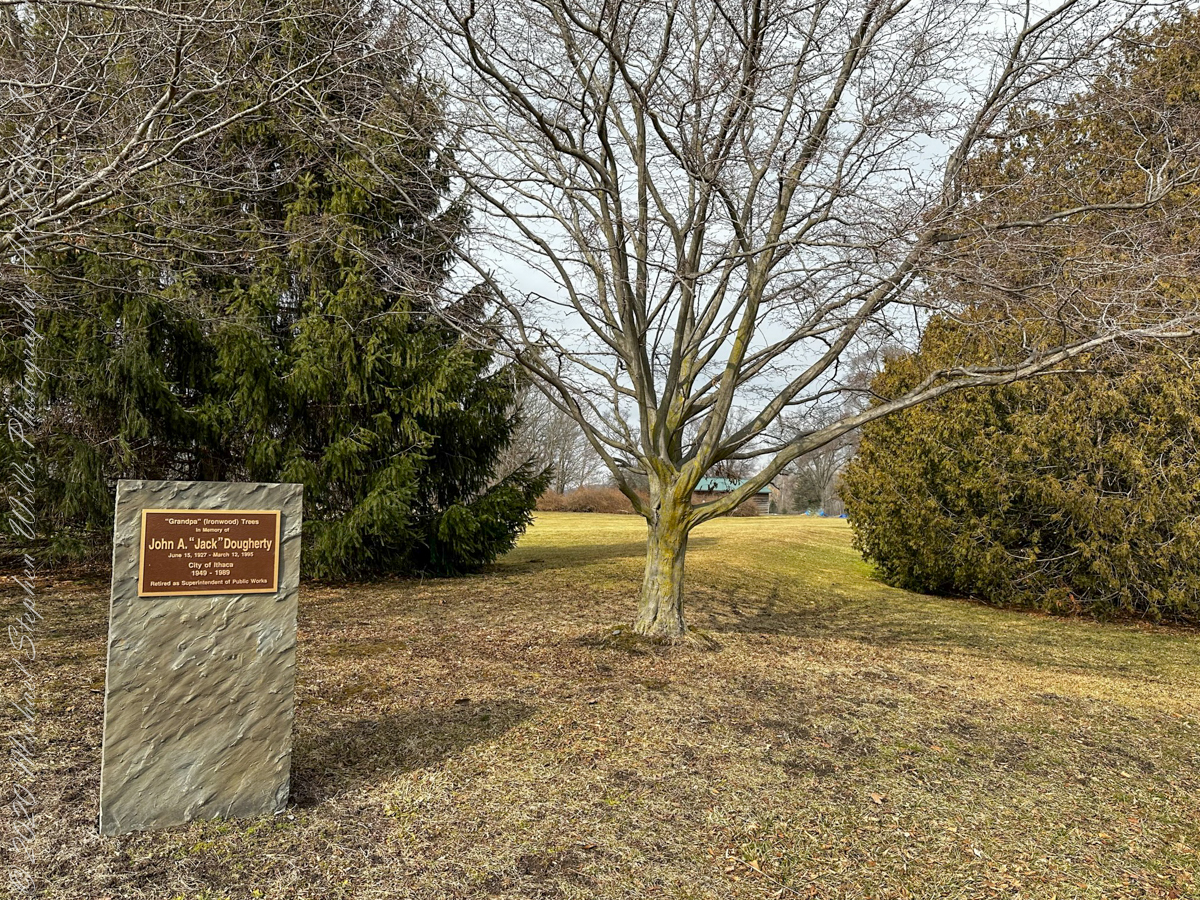
Another Cayuga Waterfront Trail stop is this memorial. The plaque reads ” ‘Grandpa’ (Ironwood) Trees in memory of John A. ‘Jack’ Dougherty; June 15, 1927 – March 12, 1995; City of Ithaca 1949-1989, Retired as Superintendent of Public Works.” Located near the intersection of Pier Road and Willow Avenue, Newman Golf Course, Ithaca, Tompkins County, New York. That is an Ironwood tree, midgound center.
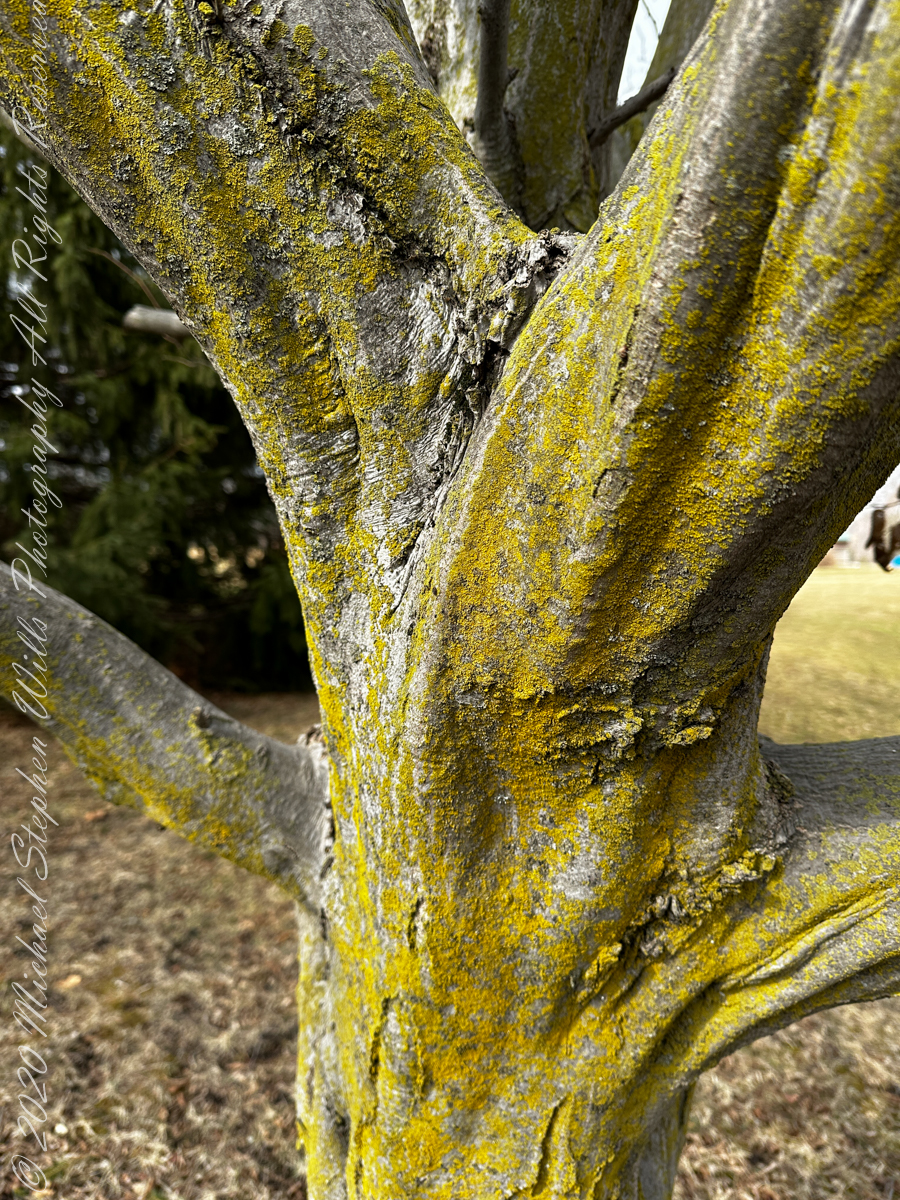
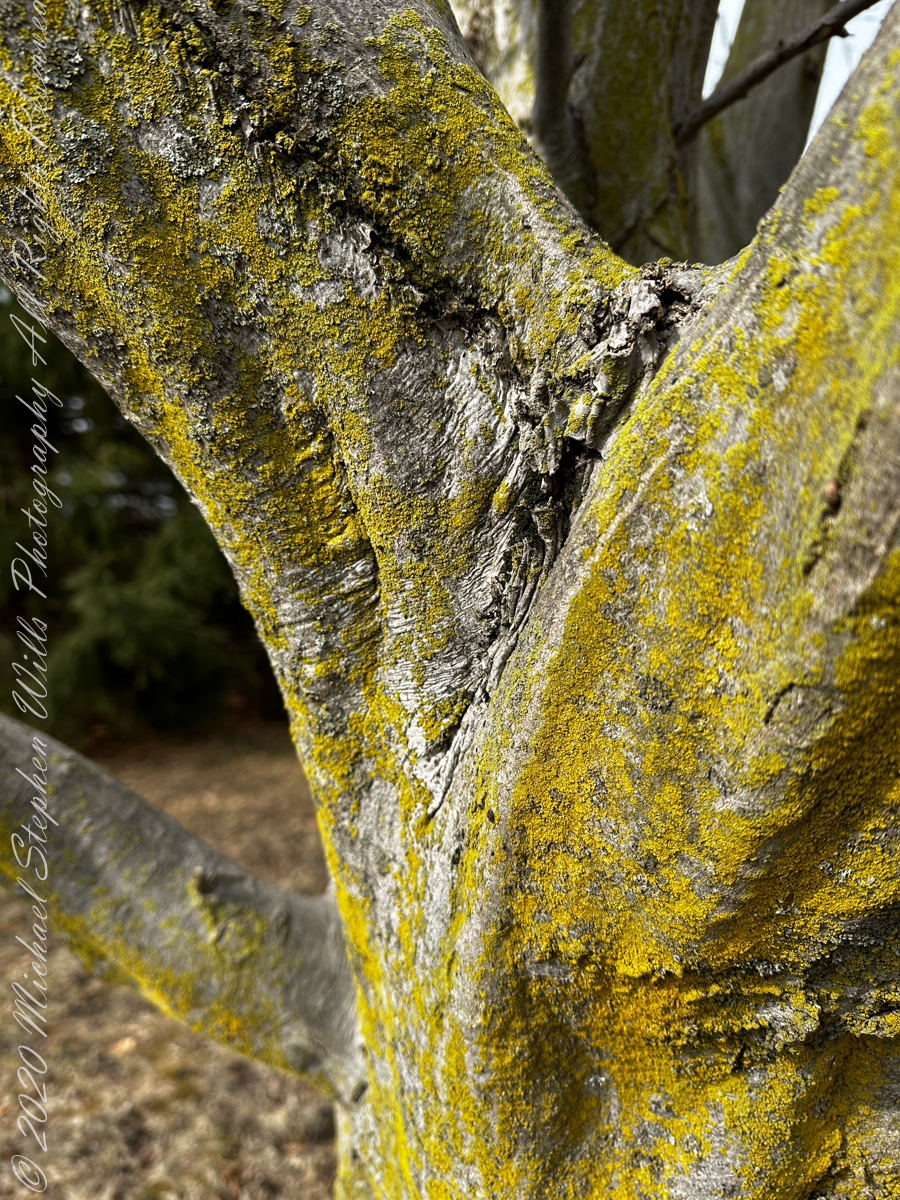
The American Hornbeam (scientific name: Carpinus caroliniana) is also known as Musclewood for the rippled surface of the mature trunk. Other names are blue-beech, ironwood and muscle beech.
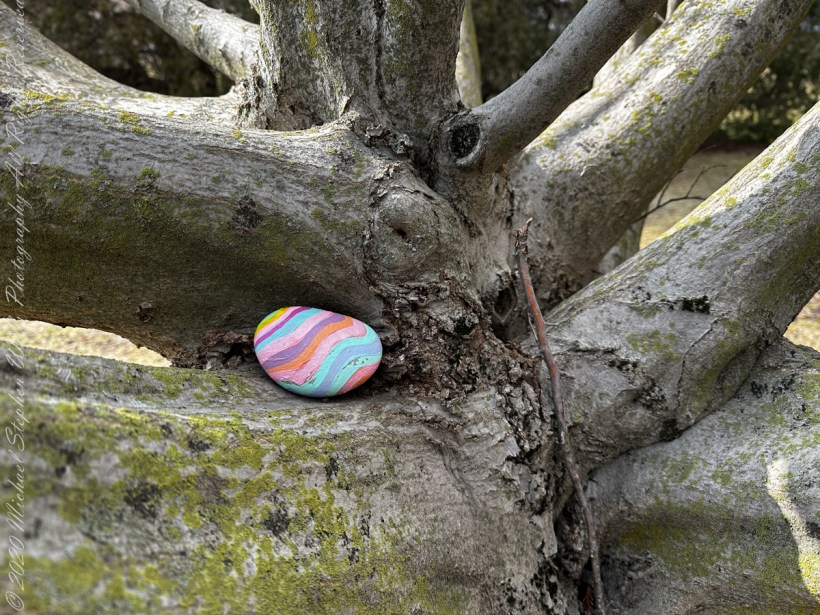
Nestled on the trunk……
Copyright 2023 Michael Stephen Wills All Rights Reserved
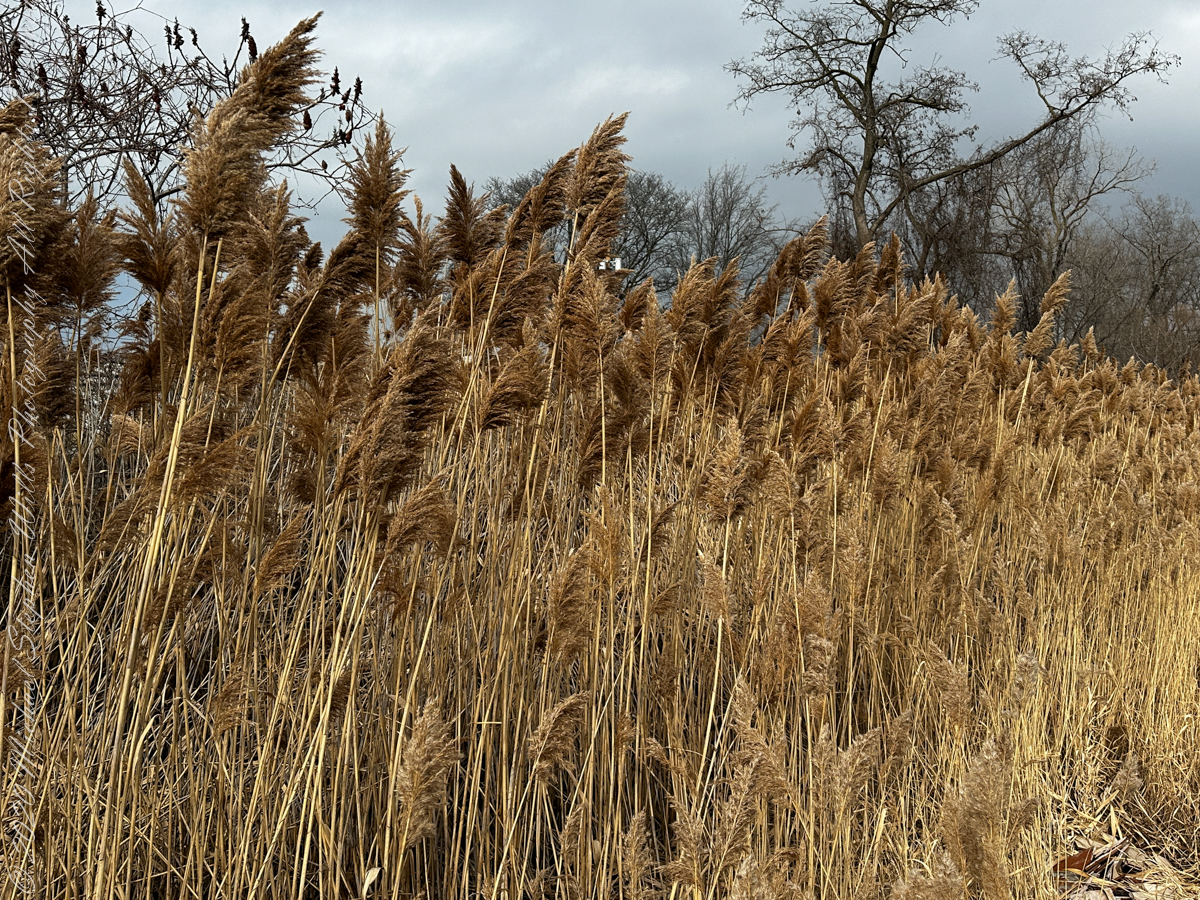
These Phragmites, aka The Common Reed, grow along Cayuga Lake shoreline. Cayuga Waterfront Trail, Ithaca, New York
A humble and fertile weed.
I learned today in China the stem of Phragmites, not this species possibly, is a common component of kites. Around our home here in Ithaca, New York, I’ve noticed the seed heads on stems used in home decoration. Some other uses Some other uses for Phragmites and other reeds in various cultures include baskets, mats, reed pen tips (qalam), and paper. Beekeepers can utilize the reeds to make nesting. In the Philippines, Phragmites is known by the local name tambo. Reed stands flower in December, and the blooms are harvested and bundled into whisk brooms called “walis”. Hence the common name of household brooms is walis tambo. Reeds have been used to make arrows and weapons such as spears for hunting game.
The movements of grace.
This is my first posting of photographs and video from the IPhone 14 ProMax.
Copyright 2023 Michael Stephen Wills All Rights Reserved
Late Winter, on the cusp of Spring, I arrived at the Cornell Experimental farm before sunrise.
There I set up a Kodak DSC Pro SLR/c with a Canon EF 50 mm f/1.4 USM lens all mounted on a very stable Manfrotto Studio Aluminum Tripod Model 475 and Hydrostatic Ball Head. From this 15 exposures were obtained. Photoshop CS6 HDR combined the 15 into this perfected image. Cornell Thompson Experimental Farm, Town of Dryden, Tompkins County, New York
Copyright 2023 All Rights Reserved Michael Stephen Wills
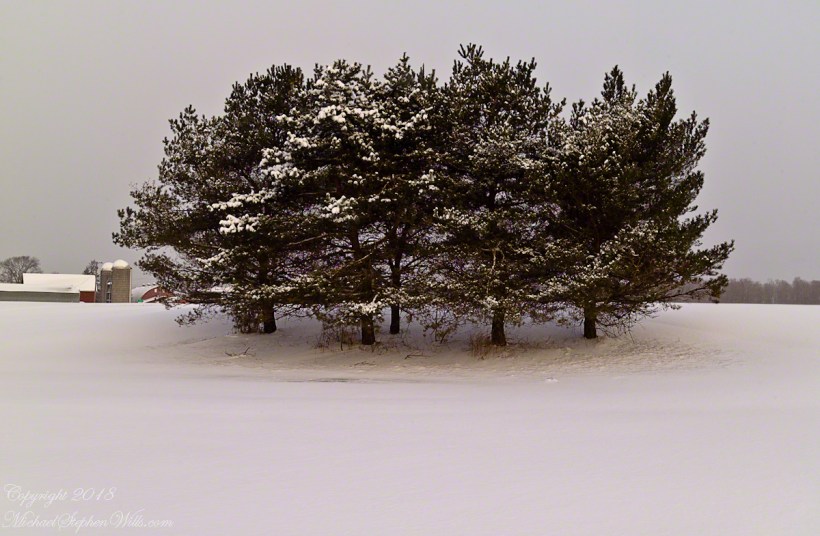
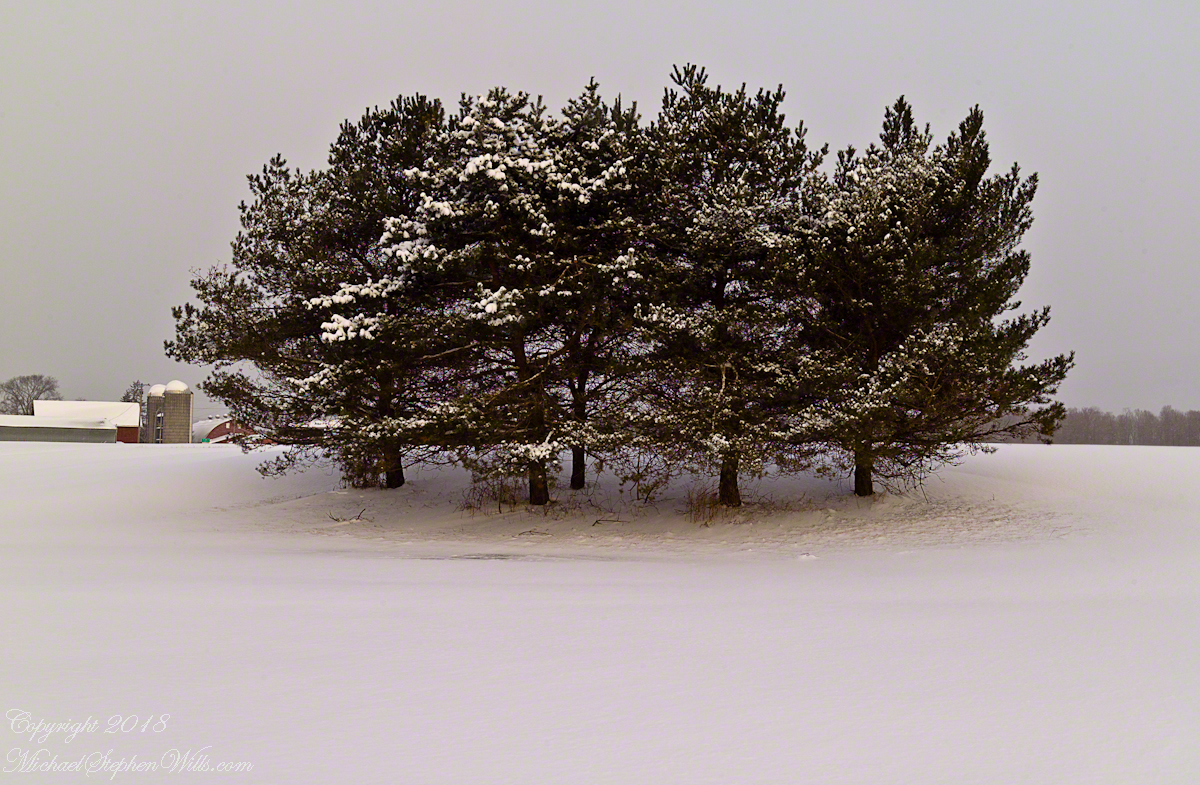
On a late winter morning on the cusp of Spring 2007 I ventured from my home on Fall Creek on a photo expedition.
Form here is revealed through the fine snowfall dusting the evergreen boughs of this stand of pines, not enough to stop the wind for which is tract of the Cornell Thompson Research Farm is known.
Copyright 2023 All Rights Reserved Michael Stephen Wills
On the first day of 2006 I ventured from my home on Fall Creek on a photo expedition.
A finely shaped maple tree growing alone on a Cornell Experimental Farm field at the intersection of Fall Creek Road and Cady Lane, between Fall and Mud Creeks. Town of Dryden, Tompkins County, New York
Copyright 2023 All Rights Reserved Michael Stephen Wills
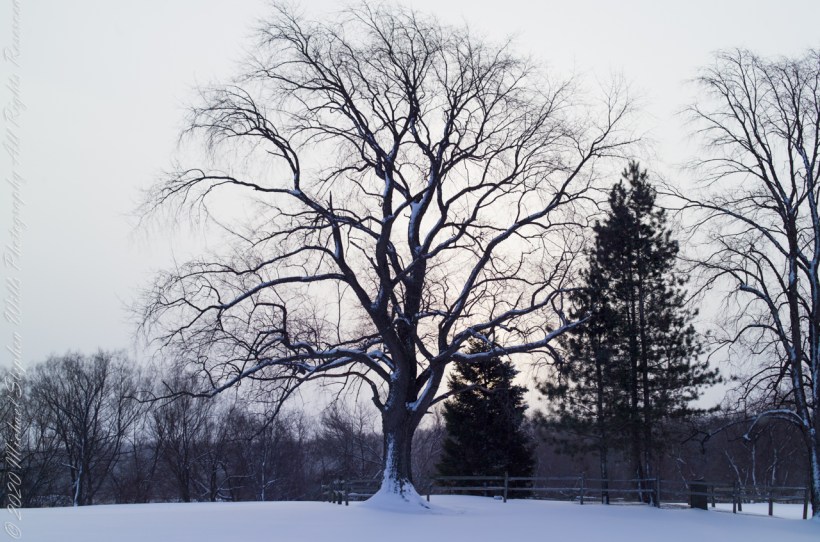
On the first day of 2006 I ventured from my home on Fall Creek on a photo expedition.
Each November, the eerie form of these limbs are revealed. I call the tree an “elm” though I am not certain. There are other lone survivor elms nearby, the leaves are right for an elm. Some elm species/specimens have the same shape.
Copyright 2023 All Rights Reserved Michael Stephen Wills
Gratitude for miracles witnessed is my emotion for this series, “Frozen Fall Creek.” Fifteen winters after Pam and I walked Fall Creek as a solid walking path, the stream flows without ice most years. My son, whose family now lives in the house, and his wife recalling walking the creek a few years ago, not in the past few years.
Weather records support our recollections and observations: here is an analysis of Ithaca January temperatures. The years 2009 through 2019 show a warming trend in daily temperatures for both minimum and maximum.
Analysis
Excel I used to plot minimum and maximum temperatures (Fahrenheit) for the 31 days of each January for eleven years 2009 – 2019. Click on the images of this post for a larger version.
Click any image for a larger view.
Forecast
Pam and I moved to Ithaca 2011 and missed our Fall Creek winter walks, miss them even more now our weekend excursions are only memories. Here are January minimum/maximum average daily temperature projections from 2020 through 2044 based on the trend established from the 2009 through 2019 series. The trend is the solid color, projection the faded color.
Reading from the chart, if the current trend continues by January 2044 the average maximum daily temperature will be 47 degrees compared to 29 for 2009. In other words, the temperature never rose above freezing in the year 2009. By 2044 temperatures will be above freezing every day, on average, with daily minimums averaging 21 degrees.
From what I read, we can expect these warming trends to accerate within our lifetimes. My son named small mid-creek hummocks “islands” with numbers. Here is a view of his Second Island in late summer. What will Second Island be in 2044 late summer?
Late Summer 2018, second island
Memories
Reader of posts I and II of this series have commented about snow shadows. Here are the shadows produced from snow fallen on the vegetation of the last photograph: soft mounds to contrast with tree trunk shadows.
Winter 2009, second island
I prefer the composition of the following photograph. What do you think?
Play of winter shadows
A combination of contrasting shadow forms.
Low Winter Sun
Copyright 2023 All Rights Reserved Michael Stephen Wills
My last post, “Frozen Fall Creek I”, ended with macros of Ice Crystals on a bed of frost over creek ice within sight of our former home, a restored water mill. I continued on the ice, following the creek to this spot were the stream bed turns 90 degrees, changing from a southerly to a western flow.
Here I encountered an open course where constant water motion resisted freezing. A few frigid days later, the course had an amazing transformation.
Last To Freeze, Fall Creek
The transparent ice of the now frozen space retained the impression of movement, the surface rippled by current. In the following photograph, motionless ice crystals reveal the truth.
Ice Crystals on Water Frozen while Supercooled
In the intervening days, the constant motion resisted freezing while the water temperature dropped well past freezing to achieve a supercooled state. As the water temperature continued to drop, a fast transition from fluid to solid happened so quickly the movement of the water surface was preserved.
Ice Crystals on Water Frozen while Supercooled
Here is the matching “after” photograph to the “before” that started this post.
Channel of Water Frozen while Supercooled
Copyright 2023 All Rights Reserved Michael Stephen Wills








 Michael Stephen Wills Photography