From a distance, the waterfall is a glimmer among the trees. Across a broad stretch of grasses and low shrubs, Enfield Creek folds into a wooded hollow, where water tumbled over a series of rock ledges. In autumn, the surrounding trees offered glimpses of orange and gold, while the darker evergreens stood behind them. The falls were there, unmistakable once I knew where to look, but the distance concealed much of their character.
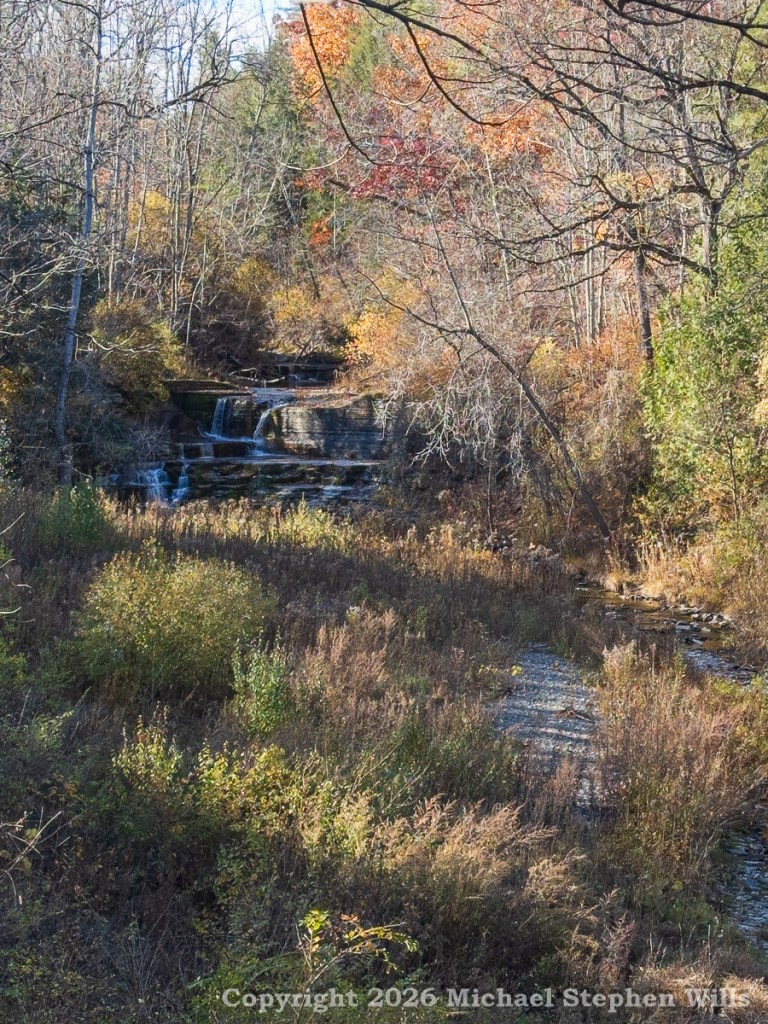
For years, I stopped to admire this scene in Robert H. Treman State Park, above the place where Enfield Creek and Fish Creek meet. Sometimes I photographed it, hoping to capture the waterfall through the tangle of branches. The view changed with the seasons. Summer foliage nearly swallowed the creek. Autumn opened the scene, revealing the pale ribbons of falling water. Even then, the falls remained frustratingly remote, unmarked, unnamed on all the maps.
I wondered what they looked like up close. From my usual vantage point, I could make out several drops, but not their arrangement. Nor could I see much of the rock formations that shaped them. I had explored other parts of Treman Park many times, yet this particular stretch of Enfield Creek remained unfamiliar.
That changed this autumn of 2026 when I noticed what appeared to be a path leading toward the creek. I had overlooked it on previous walks, perhaps because it was tucked out of the way, vegetation had obscured the opening. On that autumn afternoon curiosity won out. I followed the path, making my way toward the sound of water.
I followed little more than a deer trail, untended, and found the familiar distant view gave way to something entirely different. The stream became louder, and through the trees I began to distinguish the individual cascades. What had appeared from afar as a modest waterfall was a much more elaborate arrangement of ledges, pools, and falling water.
I had finally reached the place I had been photographing for years.
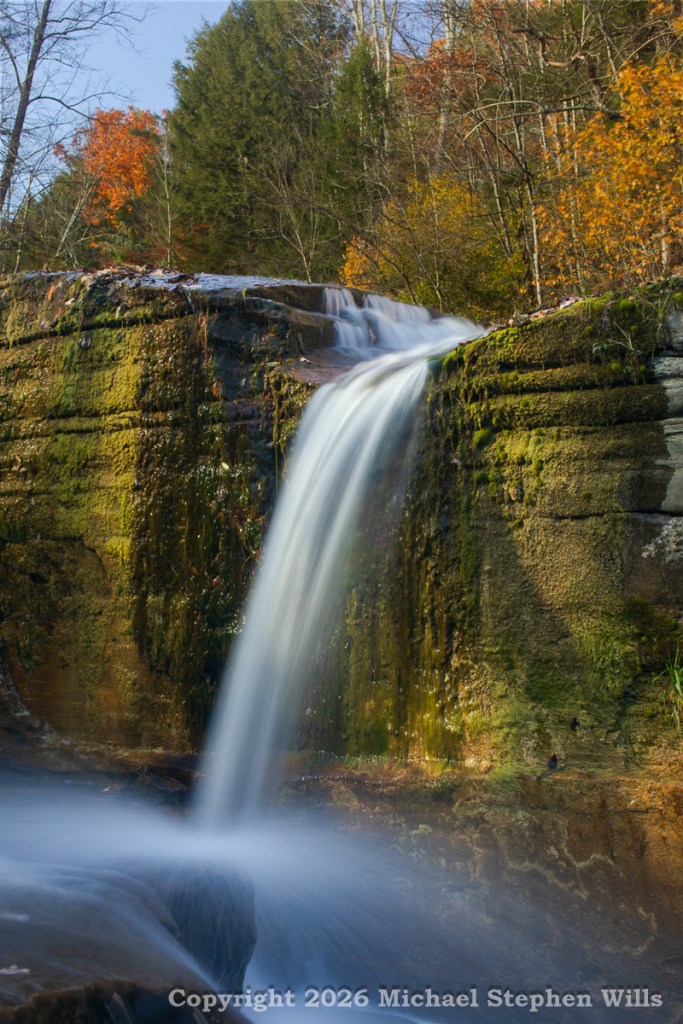
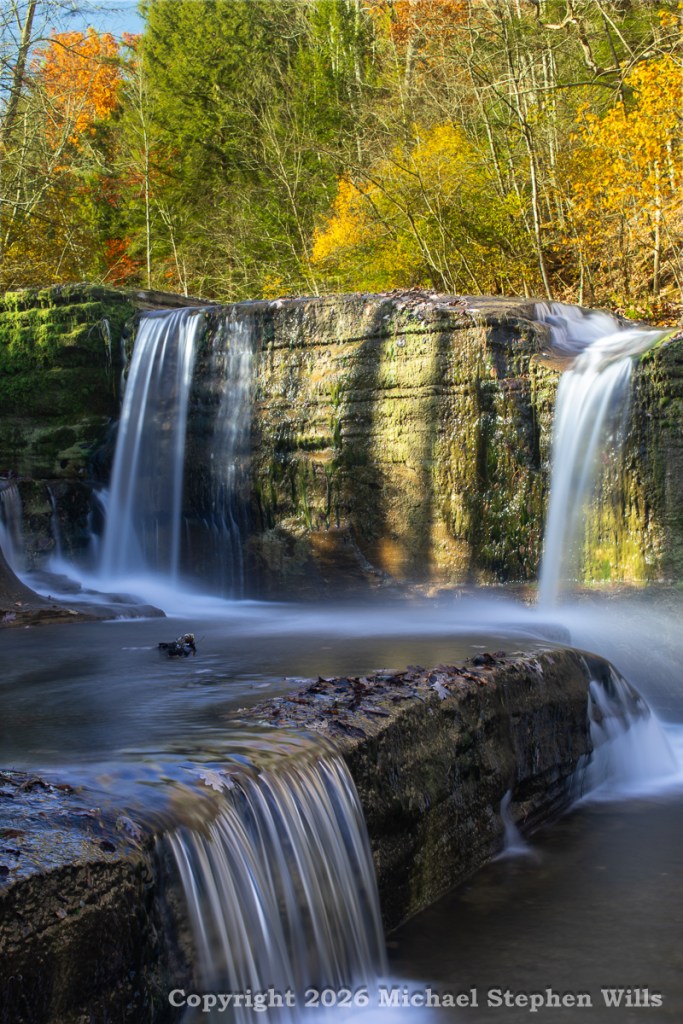
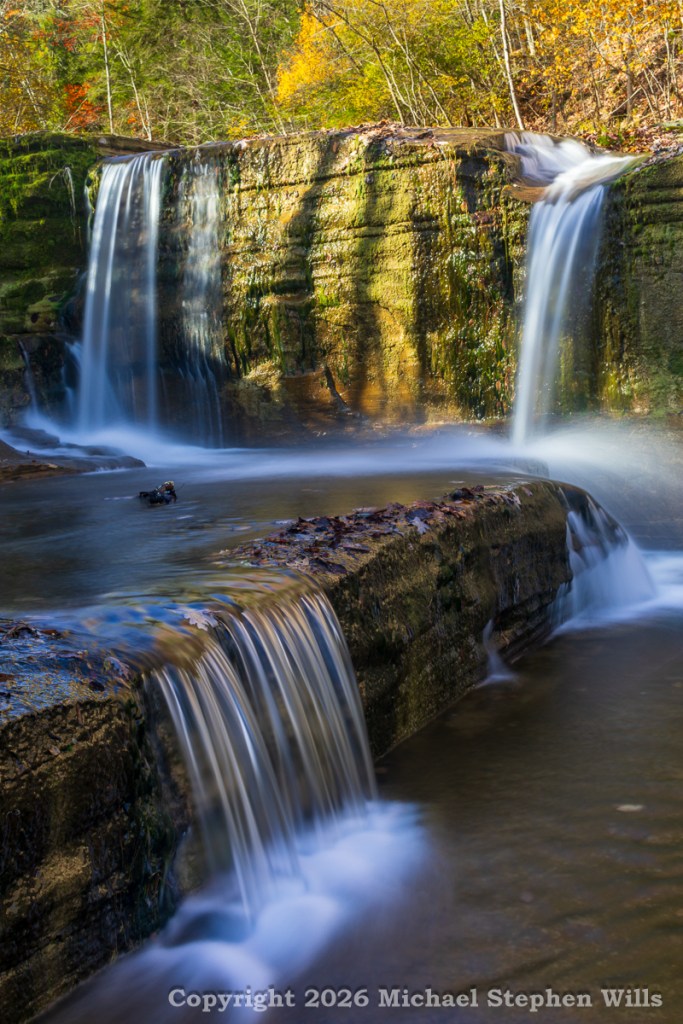
After several weeks of low rainfall the falls divided into two separate streams. On the left, water spread across the lip of a broad rock shelf before dropping in a nearly vertical curtain. To the right, a narrower, more concentrated flow swept over another edge, its smooth white column standing out against the dark, moss-covered stone.
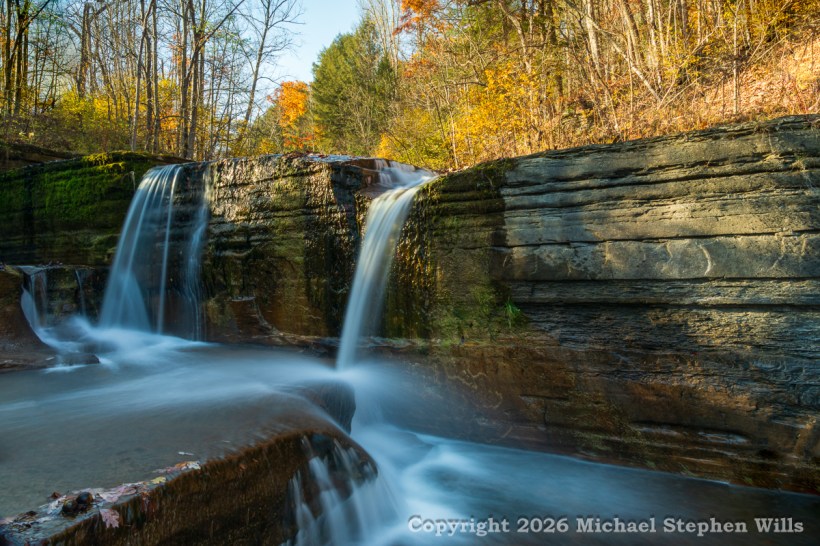
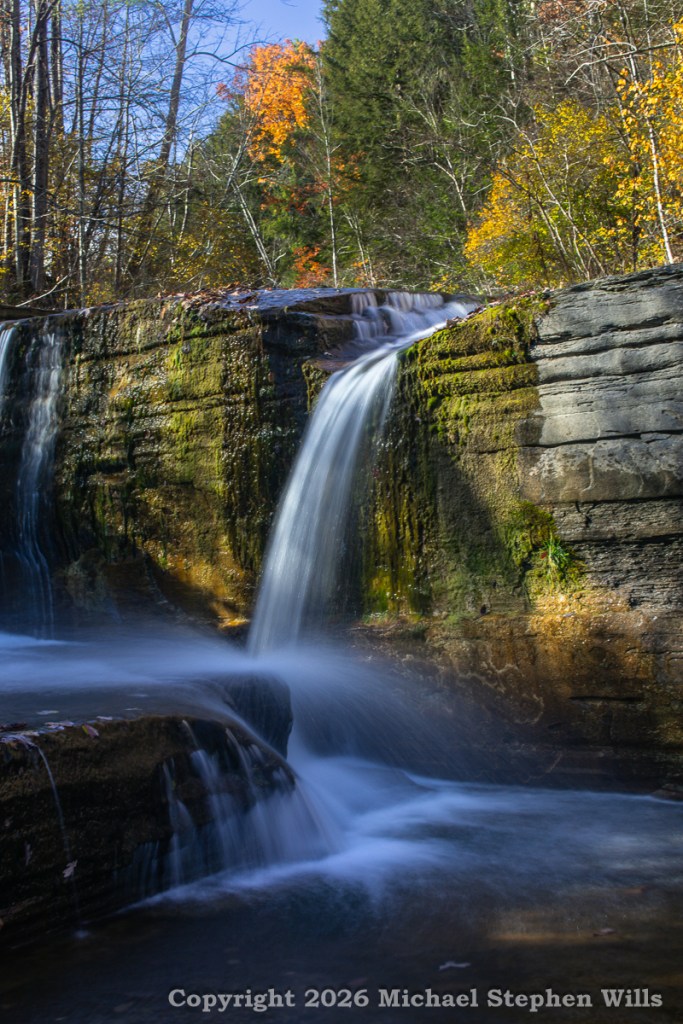
Below, the two streams entered a shallow pool before spilling over yet another ledge. Water moved through this little basin in several directions, finding channels along the irregular rock surfaces. Standing nearby, I could appreciate something the distant view had never revealed: the falls were not a single event, but a succession of them.
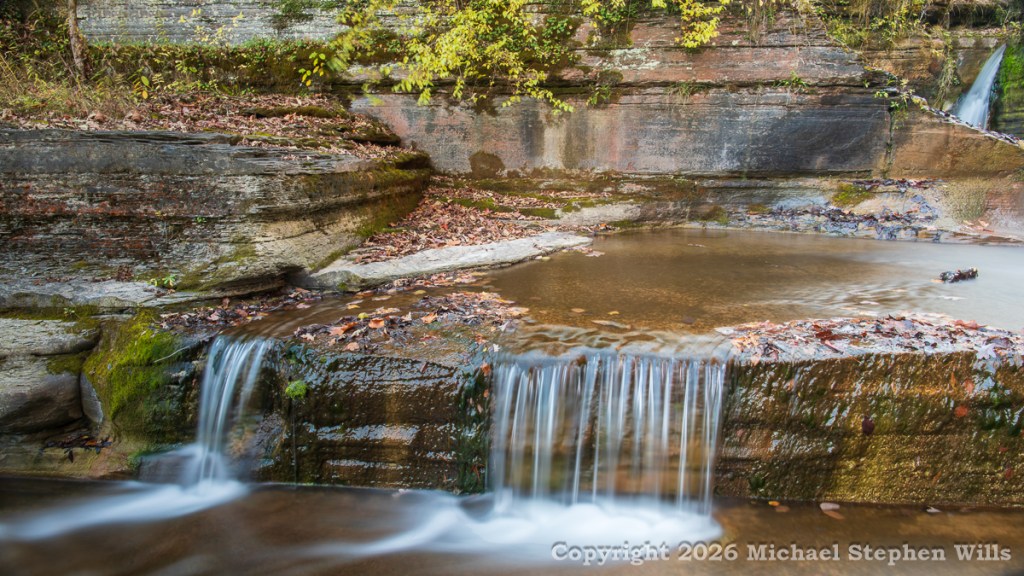
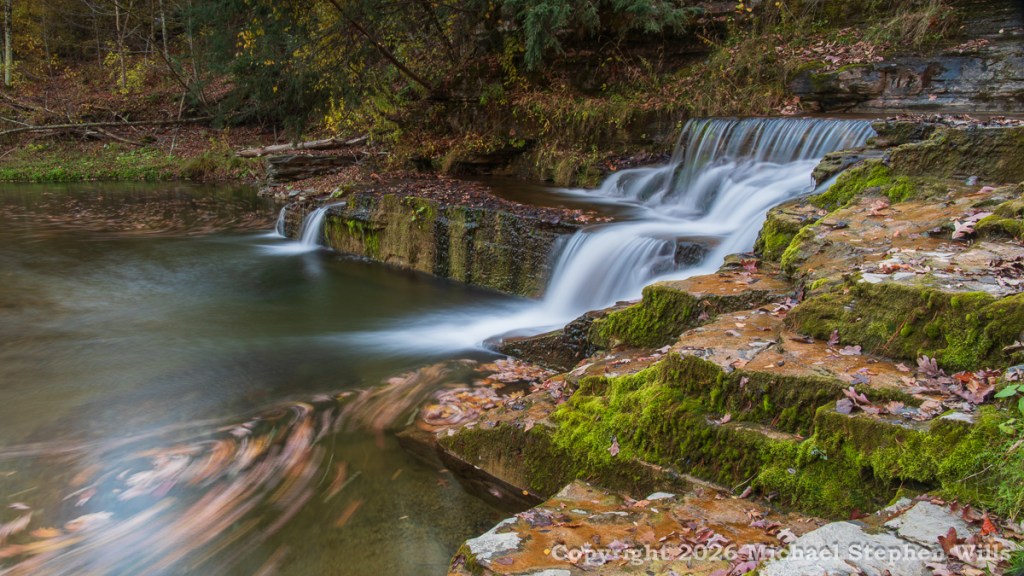
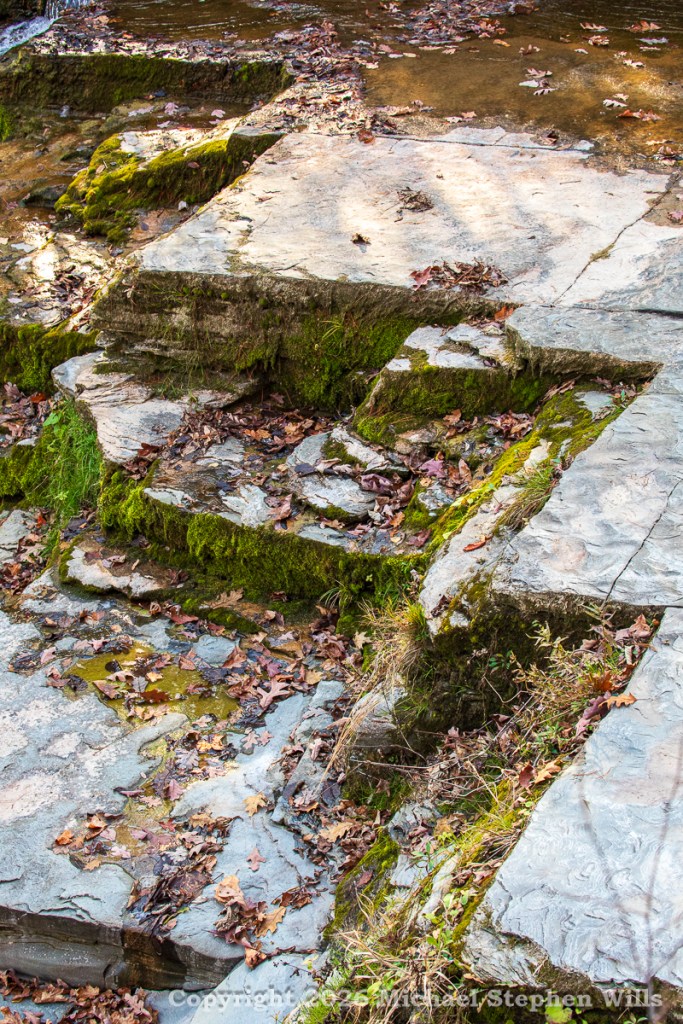
The rock itself deserved attention. Horizontal layers, exposed by the cutting action of Enfield Creek, formed a substantial wall beside the falls. Some surfaces were dark with moisture; others caught the afternoon sunlight. Moss occupied the wetter sections, especially where water seeped down the stone. A few small plants had established themselves in narrow crevices.
Above the falls, the trees were well into their autumn transformation. Golden leaves brightened the upper slopes, while a few brilliant orange crowns stood against the deep green of the conifers. Many branches were already bare. Sunlight reached through them to illuminate portions of the rock face, leaving the lower pool in shadow.
I settled into photographing the falls, trying different compositions and lenses. The long exposures transformed the rushing water into flowing white veils. In one frame, I concentrated on the right-hand cascade. In another, I included both upper falls and the lower spillway, allowing the water to lead the eye through the picture. The vertical compositions emphasized the succession of drops, while the wider view revealed the broad, layered rock wall.
There was also human history close at hand. During the nineteenth century, this part of the park belonged to the thriving hamlet of Enfield Falls. Mills, houses, a hotel, and other businesses once occupied the surrounding landscape. Cornell archaeologists have excavated nearby sites, uncovering foundations and household artifacts that preserve details of that vanished community.
I thought about those earlier residents, whose daily lives unfolded beside these same creeks. They depended upon the water for work, while visitors came to admire the scenery. The wooded landscape I know today was once more settled place, these falls echoed in their homes. Possibly the hamlet, Enfield Falls, was named after these; now unnamed, unremarked
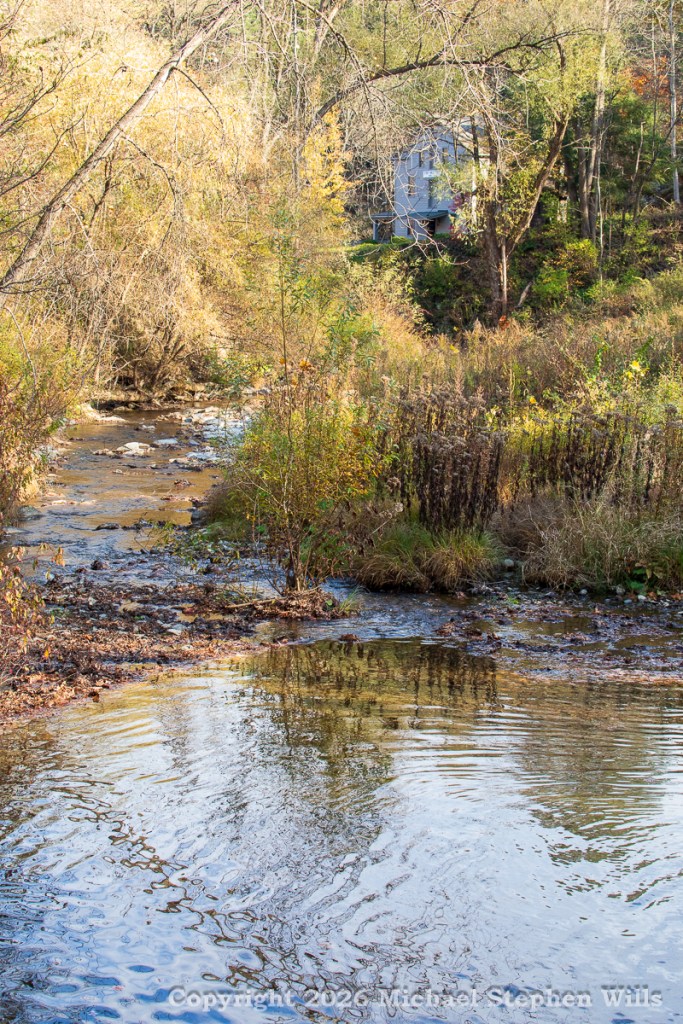
Eventually, I returned along the path, pleased to have discovered a new perspective on a familiar landscape. The waterfall had not changed, of course. It had been flowing over those ledges throughout all the years I stood at a distance, wondering what lay beyond the trees.
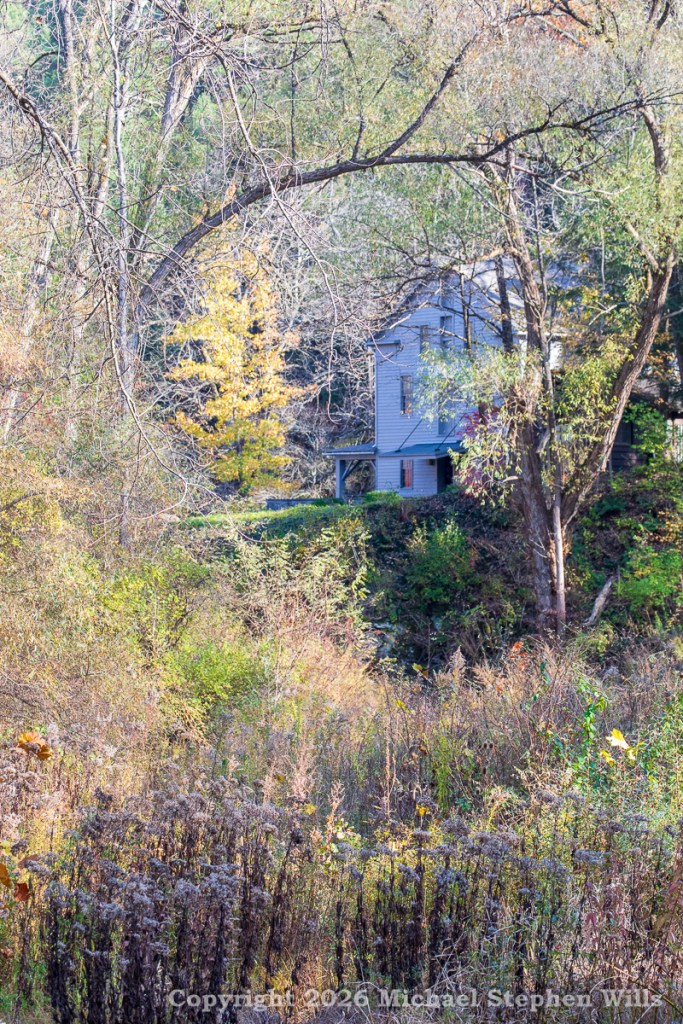
What had changed was my experience of it. I still appreciate that distant view, with the falls tucked into the autumn woods. Now, however, I know the details hidden within it: the twin curtains of water, the moss-covered ledges, the shallow pool, and the final cascade spilling toward the creek below.
After so many years of looking, it was a pleasure simply to have found my way there.


How utterly delightful
LikeLike
Waterfalls are such a powerful image 🙂
LikeLike
Gorgeous photos, Michael!
LikeLike
What a beautiful place. I love the autumn colours, the moss-covered rocks and the delicate waterfalls.
LikeLike
Another series of incredible images, Michael. There must be something deeply satisfying about finally stepping into a scene you’ve photographed from afar for years.
LikeLike