Square Tower House

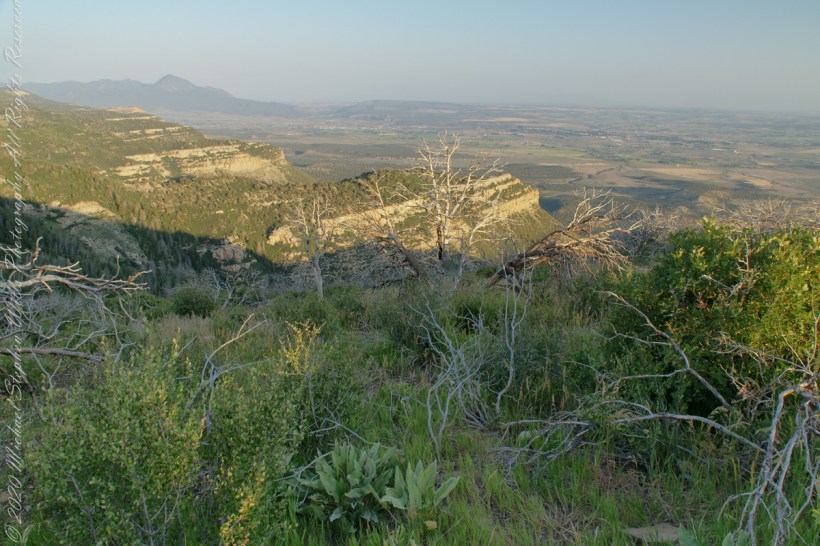
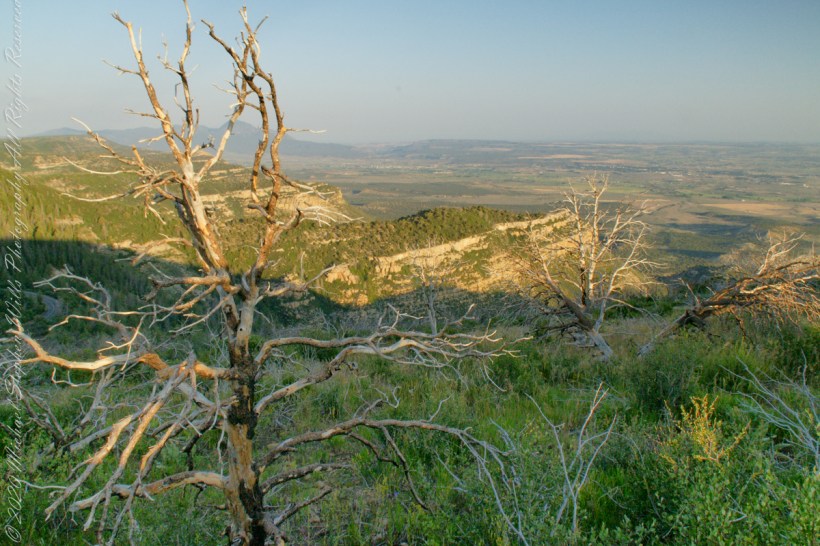
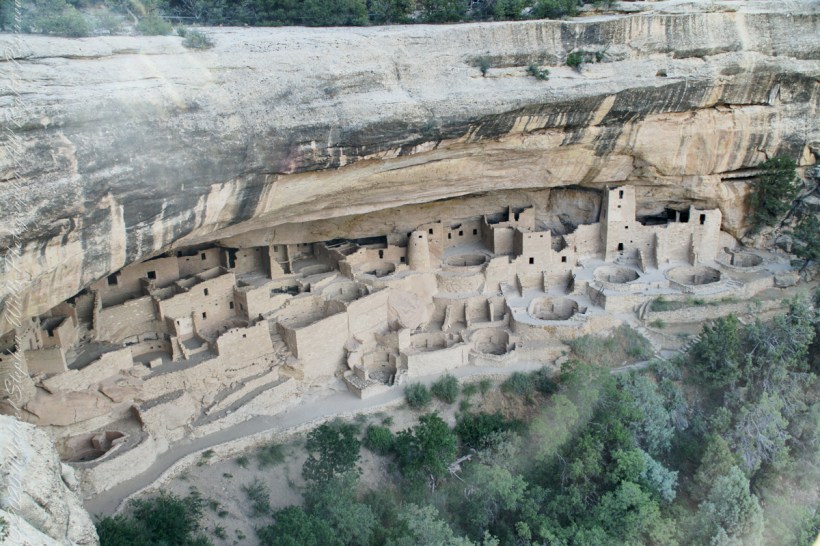
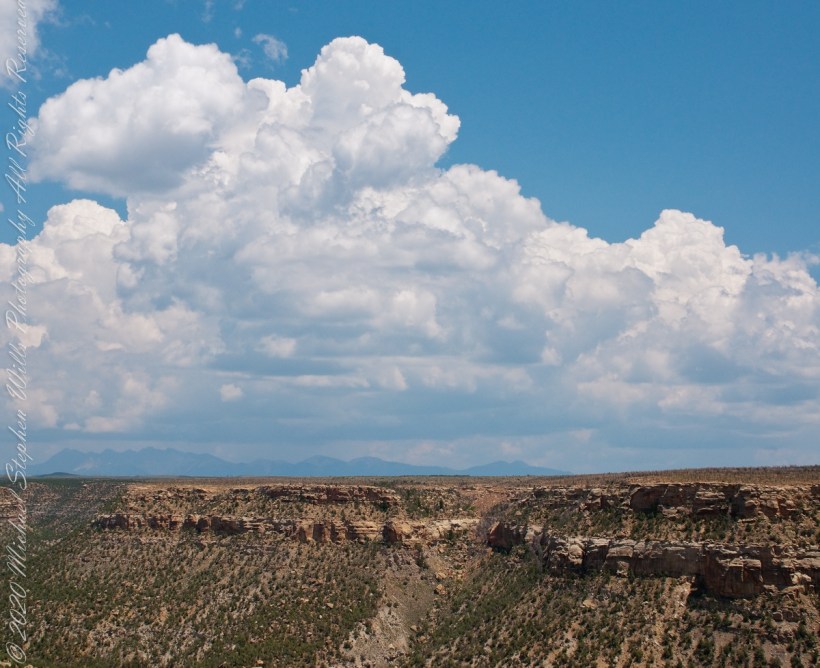
Viewed from Mesa Top Loop Road

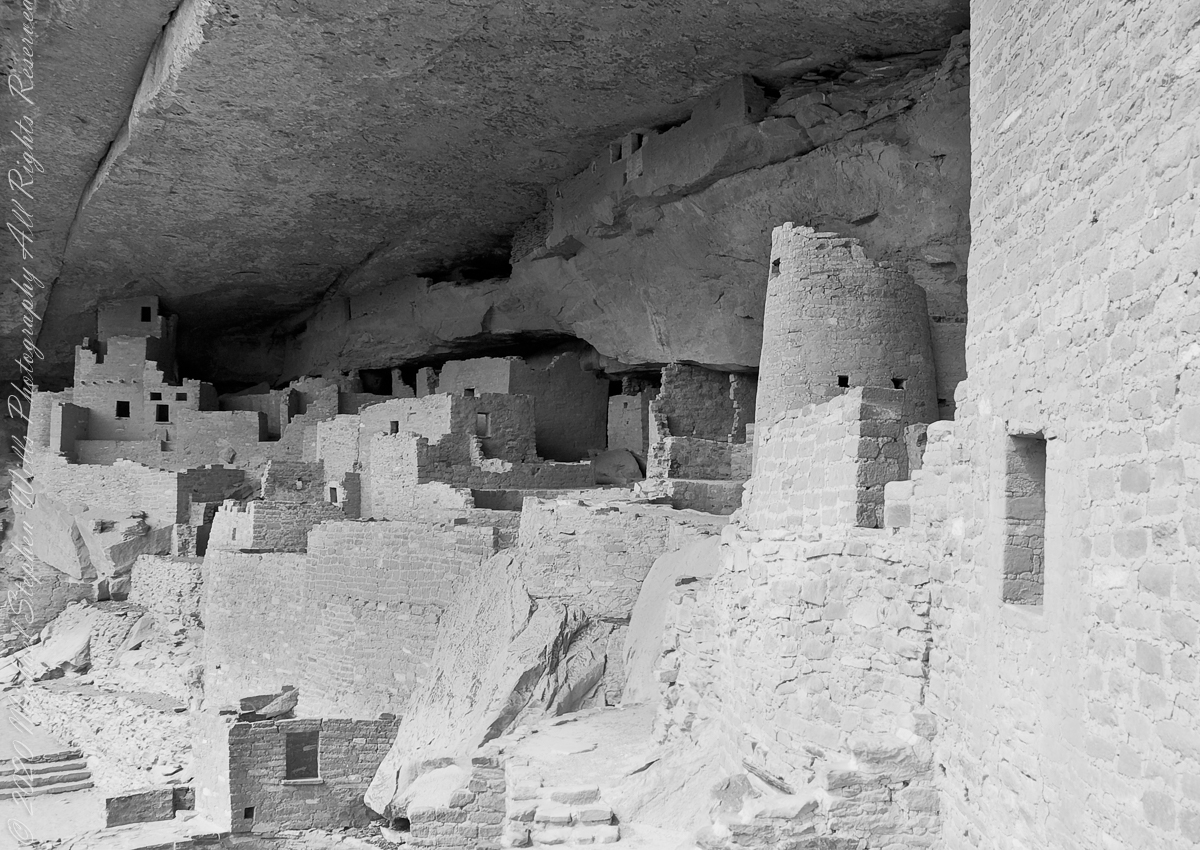
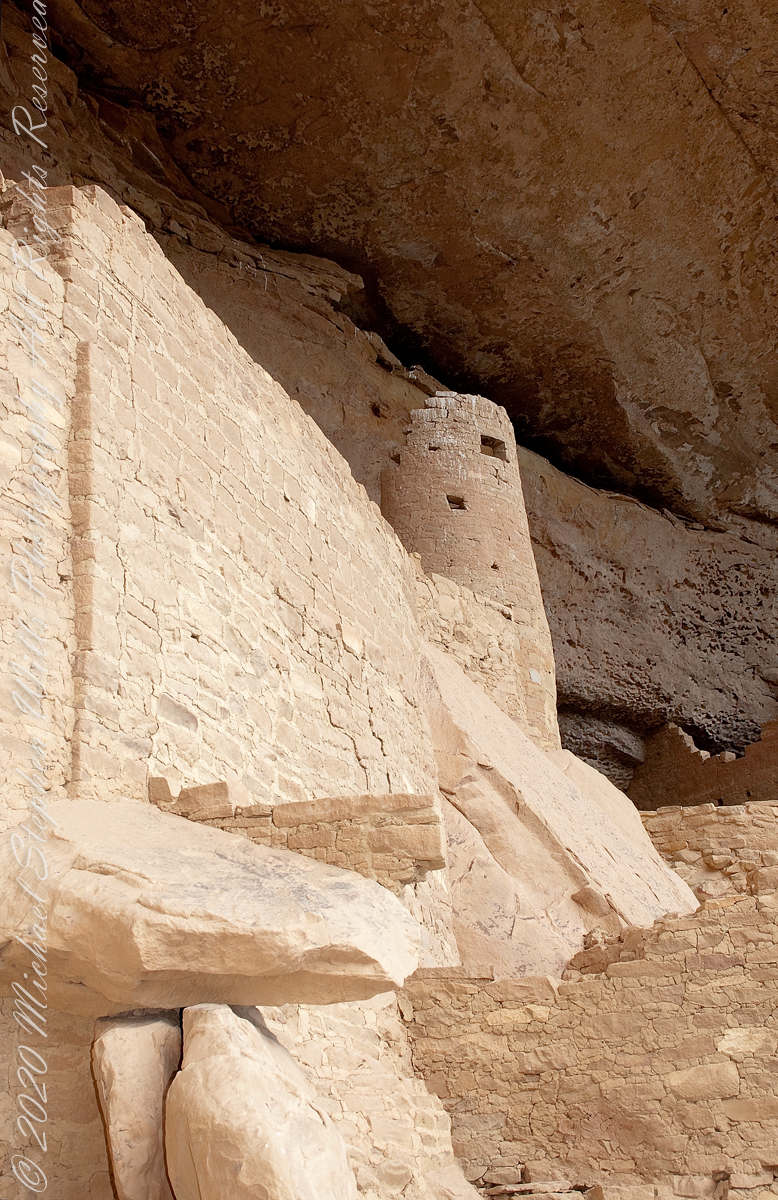
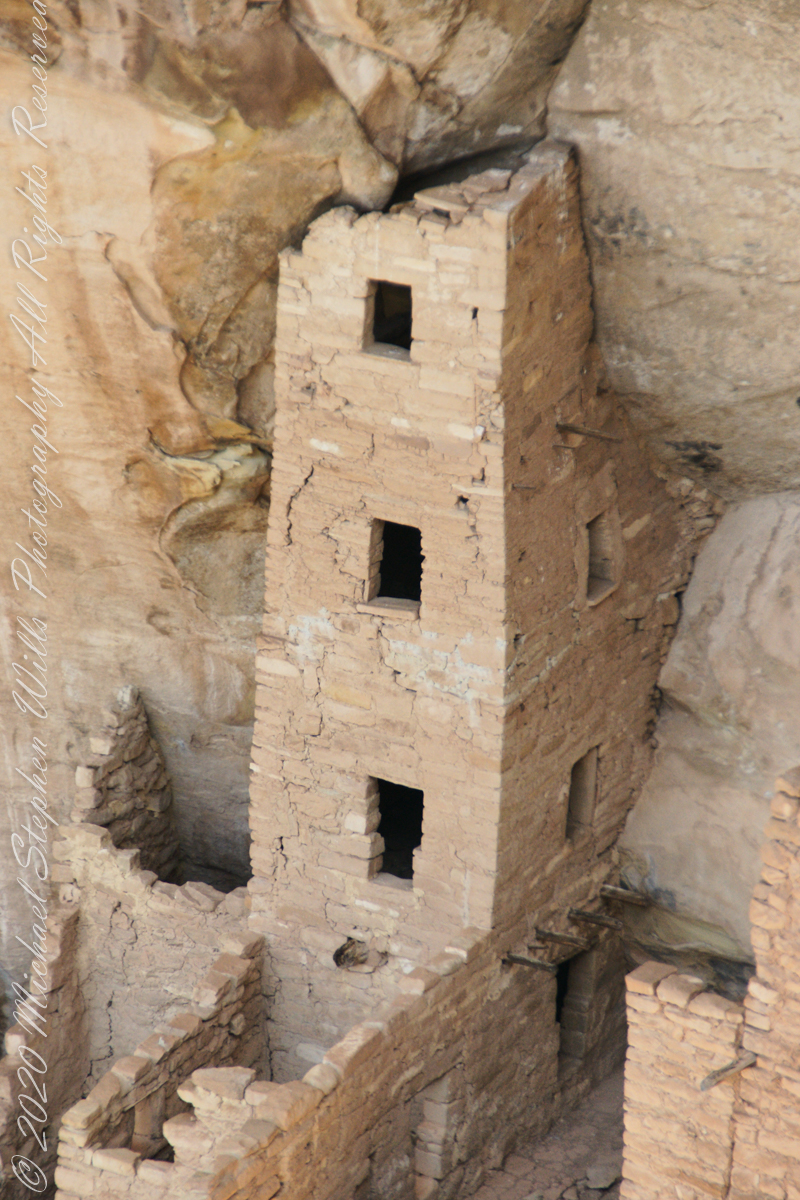
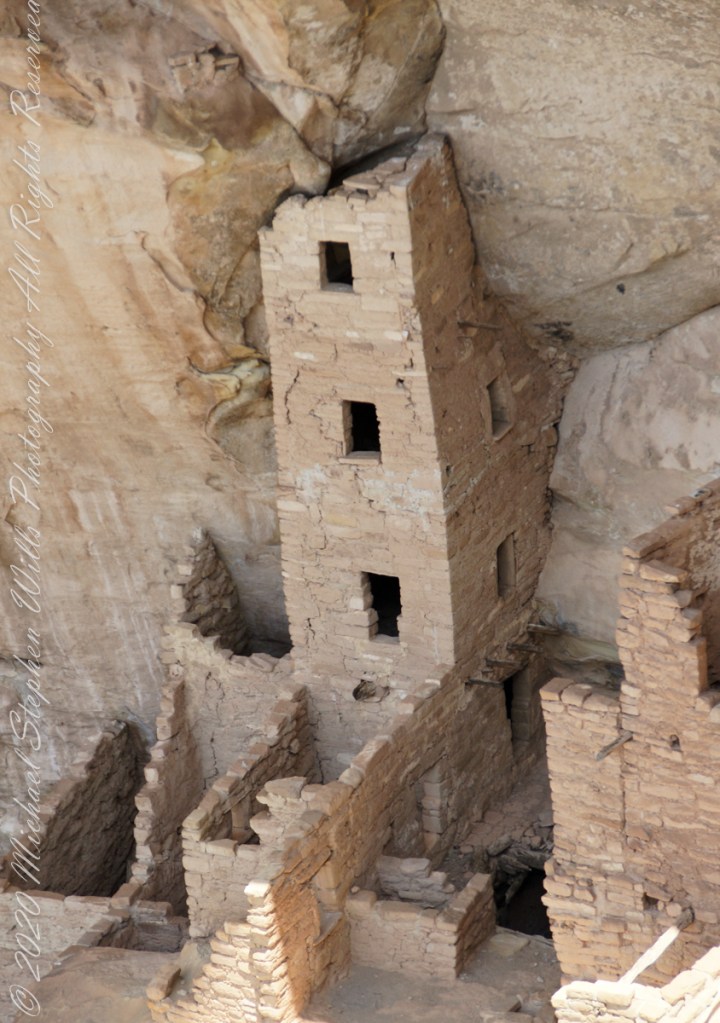
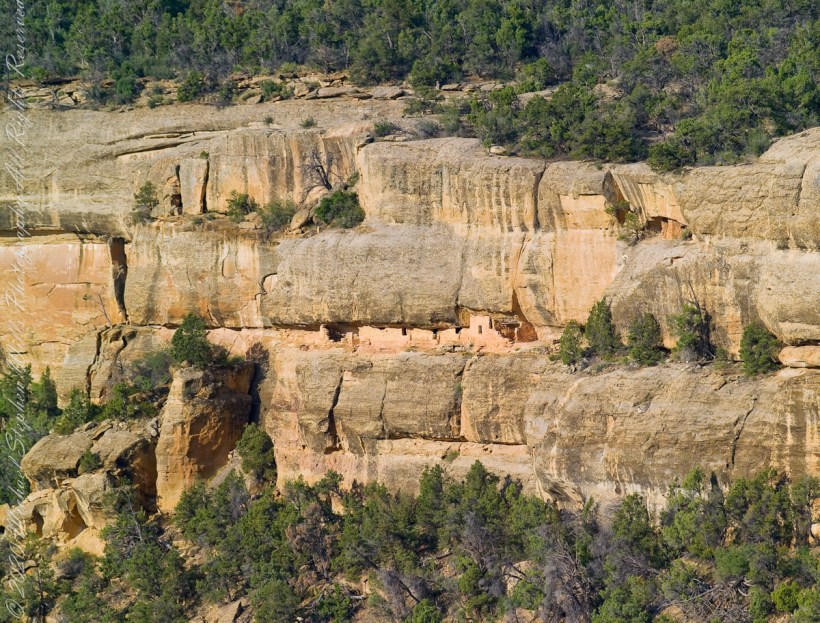
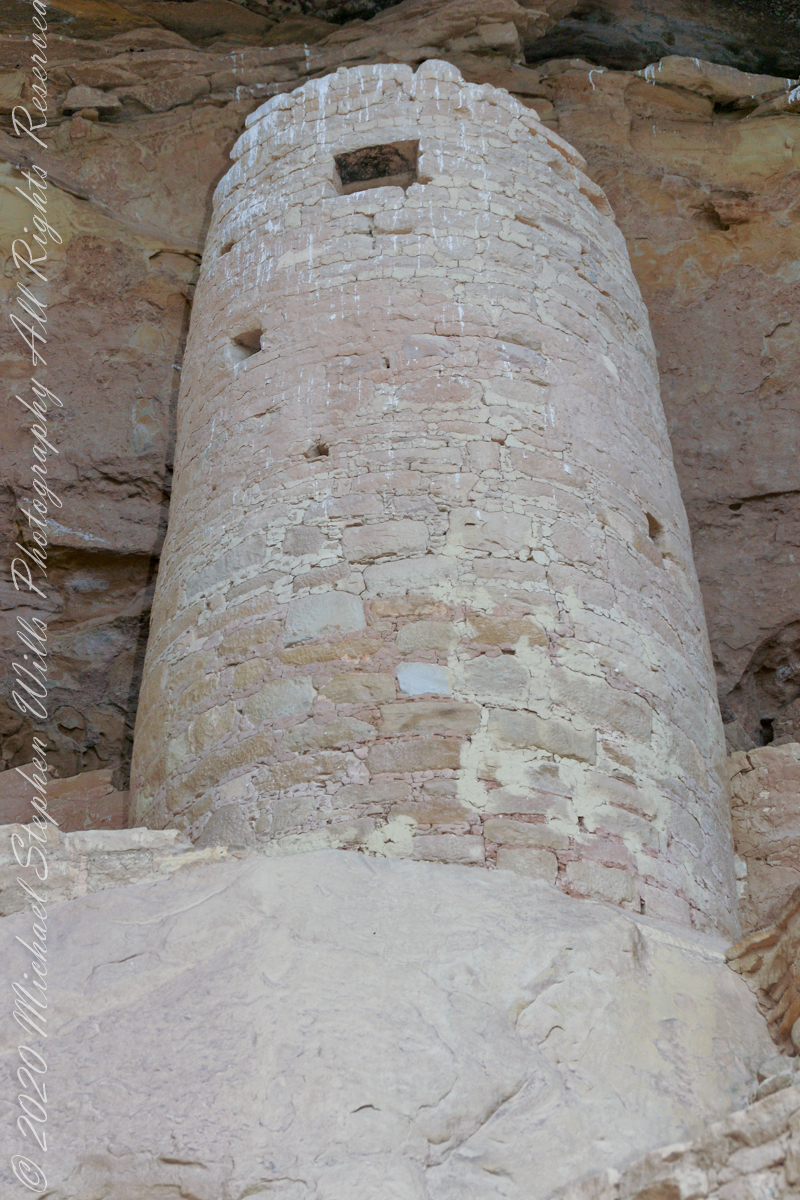
Featuring the tallest standing structure in the park, an intact kiva roof, original plaster and paint, and plentiful rock art, Square Tower House is one of Mesa Verde’s most impressive cliff dwellings.

Click me for more Mesa Verde works in my Fine Art Gallery
Located off the Mesa Top Loop, at the head of Navajo Canyon, this cliff dwelling is only accessible on a ranger guided tour, for a fee. Tickets for the tour are limited, so get them before your arrive. There is a viewing point just off the loop road. Mesa Verde National Park, Montezuma County, near Cortez, Colorado.

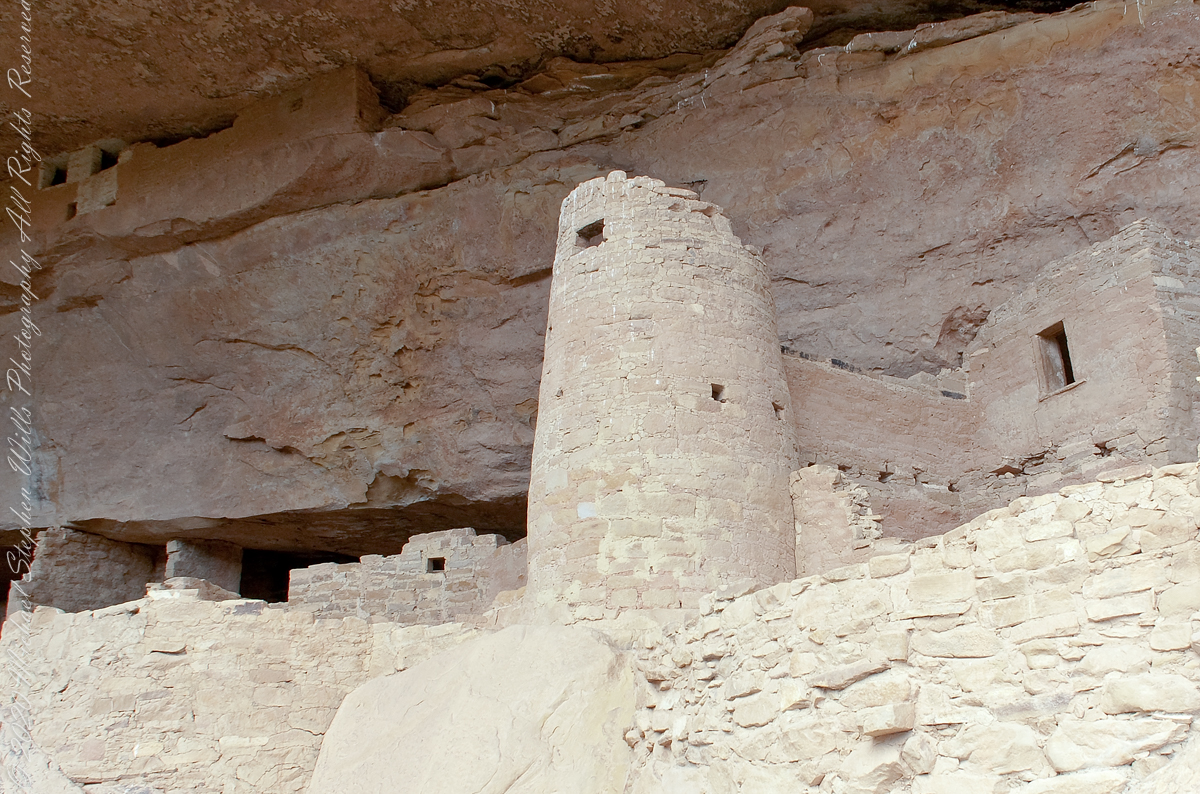
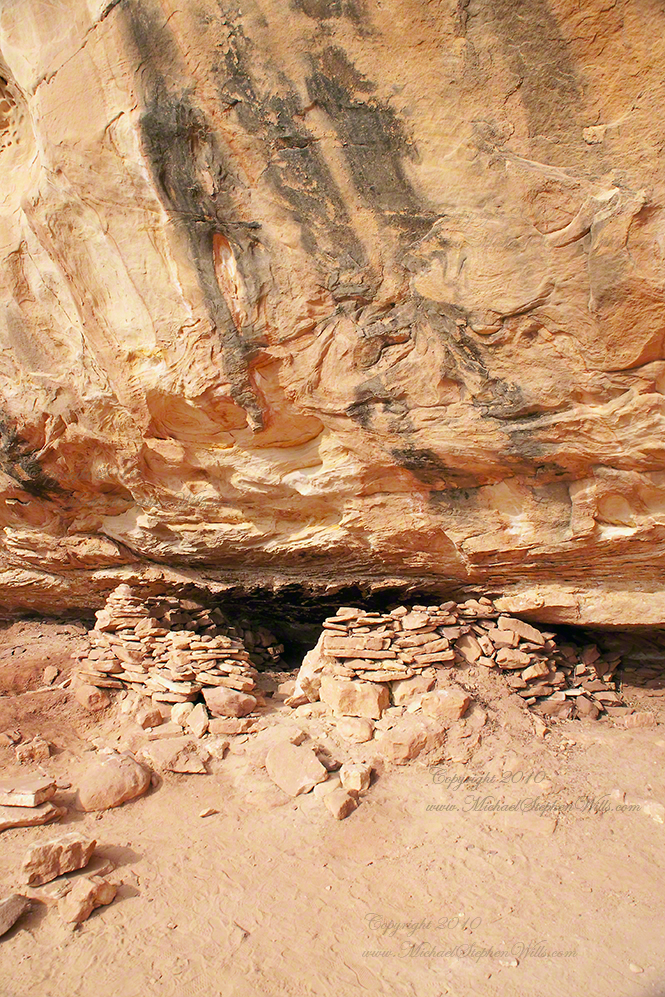
The two rooms here are what seems to be a round wall, possibly a kiva ruin, on the left and a single story building, on the right, being the single wall with an opening for access. They probably blocked the opening in cold weather to conserve heat. It is possible this site had a special use and was occupied for a limited period of time each season/year.

Copyright 2023 Michael Stephen Wills All Rights Reserved

Around the Kiva

Imagine

Discovery

Imagine yourself as Richard Wetherill in December 1888 rounding up stray cattle on a mesa top, in a snow storm, riding through a very familiar pinyon and juniper forest.  You ride to the mesa edge overlooking a huge canyon and, in the distance and through the snow, see a this “magnificent city.”

Click me for more Mesa Verde works in my Fine Art Gallery
Today

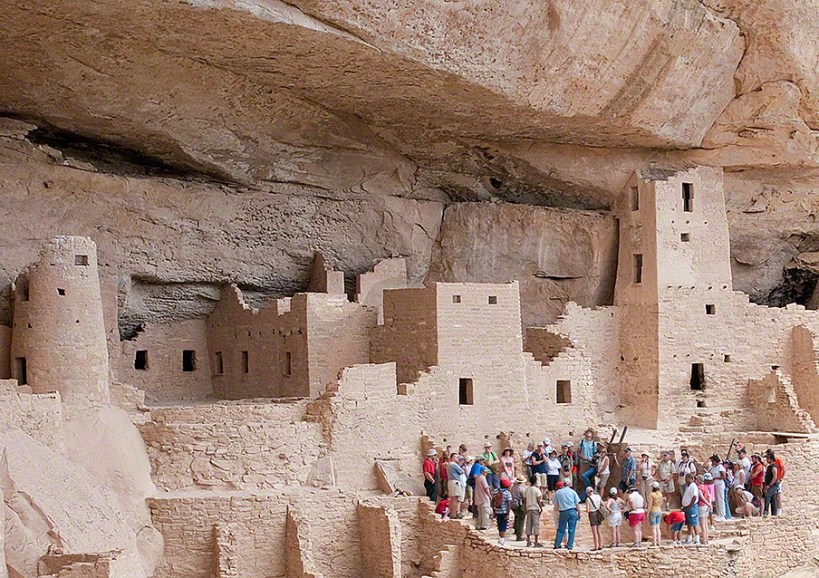
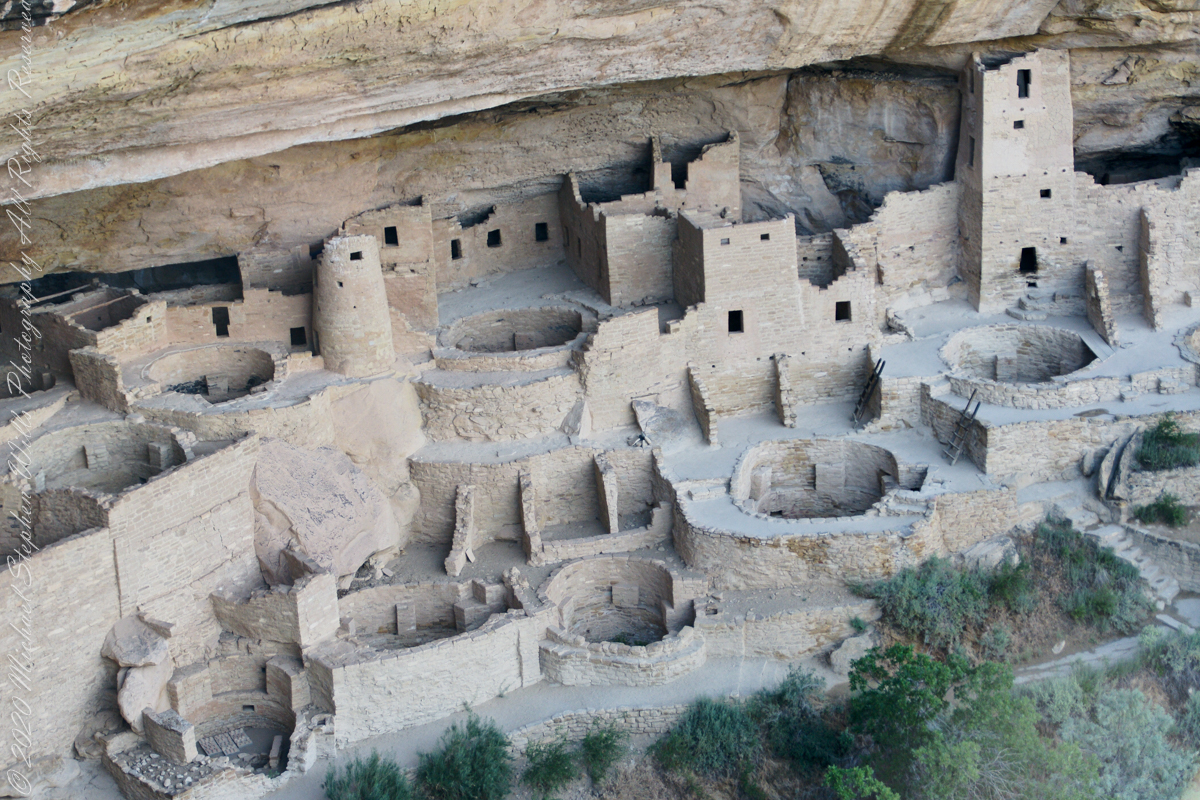
The site is protected and access restricted to these tour groups.  I skipped the lecture, as interesting as it was, to use the time to capture the images in these blogs.  Here is an overview of the northeastern Cliff Palace, including the square (see previous blog) and round towers with the tour group gathered around one of the Cliff Palace kivas.

Sipapu

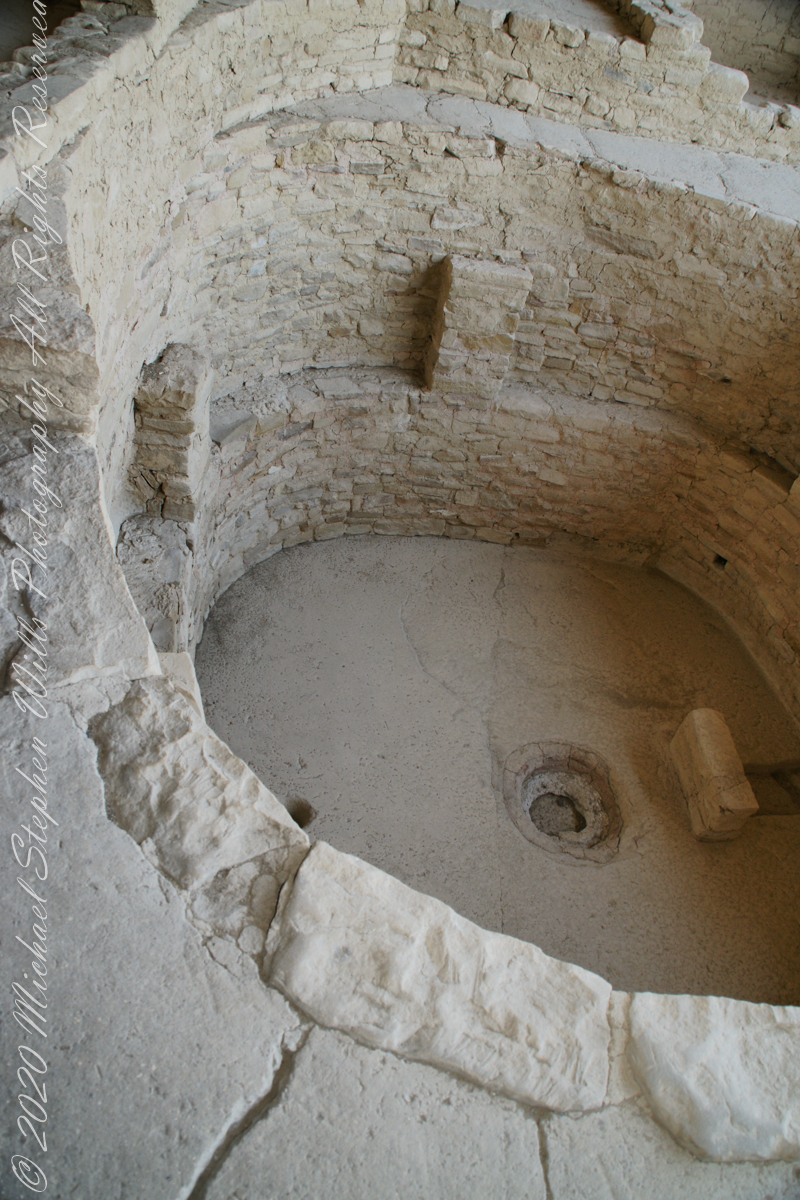
Here is a close-up of the kiva floor of the Balcony House.  Sipapu is a Hopi word for the small hole or indentation in the floor of kivas used by the Ancient Pueblo Peoples and modern-day Puebloans. It symbolizes the portal through which their ancient ancestors first emerged to enter the present world.

The sipapu is the smaller pit in the floor to the left (north side) and partially blocked by the kiva wall. The larger is a firepit. The small wall to the right is placed to deflect airflow from a floor vent.

Click Me for more background on the discovery and excavation of the Cliff Palace

Copyright 2023 Michael Stephen Wills All Rights Reserved

Square Tower as viewed from the Kiva

Cliff Palace Access

Pam and I arrived at Mesa Verde early one summer morning in July and spent time understanding the landscape of the ruin sites and the lighting.  I made a mental visit plan and decided to arrive at the cliff palace mid-afternoon and it turned out, of the tour times available, this was the best.  It is possible to make special arrangements for access, to take photographs, and maybe I will give this a try in my next life.

Click me for more Mesa Verde works in my Fine Art Gallery
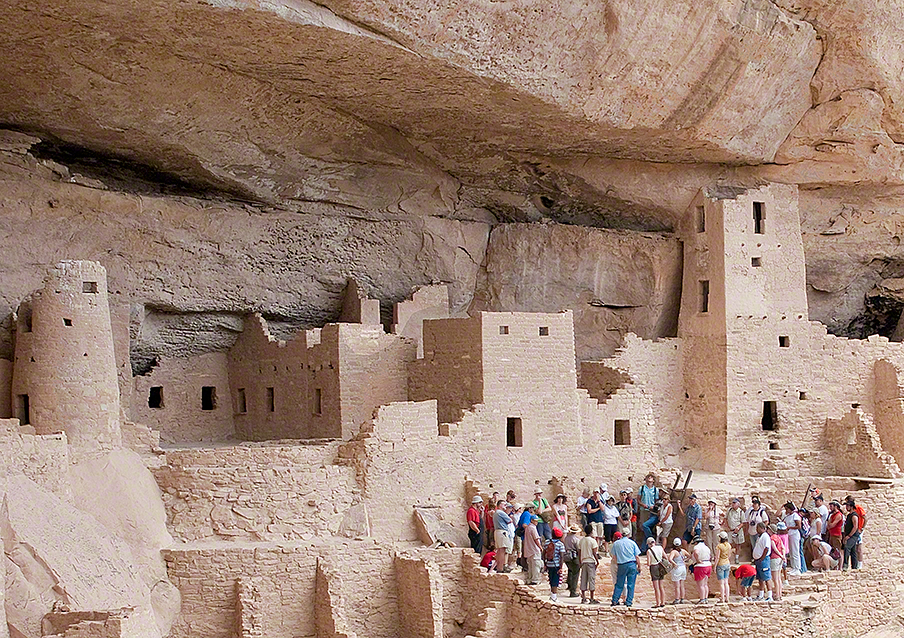
Four Stories

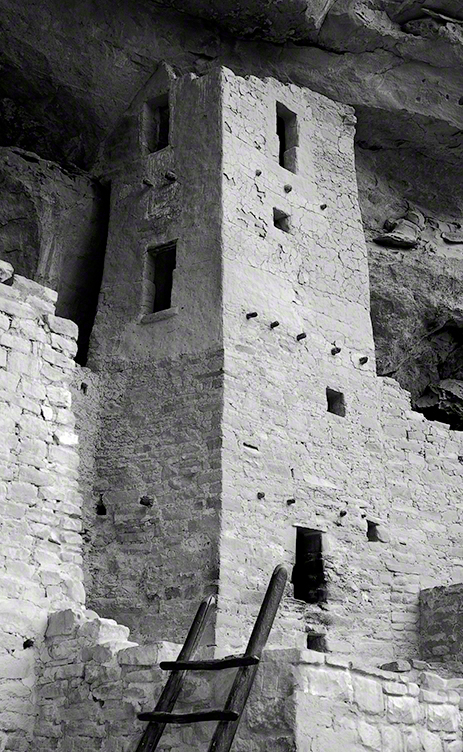
This four-story square tower, located at the south end of the alcove, at one time reached the ceiling. Access to the upper rooms was provided by hatchways in the lower room roofs.

What about that T-shaped door?

On the fourth floor, a T-shaped doorway suggests a balcony because that type of opening in the wall, designed to minimize the area, was used as a doorway.

Bend over Backwards

Inside the tower are well preserved wall paintings.  To view them, you side in that lower opening, facing outwards and, bending backwards, look up into the tower.  You need to hold onto the wall to do this and its the only time we were allowed to touch the ruin.

The Kiva

The modern wooden ladder rises from a kiva platform.  Notice the level of wear on the top of the ladder posts.  There are three kivas visible from the tower and at a later time I might post about these.

Copyright 2023 Michael Stephen Wills All Rights Reserved

Summer Views from Chapin Mesa

North-Northeast to the San Juan Mountains

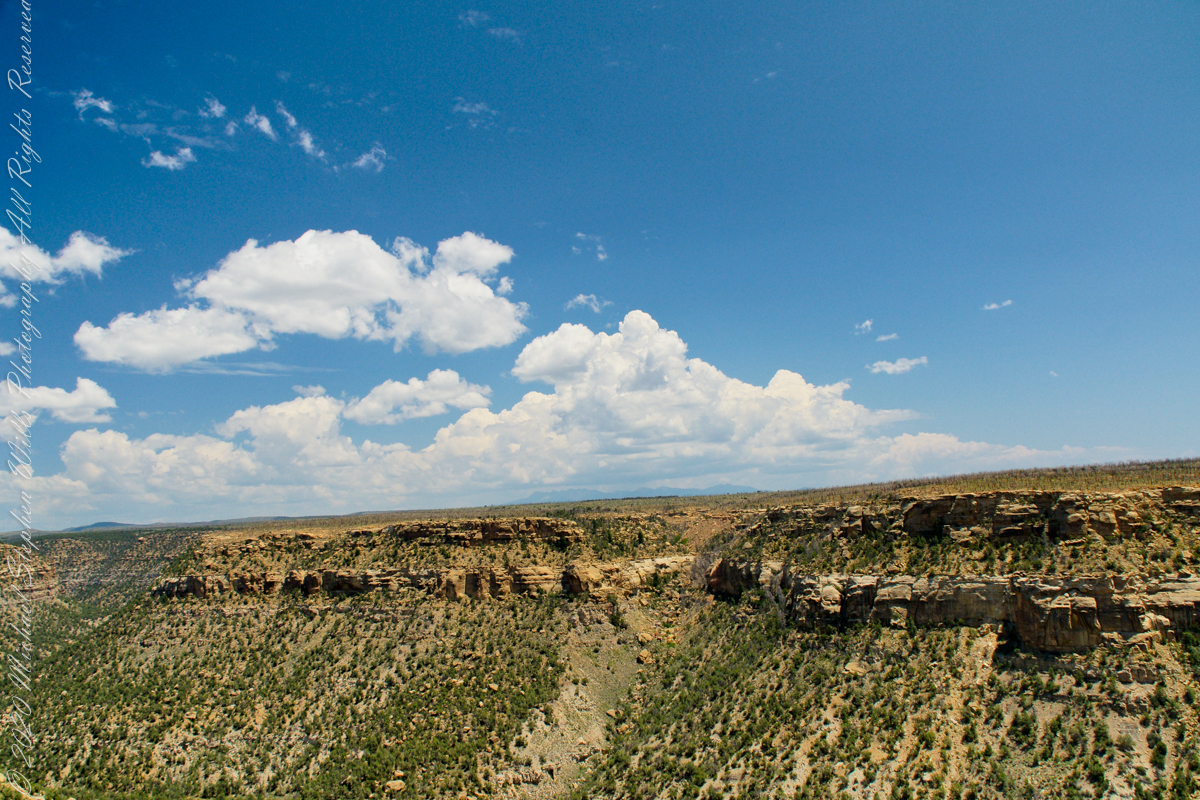
Chapin Mesa is the site of the Mesa Verde Anasazi ruins Balcony House and Cliff Palace.  These are the views you see before the descent below the cliff rim to visit Balcony House.

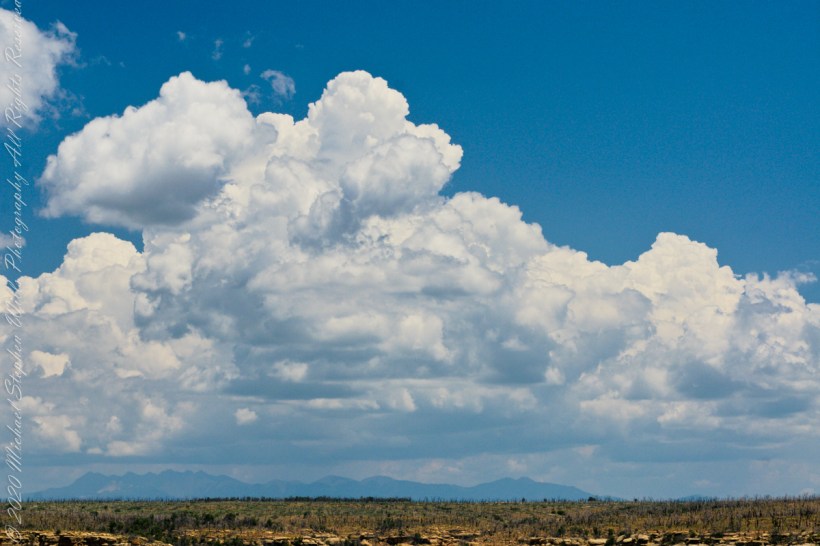
These views from the Chapin Mesa rim are companions to two photographs of Balcony House, taken on the same morning. You are looking northeast across Soda Canyon, to a thunderstorm building above the San Juan mountains in the distance. Route 550 from Durango to Silverton climbs passes into these peaks, on the way to Telluride. Chapin Mesa is part of Mesa Verde National Park.

The following fine art image is a combination of the previous photographs

Click me for more Mesa Verde works in my Fine Art Gallery
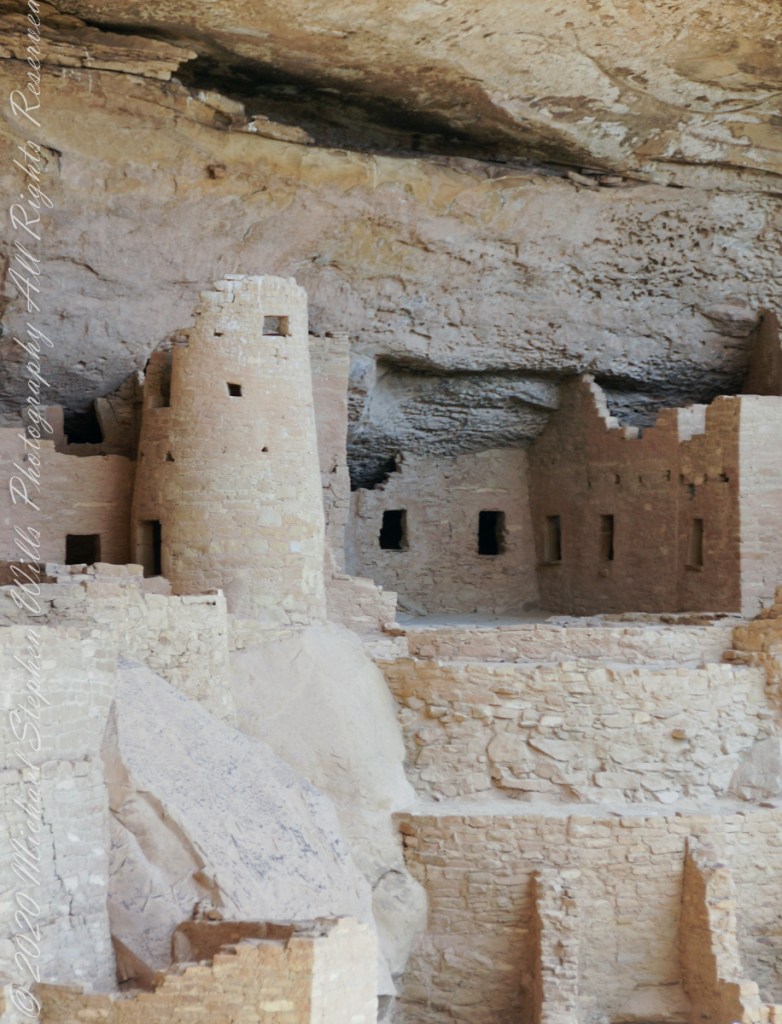
Copyright 2023 Michael Stephen Wills, All Rights Reserved

The Ancient Doors to Mesa Verde

Two Ancient Cliff Swellings

The Anasazi (“ancient ones”) constructed 15 rooms on a 10 foot deep cliff alcove and used a toe-trail (literally a series of depressions in the rock used to gain traction) to climb to the mesa top (shown in this photograph) and the canyon.

A toe-trail security feature is the necessity to start using the correct hand/foot combination, otherwise there will be a point from which it is impossible to proceed. There are 15 rooms here: a kiva, on the far left, a multi-story building, on the right, with 4 upper rooms and 10 ground floor spaces. They probably blocked the openings in cold weather to conserve heat.

Click me for more Mesa Verde works in my Fine Art Gallery
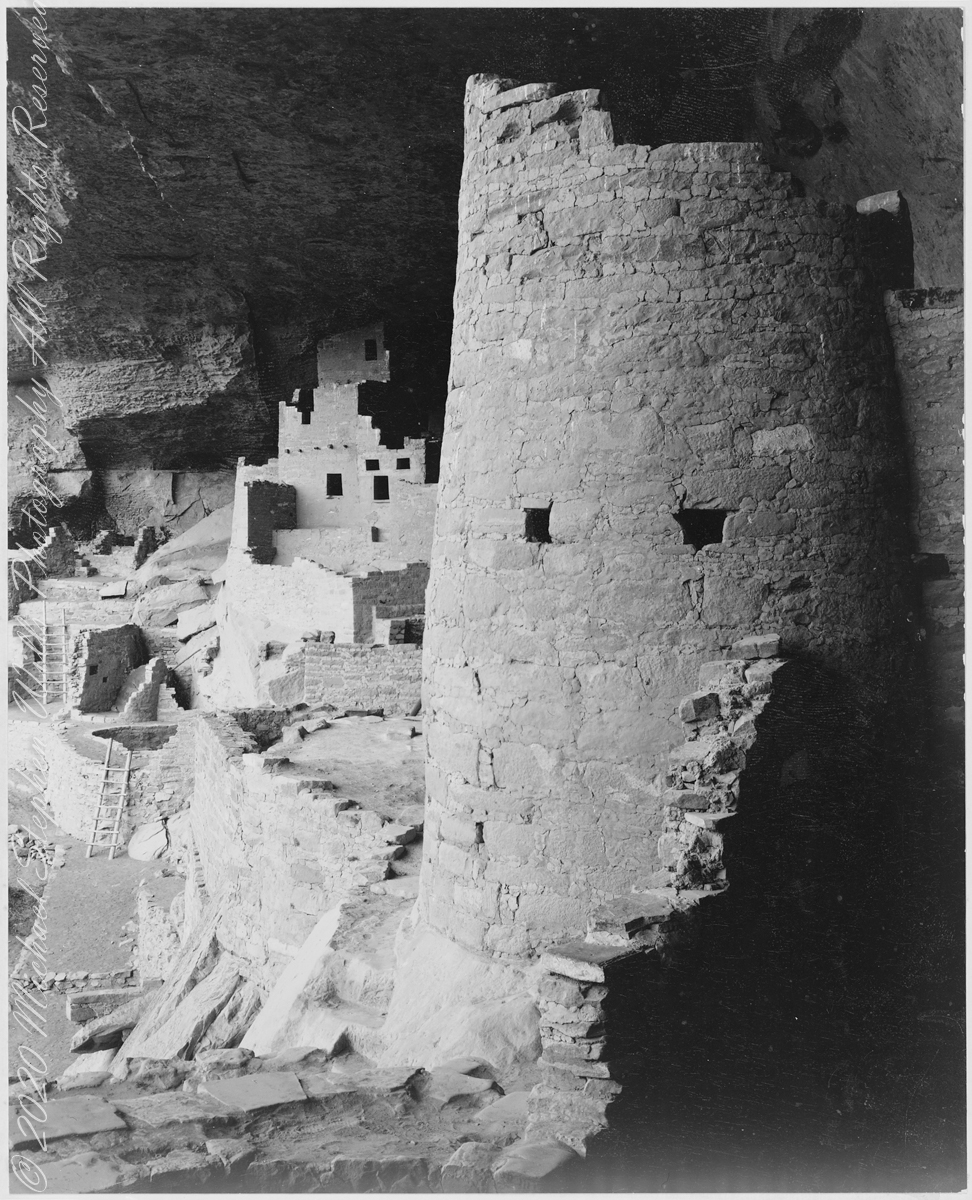
The Anasazi had gardens on the mesa top or the canyon, plus they hunted and gathered wild foods. In the gardens, they planted corn, bean, squash and watermelon in the rich soil. They also gathered wild plants and herbs such as bee-weed, ground cherry, milkweed, cattail, wolf berry and sedge grass Cliff dwelling alcoves include a seep spring, a seam in the rock through which a small amount of water flowed. Imagine the difficulty of hauling water every day if there was not a water source in the alcove.

Can you find the unnamed ruin also in this canyon, we call it “Cliff Canyon”? These ruins are outside the national park boundary, inside the Ute Mountain Ute Indian Reservation.

House of Many Windows

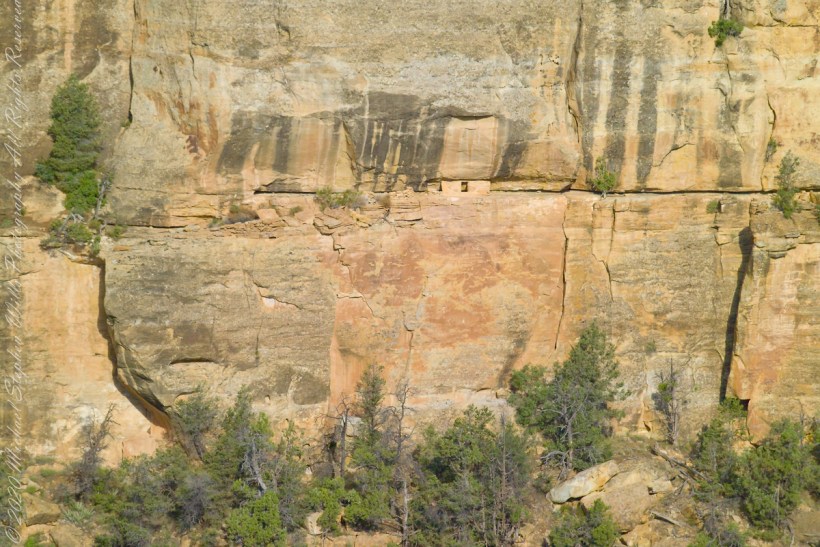
The “window” of this cliff dwelling (ruin) was actually a door!! The Anasazi (“ancient ones”) constructed two rooms in this narrow cliff alcove.

The two rooms here are what seems to be a round wall, possibly a kiva ruin, on the left and a single story building, on the right, being the single wall with an opening for access. They probably blocked the opening in cold weather to conserve heat. It is possible this site had a special use and was occupied for a limited period of time each season/year.

Cliff dwelling alcoves include a seep spring, a seam in the rock through which a small amount of water flowed. Imagine the difficulty of hauling water every day if there was not a water source in the alcove. The large juniper to the left attests to a water source, since it grows from a shared crevice.

The protective alcove was deeper in the past. The desert varnish (the dark marking) above the alcove marks a place where water seeps from the cliff and, in cold weather, expands under the overlying rock, causing it to fall. Can you see where the cliff face has fallen above the ruin? The lack of desert varnish shows the rock fall was relatively recent.

Copyright 2023 Michael Stephen Wills All Rights Reserved

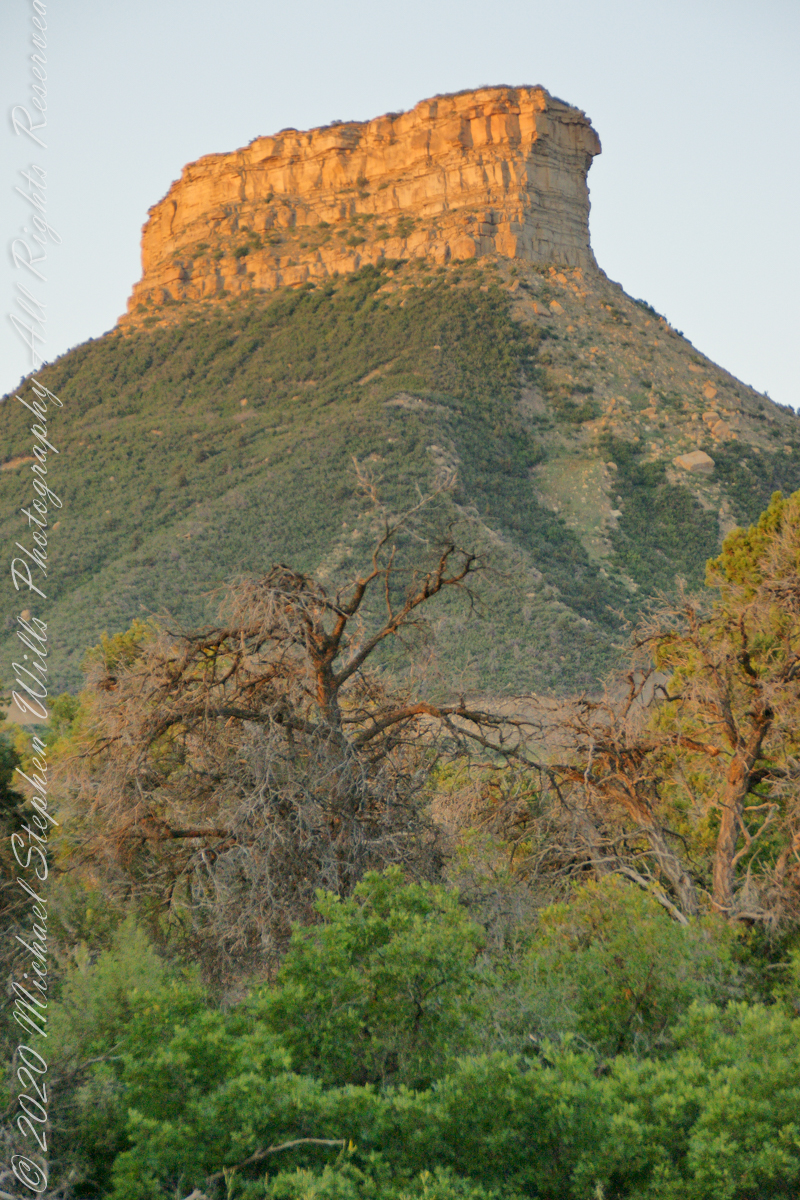
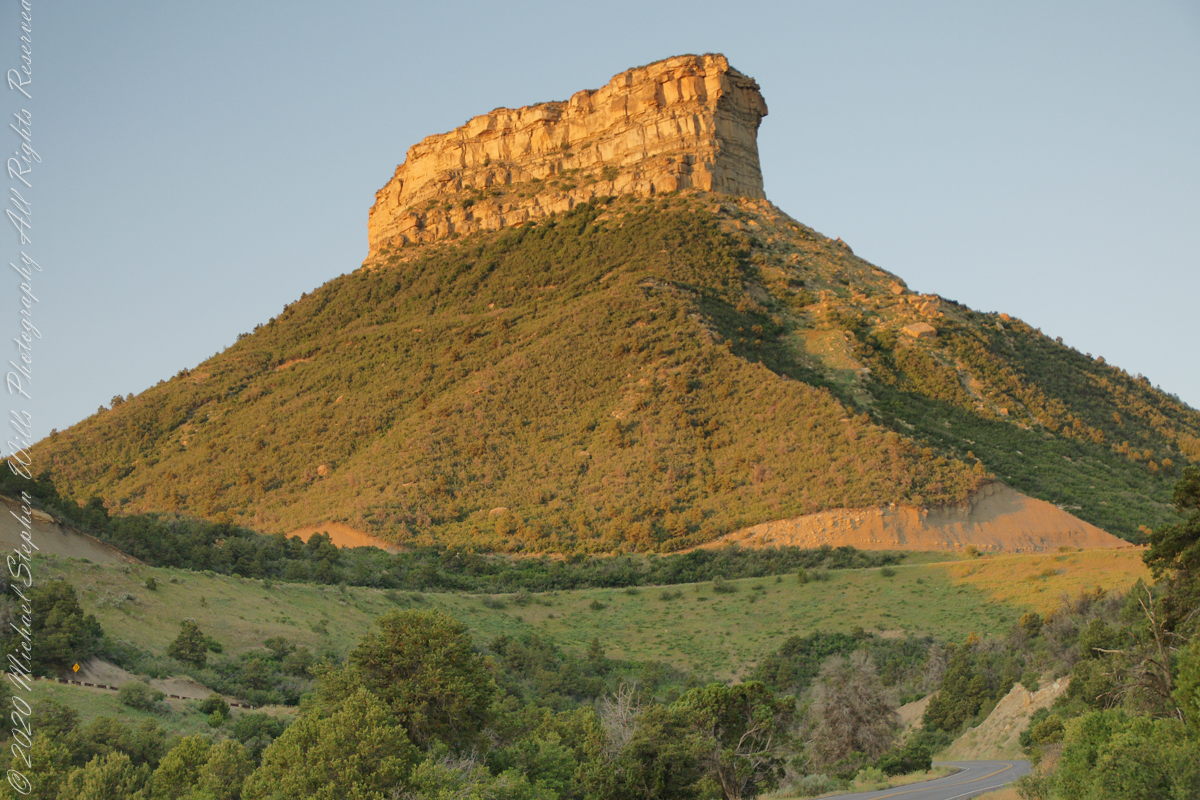
Point Lookout at Dawn, Mesa Verde

Dramatic Entrance

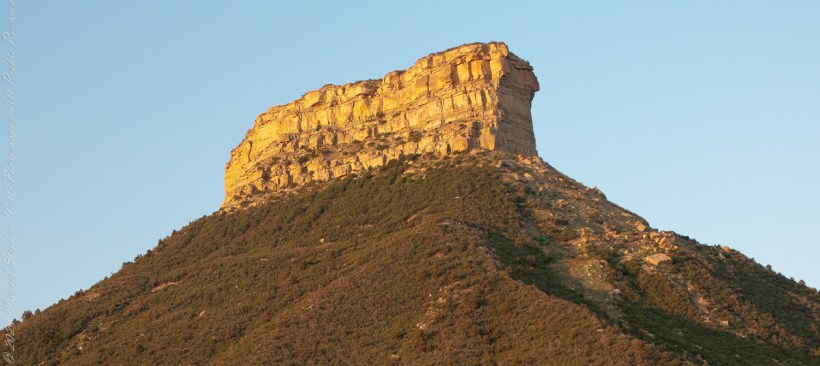
This dramatic butte at the entrance to Mesa Verde National Park, golden in the first light of a July morning.  My wife, Pam, and I were on this road in the pre-dawn hours.  Our delight with this surprise view was worth it.

Click me for more Mesa Verde works in my Fine Art Gallery
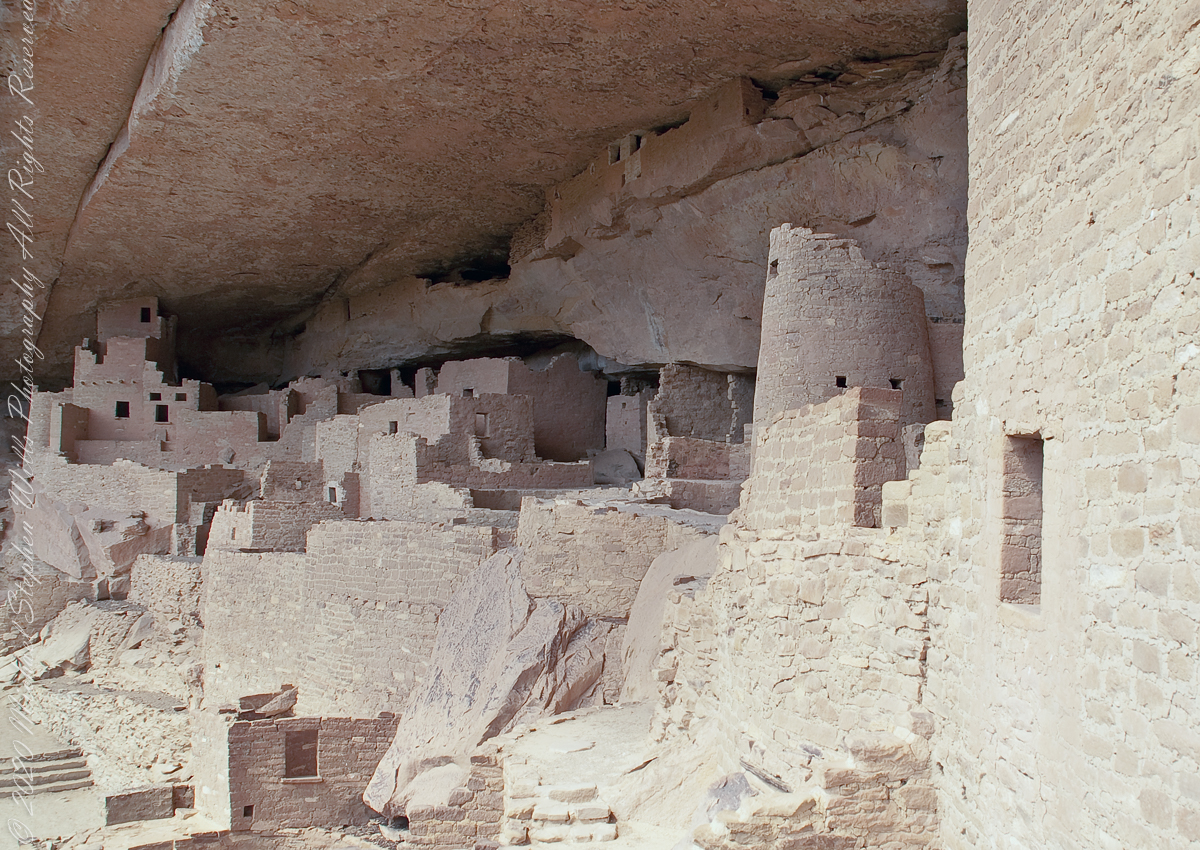
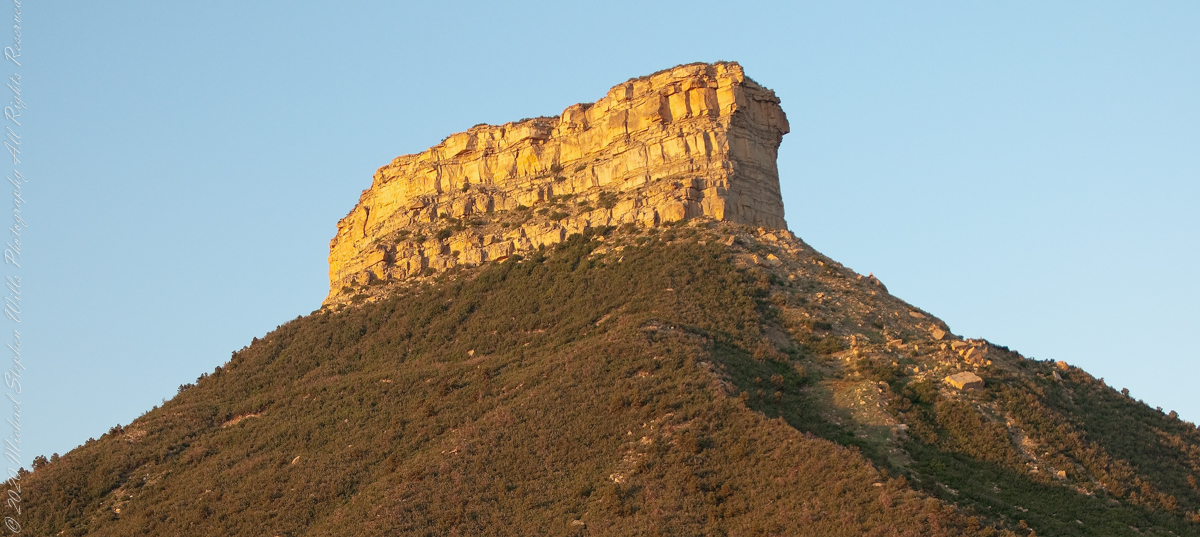
In this Point Lookout area, near the park’s entrance, the Mancos Shale is about 2,000 ft thick, and this is what this butte is composed of. Mancos Shale is the lowest formation of the park and is a thick sequence of gray to black marine shale containing minor tan siltstone and fine sandstone beds. On steep slopes, such as those near the northern and eastern boundaries of the park, this formation is prone to landslides and debris flows. This is the base of the butte. The lovely golden rock is Point Lookout Sandstone of the Mesaverde Group, a predominantly yellowish-gray or pale-orange, fine- to medium-grained marine sandstone, approximately 300-400 ft thick. The Point Lookout Sandstone forms much of the cap rock in the northern park area.

I reworked the above image into this Fine Art image of Point Lookout.

Reference: http://esp.cr.usgs.gov/info/meve/

Copyright 2023 Michael Stephen Wills All Rights Reserved

Sipapu Bridge Up Close

This post continues my story of Sipapu Bridge.

I created a series of fine art prints from a visit my wife Pam and I made to Natural Bridges National Monument in Utah.  Here are a few of these prints which grace fine homes around the world.  Click any of the photographs to visit the gallery.

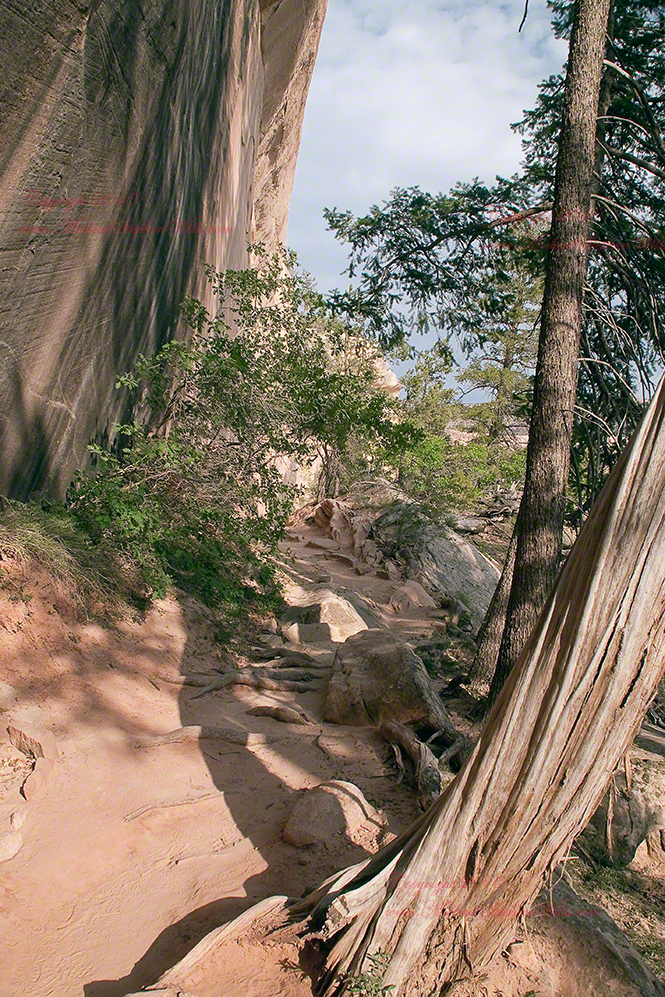
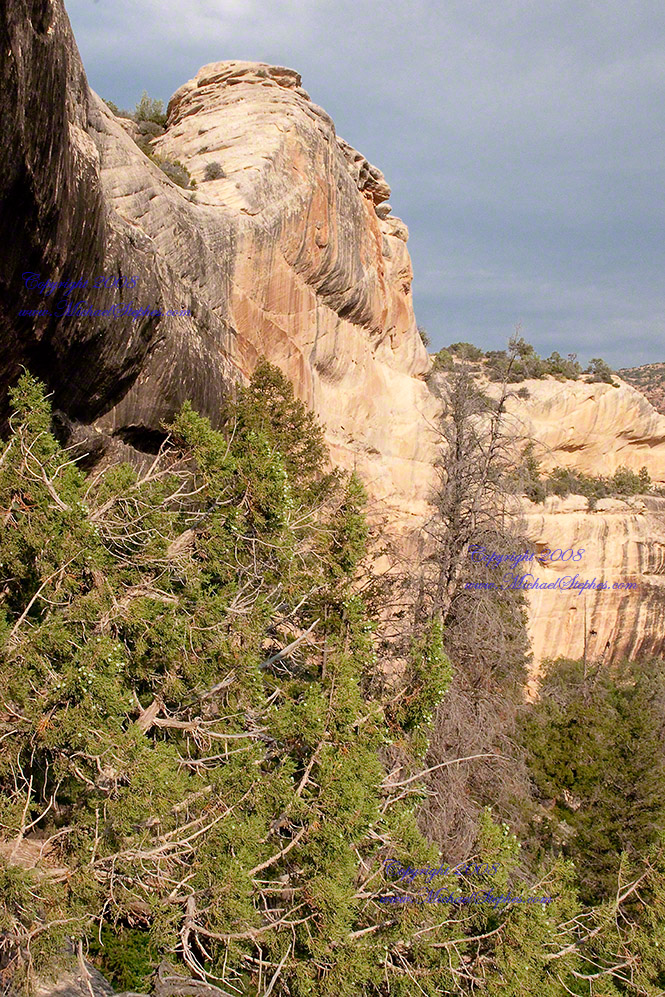
We walked a narrow cliff patch climbed a series of weathered pine ladders  to  achieve these views of Sipapu Bridges National Monument.

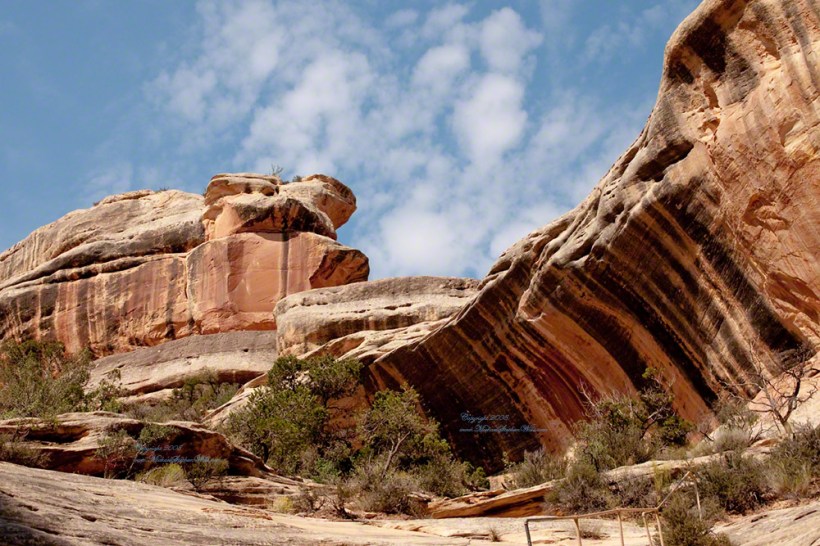
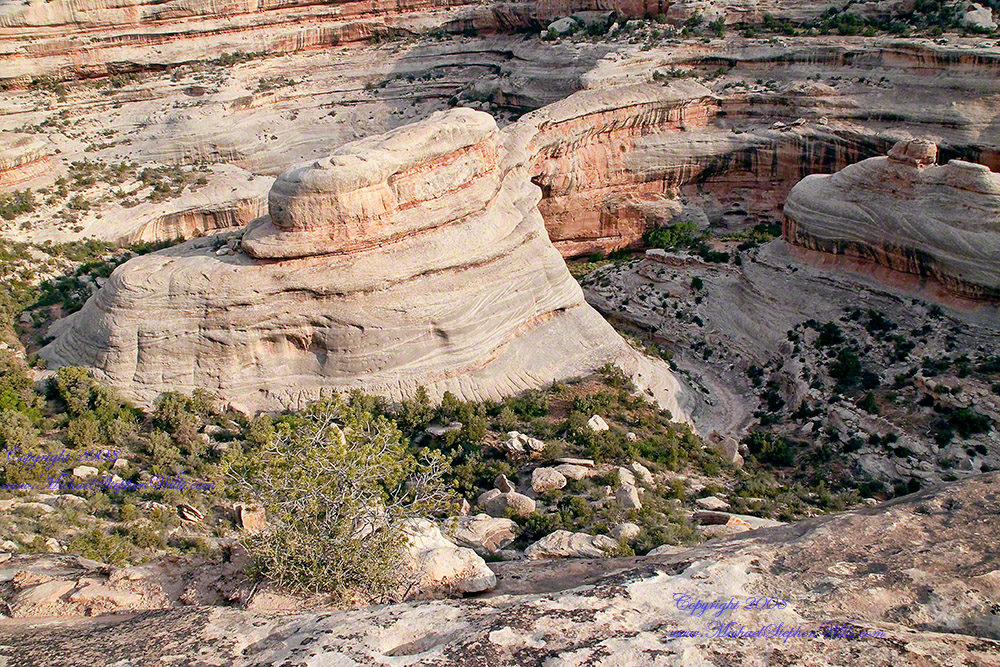
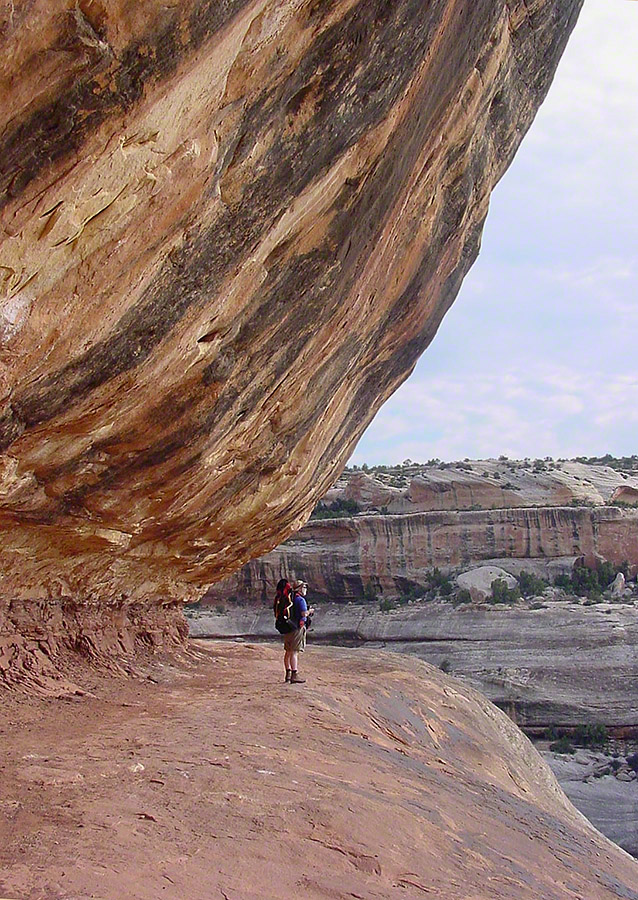
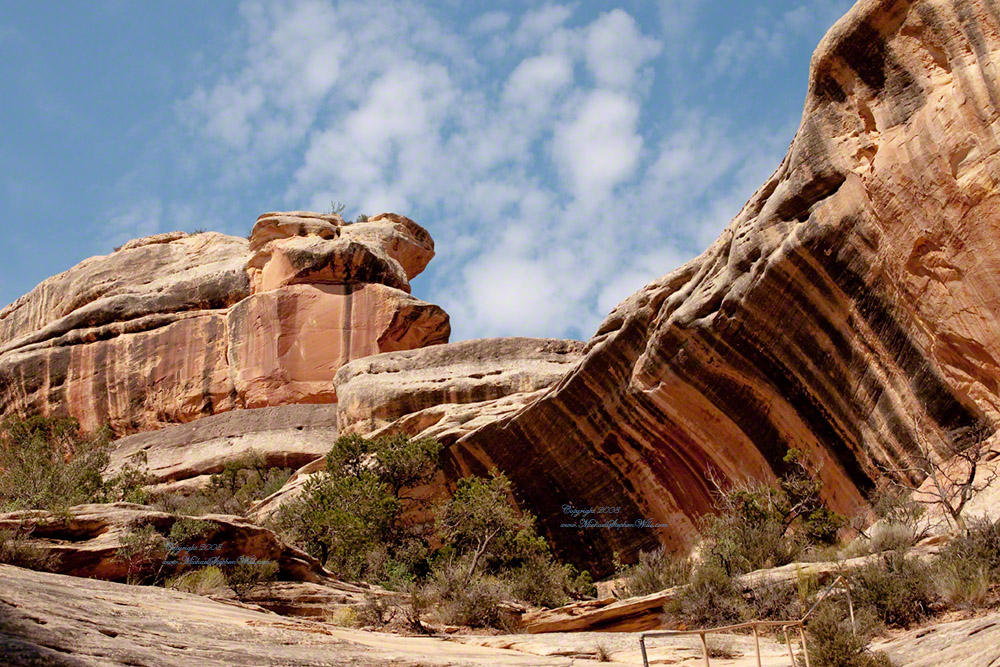
While the sky is unchanged, below the canyon rim is another world.  The black stripes of the cliffs is desert varnish, a thin deposit of clay, iron and manganese oxides.  The rock supporting the varnish is resistant to wear and protected from direct precipitation (in this case by the overhanging cliff).

Eventually we came to a ledge with a view of Sipapu Bridge.  Pam took the opportunity to capture this amazing experience.

Mike at Sipapu Bridge
SONY DSC

A Utah Juniper (Juniperus osteosperma). Historically, across the west, Native Americans used the wood in building their houses. They ate the berries; smoked the bark; made shoes, clothing, and rope from it.

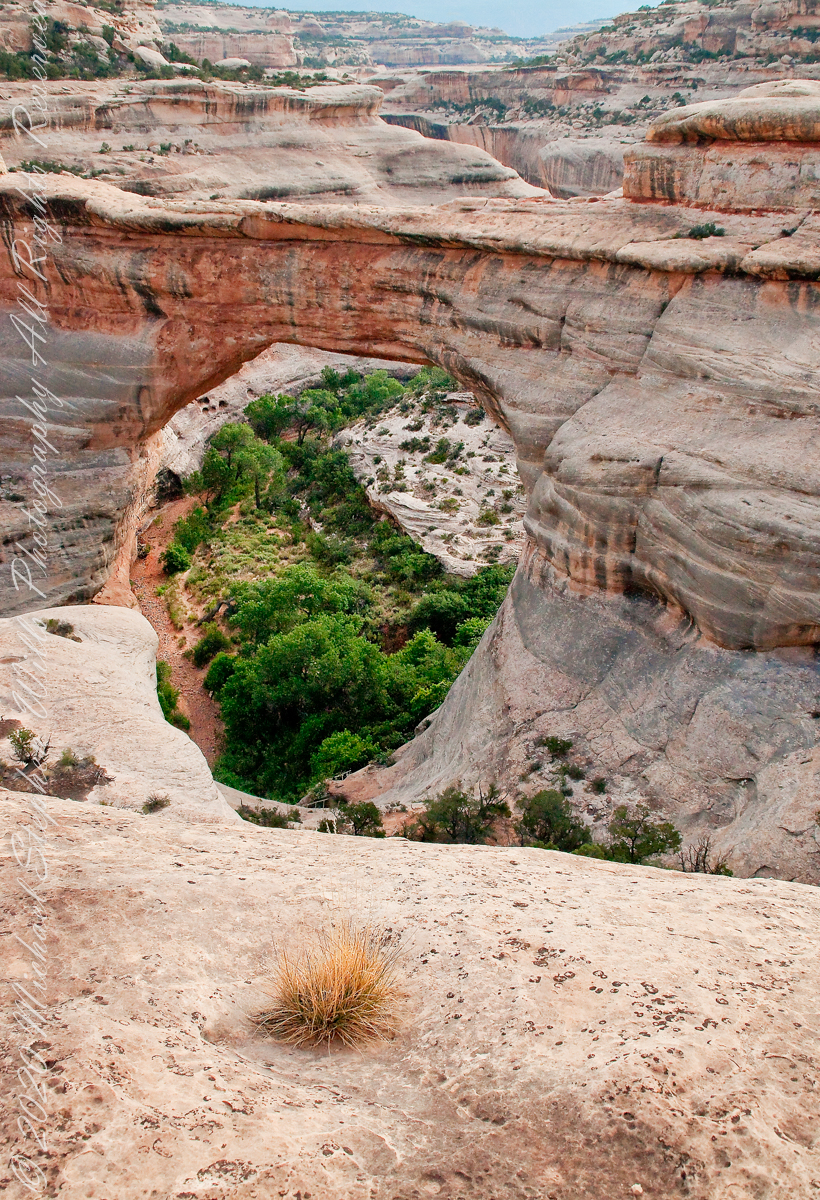
Sipapu is a Hopi word for the small hole or indentation in the floor of kivas used by the Ancient Pueblo Peoples and modern-day Puebloans. It symbolizes the portal through which their ancient ancestors first emerged to enter the present world. A natural bridge is formed through erosion by water flowing in the stream bed of the canyon. Sipapu Bridge is 268 feet across and, standing in the stream bed, it is 220 feet above your head.

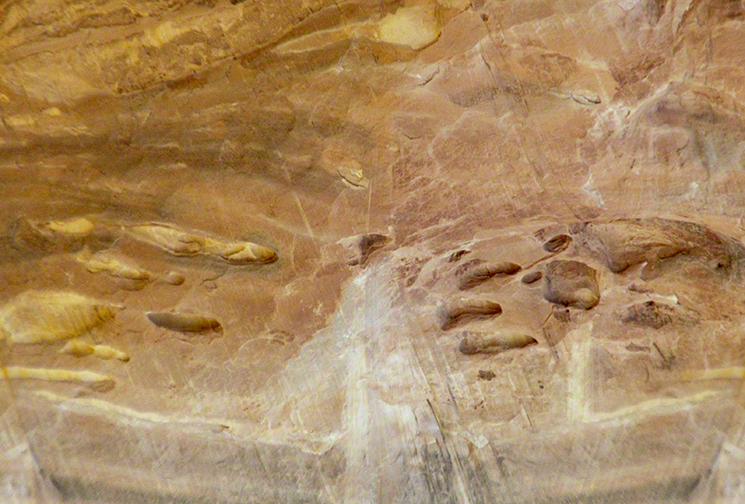
Here is a close up of the white Permian sandstone of the bridge arch.  The entire canyon is carved from this stone and named after it.

SONY DSC

World Portal

Sipapu is one of the largest natural bridges known.

Part of the Natural Bridges National Monument in Utah, a place inaccessible until the “uranium boom” of the 1950’s and the road was only paved in 1976.

We visited on a July day of thunderstorms, which you see building here.  If you look closely at the base of the bridge, you can see the railings my wife and I used to climbed the steep sides of White Canyon.

We hiked a few miles along an unmaintained trail.  On the way we passed ancient cliff dwellings. The area is a maze of canyons throughout which these ruins are scattered.

Sipapu is a Hopi word for the small hole or indentation in the floor of kivas used by the Ancient Pueblo Peoples and modern-day Puebloans. It symbolizes the portal through which their ancient ancestors first emerged to enter the present world.

A natural bridge is formed through erosion by water flowing in the stream bed of the canyon.

Sipapu Bridge is 268 feet across and, standing in the stream bed, it is 220 feet above your head. That is white Permian sandstone, after which White Canyon is named.

Copyright 2023 Michael Stephen Wills All Rights Reserved

Anasazi Cliff House I

This group of buildings was crafted into a cliff face over 1,000 years ago.

Visitors must climb over the cliff and through narrow tunnels, security features created by the builders.

High Security and Adventure

Security barriers include a 32 foot, entrance ladder made from pine trunks and a narrow squeeze through a 12 foot tunnel.

My photograph of Balcony House features ruins to rooms on a plaza. Also shown are edges of two kivas (circular ceremonial chambers) built into the plaza floor. I am standing in a plaza, next to the cliff.

Behind me (not visible) is the narrow security tunnel used by the ancient builds to control access. Today, visitors crawl through the narrow tunnel to exit the site. There are 40 rooms in Balcony House.

Copyright 2023 Michael Stephen Wills All Rights Reserved

Pinelands Connections I

Geneology and DNA

“From the fire tower on Bear Swamp Hill, in Washington Township, Burlington County, New Jersey, the view usually extends about twelve miles. To the north, forest land reaches to the horizon. The trees are mainly oaks and pines, and the pine predominate. Occasionally, there are long, dark, serrated stands of Atlantic white cedars, so tall and so closely set that they seem spread against the sky on the ridges of hills, when in fact they grow along streams that flow through the forest. To the east, the view is similar, and few people who are not native to the region can discern essential differences from the high cabin of the fire tower, even though one difference is that huge areas out in this direction are covered with dwarf forests, where a man can stand among the trees and see for miles over their uppermost branches. To the south, the view is twice broken slightly — by a lake and by a cranberry bog — both otherwise it, too, goes to the horizon in forest. To the west, pines, oaks, and cedars continue all the way, and the western horizon includes the summit of another hill — Apple Pie Hill — and the outline of another fire tower, from which the view three hundred and sixty degrees around is virtually the same as the view from Bear Swamp Hill, where, in a moment’s sweeping glance, a person can see hundreds of square miles of wilderness. The picture of New Jersey that most people hold in their minds is so different from this one that, considered beside it, the Pine Barrens, as they are called, become as incongruous as they are beautiful.” From The New Yorker magazine, November 26, 1967, “Profiles, The Pine Barrens I” creative non-fiction by the great John McPhee.

This quote captures the contours of a place, now known as “The Pinelands,” a corner of Burlington County, New Jersey my English, Irish, Scottish ancestors settled from 1677 until my grandfather, James Edward Wills, left for northern New Jersey, Asbury Park, in the first years of the twentieth century. This past decade, more so since retirement 2017, I’ve explored these two hundred and twenty (220) or so years beginning with amorphous asides over the years from my father and second hand through my sisters then through online research via Ancestry.com (Ancestry) and other searches.

From my father and sisters I knew to search southern New Jersey. The United States decennial census, “thank you Constitution,” listed a George and Margaret Wills with my grandfather among their children. Great Grandfather George Wills was listed as a 14 year old child of George and Mary Wills in the 1850 census. How could I be sure? DNA technology with internet based social interaction helped there. I was contacted by a Dellett descendant, identified by DNA as a fourth cousin, who claimed Mary Wills as a double great aunt, the daughter of James and Ann Dellett. Here is a screen capture of an Ancestry “ThruLines” analysis showing the six living ancestors of James and Ann in the database. I removed the names and photos of the other five to preserve privacy. The DNA fourth cousin relationship was an exact match to the family tree.

Cousin Delette provided antique photographs of George and Mary. I did a “FindAGrave” search, their final resting place is in a place named Tabernacle, Burlington County, New Jersey. September 2019 my wife Pam and I did a weekend tour with a bed and breakfast base in the city of Burlington, New Jersey. The rest of the photos in the following slideshow are from that weekend.

Here is the same Ancestry “ThruLines” analysis with the immediate family links exploded. through my “first cousin 1 time removed” I was able to communicate with a “lost” niece of my father who shared reminiscences of him from the time he was just released from World War II Naval Service, before meeting Mom.

….Click me for Pineland Connections II.

Copyright 2023 Michael Stephen Wills All Rights Reserved