The Secret Life of Woodland Plants: Jack-in-the-Pulpit Insights

In the hush of the forest, Jack-in-the-Pulpit speaks—not with sound, but with form and patience, reminding us that some sermons rise quietly from the earth.

You could walk past it a hundred times and never notice. There, beneath the low canopy of midsummer, where light is sifted through green, Arisaema triphyllum stands with the discretion of a shadow. Jack-in-the-Pulpit, they call it—a name as strange and gentle as the plant itself. But neither common name nor scientific binomial quite captures the feeling that you are being addressed when you encounter one.
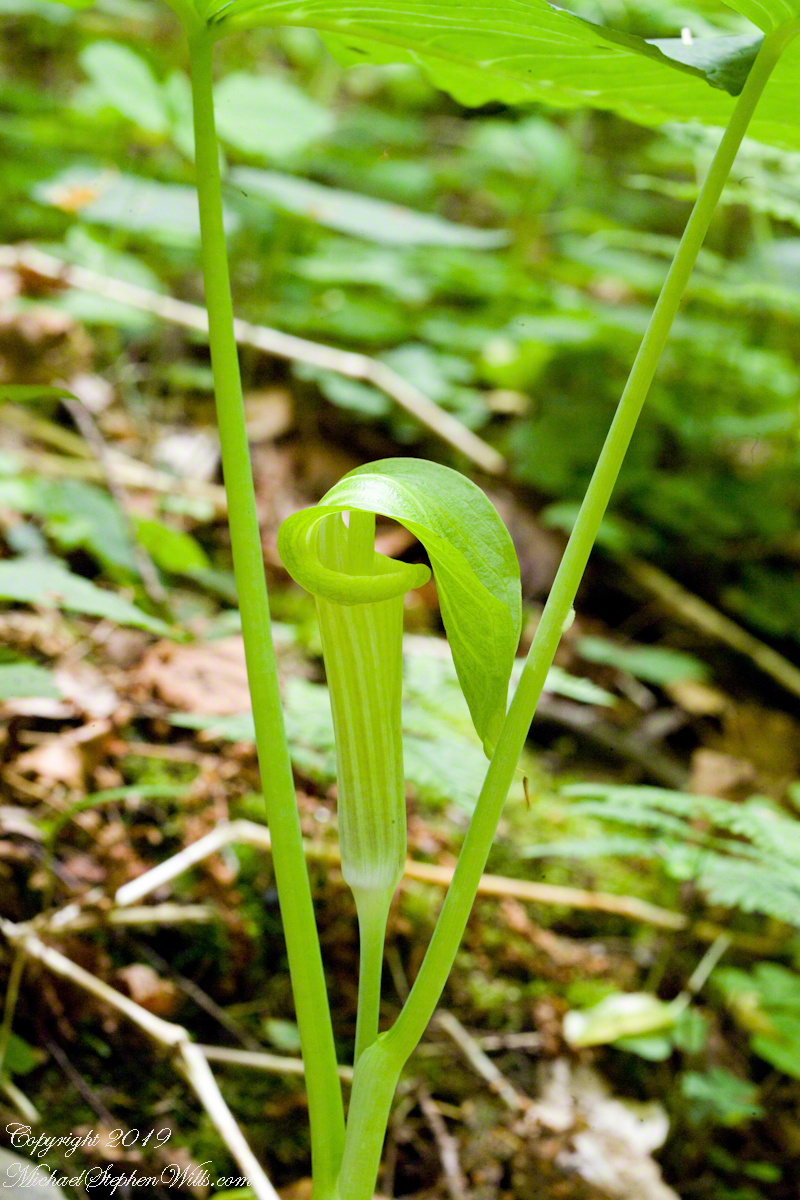
A young Jack-in-the-pulpit under its leaf canopy along the gorge trail of Filmore Glen.

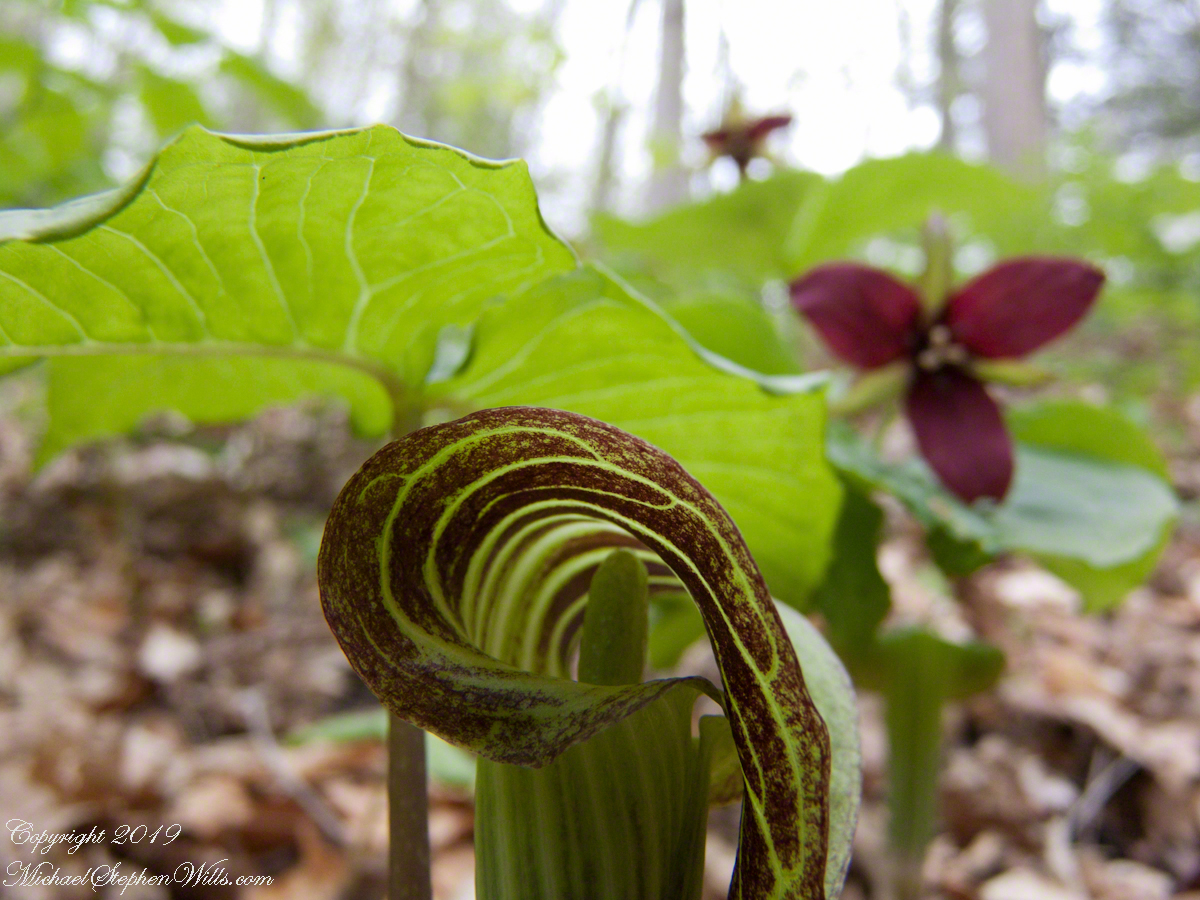
A mature Jack-in-the=pulpit flower with purple trillium, Fillmore Glen.

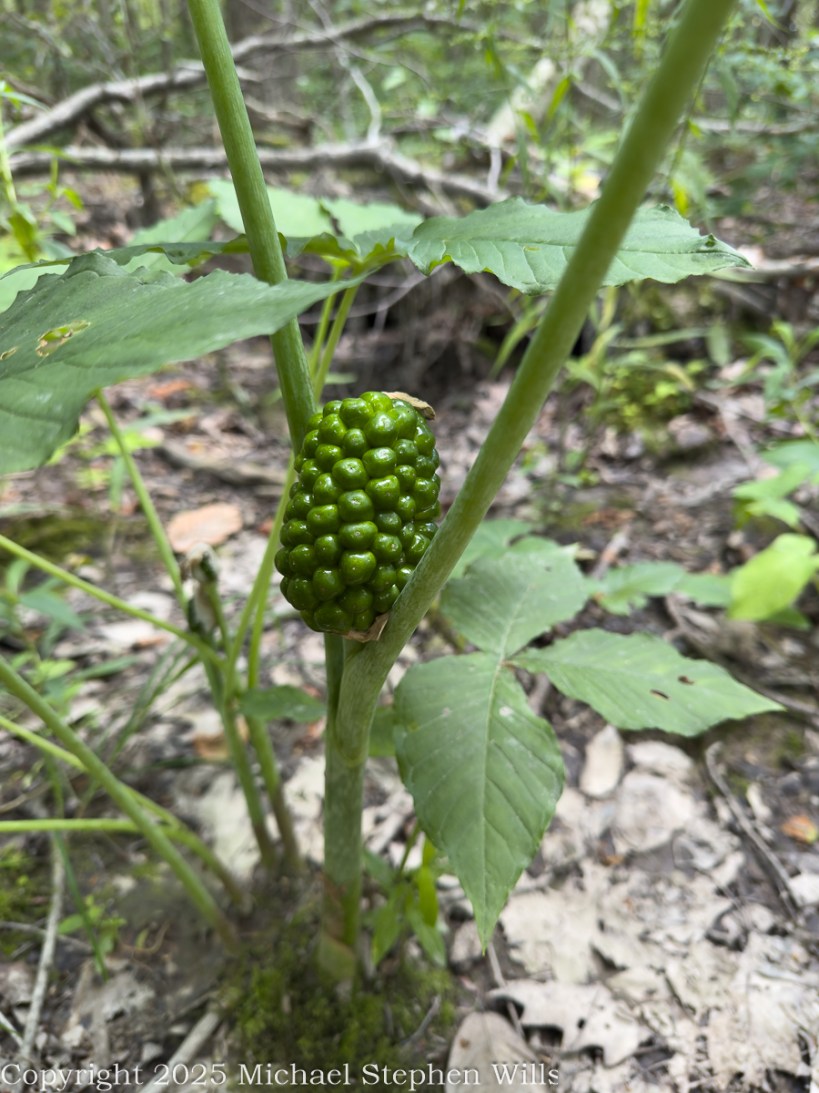
Earlier in the year, it raised a hooded spathe above the forest floor, curving protectively over a pale central spadix—the “Jack.” It looked like a figure delivering a sermon to the moss and littered leaves. Now, that sermon has passed, and the speaker has fallen silent. What remains is a column of tight green berries, glinting softly in the dappled light. They are not yet ripe, but the promise is there. In time, they will glow red like embers in the undergrowth.
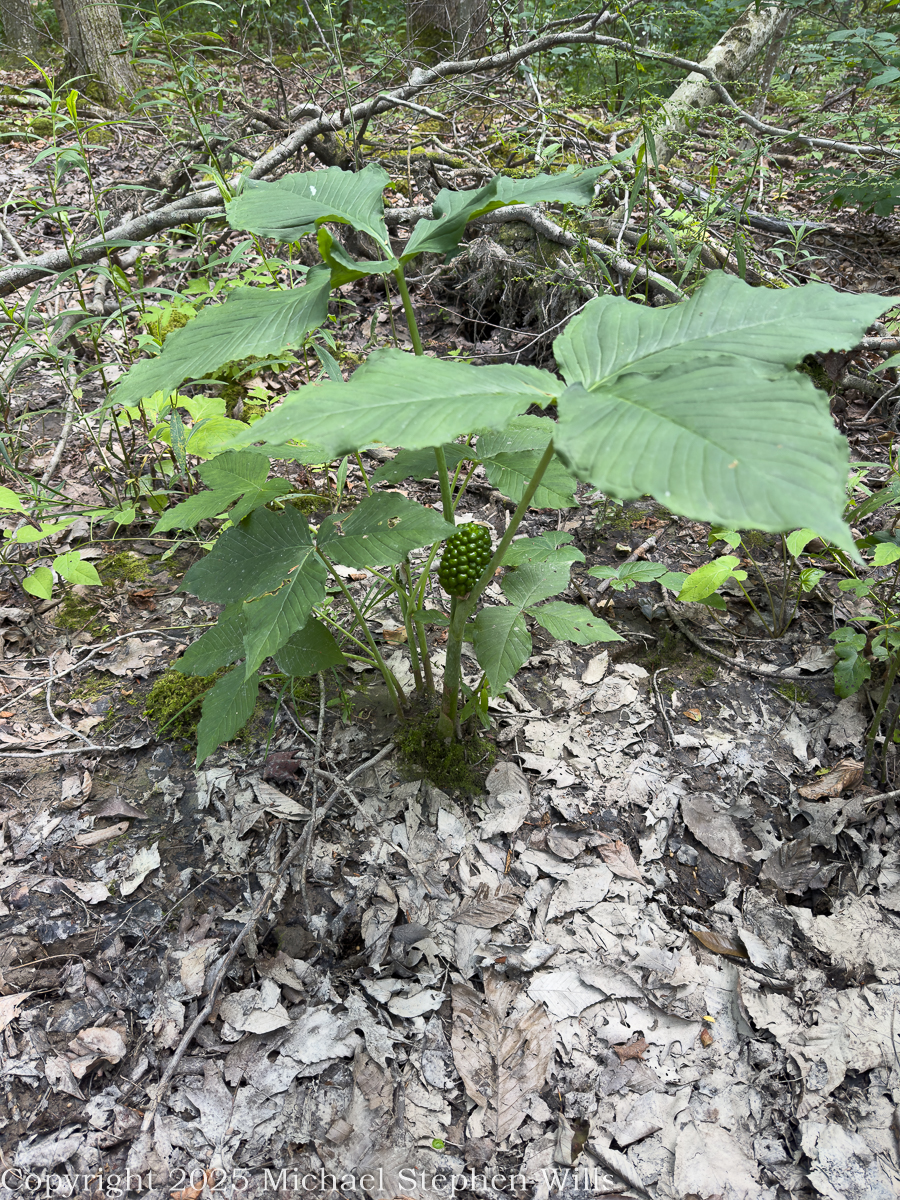
Summertime, Sapsucker Woods. I might use a colloquialism and call this plant a “Jill”….and the real twist? Jack might’ve started out giving sermons but give them a good season and a strong root system, and Jack becomes Jill. It’s sequential hermaphroditism at its finest—Mother Nature’s version of career flexibility.

There is something ancient about this plant, as if it remembers a forest before our footsteps came. Its roots delve deep, not just into the soil, but into time. A corm, nestled beneath the leaf mold, waits out the harsh seasons, unseen but enduring. It is not a showy plant. It is a plant that trusts quiet. That survives on patience.
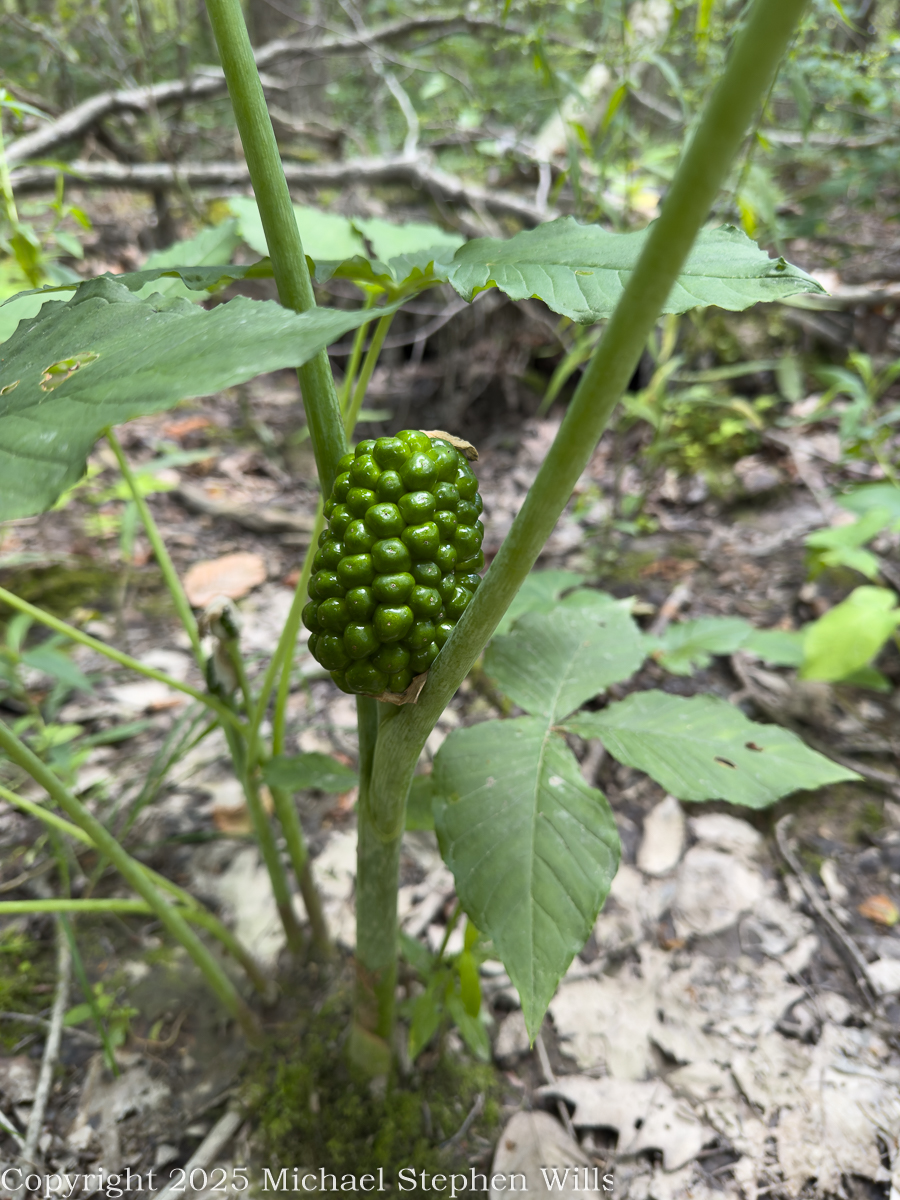
A closer look at the unripe berries.

The forest is full of these secret lives—beings that do not shout to be known. Jack-in-the-Pulpit speaks softly, in a dialect of leaf and shade and seasonal return. It is a plant you find when you have slowed down enough to belong again to the forest’s rhythm, when you’ve traded the voice in your head for the breath of leaf litter underfoot.
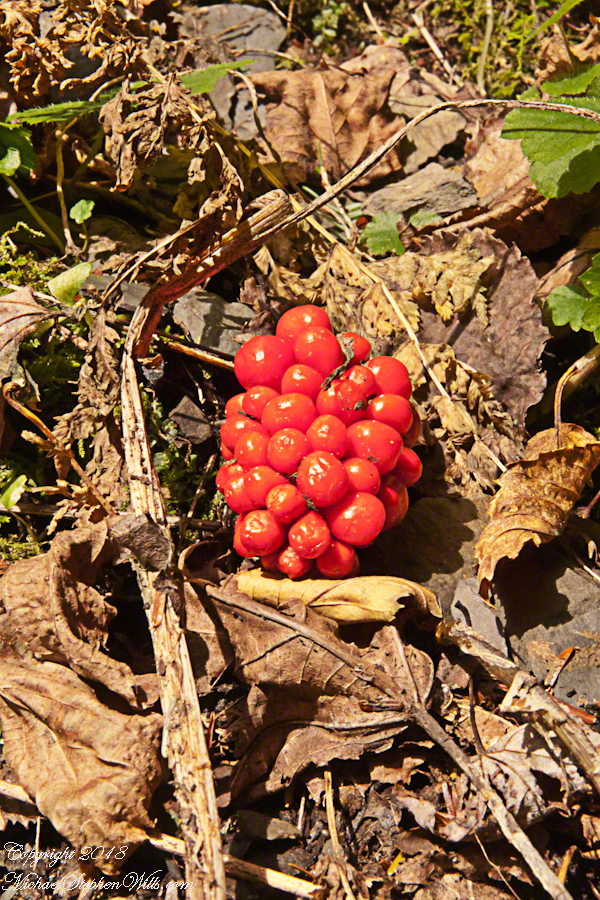
From Fillmore Glen

Some would call it just another spring ephemeral, a curiosity among many. But to walk away from it without feeling a kind of reverence would be to miss the point. It is not there to impress. It is there to remind.

That not all things are revealed at once.
That sermons come in many forms.
And that in the hush of the forest, something is always speaking—if only we remember how to listen.

Enter your email to receive notification of future postings. I will not sell or share your email address.

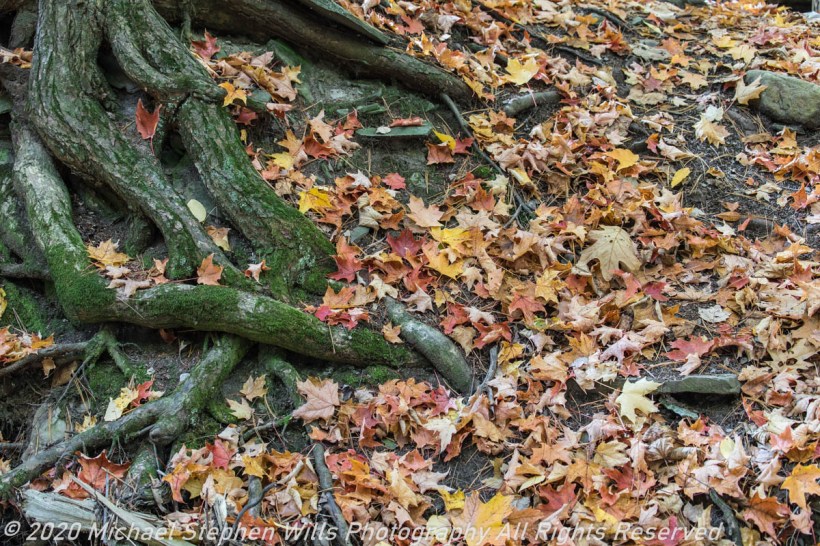
Thayer Preserve: Autumn Still Life 2

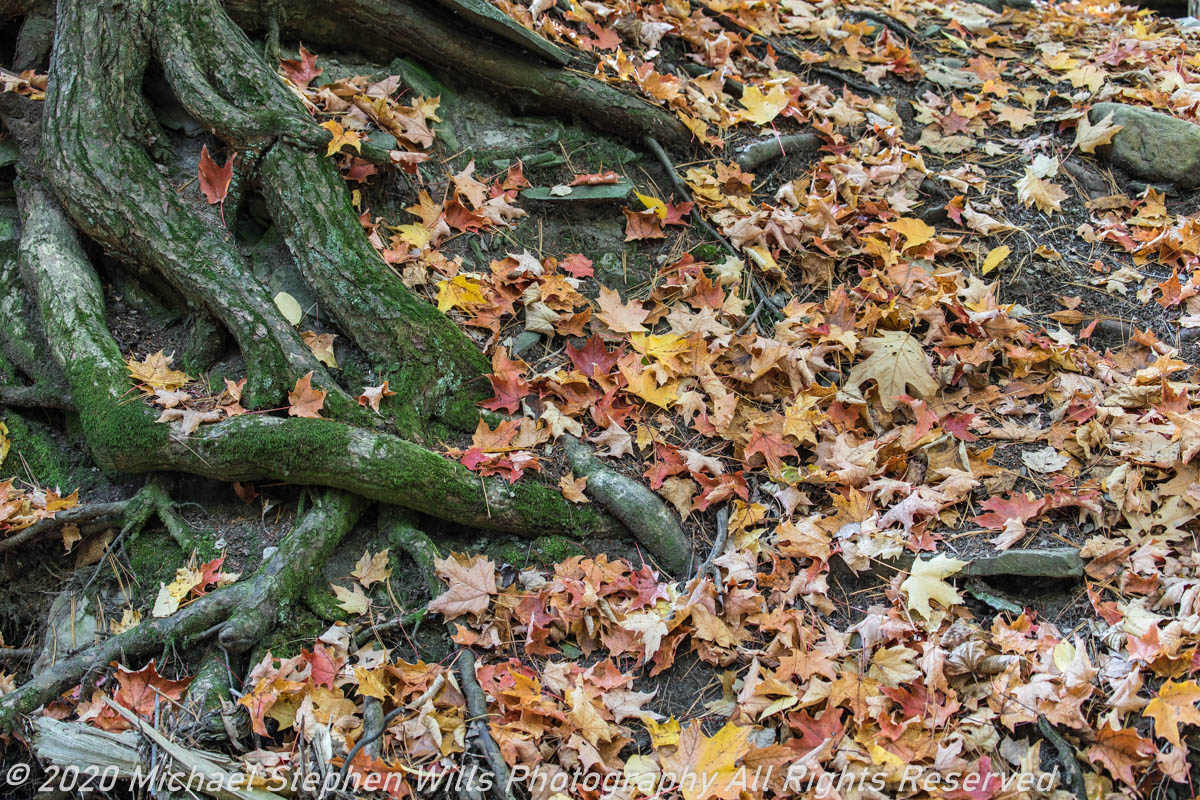
Hemlock Roots

Maple leaves and hemlock roots share an environment yet play distinct roles in the ecosystem. Maple leaves, broad and vibrant, capture sunlight. This process fuels their growth and contributes to the air we breathe. Each fall, these leaves turn yellow and brown, signaling a natural change. They fall, joining the forest floor. Here, they decompose, becoming part of the soil. This enriches the earth, supporting new plant life.

Hemlock roots anchor these mighty trees. Reaching deep into the soil, drawing up water and nutrients. These roots also stabilize soil, preventing erosion and are a network, unseen but vital, connecting the tree to its environment.

Click photograph for larger view. Use combination keys to enlarge/reduce: Ctrl+ (Control / Plus) and Ctrl- (Control / Minus)

These natural processes have parallels in human generations. Like the leaves, each generation has its time in the sun. People grow, contribute to their world, and then make way for the next. The knowledge and experiences they leave behind enrich the lives of those who follow, much like fallen leaves nourish the soil.

Similarly, the hemlock roots parallel the foundational elements of human society. Traditions, cultures, and values are passed down, anchoring each new generation. They provide stability and nourishment, helping to guide growth and development.

Over time, just as the forest evolves through the cycles of leaves falling and roots growing, human societies change. Each generation builds upon the last, growing in the richness left behind. This ongoing cycle speaks to the resilience and interconnectedness of life, whether in a forest or in human communities.

In both nature and human experience, there is a rhythm of growth, contribution, and renewal. The falling of maple leaves, and the steadfastness of hemlock roots illustrate this beautifully, reminding us of the continuity and change inherent in all living systems.

Click Me to view my photographs on Getty.

Copyright 2023 Michael Stephen Wills All Rights Reserved http://www.MichaelStephenWills.com