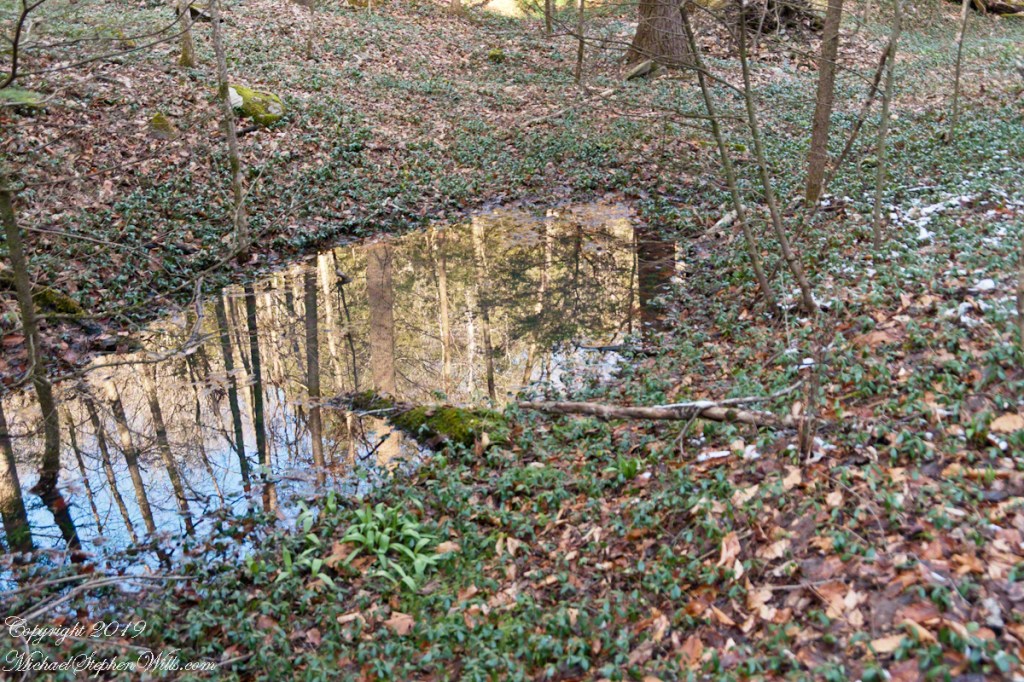
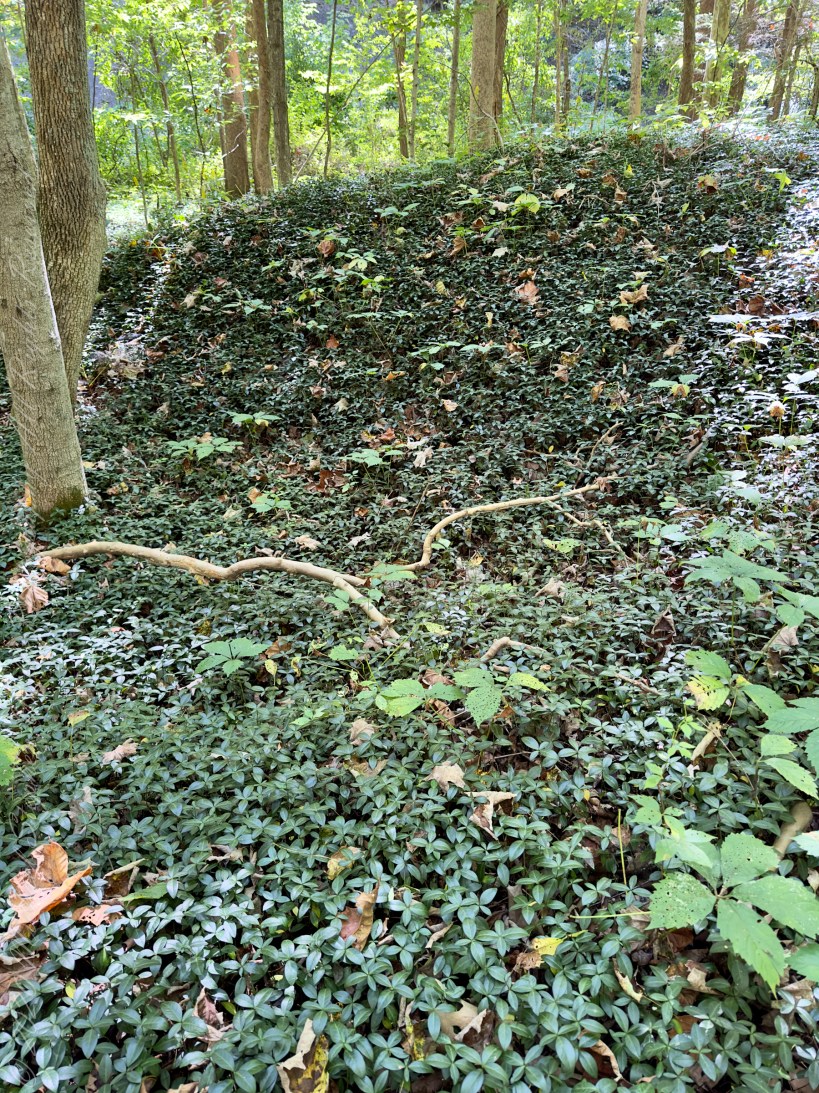
A broad, fertile flat between gorge walls supports a dense growth of invasive creeping myrtle. Springtime there is a sprinkling of small blue flowers, this may be the source of another name, periwinkle, or lesser periwinkle.
Click photograph for a larger view. To do this from WordPress Reader, you need to first click the title of this post to open a new page.
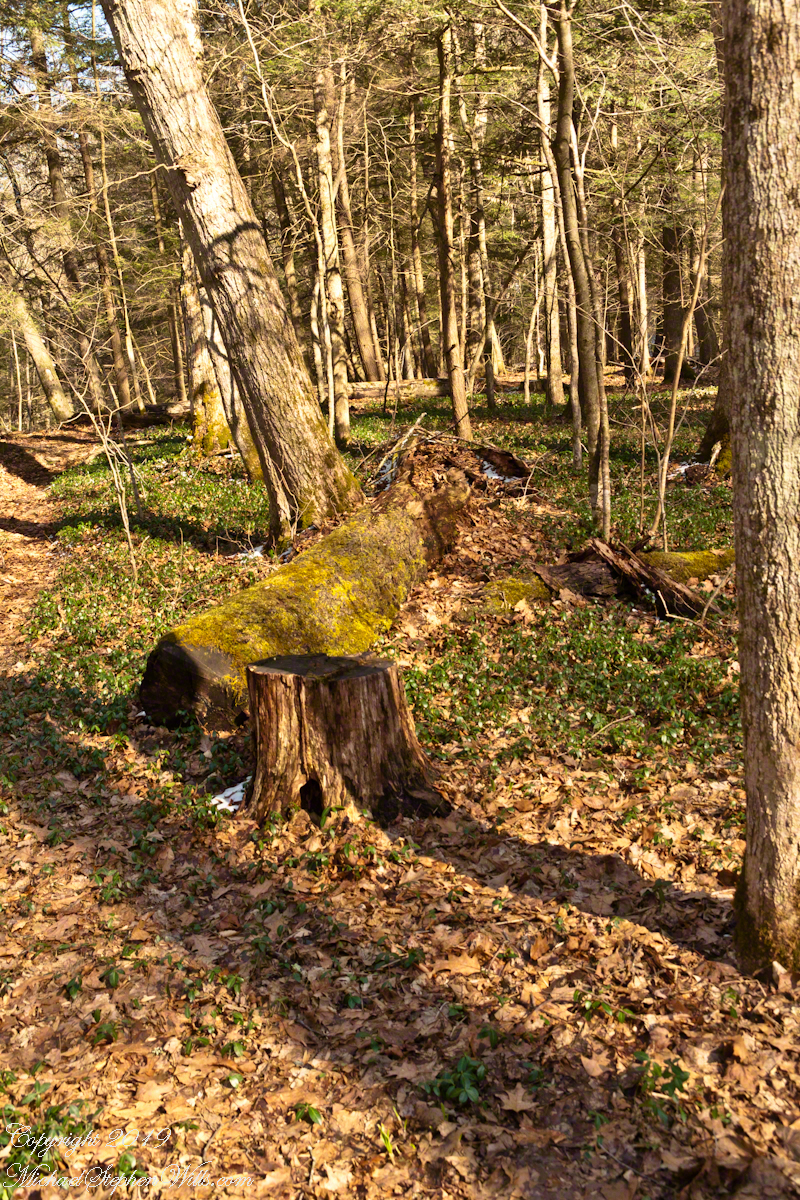
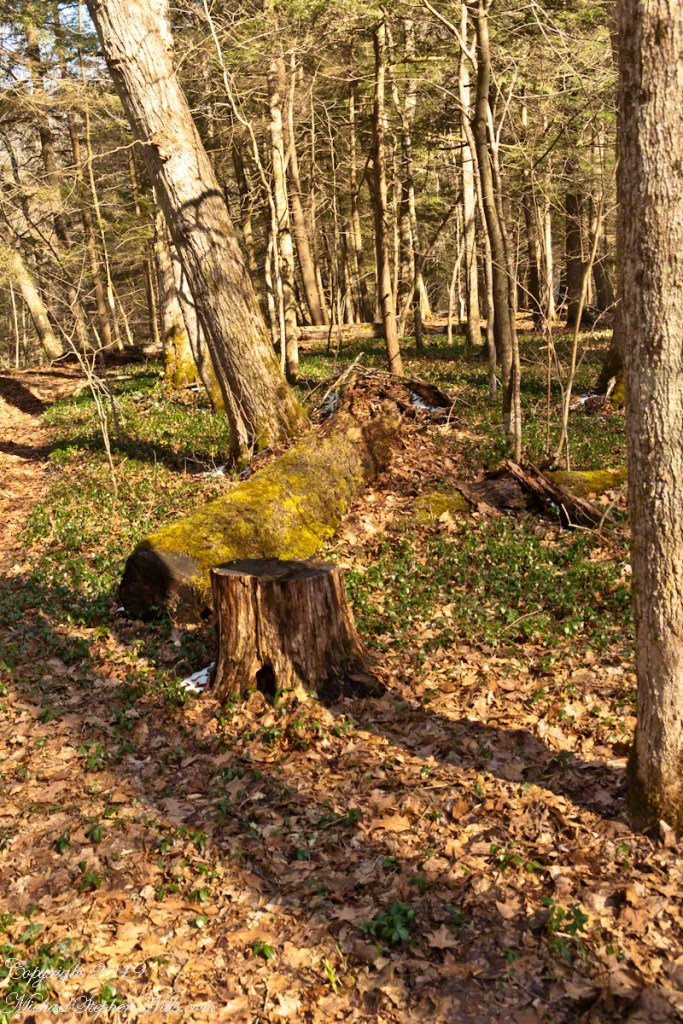
Beneath the Cliff Stairs I
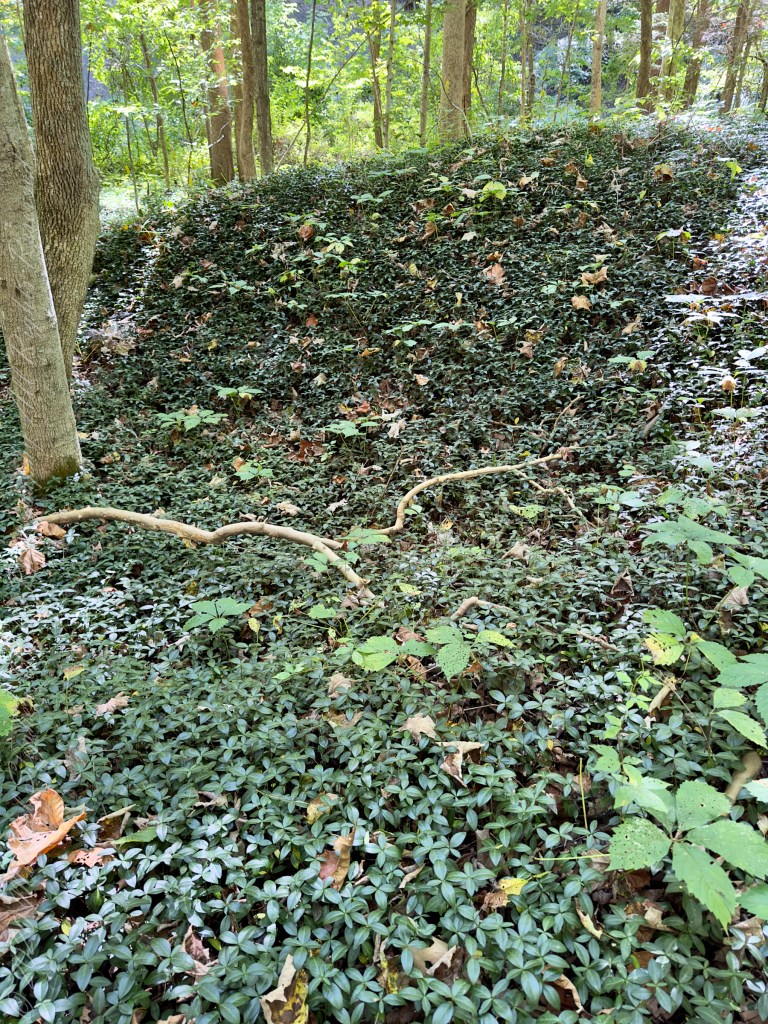
Periwinkle is an evergreen and in early times vinca vine (another name we call it, from the scientific name Vinca Minor) was planted in graveyards and cemeteries. The isolated growth of vinca vine in this section of the gorge maybe from such a planting on a lost grave.
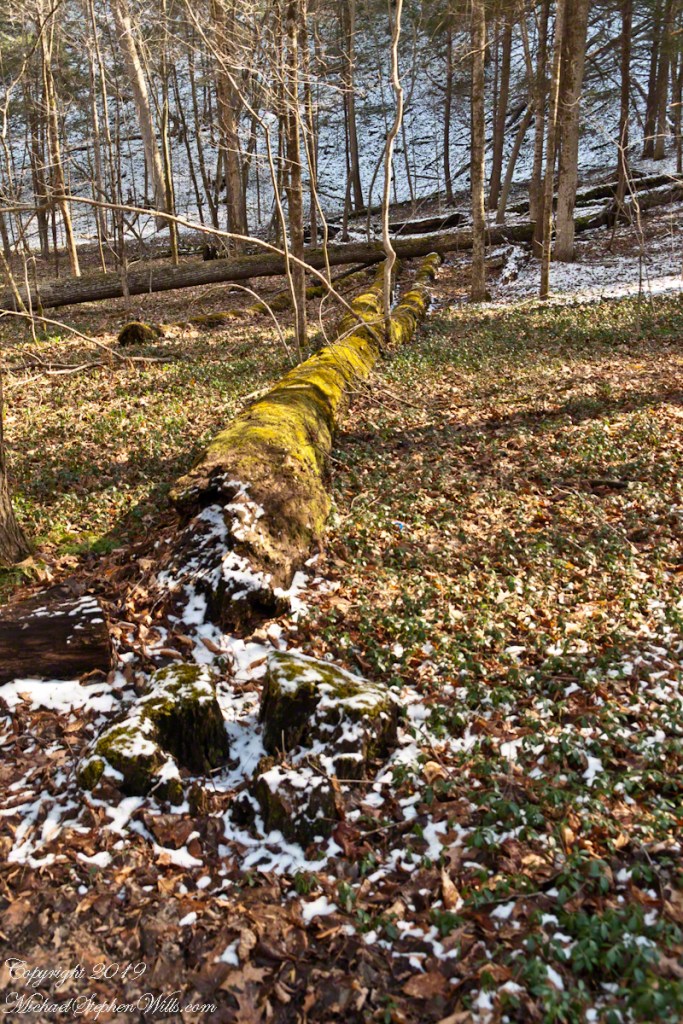
Beneath the Cliff Stairs II
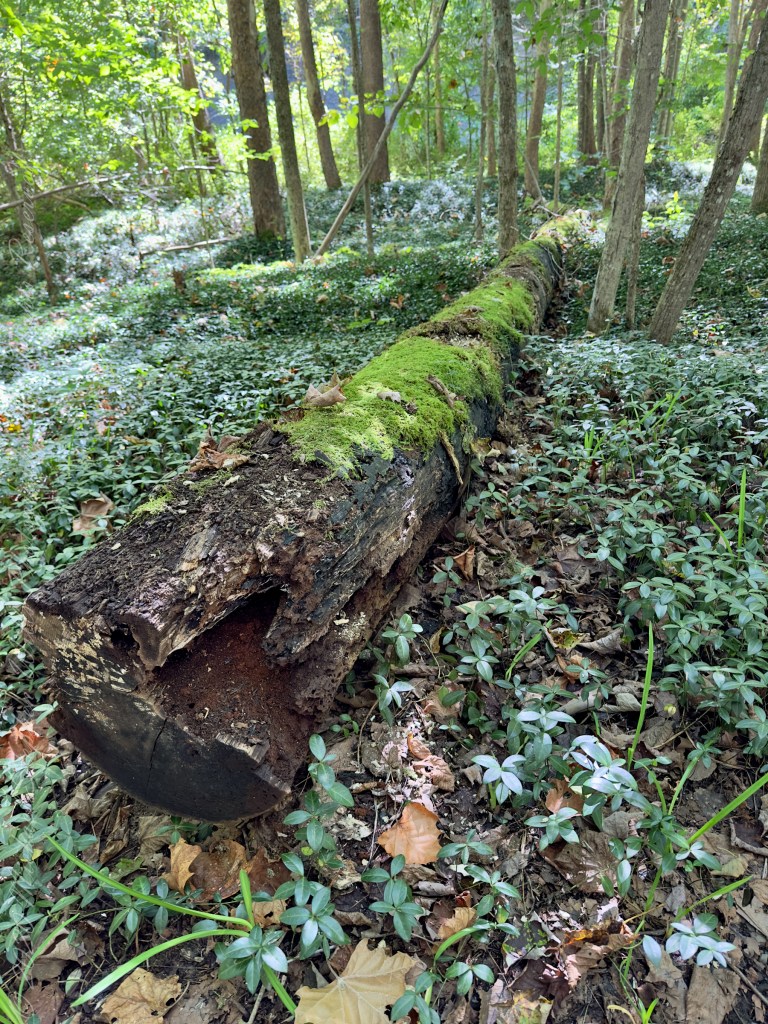
Today, the park practices leaving fallen trees in place, here they are covered in years of moss, a memory of headstones. Lesser Perriwinkle is significant for the living as the source of vincamine, from the leaves. A synthetic form of this compound is a potent vasodilator, a therapeutic treatment for stroke and other brain disorders.
These shots were hand held. I used a Sony Alpha 700 dslr with a variable “zoom” lens, great for framing compositions.
Robert H. Treman New York State Park.
Source: Wikipedia, “Vinca Minor.”
Click for a slideshow of this Fertile Flats sequence.
Beneath the Cliff Stairs IBeneath the Cliff Stairs IIVernal Pool with Vinca Vine
Copyright 2024 All Rights Reserved Michael Stephen Wills
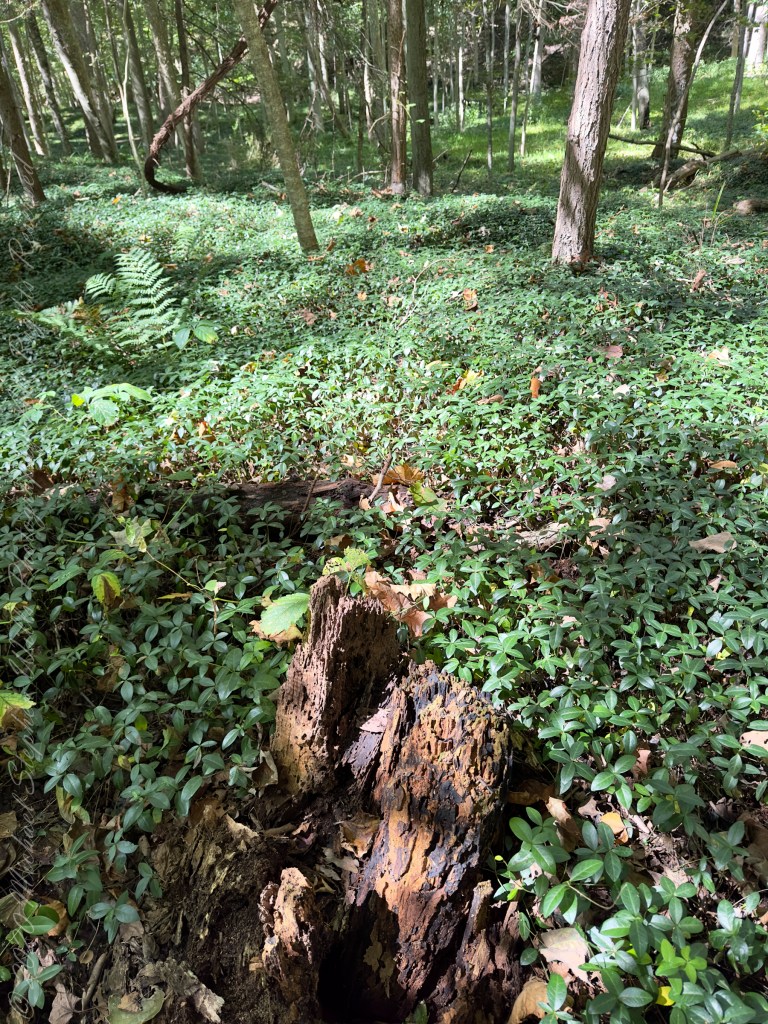
Over a period of 11,000 years this former stream bed, abandoned when a melting tongue of the Laurentide Ice Sheet deposited drift across Enfield Creek, transformed to this sun dappled glade, one of two along the Gorge Trail of Treman Park.
Pam calls this the Fairy Forest for the feeling of peaceful expectation she feels here. Another reason is the small flowers of this native myrtle after which the periwinkle is named.
Fallen trees are left be to return to the soil.
“Vinca minor (common names lesser periwinkle, dwarf periwinkle is a species of flowering plant in the dogbane family, native to central and southern Europe, from Portugal and France north to the Netherlands and the Baltic States, east to the Caucasus, and also southwestern Asia in Turkey. Other vernacular names used in cultivation include small periwinkle, common periwinkle, and sometimes in the United States, myrtle or creeping myrtle.”
“Vinca minor is a trailing subshrub, spreading along the ground and rooting along the stems to form large clonal colonies and occasionally scrambling up to 40 centimeters (16 in) high but never twining or climbing. The leaves are evergreen, opposite, 2–4.5 centimeters (0.79–1.77 in) long and 1–2.5 centimeters (0.39–0.98 in) broad, glossy dark green with a leathery texture and an entire margin.“
“The flowers are solitary in the leaf axils and are produced mainly from early spring to mid-summer but with a few flowers still produced into the autumn; they are violet-purple (pale purple or white in some cultivated selections), 2–3 centimeters (0.79–1.18 in) diameter, with a five-lobed corolla. The fruit is a pair of follicles 2.5 centimeters (0.98 in) long, containing numerous seeds.”
“The species is commonly grown as a groundcover in temperate gardens for its evergreen foliage, spring and summer flowers, ease of culture, and dense habit that smothers most weeds.”
“Vinca minor contains more than 50 alkaloids, including vincamine. Other alkaloids include reserpine, rescinnamine, akuammicine, majdine, vinerine, ervine, vineridine, tombozine, vincamajine, vincanine, vincanidine, vinburnine, apovincamine, vincaminol, desoxyvincaminol, vincorine[ and perivincine. Vinpocetine (brand names: Cavinton, Intelectol; chemical name: ethyl apovincaminate) is a semisynthetic derivative alkaloid of vincamine.”
It is possible this is a cemetery as myrtle was once commonly planted in cemeteries in parts of the United States and naturalized periwinkle may indicate the presence of graves whose other markers have disappeared.
Reference: text in italics and quotes is from the Wikipedia, “Vinca Minor.”
Copyright 2023 All Rights Reserved Michael Stephen Wills
 Michael Stephen Wills Photography