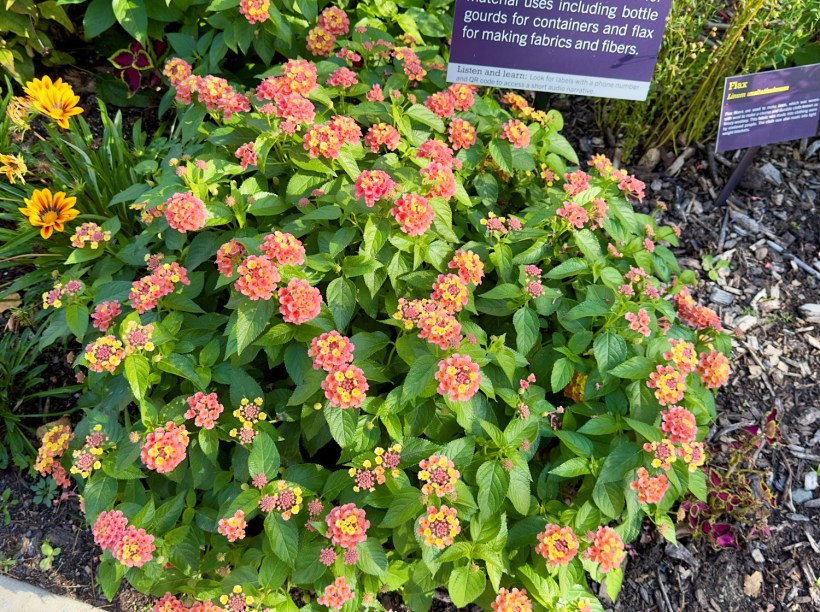
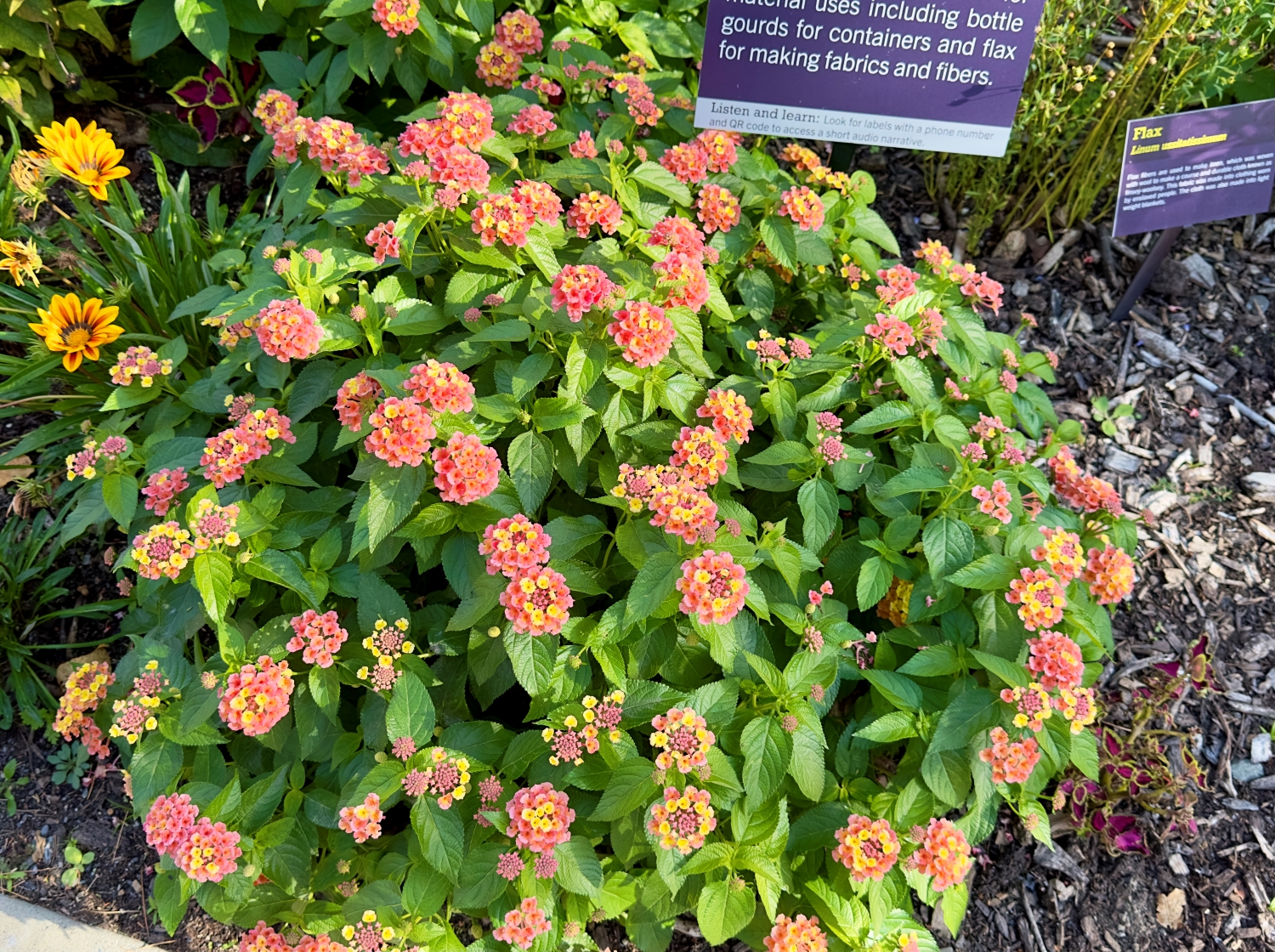
As I walk through the plantings around the Nevin Center at Cornell Botanical Gardens, a vibrant, eye-catching display catches my attention: the unmistakable Lantana camara. This plant, with its clusters of small, multicolored flowers, radiates warmth and liveliness, thriving among other garden residents in a riot of pink, orange, and yellow hues. Lantana is a plant with a rich, complex story—one that intertwines scientific discovery, historical intrigue, and enduring appeal in gardens worldwide.
Scientific Name and Origins
Lantana camara, commonly known simply as lantana, belongs to the Verbenaceae family. Originating in the tropical and subtropical regions of the Americas, particularly Central and South America, lantana has now spread globally. Its adaptability and resilience have allowed it to thrive in diverse environments, from warm Mediterranean climates to more tropical locales. The name Lantana comes from a genus of unrelated plants in the honeysuckle family, with which it shares a similar floral structure, while camara refers to a type or variety within this diverse genus.
Historical Journey and Spread
The journey of lantana around the world is one of both horticultural fascination and ecological caution. European explorers and botanists first brought lantana to Europe in the 17th century, where it quickly became a prized garden plant for its vibrant blooms and robust nature. By the 19th century, lantana had spread to various British colonies, including those in Africa, Asia, and Australia, as part of ornamental landscaping efforts. However, lantana’s success came with a downside: in regions with no natural predators or competition, it rapidly became invasive, outcompeting native plants and disrupting local ecosystems. Today, lantana is still admired for its beauty, but in some countries, it’s also carefully managed or controlled.
Garden Favorite and Common Uses
Despite its invasive tendencies in certain climates, lantana remains a beloved plant in gardens worldwide. Known for its drought tolerance and ability to bloom continuously in warm weather, lantana is a favorite for adding color and vibrancy to gardens and landscapes. Gardeners prize lantana for its resilience in hot, sunny locations and its ability to attract butterflies and other pollinators. The flowers emit a light fragrance and produce tiny berries, which, while attractive, are also toxic if ingested. Thus, lantana brings both allure and a hint of danger, drawing in pollinators while repelling those who might threaten it.
Medicinal and Cultural Uses
Historically, lantana has also been used medicinally in various cultures. In traditional folk medicine, parts of the plant have been used to treat ailments such as fevers, respiratory infections, and skin conditions. Indigenous communities in its native regions would often make poultices from the leaves to apply to wounds or inflamed areas. Though some of these traditional uses persist today, modern science advises caution due to the plant’s potential toxicity, especially to livestock and humans if ingested in significant quantities.
A Double-Edged Beauty
Lantana camara is a plant of contrasts. Its cheerful flowers and pollinator-friendly nature make it a joy to behold in controlled garden settings, like those around the Nevin Center. But its spread across continents and the ecological impact in sensitive regions remind us of nature’s unpredictability. Lantana’s resilience, beauty, and storied history make it a plant to admire—and respect. Whether as a garden ornament or an object of scientific curiosity, lantana captures the complexity of human interaction with nature, bringing a colorful reminder that beauty often comes with responsibility.

 Michael Stephen Wills Photography