Monarch Chrysalis: A Symbol of Nature’s Resilience

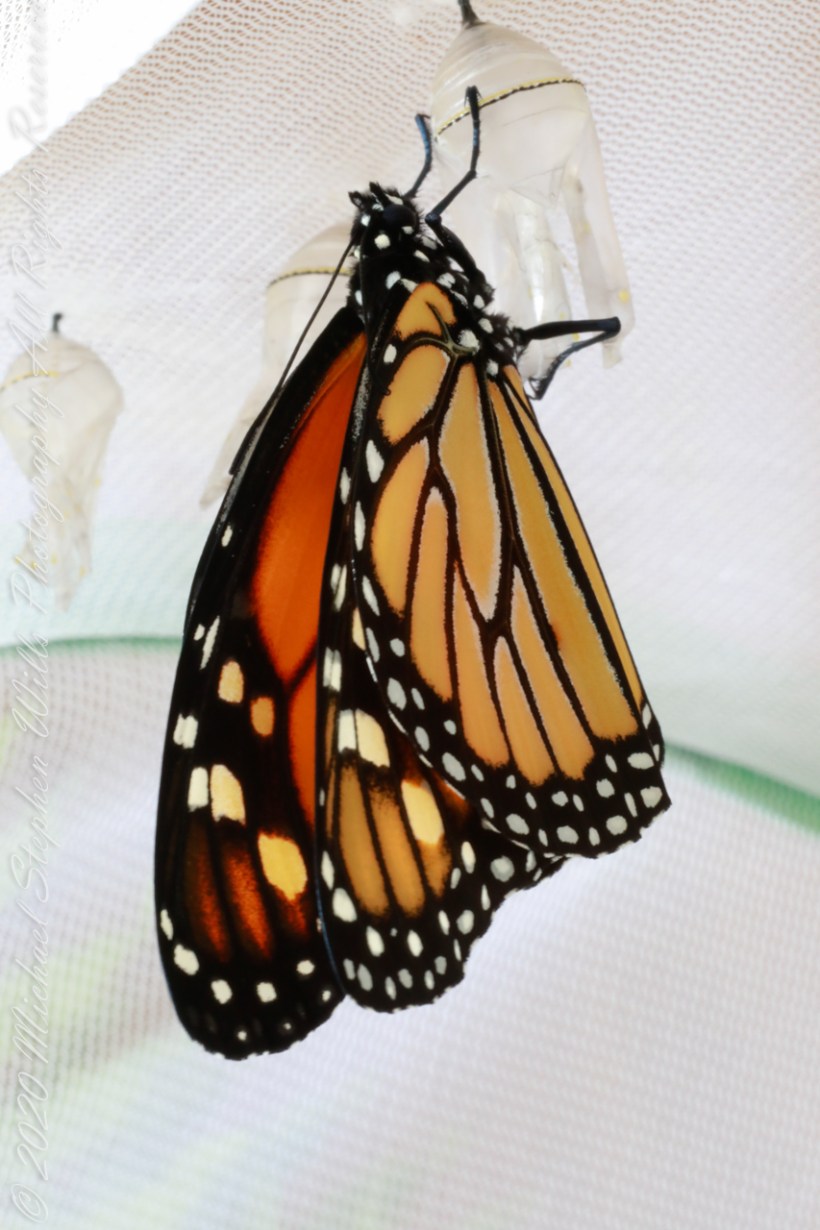
On a September day, a Monarch chrysalis symbolizes resilience amidst environmental threats, prompting reflection on stewardship and hopeful change.

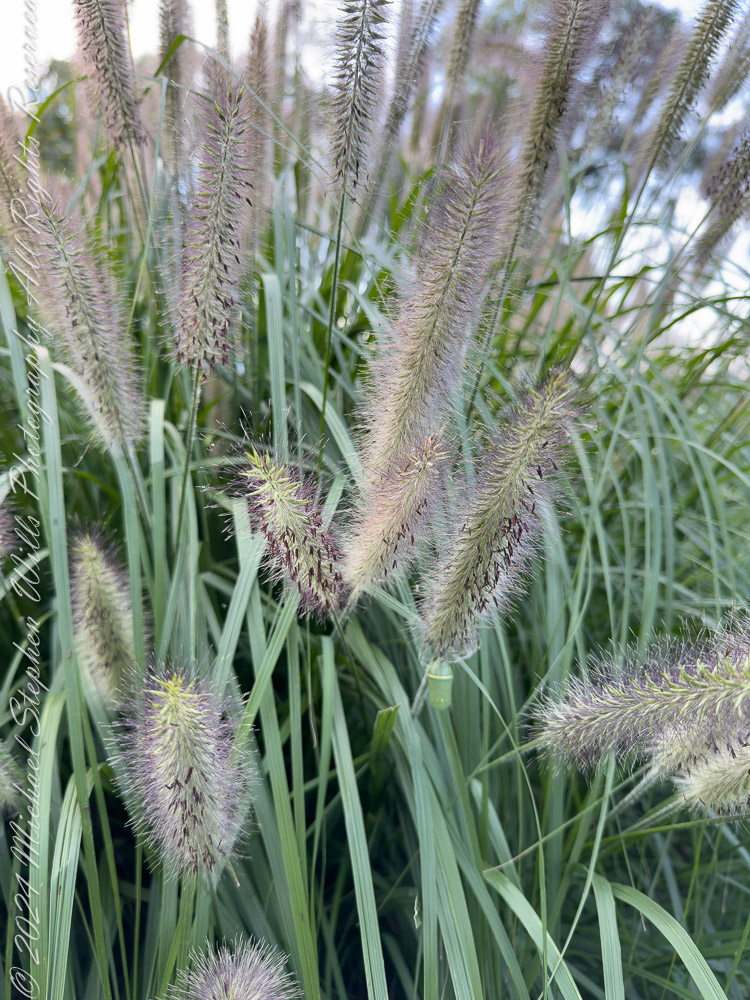
On a warm September afternoon, 2024, Pam and I passed a planting of shimmering grasses along the Cayuga Lake shore, the tips of their feathery plumes swaying in a gentle breeze. Amidst the verdant tapestry, my eyes caught a flash of delicate green—a Monarch chrysalis, hanging like a precious jewel beneath one of the seed heads. It was an unexpected encounter, a moment of grace that felt almost otherworldly. The chrysalis, pale jade with gold accents, looked like something born of magic rather than biology. For a moment, time paused.
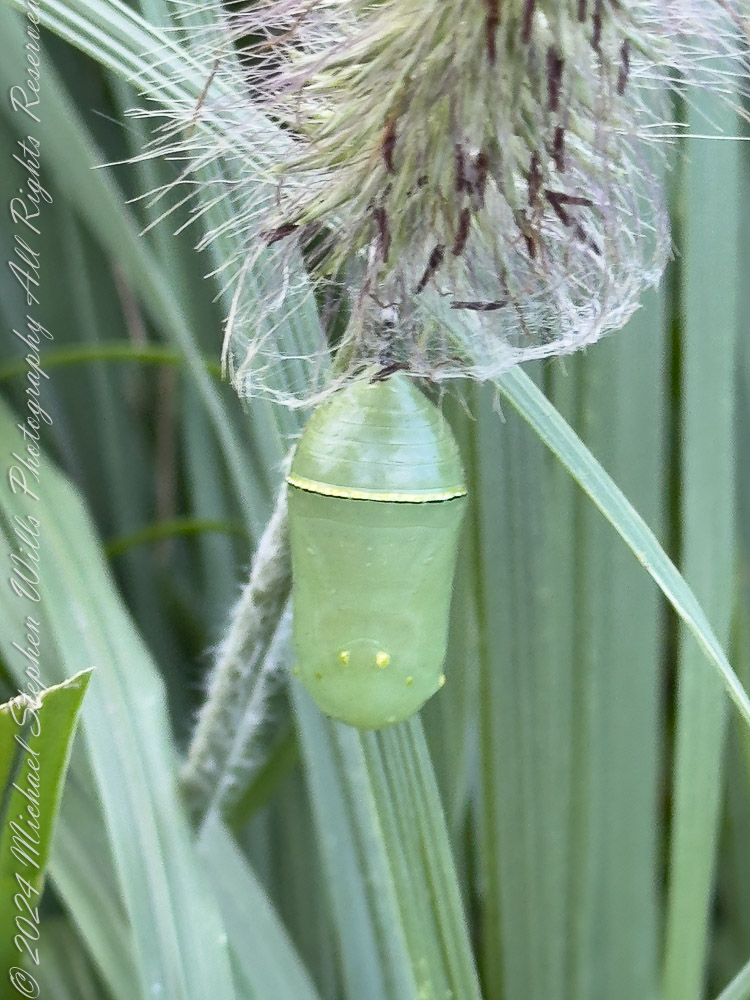
The only Monarch chrysalis we found in 2024, notable for the absence of caterpillars around our home. Tompkins Park, Ithaca, New York, Finger Lakes Region

I knelt carefully, mindful not to disturb the fragile life suspended before me. As I leaned in closer, I marveled at the perfection of its design. The intricate gold dots along its casing seemed impossibly precise, as though a divine hand had painted them there. Yet, this chrysalis was also a paradox: it was a shield of stillness, promising the coming transformation of a creature known for motion and migration.
The significance of this discovery didn’t escape me. Just two years ago, the International Union for Conservation of Nature officially classified the Monarch butterfly as “endangered.” Habitat destruction, pesticide use, and climate change have decimated their numbers. Monarchs, once so plentiful they seemed a seasonal certainty, now teeter on the edge of disappearance. To find this chrysalis was to witness a quiet rebellion against those odds, a solitary emblem of resilience in a world fraught with loss.

I thought of their epic journey—a migration that spans thousands of miles, linking Canada to the forests of central Mexico. For generations, these butterflies have followed ancestral paths with unerring precision, defying every obstacle in their way. How can something so small carry the weight of such immense journeys? And how, in a world that seems to grow harsher each year, do they still persist?

This chrysalis, tucked in the grasses of Stewart Park, felt like an answer to those questions. It was a reminder of the resilience of life, the determination of nature to continue despite all that works against it. And yet, it also felt like a fragile promise. The Monarch’s survival is no longer assured; its future, like the butterfly within this chrysalis, hangs by a thread.

As I rose and continued our walk, I carried the image of the chrysalis with me, letting its quiet beauty settle in my mind. I thought of the interconnectedness of all things: the milkweed plants that sustain Monarch caterpillars, the winds that guide their migrations, and the people whose choices shape the landscapes they traverse. Stewardship is not just a responsibility; it is a privilege—an opportunity to ensure that these miraculous creatures continue to grace our skies.

By the time I left the park, the sun had sunk toward the west, its light no longer graced the grasses. I looked back one last time, hoping that this chrysalis would complete its transformation safely. In its stillness, I saw not just hope, but a call to action. The Monarch’s story is not just about survival; it’s about the courage to evolve and adapt, even when the odds seem insurmountable. And perhaps, in witnessing this moment of metamorphosis, we too are reminded of our capacity to change—to become better stewards of the world we share.
Enter your email to receive notification of future postings. I will not sell or share your email address.

Exploring Ecological Wonders at Cornell Botanical Gardens

The Cornell Botanical Gardens blend ecological education and African American history through diverse plant life, creating a vibrant, engaging experience.

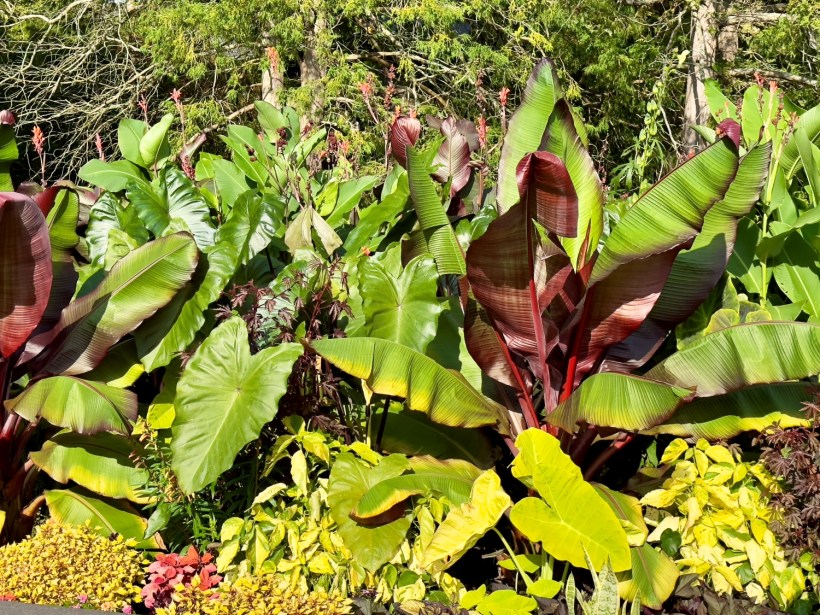
As Pam and I wander near the Nevin Welcome Center at the Cornell Botanical Gardens on a bright, early autumn day, my eye catches on a cluster of verdant, broad-leaved foliage. The sunlight filters through the leaves, casting a luminous green glow, while hints of red and burgundy add warmth to the scene. The plants here have a presence, a boldness that draws me in, and as I approach, I notice an array of information signs, thoughtfully placed to explain the rich tapestry of flora surrounding me.

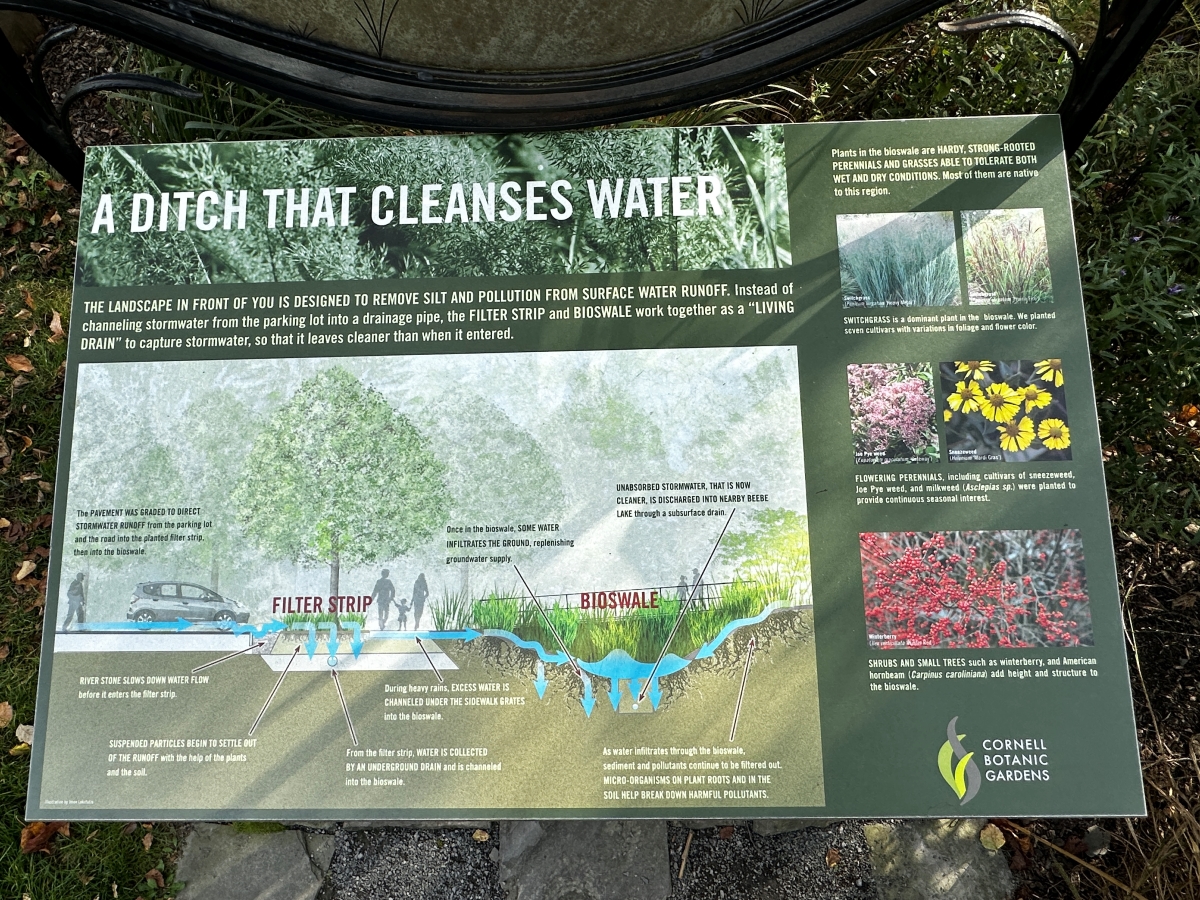
The first sign I encounter is titled “A Ditch That Cleanses Water.” It immediately piques my curiosity. In just a few sentences, it describes how this landscape is designed to capture and cleanse stormwater runoff, turning what might otherwise be a simple drainage area into a living, breathing ecosystem. Instead of funneling water into a standard drainpipe, a filter strip and bioswale—a kind of vegetative trench—work in tandem to trap silt and pollutants. There’s a delicate choreography happening here, as water flows from the parking lot into river stone beds, slowing down, and then into the plant-lined filter strip, which encourages suspended particles to settle out.

The bioswale itself is lush and resilient, filled with hardy, native plants that thrive in both wet and dry conditions. The sign explains that these plants are carefully chosen varieties such as Switchgrass and flowering perennials—sneezeweed and Joe Pye weed among them—that provide color through the seasons. Small trees like winterberry and American hornbeam add height and structure, giving this ecological marvel both function and form. I’m struck by how much thought has gone into something as mundane as stormwater runoff, transforming it into a process that supports the environment but also creates a pleasing view. Here, the bioswale captures the stormwater, filters it, and releases it cleaner than before, a quiet miracle of natural engineering.

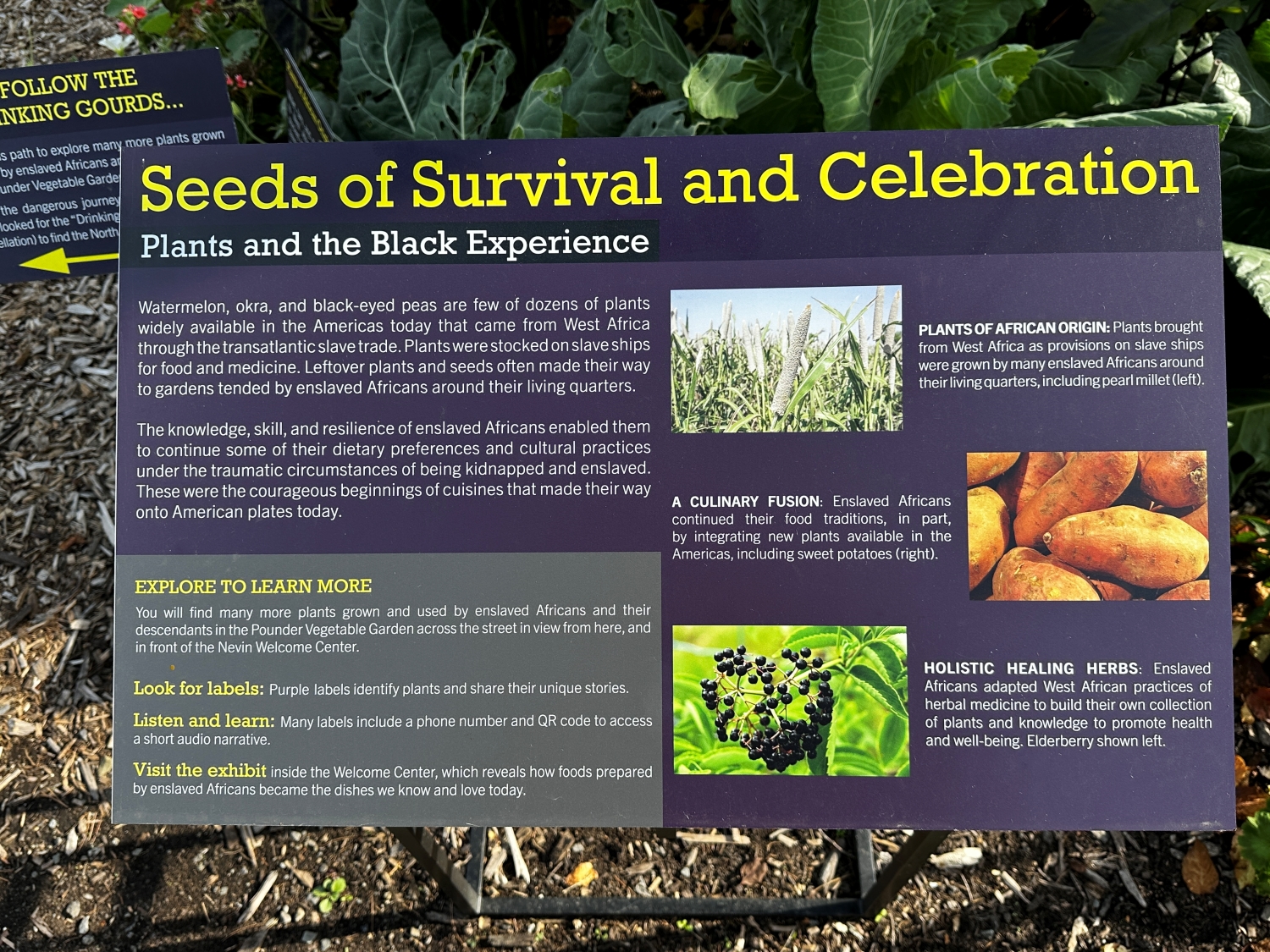
Moving on, I find another sign titled “Seeds of Survival and Celebration: Plants and the Black Experience.” This sign feels more intimate, as it dives into the deep history of plants brought from West Africa during the transatlantic slave trade. I’m reminded that gardens can be repositories of history, culture, and resilience. Plants like watermelon, okra, and black-eyed peas were brought by enslaved Africans who tended them near their quarters, ensuring a piece of home remained with them, even under unimaginable conditions. These plants became the foundation of African American culinary traditions, and I can almost taste the sweet potatoes and other foods that have become part of our shared heritage. The sign even nods to holistic healing herbs like elderberry, which were used to promote health and well-being, demonstrating how enslaved Africans maintained aspects of their culture through the plants they grew.

As I reflect on the stories woven into these signs, I find myself surrounded by a stunning mix of bold, leafy plants in vibrant greens, reds, and yellows—an almost tropical display that stands defiant against the approaching cold season. Banana leaves, elephant ears, and coleus fill the garden beds, their leaves large, showy, and unabashedly lush. The scene feels alive, a burst of tropical splendor amid the Finger Lakes. These aren’t plants native to upstate New York, yet they’ve been incorporated here with care and skill, bringing a hint of warmth as the days grow shorter. Their wide, smooth surfaces reflect the sunlight, catching my eye with every slight breeze, and they create an atmosphere that is both exotic and inviting.

This day, the Cornell Botanical Gardens have offered Pam and I beauty along with education. The signage has guided us through ecological engineering, the resilience of African American foodways, and the artistry of landscape design, blending these narratives into the landscape itself. Each sign, each plant, tells a story, and as I walk away, I carry these tales with me, reminded that gardens are not merely for looking—they are for learning, for remembering, and for celebrating the resilience of life in all its forms.

Enter your email to receive notification of future postings. I will not sell or share your email address.