Near and Far — the last day of 2023

Discover a heartfelt story woven from the sands of Cocoa Beach on New Year’s Eve, where shells and stars intertwine, inviting you to ponder the delicate dance of near and far.

On the last day of 2023, as the sun began its descent on Cocoa Beach, I found myself tracing the contours of a heart laid out in Ark Clam shells. Each shell, with its ridges and grooves, felt like a chronicle of the ocean’s whispers. This artful mosaic, set against the granular canvas of the beach, was a testament to the playful hands of time and tide. I marveled at the intention behind it, the human desire to create and connect, to leave a mark, however fleeting, on the vastness of nature.
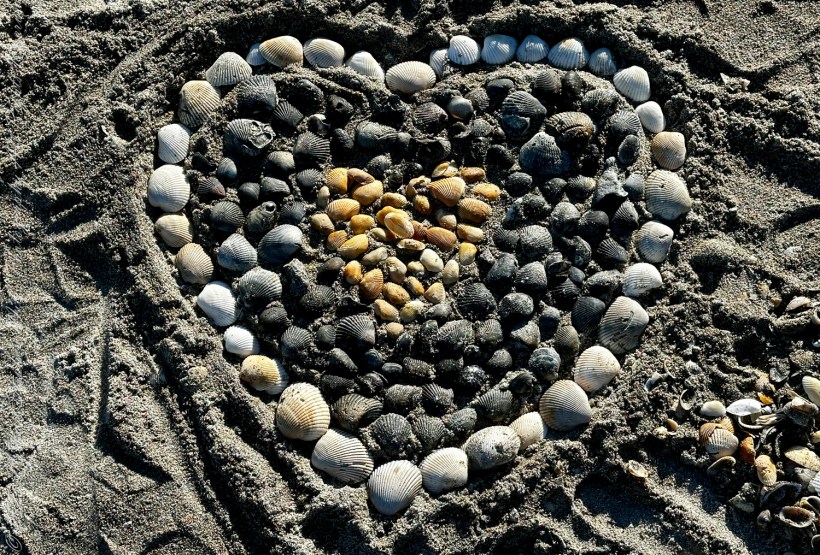
I found this beach heart while walking on Cocoa Beach on the last day of 2023. It is composed of the various shade of Ark Shells. Ark clam is the common name for a family of small to large-sized saltwater clams or marine bivalve molluscs in the family Arcidae. These are the most common shells found there.

The shells were cool and firm under my fingertips, each one a unique piece of the year’s mosaic. Some were a pristine white, while others bore the earthy tones of the sea’s floor. I pondered the journeys they had taken, tumbling in the ocean’s embrace before resting here, on the threshold of a new year. The act of arranging them into a symbol of love felt like an ode to the past year’s collective joys and sorrows, an offering to the unknown adventures of the year to come.

As the day waned, my gaze shifted from the shells to where the water met the sky. There, a sailboat floated serenely, a silent sentinel between two worlds. It was a picture of solitude, a single vessel on the brink of the infinite sea, beneath the expanding dome of the heavens. On the horizon, the silhouette of a cargo ship whispered stories of distant lands and the ceaseless pulse of commerce and exploration that defined our modern era.
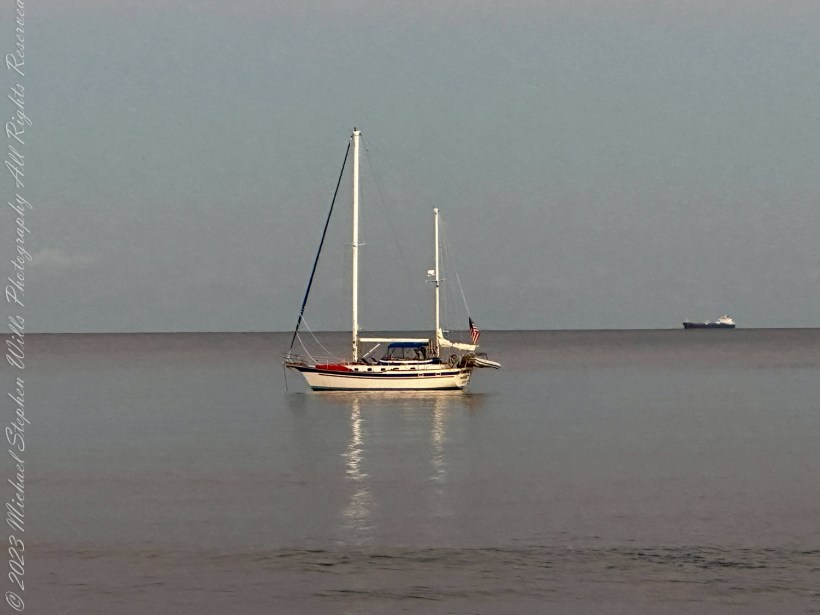
On New Years Eve 2023 this sailboad moored off North 1st Street, Cocoa Beach, Brevard County, Space Coast, Florida.

The beach was quiet, the sounds of the day giving way to the evening’s peaceful lull. The sailboat’s stillness was a stark contrast to the perpetual motion of the cargo ship, each representing different paths on the water’s vast canvas. One was an emblem of leisure and simplicity, the other of industry and complexity. Both near and far, they were the day’s quiet companions, their stories part of the fabric of the Space Coast.

As twilight deepened into night, the stars began to emerge, one by one, until the sky was a tapestry of celestial wonder. With my iPhone 14 Pro Max, I captured this cosmic dance, the constellation of stars that had been the silent witnesses to Earth’s revolutions. The constellations, those mythic shapes that have long sparked human imagination, seemed to hold the secrets of what had been and what was to come. They were distant suns, their light traveling unfathomable distances to reach me, to reach us, as we stood on the brink of a new beginning.
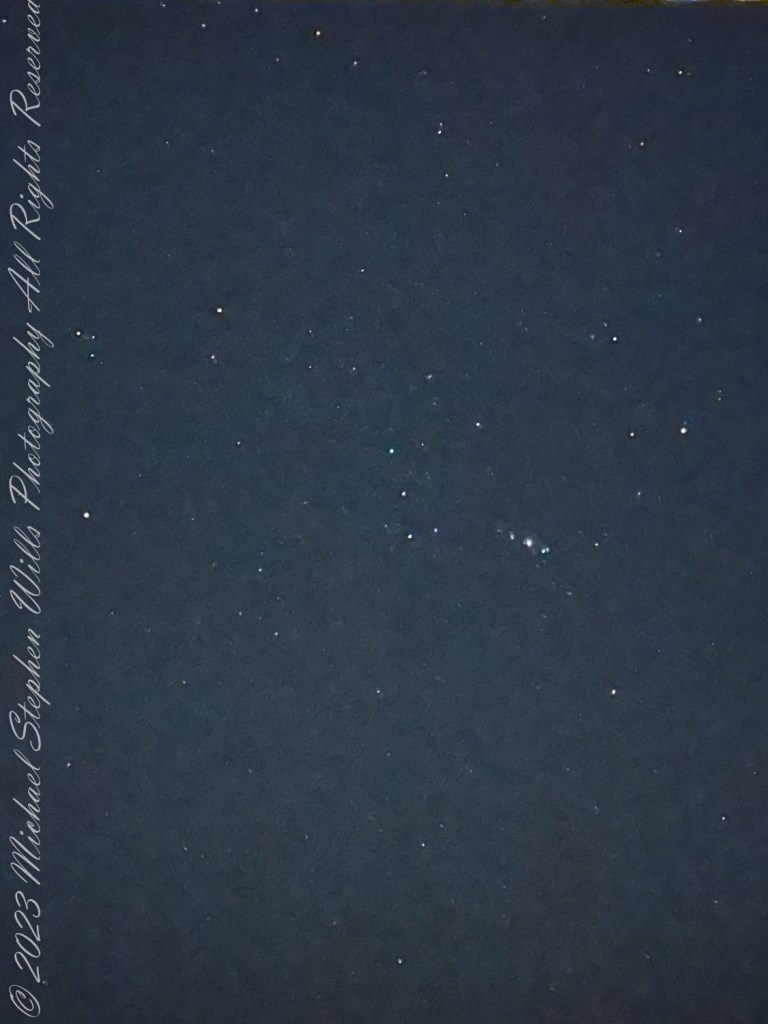
Orion

I couldn’t help but feel a connection to the stars, a kinship with their ancient light. They reminded me that we, too, are part of this grand cosmic design, our lives stitched into the universe’s expansive quilt. On the beach, with the shells at my feet and the stars overhead, I was caught in the delicate balance of near and far—the tangible reality of the shells I could touch and the distant glow of starlight from ages past.
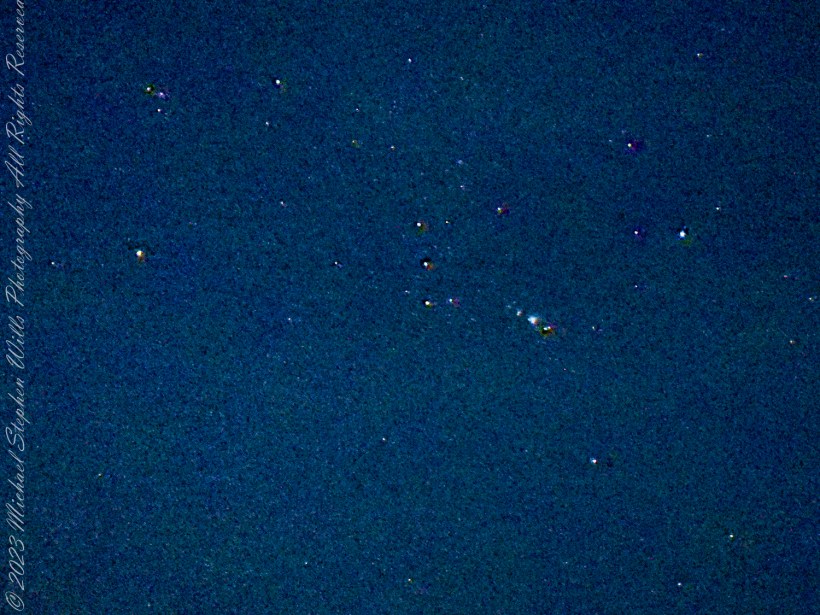
Orion, the belt and sword in center.

As the year ticked closer to its end, I stood between the intimate artistry of the shell heart and the boundless majesty of the star-filled sky, a lone observer of time’s relentless march. The Space Coast, with its unique blend of earthly beauty and human aspiration, was the perfect stage for this reflection. Here, on Cocoa Beach, I embraced the last moments of 2023, ready to welcome the new year, with its promise of continuance and change, its constant dance of near and far.
Copyright 2024 Michael Stephen Wills All Rights Reserved

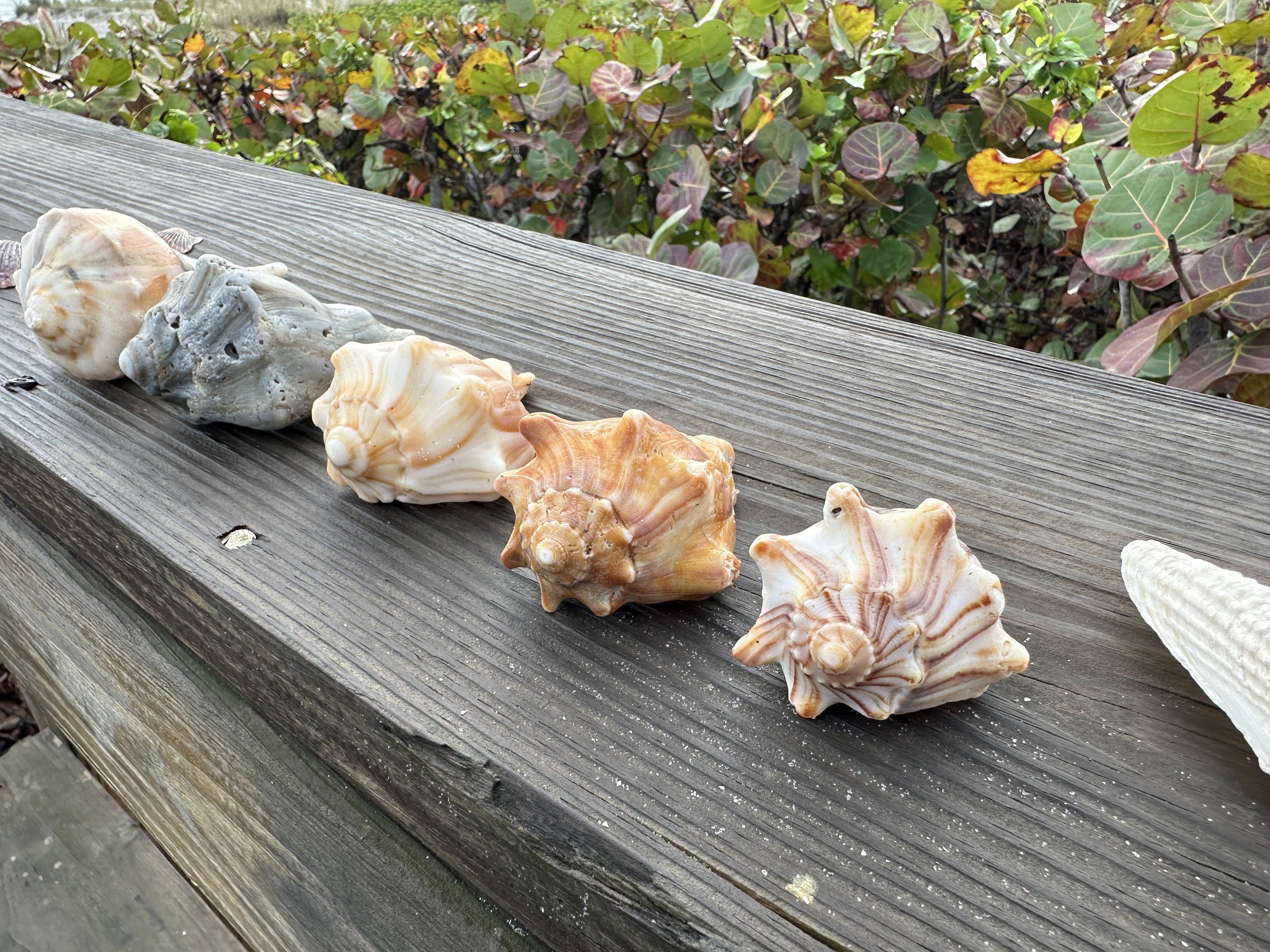
Crystalline Secrets: The Art and Science of Whelk Shell Formation

As you stroll along the beach, the beauty of whelk shells captures your attention. Ever wondered how these intricate structures form? Dive into the secrets of their creation, from cosmic origins to mollusk mastery. Discover the fascinating world within their shells

Exploring the Formation of Whelk Shells


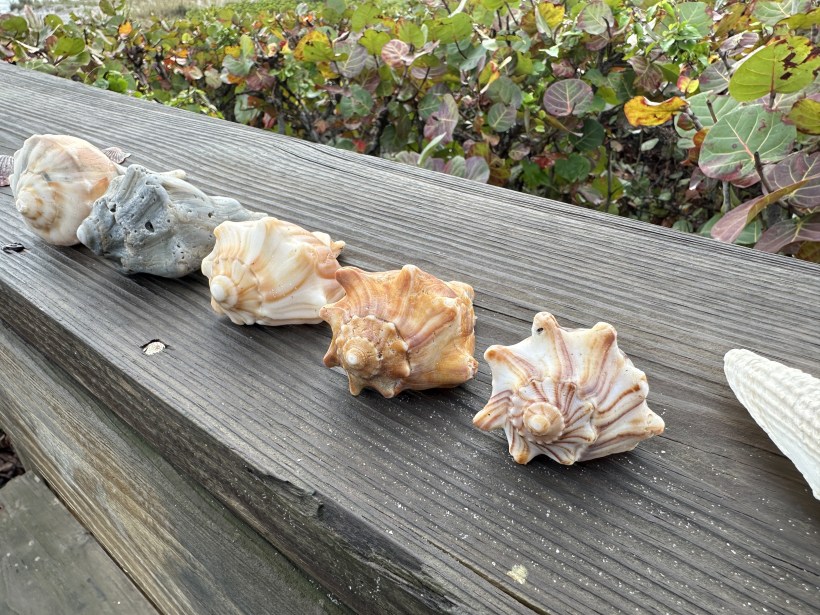
As I wander along the coast, the variety of seashells scattered across the beach fascinates me, particularly the whelk shells with their intricate designs and robust structure. This marvel of nature prompts me to delve into the science behind the formation of these shells, which are not just homes for the marine creatures but also a testament to the extraordinary processes that take place both within the organisms and across the cosmos.

The Architect: The Mantle of the Whelk


The journey of a whelk shell begins within the mollusk itself, specifically with an organ called the mantle. This organ is a marvel of biological engineering, responsible for laying down the calcium that forms the shell’s backbone. It secretes a matrix, a kind of biological scaffolding composed of proteins and polysaccharides, and then directs the deposition of calcium carbonate within this matrix to create the hard shell. The mantle’s work is meticulous, ensuring the shell’s growth and repair throughout the whelk’s lifetime.

The Building Blocks: Calcium, Carbon, and Oxygen


So why do the elements calcium, carbon, and oxygen play such a crucial role in shell formation? It’s a question of availability and suitability. These elements are abundant in the marine environment—calcium dissolved in seawater, carbon, and oxygen from both water and air. Their chemical properties allow the formation of calcium carbonate, a stable compound that can adopt various forms like calcite and aragonite, offering structural diversity for shells. Calcium carbonate’s moderate solubility enables mollusks to control shell formation precisely, and its biocompatibility ensures the process is safe for the living organism. Above all, the resulting crystalline structure provides immense strength and rigidity, a natural armor against predators and environmental challenges.

The Role of Calcium Carbonate


Calcium carbonate (CaCO₃) is not just a building block for shells; it’s a common substance that shapes our world. Found in rocks as calcite and aragonite, it forms limestone, the basis of pearls, and even the eggshells we encounter daily. This compound is an active player in both industrial applications and biological functions, serving as an agricultural amendment, a component in cement, and even a dietary supplement for humans.

The Mollusk’s Craft: Extracting from the Environment


Whelks are not alchemists; they do not create calcium carbonate from thin air. Instead, they are master extractors, pulling calcium and carbonate ions from their surroundings and depositing them as calcium carbonate to form their shells. The mantle is at the heart of this process, secreting proteins and enzymes to facilitate ion extraction from the water. The precise regulation of ion concentrations and pH ensures the calcium carbonate crystallizes in the desired form, perfectly tailored for the whelk’s protection.

Star-born Elements: The Cosmic Connection


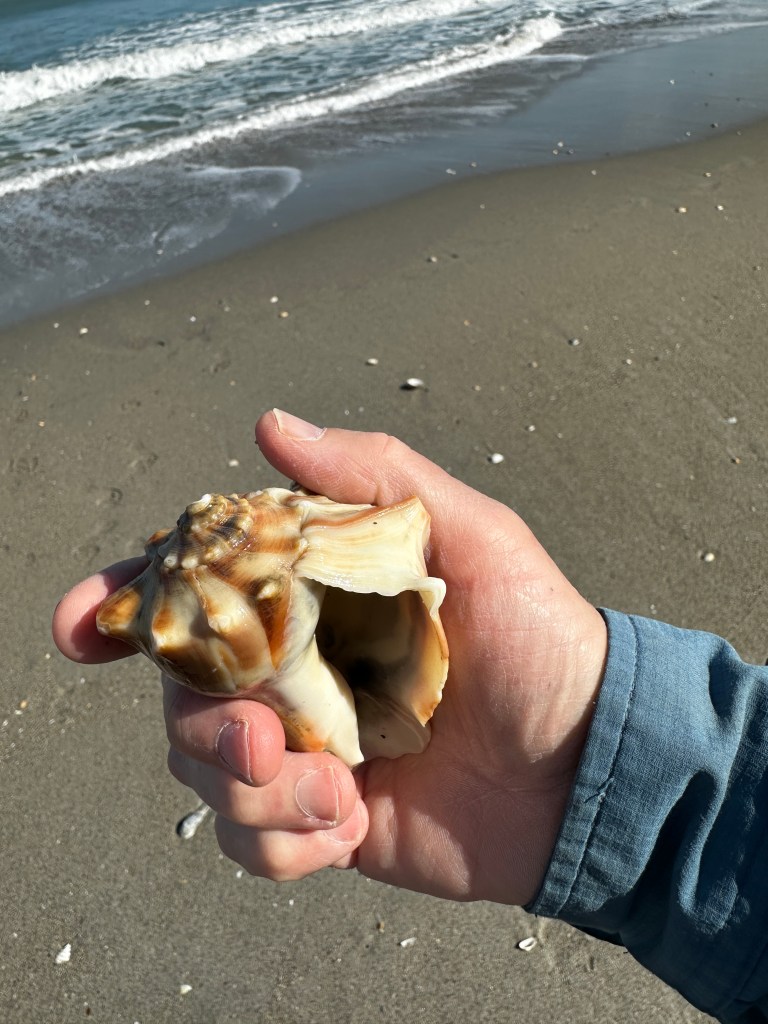
It’s astounding to think that the elements composing whelk shells are not just earthly but cosmic in origin. The calcium (atomic number 20), carbon (atomic number 6), and oxygen (atomic number 8) that are so critical to these marine structures owe their abundance to the stars. The life cycles of stars, from their hydrogen (atomic number 1) and helium (atomic number 2) fueled births to the explosive supernovae and neutron star collisions that mark their deaths, generate and scatter these elements throughout the universe. These star-born materials eventually coalesced to form our solar system and Earth, providing the necessary ingredients for geological and biological phenomena, including the formation of the whelk shells I hold in my hand.

As I reflect on the shells before me, I am reminded of the interconnectedness of all things—from the inner workings of a tiny mollusk to the vast and violent furnaces of stars. These shells are not just remnants of life; they are cosmic artifacts, a reminder of our connection to the universe and the extraordinary processes that shape our existence.

Copyright 2024 Michael Stephen Wills All Rights Reserved