Our culture insists that Valentine’s Day is about hearts and chocolates, about gestures that can be wrapped, written, or eaten. My memories tell a longer and more intricate story. Valentine’s Day is thread that runs through decades—binding childhood, family, and shared journeys into a single, evolving narrative.
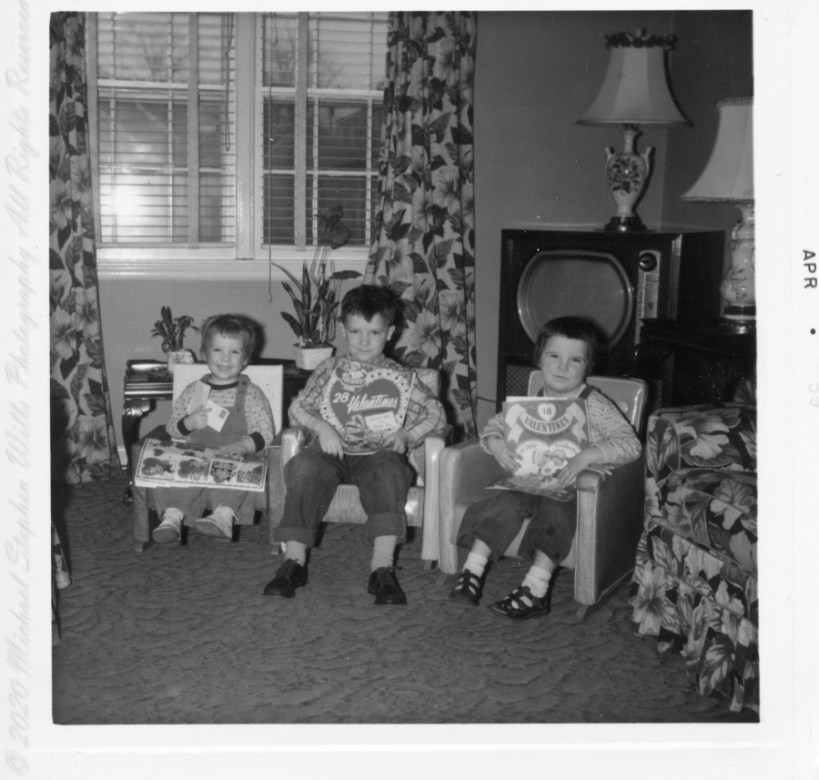
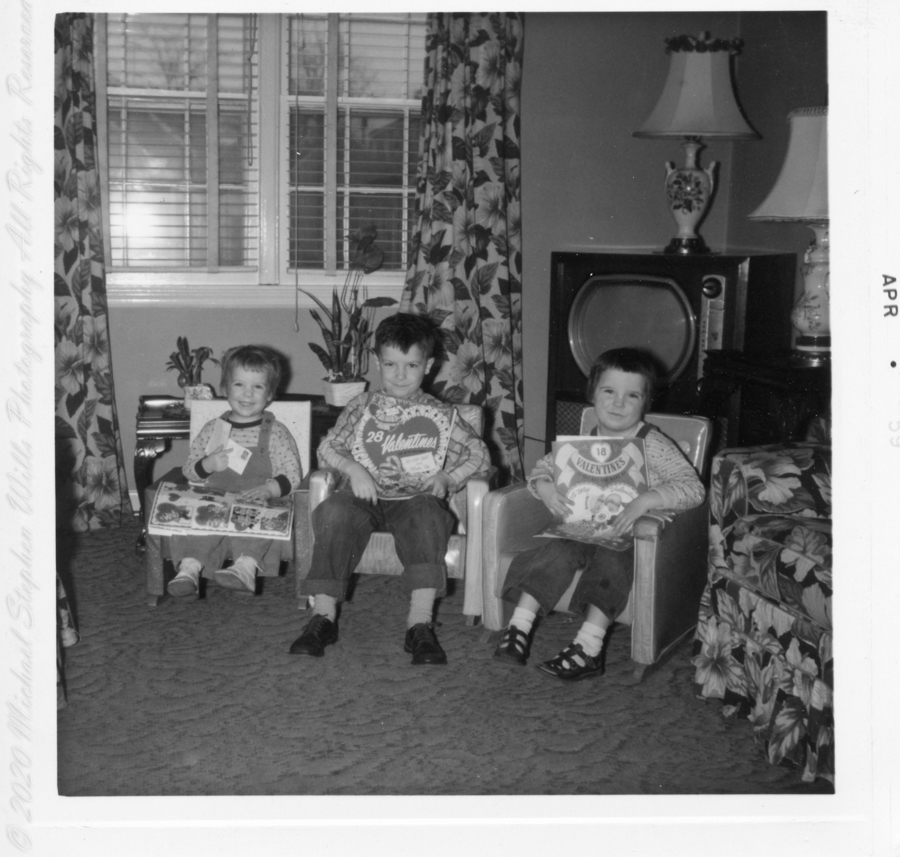
An early Valentine’s Day memory of mine is anchored in a living room at 107 Deepdale Parkway in Albertson, New York. It is 1959. The room is familiar and ordinary, yet in memory it glows with a particular warmth. My sister Theresa is two, Christine is four, and I am five. We are gathered together, small figures in a modest suburban home, unaware that this fleeting domestic moment will outlast nearly everything else in the room. What I remember most is not an event, but a feeling: the sense of being held within something stable and loving, a family rhythm that proved enduring.
As the years passed, Valentine’s Day shifted its shape, as it does for everyone. Childhood gave way to adolescence, and later to adulthood, when the holiday began to carry expectations and interpretations shaped by romance and partnership. Yet even then, my earliest associations lingered beneath the surface. Valentine’s Day was was beyond an exchange between two people; it was about continuity, about the quiet reassurance that one was part of a larger story.
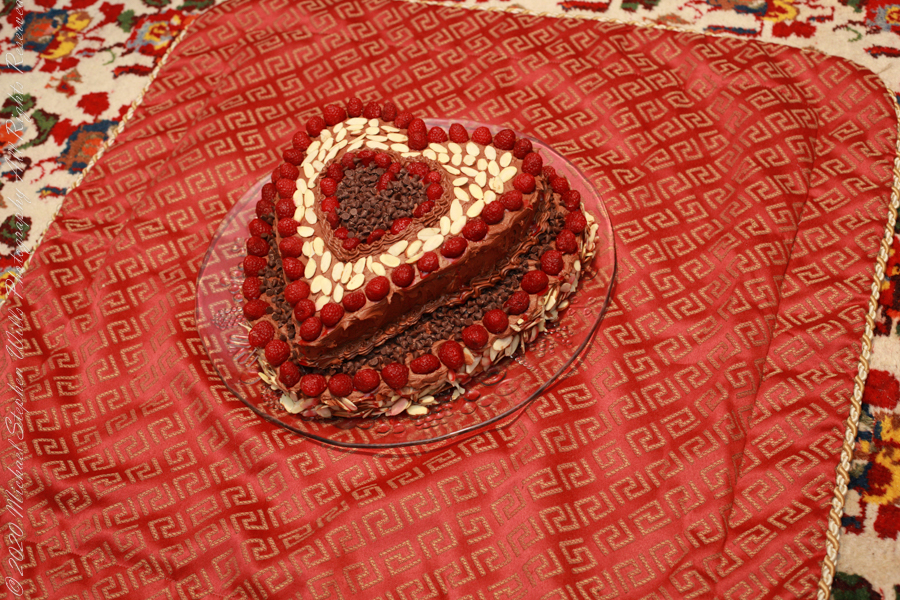
A part of our celebration this Valentine’s Day cake—chocolate, homemade, and unapologetically generous. Baked by my wife, Pamela, whose acts of care often expressed themselves through the kitchen. The cake was not elaborate by modern standards, but it does not need to be. Its value lay in what it represented: time taken, effort given, and love made tangible. Long after the plates are washed, the memory of that cake remains inseparable from the idea of Valentine’s Day itself. Love, I learned early, could be simple, nourishing, and shared.
That understanding deepened over time, especially through my life with Pam. One Valentine’s Day memory stands apart not for its extravagance, but for its improbability. Pam and I found ourselves aboard the Oceania ship “Regatta”, sailing the Pacific Ocean off the coast of Chile. The vastness of the water, the steady rhythm of the ship, and the sense of being suspended between sky and sea created a striking contrast to the small living room of my childhood. Yet the emotional register was remarkably similar. Once again, Valentine’s Day was marked not by spectacle, but by presence.
The following day we reached Puerto Montt, a port city framed by water and volcanoes. The journey itself became a metaphor for the way love matures. Where childhood love had been rooted in home and routine, this later expression unfolded through shared experience and mutual trust. Standing on the deck together, watching the coastline emerge, I was struck by how Valentine’s Day had come to encompasses where we had been and where we were going.
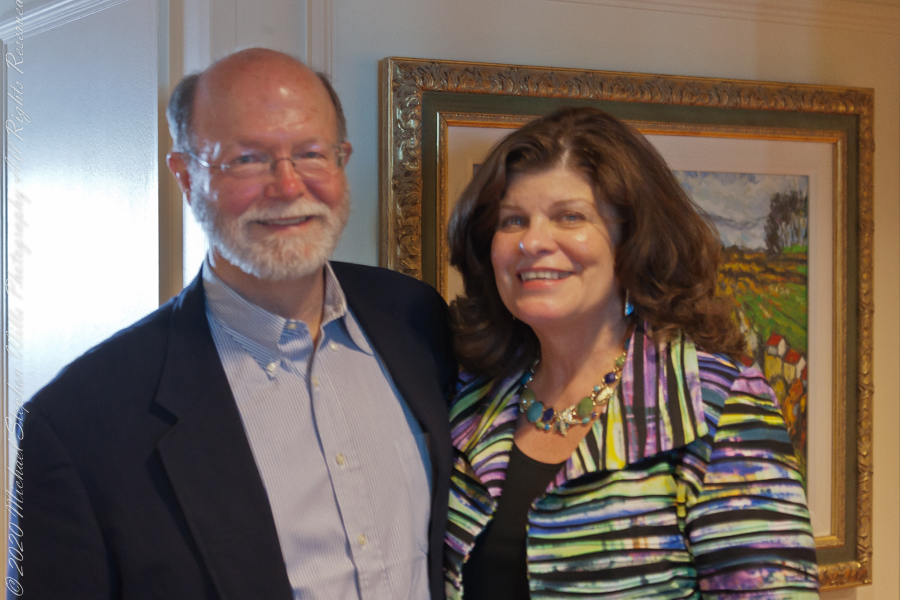
In that sense, Valentine’s Day functions much like memory itself. It selects certain moments and holds them fast, allowing others to fade. A cake, three young children in a living room, two partners standing together on the open sea. These are not scenes one could have predicted would endure, yet they do, because they are threaded with care, attention, and shared time.
Now, looking back across the span of years, I understand Valentine’s Day as a recurring prompt that asks us to remember where love first took root, how it was tended, and how it has carried us forward. The details change, but the essence remains remarkably constant.
In the end, Valentine’s Day does not demand grand gestures or perfect words. It asks only that we recognize the quiet continuity of love as it moves through our lives—sometimes in a childhood living room, sometimes on the open ocean, always leaving its mark in ways we only fully understand in retrospect.




 Michael Stephen Wills Photography