Brick Red

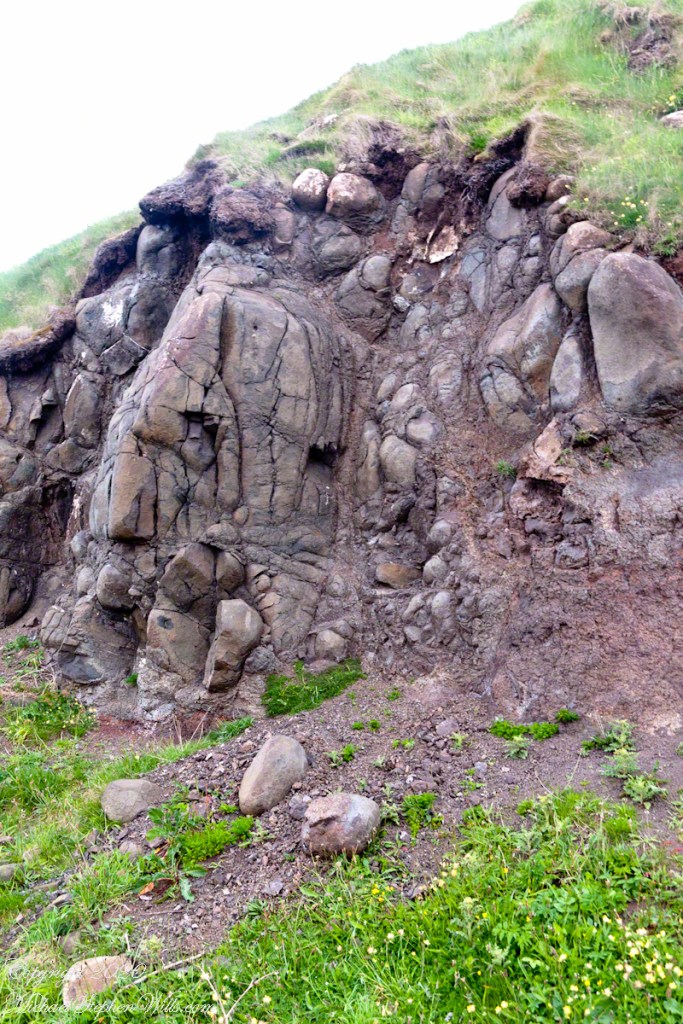
Spheroidal weathering of Basalt

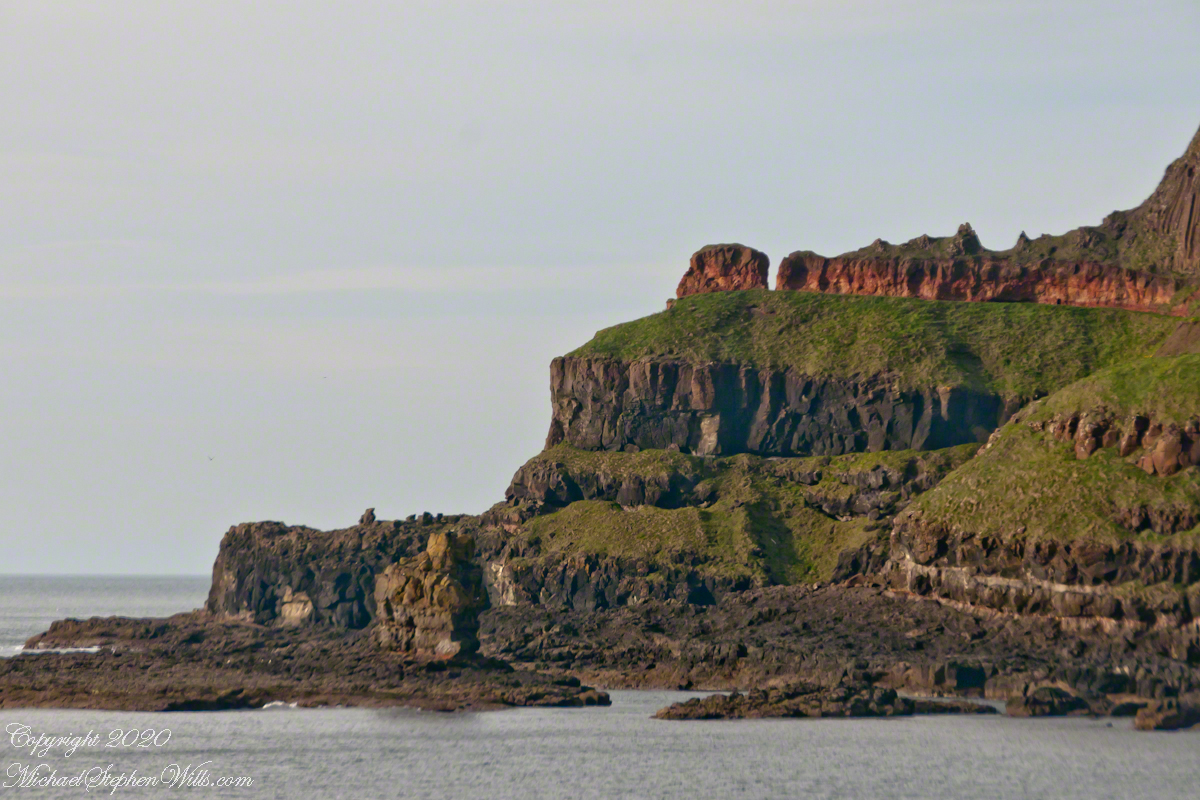
Layers of red rock, lit here by sunset on Giant’s Causeway, along the cliff trail, seen here from below, are called laterite from the Latin for brick (later). Here it is formed from iron rich basalt laid down well before the upper layers of the magma plateau. It takes eons to weather and oxidize the iron of basalt, transforming it to the brick red of laterite, yet the rocks above it are still dark. The process happens in warmer climates with alternating cycles of rain and drought, for Ireland this was when the land was much farther south than today. Giant’s Causeway, County Antrim, Northern Ireland.

Here it is formed from iron rich basalt laid down well before the upper layers of the magma plateau. It takes eons to weather and oxidize the iron of basalt, transforming it to the brick red of laterite, yet the rocks above it are still dark. The process happens in warmer climates with alternating cycles of rain and drought, for Ireland this was when the land was much farther south than today.

Click photograph for a larger view. To do this from WordPress Reader, you need to first click the title of this post to open a new page.
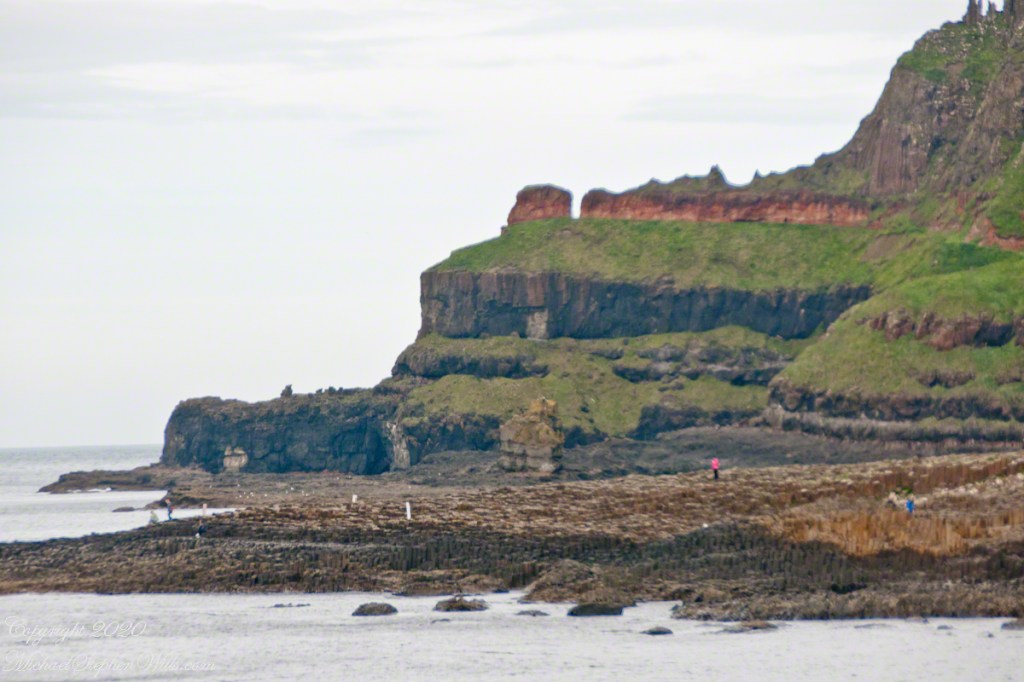
Lava dikes rise from the water below. Here is a wider view with the “causeway” elements with human figures in foreground.
Copyright 2020 All Rights Reserved Michael Stephen Wills

Click Me for my Shutterstock Gallery

Iceland

2,400 miles distant

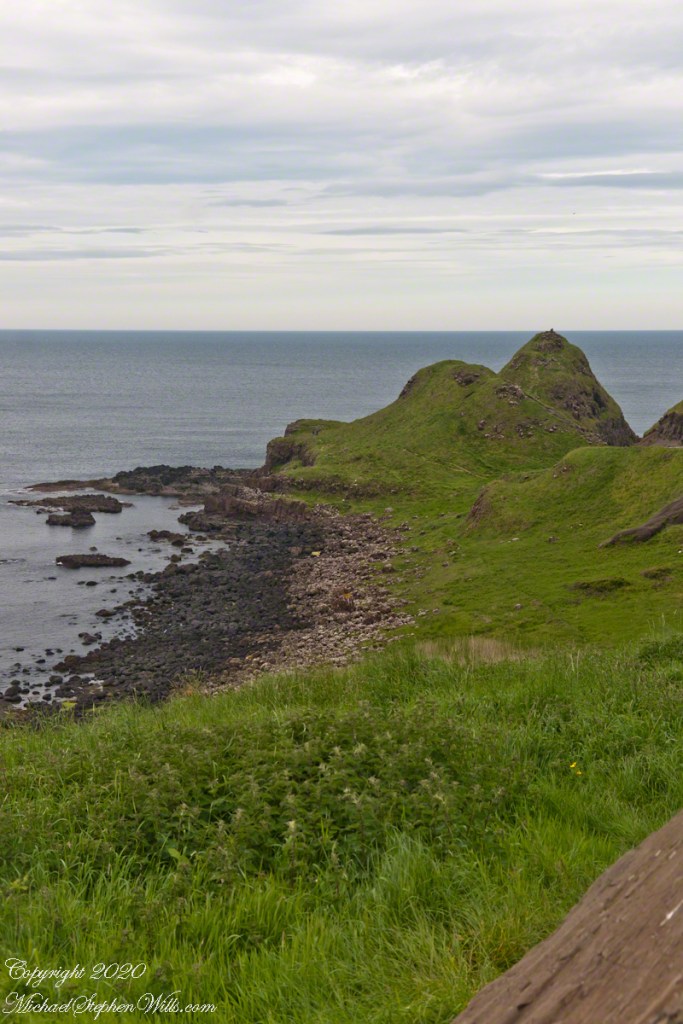
Next stop Iceland, about 705 miles over the water, in this view north from Giant’s Causeway walk.

Click photograph for a larger view. To do this from WordPress Reader, you need to first click the title of this post to open a new page.

Can you see the footpath? The human figures? They provide a sense of scale. I love that patch to yellowed grass.

Copyright 2020 All Rights Reserved Michael Stephen Wills

Weathered Lava

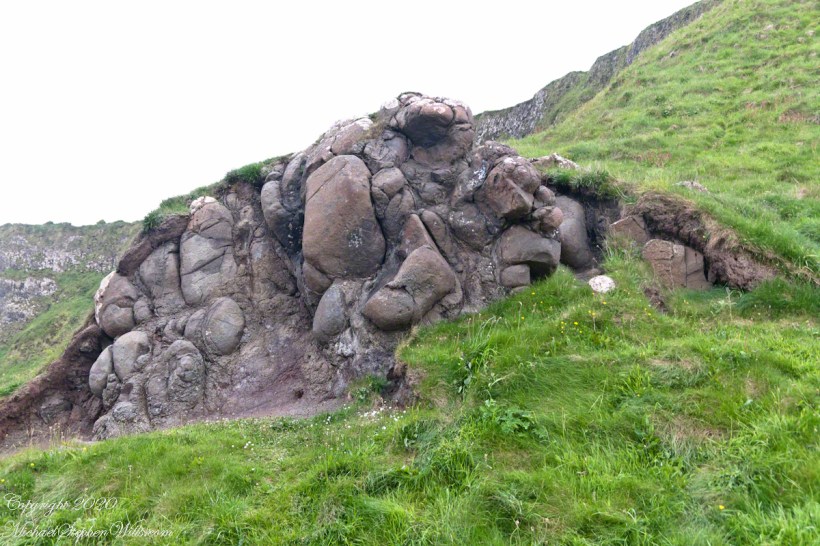
Spheroidal weathering of Basalt

In preparation for our Ireland tour I woke before work to research each location, filling a leather bound notebook with facts and observations. Faced with the Giant’s Causeway I was woefully unprepared to comprehend the sights.

Walking down the Causeway path, the cliffs rise on the right, at the foot are these strange deposits. The Causeway is part of an enormous lava plateau formed during eruptions 50-60 million years ago. This lava was at bottom, eventually exposed to weather. As eons passed, the basalt reacted chemically with rainwater, the outer rock flaking off like layers of an onion to reveal these strange rounded forms.

Click photograph for a larger view. To do this from WordPress Reader, you need to first click the title of this post to open a new page.

Being here is like finding the abandoned workshop of a giant. The place lives up to the name.

Copyright 2020 All Rights Reserved Michael Stephen Wills

Volcanic Dike

A Bactrian Camel (?)

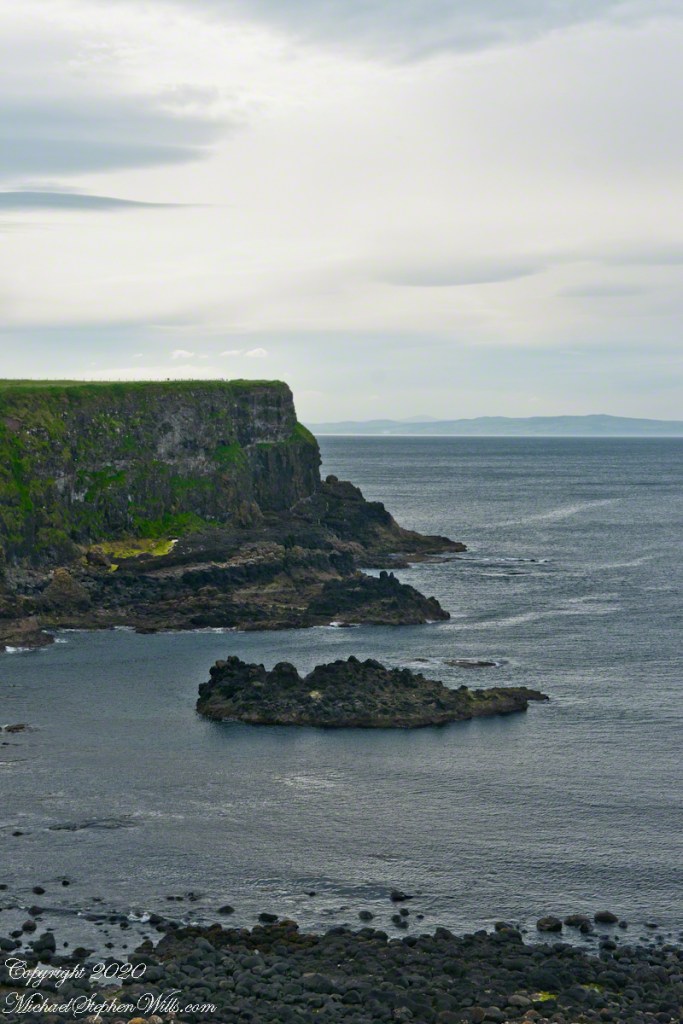
The entire northern Antrim coast is the remnant of an lava flow hundreds of feet deep, the depth corresponds to cliff height today. It made a great location for a defensive fort, or dun, featured in an earlier post. I say today because on a time scale of 50 million years the late Bronze age, 3000 years ago, was yesterday.

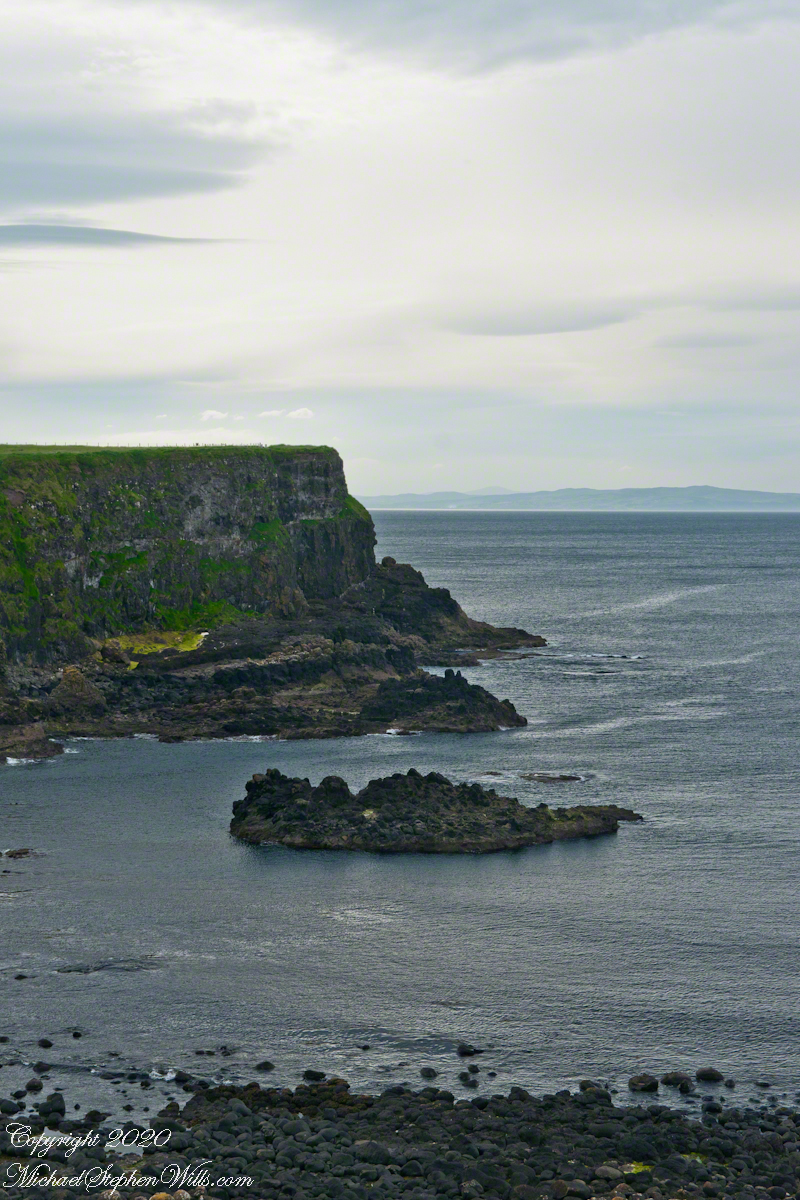
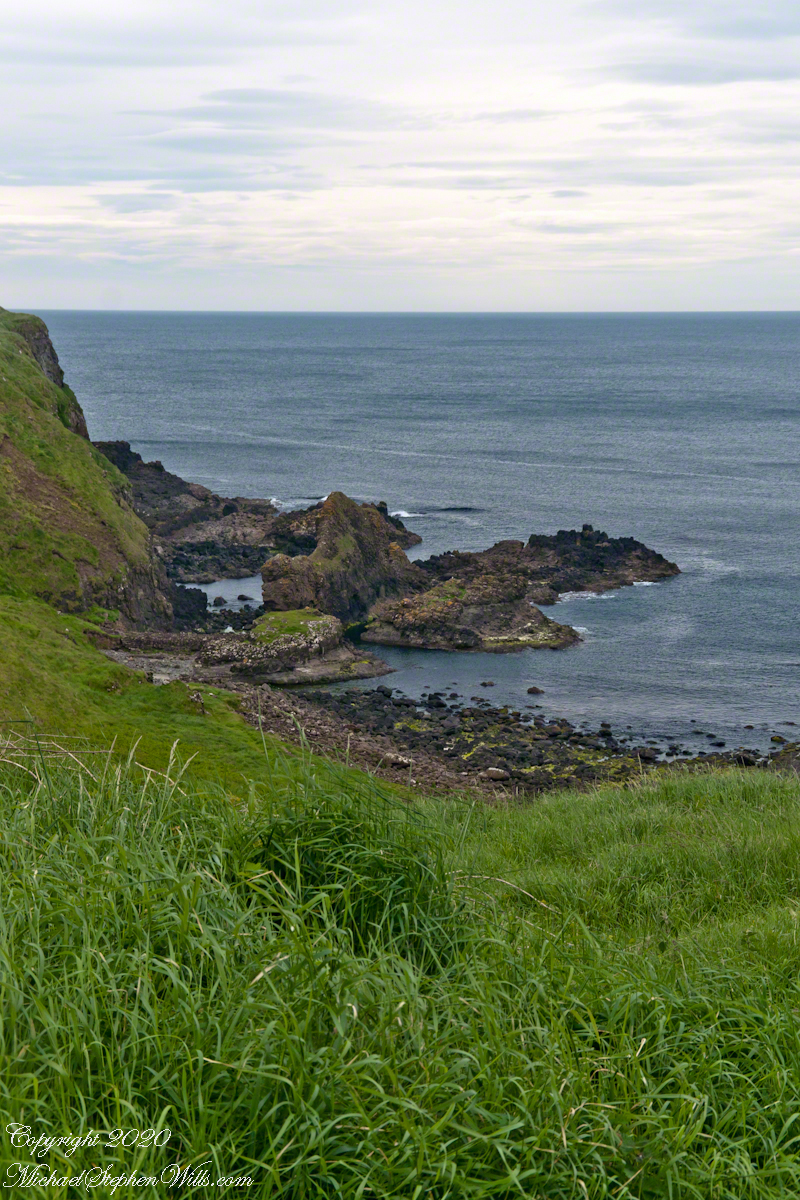
Here is another view from the Giant’s Causeway walk, wonders presented at every step. This lava dike, now surrounded by water, formed when flowing lava entered a crack though a layer of basalt from an earlier eruption. The lava cooled, over eons the surrounding material eroded, leaving a wall of rock. This formation has an irregular surface that resembles a two humped camel from some angles.

Click photograph for a larger view. To do this from WordPress Reader, you need to first click the title of this post to open a new page.

Copyright 2020 All Rights Reserved Michael Stephen Wills

Labrador

2,400 miles distant

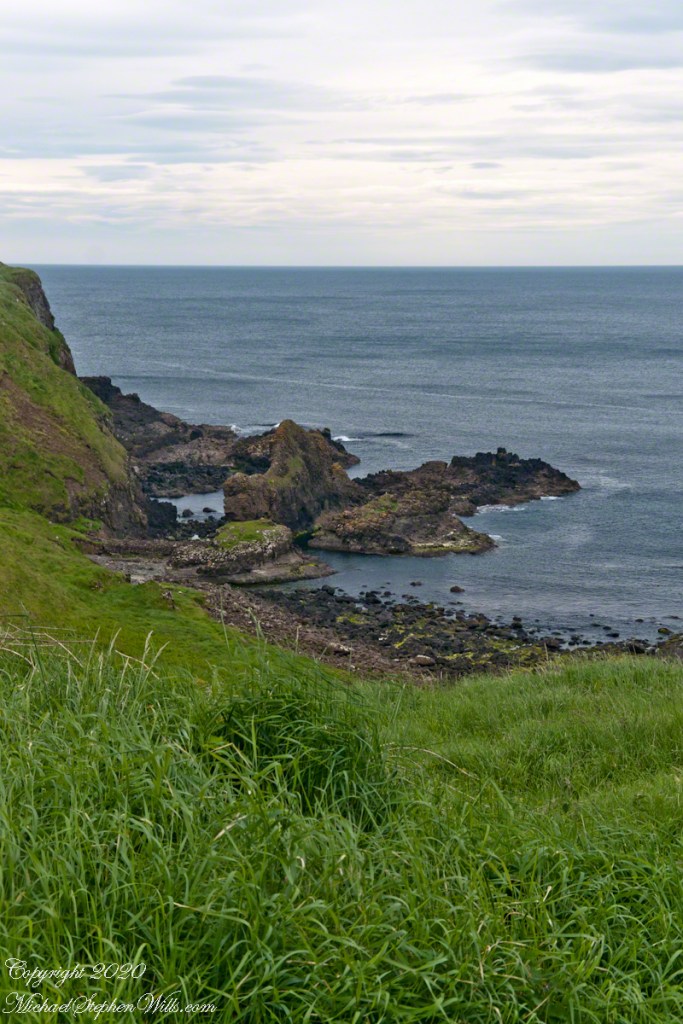
Next stop Labrador, Canada, North America in this view from the Giant’s Causeway Walk.

Click photograph for a larger view. To do this from WordPress Reader, you need to first click the title of this post to open a new page.

The attraction has miles of footpaths, every inch with stunning views such as this.

Copyright 2020 All Rights Reserved Michael Stephen Wills

Broken

Enormous and Personal Scale

Volcanism formed much Ireland landscape and can be credited with a huge tourist attraction near Bushmills, Northern Ireland, UK (Click me for another post of volcanic Irish landscape). The opening of the mid-Atlantic rift and movement of continents dwarfs the origin story of a roadway built by giants to connect Ireland to Scotland.
Click photograph for a larger view. To do this from WordPress Reader, you need to first click the title of this post to open a new page.

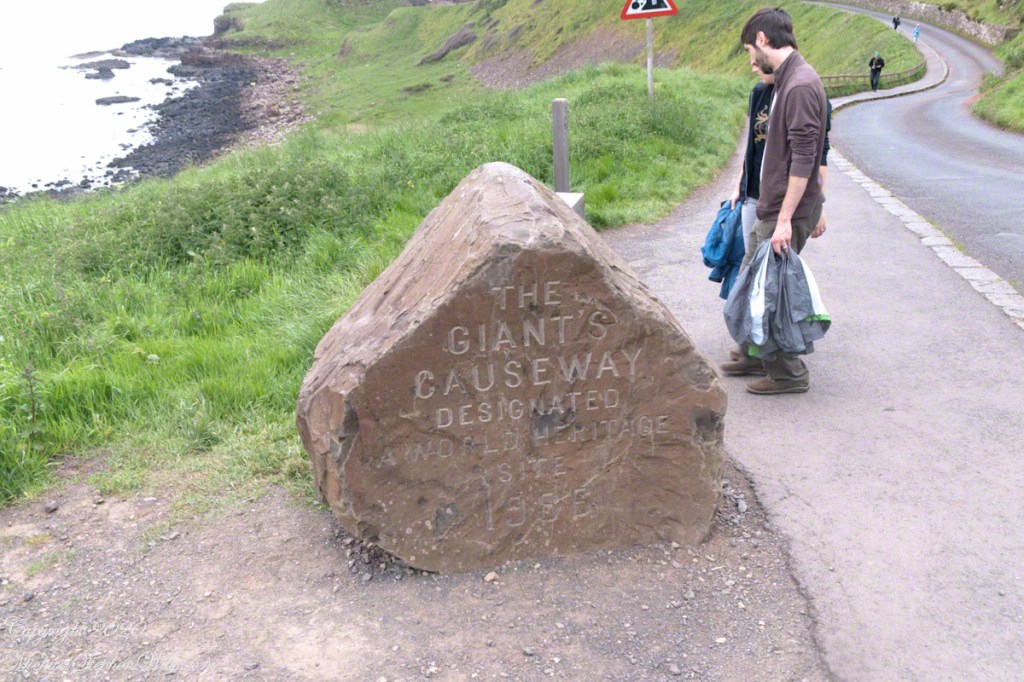
On a prosaic scale, the granite curbs stones proved my undoing. On the walk out of the Causeway, in the falling light of dusk composing a shot, eye to the viewfinder, I fell off the curb. The camera fell, breaking the mount on both the flash and camera. To this day, I need to hold the flash in wireless mode when using the Sony.

Copyright 2020 All Rights Reserved Michael Stephen Wills

Mismatched Appetite

Bugged

Nectar at the base of each flower petal may be the quixotic quest of this mosquito. Quixotic because the physical characteristics of benefit to human predation, a light body, makes it unsuited to delve into the petals.
Flowers are like people in emitting carbon dioxide, another mosquito attractant. If it is looking for blood here this mosquito is also at a loss.

Click photograph for larger image. To do this from WordPress Reader, you need to first click the title of this post to open a new page.

Another lily with a tiny fly (mosquito?) perched at the base.

Click for my “Finger Lakes Memories” Fine Art Photography Gallery.

Copyright 2020 All Rights Reserved Michael Stephen Wills

Fillmore Glen Gallery

A Successful Outing during COVID-19

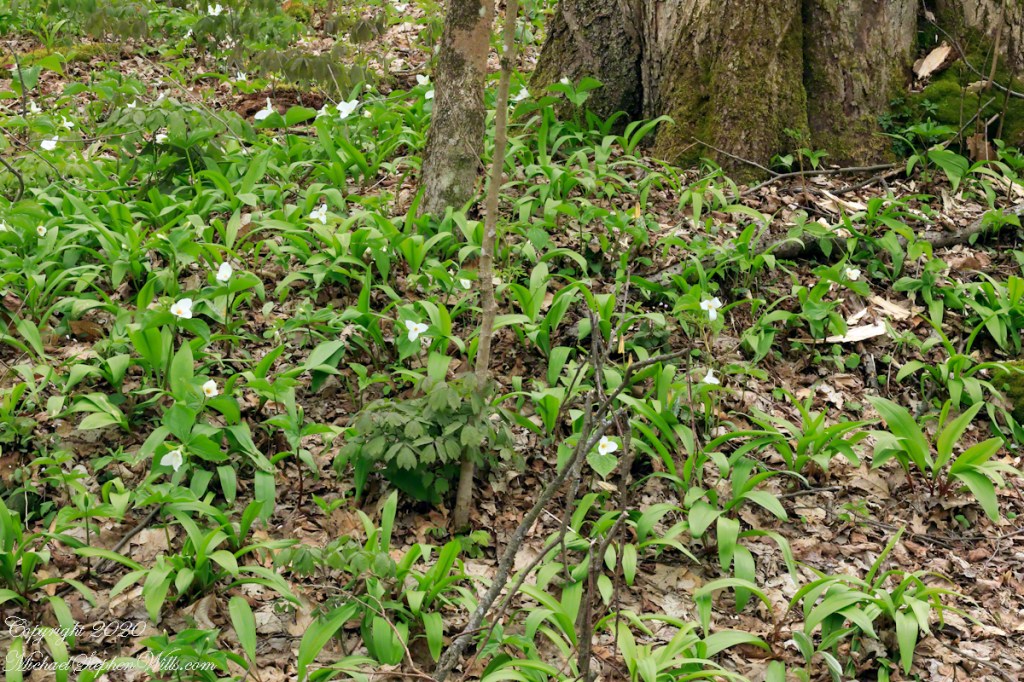
Here is a gallery recapping my afternoon among the wonders of Fillmore Glen, a New York State park, Moravia, New York. I visited there during the New York COVID-19 “PAUSE.” ENJOY!!

Copyright 2020 All Rights Reserved Michael Stephen Wills

Early Spring X

Beginnings

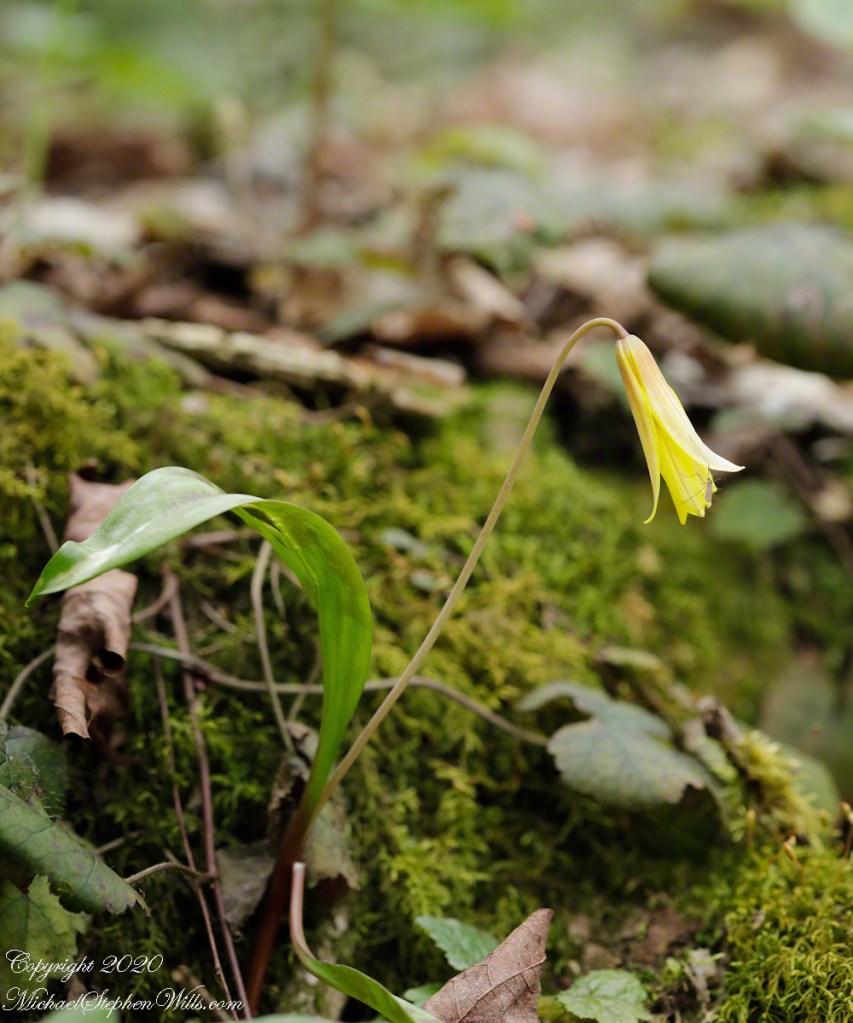
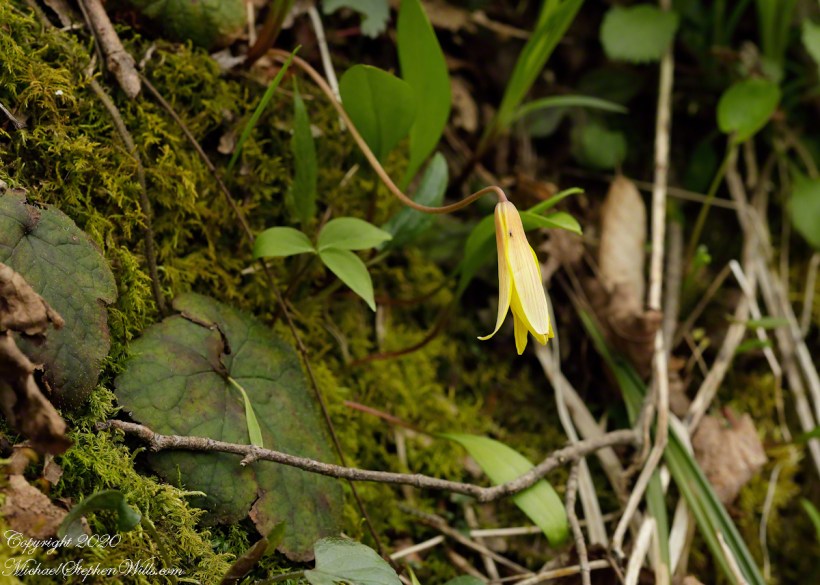
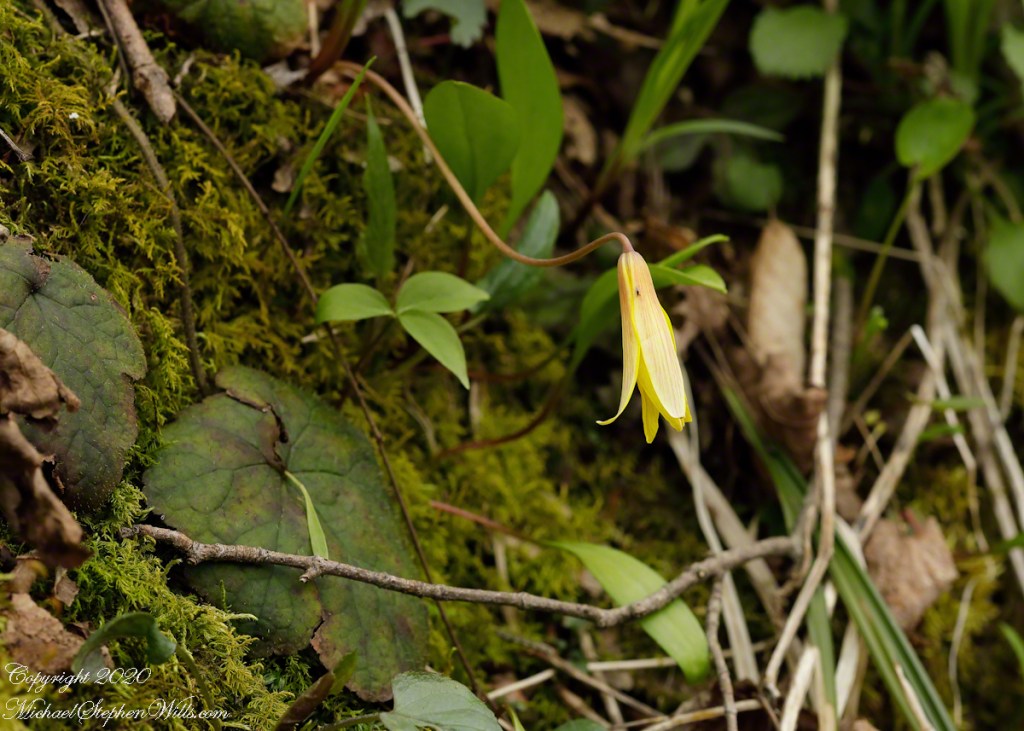
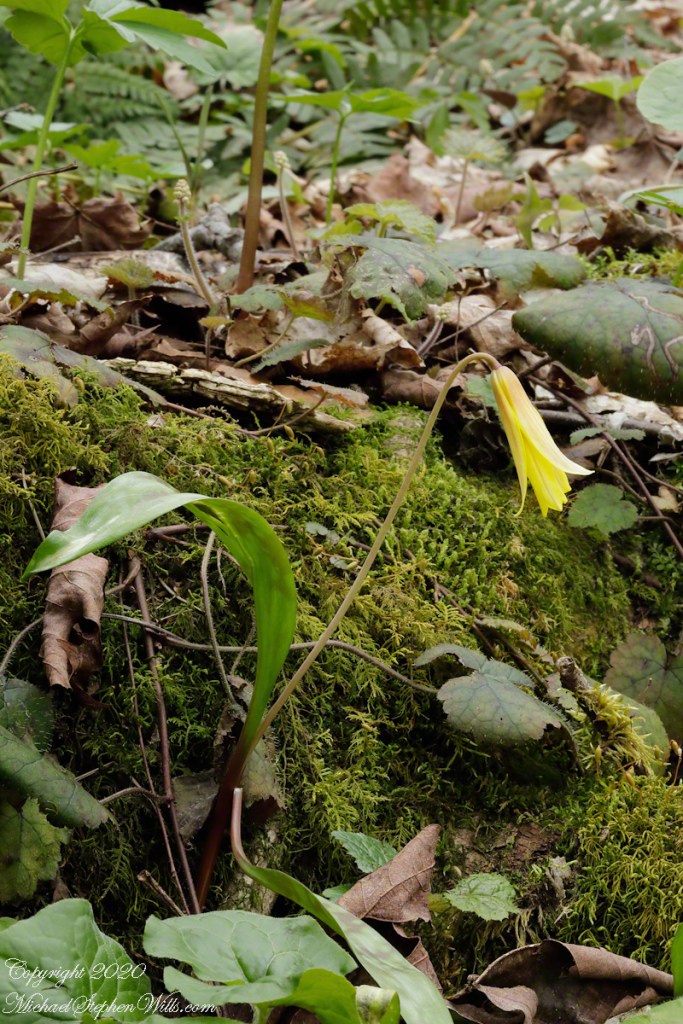
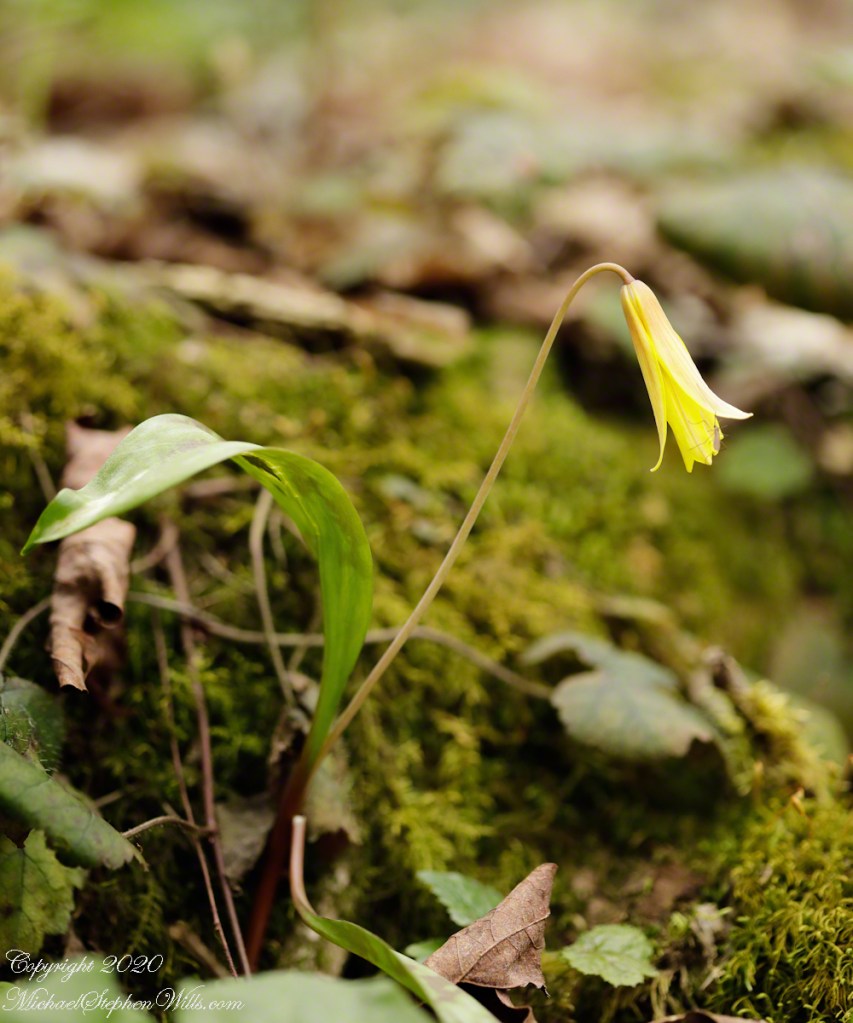
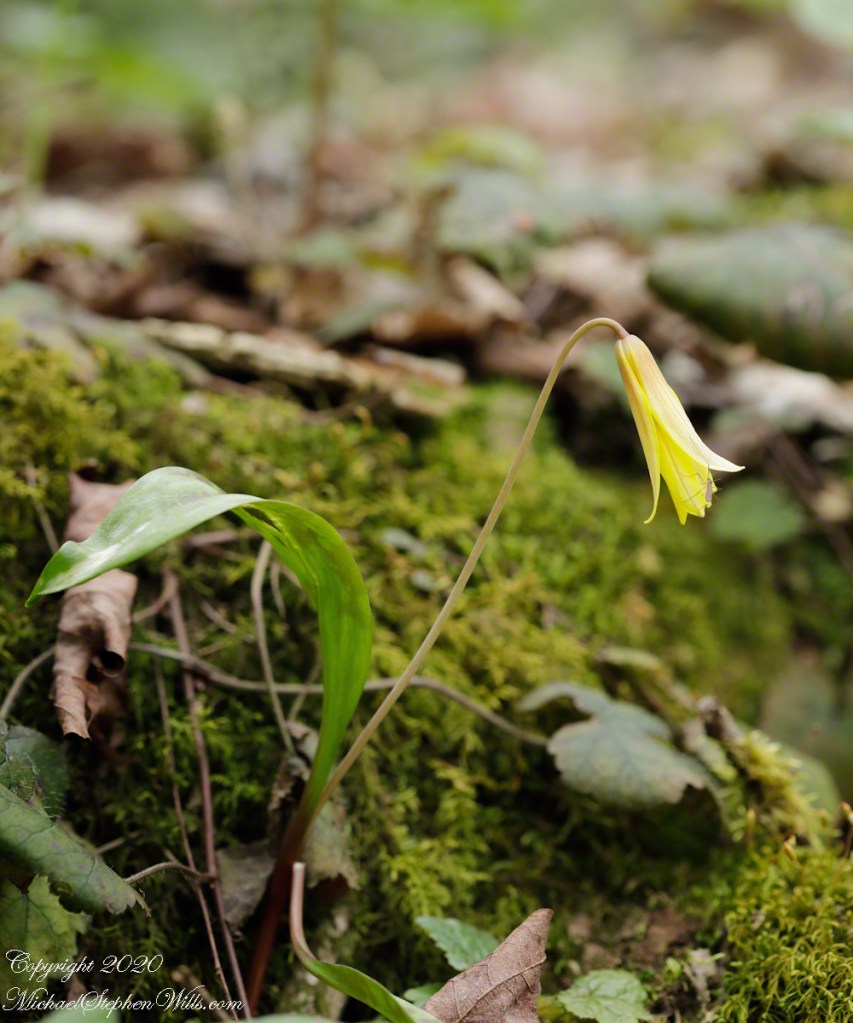
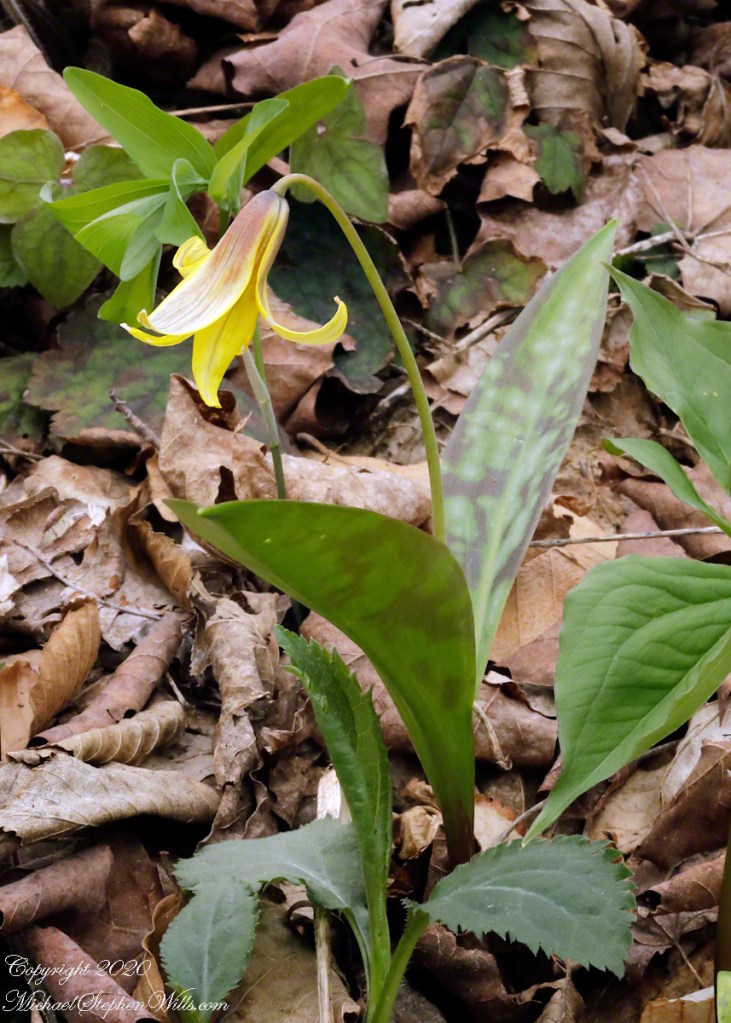
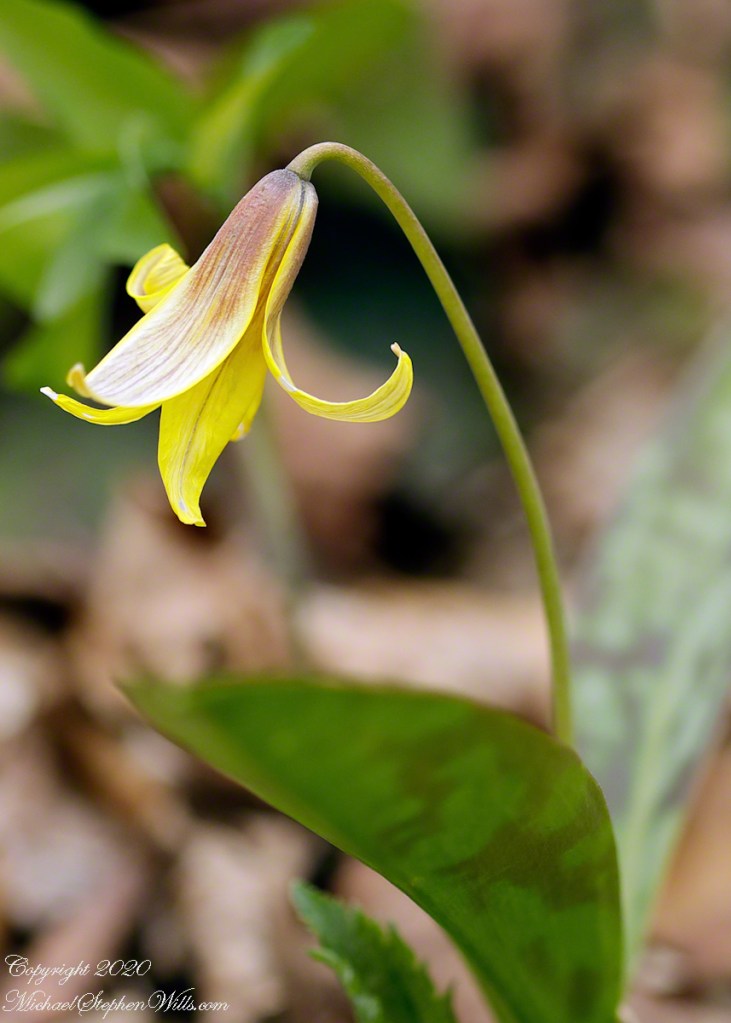
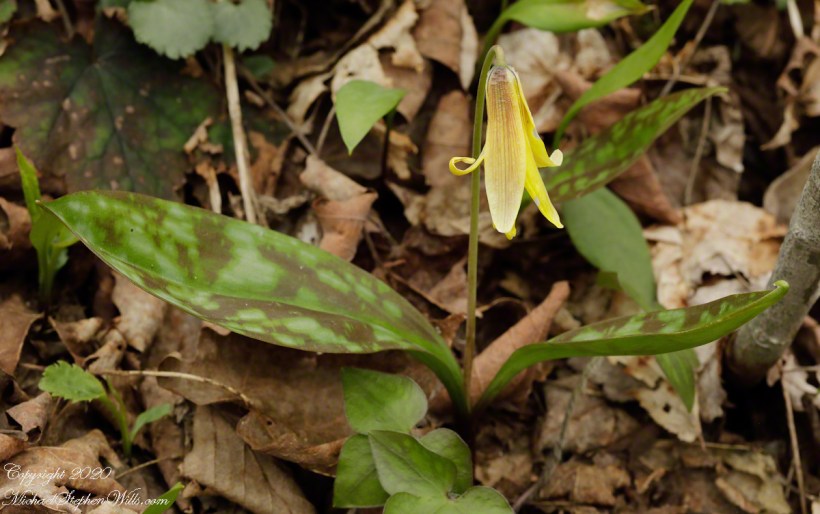
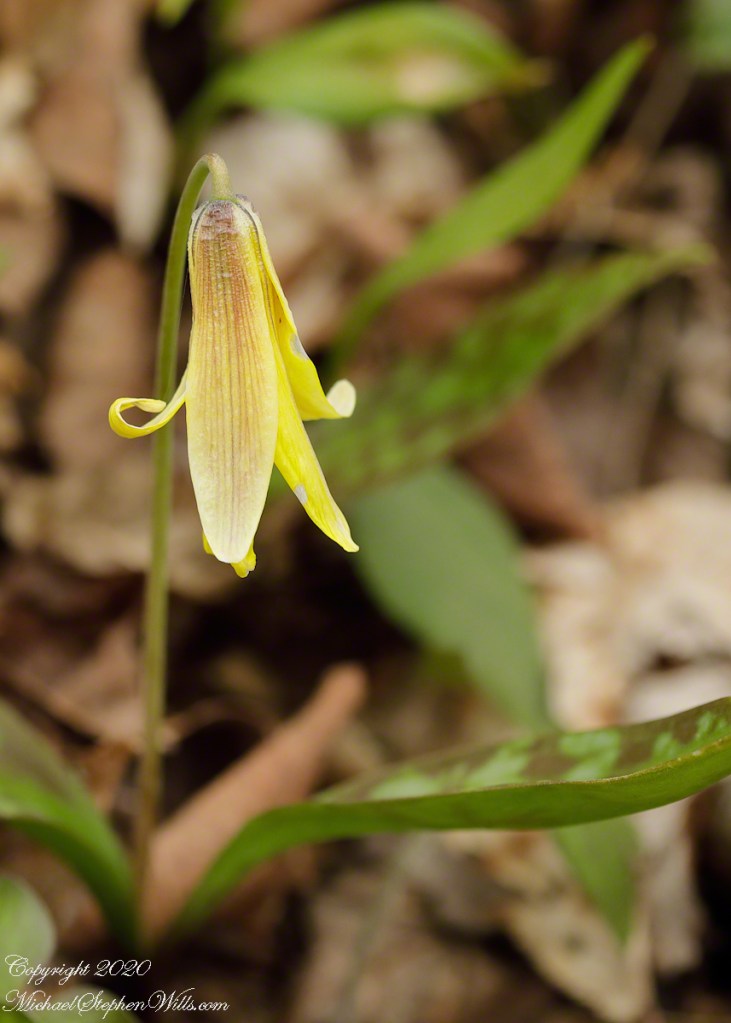
Amazing natural sights were mine while living 25 years on the edge of the Malloryville Preserve near Freeville, Tompkins County, New York. None more so than early one Memorial Day, 2004, walking the bank of Fall Creek opposite home I came upon, totally unexpected, a first time sighting of a Trout Lily.

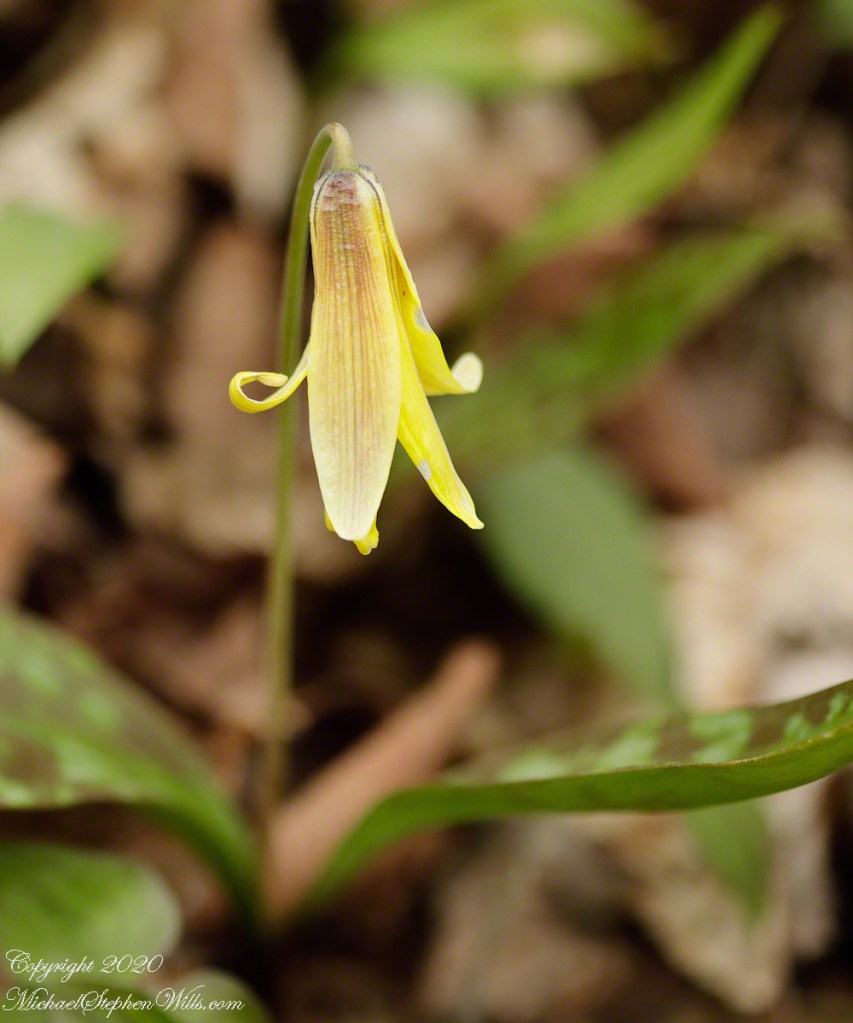
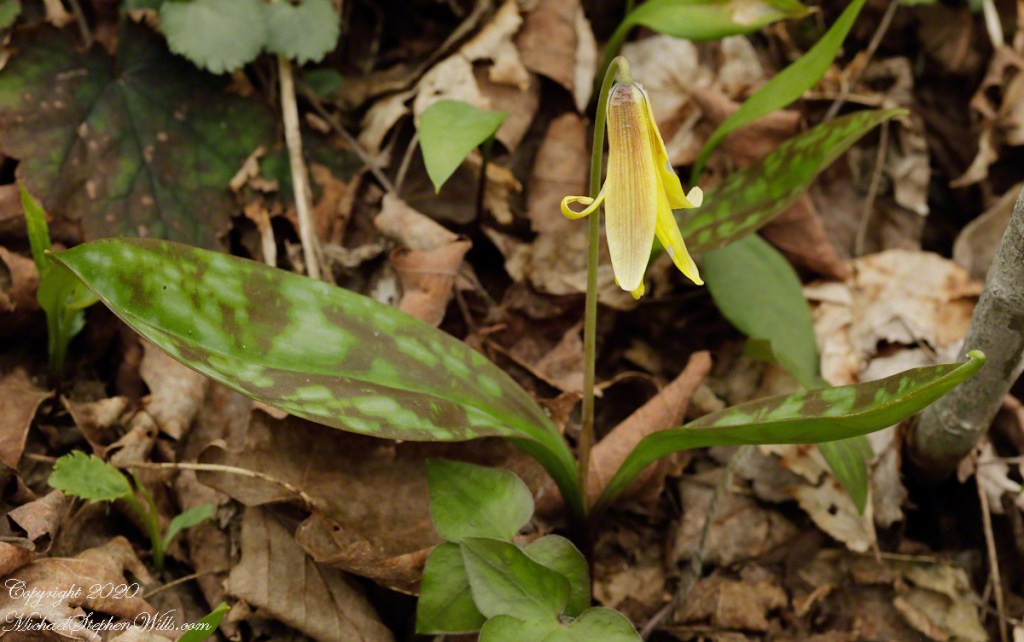
Today’s header image is one of my attempts at capturing the Malloryville Trout Lily’s from April 2006. This year’s visit to Fillmore Glen yielded my first “perfect” photographs of this flower.

Click photograph for larger image. To do this from WordPress Reader, you need to first click the title of this post to open a new page.

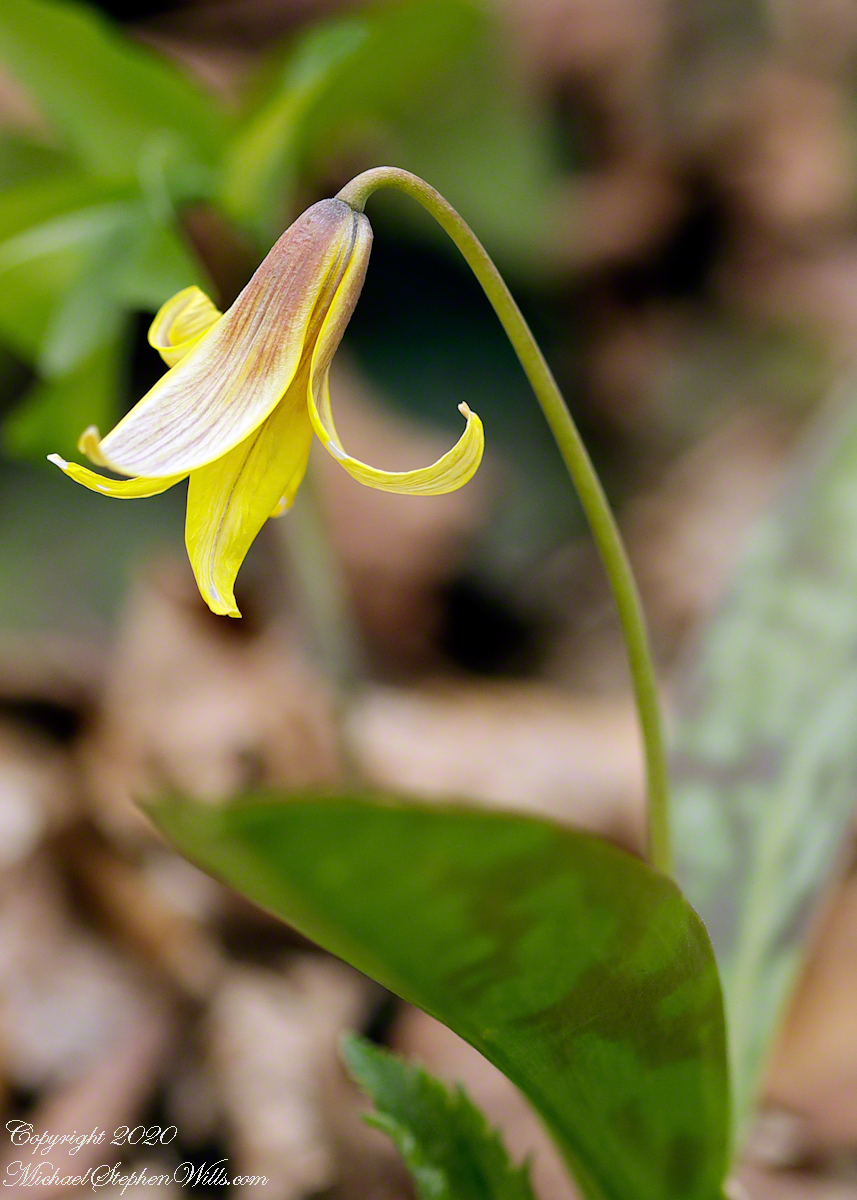
Several popular names for this flower originate from the distinctive leafs markings, “Adder’s Tongue Lily” and “Fawn Lily” among them. The second is from the American naturalist and author, John Burroughs, who observed them from his home among the Catskill Mountains of New York State.

Click for my “Finger Lakes Memories” Fine Art Photography Gallery.

Copyright 2020 All Rights Reserved Michael Stephen Wills

Early Spring IX

Purple Striations Revealed

Three corolla (petal) characteristics of the Trout Lily (Erythronium americanum) are seen in today’s photograph: the pointed ends referred to yesterday, a reflexing (bending back) seen when the season warms up. Purple striations grouping together basally and spreading toward the tip is the third.
A purple flush, tending toward red, is a coloring associated with the genus name. “Erythro-” is from the Greek for the color red.
Click photograph for larger image. To do this from WordPress Reader, you need to first click the title of this post to open a new page.

Click for my “Finger Lakes Memories” Fine Art Photography Gallery.

Copyright 2020 All Rights Reserved Michael Stephen Wills