Exploring Arcosanti: A Model for Sustainable Living

In 2005, I explored Arcosanti’s model, envisioning an eco-architectural future that promotes community and harmony with nature.

The desert air was sharp, dry, and oddly invigorating as I stepped into the gallery at Arcosanti, Arizona. The year was 2005, and I had long dreamed of visiting this experimental micro-city—a fusion of architecture and ecology conceived by Paolo Soleri. Amidst the array of sketches, photographs, and miniature prototypes stood the centerpiece of my curiosity: the sprawling, intricate scale model of “Arcosanti 5000.” It was as though the future had been condensed into a tangible artifact, whispering promises of an alternative way of living.
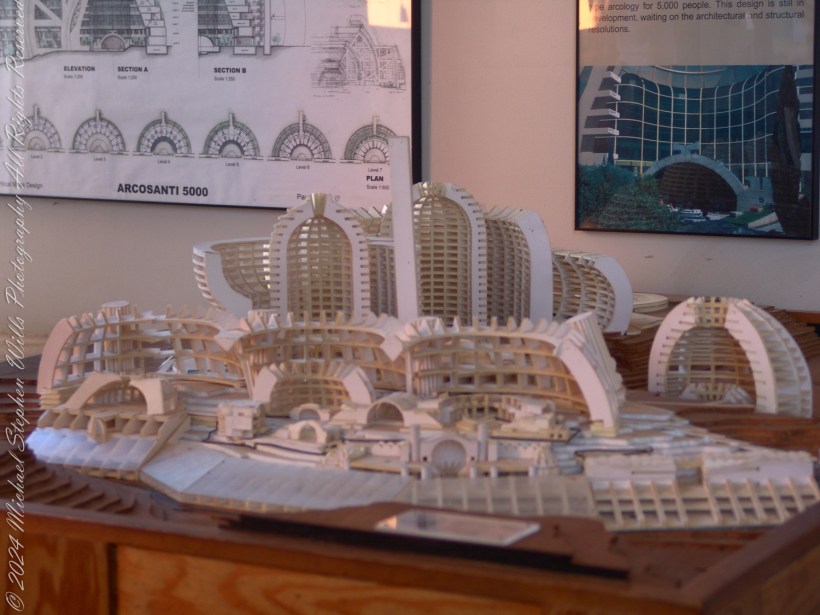
The model was perched on a wooden table, surrounded by blueprints and diagrams. Its sweeping curves and layered structures evoked the natural patterns of a canyon or the unfurling petals of a desert flower. I leaned in, drawn to its labyrinthine details: the arches that seemed to embrace the air itself, the layered grids suggesting terraces and communal spaces, and the towering central spire—a striking focal point that anchored the design. The model was an architectural plan, a vision made tactile, a conversation between the human spirit and the earth it inhabits.
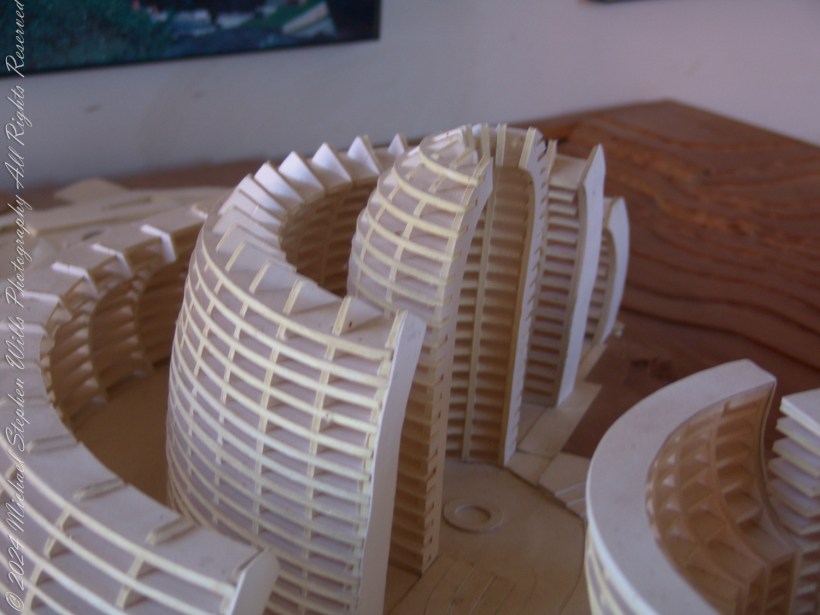
As I circled the table, I tried to imagine life within these walls. Here was the apse architecture that Soleri had championed—a structural form both futuristic and deeply rooted in the land. Its curves seemed to reject the cold rigidity of modern urbanity, embracing instead a harmonious fluidity. What would it feel like to wake up in one of these units, to look out through those sweeping arches and see the desert alive with light and shadow?
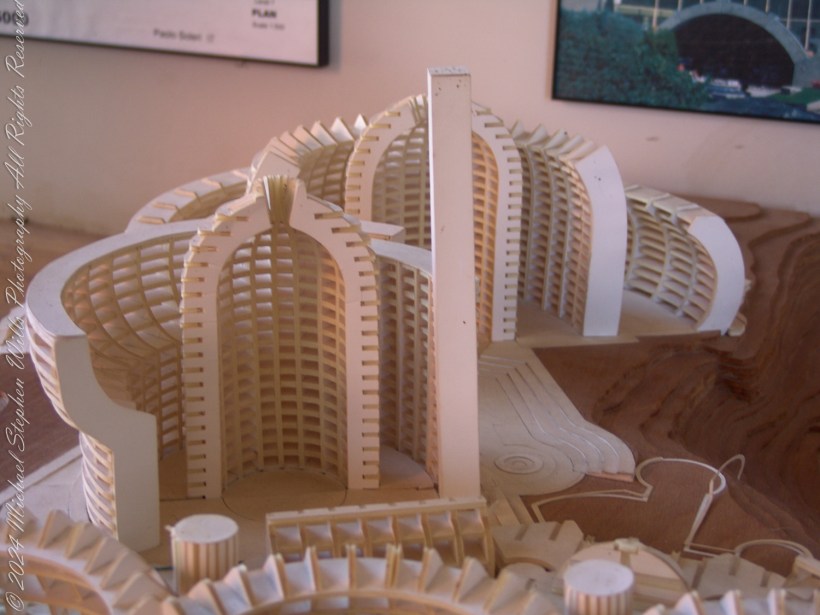
The plaque nearby described this design as part of a “Super Critical Mass” initiative, envisioned for a population of 5,000. The model represented an evolution from earlier prototypes, incorporating what Soleri called “nudging spaces”—areas designed to encourage spontaneous human interaction. I thought of my own neighborhood back home, how it felt fractured and isolated by its grids of asphalt and fenced-off yards. Could this model offer a blueprint for healing that divide?
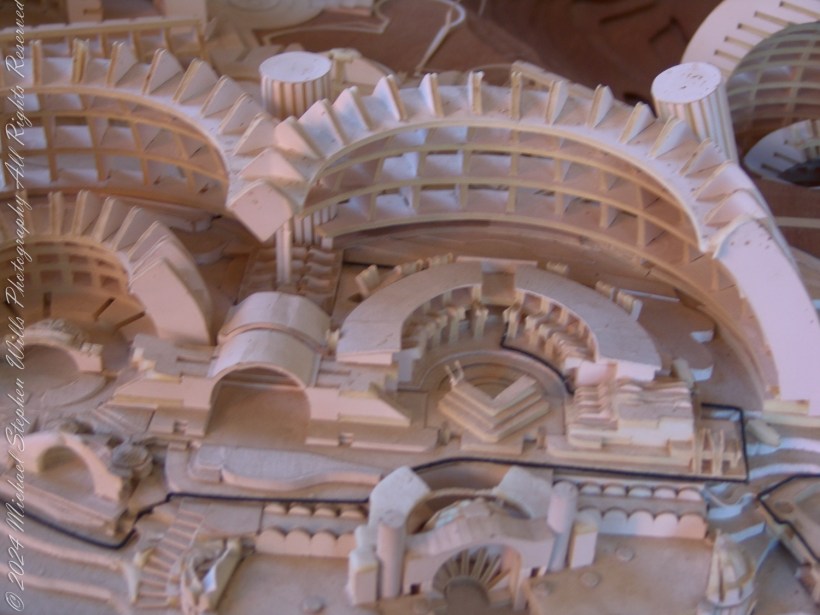
I moved closer, tracing the pathways with my eyes. The tiny staircases, the shaded atriums, the terraced gardens—they spoke of a life integrated with nature, of a city that tread lightly upon its environment. The thought was thrilling, but also sobering. The challenges of realizing such a vision in the sprawling chaos of modern development loomed large in my mind. Could humanity ever truly embrace such radical simplicity?

In that moment, the gallery was silent except for the soft click of my camera. I wanted to capture not just the model, but the feeling it evoked—the delicate balance of hope and humility. The metadata on the image files would later remind me of the precise day and hour I stood there, absorbing this vision of what might be. But no timestamp could fully capture the spark it ignited—a sense that, even in a world burdened by consumption and waste, there remained a path forward, winding like a desert trail through arches of light and shadow.
Enter your email to receive notification of future postings. I will not sell or share your email address.

Exploring Paolo Soleri’s Vision for the Pulse Bridge

The Pulse Bridge model embodies Paolo Soleri’s vision, merging architecture and philosophy to inspire adaptability, connection, and beauty in urban landscapes.

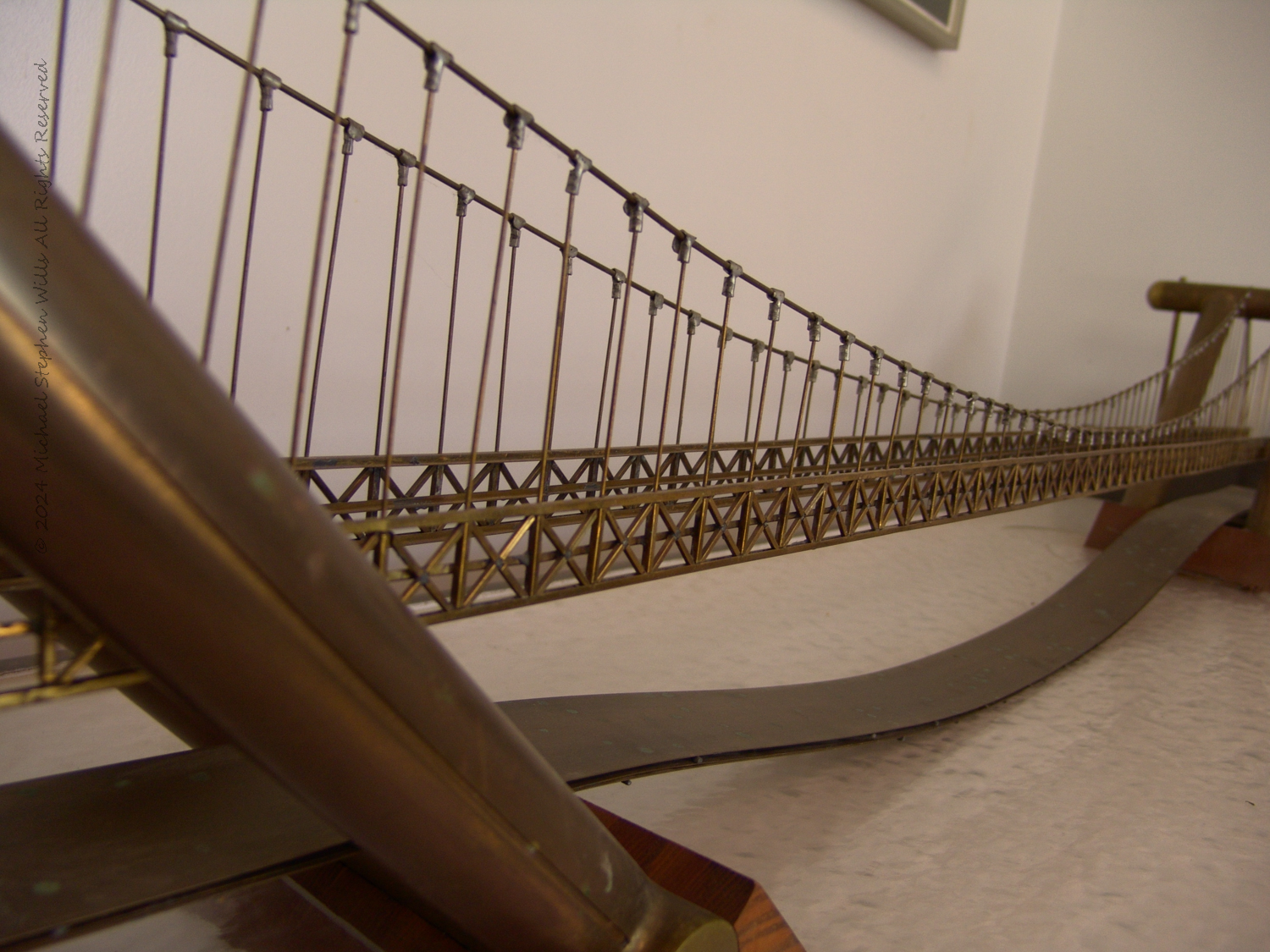
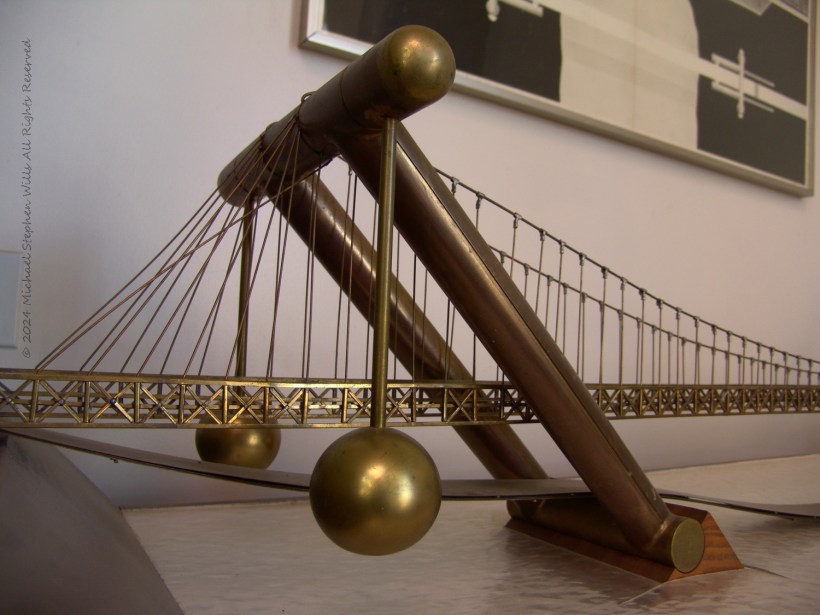
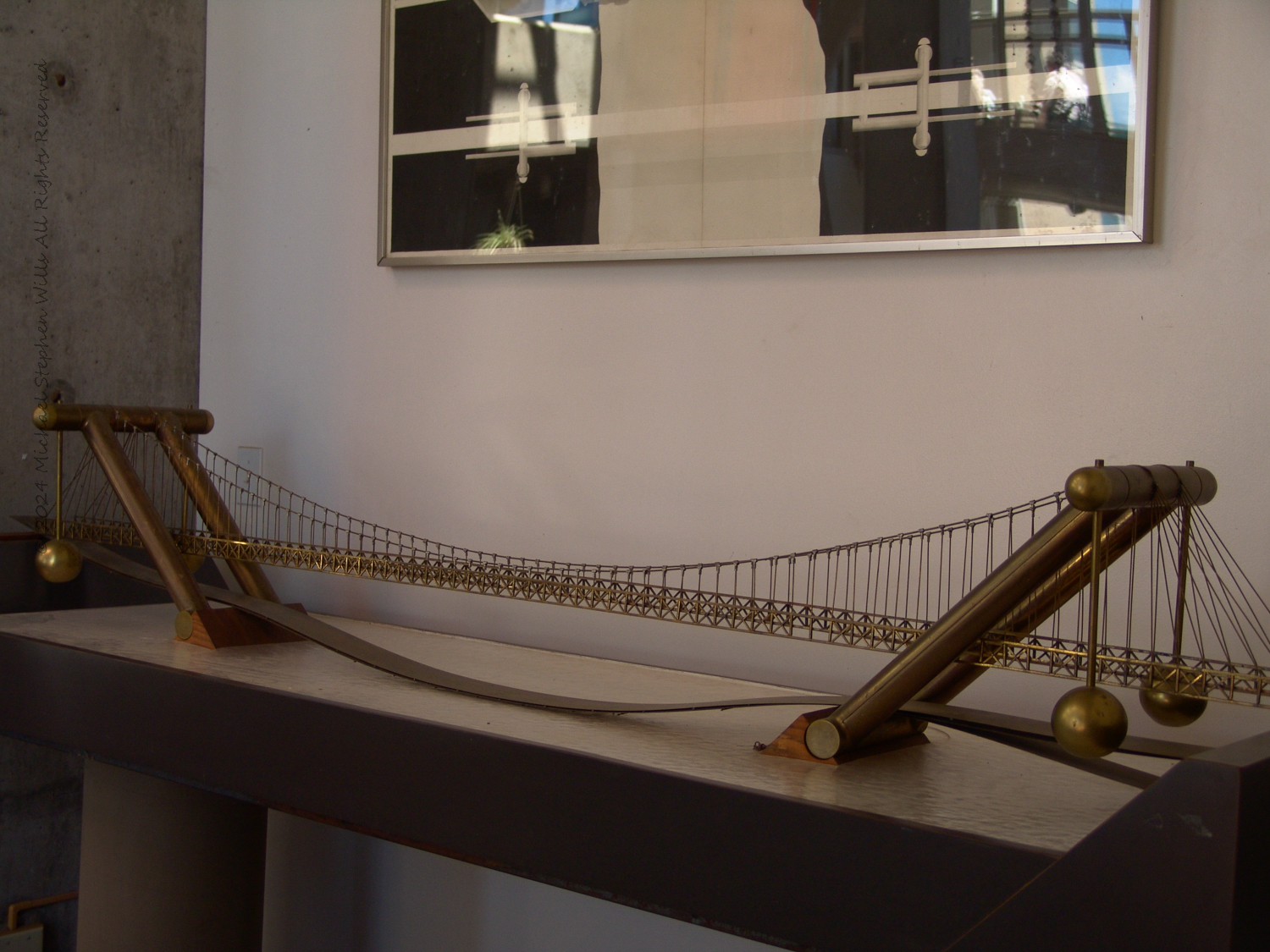
For me room was hushed, as if holding its breath in reverence for the dreams of a man who dared to reimagine not just buildings, but entire landscapes. I stood before the model of the Pulse Bridge, a work envisioned by the inimitable architect and philosopher Paolo Soleri. This was a living, breathing entity in miniature—a whisper of the city’s heartbeat rendered in metal and form.

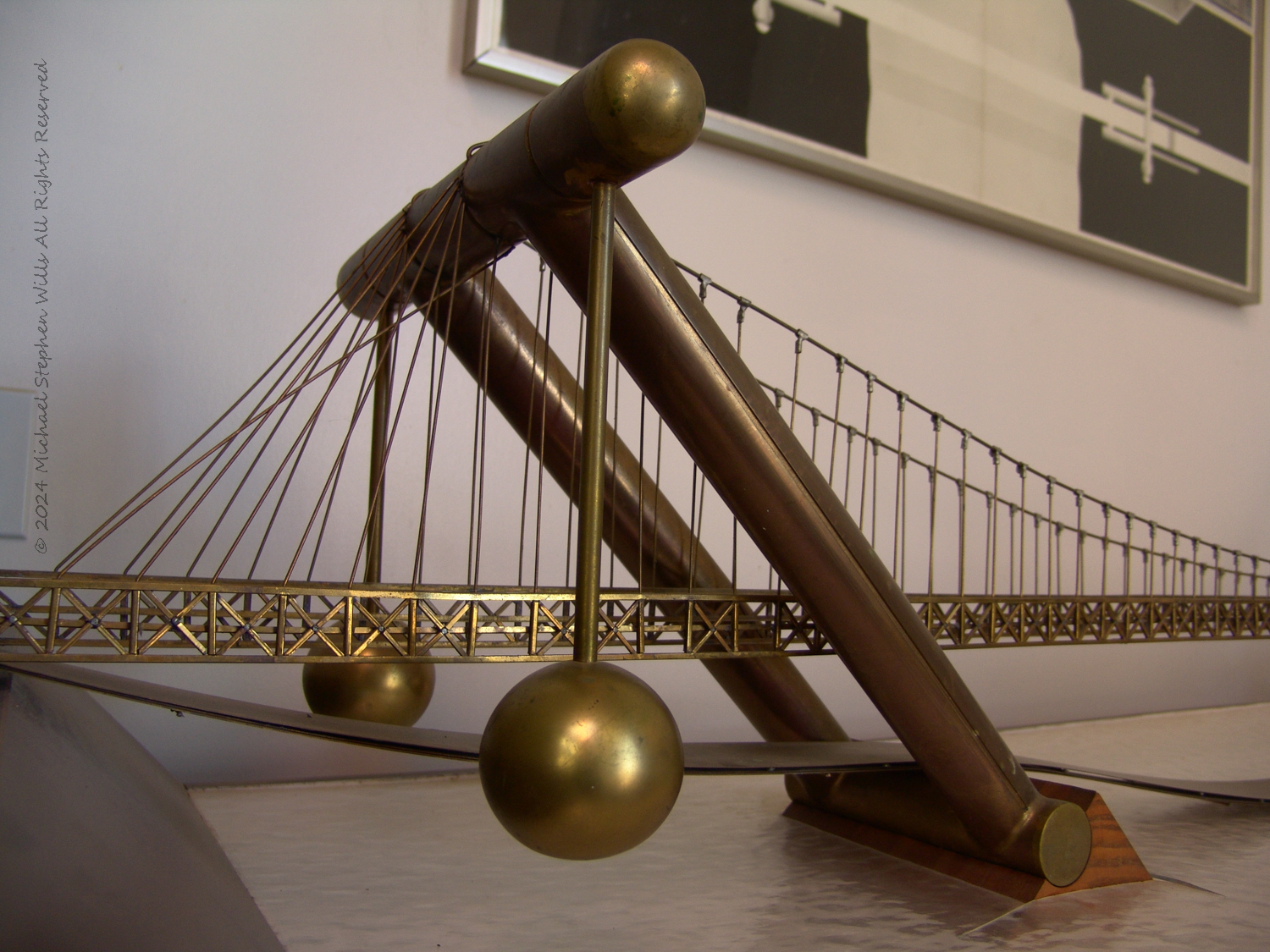
PULSE BRIDGE is conceived for the New York cityscape and designed so as to alter its own stress configuration according to the traffic loads it carries and the temperature and wind variations. It does not so much react to such stresses as it dynamically adapts to them. This is achieved by suspending the whole structure on two sets of hinges and altering the weight distribution by way of four ballast spheres, constantly changing in weight because of the water volume they contain and is pouring in or spilling out of each. Temperature differential and wind loads will suggest asymmetrical ballast content.

The bridge stretched across the table, a golden ribbon suspended in perpetual motion. Its delicate cables, taut and slender, mirrored the veins of a great urban organism. I leaned closer, catching the glint of light on the brass framework, which seemed to hum with possibility. The slanted pylons, bold and angled at 45 degrees, rose like colossal compass points charting a path into a future yet unbuilt. Their elegant incline gave the structure a sense of poise and power, as though it were both rooted in the earth and ready to leap skyward.

At either end of the model, spherical ballast weights gleamed like captive suns, their surfaces smooth and luminous. These orbs symbolized adaptability, a dynamic response to the unpredictable forces of wind, weight, and weather. Soleri’s genius was palpable in these spheres—each a small, controlled impulse that could tip, pour, or hold water to balance the bridge’s pulse, much like the human heart adjusts its rhythm to life’s demands.

As I circled the model, I noticed how the bridge’s levels—three distinct layers—seemed to invite a diversity of life. The uppermost level promised a vista for pedestrians and the rhythmic flow of cars. Beneath, a middle layer hinted at a mix of vehicles and trucks, and the lowest level seemed destined for the silent hum of trains, utilities, and unseen infrastructure. It was a symphony of movement, each level contributing its own notes to the city’s harmony.

And yet, the most captivating feature was not the mechanics or the engineering marvels, but the philosophy embedded within. Soleri’s vision was not just to build a bridge, but to craft an experience—a structure that could breathe, flex, and adapt to the ever-changing pulse of New York. He imagined the pylons as cultural hubs, housing optical museums, exhibitions on bridge history, and even gift shops. The bridge was as much about connecting people as it was about connecting places.

Standing there, I felt the weight of Soleri’s ambition. The Pulse Bridge was a manifesto, a declaration that utilitarian structures could inspire wonder and nurture life. I imagined walking across its span, the city stretching out on either side, the bridge subtly shifting beneath my feet as it responded to the flow of traffic and the gusts of wind. It would be a conversation between structure and environment, a dialogue that reminded me of the living world we so often take for granted.

The longer I stood before the model, the more I realized it was not just a reflection of Soleri’s imagination but a challenge to our own. Could we build a future where beauty and function danced together, where even a bridge could sing of resilience and grace? The Pulse Bridge dared us to try.

In that quiet room, with sunlight streaming through the windows and casting delicate shadows across the model, I felt the profound allure of what could be. Soleri’s bridge was an idea—a luminous thread connecting visionaries across time, urging us all to dream bigger, build better, and embrace the pulse of life in all its complexity.

Enter your email to receive notification of future postings. I will not sell or share your email address.

Exploring Arcosanti: Paolo Soleri’s Vision in the Arizona Desert

Arcosanti embodies Paolo Soleri’s vision of sustainable living, merging architecture and ecology in harmony with the Arizona desert landscape.

Under a strong early spring desert sun I turned from Arcosanti Road, a ribbon of asphalt threading through the arid Arizona landscape. Ahead, the architectural vision of Paolo Soleri emerged like an oasis of ideas etched into the barren desert. My mind drifted back to the 1970s, to the University of Arizona lecture hall where Soleri, full of vigor, had introduced us to his concept of “Arcology.” That hour left an indelible mark—a vision of dense human habitation harmonizing with the environment, reducing our ecological footprint toward a sustainable whole.

Arcosanti detail
Arcosanti detail

That memory had stayed with me, a beacon of idealism. Over the years, Soleri’s Arcosanti had grown, not with the speed of cities, but with the deliberate rhythm of an organic organism. Today, after decades of curiosity and connection, I found myself at its gates.

Click any photograph to visit my “Arizona” online gallery.
Arcosanti detail
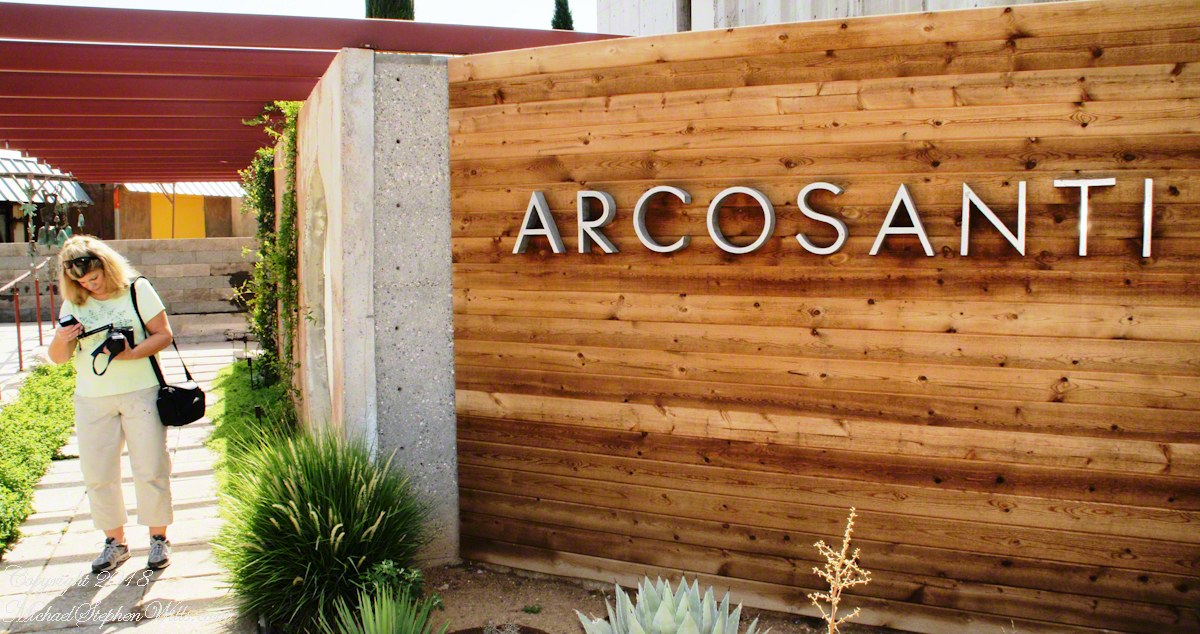
Pam checking her equipment before a Summer 2008 visit

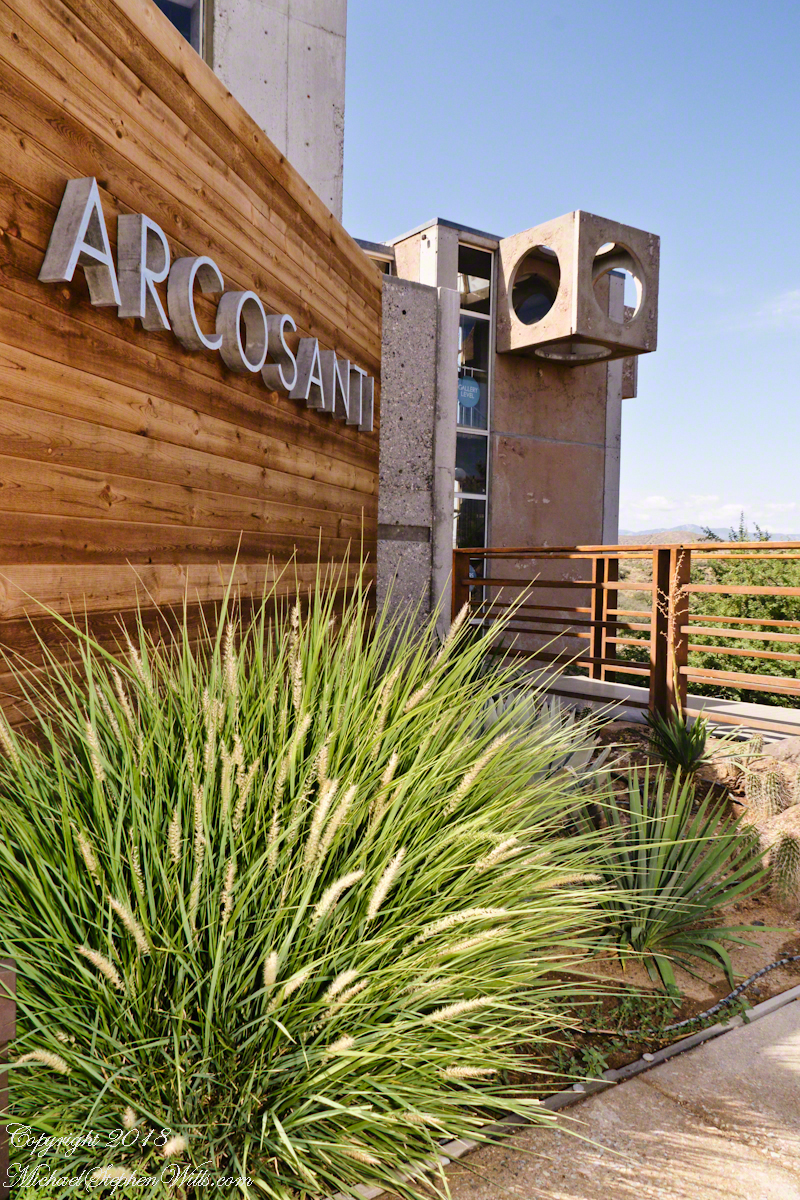
The first steps into Arcosanti struck me with a sense of balance. A sign, simple yet bold, announced the name: ARCOSANTI. It was embedded into a wooden facade, juxtaposed with the rugged modernity of concrete forms. Below, soft plumes of desert grass swayed, echoing the harmony Soleri envisioned—a human footprint gently integrated into the natural world. The sunlit entrance spoke of the potential for design to soothe rather than overpower.

Entrance and a Tower of the Crafts III building

Pam – CLICK ME for more Arizona Photography.

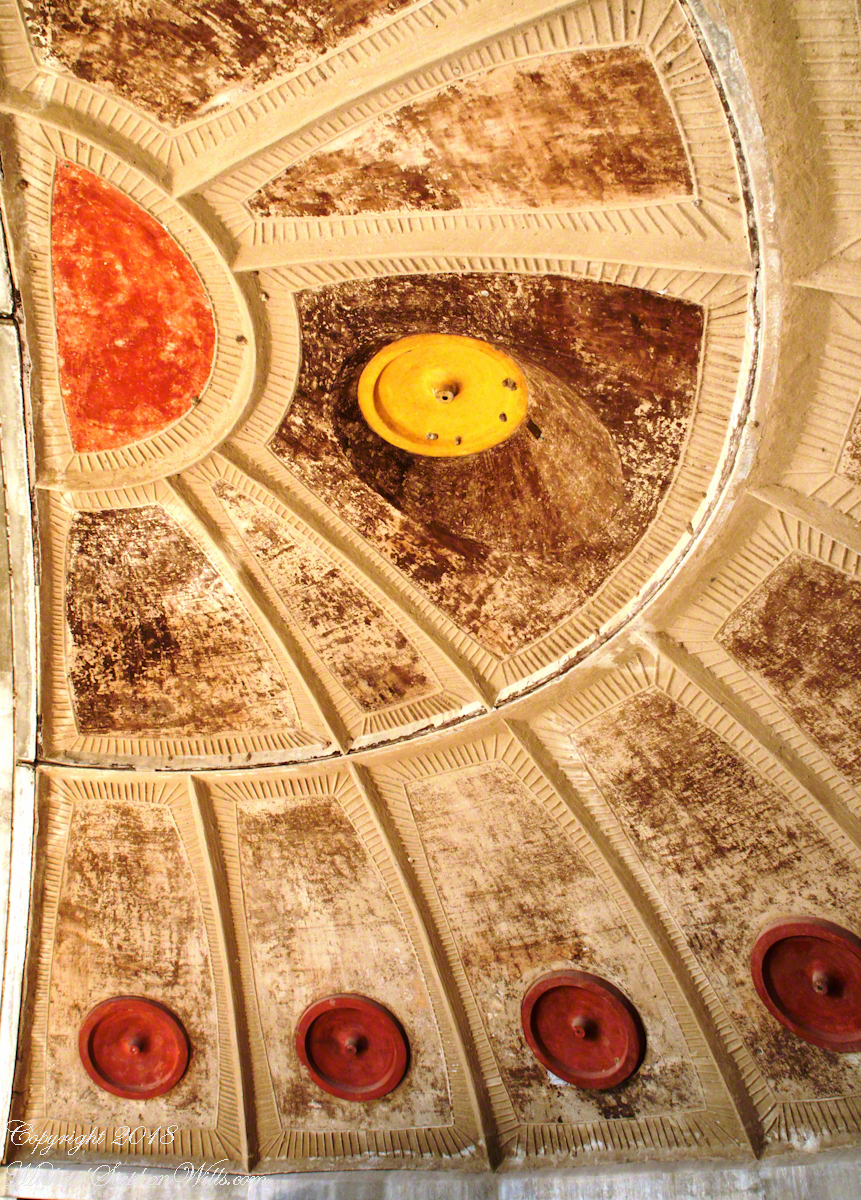
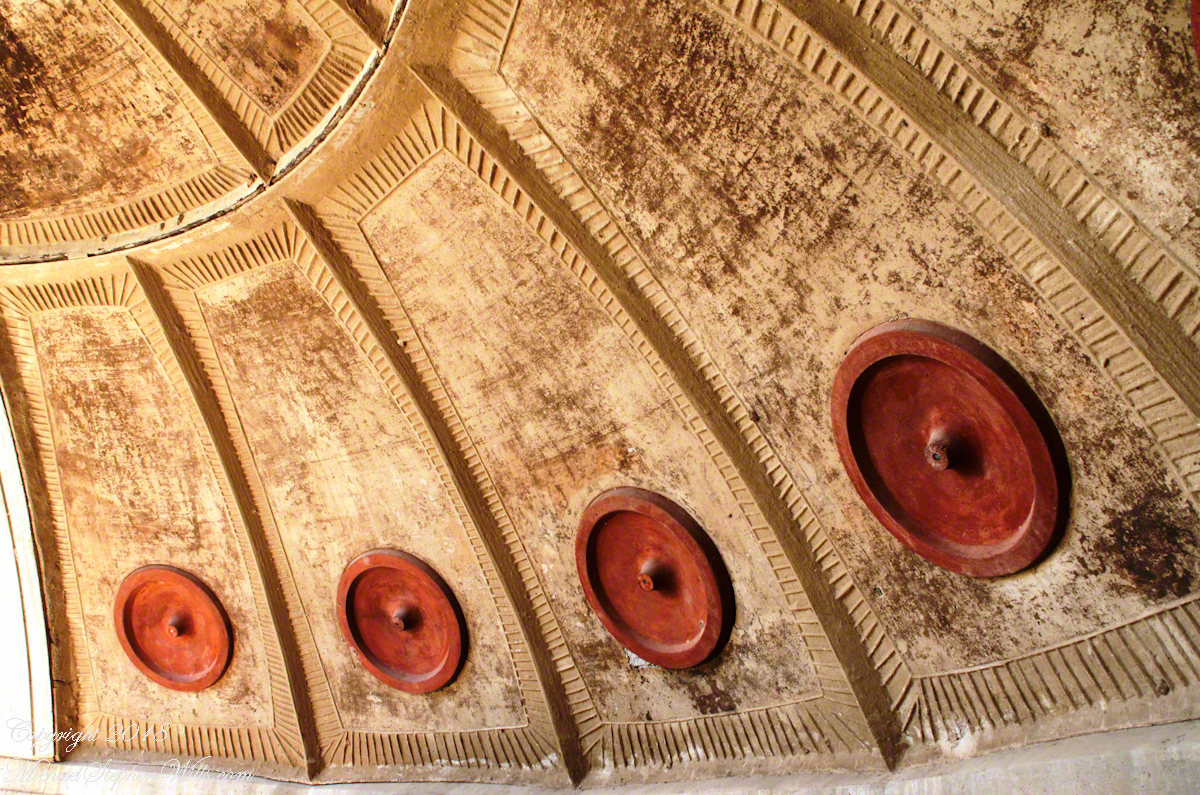
Inside, the bold lines and unique details captivated me. In one space, I craned my neck to admire a ceiling adorned with terracotta-colored circular forms, each embedded in angular panels radiating like the sun’s rays. These circular elements acted as focal points, their symmetry grounding the expansive, textured design. The play of light and shadow across the surface was mesmerizing, a reminder of Soleri’s mastery in turning the utilitarian into the poetic.

Ceramics Apse Sand Cast Panels I

Ceramics – CLICK ME for more Arizona Photography.

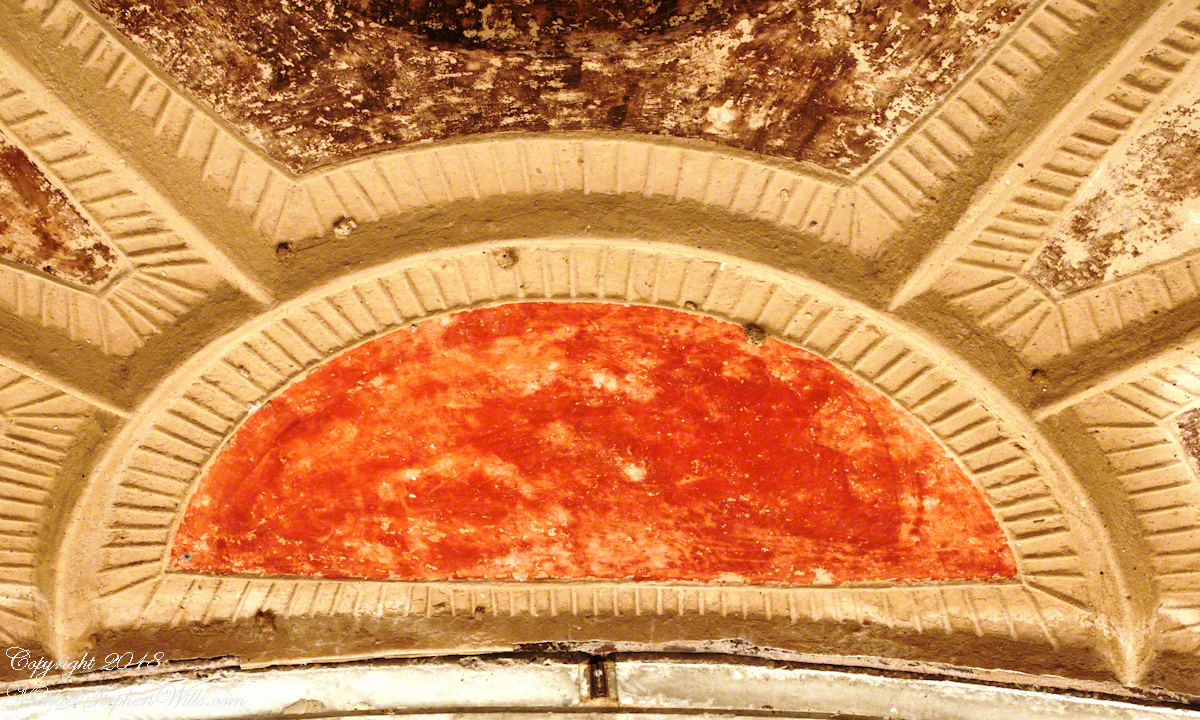
Each space in Arcosanti seemed crafted to evoke reflection. A splash of ochre-red pigment adorned another portion of the ceiling, forming a half-circle bordered by precise ridges. It was more than architectural detail—it was an abstract sun, warm and full of energy, radiating from its place above. The deliberate asymmetry, the interplay of form and texture, seemed to breathe with the desert itself.

Ceramics Apse Sand Cast Panels II

Ceramics – CLICK ME for more Arizona Photography.

Ceramics Apse Sand Cast Panels III

Ceramics – CLICK ME for more Arizona Photography.

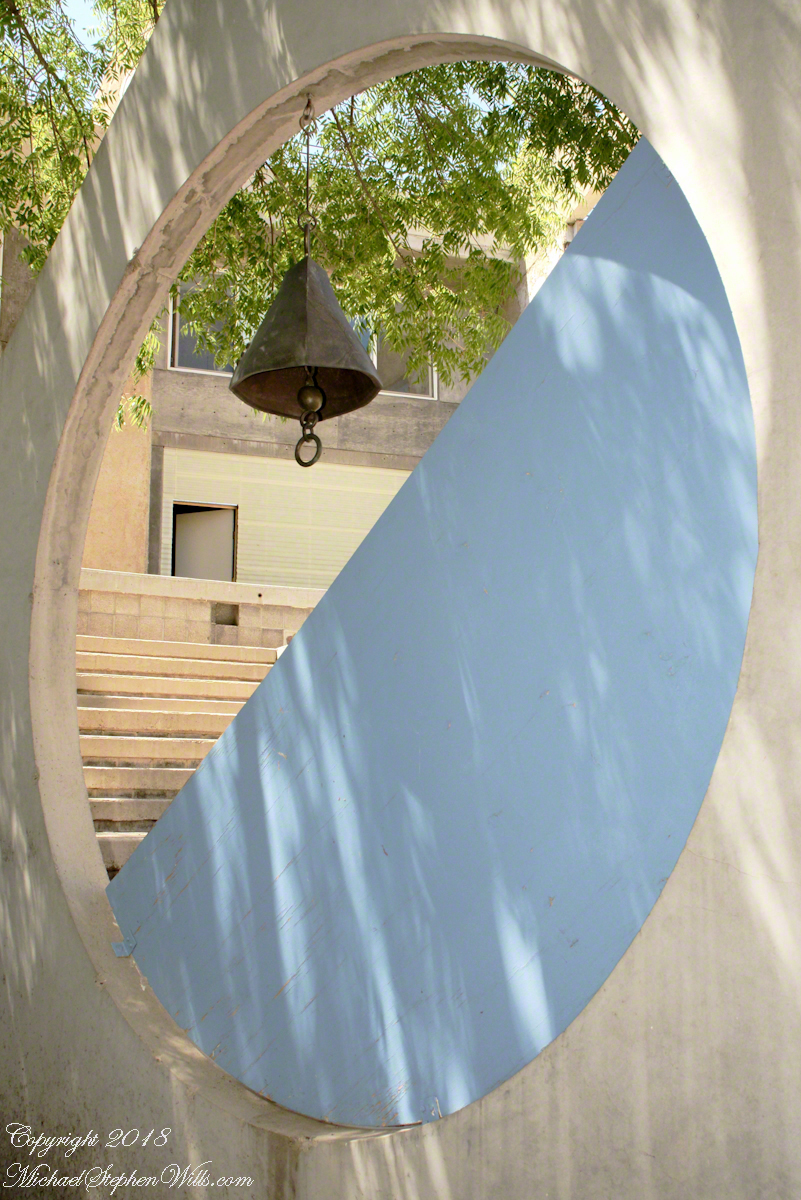
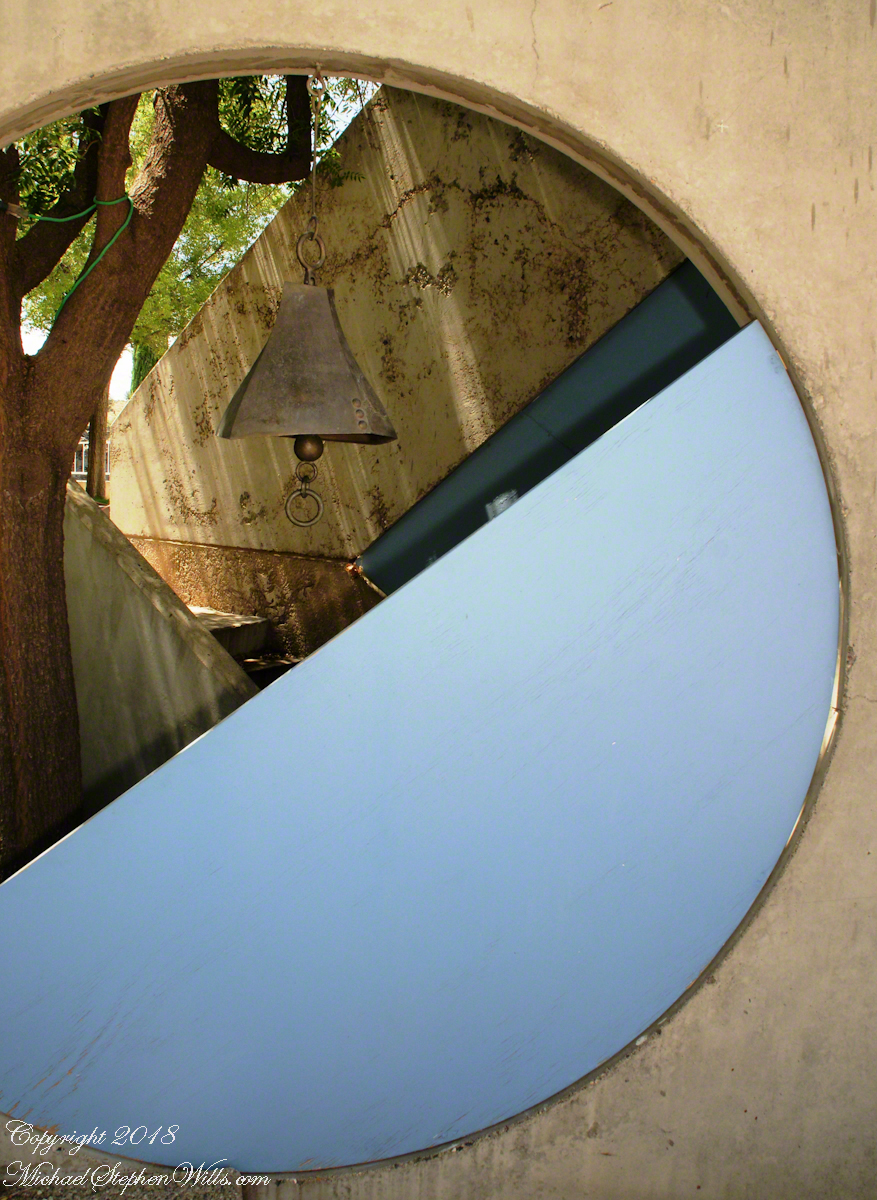
Walking further, I encountered an outdoor arch framing a bell, its heavy bronze form suspended against a panel of sky-blue. The simplicity was striking: a geometric dialogue between the natural and the constructed, a kind of meditative pause within the bustle of ideas. I lingered, allowing my thoughts to settle as the bell swayed gently in the wind.

Bell and Panel from the Colly Soleri Amphitheater

Bell Casting was and continues to be a major source of income.

Ceramics – CLICK ME for more Arizona Photography.

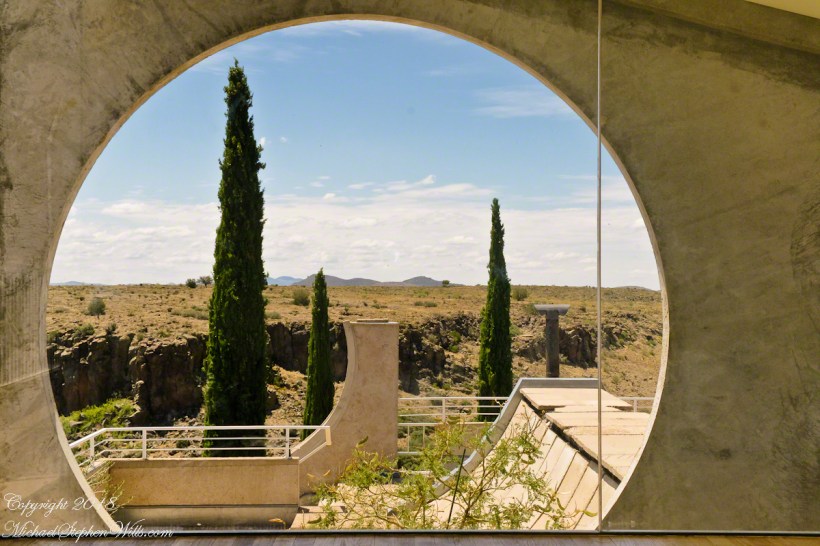
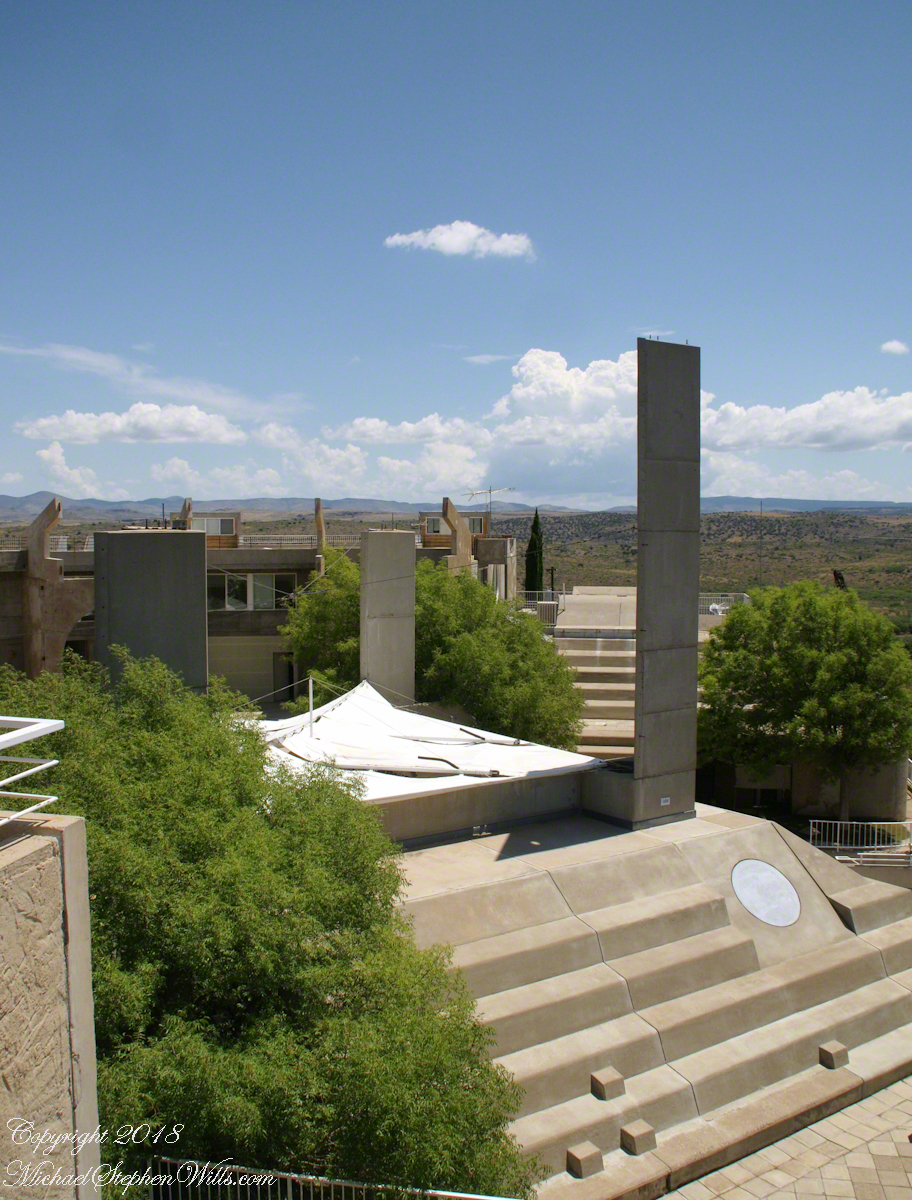
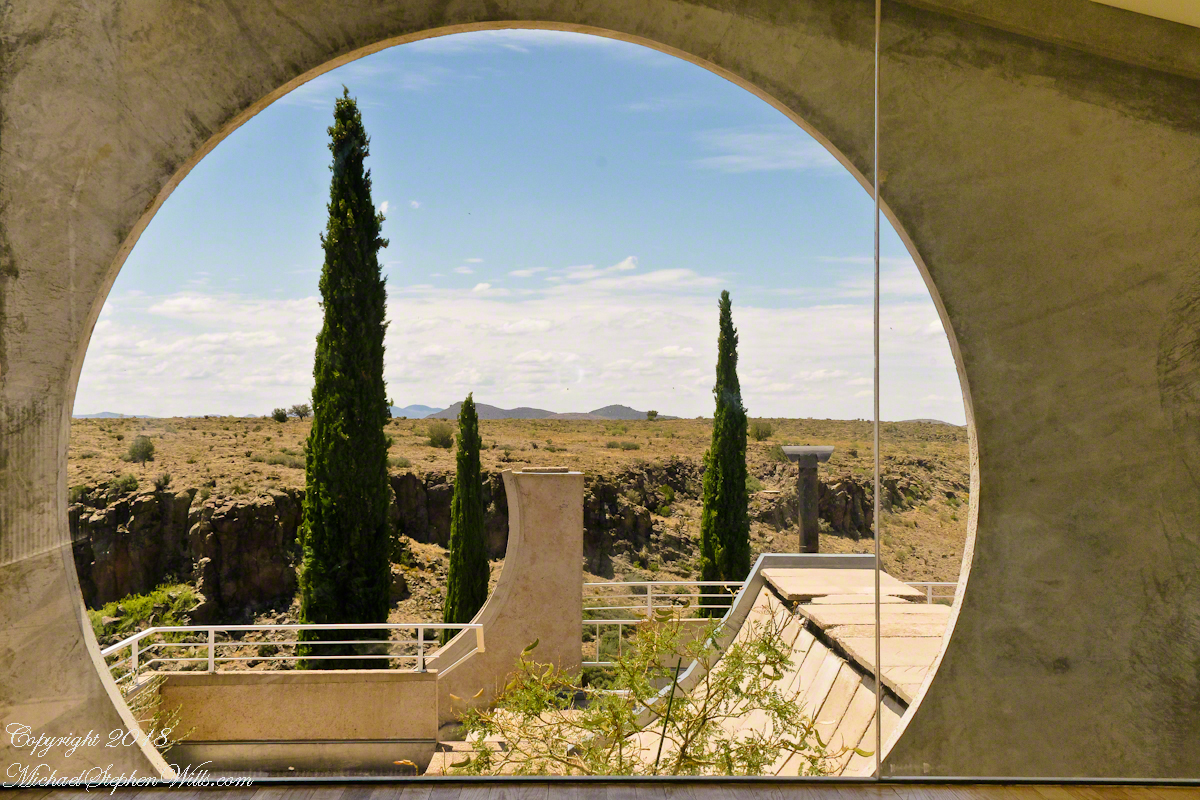
Each turn at Arcosanti revealed yet another viewpoint, another carefully composed alignment of architecture and nature. The sweeping views of the Arizona desert, framed by bold circular cutouts, were a reminder of our smallness in the grand scheme of things. The cypress trees standing tall against the rugged cliffs offered a contrast of textures—natural and man-made—that felt uniquely Solerian. His vision was alive in every corner: the terraces, the staircases, the unassuming balance between the earth’s rawness and humanity’s imagination.

View from the East Housing complex to the East Across Arcosanti

View Across Arcosanti – CLICK ME for more Arizona Photography.

As I stood gazing through one of the monumental circular frames at the horizon, I reflected on how Soleri’s ideas, abstract in the present, are also tangible, concrete, and inspiring—literally and figuratively. Despite his passing, the project he began decades ago continues to evolve, a living experiment in how we might reimagine our relationship with the planet.

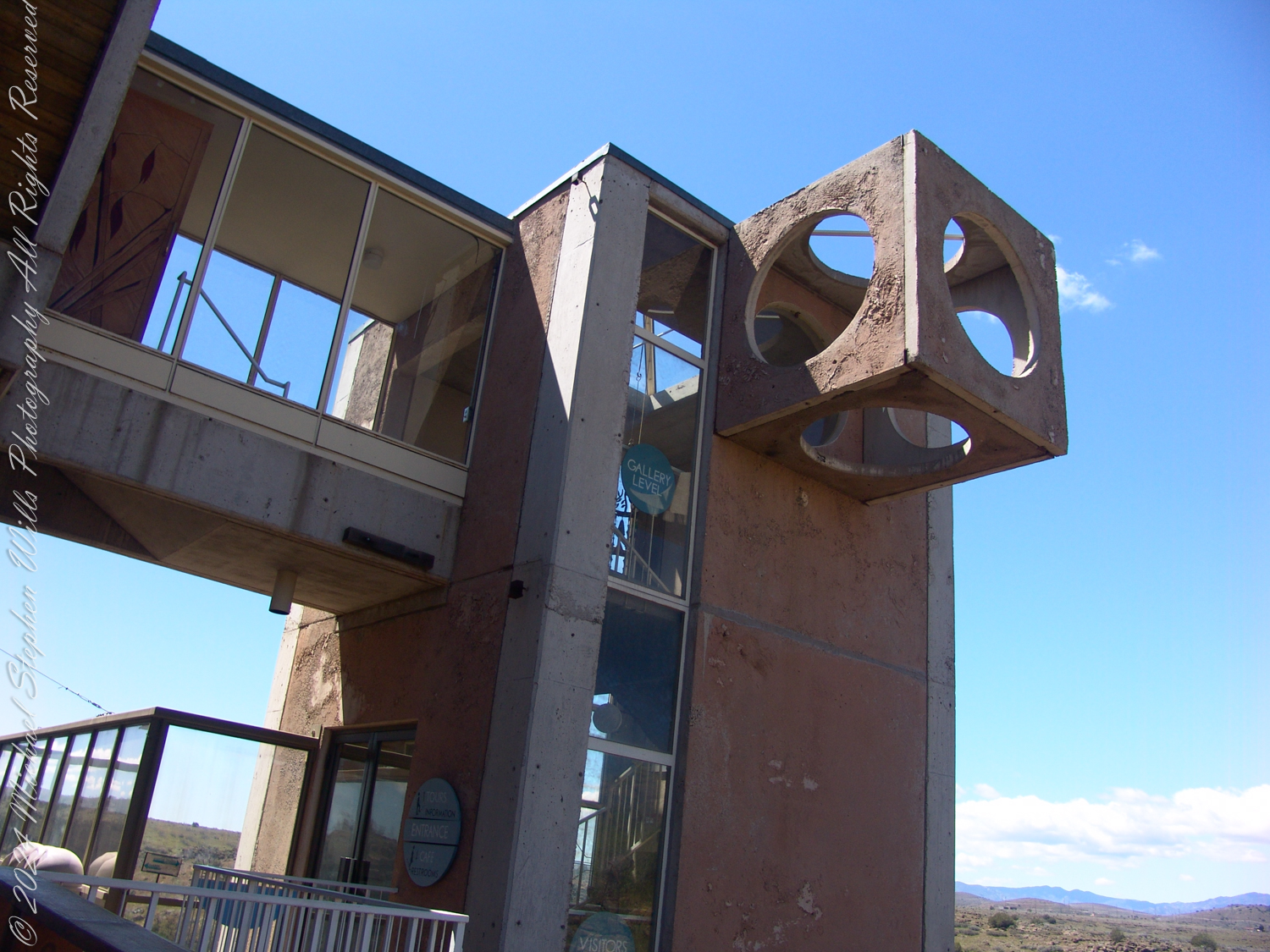
View to the South with Cypress Trees from a Portal of the Crafts III Building

Portal View – CLICK ME for more Arizona Photography.

The journey to Arcosanti is a physical one and a rediscovery of ideals. Soleri’s Arcology—a fusion of architecture and ecology—reminded me of our potential to create something not only functional but also deeply meaningful. Here, amidst the Arizona desert, was proof of a life’s work that still speaks to humanity’s potential for coexistence and creativity.

As I prepared to leave, the weight of Soleri’s vision stayed with me, much like that lecture hall memory from all those years ago. The sun was setting, casting long shadows across the concrete forms. Arcosanti stood resolute, a tribute to one man’s dream and a reminder to all of us: change is not instantaneous, but with patience, vision, and humanity, it is possible.

Enter your email to receive notification of future postings. I will not sell or share your email address.

Exploring the Vision of Arcosanti

In the Arizona desert, structures harmonize with nature, embodying creativity and purpose while inviting reflection on balance and coexistence.

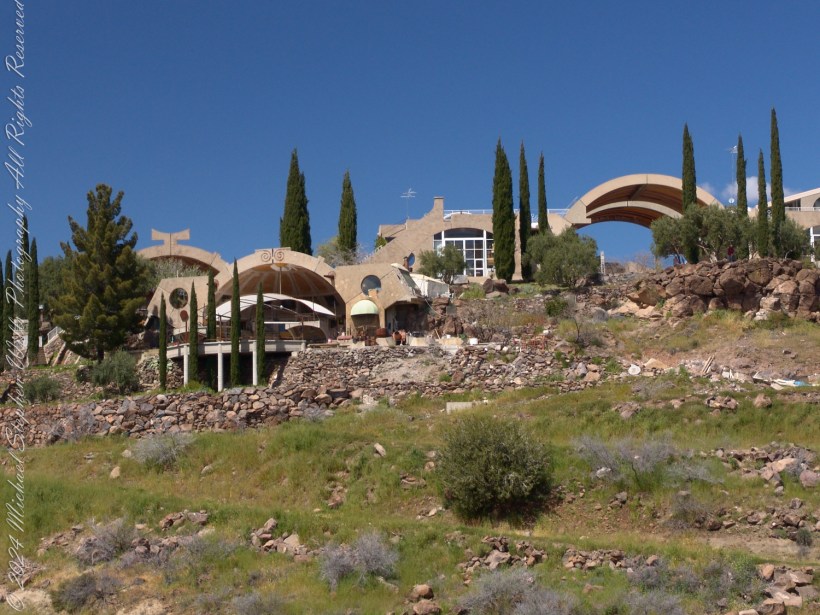
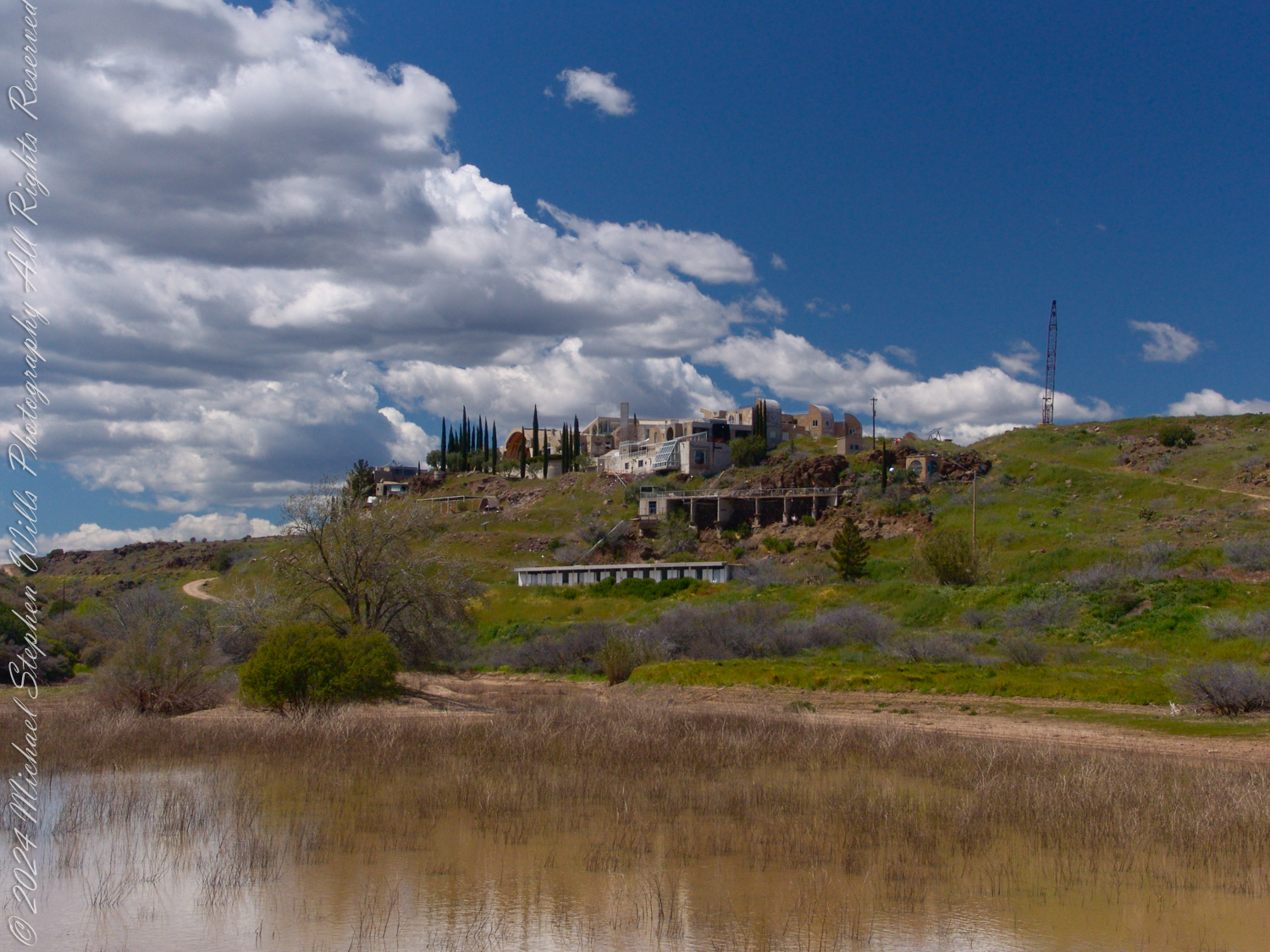
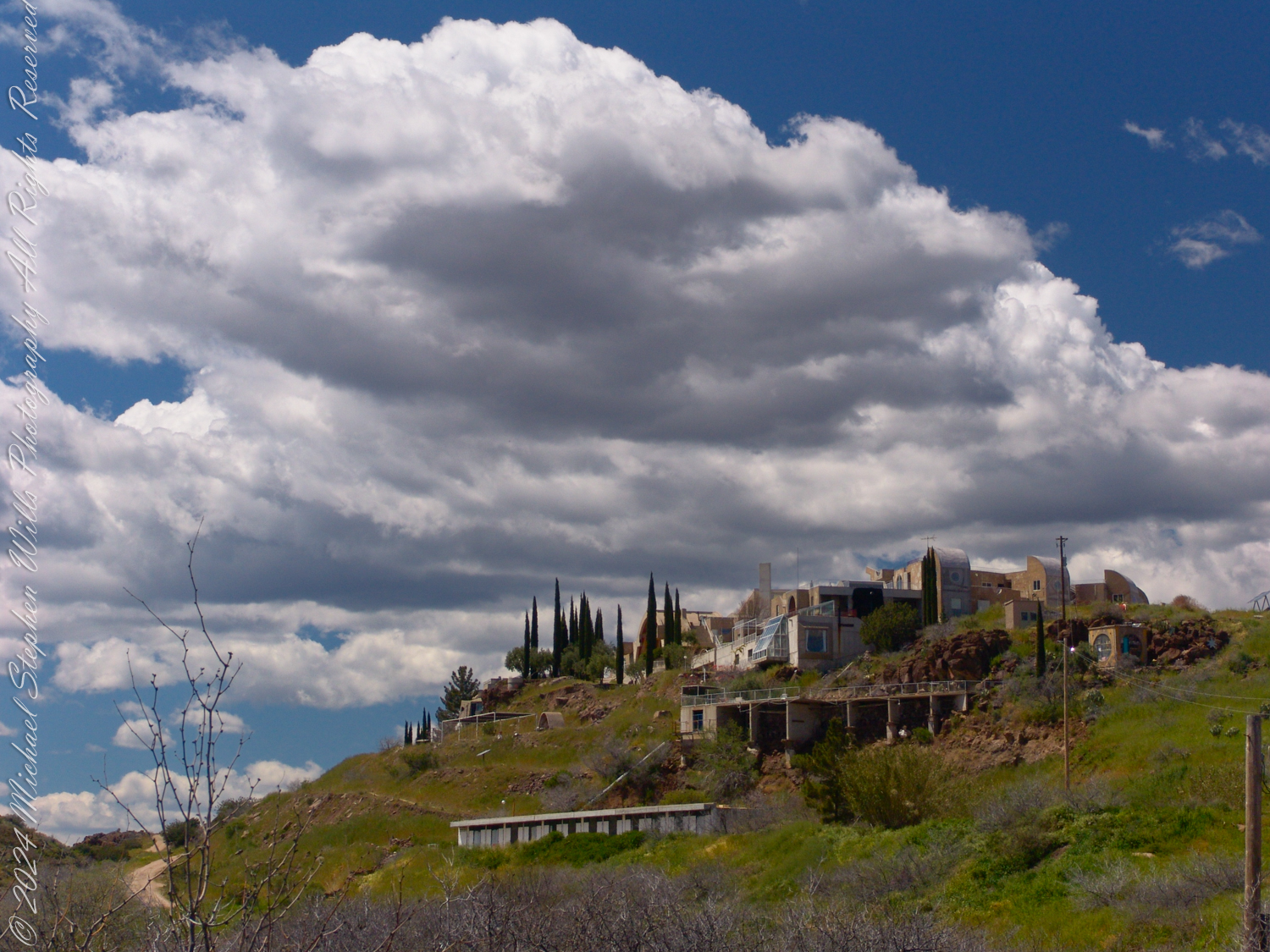
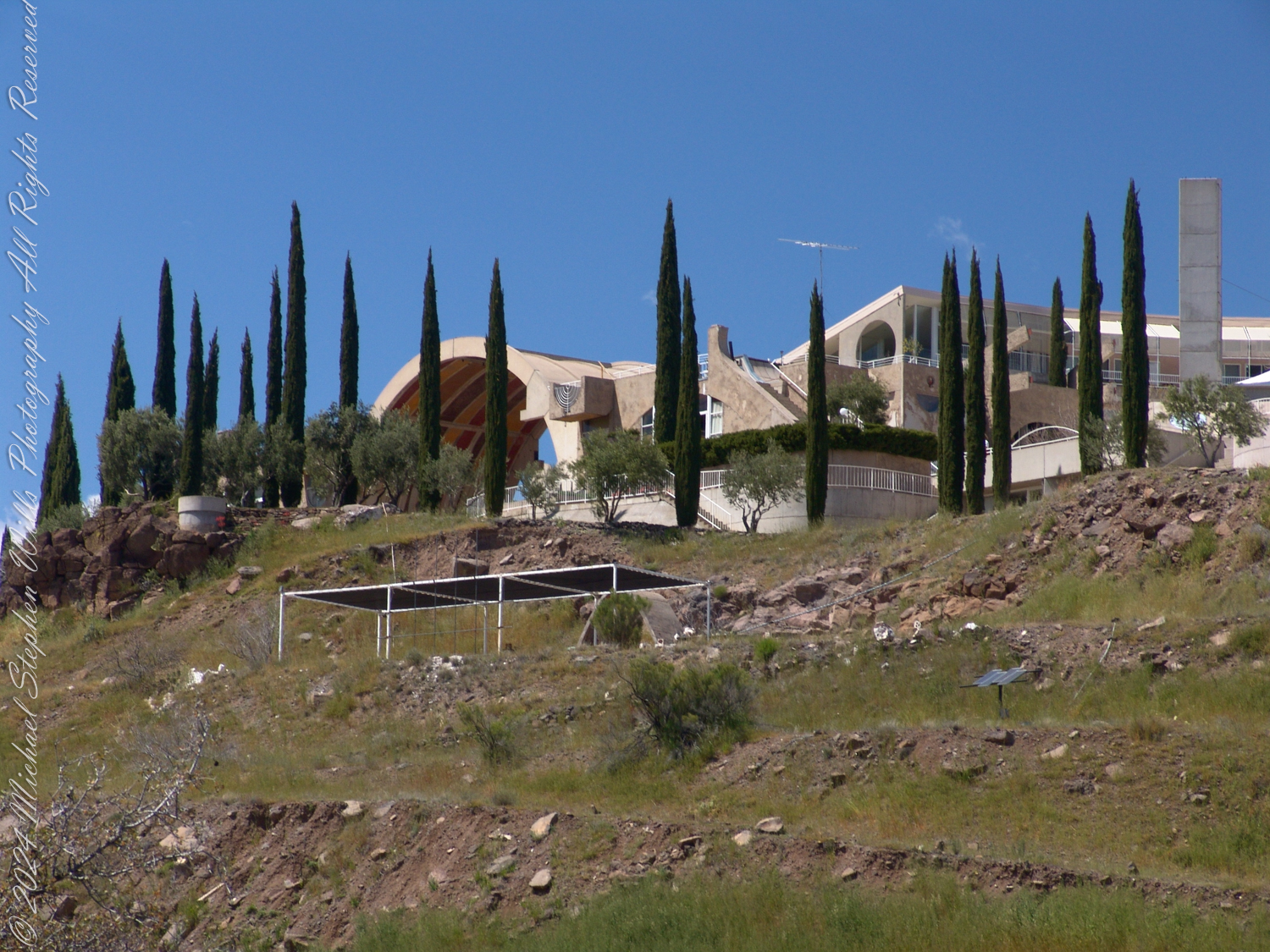
Approaching Arcosanti from afar, a cluster of forms rising from the Arizona desert like a mirage of human imagination. Against the cobalt sky, the buildings seemed to breathe with the land itself, their curves and edges echoing the undulations of the hillside. From this distance, the structures were both distant dream and solid reality, their symmetry a whispered promise of order amidst the chaos of the wild.

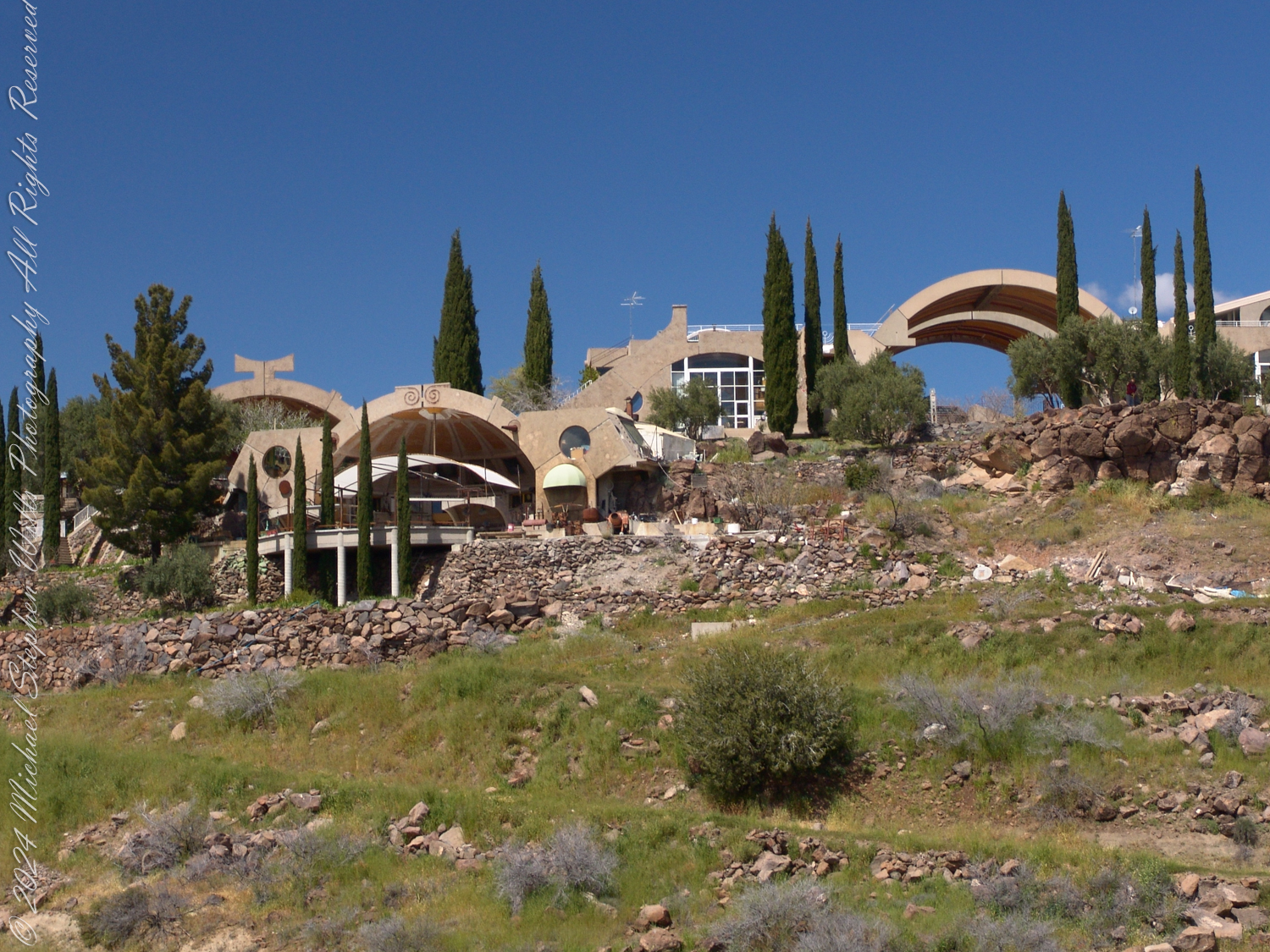
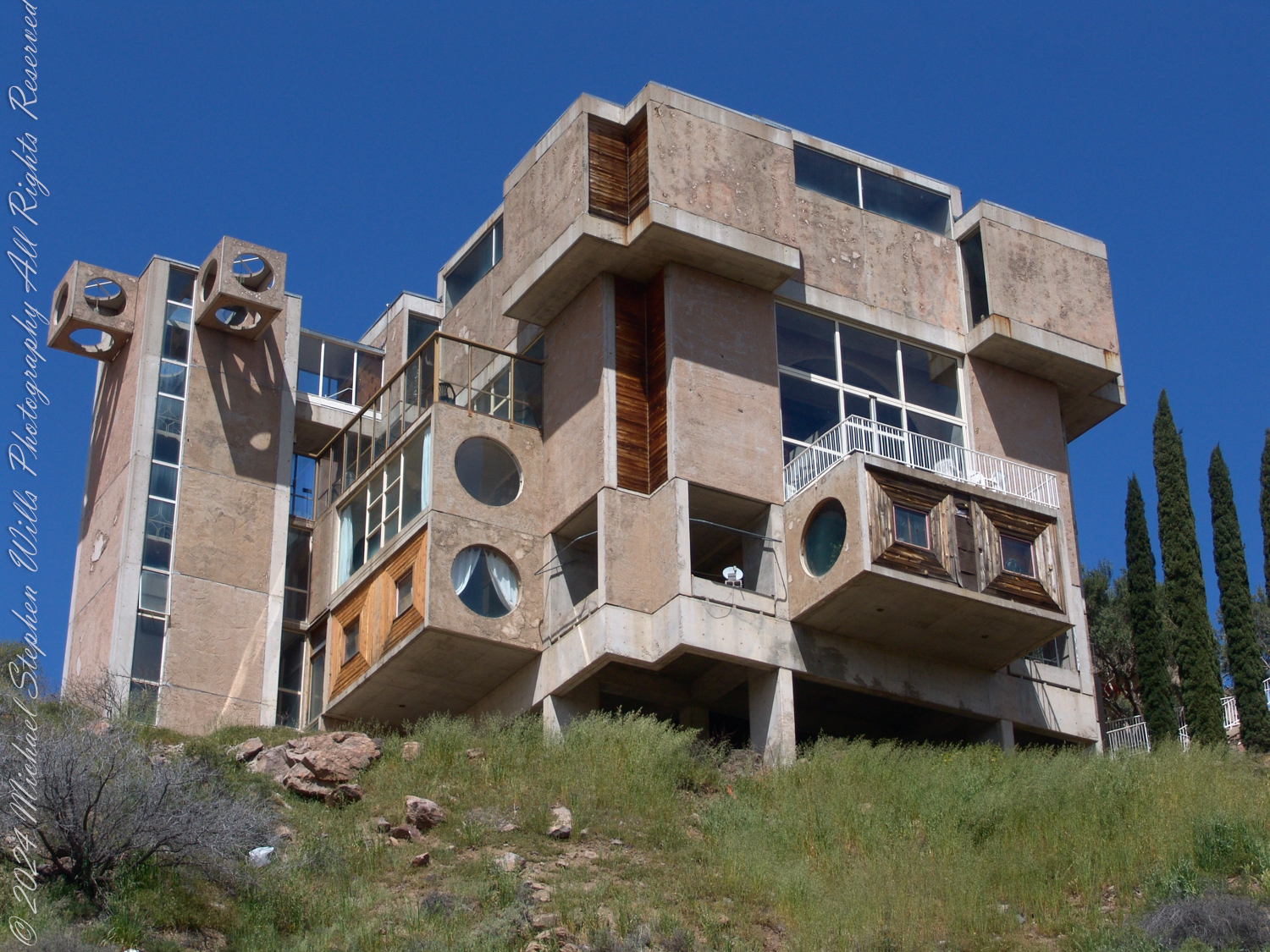
As I moved closer, the buildings revealed their intricate secrets. Circular windows stared like unblinking eyes, portals to a world shaped by creativity and purpose. Towers and cubes jutted confidently into space, their bold geometry softened by the earthen hues of concrete and weathered wood. These materials, neither foreign nor intrusive, seemed born of the very soil beneath my feet. There was an undeniable rhythm to the place—a harmony where art, function, and the timeless desert converged.

I walked among the structures, their forms towering above me like sentinels of some ancient philosophy reborn for a modern age. The elevated walkways beckoned with a quiet invitation, connecting one sanctuary of thought to another. Circular motifs repeated like a mantra, reminding me of the cycles of life, of the sun and the moon, of the unbroken circles that hold us together. Here, design was not merely a tool but a hymn, sung in concrete and glass.

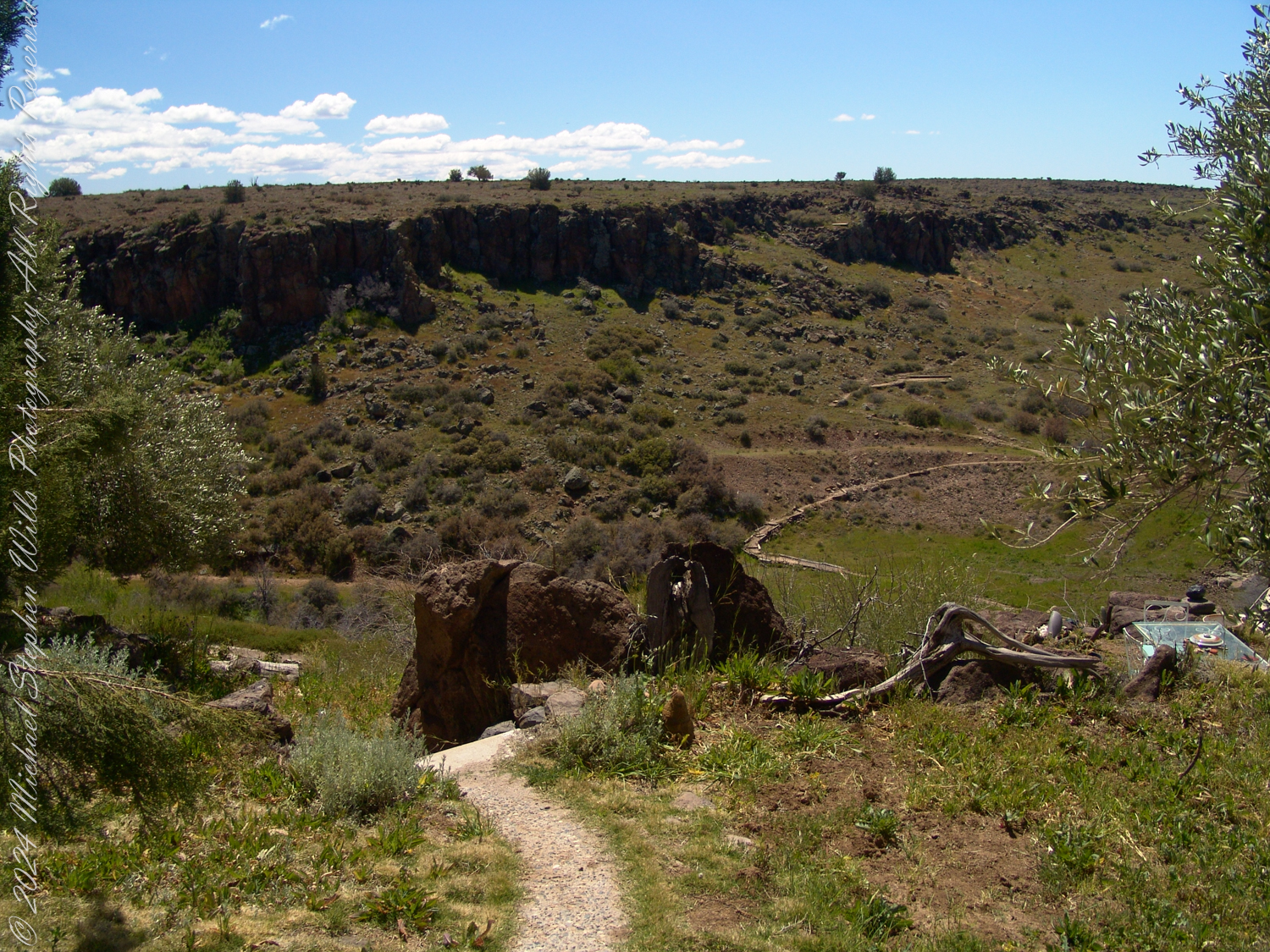
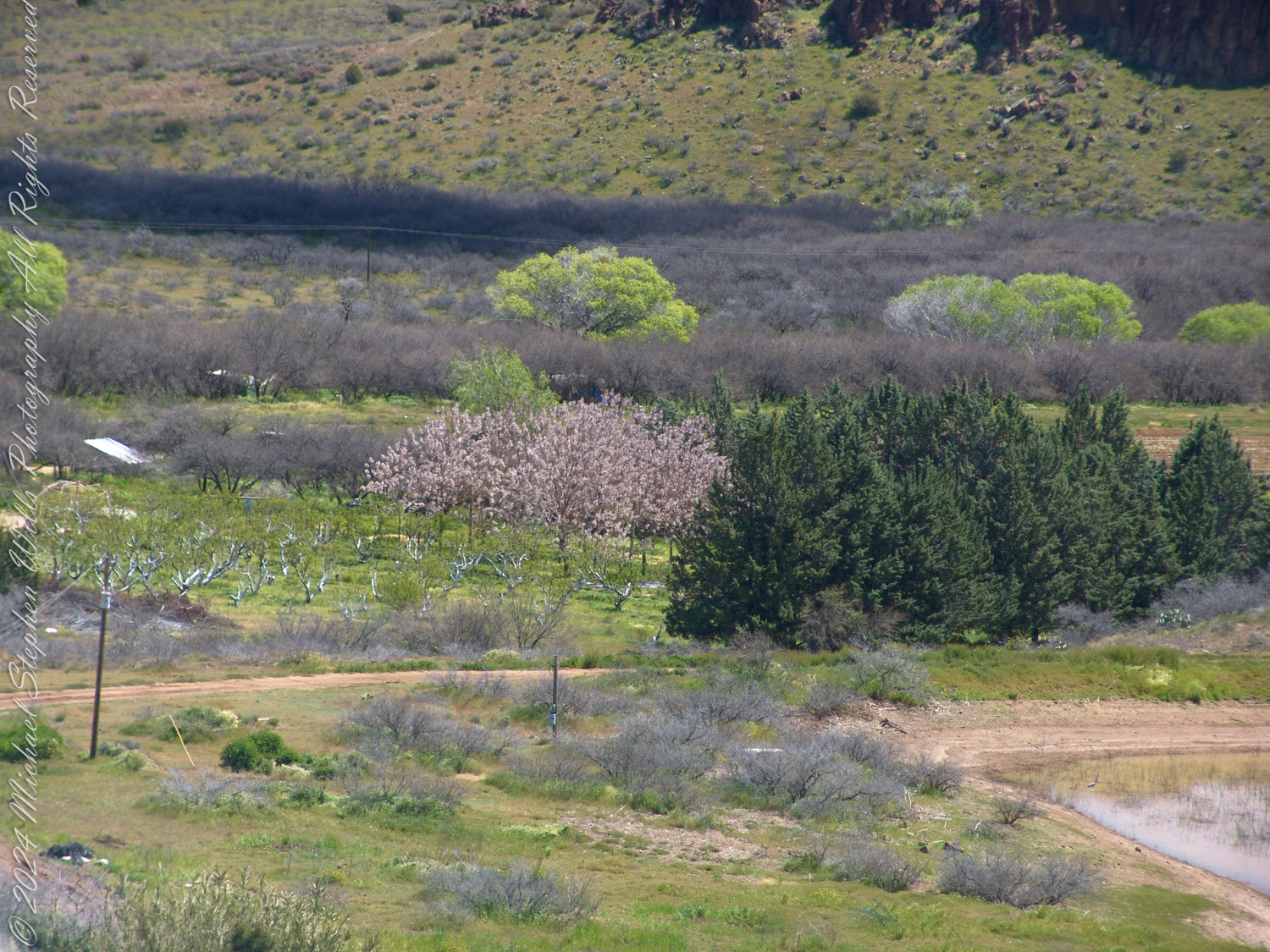
Then, I turned my gaze outward, to the land that cradled this creation. The desert was alive, though its voice was quiet and deliberate. Rocks, worn smooth by the patient hand of time, rested among tufts of sage and grasses that swayed in the breeze. The light played its own game, casting shadows that danced across the ground, a choreography as old as the sun. Paths meandered through this terrain, their curves a gentle suggestion rather than a command, inviting me to wander but not to conquer.

Arcosanti

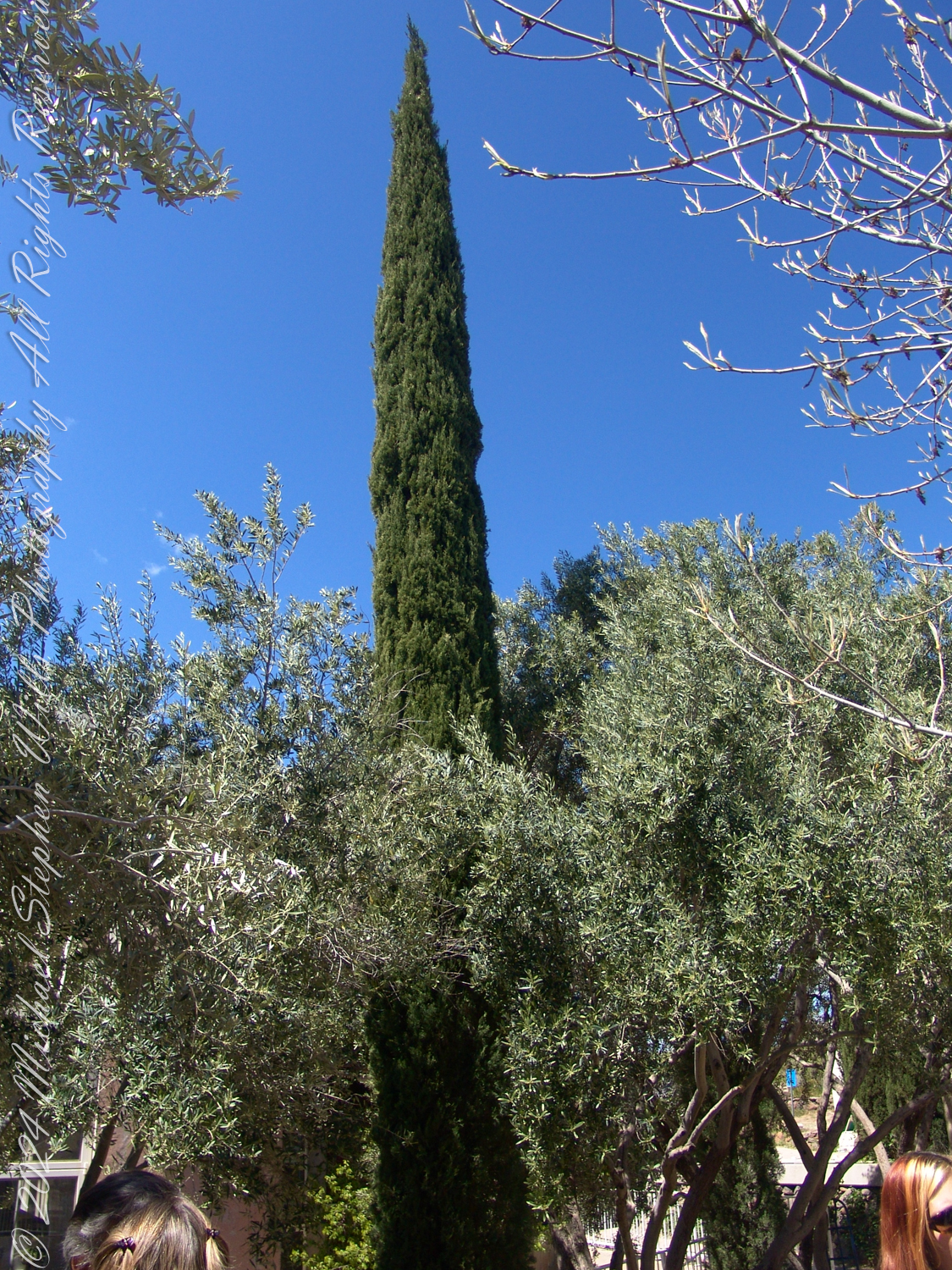
The trees stood tall and still, their presence both steadfast and serene. The cypress trees, their slender forms reaching toward heaven, seemed like exclamation points on the landscape, their verdant green cutting through the sky’s azure expanse. Beside them, olive trees spread their silvered arms, their gnarled trunks telling stories of endurance and quiet strength. One cypress, in particular, caught my attention—so perfectly straight, so impossibly regal, as if it had been planted by the hand of a god.

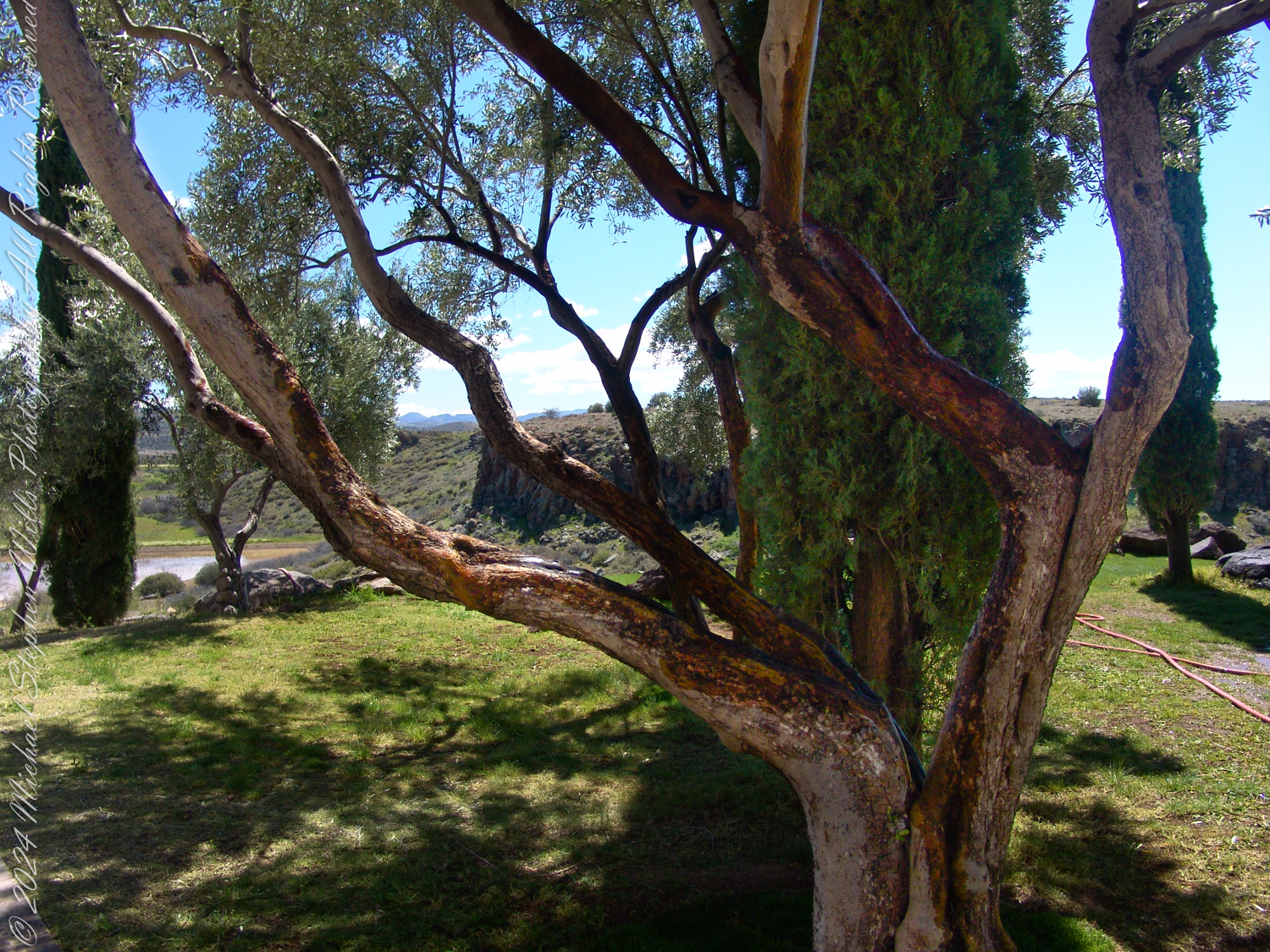
Beneath the olive trees, I paused, tracing my fingers along the bark’s intricate patterns. The sunlight filtered through the leaves in golden shards, dappling the earth beneath with shifting shapes. The air carried the scent of something ancient and vital—a blend of dry earth, sun-warmed bark, and the faintest hint of blooming life. It was a reminder that even in this place of human creation, nature reigned supreme.

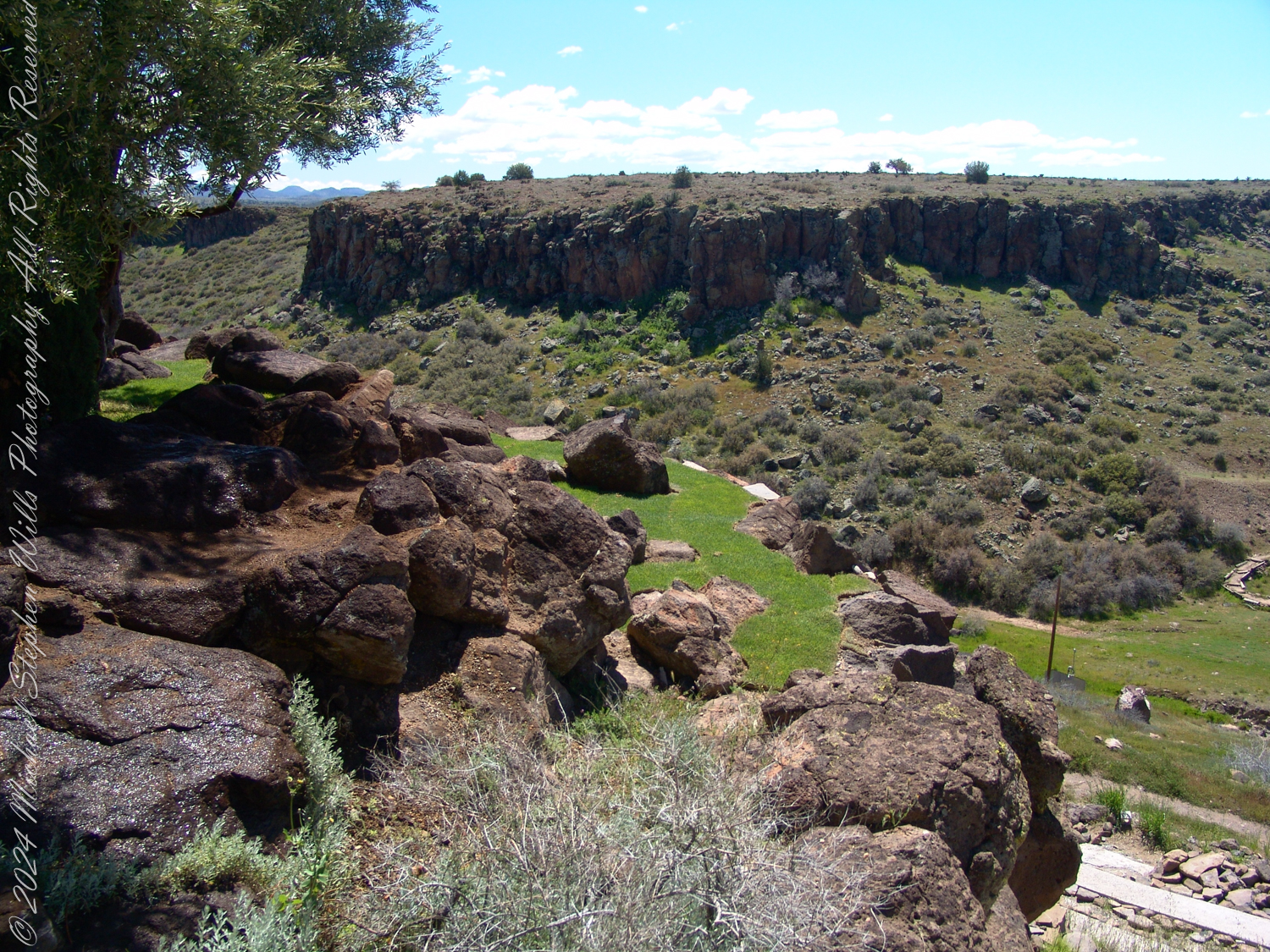
I wandered to the edge of a canyon, its rugged walls carved by time’s relentless flow. The raw power of the landscape stretched out before me, a tapestry of stone and shadow that humbled and awed. Here, the boundaries between human vision and natural grandeur blurred. The olive and cypress trees, so carefully placed, seemed less an intrusion and more a part of the desert’s rhythm. They were a bridge, a whispered conversation between what is made and what simply is.

Finally, the paths called me back, their winding lines leading me deeper into reflection. Each step felt deliberate, as though I were tracing the lines of a poem etched into the earth. The trails curved gently, like the desert’s own breath, and I followed, not as an intruder but as a guest. The buildings now stood behind me, a testament to the balance we strive for—between the ephemeral dreams we build and the eternal landscape that cradles them.

This place is a meeting of stone and sky, a meditation: reminding us that, if we listen, the land will teach us how to live in harmony. Here, in the desert’s embrace, I found space to ask better questions, my heart as open and unbroken as the endless horizon before me.

Enter your email to receive notification of future postings. I will not sell or share your email address.