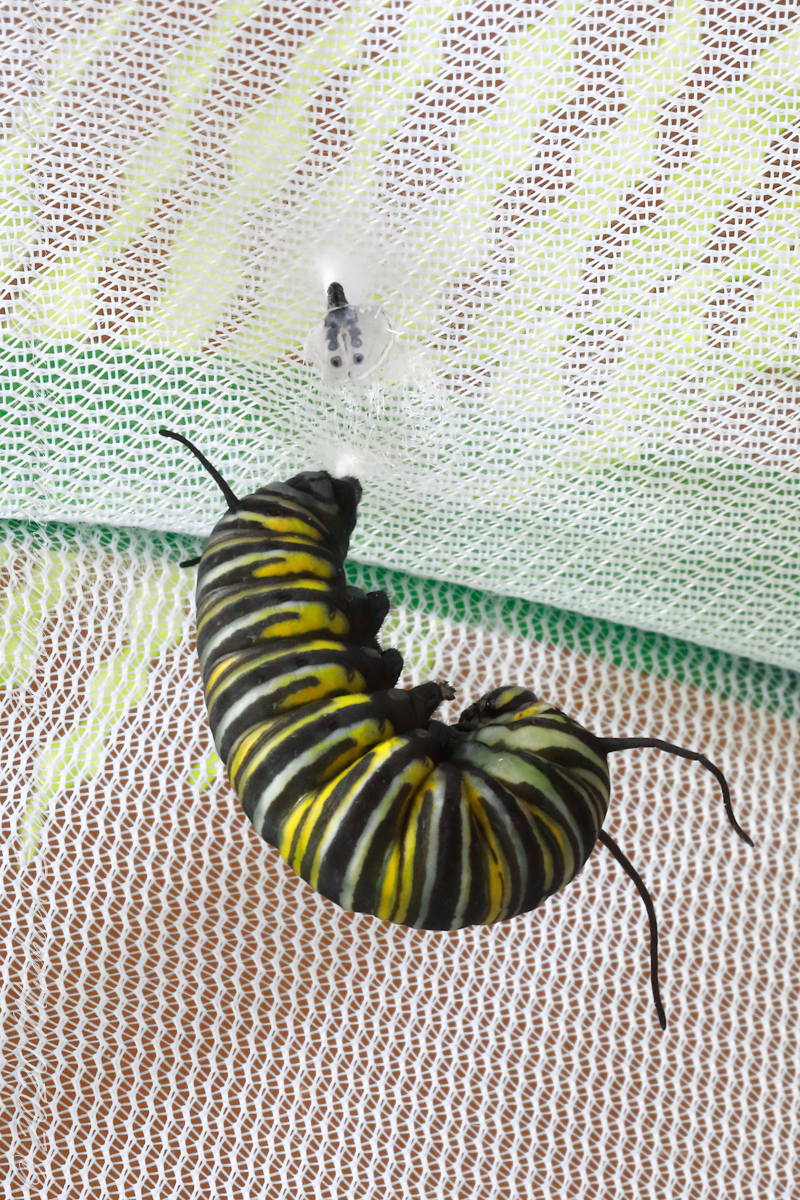
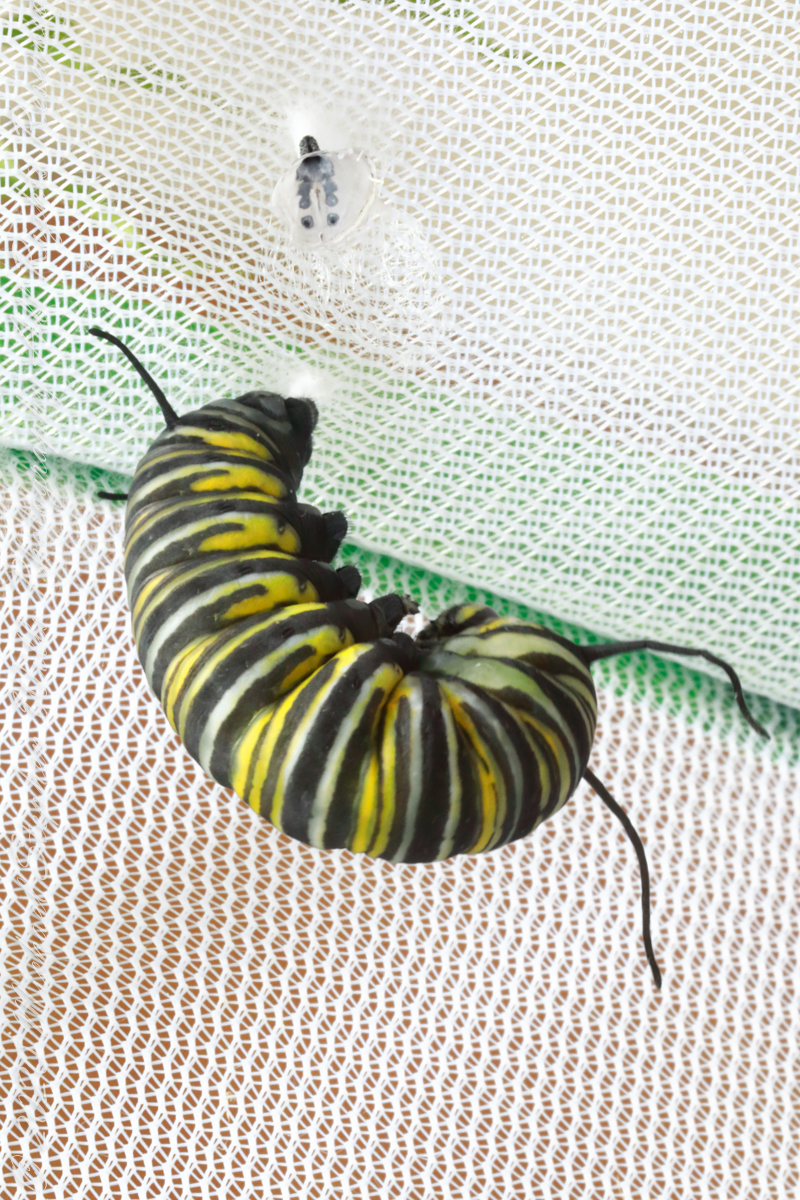
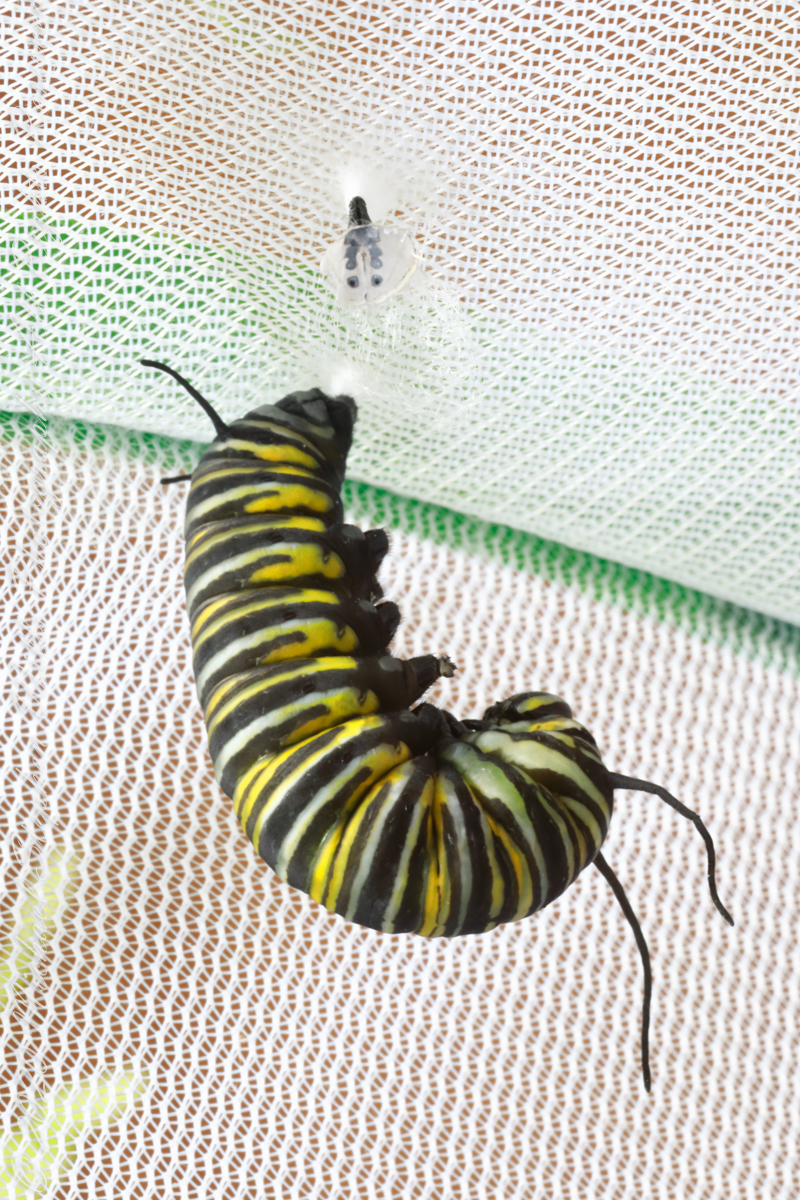
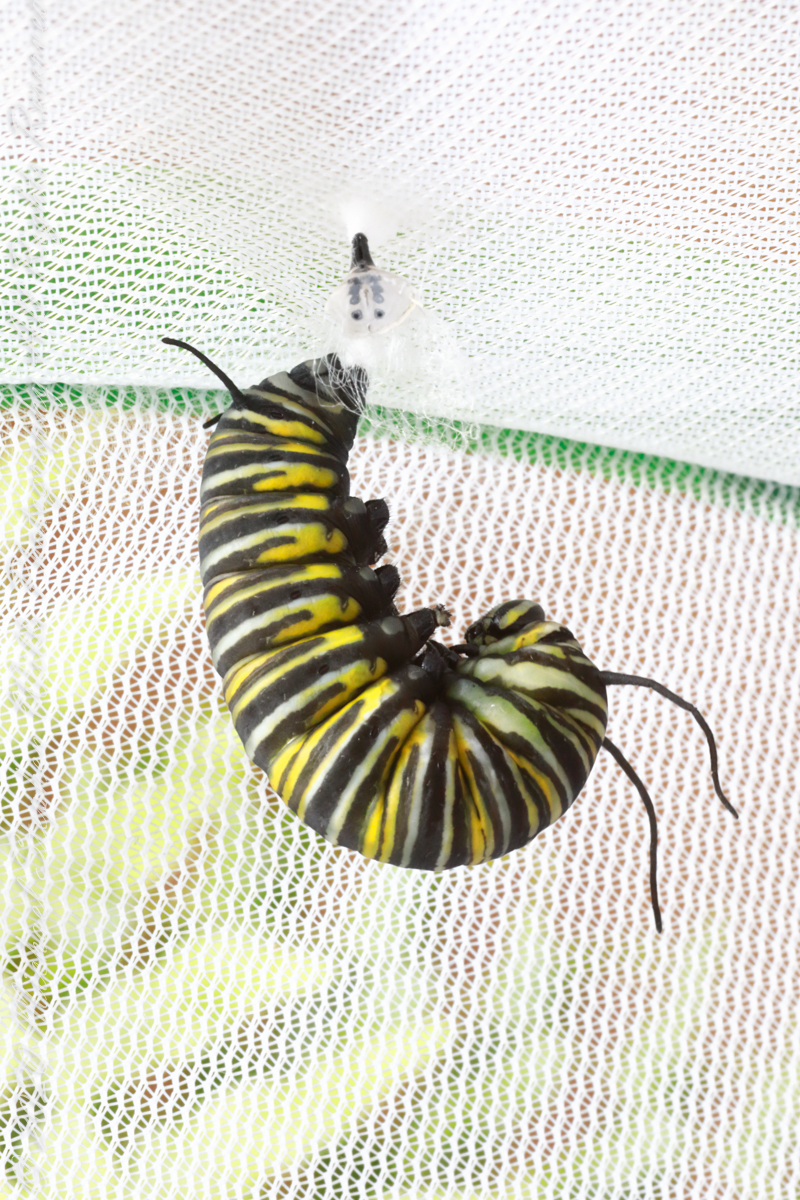
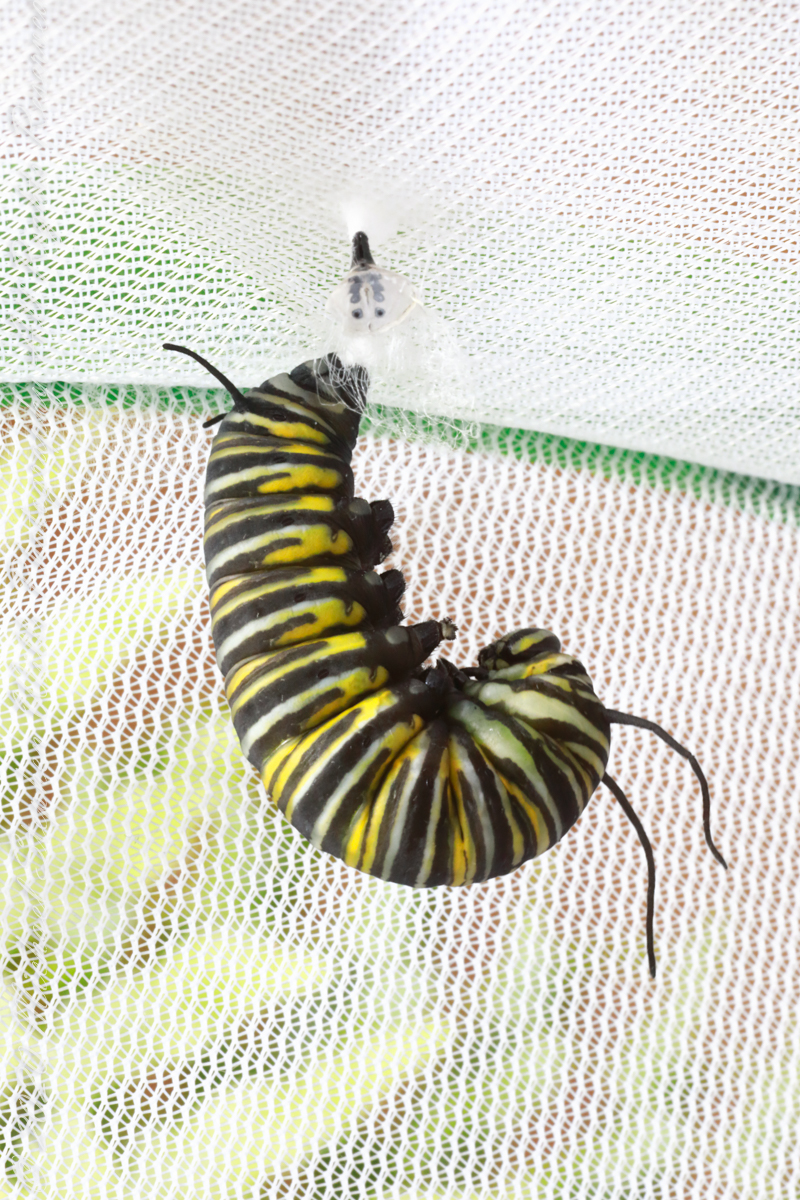
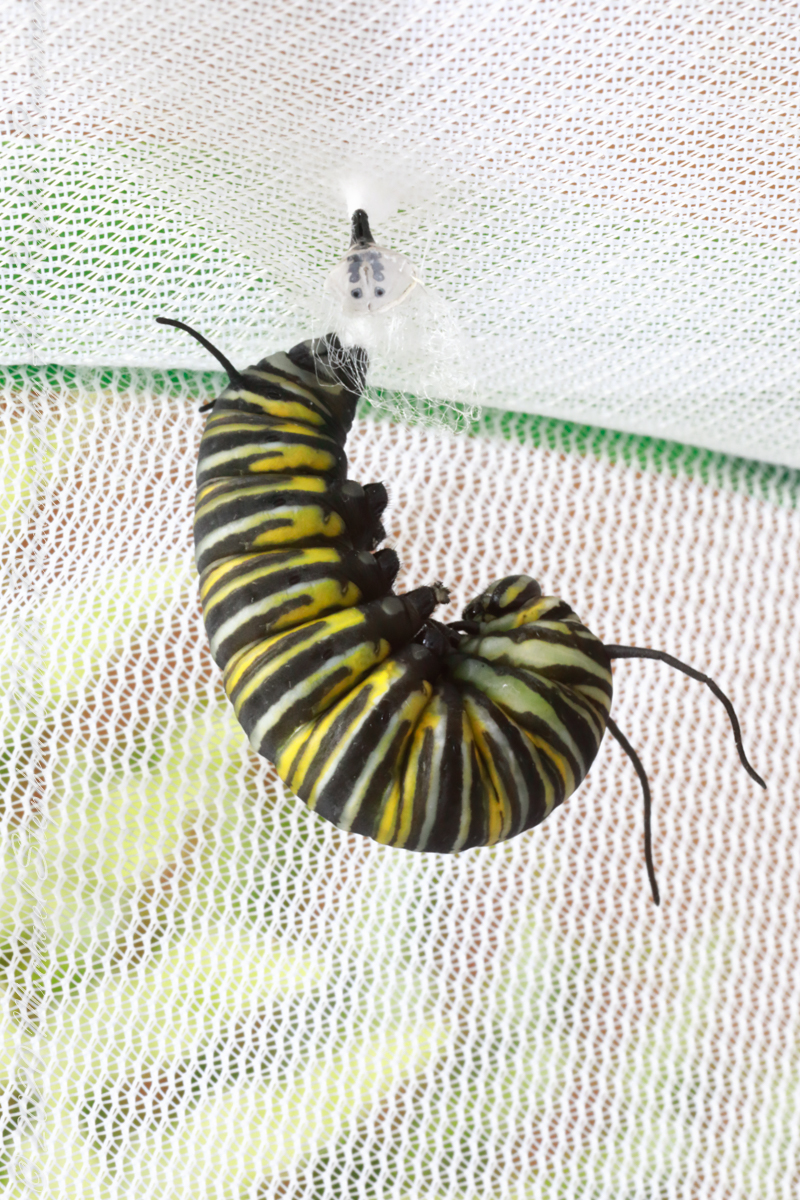
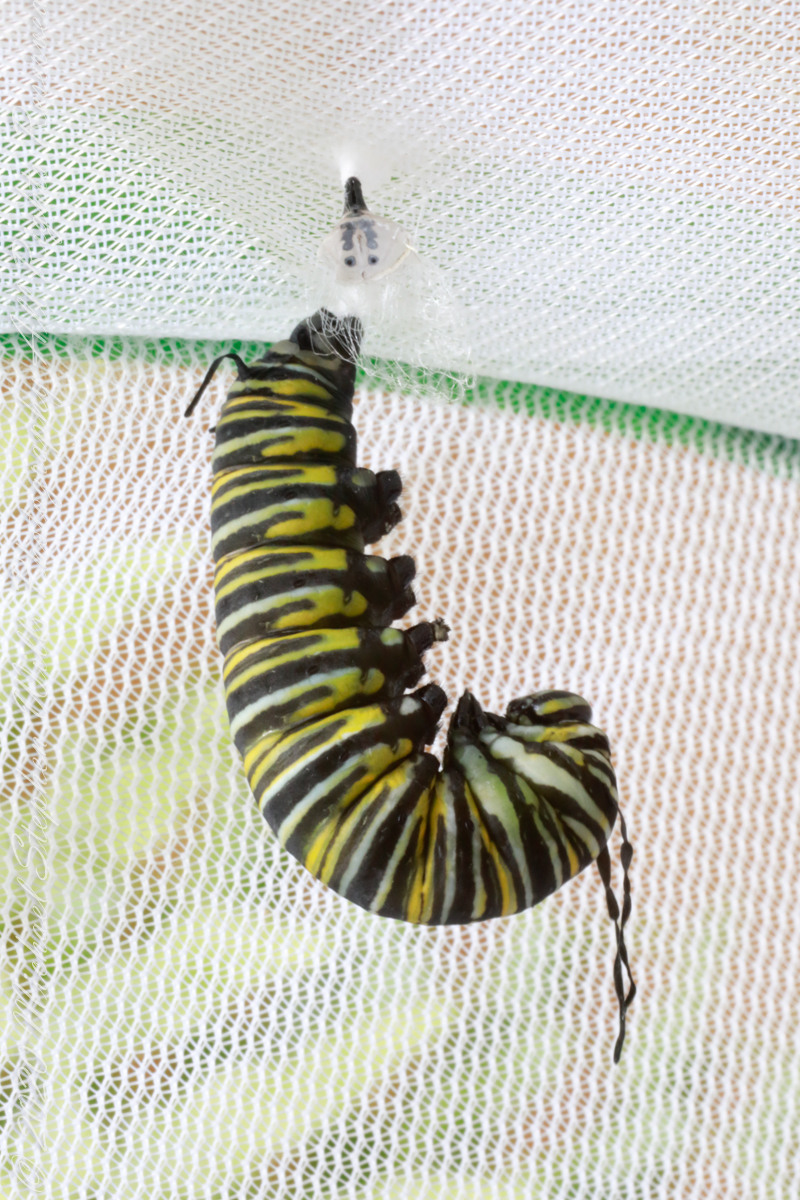
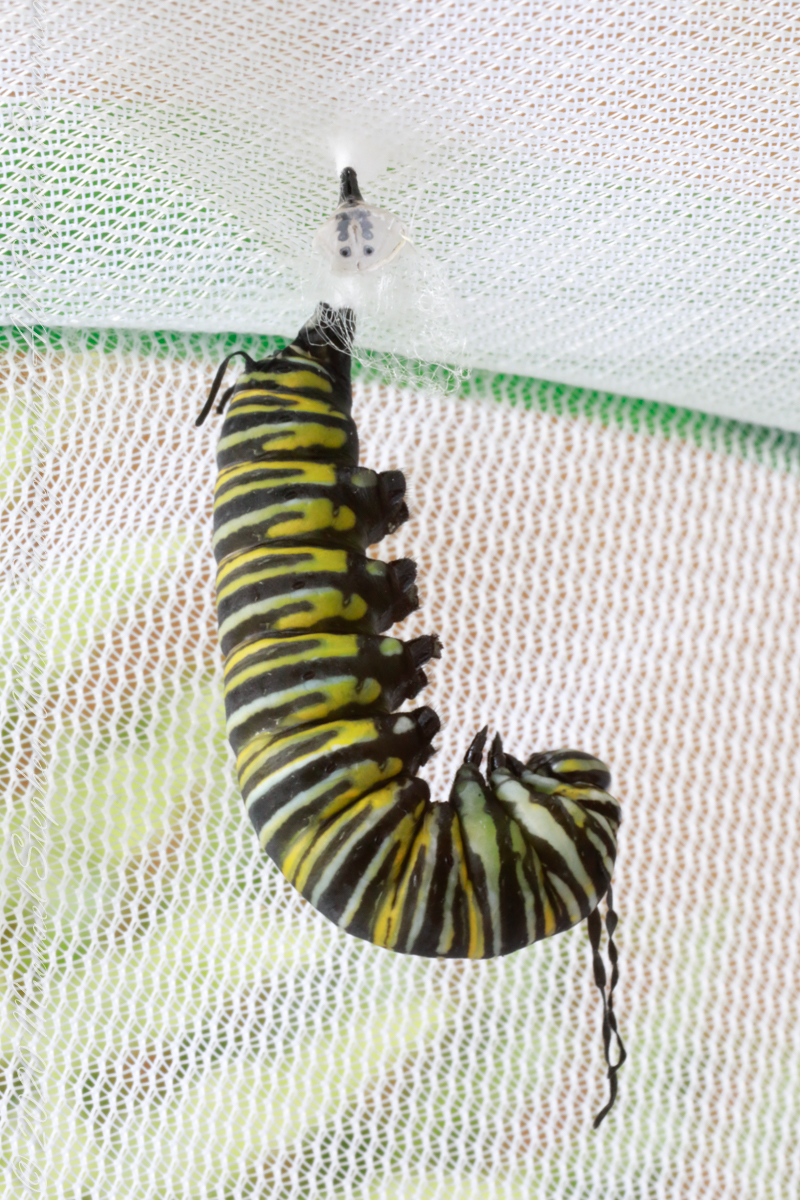
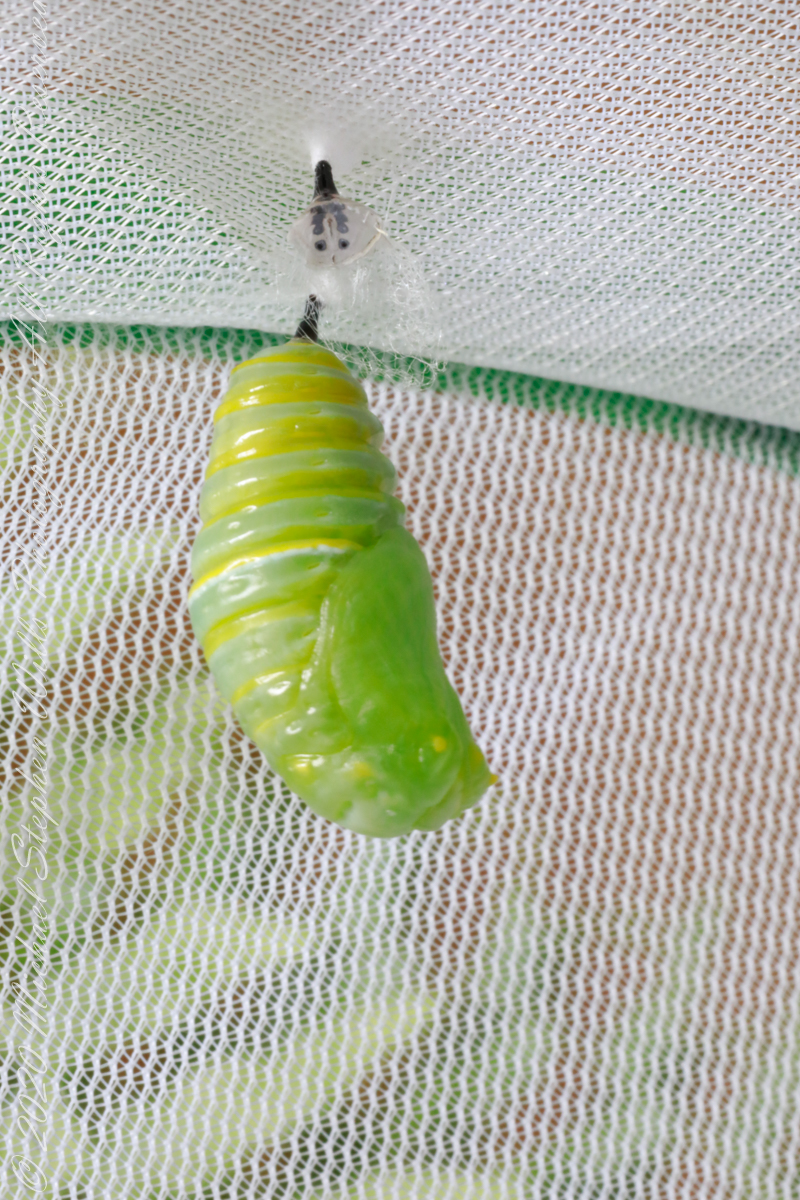
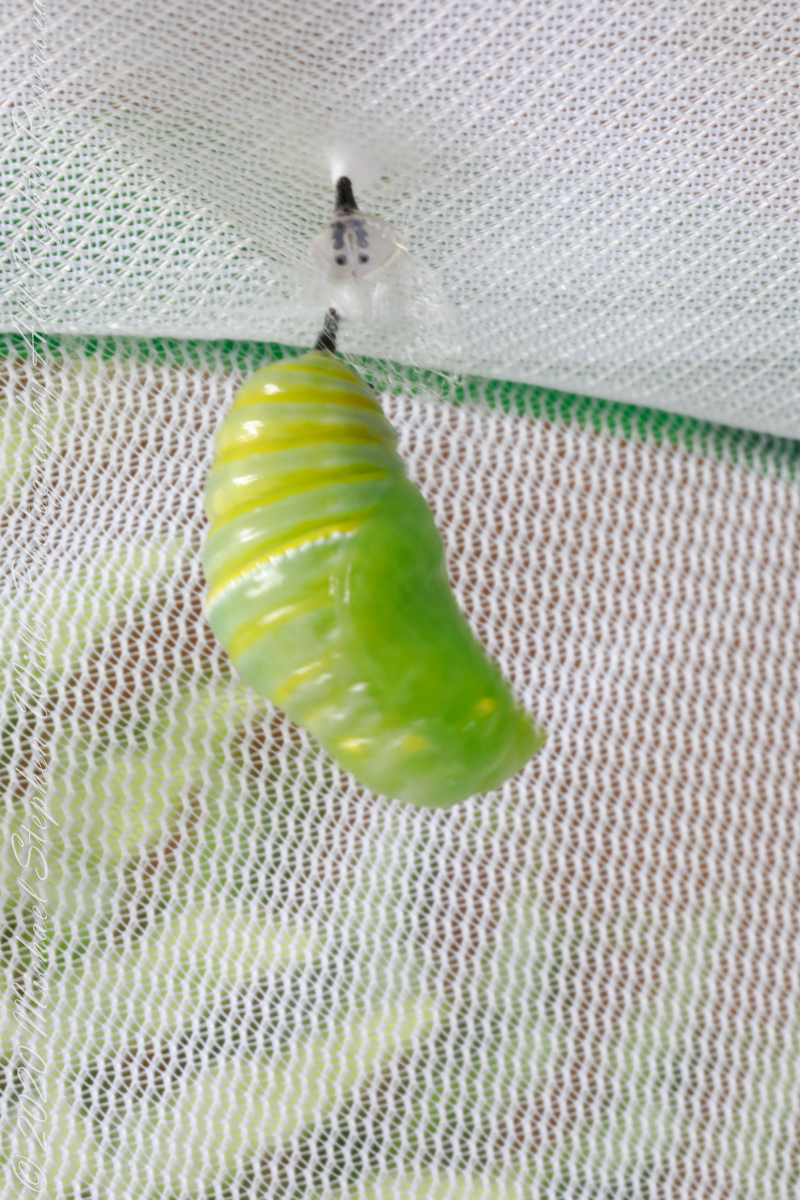
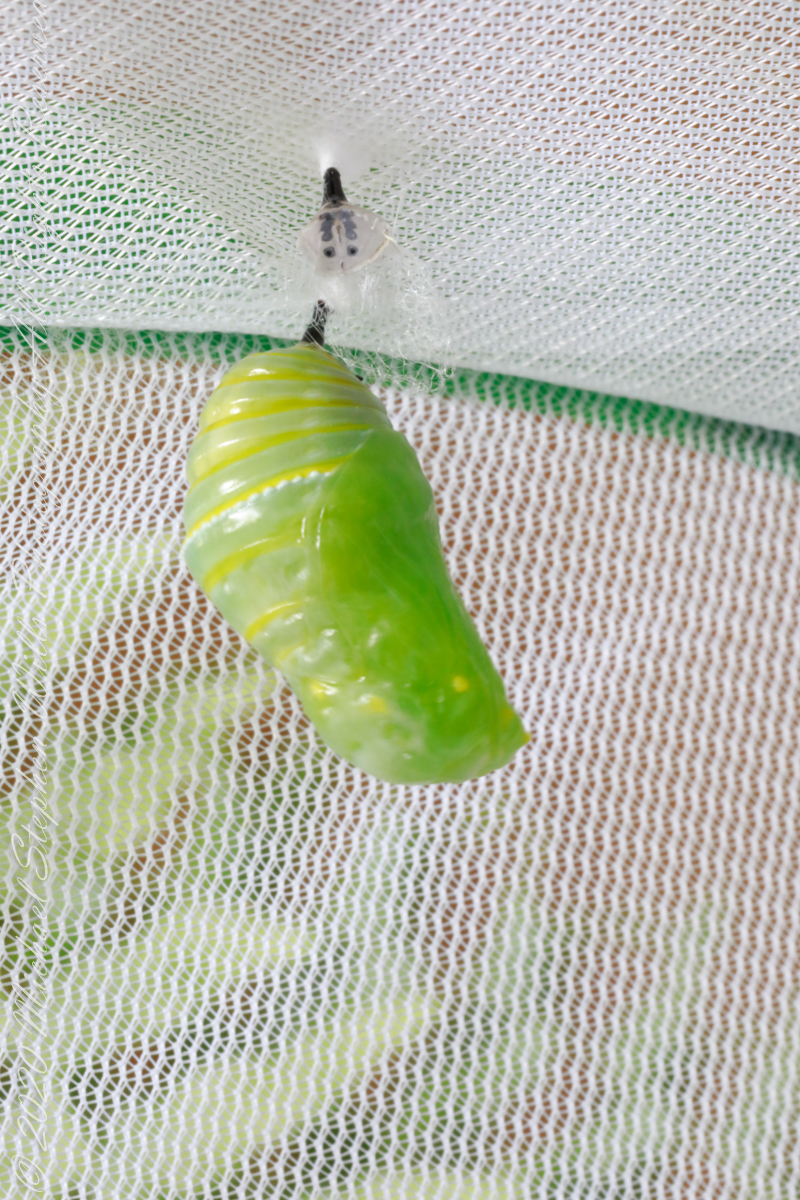
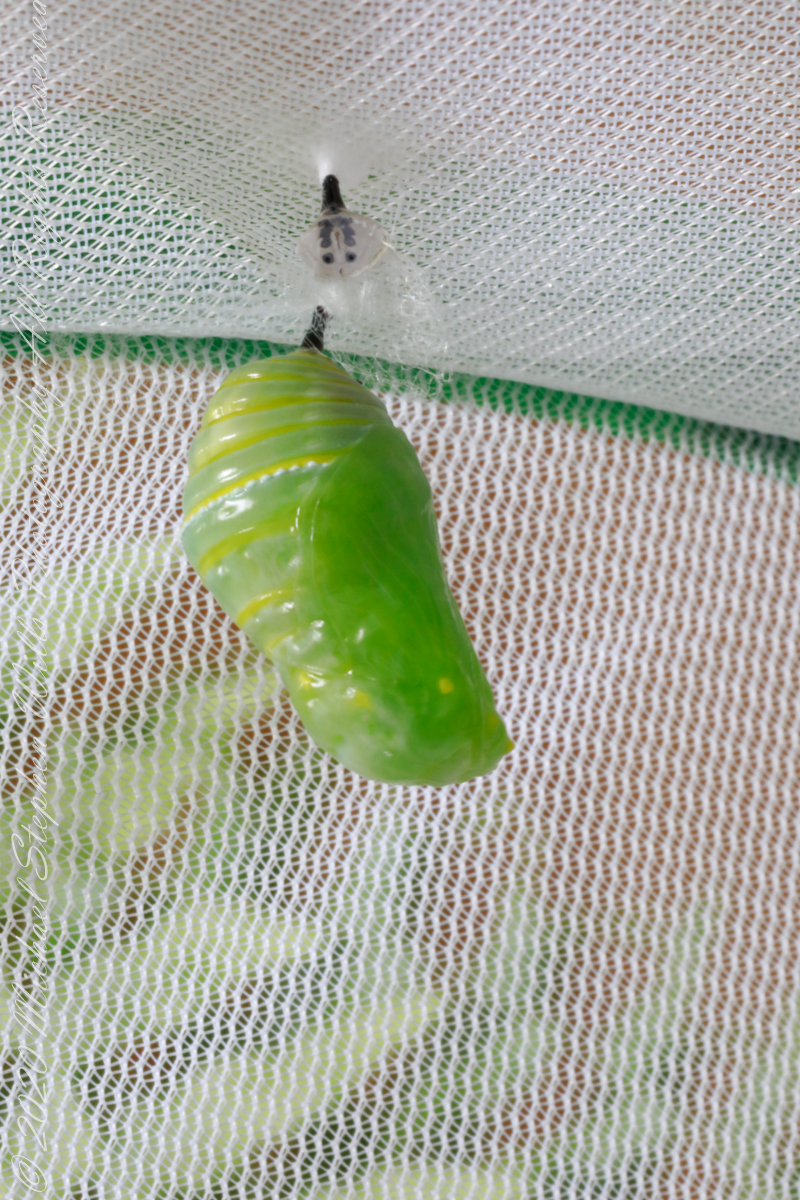
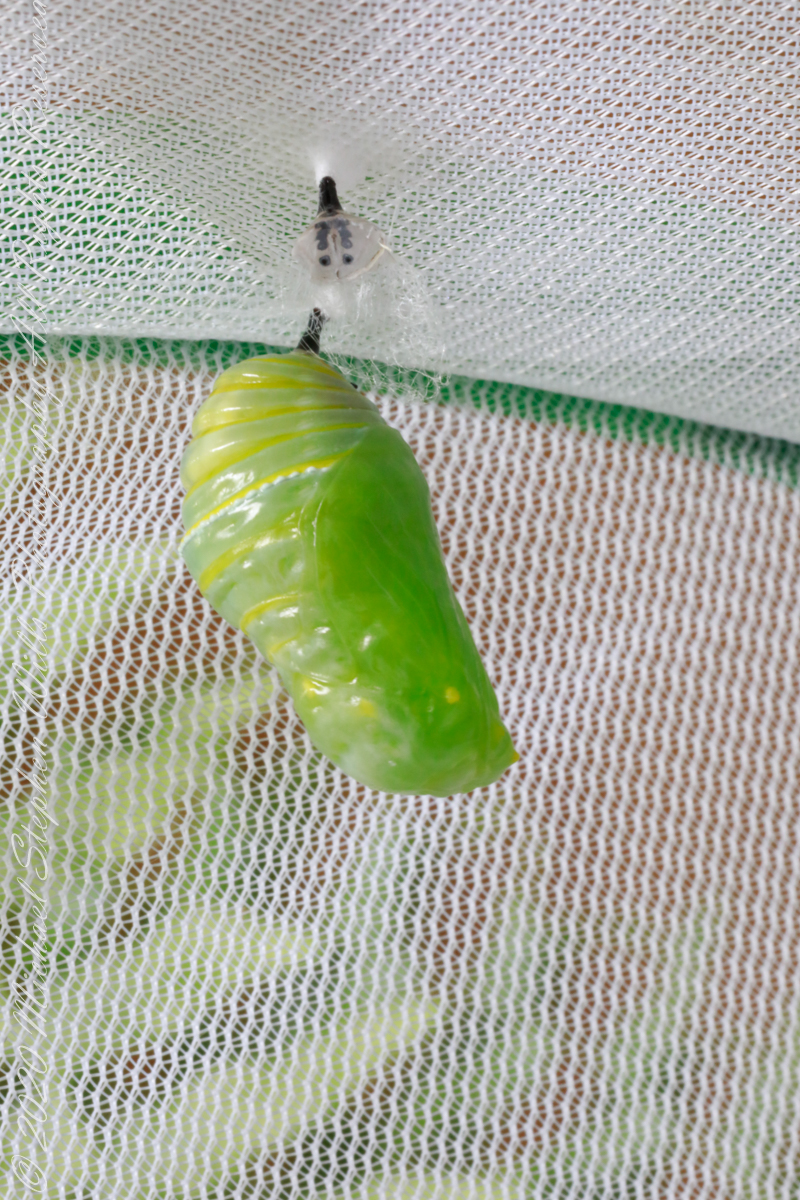
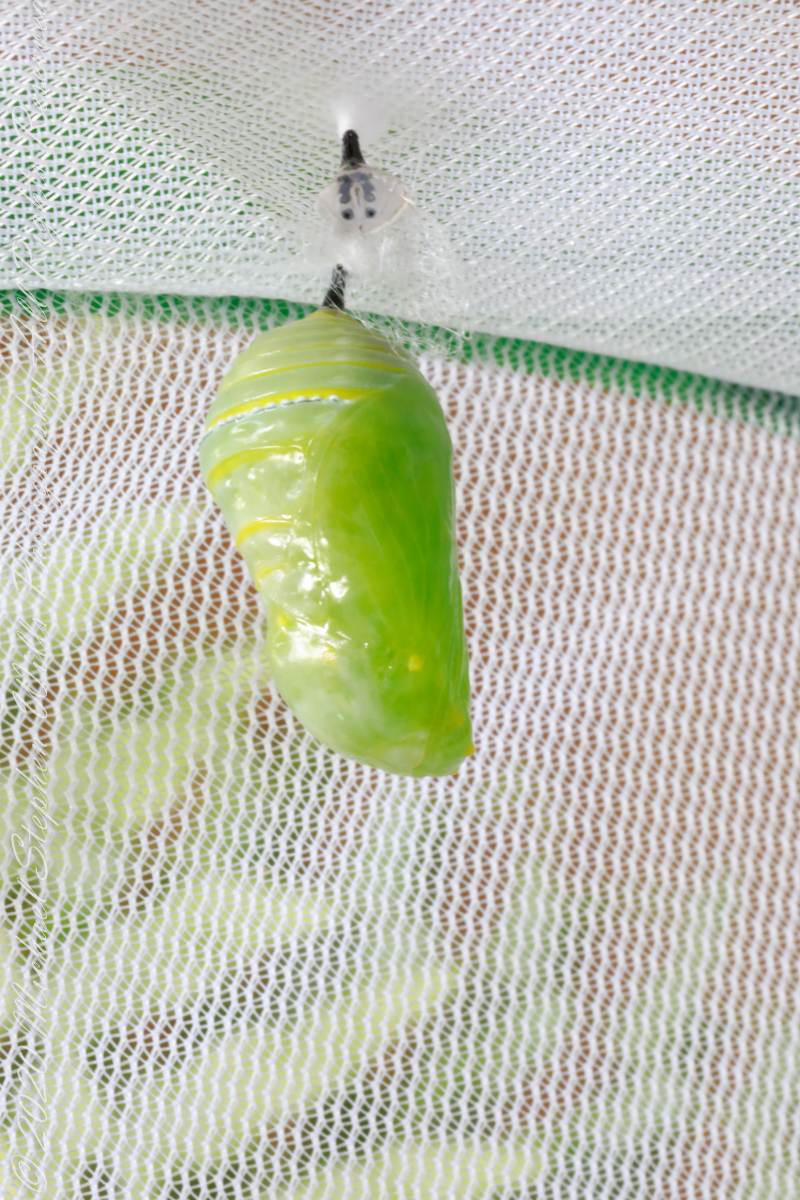
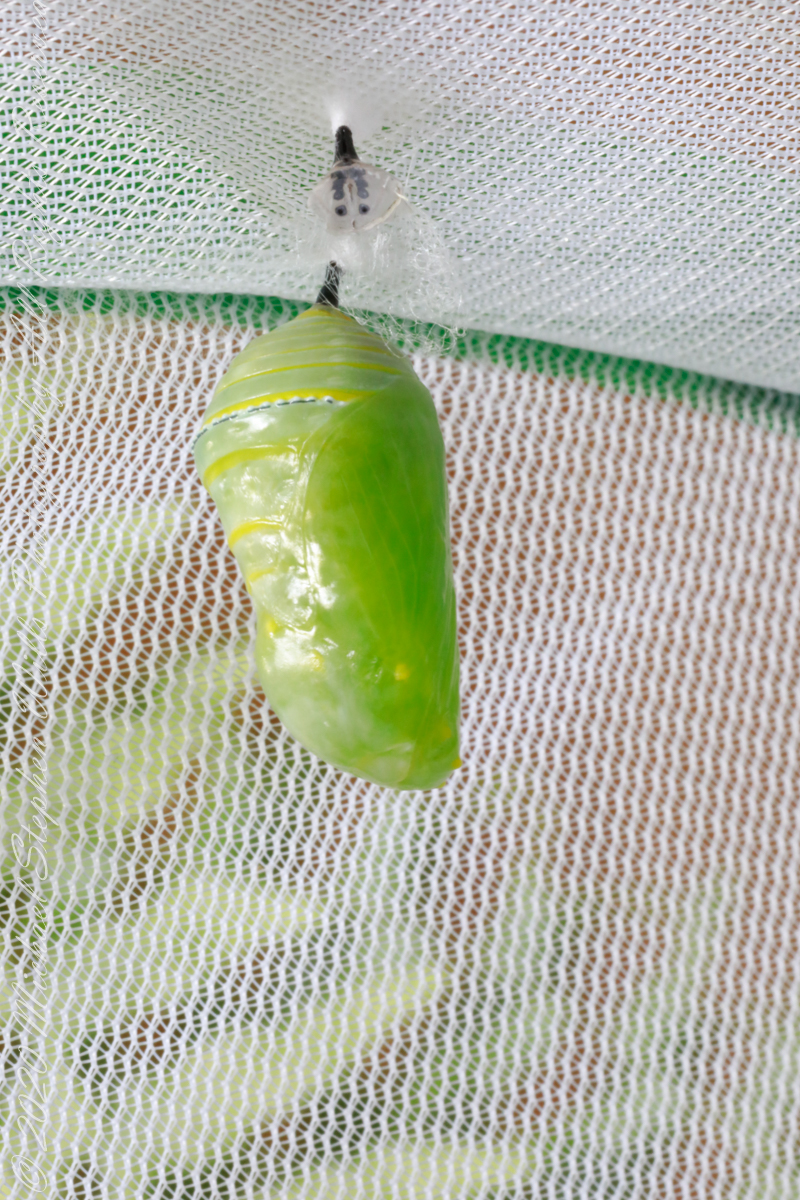
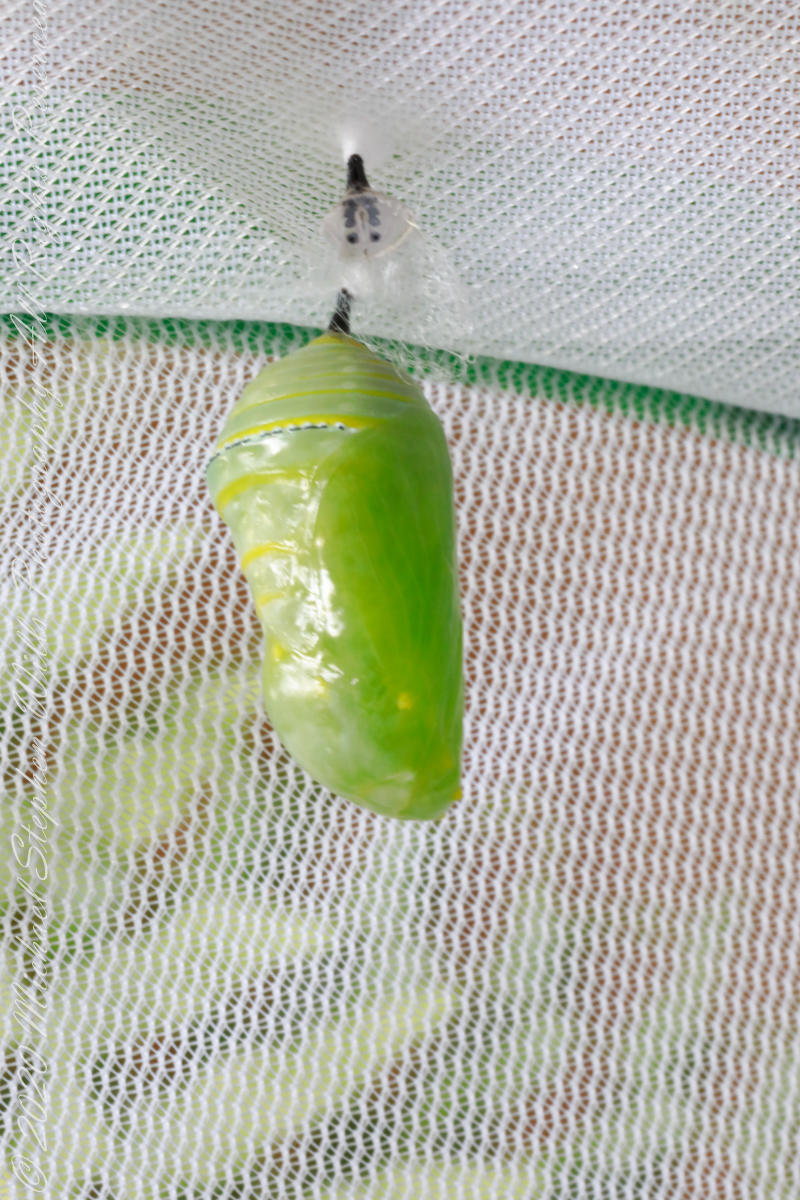
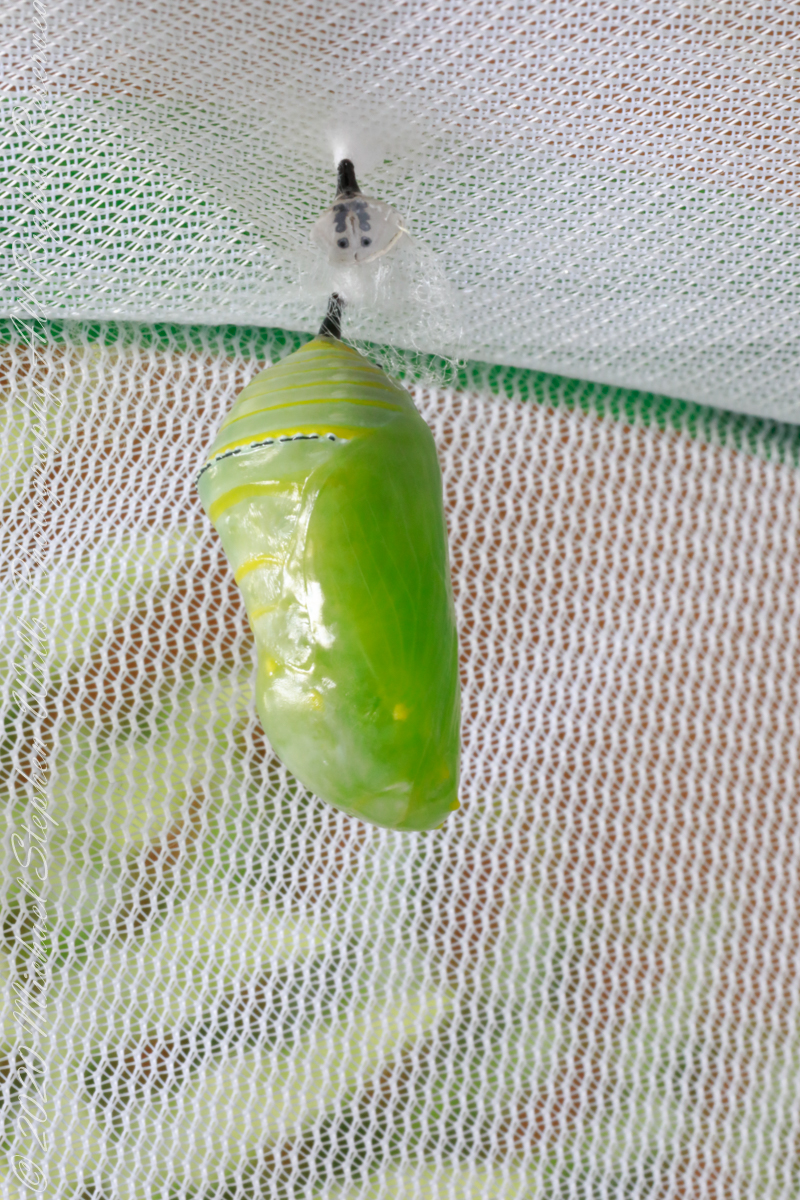
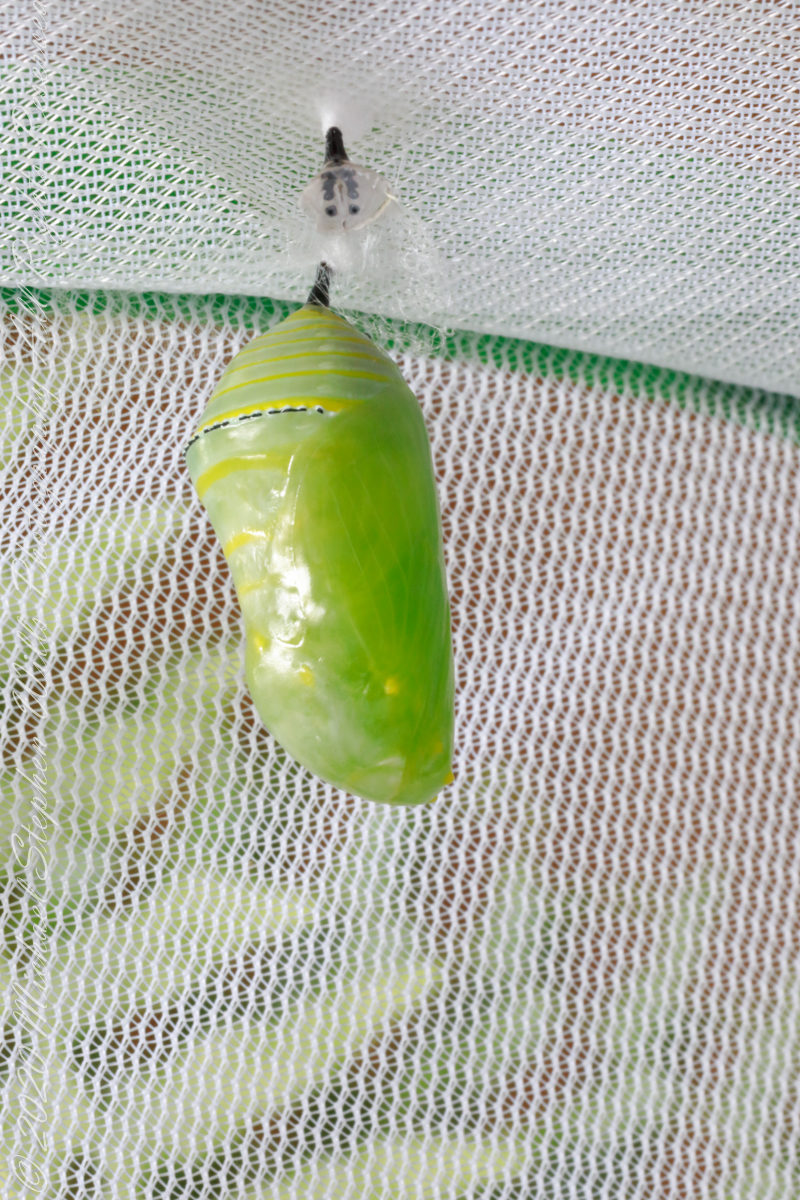
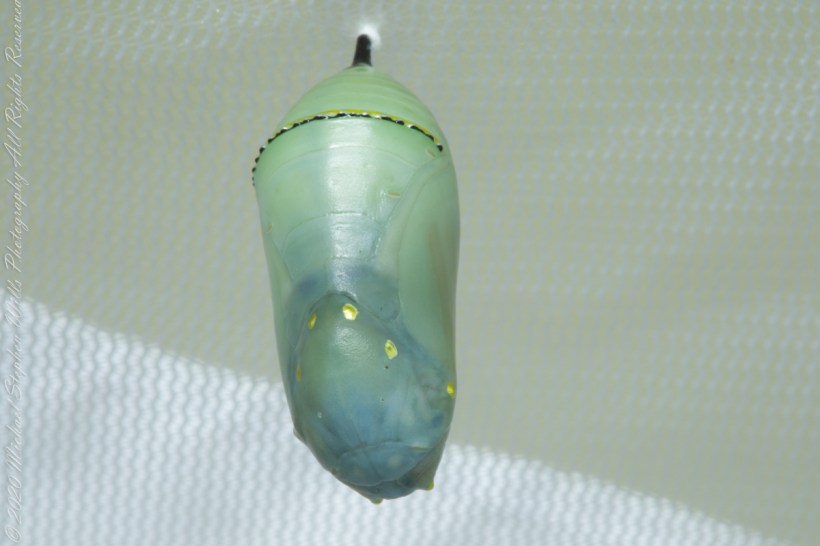
Here is a photographic Series of a Monarch caterpillar chrysalis transformation, a step in the life cycle of the Monarch butterfly. The caterpillar attaches to a silk pad from which it hangs. Underneath the skin, the caterpillar is transforming to the chrysalis. In these photographs the silk pad and chrysalis attachment from a previous transformation are in the foreground.
About 34 minutes transpired between the previous photograph of the caterpillar in “J” formation, attached and hanging upside down to the chrysalis. In this time the outer skin was shed, revealing the chrysalis.
Copyright 2022 Michael Stephen Wills All Rights Reserved
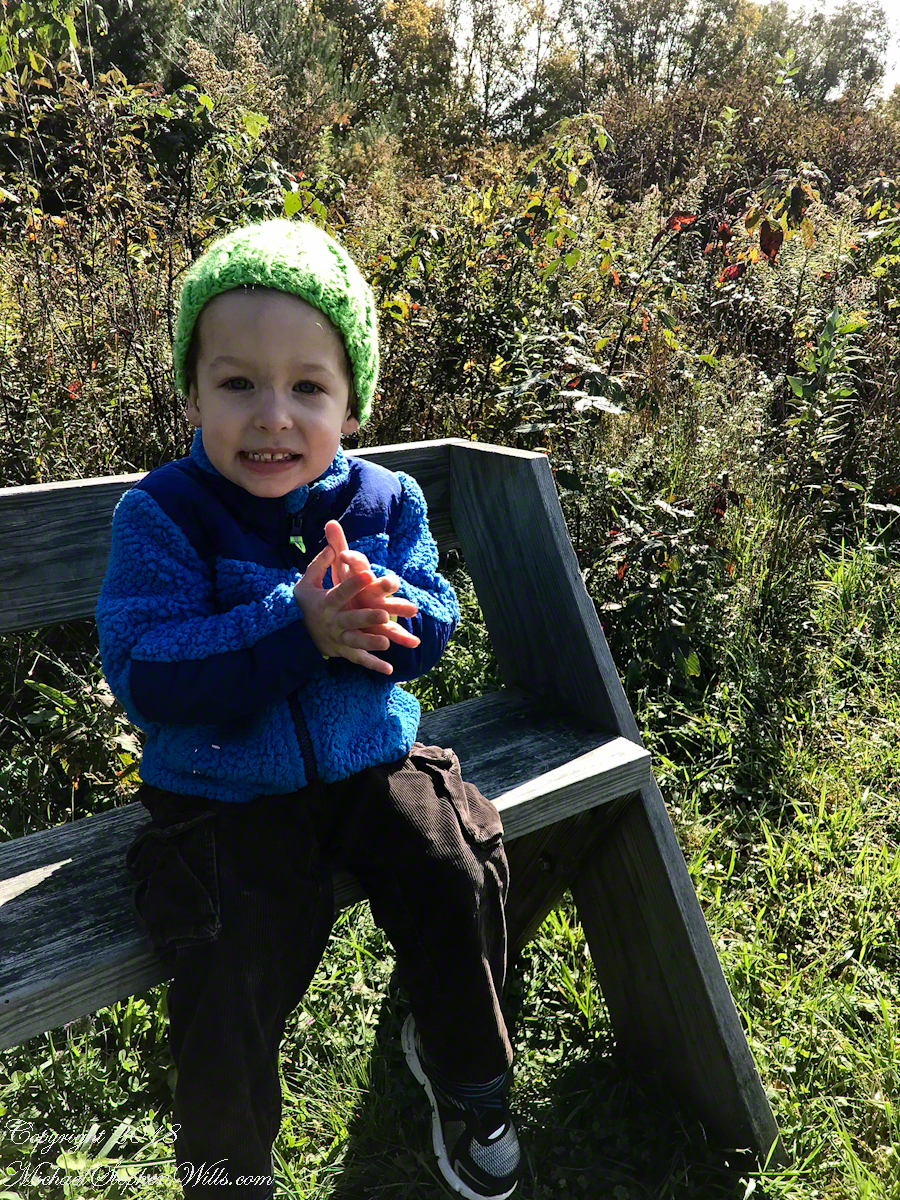
On a sunny autumn morning we set out, my soon to be three grandson Sam and I, to the Lime Hollow Nature Center near Cortland for an adventure. For the first time I brought a newly purchased iPhone 7 instead of the usual slr camera. The phone can be carried in a pocket and is simpler to us, to allow me to give full attention to Sam.
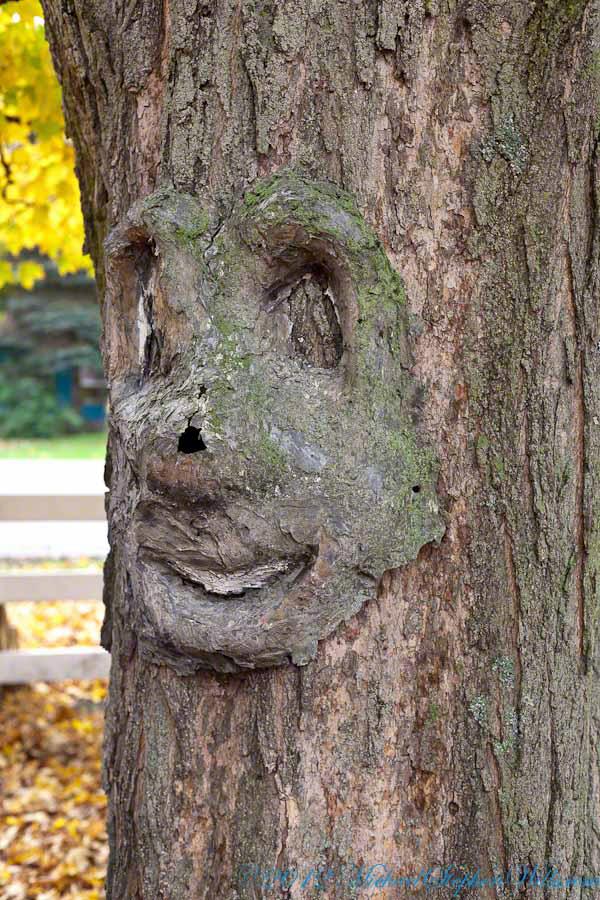
At the start is a large, today sunlit, field with an “art trail.” There are various anthropomorphic transformations on the trees and a very large sculpture of a blue face. Here is a tree from another place near here, to give you an idea.
I do not point out the tree faces to Sam. His Mom likes to say he enjoys being frightened and, when the blue face came into view, he turned back and said, “home.” Sam was mildly anxious, so I carried him and tried to turn him up the trail away from the face. He turned to keep an eye on it while I assured him it could not move. This and a climb up a 230 foot hill were the only times he didn’t walk the half mile to a open grassy knoll with a bench.
There we sat for 30 minutes, still and watching, Sam and I talked about our sightings: 1. The sunlit sky of clouds, from a milky blue towards the north to, overhead, a bright robins egg blue. 2. A circling hawk, shadow crossing over us. 3. One blue jay in a maple turning red, loudly calling over and over. 4. A little while after a second jay, landing in a tree turned yellow, drawn in and giving answer. 5. A monarch butterfly’s steady progress south. Such a strong gliding path. 6. A yellow butterfly who did not leave us, fluttering round and round. 7. Four honking Canadian geese flying north east, turned to check out a nearby pond, the returned to the original heading. 8. The sound of wind through the trees, listening to the sound made by each tree. 9. The late season golden rod, now dried gray. 10. A distant chittering red squirrel. 11. Distant peeper frogs in the swamps at the foot of the hill.
Sam did not want to leave the bench, eventually we headed on to the pond the geese checked out.
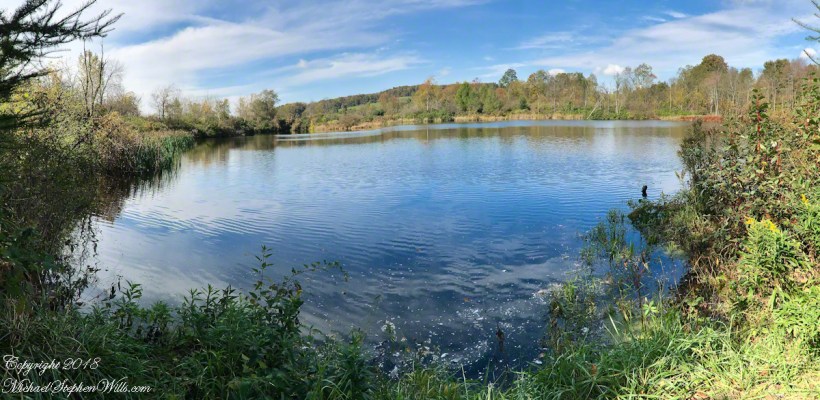
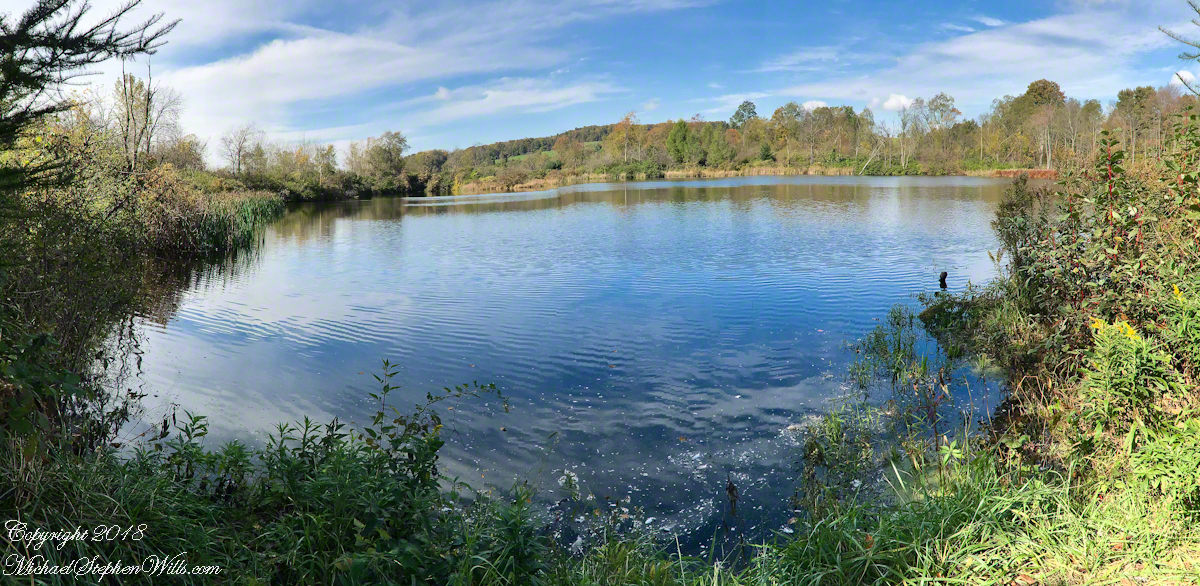
I used the “panoramic” feature of the iPhone 7 for this shot. On the hill we were sheltered by trees and bushes from the steady northeast wind. Here, on a bench by the pond, that direction was open to the wind. The sun kept us warm. It was clear why the geese did not land, the water surface was deserted, filled only by rippling wind driven waves.
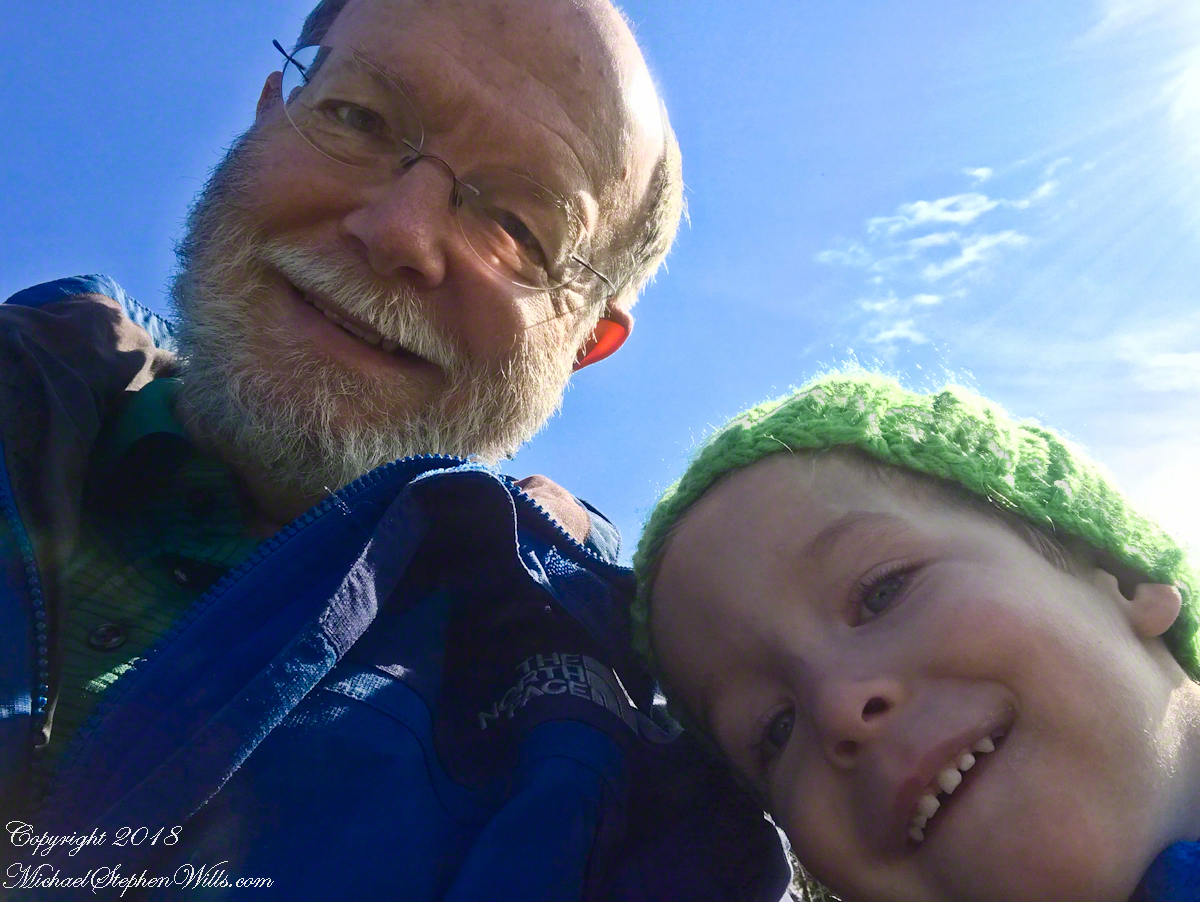
On our walk back we sat on a bench on the edge of the art trail field, the blue face out of sight. A woman, the only other person encountered, emerged from one of the trails cut from the brush, camera in hand. She was collecting images for a Cortland Historical Society publication and asked to take our photograph. “OK,”, I said and gave the story of living here for 25 years in the house on Fall Creek where my son’s family lives now. She replied, “My daughter is in San Francisco. We don’t know who will have our house when we are gone.”
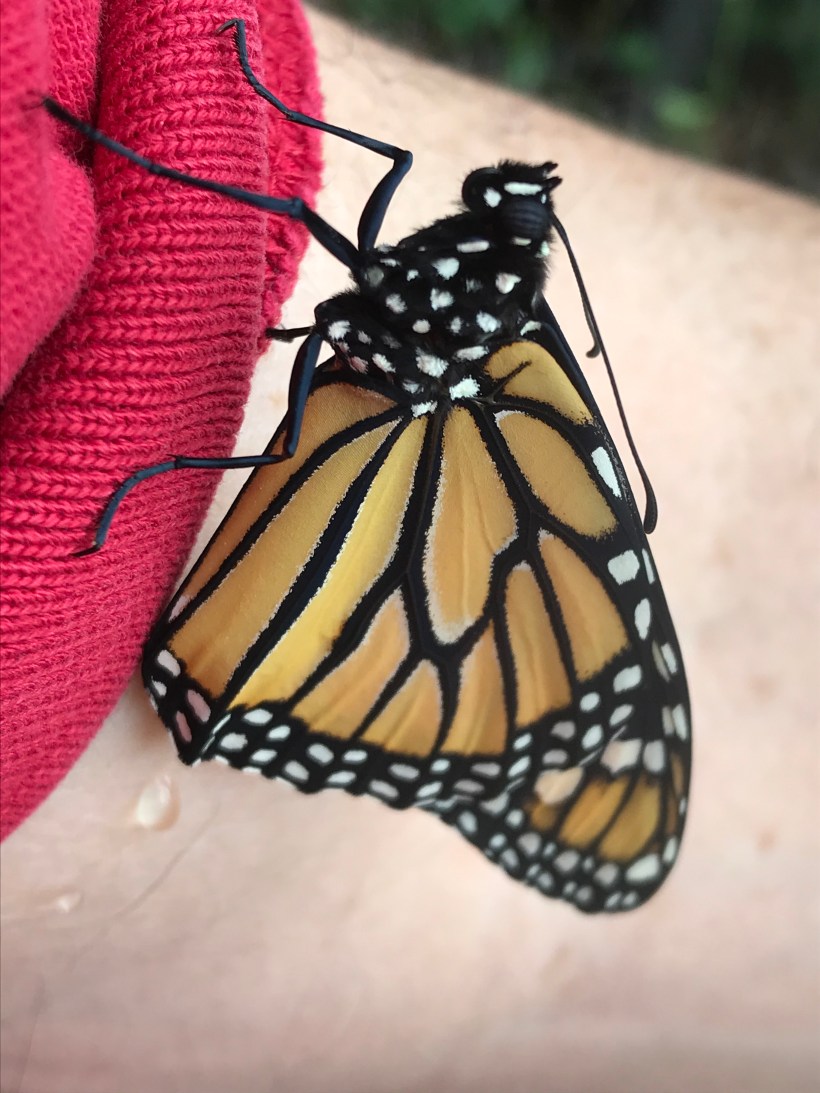
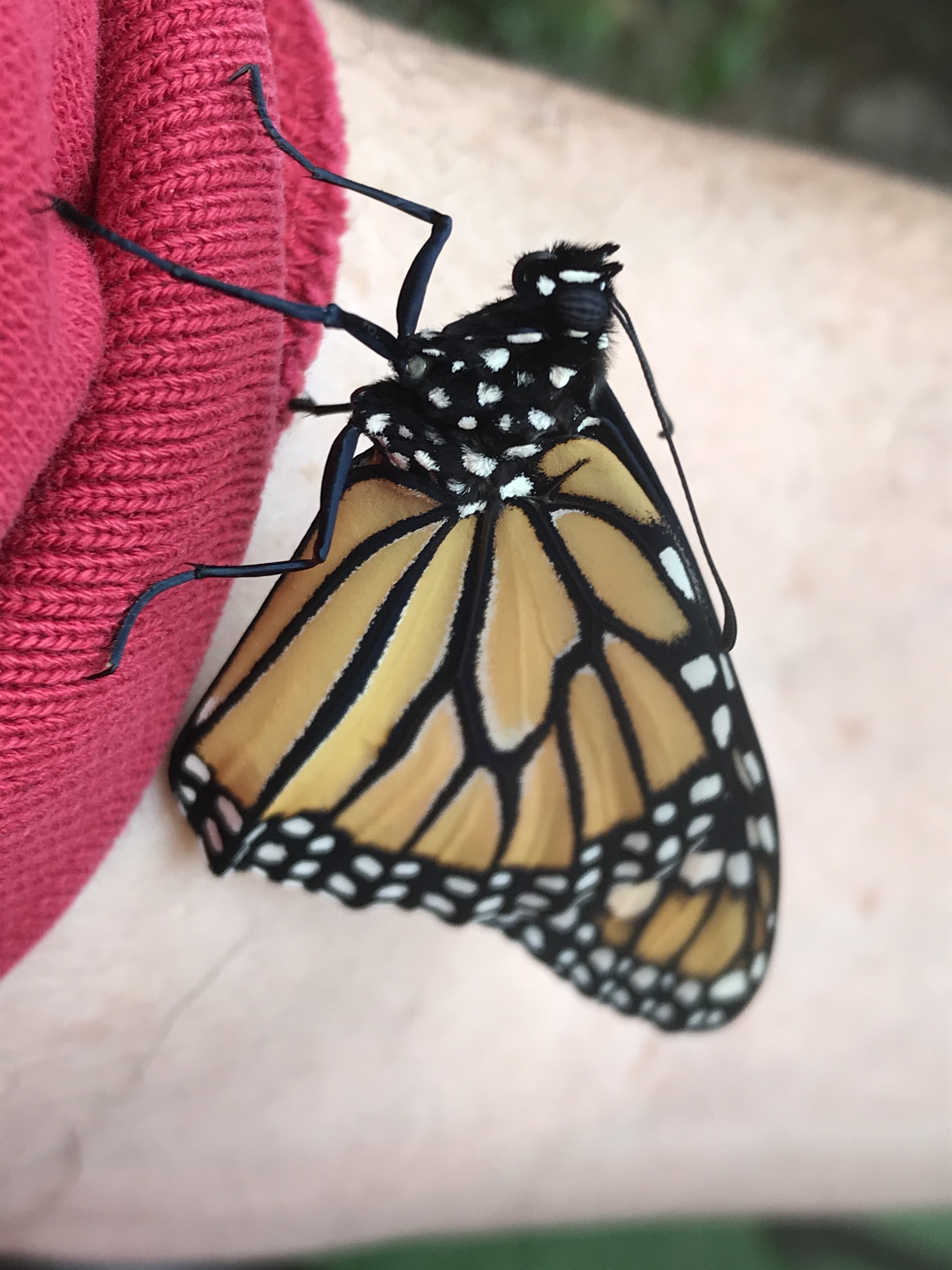
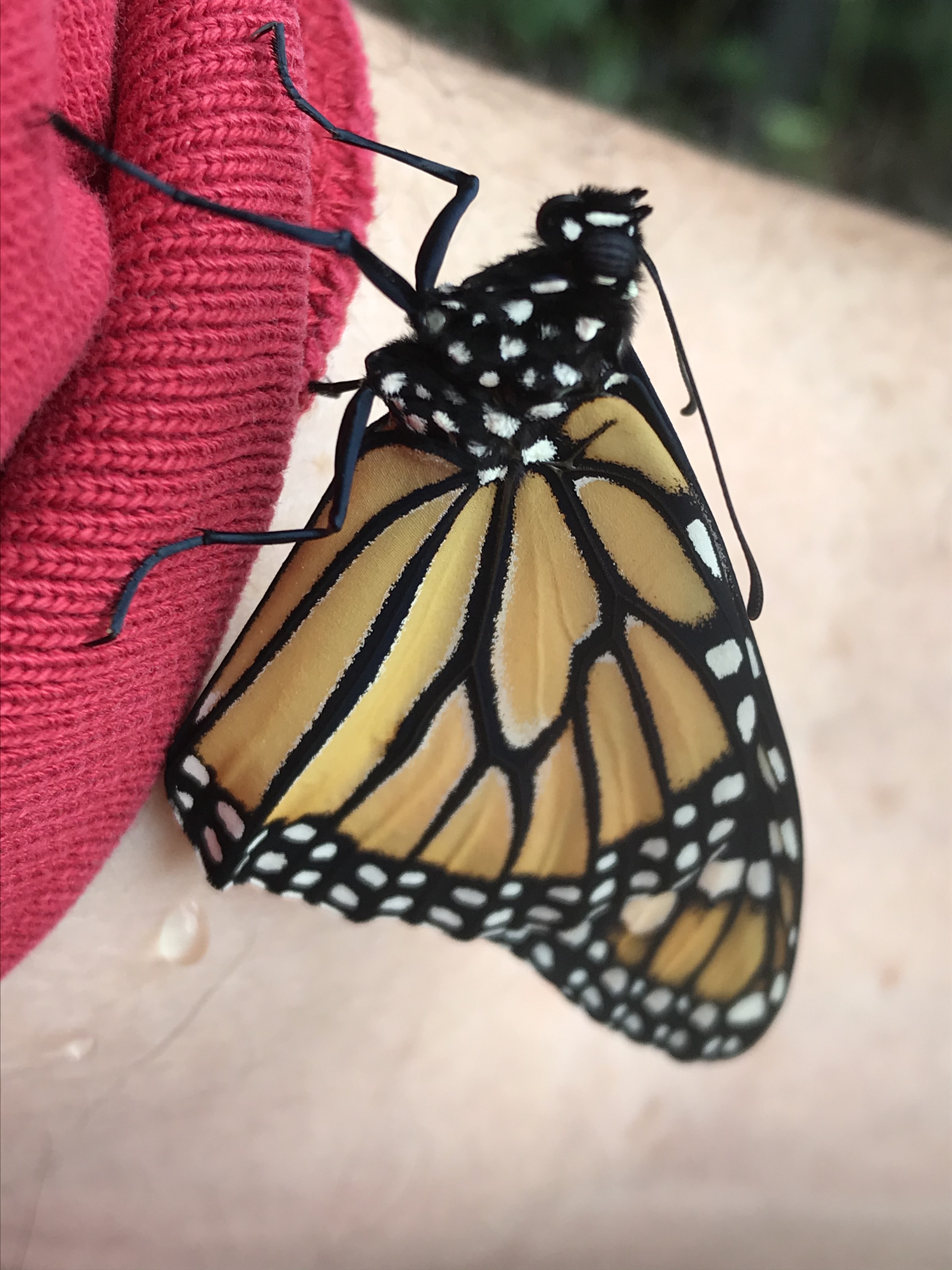
Misjudged by over an hour, I reached into the cage to allow the Monarch butterfly to crawl onto my hand for the first flight. Instead, it crawled up my arm and clung to my cotton shirt sleeve.
Click photograph for a larger view and use Ctrl-x to zoom in closer.
Clinging to my sleeve, this newly emerged Monarch wings dried. It is a process of excreting the fluids pumped into wings, crumpled from folding within the chrysalis, to expand them. The clear drips of water on my arm are this fluid.
Click photograph for a larger view and use Ctrl-x to zoom in closer.
Here is a video from this year, a Monarch emerging from the chrysalis, then expanding crumpled wings. Notice, this butterfly has a problem: once emerged the butterfly swings back and forth continually as it clings to the chrysalis. While interesting to us, the movement is caused from a missing front leg. Monarch butterflies have four legs, this butterfly is missing the right front leg, the imbalance causes the swinging movement. Freshly emerged, a large, distended with fluid abdomen is prominent between small, crumpled wings. With time, the abdomen pumps fluid, expanding the wings. Over several hours the fluid runs from the wings and is expelled from the abdomen, as seen in the above photograph.
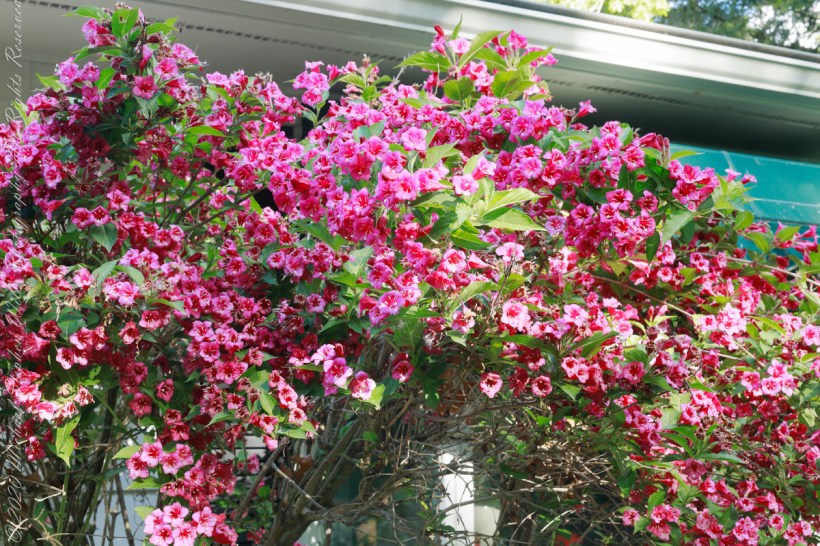
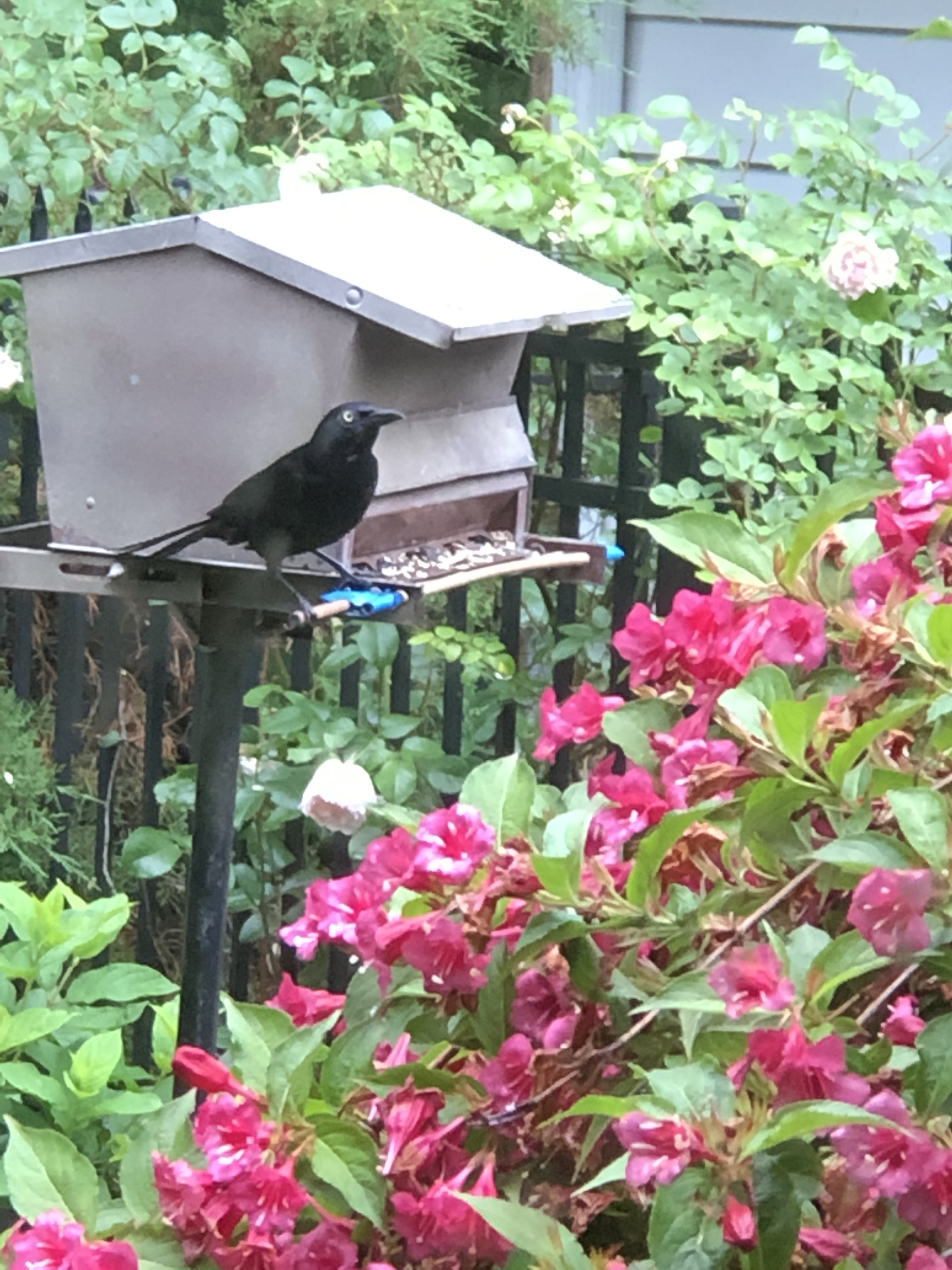
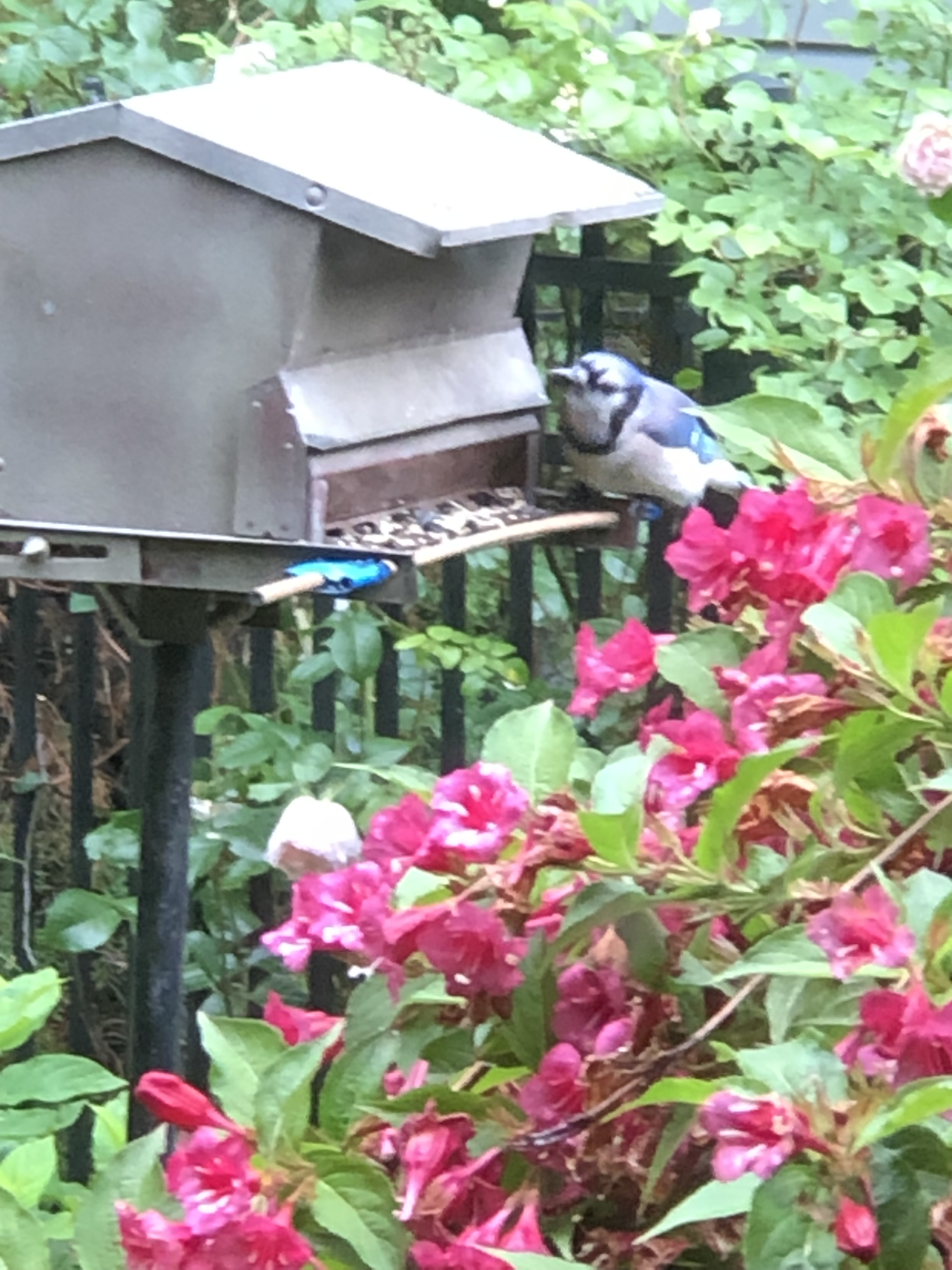
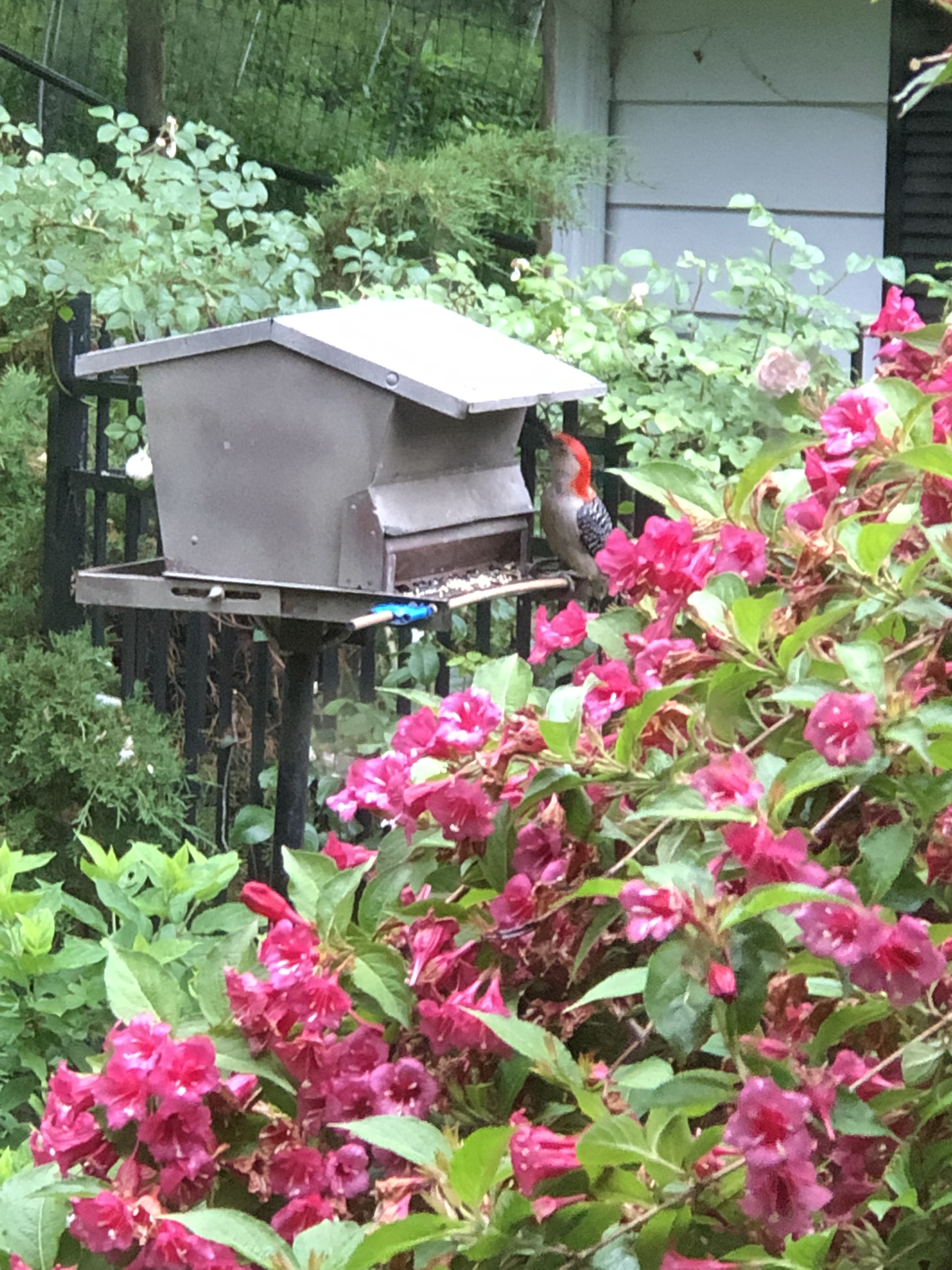
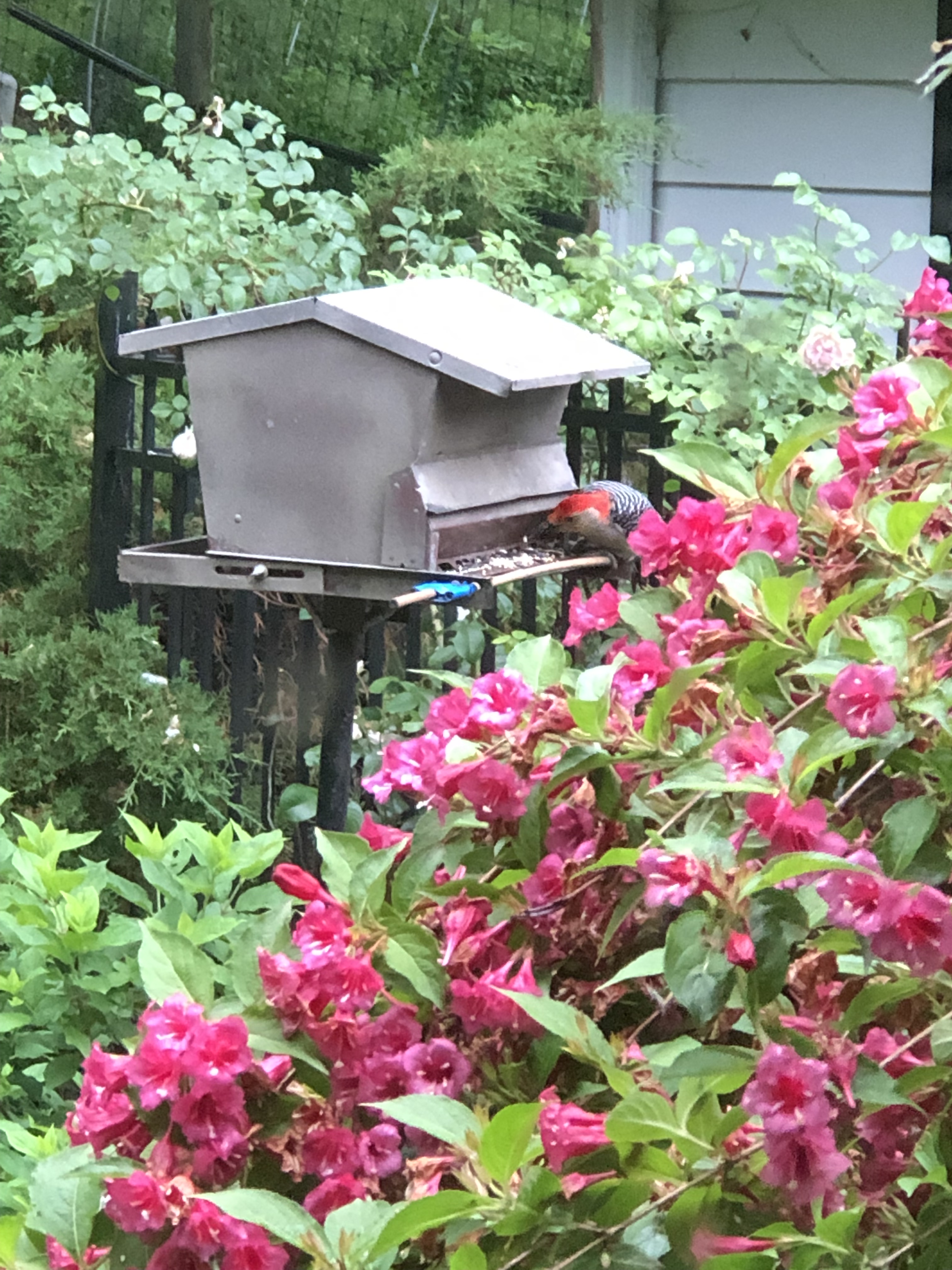
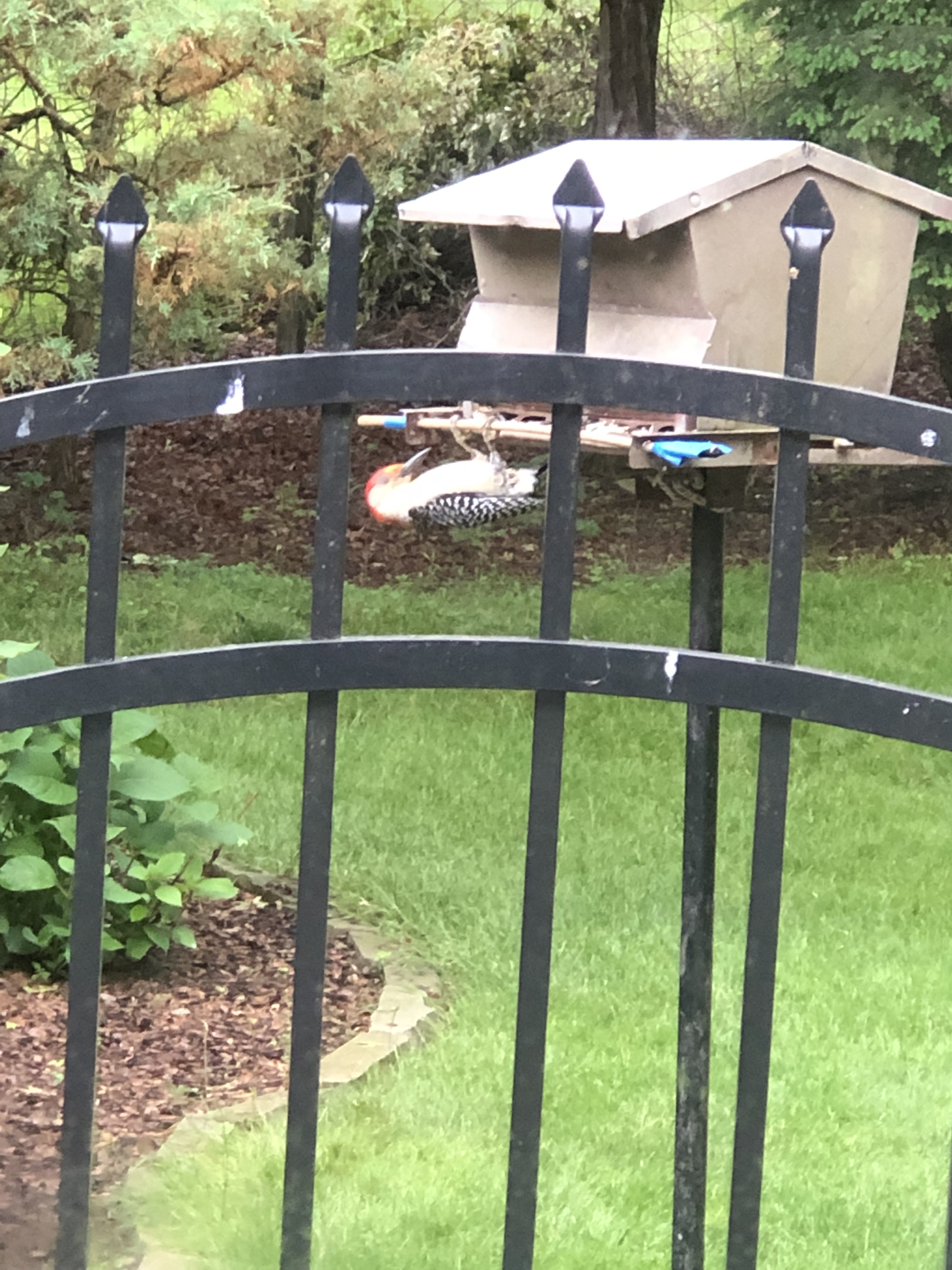
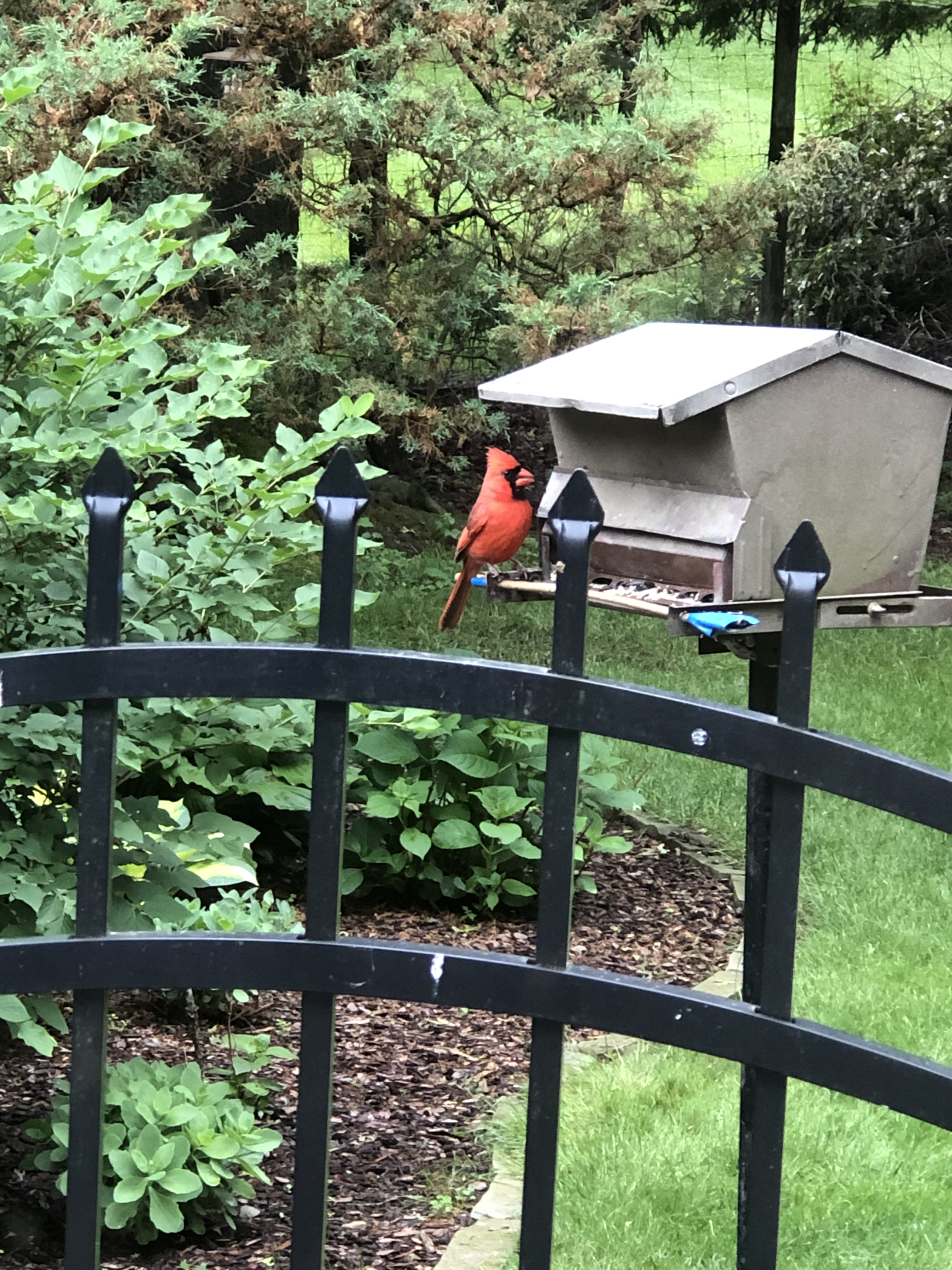
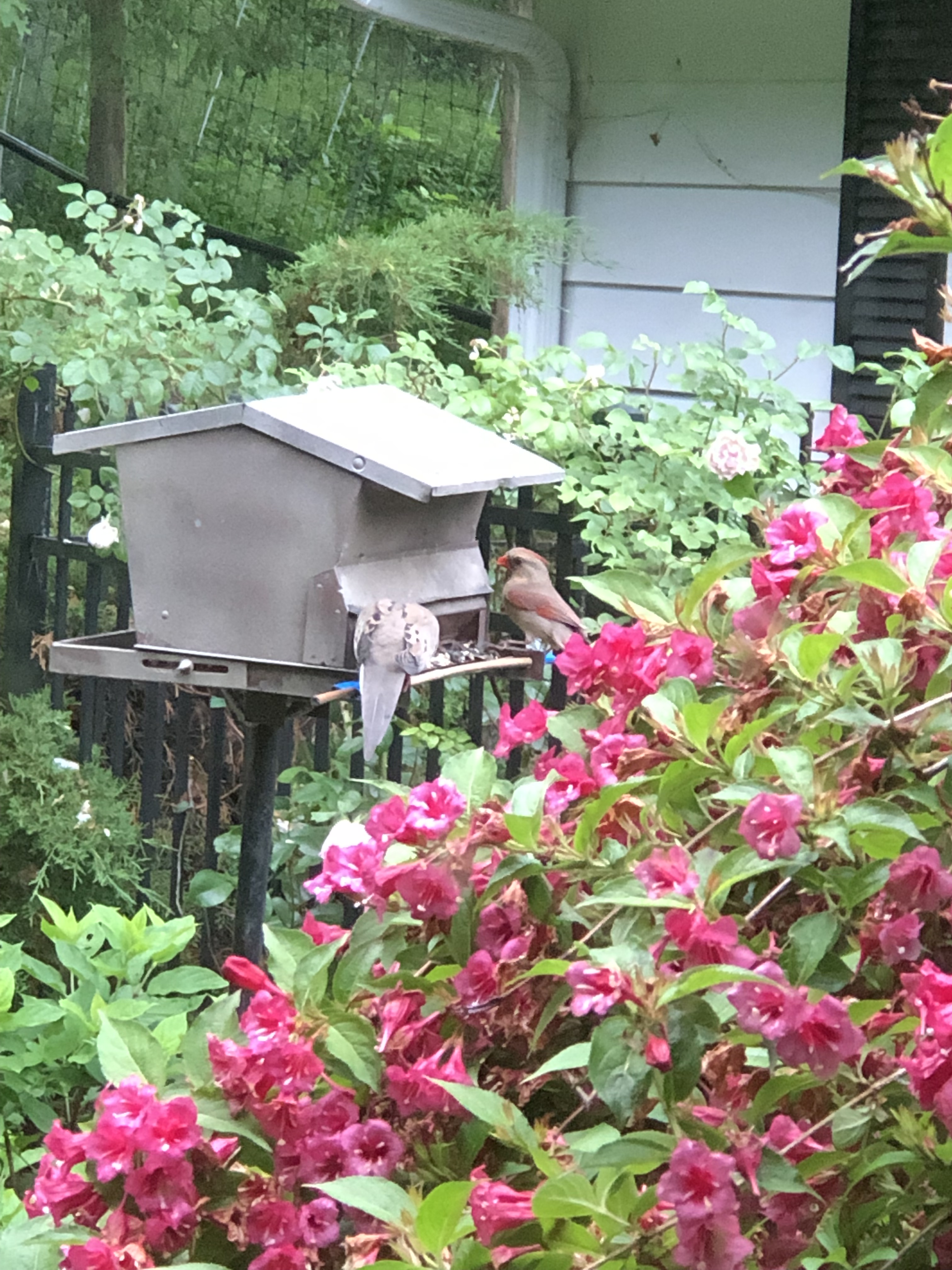
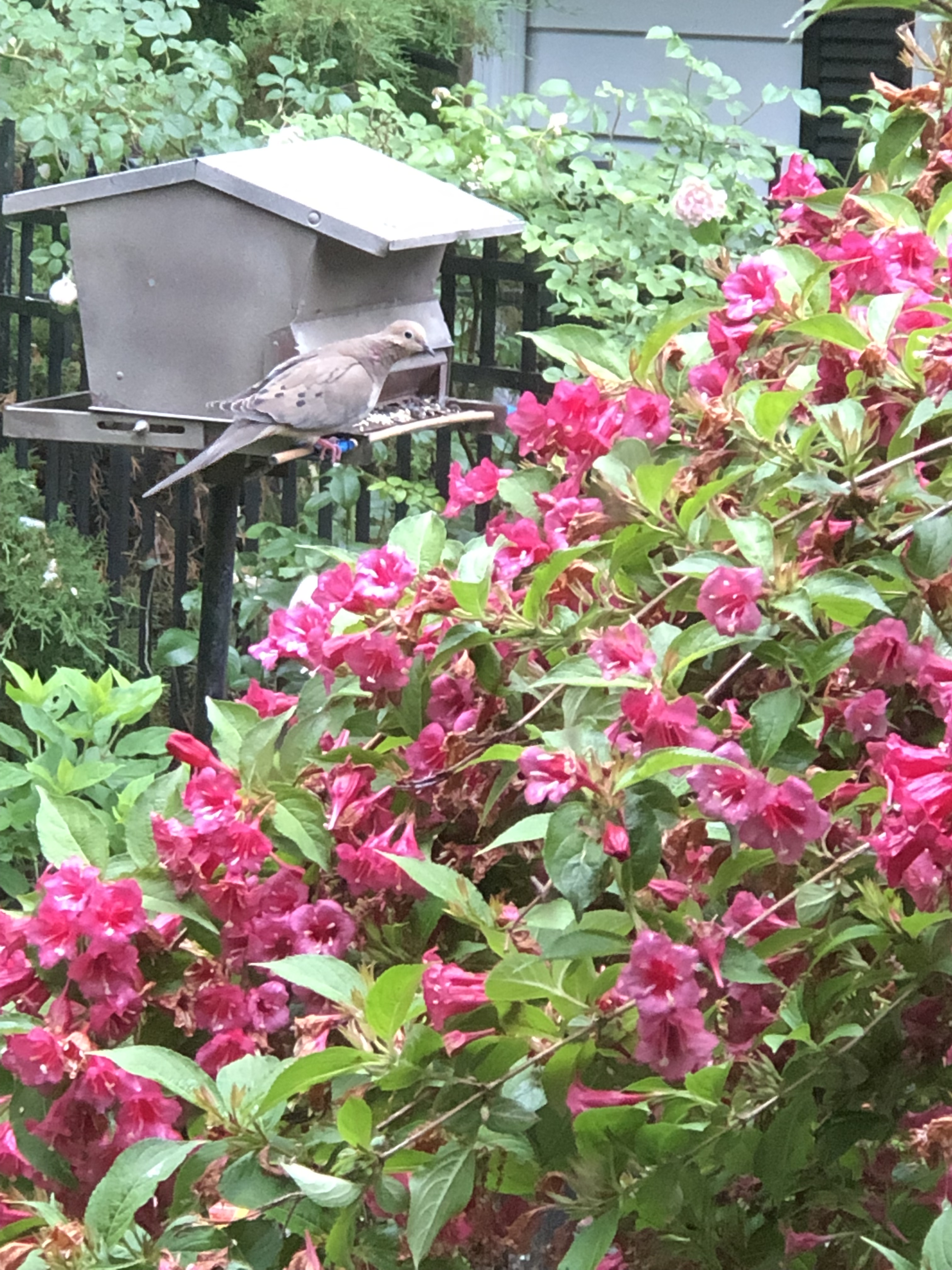
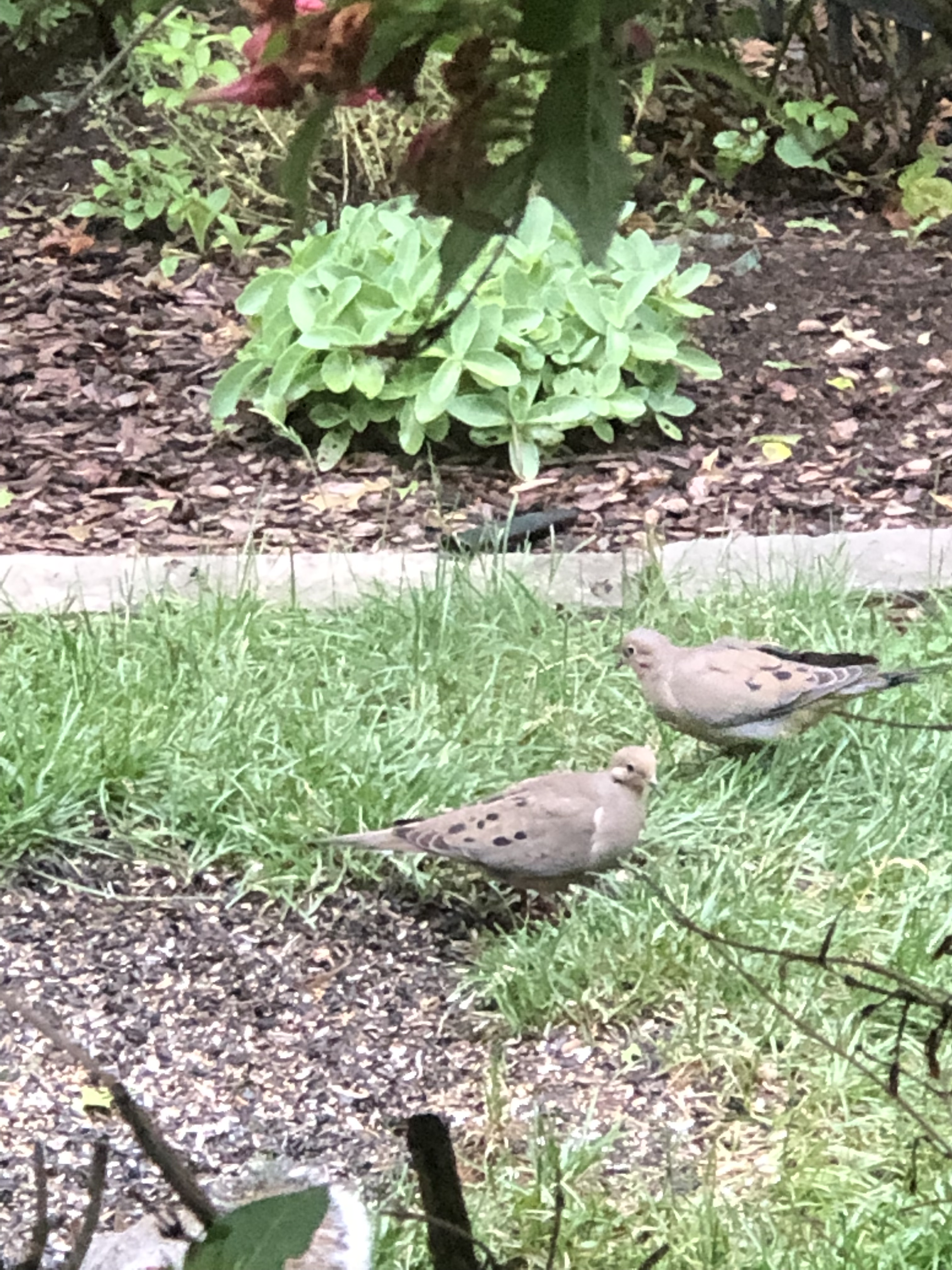
Sad to say, today, Sunday June 12th, the flowering bush is spent, the blooms withered and falling. Pam took time to document some visitors while the Weigela was in its glory. This is a sample of the species we enjoy while washing the dishes.
GrackleBlue JayRed Bellied WoodpeckerWe also have Downy, Hairy and Pileated WoodpeckersThe name “Red Bellied” is a mystery to me.Male CardinalDove and female CardinalMourning DoveWe have a huge dove population, supported by our feeder.
These photographs were taken by Pam through our windows with her Iphone 8 plus.
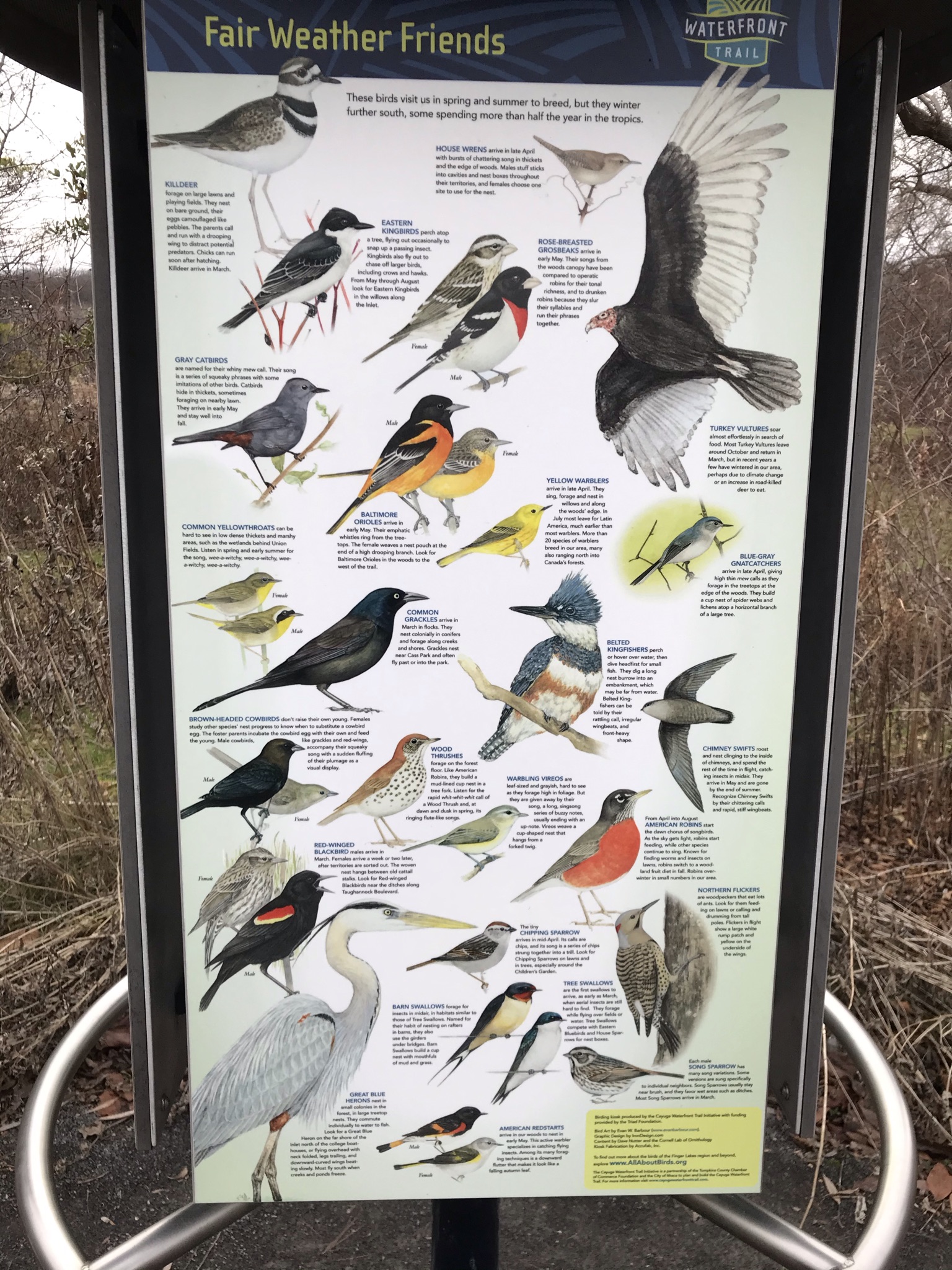
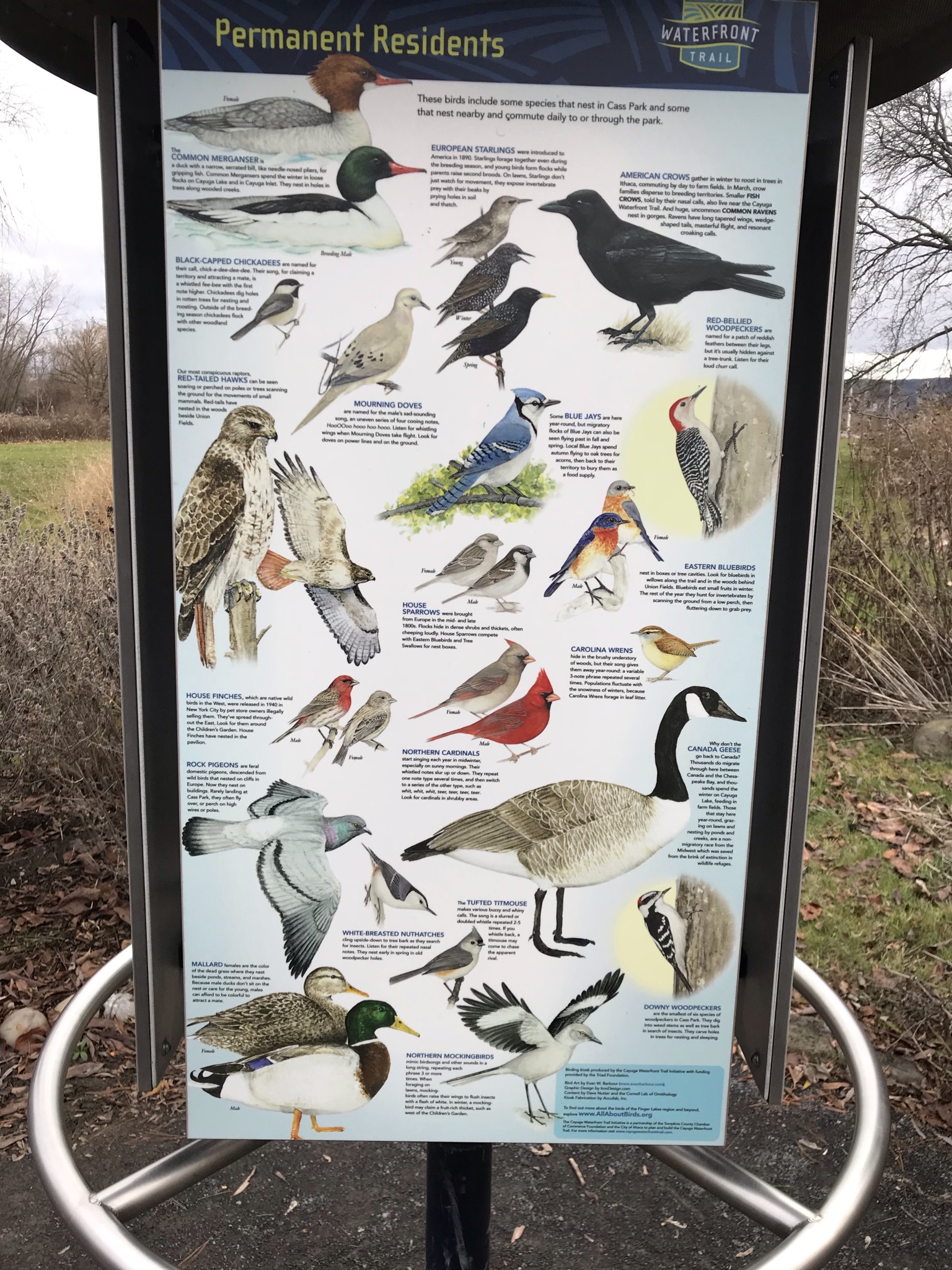
Here is a series of informative signs from Cass Park, just down the hill on the Cayuga Lake Inlet. Pictured are resident birds, most of them visited our backyard feeder.
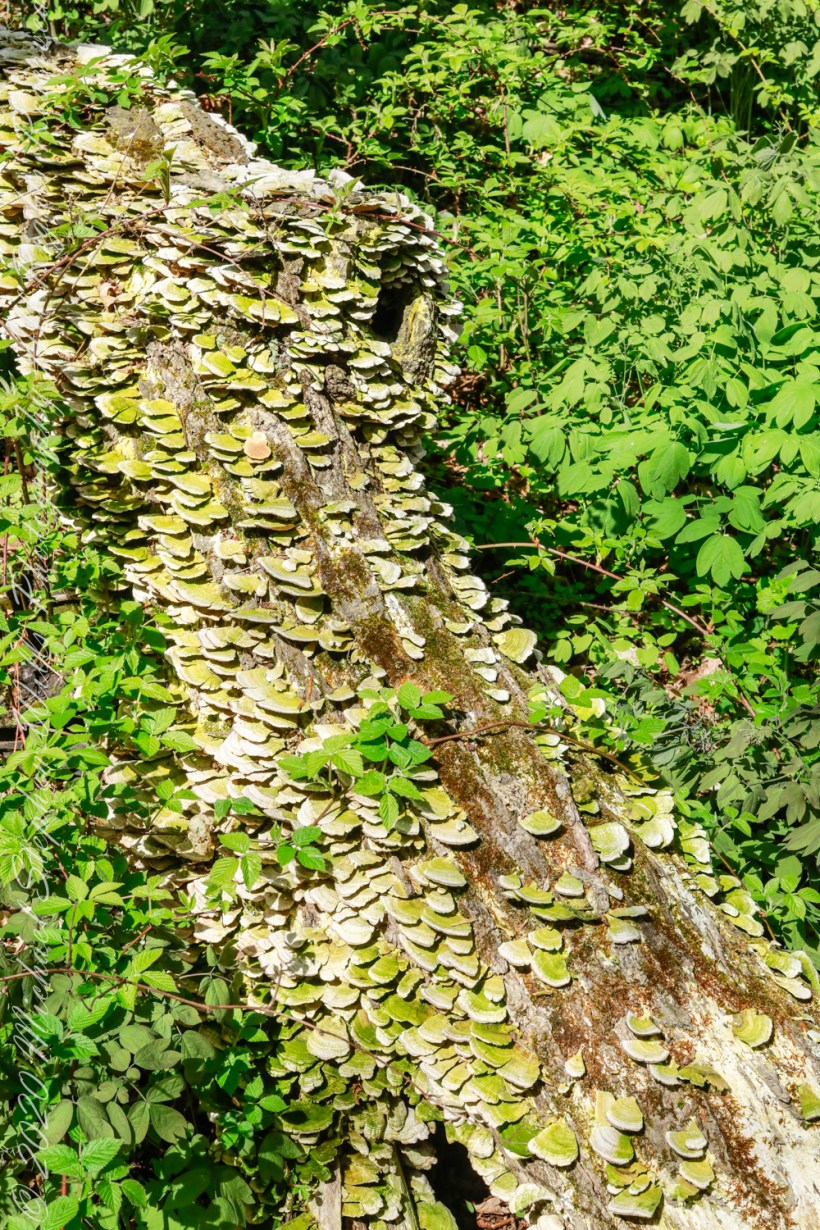
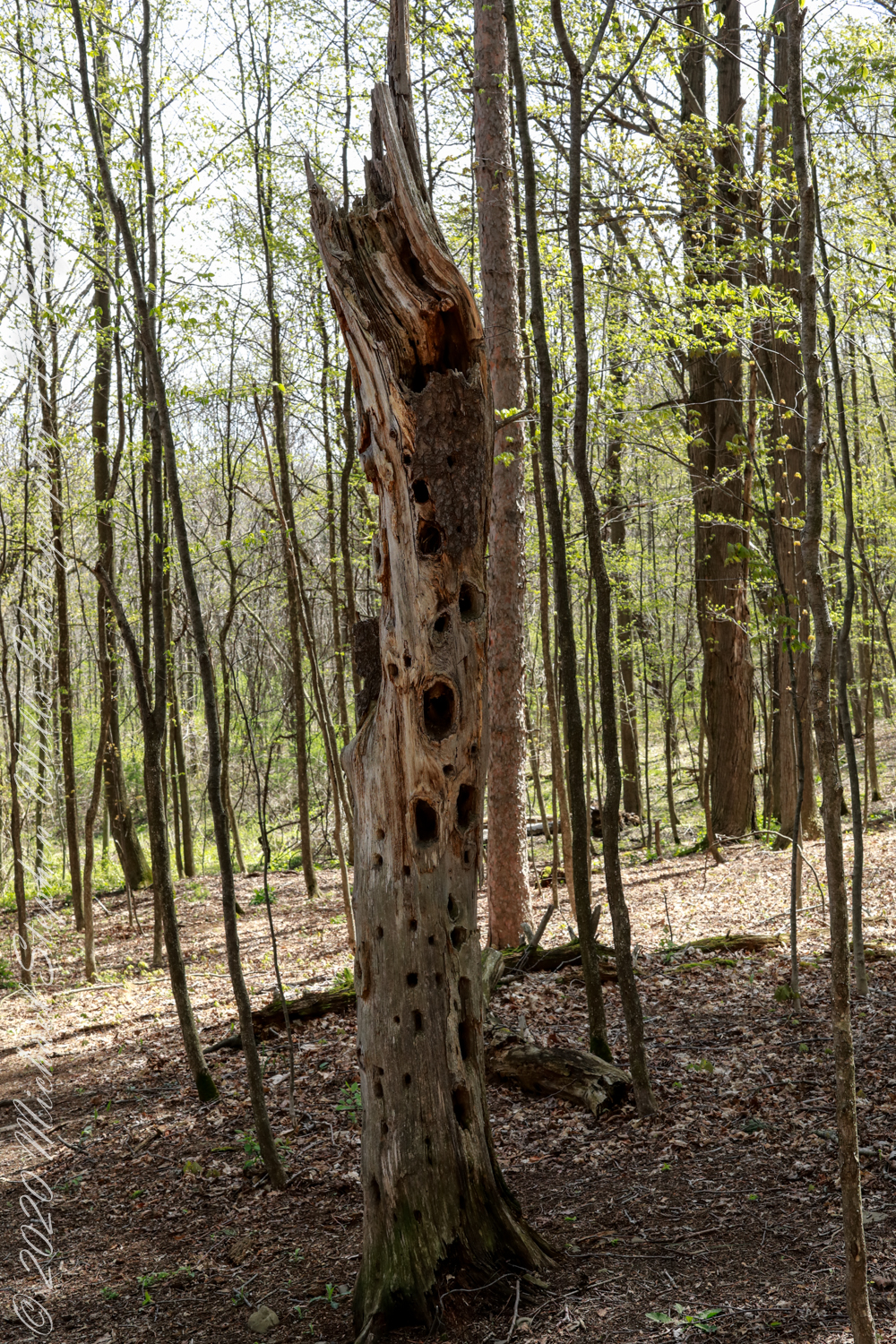
I found these snags surrounded and, at a distance, hidden by the burgeoning Brock-Harvey forest preserve here in the Finger Lakes.
As with burgeon (see yesterday’s blog post), the word “snag” has a long history from a forested northern region of the planet, though it hales from Scandinavian languages rather than Old English and Old German. As a noun “snag” is something with a point and a body long enough to cause inconvenience, the point catching on anything handy. As a verb “snag” is to become inconvenienced by a projecting body.
In forestry, a snag is any trunk of a dead tree. Commonly, a tree top breaks off leaving a jagged point which possibly can become an inconvenience. For birds, an upright dead tree is a blessing, perfect for homemaking.
Standing Snag with Nest Holes
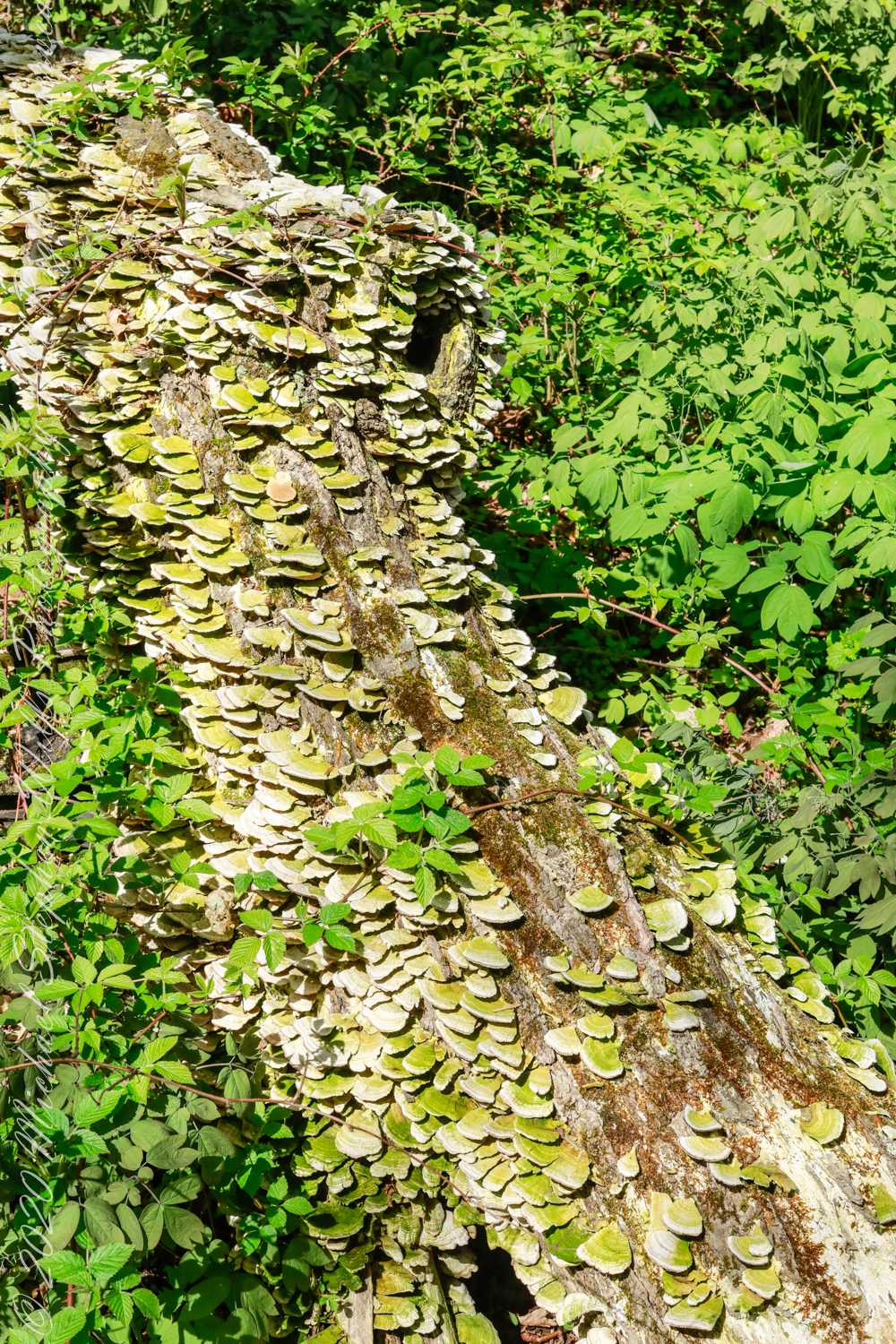
Fallen, the snag is still a snag and also a home first for fungus. When the work of the fungus is done, the resulting mound is perfect for growing new trees.
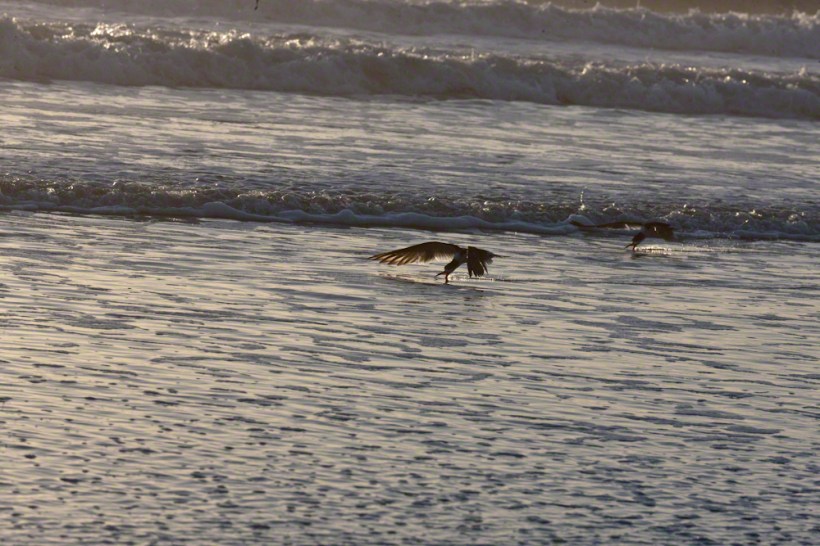
A multi-day hatch of small fry around the time of a new moon triggered this Black Skimmers (scientific name: Rynchops niger) feeding behavior surf off Cocoa Beach, Brevard County on Florida’s Atlantic Coast.
Copyright 2022 Michael Stephen Wills All Rights Reserved
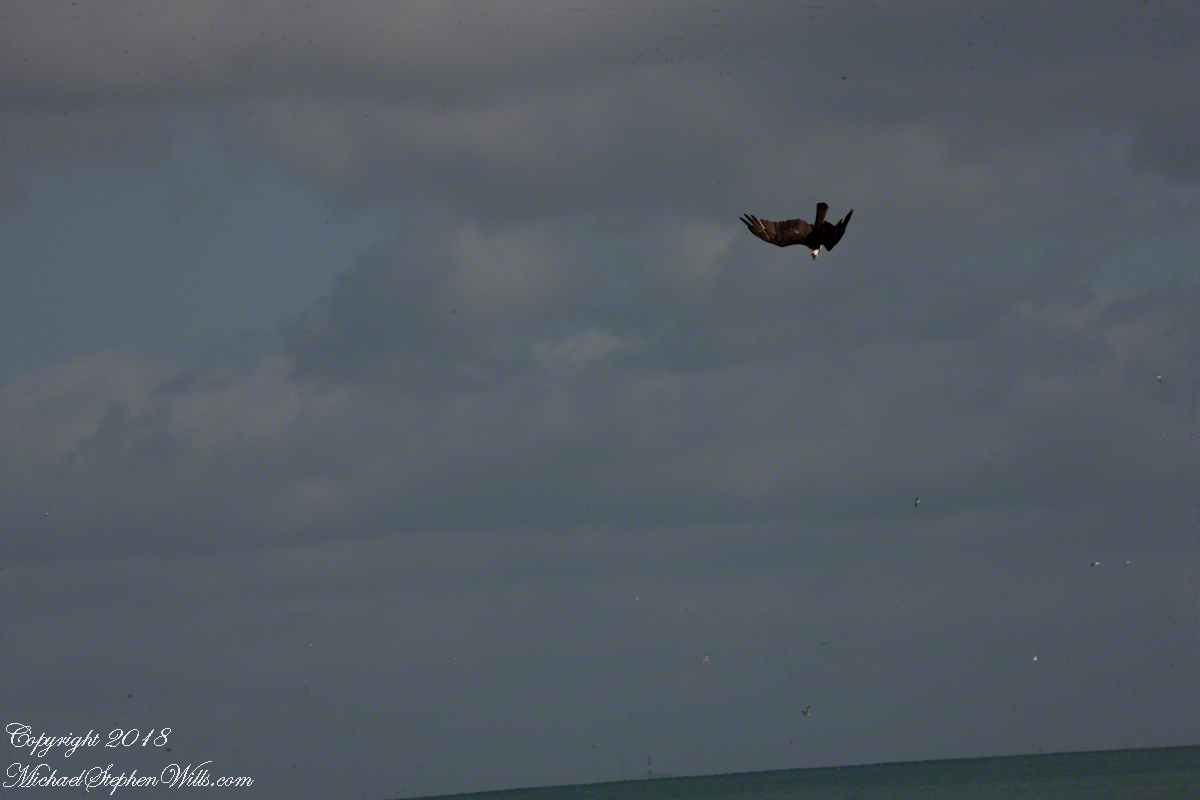
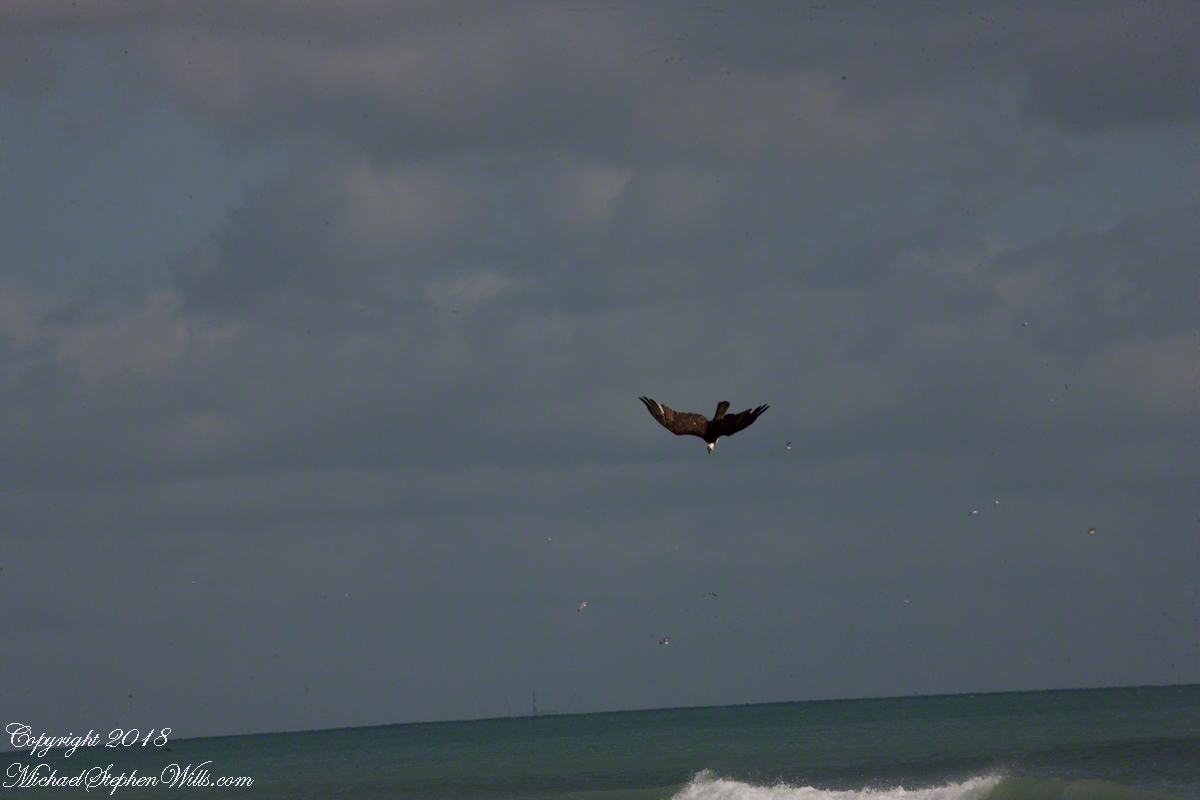
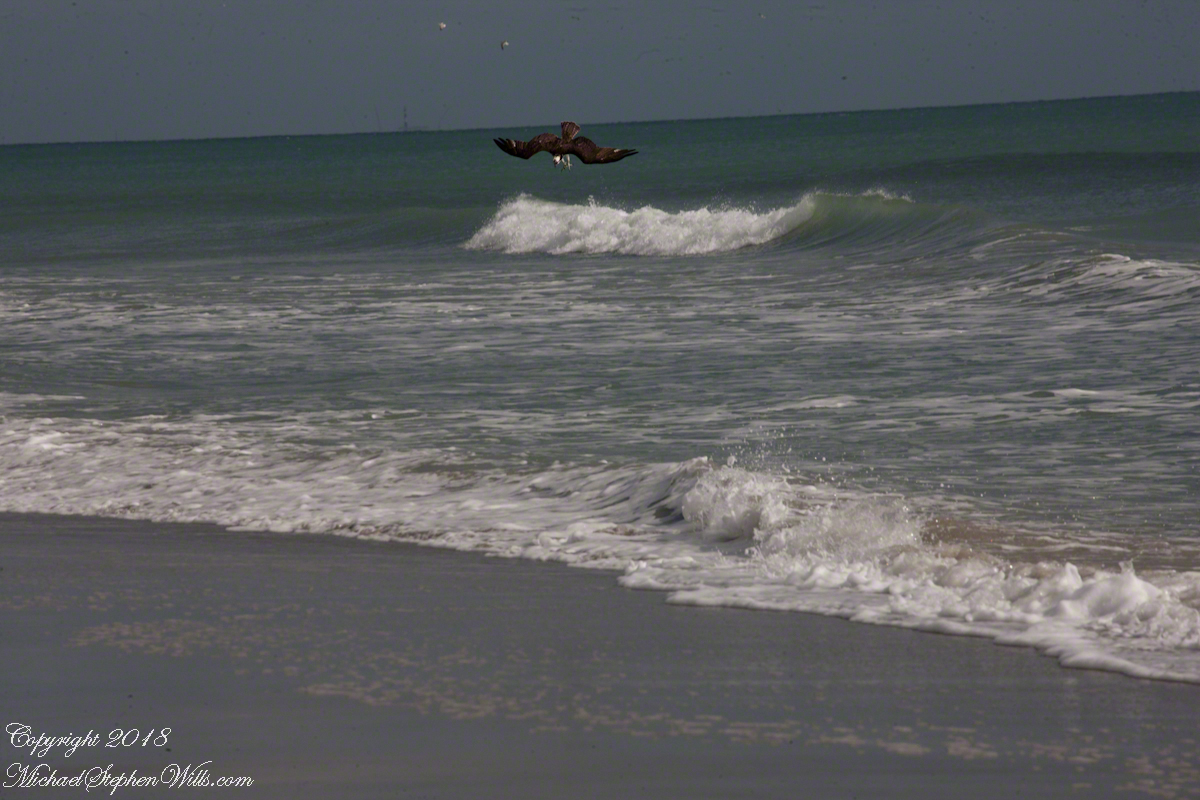
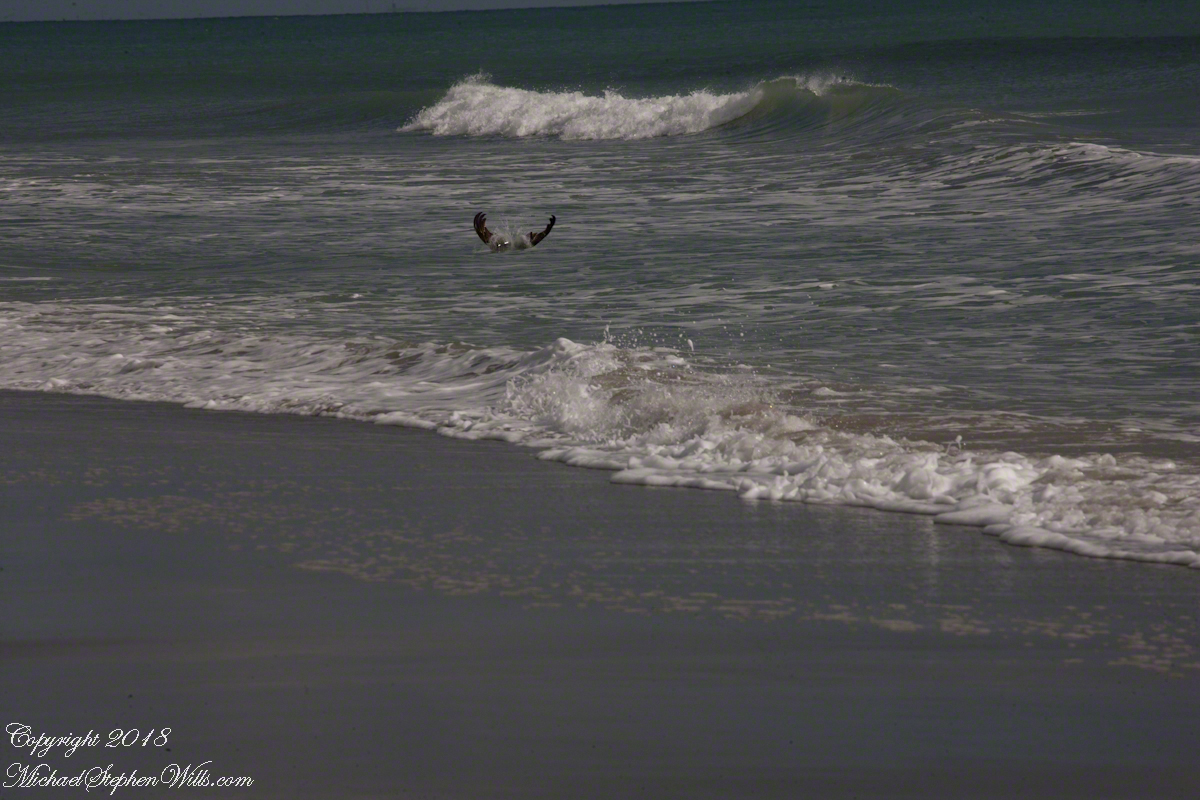
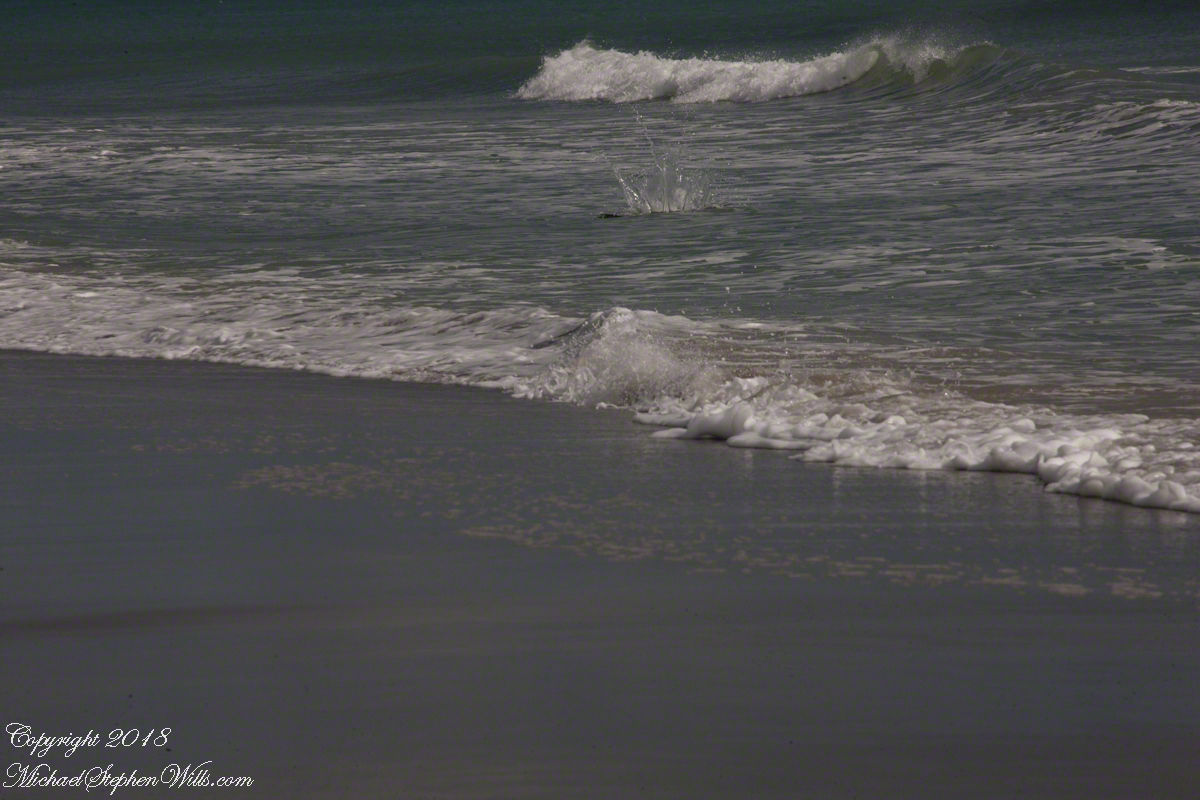
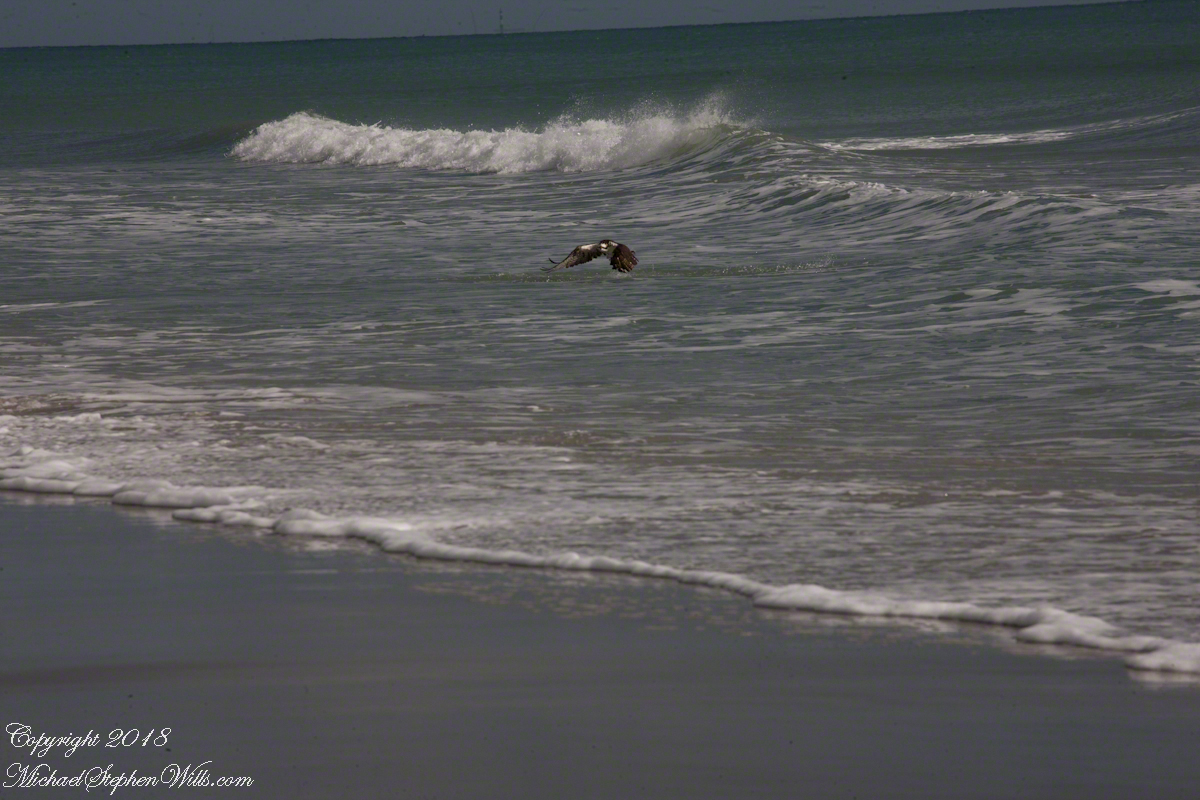
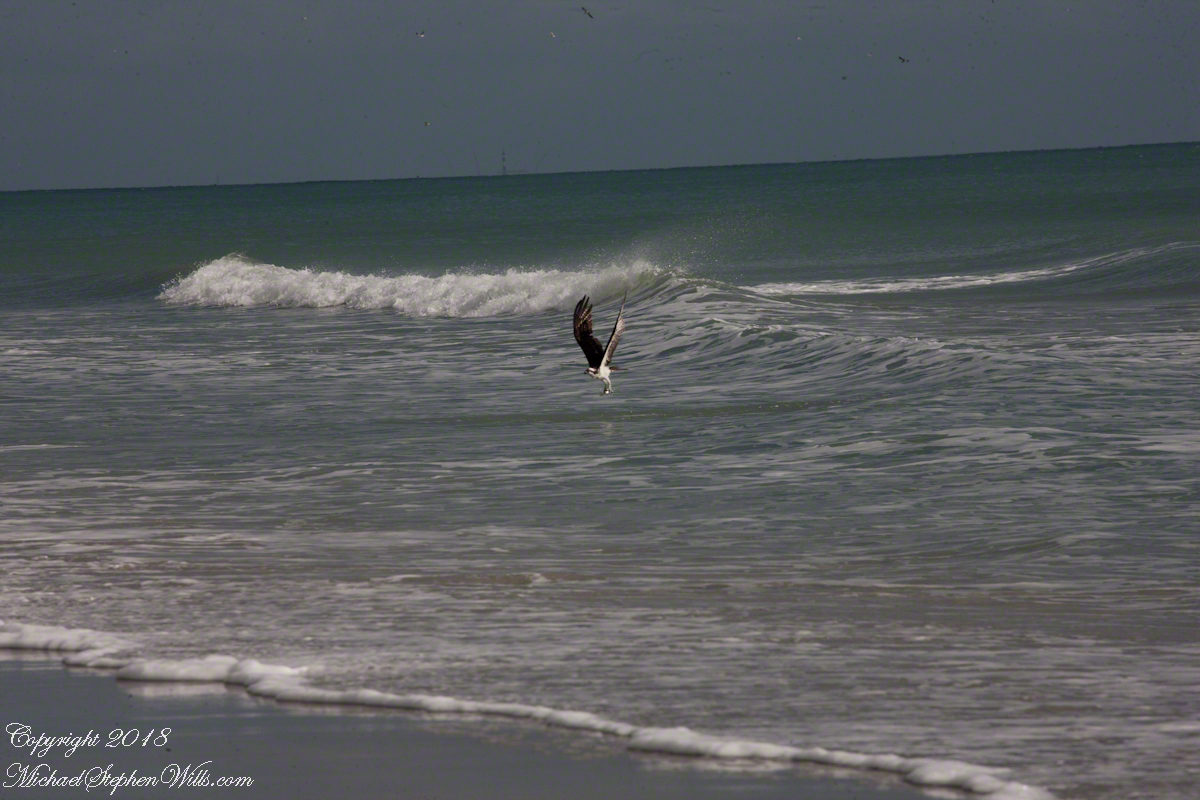
A sequence of high speed shots of what the Osprey does best. For this, the sixth and final post of this series (Click me for the first post, “Endless Searching“), we follow the bird in a dramatic plummet into the surf until it rises, catch in claws.
Late morning of January 20, 2019 I headed out with the Canon EOS-1Ds Mark III mounted with the Canon EF 70-300mm f/4-5.6L USM lens for handheld shots. Many elements aligned for these shots: weather, equipment, placement among them. The angle of the sun at 11:21 am was not optimal, but the cloud cover made up for it.
Click any photograph for a larger view.
The Day’s Setting
Commitment
The dive impact happens in less than 2 seconds.
My observation is the reason the wings are extended is to maintain control of the dive…..…..I have seen these dives terminate inches from the water with a u-shaped swoop.Talons are extended in the final seconds.
The Strike
Less than one second from point of impact until emgergence and flight.
Instant of impace with wings still extended.Gone
Arise
What strength, to lift off from the water.Catch in talons
Copyright 2022, Michael Stephen Wills All Rights Reserved
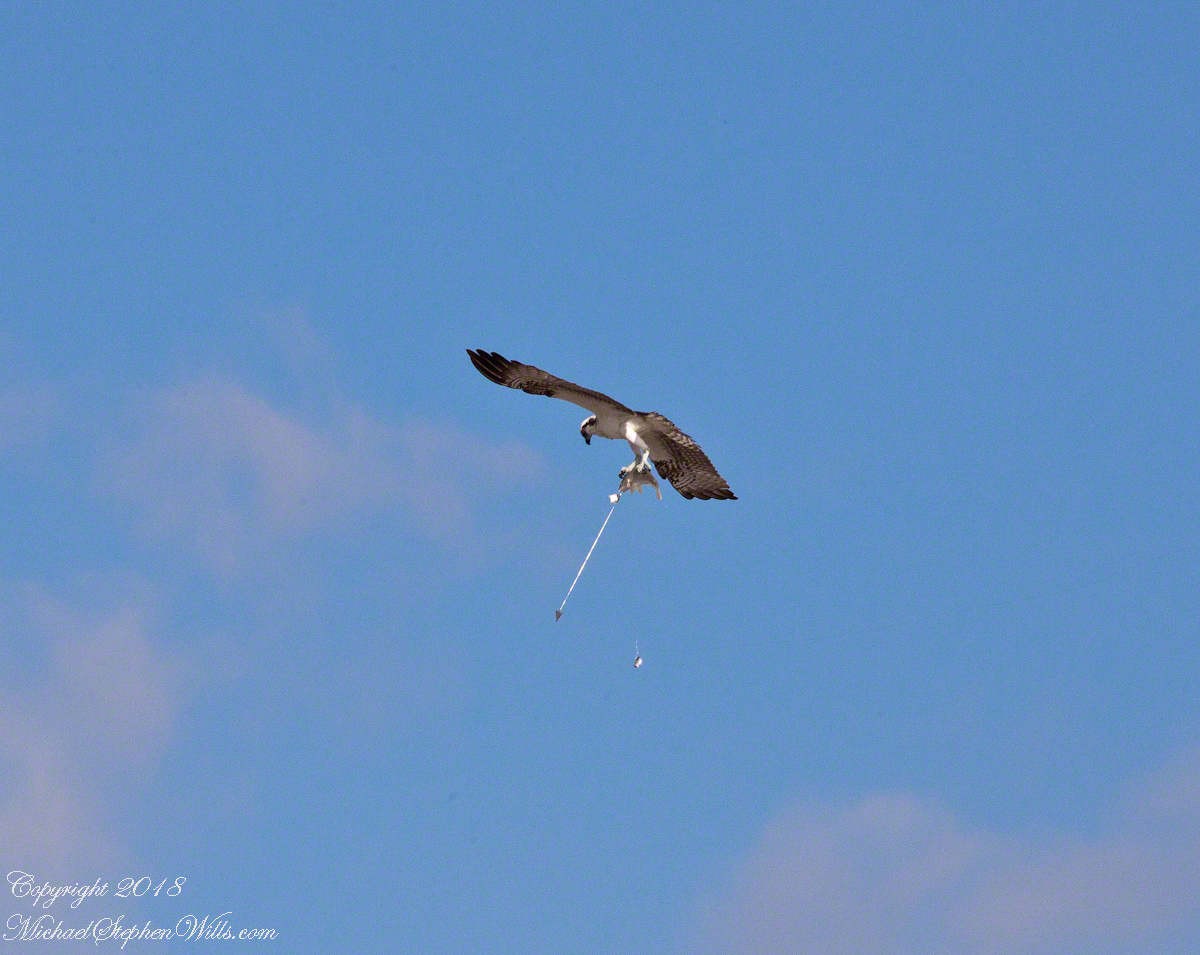
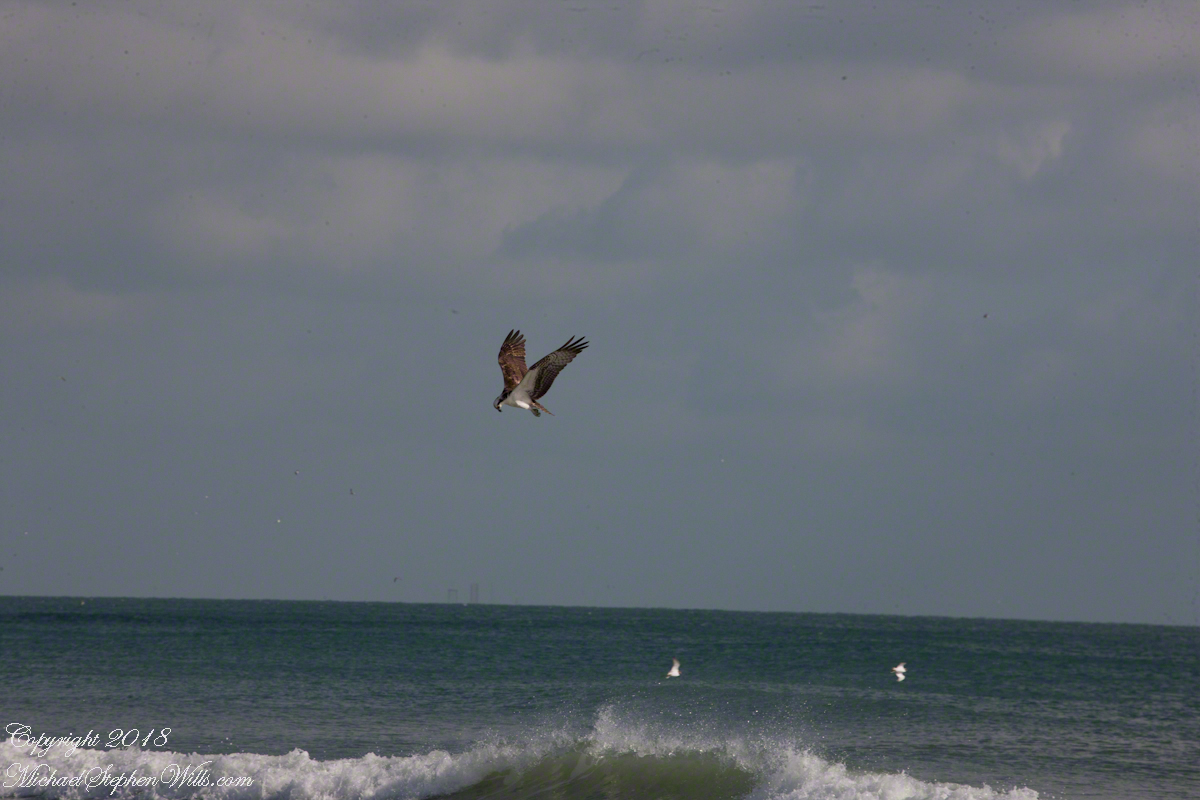
Now and then a photograph comes along that stands by itself. For this, the fifth post of this series (Click me for the first post, “Endless Searching“), we explore images that speak for themselves.
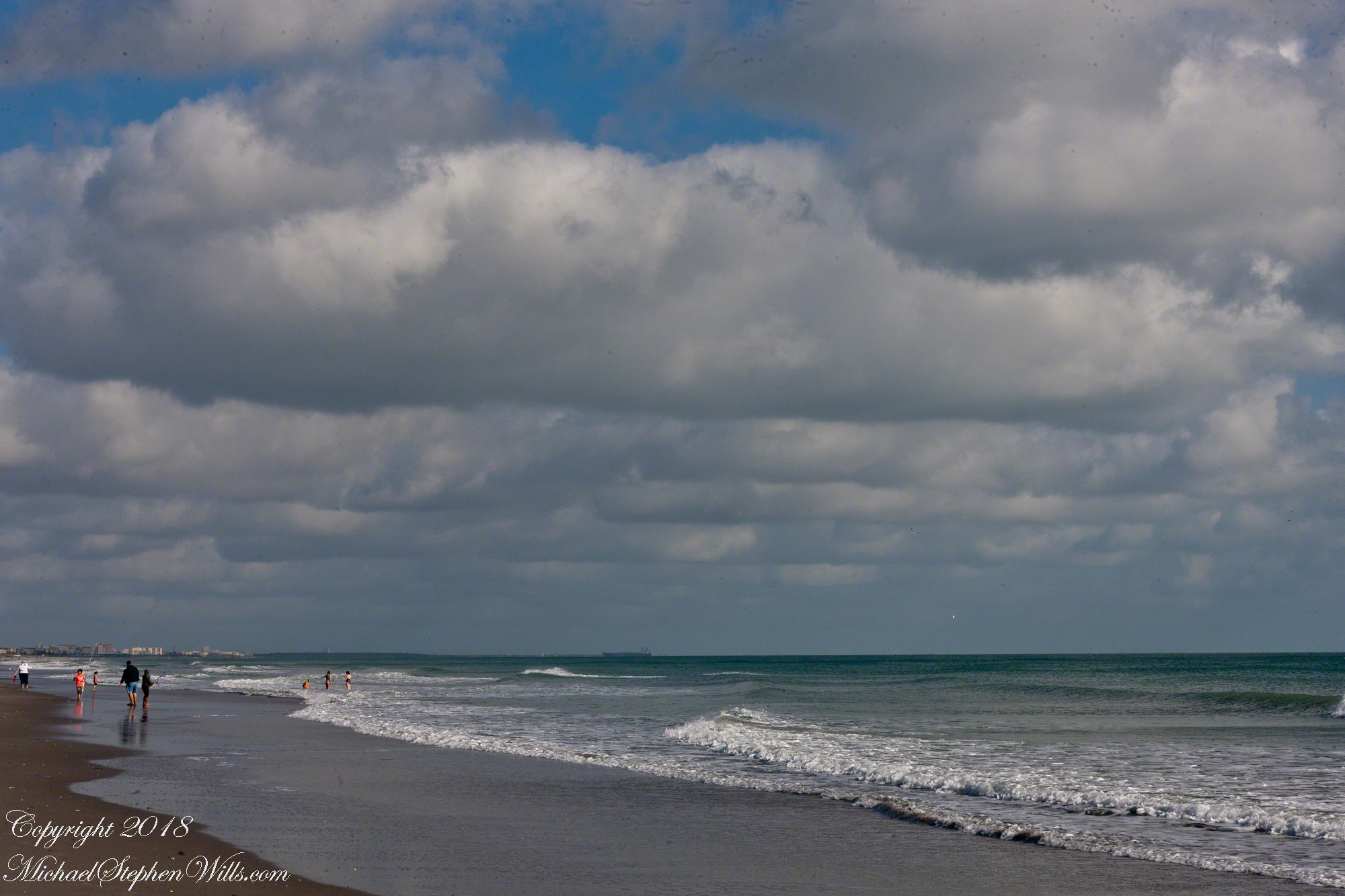
Humans are hard coded to relish scenes of water and land. This day I headed out with the Canon EOS-1Ds Mark III mounted with the Canon EF 70-300mm f/4-5.6L USM lens for handheld shots.
Click any photograph for a larger view.
The Day’s Setting
Hook, Line and Sinker
Poise
Barely visible on the horizon are Cape Canaveral Launch Towers
Copyright 2022, Michael Stephen Wills All Rights Reserved
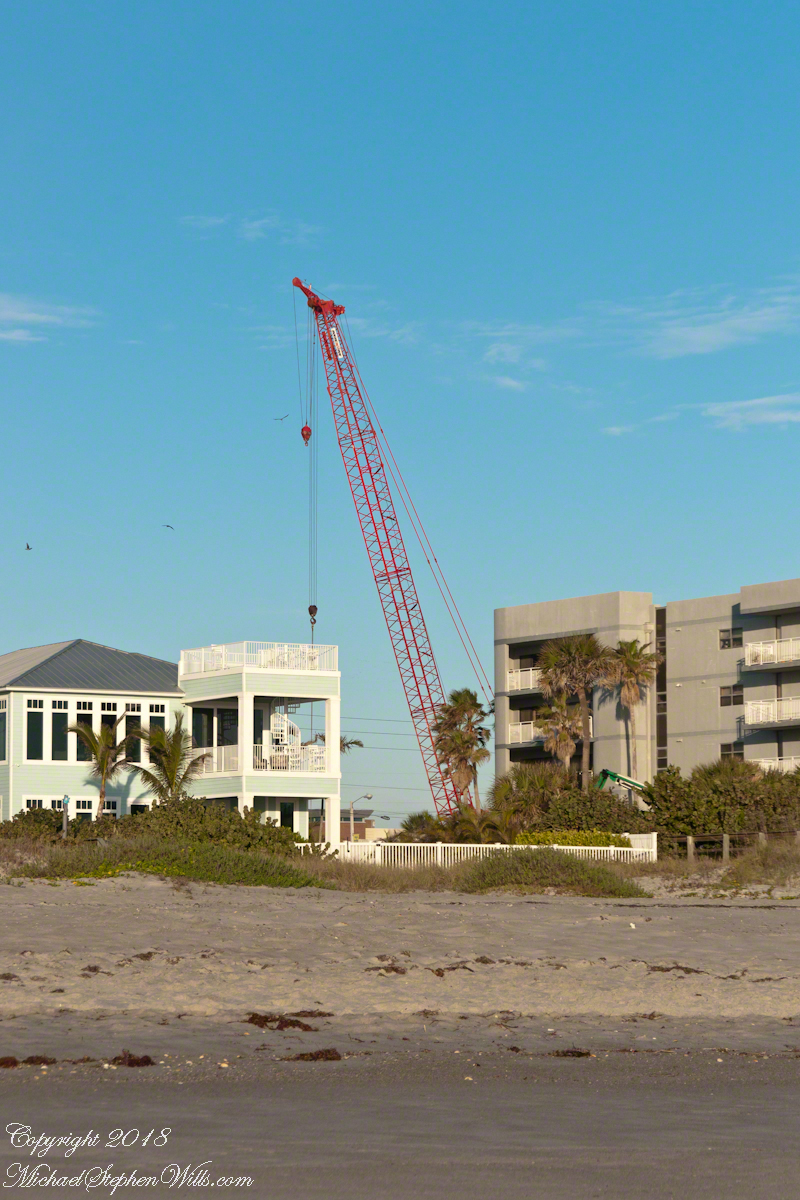
“Florida ospreys (Pandion haliaetus) commonly nest on power poles, communication towers, water navigation devices, lighting fixtures, outdoor billboards and other man-made structures as well as in decaying or dead trees.” This quote from the Florida Fish and Wildlife Conservation Commission web site is a fitting introduction. For this, the fourth post of this series (Click me for the first post, “Endless Searching“), I explore images of Osprey nesting behavior.
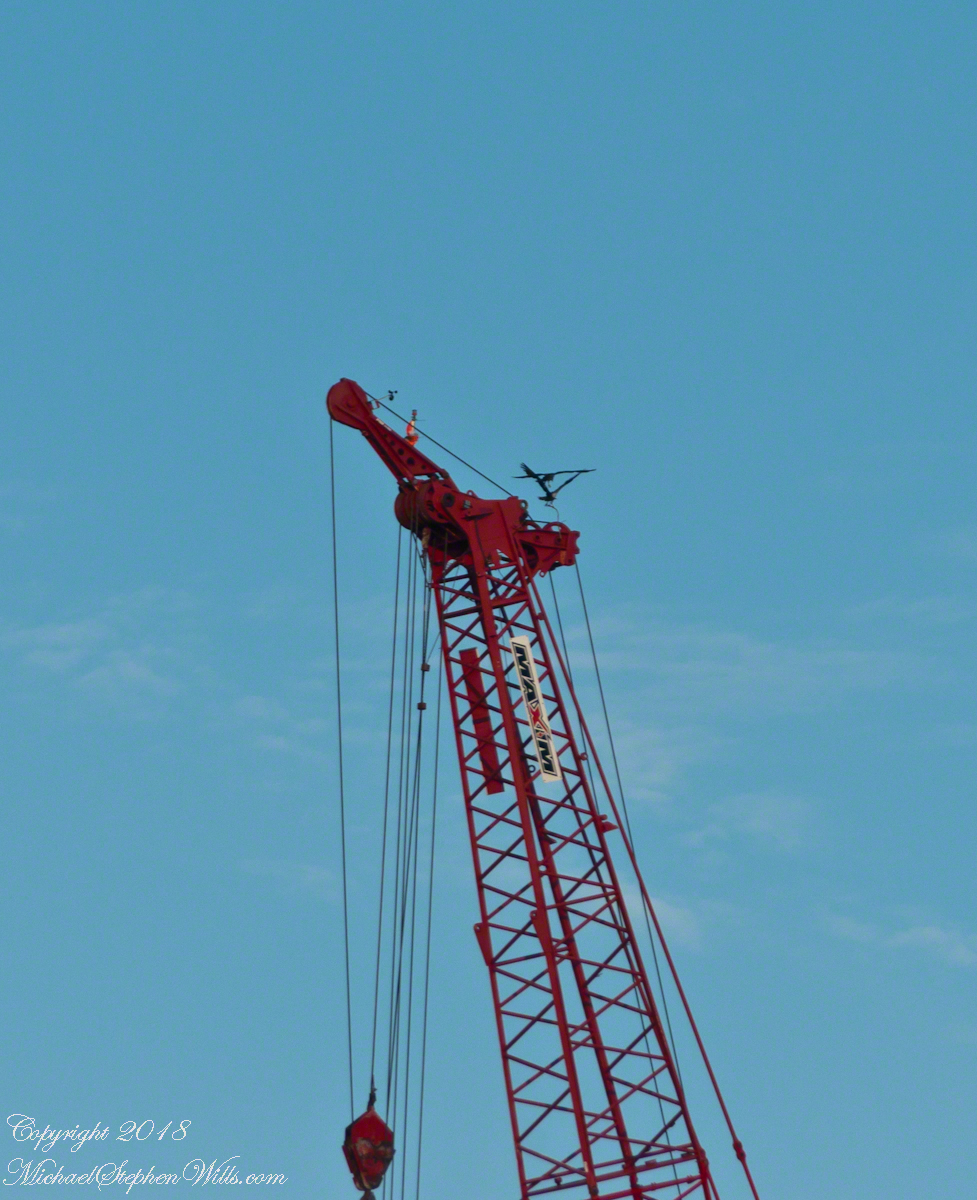
Early morning winter Cocoa Beach walks offer a new experience with each dawn be it a change in wind, light, or beach-combing offerings. This looming crane was a consistent specter the entire month, poised over a downtown parking garage under construction.
Click any photograph for a larger view.
On the Lookout
Distant Figures
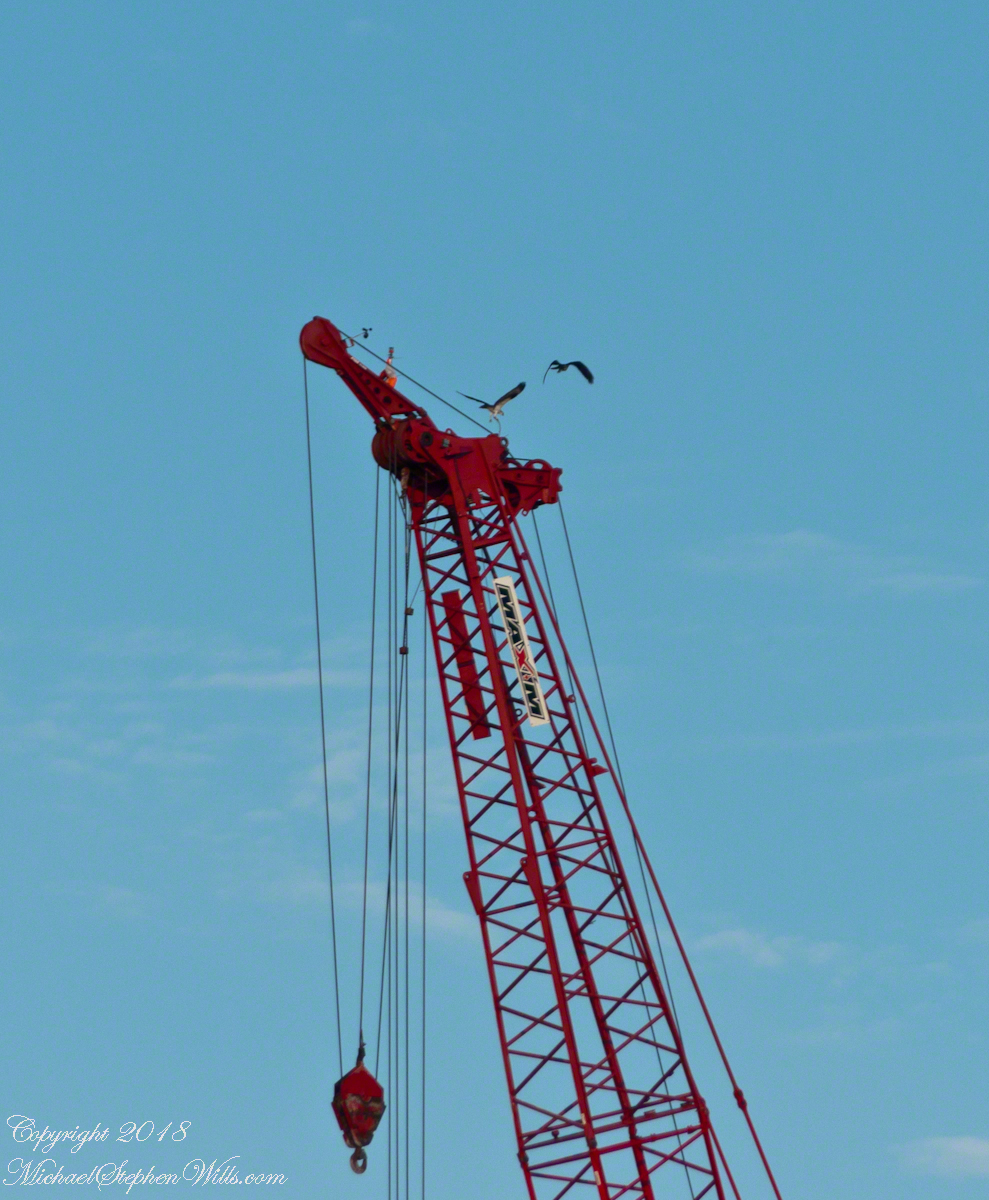
Each winter morning January 2019 I left our ocean side condo to walk the beach, taking equipment according to a whim. For this series I used the Sony Alpha 700 with a variable “Zoom” lens. In this next shot the focal length was set to maximum.
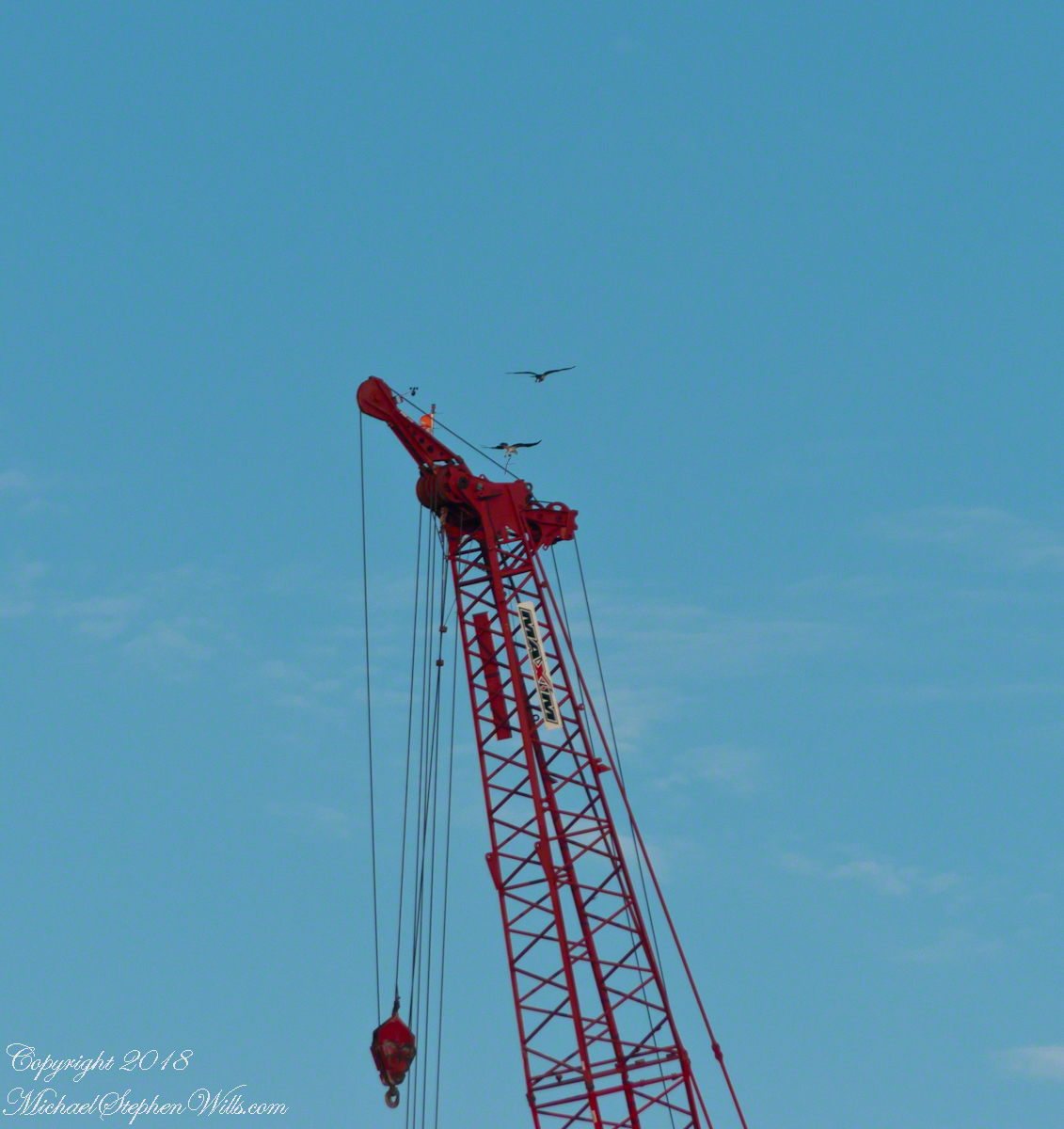
Searching the internet (“Florida Osprey behavior”), a link from http://www.naturesacademy.org states, in Florida, Osprey nesting season is December through February. The following series of photographs clearly show an Osprey with nesting material. The header image for this post clearly shows the markings of the individual holding a large branch.
The second individual is close to the same size, it is a reasonable conclusion the two are flying together. The series was taken in a 33 second time span.
The two were flying around the crane and it is beyond imagination they’d be successful building on an actively used crane. Would construction come to a halt until the nest was abandoned? I wonder.
In following days there were no signs of nesting behavior on the crane.
Copyright 2022, Michael Stephen Wills All Rights Reserved




 Michael Stephen Wills Photography