Blooms: Hosta and Echinacea

Hosta and Echinacea Blooms in a summer dawn

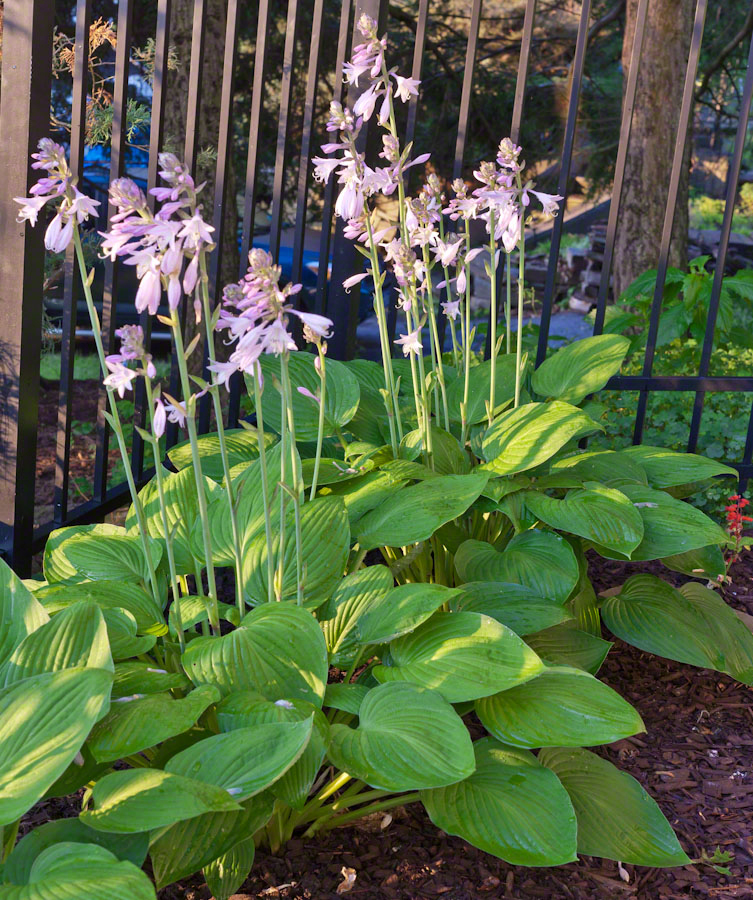
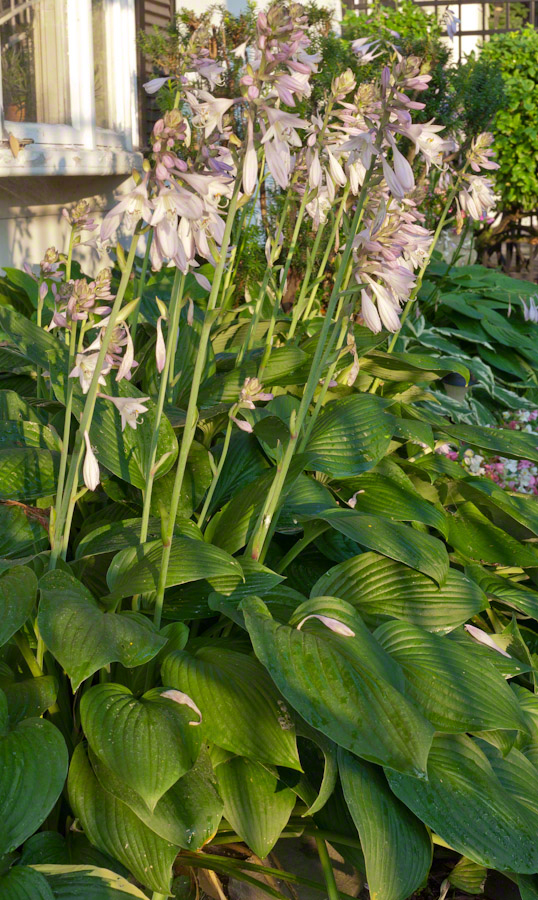
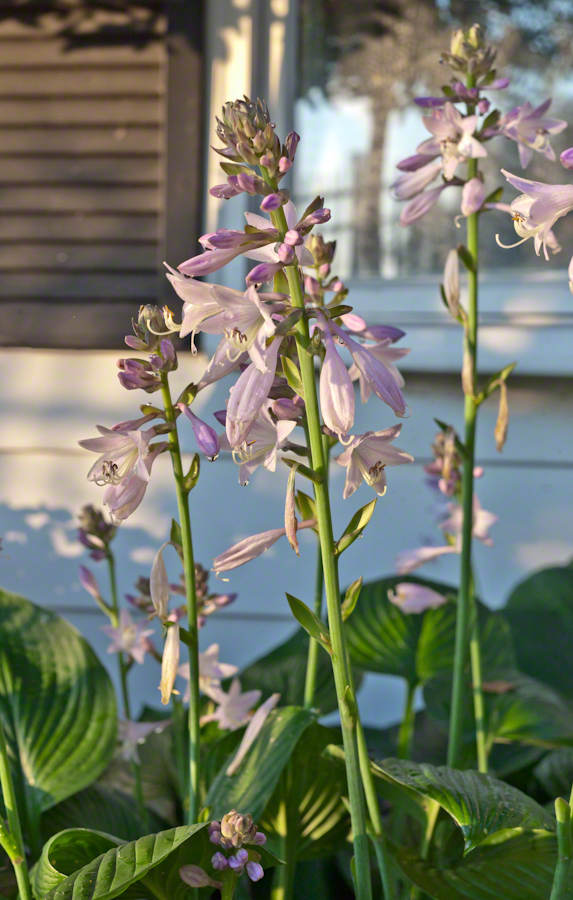
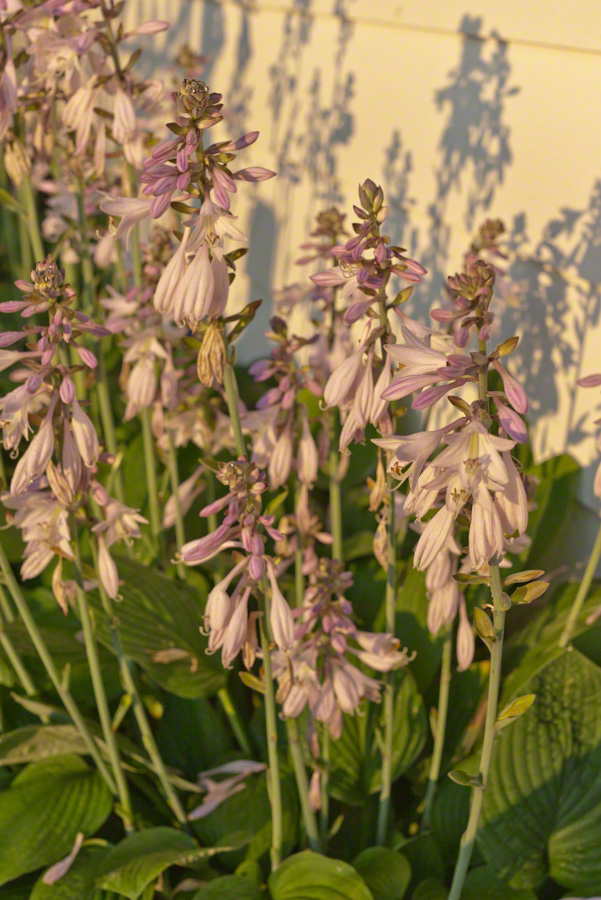
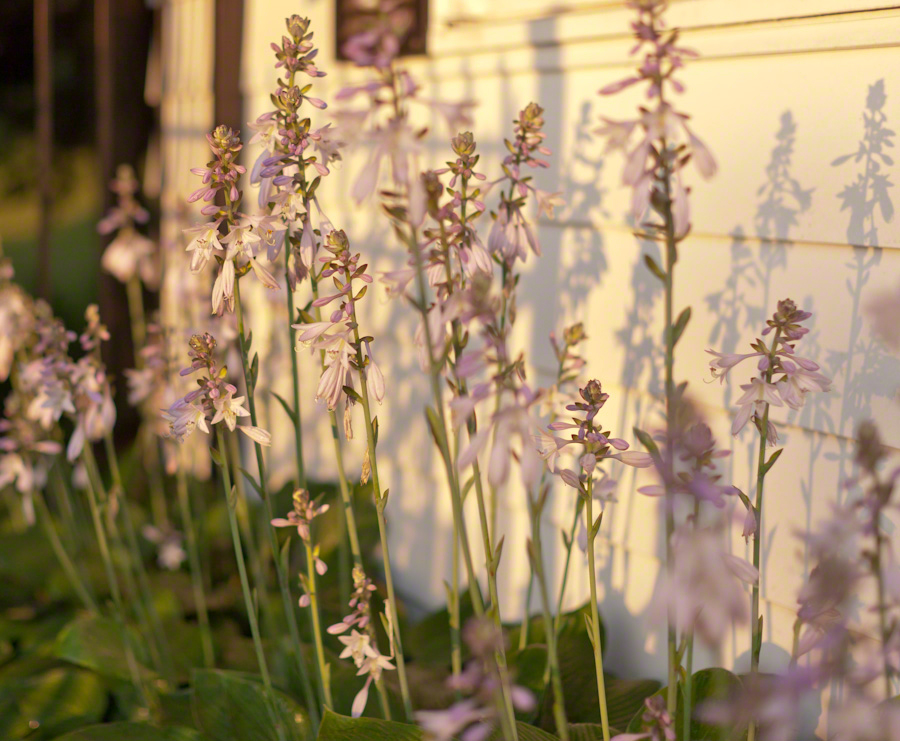
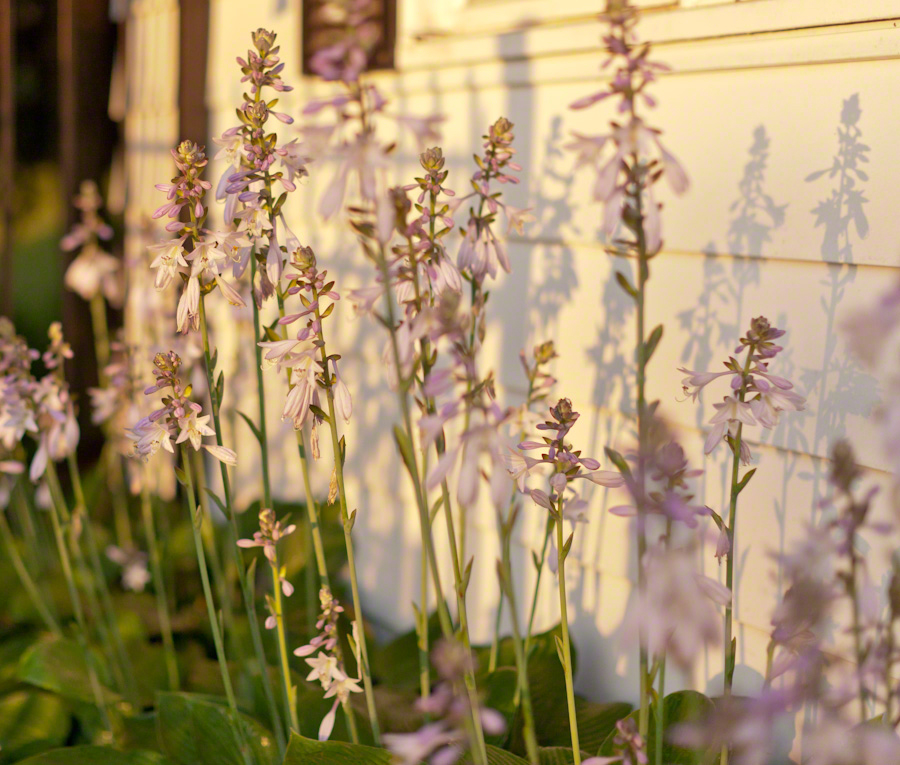
My wife, Pam, requested photographs of her hosta taken in the first sun of a summer day. Just after the sun broke the clouds this Summer 2017 morning I had the Manfrotto tripod set up, the Canon mounted with my new EF 50 mm 1:1.2 L, and this is the result.

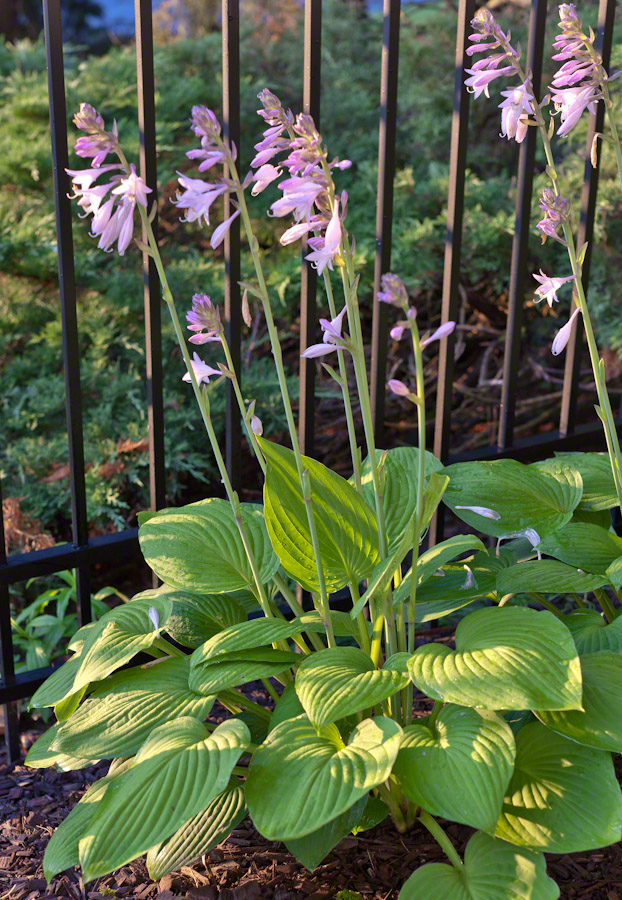
Overview of the hosta and blooms. These are also called Plaintain Lilies. Over the years, Pam has propagated three plants by splitting them and replanting. In 2016r we invested in a fence around the front yard to prevent the deer from browsing them to the ground. In pandemic year 2020, Summer, another fence was installed for the backyard. Pam plans more hosta propagation in celebration.

Study of hosta flowers.

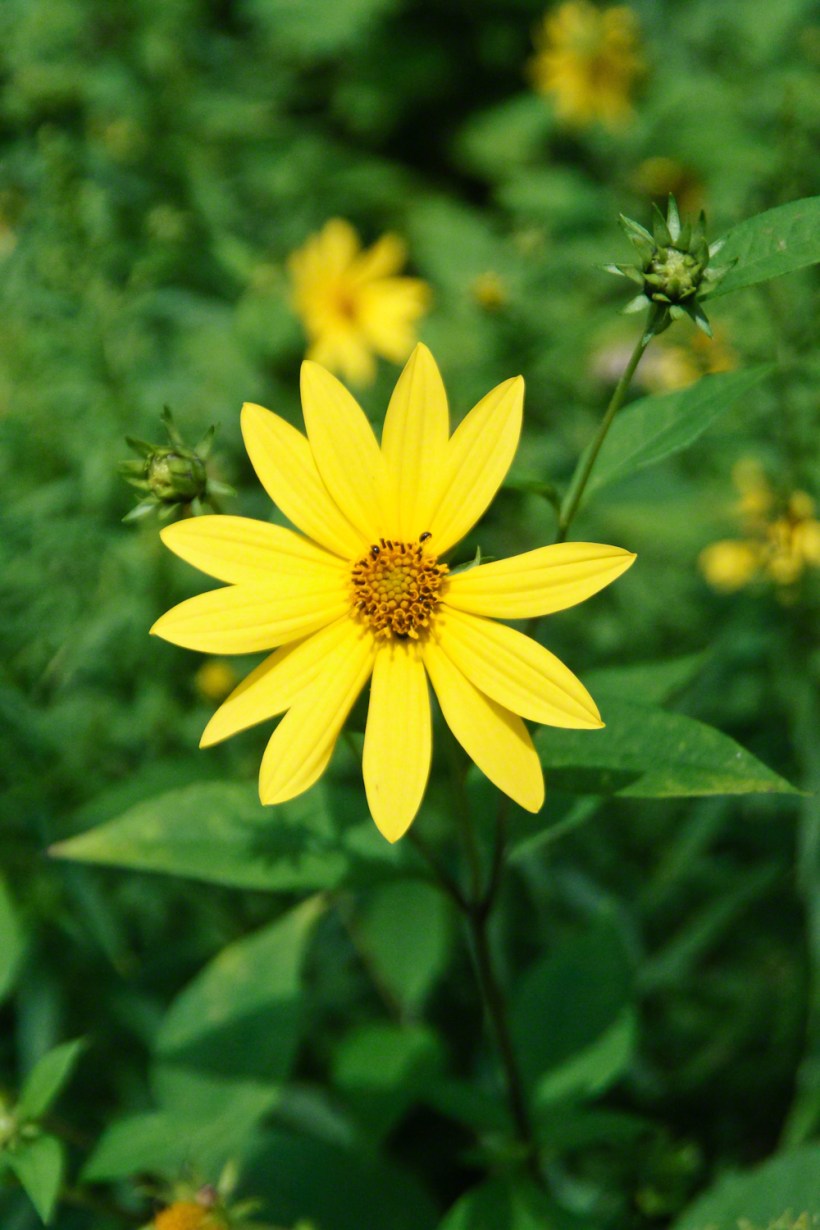
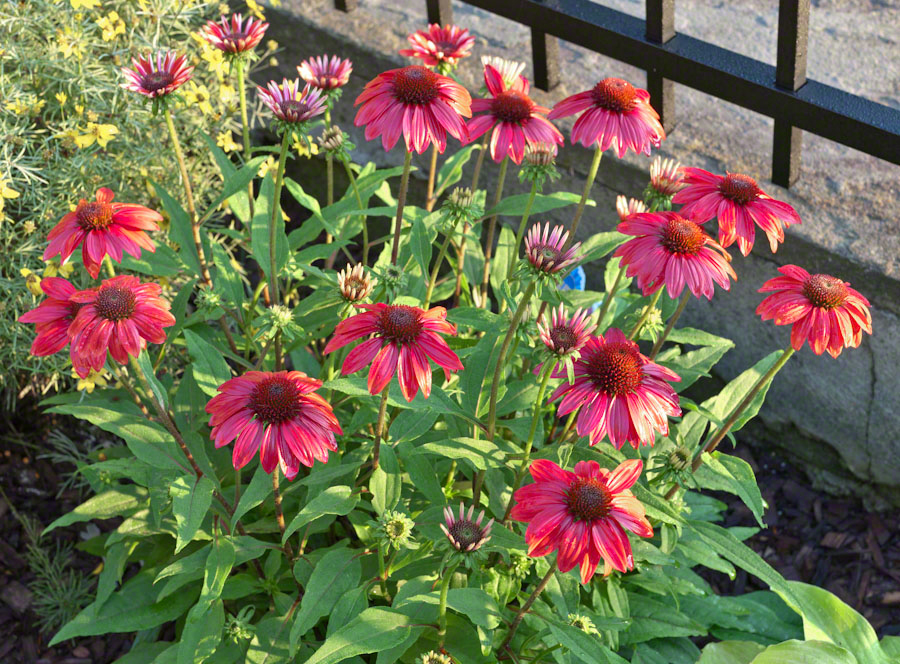
Purple cone flowers, aka Echinacea.
HostaEchinacea-0093

Copyright 2021 Michael Stephen Wills All Rights Reserved
Overlapping Hepatica and Trillium Blooms

four of a kind

Click here for my Getty flower photography.

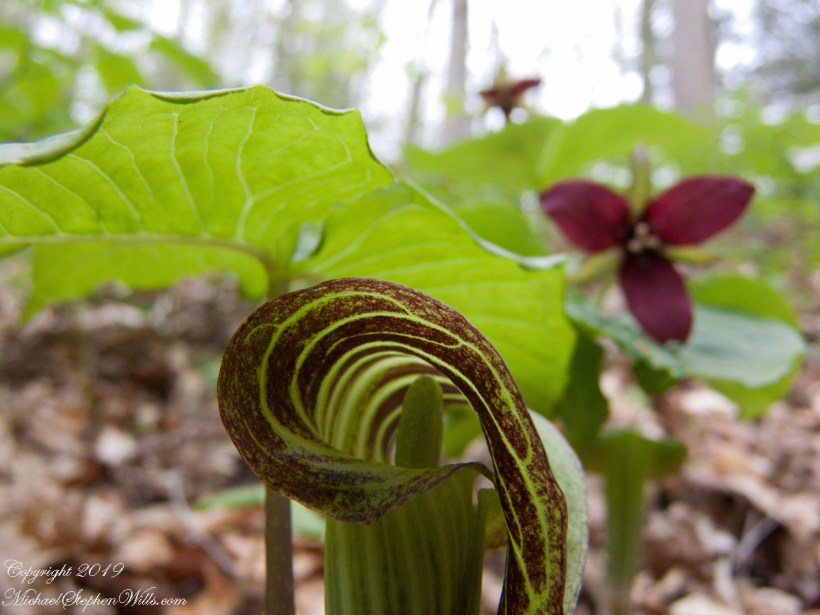
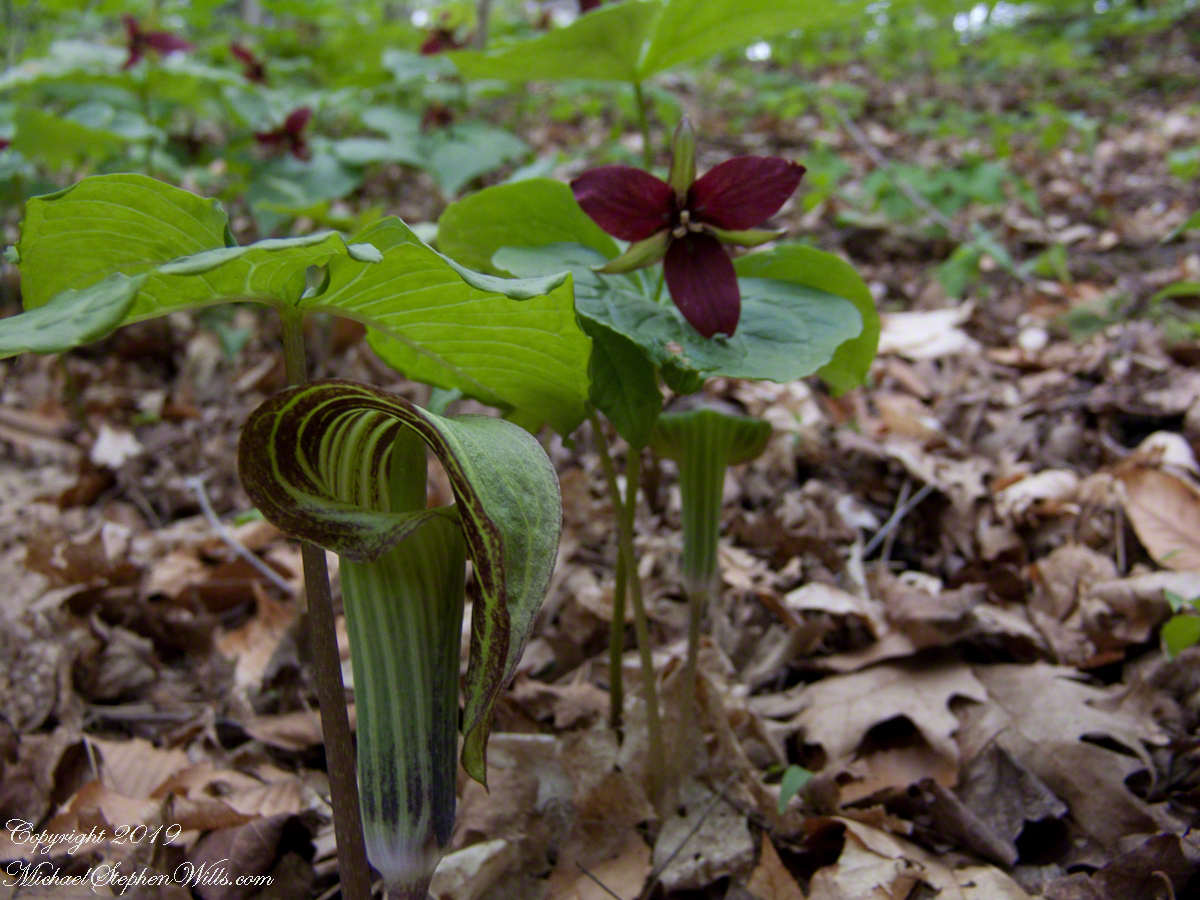
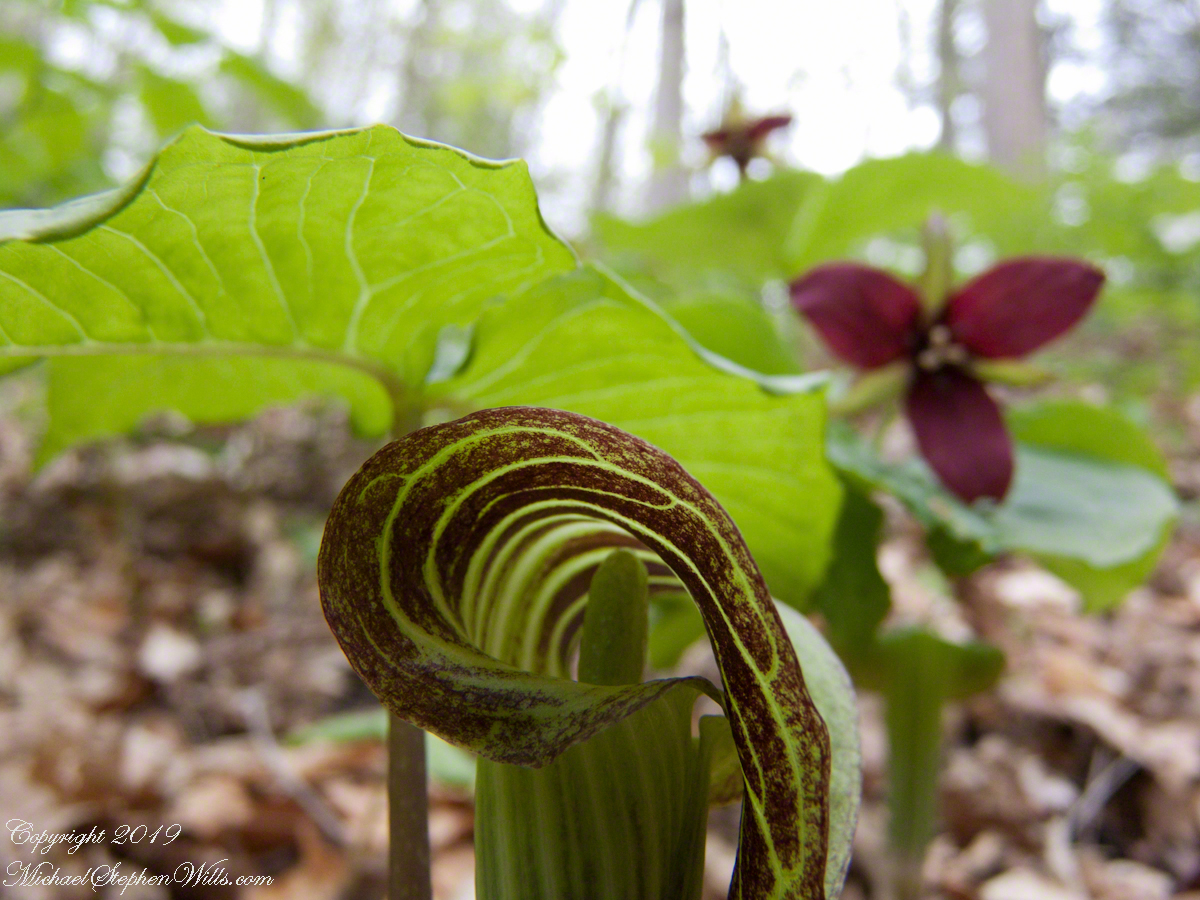
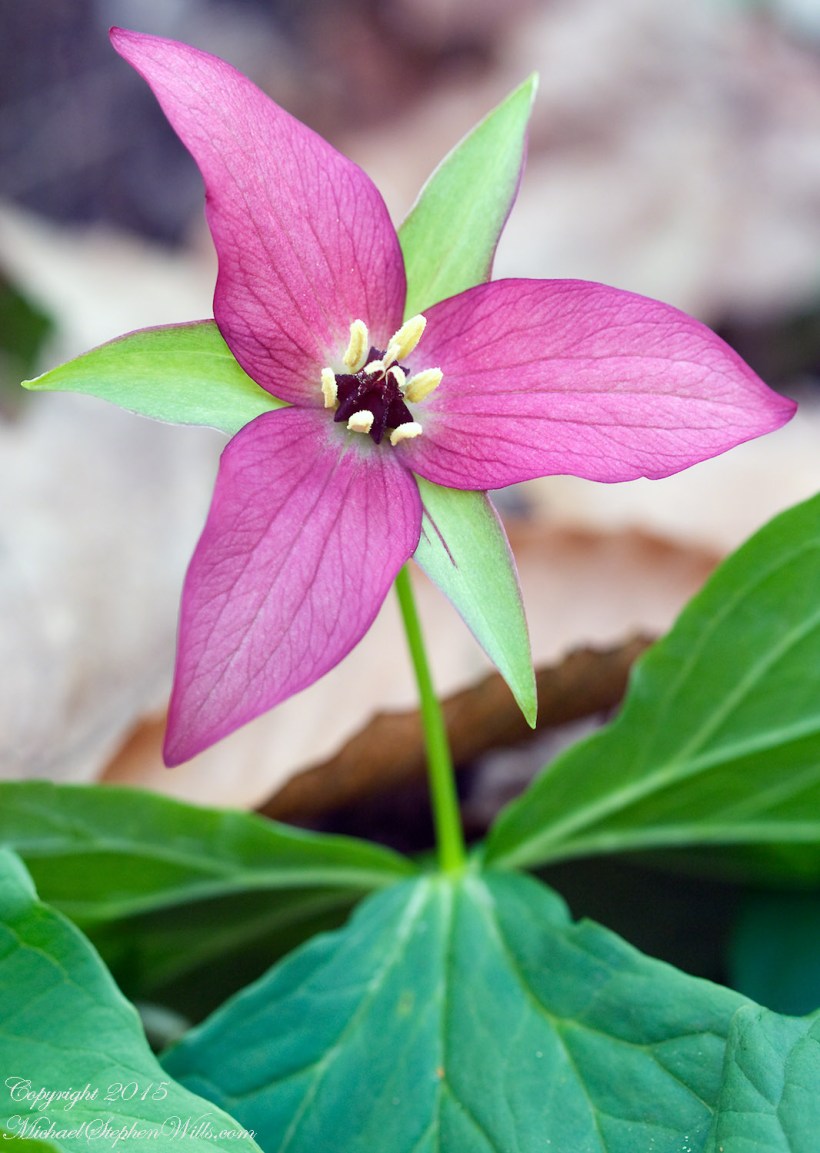
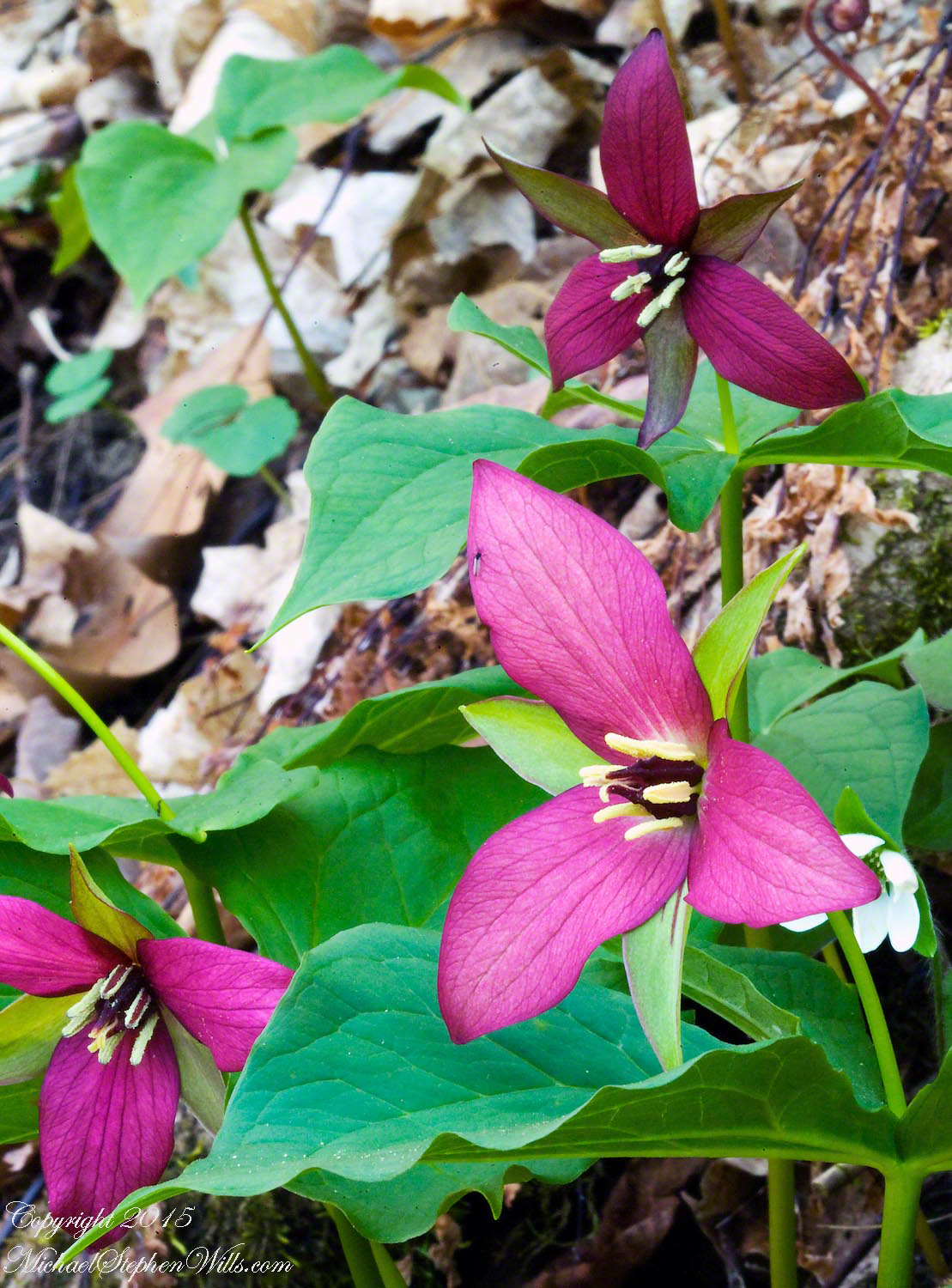
Four views of purple trillium, three of a grouping and one portrait. Taken in the same session of a rare set of perfect blooms growing wild.

Taken with a Canon 100 mm “macro” lens, a Kodak dslr body, a Manfrotto tripod and ample time and patience.

Enjoy!

Fillmore Glen Purple Trillium

The trillium plant grows from a body of rhizomes, a type of underground stem you can think of as a type of root. There are rhizomes when use to flavor food such as turmeric, though trillium is not one of these.

Fillmore Glen Purple Trillium

The single scape grows straight from the ground to form a whorl of three bracts mirrored by the three green (usually) sepals and, again, by the three flower petals for which it is named.

You can clearly see all of this in my photographs.

Fillmore Glen Purple Trillium

Fillmore Glen Purple Trillium

Copyright 2021 Michael Stephen Wills All Rights Reserved

Long Island Sakura (Cherry Blossoms)

Clouds of Blossoms

We have a selection of teas at home for brewing afternoons as a pick-me-up. Some brought back from travels, most from a local supermarket. This Japanese green tea brings to mind my childhood and our trips to Long Island to visit my Mom until she passed away June 2013.

As you can see from this photograph of the tea in a white lotus bowl, there are pieces of pink and white stuff mixed in. These are called by the Japanese “sakura”, cherry blossoms.

Click any photograph for my Getty portfolio.Japanese Sakura Sencha Green Tea – CLICK ME for my Getty Portfolio.

In Japan, since the 8th century, “Hanami” is the centuries-old practice of picnicking under a blooming sakura or ume tree. Here in the United States, the National Cherry Blossom Festival is celebrated commemorating the 1912 gift of Prunus serrulata Japanese cherry trees from Tokyo to the city of Washington.

Traditionally cherry blossoms remind the Japanese of clouds, the blooms come out en mass, the tree changes shape with the breeze.  Viewing sakura brings to mind thoughts of the transience of existence, the fragility and transience of the exquisite blooms leads one to appreciate the moment.  The following photograph of Pam was taken a month before my Mother’s sudden decline and passing in 2013.  We’d travel to Long Island several times a year to visit her, then take in familiar sights.

The tree over Pam is called a Shirofugen (Scientific name: Prunus serrulata, of the Rosaceae family) and is one species planted around National Tidal Basin, Washington D.C. Shirofugen blossoms are described “Flowers double, deep pink at first, fading to pale pink.”


Click any photograph for my Getty portfolio.Pam with a Shirofugen Flowering Cherry in bloom – CLICK ME for my Getty Portfolio.

Growing up, our family visited the Planting Fields, a state park, several times in the spring and summer. As an adult with a growing family in Glen Cove, right around the corner, the Planting Fields were a welcome outing and visited several time times a year. The following photograph, taken that same May 2013 day, was a favorite park scene.

The two flowering cherry trees in the foreground are a type of Japanese sakura called Yoshino, one the most popular flowering cherries in temperate climates worldwide. All Yoshinos are clones from a single grafting and propagated throughout the world. The scientific name outlines the cross breeding of this variety, Prunus X Yeaoensis. Behind the cherries is an Oak tree, new leaves a bright green, and a pink child’s playhouse cottage.

A changing scene of the park is the now frequent visits by wedding parties and photographers, groups of Asian people, the bride and groom posing under the clouds of blossoms. By frequent I mean a steady stream, one after the other, when the blossoms are full.

Click any photograph for my Getty portfolio.Playhouse with Flowering Cherry and Oak trees – CLICK ME for my Getty Portfolio.

In 2007 I spent hours framing and capturing the following photograph on a Saturday, the day before Mother’s Day, during a visit to my Mother, who was widowed December, 1995. I used an inexpensive tripod, a Kodak DCS Pro slr/c camera body with the Canon 50mm f 1.4 USM lens, a UV filter and lots of time. There were no interruptions that day, at 5:30 pm I had the area to myself.

This child’s garden playhouse, framed by an ancient oak, pink Japanese cherry blossoms and gracious lawn was awarded a Photographic Society of American, Pictorial Print Division, Print of the Month award, published in the society magazine for that month.

My online gallery (see link below) “Memories, Dreams, Reflections”, has this print available for sale on high quality photographic stock with optional framing.

This week, I submitted the photograph for my Getty portfolio.  As of today, I have not received their decision.

Click any photograph for my Getty portfolio.Playhouse – CLICK ME for my Getty Portfolio.

Please browse my reasonably priced stock photography.  License a photograph, download and use it for your website or blog.  Click this link to browse all my Getty IStock Photography offerings.

Or click this link to purchase a print of “Playhouse” with optional custom framing from my Fine Art Gallery.

Personable Wildflowers

With wishes for a Blessed Easter 2021

Late one April afternoon these backlit Hepatica on the gorge wall above the South Rim Trail of Treman Gorge posed for their portraits.

Click me for the first post of this series.
Click me for “Finger Lakes Memories”, a gallery of fine art photography.
Copyright 2019 All Rights Reserved Michael Stephen Wills

Hepatica

Early Spring Beauties

Most every year since 2002 I’ve photographed these personable beauties, the first wildflowers to bloom as early as late February through the snows.

Click photograph for a larger version
Click me for “Finger Lakes Memories”, a fine art photography gallery.

Copyright 2019 All Rights Reserved Michael Stephen Wills

Woody Peony Series

Effect of f-stop

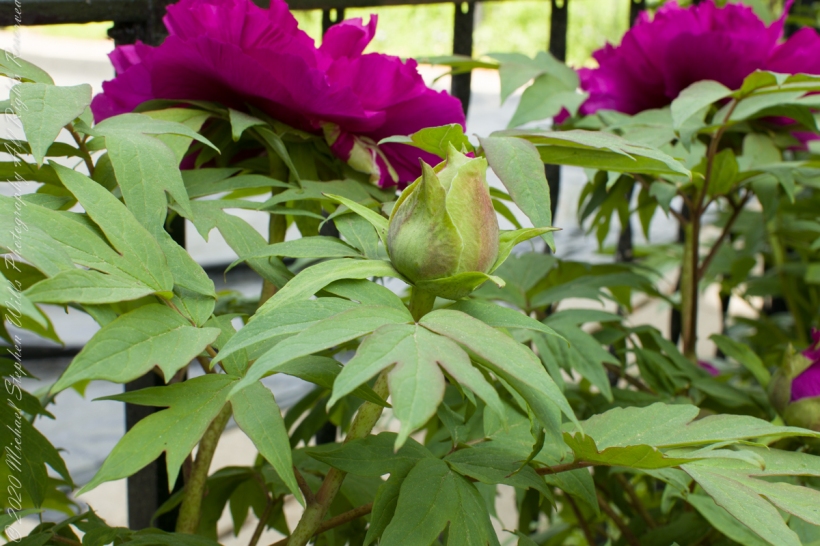
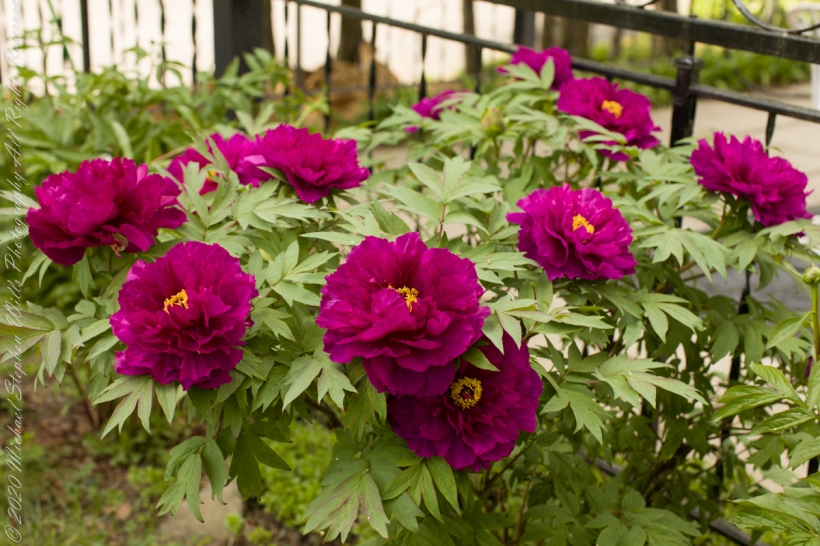
May 2019 Pam and I visited the New York State historical site of Olana, the former home of Fredrick Church of the Hudson River School of painting. Off the walk was a small planting of flowers, among them a type of “woody” peony in full bloom on Memorial Day weekend, well before the “herbaceous” type that is setting flower buds at that time. These were a striking reddish hue.

On returning home we were pleased to find our own “woody” peonies of the same hue in full bloom as well. On Memorial Day I used the Canon EF 100mm f/2.8 Macro USB lens and a tripod to capture the following two macros of the flower center with the lens aperture fully open (f 2.8) and at its smallest (f 32).

Question for readers: Which do you prefer, and why?

Click either photograph for a larger version.
f 32
f 2.8
Copyright 2019 All Rights Reserved Michael Stephen Wills

Hepatica, Fillmore Glen

Hepatica from April 2007

Back in 2007 I used a 100 mm Canon Macro lens on a Kodak slr along with a Sony DSC-F828 variable lens for this mix of macro and habitat captures presented as a gallery so you can flip back and forth among the larger images. Click any image to bring up a larger version.

Click for my “Finger Lakes Memories” Fine Art Photography Gallery.

Copyright 2019 All Rights Reserved Michael Stephen Wills

Wildflowers Late Winter / Early Spring 3

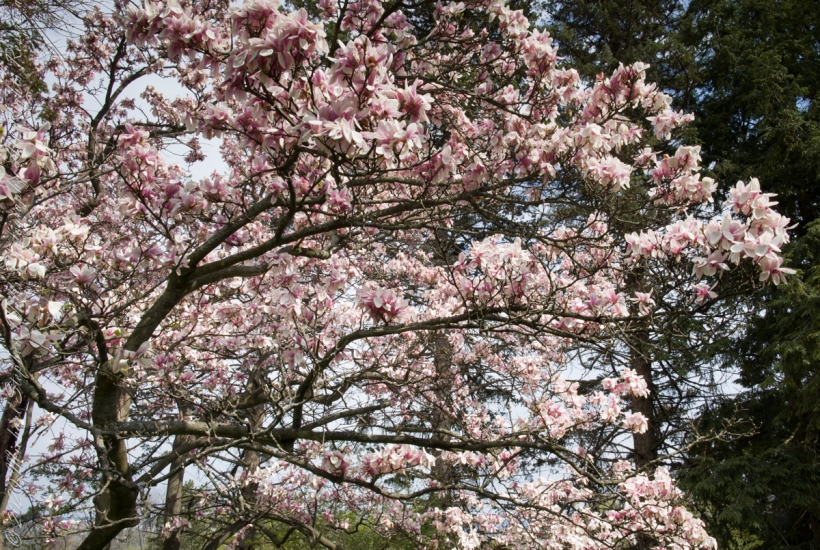
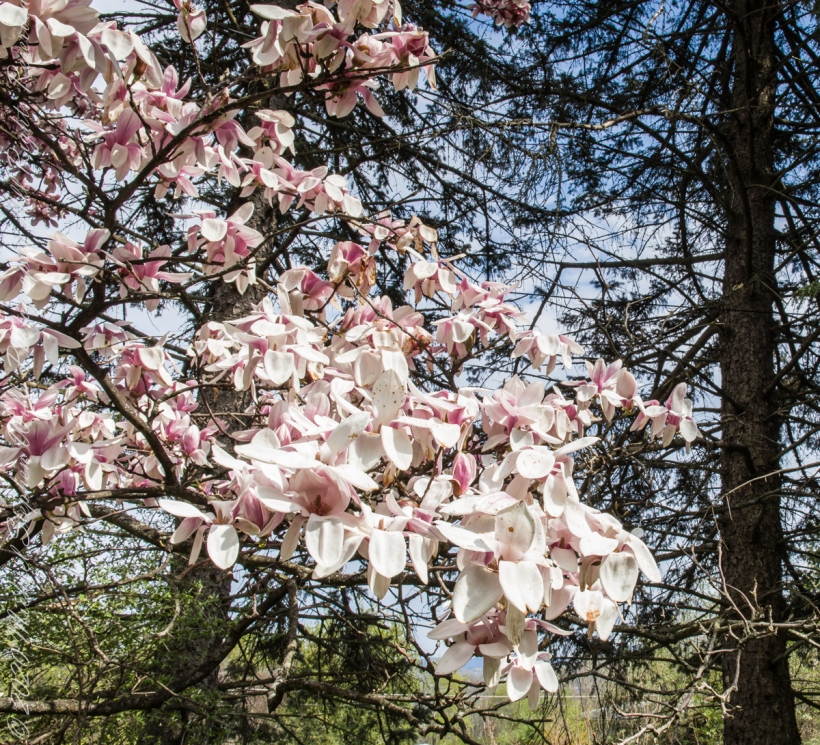
With the thermometer in the 40’s on March 12 these crocus were open, under the same magnolia tree as the buttercups from the 10th. The blooms close during cold snaps much as you see in the first post.

Click photograph for a larger view. To do this from WordPress Reader, you need to first click the title of this post to open a new page.

A tripod held the composition steady and the timer was set to 2 seconds for extra stability. With the leaf body worn away by time, the remaining veining turns the form lacy.

Here is a slideshow today’s and previous wildflowers.

Copyright 2021 All Rights Reserved Michael Stephen Wills

Night Blooming Cereus VII

reaction to cold temperature

For the final post of this series on Cereus blooms, of the four buds two failed to fully open after the weather turned cold in late September/Early October. Here is the failed bloom from the same opening bud featured in the last Cereus posting.

Click me for another Cereus flower post.

References

Wikipedia, “Epiphyllum, “Epiphyllum oxypetalum,”epiphyte.”

Copyright 2020 Michael Stephen Wills All Rights Reserved

Night Blooming Cereus VI

soon to open

Here is a continuation of the previous Cereus posting, the ultimate macros of a bloom on the edge of opening.

Click me for another Cereus flower post.

References

Wikipedia, “Epiphyllum, “Epiphyllum oxypetalum,”epiphyte.”

Copyright 2020 Michael Stephen Wills All Rights Reserved