Exploring Ancient Wisdom in Today’s Healing Practices

As I waited during my wife’s physical therapy session, the connection between ancient healing traditions and modern medicine revealed a journey of resilience and hope.

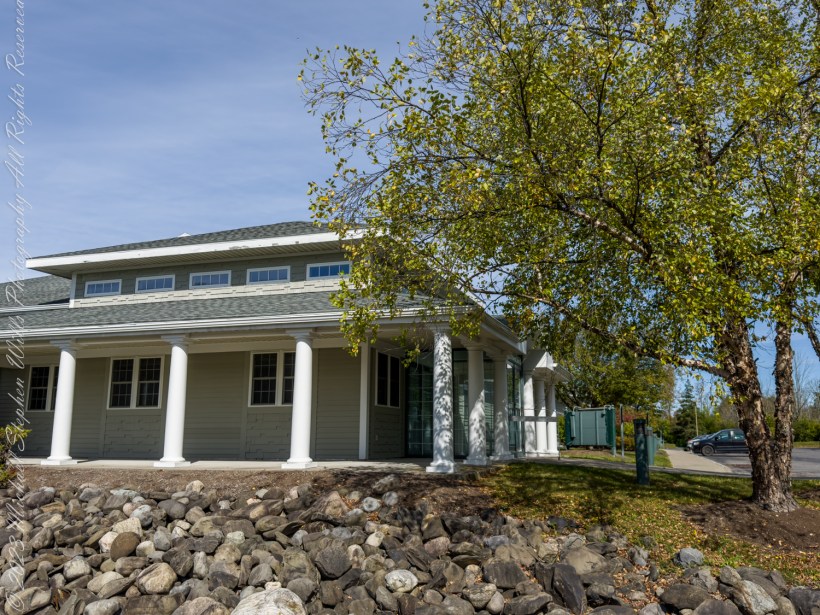
Standing in the cool autumn sunlight, I find myself pacing beneath the sturdy Doric columns of this medical campus in Northeast Ithaca, waiting as Pam undergoes another session of physical therapy. The simplicity of the columns strikes me—clean, white, and unadorned. They hold up the building with a kind of timeless grace, a quiet reflection of ancient design.
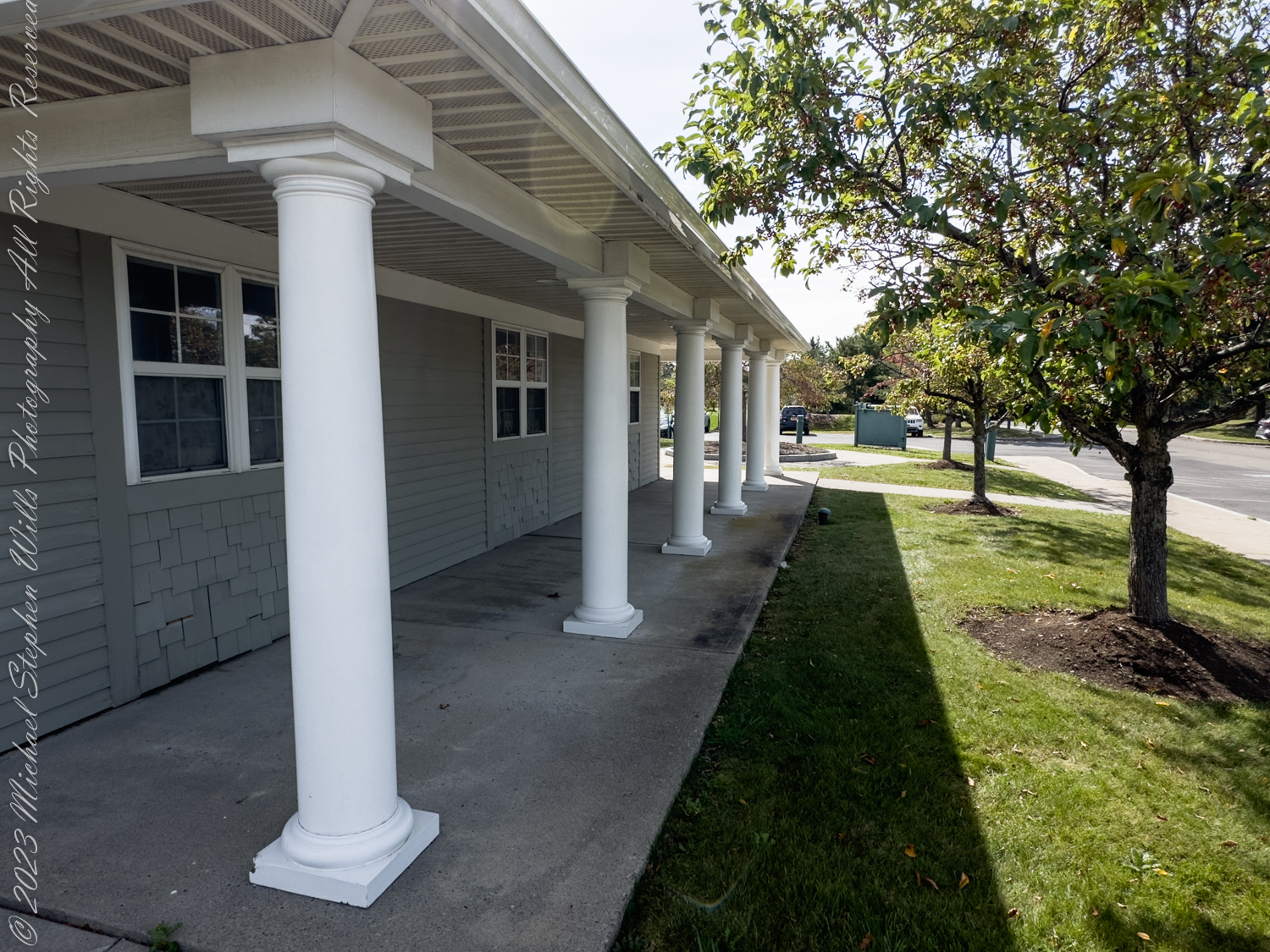
The architecture of the Medical Office Campus of northeast Ithaca is graced by doric columns arrayed in a row forming a portico colonnade. The original Greek Doric columns were fluted, and had no base, dropping straight into the platform on which the temple or other building stood. The capital was a simple circular form, with some mouldings, under a square cushion that is very wide in early versions, but later more restrained. Here the form of the capital is mirrored in the base. 20 Arrowwood Drive, Ithaca, Tompkins County, New York State

Doric columns are symbols of strength and stability. In this moment, they remind me of the quiet resilience I’ve seen in Pam throughout her recovery. Each column, solid and unwavering, reflects the foundational principles that underpin both architecture and the healing arts. Just as these columns have withstood the passage of centuries, modern medicine, too, stands tall on the legacy of ancient knowledge.

As I lean against one of these pillars, I think about the deep connections between ancient civilizations and the medicine we practice today. The origins of healing reach back to the Egyptians, who understood anatomy with remarkable precision. They would have been familiar with the use of medicinal plants. It’s remarkable to think that the surgeries performed back then, basic as they were, have evolved into the complex procedures of modern times, procedures like the one that replaced Pam’s hip with the efficiency of a machine through the care of skilled hands.
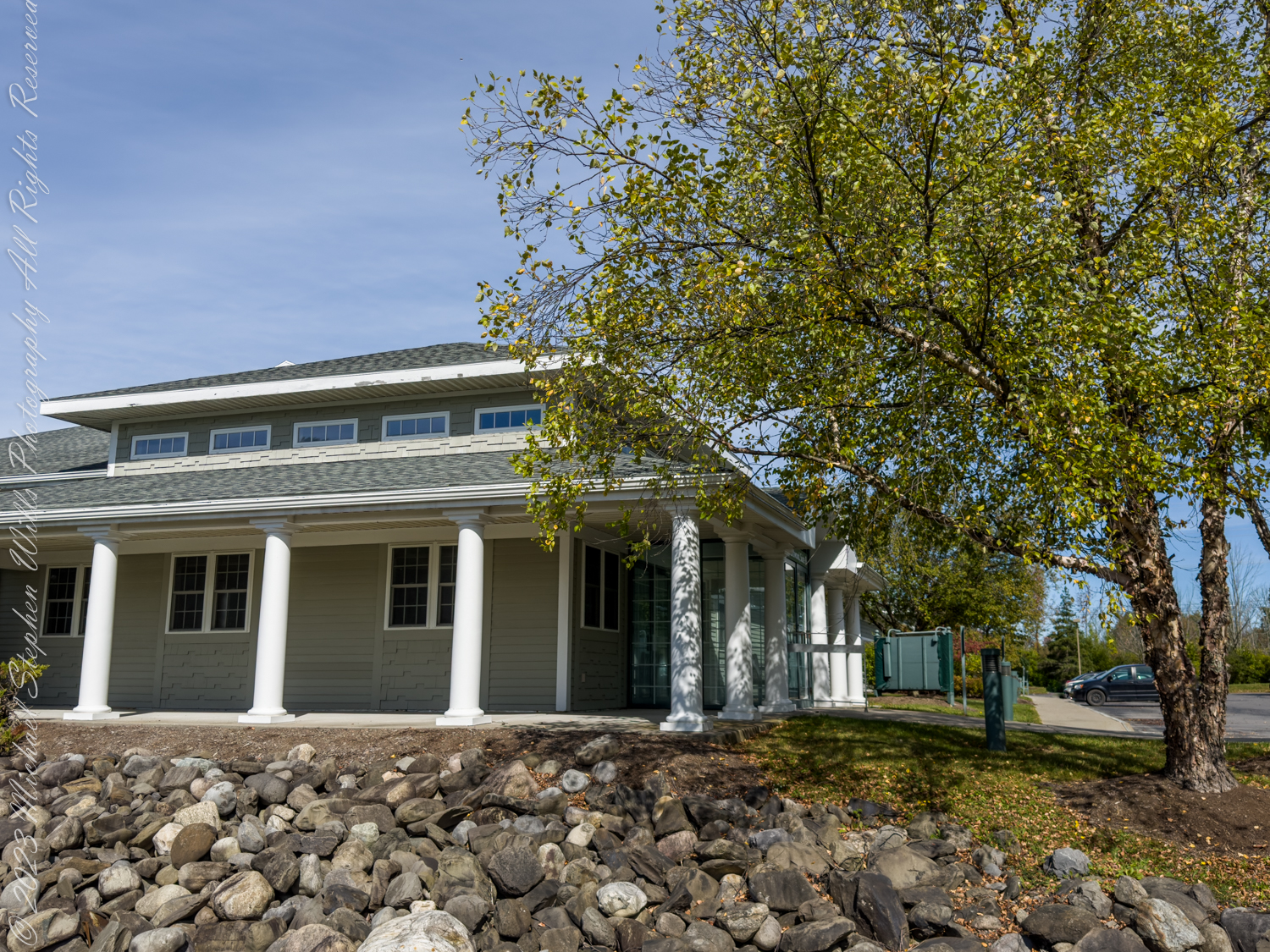
10 Brentwood Drive, Ithaca, Tompkins County, New York State

I look up at the sky, tracing the outline of the roof these columns support. The Greeks, with their reverence for observation, would have appreciated the rational design of this building. Hippocrates, the father of medicine, laid the groundwork for clinical observation, a method still used by the doctors caring for Pam. They probe, ask questions, and observe her movements, trying to decipher the hidden ailments within her body, much as the ancient physicians did centuries ago. It’s in this continuity that I find comfort—knowing that the doctors and physical therapists here are part of a long tradition, stretching back to Galen, who wrote about anatomy and physiology in ways that informed medical students for generations.

Modern medicine, like these columns, is a blend of the old and the new. Acupuncture, an ancient Chinese practice, is now commonly recommended for pain relief, a reminder that even today we rely on wisdom passed down through millennia. Pam’s therapists blend tradition with cutting-edge technology, using machines that track her progress and exercises that help her regain strength. Yet, at the heart of it, the human body heals the way it always has—with time, patience, and care.

As I walk the perimeter of the building, past patches of sunlight falling on the sidewalk, I’m struck by the parallels between the construction of this space and the body’s own repair. Both depend on a solid foundation. Roman innovations in public health, sanitation, and the idea of hospitals have shaped the spaces where we now seek healing. And here, in this modern medical facility, the connection to those roots feels tangible, much like the stones beneath my feet.
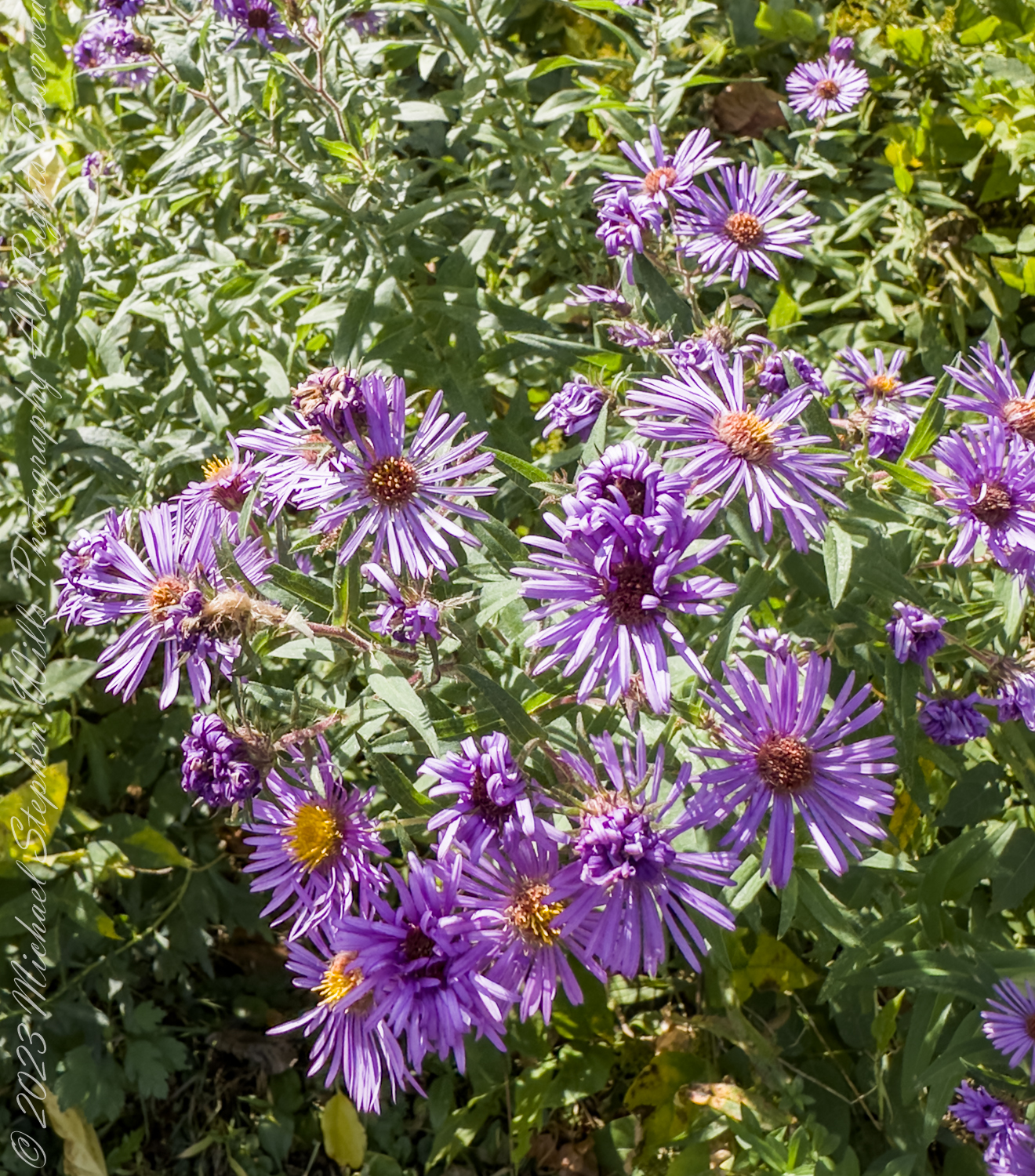
The name Aster comes from the Ancient Greek meaning “star”, referring to the shape of the flower head. ‘Aster’ species are used as food plants by the larvae of a number of Lepidoptera species. These asters grew wild on an otherwise landscaped medical campus. Found on an eaqrly autumn morning near 10 Brentwood Drive, Ithaca, Tompkins County, New York State

Asters, blooming nearby, sway gently in the breeze. They too are resilient, much like Pam. Their purple blossoms remind me of the hope that pervades our journey. The columns stand as sentinels of a kind of knowledge that is both ancient and ever-evolving—a blend of science, history, and faith in the power of the human spirit to endure.
Copyright 2024 Michael Stephen Wills All Rights Reserved

Dreams, Stories and Things from the Vanderbilt Museum

a spring day on the former gold coast of Long Island

The Dreams

For 32 years dreams about work visited occasionally, then when retirement approached and overtook me these became an almost nightly visitation.

Click this link for my OnLine Photography Galleries

Last week, a few months into retirement, the haunting stopped, replaced by adventures by and on the ocean.  

Click this link for my OnLine Photography Galleries

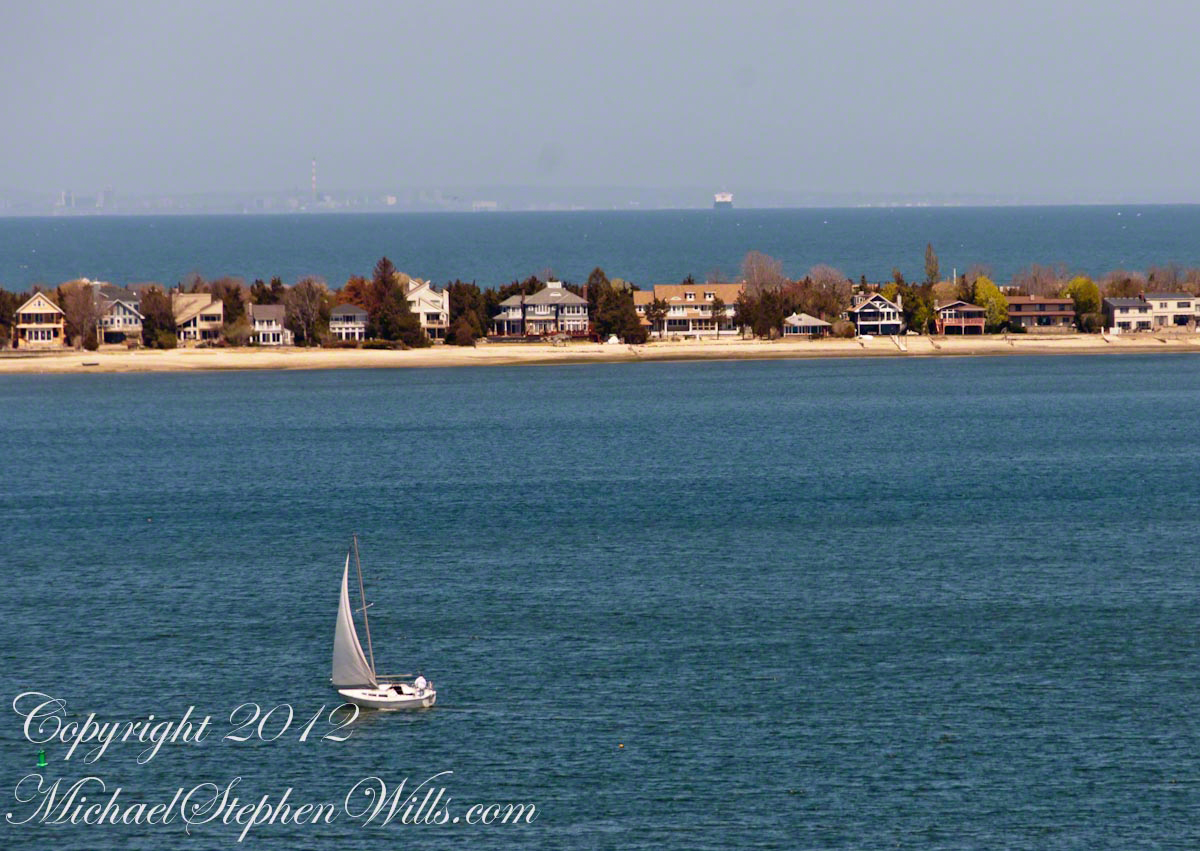
It brings to mind, a few years ago Pam and I took lessons at Cornell’s Merrill Family Sailing Center followed by several seasons of memberships.  We’d take out sailboats the size on the one enjoyed by the fellow above in Northport Harbor.

Click this link for my OnLine Photography Galleries

We’d spend entire days on the water, looking up at the people driving the hill up and down route 13.  “How lucky we are here and not there”, I’d say.

The Stories

Willy Vanderbilt named his Centerport estate “Eagle’s Nest” after his first yacht, “Eagle” that was anchored in Northport harbor along the estate shoreline.  In 1932 the German Krupp Germaniawerft company build a new yacht named Alva, after his mother.


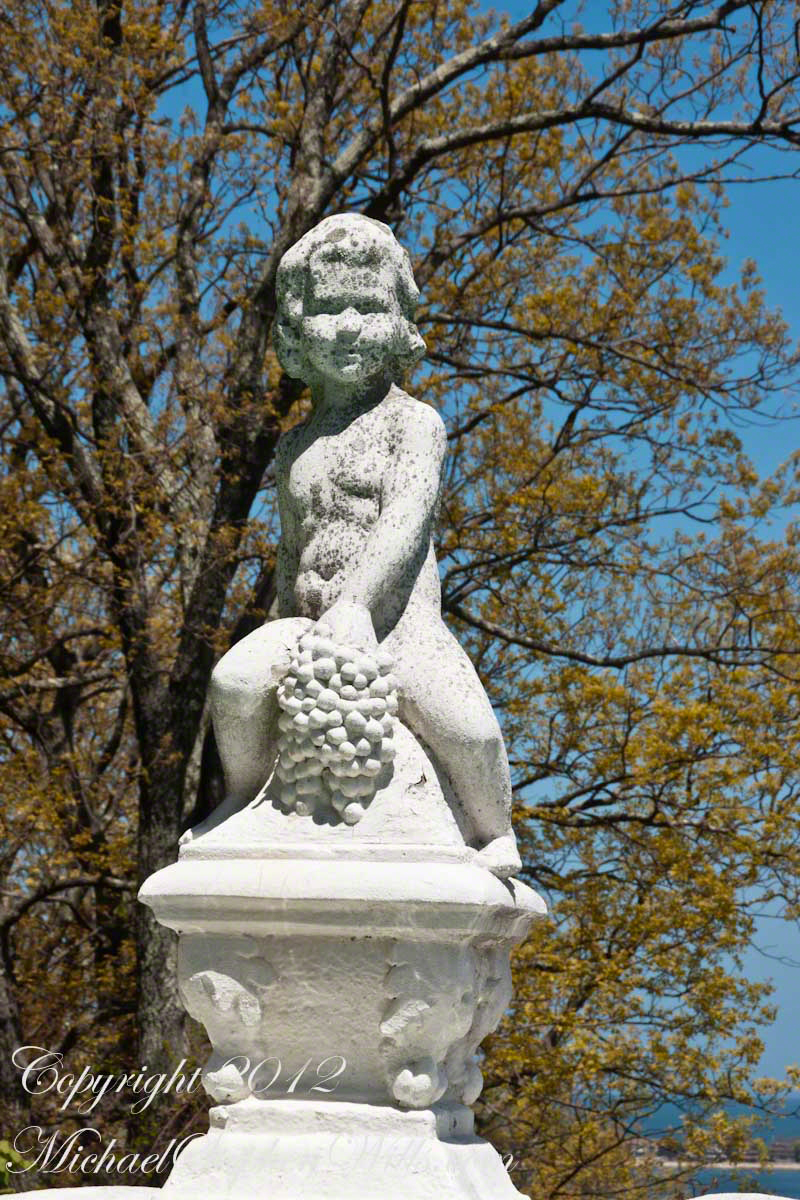
Willy had a “thing” about the infant Baccus.  My first Vanderbilt Museum posting “A Taste of Gatsby: details from the Vanderbilt Museum”included the following depictions of the infant Baccus.  the name preferred by the Romans.

To the Greeks he was Dionysus.  Also known as the “twice born” from the myth of his being carried in his father Zeus’ thigh after Hera, the jealous wife, plotted the death of his mother, the mortal Semele.  

Click this link for my OnLine Photography Galleries

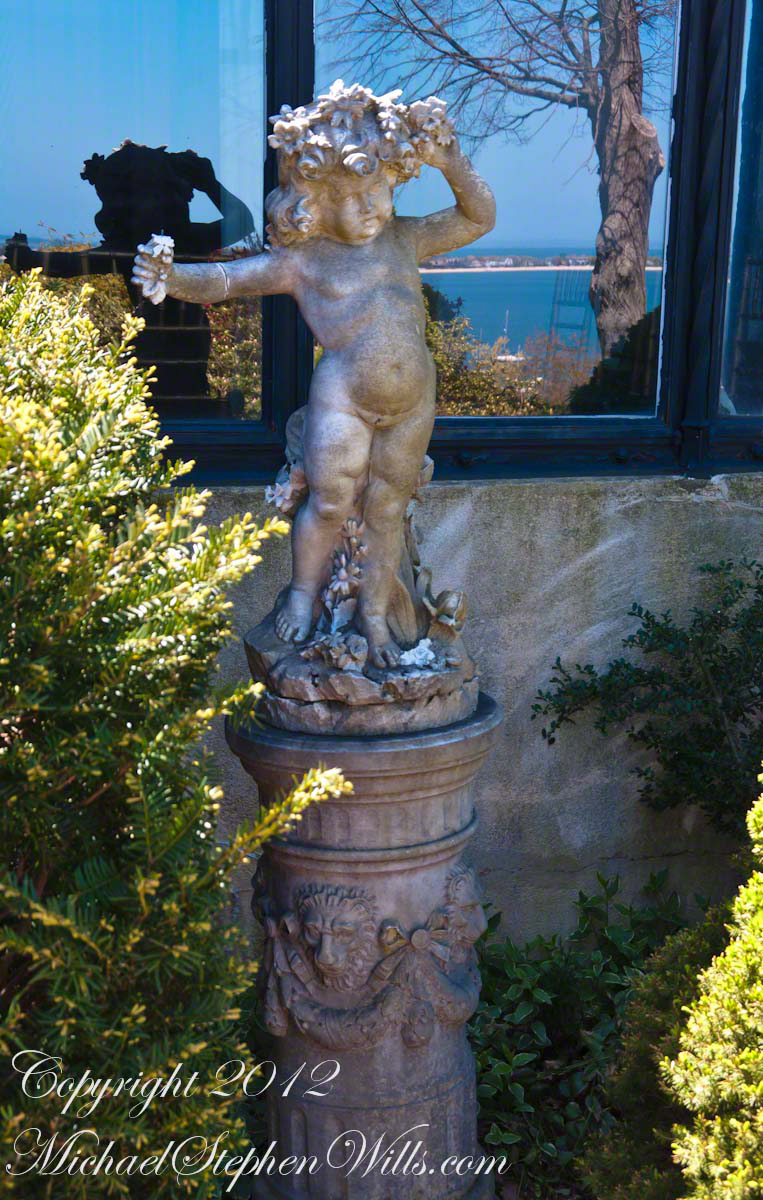
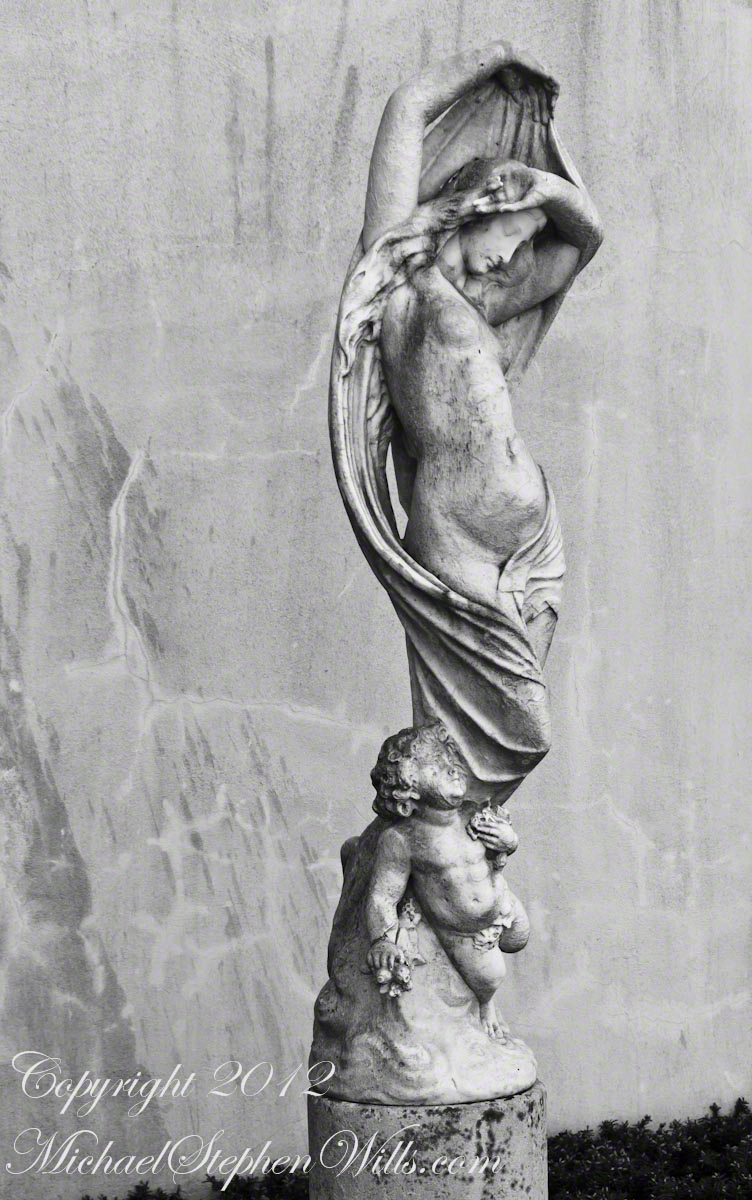
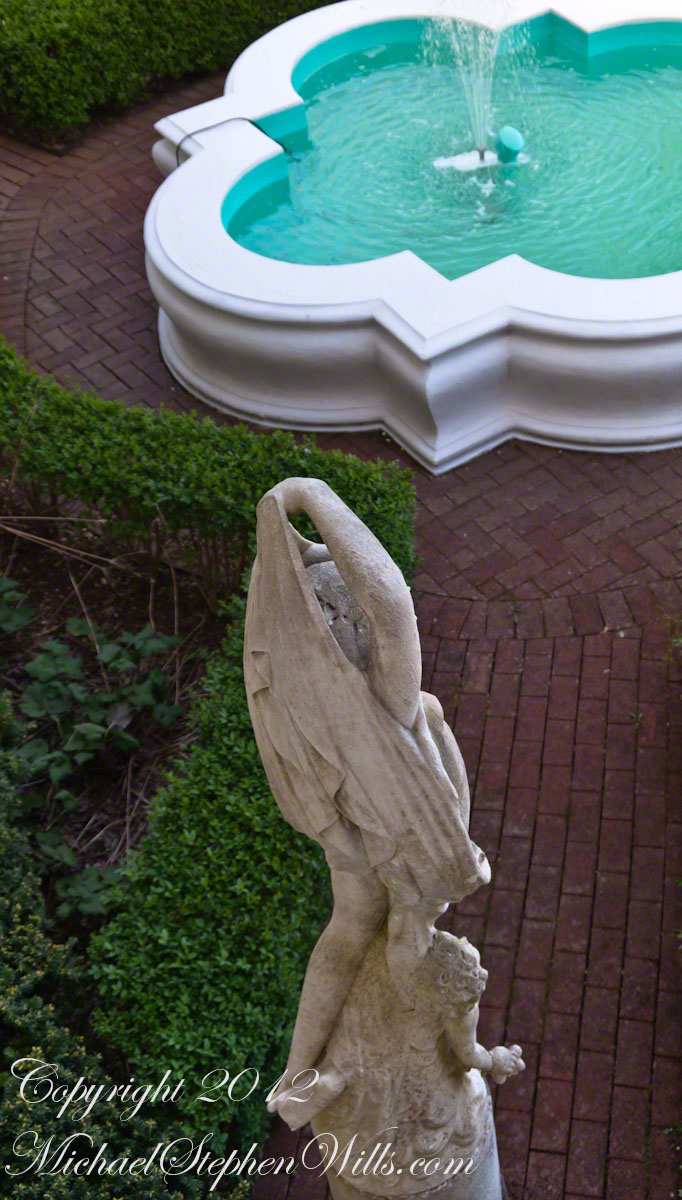
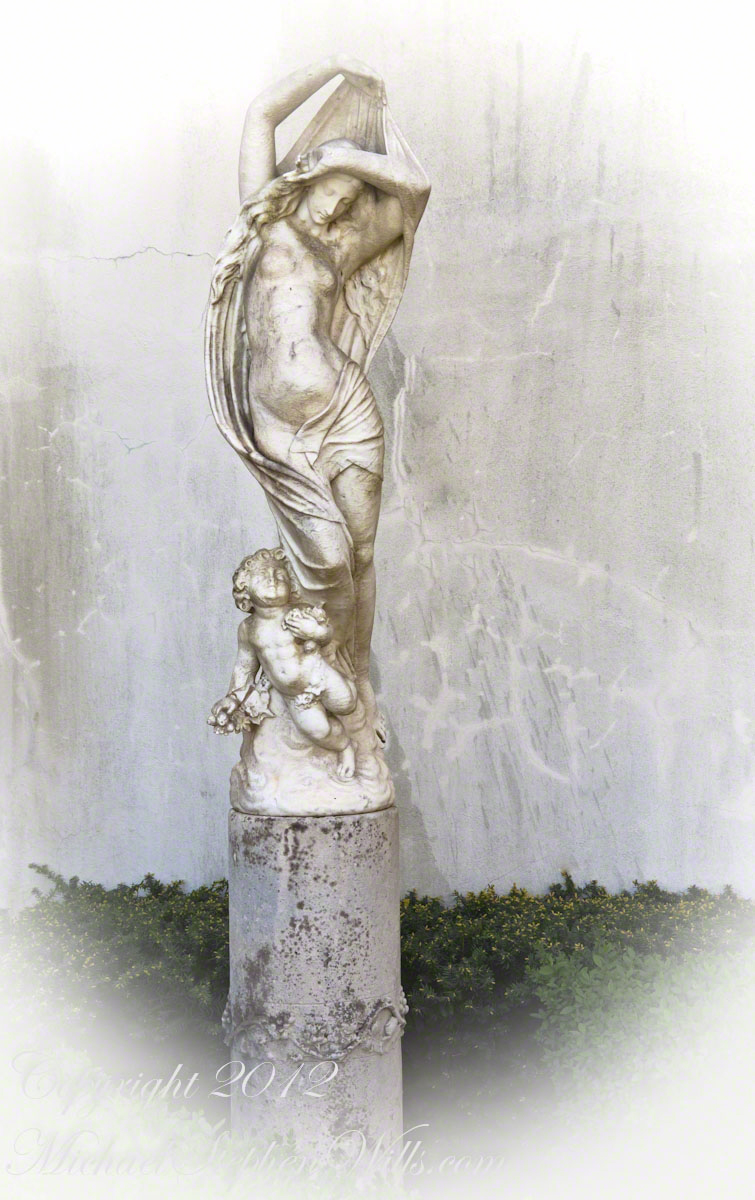
The infancy of Dionysus was perilous, with Hera plotting revenge Zeus found safe haven for the child at a place of earth called Mount Nysa, with beings named Rain Nymphs.  The fascination of Vanderbilt with the story continued with the acquisition and display of a statue of the infant Dionysus with a protective nymph.

The Things

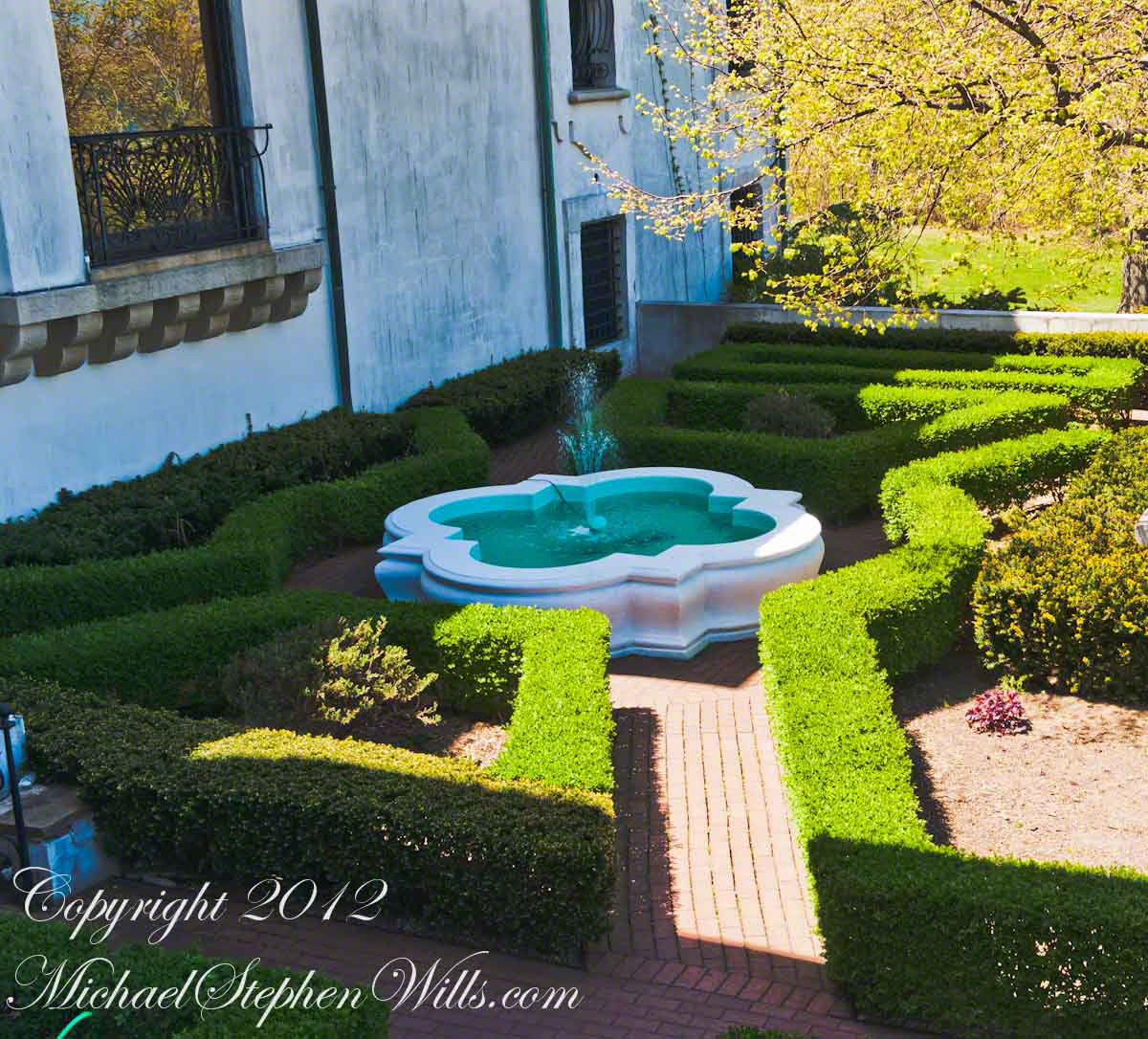
The statue and plinth are at the stairs into the garden.

Click this link for my OnLine Photography Galleries

Copyright 2021 All Rights Reserved Michael Stephen Wills

References
Wikipedia “Dionysus” and “Willy Vanderbilt”

More Details from the Vanderbilt Museum

a spring day on the former gold coast of Long Island

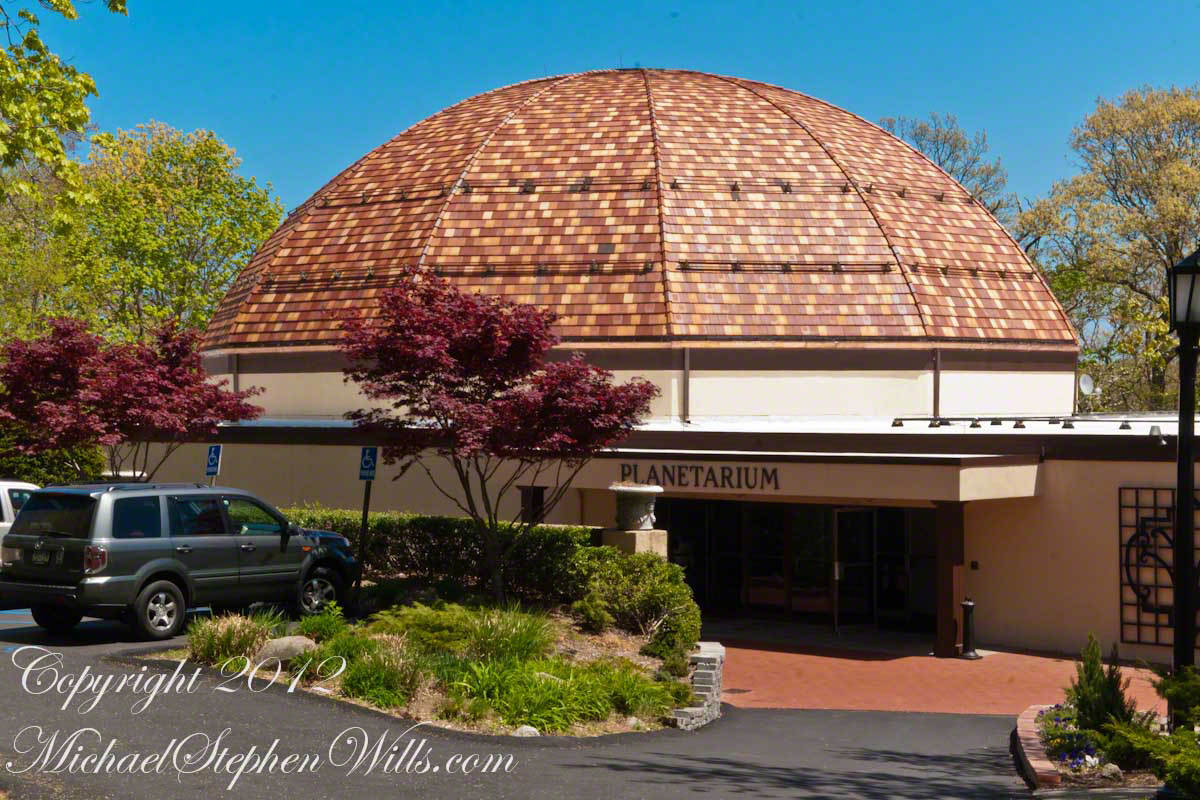
The Planetarium

Thirty five years after completing his Eagles Nest estate and twenty seven after his death, this planetarium became an addition to the museums left by William K. Vanderbilt II (“Willie K”).
Located next to the Rose Garden, where my last blog “A Taste of Gatsby – details from the Vanderbilt Museum” left off, this planetarium is on the site for the estate tennis courts. The Planetarium reopened March 2013 with a complete equipment upgrade.

Click this link for my OnLine Photography Galleries
Planetarium Dome
The star of the planetarium is a Konica Minolta GeminiStar III projector; a machine that will put this museum on the map for having one of the finer planetarium projectors in the United States.

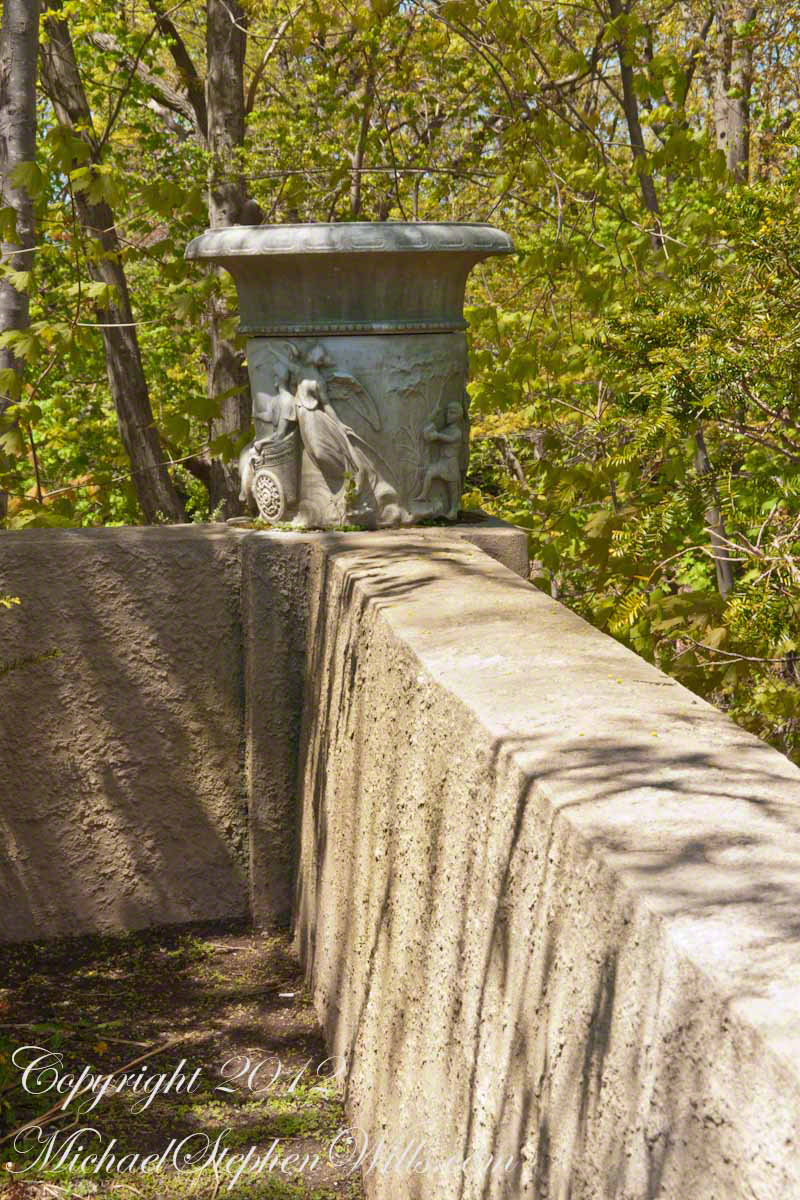
There are several museums on the grounds, joined by graciously appointed walkways.
This is a corner urn along the walk to the mansion.

Wall Planter
This planter graces a wall corner along the path from the Planetarium to the Corinthian Colonnade

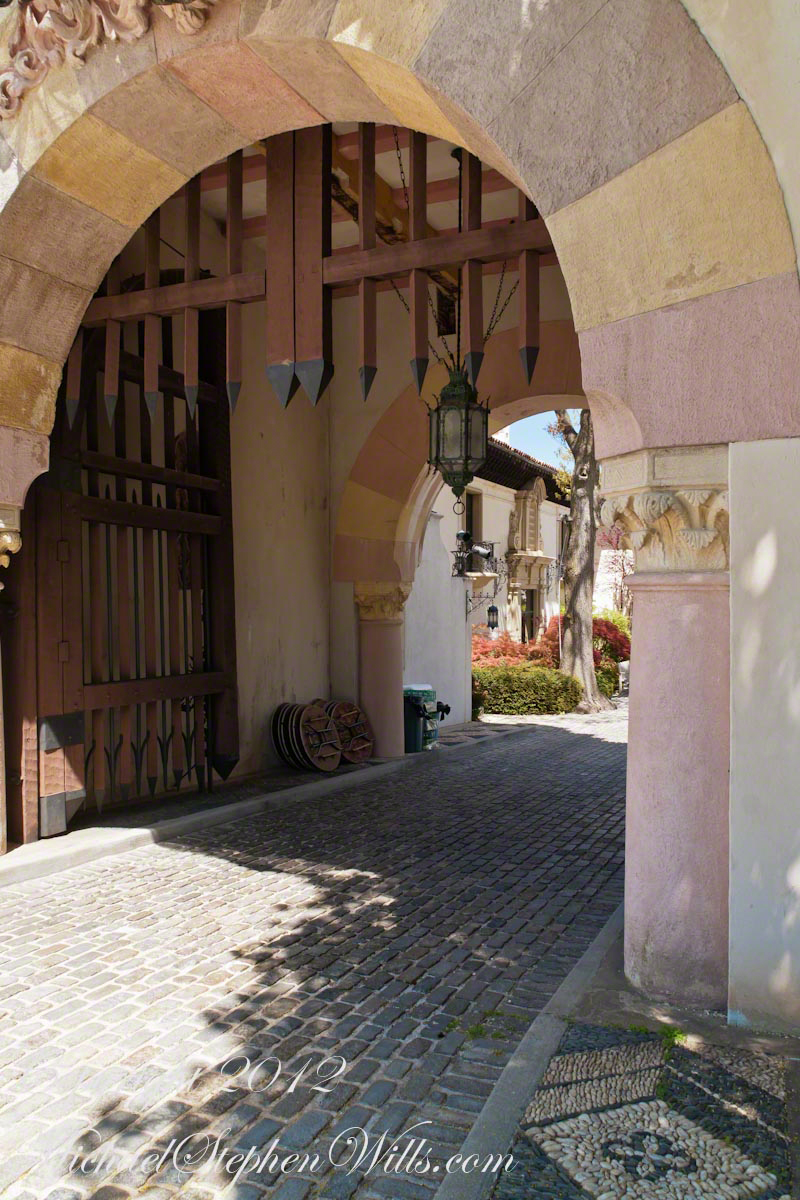
Courtyard Entrance

The Spanish Revival style mansion gathers around a central, cobblestone courtyard entered through this elaborate sandstone gate flanked by two carved sandstone urns, each at least six feet tall with pedestal.

Archway Courtyard Entrance
A gated arch serves as the mansion courtyard entrance.

The gated entrance is the base of a bell tower. Willie brought from Russia a church bell that is older than the Liberty bell. He used to have great fun ringing the bell on Sunday mornings to disturb the sleep of his partying son and friends. That stopped when the neighbors arrived as an angry, spontaneous group to complain.

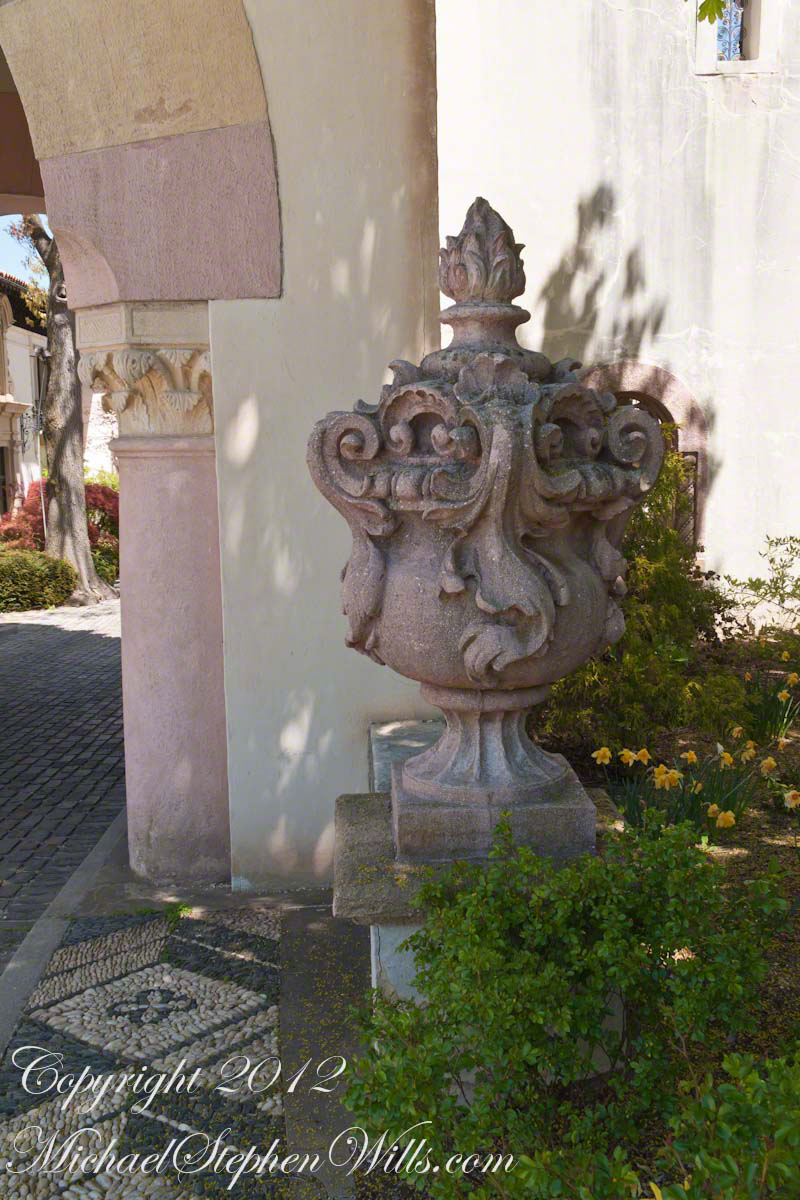
Urn at Mansion Courtyard Arch
The mansion courtyard is entered through a gated archway. This cast urn graces the right side.

The cobblestone road leads up to the mansion, over a bridge and into the courtyard.
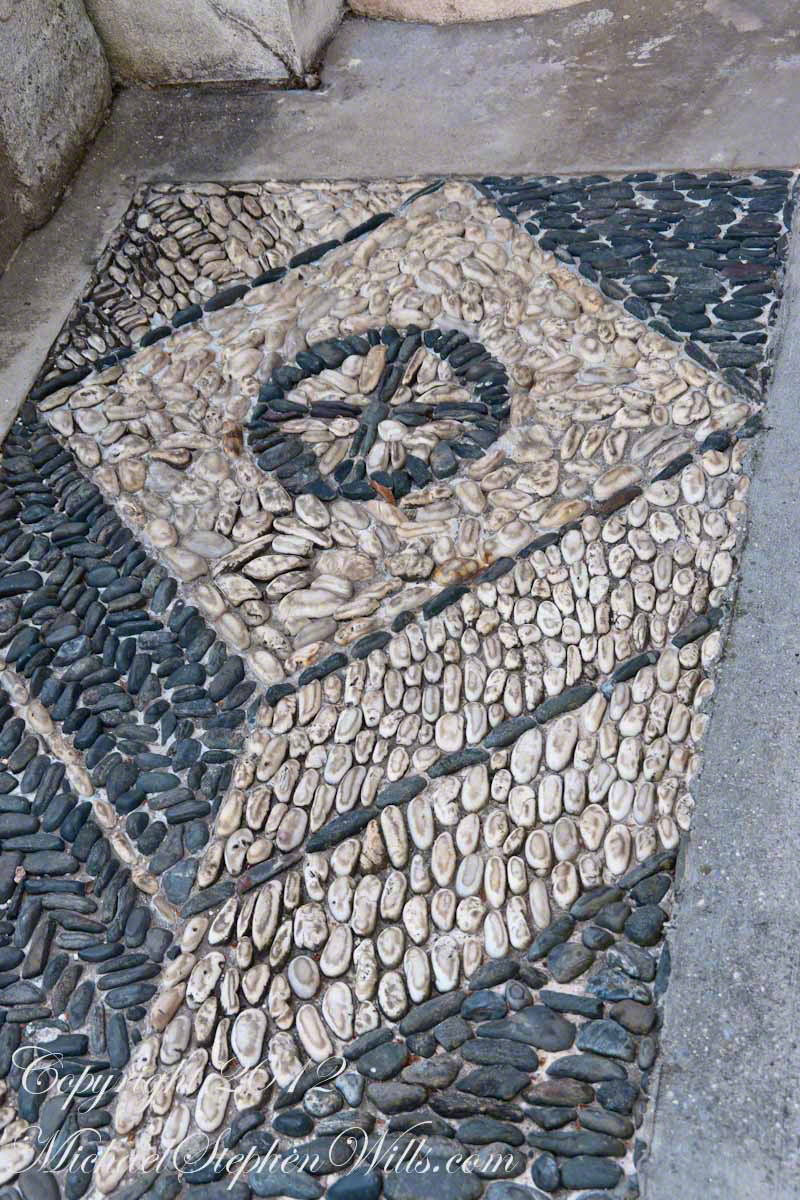
Here is a detail of the walk way, formed from glacially rounded pebbles very common on beaches of Long Island’s North Shore.

Pebble Designs in Walkway
A walkway decorated with black and white pebbles leads into the mansion courtyard. This is a portion just inside the arch.

A Ghost in the Garden

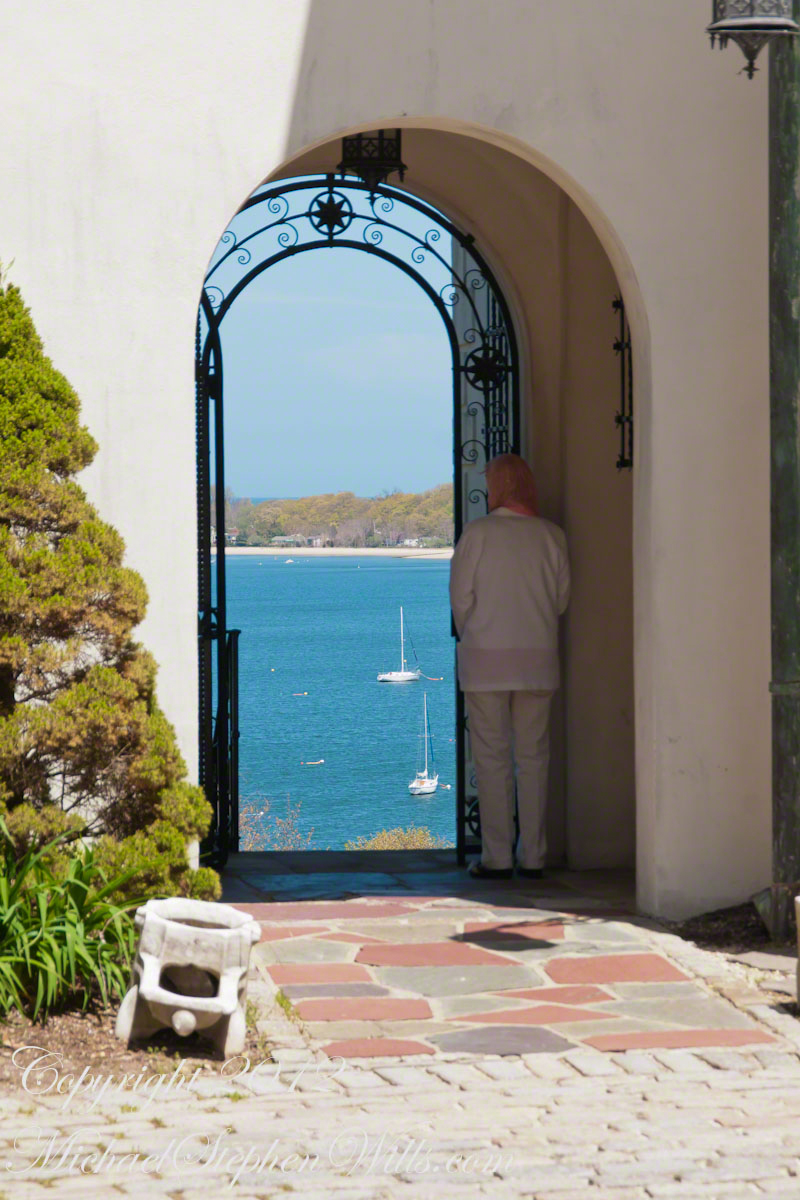
Across the courtyard from the bell tower is this arched entrance to the gardens along the east mansion walls. As we approached the figure to the right seemed to be a ghost, she was so still, enthralled by the view of Northport Harbor.

Archway from Courtyard
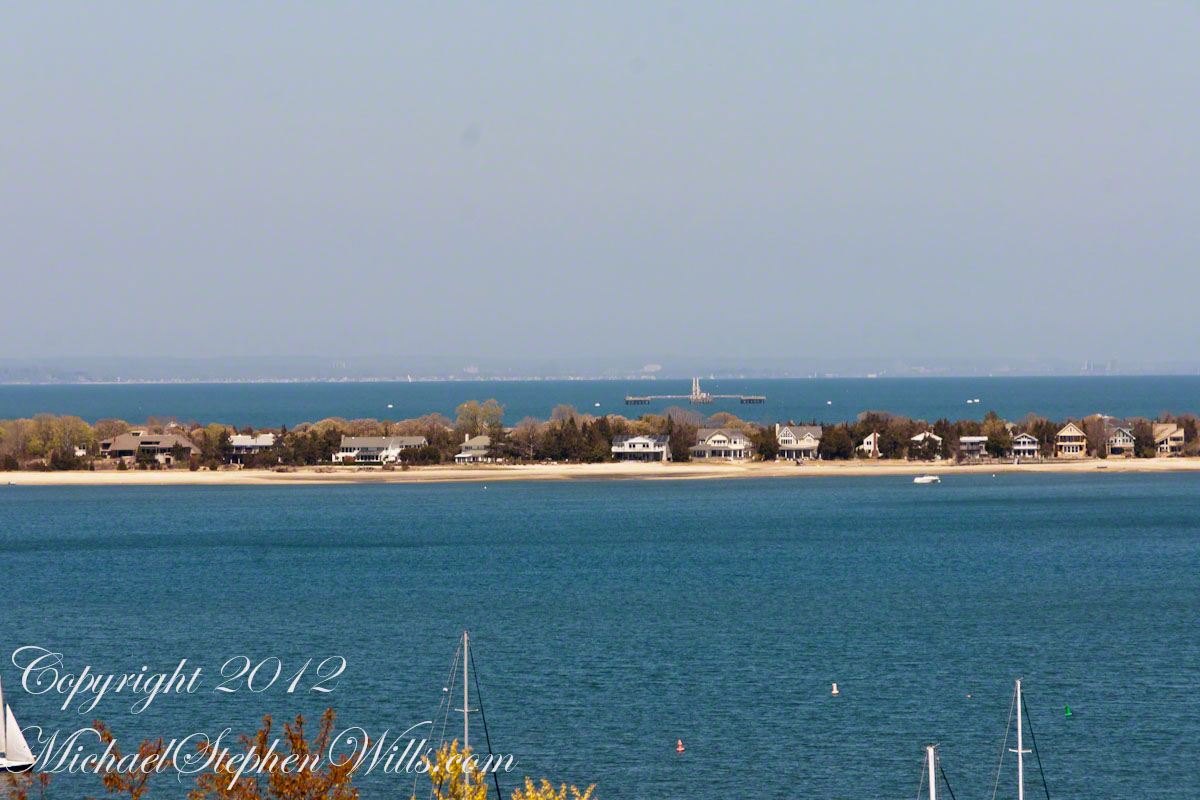
Archway with view toward Northport Bay and Asharoken

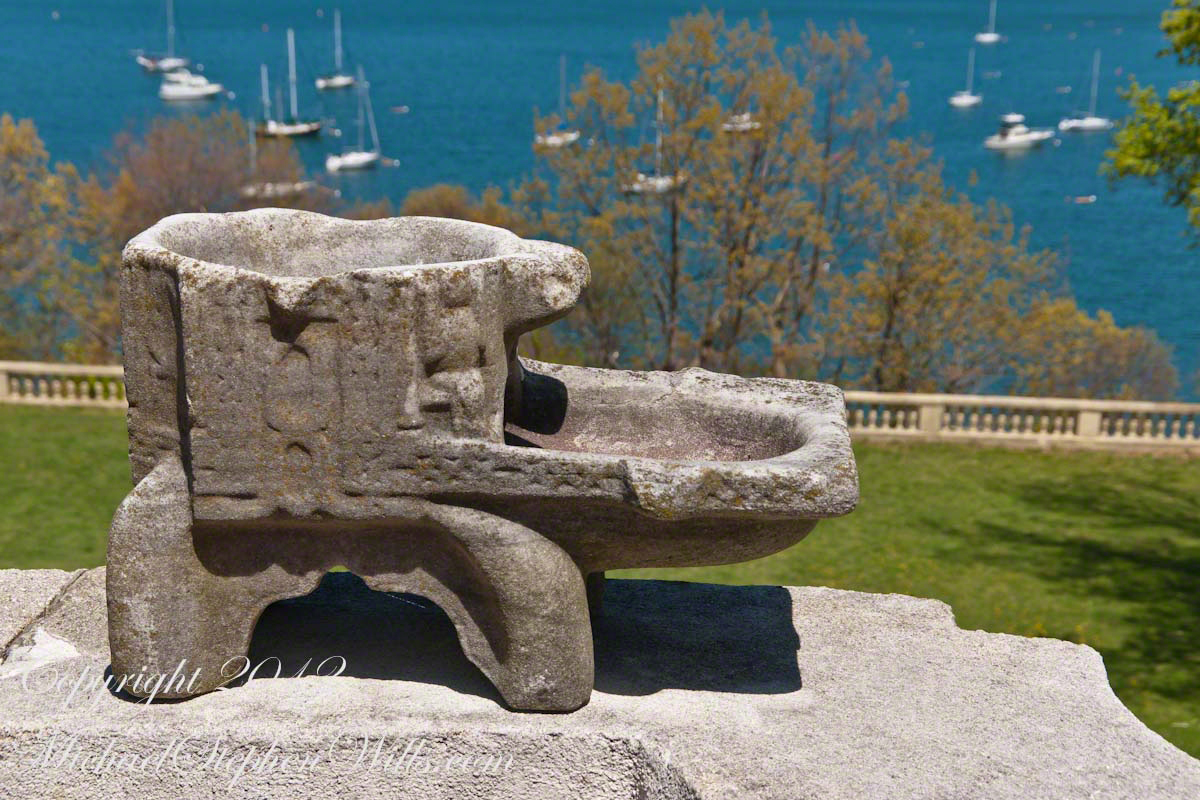
There were many cast stone planters in an Aztec motif such as that to the left of the archway and, in a detail shot, below.

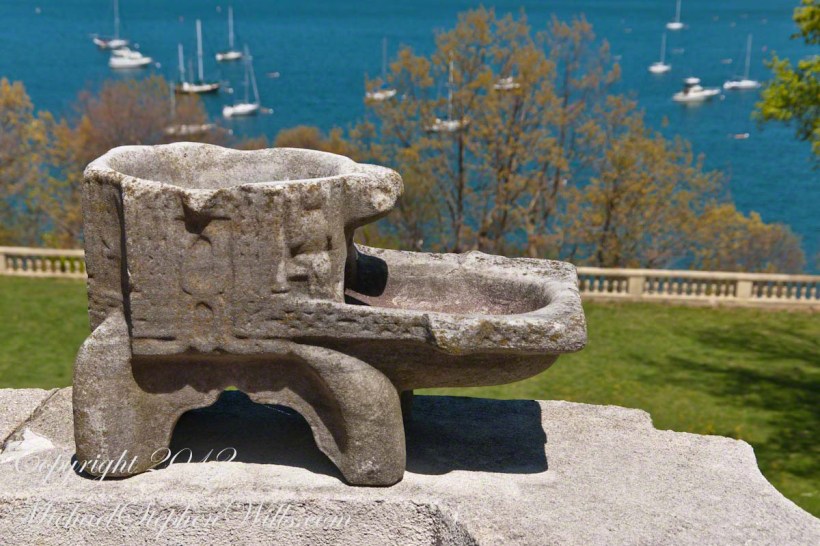
Wall Urn and Northport Harbor
A cast wall urn from the Mansion Garden of the Vanderbilt Museum.

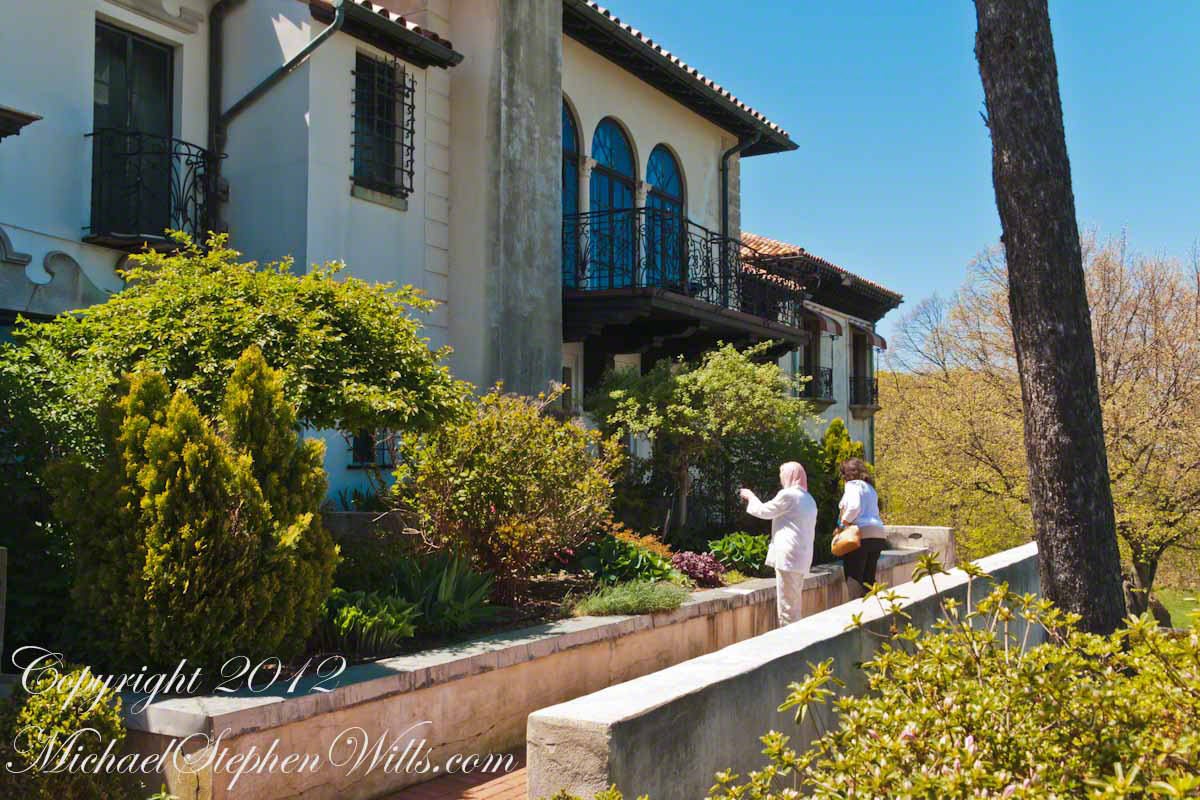
We continued through the archway into the gardens. With plenty of time before the Mansion tour (highly recommended) we wandered at length and had an interesting conversation with the figure of the archway, a retired lady from Smithtown (and not a ghost).

Pam in Mansion Garden
Pam struck up a conversation with another visitor who was very knowledgeable about the museum history and grounds.

Copyright 2022 Michael Stephen Wills All Rights Reserved

A Taste of Gatsby: details from the Vanderbilt Museum

a spring day on the former gold coast of Long Island

Fountain FigureA Taste of Gatsby

The first weekend of May 2013 my wife, Pam, and I attended a New York City Ballet performance on Saturday. Sunday we visited the Vanderbilt Museum of Centerport, Long Island.

This is the former “Eagles Nest” estate of William (“Willie”) Kissam Vanderbilt II.

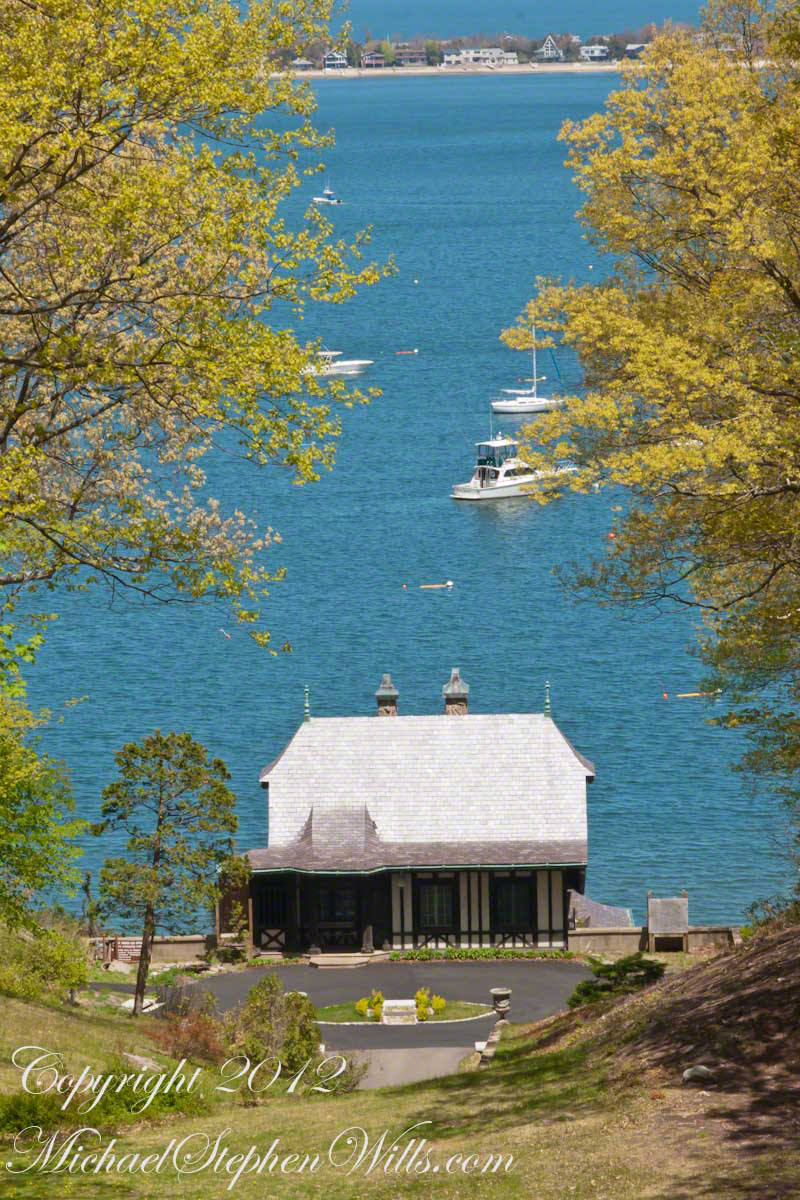
Museum visitors are first drawn to a grand Corinthian colonnade and view of this boathouse on Northport Harbor.

Click this link for my OnLine Photography Galleries
Boat House

Vanderbilt and Gatsby

Willie K chose Centerport in 1910 for an anchorage on the well protected Northport Harbor, deep enough to his yacht the size of a destroyer class ship named for his mother, Alva.
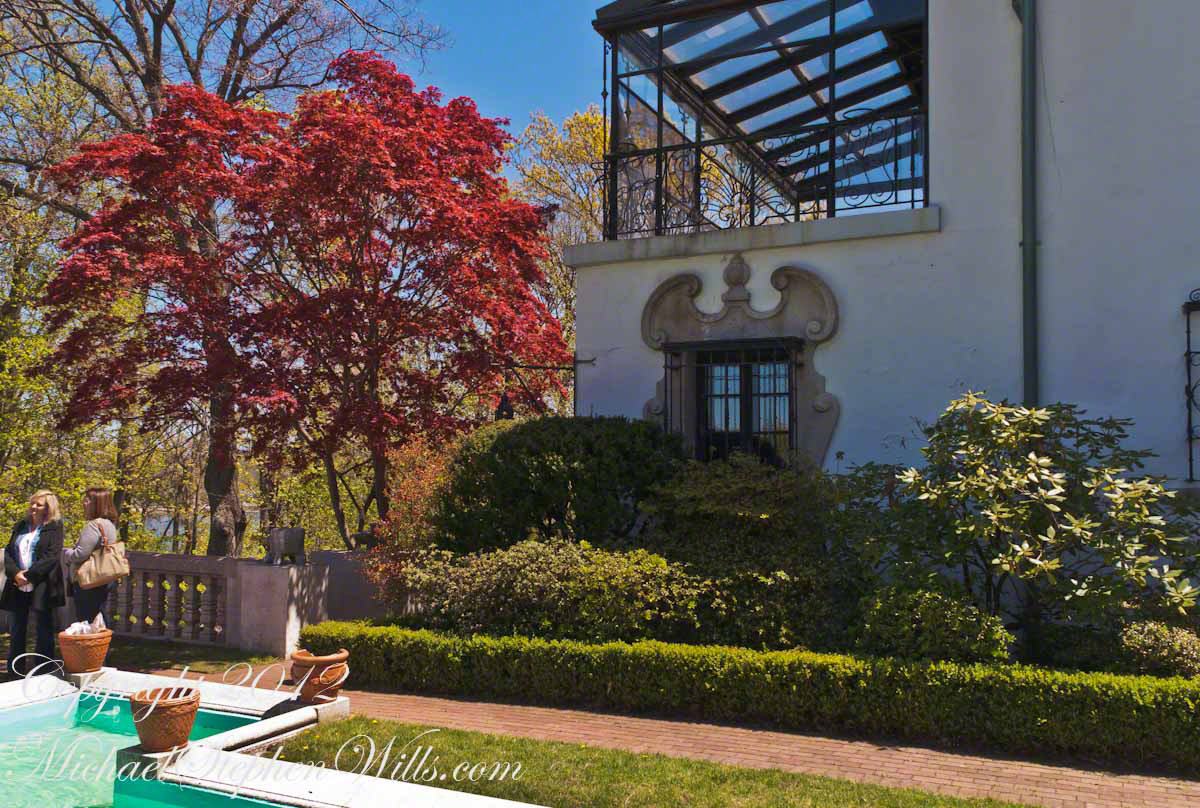
The estate grounds are high above the harbor, the mansion and gardens designed to enhance the view.

There are superficial parallels between Willie K’s life and “The Great Gatsby.” The first suburban commuter, Willie K was an auto enthusiast. A theme of F. Scott Fitzgerald’s novel “The Great Gatsby” is travel back and forth from New York City to the great estates on Long Island’s North Shore. In Gatsby, while the vehicles are grand, the travel is pointless or worse. In comparison, Willie K as a pioneering automobile racer, achieved a land speed record and founded a major race, “The Vanderbilt Cup.” Gatsby, above and beyond his fictional status, is a tenuous, transient figure. Vanderbilt established this estate, grounds and museums we still enjoy today.

Rose Garden

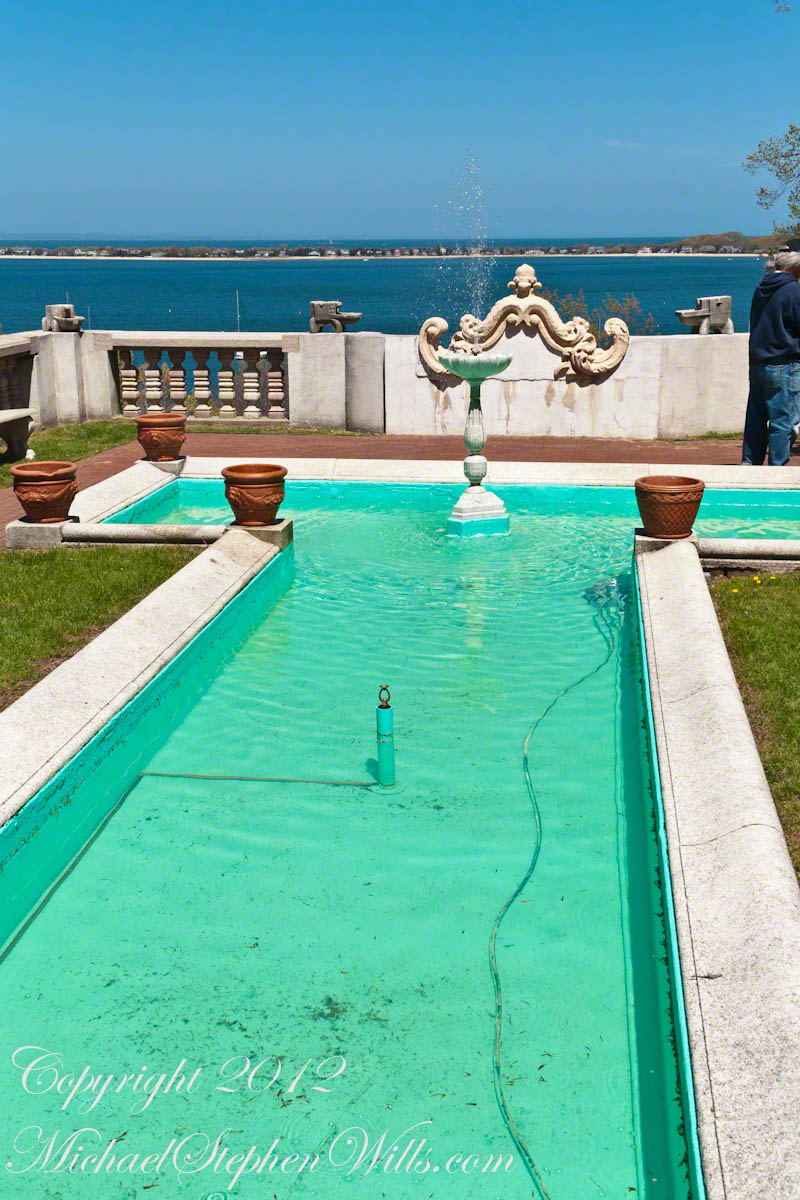
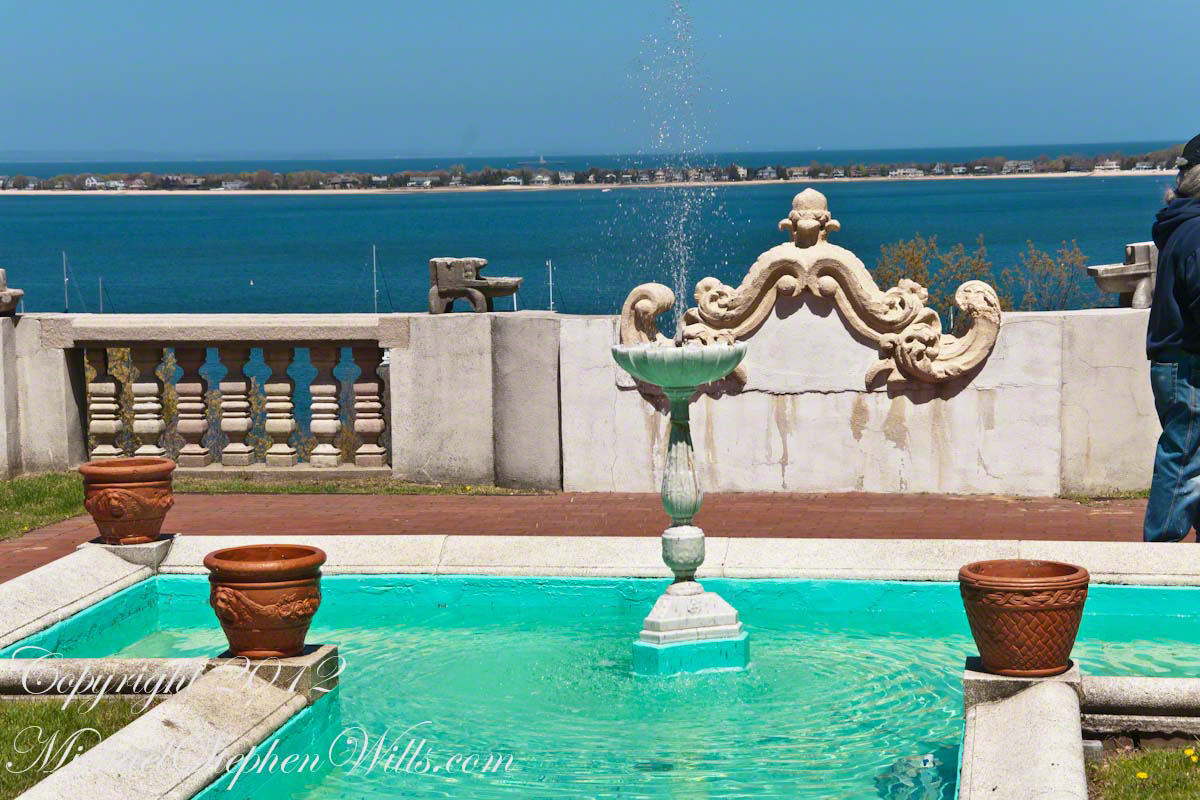
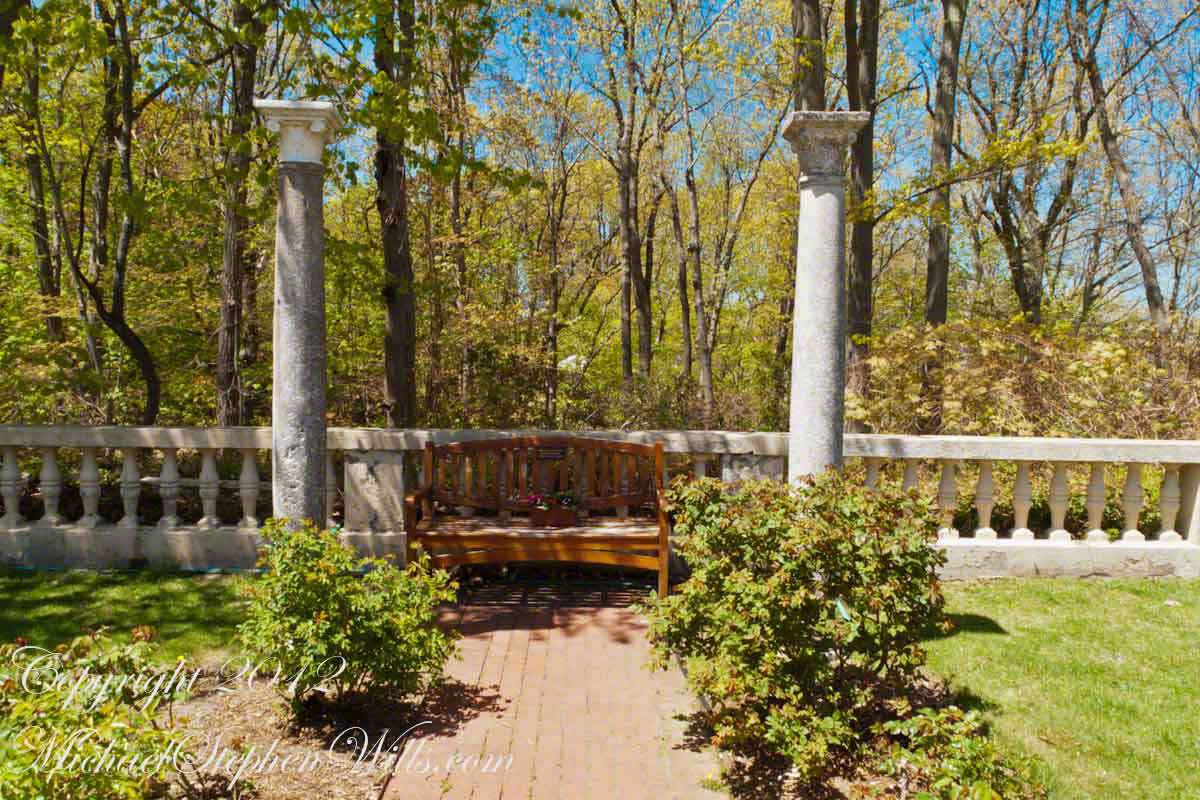
A short walk from the colonnade is a rose garden surrounding a pool and fountain. These Corinthian columns sized to a human scale flank a dedication bench on the northern side overlooking the boathouse through a hillside forest.

Click this link for my OnLine Photography Galleries
Rose Garden Bench

Spirit of the Mediterranean

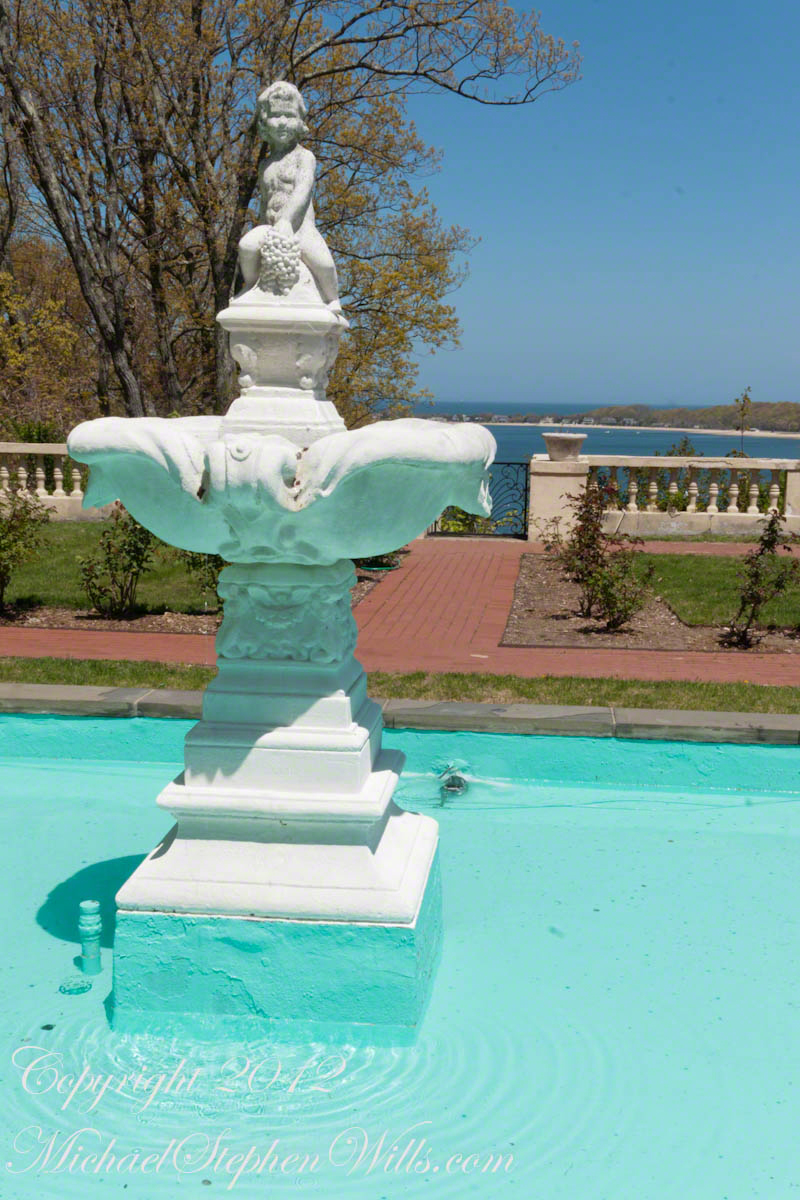
This figure of a flourishing infant is atop the rose garden fountain. Pam and I first noticed this character of the Eagles Nest estate here, with his abundant grape cluster, and came to know him as an expression of Willie’s outlook.

To the northeast / east is a dramatic view of Northport harbor and the Long Island Sound.

Click this link for my OnLine Photography Galleries
Rose Garden Fountain

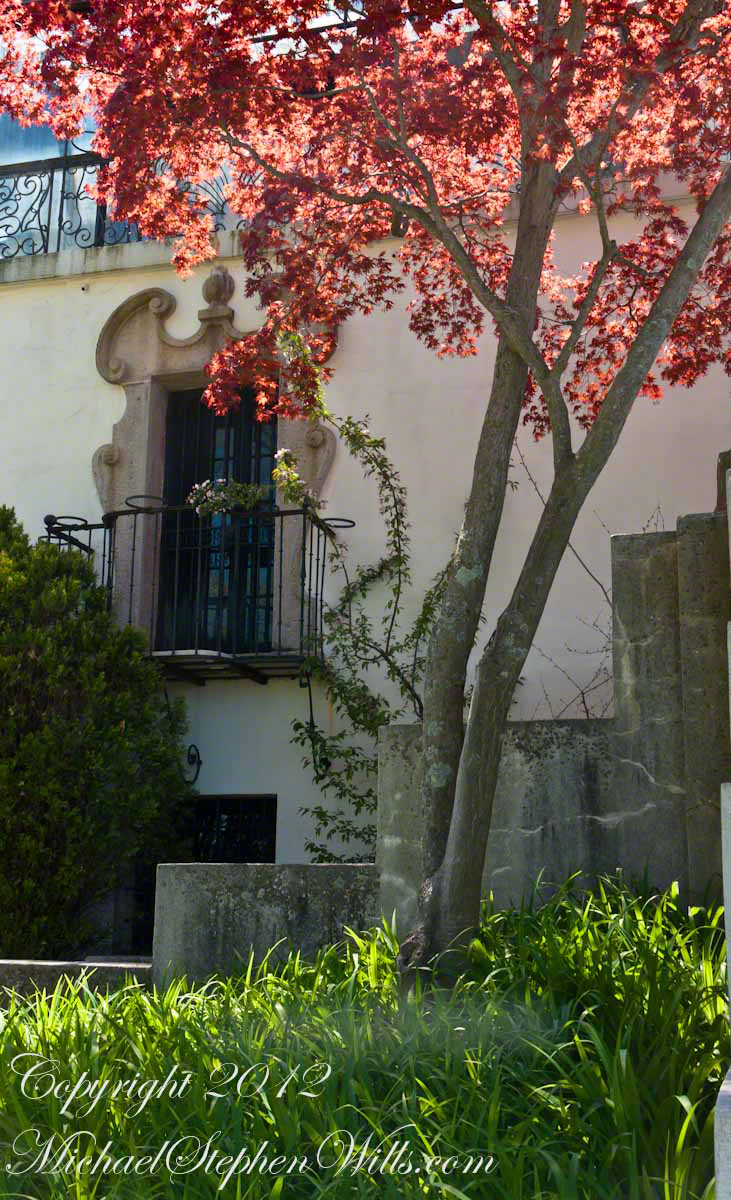
The mansion and surrounding grounds were imagined by Willie and implemented by the architects Warren, Wetmore and Pearce, over a twenty five year building campaign, from his feeling for the Mediterranean.

Click this link for my OnLine Photography Galleries
Museum Garden Statue

We were gifted with weather that evoked the full expression of the Mediterranean spirit.

Copyright 2022 All Rights Reserved Michael Stephen Wills