Monarch Chrysalis: A Symbol of Nature’s Resilience

On a September day, a Monarch chrysalis symbolizes resilience amidst environmental threats, prompting reflection on stewardship and hopeful change.

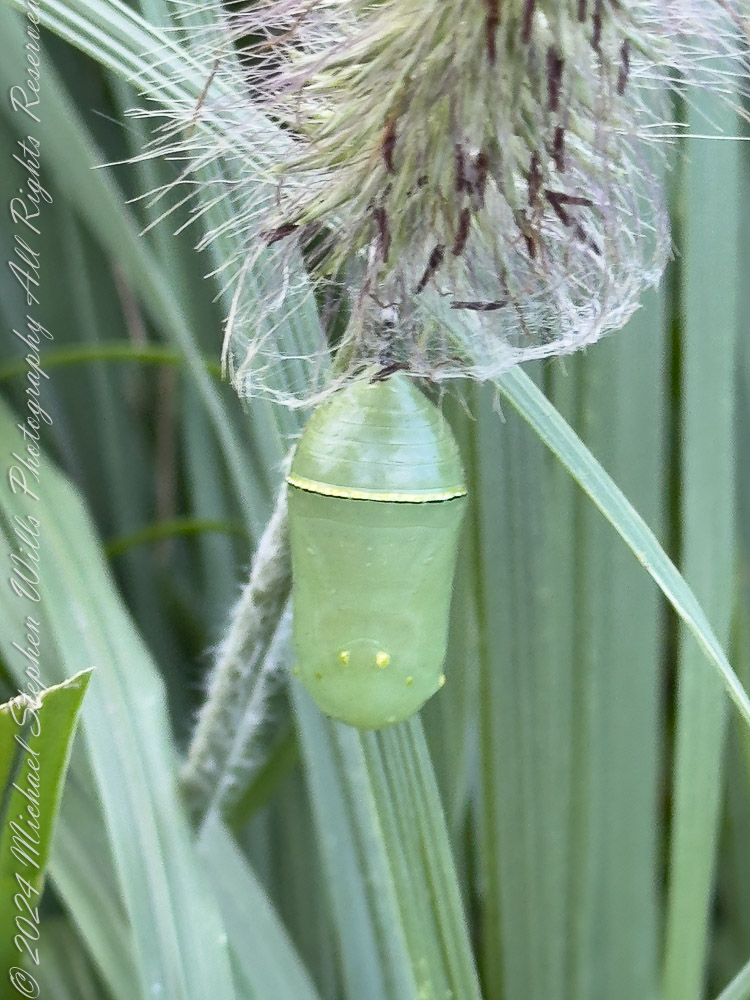
On a warm September afternoon, 2024, Pam and I passed a planting of shimmering grasses along the Cayuga Lake shore, the tips of their feathery plumes swaying in a gentle breeze. Amidst the verdant tapestry, my eyes caught a flash of delicate green—a Monarch chrysalis, hanging like a precious jewel beneath one of the seed heads. It was an unexpected encounter, a moment of grace that felt almost otherworldly. The chrysalis, pale jade with gold accents, looked like something born of magic rather than biology. For a moment, time paused.
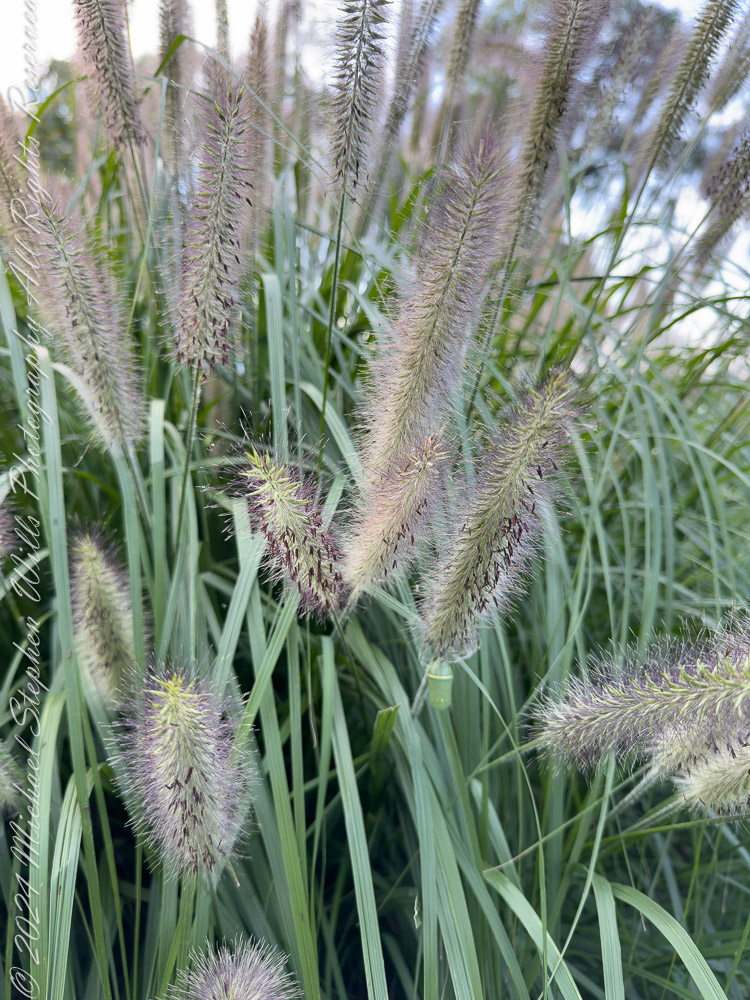
The only Monarch chrysalis we found in 2024, notable for the absence of caterpillars around our home. Tompkins Park, Ithaca, New York, Finger Lakes Region

I knelt carefully, mindful not to disturb the fragile life suspended before me. As I leaned in closer, I marveled at the perfection of its design. The intricate gold dots along its casing seemed impossibly precise, as though a divine hand had painted them there. Yet, this chrysalis was also a paradox: it was a shield of stillness, promising the coming transformation of a creature known for motion and migration.
The significance of this discovery didn’t escape me. Just two years ago, the International Union for Conservation of Nature officially classified the Monarch butterfly as “endangered.” Habitat destruction, pesticide use, and climate change have decimated their numbers. Monarchs, once so plentiful they seemed a seasonal certainty, now teeter on the edge of disappearance. To find this chrysalis was to witness a quiet rebellion against those odds, a solitary emblem of resilience in a world fraught with loss.

I thought of their epic journey—a migration that spans thousands of miles, linking Canada to the forests of central Mexico. For generations, these butterflies have followed ancestral paths with unerring precision, defying every obstacle in their way. How can something so small carry the weight of such immense journeys? And how, in a world that seems to grow harsher each year, do they still persist?

This chrysalis, tucked in the grasses of Stewart Park, felt like an answer to those questions. It was a reminder of the resilience of life, the determination of nature to continue despite all that works against it. And yet, it also felt like a fragile promise. The Monarch’s survival is no longer assured; its future, like the butterfly within this chrysalis, hangs by a thread.

As I rose and continued our walk, I carried the image of the chrysalis with me, letting its quiet beauty settle in my mind. I thought of the interconnectedness of all things: the milkweed plants that sustain Monarch caterpillars, the winds that guide their migrations, and the people whose choices shape the landscapes they traverse. Stewardship is not just a responsibility; it is a privilege—an opportunity to ensure that these miraculous creatures continue to grace our skies.

By the time I left the park, the sun had sunk toward the west, its light no longer graced the grasses. I looked back one last time, hoping that this chrysalis would complete its transformation safely. In its stillness, I saw not just hope, but a call to action. The Monarch’s story is not just about survival; it’s about the courage to evolve and adapt, even when the odds seem insurmountable. And perhaps, in witnessing this moment of metamorphosis, we too are reminded of our capacity to change—to become better stewards of the world we share.
Enter your email to receive notification of future postings. I will not sell or share your email address.

Discovering Nature’s Secrets: A Grandfather’s Tale at Comstock Creek

Join me on a heartwarming adventure at Comstock Creek with my grandchildren, Sam and Rory, as we explore the wonders of nature, create lasting memories, and celebrate the legacy of the Comstock family.

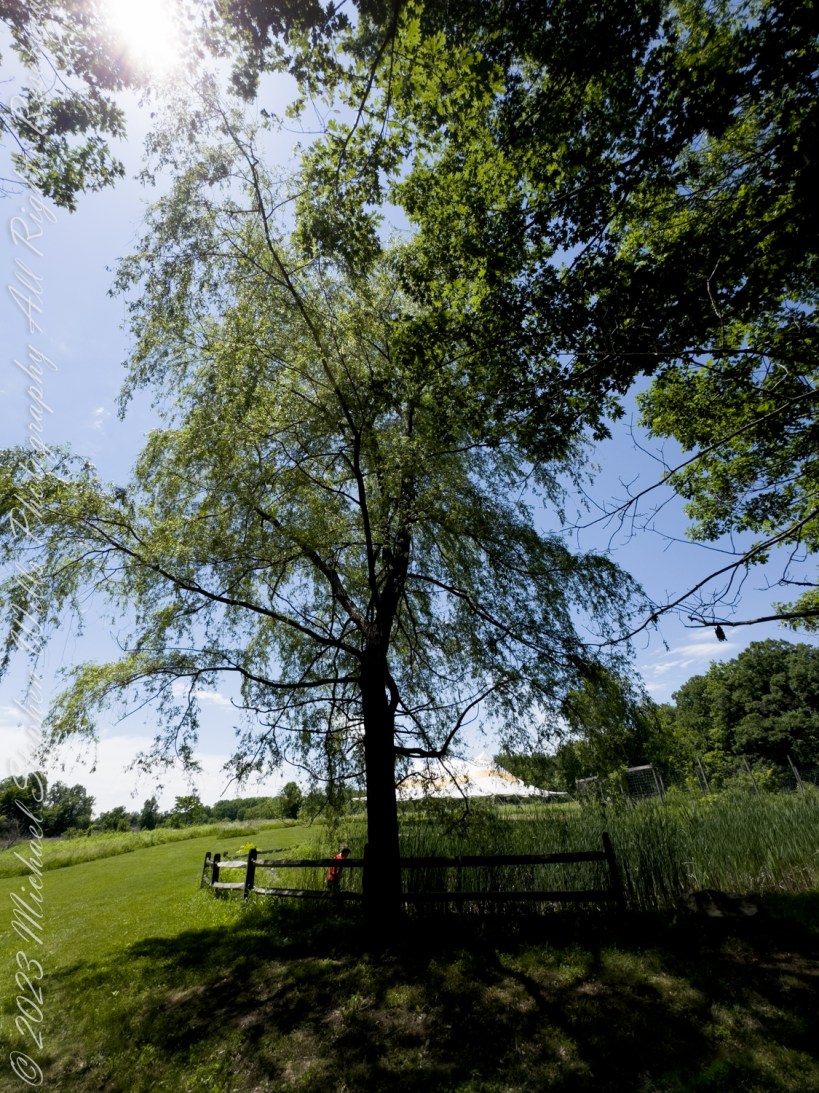
The morning sun filtered through the lush canopy of trees as I guided my grandchildren, down the familiar path towards Comstock Creek of the Cayuga Nature Center. The children were familiar with the creek from time spent in summer camp. This little haven of nature is a favorite spot of theirs. Comstock Creek, named after the Comstock family, stands as a testament to their significant contributions to entomology and nature education. John Henry Comstock, a renowned entomologist, and his wife, Anna Botsford Comstock, a pioneering figure in nature study, left an indelible mark on the Ithaca area and beyond. Their legacy lives on, not just in the academic world, but in these very waters where my grandchildren now play.

As we reached the creek, the children wasted no time kicking off their shoes and wading into the cool, shallow water. My grandson, in his red shirt, and granddaugter, in her green one, both radiated joy and curiosity. The sunlight danced on the water’s surface, casting shimmering reflections that seemed to animate the entire scene.

The youngest was the first to discover a small pool where the water had carved out a deeper spot. “Look, Grandpa!” he exclaimed, his voice full of excitement. He crouched down, peering intently at the tiny fish darting around his feet. His sister joined him, her initial apprehension giving way to a wide-eyed fascination as she watched the underwater ballet.

Their time was spent turning over rocks to find little aquatic creatures and marveling at the delicate balance of nature. The children’s laughter echoed through the woods, blending with the sounds of rustling leaves and the gentle babble of the creek. Their sense of wonder reminded me of the Comstocks’ passion for nature, a passion they had so fervently shared with the world.

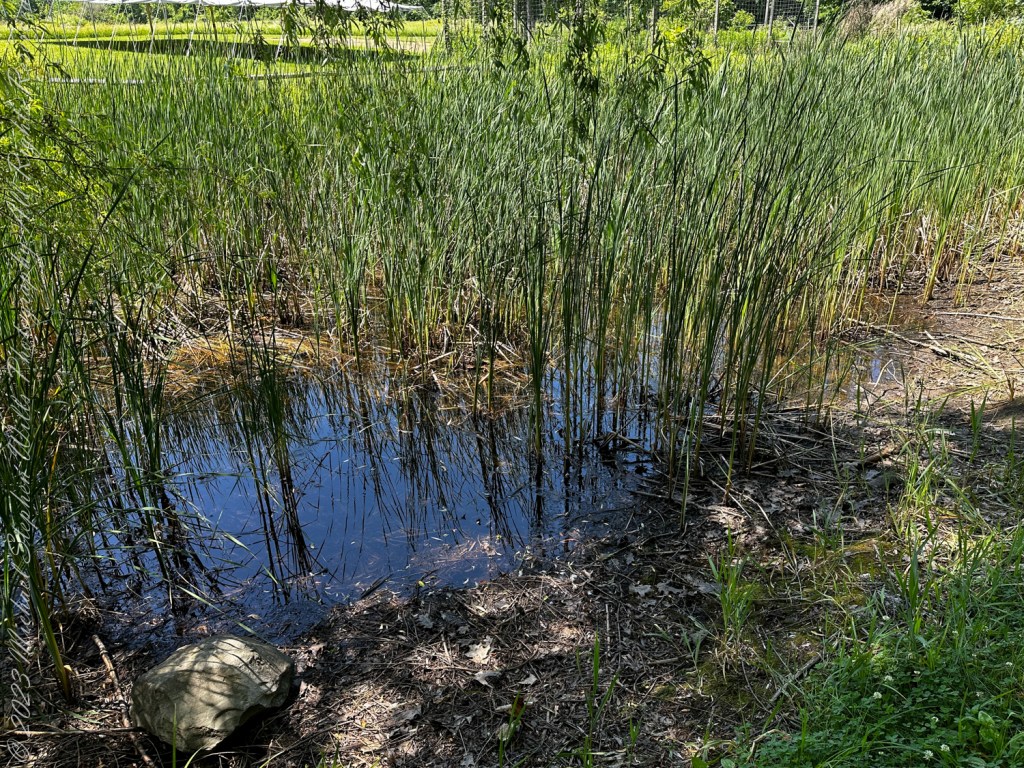
After a while, we decided to take a break and walked through the meadow past where tall reeds swayed gently in the breeze. He knew of a small, tranquil pond that reflected the sky like a mirror. He leaned the water’s edge,hoping to grab a frog. I stood back, capturing this peaceful moment with my camera, knowing that these images would become treasured memories.

As noon approached, we travelled back to Ithaca for an ice cream treat, promised them as a reward for their adventurous spirit. Their faces lit up with delight as they savored their treats, their expressions reflecting pure contentment.

The day wouldn’t have been complete without a splash in the pool. Back home, grandmother set up the inflatable volleyball net while the kids changed into their swimsuits. The pool became a hub of activity as they splashed around, their laughter blending with the sound of the water.

Reflecting on the day, I felt a deep sense of gratitude. The Comstock family’s dedication to nature education had inspired generations, including my own. Their legacy was evident not just in the academic institutions of Ithaca, but in the simple, joyous exploration of nature that I shared with my grandchildren. I hope this day at Comstock Creek will be remembered fondly, a chapter in our family’s ongoing story of discovery and connection with the natural world.

Copyright 2024 Michael Stephen Wills All Rights Reserved