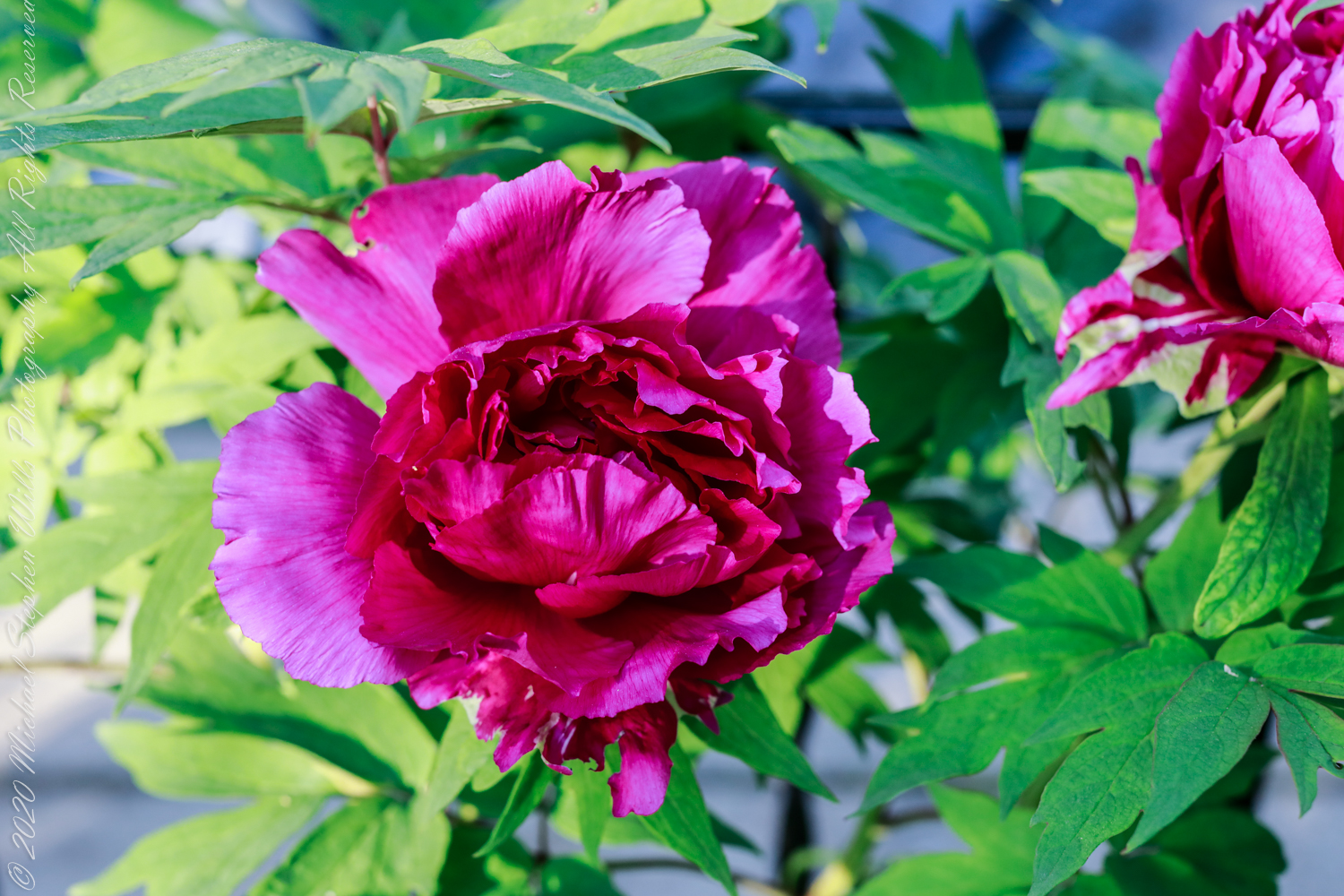
See my previous May Woody Peony postings for background on this peony variety.
These photographs were taken with a Canon EOS 5D Mark IV dslr and the Canon EF 50mm f/1,2L USM lens. I opted for handheld exposures; the morning was absolutely still.
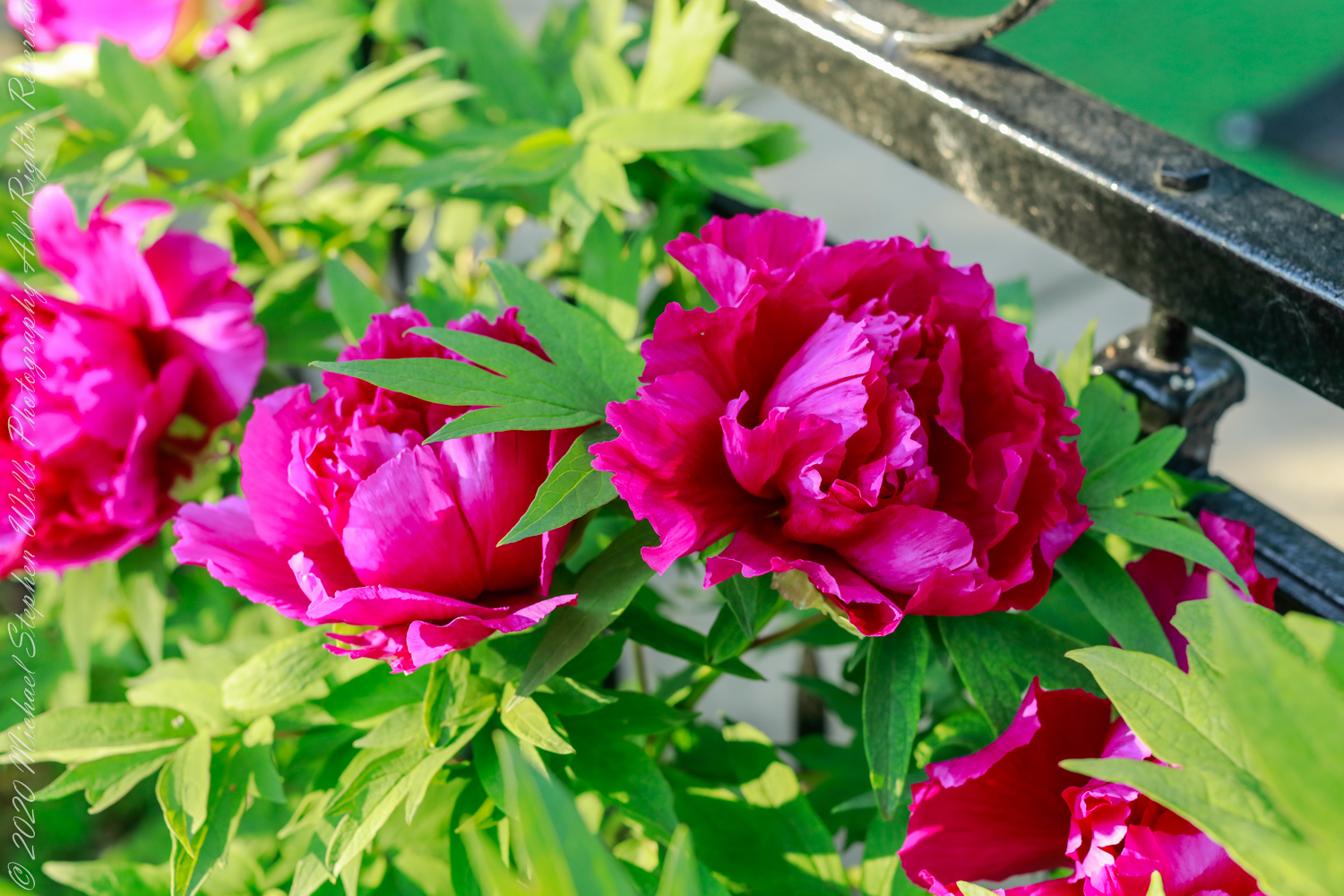
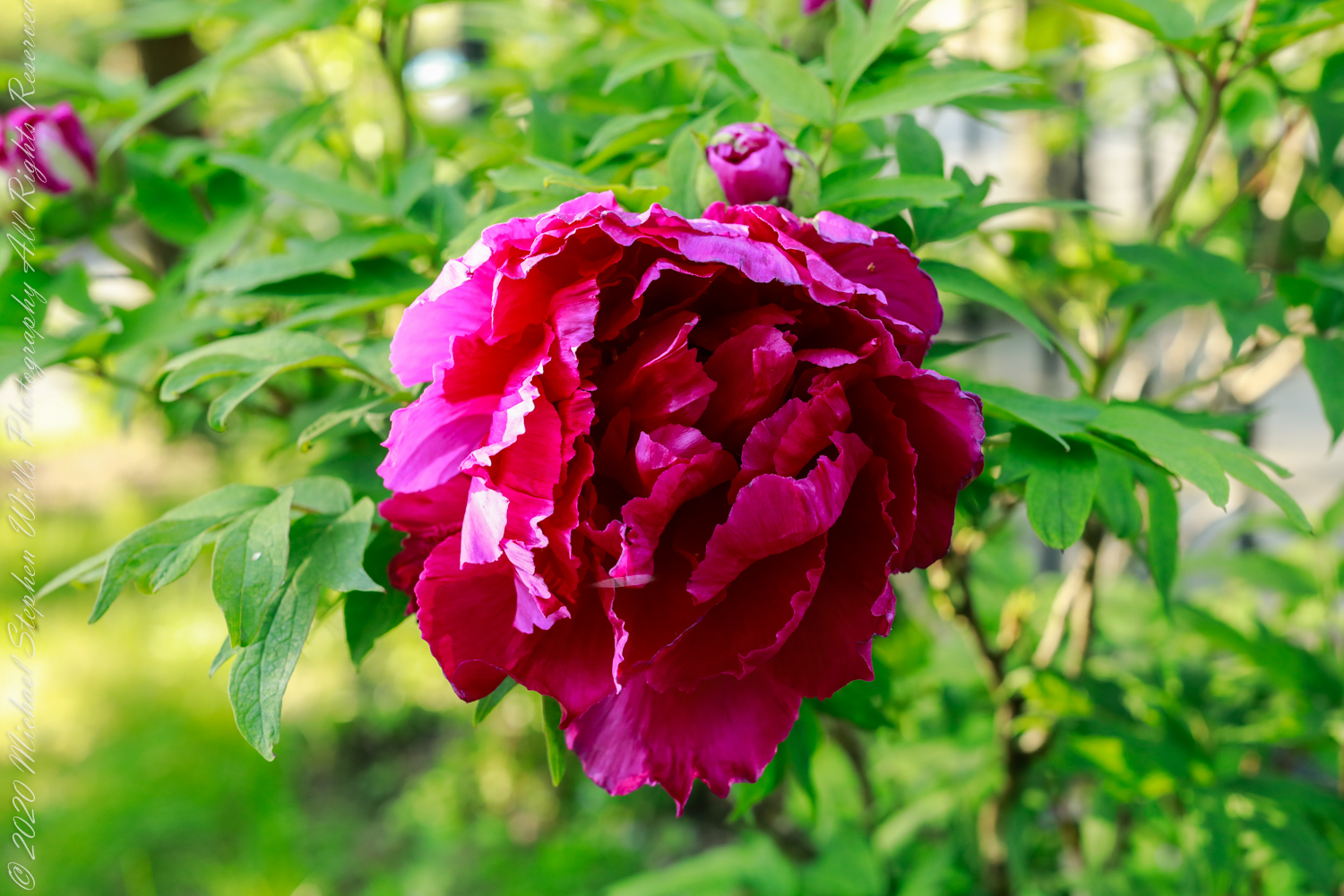
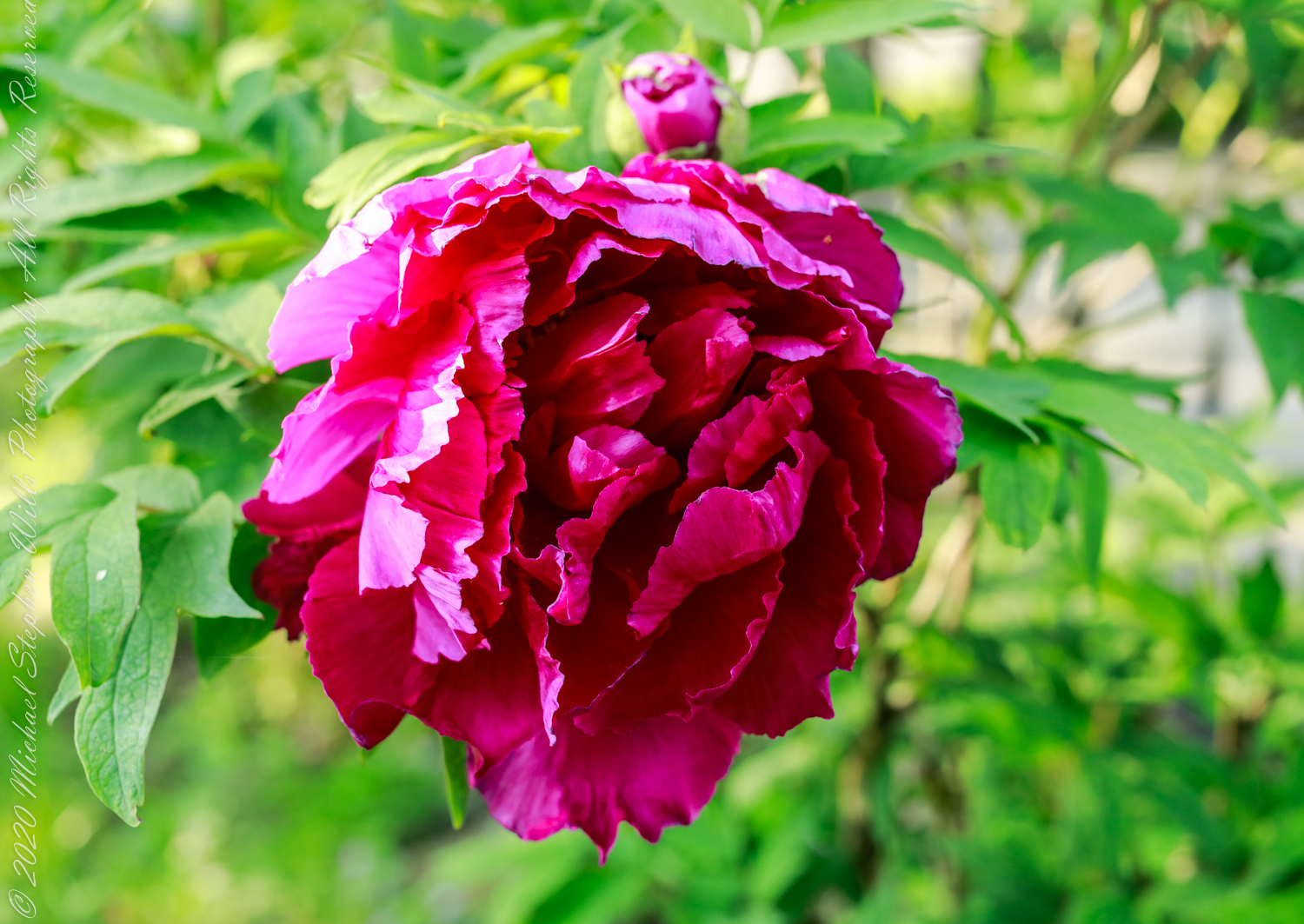
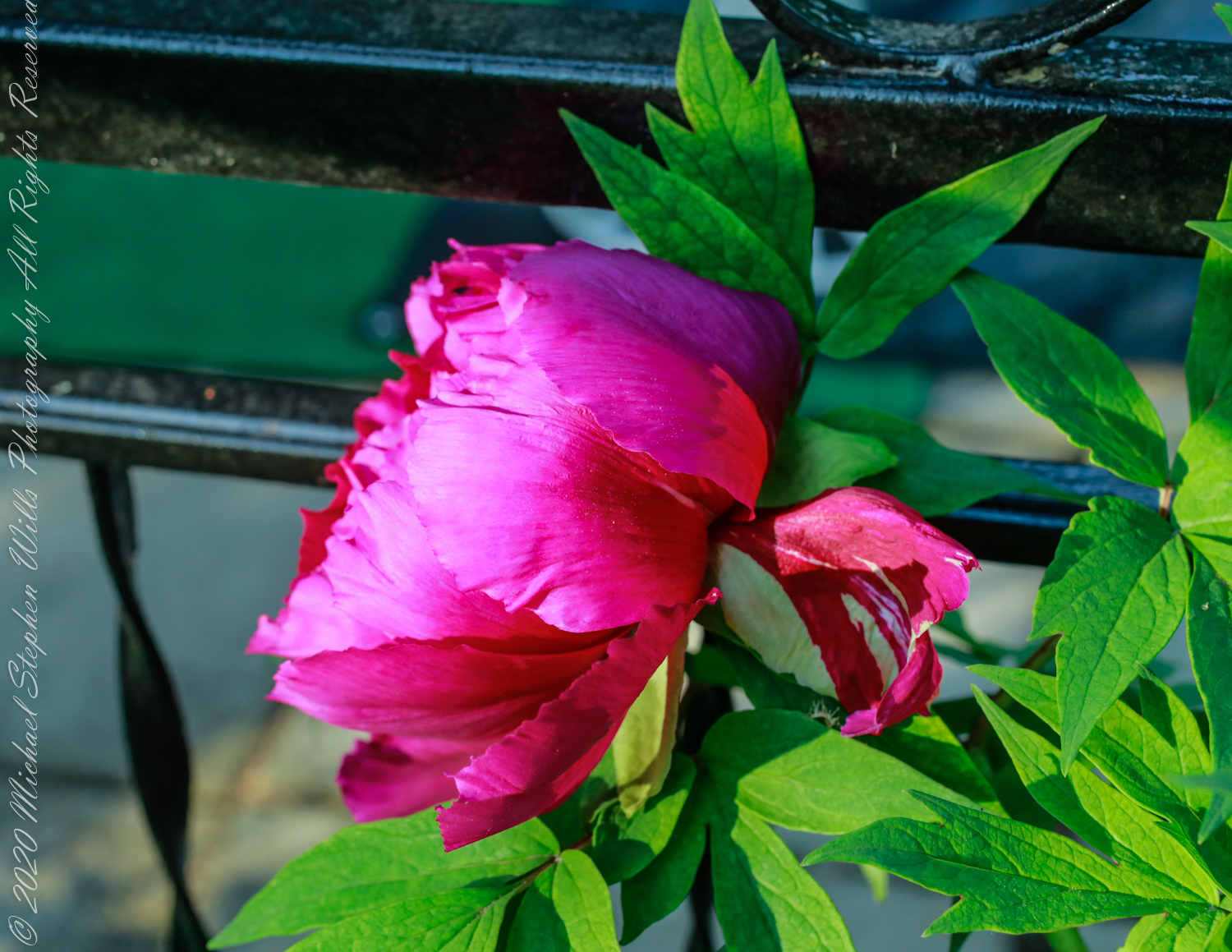
Tree Peony
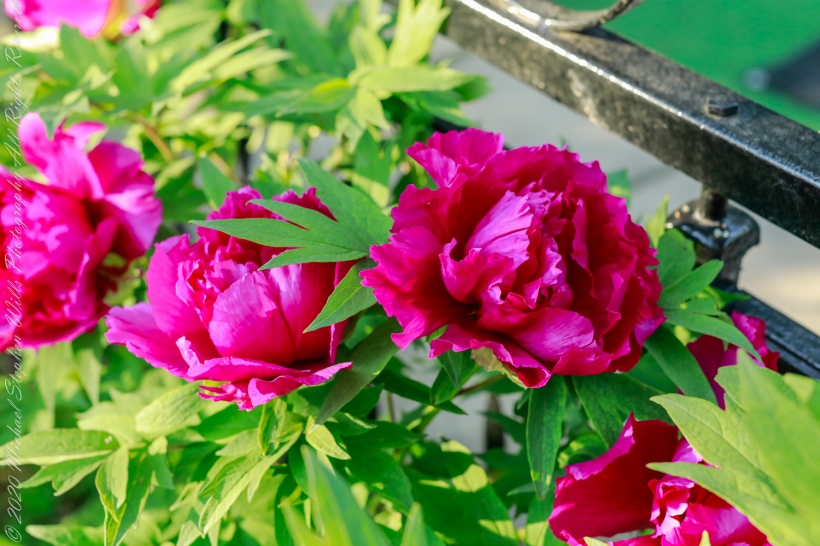
See my previous May Woody Peony postings for background on this peony variety.
These photographs were taken with a Canon EOS 5D Mark IV dslr and the Canon EF 50mm f/1,2L USM lens. I opted for handheld exposures; the morning was absolutely still.
while trillium
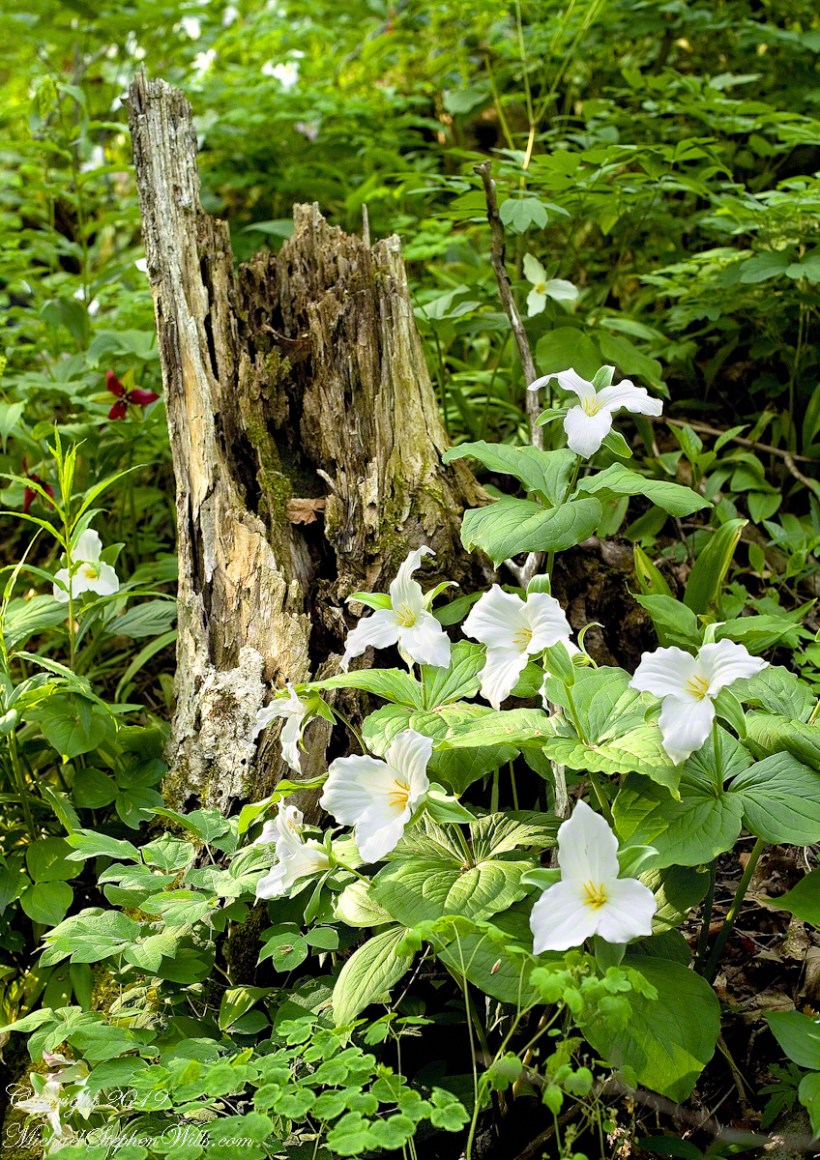
Taken with a Canon 100 mm “macro” lens, a Kodak digital single lens reflex body, a Manfrotto tripod and ample time and patience.
Enjoy!
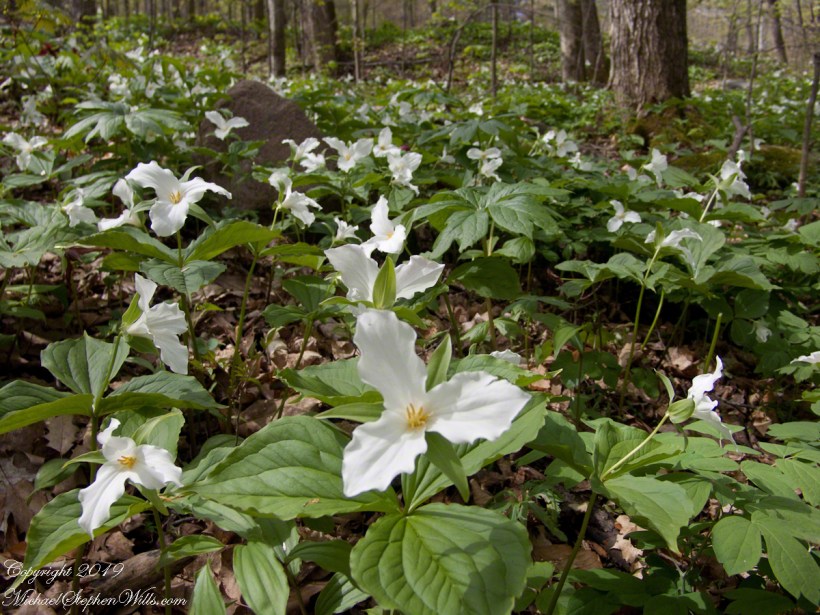
Wonder of the northern spring forest
Click here for my Online Gallery offering from this group.
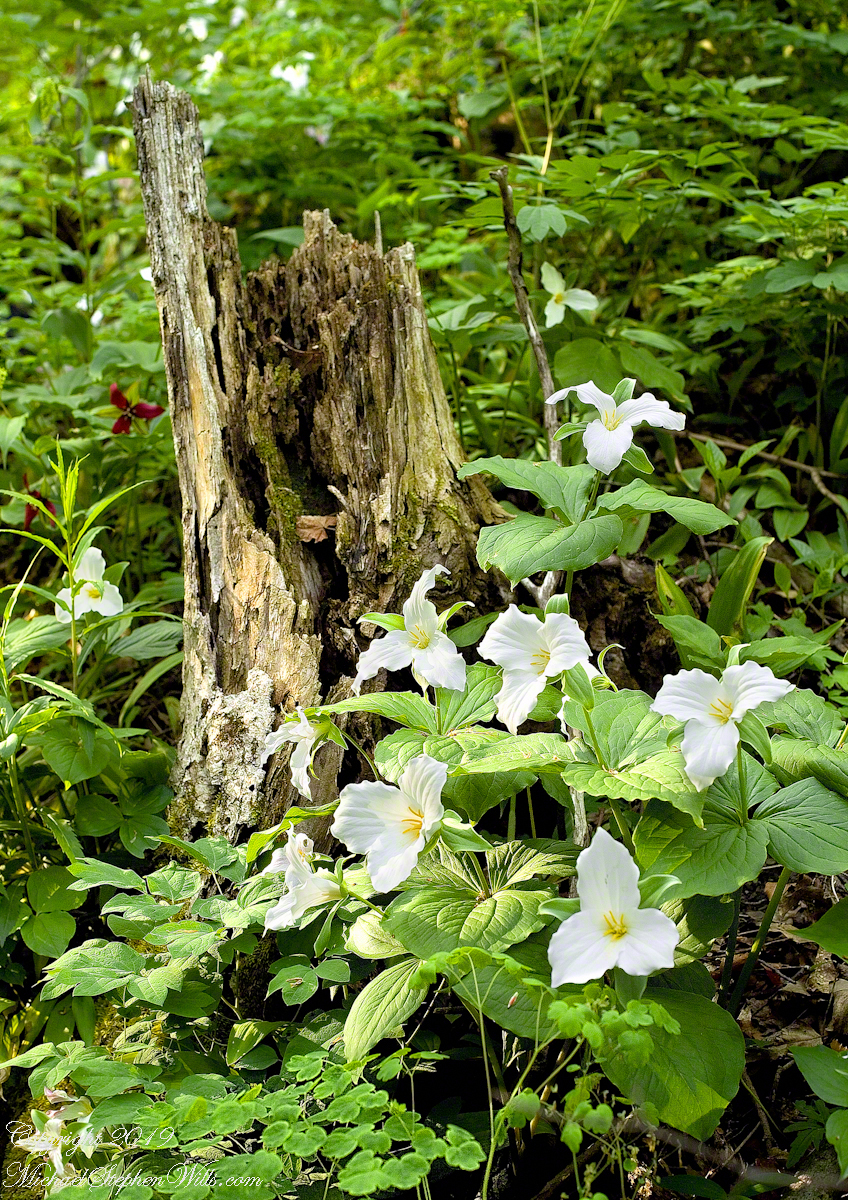
I came upon this display April 2004, a wonder of the northern spring forest.
Click either photograph for a larger view.

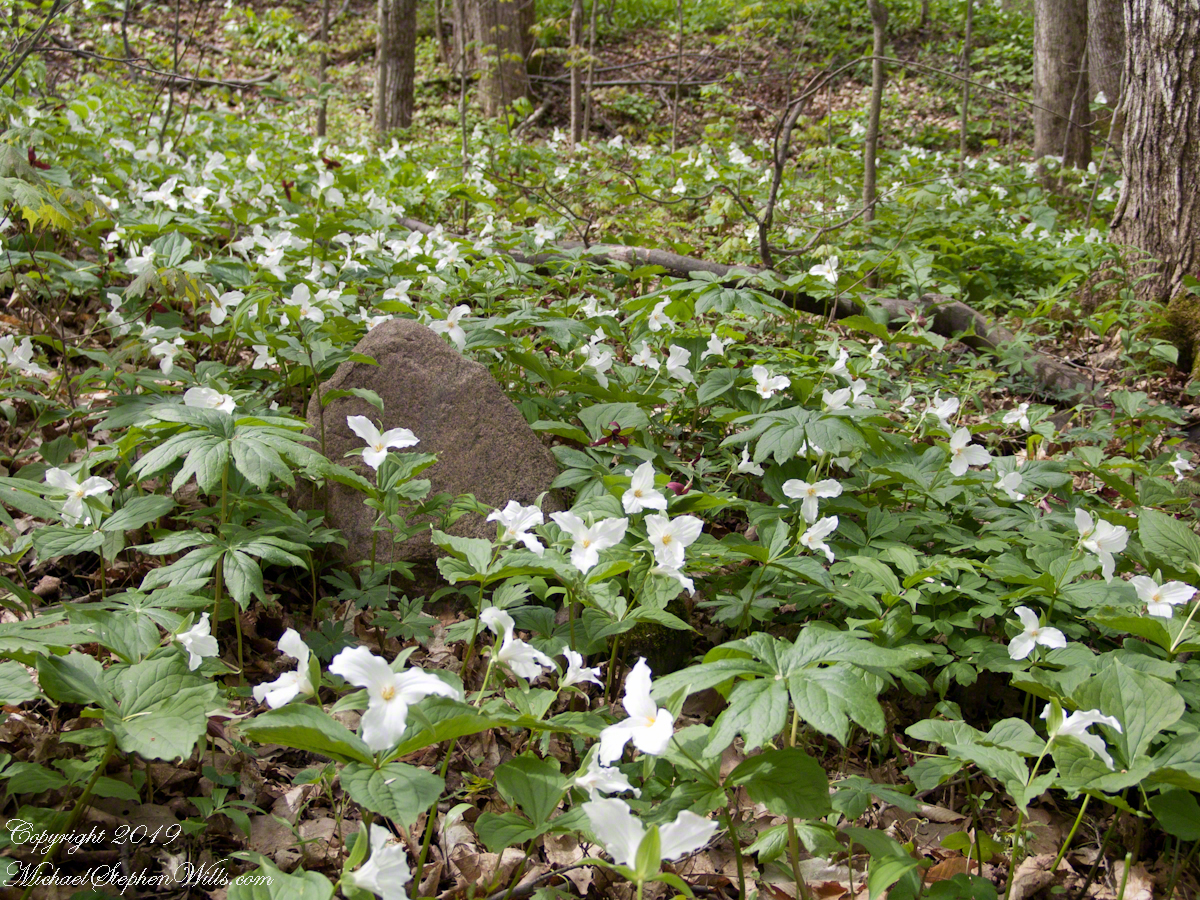

Rumination on wild flower blooms
Click here for my Online Gallery offering of trillium.
An access road, now blocked with huge boulders by the State Park, leads to this dam at the head of Fillmore Glen. I stop here for reflection at times and have climbed behind the dam for photographs. It is possible to drive up the south side of the glen on a poorly maintained road and park next to the boulders. In this season (spring) the surrounding forest is carpeted in wildflowers. Hepatica, trillium, dutchman’s breeches. One day, years ago, I pulled in behind a late model convertible with a license plate holder advising the owner was a member of the 10th Mountain division and a World War II veteran.
They were a well dressed and groomed couple. The white haired driver, in his late 80’s at least, patiently waited while she, a frail woman, walked the margins of the forest, enjoying the wildflowers. It was my impression this was a ritual for them, developed over the years. One of the few spring outings left to them.
Wildflower displays develop over hundreds of years. The massed trillium are on land not disturbed for thousands of years, since the last ice age. These same spring wonders were certainly enjoyed by the Iroquois before us.
Click either photograph for a larger view.
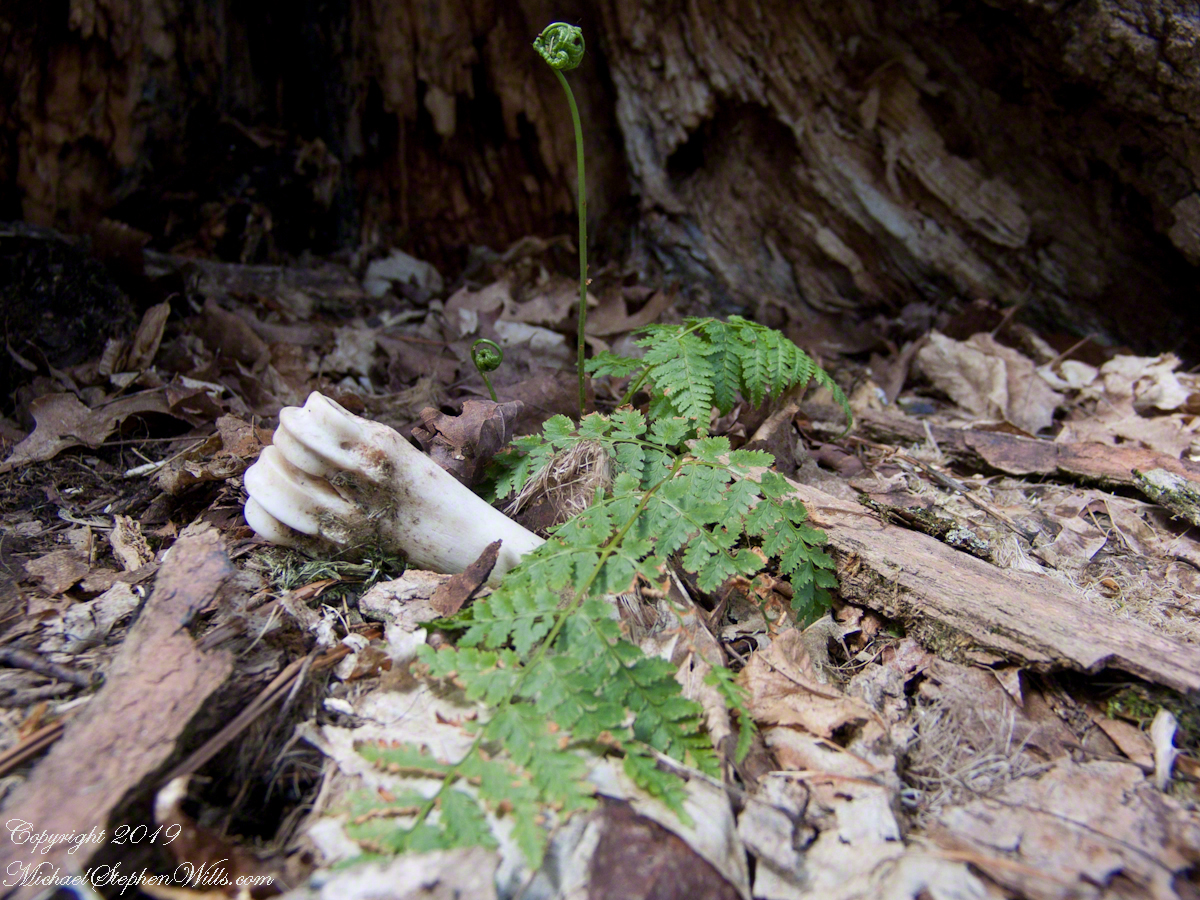
On the gorge slope below the parking area, in a hollow on the north side of a large (I recall) oak, one early sunny spring morning I discovered the last resting place of a deer. Only the bones and some fur remained, the visible portion resembles the Capitulum and trochlea of a human arm bone and, indeed, there was a scapula close by. The season is evoked by the unfurling fern against the based of the oak.
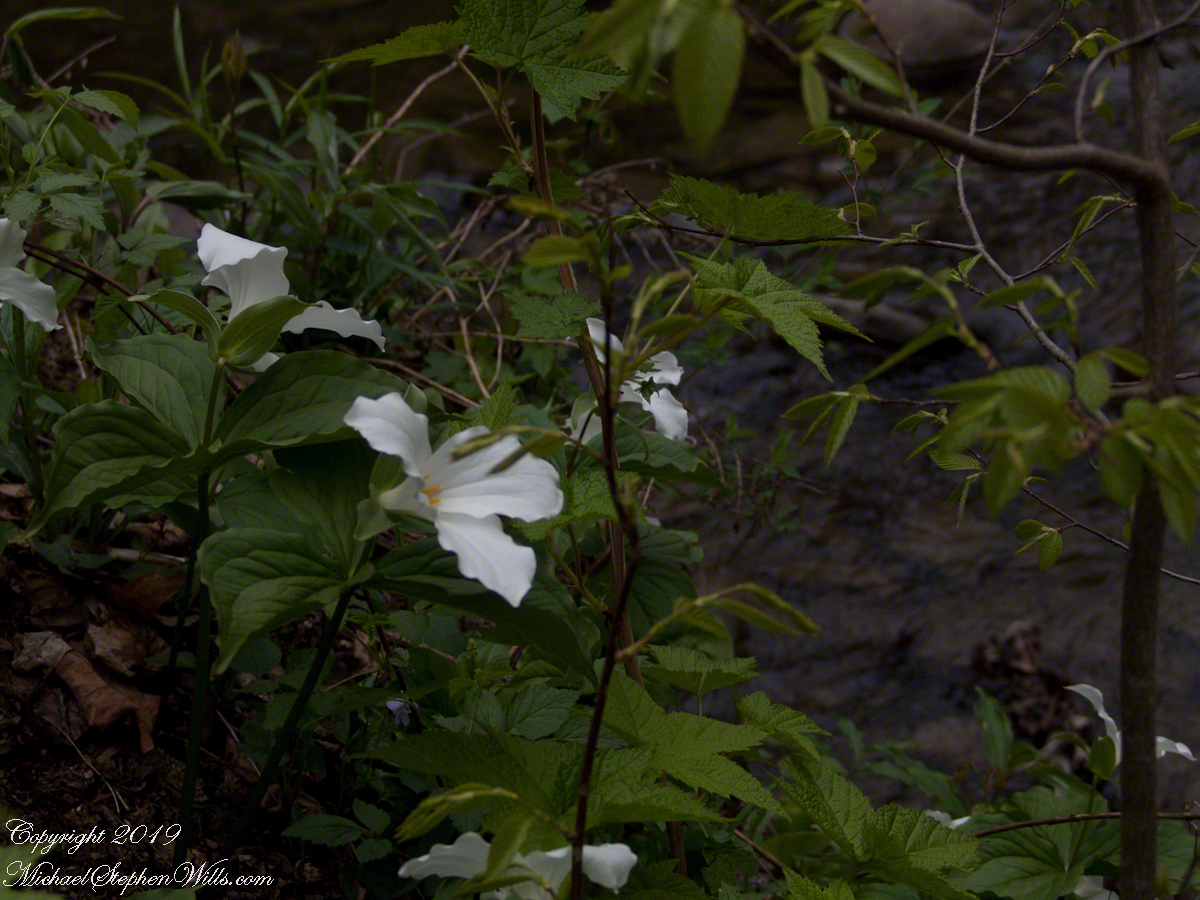
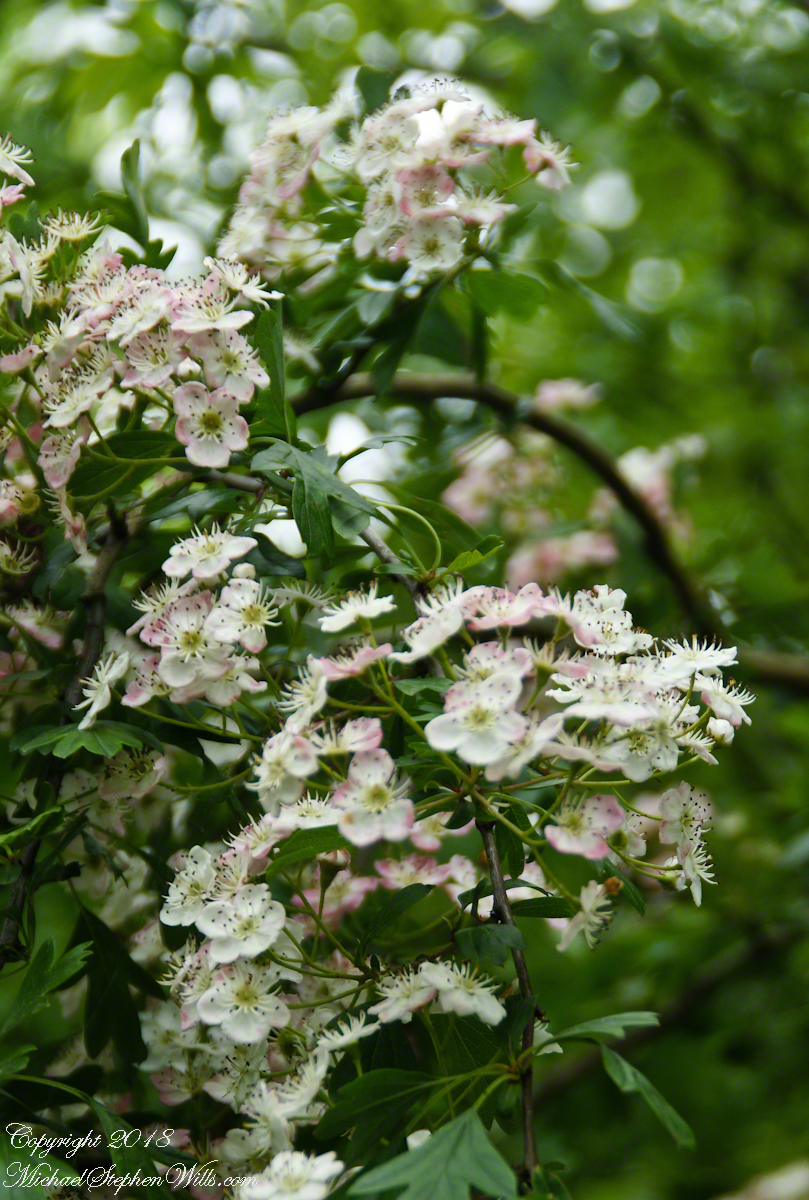
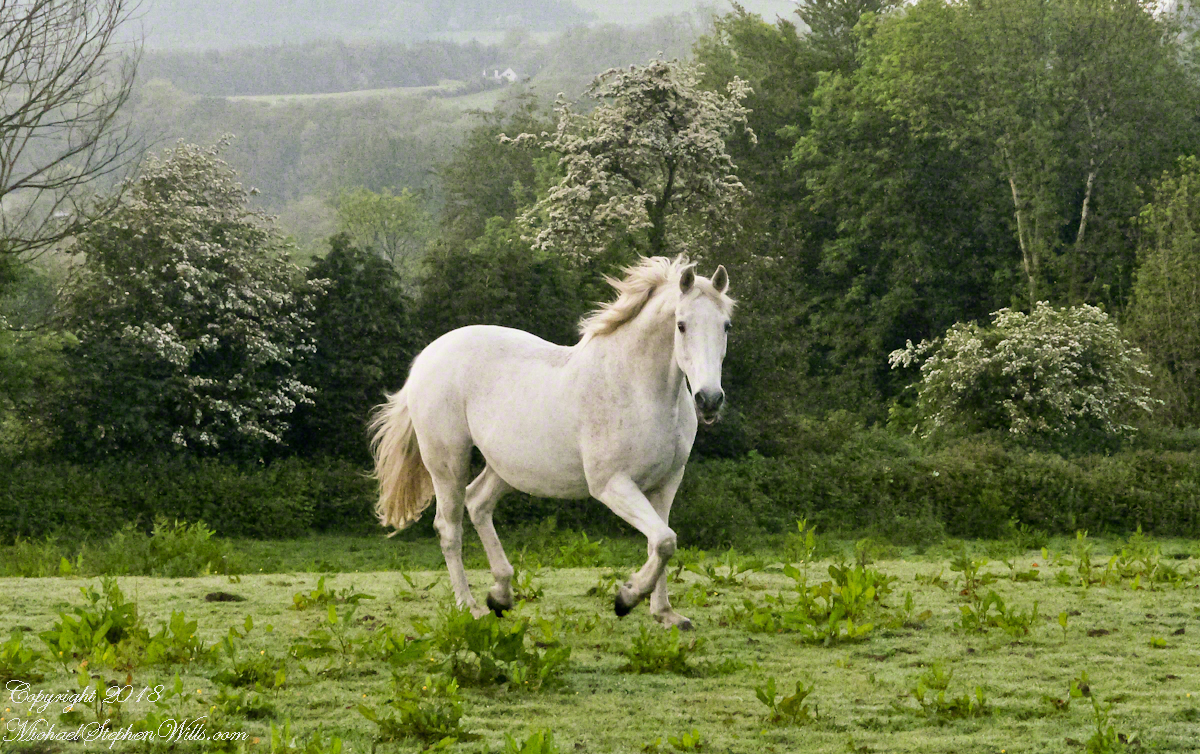
I originally published these blossoms as “wild rose”. It was my Facebook friends who pointed out these are hawthorn flowers. The key to identification was the shape of the leaves.
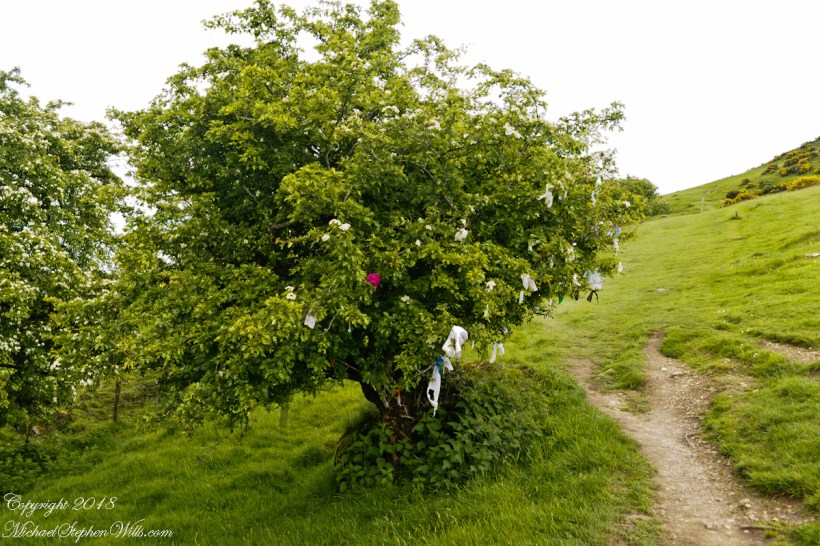
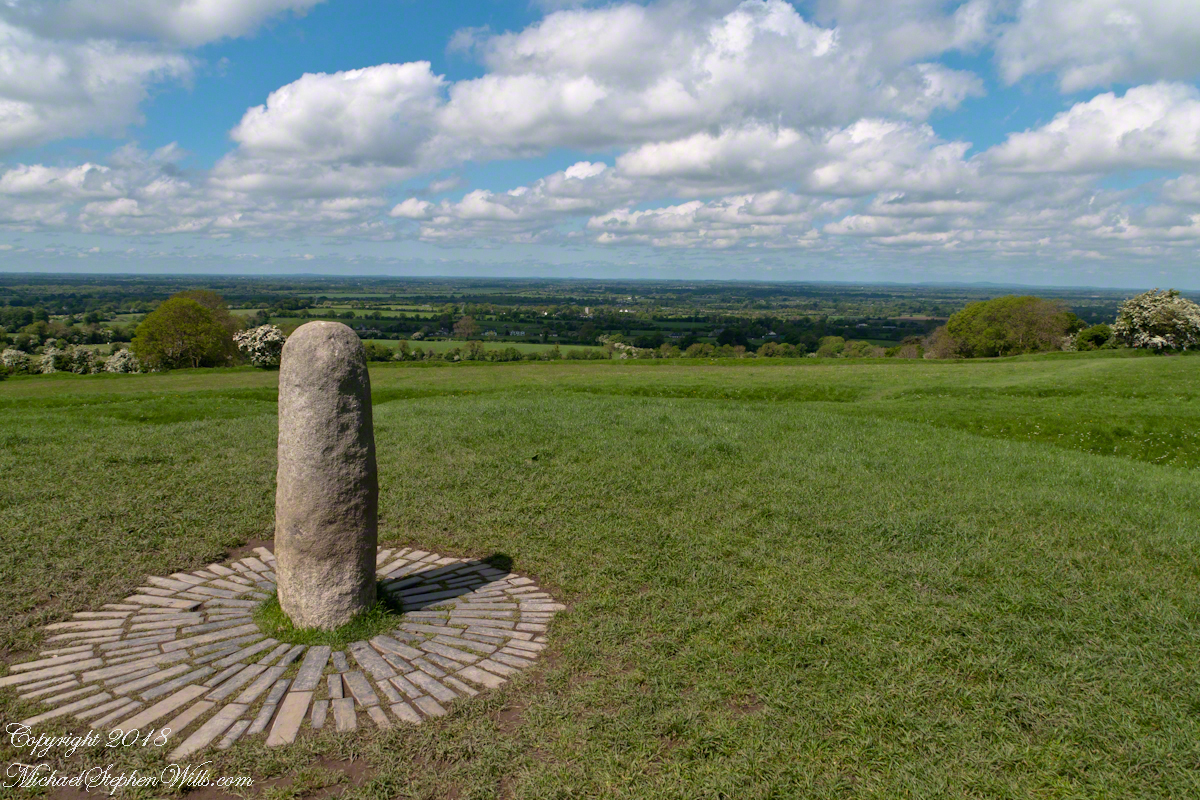
In correcting my mistake, I learned the young leaves of Hawthorn are excellent for salads. Wonder how the fairy folk, associated with single hawthorns (as in the following photograph from the Hill of Tara), react to picking leaves from their trees? I didn’t hear of the practice during our time in Ireland.
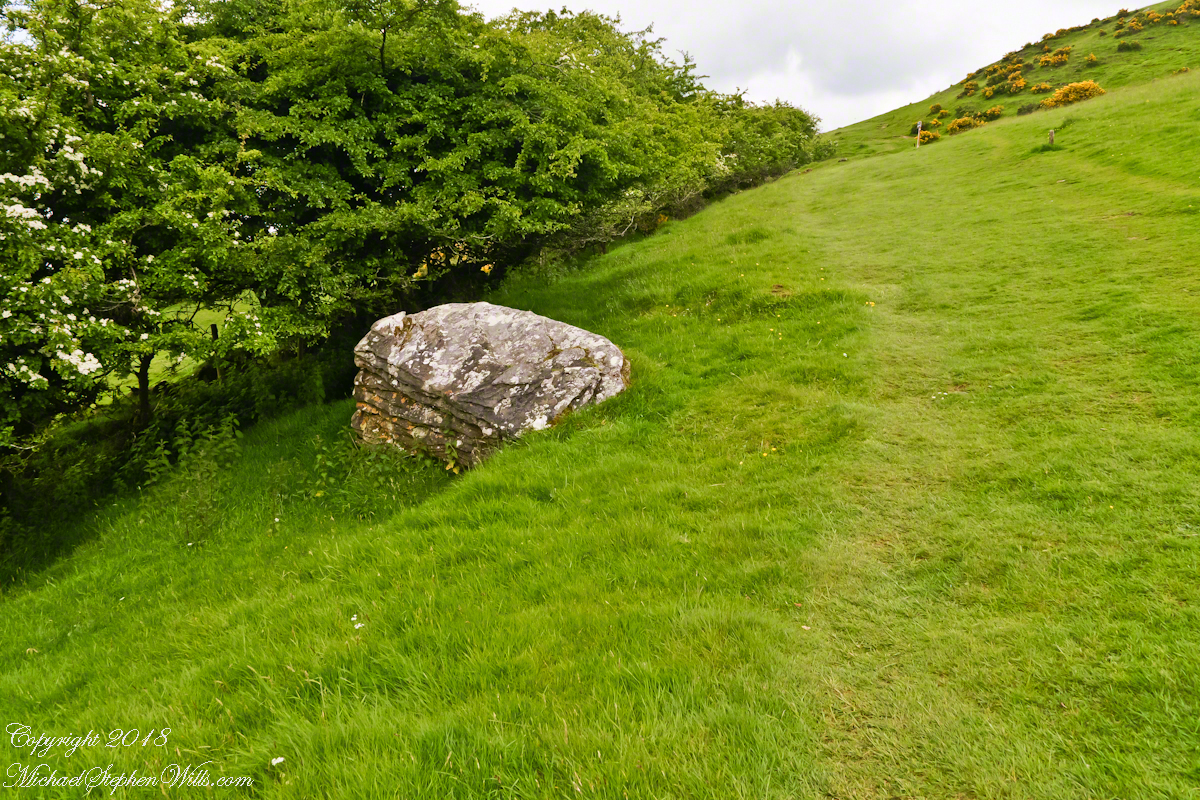
My mistake was understandable, in botany the hawthorn is in the same family as the rose. The flowers are similar, having five petals. The “haw” in hawthorn is from the Old English word for hedge, as is this linear standoff the tree lining the way up to the Loughcrew Cairns.
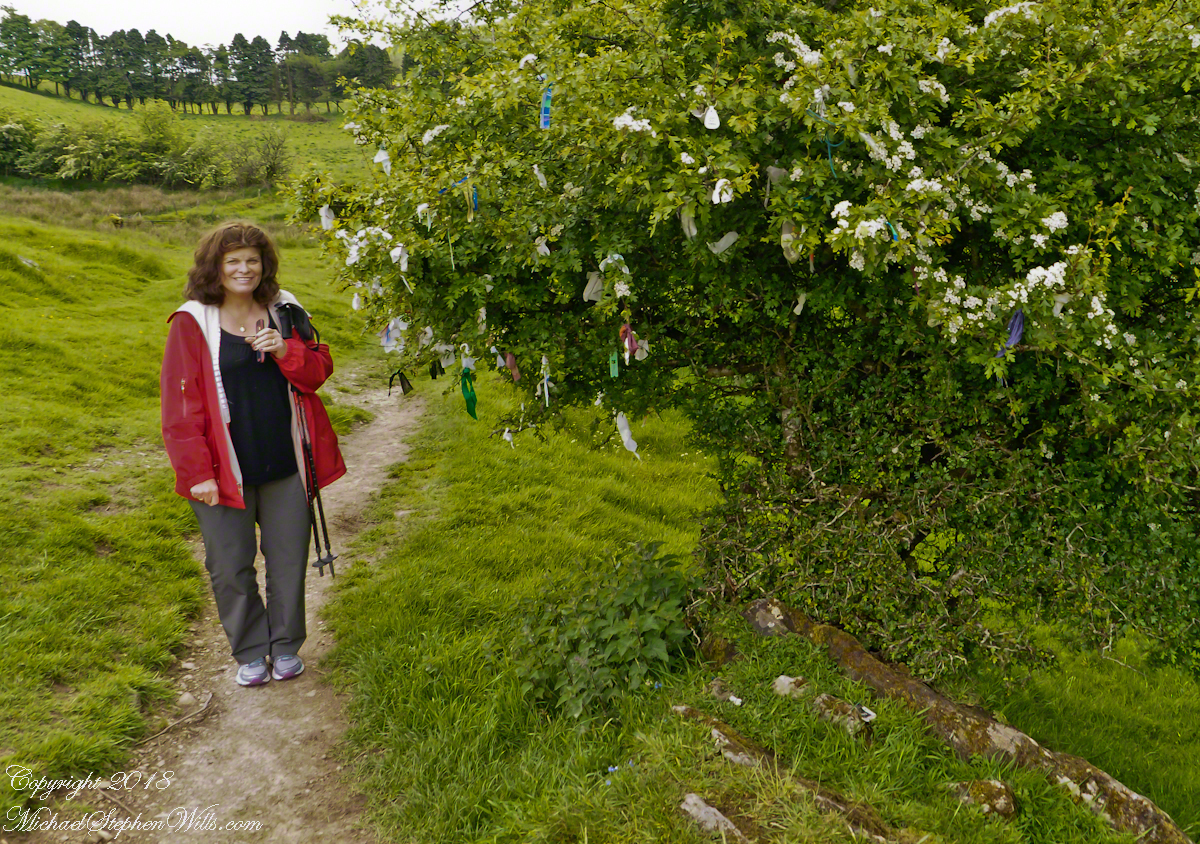
I read these votive offerings are made at Beltane, in which case these are fresh from placement May 1.
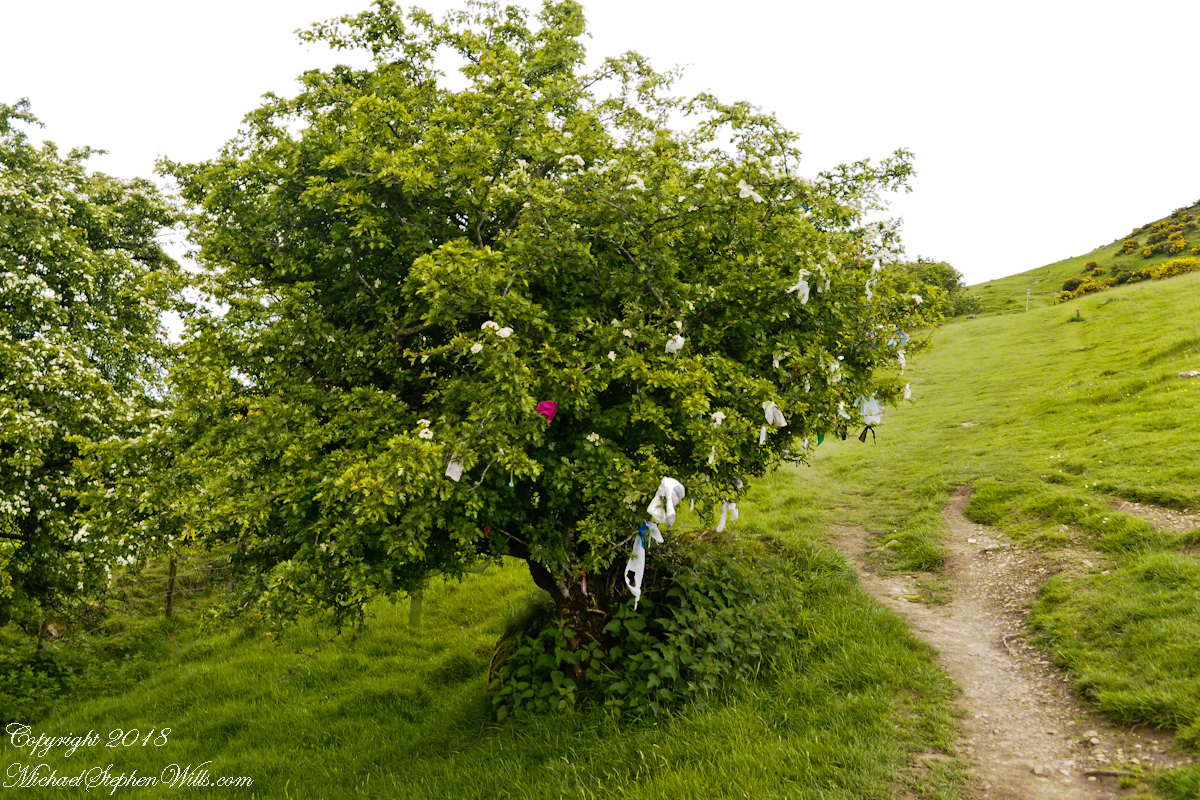
The following year Pam underwent double total knee replacements, never the less, she was great company for all our adventures on the island. Even this steep climb.
These views were our reward for reaching the top.
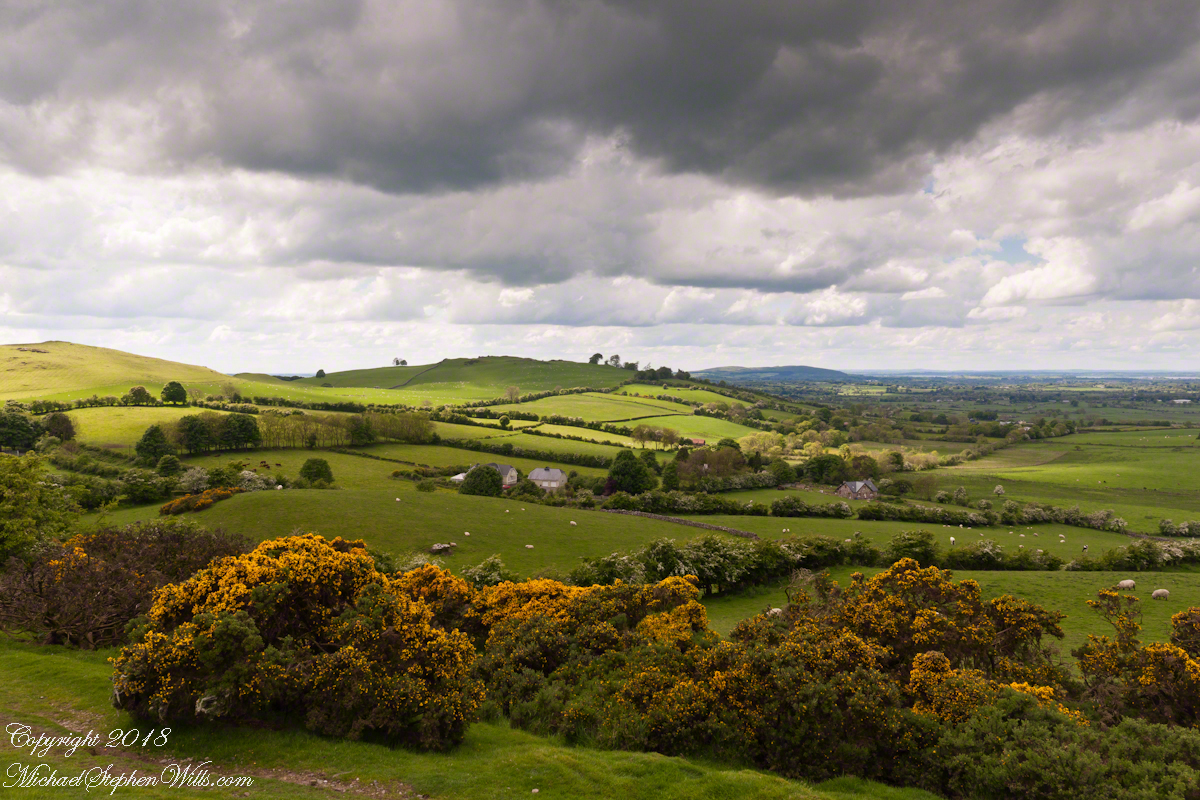
The Emerald Isle, we fully understood this name.
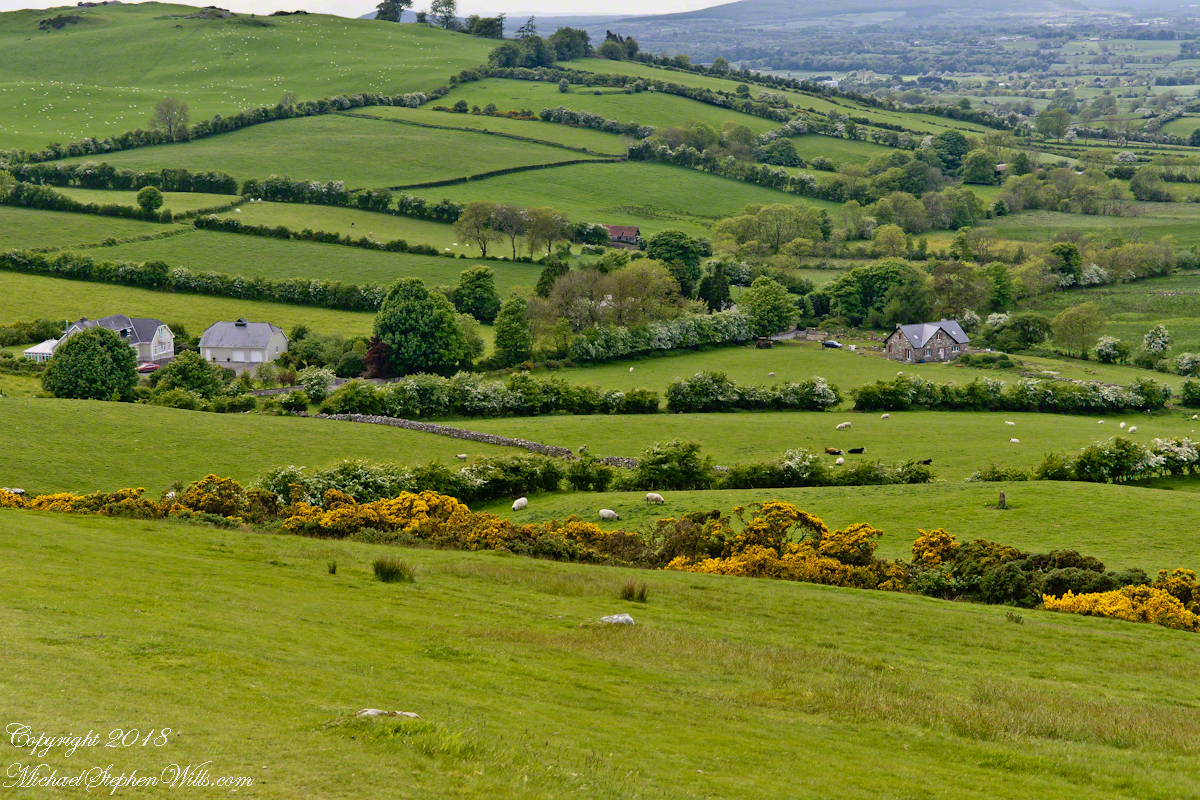
The Greek name for the Hawthorn species is formed from two words meaning “strength” and “sharp”, referring to the thorny branches.
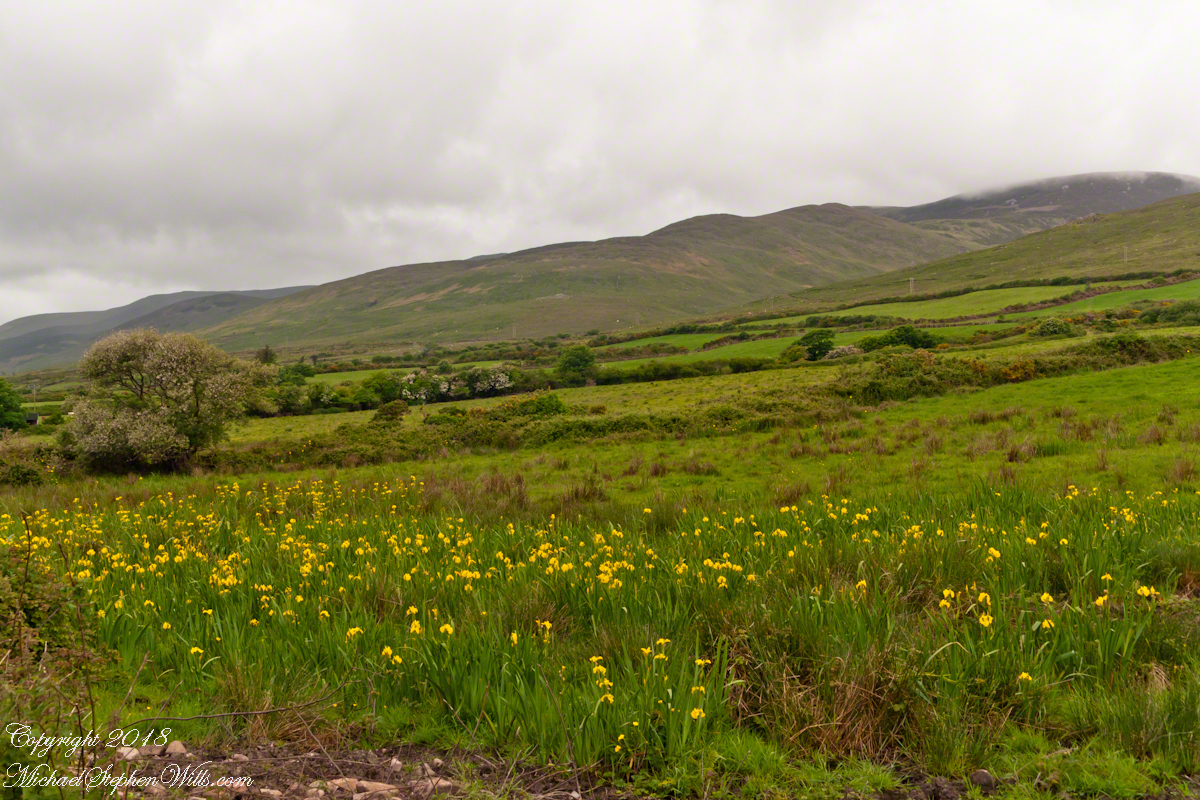
We marveled at the hawthorn hedges in field after field. I first notice them from the World Heritage Site, Newgrange (Brú na Bóinne, “Palace of the Boyne”). Here is one on the Dingle Peninsula, on the other side of the island.
Another Ireland post of interest, “Proleek, Grandfather McCardle’s home.”
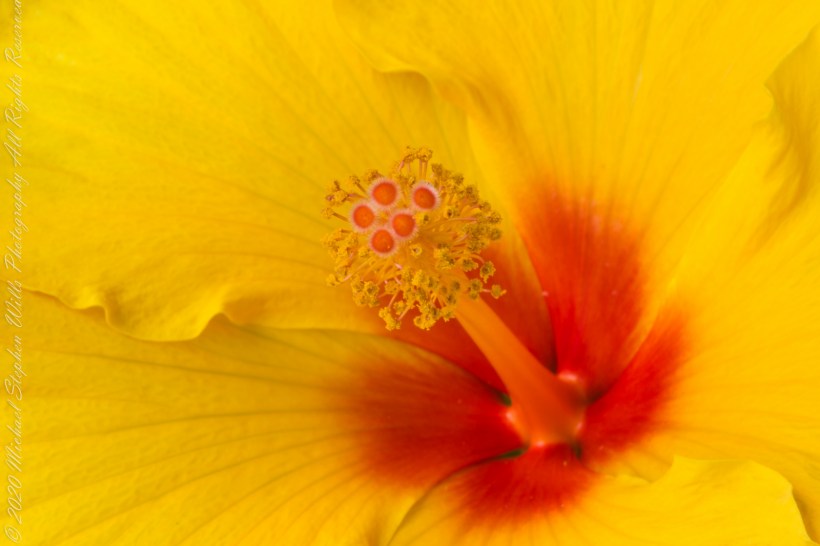
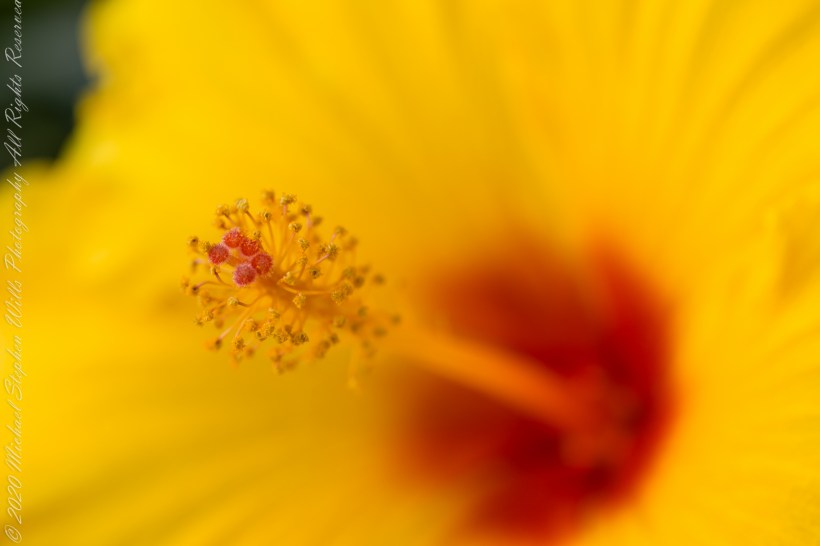
anthers and stamens
Evening breezes brought to a halt my series of hibiscus bloom photographs, that bloom faded and shriveled, to be replaced by another. I captured the images of this post on a very quiet summer evening. This bloom was facing up closer to vertical that the previous.
A key identification for all 300 species of hibiscus is the long stamen tube. I have yet to see a local insect interacting with the stamen, always they are in the flower throat. In the tropics, pollination is thought to proceed from large butterflies and birds.
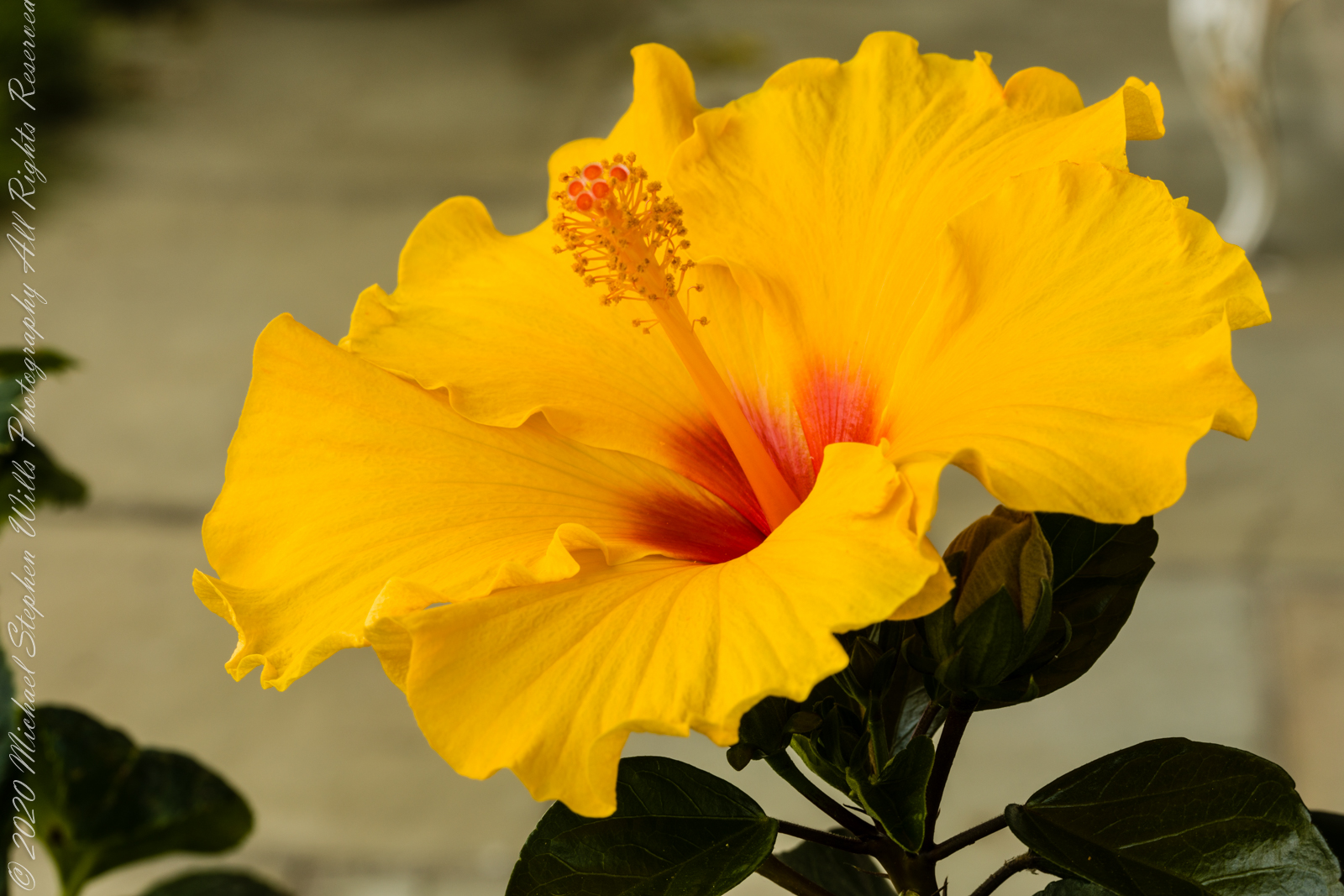
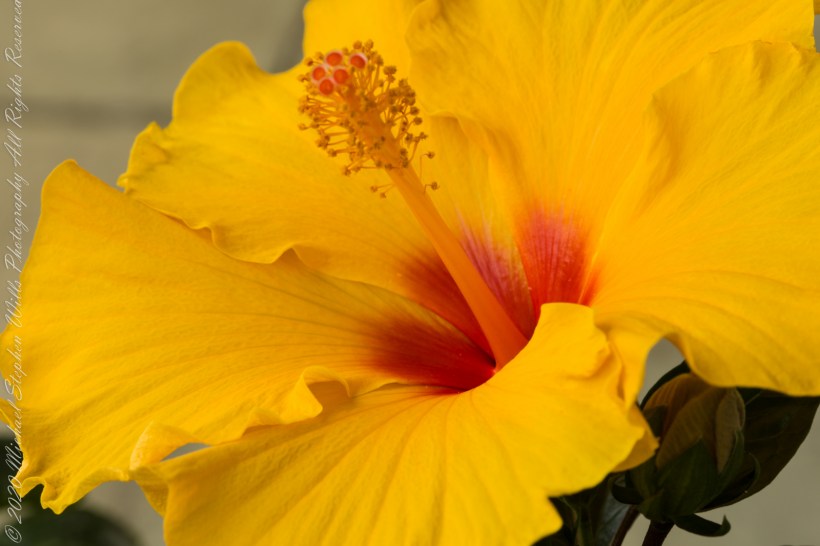
Here are three macro photographs of this bloom, all from the Canon 100 “macro” lens. I learned by experience to tamp down the diaphragm to the smallest setting, f / 32 for this lens. The different aspects were achieved by moving the lens objective closer to the bloom. This is a “fixed” lens, it has one focal length.
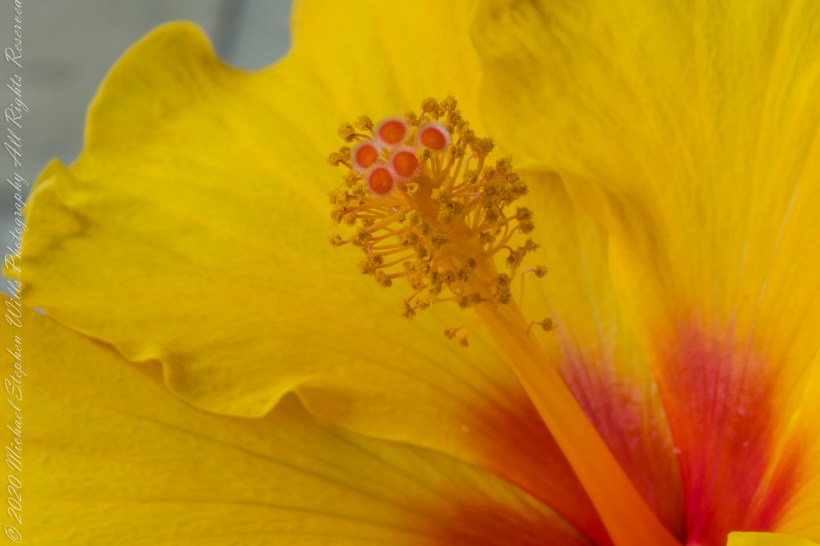
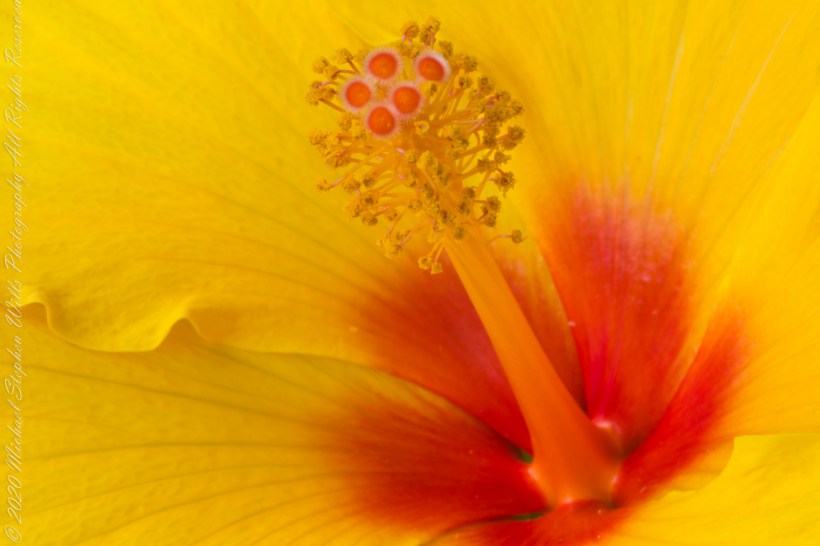
Wikipedia – “hibiscus.”

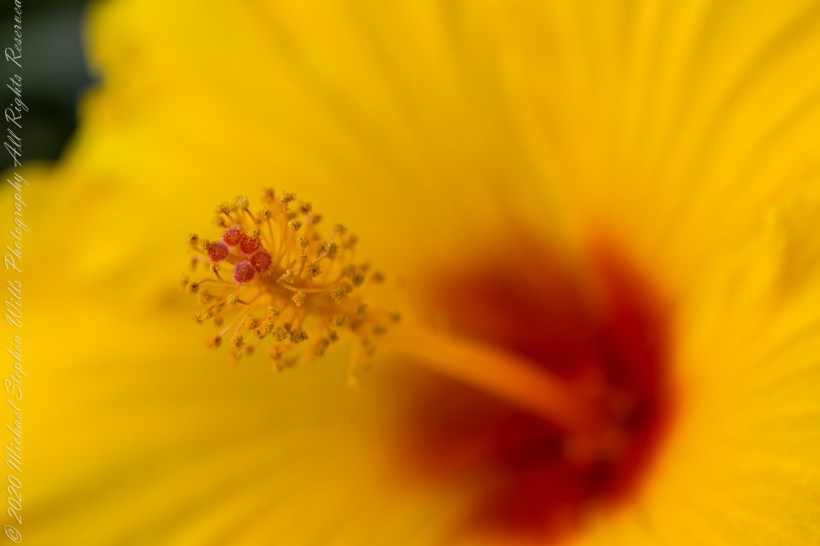
anthers and stamens
Nyctinasty (flower response to light: opening with or closing without light) in hibiscus plants is a mechanism to protect against adverse conditions such as cool temperatures that can be damaging. Through a lack of light stimulus and circadian rhythms the plant is able to trigger the molecular movement of ions to allow for the closing of the flower.
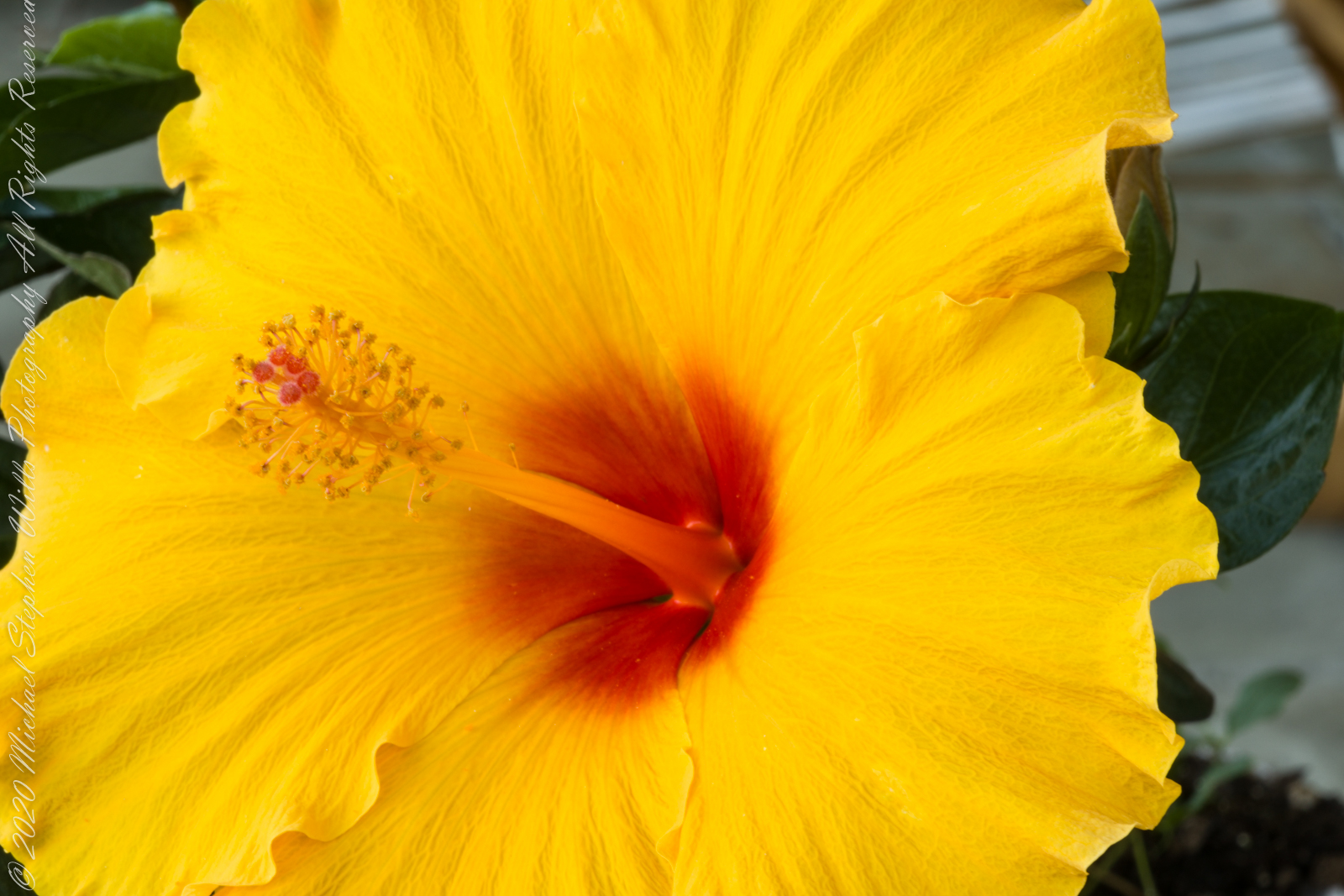
Here are three macro photographs of this bloom, all from the Canon 100 “macro” lens. I start with the shutter diaphragm open at 4.0 (“F-stop”), a little narrower at 4.5 and a bit more at 9.0. For this lens the maximum opening is at 2.8, the narrowest is 32. As the opening narrows (F-stop increases) the exposure time needed to capture enough light lengthens and the range of the image in focus increases.
Wikipedia – “hibiscus.”
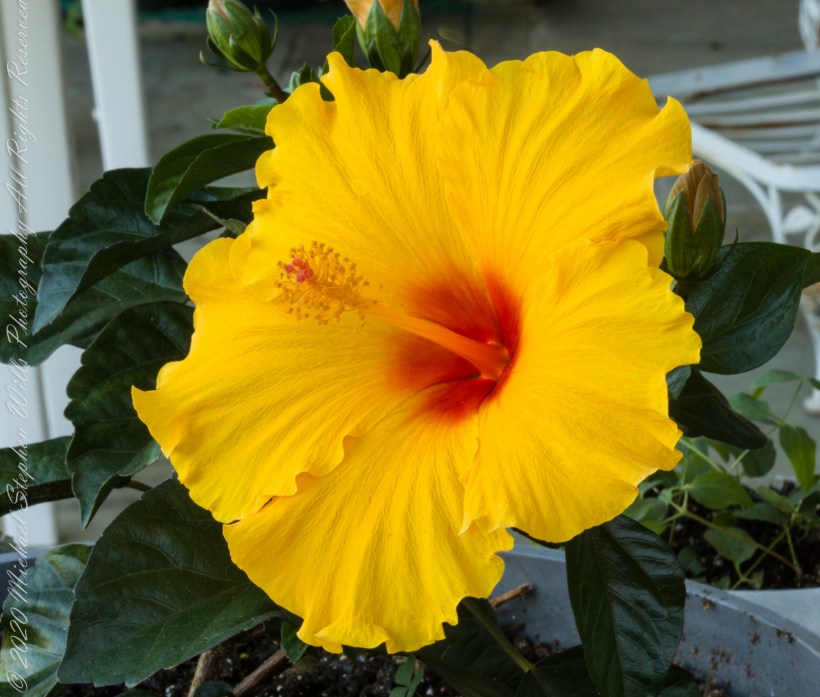
flower and buds
This is a perennial, commonly known simply as “hibiscus”, or less widely known as rose mallow. Other names include hardy hibiscus, rose of sharon, and tropical hibiscus.
The hibiscus flower is traditionally worn by Tahitian and Hawaiian girls. If the flower is worn behind the left ear, the woman is married or has a boyfriend. If the flower is worn on the right, she is single or openly available for a relationship.
Wikipedia – “hibiscus.”
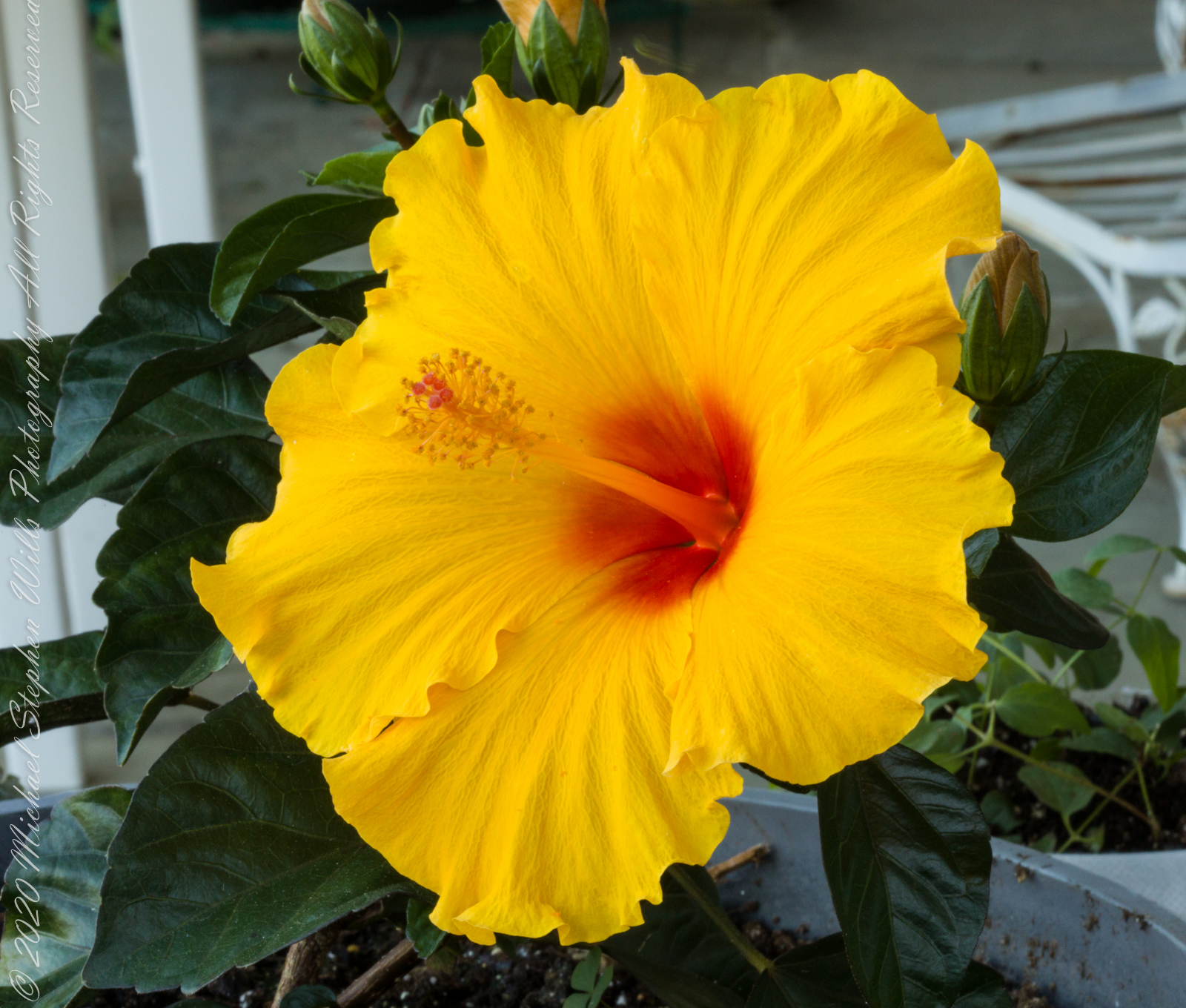
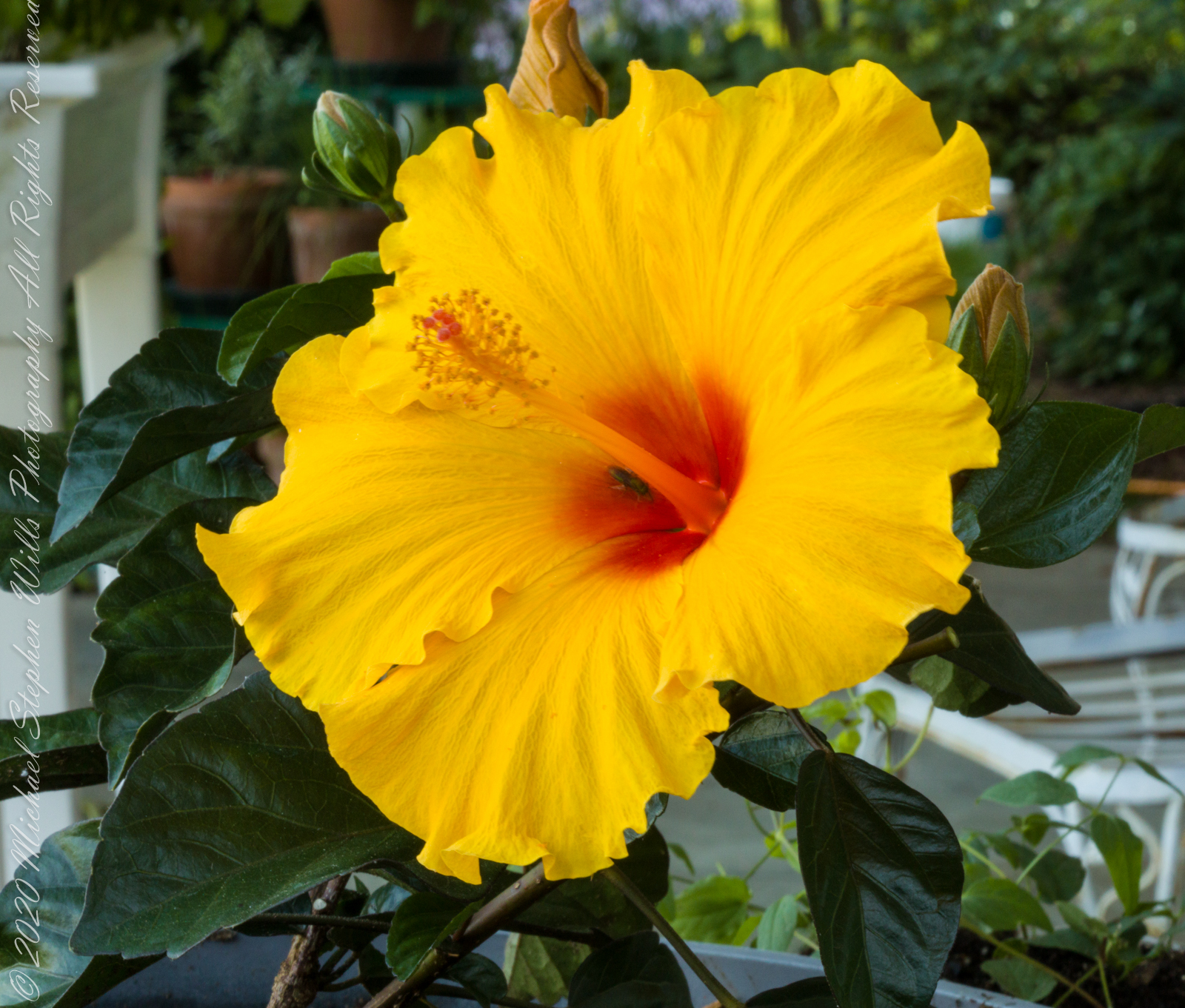
flower, buds, bee
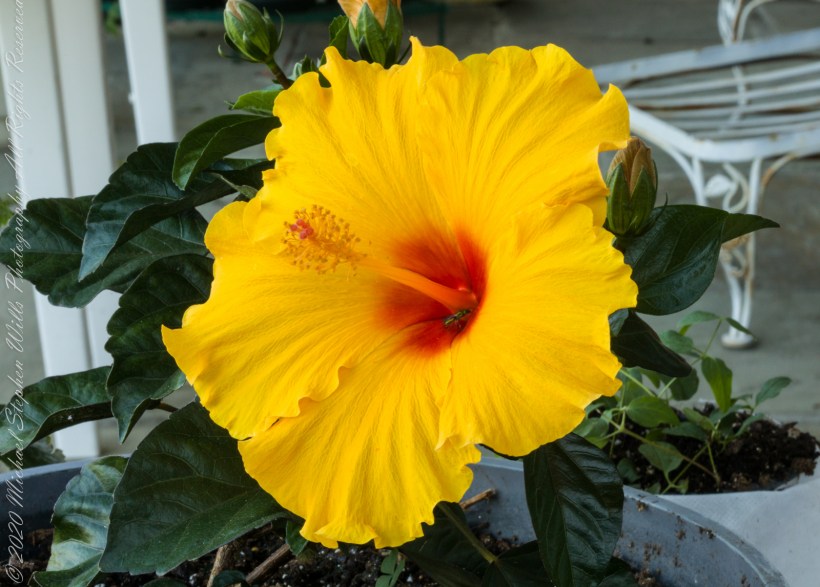
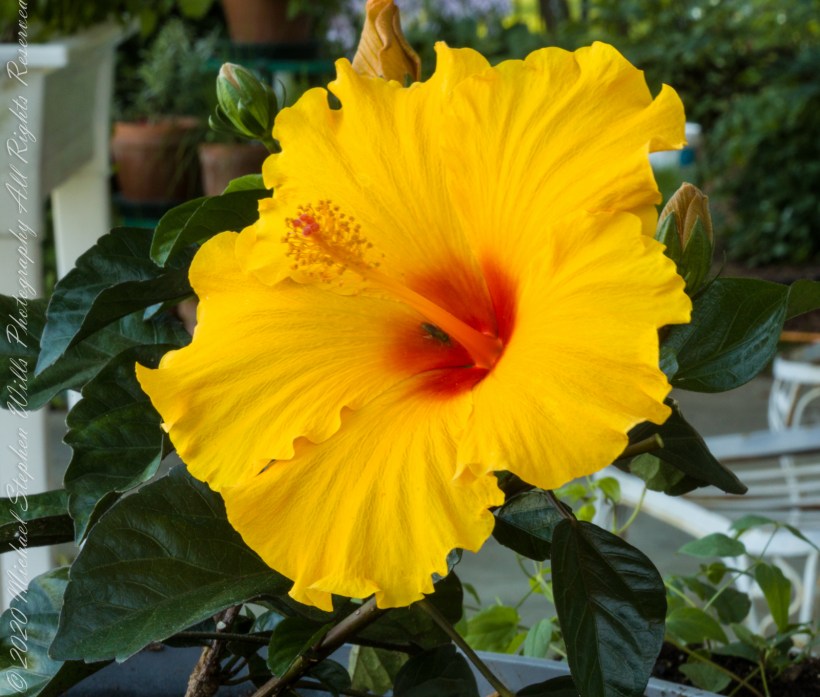
Yellow hibiscus, the state flower of Hawaii was recorded in ancient Greece. In the photograph is captured several unopened buds, behind the flower, and a bee in the flower throat, attracted by nectar there. It is a small bee, of the Halictidae family, that lives alone in a ground nest and also called a “sweat bee,” from being attracted to perspiration.
Wikipedia – “sweat bee” and “hibiscus.”
grand flowering of an anniversary present to my wife
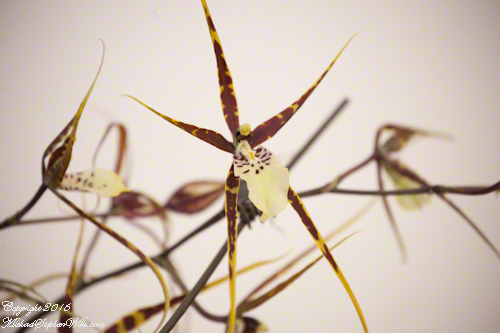
Here in Ithaca we have a greenhouse specializing in orchids. Several years ago if visited and picked up several for my wife, Pam, as a present for our wedding anniversary. Pam’s orchids site in our east facing bay window. This Caladenia, or spider orchid, has bloomed several times under her care. This bloom was especially successful.
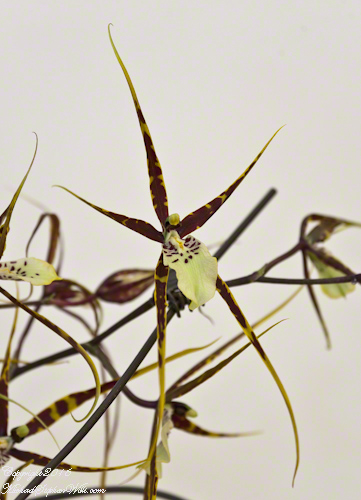
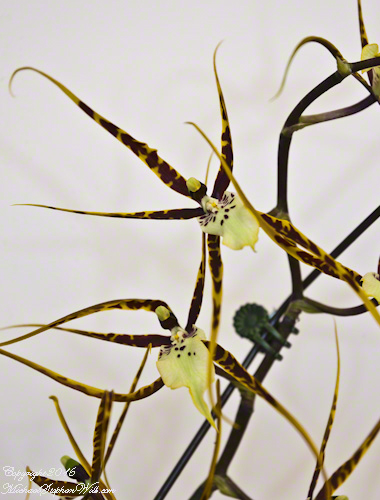
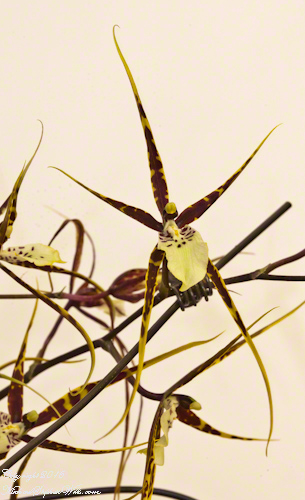
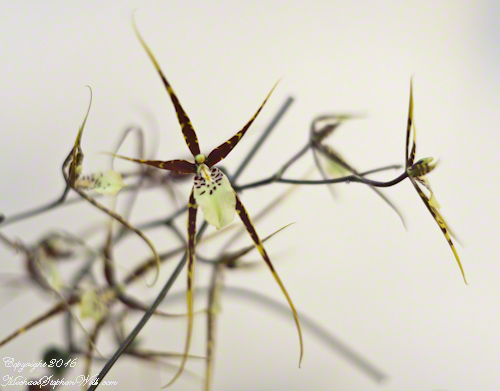
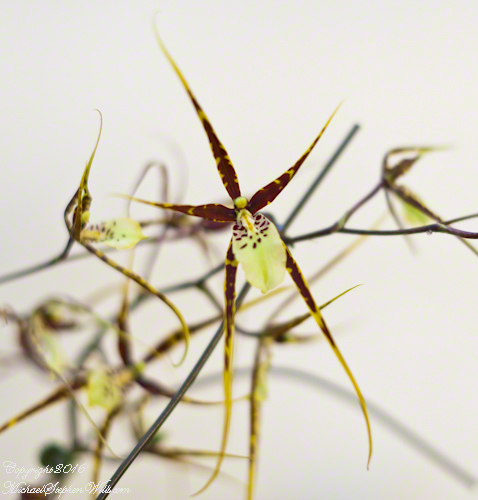
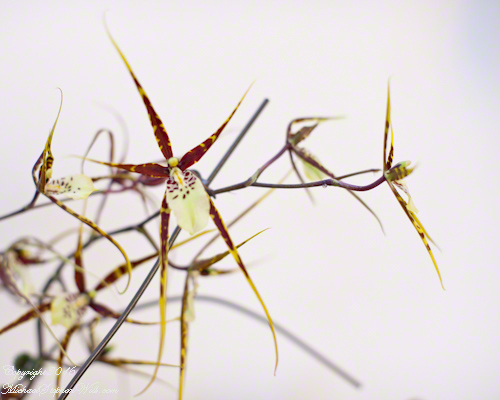
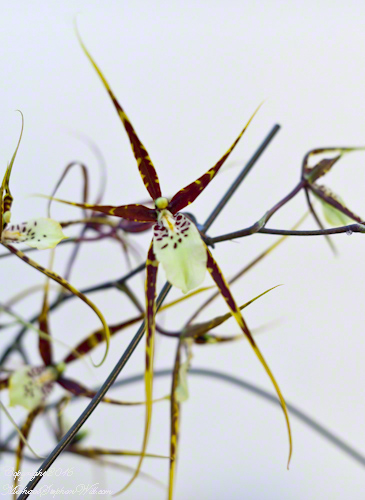
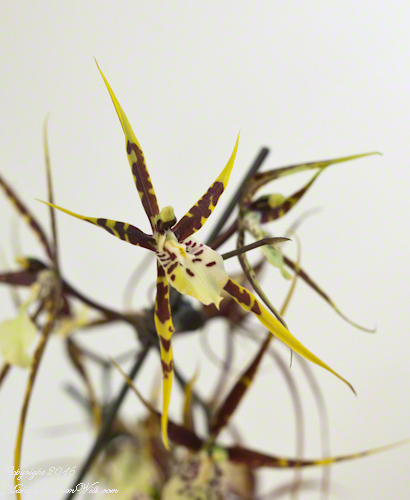
These flowers are an achievement. Caladenia are difficult to maintain and cultivate outside of their native environment. Most are endemic to Australia and New Zealand.
 Michael Stephen Wills Photography