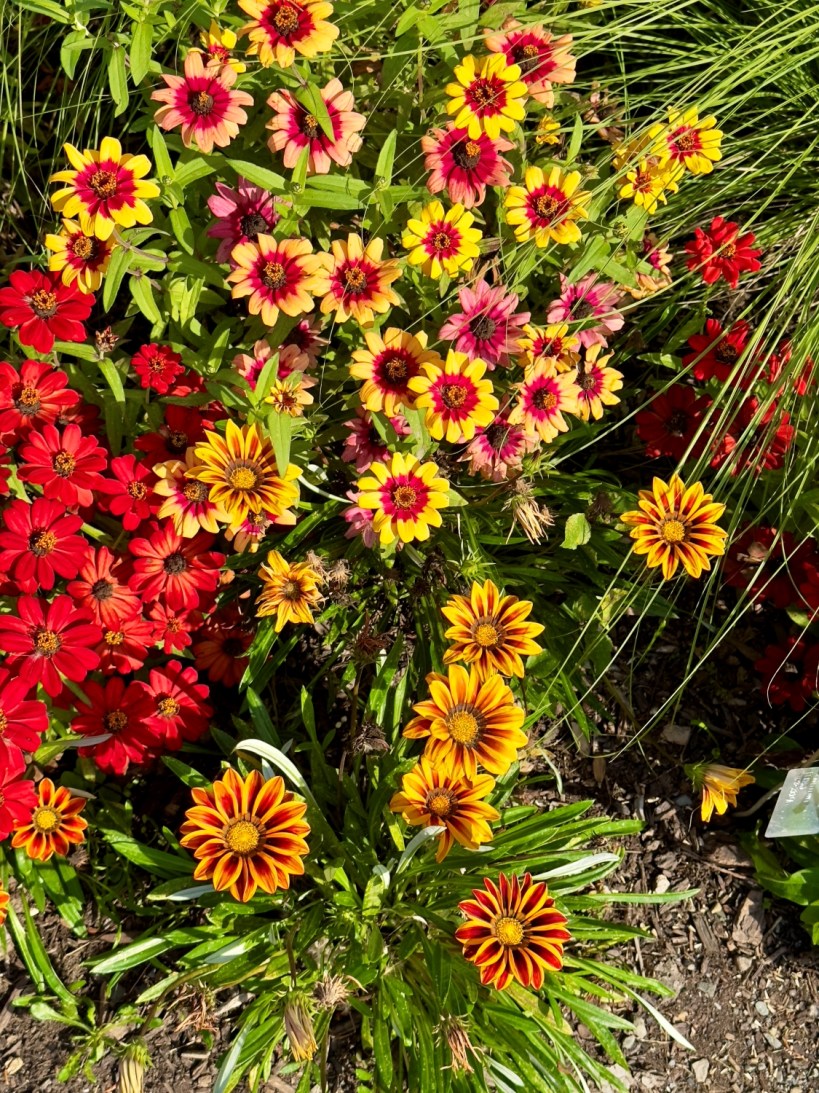
Vibrant Blooms of Zinnias and Gazanias at Cornell Botanical Gardens

Join me in admiration of these Zinnias and Gazanias at the Cornell Botanical Gardens, highlighting their vibrant beauty and rich botanical history.

As I stroll around the Nevin Center at the Cornell Botanical Gardens, my eye is drawn to a bed of bright, cheerful flowers that seem to beam with personality. Here, amidst the lush plantings, Zinnias and Gazanias bring their vivid colors to life, each bloom a tiny celebration of nature’s artistry. These flowers, from a family spanning two continents, share a surprising harmony that only the language of color and form could convey.
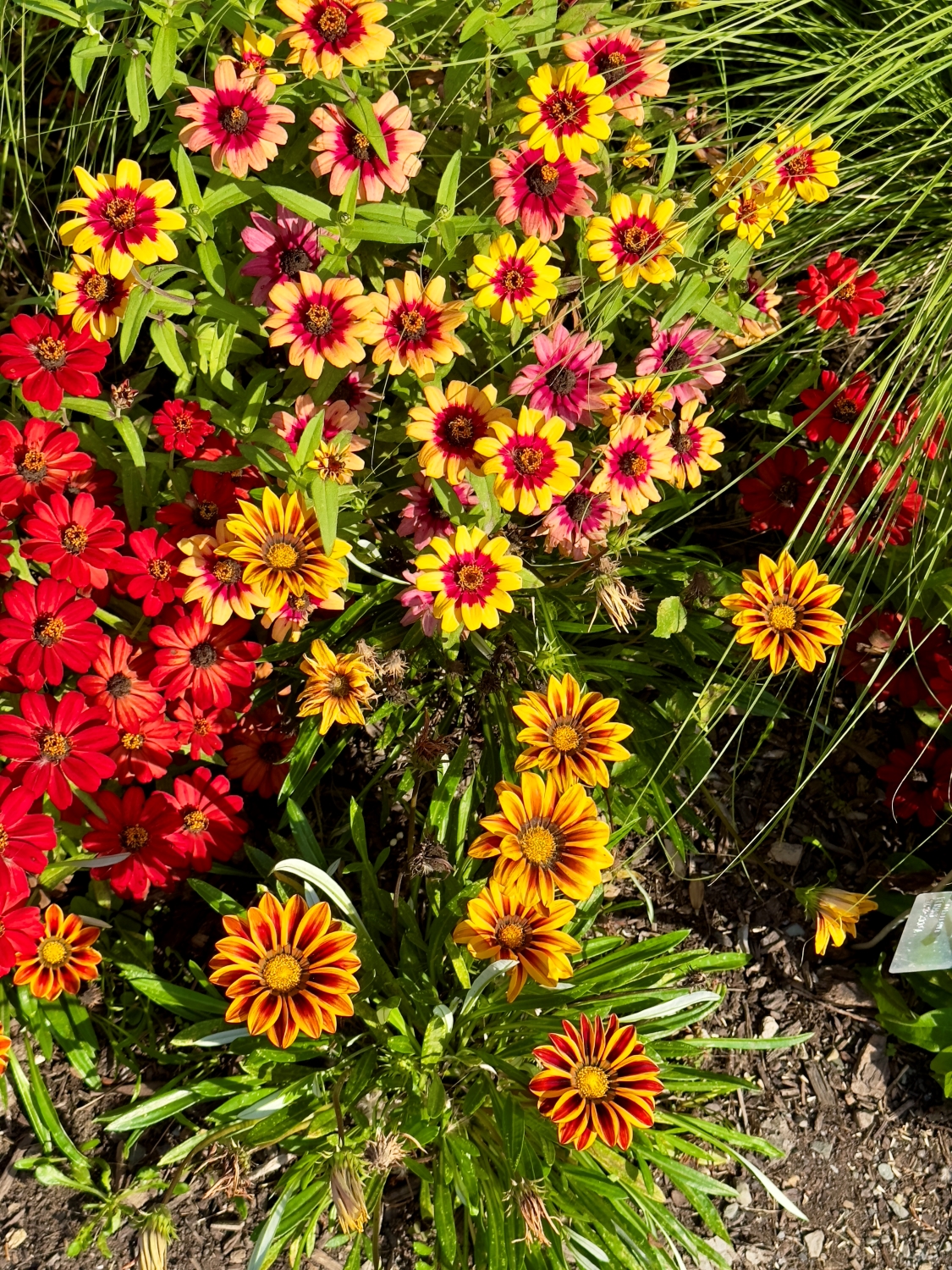
The Zinnias (family Asteraceae), little fireworks exploding in hues of yellow, red, pink, and orange. They belong to the daisy family, which includes many well-known wildflowers and ornamental plants. Native to the warm regions of Mexico and Central America, Zinnias were first documented by Dr. Johann Gottfried Zinn, an 18th-century German botanist. Dr. Zinn initially set out to study human anatomy, but he turned to botany after inheriting the job of garden inspector at the University of Göttingen. His study of these cheerful flowers was eventually immortalized when the genus was named in his honor. Every time I see a Zinnia, I think about Dr. Zinn’s unexpected journey into botany and how these resilient, sun-loving flowers carry on his legacy.

Growing alongside them are Gazanias (family Asteraceae as well), which, despite their similarity in form, come from an entirely different part of the world. These stunning blooms are native to South Africa, thriving under the intense African sun. Also known as “treasure flowers,” Gazanias have radiant, striped petals that look like they’ve been painted by hand, with shades of fiery orange and deep red. The name Gazania honors Theodorus Gaza, a 15th-century Greek scholar who translated many important botanical works from Greek into Latin. I can’t help but feel that these flowers, with their bold, jewel-toned colors, live up to the name “treasure,” each one a small gem in the landscape.

As I stand here, admiring these blooms, I’m struck by the way they bring a sense of vibrancy and warmth to the Nevin Center. Both Zinnias and Gazanias are sun-worshippers, thriving in full sunlight and well-drained soil, making them ideal for this bright spot. Their colors seem even more dazzling against the verdant greens of the surrounding plants, and they attract bees and butterflies, adding another layer of life to this already lively space.

In a way, the planting here feels like a dialogue between continents, with the Zinnias representing the New World and the Gazanias embodying the spirit of Africa. It’s a conversation that reminds me of the global heritage of our gardens, how each plant carries a story, a name, and a lineage across borders and centuries. Here at the Cornell Botanical Gardens, they’ve found a new home, far from where they first bloomed, but as vibrant as ever.

I leave the Nevin Center with a sense of joy and gratitude for these botanical ambassadors. Zinnias and Gazanias, each named for pioneers in botany, remind me that discovery often comes in unexpected forms, just as beauty does. They teach us to look closely, to celebrate color and form, and to appreciate the living history all around us.

Enter your email to receive notification of future postings. I will not sell or share your email address.

Carex Plantaginea: A Hidden Gem in Treman Gorge

Venture into the shaded woods of Treman Gorge and discover the understated elegance of Carex plantaginea, or seersucker sedge. Explore its broad, textured leaves and uncover its place in nature’s tapestry. Read more!

Today I will start the practive of posting once a week, early Tuesday mornings.

As I made my way through Treman Gorge, the lush greenery and diverse plant life never ceased to amaze me. The trail led me to a lesser-known, but equally fascinating, plant that stood out amid the forest floor’s tapestry. This was Carex plantaginea, commonly known as plantainleaf sedge or seersucker sedge.

First Impressions

My attention was initially drawn to the broad, bright green leaves that resembled those of plantains, hence the common name “plantainleaf sedge.” The leaves were prominently veined and slightly wrinkled, reminiscent of seersucker fabric, giving the plant a unique texture. The scientific name, Carex plantaginea, aptly reflects this characteristic, with “plantaginea” referring to its plantain-like leaves.

Natural History and Habitat


Carex plantaginea is native to the deciduous forests of eastern North America. It thrives in the rich, moist soils found in these regions, making Treman Gorge an ideal habitat. The plant prefers shaded environments, often flourishing under the canopy of taller trees where it can take advantage of the dappled sunlight filtering through the leaves.

This perennial sedge is part of the larger Carex genus, which includes numerous species of sedges that are often found in wetlands and forest understories. Unlike some of its relatives, Carex plantaginea is more commonly found in upland areas, adding to the diversity of the forest floor.

Historical and Modern Uses


Historically, Native American tribes recognized the utility of various Carex species, though specific references to Carex plantaginea are scarce. Sedges were generally used for their fibrous leaves, which could be woven into mats, baskets, and other useful items. The broad leaves of Carex plantaginea would have been particularly suitable for such purposes.

In modern times, Carex plantaginea is appreciated more for its ornamental value. Gardeners and landscape designers often use it in shade gardens and woodland settings, where its striking foliage and low maintenance needs make it a popular choice. Its ability to thrive in shaded areas with moist soil conditions makes it an excellent ground cover for forested landscapes.

Capturing the Moment


I couldn’t resist photographing Carex plantaginea to capture its distinctive beauty. The Apple Iphone 14 ProMax image shows the plant nestled among the rich vegetation of Treman Gorge, its vibrant green leaves contrasting with the surrounding foliage. The wrinkled texture of the leaves is clearly visible, highlighting the plant’s unique appearance.

As I continued my exploration, I felt a sense of wonder and appreciation for the hidden gems that nature offers. Carex plantaginea, with its subtle beauty and ecological importance, is a reminder of the intricate connections within forest ecosystems. Discovering this plant added another layer of richness to my journey through Treman Gorge, deepening my understanding and appreciation of the natural world around me.

Copyright 2024 Michael Stephen Wills All Rights Reserved