Discovering San Xavier del Bac: A Desert Gem

San Xavier del Bac, known as the “White Dove of the Desert,” embodies rich history and spirituality, blending Indigenous and Spanish influences, while remaining a vibrant community centerpiece today.

I remember how the rising sun washes the mission’s white adobe walls in soft gold. Mission San Xavier del Bac stands about 10 miles south of downtown Tucson, on the San Xavier Indian Reservation of the Tohono O’odham Nation.​

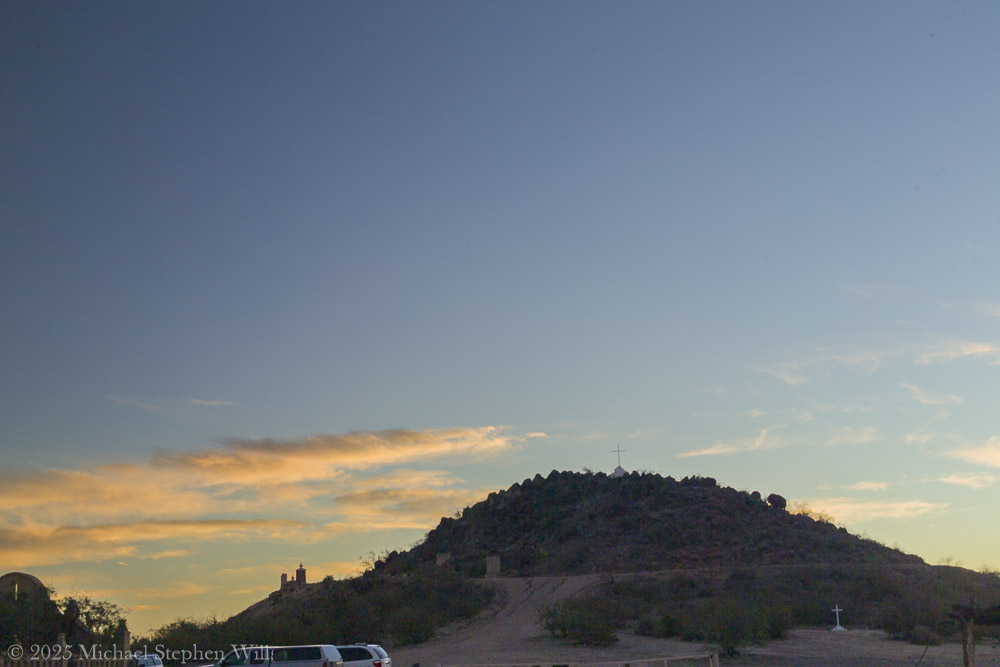
Before sunrise, I climb Grotto Hill, just east of the mission. A well-worn path and a few stone steps lead upward, passing stations of the cross and a humble grotto shrine nestled in the slope. As I ascend, the soft golden light gathers. Ocotillo stems and saguaros dot the hillside, their long shadows stretching over the desert floor. Reaching the top, I find a lone white cross planted firmly into the rocky soil. The cross is simple, yet it holds a quiet gravity – a silent witness to the prayers and hopes of those who have come here. I stand beside it to catch my breath. Below me spreads the mission complex, glowing white and rose in the gathering dawn. From this height, the scene is breathtaking: the desert expands in every direction, painted in brushstrokes of copper, violet, and gold. The distant Tucson mountains catch the first light. There is a profound peace up here. It’s easy to imagine Father Kino himself climbing a similar hill, surveying this “Water Place” and dreaming of a mission that would stand the test of time.
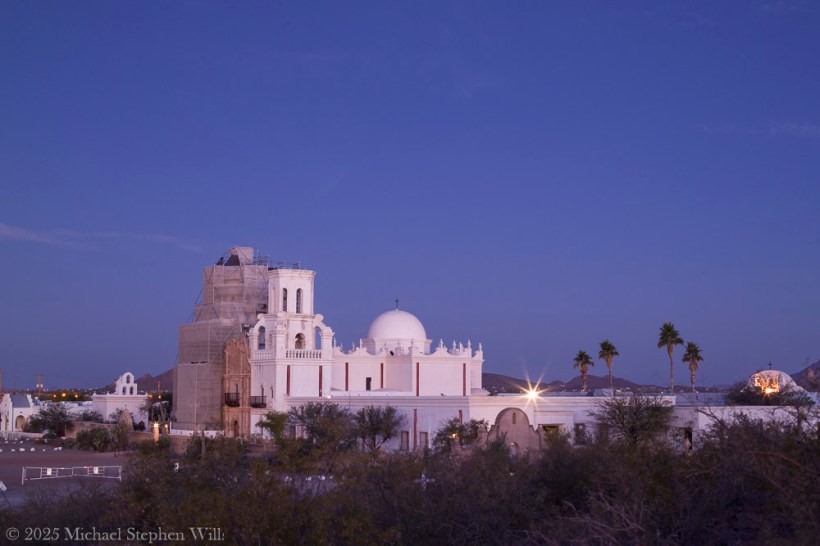
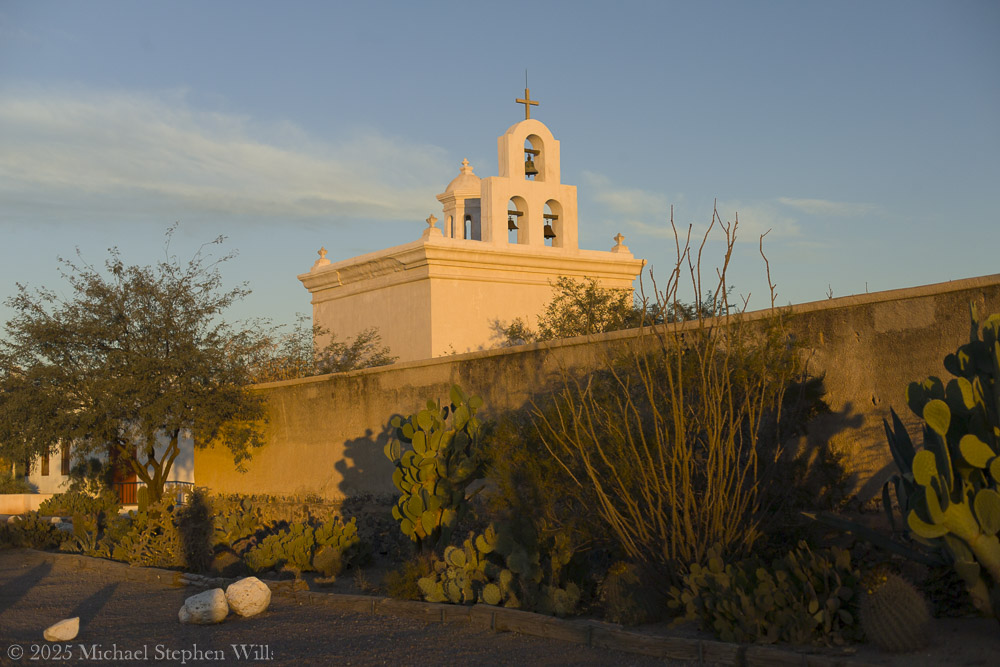
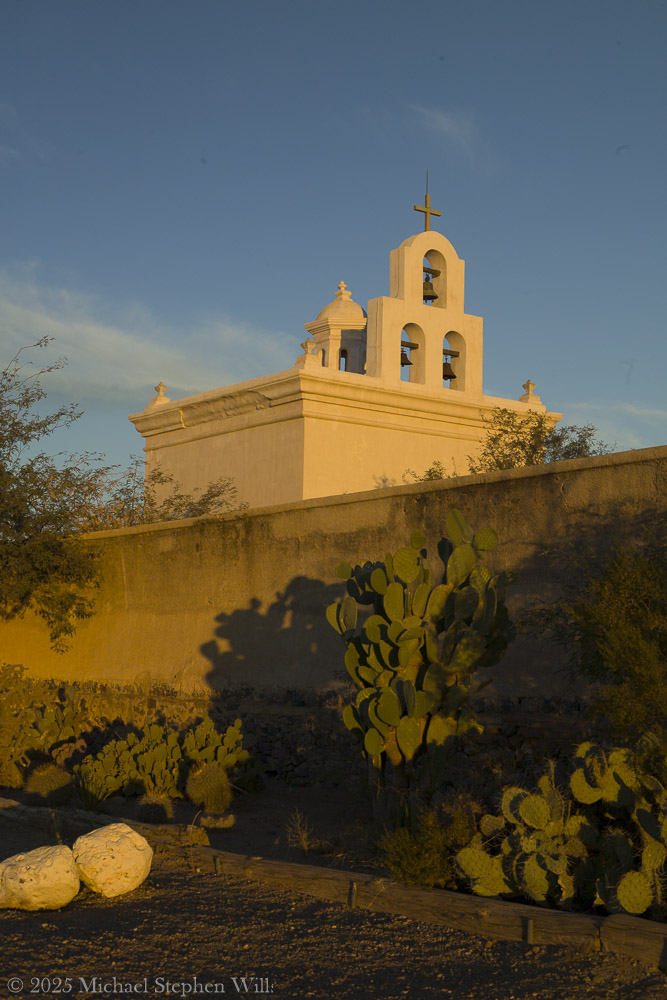
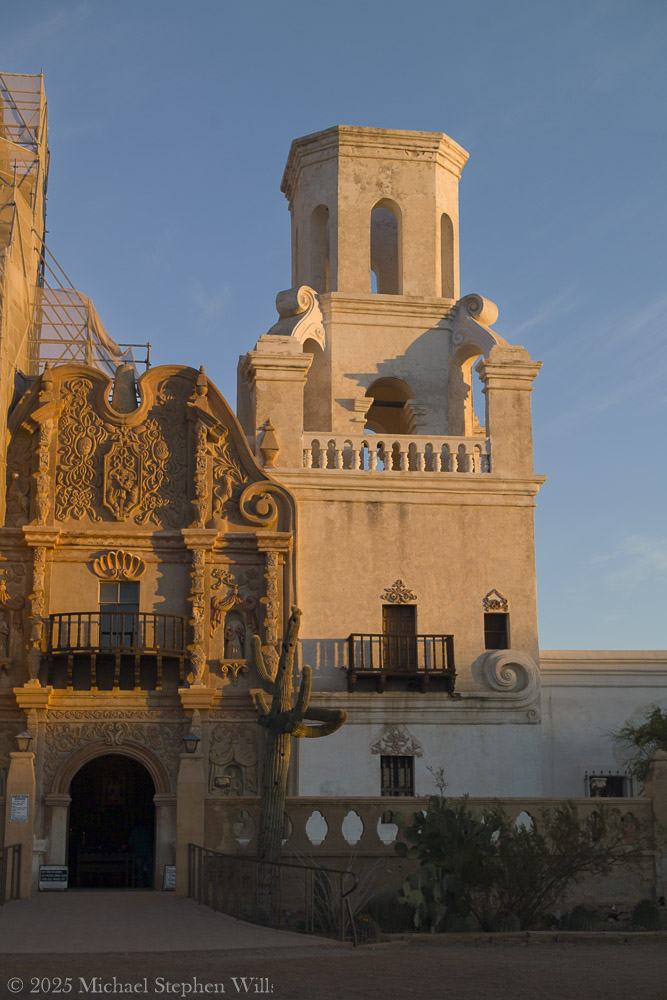
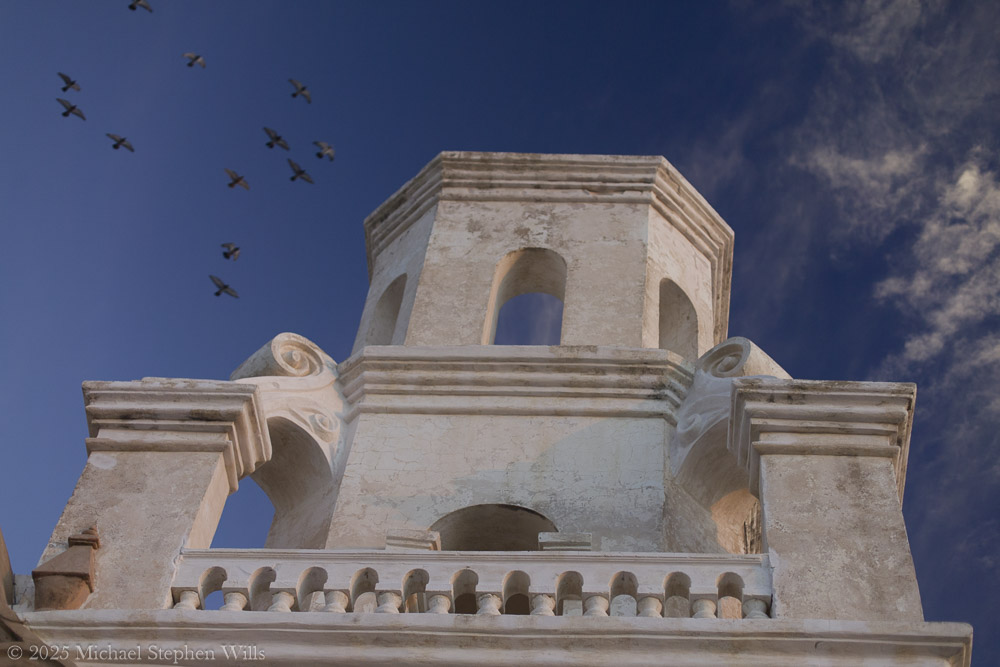
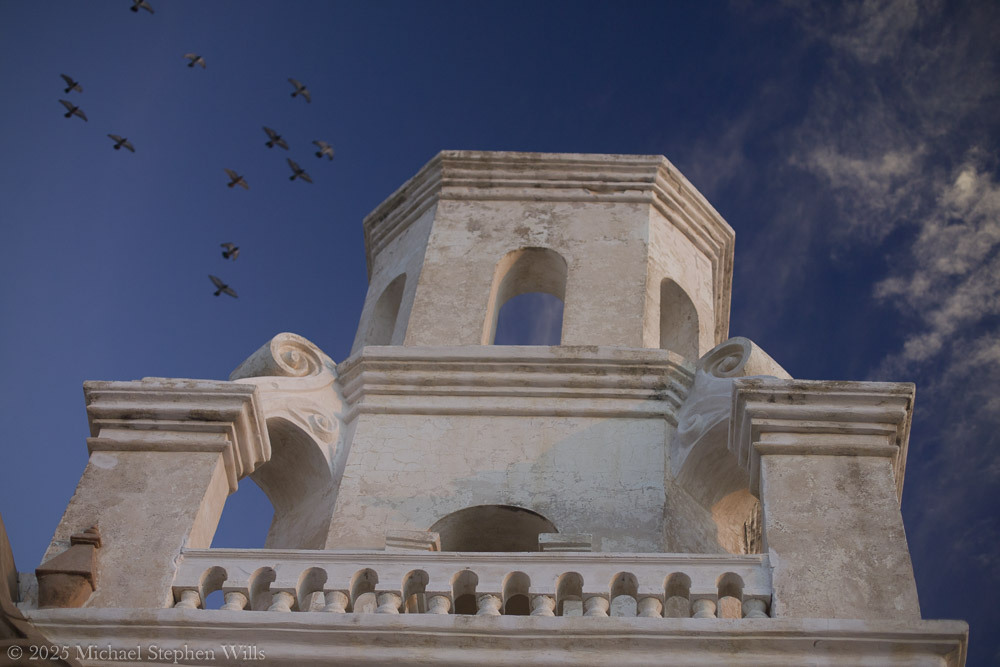
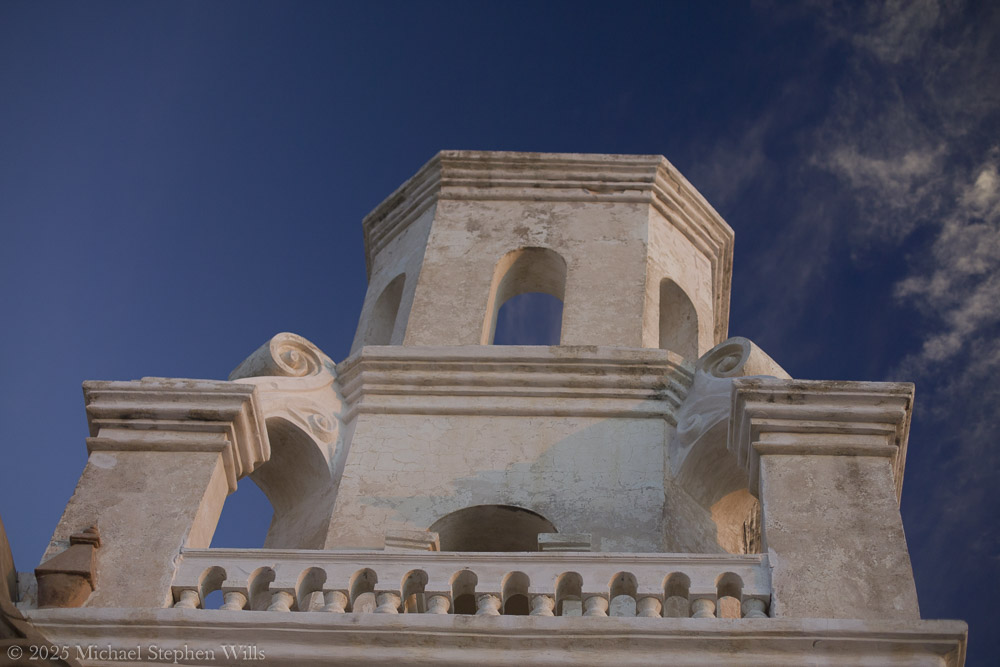
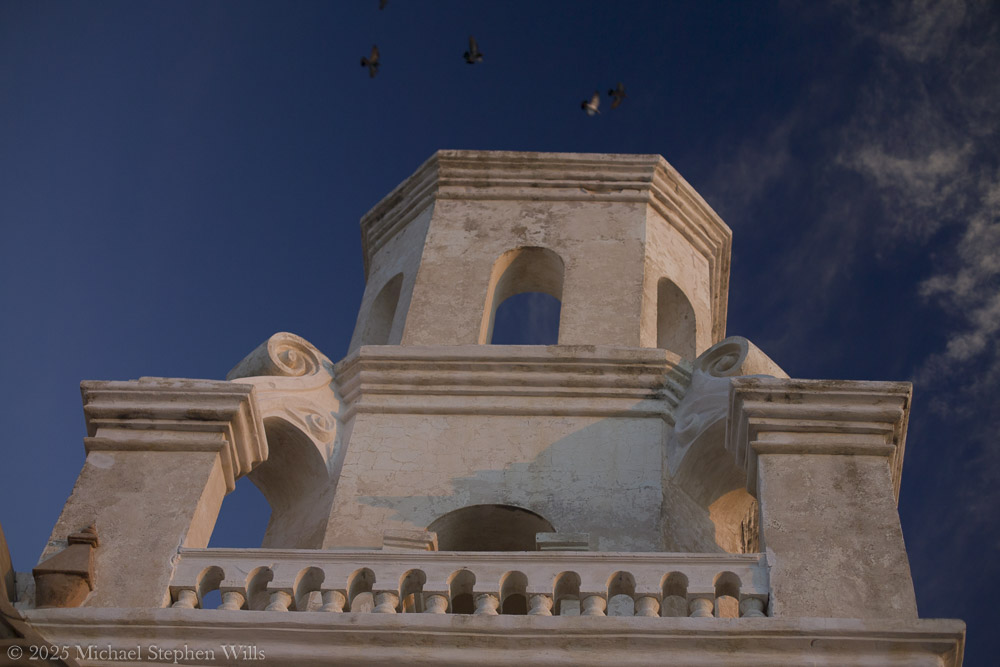
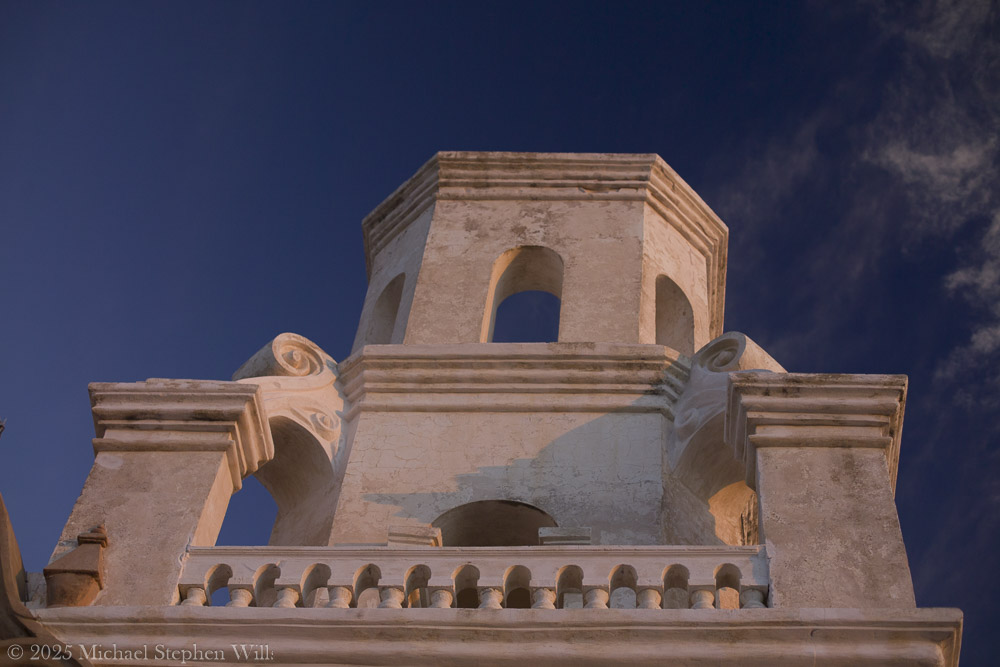
Often called the “White Dove of the Desert”​the church gleams against the wide Sonoran sky, its twin bell towers and central dome radiant in the glow. In this moment, the 18th-century mission seems to hover between earth and heaven – a bright vision in the desert, tethered by history and faith.
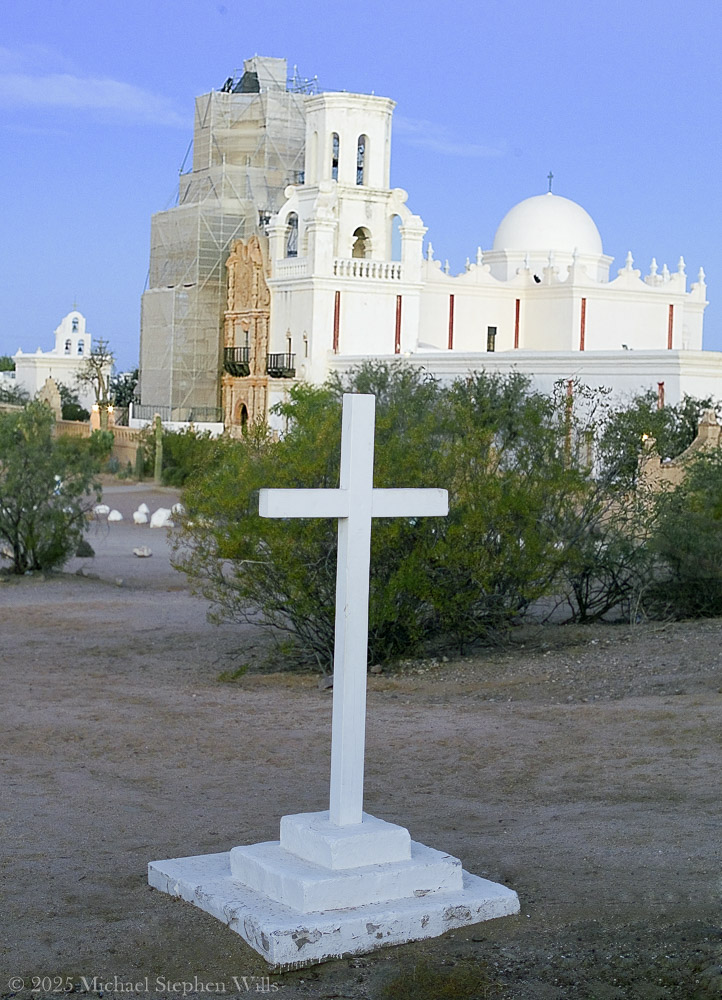
I walk toward the old mission, feeling the crunch of desert sand beneath my feet and brushing past creosote bushes and prickly pear cacti. There is a hush here, broken only by a gentle breeze and the distant coo of a dove – as if nature itself respects the sanctity of this place. In my mind I rell that this mission was first founded in 1692 by the Jesuit missionary Father Eusebio Kino​, who encountered the O’odham community living at this oasis they called Wa:k, meaning “Water Place”​

The springs have long since gone dry, but the name lives on, a reminder that this now-arid land once nurtured life-giving water. The church before me isn’t the original Kino saw, but the one begun in 1783 under Spanish Franciscan friars​ who raised these walls with the help of O’odham artisans. I marvel that I am standing before a structure over two centuries old – the oldest European-built structure in Arizona​– yet still alive with spirit.

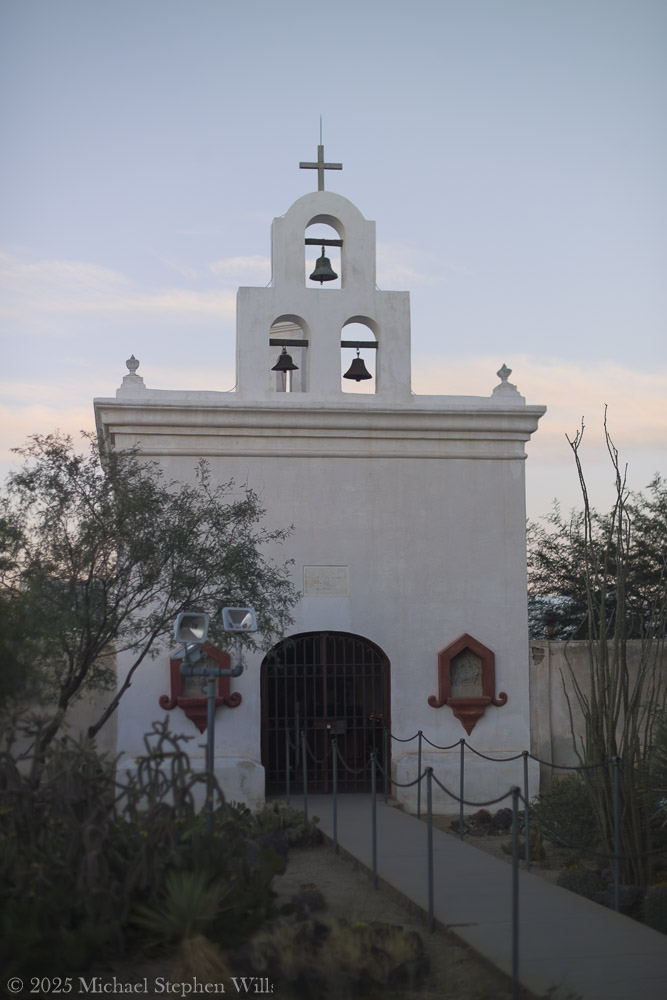
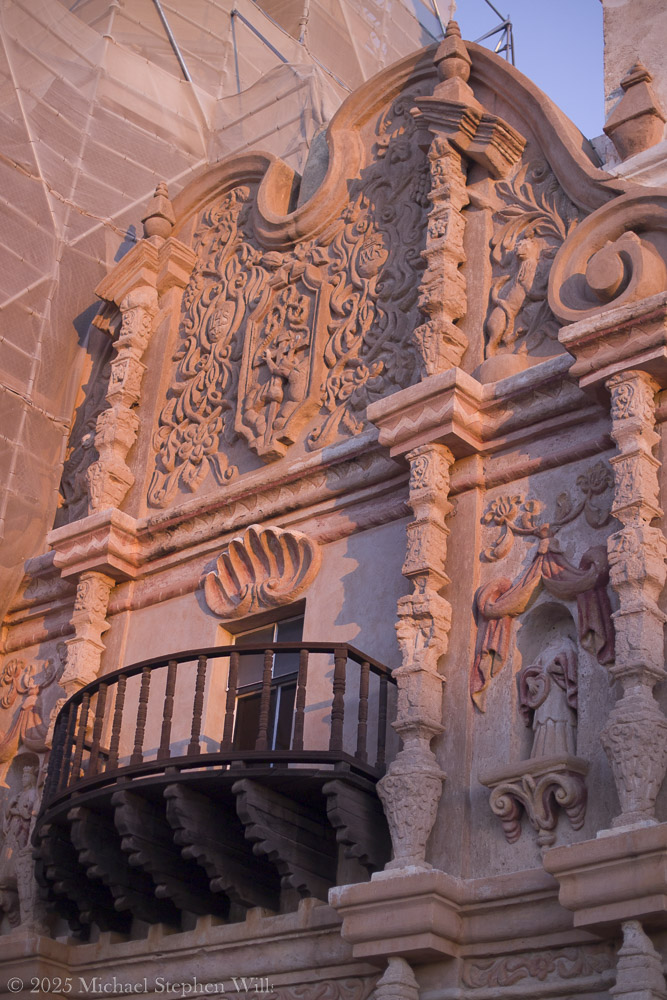
Stepping into the courtyard, I tilt my head back to absorb the facade’s details. The ornate Baroque façade is a symphony of carved plaster and painted relief, an exuberant blend of Moorish, Spanish, and Indigenous influences. Faded yet still vivid, saints and angels watch from their niches on the church front. Every arch and cornice is edged in shadow and dawn light, revealing craftsmanship considered one of the finest examples of Mexican Baroque architecture in the United States​

The front entrance is flanked by intricate scrolls and whimsical carvings – floral motifs, seashell patterns, and statuary wearing serene expressions. I gently run my fingers along the weathered wooden doors, feeling the grain that generations of hands have touched. Through a crack in the door, I catch a glimpse of the dim interior: candles flicker on the altar and the air carries a hint of melted wax and sweet incense. The sanctuary seems to exude centuries of devotion. Even outside, I sense a whisper of ancient prayers in the silence.
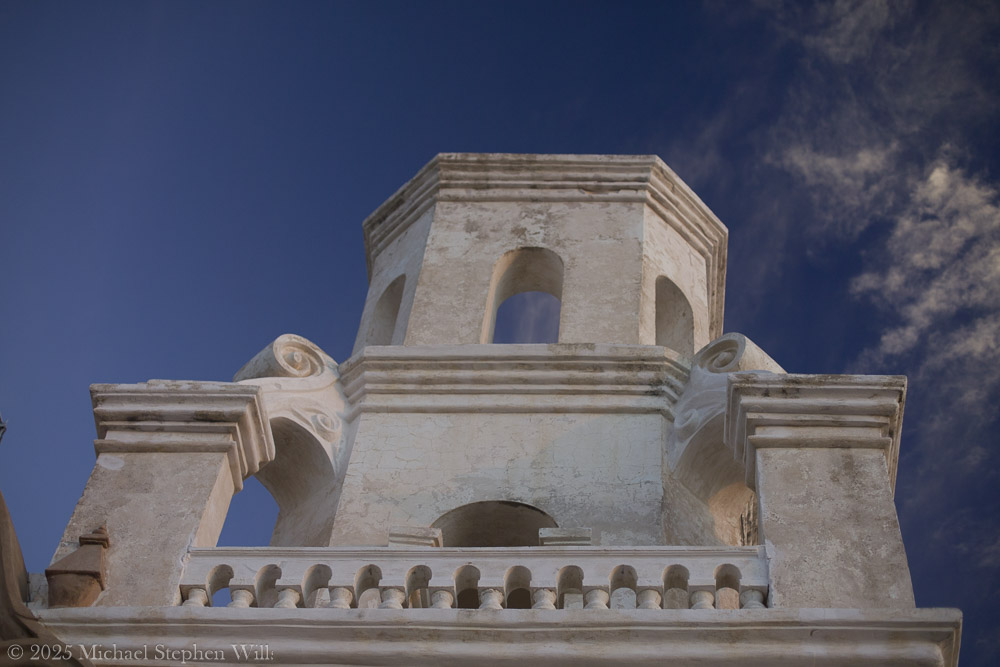
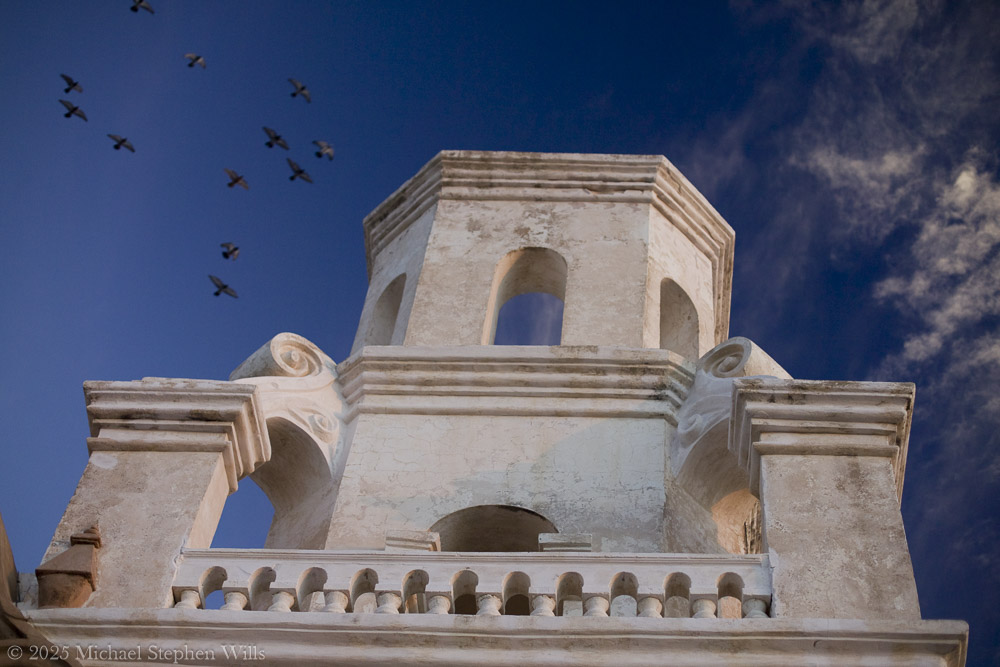
As the day progresses, the world feels alive again. A pair of children laugh and chase each other across the dusty plaza, their voices echoing off the thick adobe walls. Nearby, the aroma of fresh frybread lingers – evidence of Tohono O’odham vendors who often set up stands by the church, selling frybread “popovers” and Indian tacos to visitors. This mingling of old and new, sacred and every day, makes the mission feel utterly genuine, the heart of a living community. I see an elderly O’odham woman in a shawl kneel at a side shrine, lips moving in quiet prayer, and I realize that for the Tohono O’odham, this mission is more than a historic landmark. It is a living spiritual home that continues to anchor their community. Indeed, the church is still an active parish that serves the local O’odham families, with regular Masses and gatherings held within its walls​

The sense of continuity is palpable – the faith that built this place in the 18th century endures unwaveringly today.

Standing in front of San Xavier del Bac, I feel a personal connection that is hard to put into words. The centuries-old mission glows fresh in morning light. I close my eyes and sense the presence of all who have been here before – the O’odham villagers, the Spanish padres, the countless pilgrims and visitors. In the stillness, time blurs. Past and present mingle in the desert air. When I finally turn to leave, my heart is quiet, uplifted by the encounter. In this sacred and remote place, I have touched a living history and felt the embrace of a peace that transcends centuries. I carry that gentle peace with me into the day, grateful for the memories of light, silence, and the enduring soul of San Xavier del Bac.

Bibliography

  • Wikipedia. “Mission San Xavier del Bac.” (2025).
  • National Park Service. “San Xavier del Bac Mission.” (2021).
  • Patronato San Xavier. “History of the Mission – Timeline.” (2025).
Around and About Athens, New York, part 4 Finale

295 year old Zillow listing

Real Estate

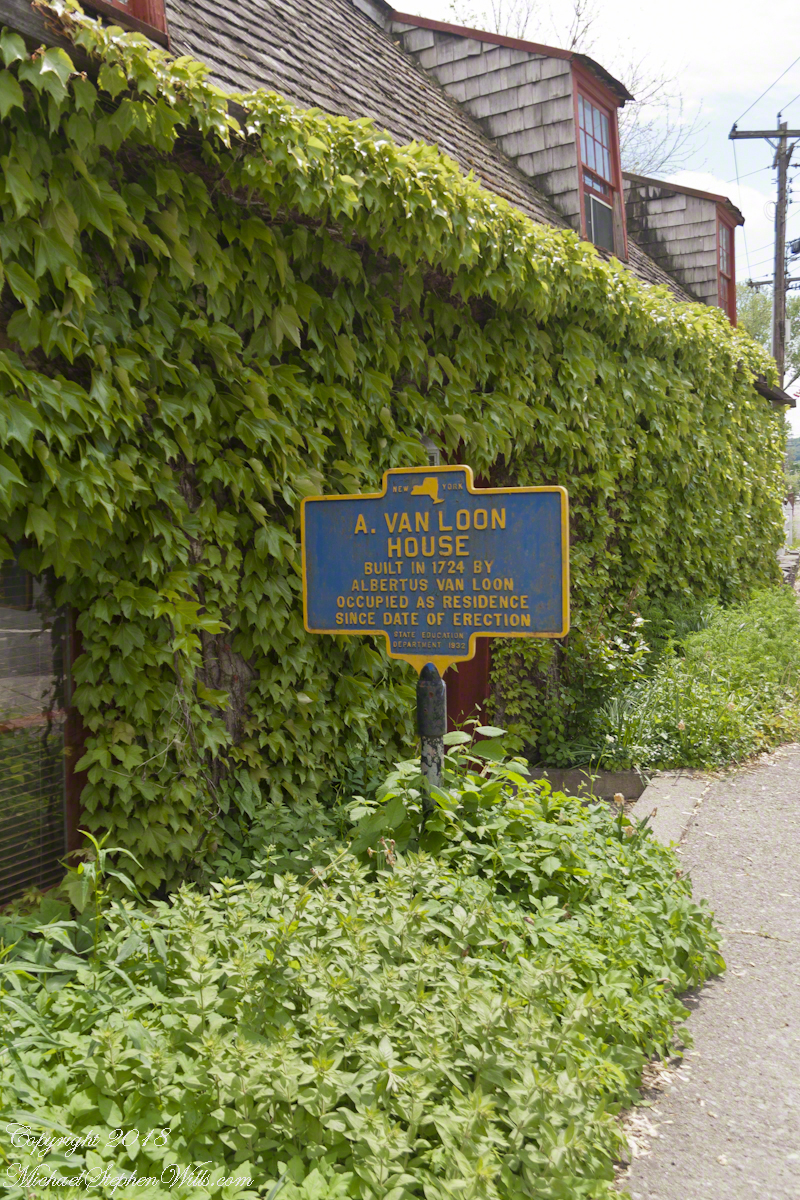
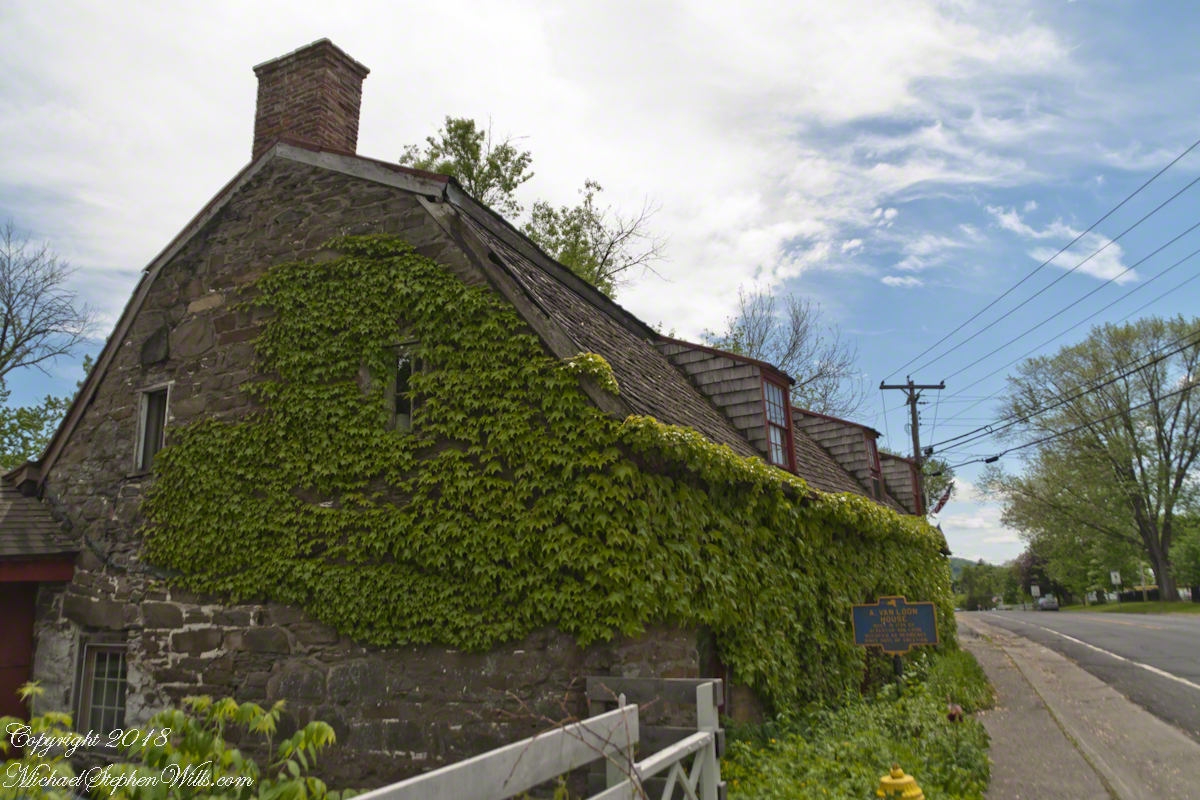
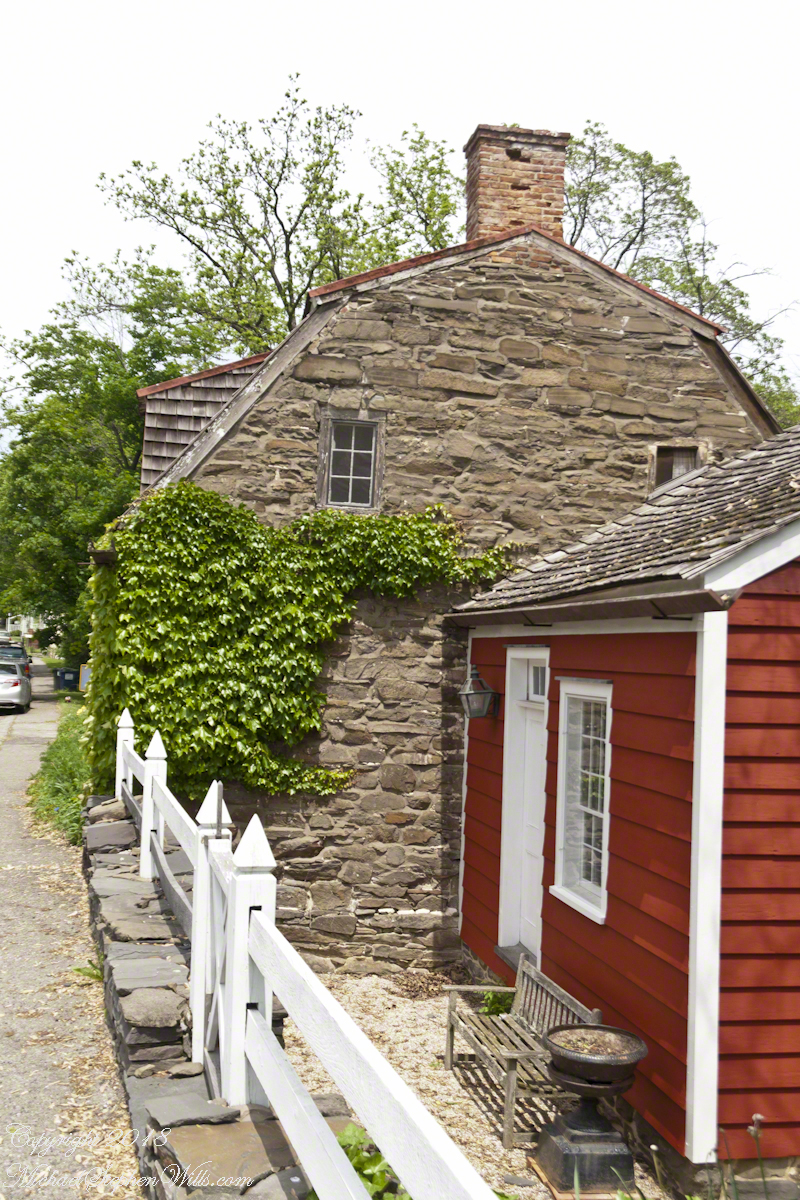
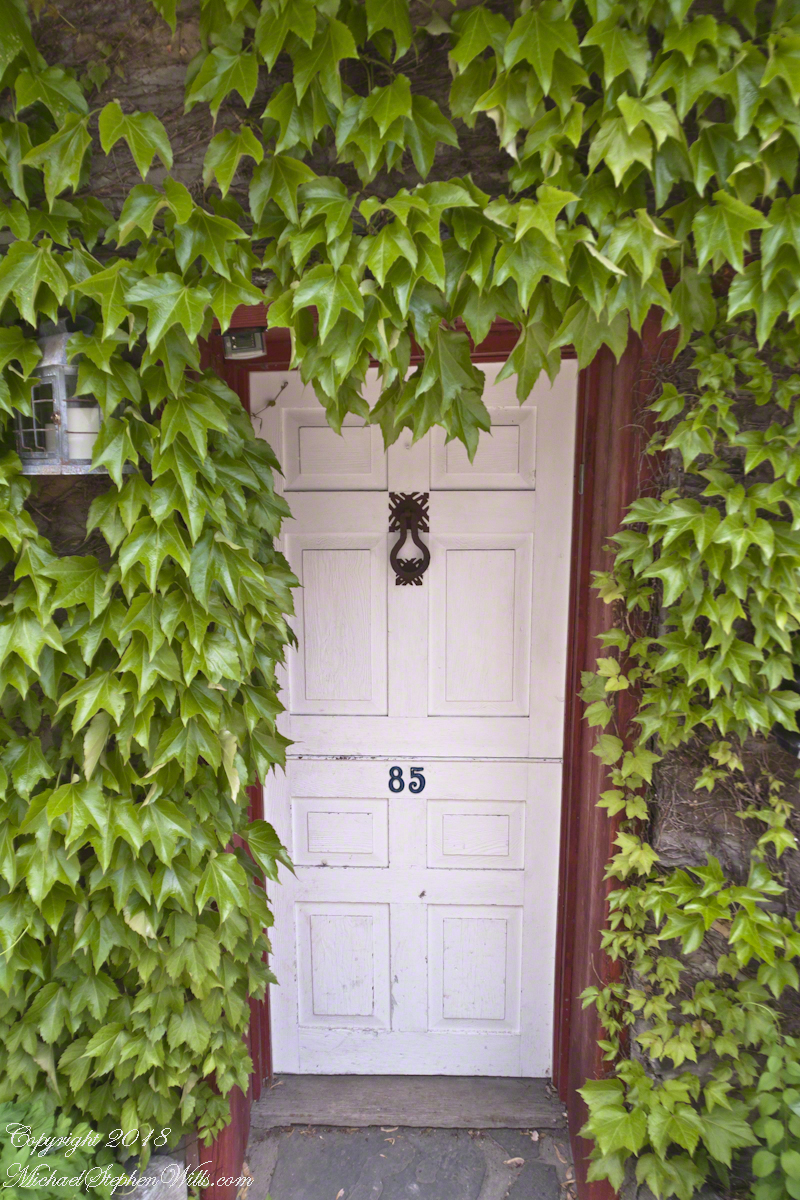
Home for 295 years, one way to describe the Albertus Van Loon house, 85 North Washington street, Athens, New York. Built before there was a George Washington or Athens New York. The river flowing by was named North River when this door first opened. The Delaware was South River.

Click any photograph for a larger version

Listed today on Zillow with a increasing value and, incredibly, “built 1725.”

Well cared for…..

…..solid masonry walls with timber additions.

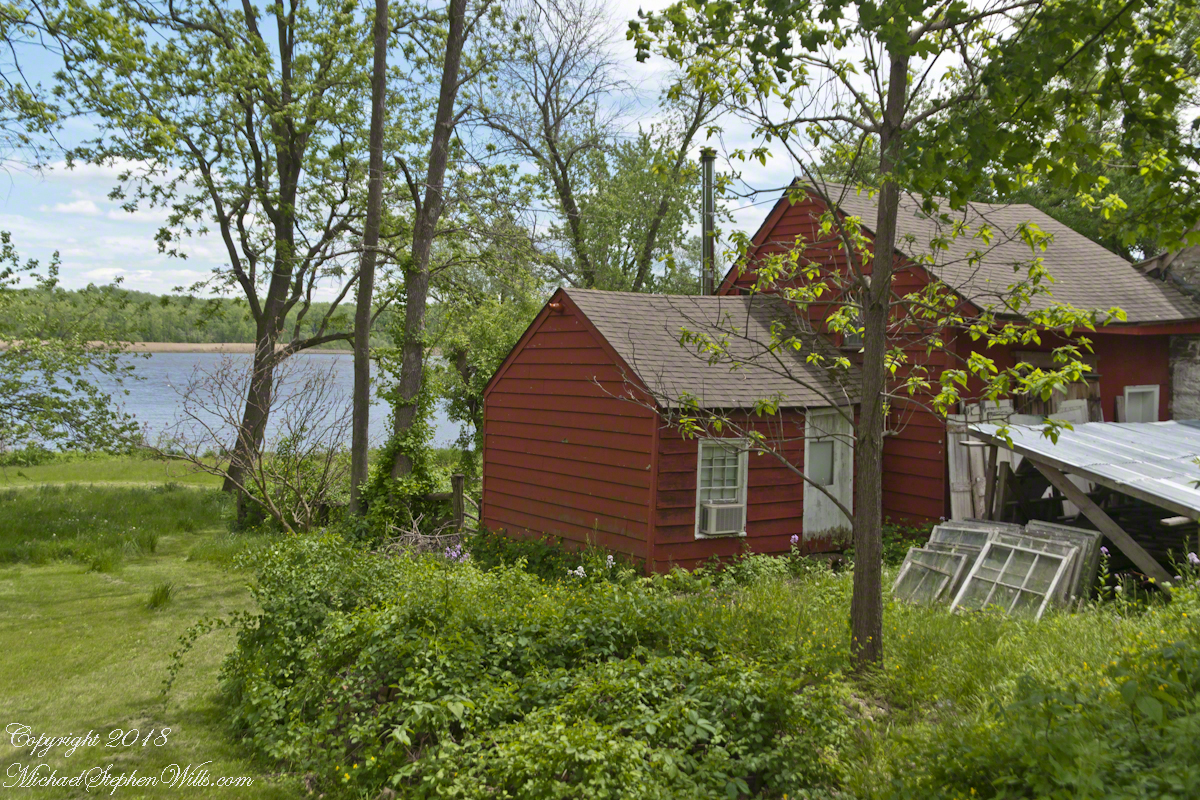
Right on the Hudson River.

Details

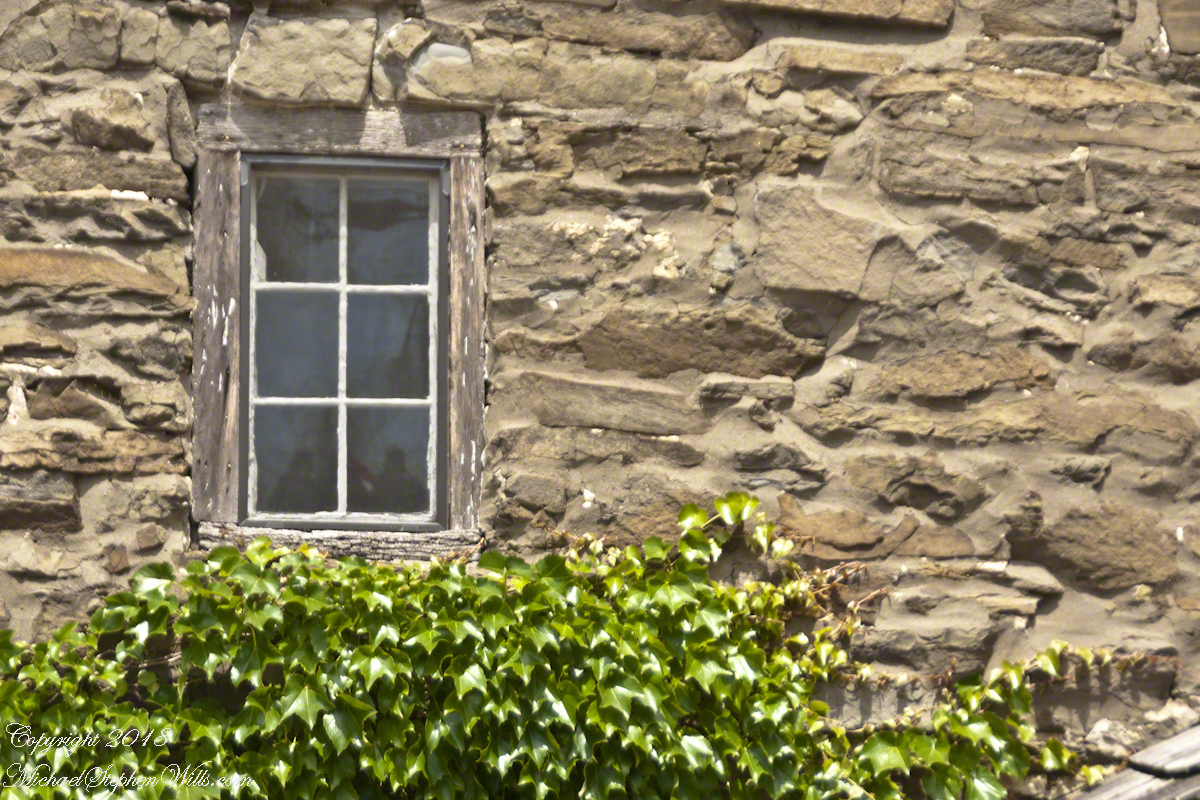
Albertus is a Great+ Uncle for Pam. She felt the connection to this place, marveled at the well build masonry and solid windows, absolutely loved the ivy. 85 North Washington was our last stop.

Click me for the first post of this series.

Copyright 2019 All Rights Reserved Michael Stephen Wills

Around and About Athens, New York, part 3

Blossoms, headstones and the passage from Dutch to English

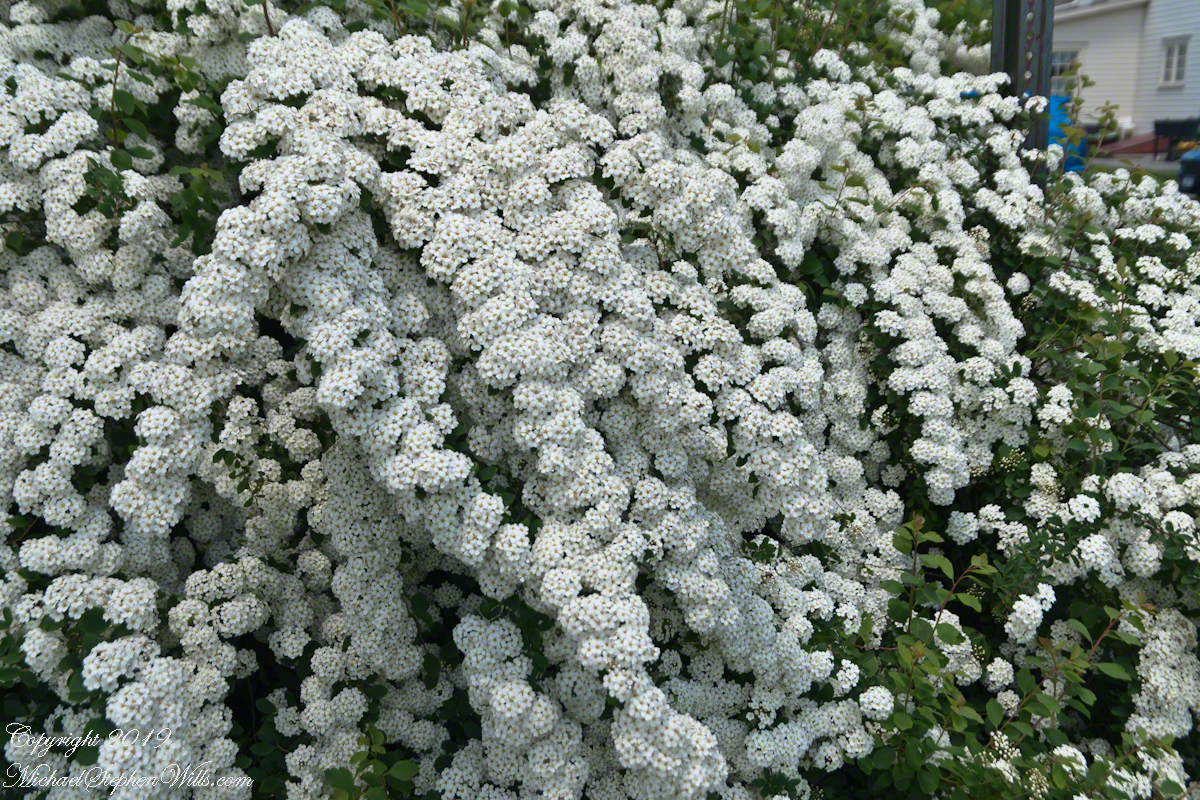
Blossoms

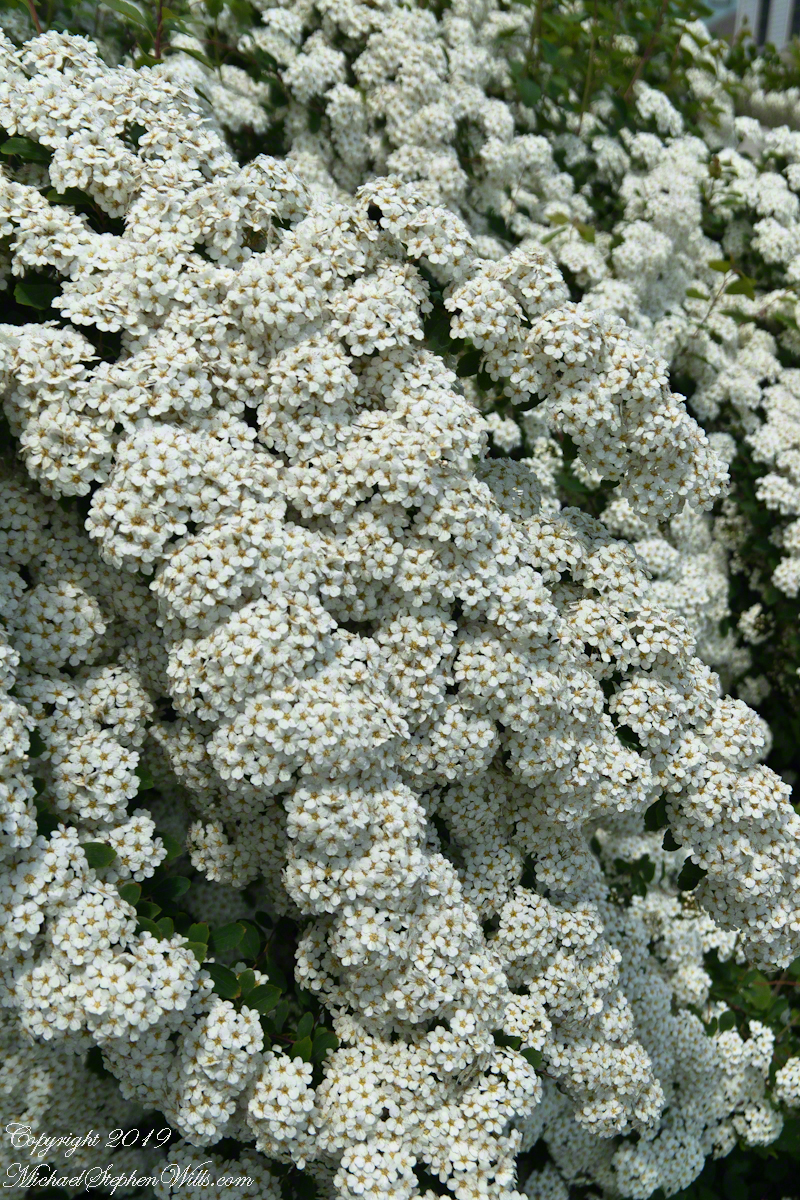
Spiraea bushes in full bloom flanked the Riverside Park along Water Street.

Click any photograph for a larger version

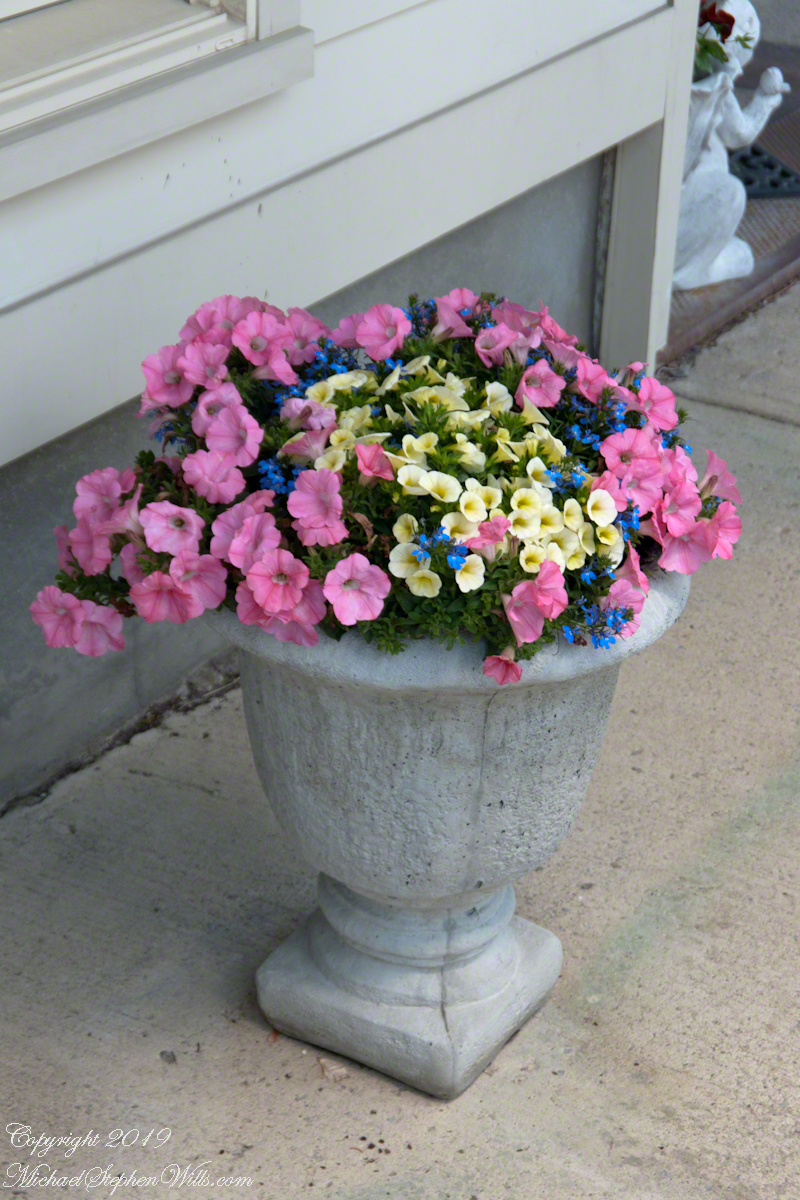
Well cared for…..

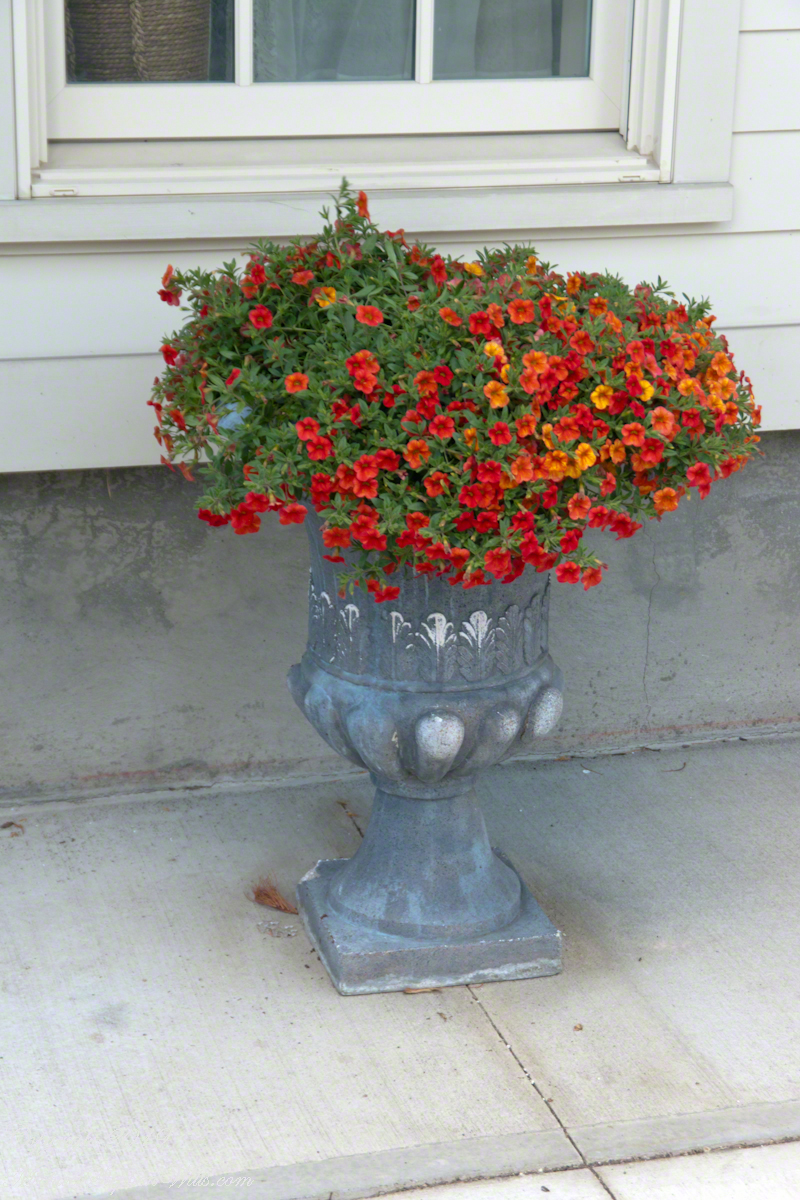
…..as are the urns across the street.

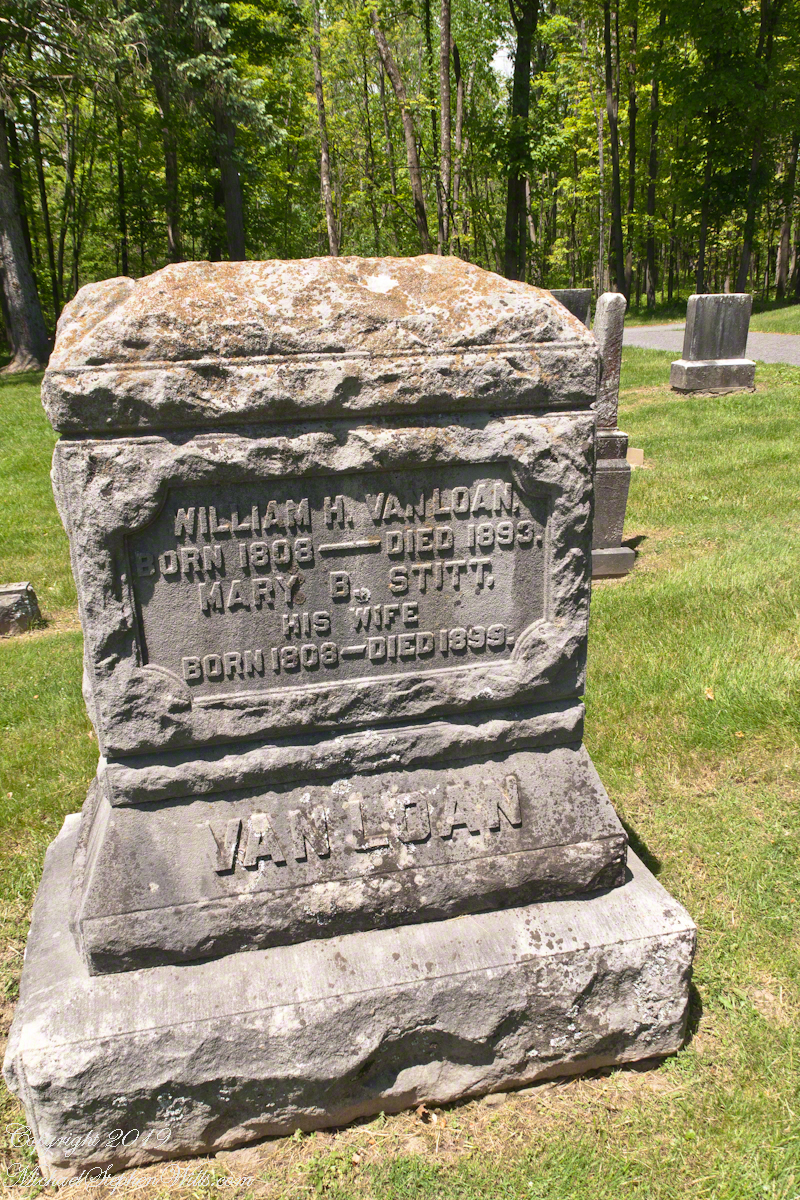
Athens Country Cemetery

Our daughter-in-law and her Mom were a source of post-trip information. “Yan Van Loan” is how Jan Van Loon’s name is pronounced in Dutch, they kindly informed us.

Passage of political control from Dutch to English was decades old when Jan Van Loon acquired his land on the river. By the 19th century the name was anglicized (turned English) on the headstones, spelled as it was pronounced in English. In the 18th century Pam’s ancestors had moved west and south to what became Plymouth, Pennsylvania (Luzerne County). This was before the coal fields, in the 18th century agriculture was the primary industry. Pam’s branch of the Van Loons retained the Dutch spelling and anglicized the pronunciation, as “Van Loon” is pronounced in the English language.

The very old burials were marked with headstones of locally quarried slate, as was common in upstate New York. You can see slate headstones in this video of a Pioneer Cemetery near our home in Ithaca, New York.

In Athens the oldest stones were in the same condition, the lettering and decoration erased by the elements even when the stones are still standing. Some kind people researched the burials and erected a modern, white marble memorial stone with the names and dates of the ancestors named in the records. Jan Van Loon, Maria his wife, or any of Pam’s direct ancestors were not among them.

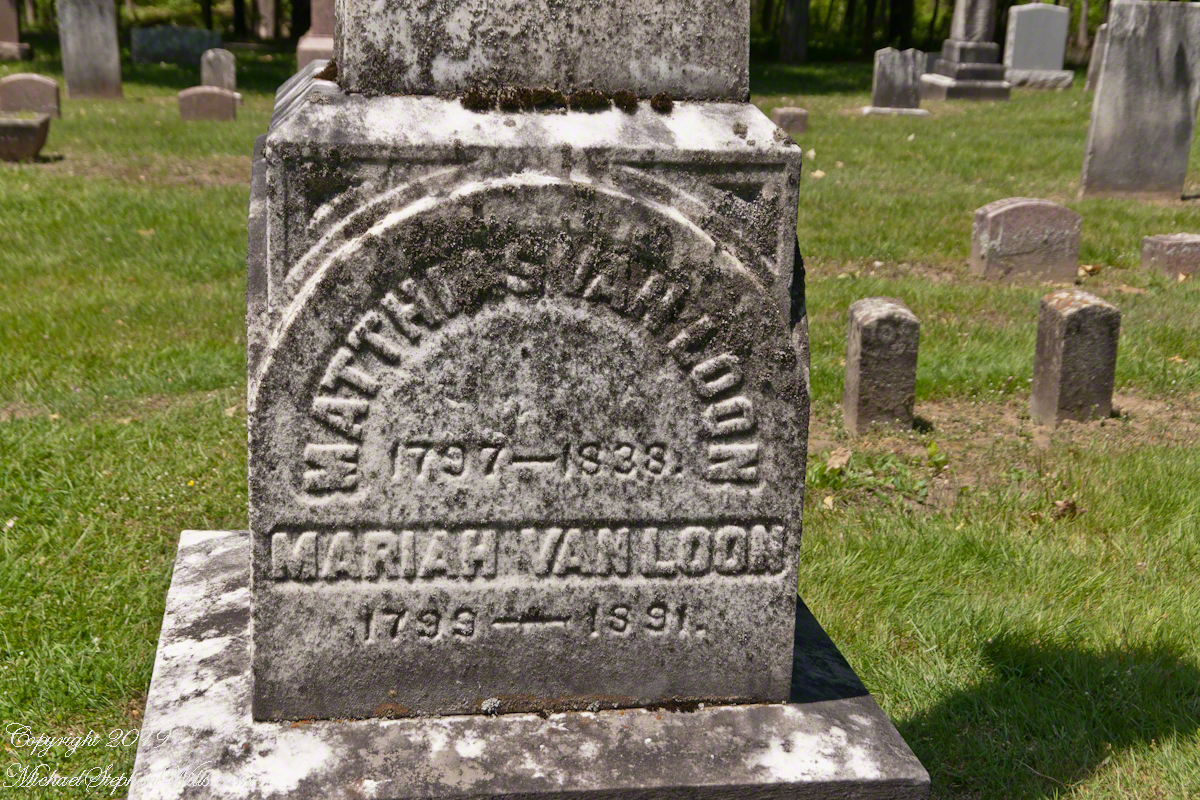
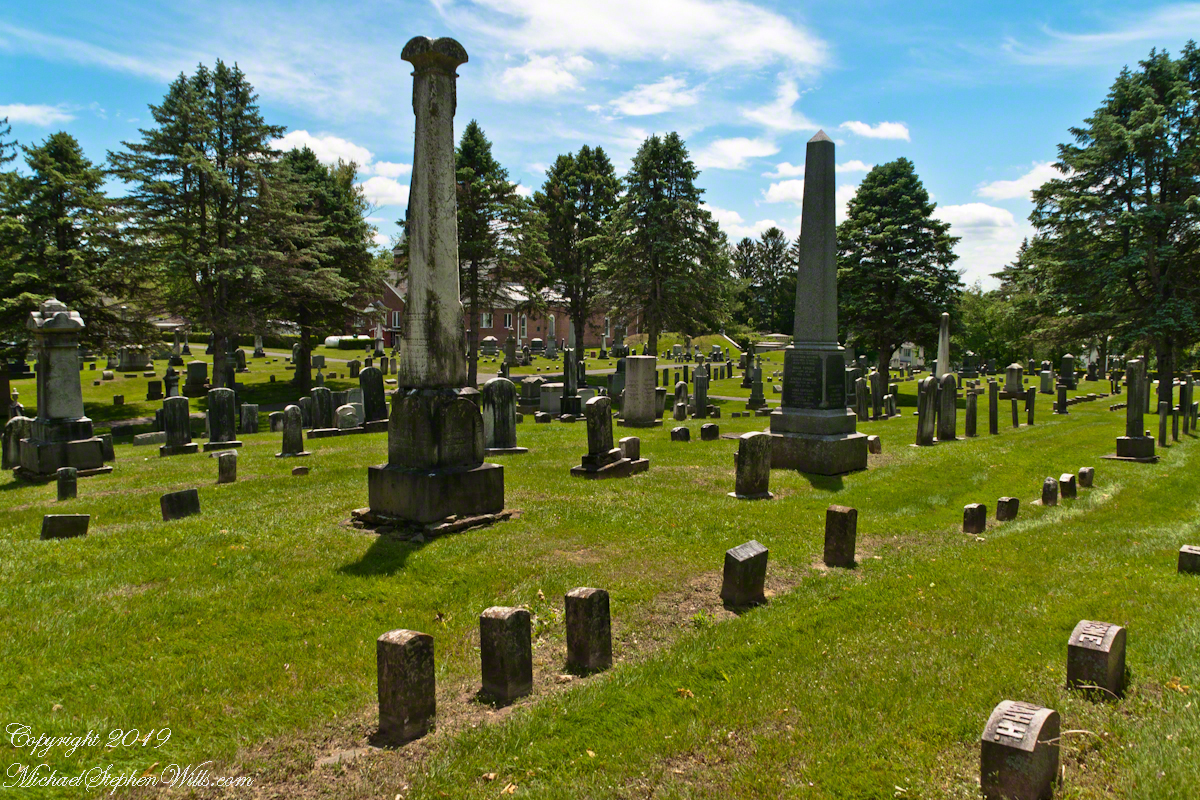
The Matthias Van Loon of this memorial obelisk was a descendant who remained in what became Athens, New York. The following two photographs are of the base and an overview. Matthias Van Loon’s is on the right.

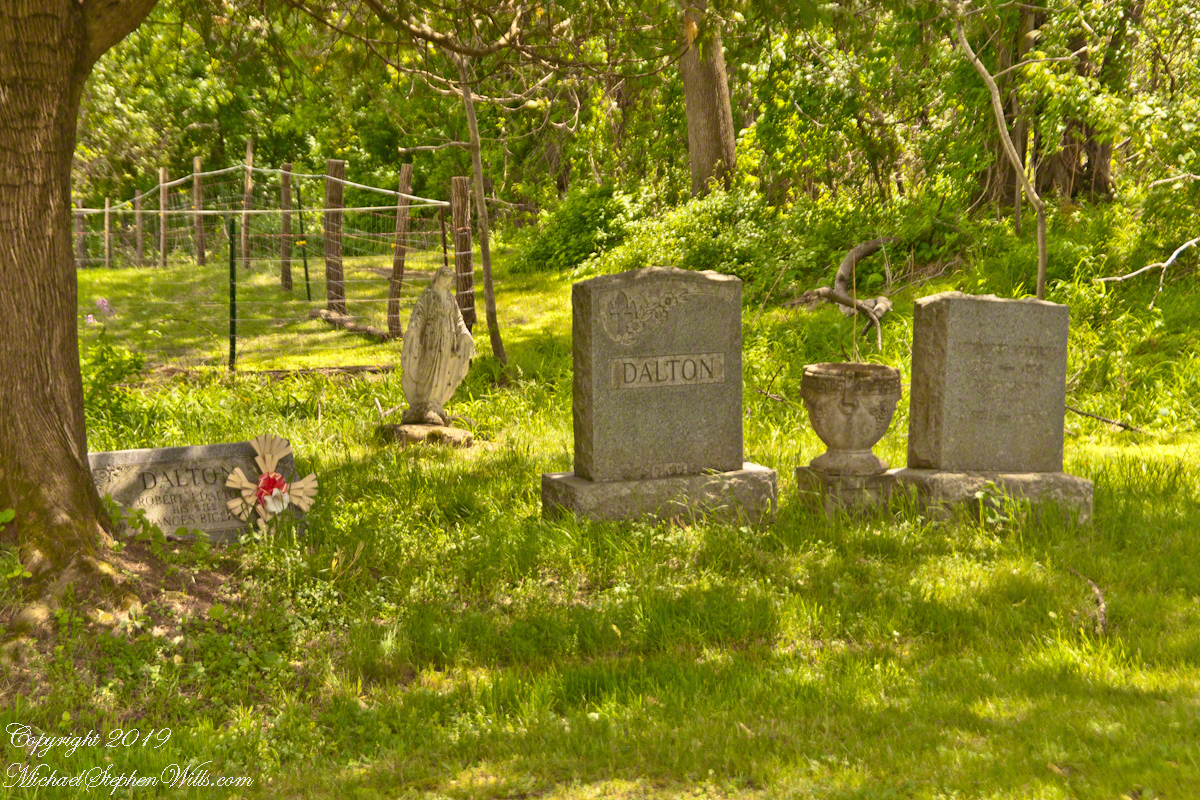
This Catholic burial is on the very edge of the site, as though pushed off to the side. That is the yard of a private home in the background. I started this post with flowers because there was little evidence of familial devotions on these burials of previous centuries.

Click Me for “Around and About Athens, New York, part 4”

Copyright 2022 All Rights Reserved Michael Stephen Wills

Around and About Athens, New York, part 2

Real Estate and Ancestors

Pam eventually caught up to report a breakthrough contact made through casual street interactions. She talked to random strangers on 2nd Street hoping to learn more about her ancestor, Jan Van Loon. The breakthrough was a name and phone number of a woman, the daughter of a new acquaintance, and a tip about an old cemetery.

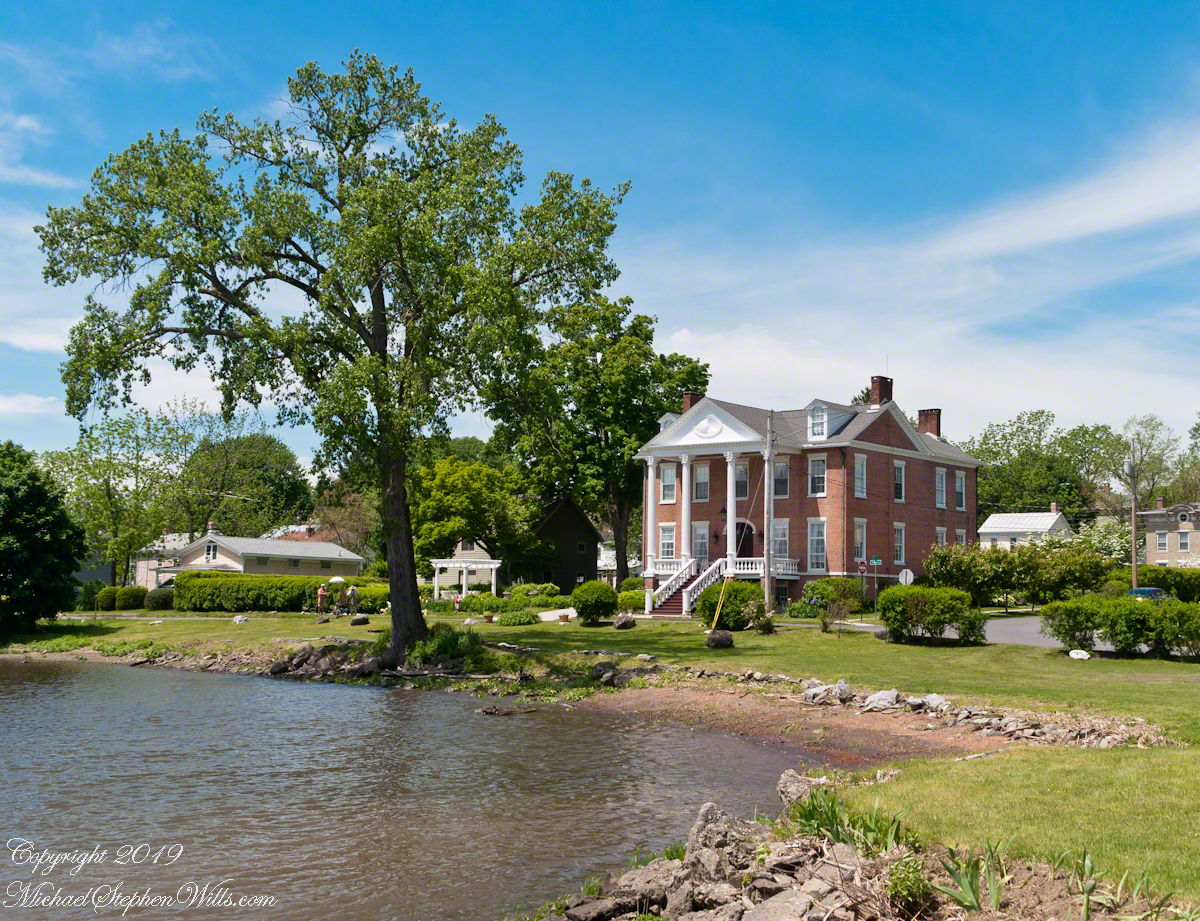
Two people are visible in this first photograph, taken from the south end of Athen’s Riverside Park. Look to the left of the large tree where a artist, under the small white umbrella, is painting while in conversation with a second person. Pam struck up a conversation……

Click any photograph for a larger version

“For Sale: 1825 Federal Home on the Hudson River”

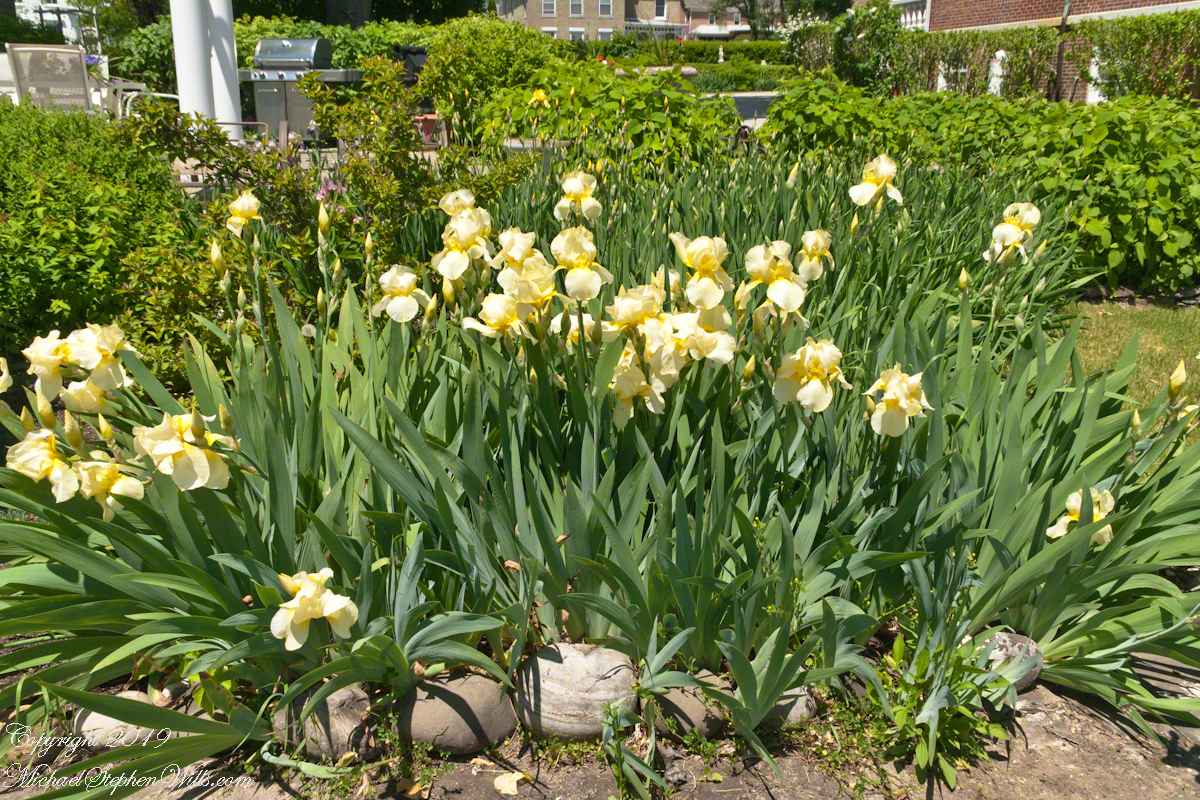
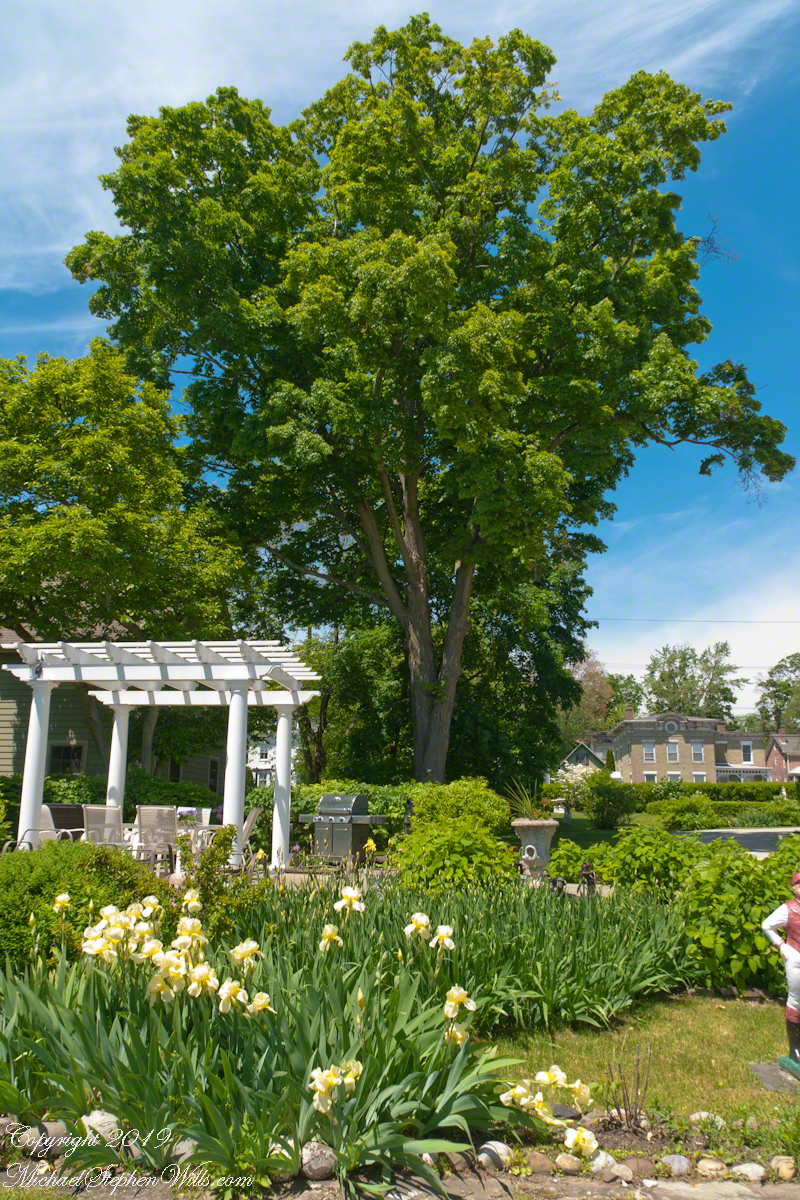
The artist had an easel and a painting in progress, the subjects were yellow irises, part of a formal garden on the grounds of the mansion. We first took it to be a museum or public building of some sort, but were mistaken. It is a home. In the course of a conversation that touched upon Henry Hudson’s 1608 journey up the river (they knew nothing of Jan Van Loon, or of deeper local history in general), and the work of the second man who was the owner of the mansion. Here is more about the place from the Zillow listing. There was no “for sale” sign in evidence.

From the portion of the 12 South Water Street garden on the road. We chatted with the house owners and an artist as he painted these yellow iris blooms.
The Zillow Listing…WOW
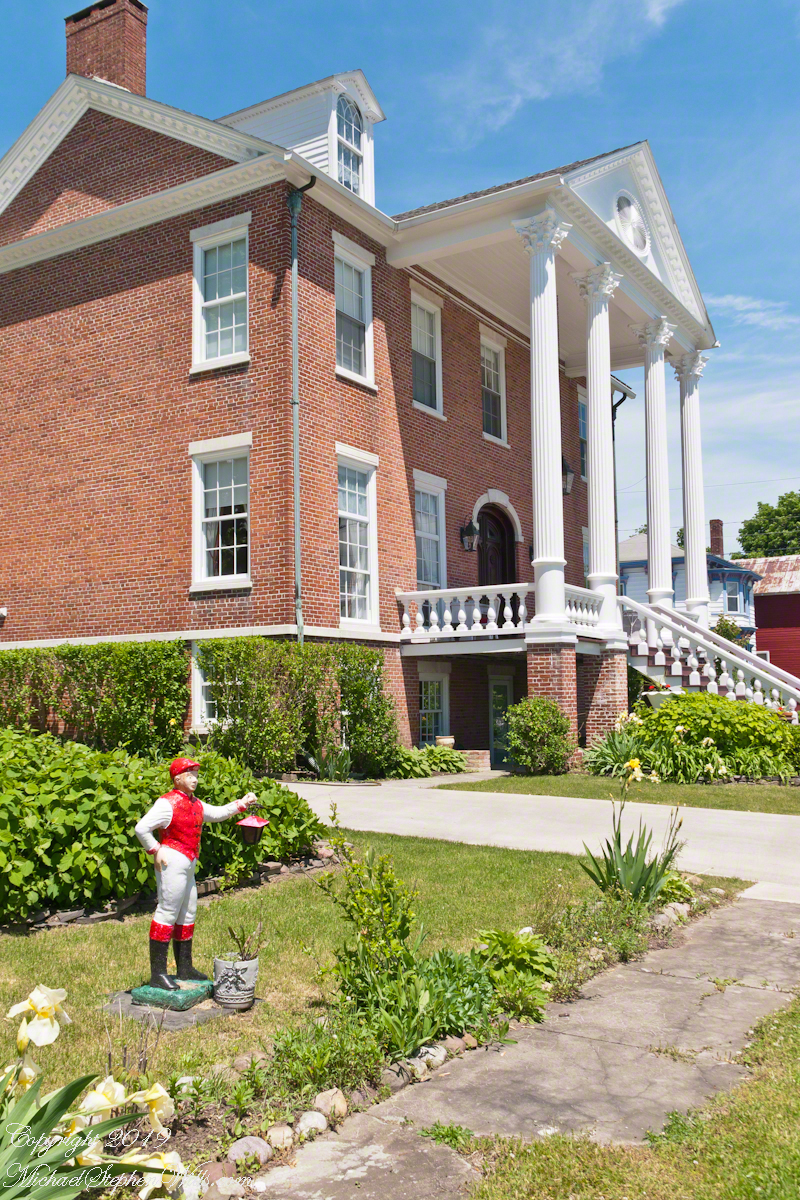
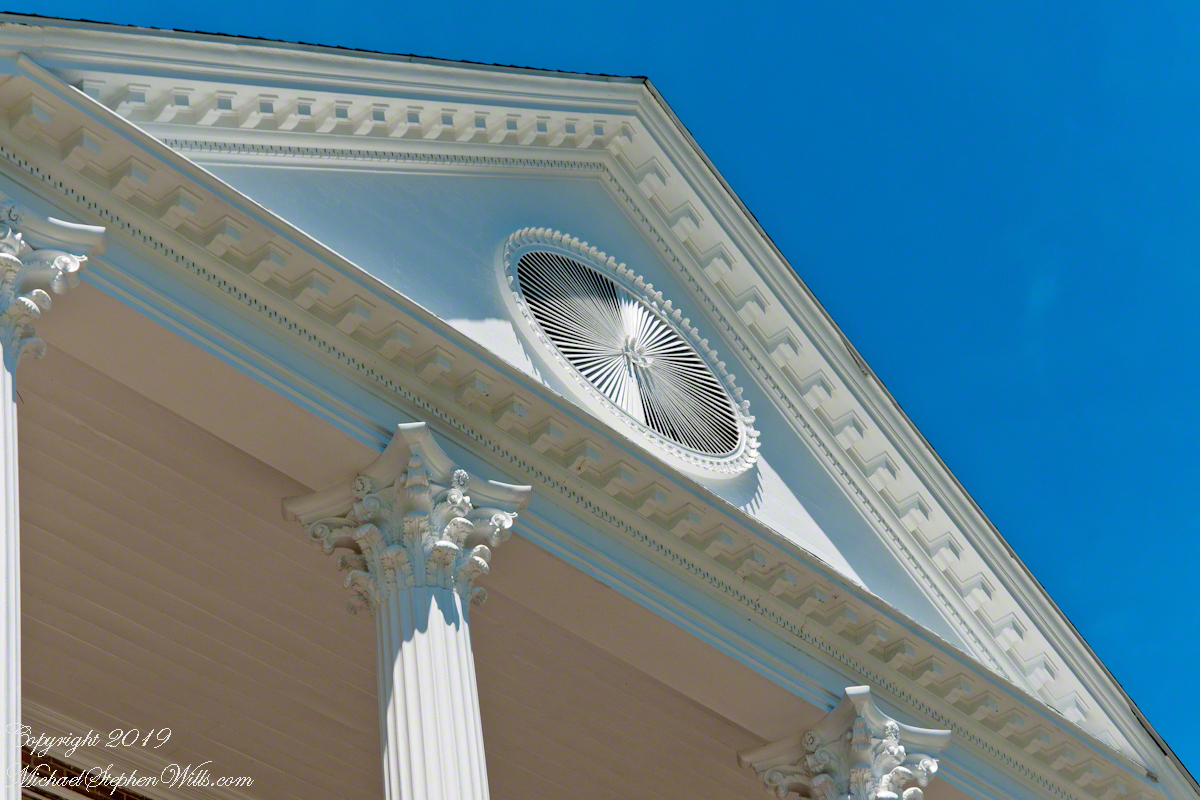
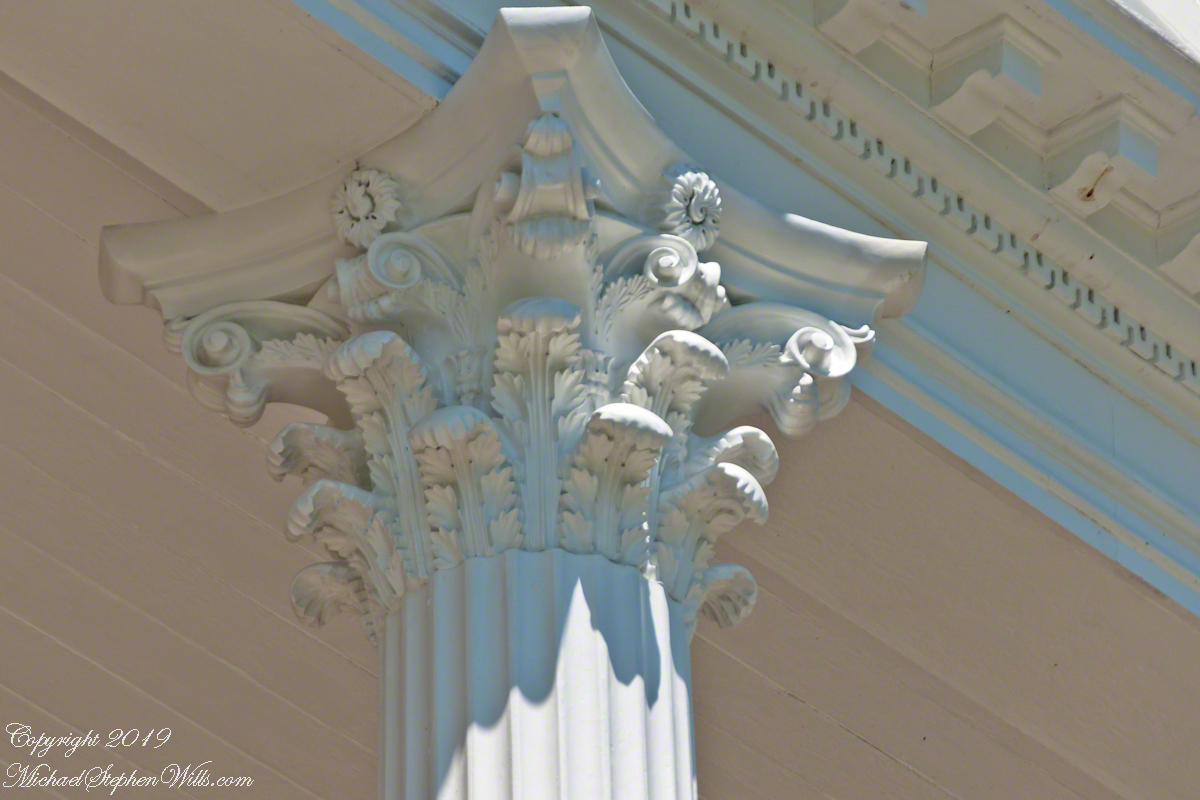
” A freshly renovated home and grounds on the Hudson River, at 12 South Water Street, Athens, New York. Barely visible, to the left of the tree, is an artist, painting large yellow irises while chatting with the owner of the property. Here is what the listing on Zillow has to say, “This majestic 1825 Federal home on the banks of the Hudson River was designed by architect Barnabas Waterman for shipping entrepreneur Anthony Rutgers Livingston. Steeped in history, the house has undergone an extensive – yet sensitive – restoration. Enter into a grand hallway with Double Parlors to the right and a formal DR on the left. Original Federal flourishes abound with acanthus leaf capitals and entablatures, Corinthian columns, and intact mantels and molding. The high ceilings and tall windows provide extraordinary elegance, light and comfort. A thoughtful kitchen renovation and 1/2 Bath for 21st century convenience. Upstairs is a Full Bath and four spacious and airy Bedrooms, the Master with ensuite bath. The walk – out lower level features a family room with fireplace, a full bath and the original kitchen with hearth and beehive oven. A stroll past the box-wood garden leads to a 3-bay Garage with Studio and 1/2 Bath above, perfect for artist, home office or guests. Convenient to Thruway, Catskill, Hudson. 2- hrs NY.”

Formal Garden

Restored Hudson River Mansion

Barely a half mile apart, a great distance separates the homestead of Jan Van Loon and the 12 South Water Street former mansion of a shipping magnate including 125 years and the American Revolution.

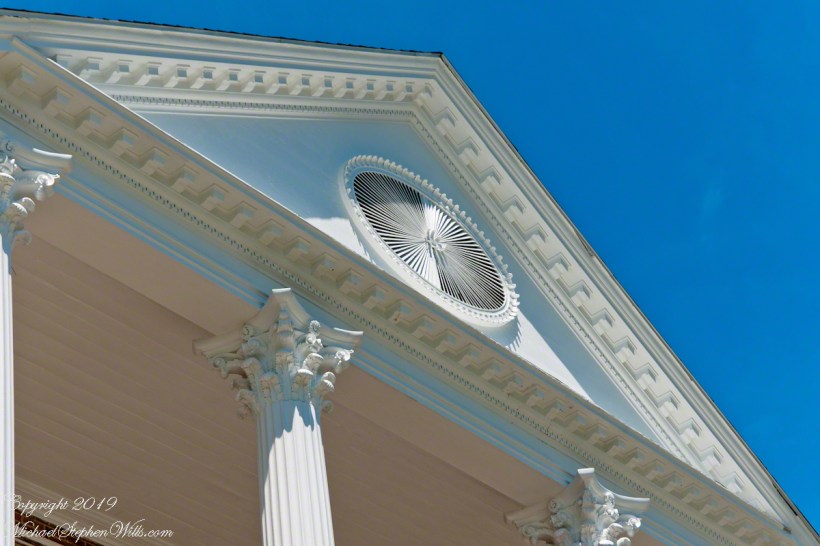
Stylized Acanthus Leaves grace these Corinthian Capitals

Click Me for “Around and About Athens, New York, part 3

Copyright 2022 All Rights Reserved Michael Stephen Wills