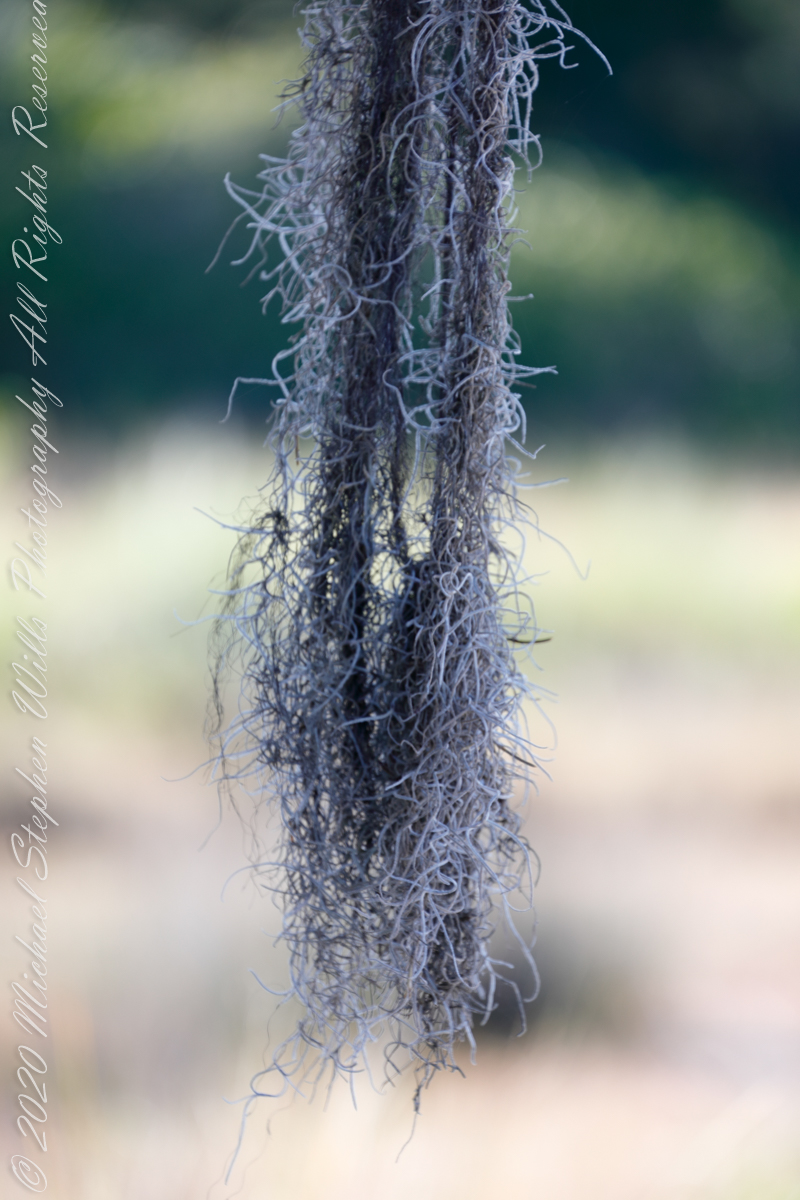
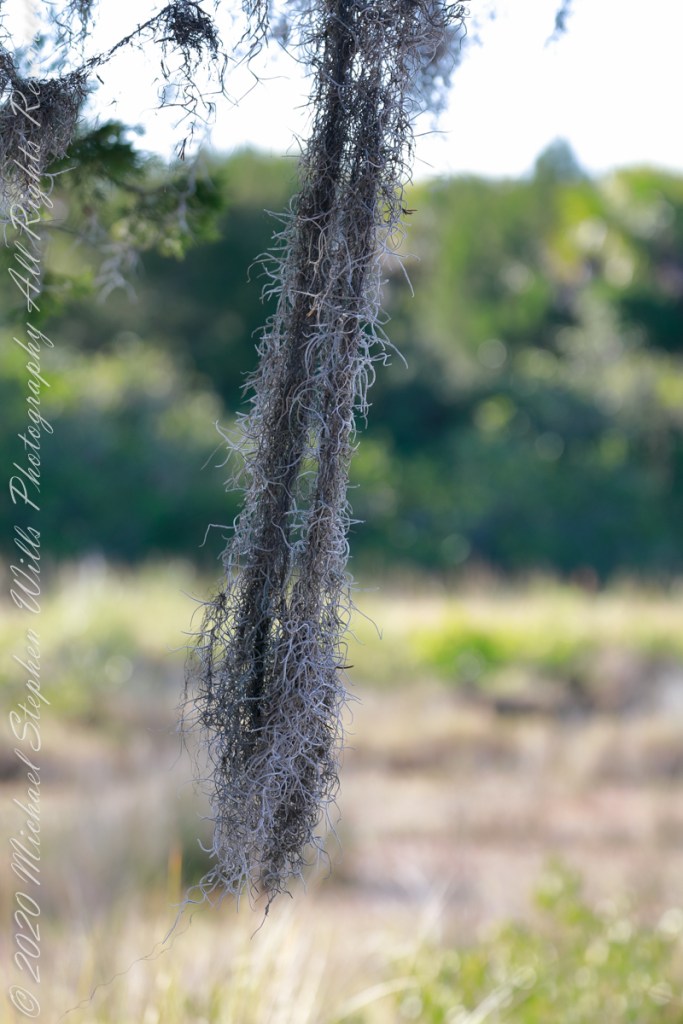
Spanish Moss is neither moss nor Spanish. Scientific name Tillandsia usneoides, this flowering plant is in the family Bromeliaceae that includes pineapple. Here it hangs from a cedar tree along Blackpoint Wildlife Drive.
Merritt Island National Wildlife Refuge, Titusville, Brevard County, Florida
Copyright 2022 Michael Stephen Wills All Rights Reserved
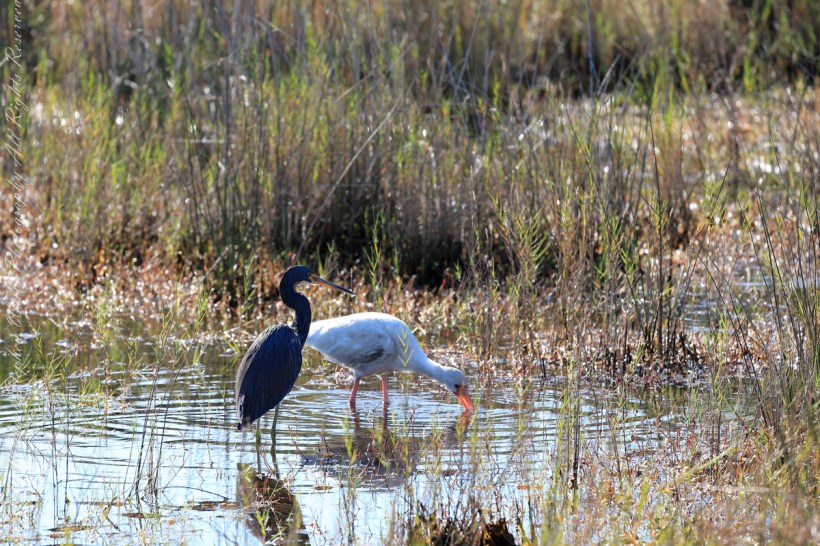
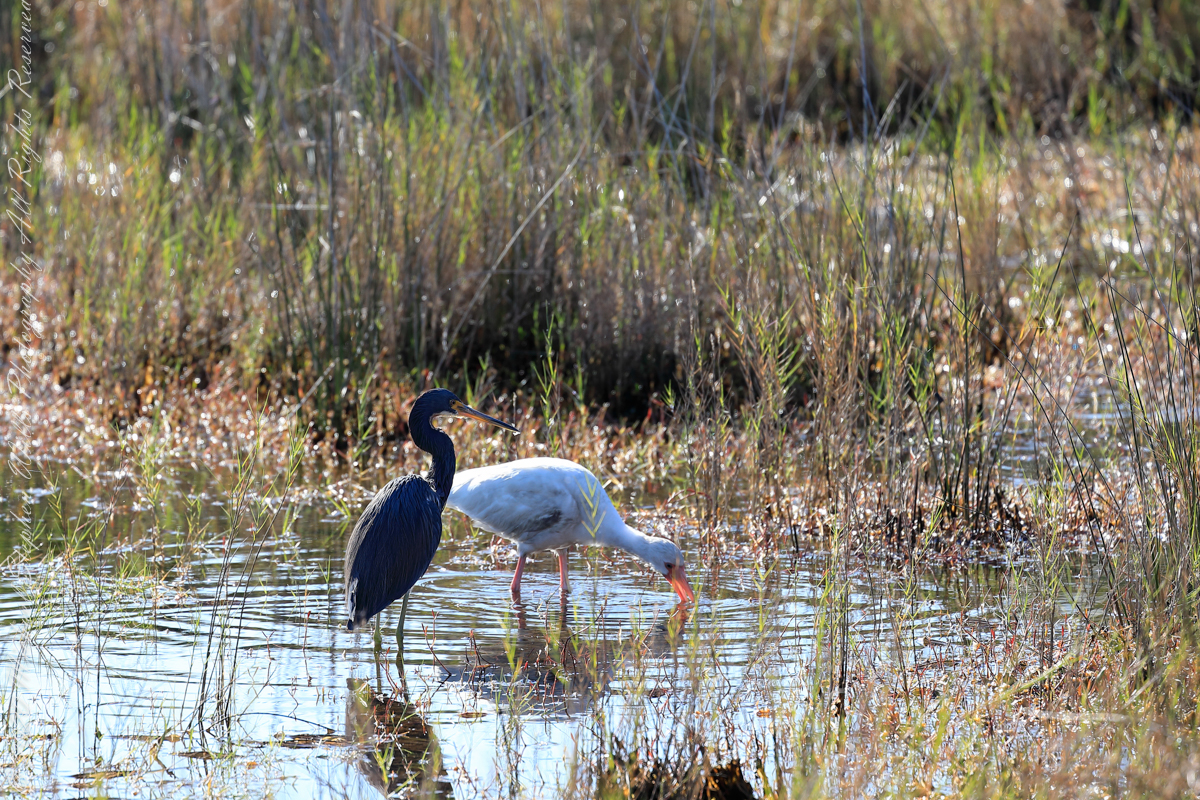
These birds are feeding from a march pool south of Blackpoint Wildlife Drive about 0.9 mile from the start. As such it is a backlit shot with the sun illuminating the White Ibis’ beak and the green legs of the Tricolored Heron (aka Louisiana Heron).
Both can use a spear-like beak to capture unwary prey.
Merritt Island National Wildlife Refuge, Titusville, Brevard County, Florida
Copyright 2022 Michael Stephen Wills All Rights Reserved
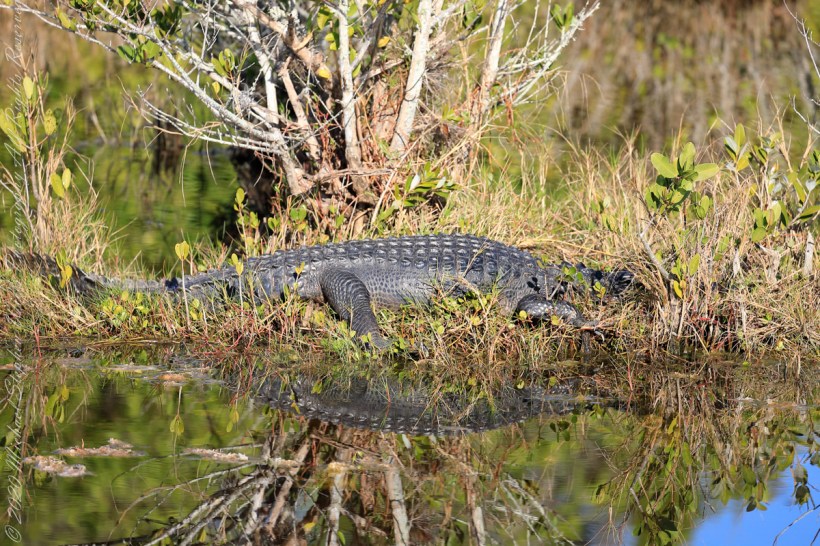
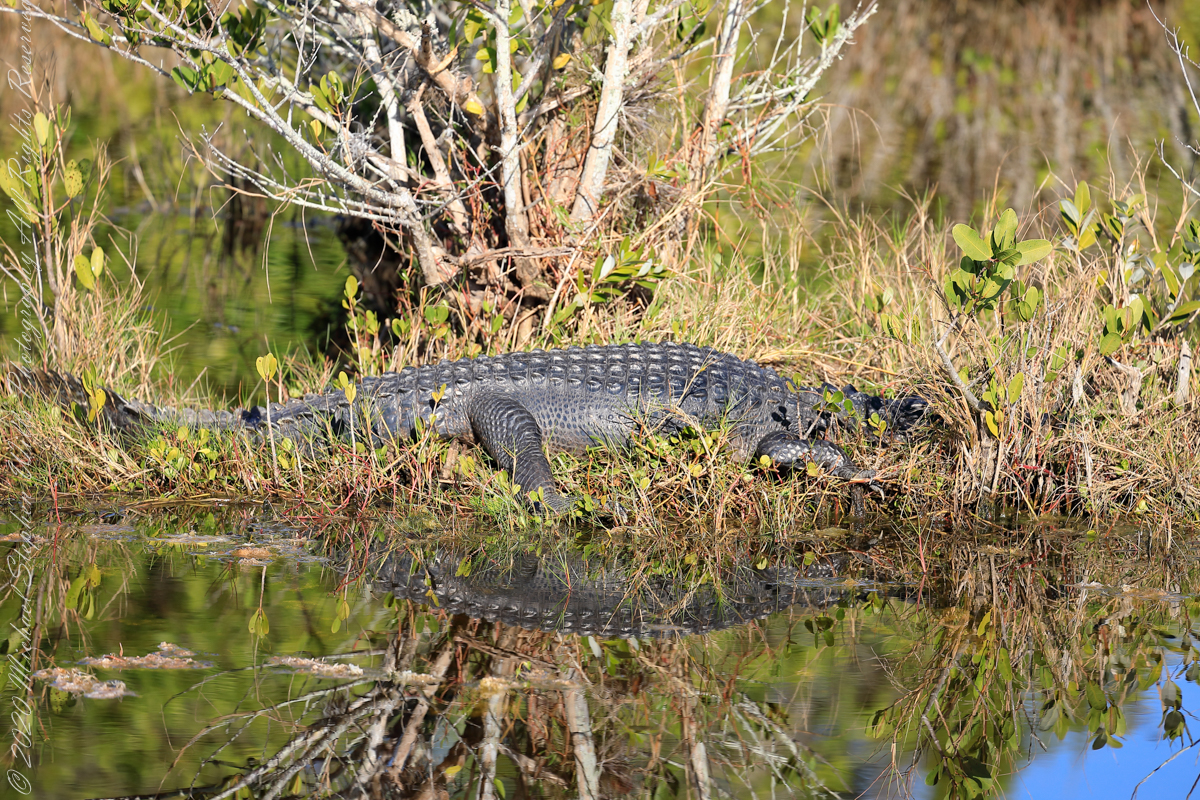
Blackpoint Wildlife Drive meanders through marsh environments where humans are just visitors.
Here the Alligator is the apex predator that will attack and eat the unwary tourist. This eight-foot monster, resting on a hummock 20 feet from the road, absorbed only sun. In town, it is on the menu.
Merritt Island National Wildlife Refuge, Titusville, Brevard County, Florida
Copyright 2022 Michael Stephen Wills All Rights Reserved
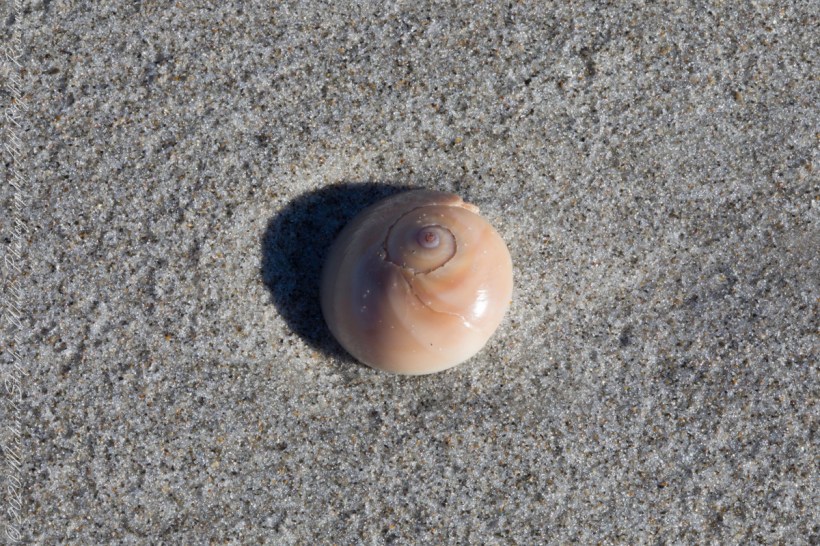
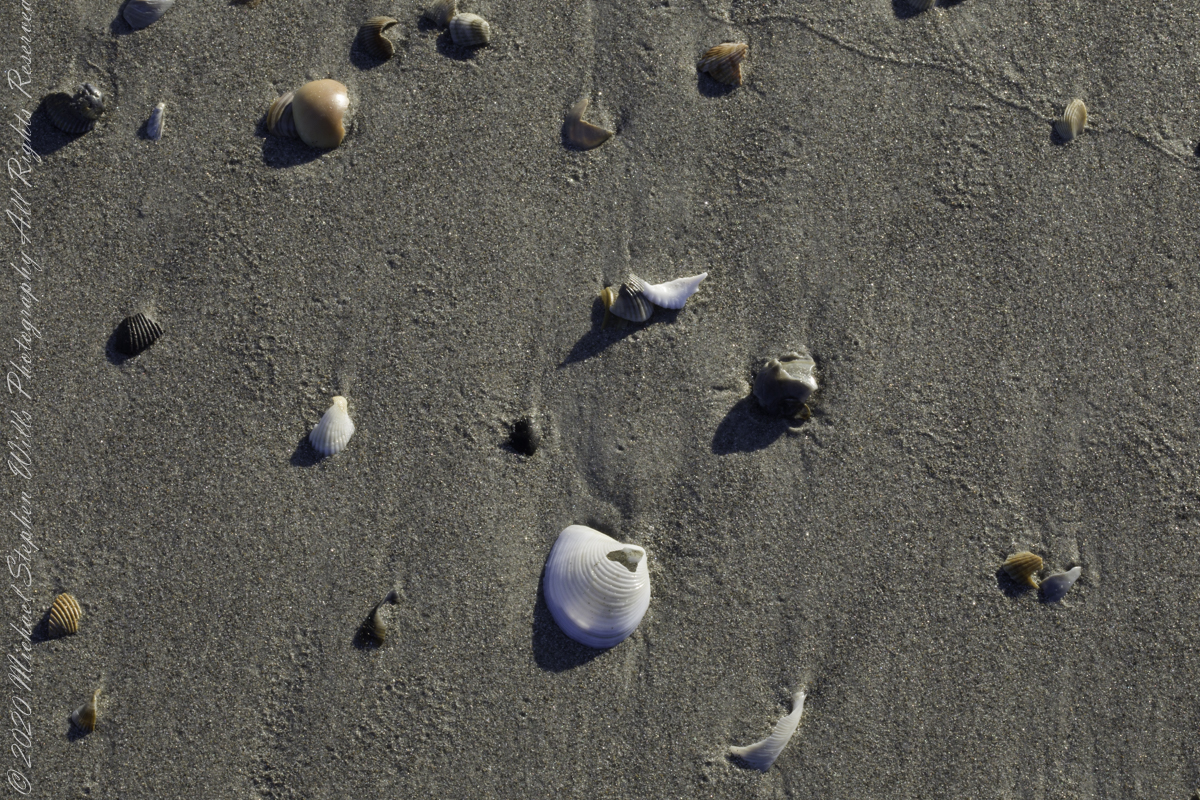
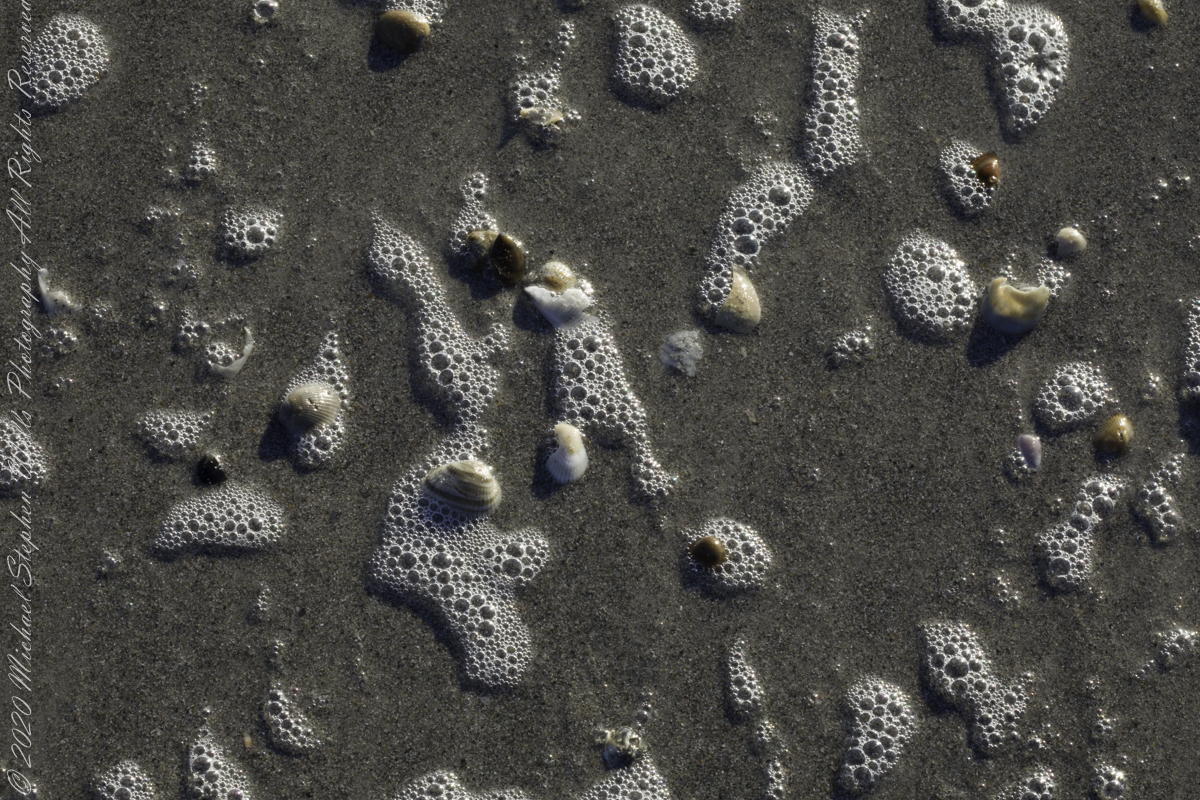
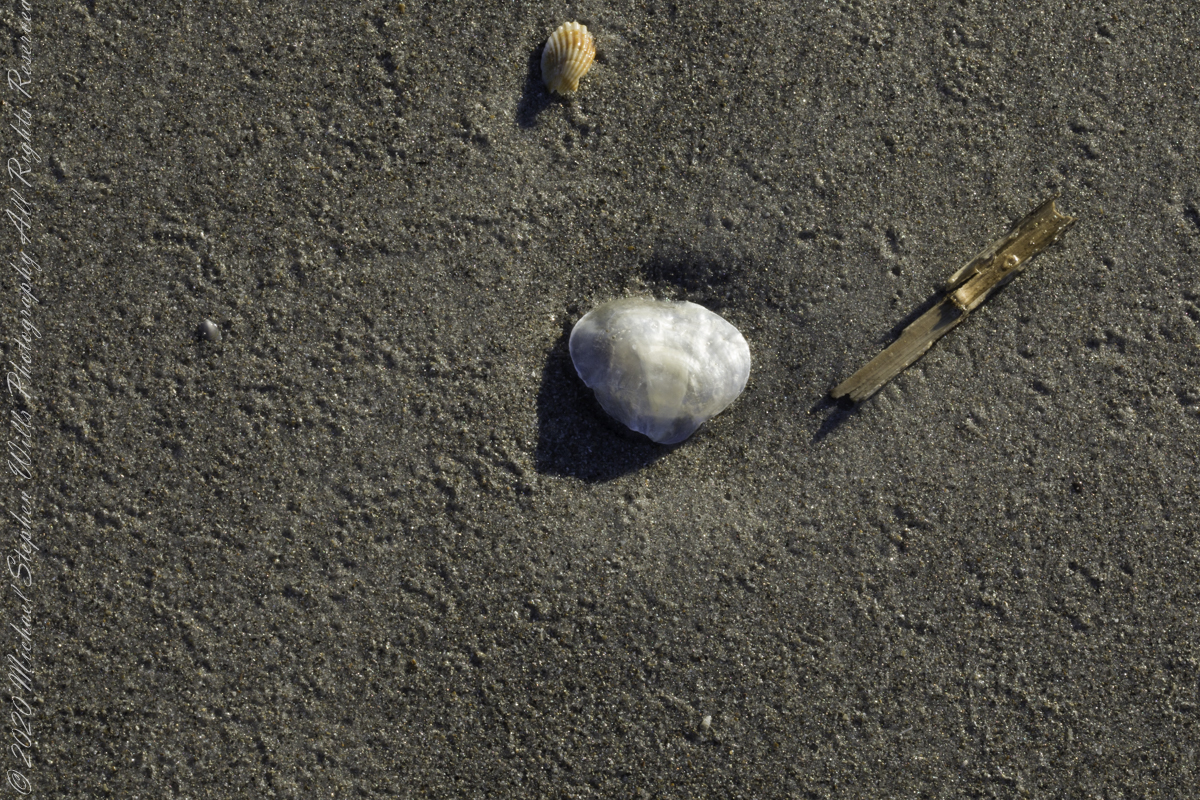
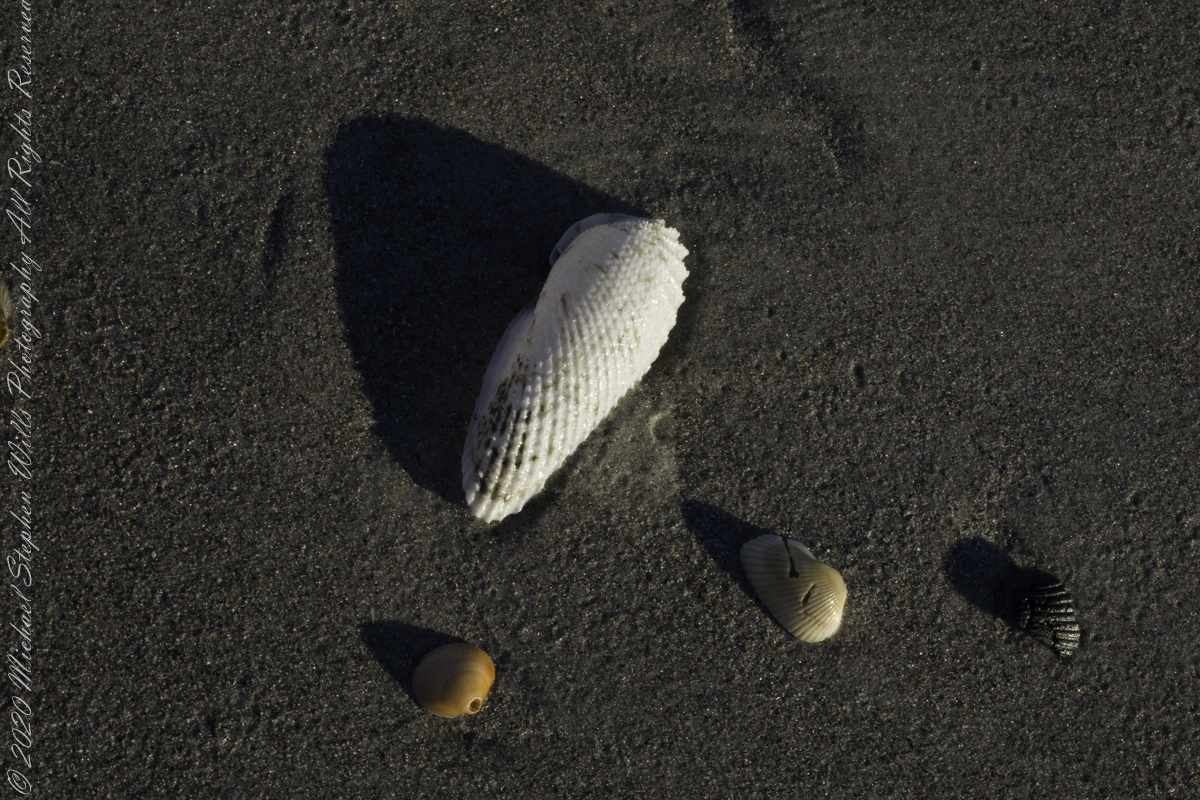
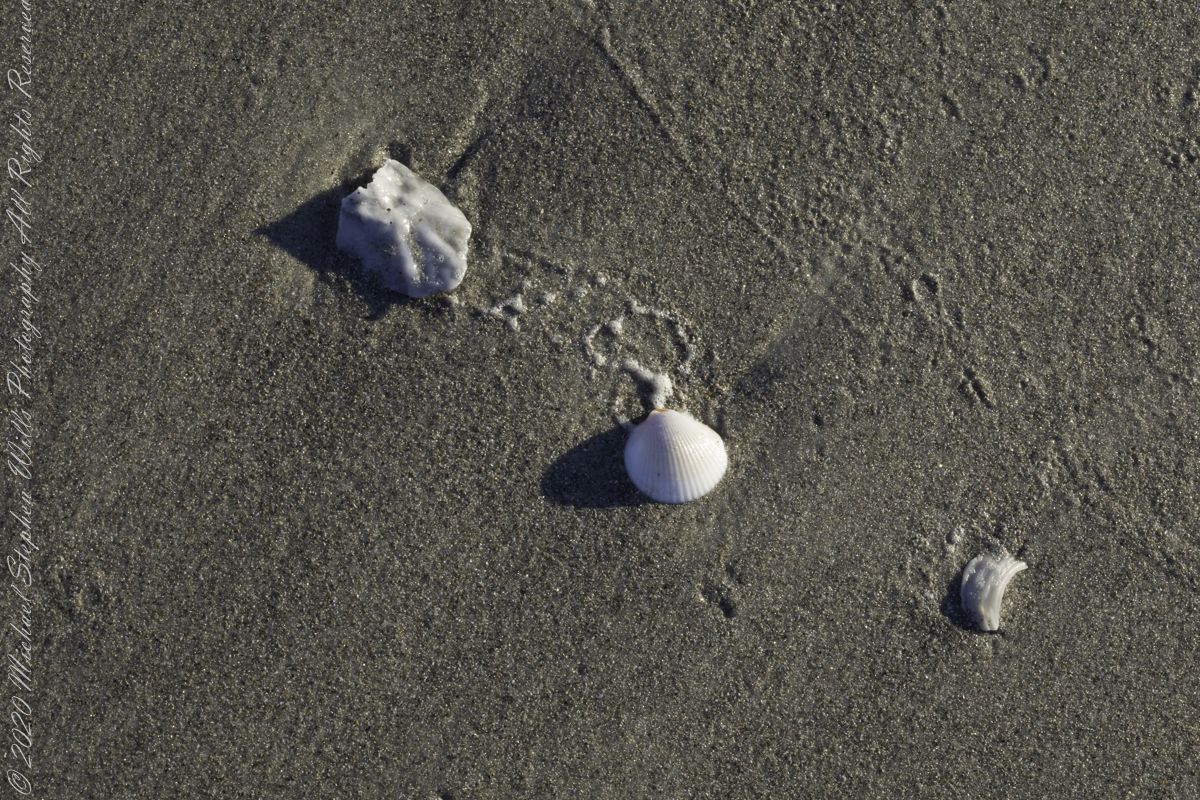
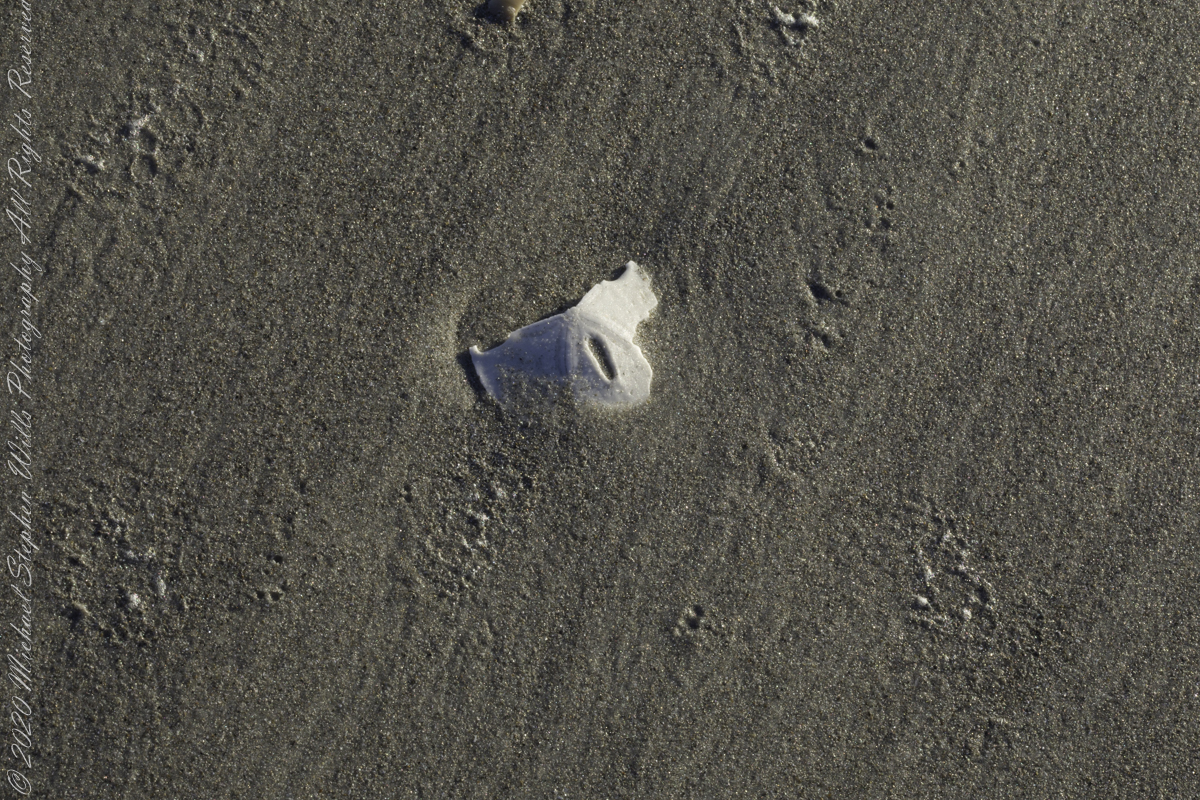
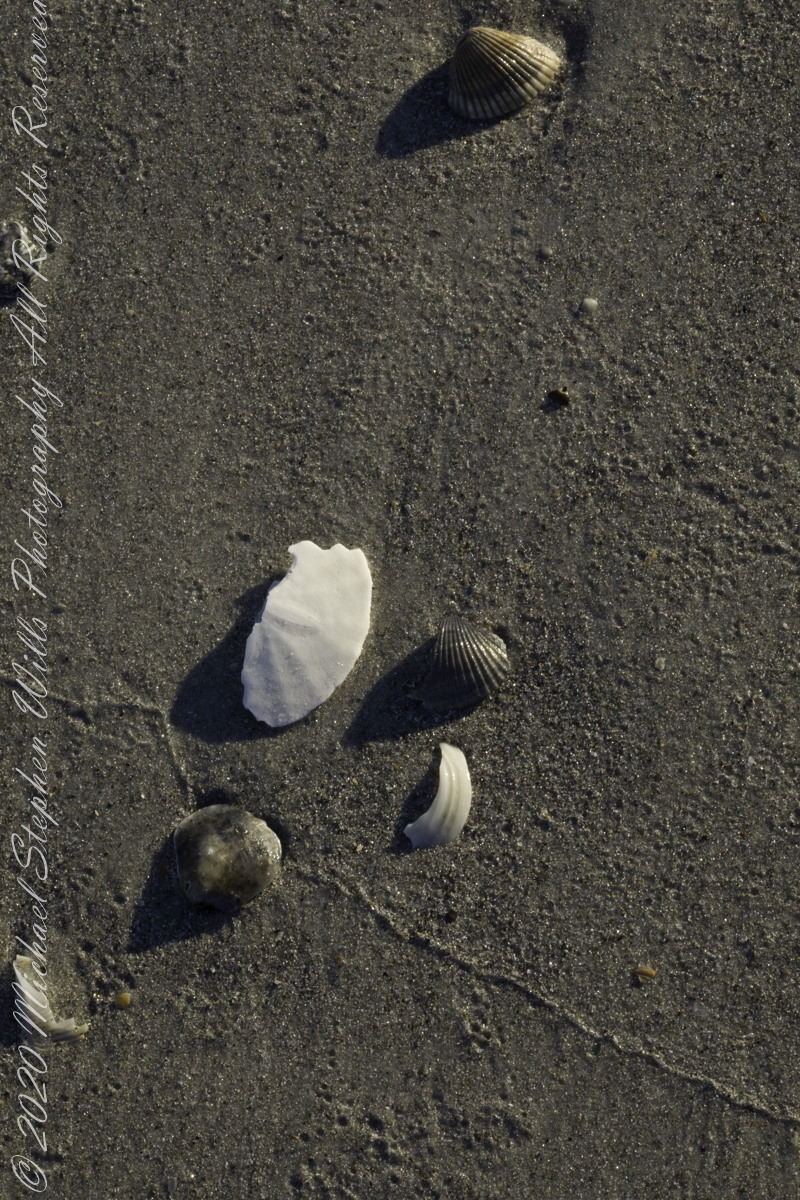
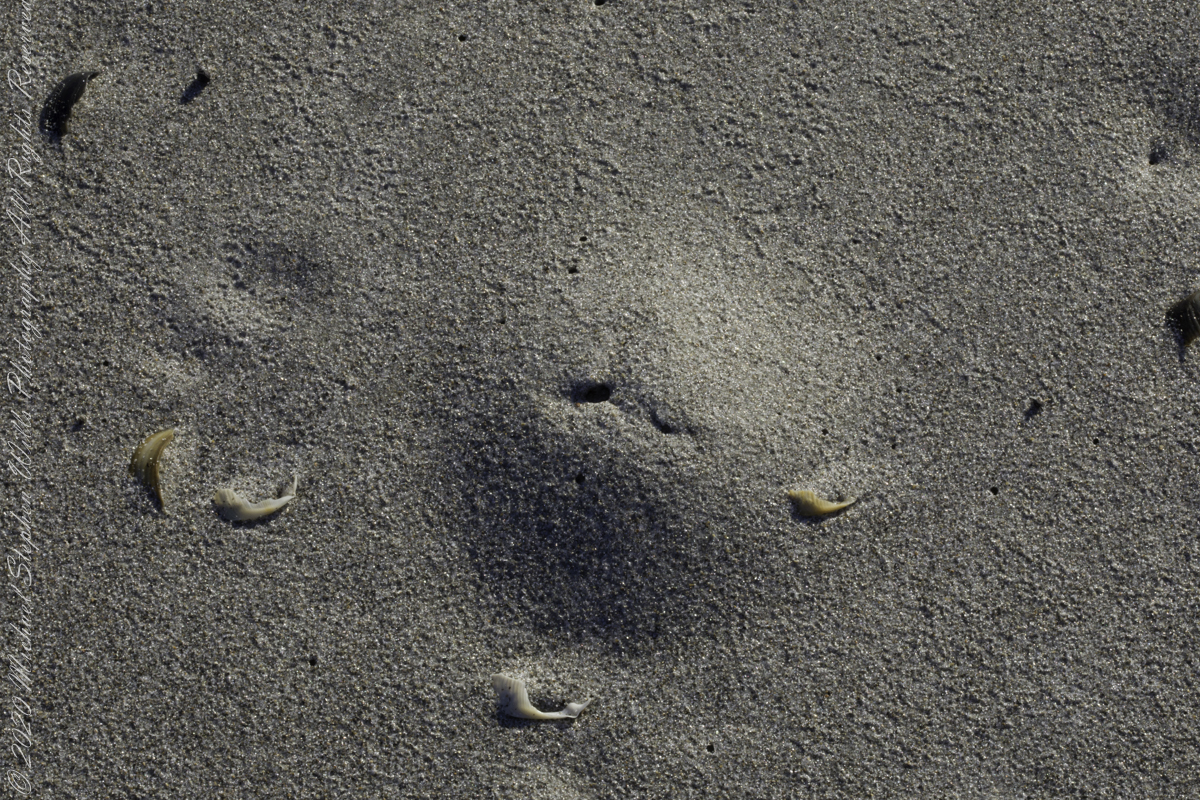
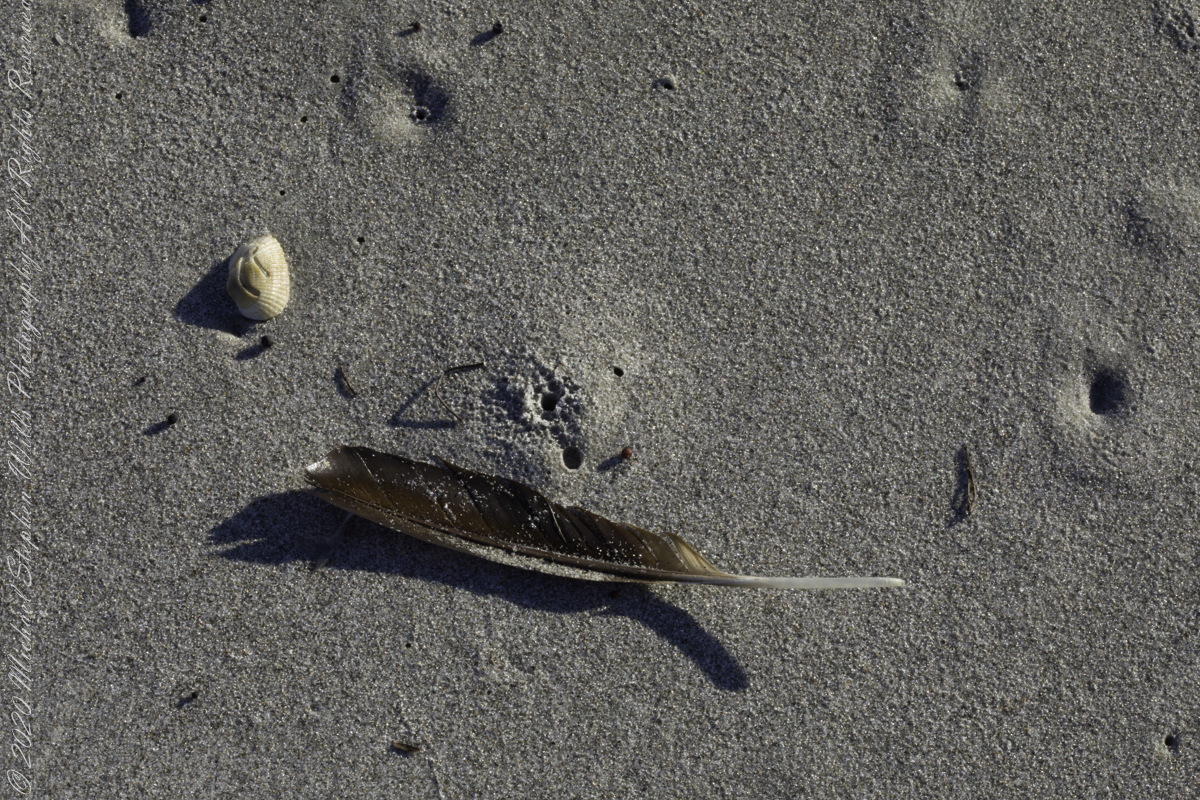
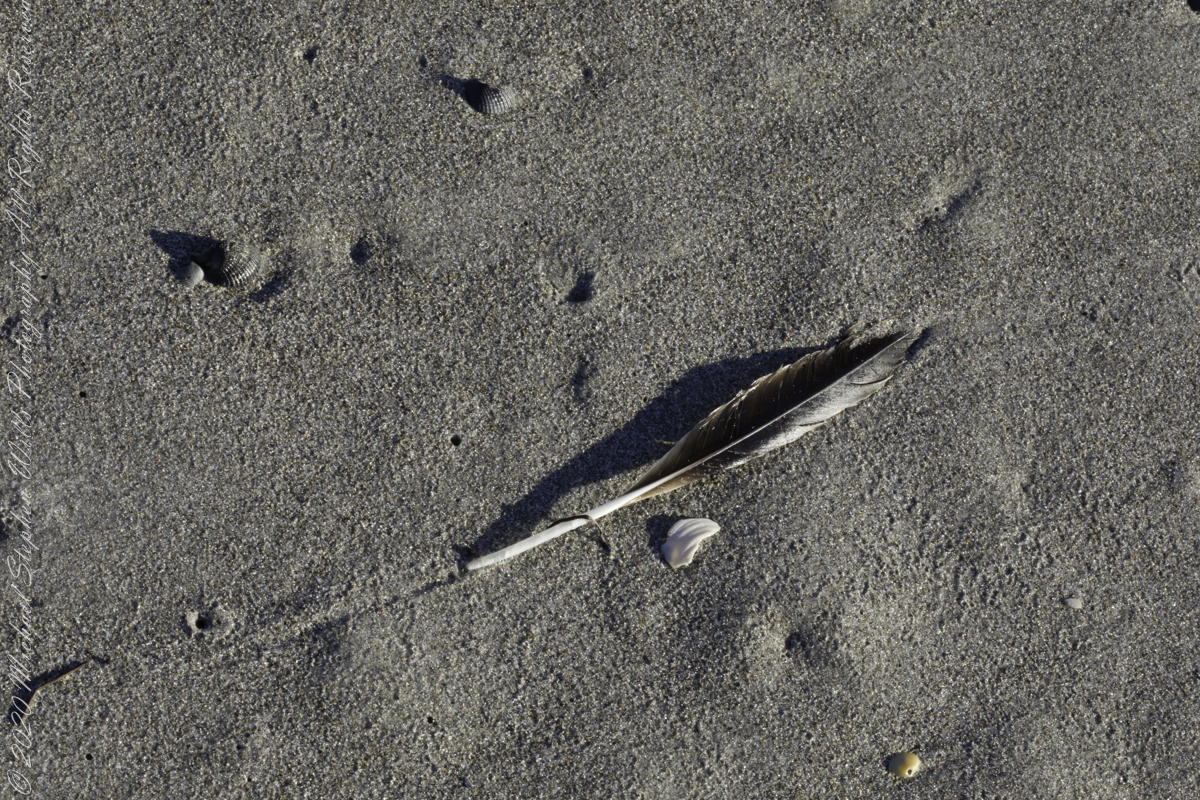
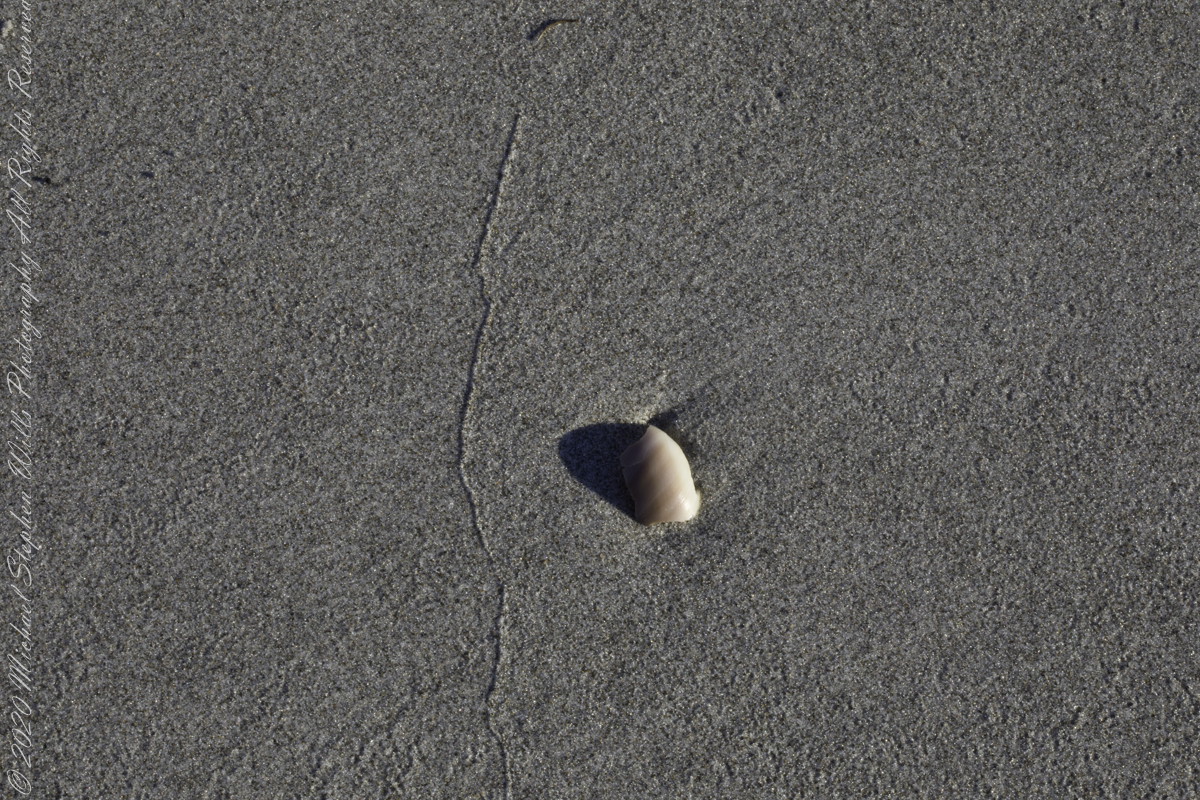
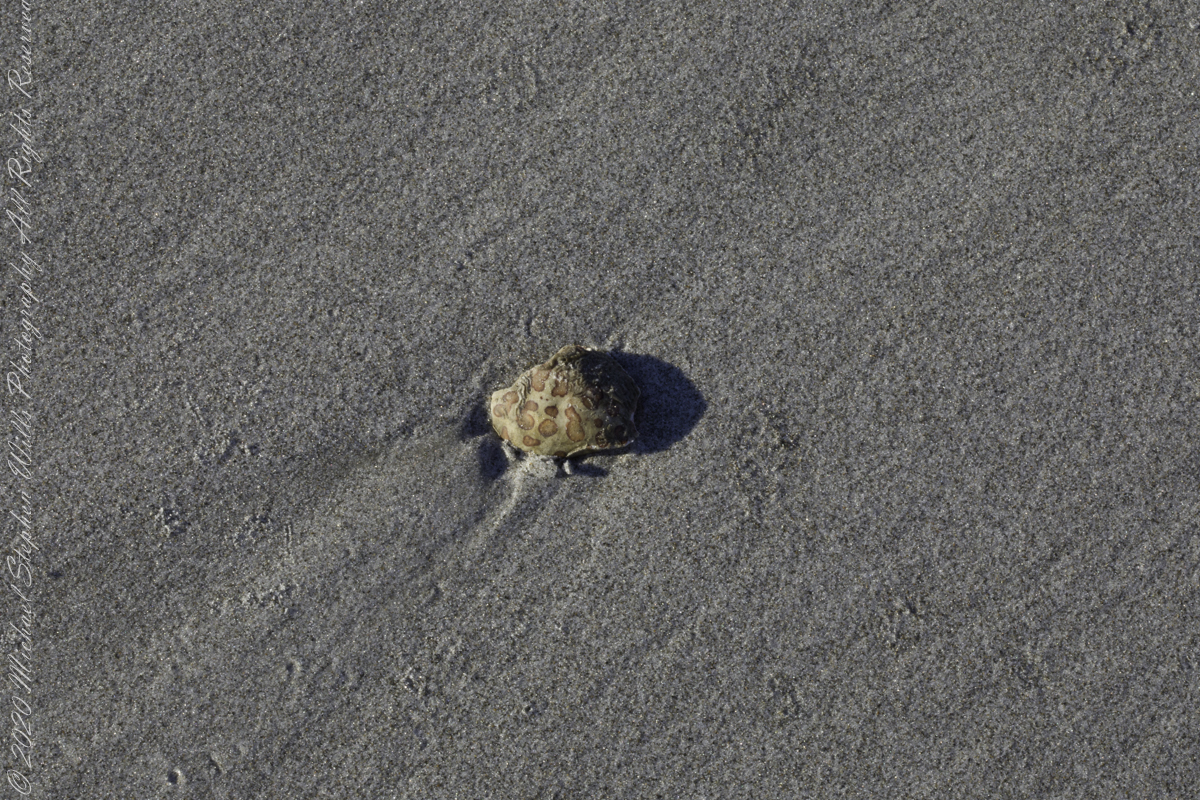
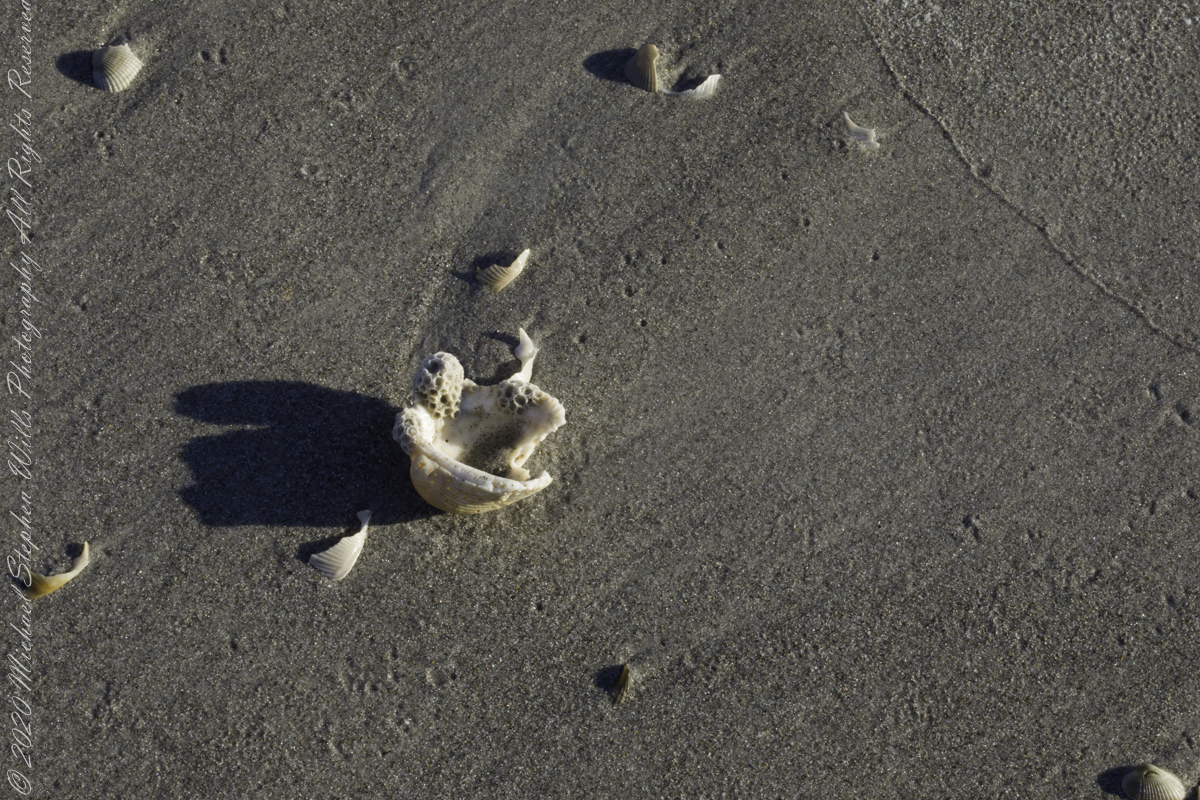
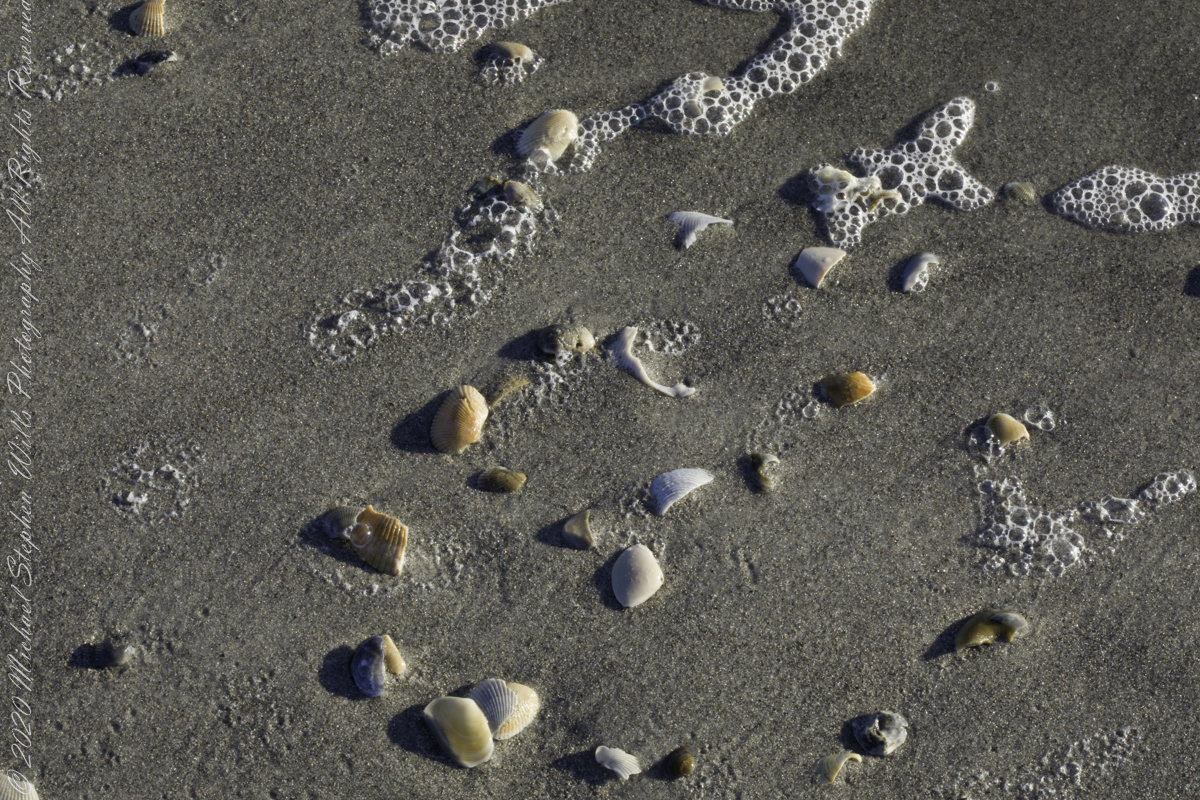
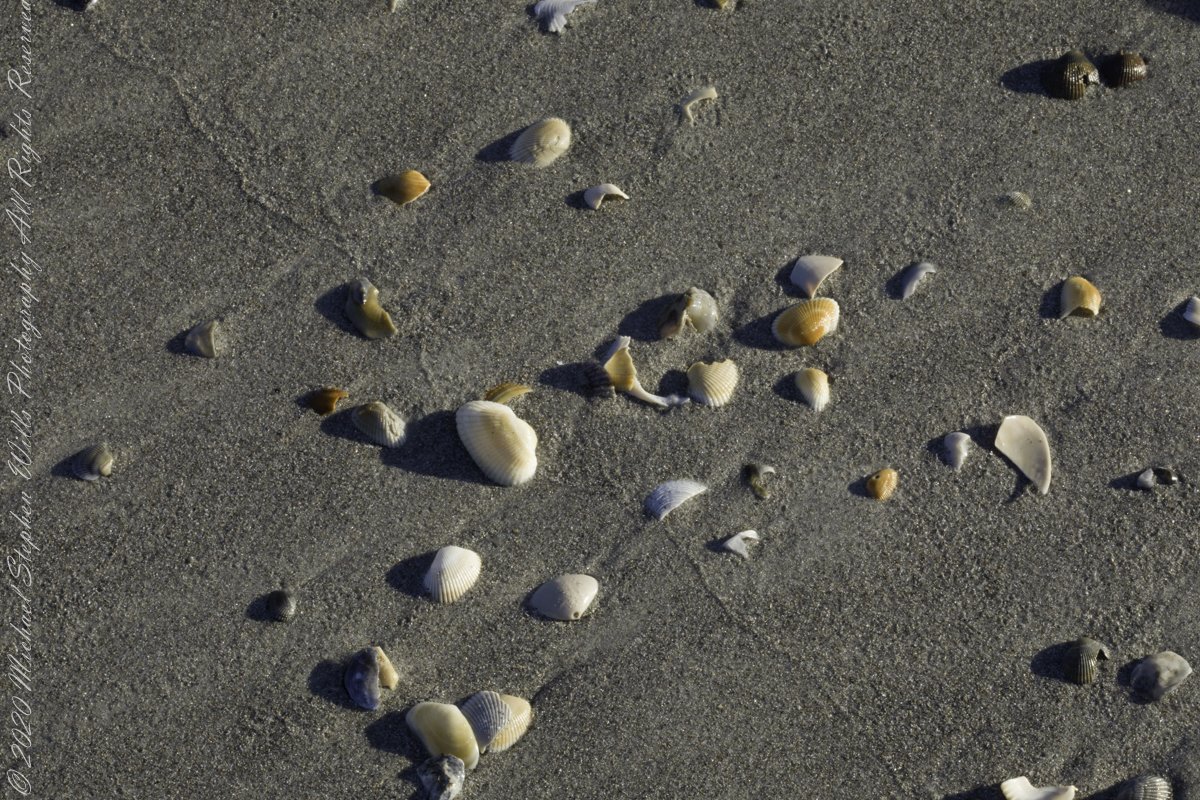
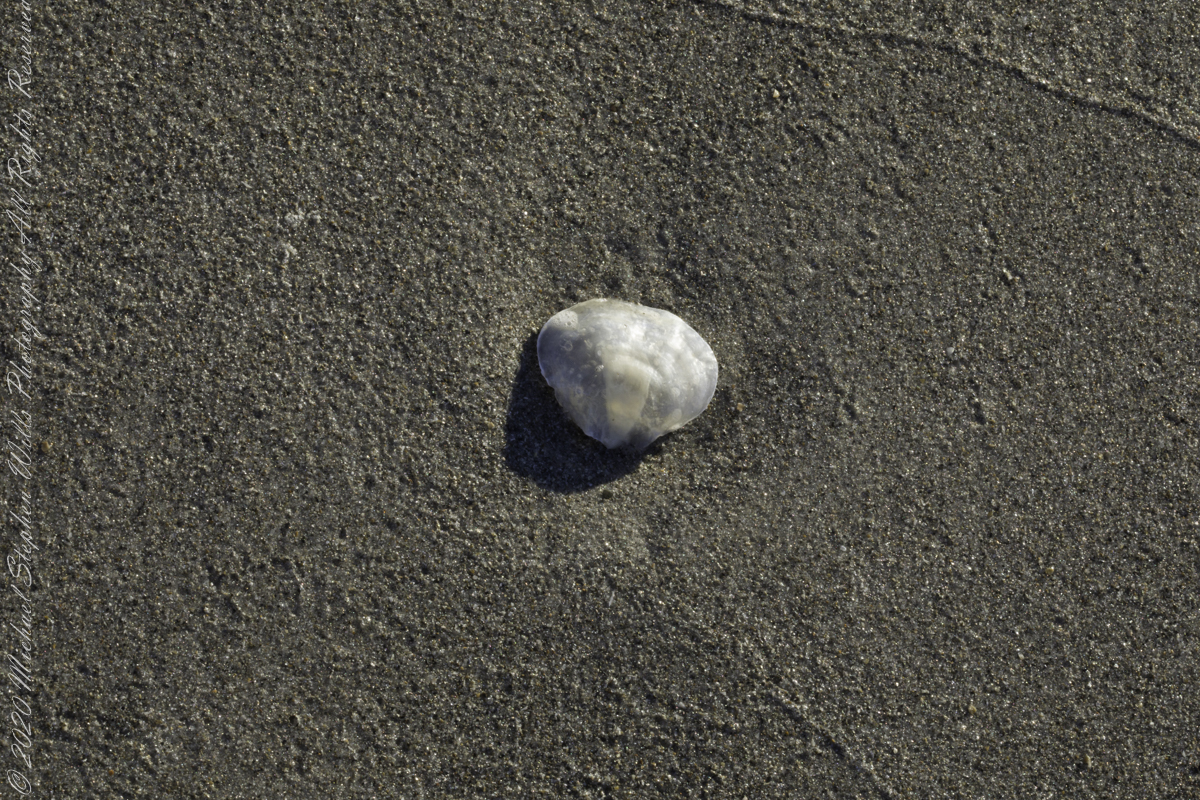
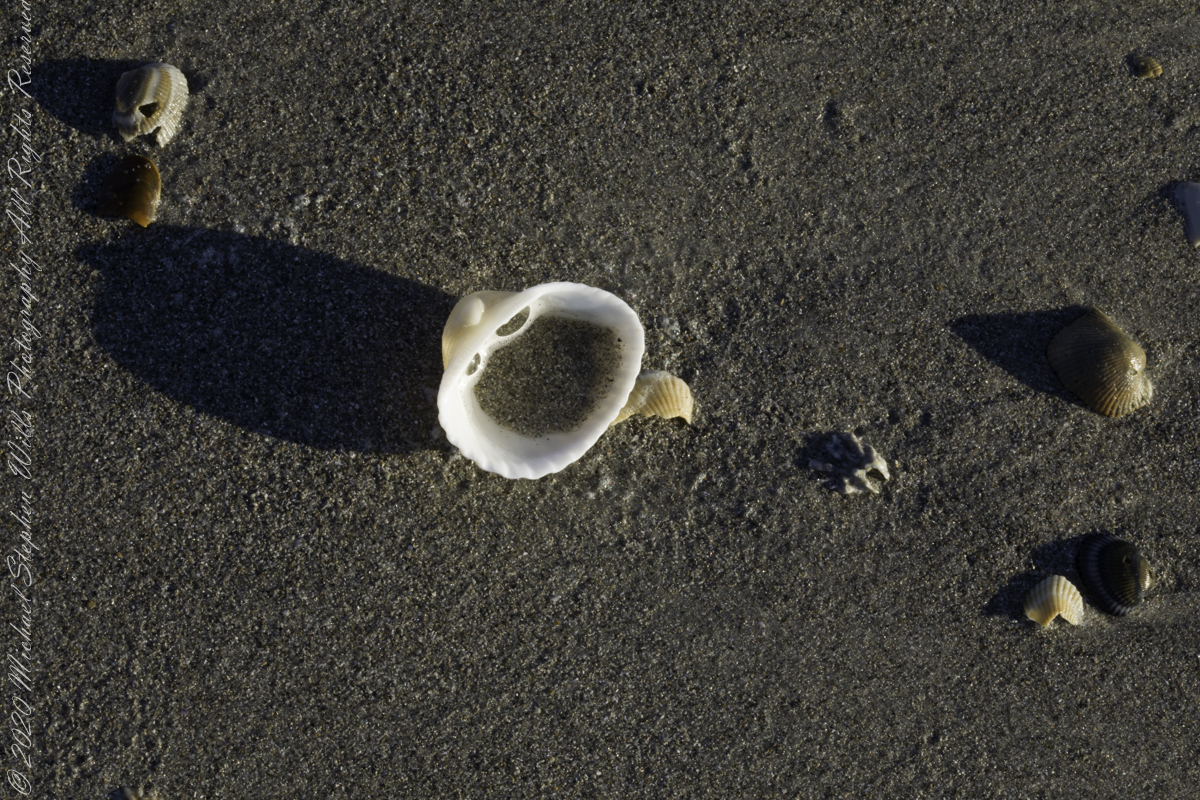
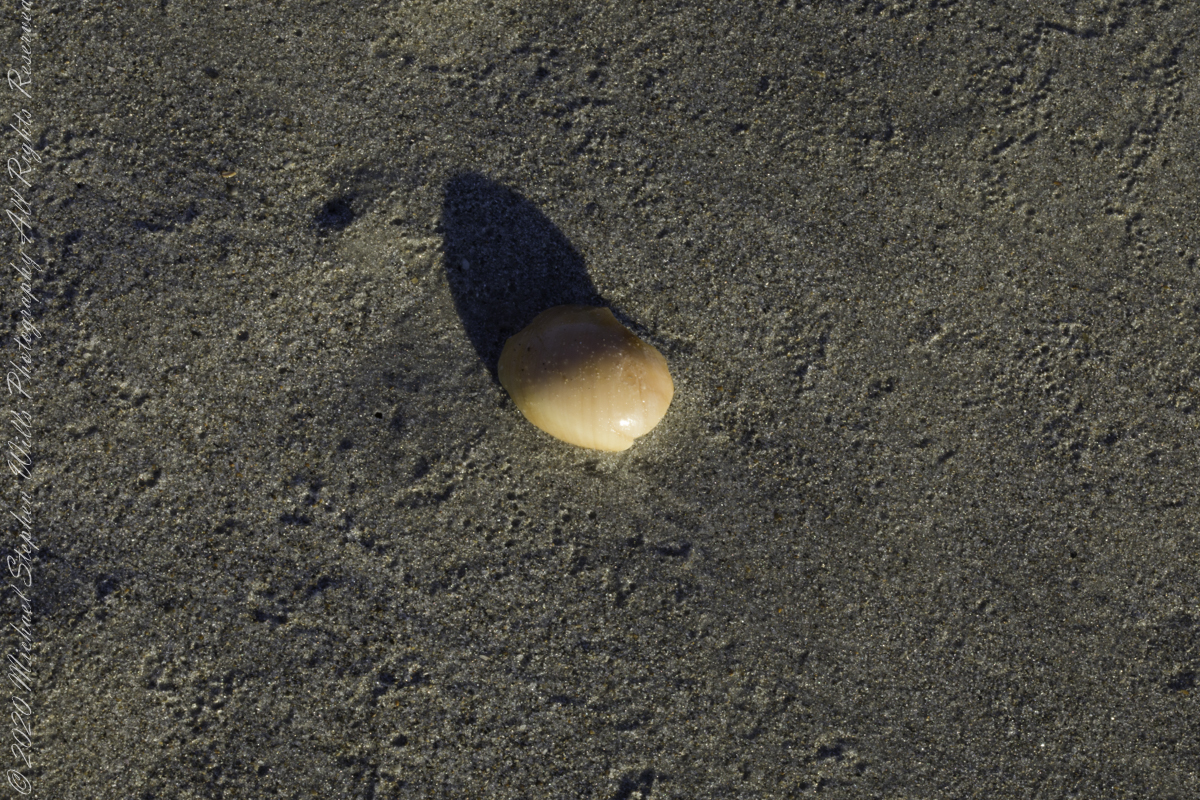
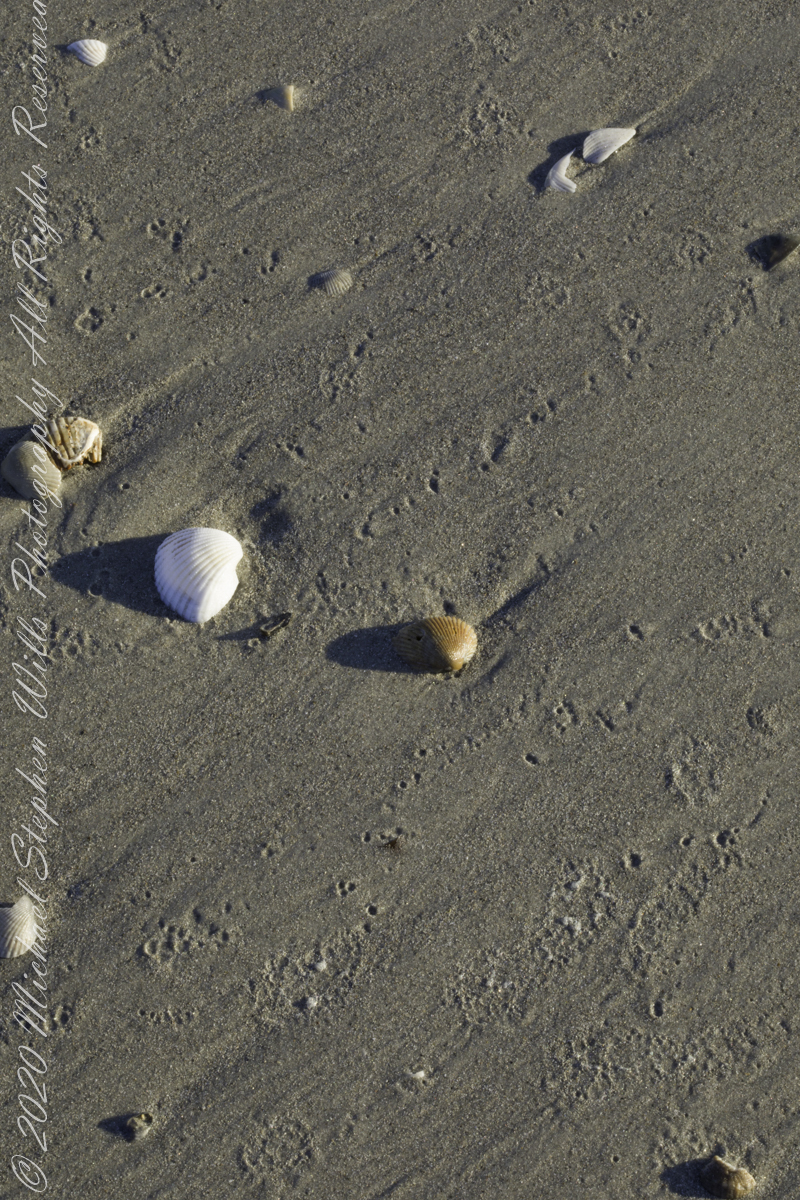
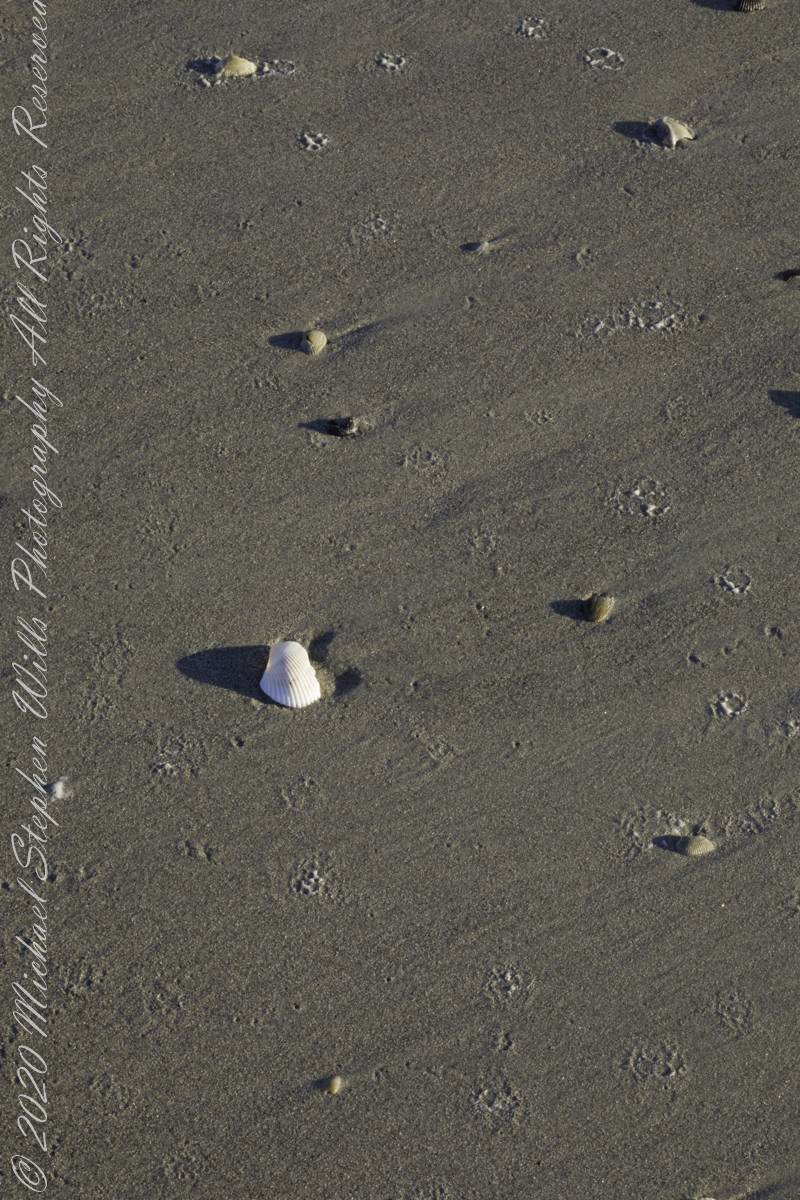
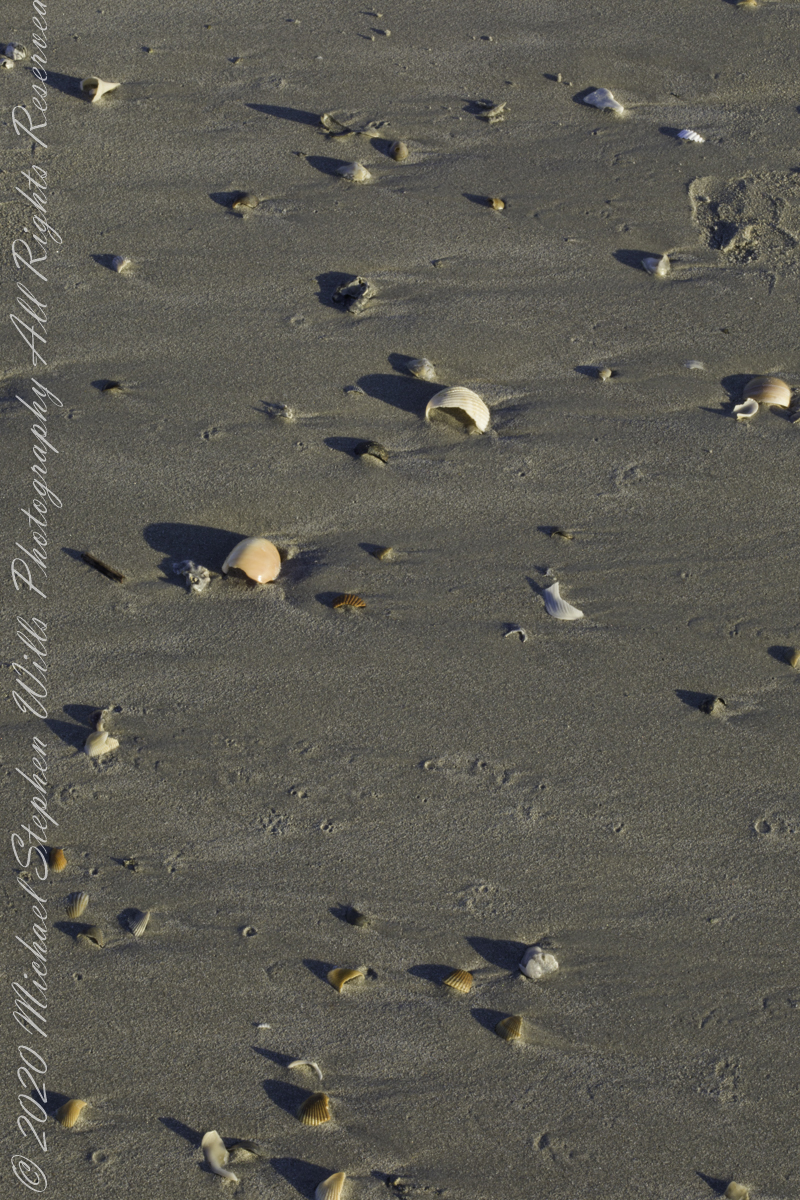
The same day I captured “Rosy Fingers of Dawn” and “Oceans Eons”, these still lives were found using a 100 mm macro lens.
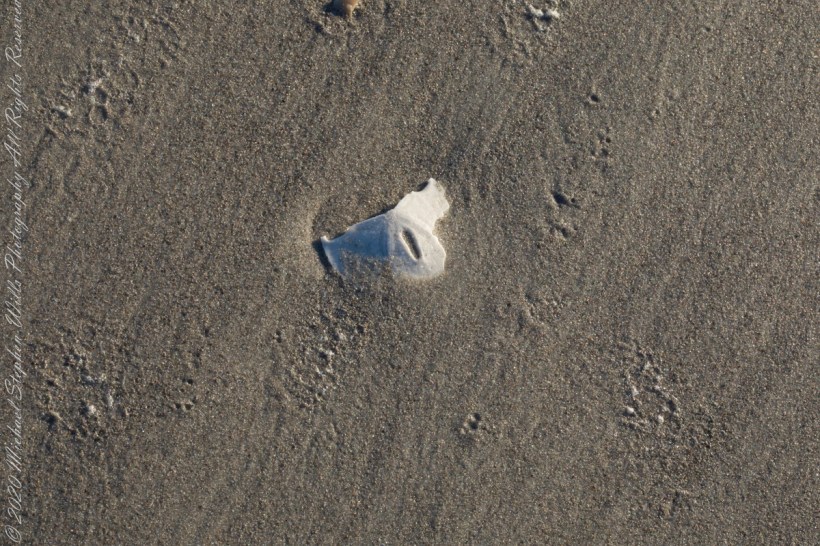
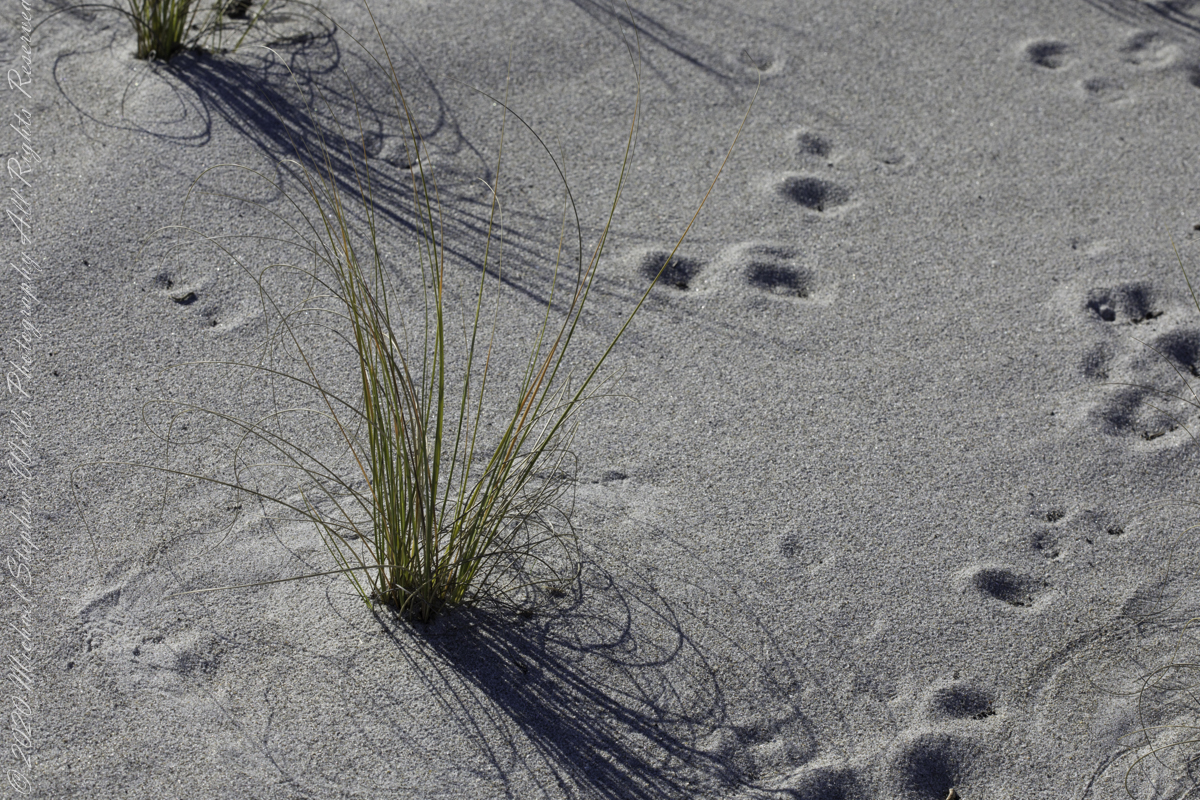
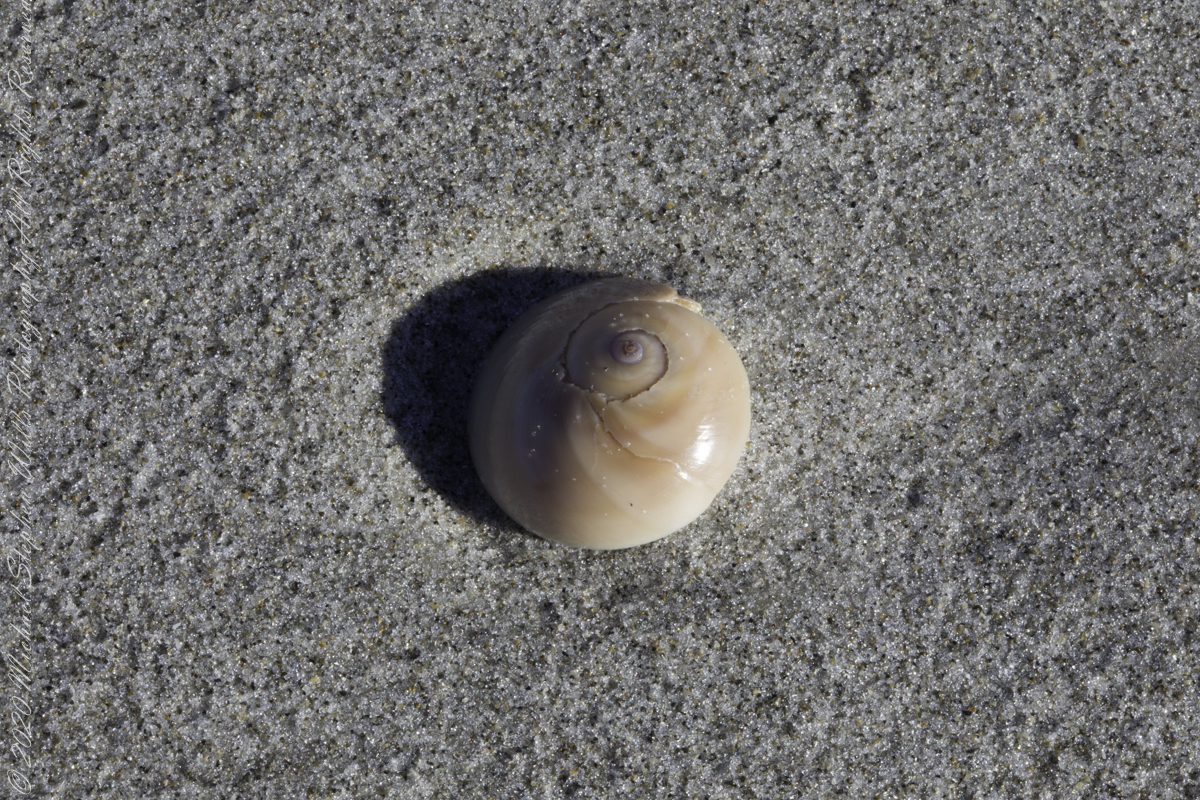
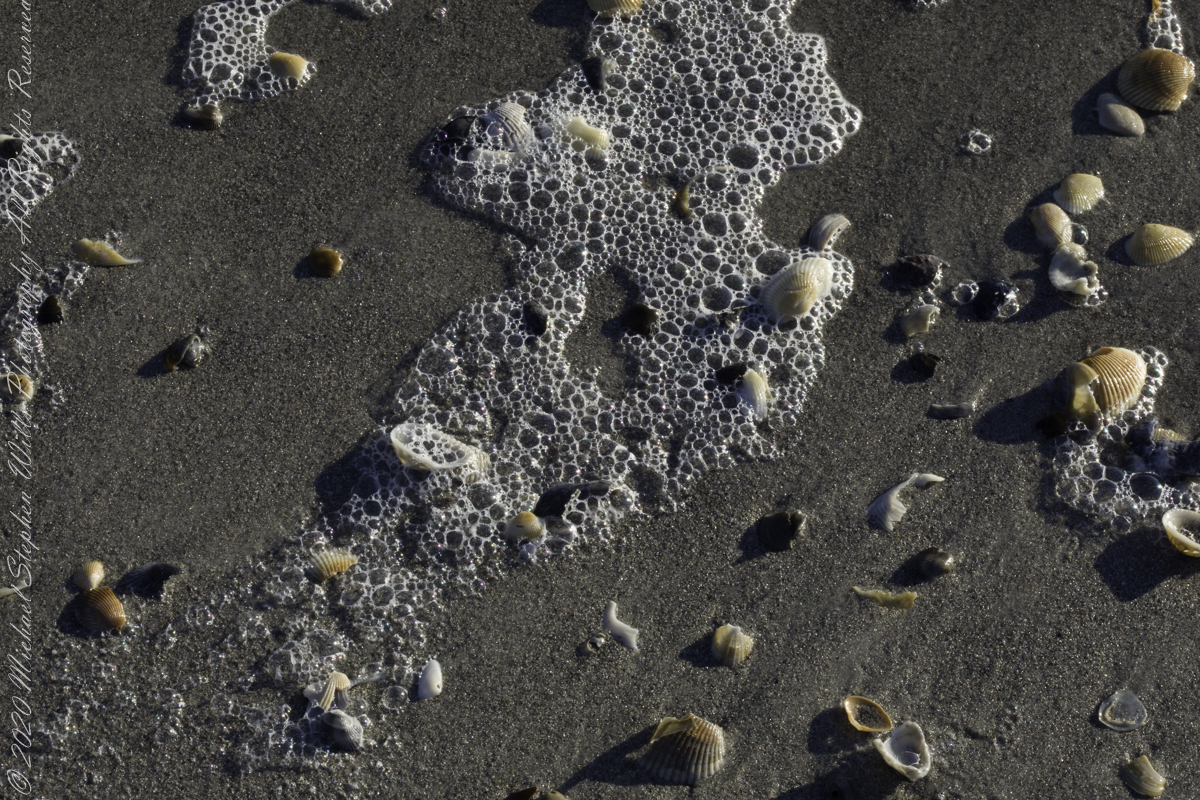
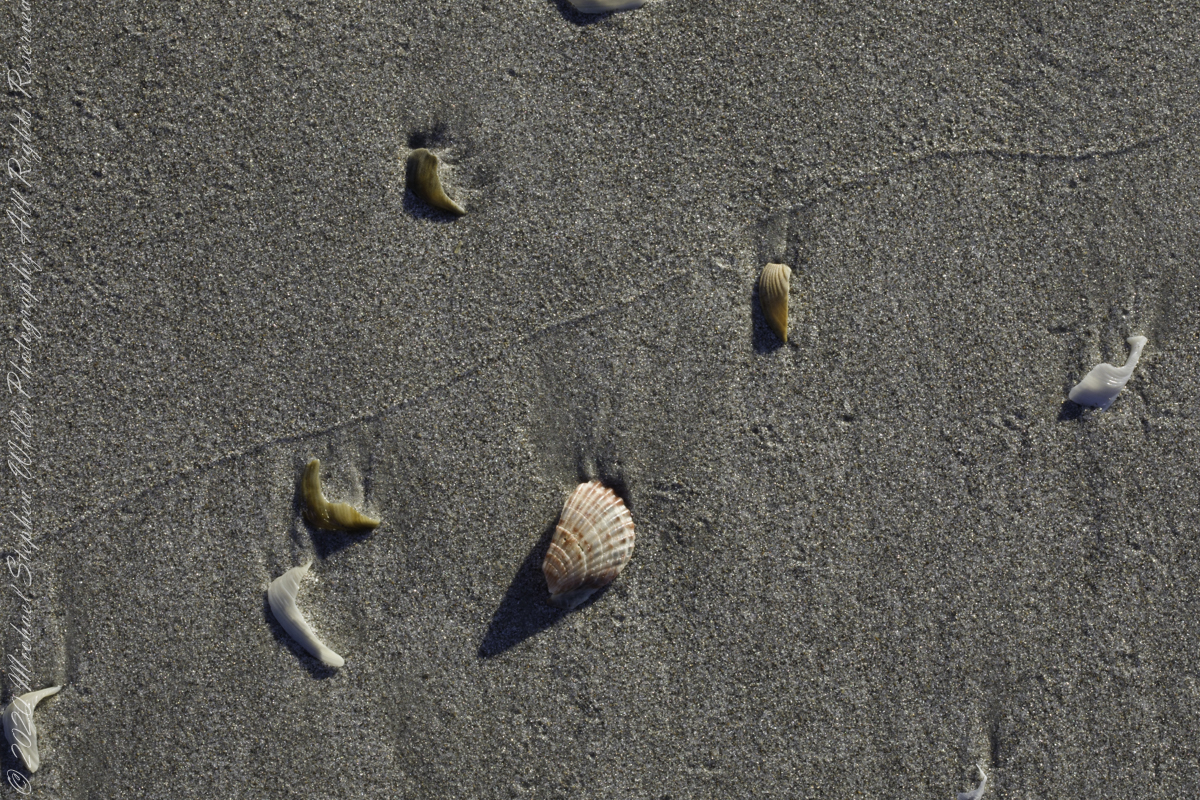
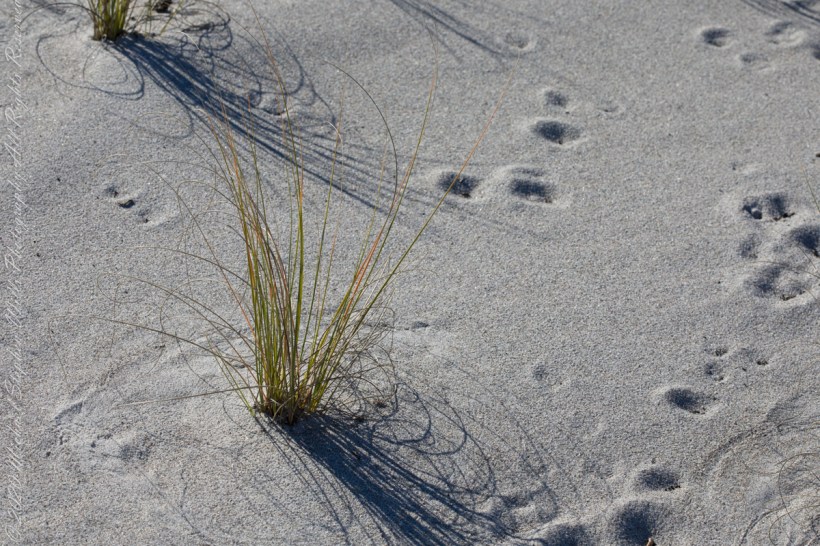
Planting of Sea OatsShell of the Moon Snail (Naticidae) found in the surf washSmall whole and fragments, gastropod shells in fresh sea foamScattered remains of shell left by receding surfScattered remains of shell left by receding surfSmall whole and fragments, gastropod shells in fresh sea foamNacre, also known as mother of pearl, is an organic–inorganic composite material produced by some molluscs as an inner shell layer; it is also the material of which pearls are composed. It is strong, resilient, and iridescent.Shells washed on beach by wavesShells washed on beach by wavesSand Dollar fragment washed on beach by wavesShells washed on beach by wavesThere were submitted for publication by Getty
The following I reserved for our private enjoyment.
Burrow of a creature with breathing hole in the wash wash. Fragment of crab carapace in wave washScattered remains of shell left by receeding surfSmall whole and fragments, gastropod shells in fresh sea foamScattered remains of shell left by receeding surfNacre, also known as mother of pearl, is an organic–inorganic composite material produced by some molluscs as an inner shell layer; it is also the material of which pearls are composed. It is strong, resilient, and iridescent.Shells washed on beach by wavesThis Moon Snail shell fragment was found in surf washShells washed on beach by wavesShells washed on beach by wavesScattered remains of shell left by receeding surf
Copyright 2022 Michael Stephen Wills All Rights Reserved
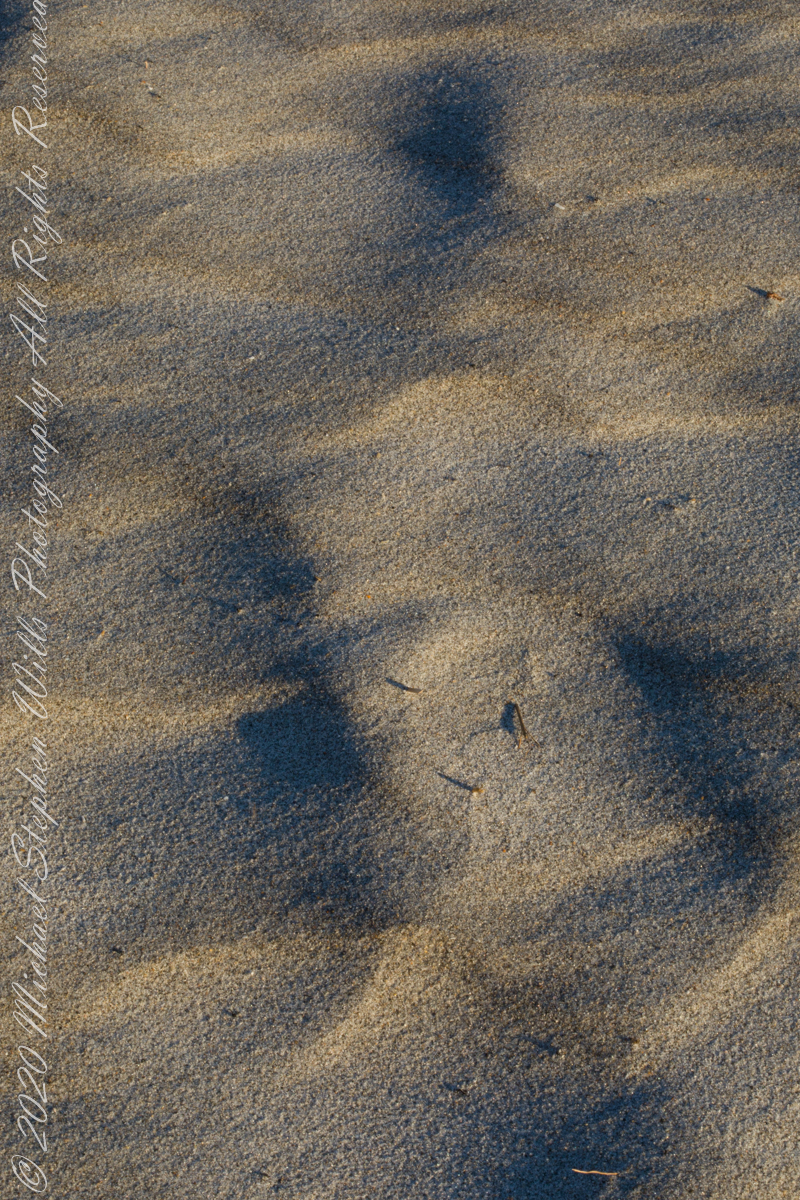
At first glance, Northerners may mistake this for fine snow blown on a bitter wind; but no, this is indeed a north wind, the temperature is above freezing, the material is beach sand. Keeping the sand in place is a concern for Brevard County.
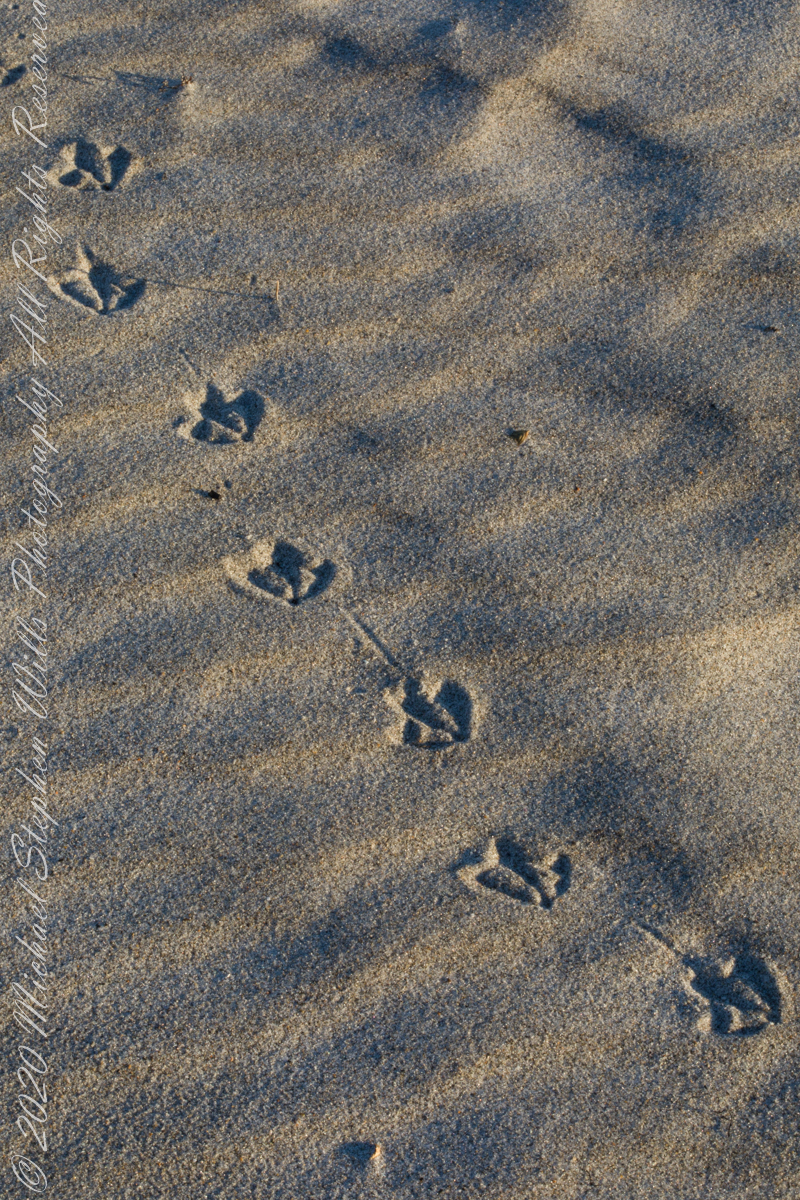
A gull walked through wind textured beach sand, see here in early morning light. Dawn light on beach sand textured by wind, see here in early morning light.
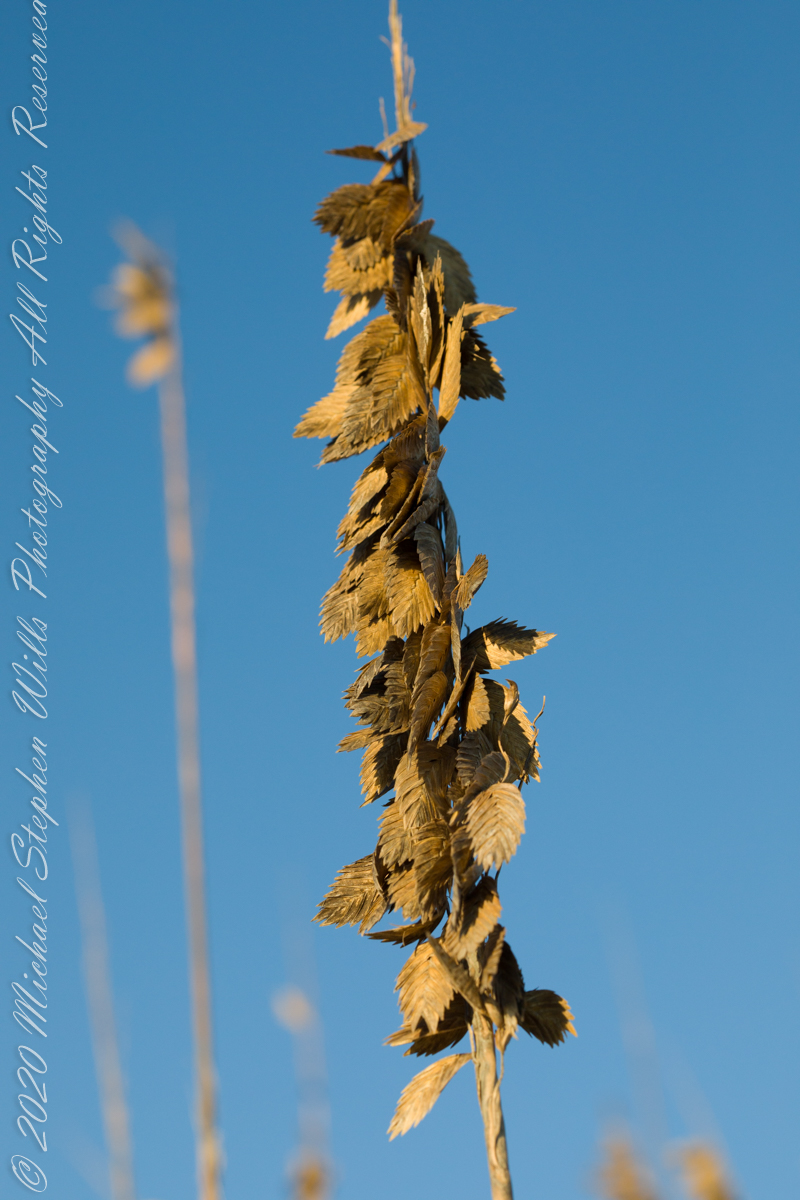
Golden brown infructescences (seed heads) of Sea Oats grass on stalks growing from dunes, seen here in early morning light, are one element of this plant beneficial to the goal of keeping beach sands in place. Tall stalks and broad leaves catch blowing sand. Deep roots hold the plants in place, shallow root systems hold sand in place to form dunes.
Returning after staying away for COVID-19, we found new plantings of Sea Oats by the county.
Planting of Sea Oats.
Copyright 2022 Michael Stephen Wills All Rights Reserved
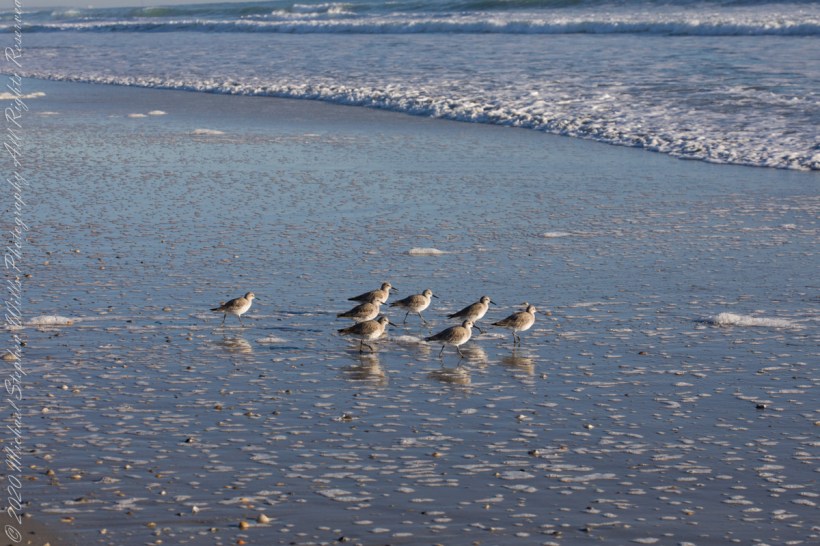
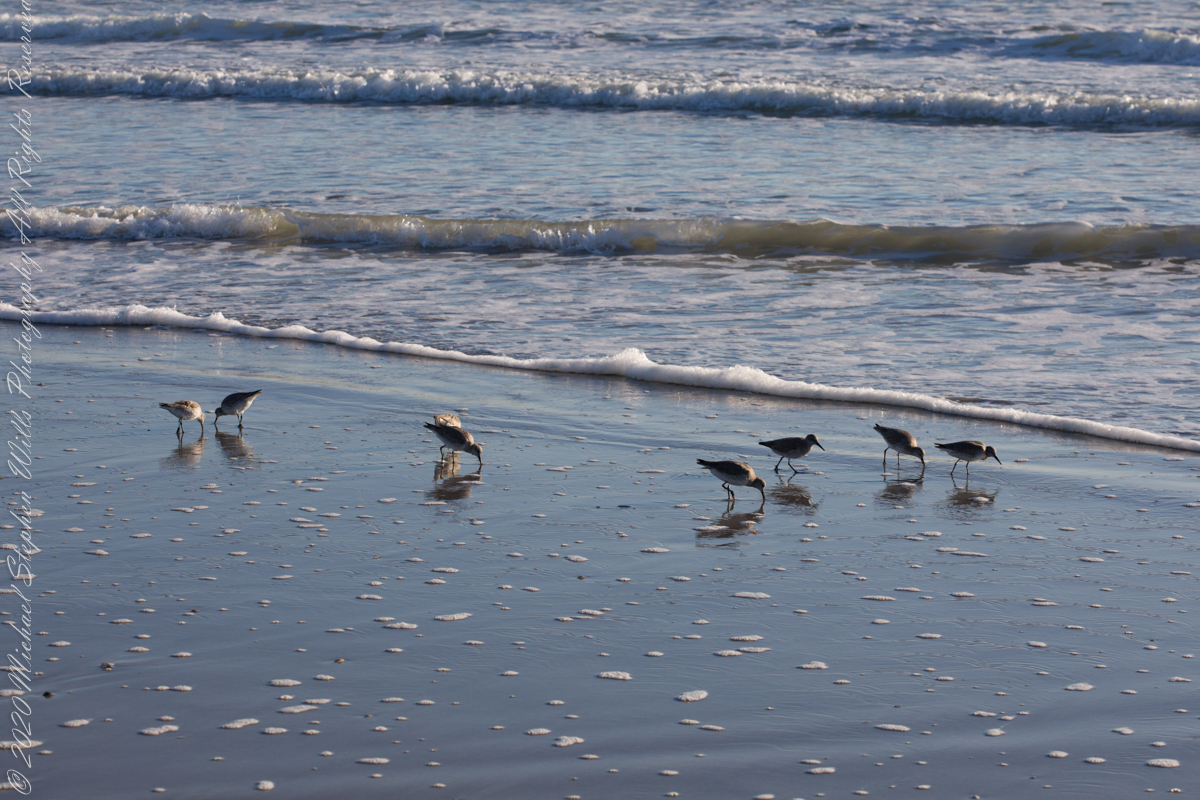
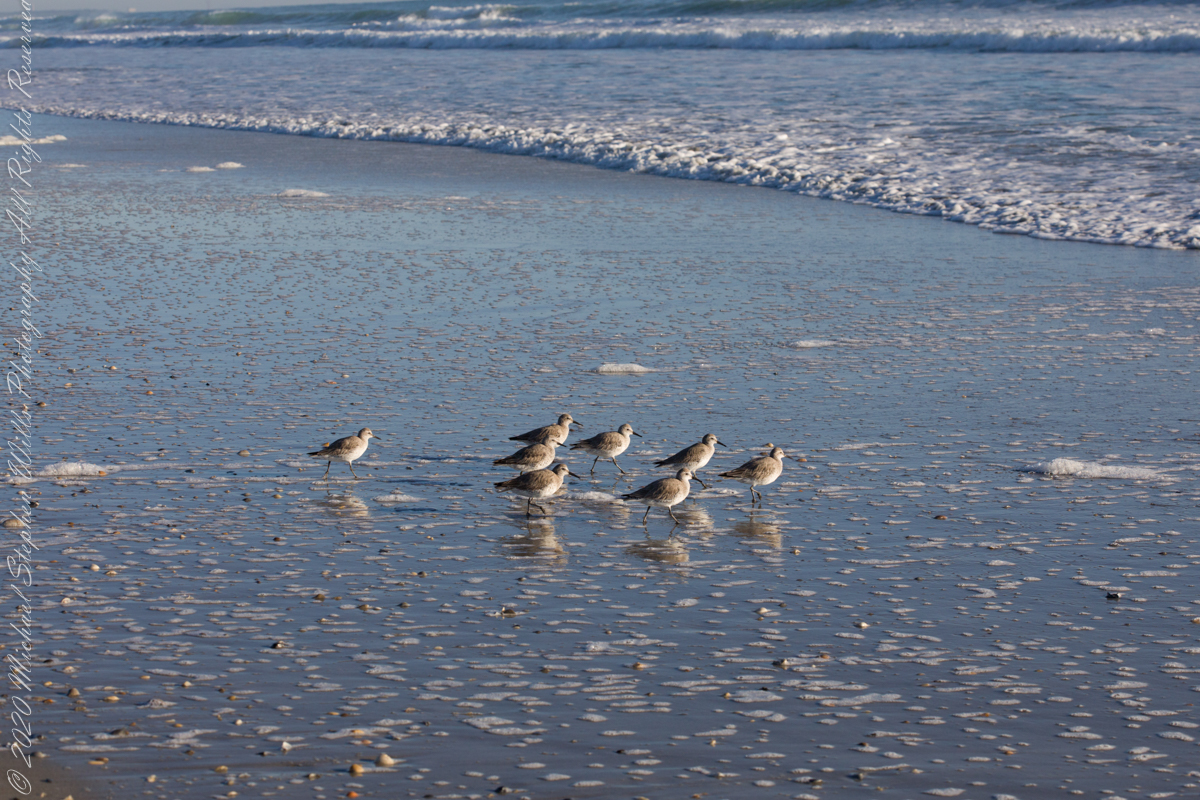
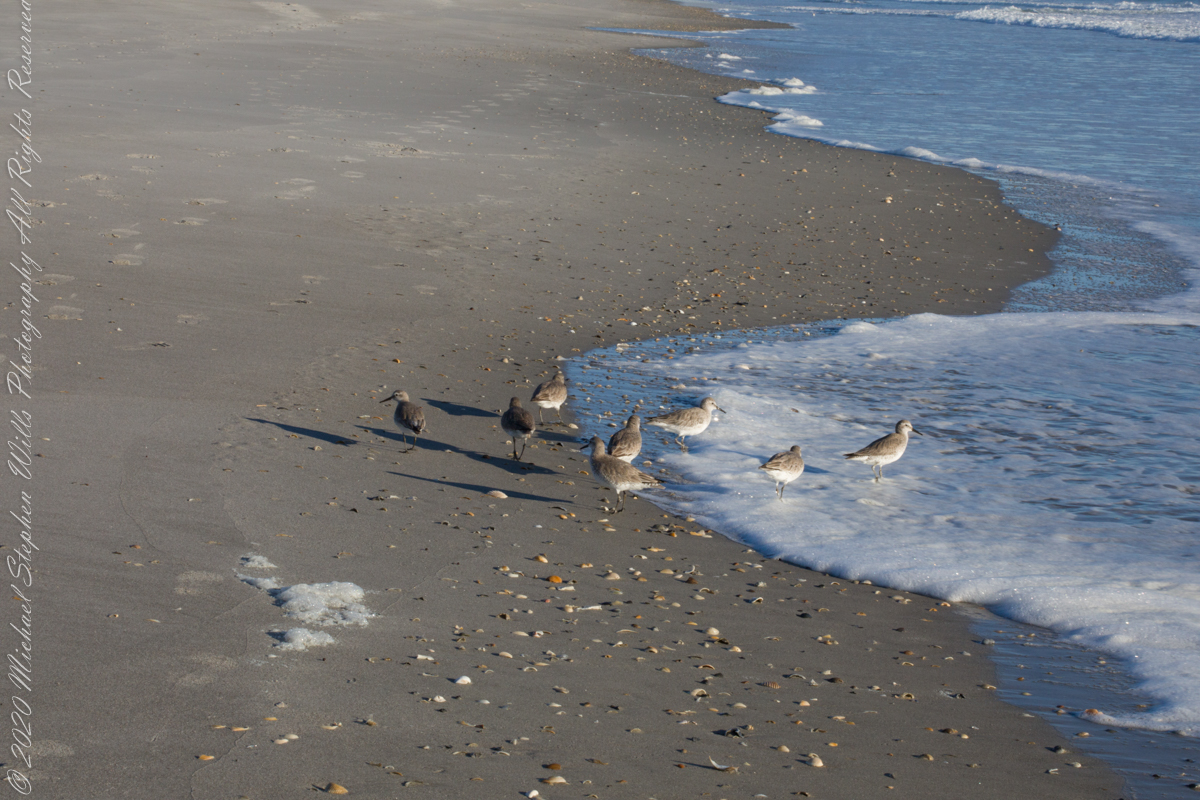
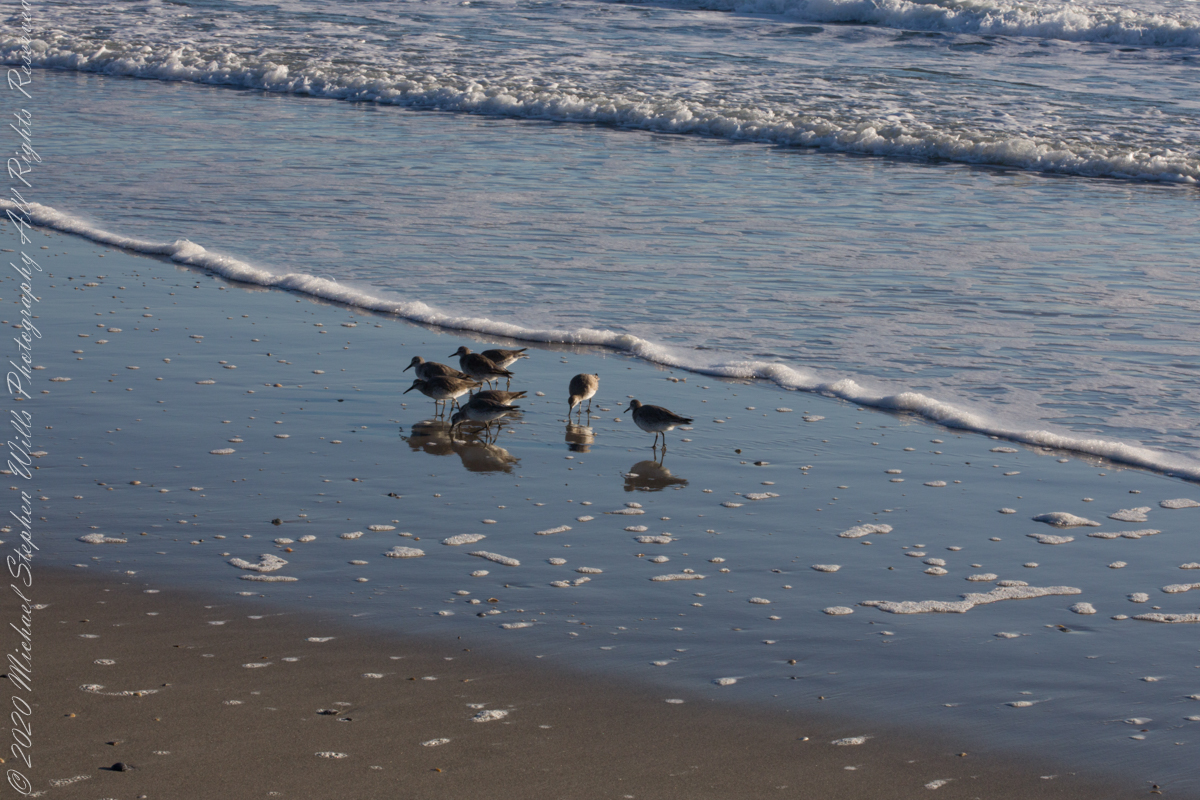
Walking mornings along the beach I encounter, one after the other, solitary sandpipers, called Willets. Before encountering this group, I noticed massed Black Skimmers feeding in the surf and, on the beach, a single, tiny (1/8th of an inch) fish that I scooped up and returned to the surf. My surmise is these several days around the full moon, fish were being birthed and swarming to provide a bounty that brough these solitary Willets together.
Copyright 2022 Michael Stephen Wills All Rights Reserved
When Pam read my post “Black Skimmers Feeding” she asked, “Where is the photo of resting Skimmers?”
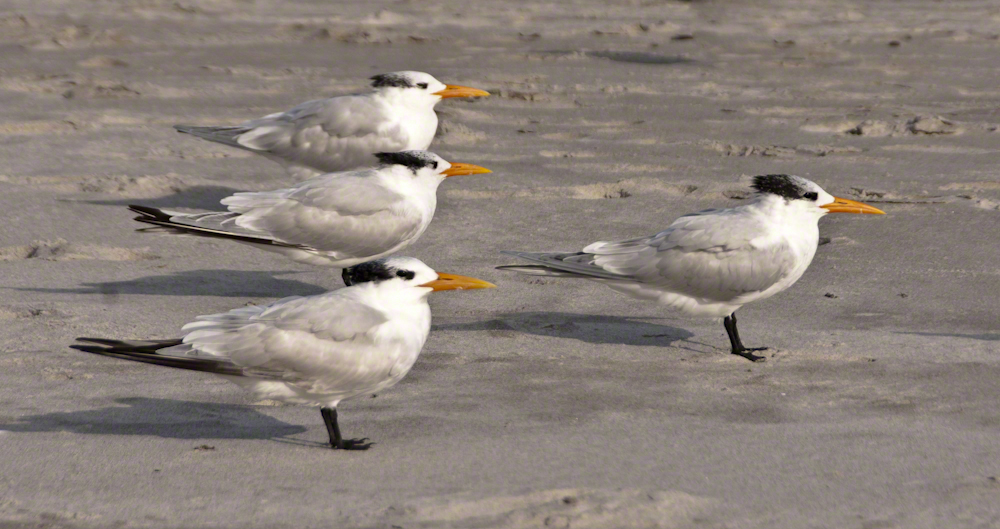
To answer her question, I looked through Cocoa Beach photographs and discovered I did NOT capture the Skimmers resting. Instead, here are a related species, the Royal Tern (scientific name: Thalasseus maximus), whose behavior is similar in that it exclusively feeds from the water. There was a wind that morning and these individuals face into it. These birds are, from a human point of view, well behaved, unlike the opportunistic gull.
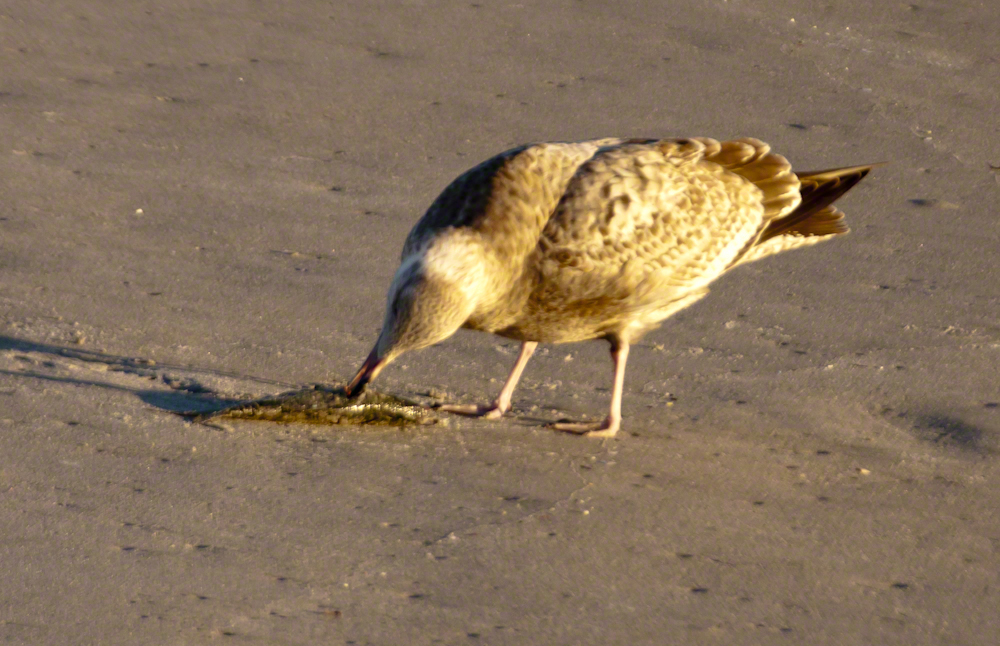
I searched around the web for identification of this gull without success.
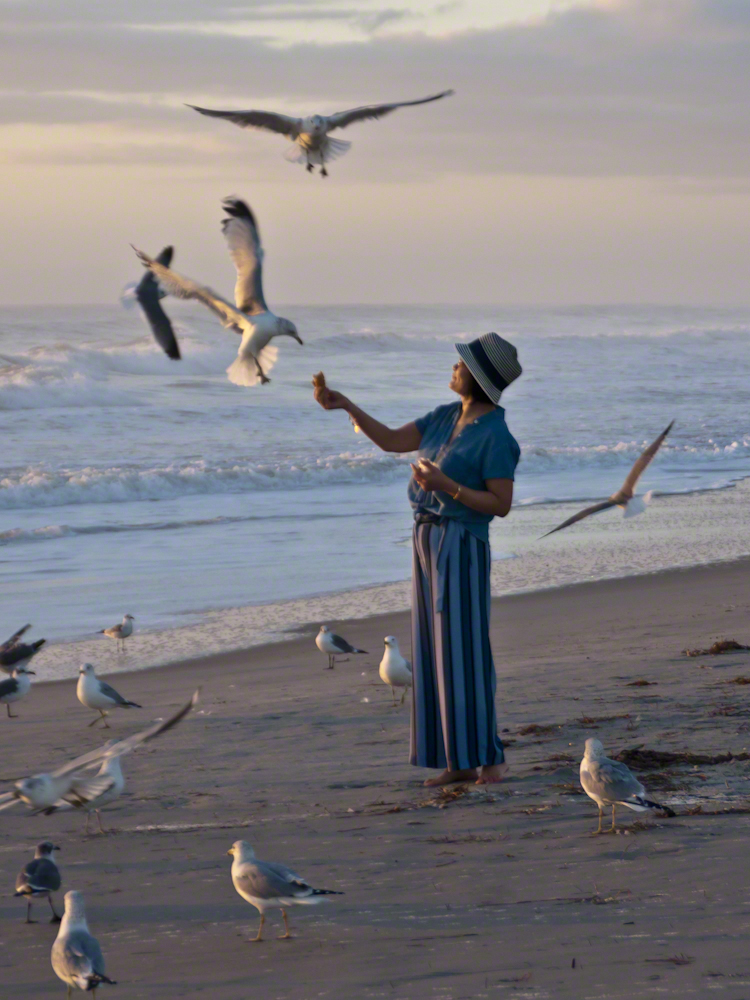
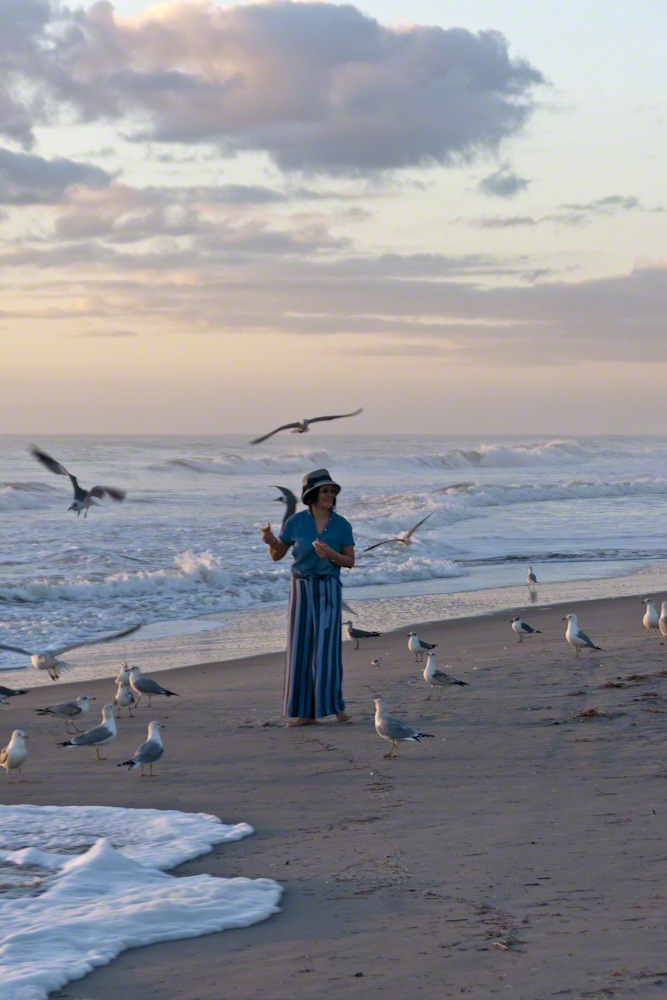
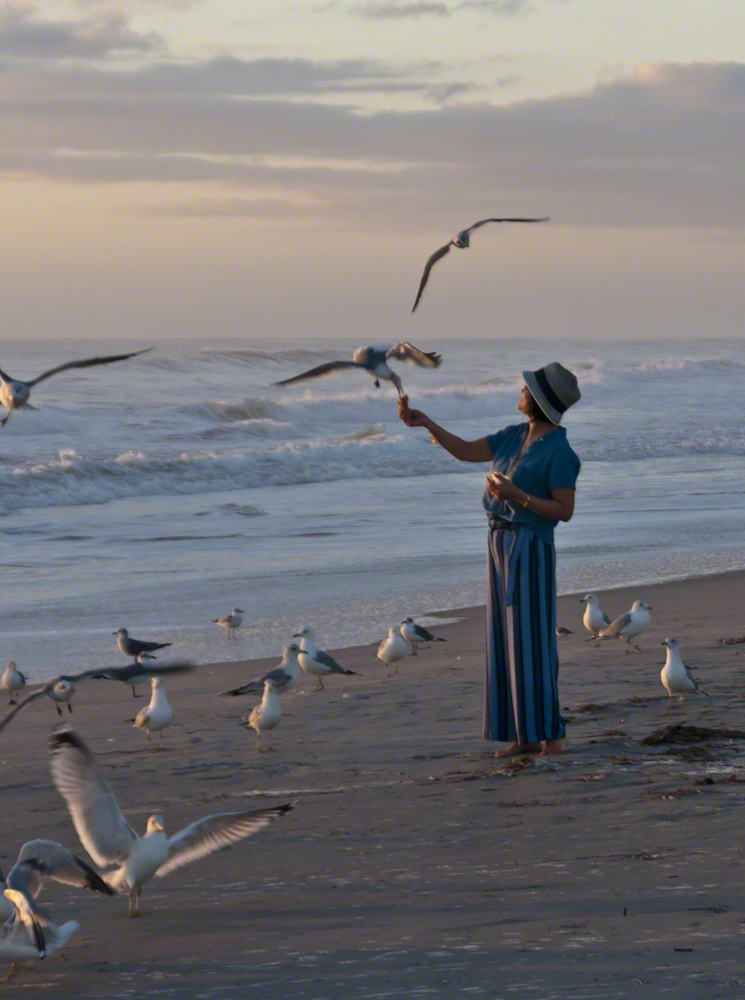
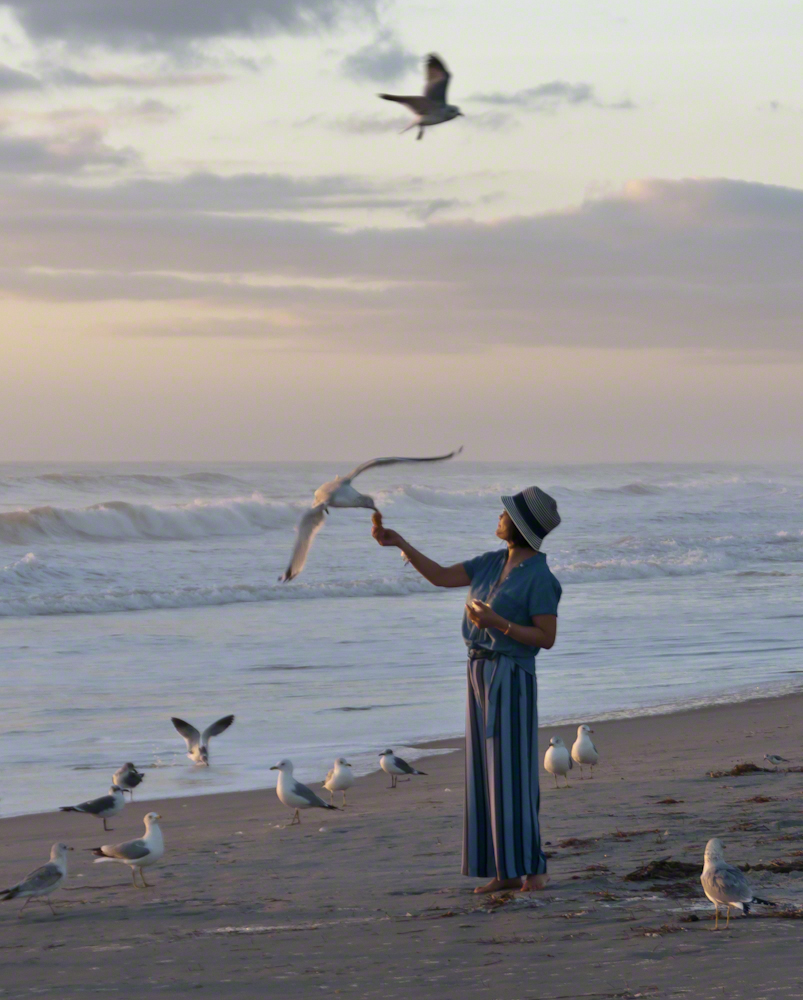
It dines on a dead fish washed up by the surf. In my previous posting I used the word “grifting” to describe gull behavior, again this is from the human point of view. Gulls are notorious for stealing food from unwary beach goers, brazening walking over to unguarded chips (any kind), for instance, grabbing them and flying off. If the chip stash is large, this sets off a nasty feeding frenzy when tens of gulls swoop in and grab.
Here is a series of photographs, demonstrating this behavior.



 Michael Stephen Wills Photography