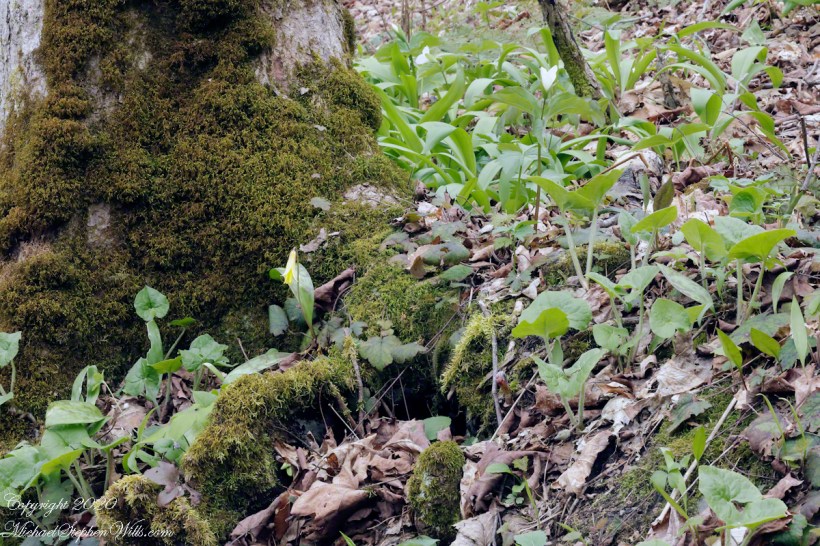
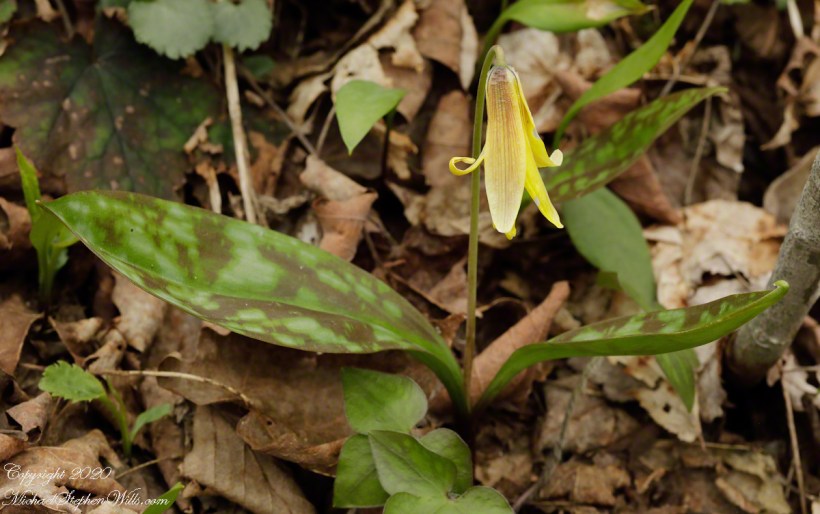
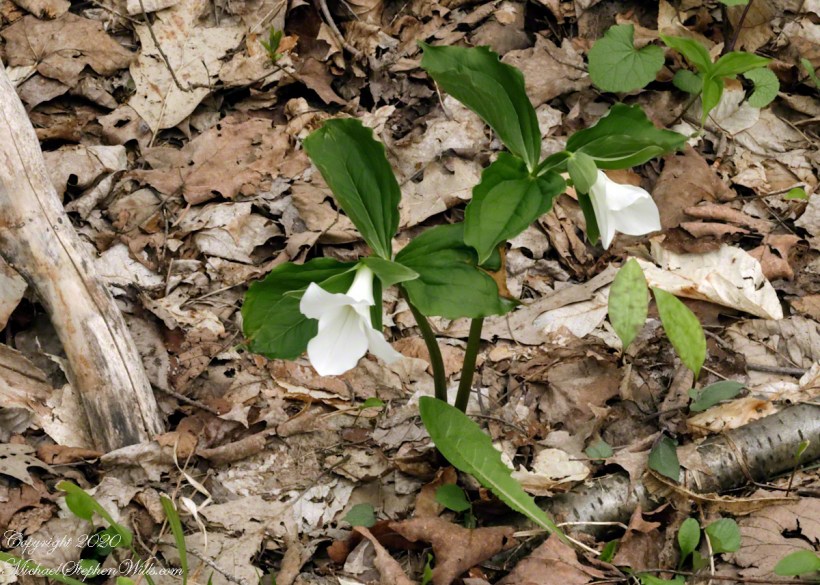
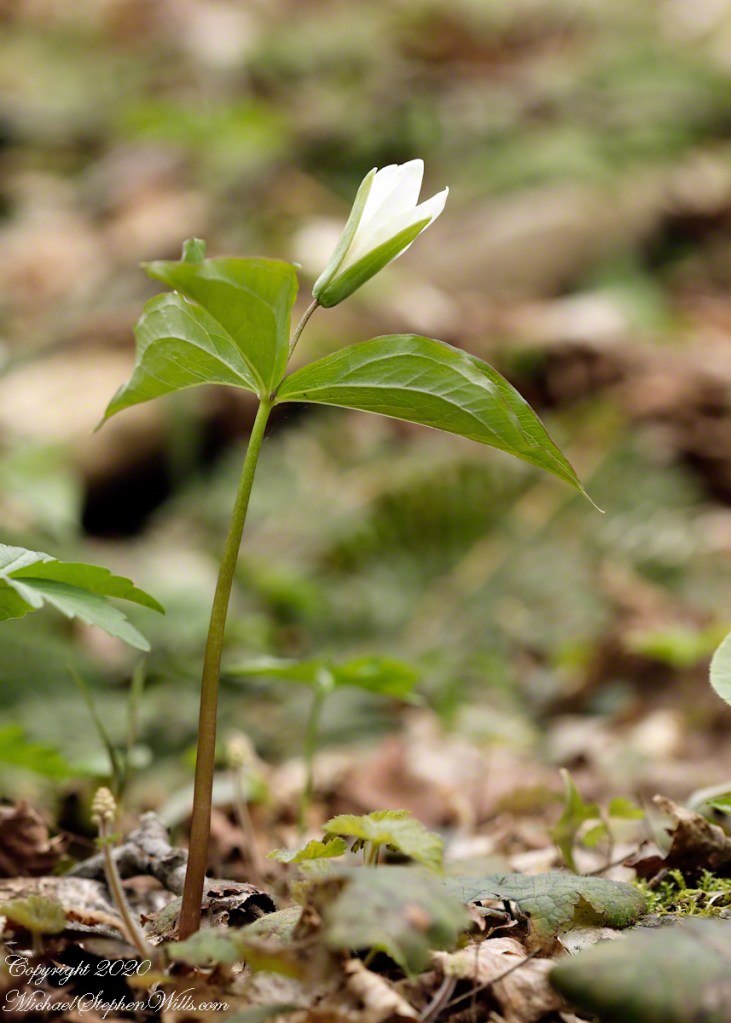
Trout Lily (Erythronium americanum) is named for the mottled brown leaves resembling markings on trout. The source of another name, “Dog Tooth Lily,” is hidden. My surmise was the pointed flower petals, instead it is for the pointed corms, modified stems developing underground and used to store energy to survive winter conditions.
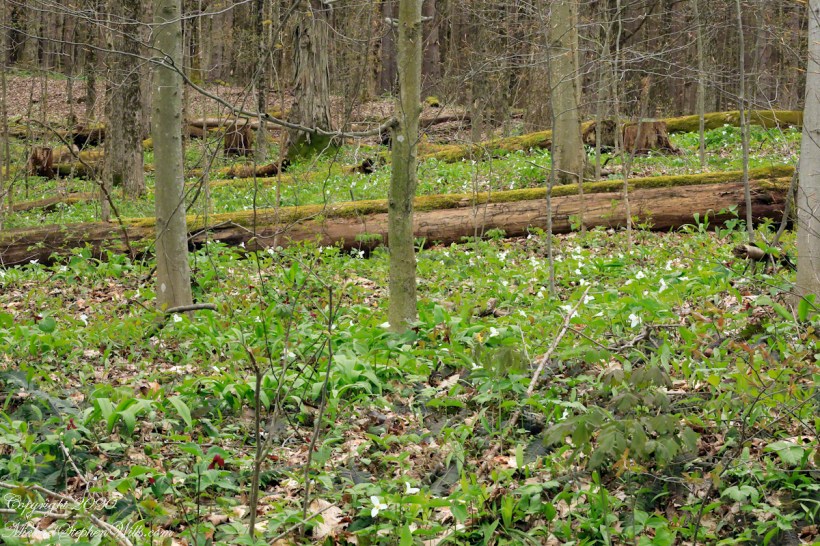
An individual Trout Lily is seen here in an environmental shot, cradled by a tree root, and in a macro with the leaves that suggest the common name. Both shots are from the Canon 100 mm “macro” lens. All photographs in this series are from my May 5, 2020 afternoon visit during the Coronavirus pandemic.
Click photograph for larger image. To do this from WordPress Reader, you need to first click the title of this post to open a new page.
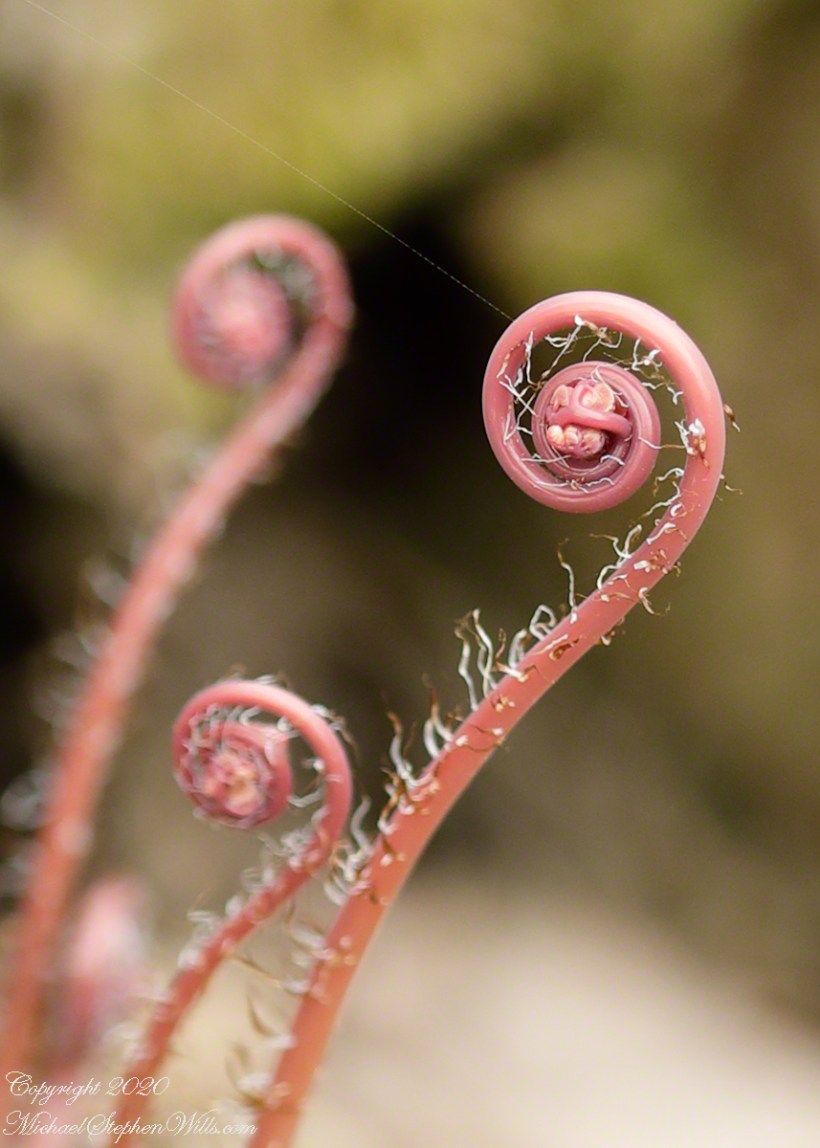
Athumb’s width span for each unfurling stalk of this unidentified colony. Fern? Flowering plant?
Each image is from a Canon 100 mm macro lens, camera mounted on a sturdy studio tripod I carried a few hundred feet to this bank within Fillmore Glen New York State park.
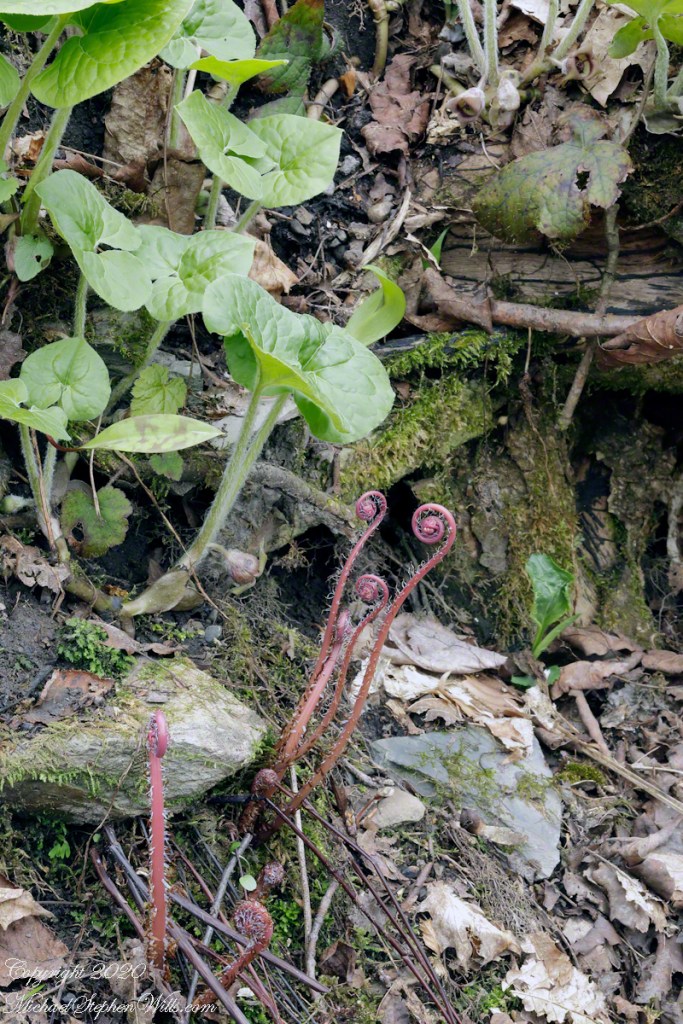
Here is another assignment from the “Fundamentals of Photography” course, to capture a scene at different f-stops, the degree to which the diaphragm is open, to control the width of the lens aperture. Increasing f-stop narrows lens aperture.
For this f32 image, the least possible apeture for this lens, resulting in maximum depth of field. Everything in view is in focus, increasing the visual elements competing for the viewer’s attention. On the other hand, a distracting element is more information about where the plant is thriving.
Click photograph for larger image. To do this from WordPress Reader, you need to first click the title of this post to open a new page.
f32
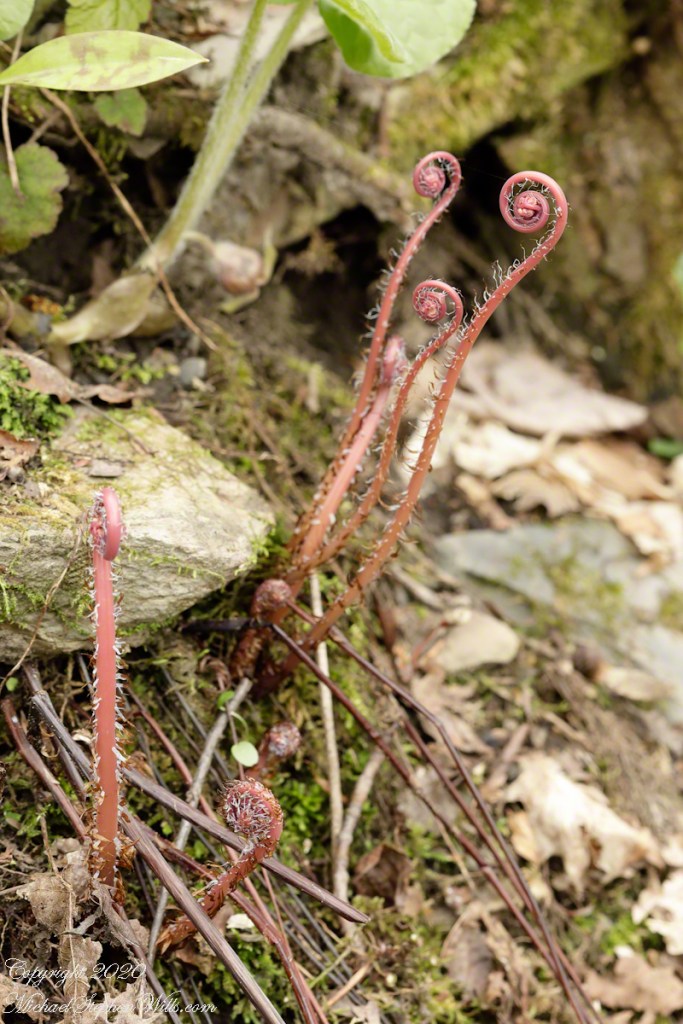
At 8 f-stop aperture is at a midpoint, elements of the background are out of focus, though still recognizable. The sturdy tripod, well situated, enables me to take the exact same view, changing only the f-stop (and associated shutter speed, the higher the f-stop the slower the shutter speed. As the aperture decreases, less light enters the camera and more time is required to collect enough light to expose the digital media. Slower shutter speed means more time for spring breezes to move the delicately balanced plant stalk, resulting a blur for a subject otherwise in focus.
In this image I removed all but the immediate surroundings of the red stalks.
f8
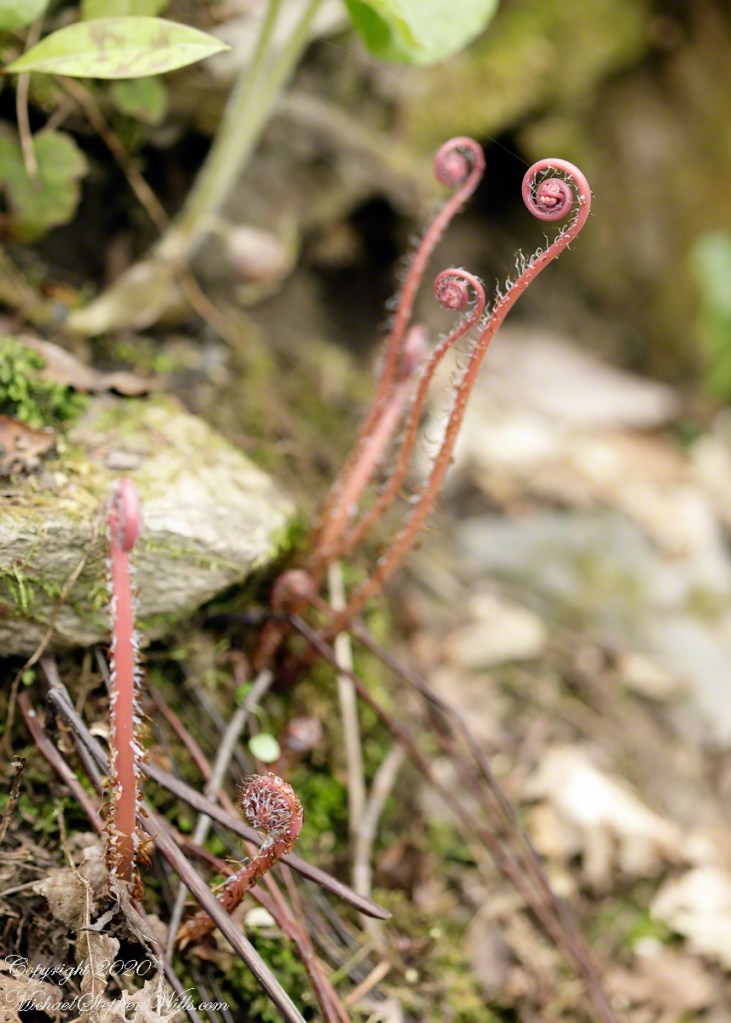
At f2.8 the diaphram is wide open, a maximum amount of light enters the camera and shutter speed is higher as well. Less of the image is in focus, a single subject is in sharp relief. Prior to cropping more than one stalk is in focus, competing for attention.
f2.8
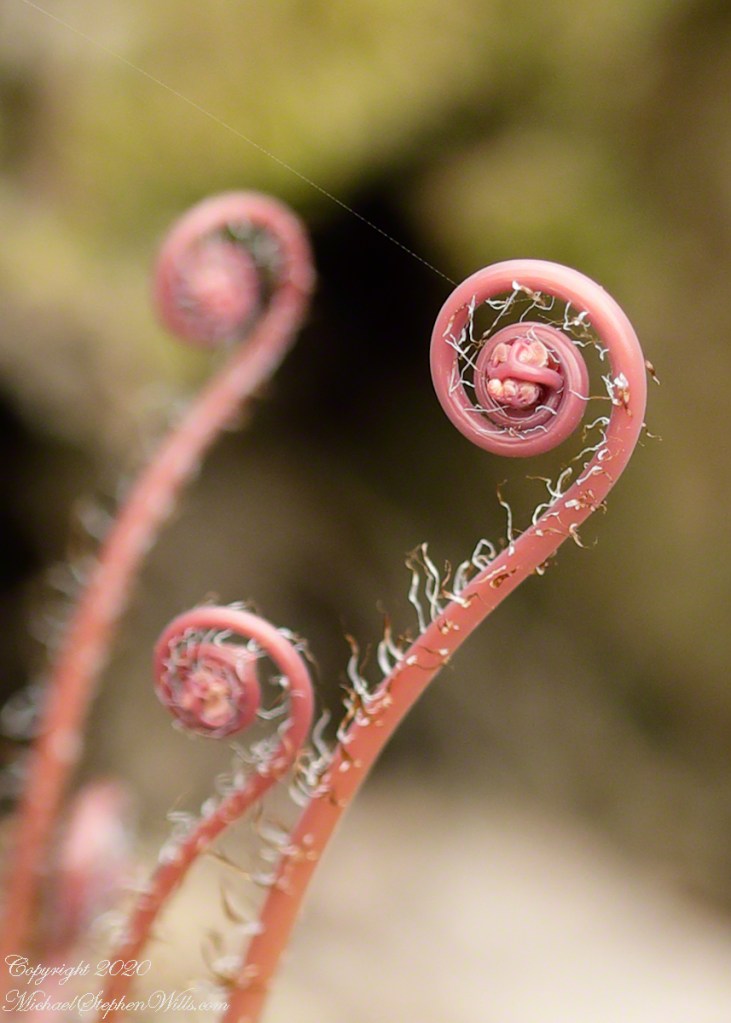
After cropping a single stalk is the image subject, reminding me of swirling galaxies. The drawback is reduction in image size: 30 reduced to 1.3 (6,744 to 1,371). I needed to reposition the tripod and camera for a closer shot of the circinate scene elements and a image with a higher resolution of this fascinating episode in the life of a plant. I am tempted to visit Malloryville where large ferns unfurl.



 Michael Stephen Wills Photography