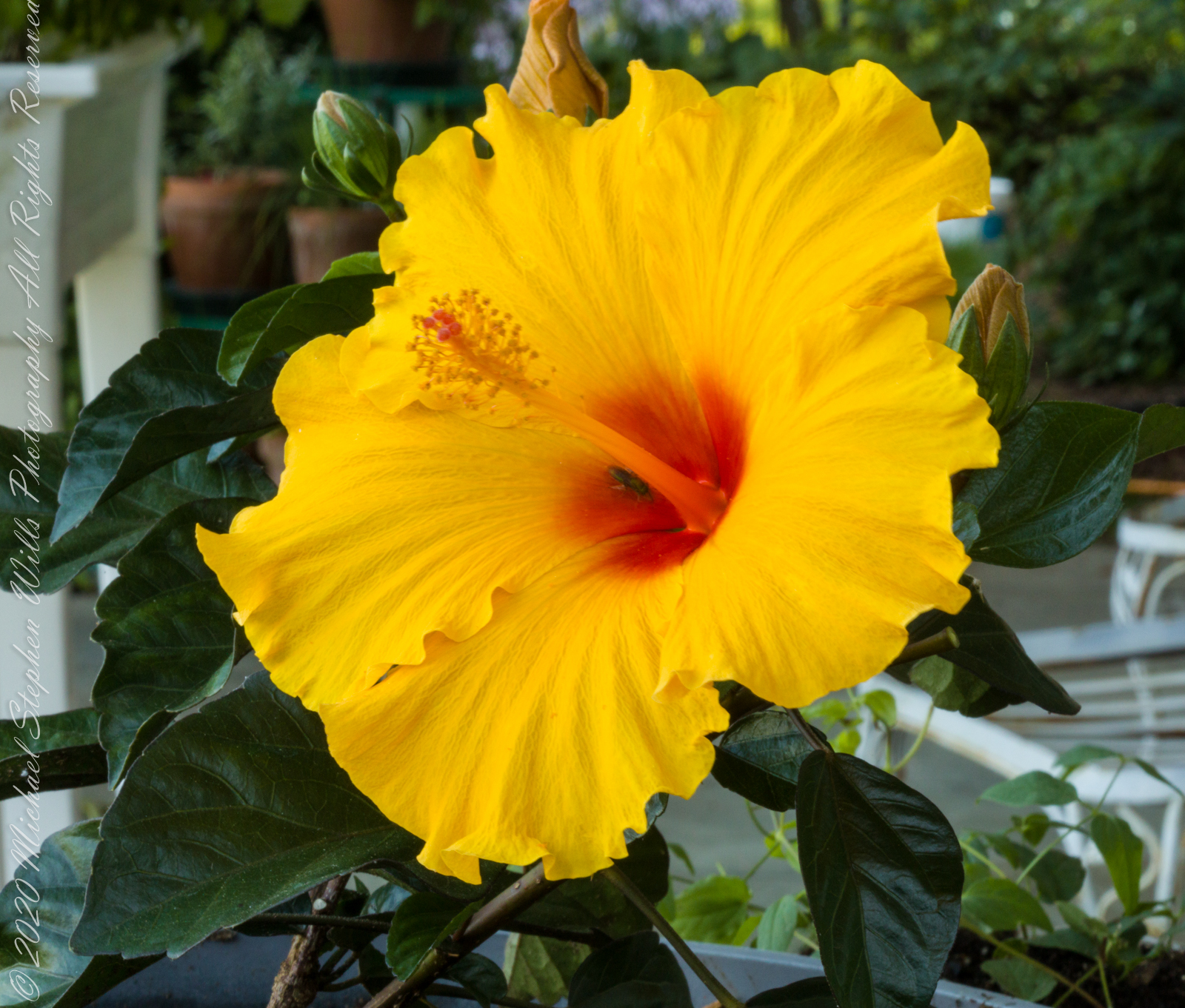
Night Blooming Cereus VIII

reaction to cold temperature

Our “Night Blooming Cereus” is blooming earlier in 2021, blooms opened twice during nights of early August. I put the name in quotes because during the course of writing the first seven posts ( I through VII ) I learned this is NOT a member of the genus Cereus, it is actually an epiphyte of the Epiphyllum genus.

For those familiar with the early history of New York City and Hudson Valley it is easy to see why a common name of the plant is “Dutchman’s Pipe Cactus.”

Click me for another Night Blooming Cereus Cereus flower post.

References

Wikipedia, “Epiphyllum”, “Epiphyllum oxypetalum,”epiphyte.”

Copyright 2020 Michael Stephen Wills All Rights Reserved
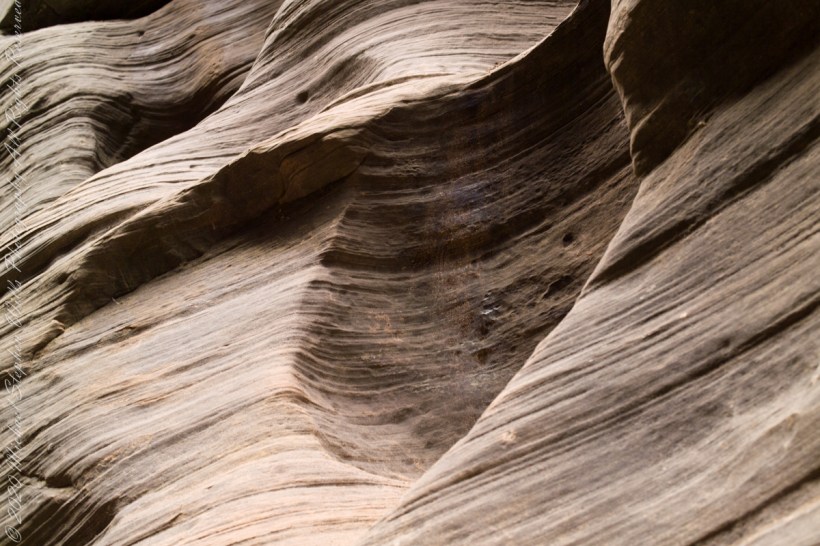
Zion Narrows VII

highwater?

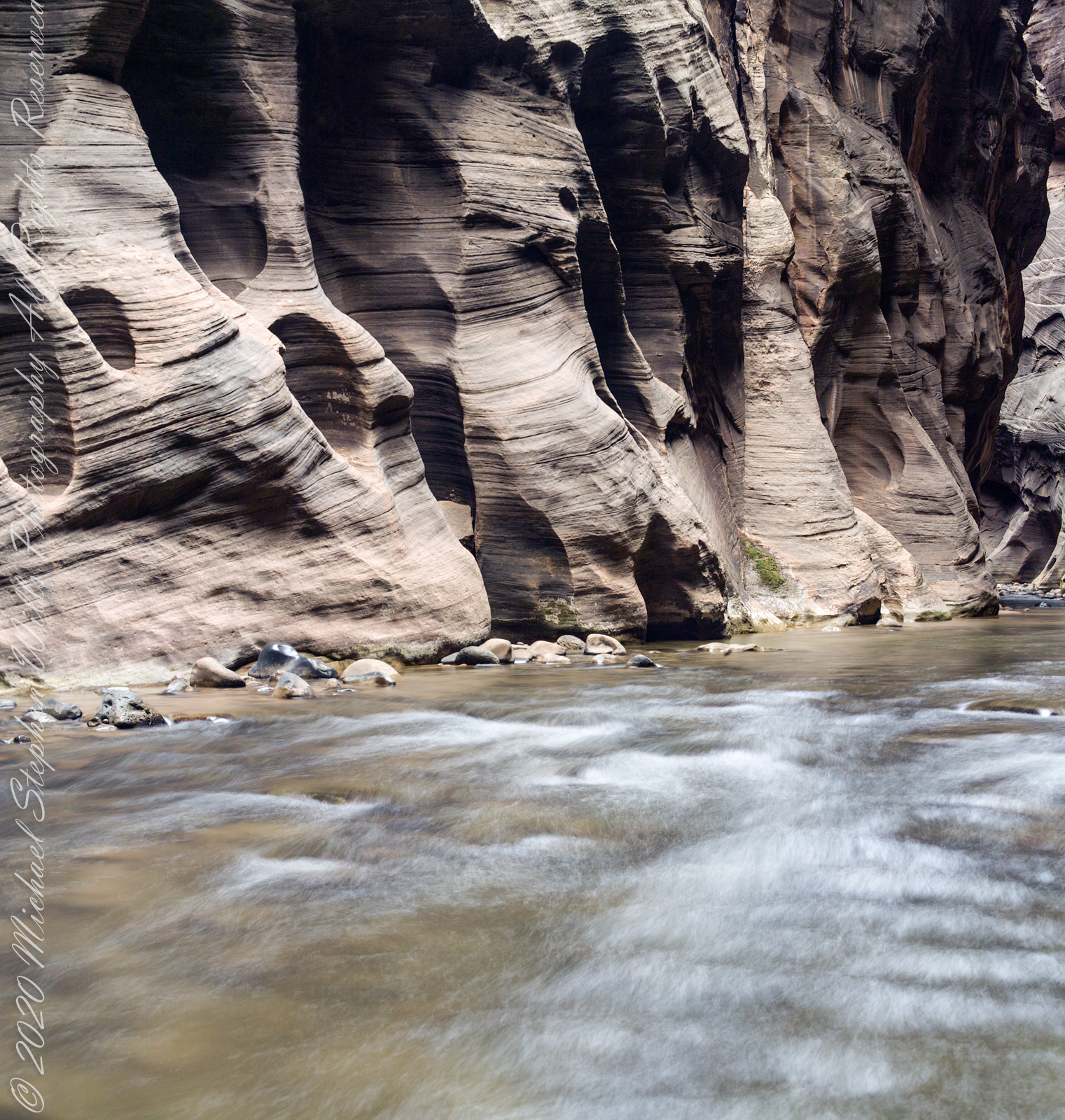
Mysterious alcoves through cross-bedded Navajo Sandstone, 15 feet, or more, above the streambed. I use mysterious in the sense I wished the formations were mysterious, standing there with nowhere to climb, witnessing the effects of floods that high above. The location is The Narrows just above Orderville Canyon junction, Zion National Park, Springdale, Utah

Copyright 2021 Michael Stephen Wills All Rights Reserved
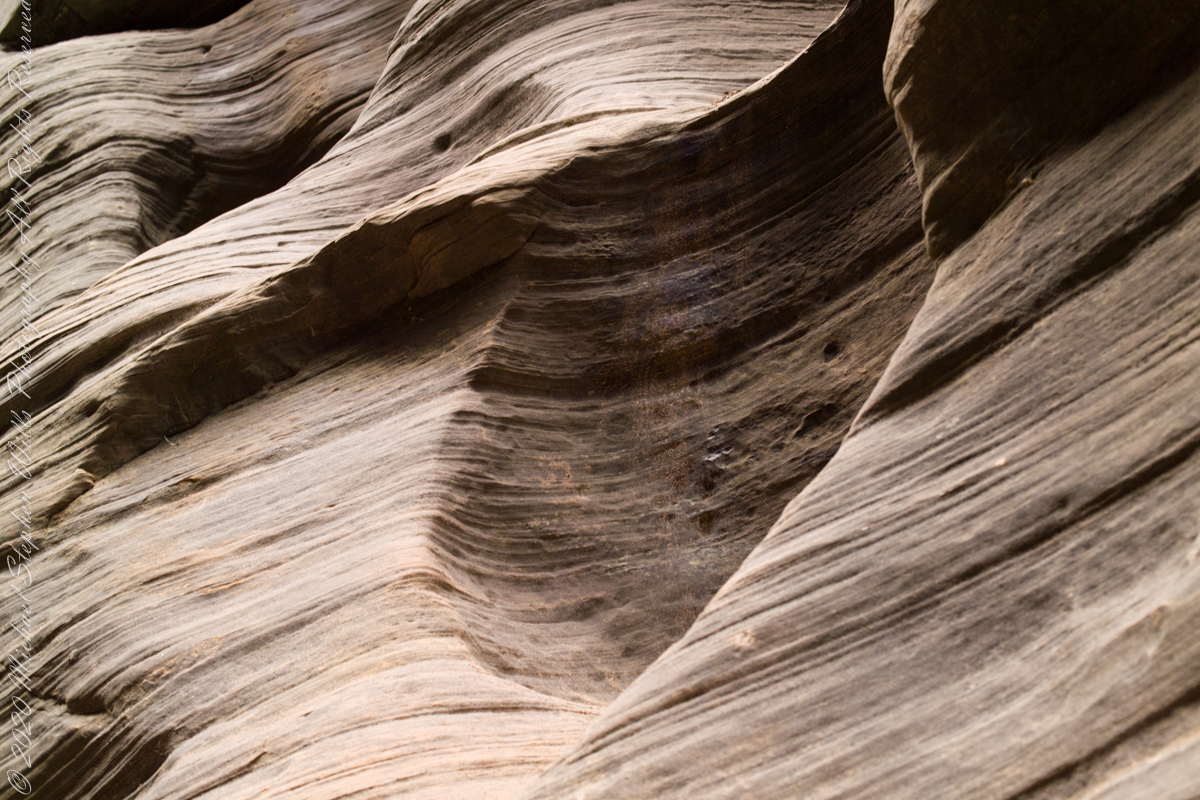
Zion Narrows VII

laying around in The Narrows

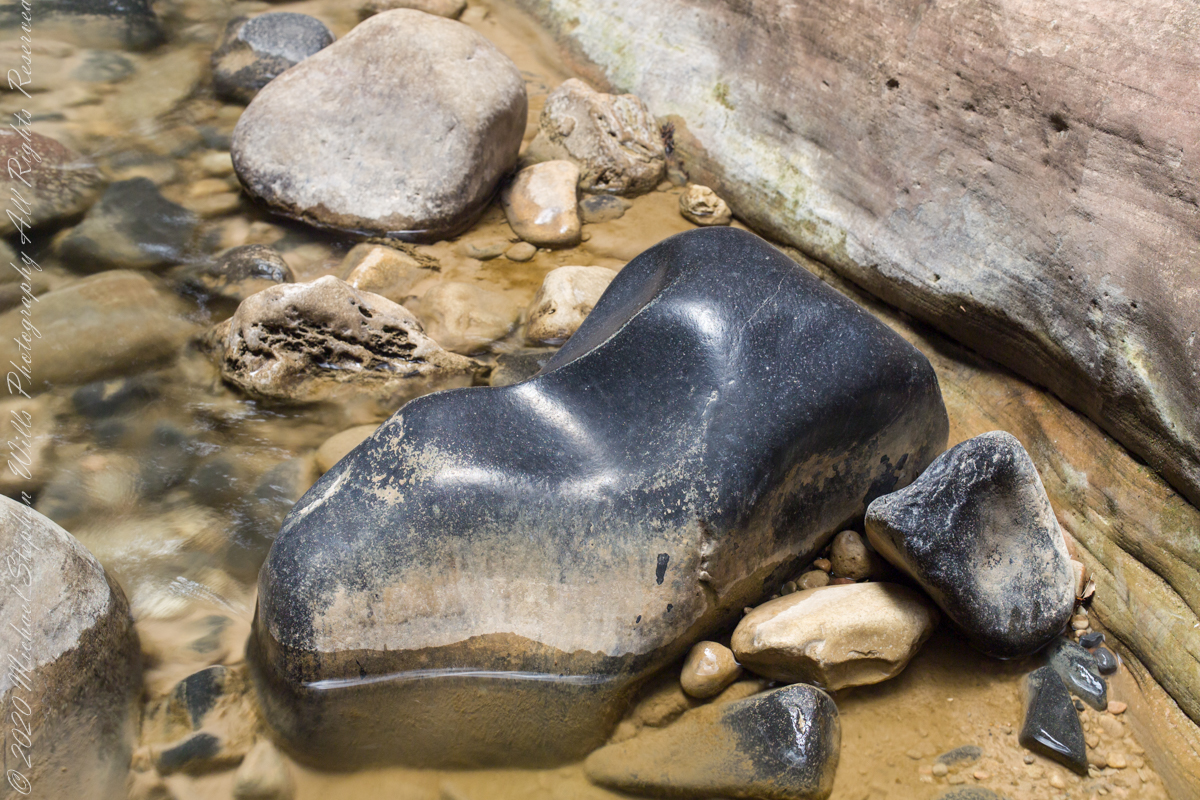
This polished basalt, the product of volcanic eruptions and eons-long weathering, is common on the Virgin River bed. Zion National Park, of The Narrows just above Orderville Canyon junction.

Copyright 2021 Michael Stephen Wills All Rights Reserved
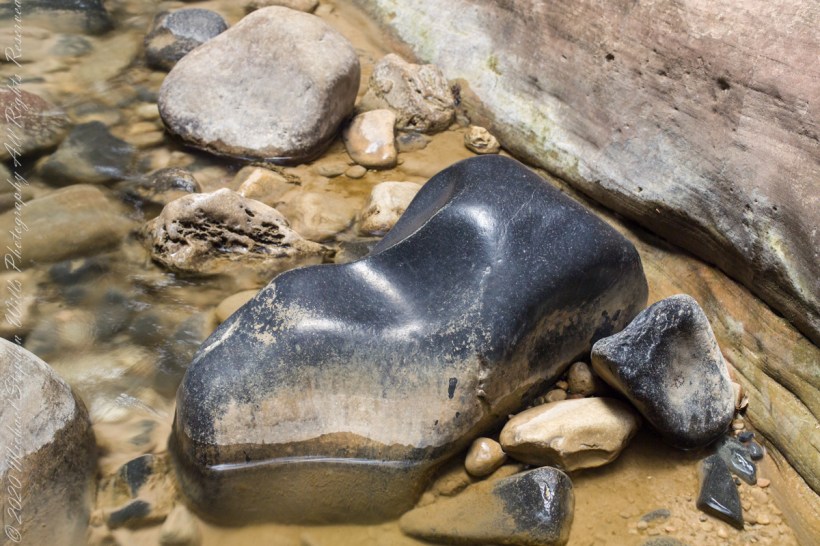
Zion Narrows VI

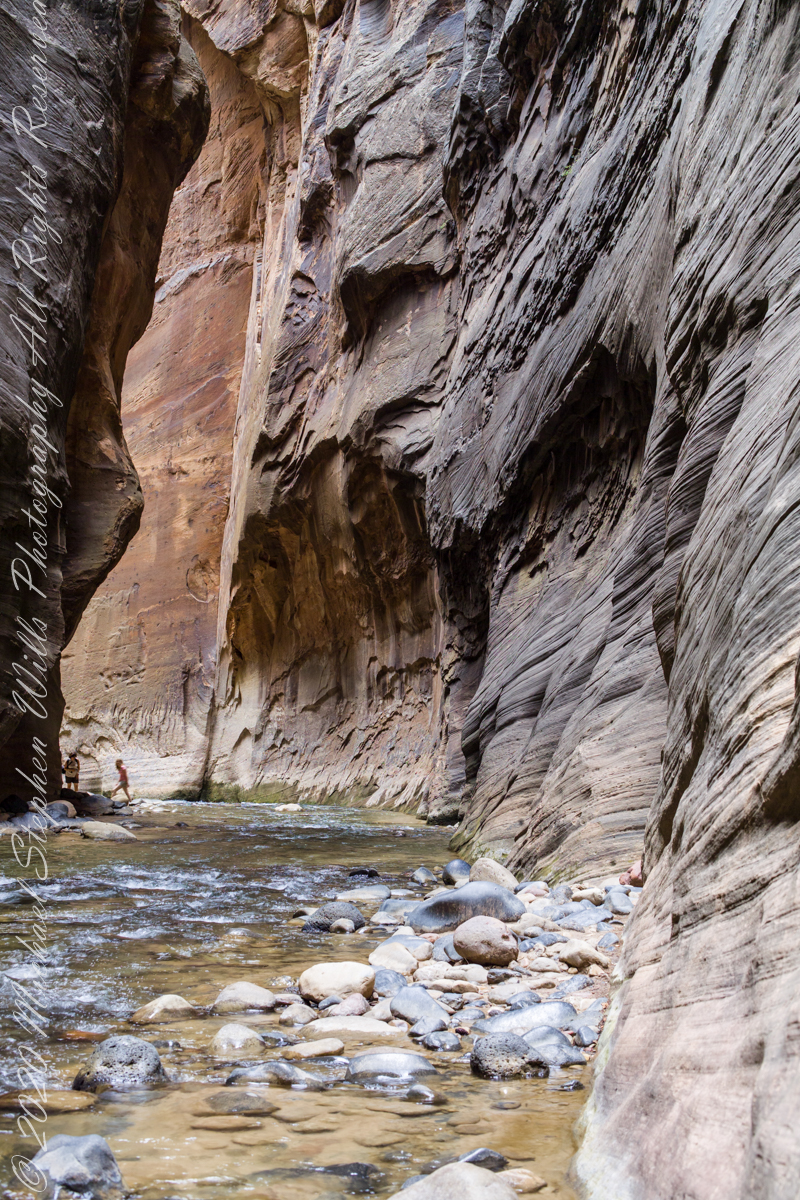
long and narrow

I combined two 50 mm exposures for this view of an interesting rock and beetling canyon walls. Upstream from here it is a day’s walk to reach ground safe from flash floods, downstream at least one hour. Narrows of Zion National Park, Utah

Copyright 2021 Michael Stephen Wills All Rights Reserved
Yellow Hibiscus IV

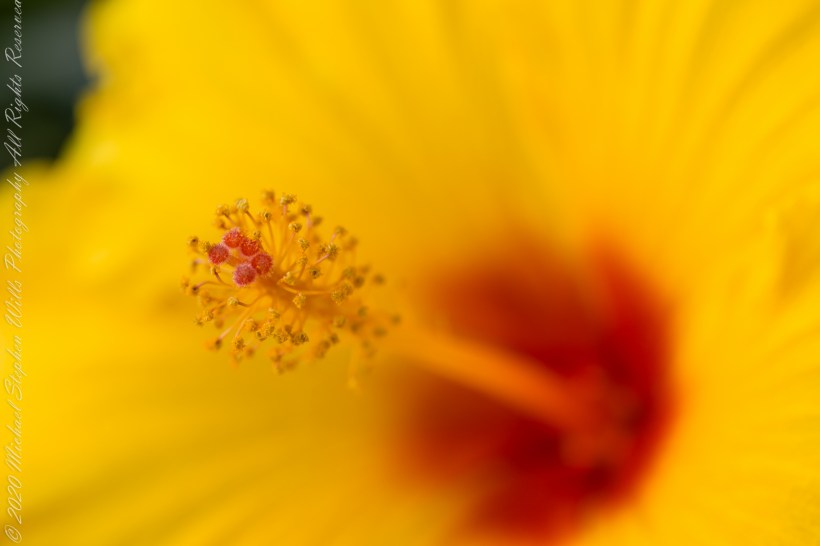
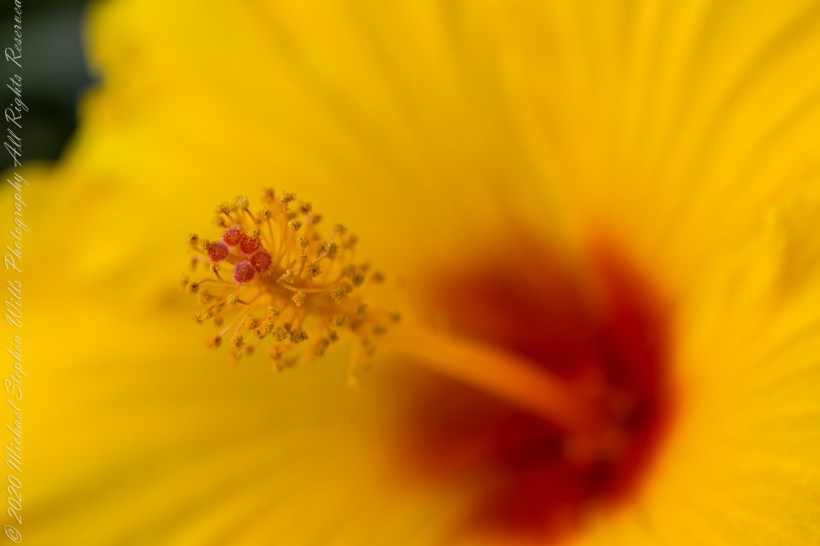
anthers and stamens

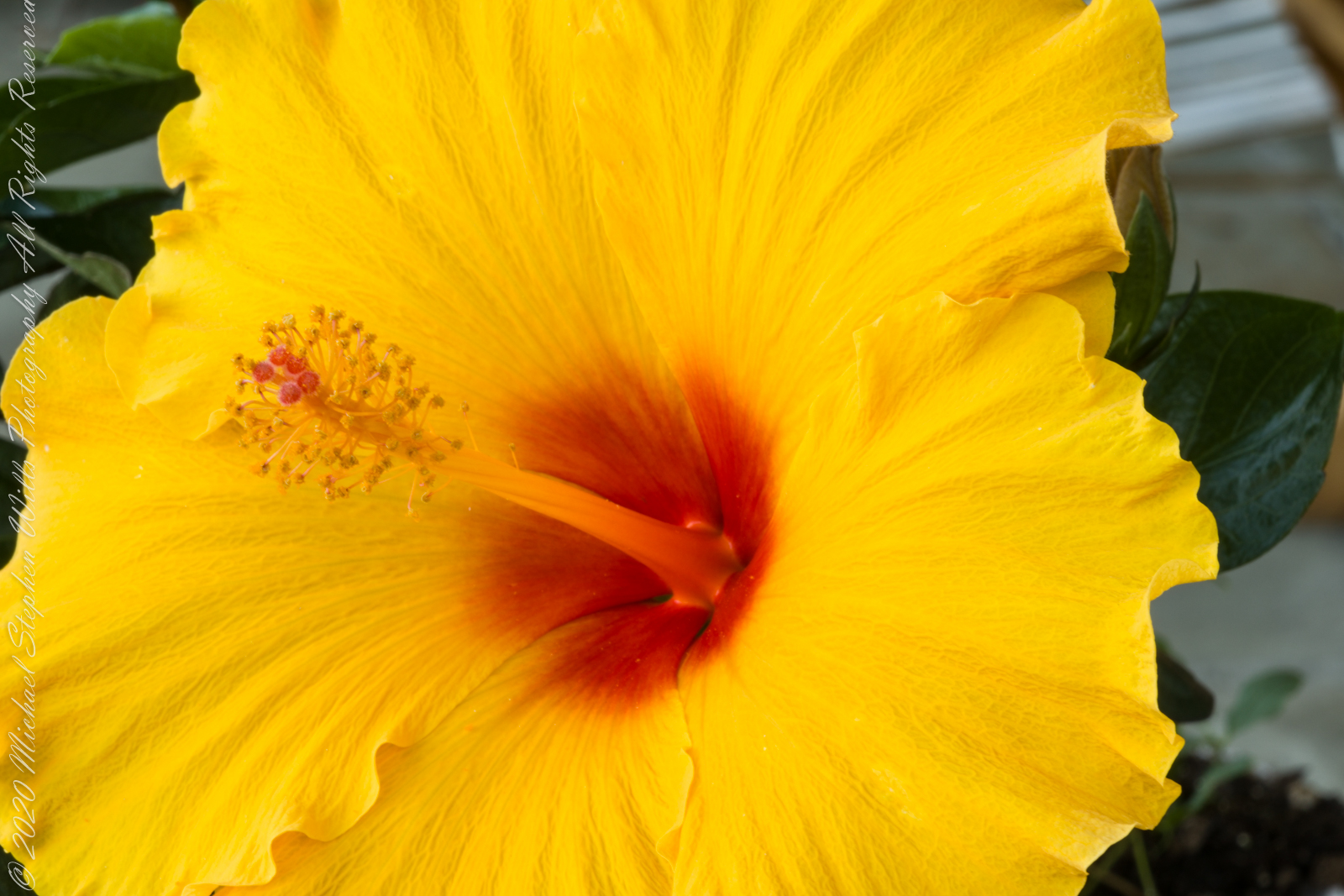
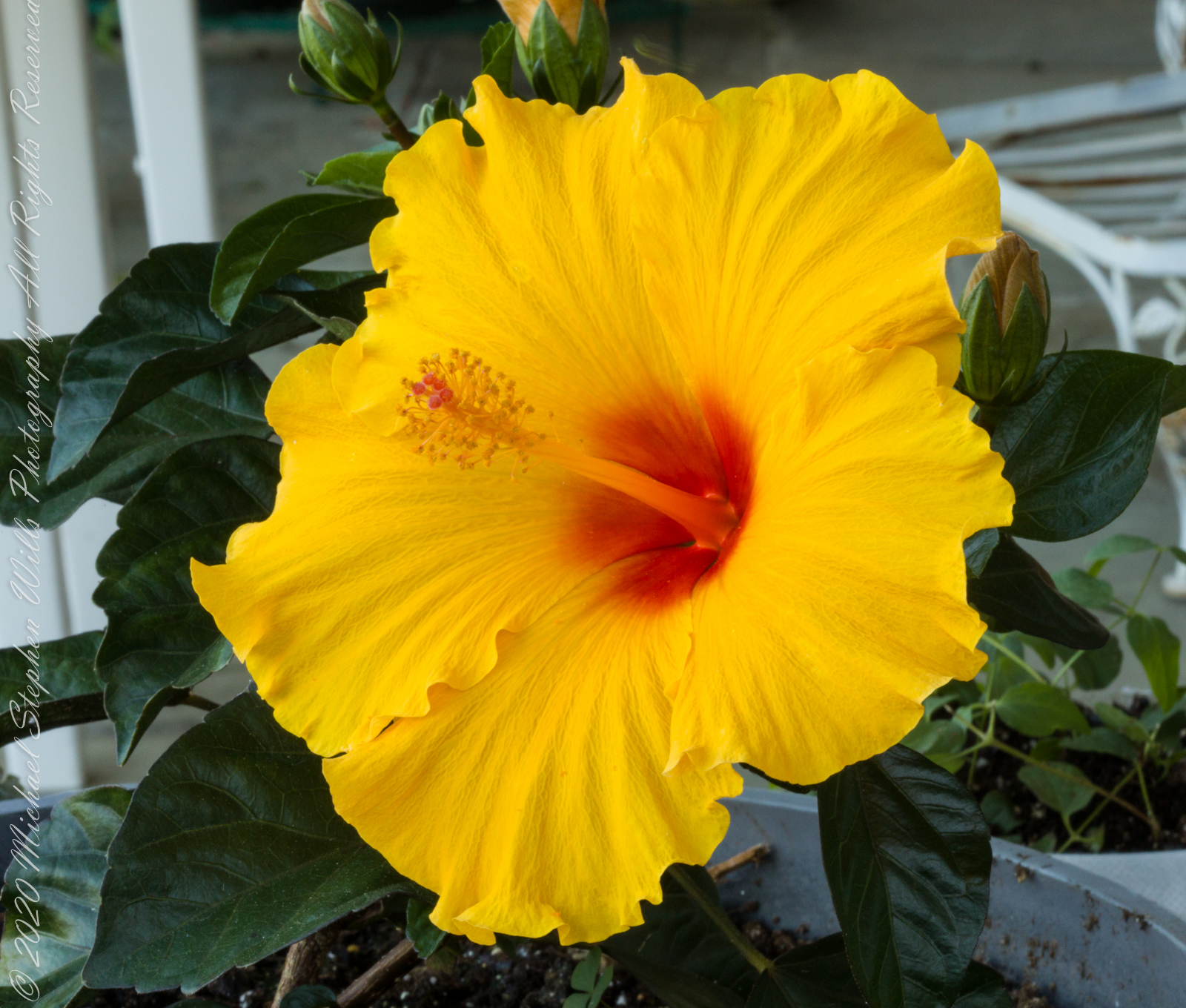
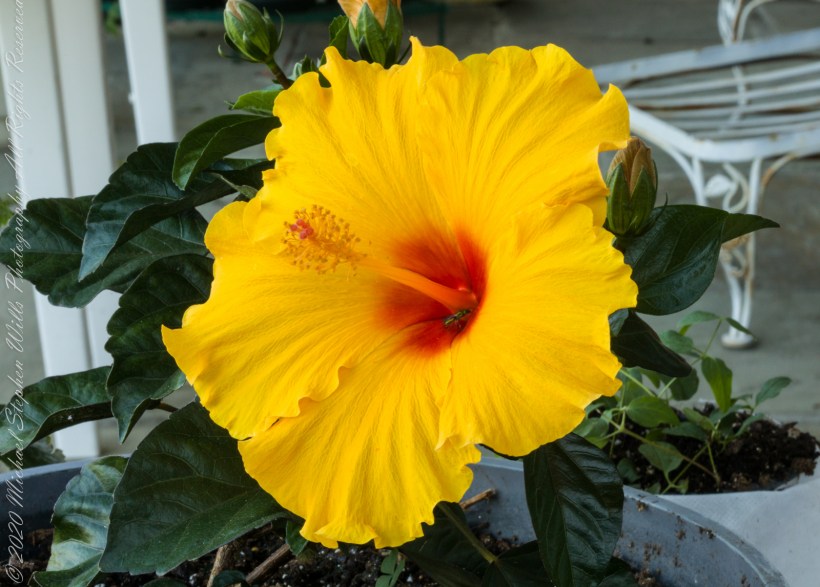
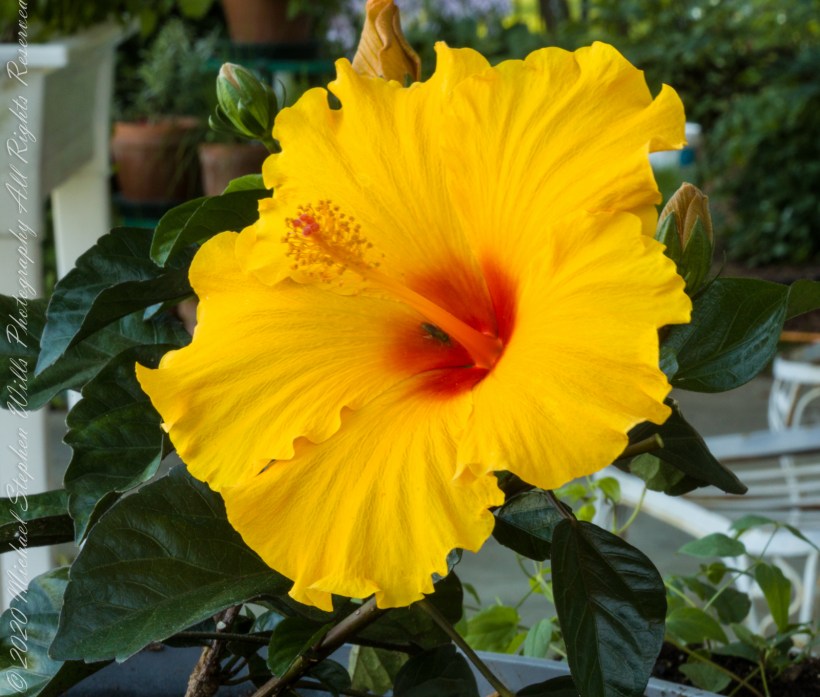
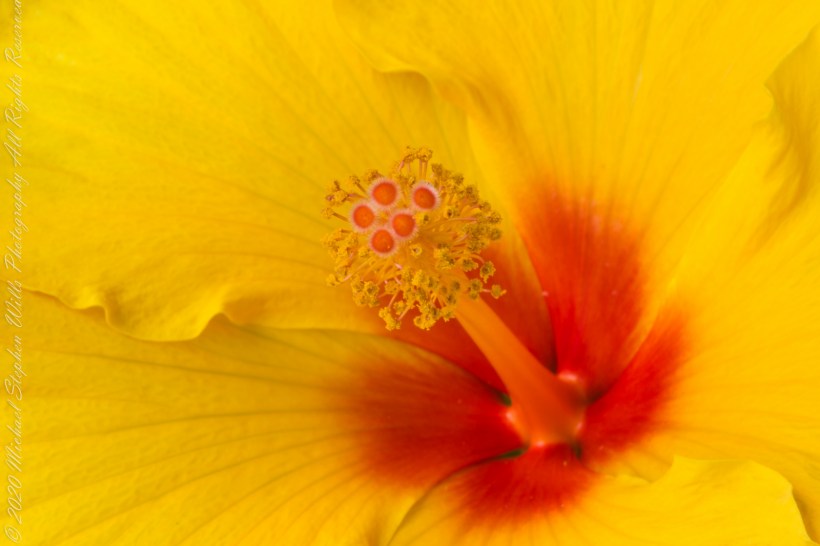
Evening breezes brought to a halt my series of hibiscus bloom photographs, that bloom faded and shriveled, to be replaced by another. I captured the images of this post on a very quiet summer evening. This bloom was facing up closer to vertical that the previous.

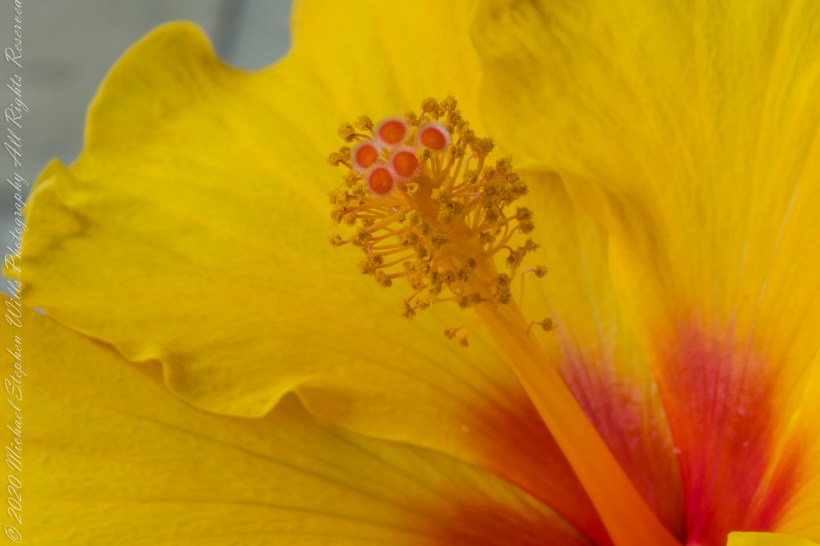
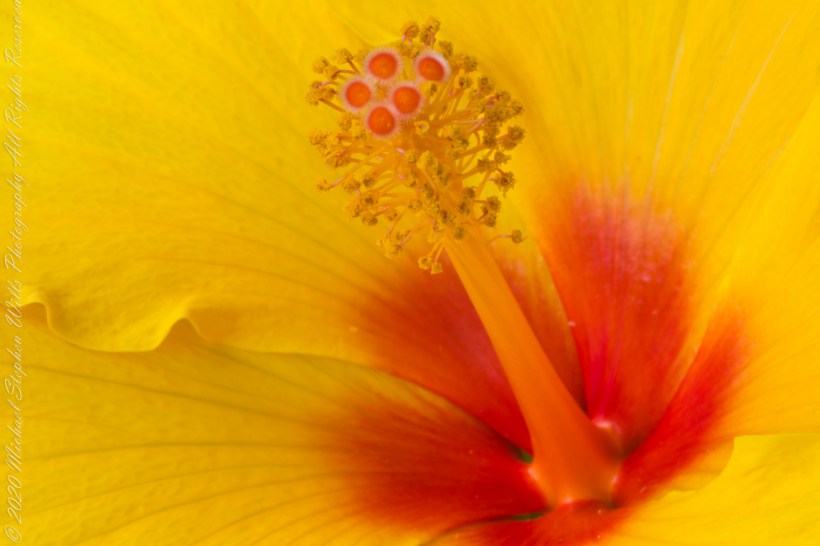
A key identification for all 300 species of hibiscus is the long stamen tube. I have yet to see a local insect interacting with the stamen, always they are in the flower throat. In the tropics, pollination is thought to proceed from large butterflies and birds.

Click photograph for larger view in new tab. From WordPress Reader you need to open the post to use this feature.

Here are three macro photographs of this bloom, all from the Canon 100 “macro” lens. I learned by experience to tamp down the diaphragm to the smallest setting, f / 32 for this lens. The different aspects were achieved by moving the lens objective closer to the bloom. This is a “fixed” lens, it has one focal length.

References

Wikipedia – “hibiscus.”

Copyright 2021 Michael Stephen Wills All Rights Reserved

Yellow Hibiscus III

anthers and stamens

Nyctinasty (flower response to light: opening with or closing without light) in hibiscus plants is a mechanism to protect against adverse conditions such as cool temperatures that can be damaging. Through a lack of light stimulus and circadian rhythms the plant is able to trigger the molecular movement of ions to allow for the closing of the flower.

Click photograph for larger view in new tab. From WordPress Reader you need to open the post to use this feature.

Here are three macro photographs of this bloom, all from the Canon 100 “macro” lens. I start with the shutter diaphragm open at 4.0 (“F-stop”), a little narrower at 4.5 and a bit more at 9.0. For this lens the maximum opening is at 2.8, the narrowest is 32. As the opening narrows (F-stop increases) the exposure time needed to capture enough light lengthens and the range of the image in focus increases.

References

Wikipedia – “hibiscus.”

Copyright 2021 Michael Stephen Wills All Rights Reserved
Zion Narrows V

narrow and tall

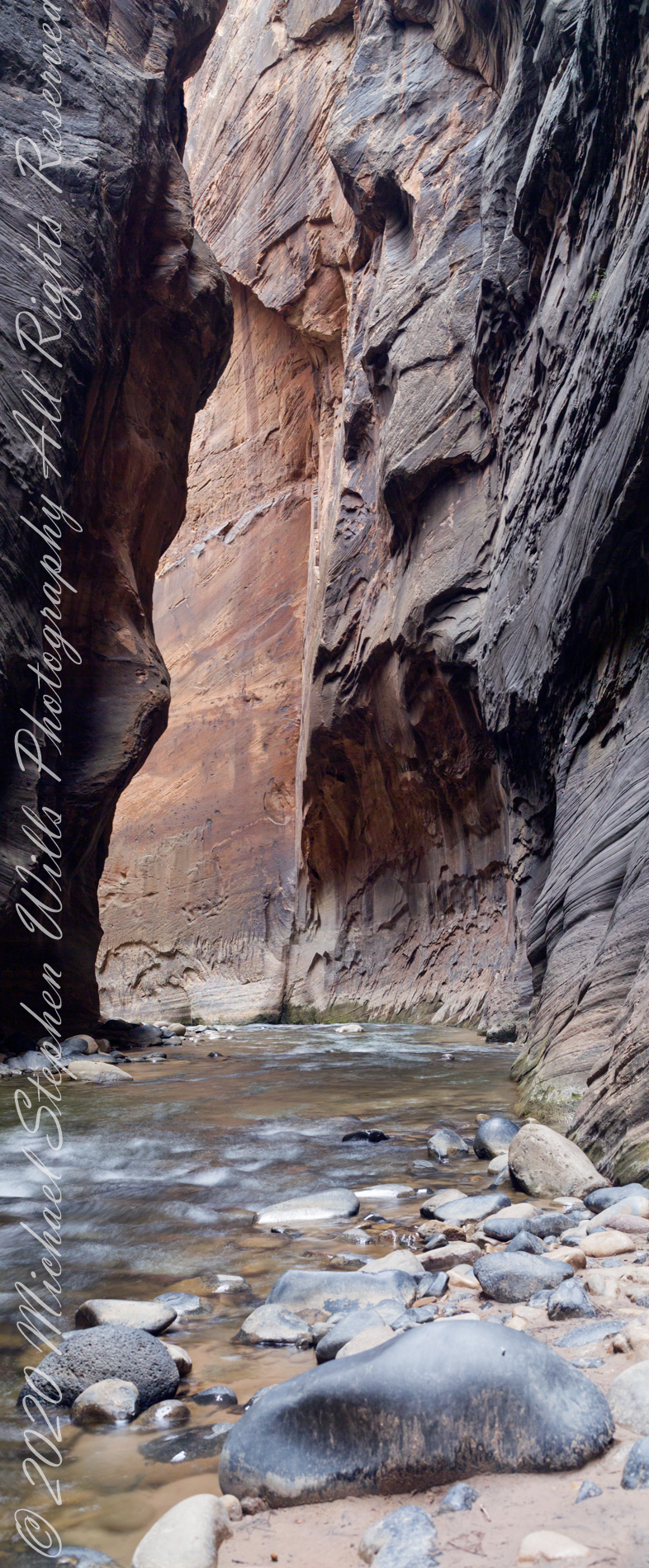
This long exposure blurs the two distant human figures looking downstream toward junction of Orderville Canyon, around corner. Narrows of Zion National Park, Utah

Copyright 2021 Michael Stephen Wills All Rights Reserved
Yellow Hibiscus II

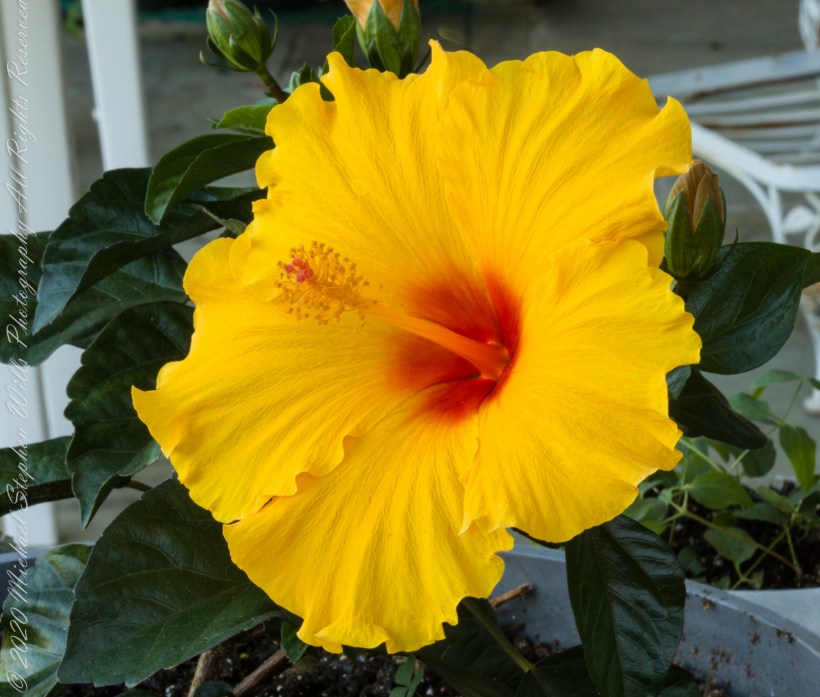
flower and buds

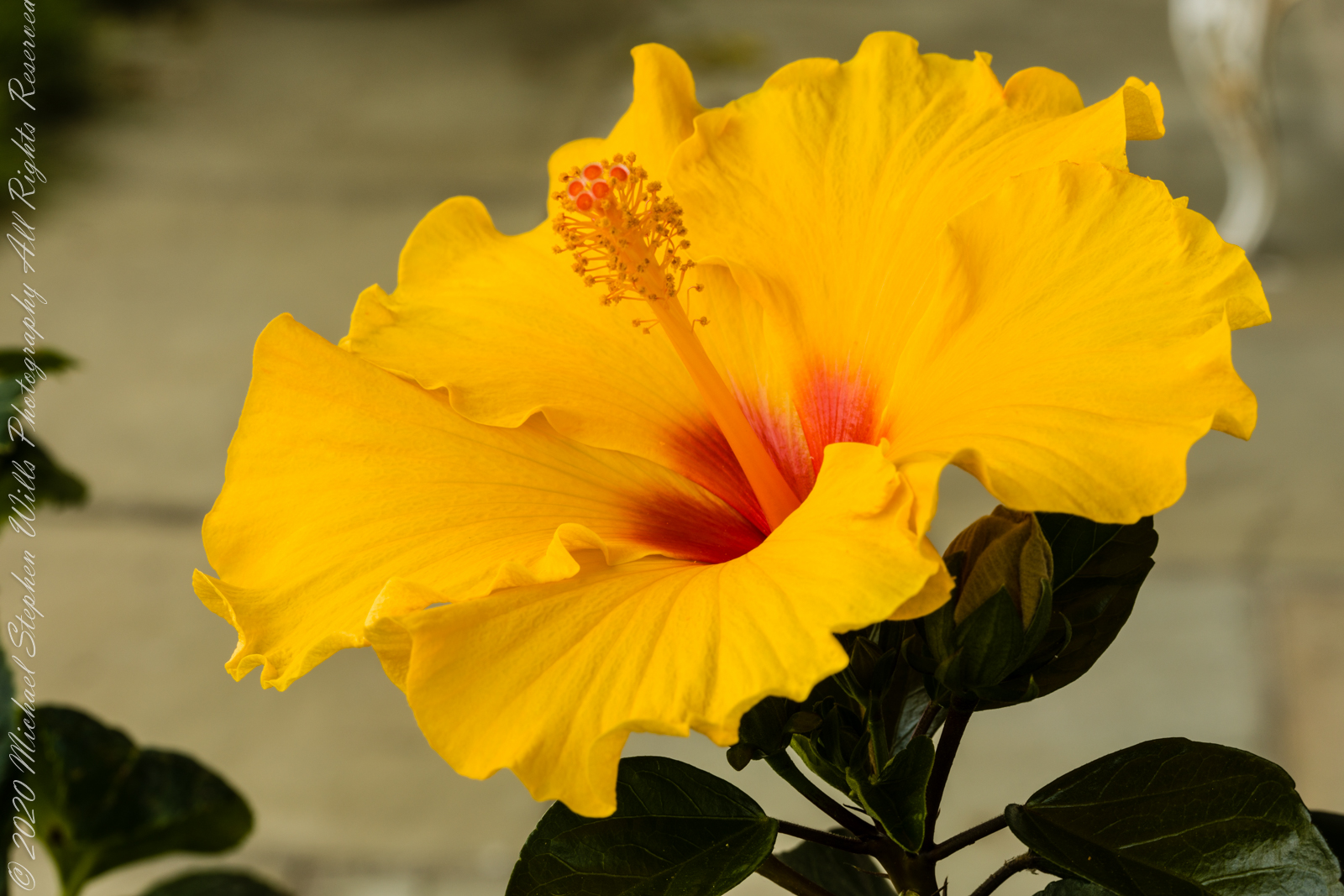
This is a perennial, commonly known simply as “hibiscus”, or less widely known as rose mallow. Other names include hardy hibiscus, rose of sharon, and tropical hibiscus.

The hibiscus flower is traditionally worn by Tahitian and Hawaiian girls. If the flower is worn behind the left ear, the woman is married or has a boyfriend. If the flower is worn on the right, she is single or openly available for a relationship.

Click photograph for larger view in new tab. From WordPress Reader you need to open the post to use this feature.
Here are the three photographs of this bloom, all from the Canon 100 “macro” lens. Two with “sweat bees” and one without.
References

Wikipedia – “hibiscus.”

Copyright 2021 Michael Stephen Wills All Rights Reserved
Zion Narrows IV

cross-bedding

Careful attention to hidden boulders is essential when hiking the Narrows of Zion National Park, Utah

Copyright 2021 Michael Stephen Wills All Rights Reserved
Yellow Hibiscus I

flower, buds, bee

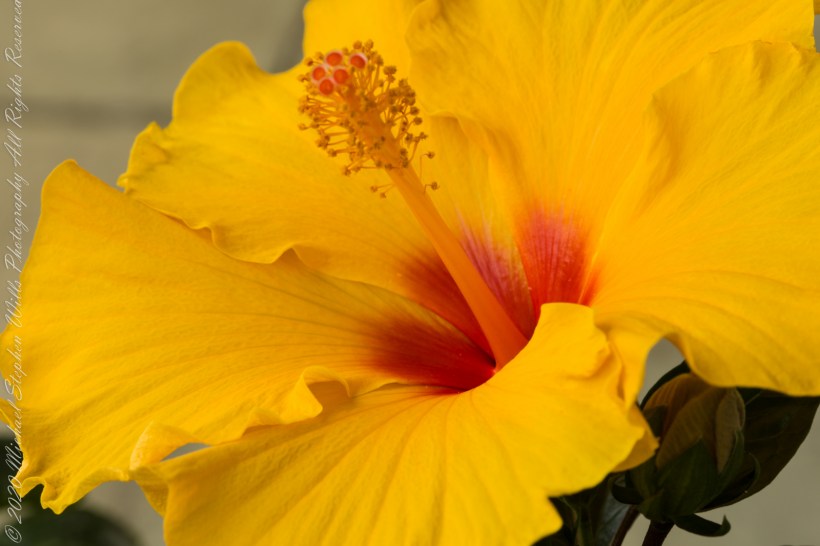
Yellow hibiscus, the state flower of Hawaii was recorded in ancient Greece. In the photograph is captured several unopened buds, behind the flower, and a bee in the flower throat, attracted by nectar there. It is a small bee, of the Halictidae family, that lives alone in a ground nest and also called a “sweat bee,” from being attracted to perspiration.

Click photograph for larger view in new tab. From WordPress Reader you need to open the post to use this feature.
References

Wikipedia – “sweat bee” and “hibiscus.”