Pitch Pine Forest III

Road to Batsto

Leaving the jeep on the west side of Quaker Bridge, I walked over to inspect the structure and poke around the other side, carrying a Canon 5d Mark IV (camera body) / EF 70 – 300 mm f/4-5.6 L IMS (lens), shooting as I walked. My sister Theresa and Maxie, a little white dog, lagged behind taking in the surroundings. Here they are, in shadow, on the west side.

Click pic for larger view in a new browser tab. If you are in WordPress Reader, open the post to use this feature.
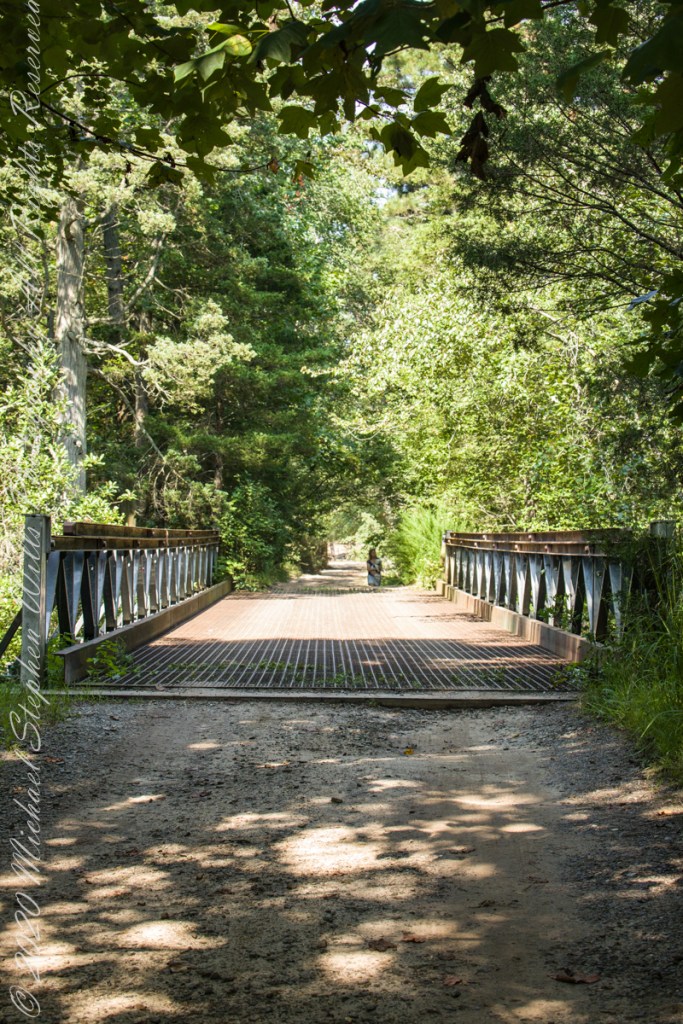
My work on the east side was shared in previous posts, “Pinelands Connections VIII,” I and II “Around Quaker Bridge,” and I and II “Pitch Pine Forest,” work interrupted by the sound of an approaching engine, a Humvee came into view. I waved my arm up and down, a sign to slow down, pulling alongside the driver looked up with dead eyes, no element of recognition of a fellow human, as I explained my sister was on the bridge. A stink of unfamiliar hydrocarbons, diesel fuel?, rose through the heat as they pulled forward with no acknowledgement of my request. Thankfully they slowed down as Theresa, Max in her arms, said, “hi.”

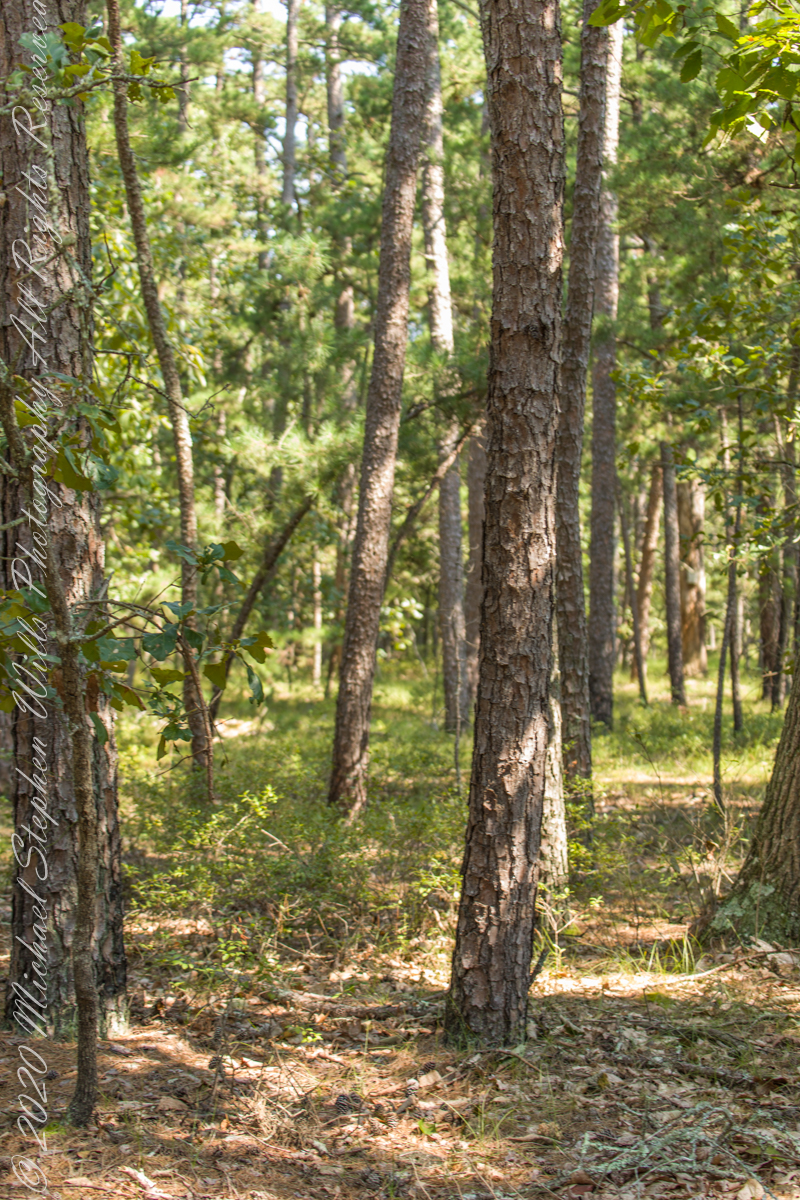
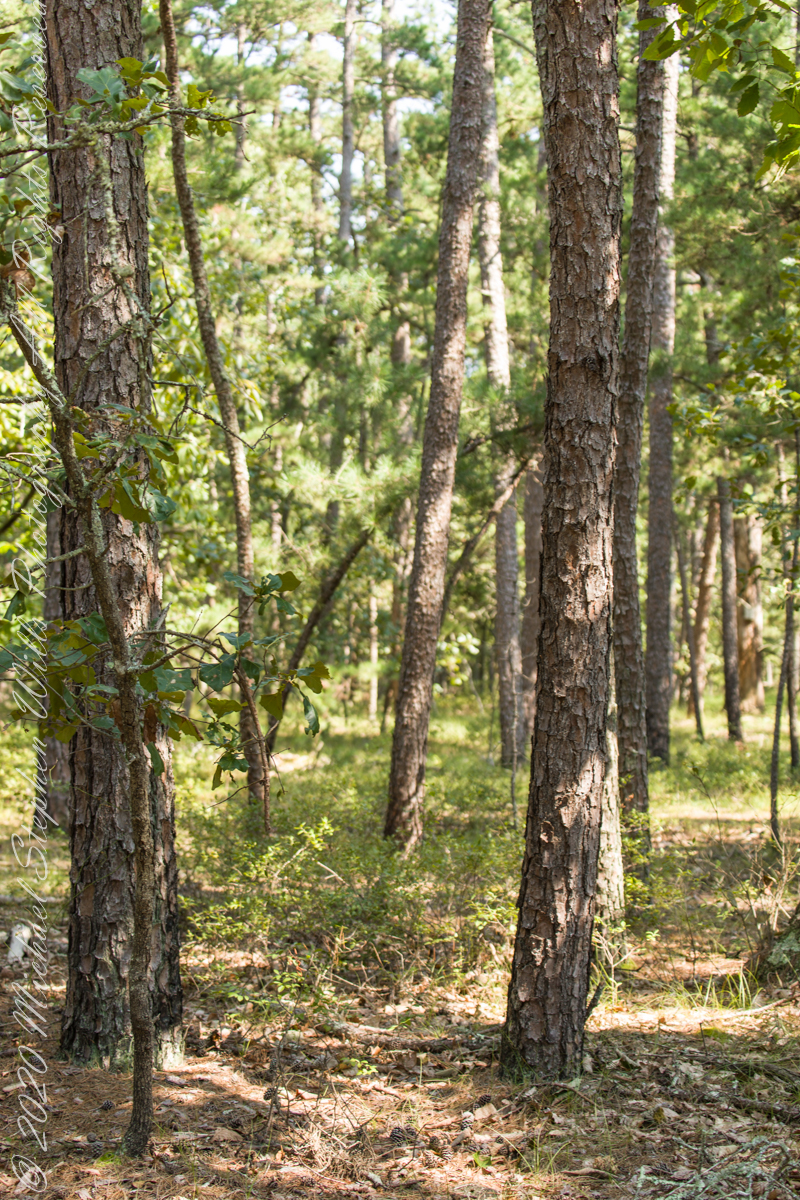
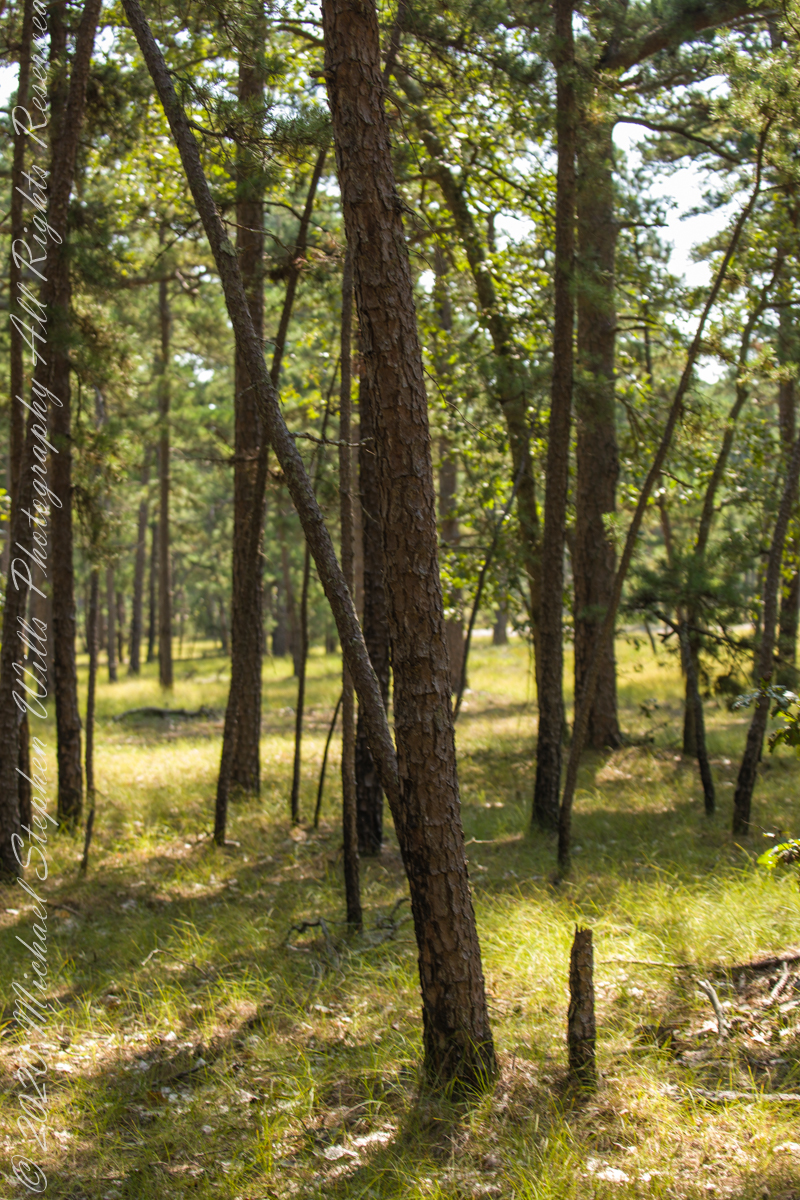
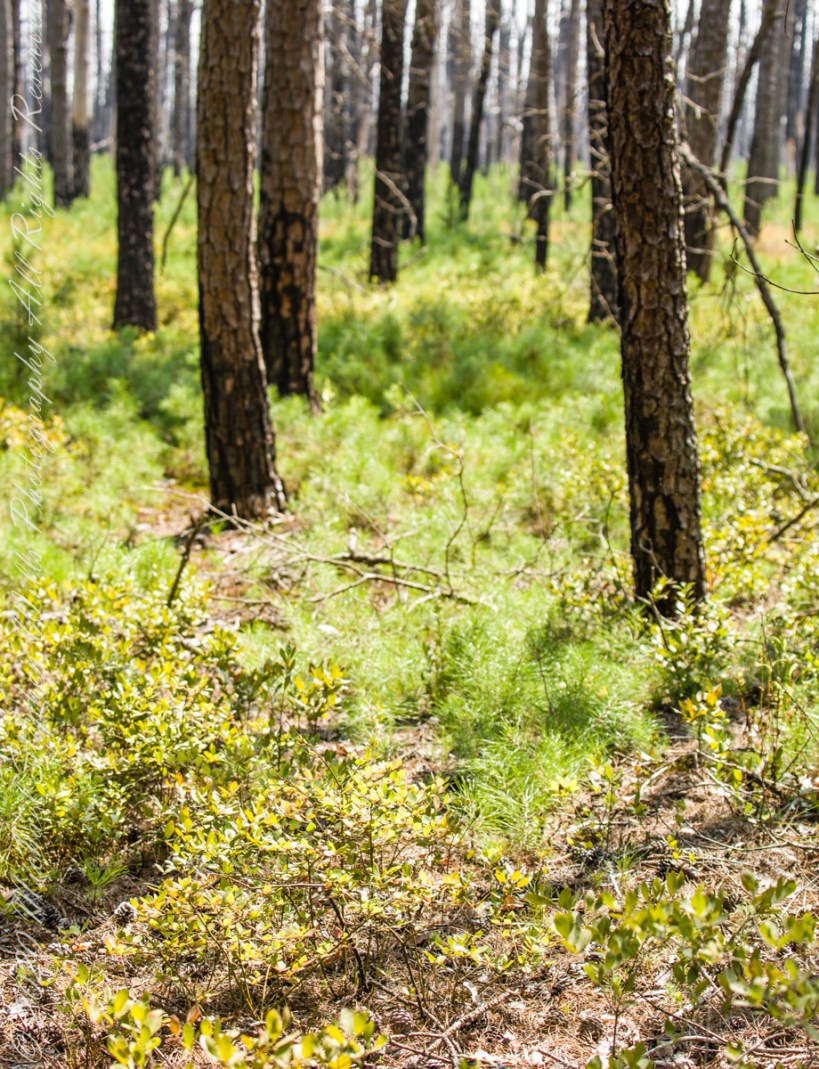
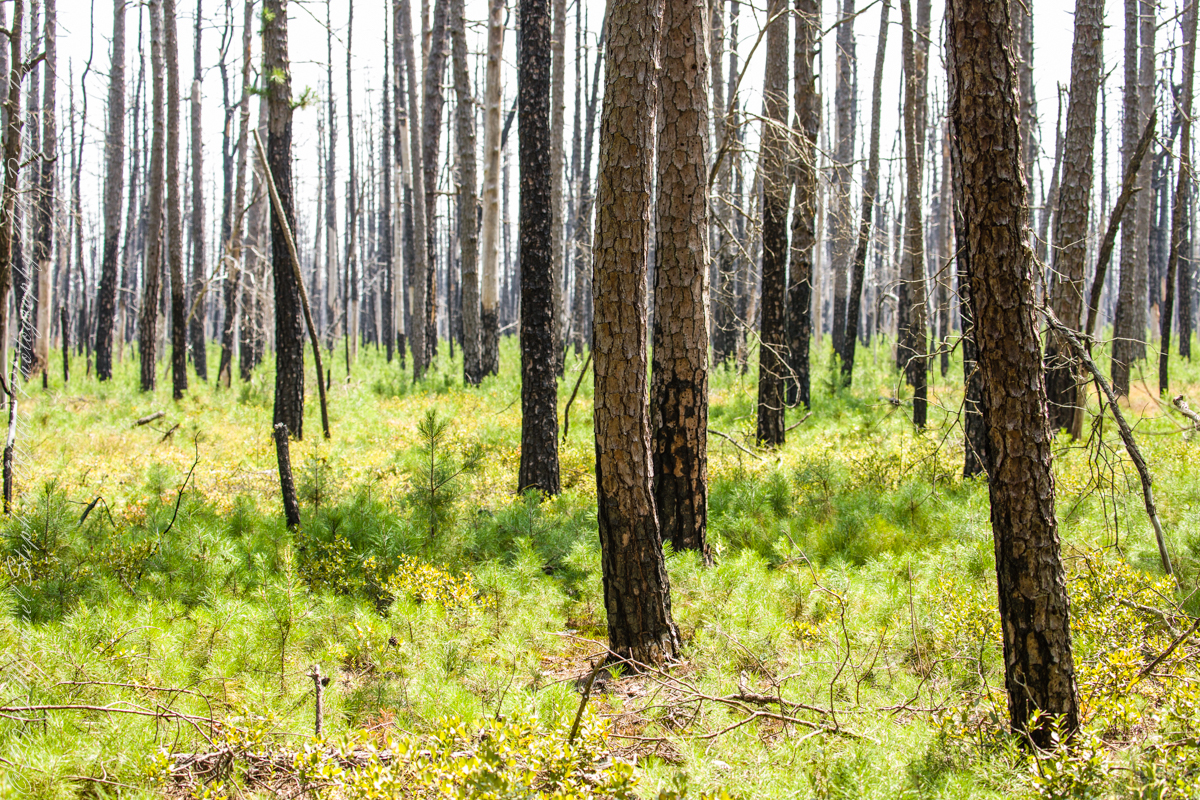
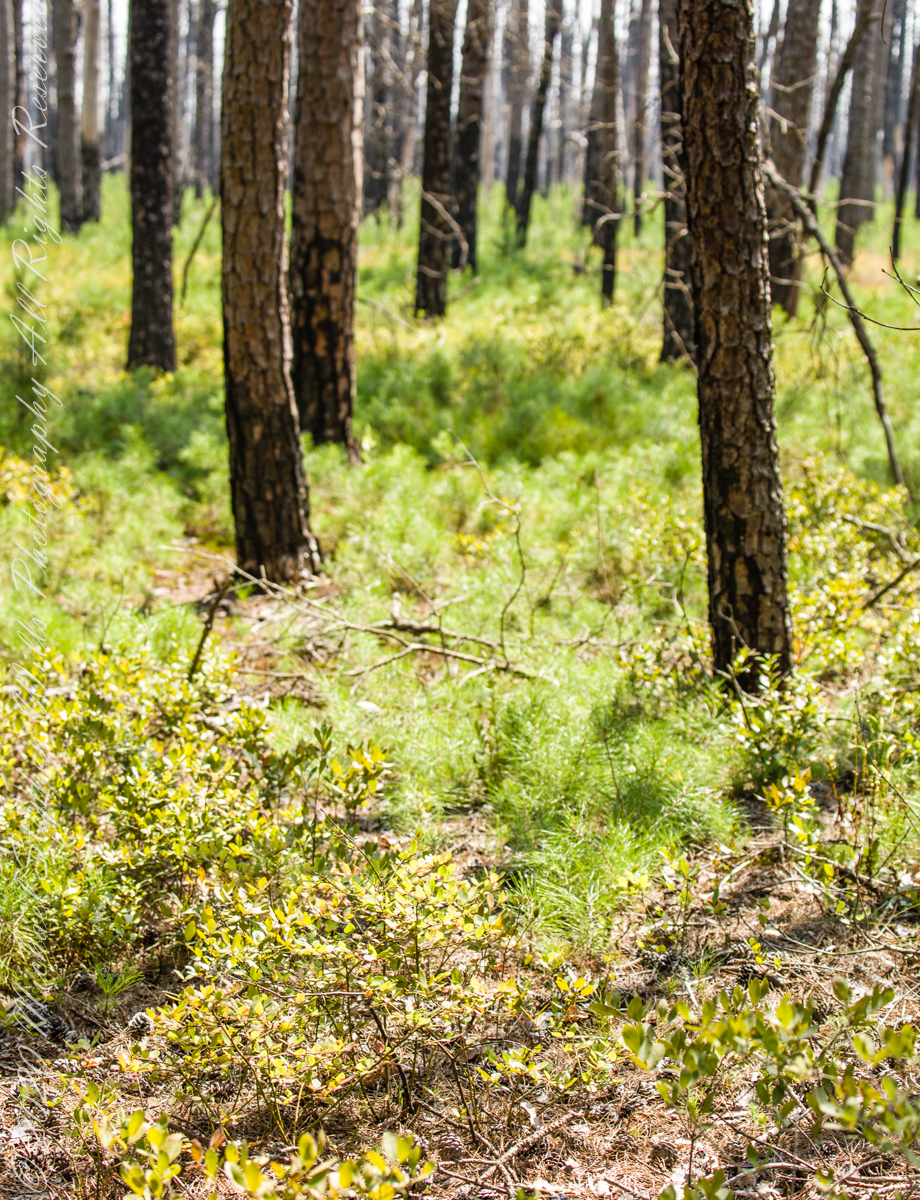
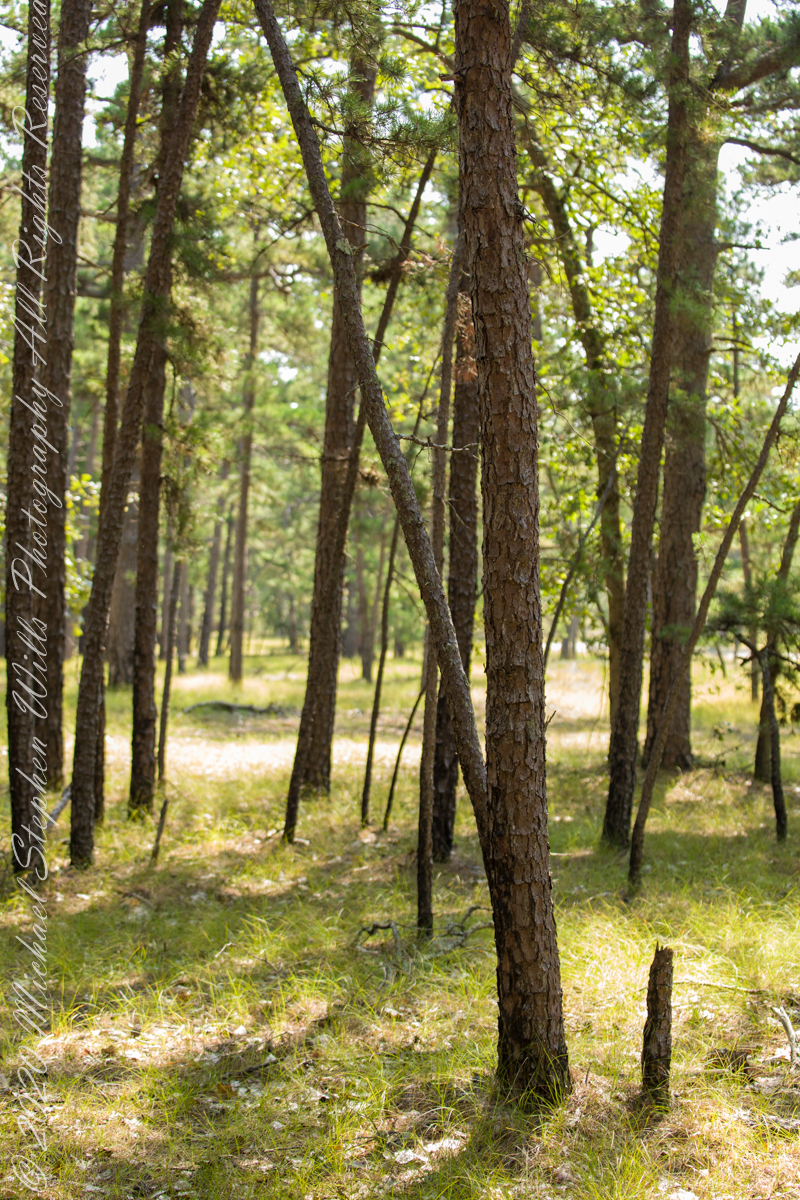
Multiple roads converge from all directions on Quaker Bridge, using GoogleMaps (surprising these unimproved, “jeep” sand roads were listed) I chose Goodwater Road as a route to Batsto Village, on the southern side of Wharton State Forest. The 6.1 mile road follows the east bank of Mullica River at a distance, a very rough passage through ancient Pitch Pine forest. Here are photographs of the enormous capacity of the pines to regrow after fire. Note a thick seeding growth among the mature pine trunks, lower portions fire blackened.
Copyright 2021 Michael Stephen Wills All Rights Reserved
Pitch Pine Forest II

Multiple Lives

These photographs were taken deep in the wilderness of Wharton State forest, near where Quaker Bridge spans the Mullica River.

Click pic for larger view in a new browser tab. If you are in WordPress Reader, open the post to use this feature.

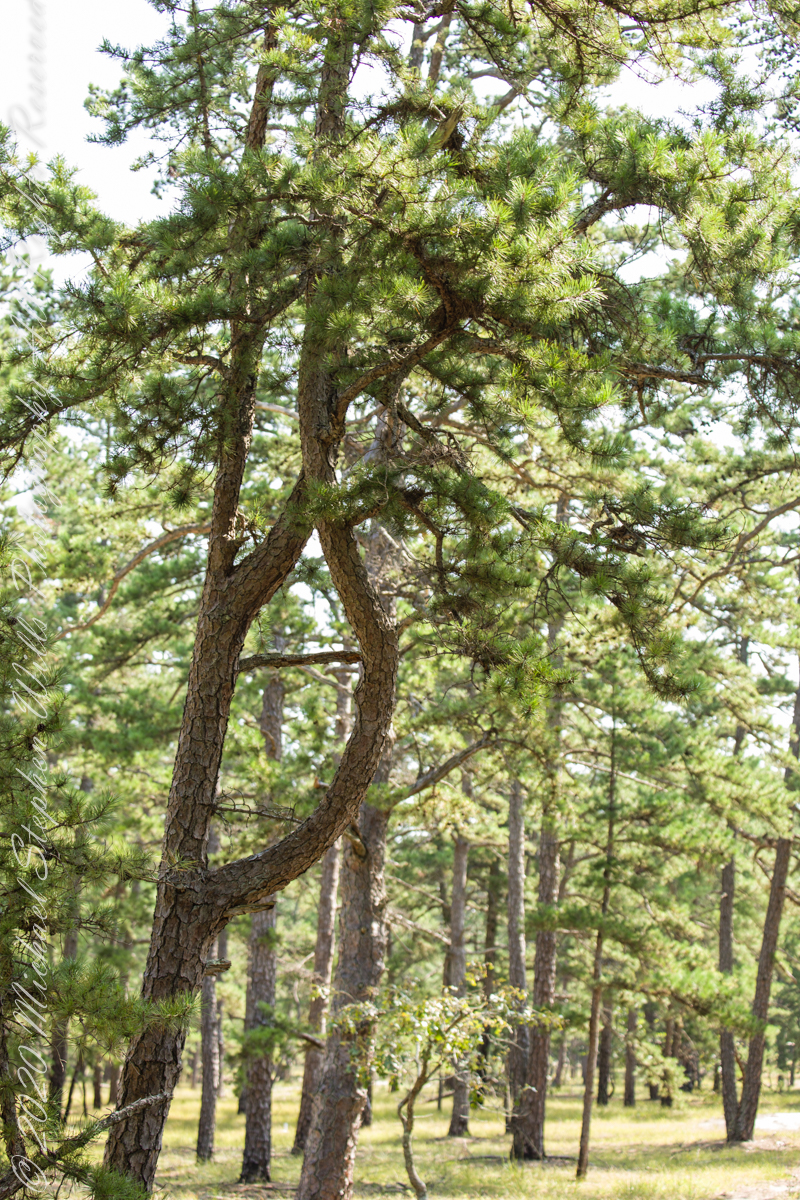
The pitch pine is irregular in shape, in these forests a mature tree typically lives through multiple cycles of fire and regrowth.

Burnt pitch pines often form stunted, twisted trees with multiple trunks as a result of resprouting. Bonsai artists exploit this characteristic for their creations.

Copyright 2021 Michael Stephen Wills All Rights Reserved
Pitch Pine Forest I

The Pinus Genera

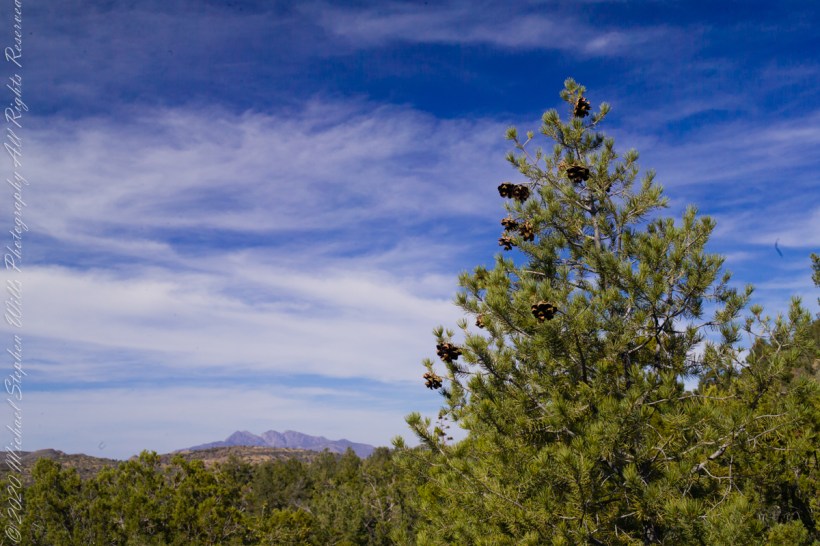
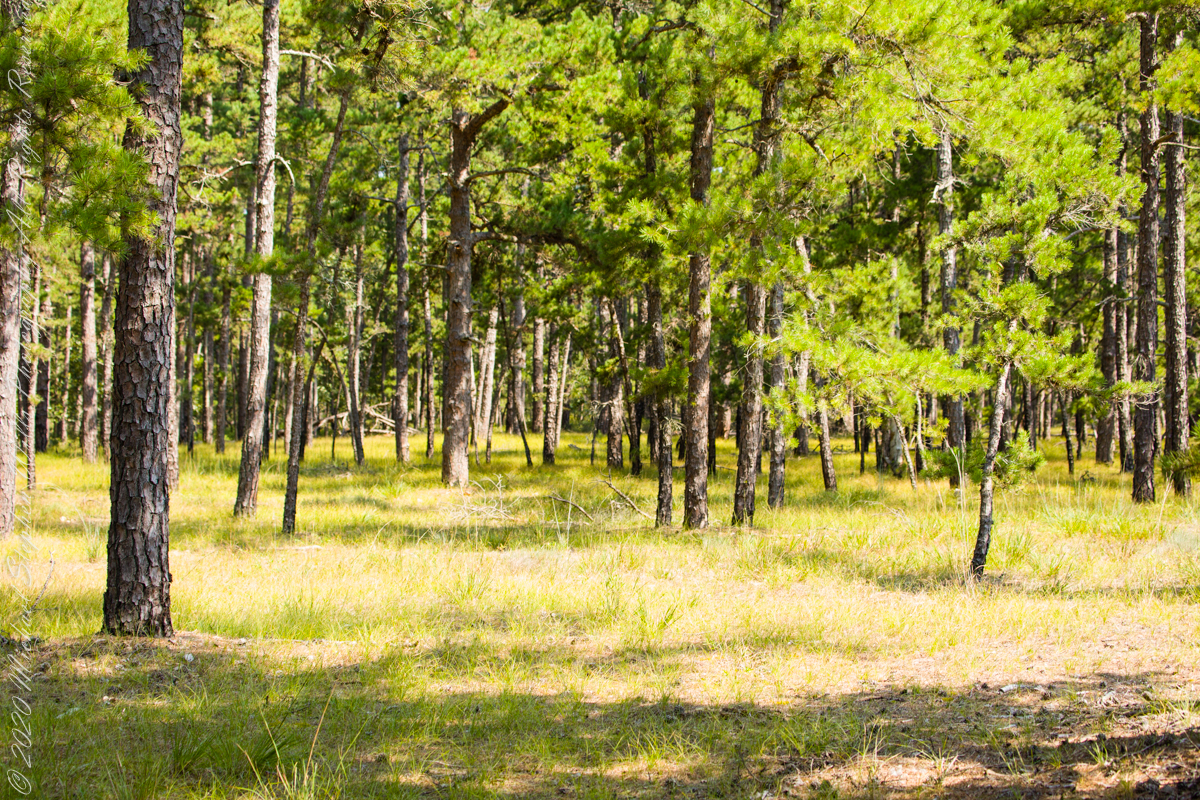
The 115,000 acres of Wharton State Forest are predomenantly Pitch Pine, scientific name Pinus Rigida, and AKA Black Pine and Hard Pine. Climb the fire tower of Apple Pie Hill, in all directions will be a sea of these trees interspersed here and there with occasional oaks. Cedars mark water courses. These photographs, unless otherwise identified, were taken deep in the forest, near where Quaker Bridge spans the Mullica River.

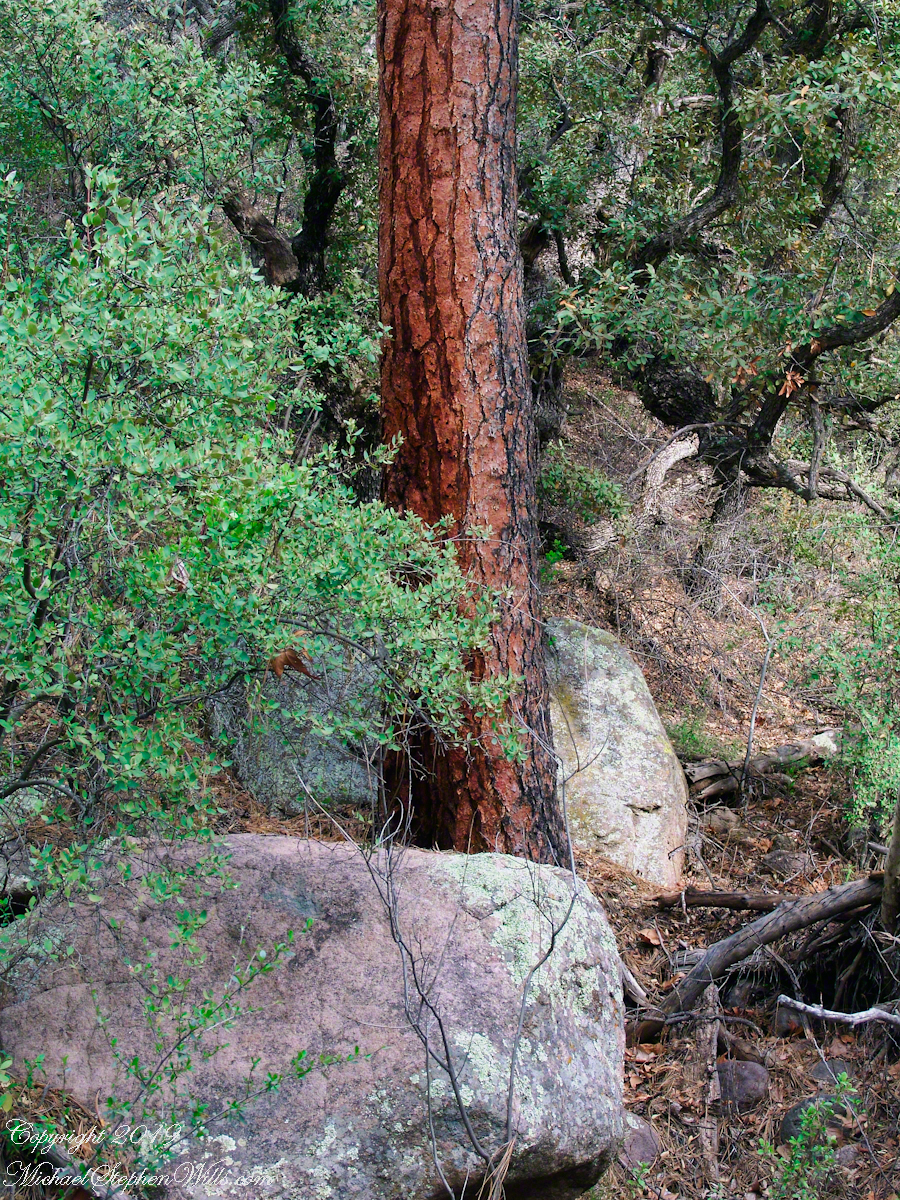
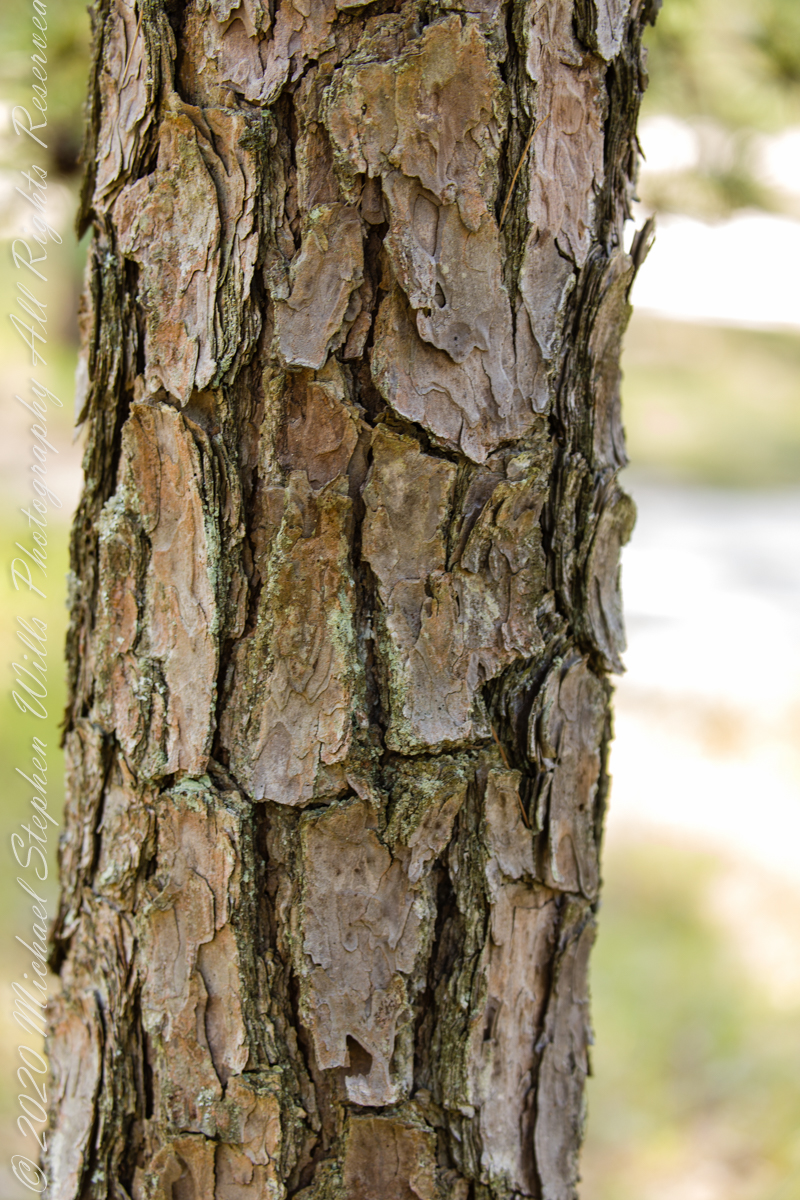
A mature Pitch Pine has bark of large, thick, irregular plates, adapted to survive forest first, similar to another member of the Pinus genera, the Ponderosa Pine.

Click pic for larger view in a new browser tab. If you are in WordPress Reader, open the post to use this feature.

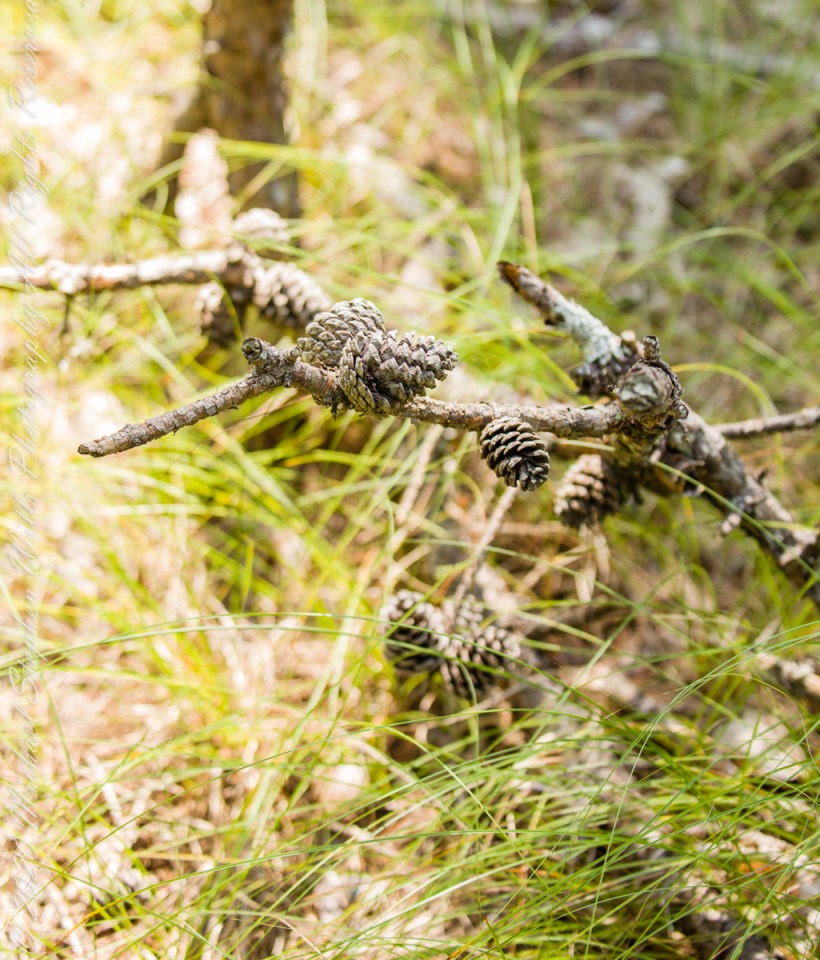
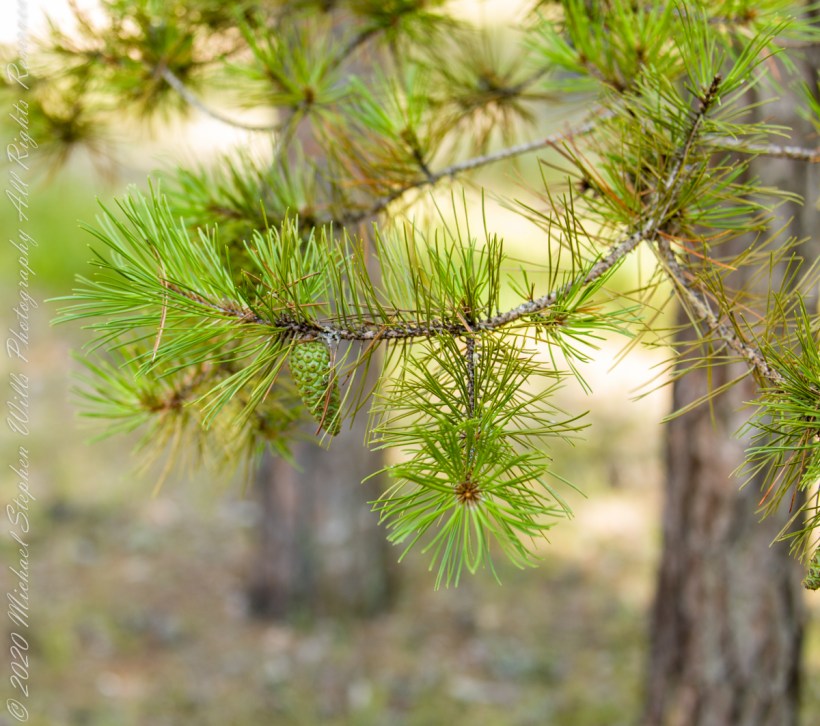
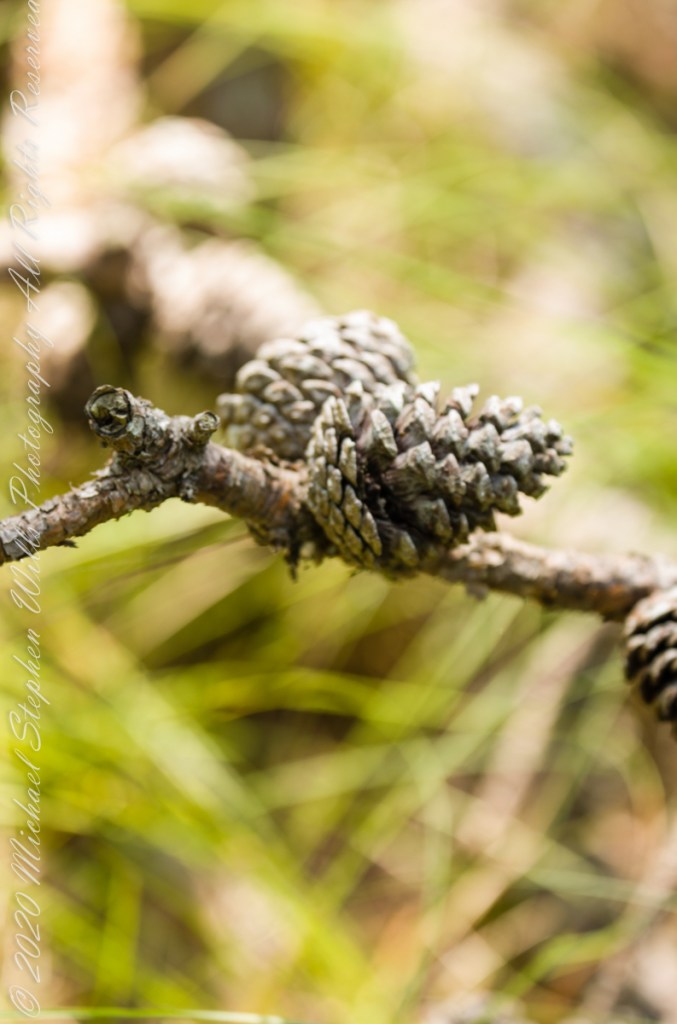
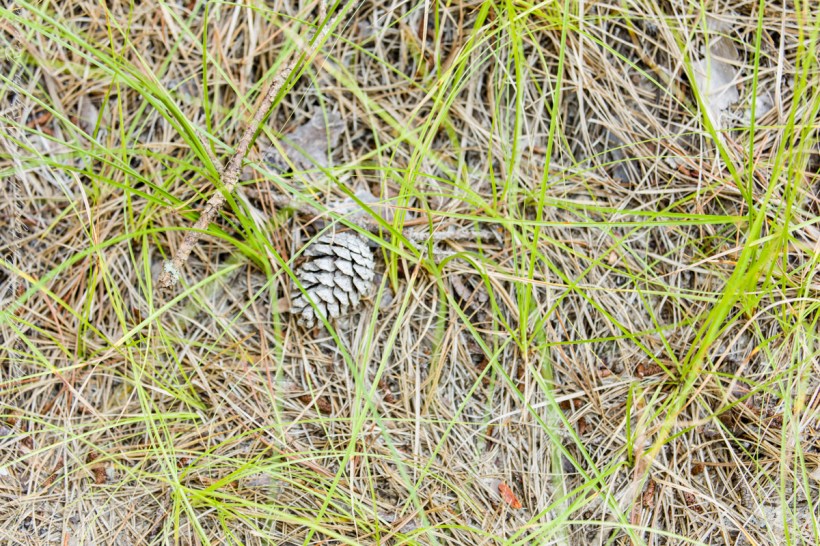
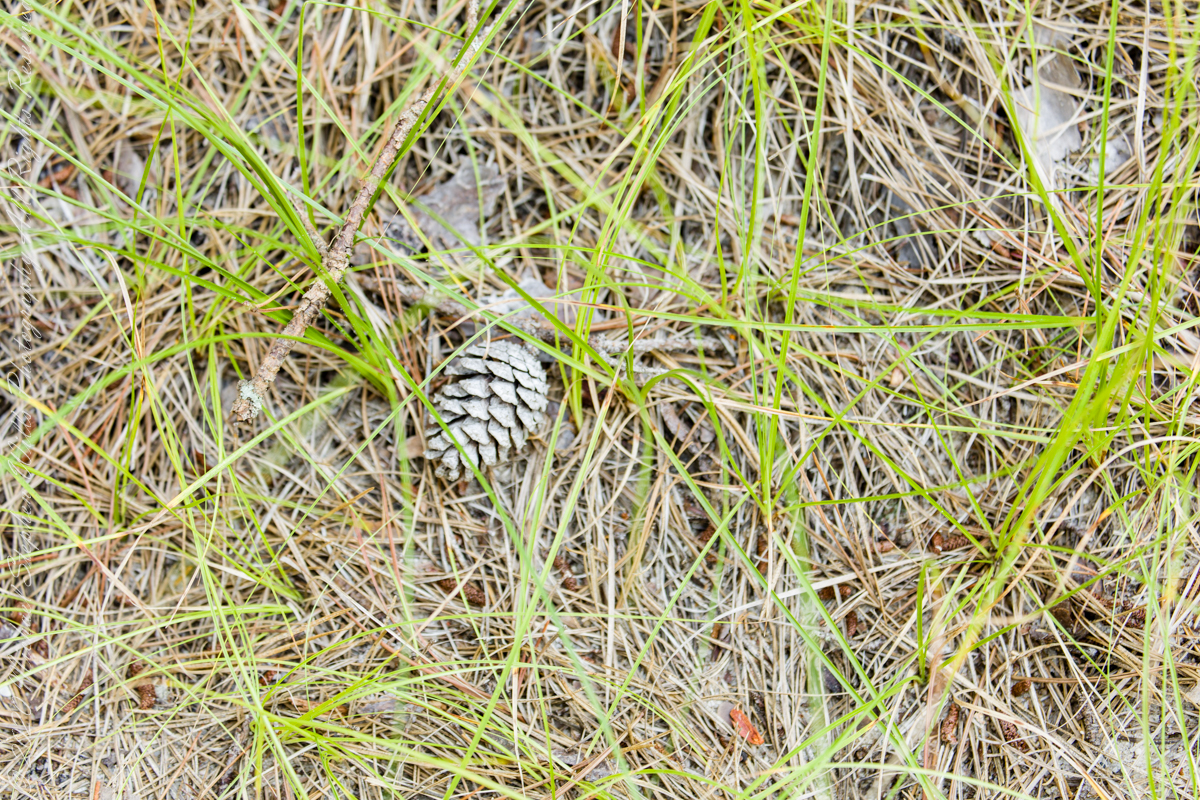
Open-growth trees begin bearing cones in as little as three years, with shade-inhabiting pines taking a few years longer. The cones are 4–7 cm (1+1⁄2–2+3⁄4 in) long and oval, with prickles on the scales. Cones take two years to mature. Seed dispersal occurs over the fall and winter.

Unlike the another member of genus Pinus, the Pinyon Pine, the seeds released by Pitch Pine cones are not sought out for human consumption.

Copyright 2021 Michael Stephen Wills All Rights Reserved
Around Quaker Bridge III

Poking Around

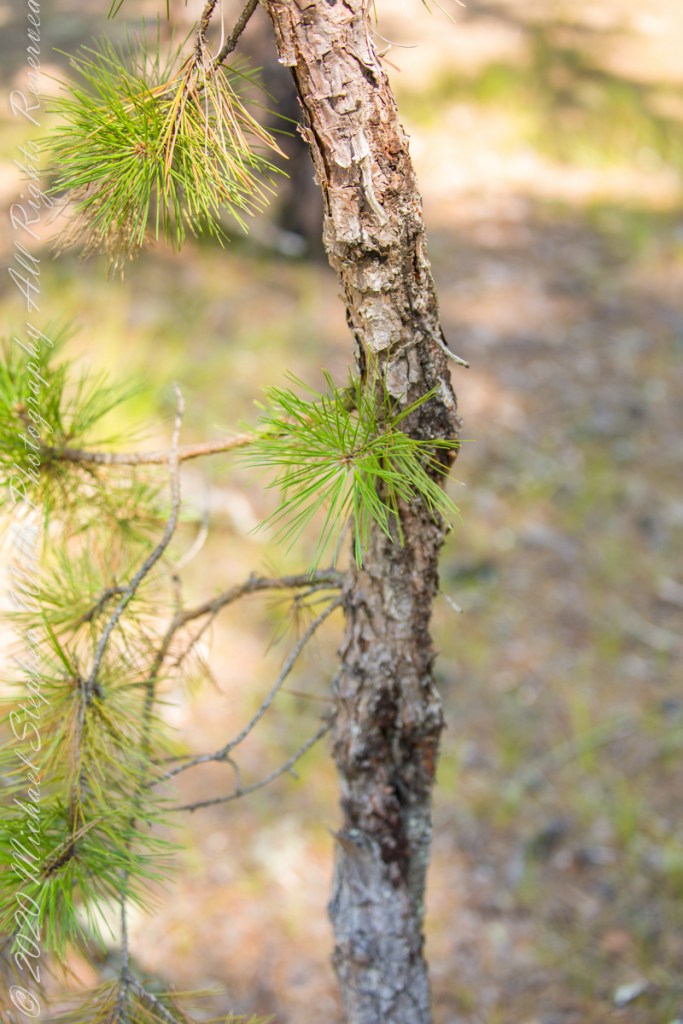
Multiple trails lead from where Quaker Bridge crosses the Mullica River. These are from a handheld Canon 5d Mark IV with the Canon EF 70 – 300 mm f/4.0-5.6 ISM lens.

Click pic for larger view in a new browser tab. If you are in WordPress Reader, open the post to use this feature.

lll

Copyright 2021 Michael Stephen Wills All Rights Reserved
Around Quaker Bridge II

Poking Around

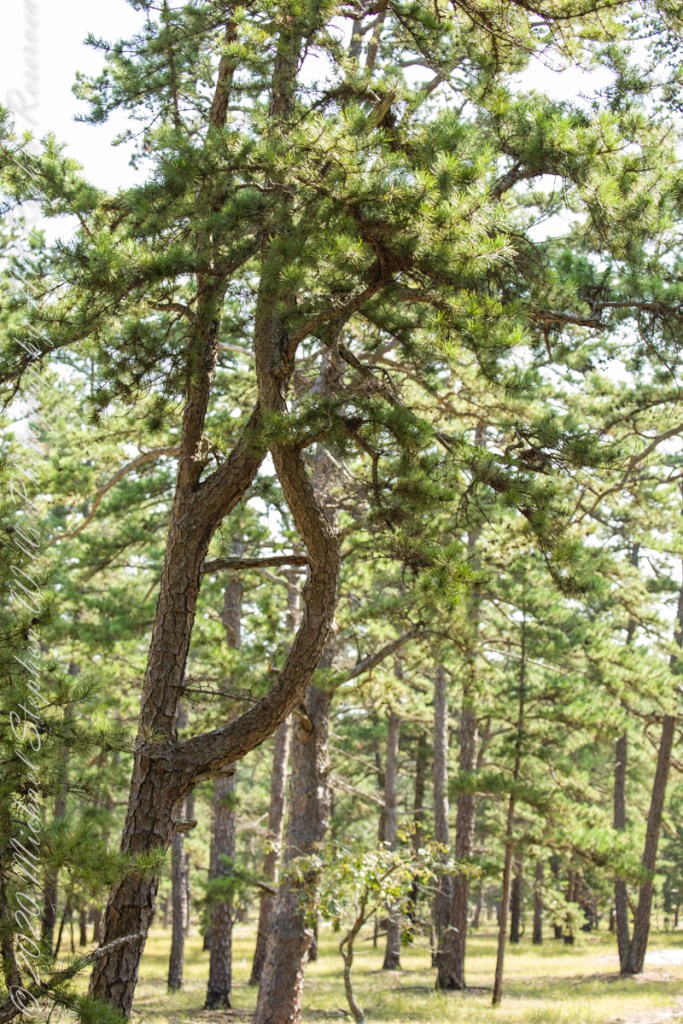
Multiple trails lead from where Quaker Bridge crosses the Mullica River. These are from a handheld Canon 5d Mark IV with the Canon EF 70 – 300 mm f/4.0-5.6 ISM lens.

Click pic for larger view in a new browser tab. If you are in WordPress Reader, open the post to use this feature.

lll

Copyright 2021 Michael Stephen Wills All Rights Reserved
Around Quaker Bridge I

Poking Around

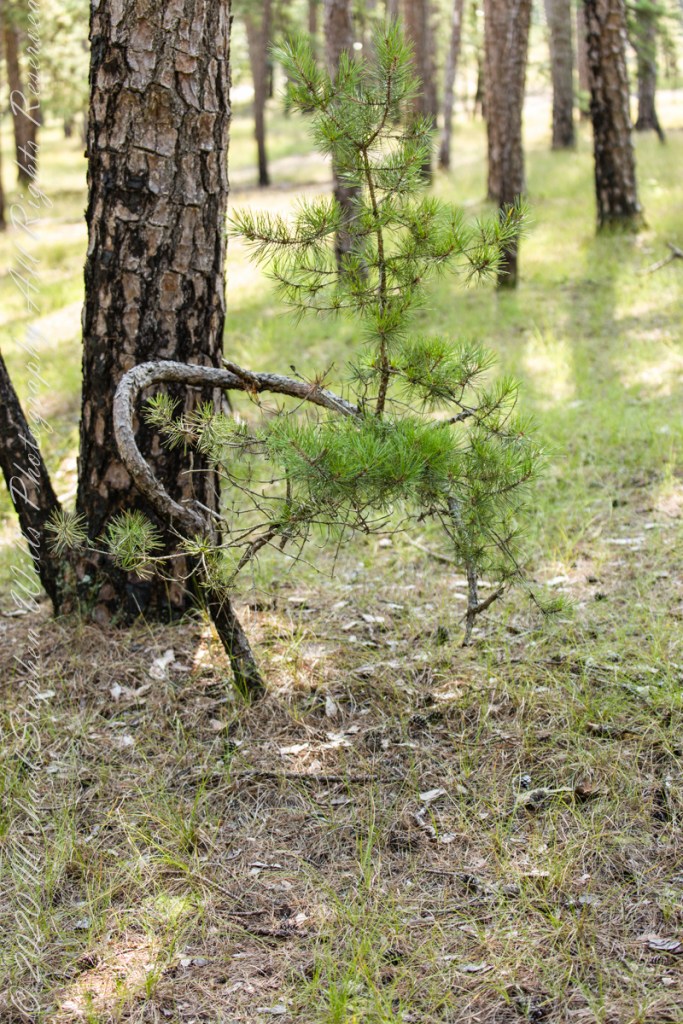
Multiple trails lead from where Quaker Bridge crosses the Mullica River. These are from a handheld Canon 5d Mark IV with the Canon EF 70 – 300 mm f/4.0-5.6 ISM lens.

Click pic for larger view in a new browser tab. If you are in WordPress Reader, open the post to use this feature.

lll

Copyright 2021 Michael Stephen Wills All Rights Reserved
Summer Garden

2021

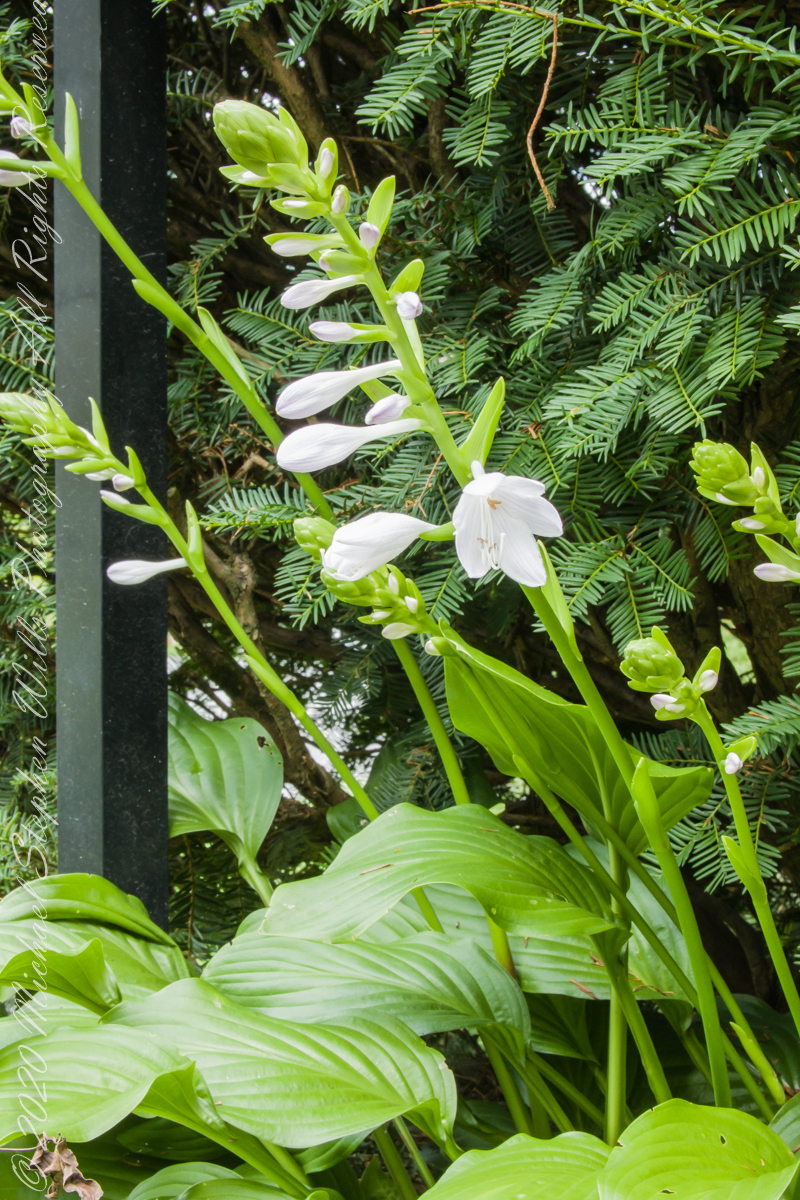
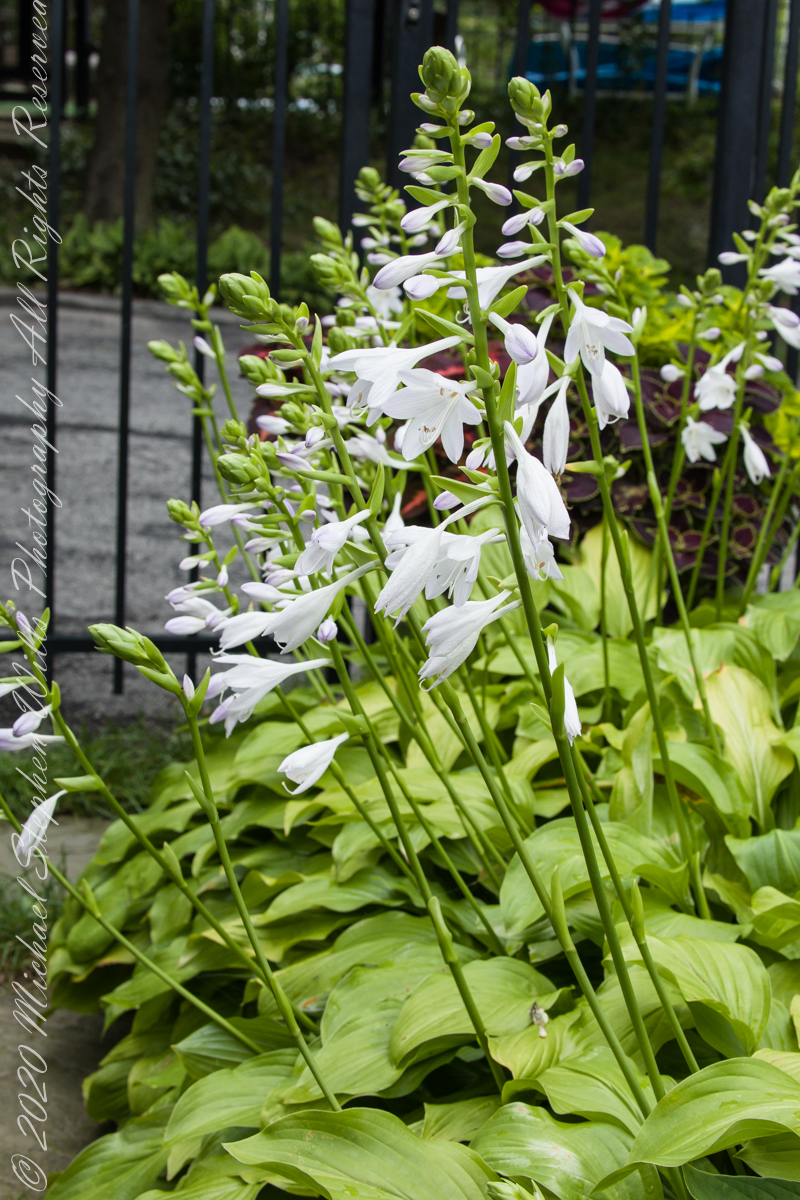
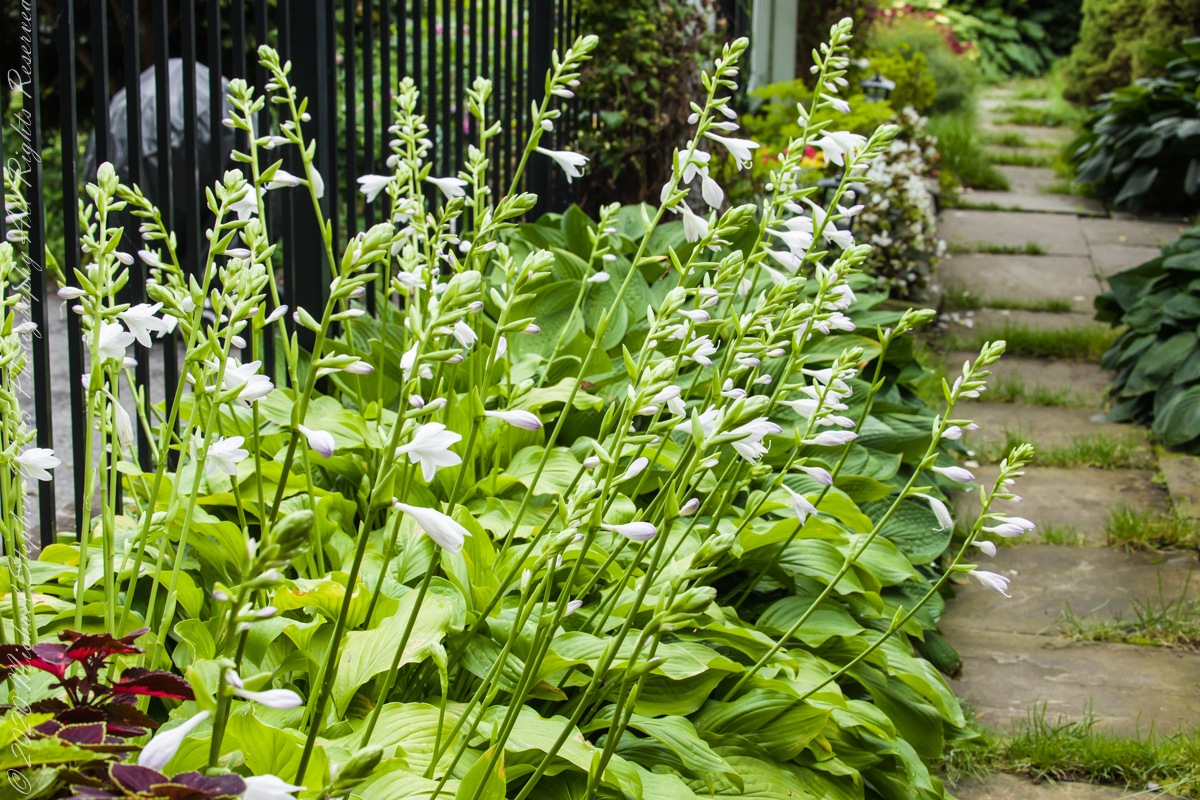
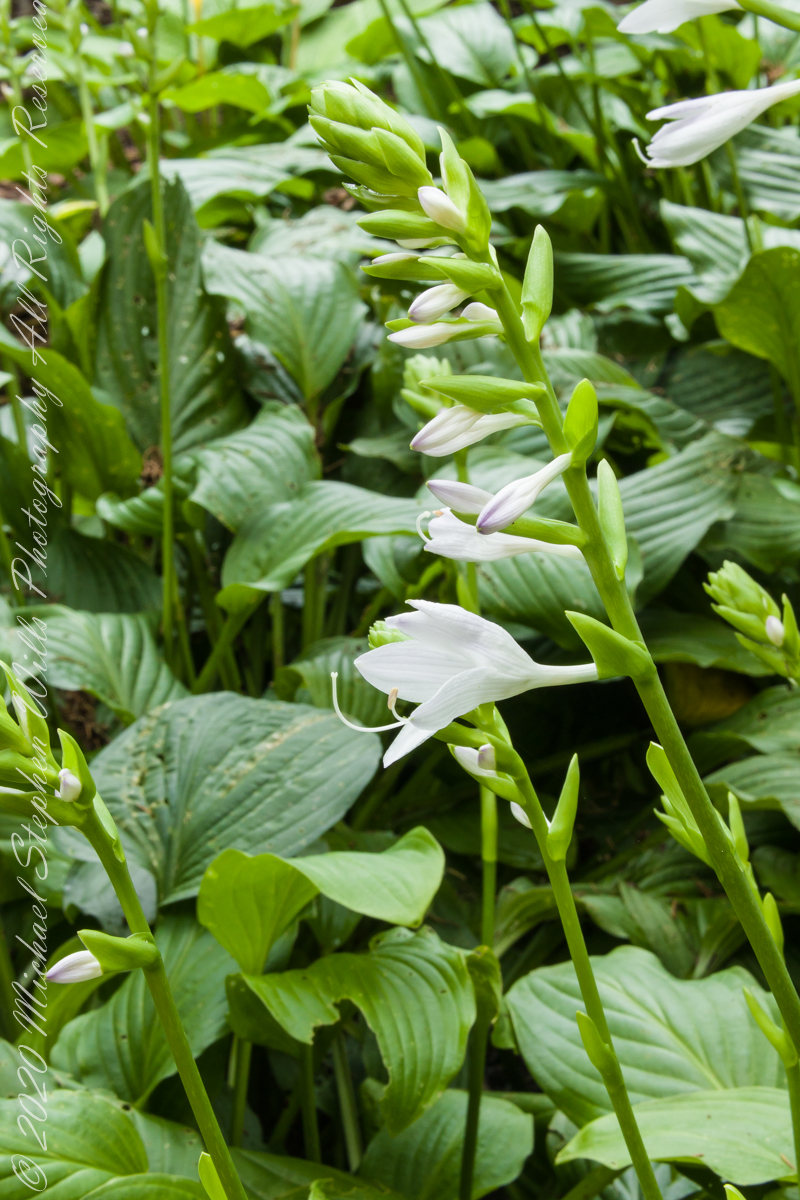
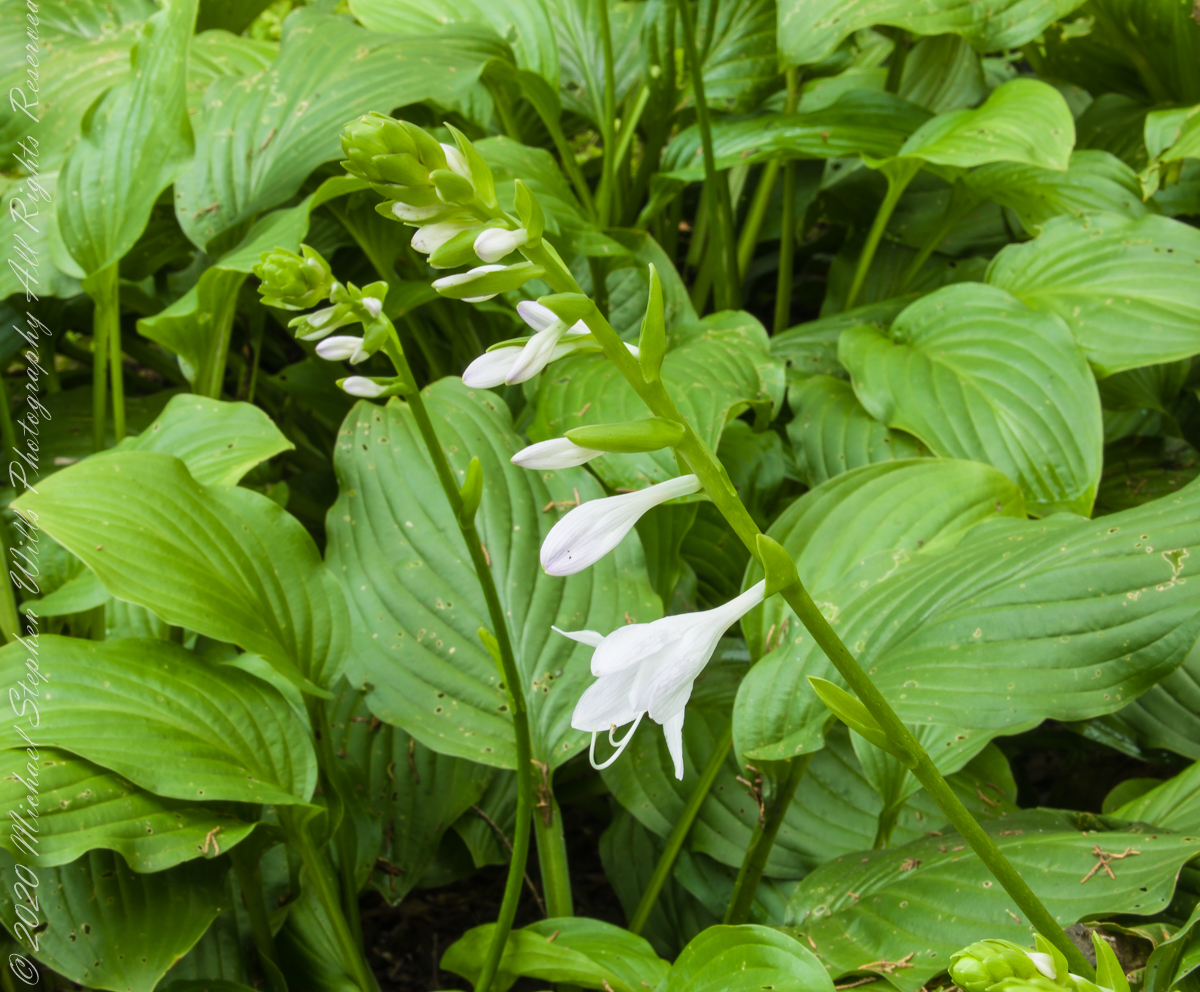
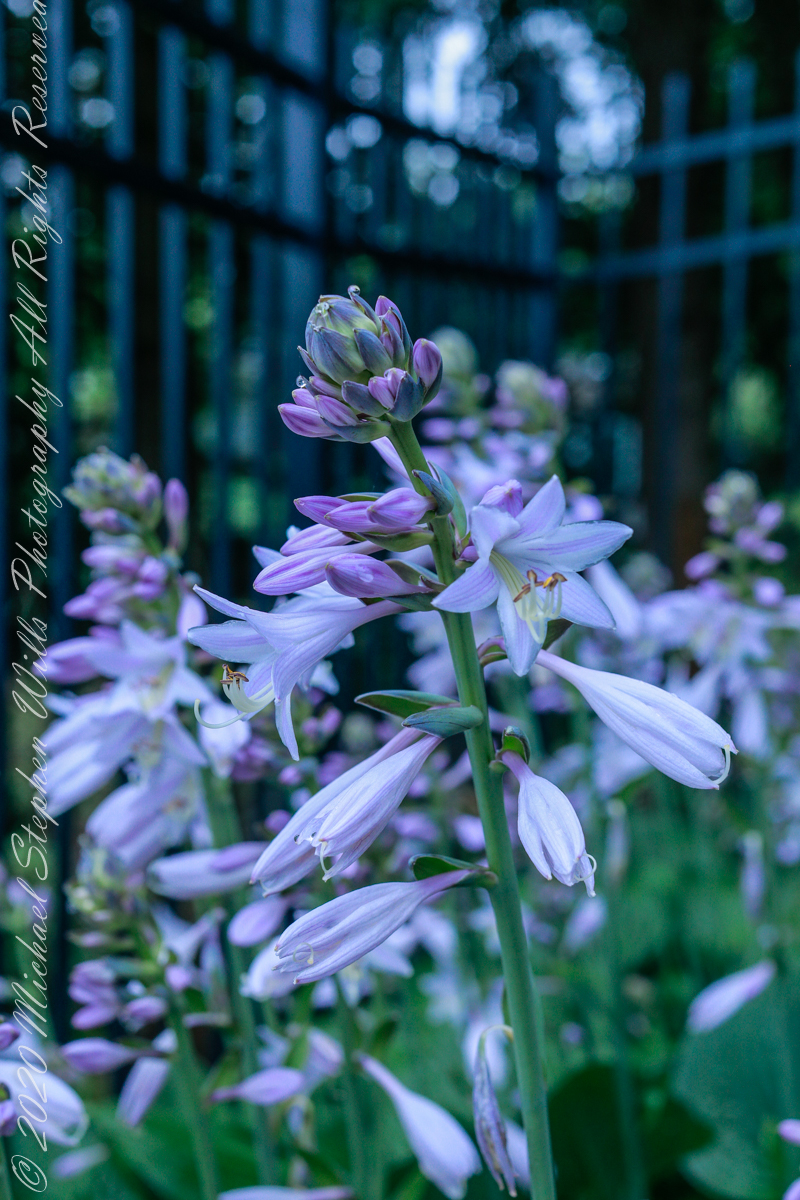
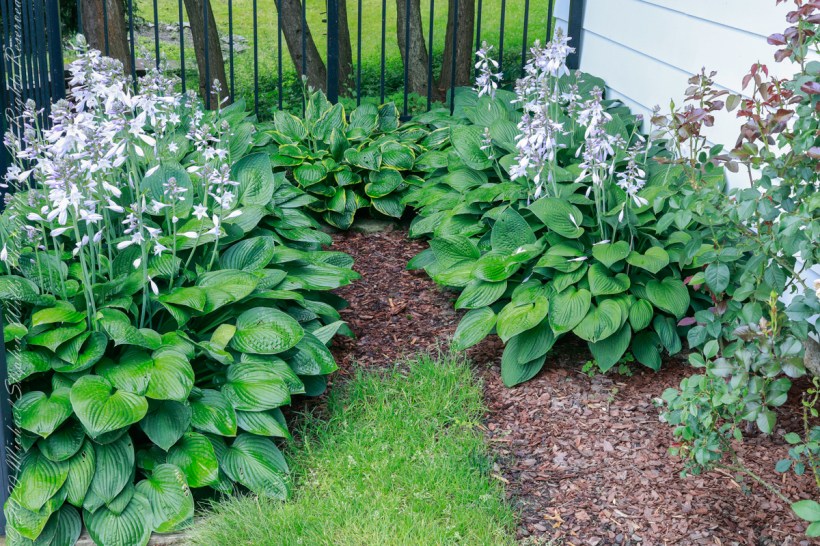
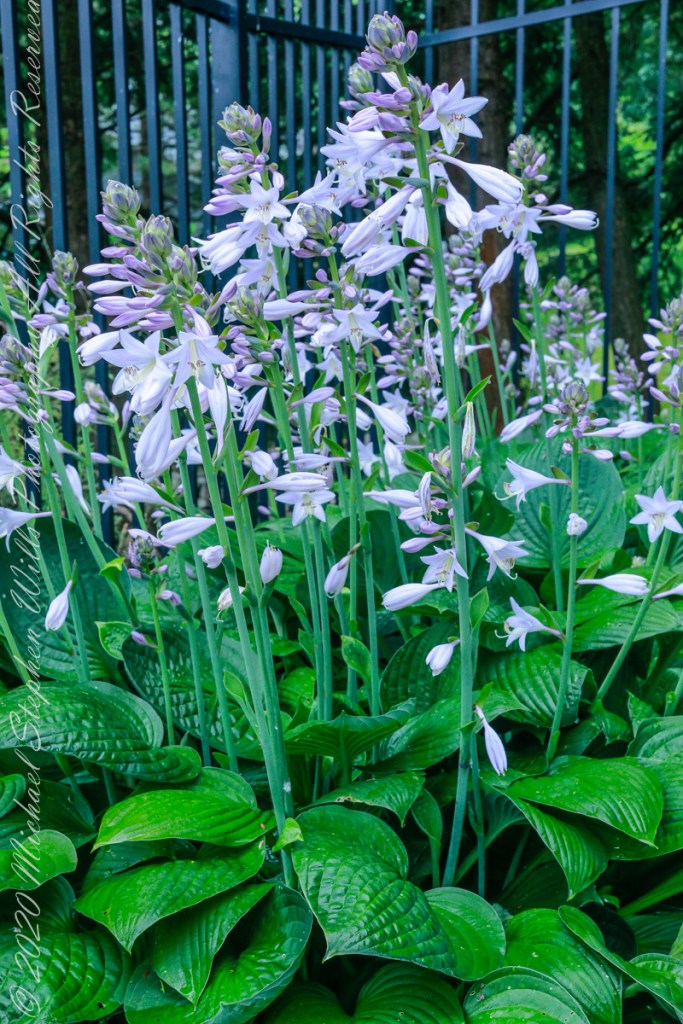
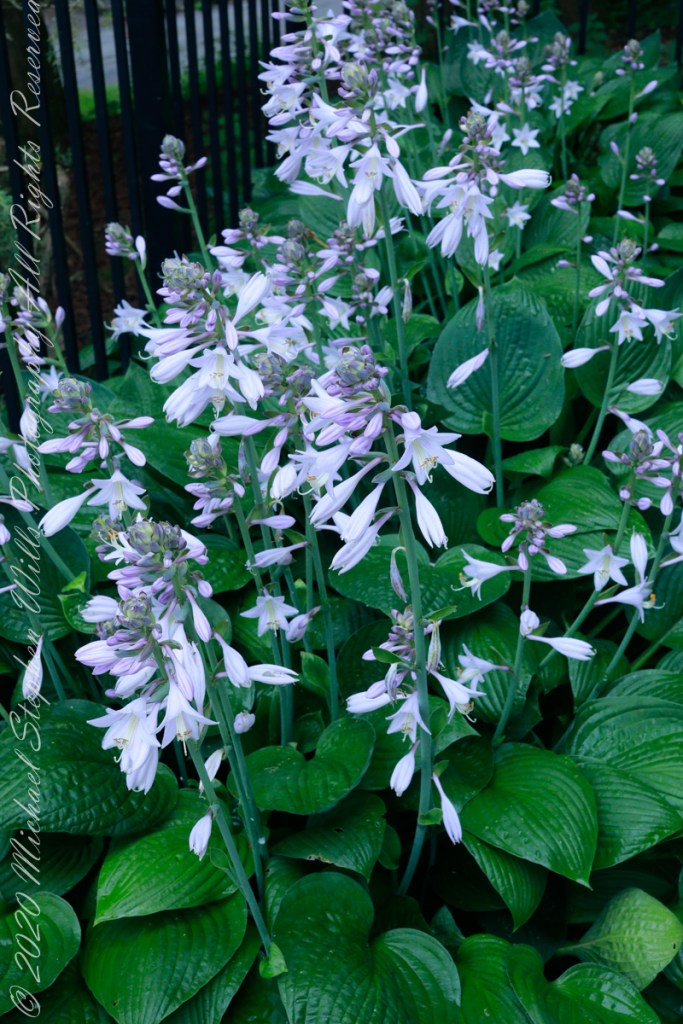
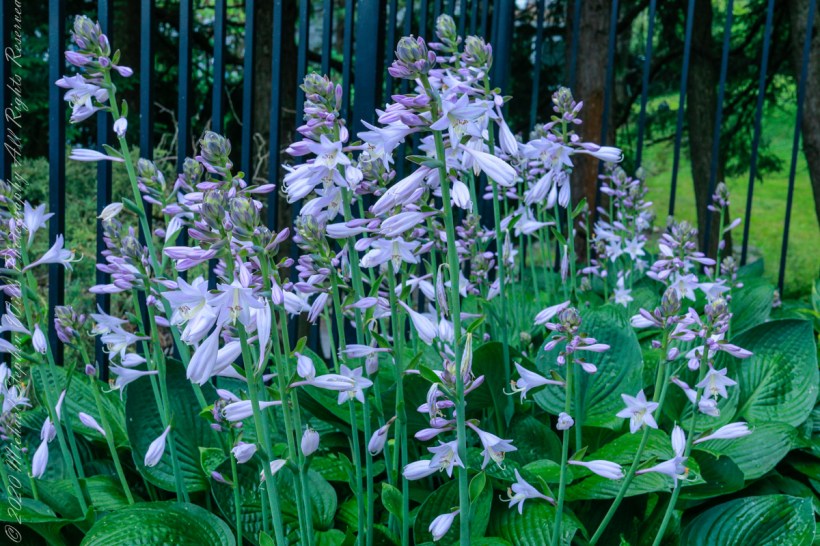
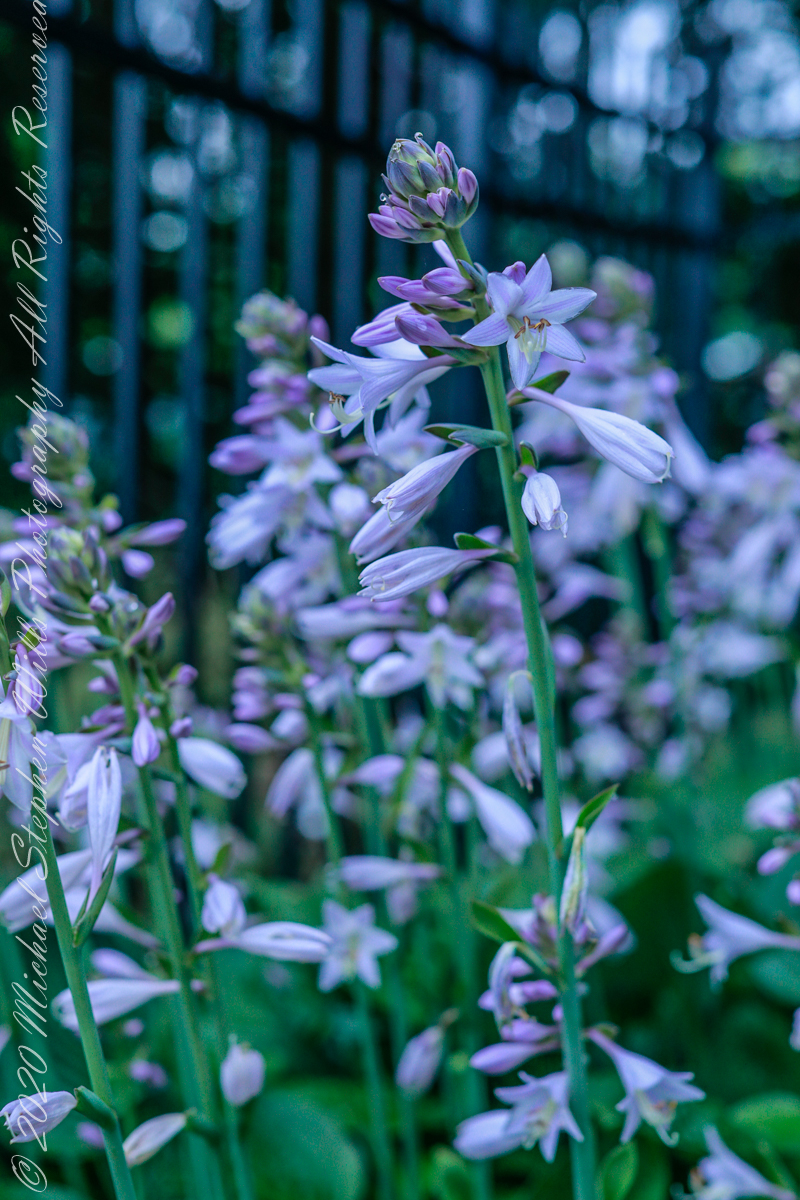
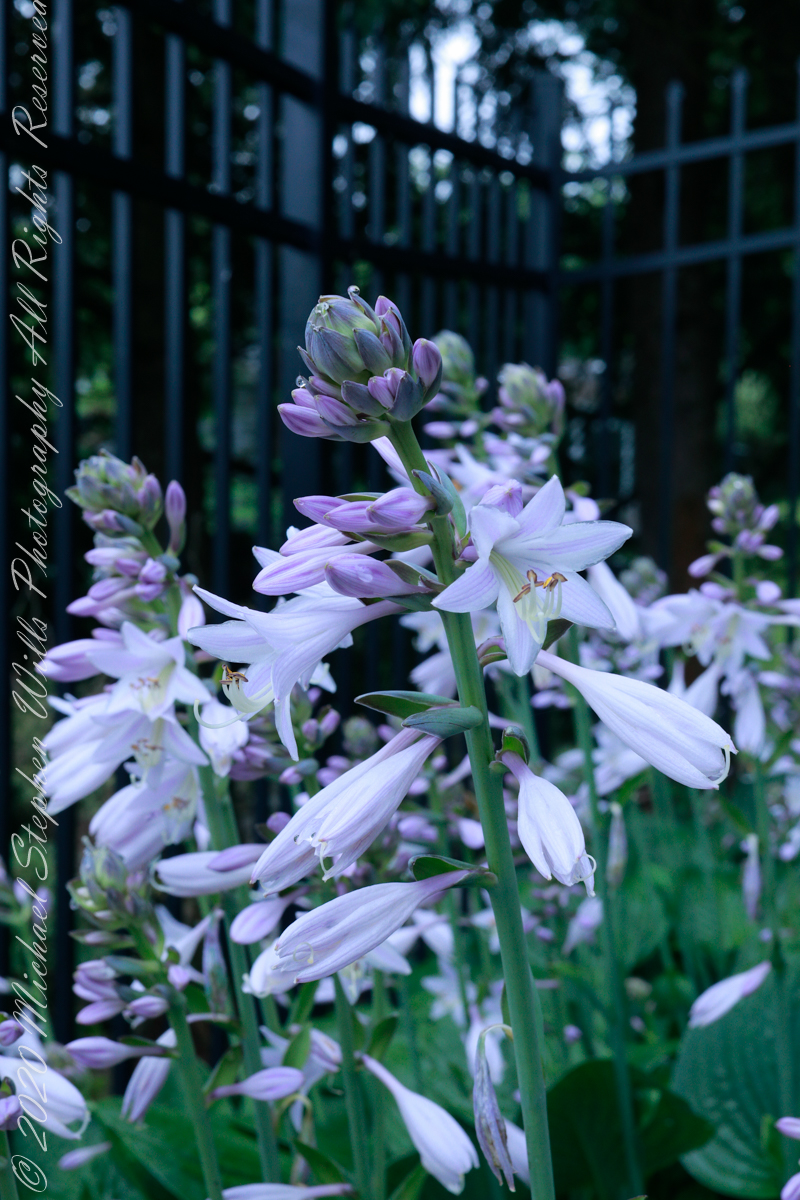
Pam requested photographs of hosta flower stalks with blooms and developing buds. I setup the Manfrotto tripod, the Canon dslr mounted with an Canon EF 70-300mm f/4.5-5.6L lens at ISO 1600 and these are the results.

Native to northeastern Asia, In 1812 the genera Hosta was named for the European botanist Nicholas Thomas Host. Also called plantain lily for the habit of the herbaceous stalks to grow radially from a center.

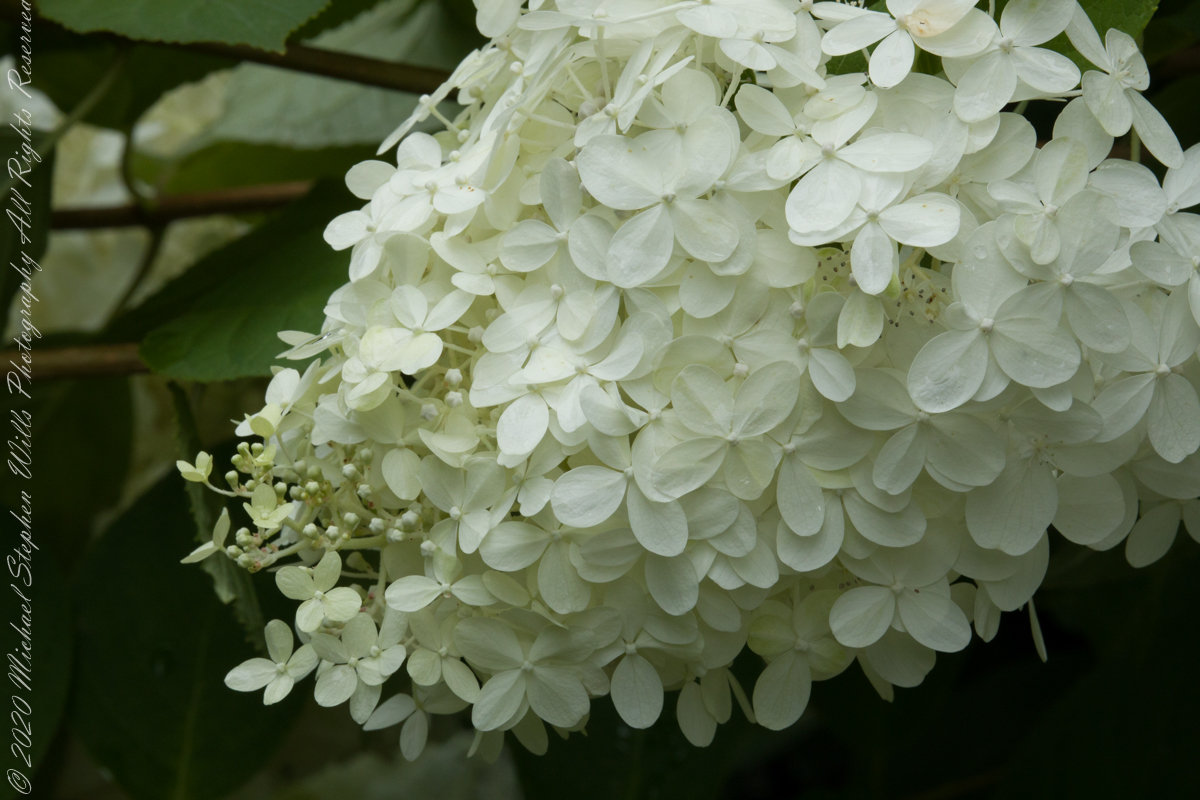
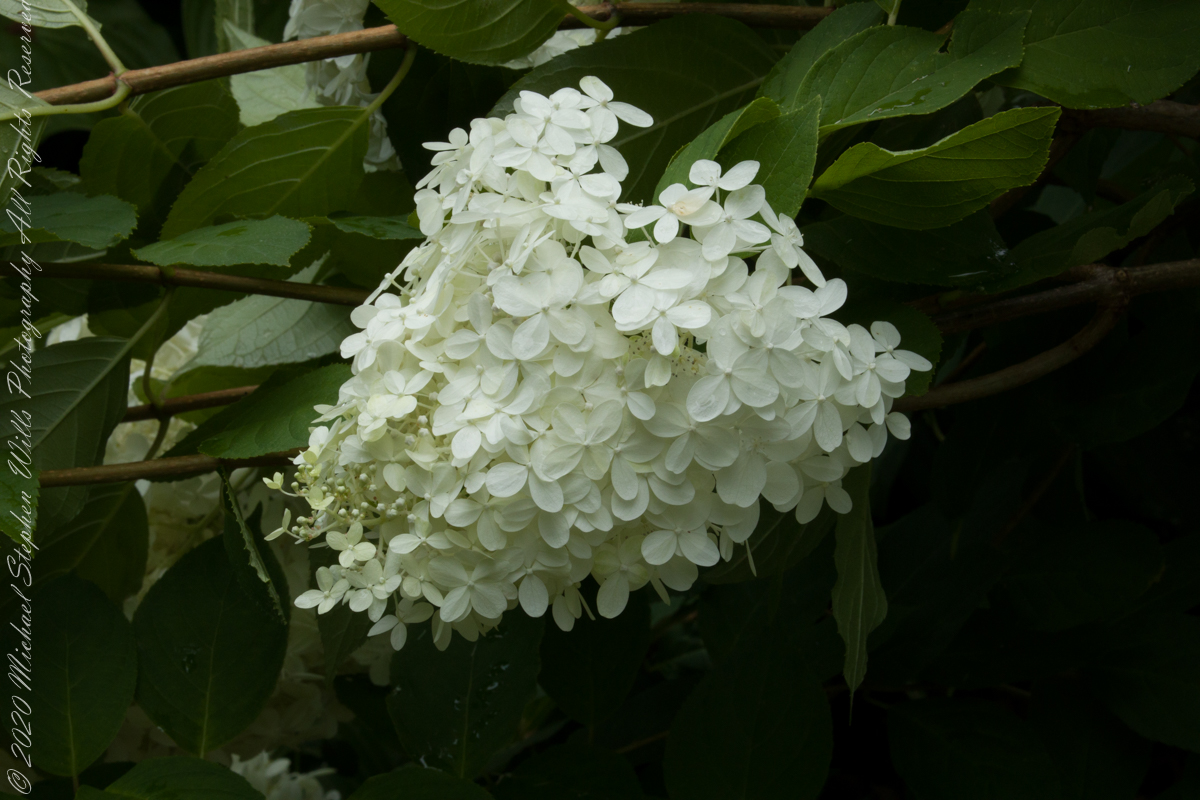
The name “Hydrangea is derived from Greek and means ‘water vessel’ (hydria), in reference to the shape of its seed capsules. The earlier name, Hortensia, is a Latinised version of the French given name Hortense, honoring French astronomer and mathematician Nicole-Reine Hortense Lepaute.” _wikipedia


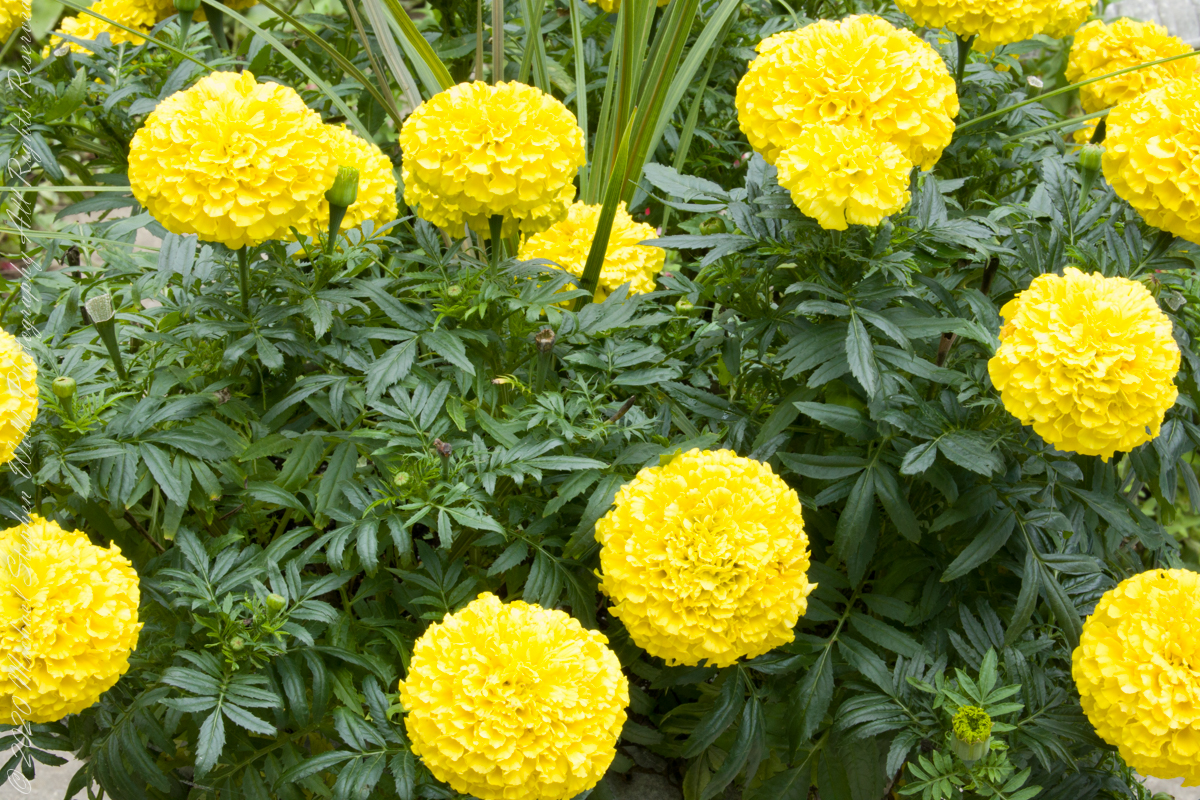
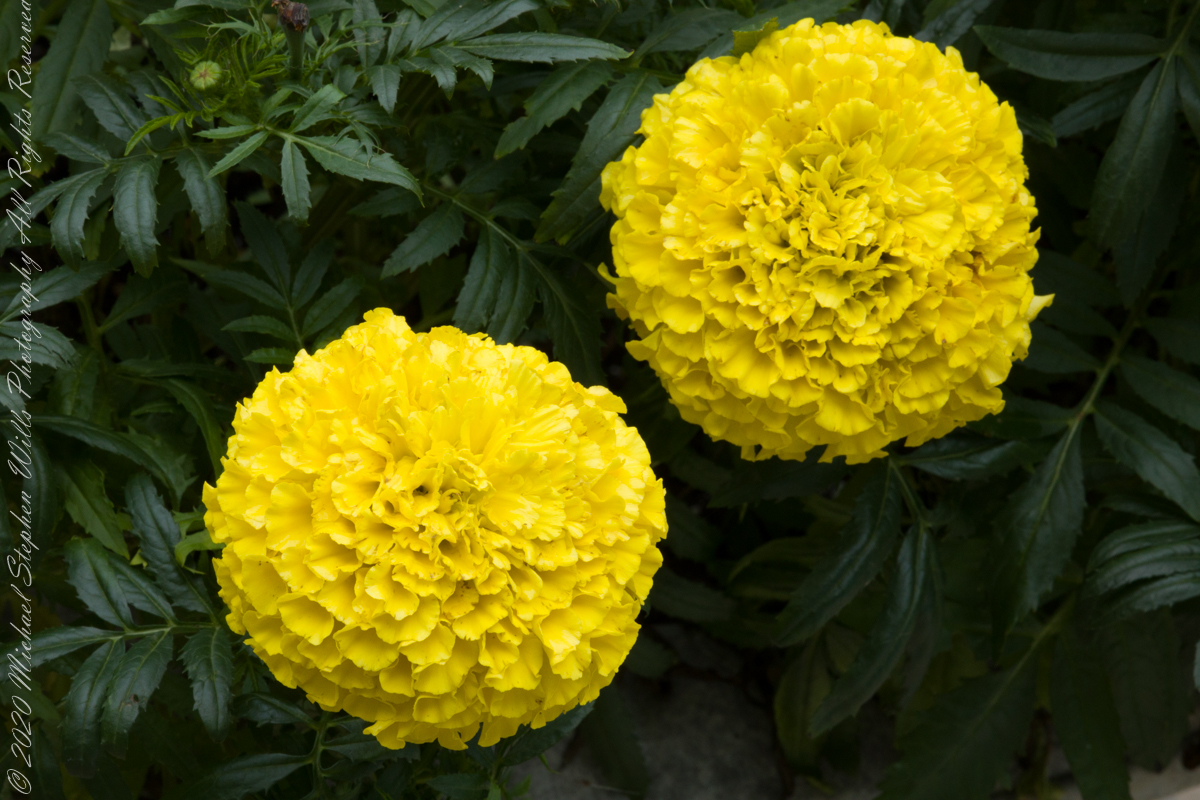
The common name “Marigold” refers to the Virgin Mary.

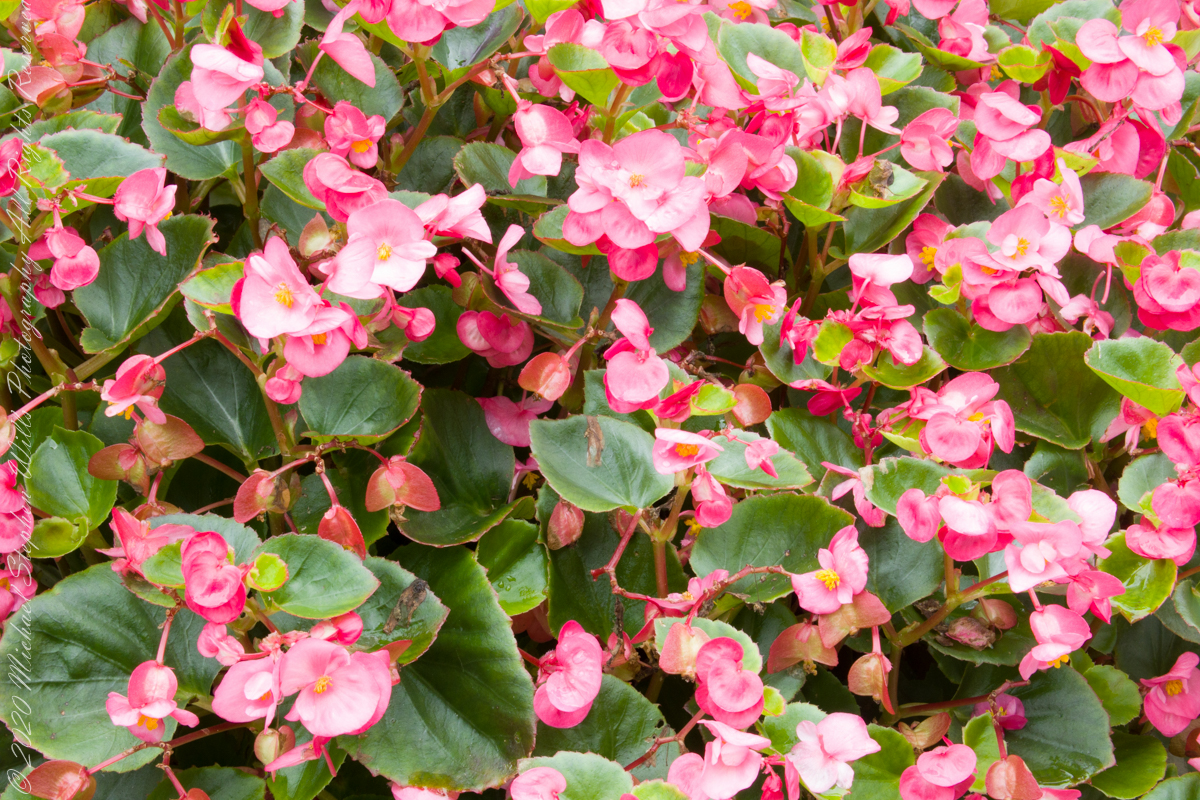
Begonias come in so many shapes and colors.

Garden Gnomes, Bird Bath and Sculpture

Copyright 2021 Michael Stephen Wills All Rights Reserved
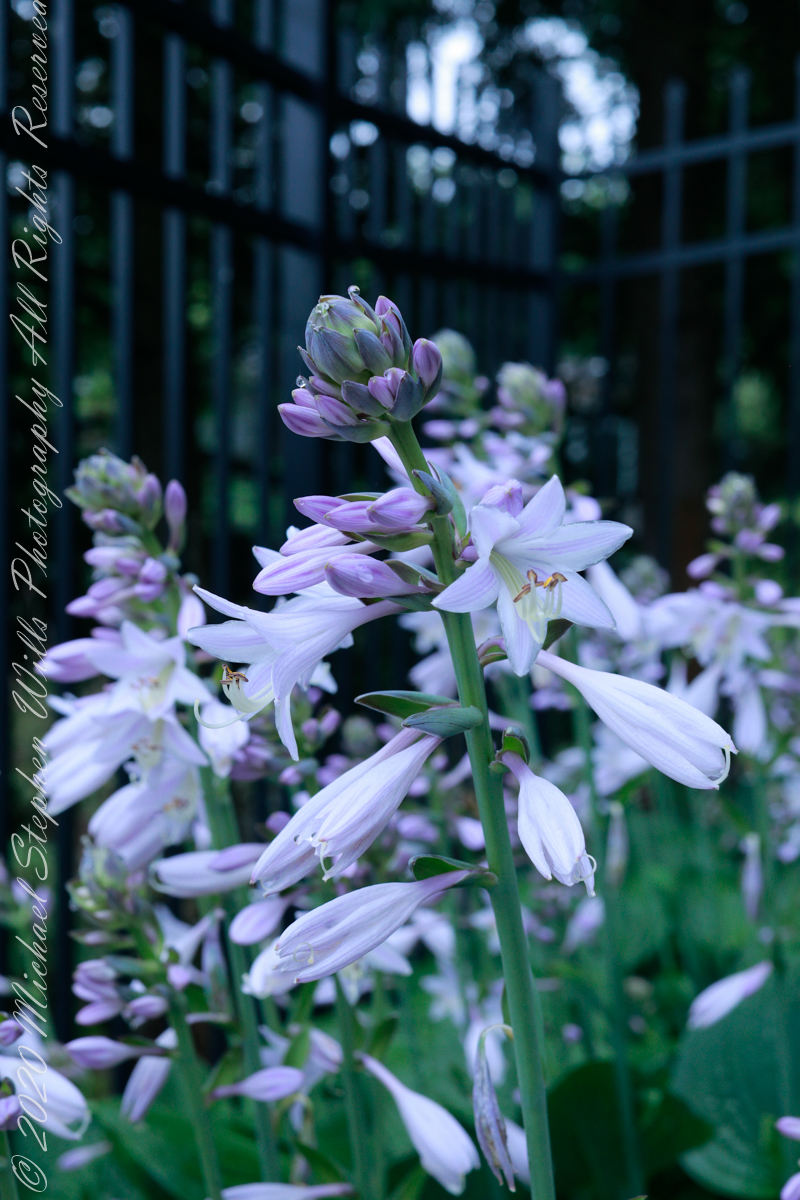
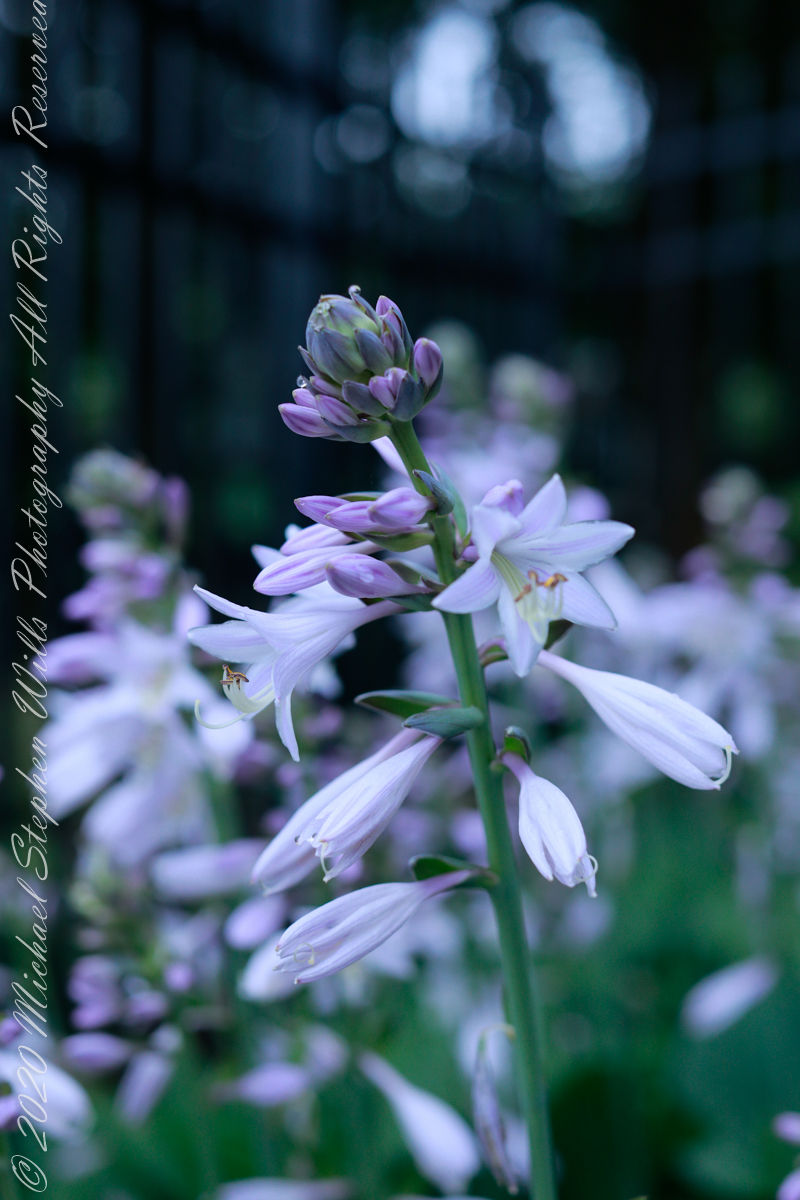
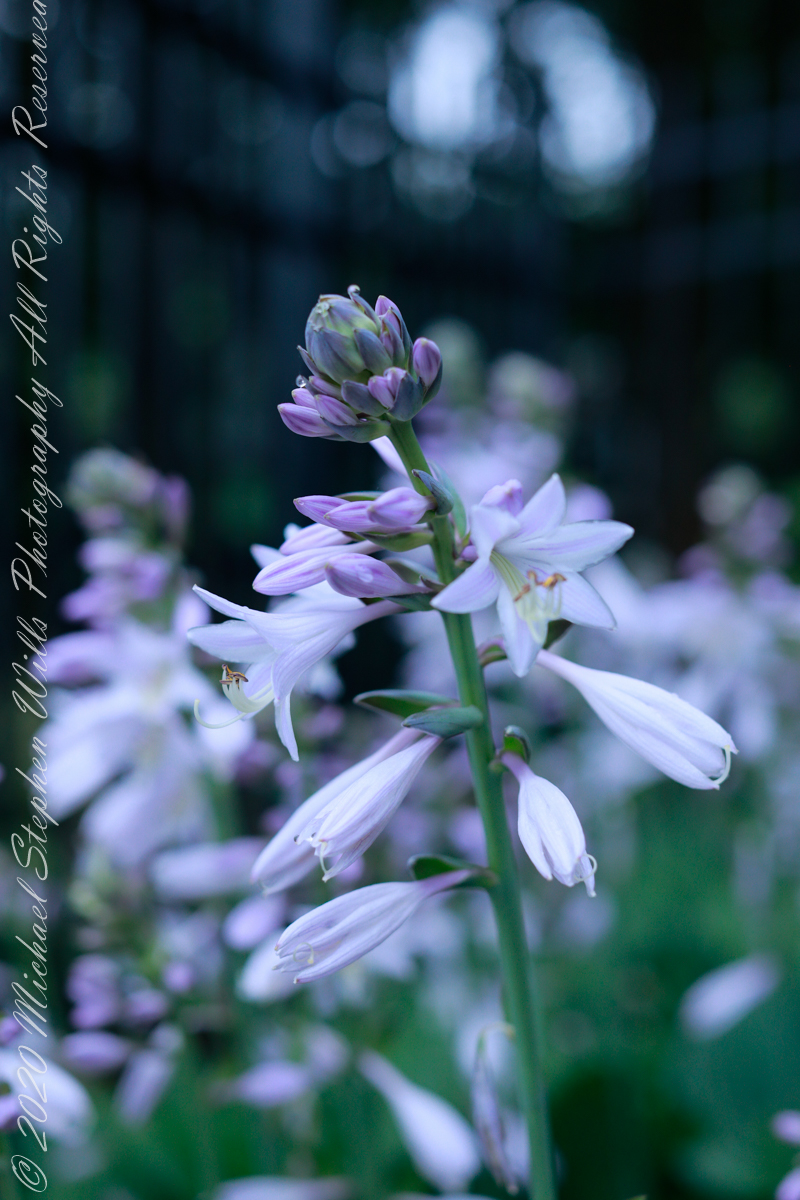
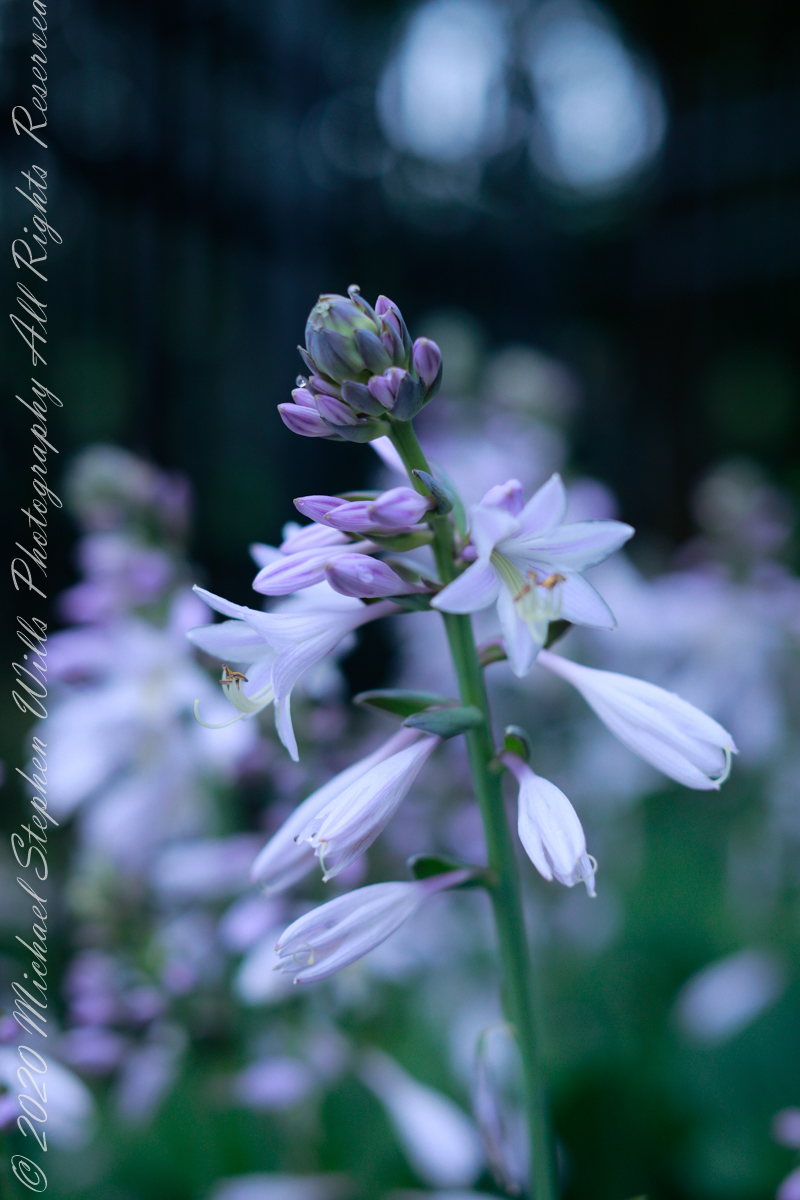
Hosta

Hosta Blooms on a cloudy, still summer dawn

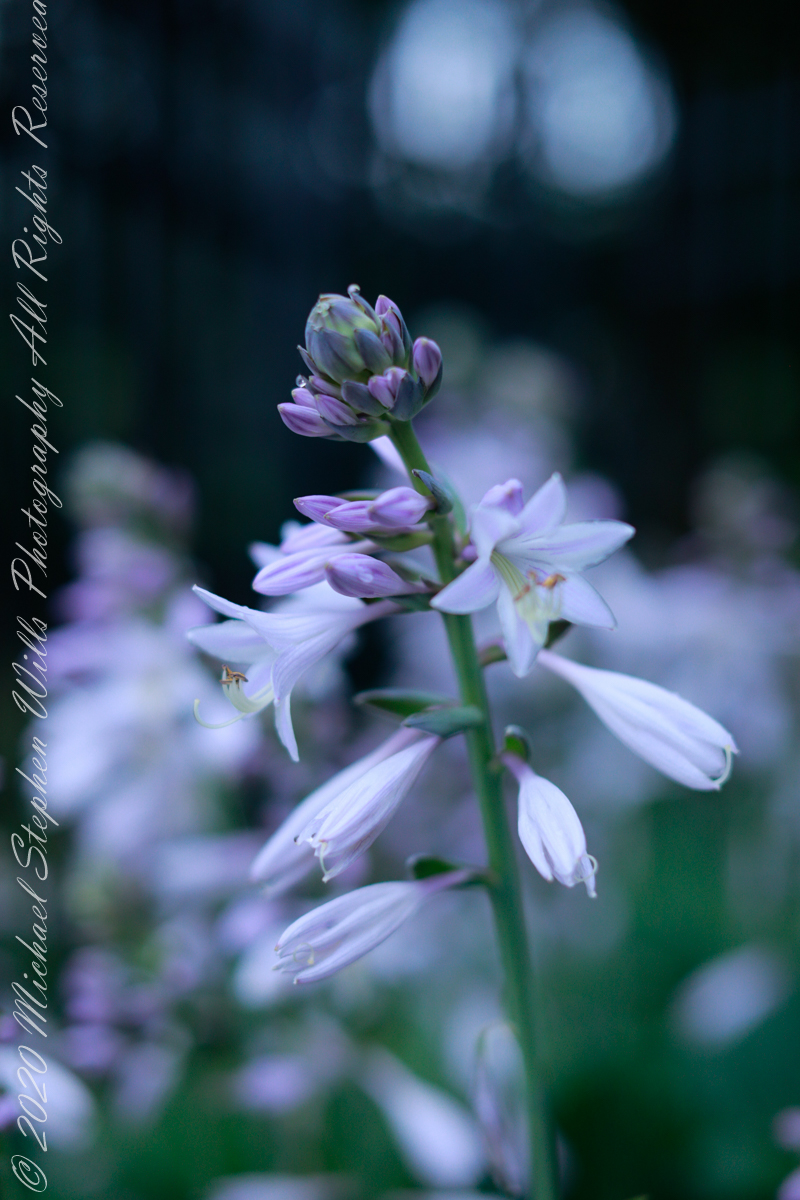
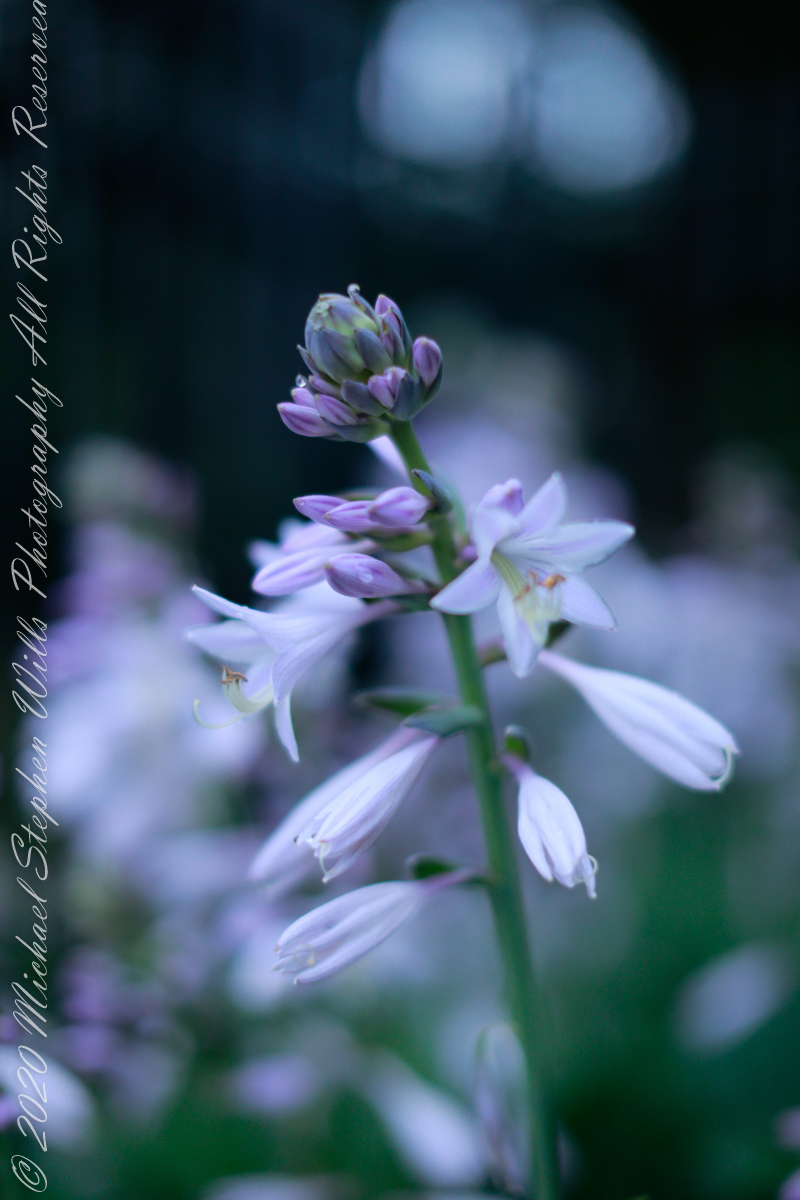
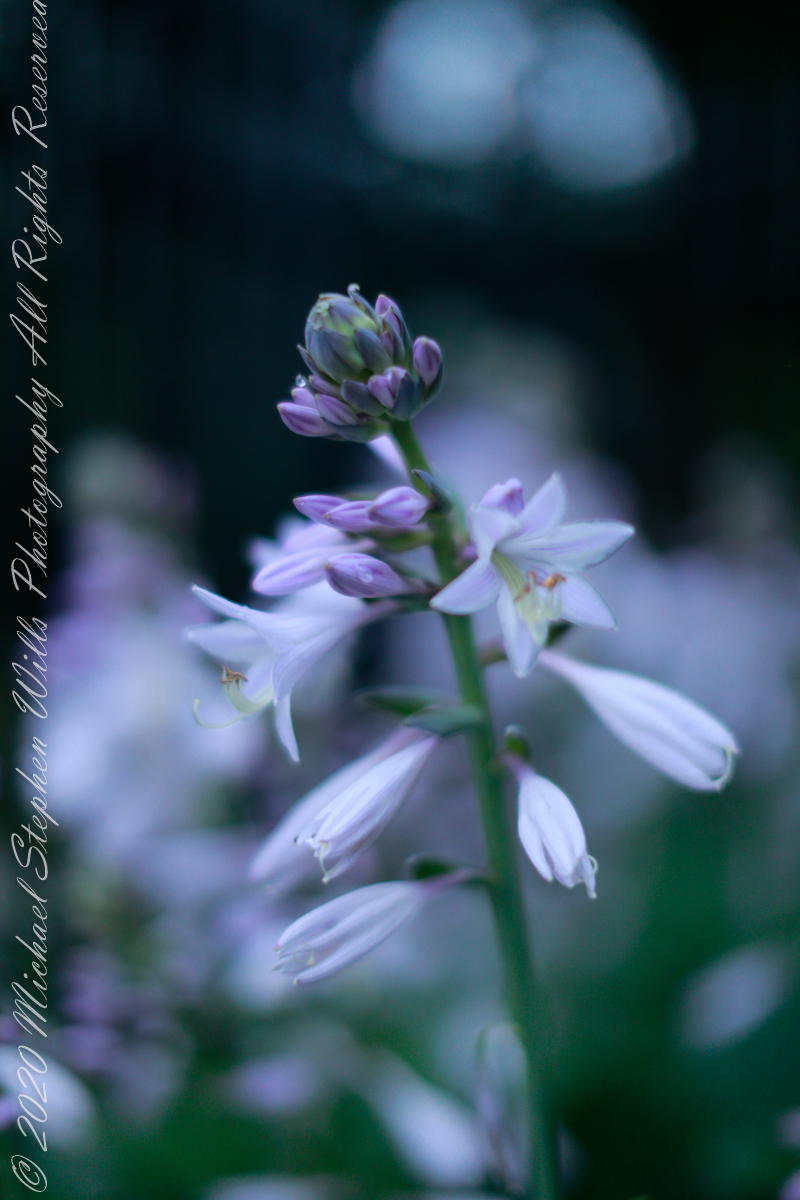
On July 17, 2021 Ithaca was socked in with heavy clouds obscuring sunrise, a perfect moment to capture Pam’s hostas flowering with the upper stalks still budding. I setup the Manfrotto tripod, the Canon dslr mounted with an EF 50 mm 1:1.2 L at ISO 800 and these are the results.

Native to northeastern Asia, In 1812 the genera Hosta was named for the European botanist Nicholas Thomas Host. Also called plantain lily for the habit of the herbaceous stalks to grow radially from a center.

This series moves from the lens diaphragm starting at the smallest opening, greatest depth of field and longest exposure, to the widest, most shallow depth of field and shortest exposure. The air was very still this morning, allowing me to experiment.


Here is my favorite version from the above experiment. Do you have a favorite? Named it in comment and please explain your choice.

Copyright 2021 Michael Stephen Wills All Rights Reserved
Wildflowers Late Winter / Early Spring 3

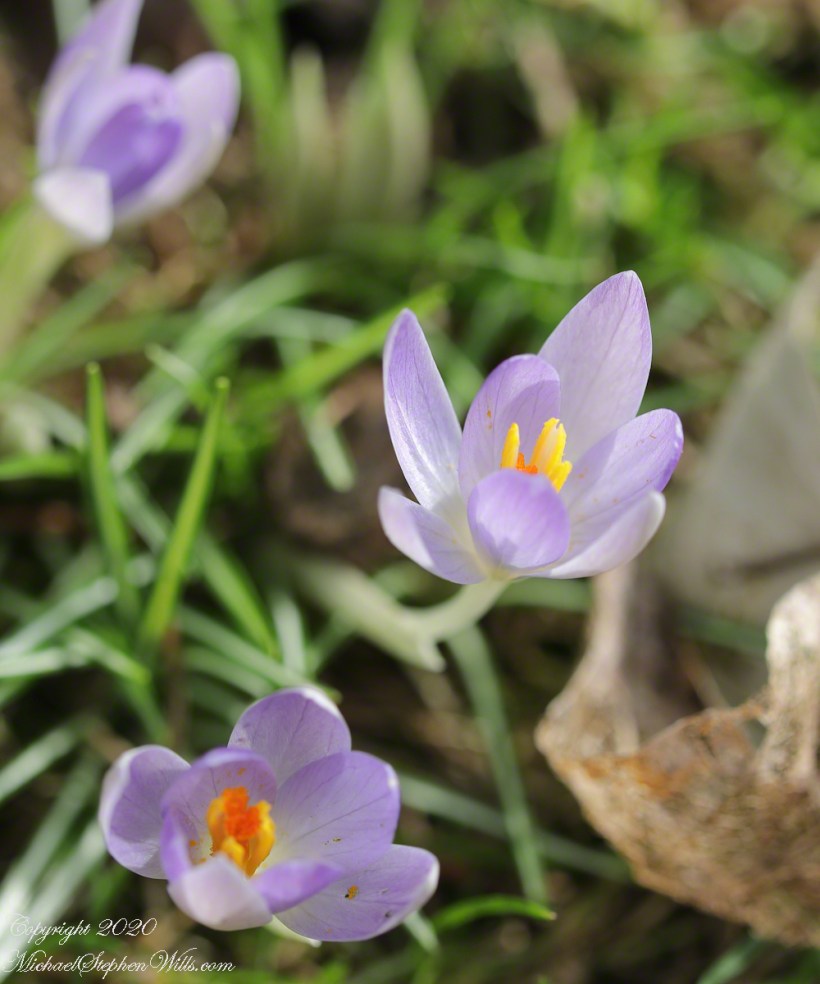
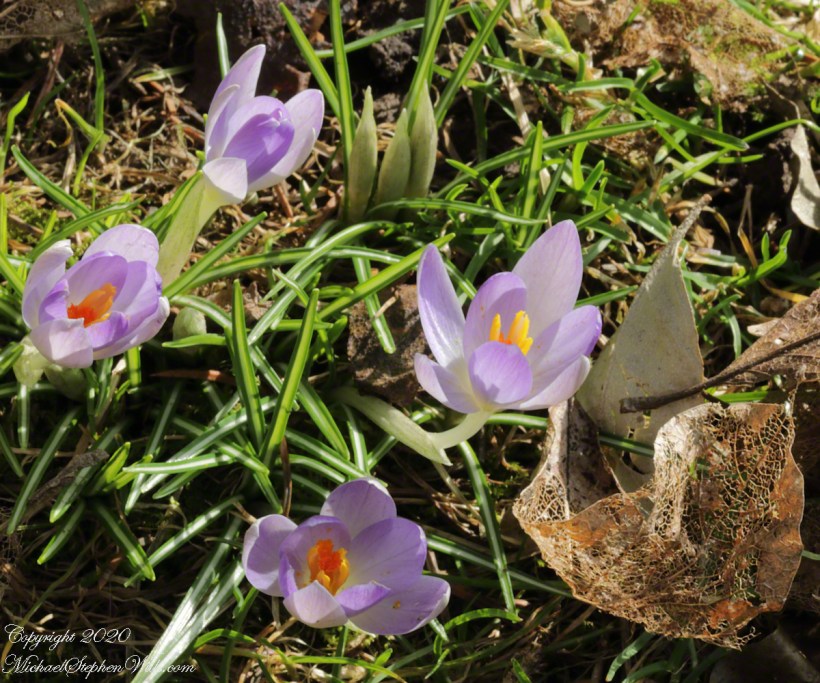
With the thermometer in the 40’s on March 12 these crocus were open, under the same magnolia tree as the buttercups from the 10th. The blooms close during cold snaps much as you see in the first post.

Click photograph for a larger view. To do this from WordPress Reader, you need to first click the title of this post to open a new page.

A tripod held the composition steady and the timer was set to 2 seconds for extra stability. With the leaf body worn away by time, the remaining veining turns the form lacy.

Here is a slideshow today’s and previous wildflowers.

Copyright 2021 All Rights Reserved Michael Stephen Wills
Correction

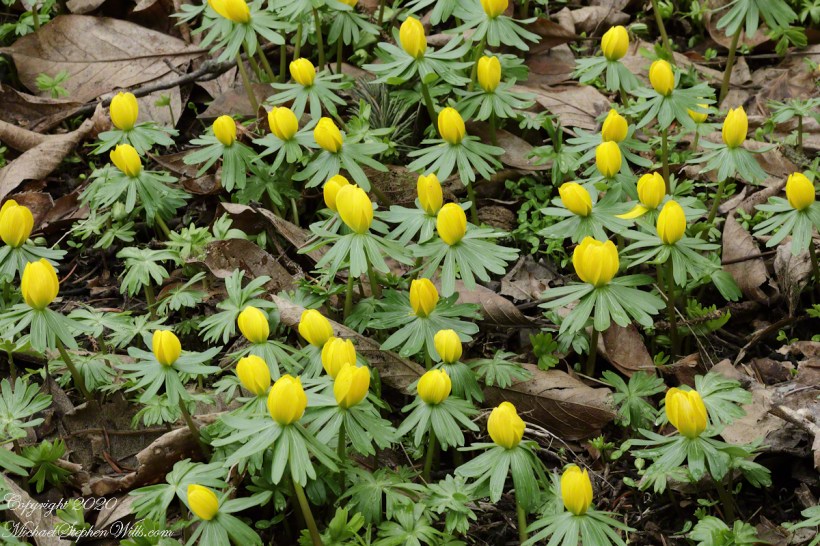
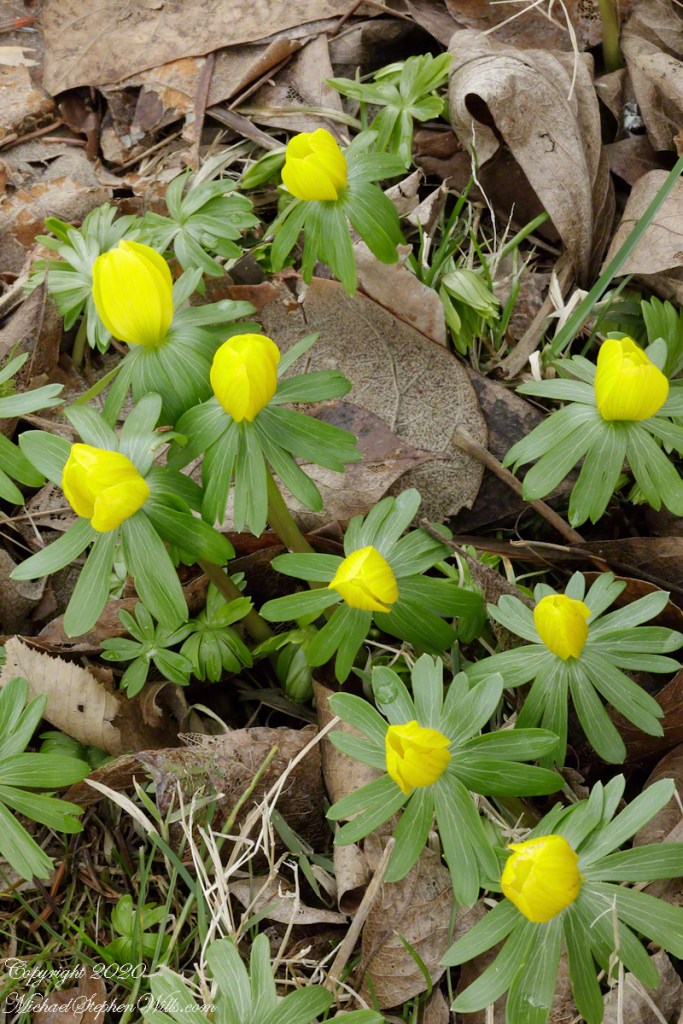
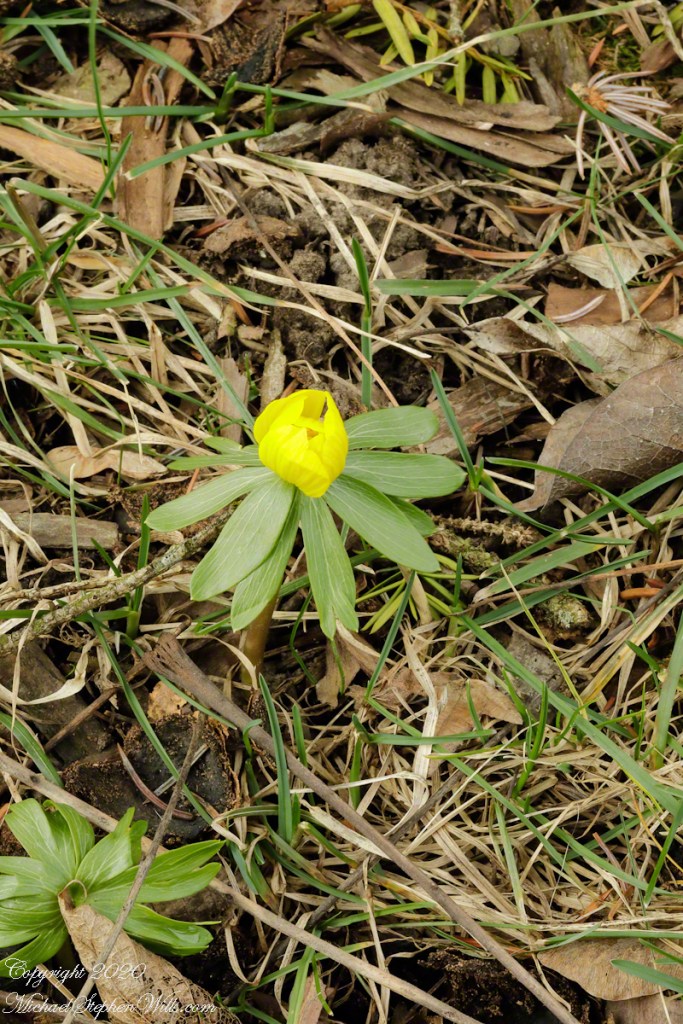
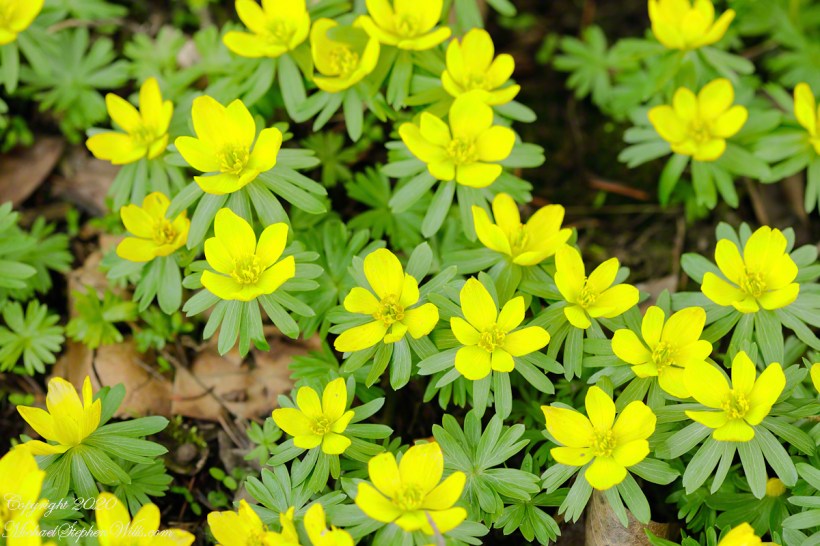
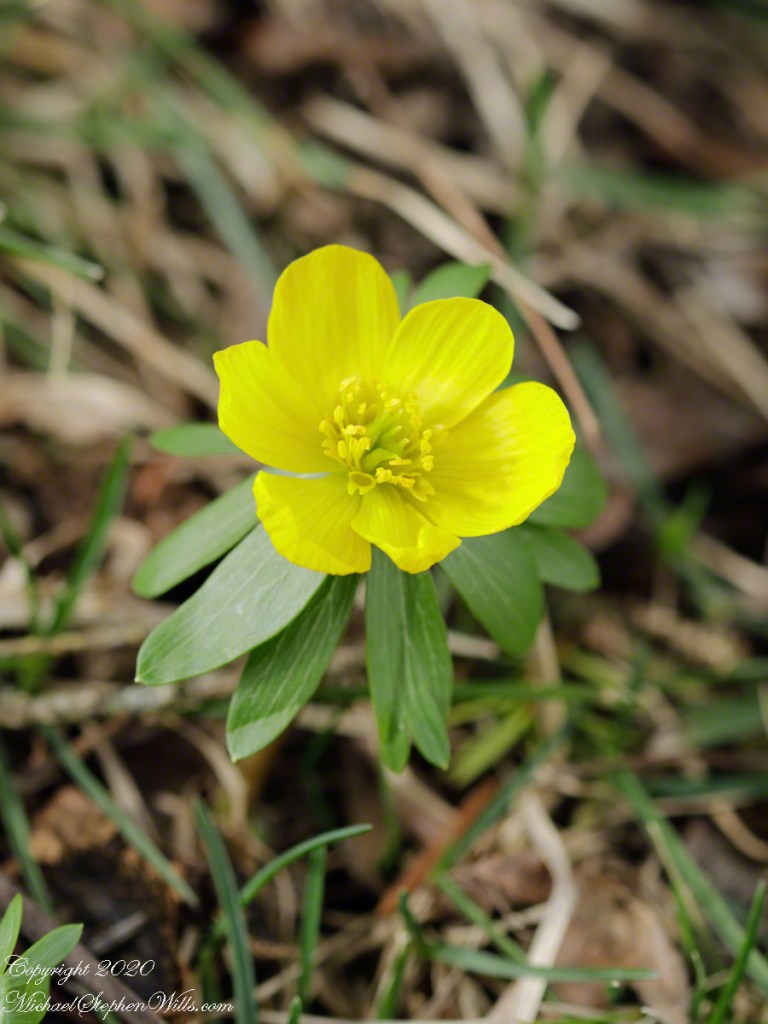
Eranthis hyemalis

A fellow blogger, Audrey Driscoll’s Blog, provided the correct and exact species name for the post “Wildflowers Late Winter / Early Spring.” The posts are updated. Thank You, Audrey.

Copyright 2020 All Rights Reserved Michael Stephen Wills