A Ride to Reavis Ranch

Some history and exploration

….continued from the chapter “Desert Luxuries”

After hitching the saddled buckskin, named “Nugget,” and lightly packed pinto to trees beside the trail, The Searcher climbed up to my camp for a visit. I started water for tea and soon we were chatting. Right from the start The Searcher asked for privacy. Devoted to searching the Superstitions for the gold of the “Lost Dutchman Mine,” he organized his expeditions from a staging point near Phoenix and spent nearly sixty days each year in the wilderness. Part of his preparation was a desert survival course provided by the Reavis Mountain School, conducted by Peter Bigfoot.

An Invitation from The Searcher

The Searcher described a place near Pine Creek, he called it “Circlestone,” a large, almost perfect circle of precisely fitted stone walls, on the slopes of Mound Mountain above the headwaters of Pine Creek. My sister, Diane, and I found Circlestone on backpack expeditions March and November 2006. WThe site exceeded our expectations, the walls appeared less built than patiently persuaded from the mountain itself.

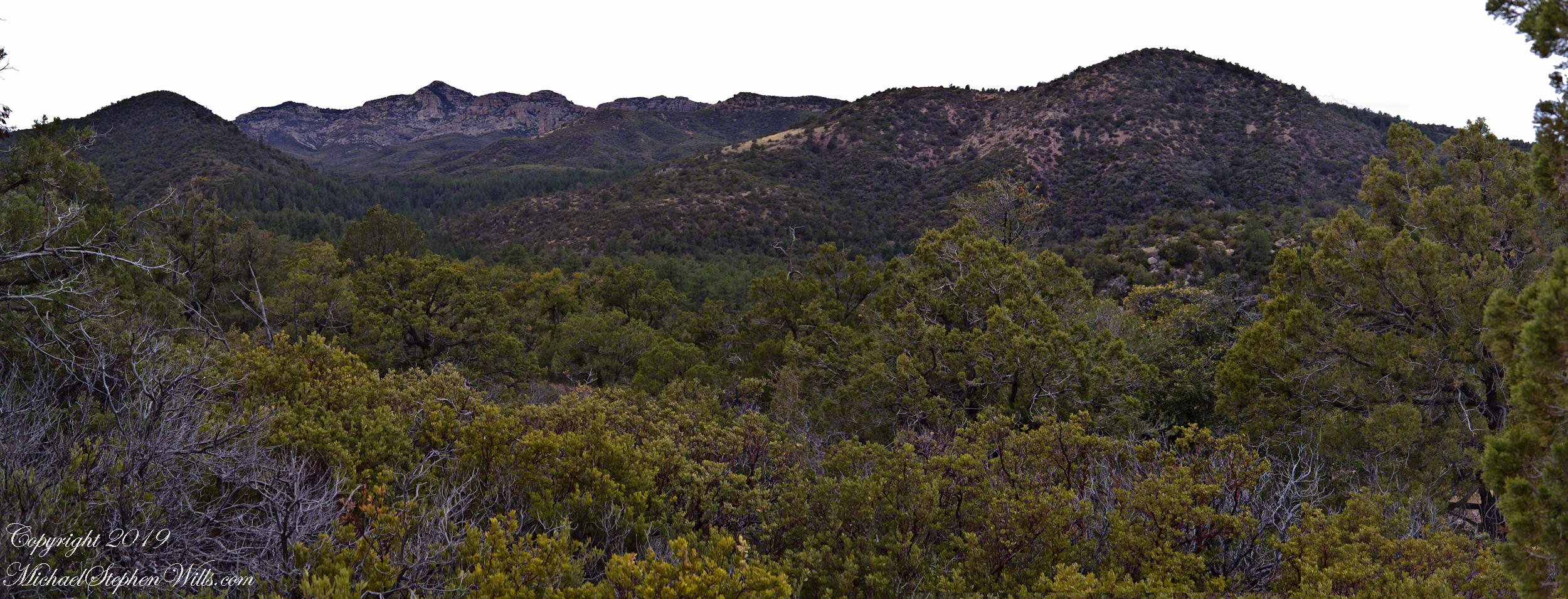
Here is a panorama from March 2006, southwest from the forests of juniper and pinion on the slopes of Mound Mountain.. The southern tip of Reavis Valley is to the right, from there Arizona Trail lead to White Mountain in the distance. It was taken on a later trip, in November of 2006 when my sister, Diane, and I visited Circlestone.

Click any photograph for a larger image.

The Searcher also told of Elisha Marcus Reavis, who settled the Valley west of Pine Creek in 1874. At one point, a band of Apaches planned to kill Reavis, but were respectful of his reputation as a rifle shot. They were waiting him out across from the his dugout, when Reavis stripped naked and, with wild hair and a flaming red beard, charged their camp, knives in both hands. The Apaches rode off, wary of his insane behavior, and never bothered him again.

We talked about my prospects and plans when The Searcher offered to take me to the Reavis Valley the next day, on horseback. There is a large apple orchard there and, this being April, we’d be treated to masses of apple blossoms. The day after Reavis Ranch, I could pack out with him down the Arizona Trail, past the Reavis Mountain School, over Campaign Creek and drive back to the Lost Dutchman Park. I readily agreed.

To Reavis Ranch on Horseback

The following morning rose slowly from colorless darkness, accompanied by thin birdsong and the whitening glow of high clouds. When the Searcher arrived around 8 am he was leading the pinto, introduced as Colorado, equipped with a western saddle instead of a pack. As an absolute novice trail rider, I rode while The Searcher held Colorado’s lead rope. The reins were wrapped around the saddle horn, leaving me to hang on and enjoy the view and the swishing tail of Nugget, the buckskin.

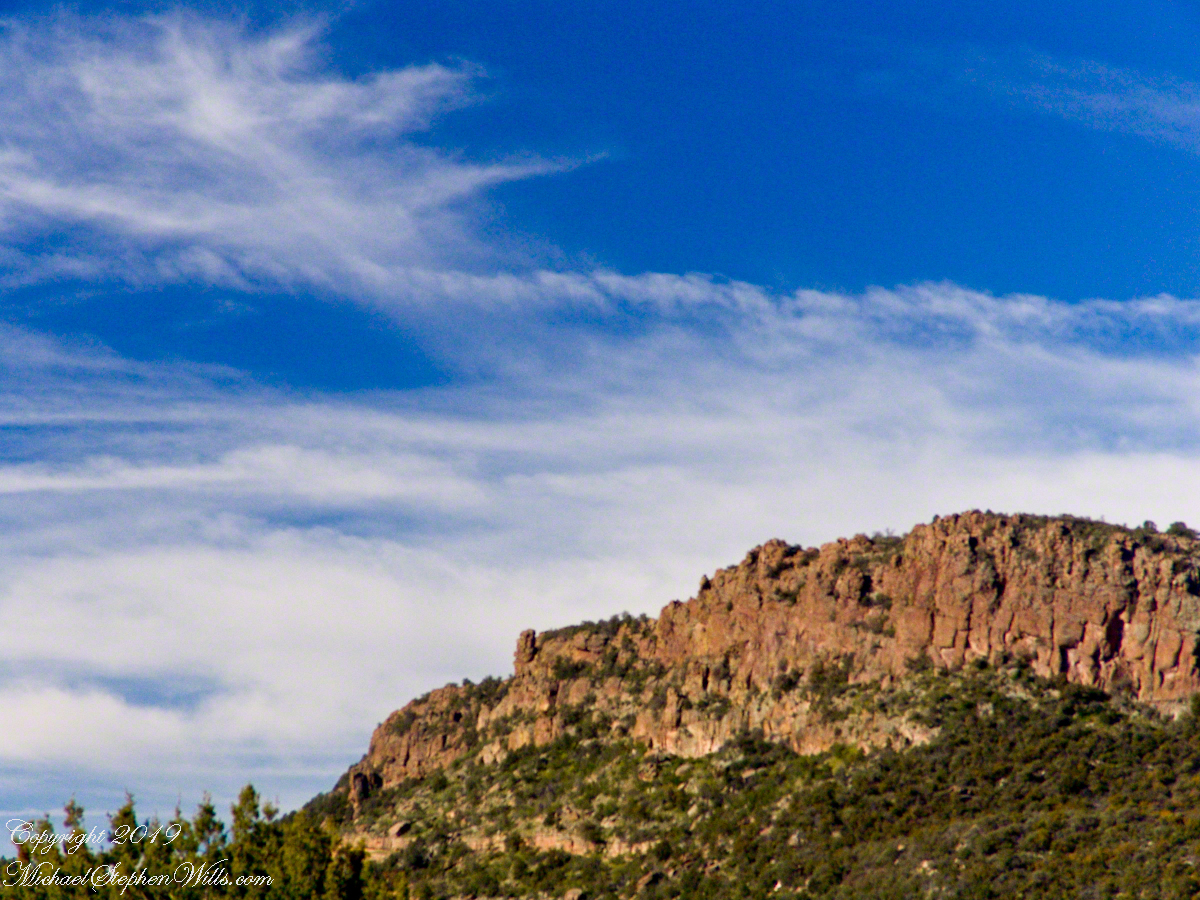
The 2.5 mile trail to Reavis from Pine Creek is typical of the eastern Superstitions, minimally improved, dramatically uneven, littered with boulders polished smooth by decades of hooves, floodwater, and erosion. From Pine Creek there’s a climb of a 631 feet to a 5,278 foot elevation, where the trail meanders beneath a dramatic red cliff with a view of the pinyon/juniper forests on the slopes of Mound Mountain. As he picked our way, The Searcher pointed out the sights. “Circlestone is somewhere over there, a ring of stones overgrown with Alligator Juniper.” I could do little more than observe; photography was entirely out of the question. The trail twisted around the mountain like a dry stream remembering water.

A cliff along the trail to Reavis Ranch offered the ledges and shadowed cover preferred by cougars. In daylight it posed little danger to mounted riders, and attacks against horses were rare. In all our years in Arizona, neither of us had seen more than the tip of a tail slipping behind brush.

This had been a lush April after a wet winter, and small game was plentiful. Only a sick cat would have been desperate enough to stalk horses. The darker possibility—a cougar infected with rabies after encountering a diseased animal at a water source—was a thought neither of us lingered on for long.

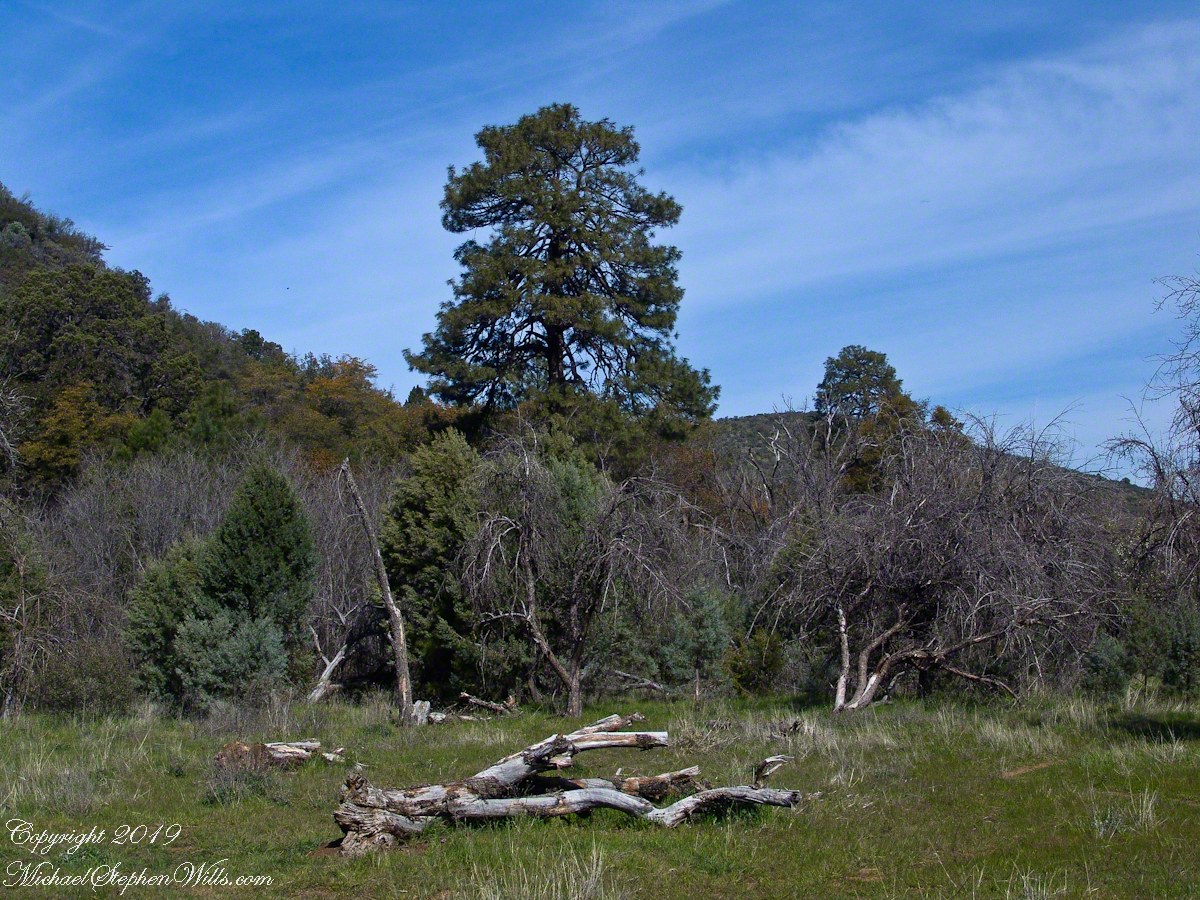
Eventually, the path descended steeply to Reavis Creek, the valley floor and intersected with the Reavis Ranch trail. Heading south the Reavis Ranch trail passes the site of a long abandoned ranch. What remained of the adobe and stone ranch house stood on a level bench overlooking what had once been the corral and a broad open meadow.

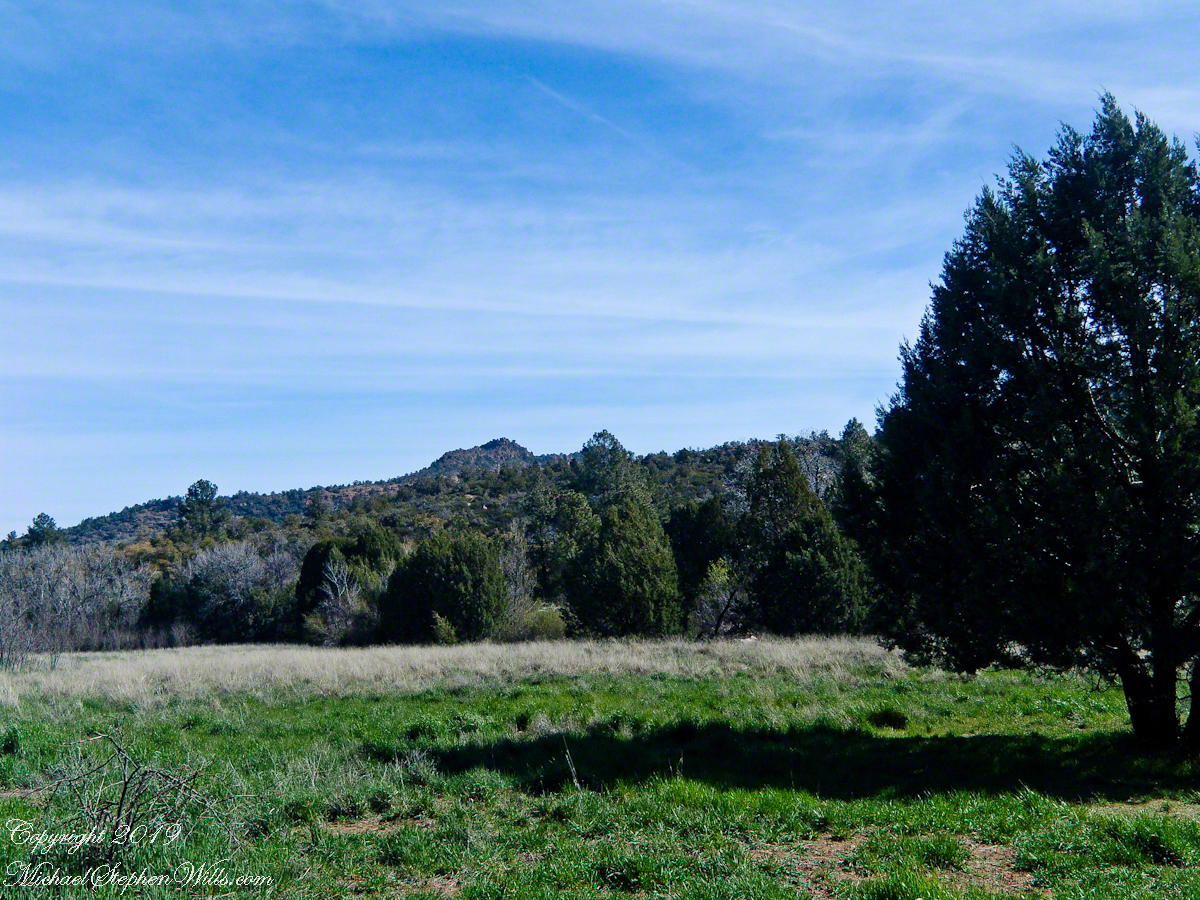
Open field at near the juncture of the trail from Pine Creek with the Reavis Ranch trail.

Apple trees in bloom sween from the former site of the ranch house. There used to be a pond near this spot. With a little imagination, the trail from Pine Creek can be seen on the far ridge.

Reavis Ranch Trail, foreground, traverses the valley length north to south. The Arizona Trail from Pine Creek following below the red rock cliffs in the distance.

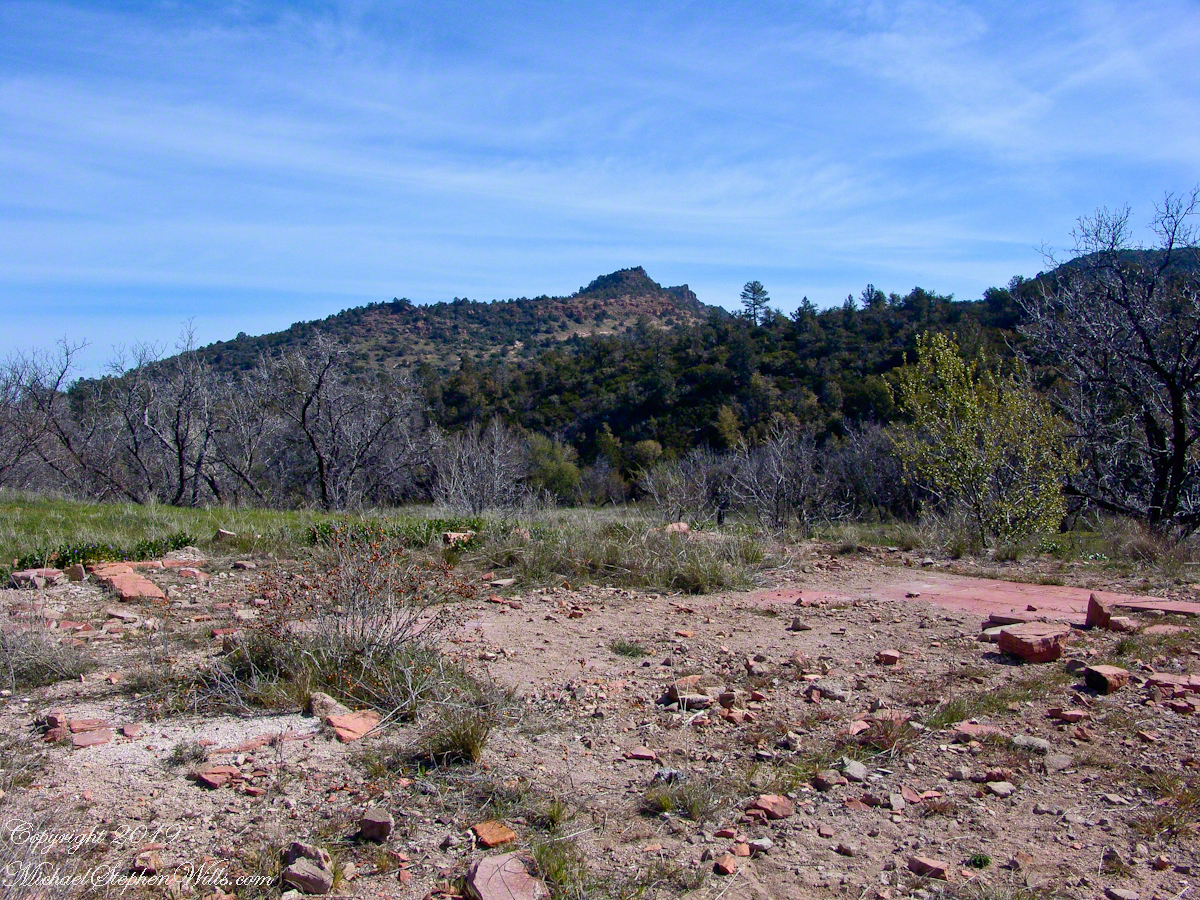
The US Forest Service razed the building after it “burned to the ground” Thanksgiving 1991. I would not call what is left “a foundation,” it is a platform where the house stood. In the photograph, the surviving tiles still suggest the modest warmth of a lived-in home. I’ve seen old photographs of the structure with a large pond to the left of this view, a door and simple porch face east and the pond used to hold irrigation water. The leveled ruin possessed the melancholy geometry of abandoned human hope.

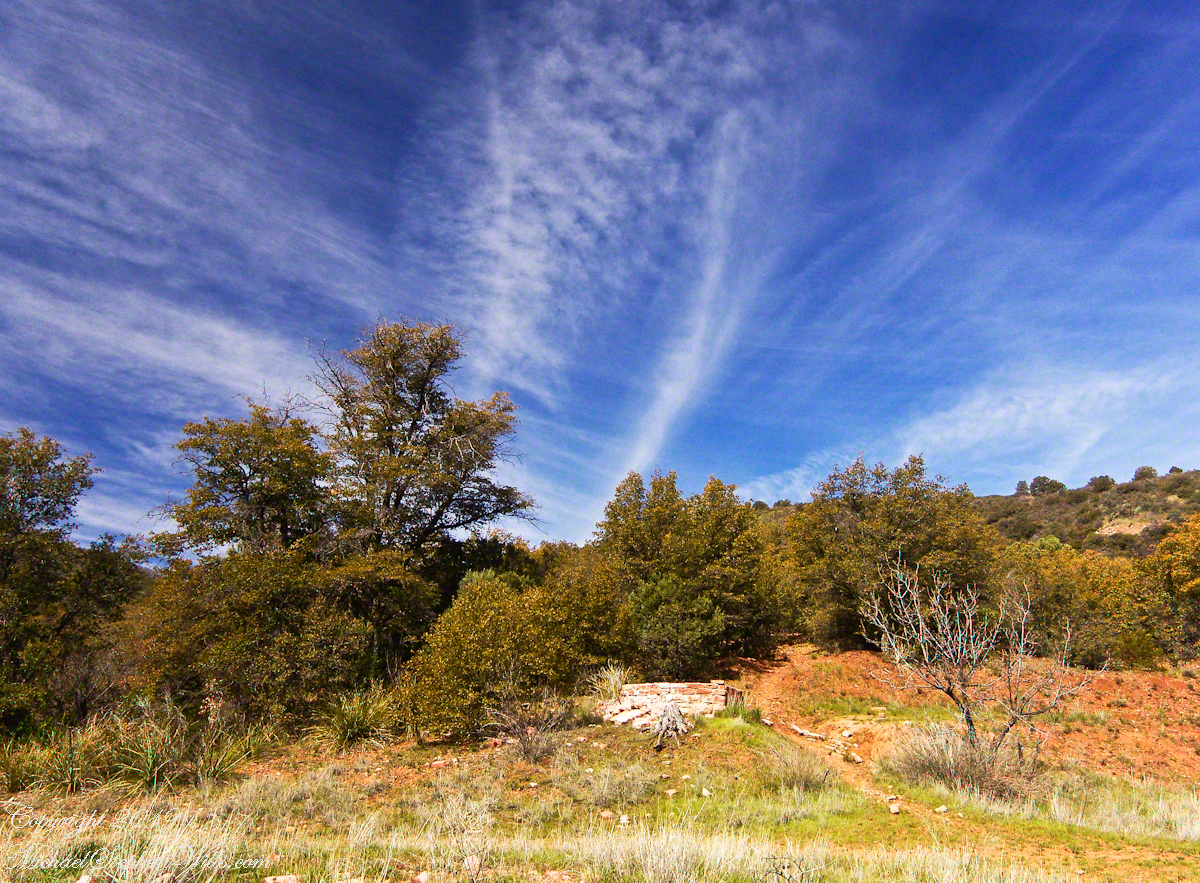
Turning from the ruin, another structure came into view. Built into the western slope above the valley floor was a hexagonal adobe foundation overlooking the remains of the ranch house across the trail.

My interpretation rests partly on the surrounding terrain. South of the structure runs the shallow trace of an excavated canal, suggesting that water from upper Reavis Creek—or one of its tributaries—was diverted into a catchment basin before being stored or directed toward irrigation.

Whatever its exact purpose, the site commands sweeping views of the central valley and is a beautiful place to watch evening settle over the orchard.

Turning from the ruin, another structure came into view. Built into the western slope above the valley floor was a hexagonal adobe foundation overlooking the remains of the ranch house across the trail.

The Searcher led me to a place a few hundred yards south, in a narrowing of the valley, where he let Colorado and Nugget roam free. The horses appreciated the level, open spaces and I enjoyed the Ponderosa pines on the west valley slope. We sat on the smooth trunks of fallen trees, 4 feet in diameter, near Reavis Creek.

Colorado took this opportunity to bolt, headed south. We took off after him into and through a thicket of locust trees where The Searcher cornered Colorado to regain control. “He was abused by a previous owner and can be difficult at times” was how The Searcher put it.

We were close to the end of Reavis Valley where Reavis Creek originates from the drainage of White Mountain, to the west.

We headed north here, back to the ranch house site, to the lush new grass of the apple orchard.

Nugget in Horse Heaven

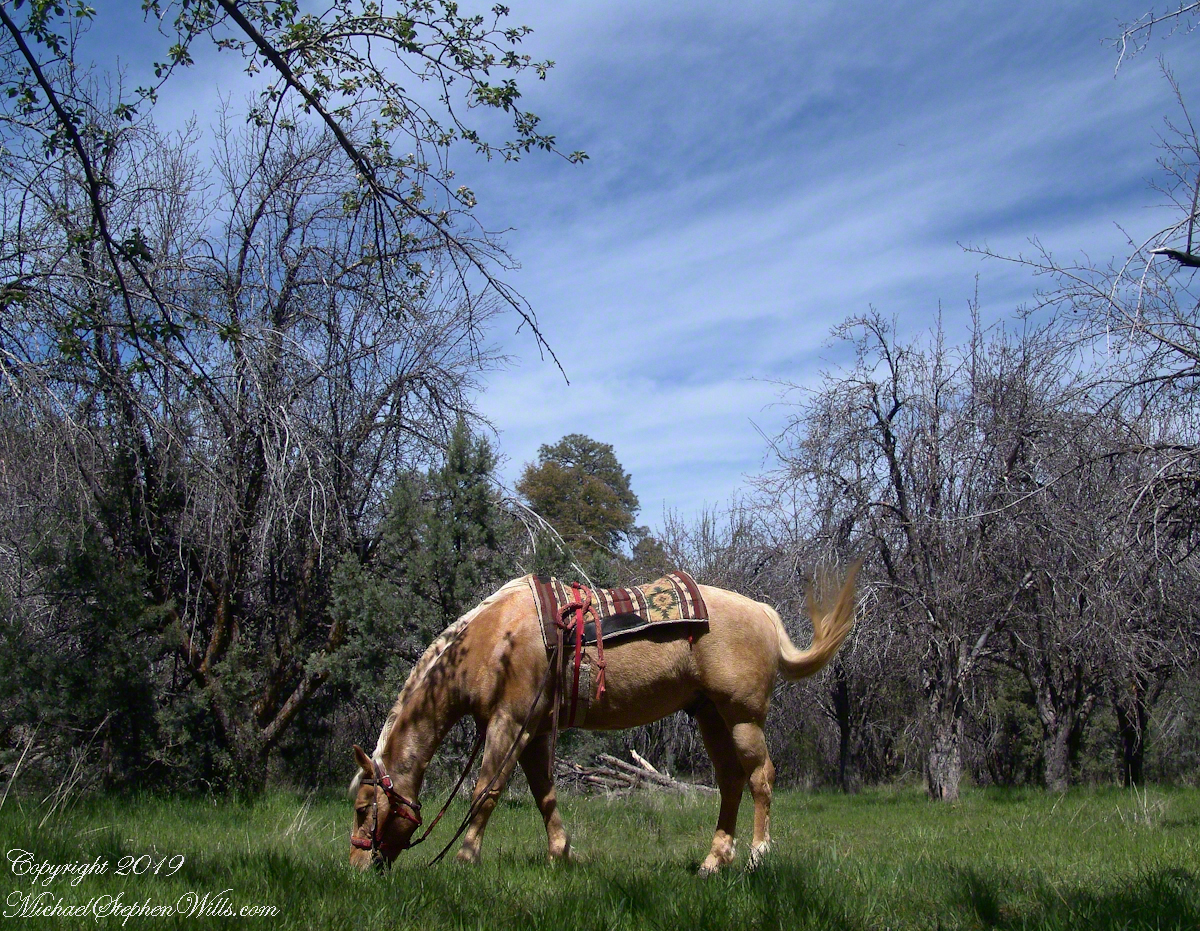
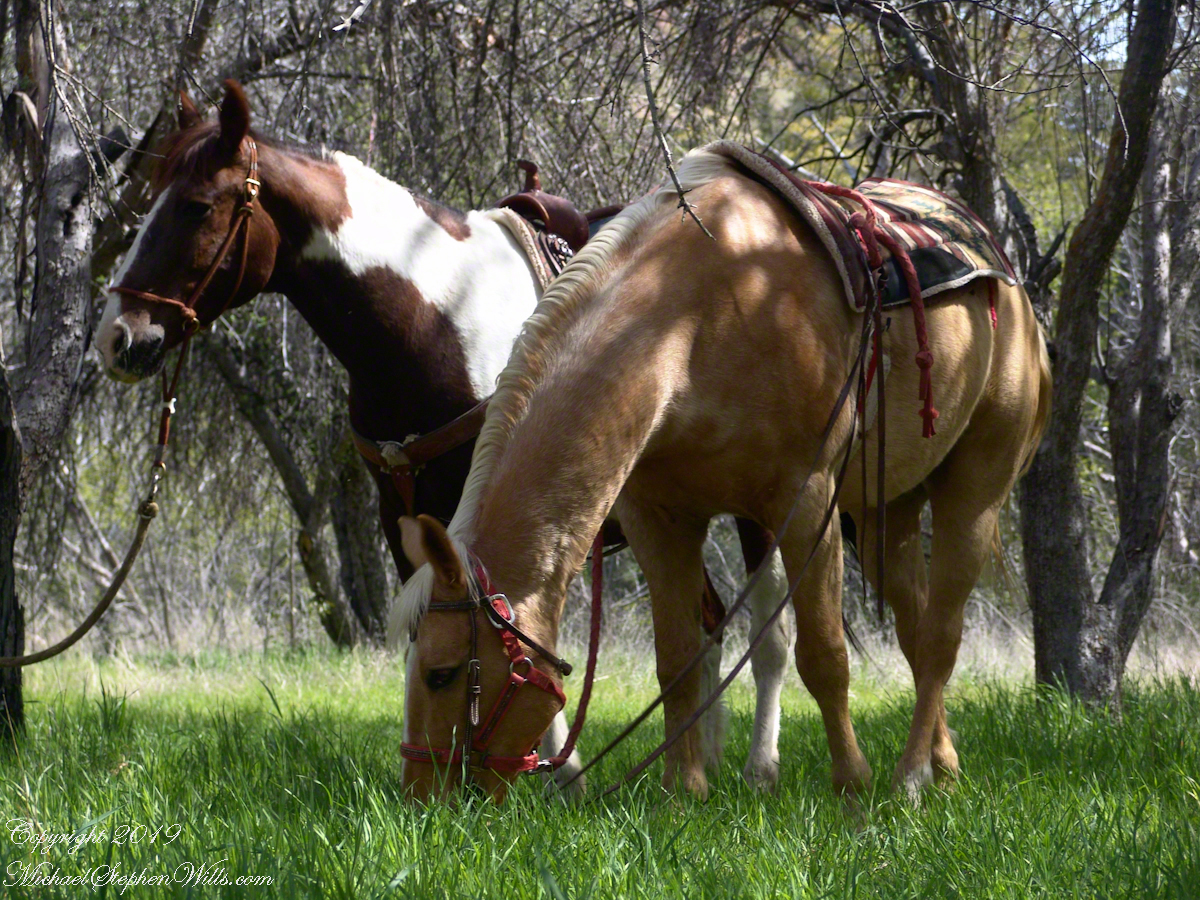
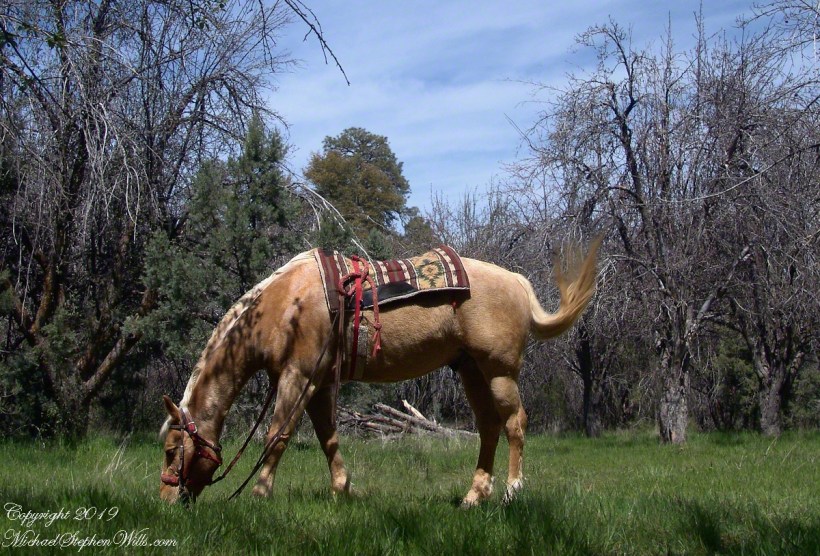
Nugget grazed, tethered with plenty of slack, with the calm assurance of an animal that knew it had arrived in horse heaven. This photograph of the pair shows their personalities, Colorado edgy, Nugget content to feast while the grass is available. The orchard grass rolled in waves around their legs like green water beneath anchored boats.

Colorado on the alert while Nugget grazes, typical of their personalities.

Click me for the next post for photographs and more history of this Apple Orchard in the Superstition Wilderness.

Click me to visit Michael Stephen Wills Online Arizona Gallery.

Copyright 2026 All Rights Reserved Michael Stephen Wills
The Flatiron

Where is the ironing board?

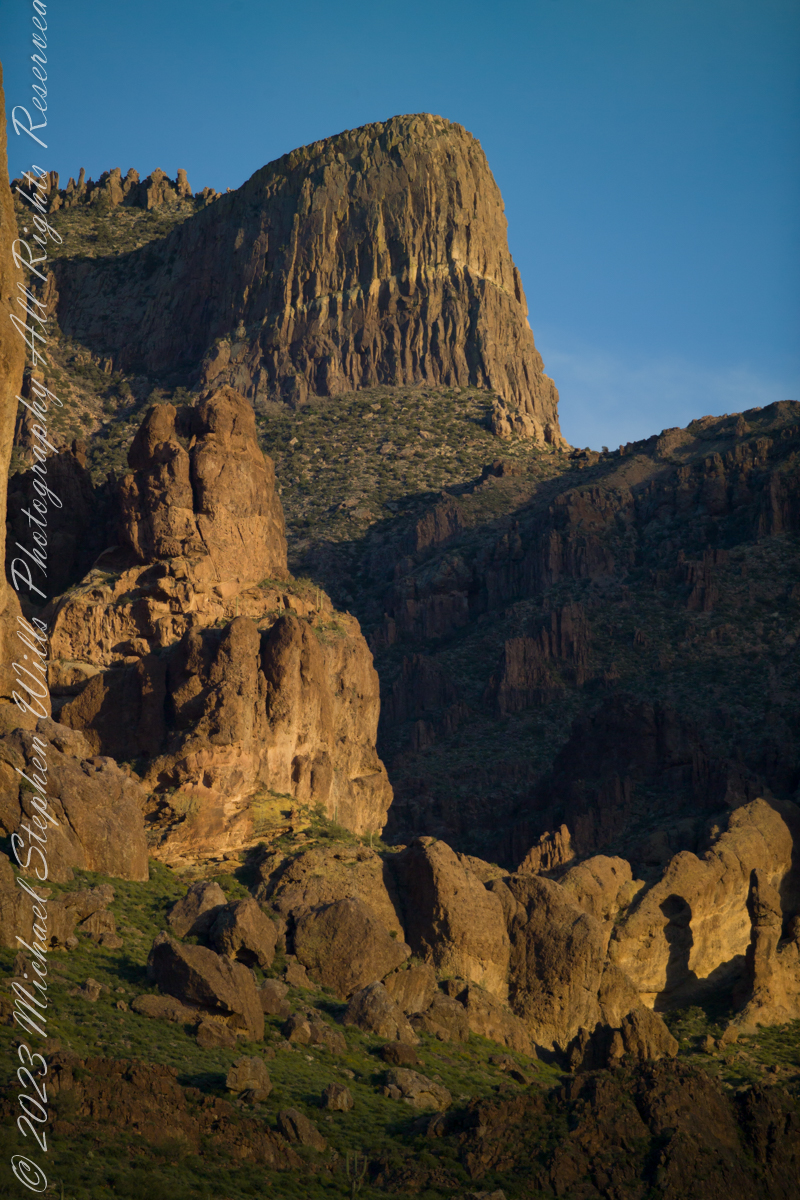
The setting sun’s glow on the end point of Upper Siphon Draw trail, The Flatiron.

Click Me for my Online Gallery

The mountain was formed by a series of volcanic eruptions between 20.5 and 18 million years ago. The west face of the mountain is composed of dacite lava and rhyolitic tuff. The overlying tuff was deposited during an eruption which created a collapse caldera bounded by faults. Dome resurgence reactivated these faults, causing uplift of the caldera floor which juxtaposed the softer tuff and more resistant dacite. Differential weathering caused the outer tuff to erode faster, leaving the dacite cliffs exposed and creating the prominent mountain visible today.

The Flatiron, the mesa-like projection above us in this view, is long solidified dacite lava. The word dacite comes from Dacia, a province of the Roman Empire which lay between the Danube River and Carpathian Mountains (now modern Romania and Moldova) where the rock was first described. Lost Dutchman State Park, Apache Junction, Maricopa County, Arizona

Reference: Wikipedia “Superstition Mountain” and “Dacite Lava.”

Copyright 2023 Michael Stephen Wills All Rights Reserved
Abstracts: desert light and water

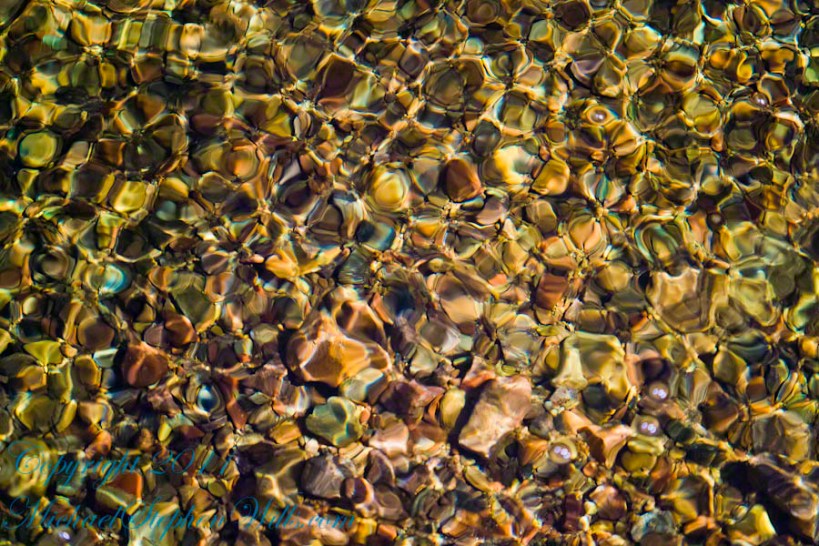
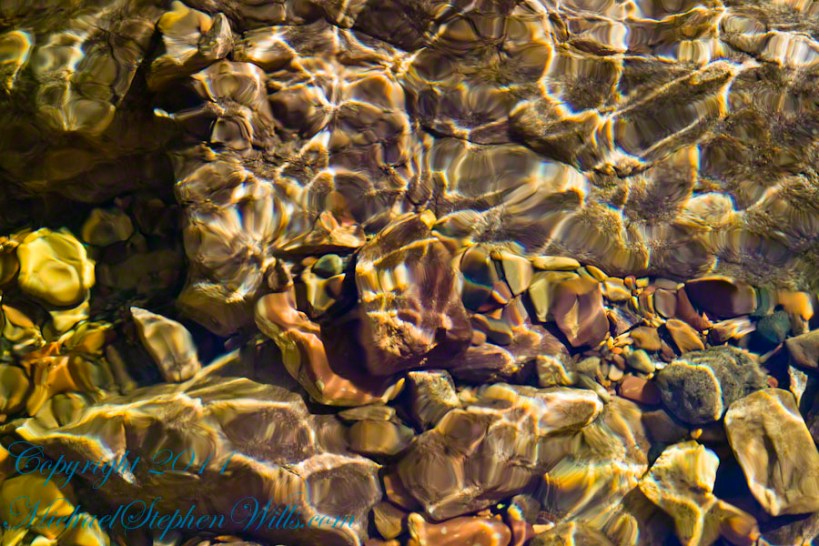
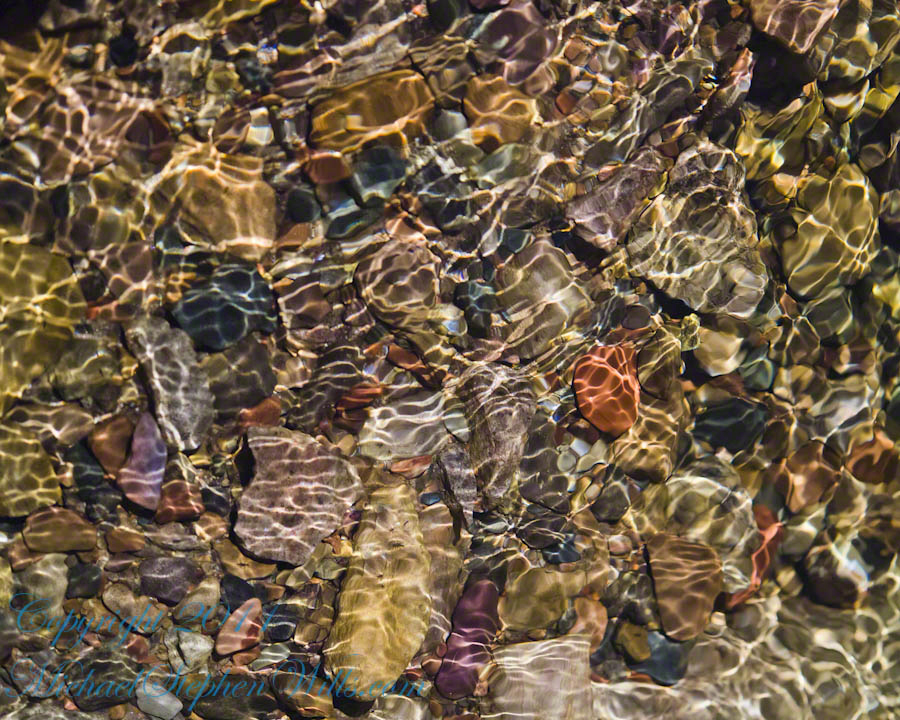
A Series of Nature Abstracts, macros of Reavis Creek below the falls

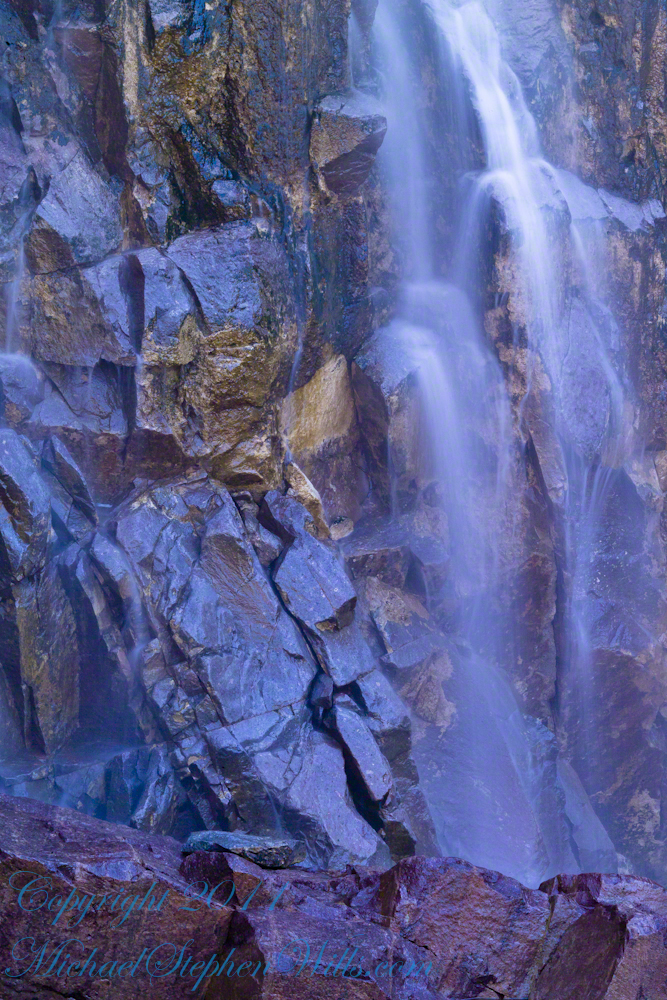
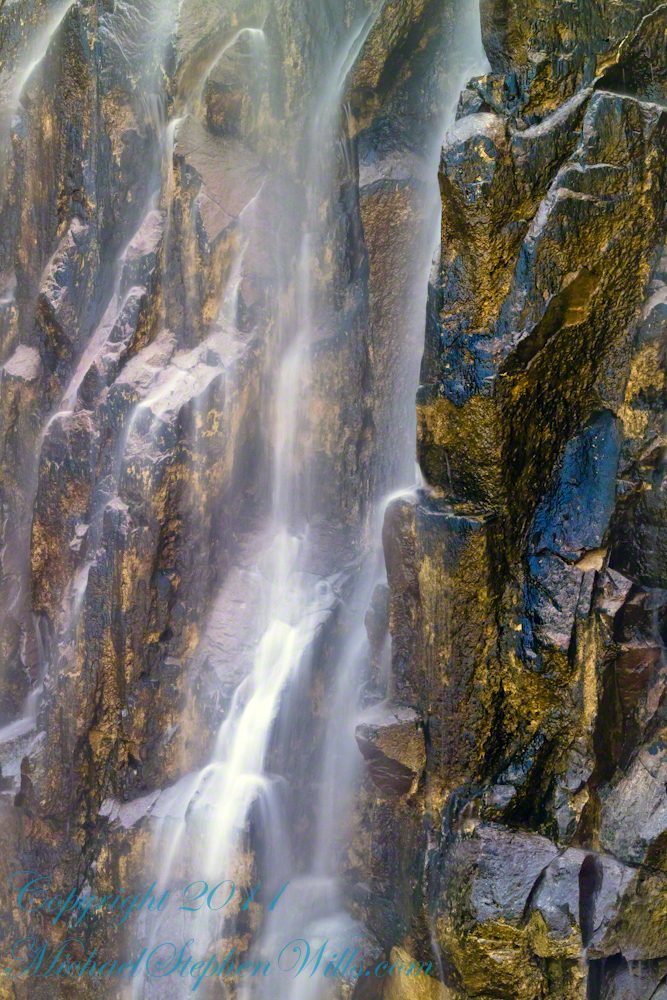
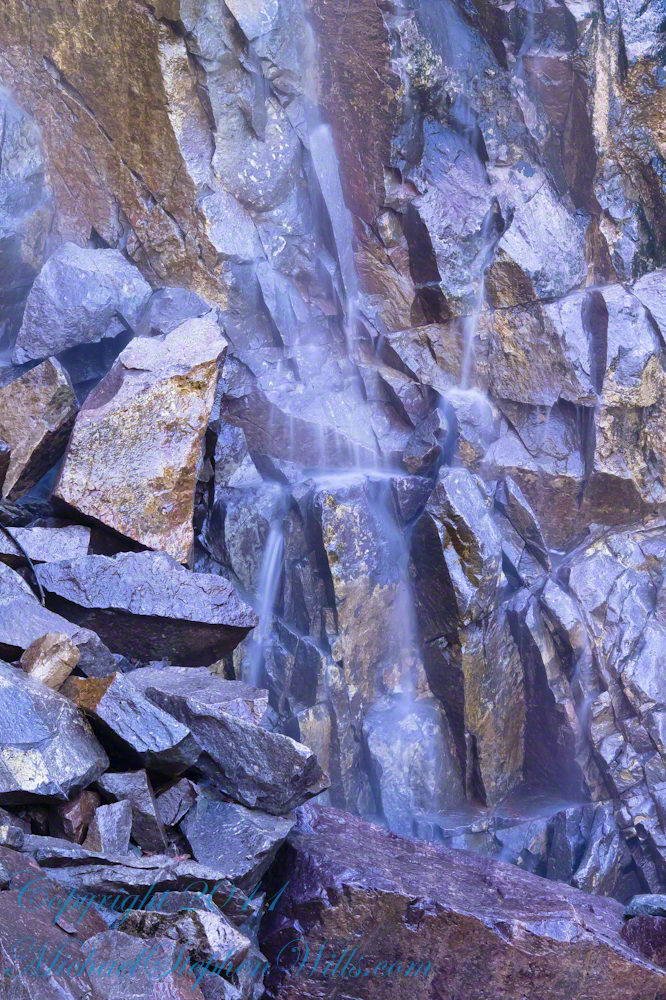
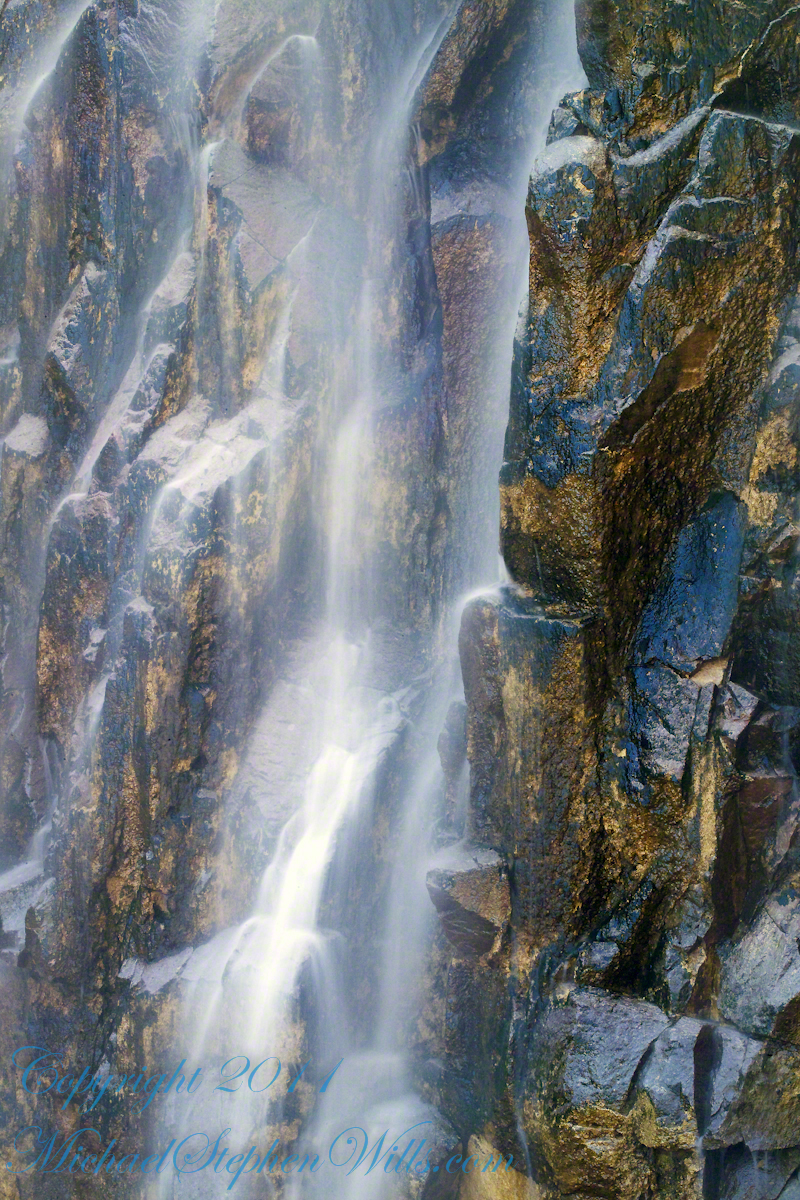
These four shots are of afternoon desert light playing on limpid water flowing over colorful rocks.

All are macro shots of the falls taken with a Canon 100mm f/2.8L lens.

From my solo expedition to this location in the remote eastern Superstition Wilderness of Arizona.

CLICK ME to learn more about my work and to purchase prints.

I chose portions of Reavis Creek stream bed carefully

The time of day was essential. This was late afternoon and before the sun disappeared behind the canyon walls.

Not all sections of the stream bed were suitable. I chose elements of strong compositions.

Variation between the shots is essential for holding the viewers attention.

Click Me to visit my previous post, “Canyoneering to Reavis Falls” for more of this story.

Copyright 2023 Michael Stephen Wills All Rights Reserved
Transcendent Beauty

Water and Shadows


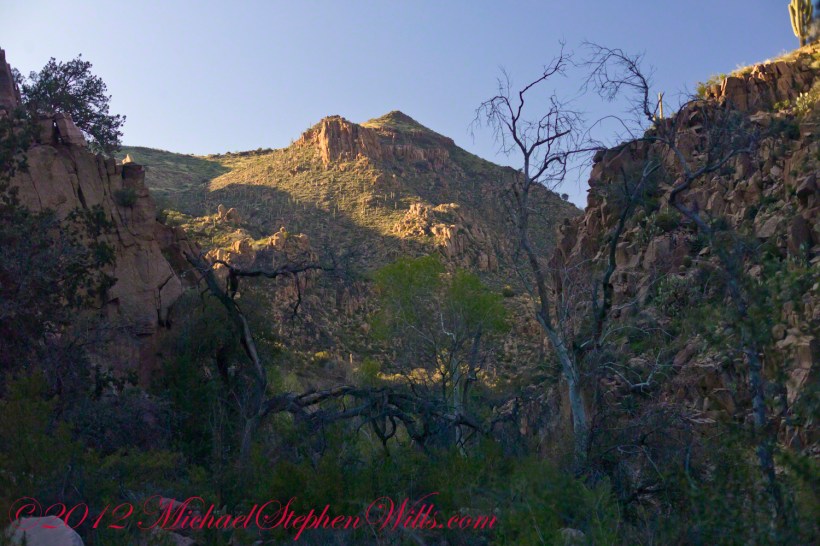
The canyon below 110 foot Reavis Falls is a wild place of transcendent beauty.

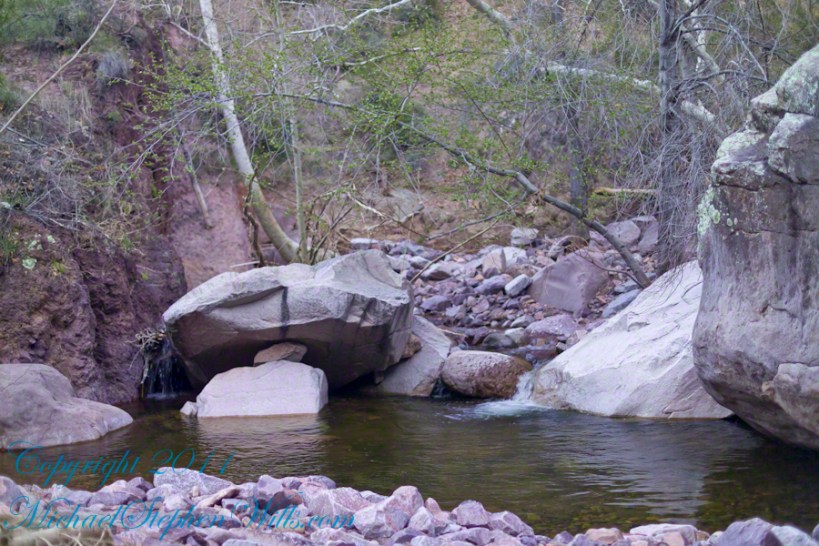
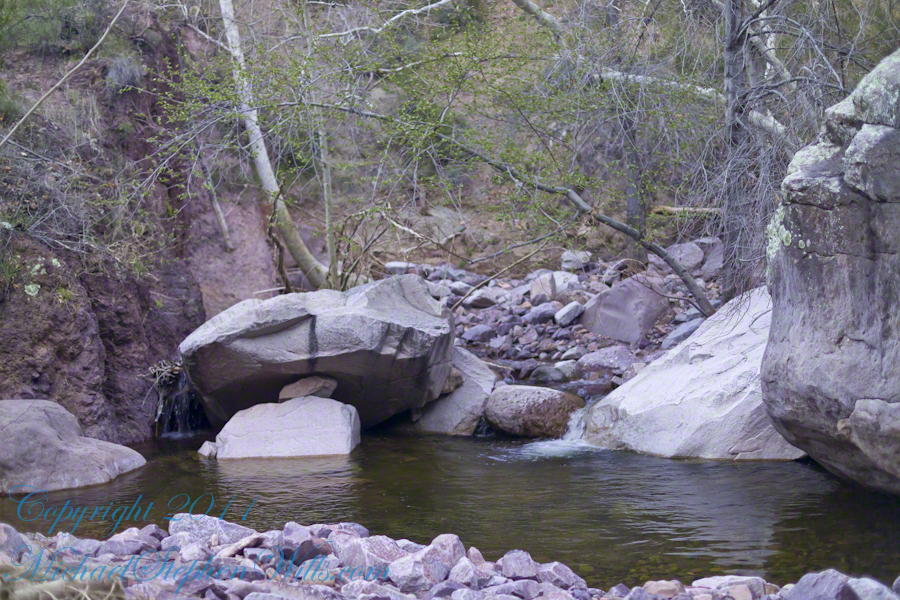
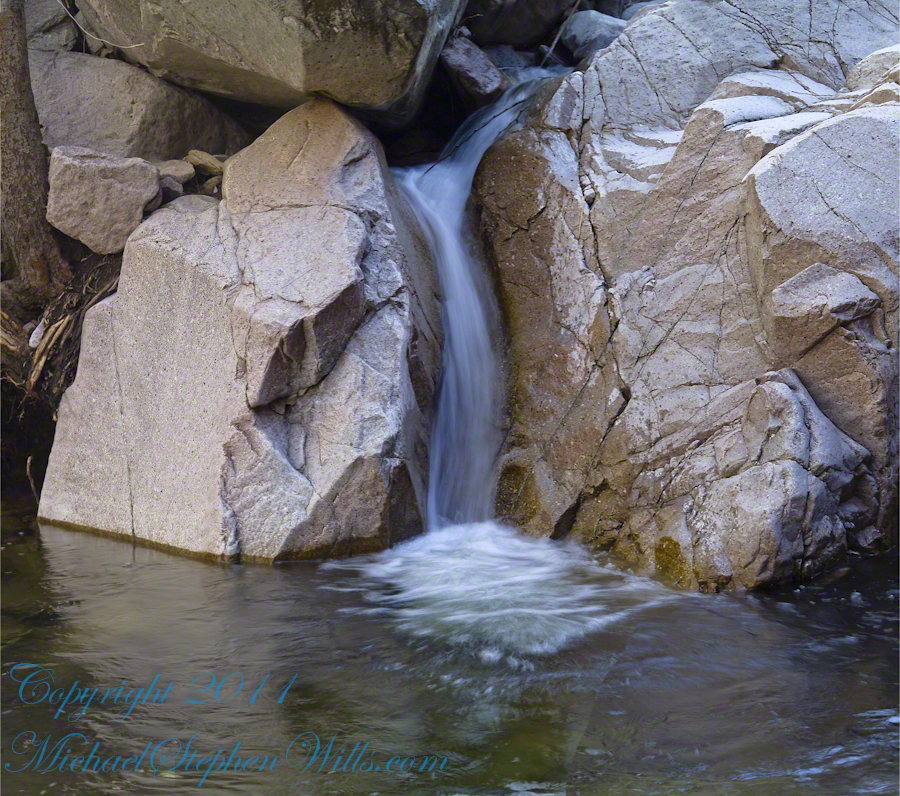
With the afternoon in front of me, the trip back to camp was a slow pleasure. On the way in, I noted several stopping points to capture photographs. Here a natural rock sluice offers a foot tall waterfall, mirroring Reavis Falls, bracketed by white igneous stone.

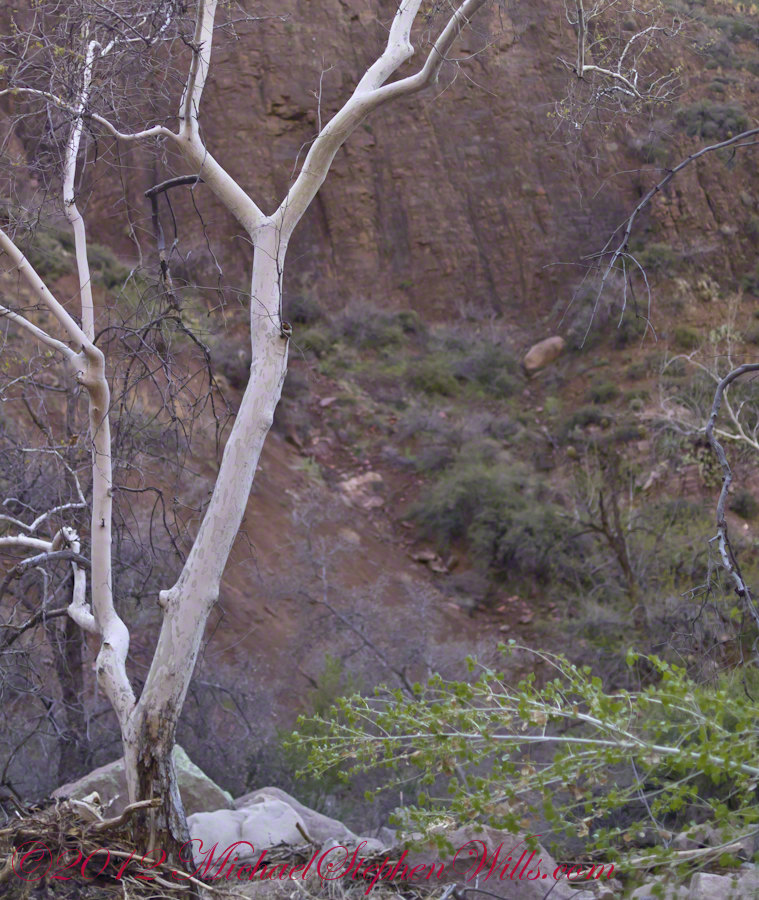
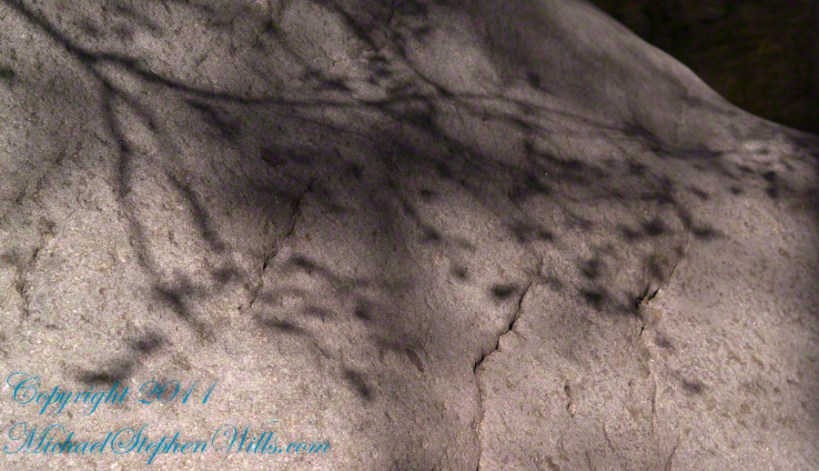
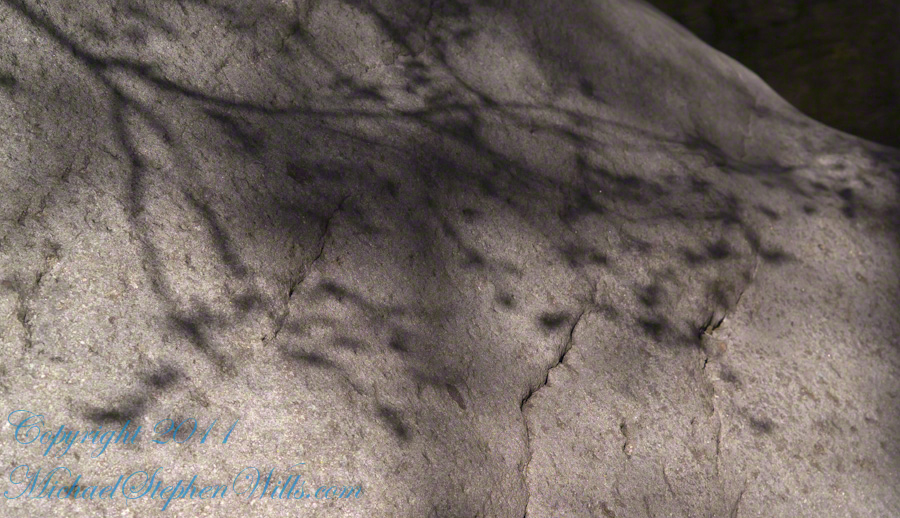
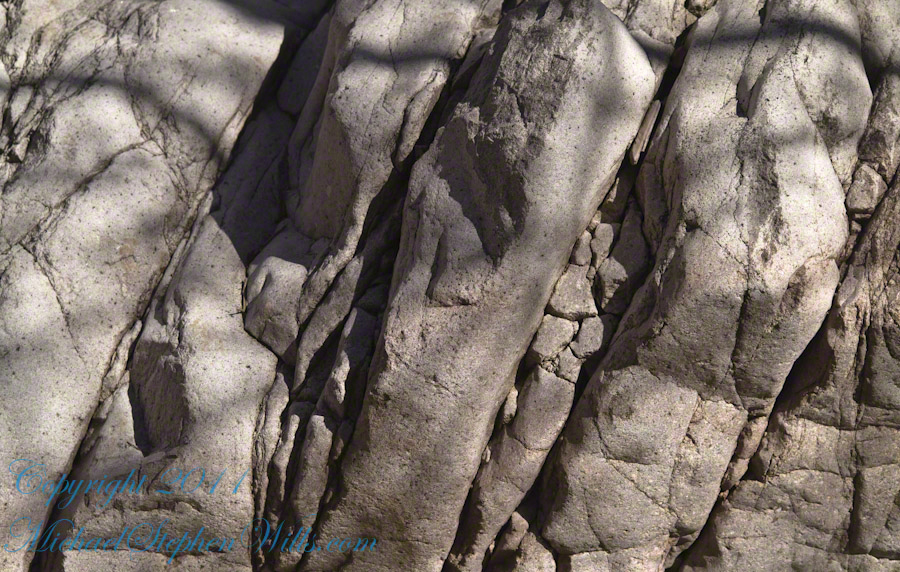
This same stone offers a screen, the bright spring sun throwing the sparse leaves into sharp relief.

Click Me to visit my previous post, “Canyoneering to Reavis Falls” for more of this story.

Copyright 2023 Michael Stephen Wills All Rights Reserved
Nature Abstracts from Reavis Falls

Basalt and Water

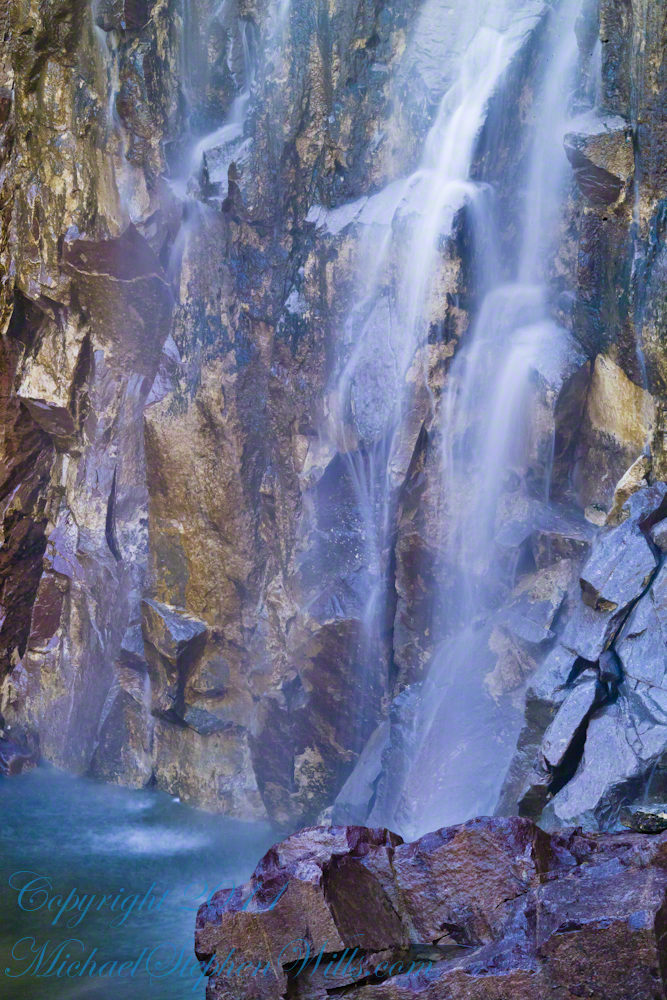
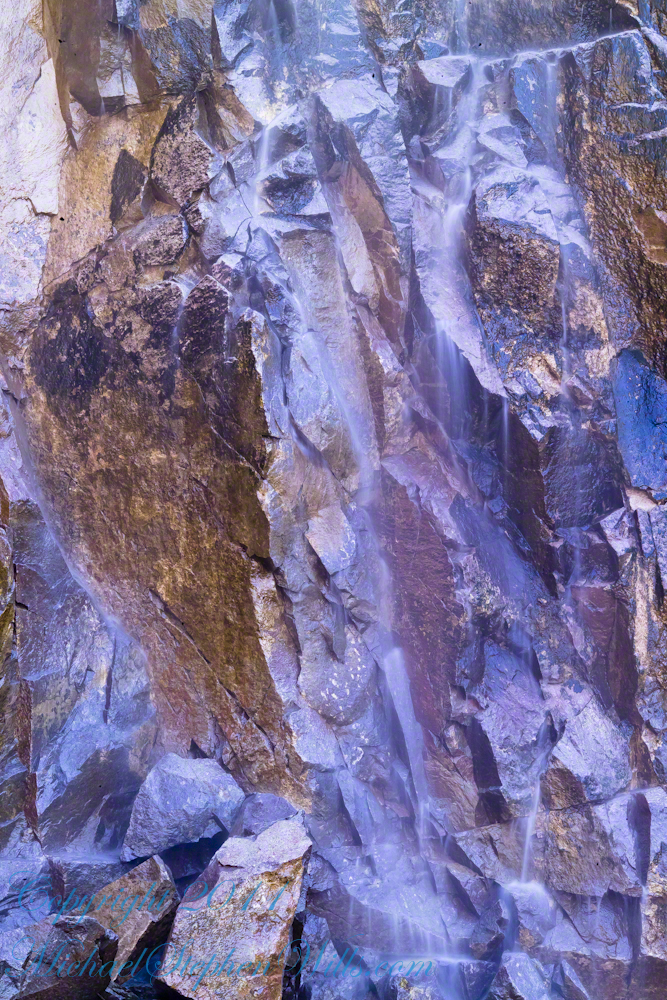
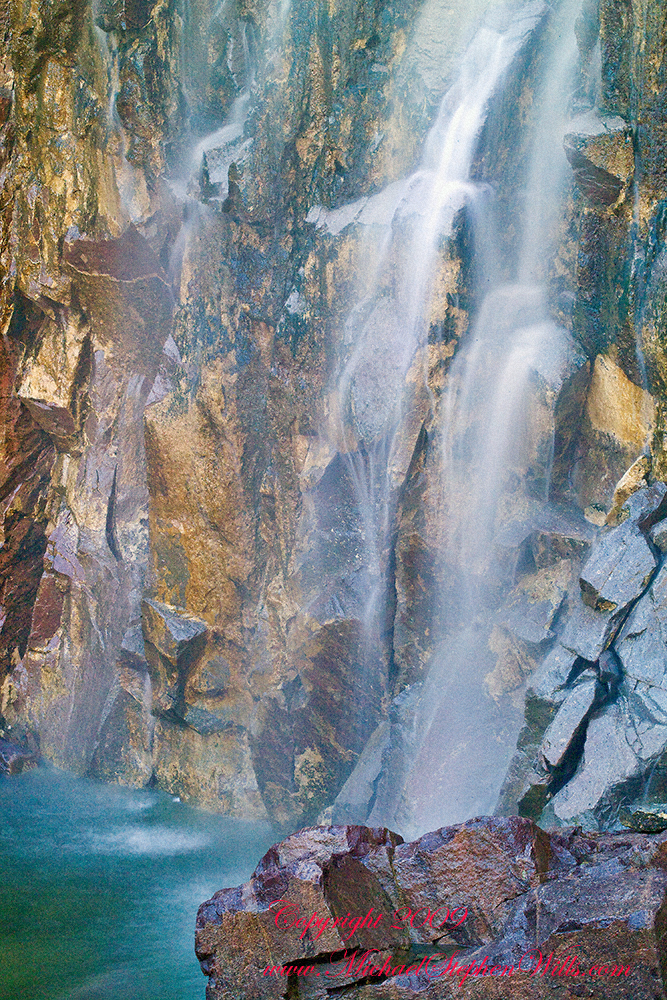
A Series of Nature Abstracts, macros of Reavis Falls

These are six shots of Reavis Falls from my solo expedition to this location in the remote eastern Superstition Wilderness of Arizona.

All are macro shots of the falls taken with a Canon 100mm f/2.8L lens.

“Reavis Falls Abstract V”

I took these while perched on a pile of talus beneath the falls.

Click Me To learn more about my work and to purchase prints

Reavis Falls Abstract XIV

Reavis Falls are 114 feet high in a canyon hidden in the folds of mountain ridges in the remote eastern Superstition Wilderness of Arizona.

Reavis Falls Abstract VI

Reavis Creek falls from a sheer basalt cliff, remnants of a volcanic eruption, cool a million years ago, a little colder today by this running water.

Reavis Falls Abstract VIII

Reavis Falls Abstract XI

Reavis Falls Abstract XV

Click Me to visit my previous post, “Canyoneering to Reavis Falls” for more of this story.

Copyright 2023 Michael Stephen Wills All Rights Reserved
Canyoneering to Reavis Falls

No signposts in the wilderness

Reaching Reavis Falls, once you find the canyon mouth, is three-fourths of a mile of boulder hopping and bushwacking over and around landslides, deep pools and fallen trees.  Odds are you will be the only person in the canyon for weeks, if not months.  Expect to be surprised. In this chapter you will (finally) visit the falls themselves.

A Camp in the Canyon

Click me for the chapter about the environment around the mouth of Reavis Canyon below the falls.

The Last Mile

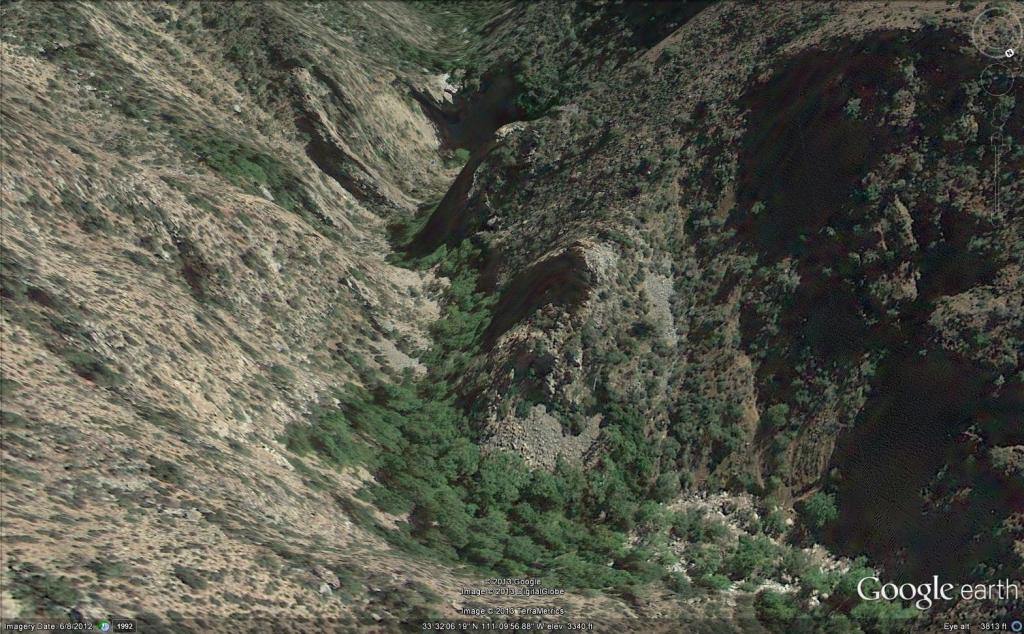
Here is an overview of the last third mile of Reavis Canyon.  You can see the wall of the falls nestled in the folds of ridges towards the top, just off center.

On the lower right is a large landslide and, below there, it is complete chaos.

The vegetation grows shoulder to shoulder with interleaved branches.  You will not get through there.  The solution is to find a way around, usually over and around house-sized boulders.

The image was captured from Google Earth


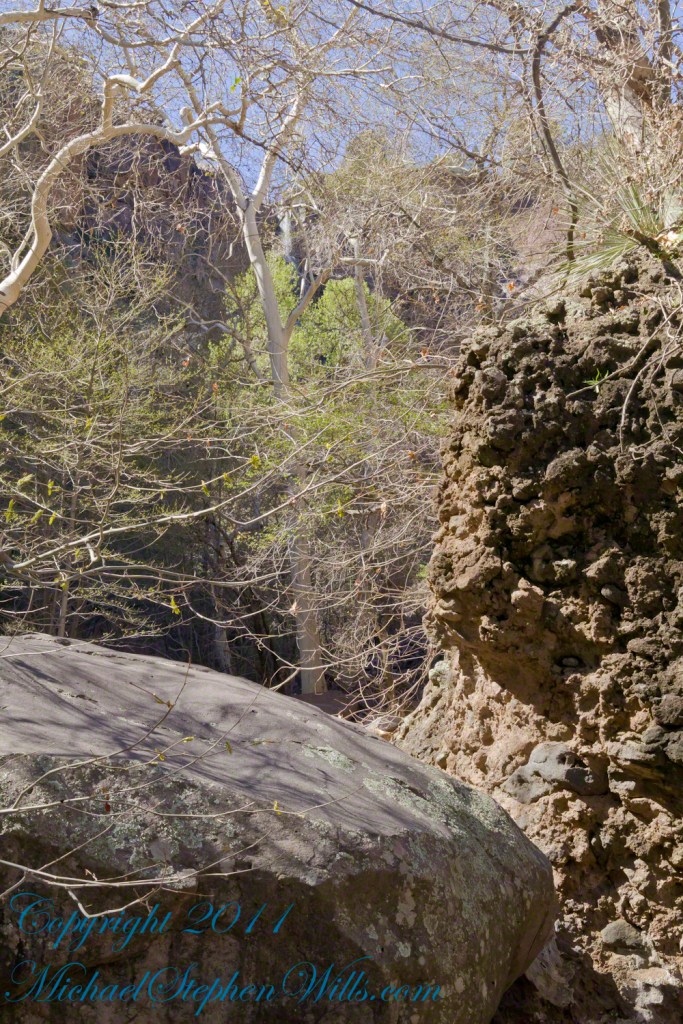
After almost two hours of picking my way, there was a flicker of light.  The fall waters were sparkling in the sunlight high above the cottonwood trees, in full Mach bloom, and the still leafless Arizona Sycamores.

This was my view of Reavis Falls from the canyon on a March day before the Arizona Sycamores have leaved. The falls are the tiny patch of white to the left of midline where the earth meets the sky. Jumbles of infallen boulders and thick growth of sycamores, oaks and fully leaved cottonwoods cloak the falls.

Another 30 minutes of canyoneering brought me to the foot of the falls.

At the Foot of Reavis Falls

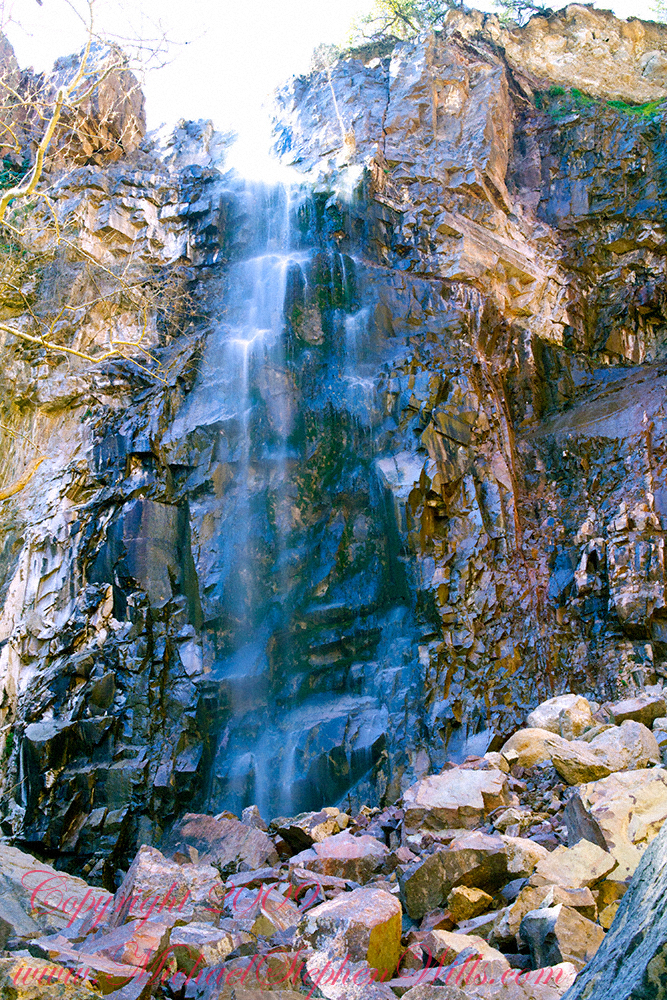
Looking up at Reavis Falls from a 20 foot tall mound of talus.

These are boulders  washed down at flood time.

The rock wall is thick with microorganisms, fungi and mosses.

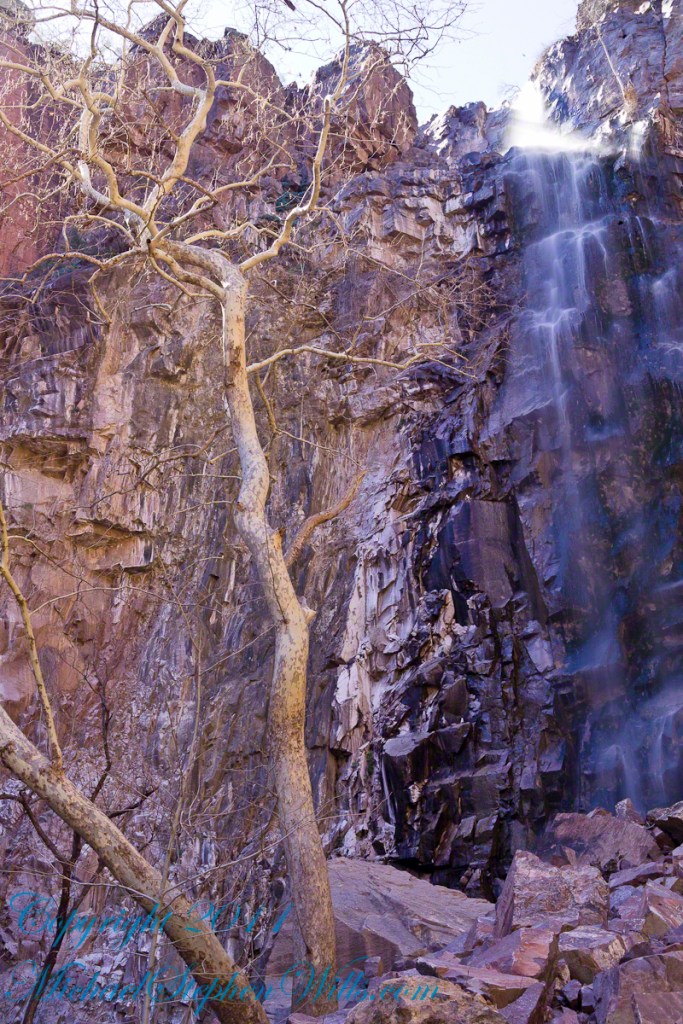
After clambering around the talus pile I found this angle….

An Arizona Sycamore, before the spring leafing, at the Foot of Reavis Falls

Talus at the Foot of Reavis Falls

The Reavis Falls talus is large boulders carried down Reavis Creek and washed over the falls at flood time as well as blocks fractured from the cliff face.  You can see the base of the Sycamore from the previous photograph.

The falls are formed where Reavis Creek flows over a solid mass of rock.  The talus is composed mostly of this red rock.  From the edge of this cliff to the base, where the falls hit the canyon floor, is all of 140 feet.  This is a far as you can proceed into the canyon without some serious climbing skills.

It is possible to climb around the canyon by climbing up the ridge from which I captured the Cedar Basin Hoodoos.  See my posts below for this location (you need to work it our for yourself).

This is NOT the last post of the series.  From here I will focus on the beauty of Reavis Falls and the canyon that holds them.

It was a four-day expedition so there are a few chapters covering the approach to the Falls:

Lime Mountain Morning

Two Bar Mountain View

Evening on Two Bar Mountain

Among the desert wildflowers

Superstition Wilderness Dawn

Dry Juniper Descent

Hoodoos on the Descent to Reavis Falls

Cedar Basin Hoodoos

Reavis Canyon Camp

Reavis Canyon Rivulets and Rocks

Copyright 2023 Michael Stephen Wills All Rights Reserved
Reavis Canyon Rivulets and Rocks

Canyon of Wonder and Beauty

Born from Eruption and Flood

The Superstition Wilderness was born from volcanic eruption and in some places (Peters Mesa) the earth still rumbles.

Here in Reavis Canyon it is the huge spring runoff that builds the environment, grinding and scouring the canyon. In my chapter The Mouth of Reavis Canyon is the story of this aspect of the canyon.

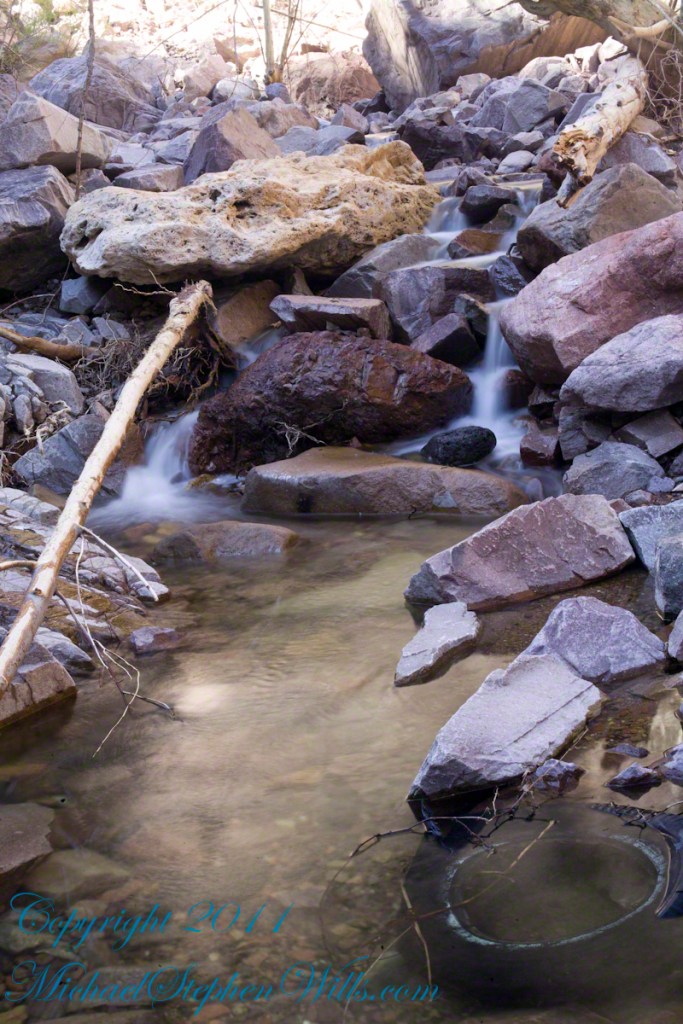
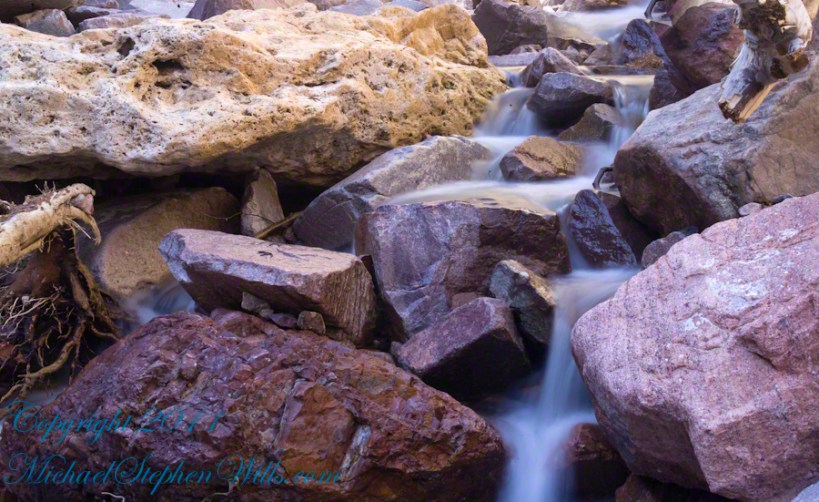
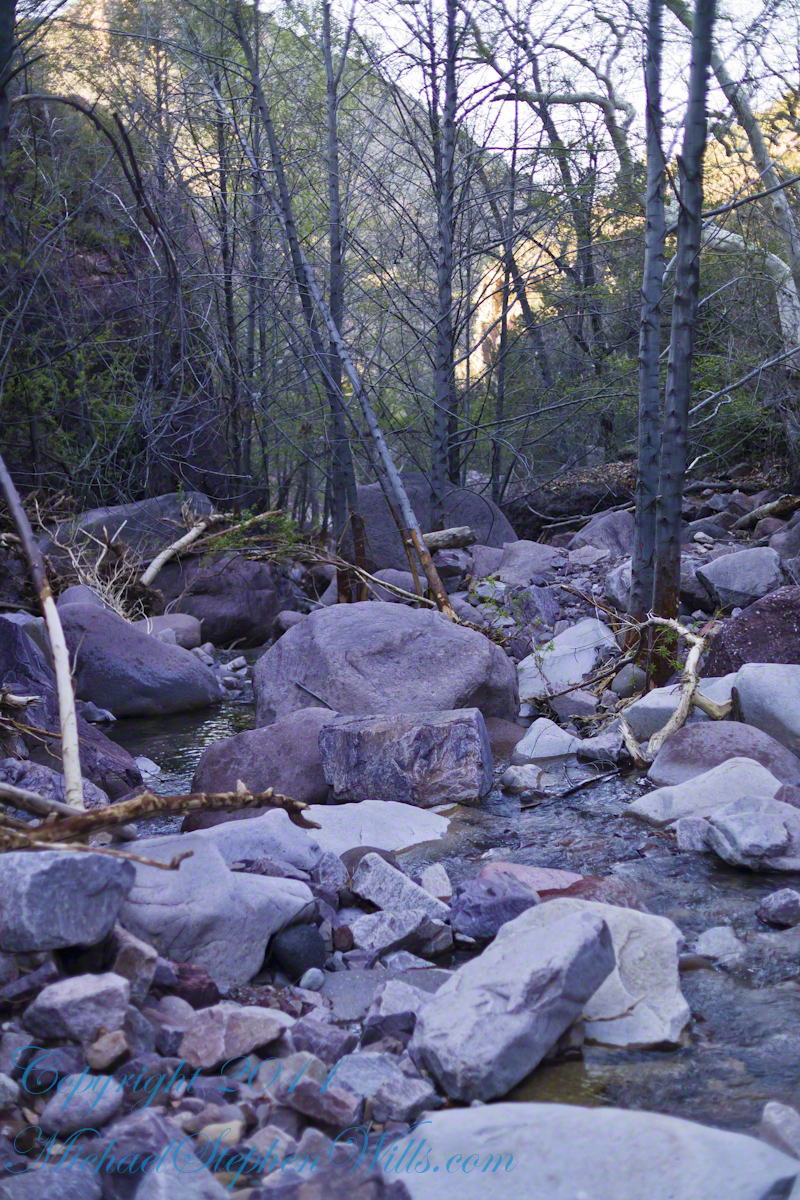
The history of this spot is written on these volcanic and igneous rocks and boulders, the uprooted tree roots and fresh water.

The tire must have washed down from Reavis Ranch.

A Canyon of Wonder and Beauty

In this chapter I present, in the header, the lovely dawn sky of that day, and a tiny corner of a rock jumble in Reavis Creek.   There is a large format version of the sky in my previous post, “The Mouth of Reavis Canyon.”

Rivulets and Rocks

Copyright 2023 Michael Stephen Wills All Rights Reserved
The Mouth of Reavis Canyon

Canyon Hazards and Beauty

In this chapter we enter the Mouth of Reavis Canyon below Reavis Falls and examine the beauty and danger of this remote canyon.

See Reavis Canyon Camp for more of my expedition to Reavis Falls.

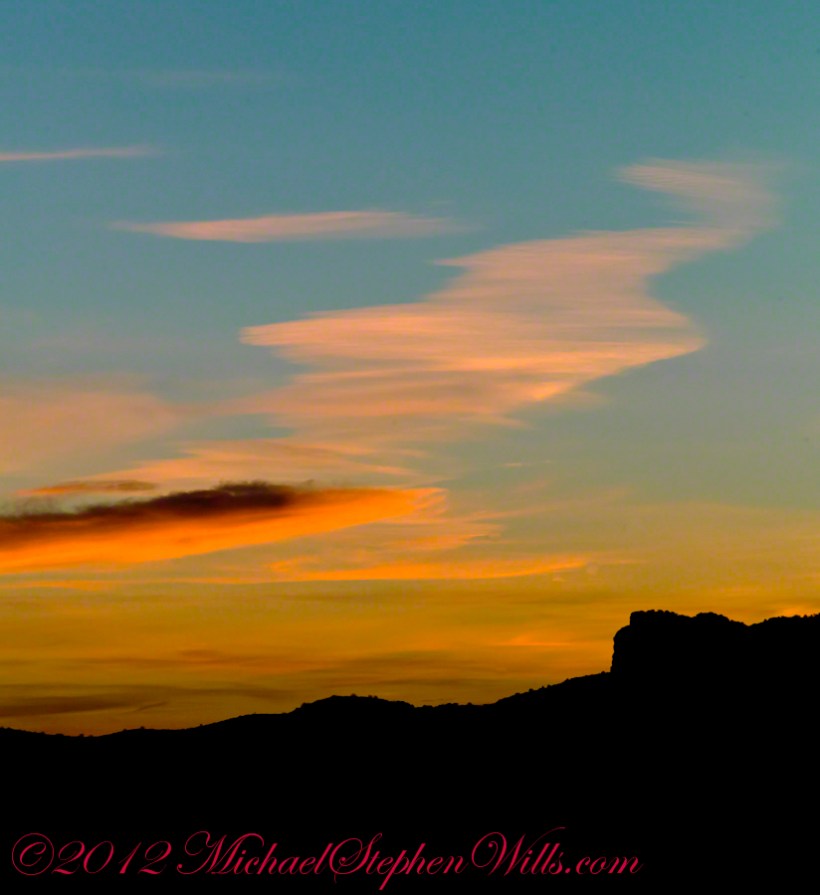
Dawn on the day I entered Reavis Canyon

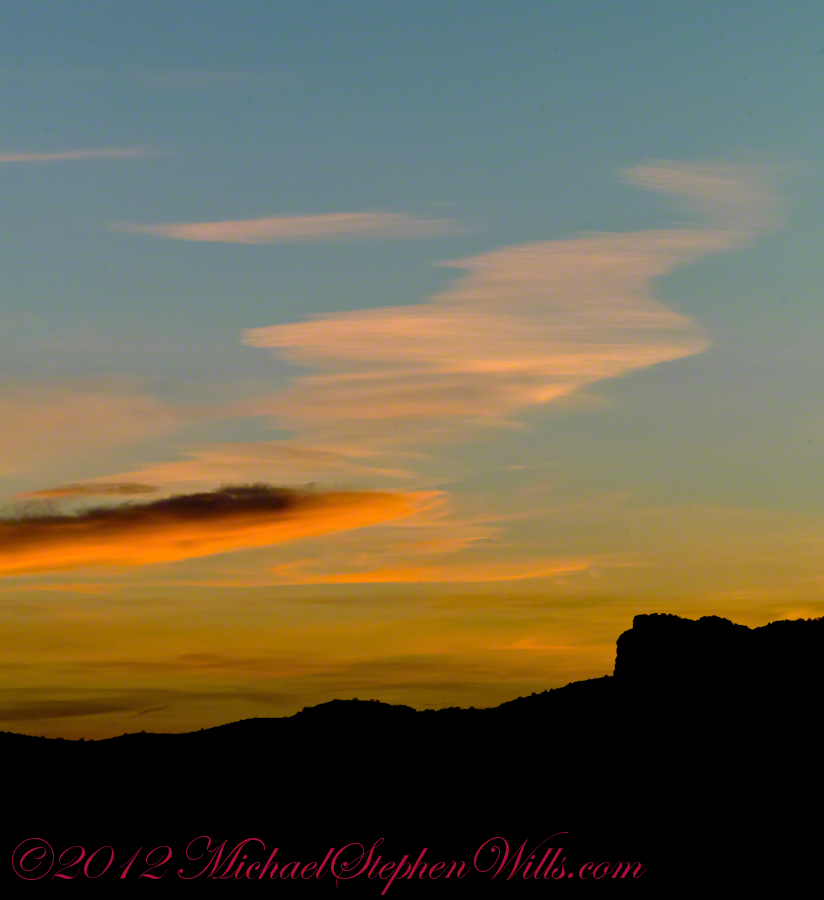
Dawn light above the outline of the prominent cliff above Reavis Canyon and Falls the morning of my last day in the canyon.

You might recognize the outline of this cliff from the chapter  Two Bar Mountain View or Evening on Two Bar Mountain.

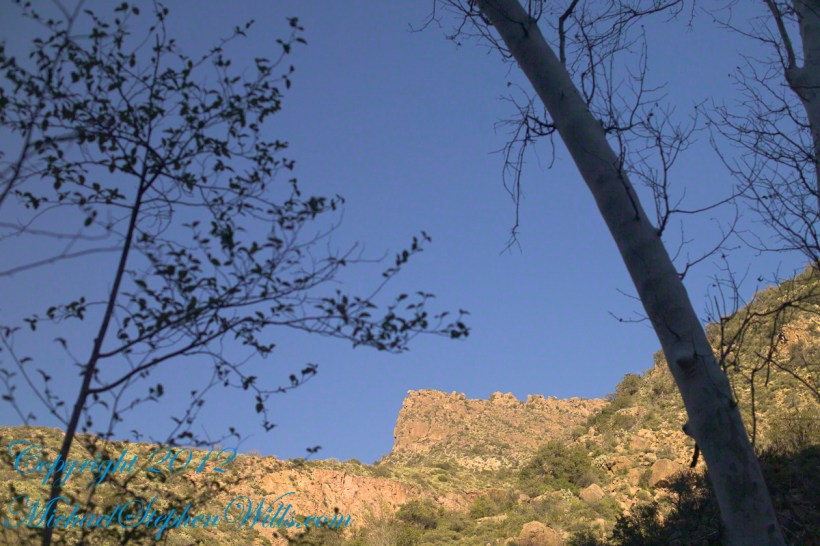
Here is the same view, in daylight. As I hiked toward the canyon mouth below Reavis Falls, looking up I saw this prominant cliff against the sky.

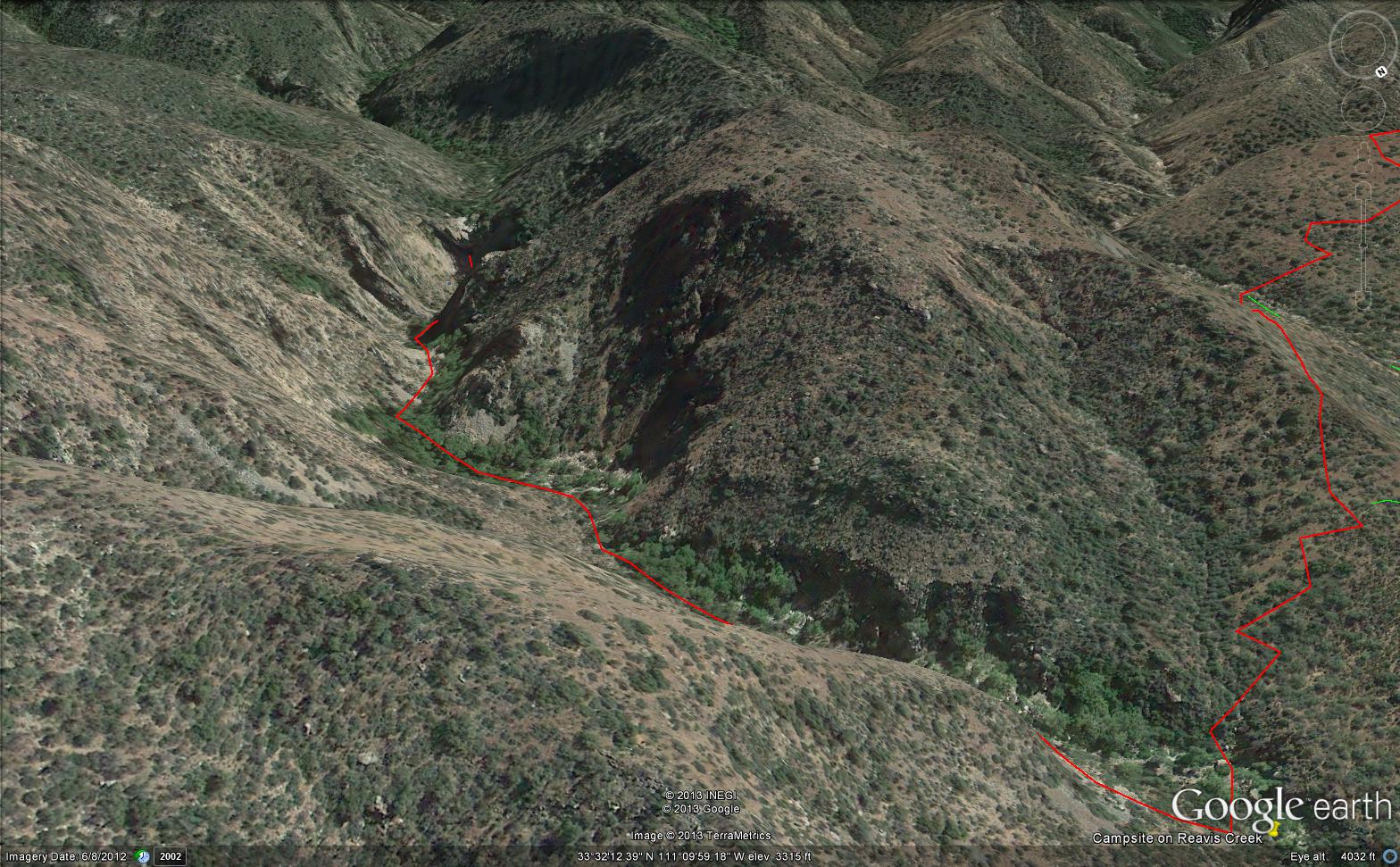
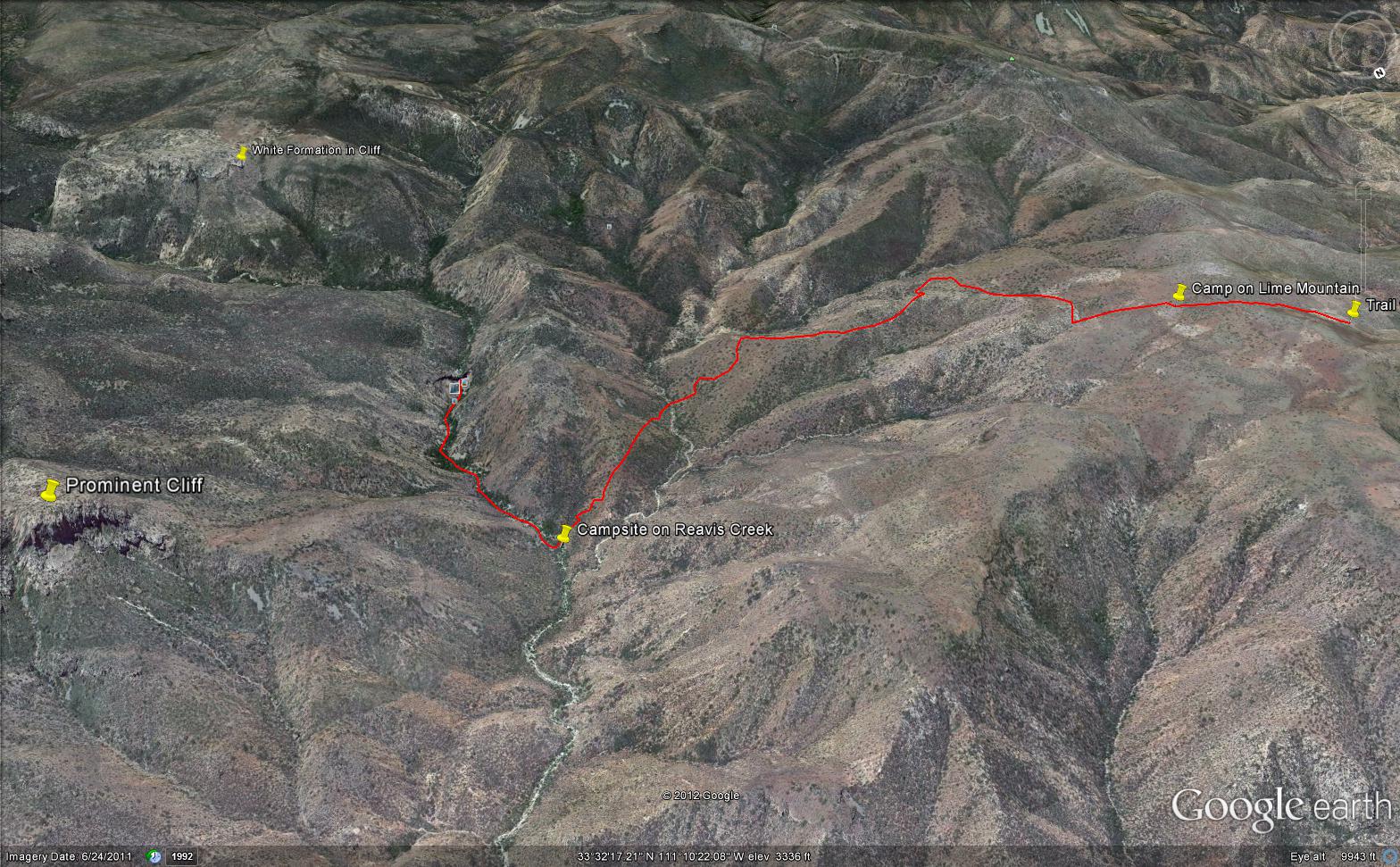
Here is the path I took toward the falls.  The campsite is to the lower right, the falls are toward the center and left.  My approach to the camp is on the right, moving toward the top.  For another view of this location see Reavis Canyon Camp.

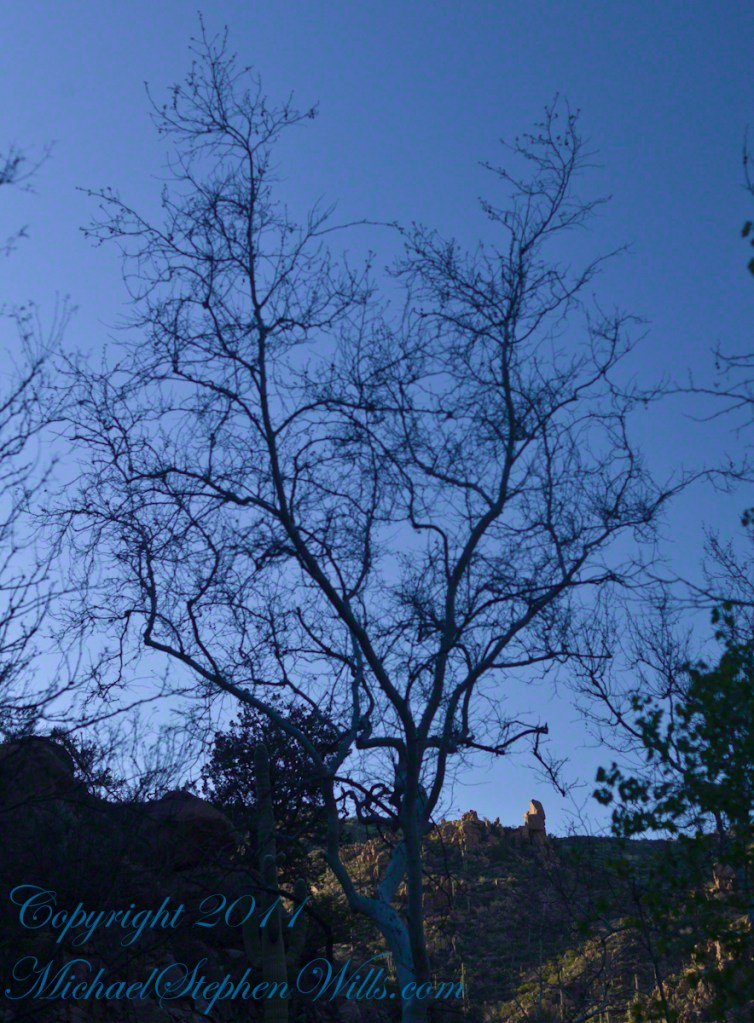
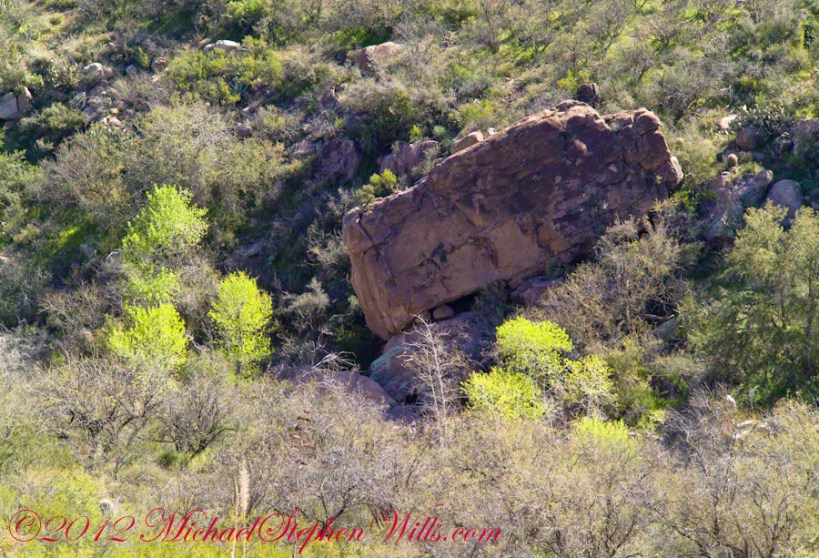
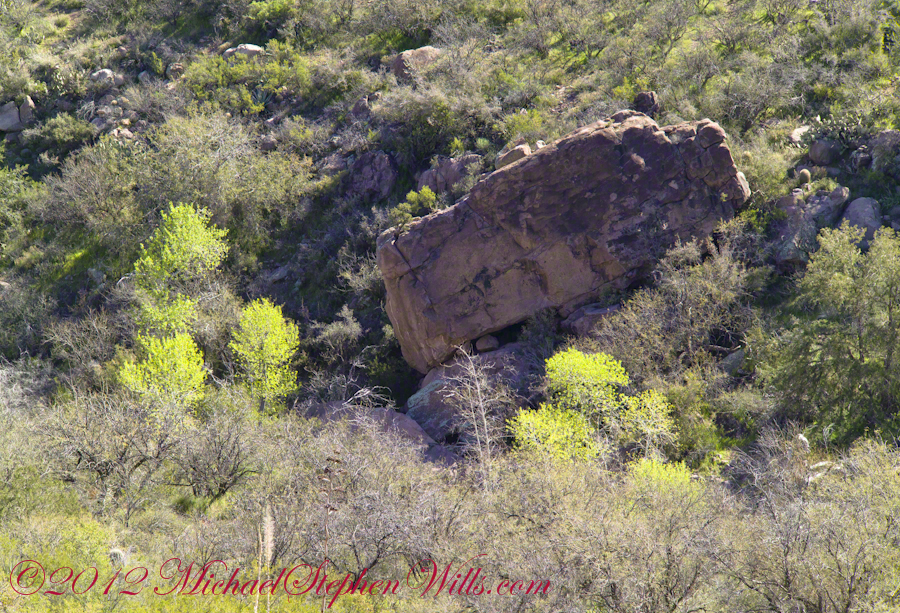
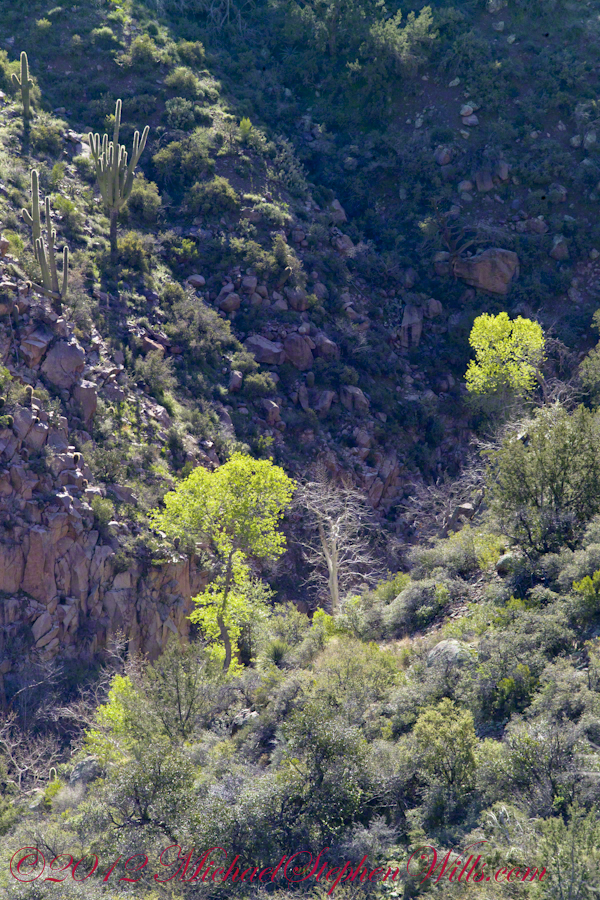
The mouth of Reavis Canyon below the falls is choked with vegetation and infallen rocks and boulders.  The far slopes are thick with the poles of young saguaros. There are hoodoos, as well.  In the photograph, below, one hoodoo is catching morning light.  See the chapters Hoodoos on the Descent to Reavis Falls and Cedar Basin Hoodoos for more views of the hoodoos around Reavis Falls.

Hoodoos visible from the mouth of Reavis Canyon below the falls. Look toward the far slope.

Flood damage in Reavis Canyon below the falls. Note the scouring at the base of these trees and the broken limbs. This is NOT a place to be in spring thaw.

Massive spring flooding scours the canyon floor.

Flood damage in Reavis Canyon below the falls.

There is beauty to be found, as well. Freshly fallen rough rocks contrast with water smoothed boulders and the water surface.

Copyright 2023 Michael Stephen Wills All Rights Reserved
Reavis Canyon Camp

below the Falls

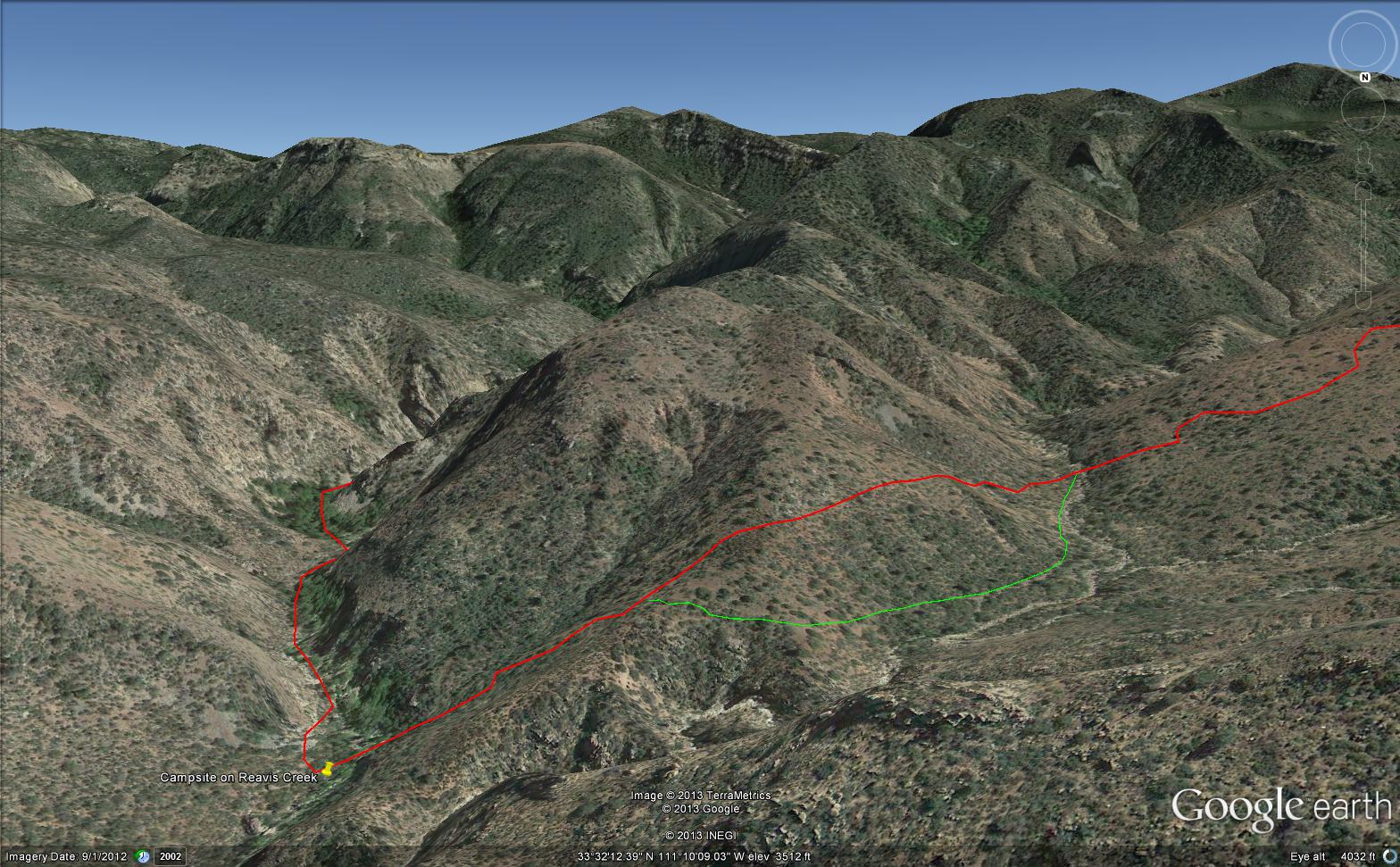
Here is an overview of my route through Cedar Basin on the way to Reavis Falls.  There are two paths in the following image from Google Earth.  The red path brings you into Cedar Basin and straight up a ridge and down to the campsite.  The red path is incorrect in the approach to the ridge and, rather than repaint the path, I created the green path as the gradual and accurate description of how I climbed to the ridge point where I captured the photographs Hoodoos on the Descent to Reavis Falls.

No Path to Reavis Falls

You need to understand there is NO path through this terrain.  It is necessary to follow a faint trail marked out by the footsteps of those before you and an occasional rock cairn placed at the most difficult points.  The following image is misleading in that what looks like a road next to my green path is actually a creek bed from the Lime Mountain spring.

Huge Boulders

What looks like a road is the resting place of huge boulders fallen from the surrounding mountains. Since there is water, thick brush and trees grow everywhere in cracks and spaces between the boulders and rocks.  Getting through the creek bed with an 80 pound pack and not getting lost is close to impossible. The solution is to hug the ridge slope, following the contours and navigate around boulders.

Reavis Canyon below the falls is filled with boulders of this size held in place by friction.

View of Reavis Canyon and Campsite

From the ridge small portions of Reavis Canyon were visible.  I even spotted a campsite.

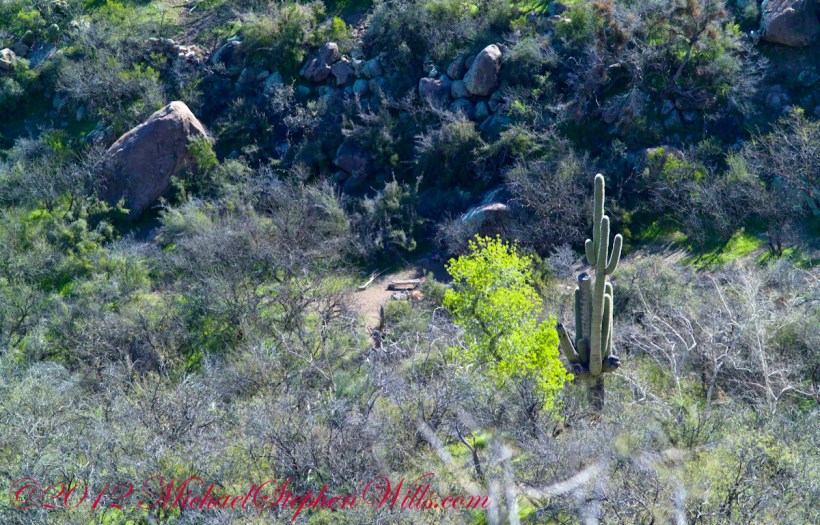
The mouth of Reavis Canyon below the falls opens into a sandy bottom. This camp, surronded by house-size boulders fallen from the slopes above, has a patch of grass bright green and fresh.

This camp, 1,636 feet below Lime Mountain peak, surrounded by house-size boulders fallen from the slopes above, has a patch of grass bright green and fresh to the right.  In the center of the photograph is a tree trunk on rocks to serve as a bench next to a fireplace. With an 80 pound pack on my back, I was still an hour or so away from this spot.  It was March, so sunset was around 6 pm, enough time to find a way down before darkness to overtook me.

Looking down from a ridge above the canyon that holds Reavis Creek and the falls.

This is an overview of my progress, with the Lime Mountain and Reavis Canyon campsites marked. Landforms are marked on the left: the Prominent Cliff , in the background it says “White Formation on Cliff.”

Copyright 2023 Michael Stephen Wills All Rights Reserved
Cedar Basin Hoodoos

Hoodoos and Young Saguaros

In my previous posting “Hoodoos on the Descent to Reavis Falls” I describe how I came to find these strange rock formations during a solo expedition to Reavis Falls in the remote eastern Superstition Wilderness.

Here I present several photographs captured from my tripod mounted Kodak DCS pro slr/c and a Canon EF 200 mm f2.8 L telephoto lens.  These provide a better understanding of the strange, wonderful and possibly frightening impressions these formations make when discovered in a deserted location such as Cedar Basin.

Here is the highest point of the ridge….

Hoodoo Ridge

…..and from a portion of the ridge that projects closer to my observation point above the canyon mouth of Reavis Falls. The numerous green poles are young Saguaro cactus. In the distance are mature Saguaros with lateral arms.

Hoodoos of Cedar Basin

..and even closer than this were the rocks standing around me.   This specimen I captured with the 50 mm 1.4 Canon lens.  I believe it is a different rock type than the above, rounded, hoodoos.  Those look like rock from ash of a volcanic eruption.  This rock seems to be igneous, formed deep inside the earth.

Cedar Basin Rock Closeup

My next posting will describe the surroundings of the campsite from which I explored the canyon and Reavis Falls.

Copyright 2023 Michael Stephen Wills All Rights Reserved